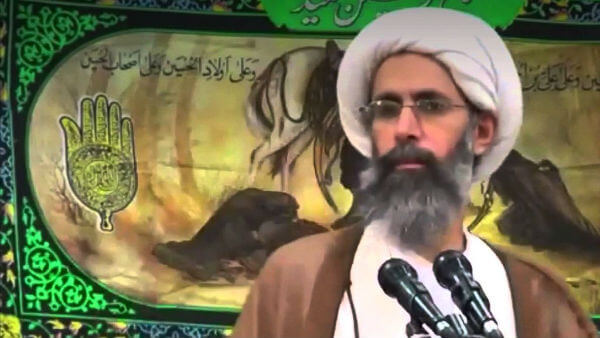
Brian Whitaker writes: Saudi Arabia’s execution of Sheikh Nimr al-Nimr, a prominent Shia cleric, on Saturday was an act motivated more by politics than judicial considerations. Although in a BBC interview William Patey – a former British ambassador in Riyadh – charitably described Nimr’s killing as a Saudi “miscalculation”, the consequences so far have been totally predictable.
In Iran, the headquarters of Shia Islam, the authorities turned a blind eye while demonstrators set fire to the Saudi embassy, and the Saudis have now responded by severing diplomatic relations. Bahrain quickly followed suit and the UAE downgraded its relations too. The execution has also triggered demonstrations among Shia communities elsewhere – including Bahrain, where the Shia majority is ruled by a Sunni minority.
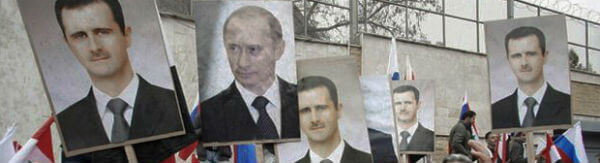
More seriously, but no less predictably, the inflaming of sectarianism will have knock-on effects in Syria and Iraq. In Syria, where Saudi Arabia backs Sunni Islamists and Iran is supporting the President Assad regime, we can expect a hardening of positions at a time when international peace efforts are aimed at softening them and starting a dialogue. [Continue reading…]
Yemen: The country caught in the middle of the Iranian-Saudi power struggle

Bobby Ghosh writes: Of the two things Saudi Arabia did on Jan. 2 to make the world a more dangerous place, one has caught all the attention: the execution of the dissident Shia cleric Nimr al-Nimr. That led to the fire-bombing of the Saudi embassy in Tehran, and Riyadh’s retaliatory decision to break off diplomatic ties.
The other, however, has gone almost unnoticed: the formal ending of a poorly-observed truce in Yemen, and new airstrikes by a Saudi-led coalition of Arab states against Shia rebels known as the Houthis.
Much of the analysis following the events of the weekend has focused on fears that the Saudi-Iranian conflict will derail peace talks on Syria (paywall), where Iran backs president Bashar al-Assad and Saudi Arabia backs opposition rebels. Indeed, the talks planned for later this month may not now happen at all. But the consequences for Yemen are no less dire.
Yemen’s civil war, raging for nearly a year, seems fated to constantly be drowned out by tumult elsewhere in the region. (When it does get some press, headline writers inevitably label it the “forgotten war.”) Nearly 3,000 civilians have been killed in the fighting, the country’s already fragile economy has been shattered, and attempts at negotiated settlement have gone nowhere. The resumption of airstrikes by the Saudi-led coalition — which enjoys US support — means the impoverished nation at the foot of the Arabian Peninsula is not likely to find peace anytime soon.[Continue reading…]
Iraqi Sunni mosques attacked in apparent retaliation for Saudi execution
Reuters reports: At least two Sunni Muslim mosques have been attacked in Iraq and two people killed in apparent retaliation for the execution of a senior Shi’ite cleric in Sunni-ruled Saudi Arabia, officials and police said on Monday.Iraqi Shi’ites protesting the Jan. 2 execution of Saudi Shi’ite cleric Nimr al-Nimr separately marched in Baghdad and in southern cities, calling for a boycott of Saudi products and severing ties with the Sunni-ruled kingdom.Iraq’s Interior Ministry confirmed the attacks on Sunni mosques late Sunday in Hilla, around 100 km (60 miles) south of Baghdad. Prime Minister Haider al-Abadi blamed them on “Daesh (Islamic State) and those who are similar to them,” without further explanation.
He ordered provincial authorities “to chase the criminal gangs” who attacked the mosques. [Continue reading…]
The ten most important developments in Syria in 2015

Aron Lund writes at length on each of these developments:
10. The Death of Zahran Alloush.
9. The Failure of the Southern Storm Offensive.
8. Operation Decisive Quagmire.
7. Europe’s Syria Fatigue vs. Assad’s Viability
6. The Vienna Meeting, the ISSG, and Geneva III.
5. The Donald.
4. The Iran Deal.
3. The Continuing Structural Decay of the Syrian Government.
2. The American-Kurdish Alliance.
1. The Russian Intervention. [Continue reading…]
Starvation as a tool of war in Syria
Russia names United States among threats in new security strategy
Reuters reports: A new appraisal names the United States as one of the threats to Russia’s national security for the first time, a sign of how relations with the west have deteriorated in recent years.
The document, “About the Strategy of National Security of Russian Federation”, was signed by President Vladimir Putin on New Year’s Eve. It replaces a 2009 version, endorsed by then- President Dmitry Medvedev, the current prime minister, which mentioned neither the United States not NATO.
It says Russia has managed to heighten its role in solving global problems and international conflicts. That heightened role has caused a reaction by the West, it says.
“The strengthening of Russia happens against the background of new threats to the national security, which has complex and interrelated nature,” the document says.
Conducting an independent policy, “both international and domestic” has caused “counteraction from the USA and its allies, which are striving to retain their dominance in global affairs.” [Continue reading…]
Suspect in pro-ISIS plot called mentally ill ‘panhandler’ who was ‘manipulated’
The Associated Press reports: An ex-convict arrested in a plot to carry out a pro-Islamic State attack at a bar on New Year’s Eve is a panhandler who had been asked to leave in the past, the bar’s owner said. The man’s family said he had a long history of mental problems.
Federal authorities have said Emanuel Lutchman, 25, sought to prove he was worthy of joining Isis by leading an attack in Rochester with a machete and knives that were provided by an FBI informant.
After authorities announced his arrest on Thursday, Lutchman’s father and mother described a man who had had psychiatric troubles since childhood, had recently stabbed himself in a suicide attempt and, they said, would not have conducted the attack on his own.
“The boy is impressionable,” his father, Omar Lutchman, told NBC News. “First he was a Blood, then he was a Crip, then he became a Muslim. He’s easily manipulated.”
The father and the suspect’s grandmother, Beverley Carridice-Henry, told the network Lutchman is married and has a two-year-old son but had been having marital and money problems. He was frustrated over being unable to find work and care for his family, they said. [Continue reading…]
ISIS signals business as usual, with menacing new ‘frontman’
Martin Chulov writes: His tone was flatter, his physique less muscled, but his intent as menacing as his predecessor. The debut of what appears to be a new British-accented jihadi in an Islamic State propaganda film seemed tailored to signal business as usual for the terror group, two months after its foreboding former face, Mohammed Emwazi, was killed.
A lot has happened since then; the coordinated attacks in Paris, three mass bombings in southern Turkey, apparent near-misses in Munich and Brussels, a downed Russian passenger jet in the Sinai and heightened anxiety from Madrid to Istanbul.
But this latest video was aimed directly at the UK. The message was simple: David Cameron’s decision to bomb Isis targets in Syria had made Britain more of a target. And that whenever one British Isis frontman was killed, another was ready to take his place. [Continue reading…]
Britain acts to stem flow of young doctors recruited by ISIS in Sudan
The Guardian reports: A British delegation, including an imam from London, have visited Sudan to try to dissuade young British doctors from joining Islamic State (Isis), which has been urgently seeking more foreign medics to help at its hospitals in Syria.
The Foreign Office is coordinating efforts to prevent more Britons travelling from Khartoum’s University of Medical Sciences and Technology (UMST). At least 17 British doctors travelled from there to Syria during 2015 to staff Isis’s health ministry.
It has emerged that a second group of UK doctors who left Sudan for Syria have joined up with members of an earlier group who travelled to join Isis in March. According to family sources, the second group of five Britons, including two brothers from Leicester, are understood to have joined up with 20-year-old Rowan Kamal Zine El Abidine, one of a group of nine British medical staff who journeyed from Khartoum months earlier. [Continue reading…]
Jihadists deepen collaboration in North Africa
The New York Times reports: A group of light armored vehicles skated over the moonscape of the Sahara, part of one of the largest detachments the French military has deployed here since colonial times. Its mission is growing ever more urgent: to cut smuggling routes used by jihadists who have turned this inhospitable terrain into a sprawling security challenge for African and international forces alike.
Many of the extremist groups are affiliates of Al Qaeda, which has had roots in North Africa since the 1990s. With the recent introduction of Islamic State franchises, the jihadist push has been marked by increasing, sometimes heated, competition.
But, analysts and military officials say, there is also deepening collaboration among groups using modern communications and a sophisticated system of roving trainers to share military tactics, media strategies and ways of transferring money.
Their threat has grown as Libya — with its ungoverned spaces, oil, ports, and proximity to Europe and the Middle East — becomes a budding hub of operations for both Al Qaeda and the Islamic State to reach deeper into Africa.
And as Africa’s jihadists come under the wing of distant and more powerful patrons, officials fear that they are extending their reach and stitching together their ambitions, turning once-local actors into pan-national threats. [Continue reading…]
Egypt now looks a lot like it did in 2010, just before 2011 unrest
Michele Dunne and Nik Nevin write: Egypt of December 2015 is looking a lot like Egypt of late 2010 and the final months of Hosni Mubarak‘s three-decade rule. The country’s longtime military president had little political sophistication; then as now, there were struggles between the military and businessmen for economic and political power, human rights abuses, economic woes, and jihadi groups in the Sinai. But today, these things appear more pronounced.
The membership and mission of the recently elected 598-seat House of Representatives bear similarities to the parliament chosen a few months before the January 2011 uprising, but each is more exaggerated. Other developments in Egypt echo the dysfunction of 2010, raising questions about whether another upheaval might be brewing. [Continue reading…]
Why Paris worked: A different approach to climate diplomacy

David Victor writes: Why did Paris work when almost everything before it failed? The central answer lies in a new style of international cooperation, one that has enabled 195 countries to formally adopt an agreement that is likely to have a real impact on the emissions that cause climate change, as well as on how societies adapt to the big shifts in climate that are coming.
The contrast of Paris with the past could not be starker. The 1992 Rio framework to get serious climate diplomacy going was the right approach, but diplomats and climate activists steered that framework off the rails, and for 23 years — until now — they achieved very little. The 1997 Kyoto Protocol was so riddled with flaws that it had essentially no impact on emissions. The 2009 climate negotiations in Copenhagen ended in acrimony and recriminations.
Now, instead of setting commitments through centralized bargaining, the Paris approach sets countries free to make their own commitments. These “nationally determined contributions” are a starting point for deeper cooperation that will unfold over time. Once the Paris agreement enters into force and is fully in motion, around the year 2020, each nation will be expected to adopt a new pledge every five years in tandem with periodic overall efforts to take stock of how the group of nations is doing. [Continue reading…]
How plants fight to stay alive

Mike Newland writes: Compared to the hectic rush of our bipedal world, a plant’s life may appear an oasis of tranquility. But look a little closer. The voracious appetites of pests put plants under constant stress: They have to fight just to stay alive.
And fight they do. Far from being passive victims, plants have evolved potent defenses: chemical compounds that serve as toxins, signal an escalating attack, and solicit help from unlikely allies.
However, all of this security comes at a cost: energy and other resources that plants could otherwise use for growth and repair. So to balance the budget, plants have to be selective about how and when to deploy their chemical arsenal. Here are five tactics they’ve developed to ward off their insect foes without sacrificing their own wellbeing. [Continue reading…]
Music: Abida Parveen & Rahat Fateh Ali Khan — ‘Chaap Tilak’
Chhaap Tilak Sab Chheeni is a Qawwali song composed by Amir Khusro, a 14th-century Sufi mystic. Abida Parveen is known as the Queen of Sufi music.
Iran warns of ‘divine vengeance’; Saudi Arabia breaks relations

The Washington Post reports: Saudi Arabia severed relations with Iran on Sunday amid the furor that erupted over the execution by the Saudi authorities of a prominent Shiite cleric.
Foreign Minister Adel al-Jubair told reporters in Riyadh that the Iranian ambassador to Saudi Arabia had been given 48 hours to leave the country, citing concerns that Tehran’s Shiite government was undermining the security of the Sunni kingdom.
Saudi Arabian diplomats had already departed Iran after angry mobs trashed and burned the Saudi embassy in Tehran overnight Saturday, in response to the execution of Sheikh Nimr Baqr al-Nimr earlier in the day.
Iran’s Supreme Leader warned on Sunday that there would be divine retribution for Saudi Arabia’s rulers after the execution of a renowned Shiite cleric, sustaining the soaring regional tensions that erupted in the wake of the killing.
The warning came hours after crowds of protesters stormed and torched the Saudi embassy in Tehran to vent their anger at the execution of Nimr Baqr al-Nimr, who was among 47 people put to death in the kingdom on Saturday.
Shiites around the world expressed outrage, potentially complicating a surge of U.S. diplomacy aimed at bringing peace to the region, according to Toby Matthiesen, an expert on Saudi Arabia at the University of Oxford.
“Nimr had become a household name amongst Shiite Muslims around the world. Many had thought his execution would be a red line and would further inflame sectarian tensions,” he said. “So this will complicate a whole range of issues, from the Syrian crisis to Yemen.”
Saudi Arabia and Iran are backing rival sides in Syria’s war, and their enmity risks derailing a diplomatic effort led by the United States and Russia to convene peace talks between the factions in Geneva this month.
The two feuding powers also support opposing sides in the war in Yemen and more broadly find themselves in opposition in the deeply divided politics of the mixed Sunni-Shiite nations of Iraq and Lebanon.
The Obama administration’s hopes that the conclusion last summer of an agreement limiting Iran’s nuclear program would help bridge the sectarian divide between Tehran and the United States’ biggest Arab ally were further diminished by the eruption of fury that followed Nimr’s death. [Continue reading…]
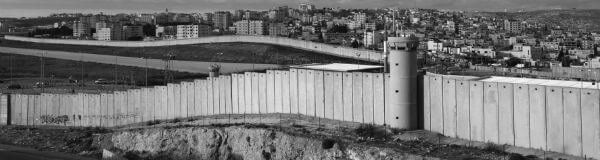
If the Berlin Wall had to come down and Trump’s shouldn’t go up, what makes Israel’s OK?

Hillary Clinton said that it is O.K. to ban Muslims from Israel by building a WALL, but not O.K. to do so in the U.S. We must be vigilant!
— Donald J. Trump (@realDonaldTrump) January 2, 2016
Following Trump’s logic and his imperative of vigilance, it sounds as though the world — just to be safe — can’t have too many walls.
In Europe the principle of open borders functioning in the Schengen Area is currently in peril.
If, as seems increasingly likely, the presidential election in the U.S. ends up being a contest between Trump and Clinton, it’s possible that Trump just defined the battle line in a useful way.
He obviously wants to use Israel’s wall to justify his own wall plans and he’s assuming that Clinton’s ties to Israel mean she wouldn’t dare question their security measures.
Nevertheless, Israel’s wall has symbolic significance that stretches far beyond the Israeli-Palestinian conflict.
Ever since the end of the Cold War, there has been a broad consensus that the breakdown of divisions around the world has inherent value and the creation of divisions causes trouble.
While the value of this principle has most often been measured in economic terms and the rewards concentrated in the hands of powerful corporations, the human desire for people to be able to connect seems far greater than the need to stand apart.
Those who want to wall themselves in so they can keep others out are in a minority that perceives itself as embattled.
The walls supposedly designed to make people feel safe also solidify their fears.
The wall is both a metaphor and a literal expression of the conflict between inclusion and exclusion.
Have we reached a point in history where we must now reverse tracks and head back into the past — into a world defined by its rigid divisions? Would not such a world be anything less than a retreat from humanity?
No doubt, in a debate, Clinton would skirt around Israel’s wall — perhaps just by reiterating the official line that it is a temporary measure — but she could not pick a better theme around which to shape her campaign than by presenting herself as someone dedicated to breaking down divisions versus an opponent who is actively divisive.
Am I indulging in an internationalist liberal fantasy?
Perhaps. But however deeply entrenched divisiveness has become, unless we quickly learn how to shake it off, our common fate will be ruin.
America divided
John Brockman asked contributors to The Edge: what do you consider the most interesting recent scientific news? Jonathan Haidt responded: If you were on a selection committee tasked with choosing someone to hire (or to admit to your university, or to receive a prize in your field), and it came down to two candidates who were equally qualified on objective measures, which candidate would you be most likely to choose?
__A) The one who shared your race
__B) The one who shared your gender
__C) The one who shared your religion
__D) The one who shared your political party or ideologyThe correct answer, for most Americans, is now D. It is surely good news that prejudice based on race, gender, and religion are way down in recent decades. But it is very bad news—for America, for the world, and for science—that cross-partisan hostility is way up.
My nomination for “news that will stay news” is a paper by political scientists Shanto Iyengar and Sean Westwood, titled “Fear and Loathing Across Party Lines: New Evidence on Group Polarization.” Iyengar and Westwood report four studies (all using nationally representative samples) in which they gave Americans various ways to reveal both cross-partisan and cross-racial prejudice, and in all cases cross-partisan prejudice was larger.
First they used a measure of implicit attitudes (the Implicit Association Test), which measures how quickly and easily people can pair words that are emotionally good versus bad with words and images associated with Blacks vs. Whites. They also ran a new version of the test that swapped in words and images related to Republicans vs. Democrats, instead of Blacks vs. Whites. The effect sizes for cross-partisan implicit attitudes were much larger than cross-race. If we focus just on White participants who identified with a party, the cross-partisan effect was about 50 percent larger than the cross-race effect. When Americans look at each other or try to listen to each other, their automatic associations are more negative for people from the “other side” than they are for people of a different race. [Continue reading…]
Donald Trump and the politics of disgust

Alexander Hurst writes: In 2012, a team of academics from Europe and the U.S. — Yoel Inbar, David Pizarro, Ravi Iyer, and Jonathan Haidt — published a paper titled “Disgust Sensitivity, Political Conservatism, and Voting,” looking at the role disgust plays in political orientation. The researchers posited three different types of disgust: interpersonal disgust (i.e., the feeling produced by drinking from the same cup as someone else); core disgust (the response to maggots, vomit, dirty toilets, etc.); and animal-reminder disgust (how we react to corpses, blood, anything that evokes our animal nature).
Disgust, they write, “serves to discourage us from ingesting noxious or dangerous substances,” but also plays a role in moral and social judgments. Those who feel more disgusted by unpleasant images, smells, or tastes judge more harshly that which violates their subjective moral code.
The team had respondents position themselves on a political scale from conservative to liberal. The respondents then stated how strongly they agreed or disagreed with statements like “I never let any part of my body touch the toilet seat in a public washroom,” and rated other hypotheticals according to the level of disgust they generated. Even when controlling for age, education, geography, and religious belief, individuals with higher “disgust sensitivity” were found to be more likely to tolerate wealth inequality, view homosexuality negatively, and place more belief in authoritarian leaders and systems.
Most strikingly, interpersonal disgust was an important predictor of anti-immigrant attitudes.
Trump, of course, is a well-known, admitted germaphobe. “One of the curses of American society is the simple act of shaking hands,” he wrote in The Art of the Deal. “I happen to be a clean hands freak. I feel much better after I thoroughly wash my hands, which I do as much as possible.”
Trump even described shaking hands as “barbaric” in an interview with Dateline in 1999, saying, “They have medical reports all the time. Shaking hands, you catch colds, you catch the flu, you catch it, you catch all sorts of things. Who knows what you don’t catch?”
Beyond the aversion to hand-shaking, Trump used to pre-test his dates for AIDS, and reportedly avoids pushing elevator buttons.
The connection between modern xenophobia, disgust sensitivity, and the strength of Trump’s campaign is fairly easy to make. As Inbar, Pizarro, Iyer, and Haidt point out, “Disgust evolved not just to protect individuals form oral contamination by potential foods, but also from the possibility of contamination by contact with unfamiliar individuals or groups.” And after all, Trump’s success has come not from presenting voters with detailed policy proposals, but from connecting with them on a gut level. [Continue reading…]