The New York Times reports: Hate crimes against Muslim Americans and mosques across the United States have tripled in the wake of the terrorist attacks in Paris and San Bernardino, Calif., with dozens occurring within just a month, according to new data.
The spike includes assaults on hijab-wearing students; arsons and vandalism at mosques; and shootings and death threats at Islamic-owned businesses, an analysis by a California State University research group has found.
President Obama and civil rights leaders have warned about anecdotal evidence of a recent Muslim backlash, particularly in California. But the analysis is the first to document the rise, amid a crescendo of anti-Islamic statements from politicians.
“The terrorist attacks, coupled with the ubiquity of these anti-Muslim stereotypes seeping into the mainstream, have emboldened people to act upon this fear and anger,” said Brian Levin, a criminologist at California State University, San Bernardino. [Continue reading…]
‘They want something that happens everywhere at the same time,’ says German ISIS returnee
Der Spiegel reports on Harry S., a 27-year-old from Bremen, who may shed light on ISIS’s plans for new attacks: Harry S. returned to Germany from Syria and is now in investigative custody. He has told security officials everything about the brief time he spent with Islamic State and has also demonstrated his readiness to deliver extensive testimony to German public prosecutors. He stands accused of membership in a terrorist group. His lawyer Udo Würtz declined to offer a detailed response when contacted, but said of his client: “He wants to come clean.”
German investigators are extremely interested in the testimony of the apparently repentant returnee, even as they are likely unsettled by what he has to say.
Harry S., after all, is more than just a witness to firing squads and decapitations. He also says that on several occasions, IS members tried to recruit volunteers for terrorist attacks in Germany. In the spring, just after he first arrived in Syria, he says that he and another Islamist from Bremen were asked if they could imagine perpetrating attacks in Germany. Later, when he was staying not far from Raqqa, the self-proclaimed Islamic State capital city, masked men drove up in a jeep. They too asked him if he was interested in bringing the jihad to his homeland. Harry S. says he told them that he wasn’t prepared to do so.
Harry S. was only in IS controlled territory for three months. Yet he might nevertheless become a vital witness for German security officials. Since the Nov. 13 attacks in Paris, fear of terrorism has risen across Europe, including in Germany, and security has been stepped up in train stations and airports. And the testimony from the Bremen returnee would seem to indicate that the fear is justified. Harry S. says that, during his time in the Syrian warzone, he frequently heard people talking about attacks in the West and says that pretty much every European jihadist was approached with the same questions he had been asked. “They want something that happens everywhere at the same time,” Harry S. says. [Continue reading…]
Book review: Charles Lister’s The Syrian Jihad – a must read that untangles the web of militant groups
Robin Yassin-Kassab writes: Security discourse dominates the international chatter on Syria. Most Syrians see Bashar Al Assad as their chief enemy – he is, after all, responsible for the overwhelming proportion of the dead and displaced. But the Syrian people are not invited to the tables of powerful states, which are in agreement that their most pressing Syrian enemy is “terrorism”.
But there is disagreement on who exactly the terrorists are. Russian president Vladimir Putin shares Assad’s evaluation that everyone in armed opposition is an extremist, and at least 80 per cent of Russian bombs have therefore struck the communities opposing both the president and ISIL.
North of Aleppo, Russia has even struck the rebels while they were battling ISIL. This wave of the “war on terror” – now led, with plenty of historical irony, by Russia and Iran – uses anti-terror rhetoric to engineer colonial solutions, just as the last wave did, and ends up promoting terror like never before.
There is no question that the moderate Syrian opposition exists, in the form of hundreds of civilian councils – sometimes directly elected – and at least 70,000 democratic-nationalist fighters. In a recent blog for The Spectator, Charles Lister, one of the very few Syria commentators to deserve the label “expert”, explains exactly who they are.
Lister’s book-length study The Syrian Jihad: Al Qaeda, the Islamic State and the Evolution of an Insurgency, on the other hand, focuses on those militias, from the Syrian Salafist to the transnational jihadist, which cannot be considered moderate. It clarifies the factors behind the extremists’ rise to such strategic prominence, among them the West’s failure to properly engage with the defectors and armed civilians of the Free Syrian Army (FSA) in 2011 and 2012. [Continue reading…]
Raqqa tribes challenge Syria Kurds
NOW reports: A group of tribes in Syria’s Raqqa province have warned the Kurdish People’s Protection Units (YPG) against entering areas it controls, in the latest sign of simmering tensions between ethnic Arabs and Kurds in the province where ISIS maintains its de-facto capital.
“No one from the YPG may enter the Arab areas where are our fighters are present,” the Collective of Raqqa Tribes said in a statement issued Tuesday.
The group further called on the Kurdish militia to “hand over” the flashpoint Tal Abyad, a strategic Raqqa border area populated by ethnic Arabs and Turkmen that the Kurdish Democratic Union Party (PYD) has joined to its Democratic Self-Rule Administration. [Continue reading…]
As another activist is murdered, the least we owe ‘Raqqa is Being Slaughtered Silently’ is our attention
Kyle Orton writes: From the outset of the Syrian uprising, the regime of Bashar al-Assad and the Isis have been united on their strategic goal: eliminate the moderate opposition and make Syria a binary choice between themselves. This is why on the battlefield Assad and Isis largely leave one-another alone and the Assad regime’s propaganda—that the whole rebellion is composed of Islamist terrorists—reinforces Isis’s propaganda claim that it is the only effective protection for Sunnis against the regime. Both IS and the Assad regime are led by military and intelligence officers trained in the KGB and both rely on propaganda as a means of internal control, not only of controlling their international image, which is why both so virulently repress independent media that contradicts their officially sanctioned version. Last night, IS again struck down a member of an activist group that has tried to bring the truth about life under its rule to the outside world. [Continue reading…]
As Poland lurches to the right, many in Europe look on in alarm
The New York Times reports: In the few weeks since Poland’s new right-wing government took over, its leaders have alarmed the domestic opposition and moderate parties throughout Europe by taking a series of unilateral actions that one critic labeled “Putinist.”
Under their undisputed leader, Jaroslaw Kaczynski, they pardoned the notorious head of the security services, who was appealing a three-year sentence for abuse of his office from their previous years in power; tried to halt the production of a play they deemed “pornographic”; threatened to impose controls on the news media; and declared, repeatedly and emphatically, that they would overrule the previous government’s promise to accept refugees pouring into Europe.
But the largest flash point, so far, has been a series of questionable parliamentary maneuvers by the government and the opposition that has allowed a dispute over who should sit on the country’s powerful Constitutional Tribunal to metastasize into a full-blown constitutional crisis — with thousands of protesters from all sides taking to the streets.
Countries across Europe have seen nationalist movements rise in popularity, particularly in the wake of the refugee crisis and the terrorist attacks in Paris. But Poland’s rightward lurch under the newly empowered Law and Justice Party is unsettling what had been the region’s strongest economy and a model for the struggling post-Soviet states of Eastern Europe. [Continue reading…]
Bloomberg reports: Poland’s government replaced the head of NATO members’ training facility in Warsaw after Defense Ministry officials and military police entered its provisional office after midnight on Friday.
The Counter Intelligence Center of Excellence was staffed with officials who weren’t supported by the Polish government, Deputy Defense Minister Bartosz Kownacki told RMF radio. The ministry appointed Colonel Robert Bala as the acting director of the center, which hasn’t yet been accredited by NATO, an alliance official said. [Continue reading…]
On November 12, AFP reported: Tens of thousands of protesters poured into Warsaw’s streets on Wednesday for a demonstration organised by the far right, marching under the slogan “Poland for the Polish” and burning an EU flag.
Police said 25,000 people joined the march, which marked the anniversary of Poland’s return to independence after the First World War, while organisers put the numbers at 50,000.
“God, honour, homeland,” chanted the protesters as they marched under a sea of red-and-white Polish flags.
Demonstrators trampled and burned a European Union flag at one point, while a banner added to the anti-EU theme with the slogan “EU macht frei” (“Work makes you free” in German), a reference to the slogan over the gates at Auschwitz.
“Yesterday it was Moscow, today it’s Brussels which takes away our freedom,” chanted one group of protesters.
Other banners read “Great Catholic Poland” and “Stop Islamisation”. [Continue reading…]
Ivan Krastev writes: The new government has pushed forward three staggering changes. The man chosen to oversee police and intelligence agencies is a party stalwart who received a three-year suspended sentence for abusing power in his previous role as head of the anti-corruption office, signaling that political loyalty is above the law.
The government has purged European Union flags from government press briefings, demonstrating that it sees Polish national interests in opposition to European values.
And it has weakened the country’s separation of powers by rejecting the previous Parliament’s nominees to the constitutional court — and instead appointed its own candidates, provoking a constitutional crisis.
Why has Poland, the poster child of post-Communist success and Europe’s best economic performer of the last decade, suddenly taken an illiberal turn? Why, despite the profound public mistrust of politicians, are people ready to elect parties eager to dismantle any constraints on government’s power?
For one thing, the Law and Justice Party bet on a form of illiberal democracy because it succeeded in Hungary. The Orban model of rebuking the European Union while accepting billions in aid money has worked. So have Mr. Orban’s efforts to consolidate power by demonizing his political opponents. Hungary’s economy has not collapsed as critics predicted; nor did Mr. Orban’s party lose at the ballot box. [Continue reading…]
Russia’s family business
Reuters reports on the rewards Kirill Shamalov gained after marrying Vladimir Putin’s daughter, Katerina, in February, 2013: Within 18 months, Kirill acquired a large chunk of shares in a major Russian oil and petrochemical processor called Sibur – a stake now worth an estimated $2.85 billion, based on the value of recent share deals. He also quit his job as a business manager and set up a company to run his personal investments.
How did such a young businessman go so far, so fast? A Reuters examination of Shamalov’s career shows that in the summer of 2013, months after he married Putin’s daughter, Kirill opened discussions about buying shares in Sibur from one of the president’s wealthiest friends.
A year later, he was able to borrow more than $1 billion, judging by the published accounts of his investment company. The loan came from a bank headed by another longtime associate of Putin, and where Shamalov’s brother holds a senior position. The money was used to make an investment in Sibur that within months proved highly profitable for Kirill.
Asked about his business deals and the wedding, Kirill Shamalov and Sibur declined to comment.
The trajectory of Kirill’s fortunes sheds new light on how people close to Putin have taken commanding positions in key companies – and how such opportunities are now being extended to a new generation. [Continue reading…]
Israel and Turkey agree to restore diplomatic ties
The New York Times reports: Israel and Turkey have reached a preliminary agreement to begin restoring full diplomatic relations after years of deep freeze, Israeli officials said on Thursday.
The two countries, once close regional allies, fell out after a deadly confrontation in 2010 between Israeli commandos and Turkish activists on a passenger vessel seeking to breach Israel’s naval blockade of the Gaza Strip.
The ship, the Mavi Marmara, was part of a flotilla carrying aid to Gaza when Israeli naval commandos rappelled onto the ship’s deck and killed nine activists after being met with violent resistance. A 10th activist died of his wounds much later.
A senior Israeli official, speaking on the condition of anonymity because the reconciliation deal had not been finalized, said that Israel would create a compensation fund for the families of those killed on the Mavi Marmara. The Israeli news media reported that the compensation would be about $20 million, but Emmanuel Nahshon, a spokesman for the Israeli Ministry of Foreign Affairs, said the amount had not been set. [Continue reading…]
Pete Seeger’s FBI file reveals how the folk legend first became a target of the feds
David Corn writes: From the 1940s through the early 1970s, the US government spied on singer-songwriter Pete Seeger because of his political views and associations. According to documents in Seeger’s extensive FBI file—which runs to nearly 1,800 pages (with 90 pages withheld) and was obtained by Mother Jones under the Freedom of Information Act—the bureau’s initial interest in Seeger was triggered in 1943 after Seeger, as an Army private, wrote a letter protesting a proposal to deport all Japanese American citizens and residents when World War II ended.
Seeger, a champion of folk music and progressive causes—and the writer, performer, or promoter of now-classic songs, including as “If I Had a Hammer,” “Where Have All the Flowers Gone?,” Turn! Turn! Turn!,” “Kisses Sweeter Than Wine,” “Goodnight, Irene,” and “This Land Is Your Land”—was a member of the Communist Party for several years in the 1940s, as he subsequently acknowledged. (He later said he should have left earlier.) His FBI file shows that Seeger, who died in early 2014, was for decades hounded by the FBI, which kept trying to tie him to the Communist Party, and the first investigation in the file illustrates the absurd excesses of the paranoid security establishment of that era. [Continue reading…]
Music: Kurt Elling — ‘Steppin’ Out’
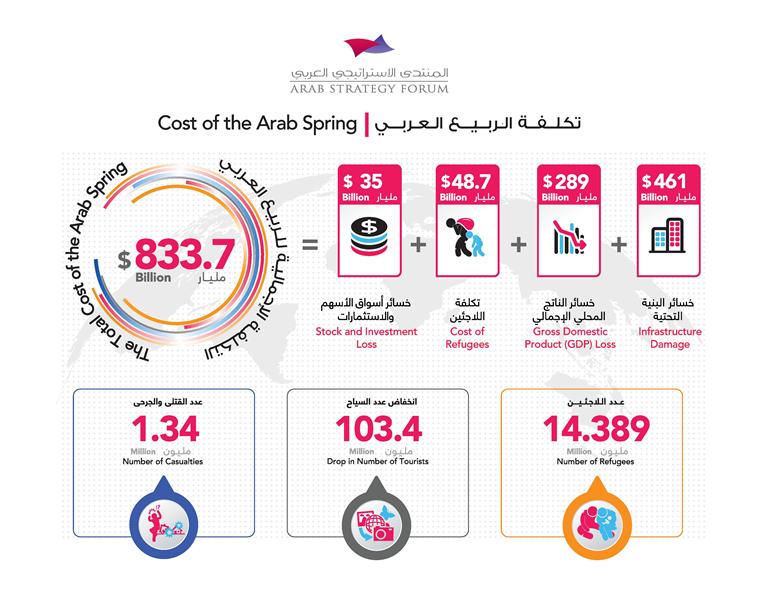
The cost of the suppression of the Arab Spring
How many mass movements in search of political rights would have been pronounced failures if success had to be established in just five years?
The quest for women’s rights has continued throughout human history and continues today.
Palestinians, Kurds, Tibetans, Kashmiris, and numerous other groups of indigenous peoples have for many decades campaigned and fought for their rights, often with very limited success.
But when it comes to the Arab Spring, those who stand to lose most from the expansion of political rights across the region, are now — not surprisingly — only too eager to pronounce it an expensive failure.
The idea that it might have been better to stay home and stay quiet, will all too easily resonate among the millions of people who have suffered the effects of the suppression of the Arab Spring.
As some of the region’s autocratic rulers and their advisers gathered in Dubai this week and soberly measured the “cost of the Arab Spring,” they should also — had they been honest — have been celebrating the rise of ISIS.
From Dubai to Tehran and from Riyadh to Cairo, it has been ISIS that has saved the day. The Arab Strategy Forum should have invited Abu Bakr al-Baghdadi as their guest of honor.
Don’t get me wrong. I’m not promoting any of the conspiracy theories about ISIS being the creation of a foreign government (be that the Saudis, the Turks, the Israelis, or the Americans — which of those being the culprit would depend merely on who the proponent such a theory sees as the worst enemy).
ISIS saved the day through its savagery by convincing nearly everyone else that political stability is worth more than any kind of political freedom.
Much as it will often be repeated that the need to destroy ISIS has never been more urgent, those whose rule is currently being legitimized by ISIS’s existence will be quite content for this war to be a valiant fight that sees no end.
And those blinkered by the conviction that the U.S. government is the architect of all the world’s afflictions, need to recognize that conflict in the Middle East is now being driven from many engine rooms — in Damascus, Moscow, Tehran, Jerusalem, Ankara, Riyadh, Cairo, Abu Dhabi, Doha, Beirut, Raqqa and elsewhere — in pursuit of incompatible agendas.

Among those costs, the greatest are not measured in dollars — the numbers of casualties and refugees. And these are not costs of the Arab Spring; they are, above all, the cost of the Assad regime’s refusal to respect the rights of the Syrian people.
Conspiracy America — where Trump already rules
Ben Judah writes: Trump is a son and hero to Conspiracy America, a country where academic studies show 40 per cent of citizens believe the US government is covering up the cure for cancer, a republic where 25 per cent believe the “Birther” conspiracy he helped to create, and nearly 20 per cent believe the “Truther” conspiracy that al-Qaeda fanatics were not responsible for the 2001 attack on the Twin Towers. Why do so many Americans believe such fabrications? This is the most urgent question for America today.
The paranoia fuelling Trump’s rise is the curse of the Bush era. Conspiracy America is a delayed reaction to the twin Bush disasters: the War on Terror and the banking collapse. History warns us that fear of demonic plots builds slowly after confusing, traumatic events. And once a conspiracy theory is born – The Protocols of the Elders of Zion, for example, or the power of the Freemasons – it is nearly impossible to kill.
Conspiracies about the Kennedy assassination built slowly, peaking in the 1980s. Germany’s “stab-in-the-back” myth grew only slowly after the Treaty of Versailles, peaking in the 1930s. History warns that paranoia about plots thrives in states which are being delegitimised: whenever they are unable to fulfil their promises – of empire, welfare, or the American Dream – the pattern of history is those losing out see plots, not systems, stealing what was theirs.
America’s shifting racial structure and social-media addiction may be far less to blame for Trump’s popularity than the rightists of Washington would like to admit. Conspiracy theories are able to thrive in atmospheres where the government has embraced the rhetoric of “us and them” – just as the War on Terror produced. Above all, the history books tell us, conspiracy theorists such as Trump thrive in societies that are growing poorer, weaker, more unequal, and where their citizens do not understand why that is happening. And that is America today. [Continue reading…]
We are all Muslim
FROM: Michael Moore
TO: Donald J. Trump
Dear Donald Trump:
You may remember (you do, after all, have a “perfect memory!”), that we met back in November of 1998 in the green room of a talk show where we were both scheduled to appear one afternoon. But just before going on, I was pulled aside by a producer from the show who said that you were “nervous” about being on the set with me. She said you didn’t want to be “ripped apart” and you wanted to be reassured I wouldn’t “go after you.”
“Does he think I’m going to tackle him and put him in a choke hold?” I asked, bewildered.
“No,” the producer replied, “he just seems all jittery about you.”
“Huh. I’ve never met the guy. There’s no reason for him to be scared,” I said. “I really don’t know much about him other than he seems to like his name on stuff. I’ll talk to him if you want me to.”
And so, as you may remember, I did. I went up and introduced myself to you. “The producer says you’re worried I might say or do something to you during the show. Hey, no offense, but I barely know who you are. I’m from Michigan. Please don’t worry — we’re gonna get along just fine!”
You seemed relieved, then leaned in and said to me, “I just didn’t want any trouble out there and I just wanted to make sure that, you know, you and I got along. That you weren’t going to pick on me for something ridiculous.”
“Pick on” you? I thought, where are we, in 3rd grade? I was struck by how you, a self-described tough guy from Queens, seemed like such a fraidey-cat.
You and I went on to do the show. Nothing untoward happened between us. I didn’t pull on your hair, didn’t put gum on your seat. “What a wuss,” was all I remember thinking as I left the set.
And now, here we are in 2015 and, like many other angry white guys, you are frightened by a bogeyman who is out to get you. That bogeyman, in your mind, are all Muslims. Not just the ones who have killed, but ALL MUSLIMS.
Fortunately, Donald, you and your supporters no longer look like what America actually is today. We are not a country of angry white guys. Here’s a statistic that is going to make your hair spin: Eighty-one percent of the electorate who will pick the president next year are either female, people of color, or young people between the ages of 18 and 35. In other words, not you. And not the people who want you leading their country.
So, in desperation and insanity, you call for a ban on all Muslims entering this country. I was raised to believe that we are all each other’s brother and sister, regardless of race, creed or color. That means if you want to ban Muslims, you are first going to have to ban me. And everyone else.
We are all Muslim.
Just as we are all Mexican, we are all Catholic and Jewish and white and black and every shade in between. We are all children of God (or nature or whatever you believe in), part of the human family, and nothing you say or do can change that fact one iota. If you don’t like living by these American rules, then you need to go to the time-out room in any one of your Towers, sit there, and think about what you’ve said.
And then leave the rest of us alone so we can elect a real president who is both compassionate and strong — at least strong enough not to be all whiny and scared of some guy in a ballcap from Michigan sitting next to him on a talk show couch. You’re not so tough, Donny, and I’m glad I got to see the real you up close and personal all those years ago.
We are all Muslim. Deal with it.
All my best,
Michael MooreP.S. I’m asking everyone who reads this letter to go here and sign the following statement: “WE ARE ALL MUSLIM” — and then send post a photo of yourself holding a homemade sign saying “WE ARE ALL MUSLIM” on Twitter, Facebook, or Instagram using the hashtag #WeAreAllMuslim. I will post all the photos on my site and send them to you, Mr. Trump. Feel free to join us.

Pentagon officers: We will quit if Trump wins
The Daily Beast reports: Republican presidential candidate and business mogul Donald Trump has repeatedly vowed to build up the U.S. military if elected president.
But it is not clear he will have the experienced commanders within the ranks to do it.
In the halls of the Pentagon, there is a different plan afoot for the Trump presidency. Here, officers are privately contemplating what they would do should Trump become their commander-in-chief. And more often than not, they proclaim they will leave.
“By 2016 I will have my 20 years in and can get out of here,” one military official said, referring to the amount of time a service member needs to collect retirement pay.
Spend enough time with a service member, and the topic of Trump comes up, always unsolicited. It is far less political than it sounds. Trump’s attack plans for the so-called Islamic State widely known as ISIS — his call to ban Muslims from the United States, his suggestions that cutting off the flow of information through the Internet can protect the homeland — many said, are an affront to the values they vowed to die to defend. [Continue reading…]
Donald Trump gets strong endorsement from Vladimir Putin
CNN reports: Donald Trump has said that he would “get along very well” with Russian President Vladimir Putin.
The feeling is apparently mutual.
Putin offered high praise for the billionaire businessman-turned-Republican presidential front-runner on Thursday during an annual news conference with reporters.
“He is a bright and talented person without any doubt,” Putin said, adding that Trump is “an outstanding and talented personality.”
And in remarks closely mirroring Trump’s assessment of the campaign, the Russian leader called Trump “the absolute leader of the presidential race,” according to the Russian TASS news agency. [Continue reading…]
Five years after Bouazizi, the Arab Spring isn’t over
Faisal Al Yafai writes: Without a doubt no one expected this. Five years ago this week, when Mohamed Bouazizi set himself on fire in a small Tunisian town, no one, absolutely no one, could have imagined the Middle East would look like it does today.
The Middle East has been living with the reality of the Arab Spring and, in some countries, the post-Arab Spring for nearly half a decade, to the point where it has become the new normal. It can be hard to remember what it was like before.
Hardly surprising, then, that the Arab Spring divides opinion. The progression of the revolutions in each of the five countries have gone in very different directions. Some, like Egypt, have found themselves back on track. Tunisia, where it started, is doing well. Libya, Yemen and Syria, much less so.
In situations of such cruelty and complexity, it is easy to imagine that what existed before was better. That the revolutions, as some would have it, “failed”.
And, certainly, looking at the dire situation for ordinary Syrians, watching as ISIL attacks Kurds and Yazidis, or as ordinary Libyans and Yemenis suffer in countries without the rule of law, looking back to a period of stability is seductive.
But it is worth recalling that the Arab Spring wasn’t an event. It wasn’t a single, static moment. It was months and years of decisions, of responses, of actions and reactions.
If the Arab Spring revolutions didn’t always turn out better for the people, that isn’t the fault of those who revolted for a better world. It’s often the fault of those who spent money, manpower and bullets to prevent that world coming about. [Continue reading…]
On the need to listen to Arab public opinion
Commenting on the results of a recent Zogby poll of over 7,400 adults in six Arab countries (Egypt, Lebanon, Jordan, Iraq, Saudi Arabia, and the UAE), Turkey, and Iran, Rami G. Khouri writes: As expected, people in Iraqi are divided on their views of their own national institutions and regional players’ actions in their country. Sunnis mostly lack confidence in the Iraqi military, Iran’s involvement, or the Popular Mobilization Units that are fighting “Islamic State” (ISIS), while Iraqi Shiites support the actions of all these. The more significant finding, however, is the “remarkable consensus” on two important issues: that the cause of the conflict in Iraq is that, “the government in Baghdad does not represent all Iraqis,” and that, “the best way to ultimately resolve the conflict…is forming a more inclusive representative government” — and not partition, with the Kurds also supporting such a representative central government.
I would guess that this Iraqi desire for inclusive, representative governance within a unified national framework is mirrored in most Arab countries that are wracked by war and sectarian tensions, like Libya, Yemen, Bahrain, Lebanon, and Syria. Ordinary citizens probably hold much more rational and constructive views on how to resolve those conflicts than the warlords and officials, not to mention foreign powers that now mostly shape policy.
The poll found that ISIS was mentioned as the most serious extremist problem facing the region in every country except Jordan, where Al-Qaeda is ranked first. More interestingly — and significant for counter-terrorism purposes — is that in most countries polled citizens identified, “corrupt, repressive, and unrepresentative governments” and, “religious figures and groups promoting extremist ideas” as the most important causes of religious extremism. [Continue reading…]
Extinguishing the flames of the Arab Spring
Al Jazeera reports: Five years ago today, Mohamed Bouazizi, a 26-year-old street vendor, set himself on fire outside a local municipal office in his hometown of Sidi Bouzid to protest against police corruption – a solitary act that would set off a stunning chain of events throughout the Arab world.
In the years since Bouazizi’s death, Tunisia has gone through tremendous change. After street protests forced President Zine El Abidine Ben Ali into exile after two decades of his rule, Tunisia adopted a new constitution and held national elections in 2014.
Earlier this month, the country’s National Dialogue Quartet was awarded the Nobel Peace Prize for assisting Tunisia’s transition to democracy.
But despite the changes that have taken place around them, residents of Sidi Bouzid say their lives are no better than they were before the uprising.
“Before the toppling of the regime of Ben Ali, we had hopes,” Ramzi Abdouli, 29, a graduate from Sidi Bouzid, told Al Jazeera. “We thought that maybe when Ben Ali left our reality would change. Unfortunately, it was not the case.”
Like many of Tunisia’s youth, Abdouli participated in the 2010-2011 protests, hoisting banners against the regime. Even after Ben Ali was deposed, Abdouli marched more than 250km from Sidi Bouzid to Tunis in April 2012 to reiterate demands for social justice and employment.
Today, via social media, he remains a relentless critic of the current government and its political affairs – and is pessimistic about the years ahead. [Continue reading…]