In the rubble of Gaza, militias prepare for inevitable war with Israel

Bel Trew reports: The fighters in Gaza are preparing for a new war every day. It could come at any time: In the past few weeks, Israeli planes and drones have been increasingly circling the 26-square-mile coastal enclave. The Israel Defense Forces have repositioned troops at the eastern borders, an area almost entirely flattened during last summer’s 51-day war.

“The war could start any minute,” says Abu Mujahid. “There is a lot of kinetic movement, so all the fighting groups evacuated the bases, we’ve postponed training sessions, and many of the men have moved underground.”

“There are people right now under your feet,” his wiry second-in-command, Abu Saif, 28, adds with a toothless grin.

Gaza today is a powder keg waiting to explode. The key aspects of the cease-fire agreement that ended the war last summer remain unfulfilled — both Israel and Hamas feel that only more violence can force their enemy to assent to their demands. Meanwhile, the reconstruction of Gaza has stagnated due to Israeli restrictions on letting material into the territory, as well as the rivalry between Hamas and Fatah, sapping Gaza residents’ hope for a better future and leading them to believe that there is no alternative but armed struggle. [Continue reading…]

Facebooktwittermail

‘Empty words’: Donors fail to deliver pledged Gaza aid

Al Jazeera: Just a quarter of the $3.5bn in aid pledged to rebuild Gaza in the wake of last summer’s devastating war has been delivered, according to a new report.

The report from the Association of International Development Agencies, released on Monday, found that only 26.8 percent ($945m) of the money pledged by donors at the Cairo conference six months ago has been released, and reconstruction and recovery have barely started in the besieged coastal enclave.

“The promising speeches at the donor conference have turned into empty words,” said Winnie Byanyima, executive director of Oxfam, which was among the report’s signatories.

“There has been little rebuilding, no permanent ceasefire agreement and no plan to end the blockade. The international community is walking with eyes wide open into the next avoidable conflict, by upholding the status quo they themselves said must change.”

Facebooktwittermail

Nick Turse: The U.S. military’s battlefield of tomorrow

Years ago, Chalmers Johnson took a term of CIA tradecraft, “blowback,” and put it into our language.  Originally, it was meant to describe CIA operations so secret that, when they blew back on this country, Americans would be incapable of tracing the connection or grasping that the U.S. had anything to do with what hit us.  The word now stands in more broadly for any American act or policy that rebounds on us.  There is, however, another phenomenon with, as yet, no name that deserves some attention.  I’ve come to think of it as “blowforward.”

In a way, this is what Nick Turse has been documenting for the last two years at TomDispatch as he’s covered the way the U.S. military and its Africa Command (AFRICOM) “pivoted” onto that continent big time.  As in his latest piece, he — and he alone — has continued to report in graphic detail on a level of operational hubris and pure blockheadedness that might be considered unparalleled in our era — if, that is, we didn’t have the disastrous story of post-9/11 U.S. military operations throughout the Greater Middle East eternally before us.  In Africa, as he reminds us today, when the U.S. military first started moving onto the continent in a significant way, there were almost no Islamic terror organizations outside of Somalia.  Now, with AFRICOM fully invested and operational across the continent, count ‘em.

This is no less true of the relationship between American invasions, occupations, wars, raids, interventions, and drone assassination campaigns, and the growth of terror outfits (and the fragmentation of states) in the Middle East.  That someone should draw a lesson or two from all this and not do essentially the same things over and over again may seem reasonable enough on the face of it, but evidently not in Washington.  The question is: Why?  Perhaps part of the explanation lies in the phenomenon I’ve started calling blowforward.

Before the disaster of 9/11, America’s intelligence agencies managed to gather much information on and yet see little of what was coming.  The result of their blindness was, of course, the unparalleled growth of those same agencies and the national security state. Moreover, those in key positions who might have been held responsible for missing 9/11 paid no price at all.  Instead, they were generally promoted and honored in the years that followed.  Ever since, every new terror group or hideous video or newly proclaimed caliphate that surfed in on a wave of American wars and interventions has blown forward on that security state, spurring phenomenal growth, enhancing its prestige, making countless careers, and offering new kinds of power. In short, what might otherwise be seen as failed policies actually strengthened the hand of a shadow government in Washington that had an endless set of get-out-of-jail-free cards at its disposal.

In other words, each disastrous American move that bred yet more of the insecurity the national security state is supposed to prevent has proved anything but a disaster for the movers.  Each has translated into more funds, more power, more independence, more prestige, and greater reach.  As Turse writes today of AFRICOM’s growth, bad news from the African front after the U.S. military moved onto the continent in a big way only led to a further “swelling of bases, personnel, and funding” — and, of course, no blowback at all when it comes to the officials directing all of this. For them, as Turse’s reporting makes clear, it’s a blowforward world all the way. Tom Engelhardt

2044 or bust
Military missions reach record levels after U.S. inks deal to remain in Africa for decades
By Nick Turse

For three days, wearing a kaleidoscope of camouflage patterns, they huddled together on a military base in Florida. They came from U.S. Special Operations Command (SOCOM) and U.S. Army Special Operations Command, from France and Norway, from Denmark, Germany, and Canada: 13 nations in all. They came to plan a years-long “Special Operations-centric” military campaign supported by conventional forces, a multinational undertaking that — if carried out — might cost hundreds of millions, maybe billions, of dollars and who knows how many lives.

Continue reading

Facebooktwittermail

Four Blackwater guards sentenced in Iraq shootings of 31 unarmed civilians

The Washington Post: A federal judge Monday sentenced a former Blackwater Worldwide security guard to life in prison and three others to 30-year terms for killing 14 unarmed civilians in a Baghdad traffic circle in 2007, an incident that fomented deep resentments about the accountability of American security forces during one of the bloodiest periods of the Iraq war.

U.S. District Judge Royce C. Lamberth of the District rejected a claim of innocence by Nicholas A. Slatten, 31, of Sparta, Tenn., who received the life sentence after being convicted of murder in October for firing what prosecutors said were the first shots in the civilian massacre.

The three others — Paul A. Slough, 35, of Keller, Tex.; Evan S. Liberty, 32, of Rochester, N.H.; and Dustin L. Heard, 33, of Maryville, Tenn. — were sentenced to 30 years plus one day after being convicted of multiple counts of manslaughter and attempted manslaughter.

Facebooktwittermail

Fossil fuel divestment makes good financial sense

Hunter Lovins argues that investors don’t need to decide whether they believe in climate change: In early 2012 Seeking Alpha, an energy industries financial advisory service with more than three million registered clients cautioned against panicking and selling coal stocks, concluding that even though Peabody Coal’s stock value had fallen 45%, it was nicely undervalued, and after all, such companies had always grown: “Currently, Peabody Energy’s share price is at just over $36 (£25), but I think it has the potential to hit the $45 barrier before the end of 2012 because its Australian interests are likely to be snapped up by China and Indian Steel companies”, the advisors wrote. Seems like a strong argument for staying invested in coal, doesn’t it?

Unfortunately for Peabody’s investors, their trust in China’s insatiable hunger for coal was ill-advised: A 2015 report by the Institute for Energy Economics and Financial Analysis, (IEEFA) noted that although “China’s coal demand grew 10% annually over the decade to 2011, the rate of growth halved to 4-6% in 2012 and 2013. In 2014, China’s coal demand has actually declined by 2.1% year-on-year.”

I know these are a lot of numbers for a simple bar talk. And, usually, the China argument doesn’t even come up before the third drink when everyone feels they can win any fight just by quoting a big number. But the changing reality in China might make you want to wait with that second sip.

“While real economic growth exceeded 7%, electricity demand grew by less than 4%”, the IEEFA study said. Rapid supply diversification saw China’s coal consumption decline 2% and coal imports fall by 11% in 2014.

China’s coal demand will permanently peak by 2016 and decline thereafter, the report predicts.

“Coal companies’ underperformance against the global equity market is unprecedented,” said IEEFA’s Tim Buckley. “A more than 50% decline in coal prices has seen most listed coal companies globally lose 80-90% of their equity market value in the last four years. While the sun will undoubtedly rise for renewable energy in 2015, for coal, there remains a lot further to fall.”

Today Peabody Energy, the world’s largest private-sector coal company, is trading below $5 per share. Investors betting that coal will rebound are very likely to find their assets stranded.

Conversely, renewable industries are prospering. A recent study by Agora Energiewende, a German think-tank, found that solar electricity is already a low-cost renewable energy technology. Large-scale photovoltaic installations in Germany fell from over 40 cents per kilowatt-hour (c/kWh) in 2005 to 9 c/kWh in 2014. Even lower prices have been reported in sunnier regions of the world. Most interesting for investors, solar will soon be the cheapest form of electricity in many regions of the world. Even conservative scenarios which assumed no dramatic technological breakthroughs saw no end to cost reduction, with costs of 4-6 c/kWh expected by 2025, and 2-4 c/kWh by 2050.

Deutsche Bank analyst, Vishal Shah, agrees, predicting that rooftop solar will be the cheapest electricity option for everyone in the US by 2016. [Continue reading…]

Facebooktwittermail

CEO sets minimum wage of $70,000 for all his employees

The New York Times reports: The idea began percolating, said Dan Price, the founder of Gravity Payments, after he read an article on happiness. It showed that, for people who earn less than about $70,000, extra money makes a big difference in their lives.

His idea bubbled into reality on Monday afternoon, when Mr. Price surprised his 120-person staff by announcing that he planned over the next three years to raise the salary of even the lowest-paid clerk, customer service representative and salesman to a minimum of $70,000.

“Is anyone else freaking out right now?” Mr. Price asked after the clapping and whooping died down into a few moments of stunned silence. “I’m kind of freaking out.”

If it’s a publicity stunt, it’s a costly one. Mr. Price, who started the Seattle-based credit-card payment processing firm in 2004 at the age of 19, said he would pay for the wage increases by cutting his own salary from nearly $1 million to $70,000 and using 75 to 80 percent of the company’s anticipated $2.2 million in profit this year. [Continue reading…]

Facebooktwittermail

Saudi Arabia campaign in Yemen masks widening domestic unrest

By Afshin Shahi, University of Bradford

The conflict in Yemen, which is rapidly piling up a disturbing body count, is remarkable for the overt and prominent role played by Saudi Arabia which is the power behind an impressive coalition of regional states which support their campaign, largely seeing the conflict as a proxy for a campaign against Iran.

But while, understandably, Riyadh does not want to compromise on its regional sphere of influence, the Yemen conflict is also being used for internal political consumption. Saudi Arabia projects confidence, but in reality it is not a very stable nation. The threat of tribal, sectarian and class paradoxes within the kingdom is much graver than the threats imposed by so-called Shia Crescent.

The Saudi political elite either ignores the prevailing challenges or tries to compensate for internal problems with an assertive foreign policy. Using foreign policy as an effective tool to control internal dynamics has been common practice for a very long time in the region – an “external enemy” can be used to generate unifying nationalism or to legitimise a security state. It’s an especially useful tactic for authoritarian regimes.

For Saudi Arabia, the ramifications of this conflict go way beyond Riyadh’s regional ambitions. The war in Yemen has significant internal political implications for the new king and his new political entourage. King Salman bin Abdulaziz Al Saud took over his position in January 2015 and in less than three months he embarked on the most ambitious Saudi foreign policy in years. Although Salman’s early political manoeuvring suggest that foreign policy is going to be his main preoccupation, there are also various factors threatening the stability of his kingdom internally.

Continue reading

Facebooktwittermail

Saudi Arabia, Turkey discussing unlikely alliance to oust Syria’s Assad

Huffington Post reports: Turkey and Saudi Arabia, two nations with a long history of rivalry, are in high-level talks with the goal of forming a military alliance to oust Syrian President Bashar Assad, according to sources familiar with the discussions.

The talks are being brokered by Qatar. As the partnership is currently envisioned, Turkey would provide ground troops, supported by Saudi Arabian airstrikes, to assist moderate Syrian opposition fighters against Assad’s regime, according to one of the sources.

President Barack Obama was made aware of the talks in February by the emir of Qatar, Sheikh Tamim Bin Hamad al Thani, during the emir’s visit to the White House, one source said. A White House spokesperson declined to comment.

The administration has generally encouraged Persian Gulf countries to step up and do more on their own to promote regional security, particularly in Syria, but such talk has largely remained just talk. It’s unclear whether this case will be different, but Saudi Arabia’s recent intervention in Yemen indicates the nation is becoming bolder with its own forces, rather than relying on proxies.

Following his meeting with the emir of Qatar, Obama said that the two leaders had “shared ideas” for how to remove Assad.

“We both are deeply concerned about the situation in Syria,” Obama said. “We’ll continue to support the moderate opposition there and continue to believe that it will not be possible to fully stabilize that country until Mr. Assad, who has lost legitimacy in the country, is transitioned out.”

“How we get there obviously is a source of extraordinary challenge, and we shared ideas in terms of how that can be accomplished,” he added.

Since those remarks, the United States has continued daily airstrikes against Islamic State targets in Syria and modest training programs for vetted members of the Syrian opposition — but has not publicly offered any strategy for how to negotiate an end to Assad’s rule. [Continue reading…]

Facebooktwittermail

Saudi spurns call by Iran to draw back from Yemen

The New York Times reports: Saudi Arabia’s foreign minister accused Iran on Sunday of meddling in Yemen and pointedly dismissed Iranian appeals for the Saudis to end their bombing campaign, in the latest sign of deepening tensions between the regional heavyweights.

“How could Iran call on us to stop the fighting?” the foreign minister, Prince Saud al-Faisal, said, adding that Tehran had played no constructive role in Yemen’s development process.

“On the contrary, it intervened in decision-making in Yemen,” he told reporters in Riyadh, the Saudi capital, according to a transcript by the Al-Arabiya news channel.

The escalating feud between Saudi Arabia and Iran, which has inflamed conflicts and sectarian rhetoric around the region, has dampened hopes that there will be a swift end to the fighting in Yemen. [Continue reading…]

Facebooktwittermail

Obama administration still weighing merits of assassinations vs. trials

The New York Times reports: A Texas-born man suspected of being an operative for Al Qaeda stood before a federal judge in Brooklyn this month. Two years earlier, his government debated whether he should be killed by a drone strike in Pakistan.

The denouement in the hunt for the man, Mohanad Mahmoud Al Farekh, who was arrested last year in Pakistan based on intelligence provided by the United States, came after a yearslong debate inside the government about whether to kill an American citizen overseas without trial — an extraordinary step taken only once before, when the Central Intelligence Agency killed the radical cleric Anwar al-Awlaki in Yemen in 2011.

Mr. Farekh’s court appearance also came as the Obama administration was struggling to fashion new guidelines for targeted killings. The decision to use an allied intelligence service to arrest Mr. Farekh has bolstered a case made by some that capturing — rather than killing — militant suspects, even in some of the world’s most remote places, is more feasible than the orders for hundreds of drone strikes might indicate.

“This is an example that capturing can be done,” said Micah Zenko, a scholar at the Council on Foreign Relations who studies counterterrorism strikes.

The Obama administration’s discussions about the fate of Mr. Farekh, who used the nom de guerre Abdullah al-Shami, began in earnest in 2012, and in the months that followed the C.I.A. and the Pentagon ramped up surveillance of his movements around Pakistani tribal areas.

Drones spotted him several times in the early months of 2013, and spy agencies used a warrant issued by the Federal Intelligence Surveillance Court to monitor his communications. The Pentagon nominated Mr. Farekh to be placed on a so-called kill list for terrorism suspects; C.I.A. officials also pushed for the White House to authorize his killing. [Continue reading…]

What is left out of this analysis is consideration of the basic premise that any individual suspected terrorist can pose a national security threat.

The hysteria surrounding terrorism that has become embedded in the American worldview, presupposes that anyone who can be labelled a terrorist is inherently dangerous.

If the same line of thinking was applied across criminal law, then someone could be accused of being a murderer without committing murder.

The task of law enforcement would be to track down individuals who supposedly had a proclivity to commit crimes and could thus be convicted of being murderers, thieves, frauds, and so forth, because criminality was seen to be invested in the person rather than their actions.

This is what makes trials for terrorism difficult: prosecutors often seem to have more conviction that the accused is a terrorist than they have evidence to back up that claim.

Another issue lurking behind the Obama administration’s debate on the expediency of assassination is that the U.S. government and apparently many Americans have far fewer qualms if the targets are non-Americans.

If President Obama was to sign an executive order prohibiting the assassination of American citizens, would the ACLU commend him for doing so?

Why should the assassination of Americans be treated as a graver issue than the practice of targeted killing itself?

Facebooktwittermail

Pope provokes Turkish anger by again referring to the Armenian genocide

The Daily Beast reports: The first time Pope Francis dropped the g-word when describing the systematic massacre of as many as 1.5 million Armenians at the hands of the Turkish Ottoman Empire during World War I was on June 3, 2013, just a few months into his papacy in an address to Nerses Bedros XIX, head of the Armenian Catholics in Vatican City. “The first genocide of the 20th century was that of the Armenians,” he told those gathered for a special Mass.

Then, the Vatican public-relations team swung into action, softening the pontiff’s perceived intent. Turkish officials called the comment a disappointment, but largely brushed it off as a rookie mistake for a new pope who was not yet versed in Vatican-style political diplomacy.

When he repeated the claim on Sunday in front of hundreds at a Mass inside St. Peter’s Basilica dedicated to the 100th anniversary of the tragic events, the reaction was different. Turkey immediately summoned the Vatican’s ambassador in Turkey for crisis talks, and by nightfall had called its ambassador to the Holy See back to Ankara. In recalling their ambassador, the Turkish foreign minister said in a statement that the Turkish people would not recognize the pope’s statement, “which is controversial in every aspect, which is based on prejudice, which distorts history, and reduces the pains suffered in Anatolia under the conditions of the First World War to members of just one religion.”

Meanwhile, the Vatican press machine didn’t blink—offering no explanations or apologies for the pope’s choice of words, even as the reverberations were felt all the way to Washington and beyond. The Vatican press office instead sent out the text for similar sentiments expressed by John Paul II in 2001. “We’ve learned by now that this pope is not politically correct,” Vatican expert Robert Mickens, editor in chief of the Catholic magazine Global Pulse told The Daily Beast. “No doubt the secretary of state cautioned him about using the g-word, but this is proof once again that the pope does what he wants to do.” [Continue reading…]

Facebooktwittermail

Chevron whistleblower videos show deliberate falsification of evidence in Ecuador oil pollution trial

DeSmogBlog reports: Chevron has already lost the lawsuit filed against the company by a group of Indigenous villagers and rural Ecuadorians who say Texaco, which merged with Chevron in 2001, left behind hundreds of open, unlined pits full of toxic oil waste it had dug into the floor of the Amazon rainforest.

That hasn’t stopped the oil titan from attempting to retry the case, though, in both the court of public opinion and a New York court, where it counter-sued the Ecuadorian plaintiffs under the RICO Act, claiming their original lawsuit was nothing more than extortion.

But new videos released by an anonymous Chevron whistleblower undermine the company’s entire defense in the original suit as well as its RICO counterattack.

Chevron’s defense in the Ecuador pollution case hinges on the company’s assertion that, before leaving the country when its partnership with state-owned Petroecuador ended in the early 1990s, Texaco remediated a portion of the 350 drill sites and more than 900 associated waste pits, as per its agreement with the Ecuadorean government.

The Ecuadorian plaintiffs argue that, as the sole operator of those drilling operations, Chevron/Texaco is liable for the carcinogenic oil contamination of watercourses, soil and groundwater that leached out of the waste pits and overflowed into local streams and rivers. After inheriting Texaco’s liability, Chevron countered that it had fulfilled its obligations per the terms of its partnership and that the plaintiffs’ real target should be Petroecuador, which Chevron blames for the pollution.

In 2011, Chevron lost the court battle in Ecuador — the venue Chevron itself chose — and was ordered to pay $9.5 billion to clean up its oil pollution in the Amazon. But Chevron had already infamously vowed “We will fight until hell freezes over and then fight it out on the ice,” and the company has been true to its word. Only now has evidence emerged to show just how dirty Chevron was fighting.

“These videos prove Chevron knew full well their ‘remediated’ sites were still contaminated before the trial in Ecuador had even finished,” Amazon Watch’s Paul Paz said in a statement to DeSmogBlog. “Rather than admit that and help people who would be affected, they hid what they knew and denied it to the courts and to the world. Worse than that, they went on to blame the very same people affected by their waste as making it all up to extort money from Chevron.” [Continue reading…]

Facebooktwittermail

Where is Hillary on climate change?

ClimateWire reports: Over the past year, she has toughened her rhetoric against climate science-denying Republicans and recently brought on former White House adviser John Podesta, architect of Obama’s climate strategy, to run her campaign.

But that might not be enough for the green base of voters who might view Clinton with a dose of skepticism for taking a neutral stand on the Keystone XL pipeline. They argue that with Republicans sharpening their knives against President Obama’s power plant emissions cuts, the United States needs a president who can be counted on to defend and advance U.S. climate policy.

Some activists said they remain bitter that international negotiations in Copenhagen, Denmark, did not result in a legally binding deal and question whether Clinton is the right person to champion a low-carbon future.

“I think she has an awful lot to prove to environmentalists,” said Bill McKibben, founder of 350.org. “Her record so far is undistinguished.”

“She was our nation’s top diplomat when the climate fiasco in Copenhagen unfolded,” he added. “So I think it’s going to take more than just standing up and saying ‘I believe in climate science’ to convince many of us that she really understands the level of crisis we’re dealing with.”

To rally those voters who are passionate about addressing climate change, Clinton might have to build on Obama’s rules on power plant emissions, not just defend them, McKibben said. That might mean banning new oil drilling in the Atlantic and the Arctic in order to, in his words, “leave most of the carbon we know about underground.”

In announcing her bid for 2016, Clinton did not mention climate change or give any indication of how she would handle Obama’s climate legacy. [Continue reading…]

Facebooktwittermail

ISIS has destroyed ancient city of Nimrud

Channel 4 News: On March 6, there were reports that Islamic State fighters had looted Nimrud, in Iraq, in one of their several assaults on some of the world’s greatest archaeological and cultural treasures.

In the video uploaded on Saturday, a man said to be an IS militant said: “God has honoured us here in the Islamic State and helped us to destroy anything that used to be worshipped besides God in ancient days. Look at us here, all praise be to God, we are destroying all statues and monuments.”

Standing in front of explosives rigged in front of a stone frieze another man said: “We remove the signs of polytheism and spread monotheism in every single territory we acquire. By God, we will destroy the signs of polytheism and we will destroy the graves and shrines of the rejectionists (Shi’ites) in their homes.

“We will smash the (Christian) crosses and we will demolish the Black House (White House) in the middle of America, the home of infidels.”

This UNESCO video shows Nimrud before its destruction:

Facebooktwittermail

As many as 6,000 Europeans believed to be fighting with jihadist groups in Syria

AFP reports: The number of Europeans fighting with jihadist groups in Syria could exceed 6,000, a top EU official told a French newspaper Monday.

“At the European level, we estimate that 5,000-6,000 individuals have left for Syria,” EU Justice Commissioner Vera Jouriva told Le Figaro in an interview, adding the true number was likely to be far higher due to the difficulty of tracking foreign fighters in the conflict.

“At the time of the attacks in Paris and Copenhagen, we decided not to allow ourselves to be guided by fear,” she said, referring to January’s twin Islamist attacks in the French capital and the subsequent deadly shootings on a cultural centre in Denmark.

Focusing on those seeking to leave for Syria to wage jihad, or those returning from the conflict, meant intervening “too late”, she said.

Jouriva said the EU instead wanted to promote prevention as a means of curtailing the steady flow of European nationals, looking at the diverse reasons of why people joined jihadist groups beyond simply religion.

British research had identified “a desire for adventure, boredom, dissatisfaction with their situation in life or a lack of prospects,” in those who had opted to leave their families behind and head for Syria, the commissioner said. [Continue reading…]

Facebooktwittermail

Afghanistan’s defining fight: Technocrats vs. strongmen

The Washington Post reports: A massive portrait of a middle-aged man towers over the Ferris wheel and giant mushrooms at an amusement park here. At night, the image is bathed in an ethereal light, visible from a quarter-mile away.

His admirers call him “Ustad,” or “Teacher.” His critics call him the King.

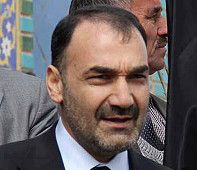
Atta-Mohammad-NoorFor more than a decade, Atta Mohammad Noor, governor of Balkh province, has controlled this northern region with an iron hand, imbued with the authority of the freedom fighter he was and the ultra-rich businessman he has become. Guns, militias and guile, as well as his ability to provide security, have made him one of the country’s most formidable strongmen.

To many war-weary Afghans, former warlords such as Noor — who are accused of human rights abuses yet rule with impunity — have to be marginalized for the nation to move into a new era. To their supporters, these former warlords remain a bulwark against the Taliban, al-Qaeda and, possibly, the Islamic State, more vital than ever as the U.S. military mission edges to a close.

“If Ustad Atta is ever replaced as governor, there will be chaos here, and it will spread to other provinces,” declared Haji Abdul Wahab, a close friend who manages the park, which Noor built. “He’s got a special place in the hearts of Afghan people.”

Noor’s rise and endurance is a legacy of America’s longest war and an emblem of a fresh contest for influence. It pits the aspirations of Western-educated technocrats keen to transform Afghanistan against conservative ethnic and tribal strongmen determined to preserve the status quo. That struggle is becoming the definitive battle for the future of every aspect of the country’s affairs — from forming a new cabinet to tackling rampant corruption to engaging in peace talks with the Taliban. [Continue reading…]

Facebooktwittermail