Author Archives: News Sources

Why the Mubarak regime is hated, feared and loathed by the mass of ordinary Egyptians

Robert Tait describes 28 hours in the dark heart of Egypt’s torture machine:

The sickening, rapid click-click-clicking of the electric shock device sounded like an angry rattlesnake as it passed within inches of my face. Then came a scream of agony, followed by a pitiful whimpering from the handcuffed, blindfolded victim as the force of the shock propelled him across the floor.

A hail of vicious punches and kicks rained down on the prone bodies next to me, creating loud thumps. The torturers screamed abuse all around me. Only later were their chilling words translated to me by an Arabic-speaking colleague: “In this hotel, there are only two items on the menu for those who don’t behave – electrocution and rape.”

Cuffed and blindfolded, like my fellow detainees, I lay transfixed. My palms sweated and my heart raced. I felt myself shaking. Would it be my turn next? Or would my outsider status, conferred by holding a British passport, save me? I suspected – hoped – that it would be the latter and, thankfully, it was. But I could never be sure.

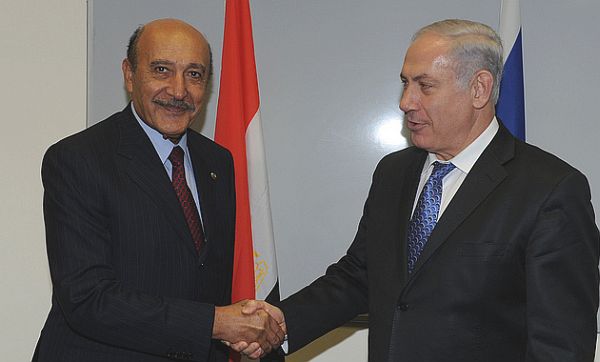
I had “disappeared”, along with countless Egyptians, inside the bowels of the Mukhabarat, President Hosni Mubarak’s vast security-intelligence apparatus and an organisation headed, until recently, by his vice-president and former intelligence chief, Omar Suleiman, the man trusted to negotiate an “orderly transition” to democratic rule.

Judging by what I witnessed, that seems a forlorn hope.

I had often wondered, reading accounts of political prisoners detained and tortured in places such as junta-run Argentina of the 1970s, what it would be like to be totally at the mercy of, and dependent on, your jailer for everything – food, water, the toilet. I never dreamed I would find out. Yet here I was, cooped up in a tiny room with a group of Egyptian detainees who were being mercilessly brutalised.

Facebooktwittermail

Iran bans unauthorized support for Egyptian revolution

BBC News reports:

Iranian opposition leader Mehdi Karroubi has been put under house arrest, his official website says.

Security officials at the premises say the measures will last until next week, it adds. No one is being allowed to enter the house except his wife.

Mr Karroubi and Mir-Hossein Mousavi, another opposition leader, had called for a rally on Monday to support the popular uprisings in Egypt and Tunisia.

The authorities refused permission, calling it a political move.

Although Iran’s establishment supports the Egyptian popular protests, a spokesman for Iran’s judiciary said on Wednesday that Iranians should show their solidarity by taking part in official rallies this Friday to commemorate the anniversary of Iran’s revolution.

Choosing another day to hold a rally means that the opposition leaders “wish to be in a separate front and will create divisions”, he told a news conference in Tehran.

Facebooktwittermail

How the Egypt revolution could help Israel

The historian, Kai Bird, writes:

[T]he cold peace Israel has forged with Arab dictators is unraveling. This may, in the short term, empower Israeli Prime Minister Benjamin Netanyahu’s Likud ideologues who will argue that Arab democrats are out to “delegitimize” Israel. But in the long run, the emergence of an Arab democratic polity should convince Israeli voters that their leaders have become too complacent and too isolationist. After Tahrir, a majority of Israelis may conclude that they can’t live in the neighborhood without forging a real peace with their neighbors.

The separation wall was never a real answer to Israel’s security predicament, and it will be less so when a democratically elected government governs Egypt. The policy of separation — hafrada in Hebrew — had some short-term strategic viability when the largest Arab country was willing to police Israel’s southern border and keep Hamas penned up inside its Gaza prison. But no legitimate government in Cairo will be able to continue its complicity with the Gaza blockade — particularly not if the Muslim Brotherhood is a player in a new government.

In reality, Israel will come under renewed pressure to deal with both Hamas and the Palestinian Authority in the West Bank. Hamas’s ideology is certainly vile, but it won the last Palestinian legislative election in 2006 and has more or less observed a cease-fire with Israel since early 2009. In December 2010, the Hamas prime minister in Gaza, Ismail Haniyeh, announced that his party would abide by any peace settlement if it were to be ratified by a referendum of the Palestinian people. Furthermore, as we recently learned from Al Jazeera’s Palestine Papers — the leaked documents on the 2008 Abbas-Olmert talks — the two sides are not that far apart on a comprehensive peace settlement that would create a Palestinian state.

So here is the uplifting news: What is happening in Tahrir Square may actually propel the politicians in Washington, Jerusalem, and Ramallah to forge the Israeli-Palestinian peace deal that all of us know is there for the taking. And if that doesn’t happen? Absent a comprehensive peace settlement, Israel and the United States will find themselves increasingly isolated in the new Middle East.

Facebooktwittermail

At CIA, deadly mistakes, then promotions

Associated Press report reveals the lack of accountability in the CIA where officers responsible for botched operations end up getting promotions.

In December 2003, security forces boarded a bus in Macedonia and snatched a German citizen named Khaled el-Masri. For the next five months, el-Masri was a ghost. Only a select group of CIA officers knew he had been whisked to a secret prison for interrogation in Afghanistan.

But he was the wrong guy.

A hard-charging CIA analyst had pushed the agency into one of the biggest diplomatic embarrassments of the U.S. war on terrorism. Yet despite recommendations by an internal review, the analyst was never punished. In fact, she has risen to one of the premier jobs in the CIA’s Counterterrorism Center, helping lead President Barack Obama’s efforts to disrupt al-Qaida.

In the years since the Sept. 11, 2001, terrorist attacks, officers who committed serious mistakes that left people wrongly imprisoned or even dead have received only minor admonishments or no punishment at all, an Associated Press investigation has revealed. The botched el-Masri case is but one example of a CIA accountability process that even some within the agency say is unpredictable and inconsistent.

Though Obama has sought to put the CIA’s interrogation program behind him, the result of a decade of haphazard accountability is that many officers who made significant missteps are now the senior managers fighting the president’s spy wars.

The AP investigation of the CIA’s actions revealed a disciplinary system that takes years to make decisions, hands down reprimands inconsistently and is viewed inside the agency as prone to favoritism and manipulation. When people are disciplined, the punishment seems to roll downhill, sparing senior managers even when they were directly involved in operations that go awry.

Two officers involved in the death of a prisoner in Afghanistan, for instance, received no discipline and have advanced into Middle East leadership positions. Other officers were punished after participating in a mock execution in Poland and playing a role in the death of a prisoner in Iraq. Those officers retired, then rejoined the intelligence community as contractors.

Facebooktwittermail

The young cyberactivists behind the Egyptian revolution

Maryam Ishani writes:

Nearly three years ago, a group of youth activists with a strong sense of Internet organizing and more than a little help from abroad was preparing for a grassroots, high-tech opposition movement.

In early 2008, Ahmed Salah and Ahmed Maher, young members of the Kefaya (“Enough”) opposition group that made a strong run against Mubarak in the 2005 presidential election, branched off and formed a group they called the April 6 Youth Movement. The group took its name from the date of the first demonstration it supported — a workers’ strike planned for April 6, 2008, in el-Mahalla el-Kubra, an important town for the Egyptian textile industry. To galvanize the strike effort, April 6 activists used Facebook, Twitter, blogs, and other new-media tools to report events, alert participants about security situations, and provide legal assistance to those rounded up by state security forces.

But from the beginning, the group’s founders were anticipating a far more critical date: the Nov. 28, 2010, parliamentary elections. With memories of Iran’s post-election protests still fresh in their minds, the young activists hoped that the vote — sure to be marred by ballot stuffing, bought votes, and thuggery — would spark a mass movement that would bring Mubarak’s nearly 30-year reign to an end.

By early 2009, the group’s membership was 70,000 strong — still small numbers for a country of 82 million, yet it represented something genuinely new in Egypt’s stagnant political environment. The young activists soon took cues from Iran’s Green Movement, which was born out of the June 2009 post-election protests. They built on best practices and addressed the glaring weaknesses of the Iranian grassroots opposition movement. One of their first projects was a manual on protest methods, composed mostly of contributions from the group’s members, which were solicited online. Friends passed it to friends and added ideas on topics ranging from security to graffiti. I became aware of the group in January 2010, when a fellow reporter forwarded me the manual.

In its early experiments with organizational tactics and online safety, the group sometimes reached out to some unlikely partners. Digital media experts in the organization consulted with Italian anarchist party activists for advice on how to use “ghost servers,” which bounce Internet searches to nonexistent servers to confuse any online monitoring, allowing users to share information and continue coordinating their activities in heavily monitored digital and telecom environments, such as in Egypt, where email accounts and Facebook are watched closely.

Facebooktwittermail

Egypt’s army ‘involved in detentions and torture’ of hundreds of anti-government protesters

The Guardian reports:

The Egyptian military has secretly detained hundreds and possibly thousands of suspected government opponents since mass protests against President Hosni Mubarak began, and at least some of these detainees have been tortured, according to testimony gathered by the Guardian.

The military has claimed to be neutral, merely keeping anti-Mubarak protesters and loyalists apart. But human rights campaigners say this is clearly no longer the case, accusing the army of involvement in both disappearances and torture – abuses Egyptians have for years associated with the notorious state security intelligence (SSI) but not the army.

The Guardian has spoken to detainees who say they have suffered extensive beatings and other abuses at the hands of the military in what appears to be an organised campaign of intimidation. Human rights groups have documented the use of electric shocks on some of those held by the army.

Egyptian human rights groups say families are desperately searching for missing relatives who have disappeared into army custody. Some of the detainees have been held inside the renowned Museum of Egyptian Antiquities on the edge of Tahrir Square. Those released have given graphic accounts of physical abuse by soldiers who accused them of acting for foreign powers, including Hamas and Israel.

Facebooktwittermail

Engaging the Islamists

Shadi Hamid writes:

Whether we like it or not, the Muslim Brotherhood – Egypt’s major Islamist group – is going to play a significant, perhaps crucial role in a post-Mubarak Egypt. Too often, American policy makers fall under the illusion that they can somehow have Arab democracy without having the largest opposition groups participate. A “democracy” that excludes a group with hundreds of thousands of members is unlikely to be seen as much more legitimate than the autocracy that came before it.

This brings us back to a critical question: do Islamists, in fact, want to rule Egypt? A careful consideration of the evidence suggests that mainstream Islamists display an odd ambivalence – and even aversion – to executive power. Islamist groups such as the Muslim Brotherhood very rarely run full electoral slates. In a recent article for the Journal of Democracy, I looked at the five countries where Islamist opposition groups contest elections on a regular basis – Egypt, Jordan, Kuwait, Bahrain, Morocco, and Yemen – and found that the average percentage of seats the major Islamist groups contest is a mere 36 percent.

Because they put a premium on self-preservation, Islamist groups go out of their way to avoid provoking the government or the international community. As Islamists themselves will often say, the world is not yet ready for them (they even have a phrase for this: “the American veto”).

This is not to say that the Muslim Brotherhood won’t ever try to win an Egyptian election. It just means that it won’t anytime soon. What then does the group want in the interim? It is worth recalling that the last several years saw one of the most intense periods of anti-Islamist repression since the 1960s. The Brotherhood has had businesses closed, financial assets seized, and thousands of its members imprisoned. Its priority, then, is to slowly rebuild its battered infrastructure, boost membership, and sort out internal frictions between “reformists” and “traditionalists.” The Brotherhood is not a political party, so, presumably, it won’t act like one. For a mass movement whose lifeline is social-service provision, preaching, and educational activities, safeguarding organizational interests takes precedence.

With all of this in mind, the Brotherhood has stayed on message since the protests began, emphasizing the need for a “civil, democratic state.” A civil, democratic state is precisely what will grant it the greatest freedom of movement. On the other hand, advocating for something more “Islamic” or adopting a higher profile would threaten to derail the uprising, which benefits from the perception that it is secular. This is the sort of cautious, calculated strategy that will define the Brotherhood’s approach in the coming years.

Facebooktwittermail

Rural Egyptians support the revolution

Reuters reports:

Beyond Tahrir Square, beyond the boundaries of the sprawling capital, beyond even the provincial cities where protesters joined the call to topple President Hosni Mubarak, rural Egypt is restless for change.

Scraping a meagre living from the land, farmers and rural workers in Egypt’s agricultural heartland have watched the largely urban uprising that has shaken the ruling system and many back the web-savvy youths who galvanised the nation.

A few have turned up in Cairo in their galabiyas, the robes worn in the fields, although most are too busy trying to feed their families. But many believe it is time for a new era, even if some think Mubarak should stay on a few months more.

“The revolution is good … It will give us stability but the protest should stop and the president should be allowed to stay until the end of his term,” said farmer Fawzi Abdel Wahab, working a field near the Nile Delta city of Tanta.

“If the president doesn’t do as he promised, Tahrir Square is still there and the youth will not die, they can go back,” he said, his wife and daughter nodding in agreement.

The protesters want Mubarak to quit now. Mubarak has said he will step down at the end of his term in September.

The protests may have begun with an educated youth and liberal, urban elite, but a tour of the Nile Delta suggests discontent is more widespread. Mubarak’s government needs to do more than meet the aspirations of the middle class.

“The ideas the youths called for in their revolution express those of all Egyptian people, including farmers and residents of rural areas who, like the rest of Egyptians in big cities, face the same needs and suffering,” said analyst Nabil Abdel Fattah.

Satellite dishes that litter roof tops of small country dwellings or village coffee shops spread the word far and wide.

“New media, mainly satellite channels, have managed to spread the message of the revolution everywhere, including rural areas,” said Abdel Fattah of the Al Ahram Centre for Political and Strategic Studies.

Facebooktwittermail

Omar Suleiman: Tel Aviv’s man in Cairo

The Daily Telegraph reports:

The new vice-president of Egypt, Omar Suleiman, is a long-standing favourite of Israel’s who spoke daily to the Tel Aviv government via a secret “hotline” to Cairo, leaked documents disclose.

Mr Suleiman, who is widely tipped to take over from Hosni Mubarak as president, was named as Israel’s preferred candidate for the job after discussions with American officials in 2008.

As a key figure working for Middle East peace, he once suggested that Israeli troops would be “welcome” to invade Egypt to stop weapons being smuggled to Hamas terrorists in neighbouring Gaza.

The details, which emerged in secret files obtained by WikiLeaks and passed to The Daily Telegraph, come after Mr Suleiman began talks with opposition groups on the future for Egypt’s government.

Facebooktwittermail

Wael Ghonim interview – updated again

The Guardian reports:

An emotional television interview given by a young Egyptian Google executive who was arrested after playing a key role in using the internet to spark the uprising against Hosni Mubarak is being hailed as a landmark moment in the ongoing revolt after it struck a chord across Egypt and beyond.

Wael Ghonim, a marketing manager who became a hero to anti-government protestors after he went missing on 27 January, confirmed in the interview following his release that he was behind a highly influential Facebook page that helped lead to what he described as “the revolution of the youth of the internet.”

Before his appearance on Monday on a privately owned Egyptian television channel, the father-of-two was held in repute by many who believed that he was the anonymous activist behind a Facebook page named after a young Egyptian businessman whose death at the hands of police in June set off months of protests.

The page, “We are all Khaled Said”, became one of the main tools for organising the demonstrations that started the revolt in earnest on 25 January.

Click “CC” button (lower right) to turn on English subtitles.

Facebooktwittermail

The death of Israeli democracy

Mya Guarnieri writes:

As Egyptians demand their freedom, I ask a Muslim in Jaffa if we will see the same in Israel. “I don’t think so,” he answers. “Even with all the mess here, we have democracy.”

But, do we? And for how much longer?

As we speak, the Knesset is debating one of a slew of anti-democratic bills. Some of the legislation targets Palestinian citizens of Israel – people like this man and his wife, who is quick to offer me coffee and her opinions.

If the Admissions Committee law passes, for example, this young couple and their three children could find themselves barred from living in certain communities and villages, even those built on public land. If the Nakba Bill is approved, organisations that commemorate the 1948 expulsion of Palestinians will be ineligible for public funds. This is a “watered down” version of the bill. The original version sought to imprison anyone who publicly marked the Nakba Day. Other legislation aims to silence individuals and groups that criticise the government.

The Israeli Democracy Institute (IDI) says that such bills pose “serious threats” to the country. Explaining that the death of democracy is “a gradual process,” the IDI, a non-partisan think-tank based in Jerusalem, warns: “People who are concerned but are waiting for the ‘moment of real danger’ to abandon their routines and take steps to defend democracy are making a mistake. The moment of real danger is now.”

Facebooktwittermail

Hezbollah backs Egypt protests

Al Jazeera reports:

Sayyed Hassan Nasrallah, the leader of Hezbollah, has said that protesters calling for the resignation of Hosni Mubarak, the Egyptian president, are changing the region with their battle for “Arab dignity”.

In his first comments since unrest began in Egypt almost two weeks ago, Nasrallah said on Monday that his Shia movement did not intend to intervene in the “internal business” of protesters, or to influence their decisions.

“Your movement will entirely change the face of our region for the interest of its own people,” Nasrallah said in a televised address to a Beirut conference held in support of the Egyptian protests.

“You are going through the battle of Arab dignity, restoring the dignity of Arab people.”

Facebooktwittermail

Exile in Germany for Mubarak?

Der Spiegel reports:

Will Hosni Mubarak travel to Germany as a patient as part of a graceful exit strategy for the Egyptian president? Plans for a possible hospital stay here appear to be more concrete than previously believed. SPIEGEL ONLINE has learned that a luxury clinic near Baden-Baden is being favored.

The United States government’s scenario for an end to the political chaos in Egypt appears to be this: President Hosni Mubarak travels to Germany for a “prolonged health check” that would offer the 82-year-old a dignified departure. Over the weekend, the New York Times reported that secret talks to that effect were being held between the US government and Egyptian military officials.

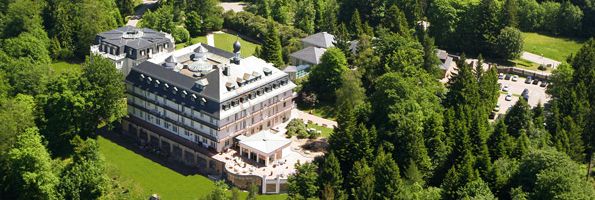
According to information obtained by SPIEGEL ONLINE, plans for a possible hospital stay in Germany are far more concrete than had been assumed so far. Talks are already being held with suitable hospitals, particularly with the Max-Grundig-Klinik Bühlerhöhe in the southwestern town of Bühl near Baden-Baden, SPIEGEL ONLINE has learned from sources close to the clinic. The hospital management declined to comment.

Facebooktwittermail

A regime with no intention of stepping aside

Robert Mackey:

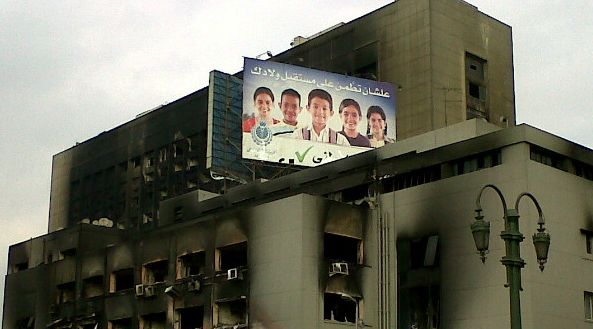
As Egypt’s government tries to minimize the importance of the protests, Girish Juneja, a producer for Britain’s Channel 4 News in Cairo, spotted a remarkable symbol of the ruling National Democratic Party’s determination to hang on to power on Monday. The burned-out ruins of the party’s headquarters in Cairo, which was torched during clashes 10 days ago, is now adorned with a sunny new political poster, calling on Egyptians to rally to the N.D.P. “to ensure the future of your children.”

Facebooktwittermail

After Mubarak

Adam Shatz writes:

Mubarak, when he stands down, is not likely to be missed by many people in Egypt, where he has pledged to spend his last days, but he will be missed in Washington and, above all, in Tel Aviv. Mubarak and Omar Suleiman, now the interim vice president, worked closely with Israel on everything from the Gaza blockade to intelligence-gathering; they allowed Israeli warships into the Suez Canal to prevent weapons smuggling into Gaza from Sudan, and did their best to stir up tensions between Fatah and Hamas. The Egyptian public is well aware of this intimate collaboration, and ashamed of it: democratisation could spell its end. A democratic government isn’t likely to abolish the peace treaty with Israel – even some of the leaders of the Muslim Brotherhood have said they would respect it. But Egyptian foreign policy would be set in Cairo rather than in Washington and Tel Aviv, and the cold peace would grow colder. A democratic government in Cairo would have to take public opinion into account, much as Erdogan’s government does in Turkey: another former US client state but one that, in marked contrast to Egypt, has escaped American tutelage, made the transition to democracy under an Islamist government, and pursued an independent foreign policy that is widely admired in the Muslim world. If Egypt became a democracy, it might work to achieve Palestinian unity, open up the crossing from Gaza and improve relations with Iran and Hizbullah: shifts which would be anathema to Israel.

Meanwhile, the New York Times reports on the Obama administration’s latest moves to back Mubarak II: Egypt’s torture chief, Omar Suleiman:

The United States and leading European nations on Saturday threw their weight behind a gradual transition in Egypt, backing attempts by the country’s vice president, Omar Suleiman, to negotiate with opposition groups without immediately removing President Hosni Mubarak from power.

The strong endorsement came as Mr. Suleiman, a longtime security official and confidante of Mr. Mubarak, told opposition leaders that he would not press his boss to resign before September and ruled out any delegation of Mr. Mubarak’s power, central demands of the opposition.

Mr. Mubarak’s ruling party then announced a shake-up that removed its old guard, including his son Gamal, while installing younger, more reform-minded figures as a modest gesture to protesters.

The moves amounted to a rebuff to protesters who have posed the most serious challenge to the nearly three-decade rule of Mr. Mubarak, a pillar of the American-backed order in the Middle East.

Hundreds of thousands of demonstrators have demanded faster and more sweeping changes to the military-dominated government that has relied on an ossified ruling party, police, and a powerful clique of businessmen at the center of power.

By emphasizing the need for a gradual transition, only days after emphasizing that change there must begin immediately, the Obama administration was viewed as shifting away from protesters in the streets and toward stronger backing for Mr. Mubarak’s hand-picked elite.

Issandr El Amrani adds:

There is a vast repositioning taking place in elite Egyptian politics. Just an hour ago or so it was announced that Hosni and Gamal Mubarak had resigned from their positions in the NDP (chairman and deputy sec-gen / head of Policies Committee respectively), as had Safwat al-Sherif (formerly Secretary General). You can see the old structure in the chart I put up a few days ago. Moufid Shehab has also lost his position, as has Zakariya Azmi (crucially, Mubarak’s longstanding chief of staff). No doubt we’ll hear of more.

This is a game of musical chairs to install a new political elite, some of which will be those who survived the old one. The new secretary-general of the NDP is Hossam Badrawy, once a enthusiastic backer of Gamal and MP between 2000-2005. Badrawy one was of the liberal, reformist NDPers who wanted to bring change from the inside. He was one of the most reasonable figures in the party and did not simply ignore problems like human rights. However, we was also associated with efforts at educational reform that bore little fruit and an attempt at a reform to the health sector that seemed to benefit his main business, private healthcare.

In part of the ongoing coup carried out by Omar Suleiman and his army buddies (with Mubarak remaining as a fig leaf so it is not seen as such) they need a new political class. Badrawy has class, money and social clout.

Facebooktwittermail