Author Archives: News Sources

Holocaust survivors warn of stirrings of neo-fascism in Israel

The Daily Telegraph reports:

Until this month, the shadowy Lehava organisation was best known for issuing an eccentric demand in March urging Bar Refaeli, an Israeli model, not to marry Leonardo DiCaprio, the American actor, because he is a gentile.

But in recent weeks it has taken on a more sinister hue by spearheading a series of actions that included a rally in the coastal city of Bat Yam to denounce Jews who rent their homes to Arabs.

In the broader political spectrum, Lehava may represent a tiny minority of malcontents but there is growing unease in Israel after the message about renting homes was effectively endorsed by 300 rabbis.

The rabbis, some of them of senior rank, signed up to an edict issued last month that declared: “It is forbidden in the Torah to sell a house or a field in the land of Israel to a foreigner.”

With its undertones reminiscent of 1930s Berlin, where Jews were relegated to second-class status and denied the right to rent German-owned properties, the pronouncement has appalled Holocaust survivors.

“As someone who suffered as a Jew and underwent the Holocaust, I remember the Nazis throwing Jews out of their apartments and city centres in order to create ghettos,” said Noah Flug, the chairman of the International Association of Holocaust Survivors.

“I remember how they wrote on benches that no Jews were allowed, and of course it was prohibited to sell or rent to Jews. We thought that in our country this wouldn’t happen.”


Facebooktwittermail

Why EL PAÍS chose to publish the leaks

Javier Moreno, the editor of the Spanish newspaper EL PAÍS, writes:

Two senior journalists from EL PAÍS met with Assange in Switzerland on several occasions, but I have only met him once, although I have spoken to him on the telephone several times. Those conversations were limited to establishing a timetable for publication of the leaked documents, and to agree on measures to protect the lives of people who might face the death sentence, or were operating in countries where there were no legal guarantees.

It is also important to establish that at no time did Assange ask for money in return for providing access to the leaked documents, nor would EL PAÍS have agreed to such terms. The documents’ reliability are beyond question, and nobody – not even opponents of their publication – have questioned their authenticity. The obstinate focus on Assange and his methods, the scrutiny of his motivations, and the repeated attempts to destroy his personal reputation all reflect the colossal lack of respect that US diplomats show for the laws, rules and procedures in the countries where they carry out their missions – beginning with Spain, if the published cables are anything to go by.

We must not lose sight of the fact that the important thing about the WikiLeaks revelations are the revelations themselves, despite the media choosing to focus a substantial amount of its coverage on supposed shady deals that the newspapers involved have cut with Assange; on the way that WikiLeaks is financed; the organization’s alleged lack of transparency; and, worse still, on the allegations of sexual impropriety on his part.

Leaving aside the debate about the future of journalism and new technology in the WikiLeaks age, there is no doubting that the information made available by the whistleblower site is of paramount interest, despite the efforts of governments to hide or ignore the damage that they have caused. For example, after three weeks of revelations, it is now abundantly clear that the US Embassy in Madrid pressured, conspired, and did everything in its power to achieve goals that no ambassador would ever have dared suggest in public, much less insist upon.

Even the least attentive observer cannot fail to be shocked by the maneuvers to shut down three investigations by the High Court that affected the United States, or by the efforts to force Spanish companies and banks to cease trading with Iran, even though they were acting within the boundaries of international law.

Fortunately, Spain’s judges are fiercely independent – as the US ambassador bitterly pointed out on more than one occasion. By the same token, this country’s business and financial community knew that it was not breaking international law by trading with Iran. Nevertheless, the US Embassy exercised obscene pressure in a bid to achieve its aims, as the leaked documents published by EL PAÍS show.

6. A question of ethics. I don’t know who gave the order. I don’t know if came directly from Washington, or if the US ambassador came up with the idea himself. But it is clear from the cables that the US Embassy in Madrid was determined to stop Spanish companies from doing business with Iran. To this end, the Embassy did not hesitate to employ whatever method it deemed necessary, with no heed to the potential costs. And those costs were high. It was equally aggressive in trying to derail Spanish judicial inquiries into torture at Guantánamo, the CIA’s kidnapping of suspected Islamic militants, and the killing by US troops in Iraq of a Spanish cameraman in 2003.

It may yet emerge that the US Embassy broke the law in pursuing its country’s perceived interests. But in any event, what the WikiLeaks cables show is an all-too close relationship between the US Embassy, Spanish government and judicial officials that can only be a threat to the democratic health of this country.

Facebooktwittermail

What really happened in Bilin and how the New York Times got it wrong

The New York Times‘ Israeli reporter, Isabel Kershner, didn’t witness the demonstration in Bilin that resulted in Jawaher Abu Rahme losing her life.

Felice Gelman was there and describes how the Times got the story wrong:

I can say that Isabel Kershner’s comment in the New York Times, that these demonstrations “inevitably end in clashes, with young Palestinians hurling stones and the Israeli security forces firing tear gas, stun grenades and rubber bullets” completely reverses the course of events. The IOF commenced firing tear gas long before any demonstrators neared them. There was little stone throwing during the demonstration and it did not commence until long after the tear gas.

For a group of demonstrators that got closer than I did (maybe 100 yards or so from the IOF), the soldiers fired a tear gas barrage in front of them, then behind them — trapping them. Then numerous tear gas canisters were fired into the center of the group — clearly a punitive, not defensive, action.

In addition, the IDF spokeman is claiming that Jawaher Abu Rahme was released from the Ramallah hospital and died at home. This is just an effort to complicate the chain of evidence that she was asphyxiated by tear gas. She died at 9 am in the morning at the hospital and many people, including Andrew el Kadi, waited there until her body was brought out to be taken to Bil’in for burial.

New York Times — all the news that’s fit to print!

Facebooktwittermail

Demonstrators ‘return’ tear gas canisters to US ambassador home over the killing of a Bil’in protester

Joseph Dana reports:

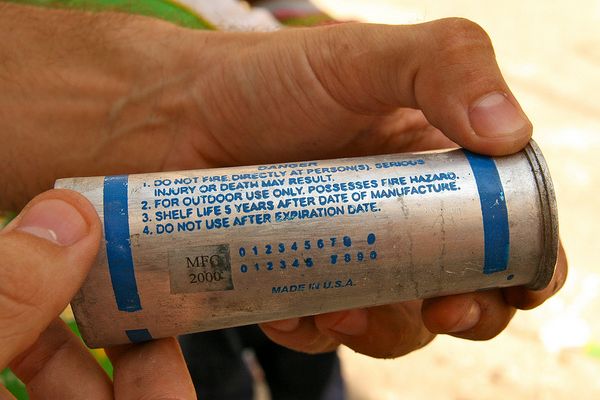
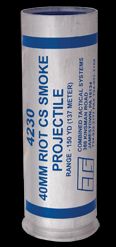
Israeli activists protesting the killing of Bil’in’s Jawaher Abu Rahmah ‘returned’ spent tear gas canisters to the residence of the American ambassador to Israel late Saturday evening. Jawaher Abu Rahmah, 36, was evacuated to the Ramallah hospital yesterday after inhaling massive amounts of tear-gas during the weekly protest in Bil’in, and died of poisoning this morning. The tear gas used by the Israeli forces in Bil’in is manufactured by Combined Systems Inc.; a United States company based in Jamestown, Pennsylvania. This is the first protest where empty tear gas canisters have been returned to an ambassador’s home.
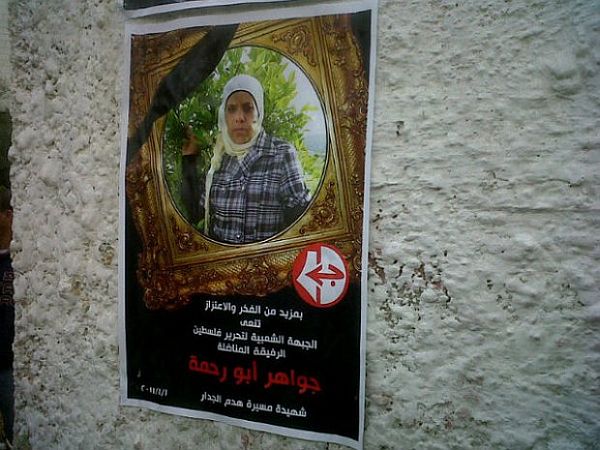
Approximately twenty five Israeli protesters gathered in front of the residence of American ambassador to Israel, James B. Cunningham around 1am local time. The protesters ‘returned’ loads of spent tear gas canisters collected in the West Bank village of Bil’in in protest of the murder of Bil’in’s Jawaher Abu Rahmah. The demonstrators also made noise throughout the Ambassador’s neighborhood informing residents of how American military aid to Israel is being used to kill unarmed and nonviolent demonstrators in the West Bank. They chanted, “one, two, three, four stop the occupation stop the war. Five, six, seven, eight end the funding (US) end the hate.”

Five demonstrators were arrested in the action and are currently being held in detention.

Facebooktwittermail

Bradley Manning and the case against solitary confinement

Lynn Parramore lays out the reasons why solitary confinement is a form of torture.

The degree of civilization in a society can be judged by entering its prisons.
~Fyodor Dostoevsky

In the earliest days of our Republic, a group of well-meaning Philadelphia Quakers set out to reform the prison system. The idea was to remove convicts from the mayhem and corruption of overcrowded jails to solitary cells where sinners would return to mental and spiritual health through reflection. In the Walnut Street Jail, no windows would distract the prisoners with street life; no conversation would disturb their penitence. Alone with God, they would be rehabilitated.

There was a small problem. Many of the prisoners went insane. The Walnut Street Jail was shut down in 1835.

But the word penitentiary became part of the language, and the idea of placing prisoners in solitary confinement did not die. It seemed so reasonable – so much better than chain gangs or public stocks. New prisons opened to test the theory that solitude might bring salvation to criminals.

Charles Dickens had a keen interest in prison conditions, having witnessed his father’s detention in a Victorian debtor’s prison. When he heard about the latest American innovation in housing convicts, he came to see for himself. At Philadelphia’s Eastern State Penitentiary, the wretches he found in solitary confinement were barely human spectres who picked their flesh raw and stared blankly at walls. His on-the-spot conclusion: Solitary confinement is torture. [Continue reading.]

Facebooktwittermail

How WikiLeaks enlightened us in 2010

CBS News has put together a fairly detailed summary of the major revelations provided by WikiLeaks:

WikiLeaks has brought to light a series of disturbing insinuations and startling truths in the last year, some earth-shattering, others simply confirmations of our darkest suspicions about the way the world works. Thanks to founder Julian Assange’s legal situation in Sweden (and potentially the United States) as well as his media grandstanding, it is easy to forget how important and interesting some of WikiLeaks’ revelations have been.

WikiLeaks revelations from 2010 have included simple gossip about world leaders: Russia’s PM Vladimir Putin is playing Batman to President Dmitri Medvedev’s Robin; Iranian President Mahmoud Ahmadinejad is crazy and was once slapped by a Revolutionary Guard chief for being so; Libya’s Col. Muammar el-Qaddafi has a hankering for his voluptuous blond Ukrainian nurse; and France’s President Nicholas Sarkozy simply can’t take criticism.

However, WikiLeaks’ revelations also have many major implications for world relations. The following is a list of the more impactful WikiLeaks revelations from 2010, grouped by region. [Continue reading.]

Facebooktwittermail

8 smears and misconceptions about WikiLeaks spread by the media

AlterNet reports:

The corporate media’s tendency to blare misinformation and outright fabrications has been particularly egregious in coverage of WikiLeaks. As Glenn Greenwald has argued, mainstream news outlets are parroting smears and falsehoods about the whistleblower site and its founder Julian Assange, helping to perpetuate a number of “zombie lies” — misconceptions that refuse to die no matter how much they conflict with known reality, basic logic and well-publicized information.

Here are the bogus narratives that keep appearing in newspapers and on the airwaves.

1. Fearmongering that WikiLeaks revelations will result in deaths. So far there’s no evidence that WikiLeaks’ revelations have cost lives. In fact, right before the cables were released, Pentagon officials admitted there were no documented instances of people being killed because of information exposed by WikiLeaks’ previous document releases (and unlike the diplomatic cables, the Afghanistan files were unredacted).

That’s not to say that the exposure of secret government files can’t somehow lead to someone, somewhere, someday, being hurt. But that’s a pretty high bar to set, especially by a government engaged in multiple military operations — many of them secret — that lead to untold civilian casualties.

2. Spreading the lie that WikiLeaks posted all the cables. WikiLeaks has posted fewer than 2,000 of the 251,287 cables in its possession. The whistleblower released those documents in tandem with major news outlets including the Guardian, El Pais and Le Monde, and used most of the redactions employed by those papers to protect the identities of people whose lives could be endangered by exposure. The AP detailed this process in a December 3 article, but this did not stop officials and pundits from howling that WikiLeaks “indiscriminately” dumped all the cables online. Much of the media mindlessly repeated the claim.

Greenwald and others have battled to kill the myth that the whistleblower site threw up all the cables without taking any precautions to protect people, but it keeps coming up. Just this week NPR issued an apology for all the times contributors and guests have implied or outright voiced the falsehood that WikiLeaks blindly posted all the cables at once.

3. Falsely claiming that Assange has committed a crime regarding WikiLeaks. The State Department is working really hard to pin a crime on Julian Assange. The problem is that so far he doesn’t appear to have broken any laws. Assange is not a U.S. citizen, he does not work for the U.S. government, and the documents WikiLeaks posted were procured by someone else. As Greenwald has repeatedly pointed out, it’s not against the law to publish classified U.S. government information. If it were, hundreds of journalists would be in prison right now. [Continue reading.]

Facebooktwittermail

Don’t be distracted by body scanners: government spying and the Fourth Amendment

Martin Lijtmaer writes:

On December 15, Bill of Rights Day, the uproar over body scanners had brought the Fourth Amendment to the front of the public debate. There are legitimate reasons to be upset over invasive, costly and arguably ineffective measures adopted in the guise of protecting national security. But the call to arms over body scanners is a distraction.

First, it’s debatable whether body scanners violate the Fourth Amendment. There is a plausible argument that such security measures are reasonable in light of potential hijacking threats. With 9/11 still etched in our national psyche, it’s hard to imagine that courts would deem body scanners unconstitutional.

Second and more important, the uproar over body scanners distracts us from far more egregious constitutional violations routinely committed by our government.

The Fourth Amendment explicitly prohibits authorities from conducting “unreasonable searches and seizures” and requires judicially authorized warrants based on “probable cause” that “particularly describ[es] the place to be searched and the persons or things to be seized.” Thanks to the Fourth Amendment, police must reasonably suspect criminal activity before conducting a stop and, absent rare exceptions, must secure a warrant, signed by a judge, before conducting a search.

However, in the wake of 9/11, federal agencies have fully ignored these constitutional restraints.

Let’s take, for example, the rampant use of national security letters (NSLs) by the FBI. NSLs are requests for information targeting an individual, but issued to third parties, such as Internet service providers, financial institutions or libraries. The Fourth Amendment requires that such information be obtained through a search warrant signed by a judge, supported by probable cause and specifically describing both the target of the warrant and reason for it.

However, the FBI employs NSLs unrestrained by any of these constitutional requirements. In other words, the FBI can access your highly personal and private information on a whim. And it has not used this power sparingly.

Facebooktwittermail

PULSE’s 2010 top tens

PULSE:

In response to the curious choices in Foreign Policy magazine’s ’Top 100 Global Thinkers’ list last year, we decided to publish our own. In 2010, Foreign Policy‘s selections were even more abysmal: among others it included Robert Gates, Ben Bernanke, Hillary Clinton, David Cameron, Thomas Friedman, Ahmed Rashid, Ayaan Hirsi Ali, Bjorn Lomborg, Richard Clarke, Madeleine Albright, Salam Fayyad…and John Bolton! Would anyone outside FP’s editorial board confuse any of these names for a thinker? Once again, it appears FP chooses based on how closely an individual’s work aligns with the global military and economic agenda of the US government. Once again, we asked our writers and editors to nominate their own top 10 global thinkers. The following list was the result. Tony Judt, Chalmers Johnson… [Continue reading.]

PULSE’s top ten media figures:

This list is an attempt to honor those individuals and institutions responsible for exemplary reportage and awareness-raising in 2010. It is aggregated from the suggestions of PULSE writers and editors and is comprised of journalists, editors and publishers who have shown a commitment to challenging power, holding it to account, highlighting issues pertaining to social justice and producing output that bucks conventional wisdom and encourages critical thinking. Julian Assange, Helen Thomas… [Continue reading.]

Facebooktwittermail

Israel continues to meet non-violence with violence as West Bank protester is killed

Joseph Dana reports:

Jawaher Abu Rahmah, 36, was evacuated to the Ramallah hospital yesterday after inhaling massive amounts of tear-gas during the weekly protest in Bil’in, and died of poisoning this morning. Abu Rahmah was the sister of Bassem Abu Rahmah who was also killed during a peaceful protest in Bil’in on April 17th, 2010.

Doctors at the Ramallah hospital fought for Jawaher Abu Rahmah’s life all night at the Ramallah Hospital, but were unable to save her life. Abu Rahmah suffered from severe asphyxiation caused by tear-gas inhalation yesterday in Bil’in, and was evacuated to the Ramallah hospital unconscious. She was diagnosed as suffering from poisoning caused by the active ingredient in the tear-gas, and did not respond to treatment.

Jawaher Abu Rahmah was the sister of Bil’in activist, Bassem Abu Rahmah, who was shot dead with a high velocity tear-gas projectile during a demonstration in the village on April 17th, 2009.

Ahmed Moor, who participated in yesterday’s demonstration, adds:

The Israelis used two types of gas canisters. The first, which you can see in this short video I took (below), is a fist-sized bulbous rubber projectile. It begins to dispense gas in air, causing it to spin wildly and change directions before it hits the ground. Its trajectory is very hard to predict.

The second type of canister is the more deadly kind – the kind that killed Bassem Abu Rahmah in 2009. It’s also used liberally by the young supremacists in uniform. Yesterday the steel canisters, about fifty percent larger than a neat stack of quarters, were fired directly at protesters. Their trajectory is more or less straight, but they come at you much faster.

And the gas. Well, ‘tear gas’ is a bad name for it. It feels like a million blue shards of glass tearing at your alveoli and shredding your eyes. You can’t see and double over, trying not to breathe. Acid tears are streaming down your face, but the overwhelming sensation is of being bombarded and suffocated. You’re ensconced in darkness and your thoughts are disrupted – you only want to get away. And every breath tears at your insides; vicious animals live in your lungs. I’d rather not breathe than take one more anguished, searing, charred breath. Then, you don’t have a choice; you can’t breathe. You’re struggling to run and are overcome by dizziness. Other people help you escape.

Only Jawaher Abu Rahmah didn’t escape.

Facebooktwittermail

Stop Operation Cast Lead 2: the moral shock and awe of global silence

Richard Falk writes:

It is dismaying that during this dark anniversary period two years after the launch of the deadly attacks on the people of Gaza, code-named Operation Cast Lead by the Israelis, that there should be warnings of a new massive attack on the beleaguered people of Gaza. The influential Israeli journalist, Ron Ren-Yishai, writes on December 29, 2010, of the likely prospect of a new IDF major attack, quoting senior Israeli military officers as saying “It’s not a question of if, but rather of when,” a view that that is shared, according Ren-Yishai, by “government ministers, Knesset members and municipal heads in the Gaza region.” The bloody-minded Israeli Chief of Staff, Lt. General Gabi Ashkenazi reinforces this expectation by his recent assertion that “As long as Gilad Shalit is still in captivity, the mission is not complete.” He adds with unconscious irony, “We have not lost our right of self-defense.” More accurate would be the assertion, “We have not given up our right to wage aggressive war or to commit crimes against humanity.” And what of the more than 10,000 Palestinians, including children under the age of 10, being held in Israeli prisons throughout occupied Palestine.

Against this background, the escalation of violence along the Gaza/Israel border, should set off alarm bells around the world and at the United Nations. Israel in recent days has been launching severe air strikes against targets within the Gaza Strip, including near the civilian crowded refugee camp of Khan Younis, killing several Palestinians and wounding others. Supposedly, these attacks are in retaliation for nine mortar shells that fell on open territory, causing neither damage nor injury. Israel also had been using lethal force against children from Gaza, who were collecting gravel from the buffer zone for the repair of their homes. As usual, the Israeli security pretext lacks credibility as if ever there was an occasion for firing warning shots in the air, it was here, especially as the border has been essentially quiet in the last couple of years, and what occasional harmless rockets or mortar shells have been fired, has taken place in defiance of the Hamas effort to prevent providing Israel with any grounds for the use of force. Revealingly, in typical distortion, the Gaza situation is portrayed by Ashkenazi as presenting a pre-war scenario: “We will not allow a situation in which they fire rockets at our citizens and towns from ‘safe havens’ amid [their] civilians.” With Orwellian precision, the reality is quite the reverse: Israel from its safe haven continuously attacks with an intent to kill a defenseless, entrapped Gazan civilian population.

Perhaps, worse in some respects than this Israeli war-mongering, is the stunning silence of the governments of the world, and of the United Nations. World public opinion was briefly shocked by the spectacle of one-sided war that marked Operation Cast Lead as a massive crime against humanity, but it has taken no notice of this recent unspeakable escalation of threats and provocations seemingly designed to set the stage for a new Israeli attack on the hapless Gazan population. This silence in the face of the accumulating evidence that Israel plans to launch Operation Cast Lead 2 is a devastating form of criminal complicity at the highest governmental levels, especially on the part of countries that have been closely aligned with Israel, and also exhibits the moral bankruptcy of the United Nations System. We have witnessed the carnage of ‘preemptive war’ and ‘preventive war’ in Iraq, but we have yet to explore the moral and political imperatives of ‘preemptive peace’ and ‘preventive peace.’ How long must the peoples of the world wait?

Facebooktwittermail

Will an energy-independent, nuclear-armed Jewish state care too much about its global image?

The Wall Street Journal reports:

Two years ago, Ratio Oil Exploration LP, an energy firm here, employed five people and was worth about half a million dollars.

Today it sits at the center of a gas bonanza that has investors, international oil companies, Israeli politicians and even Hezbollah, Israel’s sworn enemy, clamoring for a piece of the action.

Ratio’s market capitalization now approaches $1 billion. The rally at Ratio is thanks to the company’s 15% stake in a giant offshore gas field called Leviathan, operated by Houston-based Noble Energy Inc.

On Wednesday, the frenzy got fresh fuel: Noble confirmed its earlier estimates that the field contains 16 trillion cubic feet of gas—making it the world’s biggest deepwater gas find in a decade, with enough reserves to supply Israel’s gas needs for 100 years.

It’s still early days, and getting all that gas out of the seabed may be more difficult than it seems today. But Noble and its partners think the field could hold enough gas to transform Israel, a country precariously dependent on others for energy, into a net-energy exporter.

Such a transformation could potentially alter the geopolitical balance of the Mideast, giving Israel a new economic advantage over its enemies.

Facebooktwittermail

Lebanon is staring into the abyss

Fawaz Gerges writes:

Once again, Lebanon is on the brink of major social and political upheaval. Rumours of an impending armed clash between Hezbollah and the pro-western governing coalition have spread like wildfire among the Lebanese people, who are hoarding food and arms in anticipation of the worst.

On the surface of it, the current crisis revolves around a United Nations tribunal set up to investigate the 2005 assassination of prime minister Rafik Hariri in 2005. An indictment from the tribunal is imminent; there is increasing evidence that the tribunal will accuse members of Hezbollah, the Shia-dominated resistance movement, as having played a central role in the assassination. If true, this could provide the spark that ignites the next confrontation.

Hassan Nasrallah, the leader of Hezbollah, has repeatedly dismissed the tribunal as an “American-Israeli” tool intended to incite sectarian strife in Lebanon. He has warned that the looming indictment will be an act of war against his group. He has demanded that the Lebanese government – led by Saad Hariri, the son of the late prime minister – distance itself from the UN tribunal and renounce it before the indictment is released.

On a deeper level, the standoff reflects a broader institutional crisis. Lebanon’s institutions are dysfunctional and defective; they have failed dismally to mediate conflict among rival groups, as well as to integrate rising social forces into the political process. The Hariri tribunal is a case in point. Lebanon’s three major institutions, the presidency, the cabinet and the parliament, are paralysed, unable to solve the impending crisis.

Facebooktwittermail

Why Netanyahu deserves to be man of the year

Dimi Reider writes:

Benjamin Netanyahu is not only one of the people who made 2010 what it was, but also one of the best prime ministers progressives ever had. To wit: The man has done more damage to the self destructive myth of Israeli exceptionalism than any leftist leader or thinker to date.

For years, progressives in the US tried to wean their country of its belief that Israel can do no wrong, and progressives in the rest of the world tried to persuade their leaders the US was too infatuated with its hysterical little ally ever to apply any of the pressure necessary to achieve progress on any front in the Middle East.

Facebooktwittermail

Not just a friend: one Palestinian’s view of Israeli activist Jonathan Pollak

The Palestinian activist Ayed Morrar writes:

I know that power – with all the authority, physical comfort, and quality of life it brings – strongly pushes a person into a world of material possessions, and people and things that stimulate their senses. Gradually, they start to protect this material paradise with walls to defend it from threats and keep from it anything that may unsettle life inside. As the blessings in that paradise increase, the walls around it multiply to the same degree.

Only great willpower and moral strength can enable a person to get to know those that live outside these walls, engage with their concerns and wounds, and even struggle for them. As a person embellishes their life in their paradise, the human and moral effort required to live the struggles of others increases. As I began to recognize this truth as someone who lives outside the walls, my understanding and respect grew for those who have been able to break through the walls of their paradise, for those who leave it and come towards me in solidarity to live my concerns and wounds, as a people who live under the oppression of occupation, lacking freedom and justice.

On December 27, prominent Israeli activist Jonathan Pollak was sentenced to three months in an Israeli jail for protesting the occupation. Jonathan’s upcoming imprisonment highlights two little-known stories – the support of some Israeli activists for our growing movement of Palestinian-led unarmed civilian protests, and the Israeli government’s effort to crush our joint struggle against the Israeli occupation. Over the last eight years, Jonathan has participated in hundreds of Palestinian-led protests in the West Bank against Israel’s military occupation. Along with other Israelis and internationals, he participated in our successful protest campaign in my West Bank village of Budrus in 2003-2004, that pushed Israel to reroute its wall and saved our farmland.

Jonathan Pollak is a great man – as great as the material temptations that the paradise of his nation affords him, in which his skills as a graphic designer would allow him to live in safety and unimaginable affluence. He is as great as the human and moral effort he exerted to know the other, to understand them, and struggle on behalf of the other for their freedom. His greatness is also the more for its rarity. He may not be the only one who stands at the borders of his moral and humanistic principles, but he remains, along with his many colleagues, part of a small group in their society. Their unusual status increases the magnitude of their struggle for justice, freedom and true peace. [Continue reading.]

Facebooktwittermail

Obama’s indiscriminate slaughter in Pakistan can only encourage new waves of militancy

Mehdi Hasan writes:

Speaking at the White House Correspondents’ Association dinner in May, Barack Obama spotted teen pop band the Jonas Brothers in the audience. “Sasha and Malia are huge fans, but, boys, don’t get any ideas,” deadpanned the president, referring to his daughters. “Two words for you: predator drones. You will never see it coming.” The crowd laughed, Obama smiled, the dinner continued. Few questioned the wisdom of making such a tasteless joke; of the US commander-in-chief showing such casual disregard for the countless lives lost abroad through US drone attacks.

From the moment he stepped foot inside the White House, Obama set about expanding and escalating a covert CIA programme of “targeted killings” inside Pakistan, using Predator and Reaper drones armed with Hellfire missiles (who comes up with these names?) that had been started by the Bush administration in 2004. On 23 January 2009, just three days after being sworn in, Obama ordered his first set of air strikes inside Pakistan; one is said to have killed four Arab fighters linked to al-Qaida but the other hit the house of a pro-government tribal leader, killing him and four members of his family, including a five-year-old child. Obama’s own daughter, Sasha, was seven at the time.

But America’s Nobel-peace-prize-winning president did not look back. During his first nine months in office he authorised as many aerial attacks in Pakistan as George W Bush did in his final three years in the job. And this year has seen an unprecedented number of air strikes. Forget Mark Zuckerberg or the iPhone 4 – 2010 was the year of the drone. According to the New America Foundation thinktank in Washington DC, the number of US drone strikes in Pakistan more than doubled in 2010, to 115. That is an astonishing rate of around one bombing every three days inside a country with which the US is not at war.

Facebooktwittermail

The struggle for East Jerusalem

Jesse Rosenfeld writes:

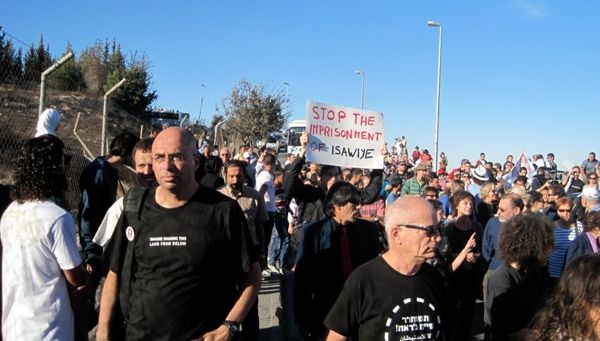
Half way down a hill, sandwiched between Jerusalem’s Hadassa hospital and Hebrew University, sits the compact and overcrowded occupied East Jerusalem village of Issawiya.

Before crossing the makeshift police checkpoint of concrete block obstacles at the edge of the University and entering the neighbourhood – which resembles more of a besieged West Bank refugee camp than a Jerusalem municipality – there is a clearly marked ‘Dead End’ street sign. On the main road leaving towards the hospital on the other side of the neighbourhood there is a wall of concrete cubes blocking any traffic, leaving just a narrow space for pedestrians to cross.

Although the Jewish dominated Hebrew University has expanded onto Issawiya’s land, the picture of Jerusalem from both places couldn’t be more different. While Israeli students attend classes oblivious to life beyond the ‘dead end’, Israeli security forces have orchestrated a campaign of regular night time arrest raids against Issawiya residents in an effort to halt growing popular resistance to segregation, home demolition and land confiscation.

The recent Israeli home demolitions, increasing the pressure on the already squeezed Palestinian community, have given rise to local youth organising ruckus street demonstrations, clashing with Israeli police and border guards at the neighbourhood checkpoints. Now the campaign has expanded and the youth of Issawiya have been joined by Israeli anti-occupation activists.

With Israel continuing to expand Jewish settlements in East Jerusalem, squeezing and displacing the Palestinian residents under the banner of an undivided Israeli capital (a claim rejected by most of the world), the Palestinian Authority has been powerless in defending the residents of their future capital. Meanwhile, despite murmurs of discontent from Washington and the international community, international diplomacy has proven just as ineffective in advocating for the rights of Jerusalem’s Palestinian residents.

Now, failed by national leadership and abandoned by an international community to the mercy of an Israeli government that is forcing them from sight in order to make way for Israeli control and settlement, Palestinian residents are taking it on themselves to defend their land, rights and presence. [Continue reading.]

Facebooktwittermail

Helen Thomas: thrown to the wolves

Danny Schechter writes:

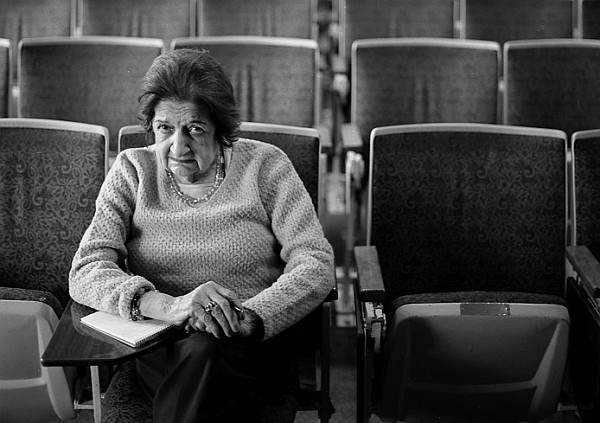
In 1960, I was fixated on emulating the courageous media personalities of the times, from Edward R. Murrow to a distinctive figure I came to admire at presidential press conferences – a wire service reporter named Helen Thomas.

In recent years, my faith in the power of dialogue in politics has been severely tested – as, no doubt has hers – in an age where diatribes and deliberate demonization chills debate and exchanges of opposing views.

Once you are labeled and stereotyped – especially if you are denounced as an anti-Semite – you are relegated to the fringes, pronounced a hater beyond redemption, and even beyond explanation.

As the legendary Helen Thomas soon found out.

The rise of a legend

As a member in good standing of an activist generation, I saw myself more as an outsider in contrast to Helen’s distinctive credentials as an insider, as a White House bureau chief and later as the dean of the White House Correspondents’ Association.

Yet, beneath her establishment credentials and status, she was always an outsider too – one of nine children born to a family of Lebanese immigrants in Winchester Kentucky, who despite their Middle East origins were Christians in the Greek Orthodox Church.

She became a woman who broke the glass ceiling in the clubby, mostly male, inside-the-beltway world of big egos and self-important media prima donnas.

Her origins were more modest. She grew up in an ethnic neighborhood in Detroit.

Helen received her bachelor’s degree from Wayne State University in 1942, the year I was born. Earlier this year, her alma mater, of which she had taken so much pride in her achievements, canceled the award in her name.

A fall from grace

The withdrawal of her name from the prominent award was a striking gesture of cowardice and submission to an incident blown out of proportion that instantly turned Helen from a ‘she-ro’ to a zero.

The Simon Wiesenthal Center put her on their top ten list of anti-Semites after angry remarks she made about Israel went viral and exploded into a major story.

President Barack Obama who cheerfully brought her a birthday cake, later labeled her remarks as “reprehensible”.

You would think that given all the vicious ad hominems, Godwins and putdowns directed at him, he would be more cautious tossing slurs at others.

But no, all politicians pander to deflect criticism whenever the wind of enmity blows their way.

Now it was Helen who was being compared to Hitler in the latest furor. [Continue reading.]

Facebooktwittermail