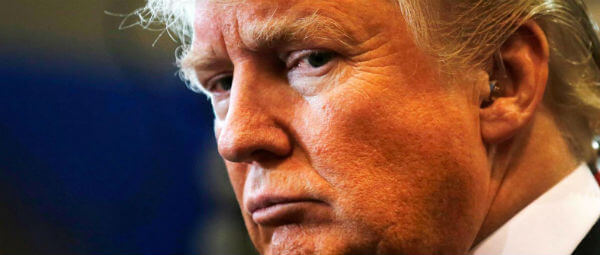
Politico reports: The typical Federal Bureau of Investigation special agent is white, male, and middle-aged, often with a military background — in short, drawn from the segment of the U.S. population most likely to support GOP nominee Donald Trump.
That demographic reality explains much of the heat FBI Director James Comey is taking from his own work force at the moment for his handling of the Hillary Clinton email investigation and inquiries into the Clinton Foundation.
Days before the presidential election, FBI finds itself at the center of a political maelstrom, with Comey being sharply criticized by Democratic presidential nominee Hillary Clinton and even President Barack Obama, who’ve faulted the FBI director for going public with word of new evidence in the Clinton email probe.
That furor has exposed dissension in the FBI’s ranks, prompting a flurry of leaks about alleged efforts to impede the Clinton-related inquiries and exposing lingering anger among agents about Comey’s July decision not to recommend any charges in the email probe.
Incendiary, politically charged remarks from former FBI officials — with one prominent ex-FBI leader publicly calling the Clintons a “crime family” — are also endangering the law enforcement agency’s reputation for sober, nonpartisan investigation.
Largely overlooked in the imbroglio is how the fact that the FBI doesn’t look much like America is complicating Comey’s effort to extricate himself and his agency from the political firestorm.
According to numbers from August, 67 percent of FBI agents are white men. Fewer than 20 percent are women. The number of African-American agents hovers around 4.5 percent, with Asian-Americans about the same and Latinos at about 6.5 percent.
If Trump were running for president with an electorate that looked like that, he’d win in a landslide. [Continue reading…]
Author Archives: News Sources
Inside Aleppo: A city braced for another escalation of violence
When Donald Trump was more anti-NATO than Vladimir Putin
Michael Weiss writes: Michael Morrell, a former acting director of the Central Intelligence Agency, broke dramatically with the protocol of most ex-spies when he used spook parlance to describe Republican nominee Donald Trump as “an unwitting agent of the Russian Federation,” albeit in the course of endorsing Hillary Clinton for president.
The colloquial term for the sort of person Morrell was talking about is “useful idiot,” someone enlisted in the Kremlin’s cause through sympathy, or shared interests, or, indeed, ignorance, without actually intending to be a pawn. But, as Putin certainly knows, the problem with useful idiots is that they tend to be insecure and erratic, whereas witting agents are tutored in how to be disciplined and self-controlled.
Trump is too illogical and self-contradictory to be of much use to a hostile foreign power except as a naturally occurring battering ram against the very institutions and beliefs that power would like to see weakened or destroyed. Trump’s opponent (whom Putin assuredly does not want to see inhabit the White House) and U.S. democracy at large are the truer objects of a Russian state-run information and cyber-espionage program. That Trump’s vulgar and demoralizing campaign is ripping apart America on the path to making it “great again” is simply an added bonus for the former KGB colonel.
Without dismissing the gravity of the Trump-Putin alignment, what our reporting makes clear is that the Republican does genuinely admire the Russian, but the feeling is not necessarily mutual. Putin has been discreet, if not cryptic, in his characterization of Trump. (See the next installation in this series for more.) One might say the relationship between the two is that of an amateur authoritarian taking cues from an aloof and bemused professional, but the performance delivered, to any outside observer, looks more like an oblivious farce than a credible imitation. [Continue reading…]
White House readies to fight Election Day cyber mayhem
NBC News reports: The U.S. government believes hackers from Russia or elsewhere may try to undermine next week’s presidential election and is mounting an unprecedented effort to counter their cyber meddling, American officials told NBC News.
The effort is being coordinated by the White House and the Department of Homeland Security, but reaches across the government to include the CIA, the National Security Agency and other elements of the Defense Department, current and former officials say.
Russia has been warned that any effort to manipulate the actual voting or vote counting would be viewed as a serious breach, intelligence officials say.
“The Russians are in an offensive mode and [the U.S. is] working on strategies to respond to that, and at the highest levels,” said Michael McFaul, the U.S. ambassador to Russia from 2012 to 2014.
Officials are alert for any attempts to create Election Day chaos, and say steps are being taken to prepare for worst-case scenarios, including a cyber-attack that shuts down part of the power grid or the internet.
But what is more likely, multiple U.S. officials say, is a lower-level effort by hackers from Russia or elsewhere to peddle misinformation by manipulating Twitter, Facebook and other social media platforms.
For example, officials fear an 11th hour release of fake documents implicating one of the candidates in an explosive scandal without time for the news media to fact check it. So far, document dumps attributed to the Russians have damaged Democrats and favored Trump. [Continue reading…]
Trump just proposed ending all federal clean energy development
Joe Romm writes: In the last week, Republican presidential nominee Donald Trump has repeatedly vowed to zero out all federal spending on clean energy research and development. And the plan he released would also zero out all other spending on anything to do with climate change, including the government’s entire climate science effort.
You may have missed this bombshell because team Trump did not spell out these cuts overtly. In a campaign where the media has “utterly failed to convey the policy stakes in the election,” as Vox’s Matt Yglesias explained recently, it appears only Bloomberg BNA bothered to follow up with the campaign to get at the truth of Trump’s radical proposal.
Polling guru Nate Silver of fivethirtyeight.com fame gives Trump a one in three chance of becoming president. So I agree with Yglesias that we ought to seriously look at the implications of Trump’s proposals — especially since if Trump wins, he’s all but certain to have a GOP-controlled Congress to back him. [Continue reading…]
FBI examining fake documents targeting Clinton campaign; intelligence warning on fictional evidence of voter fraud
Reuters reports: The FBI and U.S. intelligence agencies are examining faked documents aimed at discrediting the Hillary Clinton campaign as part of a broader investigation into what U.S. officials believe has been an attempt by Russia to disrupt the presidential election, people with knowledge of the matter said.
U.S. Senator Tom Carper, a Democrat on the Senate Homeland Security Committee, has referred one of the documents to the FBI for investigation on the grounds that his name and stationery were forged to appear authentic, some of the sources who had knowledge of that discussion said.
In the letter identified as fake, Carper is quoted as writing to Clinton, “We will not let you lose this election,” a person who saw the document told Reuters.
The fake Carper letter, which was described to Reuters, is one of several documents presented to the Federal Bureau of Investigation and the U.S. Department of Justice for review in recent weeks, the sources said.
A spokeswoman for Carper declined to comment.
As part of an investigation into suspected Russian hacking, FBI investigators have also asked Democratic Party officials to provide copies of other suspected faked documents that have been circulating along with emails and other legitimate documents taken in the hack, people involved in those conversations said.
A spokesman for the FBI confirmed the agency was “in receipt of a complaint about an alleged fake letter” related to the election but declined further comment. Others with knowledge of the matter said the FBI was also examining other fake documents that recently surfaced.
U.S. intelligence officials have warned privately that a campaign they believe is backed by the Russian government to undermine the credibility of the U.S. presidential election could move beyond the hacking of Democratic Party email systems. That could include posting fictional evidence of voter fraud or other disinformation in the run-up to voting on Nov. 8, U.S. officials have said. [Continue reading…]
‘The FBI is Trumpland’: Anti-Clinton atmosphere spurred leaks, sources say
The Guardian reports: Deep antipathy to Hillary Clinton exists within the FBI, multiple bureau sources have told the Guardian, spurring a rapid series of leaks damaging to her campaign just days before the election.
Current and former FBI officials, none of whom were willing or cleared to speak on the record, have described a chaotic internal climate that resulted from outrage over director James Comey’s July decision not to recommend an indictment over Clinton’s maintenance of a private email server on which classified information transited.
“The FBI is Trumpland,” said one current agent.
This atmosphere raises major questions about how Comey and the bureau he is slated to run for the next seven years can work with Clinton should she win the White House.
The currently serving FBI agent said Clinton is “the antichrist personified to a large swath of FBI personnel,” and that “the reason why they’re leaking is they’re pro-Trump.”
The agent called the bureau “Trumplandia”, with some colleagues openly discussing voting for a GOP nominee who has garnered unprecedented condemnation from the party’s national security wing and who has pledged to jail Clinton if elected.
At the same time, other sources dispute the depth of support for Trump within the bureau, though they uniformly stated that Clinton is viewed highly unfavorably. [Continue reading…]
How divisions inside the FBI will persist after the election
The Washington Post reports: Deep divisions inside the FBI and the Justice Department over how to handle investigations dealing with Hillary Clinton will probably fester even after Tuesday’s presidential election and pose a significant test for James B. Comey’s leadership of the nation’s chief law enforcement agency.
The internal dissension has exploded into public view recently with leaks to reporters about a feud over the Clinton Foundation, an extraordinary airing of the agency’s infighting that comes as the bureau deals with an ongoing threat of terror at home and a newly aggressive posture from Russia.
Comey, meanwhile, has come under direct fire for his decision to tell Congress that agents were resuming their investigation of Clinton’s use of a private email server — a revelation that put him at odds with his Justice Department bosses and influenced the presidential campaign.
“He’s got to get control of the ship again,” said Robert Anderson, a former senior official in the FBI who considers Comey a friend. “There’s a lot of tension in the organization, and there’s a lot of tension in Congress and the Senate right now, and all that counts toward how much people trust the FBI.” [Continue reading…]
Trump supporters: If Clinton is elected ‘we’re going to turn the country upside down’
Macedonians profit from Trump supporters’ inability to distinguish between fact and fiction
Buzzfeed reports: “This is the news of the millennium!” said the story on WorldPoliticus.com. Citing unnamed FBI sources, it claimed Hillary Clinton will be indicted in 2017 for crimes related to her email scandal.
“Your Prayers Have Been Answered,” declared the headline.
For Trump supporters, that certainly seemed to be the case. They helped the baseless story generate over 140,000 shares, reactions, and comments on Facebook.
Meanwhile, roughly 6,000 miles away in a small Macedonian town, a young man watched as money began trickling into his Google AdSense account.
Over the past year, the Macedonian town of Veles (population 45,000) has experienced a digital gold rush as locals launched at least 140 US politics websites. These sites have American-sounding domain names such as WorldPoliticus.com, TrumpVision365.com, USConservativeToday.com, DonaldTrumpNews.co, and USADailyPolitics.com. They almost all publish aggressively pro-Trump content aimed at conservatives and Trump supporters in the US. [Continue reading…]
Gina Miller: The woman who put Theresa May’s plans for leaving the EU in peril
The Guardian reports: The businesswoman at the centre of the legal challenge to ensure parliament is consulted before Theresa May triggers Brexit has said the landmark case was motivated by her fear that the UK faced a “treacherous future”.
In an interview with the Guardian, Gina Miller said she knew the ruling would leave her unpopular with many EU referendum voters, but believed that the UK had failed itself and the rest of Europe by voting to leave the bloc rather than reform it from within.
“I was never binary remain or leave. I was very much of the sentiment, and still am, that it was about remain, reform and review,” Miller said. “The UK actually has a very powerful place in Europe … and we have not just let ourselves down but I think the whole of Europe down by not taking up that challenge.”
Before launching her case, the 51-year-old who runs the investment firm SCM Private with her husband, Alan, had spent a decade campaigning for transparency in investment and pension funds, and for reform in the charity sector. “I’ve stood up and made myself very unpopular,” she said. “But it’s not about being unpopular, it’s about doing the right thing.”
Miller told the Guardian she felt compelled to take some form of action following the referendum result in June, hiring City law firm Mishcon de Reya with her own money. “I simply couldn’t keep going to bed every night thinking, well what does [the Brexit vote] mean for my children, what does this mean for the future, what does it mean for everyone?” Miller said. “Knowing that there was no plan in place, and knowing that we were really facing a treacherous future … I just felt I had no other alternative.” [Continue reading…]
The Guardian reports: Nicola Sturgeon has said the Scottish government will “actively consider” whether it will formally join in the next legal battle over the right of MPs to vote on article 50 after the British government’s defeat in the high court.
Scotland’s first minister told Holyrood on Thursday that the court ruling was “hugely significant and it underlines the total chaos and confusion at the heart of the UK government”.
Sturgeon hinted that the SNP’s 56 MPs in Westminster would vote against the triggering of article 50, given that Scotland voted to remain in the EU. [Continue reading…]
Heather Stewart writes: If you’re an ardent remainer hoping the high court judgment is a chink of light that could ultimately result in Britain remaining in the European Union, don’t hold your breath. Brexit itself was not on trial – but Theresa May’s bullish approach to it, and ultimately her political judgment, was.
If the government fails in its bid to have the ruling overturned on appeal, the Brexit secretary, David Davis, has made clear he would put a bill before both houses of parliament, presumably authorising the government to trigger article 50.
But while there are plenty of MPs on both sides of the House of Commons who backed remain during the referendum campaign, and still believe Britain would be better off in, only a handful of diehards now say they want to block Brexit.
One prominent pro-EU MP on the Conservative back benches told the Guardian “almost every one of my colleagues, apart perhaps from Ken Clarke, will vote to trigger article 50”.
In the House of Lords, meanwhile, where there is a strong remain majority, Labour’s leader Baroness Smith says there is little appetite for trying to prevent it. “It’s not a case of the Lords trying to block the government,” she insists. [Continue reading…]
Hacked emails include evidence of Russia drafting laws for Ukraine parliament
RFE/RL reports: Ukrainian hackers claim to have broken into a second e-mail account linked to Vladislav Surkov, a senior aide to Russian President Vladimir Putin, releasing documents they say add to mounting evidence of the Kremlin meddling in Kyiv’s affairs.
The new e-mails were obtained by RFE/RL from the hackers in advance of their public release on November 3. If authentic, they provide detail about the extent to which Surkov’s office worked to set up separatist enclaves in eastern Ukraine in 2014.
The e-mails include plans that ostensibly show how associates of Surkov plotted to destabilize Ukraine’s eastern Kharkiv region, researched Ukrainian politicians who openly supported weakening central power in a bid to exploit the country’s political divisions, and helped establish the leadership of separatist groups in the Donetsk and Luhansk regions.
They indicate that, in one case, a draft law on an economic zone in eastern Ukraine purportedly written by Surkov himself was sent to the office of an opposition lawmaker and later introduced in the Ukrainian parliament.
The new release comes one week after an initial batch of e-mails from an inbox allegedly associated with Surkov, a longtime Putin aide who is the point man for Ukraine in his administration. [Continue reading…]
British high court rules parliament must vote on Brexit to trigger Article 50
Polly Toynbee writes: A momentous constitutional decision was taken by the high court of England and Wales this morning. A prime minister’s absolute power to do what they like, when they like, regardless of laws and treaties, was struck down. Theresa May cannot tear up our right to be EU citizens without the authority of parliament. Those rights were bestowed by parliamentary votes in a series of treaties. She can’t high-handedly abandon them and trigger our exit from the EU without parliament’s agreement.
Judges, wisely, do not generally want to usurp the power of elected governments to govern. Laws made by judges are a poor substitute for those made by elected MPs in parliament. But this is a matter of the profoundest constitutional importance, with deep implications, controversial whichever way they had decided. They rightly pronounced that parliament is sovereign – which is what the Brexiters claimed we were voting on, until it no longer suited them.
What now? The government will appeal to the supreme court in December, though some suggest May should dash to the Commons immediately for a quick vote, before an as-yet hazy coalition of cross-party remainers has time to organise and solidify. If the appeal fails, will MPs galvanise? Leaving it to the unelected Lords is no answer.
There are times when MPs need to rise above their party interests, their own interests and the views of their constituents. That may risk being voted out, but they may earn more respect by standing up for the national interest as best they can determine: that’s what representative democracy is for. In times of war or national crisis, defending the country from grave error, at whatever personal cost, is their duty. Brexit is the greatest threat to national wellbeing since the war, and this will test the mettle not just of individual MPs, but of the nature and purpose of a representative democratic system. [Continue reading…]
Donald Trump is America’s existential threat

Charles M Blow writes: Donald Trump is a lowlife degenerate with the temperament of a 10-year-old and the moral compass of a severely wayward teen.
There is no way to make a vote for him feel like an act of principle or responsibility. You can’t make it right. You can’t say yes to Trump and yes to common decency. Those two things do not together abide.
If you are voting for Trump, you are voting for coarseness, corruption and moral corrosion. Period. And if you are not actively voting against him, you are abetting his attempt to hijack American greatness and sink it with his egotism.
On Election Day, America faces a choice, and it’s not a tough one, but a stark one. It is the difference between tolerance and intolerance. It is the difference between respect and disrespect. It is the difference between a politician with some flaws and a flaw threatening our politics.
Donald Trump is America’s existential threat. On Tuesday, America has an opportunity to defend itself. [Continue reading…]
FBI launches investigation on its own use of Twitter
ThinkProgress reports: The FBI has launched an internal investigation into one of its own Twitter accounts.
The account at issue, @FBIRecordsVault, had been dormant for more than a year. Then on October 30 at 4 a.m., the account released a flood of documents, including one describing Donald Trump’s father Fred Trump as a “philanthropist.”Fred C. Trump: Fred C. Trump (1905-1999) was a real estate developer and philanthropist. This release consists of… https://t.co/21KgtPpmzk
— FBI Records Vault (@FBIRecordsVault) October 30, 2016
But it wasn’t until two days later, when the account tweeted documents regarding President Clinton’s controversial pardon of Marc Rich that the account began to attract significant attention.William J. Clinton Foundation: This initial release consists of material from the FBI's files related to the Will… https://t.co/Y4nz3aRSmG
— FBI Records Vault (@FBIRecordsVault) November 1, 2016
The account has not been active since that tweet.
ThinkProgress has learned that the FBI’s Inspection Division will undertake an investigation of the account. [Continue reading…]
The crisis in the West’s liberal democracies is strengthening the Kremlin’s hand
Natalie Nougayrède writes: Lenin once said: “The capitalists will sell us the rope with which we will hang them.” Vladimir Putin is no Lenin, nor can his regime – run by an elite that enjoys offshore accounts and oligarchic privileges – quite be described as anti-capitalist. Yet in Russia’s new confrontation with the west, the Kremlin’s strategy is to exploit western weaknesses and confusion as much as it is geared towards showing a bellicose face, whether in Ukraine, Syria or cyberspace. Perhaps this is why the head of MI5 has warned of the need to fend off Russia’s hostile interference.
Lenin is not Putin’s ideological guru. Foreigners, whether public officials or investors, who have at length met with Putin sometimes point to his particular brand of pragmatism (even if Angela Merkel once said he “lives in another world”). If he senses strong pushback, he adapts. If he detects gaps, he strikes at the Achilles heel.
There is little doubt Russian power is on the offensive. Since 2014, when it deployed its troops in Ukraine and annexed territory there, and since its policies in Syria have been analysed as overtly hostile to western endeavours, “Russian aggressiveness” has become a mainstay of the west’s official political discourse. But beyond boasting about Russia’s nuclear forces, demonstrating its new conventional military capacities and activating an army of internet trollers (none of which should be minimised), Putin’s regime is banking on the hope that western democracies will falter and be unable to offer up genuine resistance.
He’s essentially waiting for that rope to be handed over. Brexit is one section of it, because in Russian eyes it has the potential to divide the west. The growth of national-populist movements in Europe and elsewhere is another, because it echoes the Kremlin’s illiberal narrative and produces useful allies. Radical leftwing anti-Americanism also fits handily into the picture, as it did decades ago when pacifists demonstrated in the west while missiles were being deployed by the eastern bloc during the cold war. [Continue reading…]
In Operation Libero the Swiss are building their ‘rebellion of the decent’
Nadette De Visser writes: In Europe as well as the United States the political arena has shifted to the fringes. Measured, moderate stands on issues of national and international importance are zapped by high-voltage soundbites, obliterated by incendiary one-liners.
Anger is the coveted political currency of the moment—anger fueled by fear of foreigners, by fears for the future — anger fueled by populist politicians at home and abroad. And even little Switzerland, the Continent’s hoary paradigm of democracy, has not been immune.
Until this year, in fact, it seemed all but certain that the right-wing populists of the SVP (the Schweizer Volkspartei) would push through a referendum calling for the expulsion of “immigrants,” even second or third generation Swiss born, if they were found guilty of a legal offense as minor as two parking tickets.
(Donald Trump has made essentially the same idea part of his 10-point immigration plan: “Zero tolerance for criminal aliens,” he proclaims. “We will issue detainers for all illegal immigrants who are arrested for any crime whatsoever, and they will be placed into immediate removal proceedings.”)
But in Switzerland, the SVP populists found themselves up against a new grass roots movement, Operation Libero, that seemed to come from nowhere. The SVP referendum lost badly, and all of a sudden all eyes turned to a political newcomer—26-year-old driven, committed, and comely Flavia Kleiner, the movement’s co-president. [Continue reading…]
The Glazyev Tapes: Getting to the root of the conflict in Ukraine
Andreas Umland writes: Russia watchers have been intrigued by the recent email leak of Vladislav Surkov – Russia’s adviser responsible for policies towards Ukraine and Russia’s satellite states in northern Georgia. The so-called “Surkov Leaks” have reinvigorated the discussion of Moscow’s involvement in the war in Ukraine and the emergence of “people’s republics” in the east of the country. The leaks confirm the Kremlin’s involvement in the armed conflict in the Donbas, and make clear that fueling the conflict in east Ukraine is just one part of Moscow’s broader policy for undermining the Ukrainian state.
But these leaks do not alter our understanding of the conflict. Rather, they confirm — with more empirical proof — what was already known and proven. However, two months earlier there was another leak. And this one did provide new evidence that challenges earlier interpretations concerning the roots of the so-called “Ukraine conflict” in 2014.
In August 2016, Ukraine’s General Procurator published a video tape of audio recordings of a number of telephone conversations between Sergey Glazyev — a Russian presidential advisor — and several Russian as well as Ukrainian pro-Kremlin activists in southern and eastern Ukraine in late February and early March 2014. The recordings vividly illustrate Moscow’s covert support for the still unarmed anti-government protests in Ukraine several weeks before the actual war started. Specifically, the tapes reveal the Russian state’s involvement in the coordination and financing of separatist meetings, demonstrations, pickets and similar actions in Crimea as well as in various regional capitals in Ukraine’s eastern and southern parts immediately after the victory of the Maidan revolution in early 2014.
Despite the importance of the tapes and their revelations, they have largely been ignored by Western media outlets and think-tanks. This may be due to suspicions that the published records were tampered with, or that they do not reveal the full story. It is, however, unlikely that these recordings are mere fakes. The published conversations are held between interlocutors whose voices can easily be identified through audio verification and cross-referencing.
If the Glazyev Tapes are indeed authentic, they should change our understanding of the origins and nature of the Russian-Ukrainian conflict. Until the publication of the Glazyev Tapes, many observers believed that Moscow intervened with paramilitary and later regular military forces into an ongoing civil conflict between pro-Kyiv and pro-Moscow Ukrainian citizens. Few serious analysts ever doubted the Kremlin’s crucial role in turning the winter confrontations on the streets of the east and south Ukrainian cities into a putatively civil war in spring. But the extent of Russian meddling in the unarmed protests before the military escalation was disputed. [Continue reading…]