Author Archives: News Sources

Egyptian activist Alaa Abd El Fattah jailed for 15 years for organising peaceful protest

The Guardian reports: The extent of Egypt’s counter-revolution has been laid bare by the jailing of one of the key figureheads of the 2011 uprising – a conviction that means Alaa Abd El Fattah has been jailed or investigated under each of the country’s five heads of state since Hosni Mubarak.

Abd El Fattah, one of the activists most associated with the 2011 uprising that briefly ended 60 years of autocratic rule, was sentenced to 15 years in jail for allegedly organising a protest – an act banned under a law implemented last November, and used to jail several revolutionary leaders.

According to Abd El Fattah’s sister, Mona Seif, also a prominent campaigner, he and another activist were sentenced in absentia after being barred from entering the courtroom then arrested and taken to prison by some of the officials who had earlier blocked his entrance. [Continue reading…]

Facebooktwittermail

The rapid advance of ISIS across Iraq

At Blogs of War, John Little describes: the massive upsurge in ISIS’s strength and capabilities. The group now:

I could go on. Bad news is flooding in around the clock. This is a tremendously worrying destabilization that will create an environment in which only really terrible things happen. Jessica Lewis and Ahmed Ali of ISW have given some thought to where all of this is heading and paint a pretty dire picture:

Iraq’s security forces will not be able to retake all of the ground they have lost. They may not even be able to hold what they still have. The best-case scenario is a stalemate in which Iraqis manage to contain the ISIS state and army for now. The more likely case is the creation of another Syrian-style conflict pitting ISIS with increasing international support against desperate and increasingly brutal Iraqi Shi’a militias and ISF elements. The two civil wars, which have now completely merged, will continue to expand, destabilizing an already unstable Middle East and inviting further intervention by the Sunni Arab states and Iran. In the very worst case, the fall of Mosul could be a step down the path to outright regional war.

If there is any hope at all, and I am not sure that there is, it might be in that ISIS has overextended itself and the terrible performance by Iraqi forces has made them appear far more formidable than they actually are. [Continue reading…]

Bloomberg reports: As his army flees from an al-Qaeda splinter group, Iraqi Prime Minister Nouri al-Maliki is rallying Shiite militias to defend his government, raising the specter of civil war in OPEC’s second-biggest oil producer.

In a televised news conference yesterday Maliki urged citizens to take up arms after the Islamic State of Iraq and Levant group seized control of the northern city of Mosul, stealing weapons and helicopters from police and army bases as Iraqi government forces fled. He vowed to build an army of volunteers to “pull the thorns out by ourselves.”

By countering Sunni militants with elements of his own Shiite support, Maliki risks reigniting the sectarian conflict that flared after the 2003 U.S. invasion that led to the ouster of Saddam Hussein. At its worst, in 2006 and 2007, thousands of civilians were losing their lives every month.

“The unleashing of the Shia militias was a driver of the civil war,” said Julien Barnes-Dacey, a senior Middle East and North African analyst at the European Council on Foreign Relations, in a telephone interview. “The question is, will Maliki try to maintain order over these militias or will the level of conflict spiral into something deeper?” [Continue reading…]

Fred Kaplan writes: The collapse of Mosul, Iraq’s second-largest city, has little to do with the withdrawal of American troops and everything to do with the political failure of Prime Minister Nouri al-Maliki.

As the U.S. pullout began under the terms of a treaty signed in 2008 by then-President George W. Bush, Maliki, the leader of a Shiite political party, promised to run a more inclusive government — to bring more Sunnis into the ministries, to bring more Sunnis from the Sons of Iraq militia into the national army, to settle property disputes in Kirkuk, to negotiate a formula on sharing oil revenue with Sunni districts, and much more.

Maliki has since backpedaled on all of these commitments and has pursued policies designed to strengthen Shiites and marginalize Sunnis. That has led to the resurgence of sectarian violence in the past few years. The Sunnis, finding themselves excluded from the political process, have taken up arms as the route to power. In the process, they have formed alliances with Sunni jihadist groups — such as the Islamic State of Iraq and Syria, or ISIS, which has seized not just Mosul but much of northern Iraq — on the principle that the enemy of their enemy is their friend. [Continue reading…]

Much as many Americans inside and outside government may now be inclined to view the advance of ISIS as Iraq’s problem, it shouldn’t be forgotten that the jihadist group’s leader, Abu Bakr al-Baghdadi, was held in American custody until his release in 2009.

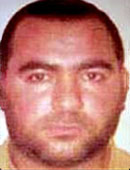
abu_duaThe FBI “most wanted” mugshot shows a tough, swarthy figure, his hair in a jailbird crew-cut. The $10 million price on his head, meanwhile, suggests that whoever released him from US custody four years ago may now be regretting it.

Taken during his years as a detainee at the US-run Camp Bucca in southern Iraq, this is the only known photograph of Abu Bakr al-Baghdadi, the new leader of al-Qaeda in Iraq and Syria. But while he may lack the photogenic qualities of his hero, Osama bin Laden, he is fast becoming the new poster-boy for the global jihadist movement.

For anyone who has any doubts about the brutality of ISIS, then if you can stomach it, watch some of “The Clanging of the Swords.” This recently released movie could be described as Tarantino-style jihad — repulsive to most people, but presumably appealing to young men who want to kill in the name of Islam.

Facebooktwittermail

Syrian Islamist factions and Kurds in new push against ISIS

The Associated Press reports: A rebel coalition in Syria dominated by Islamic factions announced a new push to dislodge fighters from a rival, al-Qaida-inspired group from the northern province of Aleppo, activists said Wednesday.

The announcement, reported by the Britain-based Syrian Observatory for Human Rights, came as the al-Qaida-inspired Islamic State in Iraq and the Levant overran much of neighboring Iraq’s second-largest city, Mosul.

Details of the extent of the new offensive were not immediately known. But one of the groups in the coalition, the Islamic Front, claimed that its fighters recently captured four villages from the Islamic State and killed 17 of its fighters.

The infighting is part of broader rebel-on-rebel clashes that have raged across opposition-held northern Syria since early January.

The new coalition, called the “Operations Room for the People of the Levant” also includes Kurdish groups in Syria, which traditionally have focused on defending their own ethnic areas from other rebel groups, said Rami Abdurrahman of the Observatory.

The new offensive appears to have begun late Monday, said an Aleppo-based activist who uses the name Abu al-Hassan, when two chief towns controlled by the Islamic State, Manbij and al-Bab, came under attack.

The al-Qaida-linked Nusra Front and the Islamic Front attacked the town of al-Bab from the northwest, while Kurdish fighters attacked from the east, he said. [Continue reading…]

Facebooktwittermail

How American history judges Bowe Bergdahl

Mark Perry writes: When the movie “Patton” was released in 1970, in the midst of one of our most divisive wars, it thrilled American theatergoers. The account of our nation’s finest tank commander won seven academy awards, including best picture.

The movie opens with a reprise of George Patton’s legendary speech to the U.S. Third Army just before D-Day, in 1944. In his address, the full-throated Patton extolled the virtues of American manhood and the sanguine character of combat. His words brought howls of appreciation in 1944 — and have ever since.

“Men,” Patton said, “all this stuff you hear about America not wanting to fight, wanting to stay out of the war, is a lot of bullshit. Americans love to fight. All real Americans love the sting and clash of battle.”

Was Patton right? Do we Americans love “the sting and clash of battle”?

The controversy over President Barack Obama’s swap of five Guantanamo detainees for Sgt. Bowe Bergdahl, held in Afghanistan as a Taliban prisoner since June 2009, places Patton’s claims in a new light, just as Bergdahl’s return has spurred questions about whether he is a hero, or should be put on trial for deserting his post. Claims that the search for Bergdahl might have resulted in as many as six U.S. combat deaths have deepened the controversy. And Bergdahl’s return has aroused impassioned criticism of Obama from his partisan opponents.

The Bergdahl controversy masks the difficulty all militaries have in defining when a soldier has deserted, or “just wandered off” — which might have been the case with Bergdahl. For the U.S. military, the key is intent: A soldier is listed as a deserter when he intends to separate himself from his unit permanently, and forever shirk his service. In wartime, as Article 85 of the Uniform Code of Military Justice makes clear, desertion is punishable by death.

You would think that this punishment, when added to the opprobrium that a deserter suffers from his family and fellow soldiers, would dampen the rate at which men (or women) in uniform leave their posts. But an examination of American military history shows that that’s not true.

Desertion rates in George Washington’s Continental Army peaked in the early years of the Revolutionary War (when desertion rates averaged an astonishing 20 to 25 percent of all men under arms), but fell off when his army became more professional. This didn’t keep Washington from lamenting his losses. The situation was so bad, he said, that the mountainous areas between New Hampshire and Vermont were “populated by hundreds of Deserters from this Army.”

Desertion rates during the Civil War were not as high, with the Union Army suffering a 9 to 12 percent desertion rate. Of the approximately 42,000 Union soldiers court-martialed during the war, just over 14,000 were for desertion, with 147 executions for the offense. The desertion rate among Confederate units was much worse. In the wake of the Gettysburg defeat, Robert E. Lee struggled to keep his army together, with desertion rates peaking at between 20 to 25 percent. In all, more soldiers (North and South) were executed during the Civil War (some 500 in all) than in all our other conflicts combined — two-thirds of them for desertion.

With the Civil War as its model, the Army created a Morale Division after the U.S. entered World War One. The unit’s commander later noted that explaining to recruits why they were fighting kept them on duty. A 1918 memo noted that many U.S. recruits “seemed unclear about the purpose of the war.” The division’s work had an effect: 5,584 men were charged with desertion during the conflict (the lowest rate of any U.S. war), and 2,657 were convicted — with no executions.

Explaining a war’s purpose is a significant factor in the Bergdahl case. His unit was isolated for long periods of time and fighting a conflict that was fast becoming an afterthought for the American people. In truth, most Americans didn’t even know that Bergdahl was being held by the Taliban until his release, a chilling commentary on America’s focus on the war. [Continue reading…]

Facebooktwittermail

Poll: Palestinians prefer suing Israel at the ICC rather than starting third intifada

The Jerusalem Post reports: Palestinians want to bring Israel before the International Criminal Court more than they want to fight them in the streets in an armed third intifada, according to a poll conducted by Khalil Shikaki of the Palestinian Center for Policy and Survey Research.

Palestinians continue to support a two-state solution and do not believe that the newly unified Fatah-Hamas government is an obstacle to renewed negotiations, according to Shikaki’s data, which he presented at the 2014 Herzliya Conference on Tuesday.

Israelis also believe it is possible to negotiate with the new Palestinian government, according to pollster Mina Tzemach, who spoke on the same panel as Shikaki. [Continue reading…]

Facebooktwittermail

Why is Obama’s DOJ prosecuting a torture victim?

Josh Ruebner writes: Rasmea Odeh was brutally tortured into confessing a crime she did not commit. After 10 years of imprisonment, Odeh was exiled from her homeland, eventually immigrating to the United States from Jordan in 1994 as a legal resident and later becoming a naturalized citizen. For the past decade, she has gained the admiration and adulation of the Chicago community she selflessly serves, working as the associate director of the Arab American Action Network to defend civil liberties and promote immigrant rights. Last year, the Chicago Cultural Alliance bestowed on her its Outstanding Community Leader Award in recognition of her devoting “over 40 years of her life to the empowerment of Arab women.”

People such as Odeh, who demonstrate such a tremendous spirit of resiliency, capacity to overcome hardship and dedication to community empowerment, are often lauded by presidents during State of the Union addresses. Perhaps if Odeh was tortured, imprisoned and exiled by a regime the United States deemed hostile, then President Obama would be saluting her from the House gallery as an exemplar of humanity while members of Congress feted her with a standing ovation. But, because Odeh is Palestinian and her oppressor is Israel, she faces quite a different reception from the U.S. government: The Obama administration shamefully has filed immigration-related charges against Odeh that could result in her being stripped of her U.S. citizenship and deported from this country.

Last October, Department of Homeland Security agents arrested Odeh at her home after the Department of Justice dusted off her 10-year-old naturalization application to charge her with “unlawful procurement of naturalization” for allegedly omitting mention of her time in Israeli prison. The spuriousness of this charge is evident by the fact that Odeh has been quite frank in her public retelling of the torture she faced during her time in Israeli prisons. [Continue reading…]

Facebooktwittermail

Netanyahu’s staggering defeat

Dimi Reider writes: Reuven Rivlin’s victory in the presidential elections on Tuesday was a resounding one, but nowhere near as resonant as Benjamin Netanyahu’s defeat – a domestic political defeat to match his 2013 failure to stop Iran-U.S. rapprochement, which yanked the rug out from under his foreign policy.

Rivlin and Netanyahu weren’t running against each other. Quite the contrary, Rivlin was the candidate of Netanyahu’s own party, Likud, adored by the party’s rank-and-file and Israelis in the street alike. With a bit of self-discipline and an exercise of that most elusive quality of leadership – humility – Netanyahu could have transformed today’s event into a sweeping victory for his party, for the nationalist camp and for himself personally. Worst come to worst, he could have even written it off as a pointless formality, playing on the public’s weariness of the largely ceremonial presidential role. Instead, Netanyahu made it into a personal crusade, raising the stakes of the presidential race immensely and amplifying his defeat to match. He is perceived as having ignored, deceived and ultimately betrayed his own party – and all to lose the race. This doesn’t mean Netanyahu will be going anywhere tomorrow, but it does mean that the historical fourth term he covets is becoming increasingly unlikely, and that like many a Prime Minister to have served three terms, the final blow might well come from his own home party. [Continue reading…]

Facebooktwittermail

Israel has Egypt over a barrel

David Hearst writes: It took the CIA 60 years to admit its involvement in the overthrow of Mohammad Mossadeq, Iran’s first democratically elected prime minister. The circumstances around the overthrow of Egypt’s first democratically elected president, Mohamed Morsi, may not take as long to come to light, regardless of whom is behind it.

Mossadeq sealed his fate when he renationalized Iran’s oil production, which had been under the control of the Anglo-Persian Oil Company, later to become BP. Morsi’s enemy was gas, and he proved to be a major obstacle to a lucrative deal with Israel – which nobody will be surprised to learn – is about to take place now he has been removed.

Clayton Swisher of Al Jazeera’s investigative unit has spent five months delving into the corrupt sale of Egyptian gas to Israel. His report Egypt’s Lost Power to be broadcast on Monday night reveals that Egypt has lost a staggering amount of money -$11bn , with debts and legal liabilities of another $20bn – selling gas at rock bottom prices to Israel, Spain and Jordan. [Continue reading…]

(Interactive: Egypt’s Lost Power)

Facebooktwittermail

Mass sexual assaults continue as Egyptians celebrate Sisi’s rise to the presidency

The New York Times reports: A video showing a mass sexual assault on a nearly naked woman in the midst of inaugural celebrations for Egypt’s new president is testing his pledge to curb an epidemic of such attacks, with captured scenes of a police officer with a gun in his hand struggling against a crowd of men to extricate the victim.

At first a black shirt covered just her shoulders, her backside purple and black with bruises. Moments later, she is seen stripped completely, as her limp and reddened body is carried into a waiting vehicle.

Captured in a blurry two-minute video taken in Tahrir Square on Sunday and circulated via YouTube on Monday, the attack is forcing the new president, Abdel Fattah el-Sisi, to confront a phenomenon many here said resulted from the collapse of the police force during the uprising against Hosni Mubarak in 2011: the recurring mass sexual assaults that have taken place amid the crowds that have gathered in Tahrir Square ever since. [Continue reading…]

Facebooktwittermail

The betrayal of Karachi

Rafia Zakaria writes: Karachi has been smoldering for more than a week. On June 8 it burst into flames when the Pakistani Taliban laid siege to the city’s main airport, Jinnah International, killing at least 36 people. The firefight between the attackers and security forces was broadcast live on television, delivering images of carrier planes in flames and the sounds of gunfire and explosions. The megacity, with a population of 23.5 million, has been in a standstill since June 3, after the London arrest on money-laundering charges of Altaf Hussain, a prominent Pakistani politician and chief of the opposition Muttahida Qaumi Movement (MQM). All transportation, businesses, schools and offices remain closed. Leery of violence from MQM activists protesting Hussain’s arrest, the city’s residents have been effectively confined to their homes. When he was released on bail last week, it seemed as though calm would finally return to Karachi.

The escalation of violence exposed the city’s vulnerabilities, including its lack of political leadership and deteriorating security infrastructure. The local law enforcement responding to the airport attack did not even have bulletproof vests and other requisite equipment to engage the assailants. Worse, it’s unclear who was in charge of the operation at the airport until the military took over.

On June 9 the Pakistani Taliban claimed responsibility for the attack and promised more to come. In a similar ambush on June 10, unidentified gunmen attacked a security post at Jinnah, briefly engaging local police in gunfire. That the Taliban were able to take over the city’s only gateway to the rest of the world with little resistance underscores the MQM’s weakness and Karachi’s susceptibility to extremism. After controlling the city for more than two decades, the MQM is in total disarray — unable to advocate for Karachi’s security needs at the federal level or defend it from militants, including the Taliban. [Continue reading…]

Facebooktwittermail

Mosul, Iraq’s second-largest city, falls to ISIS

Karl Vick reports: The fall of Iraq’s second largest city to Islamist extremists Tuesday sends an alarming message about the deterioration of a country where the United States spent eight years, 4,500 lives and $1.7 trillion. Mosul, a city of 1.8 million located in the far north of the country, long cultivated a reputation as a military town. But Iraqi soldiers threw down their guns and stripped off their uniforms as the insurgents approached on Tuesday, according to officials stunned by the collapse of its defenses.

“When the battle got tough in the city of Mosul, the troops dropped their weapons and abandoned their posts, making it an easy prey for the terrorists,” Osama Nuajaifi, the speaker of Iraq’s parliament who hails from Mosul, said during a news conference in Baghdad. “Everything is fallen. It’s a crisis. Having these terrorist groups control a city in the heart of Iraq threatens not only Iraq but the entire region.”

The fall of Mosul after only four days of fighting speaks volumes about both the state of Iraqi forces and the depth of the sectarian division at the bleeding heart of the nation’s ongoing crisis: The population of Mosul is mostly Sunni, and the central government led by prime minister Nouri al-Maliki is widely criticized as favoring the country’s Shiite majority. Al-Maliki is likely to remain in office after the April 30 elections left him with the largest share of votes and negotiating chiefly with other Shiite parties to form a new governing coalition.

The insurgents—who raised black flags over parts of the city Tuesday—are Sunni extremists known as the Islamic State of Iraq and Syria (ISIS), a group al-Qaeda disowned as too extreme. [Continue reading…]

Facebooktwittermail

Will Israel’s new president, Reuven Rivlin, promote democracy?

Reuven Rivlin was elected in the Knesset today as Israel’s 10th president, replacing outgoing President Shimon Peres.

On Sunday, Dimi Reider wrote:

As speaker, Rivlin’s commitment to parliamentary democracy (and democracy in general) saw him turn time and again against his own party and its allies, stalling most of the anti-democratic legislation pushed by Benjamin Netanyahu’s Likud and Liberman’s Israel Beitenu, while at the same time trying to instruct his fellow right-wing legislators about the dangers of nationalist populism.

As a staunch right-winger, Rivlin is opposed to partition but is emphatically opposed to racism, coupling his opposition to a Palestinian state with support for offering Israeli citizenship to all Palestinians. While this is a stance being taken up by a number of right-wing politicians in recent years, Rivlin, as a democrat, goes one step further. When I interviewed him for Foreign Policy four years ago, for instance, he spoke nostalgically of a rotation-based executive espoused by Revisionist Zionists like Ze’ev Jabotinsky – and held up by Belfast as one possible inspiration for a future of power-sharing. It’s a far cry from nationalist self-determination, or from the one state advocated by Palestinians and the pro-Palestinian Left. But it still offers infinitely more room for maneuver than anything ever plausibly offered or actually given to Palestinians by the centrist two-state Left.

Rivlin is certainly no left-winger – he hasn’t opposed any Israeli military operation and as communication minister in Sharon’s first cabinet, he presided over a major privatization drive. Still, Rivlin’s tenure as Knesset speaker earned him praise in liberal circles (including the soubriquet of “a bulwark” for democracy from The Economist), and the lasting ire of both Netanyahu and Liberman. Netanyahu, in a lamentable display of panic amplified by a petty squabble with Rivlin over some comments the latter made about Netanyahu’s wife, tried preventing Rivlin’s candidacy by canceling the presidential post at a few week’s notice, and trying to recruit American author Eli Weisel (who is not even an Israeli citizen) to stand in Rivlin’s place. Only when Weisel refused did the prime minister yield and offered Rivlin his sour-faced support. Even if Netanyahu is getting behind Rivlin only so he can eventually stab him in the back (to borrow a Yes, Prime Minister line), he apparently failed to warn Liberman of this decision, prompting the latter to denounce and renounce Rivlin and to hint he himself might support Dalia Itzik.

Facebooktwittermail

Israeli spy general says Iran serious in negotiations on nuclear deal

Reuters reports: Iran is negotiating seriously on a deal to curb its disputed nuclear programme, a senior Israeli intelligence officer said on Monday in a shift of tone from Prime Minister Benjamin Netanyahu’s scepticism.

Brigadier-General Itai Brun, military intelligence’s chief analyst, told a strategic forum that Iran was honouring a November interim agreement that Netanyahu had condemned as an “historic mistake” for easing sanctions on Israel’s arch-enemy.

With the United States, Russia, China, France, Britain and Germany now stepping up contacts with Iran ahead of their self-declared July 20 deadline for a final accord, Brun voiced cautious optimism. [Continue reading…]

Facebooktwittermail

How J Street ended up supporting the occupation

Larry Derfner writes: What is J Street doing? Why is it acting in concert with right-wing Zionist organizations like AIPAC and StandWithUs in fighting against boycott, sanctions and divestment, while offering no alternative of its own for ending the occupation?

Because the truth is that J Street offers no alternative anymore; now that the Kerry talks have failed, and all the secretary of state has to show for them is a footprint on his pants seat courtesy of the Netanyahu government, America is through trying to make peace between Israel and the Palestinians. And everybody seems to acknowledge this except J Street. Which is not a surprise, because without America in the peace process, J Street’s reason for being is gone.

That’s tough; the organization is going to have to change or close shop. And I hope it does change successfully by finding a new way to advance the two-state solution. Moreover, I hope it finds a less antagonistic way than BDS to accomplish this. And if it does find such a way, I will join J Street in a minute, because as an Israeli I don’t particularly enjoy supporting the boycott of Israel – but I do it because I see no other way anymore to end the occupation and allow the two-state solution to come into being. And nobody else has come up with another way, either. So as far as anyone can see, it’s either BDS or occupation forever.

Yet J Street, by default, has thrown in on the side of occupation forever. With nothing left to offer except hollow pep talks about the peace process, it’s fighting BDS – together with the pro-Netanyahu, pro-occupation American Zionist right. [Continue reading..]

Facebooktwittermail

Spying gone wild: NSA claims it can’t control its own data collections systems

The Washington Post reports: The National Security Agency recently used a novel argument for not holding onto information it collects about users online activity: it’s too complex.

The agency is facing a slew of lawsuits over its surveillance programs, many launched after former NSA contractor Edward Snowden leaked information on the agency’s efforts last year. One suit that pre-dates the Snowden leaks, Jewel v. NSA, challenges the constitutionality of programs that the suit allege collect information about American’s telephone and Internet activities.

In a hearing Friday, U.S. District for the Northern District of California Judge Jeffrey S. White reversed an emergency order he had issued earlier the same week barring the government from destroying data that the Electronic Frontier Foundation had asked be preserved for that case. The data is collected under Section 702 of the Amendments Act to the Foreign Intelligence Surveillance Act.

But the NSA argued that holding onto the data would be too burdensome. “A requirement to preserve all data acquired under section 702 presents significant operational problems, only one of which is that the NSA may have to shut down all systems and databases that contain Section 702 information,” wrote NSA Deputy Director Richard Ledgett in a court filing submitted to the court.

The complexity of the NSA systems meant preservation efforts might not work, he argued, but would have “an immediate, specific, and harmful impact on the national security of the United States.” Part of this complexity, Ledgett said, stems from privacy restrictions placed on the programs by the Foreign Intelligence Surveillance Court.

“Communications acquired pursuant to Section 702 reside within multiple databases contained on multiple systems and the precise manner in which NSA stays consistent with its legal obligations under the [FISA Amendments Act] has resulted from years of detailed interaction” with the Foreign Intelligence Surveillance Court and the Department of Justice, Ledgett wrote. NSA regularly purges data “via a combination of technical and human-based processes,” he said.

The government’s explanation raises more concerns, said Cindy Cohn, EFF’s legal director. “To me, it demonstrates that once the government has custody of this information even they can’t keep track of it anymore even for purposes of what they don’t want to destroy,” she said in an interview. [Continue reading…]

Facebooktwittermail

Obama opens third prison camp for child refugees

Reuters reports: The Obama administration on Monday announced it is designating a third U.S. military base for emergency housing of children immigrating illegally into the United States without parents or relatives, as the cost of caring for these minors escalated.

Senior administration officials, who asked not to be identified, told reporters that an Army base at Fort Sill, Oklahoma, will initially hold 600 “unaccompanied minors” and eventually will be able to accommodate up to 1,200.

In recent weeks, the Obama administration has opened similar emergency shelters at Lackland Air Force Base in San Antonio, Texas, and Naval Base Ventura County in Southern California.

The moves come amid a tidal wave of children trying to slip into the United States, largely from Honduras, El Salvador and Guatemala, often to join a parent already here.

Reuters previously reported that the administration was seeking about $2 billion for the Department of Health and Human Services to handle the influx in fiscal 2015, which begins on Oct. 1, more than double the $868 million appropriated this year.

HHS takes custody of the children shortly after they are detained at the border by federal law enforcement agents.

On Monday, administration officials said they would be asking Congress for an additional $560 million to help the Department of Homeland Security cope with the illegal border crossings.

One week ago, the White House director of domestic policy, Cecilia Munoz, attributed the rapid run-up in illegal immigration by unaccompanied minors to growing violence — often drug related or due to domestic abuse — in the three Central American countries.

That violence, she said, was encouraging children, including an unusually high number of girls and children under the age of 13, to leave home unaccompanied by parents or relatives. [Continue reading…]

Facebooktwittermail

Increased use of barrel bombs in Mideast, Africa

The Associated Press reports: Governments in the Mideast and Africa, in desperate efforts to gain battlefield ground, are using barrel bombs against their enemies, launching the cheap, quickly manufactured weapons as a crude counter to roadside blasts and suicide explosions that insurgents have deployed for years.

New evidence of their use in Iraq, after being dropped on civilians in Syria and Sudan, has raised concerns that governments in unstable nations will embrace them.

Described as “flying IEDs,” or improvised explosive devices, barrel bombs have the power to wipe out a row of buildings in a single blast. They can kill large numbers of people, including those not targeted.

“It’s fair to say that a lot of governments are losing control of the counterinsurgency,” said Michael Knights, an analyst at the Washington Institute for Near East Policy. “They’re also watching what they see in Syria, and they feel like their air power is what is making the difference.” [Continue reading…]

Facebooktwittermail

Back in the USSR

Avedis Hadjian writes: A saying usually misattributed to Trotsky, “You may not be interested in war, but war is interested in you,” describes the Ukrainian conflict, which now has almost all the elements needed for a civil war: well-armed rival sides, opposing views of national history and destiny, and a foreign instigator and sponsor for eastern Urkaine’s separatists — Russia. Yet it lacks the critical ingredient of an appetite for fight among many of the population.

Most Ukrainians are doing their best to go about their business and, whatever their views, say they see Russians and Ukrainians as brotherly nations and do not want a war. In the presidential election of 25 May there was high voter turnout everywhere — except in the east, where pro-Russian separatists blocked polling stations — and Ukrainians gave a commanding victory to confectionary magnate Petro Poroshenko, with 54% of the votes. The Russian government said it would respect the will of Ukrainian voters and expressed its readiness to cooperate with the new administration in Kiev.

But it remains to be seen if Poroshenko’s election will help curb the violence. The pro-Russian separatists’ acts of intimidation, which prevented most people in the Donetsk region from voting (only 16% of registered voters cast ballots), and brazen attacks that have left dozens dead in recent weeks — including an all-out assault against the Donetsk airport, which they seized a day after the election — demonstrate that they are intent on undermining Ukraine’s territorial integrity. [Continue reading…]

Facebooktwittermail