Author Archives: News Sources

Those who put their own interests first while they watch Syria burn

A Syrian-American using the pseudonym, Amal Hanano, writes: Over a kebab dinner in the Turkish city of Iskenderun, Syrian physician and cleric Mahmoud al-Husseini explained why he has not yet visited the Atmeh refugee camp in northern Syria, just 55 miles south from where he now lived. “I’m too famous, I don’t want to go to be photographed,” he explained.

It sounded like a cop-out. Husseini is the former head of Aleppo’s religious endowment, and although he left the country in the summer of 2011, he still boasts wide influence inside Syria. But this influence remained untapped. He says that he considers those who visit the camps to be “revolution celebrities,” merely looking for the next photo op with a poor Syrian refugee child. So he avoids getting involved altogether.

Like many Syrians, Husseini has strong yet contradictory opinions on the disaster unfolding across the border. He believes that the Syrian opposition in exile is controlled by foreign agendas and paid off with “political money,” and was convinced that the crisis could end with a single threatening “phone call from President Obama.” Yet, he also holds that it’s not time yet to counter the growing sectarianism within the ranks of the opposition fighters, because “the killing had to stop first.”

And his plan to solve the bloody crisis? Forming yet another Syrian opposition group. He claims his exclusive group, the “Building Civilization Movement,” is made up of 100 of the most important Syrian political and social figures in the country. He could only give one name, however, out of those elusive hundred. What was their plan? And why would he not announce the names? His answer: “They will be burned.” (Figuratively, of course.)

It’s a common response in Syria these days. Uncertain about how this bloody, two-year revolt will play out, many Syrians have essentially decided not to decide on their stance toward the conflict. When asked to give their reason, they repeat the same sentence: “I don’t want my cards to be burned.” Many prominent Syrians are sitting on the fence, waiting for the right moment to get involved — but only when it is clear their personal interests will be protected.

The “don’t burn your cards” saying became a joke between our group of Syrian journalists, writers, and activists as we moved back and forth across the Syrian-Turkish border area in January to meet with rebel fighters, refugees, and politicians. If you do “fill-in-the-blank,” we would laugh, then you will burn your cards. This action could be almost anything — take a picture with a refugee child, announce your true political beliefs, go into Syria, don’t go into Syria. [Continue reading…]


Facebooktwittermail

Priceless Colbert on Israel

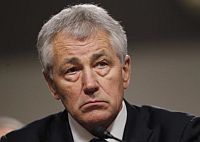
Stephen Colbert: Our worst fears about Obama were confirmed when he appointed as Secretary of Defense, former senator and man who just learned his dog died, Chuck Hagel.

Hagel has a history of troubling statements. He once said:

The Jewish Lobby intimidates a lot of people…

And:

I’m not an Israeli senator. I’m a United States senator.

Clearly, this man does not understand that when it comes to Israel there are certain things you can’t say, for instance, implying that there are certain things that you can’t say. Which there aren’t. You can say anything you want about Israel which I would, if there was anything to say, but there isn’t so there’s nothing to be said.

And how dare Hagel say it.

Facebooktwittermail

The gap between rich and poor will continue to grow

Thomas Pascoe writes: The world’s rich are getting richer. The Forbes billionaire list was published this morning (there are now 1,426 of them globally in dollar terms, with 210 new entrants in the last year), and collectively they are $800bn richer than they were a year ago. Each billionaire is, on average, $100m richer than in 2011, with an average wealth of $3.7bn.

It can hardly be a surprise. Across the world, stock markets are booming (Dow futures indicate it will open today around the 14,170 mark, a new record). Bond prices are also strong in developed markets despite those same sovereigns usually being mired in a debt crisis. At the same, no major currency has collapsed, thanks to the cancellation effect of simultaneous Western devaluation, and commodities (WTI crude is perhaps the exception), have looked fairly stable, even though the bull run has stopped. In short, if you have any asset base at all, you had to be quite special to have lost money in the last year.

Strong stocks and strong bonds are an unusual mix. Theoretically and historically, money has washed from one to the other causing rises and falls along the way. What is unusual about the present climate is that so much money has been created by central banks that there is sufficient available to create a bubble in, well, everything. [Continue reading…]

Facebooktwittermail

Syria’s refugee tide passes one-million mark, half are children

Reuters reports: A 19-year-old mother of two registered on Wednesday as the millionth refugee to flee Syria, part of an accelerating exodus that is piling pressure on neighbouring host countries.

Wearing a green headscarf and holding her young daughter, Bushra smiled nervously as she waited at Lebanon’s main registration centre in the northern city of Tripoli, which processes 800 Syrians a day.

“The situation is very bad for us. We can’t find work,” she said. “I live with 20 people in one room. We can’t find any other house as it is too expensive. We want to return to Syria. We wish for the crisis to be resolved.”

Syrians started trickling out of the country nearly two years ago when President Bashar al-Assad’s forces shot at pro-democracy protests inspired by Arab revolts elsewhere.

The uprising has since turned into an increasingly sectarian struggle between armed rebels and government soldiers and militias. An estimated 70,000 people have been killed.

Around half the refugees are children, most of them aged under 11, and the numbers leaving are mounting every week, the United Nations refugee agency said in statement. [Continue reading…]

Facebooktwittermail

Israel mistreats Palestinian children in custody: UNICEF

Reuters reports: Palestinian children detained by the Israeli military are subject to widespread, systematic ill-treatment that violates international law, a UNICEF report said on Wednesday.

The United Nations Children Fund (UNICEF) estimated that 700 Palestinian children aged 12-17, most of them boys, are arrested, interrogated and detained by the Israeli military, police and security agents every year in the occupied West Bank.

UNICEF said it had identified some examples of practices that “amount to cruel, inhuman or degrading treatment or punishment according to the Convention on the Rights of the Child and the Convention against Torture”.

Israeli Foreign Ministry spokesman Yigal Palmor said officials from the ministry and the Israeli military had cooperated with UNICEF in its work on the report, with the goal of improving the treatment of Palestinian minors in custody.

“Israel will study the conclusions and will work to implement them through ongoing cooperation with UNICEF, whose work we value and respect,” he said.

According to the report, ill-treatment of Palestinian minors typically begins with the arrest itself, often carried out in the middle of the night by heavily armed soldiers, and continues all the way through prosecution and sentencing.

“The pattern of ill-treatment includes … the practice of blindfolding children and tying their hands with plastic ties, physical and verbal abuse during transfer to an interrogation site, including the use of painful restraints,” the report said.

It said minors, most of whom are arrested for throwing stones, suffer physical violence and threats during their interrogation, are coerced into confession and do not have immediate access to a lawyer or family during questioning.

“Treatment inconsistent with child rights continues during court appearances, including shackling of children, denial of bail and imposition of custodial sentences and transfer of children outside occupied Palestinian territory to serve their sentences inside Israel,” the report said.

Such practice “appears to be widespread, systematic and institutionalized”, it added.

Facebooktwittermail

Israel and Hamas lay groundwork for enduring coexistence

Efraim Halevy writes: he recent news out of the Middle East has been grim. But, if there’s an atmosphere of pessimism in the international press, that’s because the real story hasn’t been earning any attention—intentionally so. We can all read about Hamas’s daily maligning of Israel, and its promises to put an end to Jewish sovereignty in the Holy Land, just as we can read about Israeli officials continuing to demand that Hamas recognize the right of Israel (including Jerusalem) to exist, knowing full well that no devout Muslim has ever done so, or can ever do so. The past month has also seen hunger strikes by prominent Palestinian prisoners in Israeli jails, which have incited widespread demonstrations in Palestinian territories.

What hasn’t earned much attention are the successive rounds of negotiations between Israeli army officers and other security officials and their Egyptian counterparts, mostly in Cairo, parallel to those that the Egyptians have been conducting with Hamas personnel. These “non-negotiations” between Israel and Hamas might be critical in finding a durable solution for their conflict.

But both sides prefer to keep the talks quiet. Hamas and Israel each appreciate the advantages of maintaining a diplomatic fiction while they pursue their real interests. Each side can thus publicly maintain its ideological purity, biding its time as it ascertains the intentions of the other. The ultimate effect may be to lay the groundwork for a pragmatic, and unprecedented, system of coexistence. This may not be the classic “peace process,” but it is may prove a fateful process, nonetheless. [Continue reading…]

Facebooktwittermail

UAE’s bizarre, political trial of 94 activists

David Hearst writes: A strange trial has opened in Abu Dhabi. For most of the past seven months, up to 70 of the 94 activists accused of plotting to overthrow the government of the United Arab Emirates have been held in secret detention.

It was only after their families threatened a sit-in that their relatives were brought to the court blindfolded, some showing obvious signs of torture, malnutrition and mistreatment. Some pleaded with their jailers to “give them the tablets”. All were terrified to speak.

The evidence against them is also a mystery. The state prosecutor’s file, which was only sent to the court a few days before the trial began, relies heavily on the forced confessions of two of the accused. On the first day, one of them, Ahmed Ghaith al-Suwaidi, had a dramatic change of heart. Denying the charges, he pleaded with the court to protect his family: “I know that what I am going to say may cost me my life, but I deny the charges and I ask the court to protect my life and the life of my family,” he said, according to witnesses.

The accused come from all walks of Emirati life. The leader of the alleged plot, Sheikh Sultan bin Kayed al-Qassimi, is the cousin of the ruler and a member of one of the UAE’s seven ruling families. There are three judges, two human rights defenders, lawyers, teachers, academics as well as students. The social spread of the group is at least consistent with the sweeping nature of the charge. The state hopes to convince the court that the members of the group were plotting to form nothing less than a parallel government. [Continue reading…]

Facebooktwittermail

Taliban advances on diplomatic front

Daily Beast reports: Nearly one year after announcing it was “suspending all dialogue” with the U.S. over its “ever-changing position,” the Taliban seem keen to enter into preliminary peace talks once again. The Taliban’s sudden desire to reopen talks with the U.S., and perhaps even with the government of President Hamid Karzai, whom the insurgency has consistently denounced as an unrepresentative American puppet, represents a sudden and dramatic U-turn. Over the past month a number of high-ranking Taliban officials have been traveling between their Pakistani safe haven in Quetta and the Gulf state of Qatar, the scene of the previous talks, apparently in an effort to set up shop and to rekindle the dialogue. “Our leaders are now regularly running between Qatar and Quetta,” says Zabihullah, a Taliban political operative whose information has proved reliable in the past.

Amir Khan Motaqi, the important head of the insurgency’s propaganda office recently made the trip, and reported back to Quetta. Abdul Wasi, the former deputy head of the Taliban’s Red Crescent Society, who was released from an Afghan jail one year ago, arrived in Qatar last month in order to set up a permanent office for negotiations. Several Taliban officials who are now in Qatar living in guesthouses are in the process of moving into apartments and houses. Some are bringing their families.

According to two high-ranking Taliban, the family of deceased Defense Minister Mullah Obaidullah Akhund, who died in Pakistani captivity nearly three years ago, is being moved from Karachi to Qatar, along with the family of former insurgent spokesman Ustad Yasir, who is still imprisoned in Pakistan, in an effort to begin building a small Taliban-friendly community in Qatar and receive released insurgent prisoners.

All this recent traffic between Quetta and Qatar, with Pakistan’s approval and assistance, shows that the growing Taliban delegation is no longer isolated from the leadership council in Quetta as it was in the past. Over the past two years, timely communication between the negotiating team in Qatar and the ruling shura, or council, in Quetta was practically nonexistent.

Not anymore.

“The communication gap between Quetta and Qatar has been removed,” says a former senior Taliban minister. [Continue reading…]

Facebooktwittermail

Egypt court suspends April general elections

BBC News reports: An Egyptian administrative court has suspended general elections that were scheduled to begin next month.

It said the law covering the polls needed to be reviewed by the Supreme Court to determine whether it conformed to the constitution.

President Mohammed Morsi had said the polls would begin on 22 April, taking place in four stages over two months.

The elections have been boycotted by the main opposition, amid continuing street protests.

Facebooktwittermail

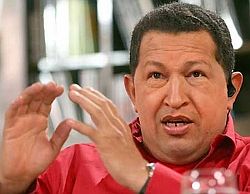
Hugo Chavez 1954–2013

Greg Grandin writes: I first met Hugo Chávez in New York City in September 2006, just after his infamous appearance on the floor of the UN General Assembly, where he called George W. Bush the devil. “Yesterday, the devil came here,” he said, “Right here. Right here. And it smells of sulfur still today, this table that I am now standing in front of.” He then made the sign of the cross, kissed his hand, winked at his audience and looked to the sky. It was vintage Chávez, an outrageous remark leavened with just the right touch of detail (the lingering sulfur!) to make it something more than bombast, cutting through soporific nostrums of diplomatese and drawing fire away from Iran, which was in the crosshairs at that meeting.

The press of course went into high dudgeon, and not just for the obvious reason that it’s one thing for opponents in the Middle East to call the US the Great Satan and another thing for the president of a Latin American country to personally single out its president as Beelzebub, on US soil no less.

I think what really rankled was that Chávez was claiming a privilege that had long belonged to the US, that is, the right to paint its adversaries not as rational actors but as existential evil. Latin American populists, from Argentina’s Juan Perón to, most recently, Chávez, have long served as characters in a story the US tells about itself, reaffirming the maturity of its electorate and the moderation of its political culture. There are at most eleven political prisoners in Venezuela, and that’s taking the opposition’s broad definition of the term, which includes individuals who worked to overthrow the government in 2002, and yet it is not just the right in this country who regularly compared Chávez to the worst mass murderers and dictators in history. New Yorker critic Alex Ross, in an essay published a few years back celebrating the wunderkind Venezuelan conductor of the Los Angeles Philharmonic, Gustavo Dudamel, fretted about enjoying the fruits of Venezuela’s much lauded government-funded system of music training: “Stalin, too, was a great believer in music for the people.”

Hugo Chávez was the second of seven children, born in 1954 in the rural village of Sabaneta, in the grassland state of Barinas, to a family of mixed European, Indian and Afro-Venezuelan race. Bart Jones’s excellent biography, Hugo! nicely captures the improbability of Chávez’s rise from dirt-floor poverty—he was sent to live with his grandmother since his parents couldn’t feed their children—through the military, where he became involved with left-wing politics, which in Venezuela meant a mix international socialism and Latin America’s long history of revolutionary nationalism. It drew inspiration from well-known figures such as Simón Bolívar as well as lesser known insurgents, such as nineteenth-century peasant leader Ezequiel Zamora, in whose army Chávez’s great-great-grandfather had served. Born just a few days after the CIA drove reformist Guatemalan president Jacobo Arbenz from office, he was a young military cadet of nineteen in September 1973 when he heard Fidel Castro on the radio announce yet another CIA-backed coup, this one toppling Salvador Allende in Chile. [Continue reading…]

Facebooktwittermail

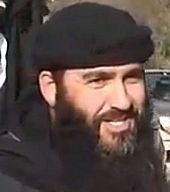
Profile of the leader of Jabhat al-Nusra

Al-Amir Gazi al-Haj

GlobalPost reports: On Dec. 10, the Obama administration officially deemed al-Nusra a terrorist organization, describing it as an extension of Al Qaeda in Iraq. The move criminalized any private support for the group. Members of al-Nusra have since dodged any questions about its Al Qaeda links in the foreign media. Al-Haj followed suit.

“Why are the US upset about Al Qaeda?” he asked. “Didn’t Hilary Clinton say they are fighting an organization they created?”

“If the US intend to make justice and peace in the world, then we are with them. If Al Qaeda does, then we are with them. We are on the side of justice and peace, whoever brings it.”

Among other opposition leaders, the general belief is that al-Nusra does not have direct links to Al Qaeda, but that much of their ideology stems from the same core beliefs. One of the few outside groups to have worked alongside al-Nusra is Suqur al-Sham, a coalition of moderate Islamists.

“Some of their thinking is similar to Al Qaeda in Iraq. But I do not believe they are financed by Al Qaeda,” said Ayachi Abdel Rahman, a Suqur al-Sham brigade leader who himself stands accused of terrorism. “They have shown a willingness to conform. They have slowly changed their tactics to appease fellow opposition groups and the Syrian population.”

Read the full story: From IT to rebel commander: The story of Ayachi Abdel Rahman

But Abdel Rahman said the two groups have had their disagreements over the killing of prisoners. He recalled a joint mission against a government checkpoint in Idlib where al-Nusra members captured and slit the throats of five government soldiers, throwing their bodies on the roadside. They told Abdel Rahman they wanted to instill fear in their enemy.

While the majority of opposition groups, by policy, send captives to face the centralized Free Syrian Army tribunal, YouTube videos show al-Nusra carrying out executions by gunfire and beheading.

Al-Nusra recently signed agreements in most areas, including Jabal al-Zawiya, to abide by the decisions of the Free Syrian Army courts, including the trial of prisoners of war. But al-Haj said there are situations were prisoners are executed without trial.

“There are some who we are sure have killed many,” he said. “By Islamic law it is an eye for an eye. These executions are by the same law as the courts. The intention of Jabhat al-Nursa is not to kill, but to uphold the law.”

Al-Haj said he was surprised when the United States designated al-Nusra a terrorist organization.

“If Jabhat al-Nusra are terrorists, why don’t we take a look at how many women have been raped by us, how many mosques have been destroyed by us, how many children killed. Now compare our record to Bashar’s list,” he said. “Then you will see who is the terrorist.”

Entering the room to serve a lunchtime feast, Al-Haj’s mother-in-law joined the conversation.

“The people are a witness to Jabhat al-Nusra,” she said. “They love Jabhat al-Nusra. What makes them terrorists? Because they don’t rape or steal? Because they protect and help the people? How is this terrorism?”

When his wife and young son entered the room, al-Haj beamed a joyous smile. He hugged the boy, who ran giggling into his arms, before warmly inviting his guests to enjoy the meal.

Following the terrorist designation in December, protests broke out across Syria in support of al-Nusra. Signs declared, “We are all Jabhat al-Nusra” and “There is no terrorism in Syria except that of Assad.”

Facebooktwittermail

The Zionism that Erdoğan opposes

Mustafa Akyol writes: Last week, during a visit to Vienna, Turkish Prime Minister Recep Tayyip Erdoğan initiated an international controversy by condemning “Zionism,” albeit in passing. “As is the case for Zionism, anti-Semitism and fascism,” he said, “it is inevitable that Islamophobia be considered a crime against humanity.”

Soon objections came. U.N. Secretary-General Ban Ki-moon found the comment “unfortunate” and “hurtful and divisive.” Israeli Prime Minister Benjamin Netanyahu was expectedly sharper, by defining Erdoğan’s words as “a dark and mendacious statement, the likes of which we thought had passed from the world.”

The issue surfaced during the U.S. Secretary of State John Kerry’s trip to Turkey as well. Kerry, on his first trip to a Muslim country since taking office, found welcoming hosts in Ankara, but he noted that he found Erdoğan’s comments “objectionable.”

But why did Erdoğan create such a fuss? And what did he really mean?

As a longtime observer of the Turkish prime minister, here is my humble advice for anyone who would like to find an answer to such questions: Erdoğan is a very Turkish politician. He, in other words, thinks and speaks in very local terms, not international ones. Therefore when he speaks of “Zionism,” what he has in mind is what most Turks have in mind, rather than what Ban Ki-moon, Netanyahu and Kerry have in theirs.

And there is a big gap between these two. Zionism, by international definitions, is a form of Jewish nationalism that is focused on founding and securing a Jewish state in what Jewish sources call “the Land of Israel.” Of course, Arabs call the same land “Palestine,” and the ones who used to live there, the Palestinians, have conflicted with Zionism from the beginning. In return, Zionists have taken various attitudes against Palestinians, ranging from moderate views which hope to co-exist with the Arabs to radical views which want to “transfer” all of them to other countries, which is a euphemism for ethnic cleansing. [Continue reading…]

Facebooktwittermail

Fallout from ‘Untouchables’ documentary: Another Wall Street whistleblower gets reamed

Matt Taibbi writes: A great many people around the county were rightfully shocked and horrified by the recent excellent and hard-hitting PBS documentary, The Untouchables, which looked at the problem of high-ranking Wall Street crooks going unpunished in the wake of the financial crisis. The PBS piece certainly rattled some cages, particularly in Washington, in a way that few media efforts succeed in doing. (Scroll to the end of this post to watch the full documentary.)

Now, two very interesting and upsetting footnotes to that groundbreaking documentary have emerged in the last weeks.

The first involves one of the people interviewed for the story, a former high-ranking executive from Countrywide financial who turned whistleblower named Michael Winston. You can see Michael’s segment of The Untouchables at around the 4:20 mark of the piece. The story Winston told during the documentary is essentially an eyewitness account of the beginning of the financial crisis.

When I spoke to him last week, Winston was still as amazed and repulsed by what he saw at Angelo Mozilo’s crooked subprime mortgage company as he was when he worked there. Winston, who had worked for years at high-level positions at companies like Motorola and Lockheed before joining Countrywide in the 2000s, described a moment in his first months at the company, when he rolled into the parking lot at the company headquarters.

“There was a guy there, a well-dressed guy, standing next to a car that had a vanity plate,” he said. “And the plate read, ‘FUND’EM.'”

Winston, curious, asked the guy what the plate meant. The man laughed and said, “That’s Angelo Mozilo’s growth strategy for 2006.” Here’s how Winston described the rest of the story to PBS – i.e. what happened when he asked the man to elaborate:

“What if the person doesn’t have a job?”

“Fund ’em,” the – the guy said.

And I said, “What if he has no income?”

“Fund ’em.”

“What if he has no assets?” And he said, “Fund ’em.”

Later on, Winston would hear that the company’s unofficial policy was that if a loan applicant could “fog a mirror,” he would be given a loan.

This kind of information is absolutely crucial to understanding what caused the subprime crisis. There are people out there still willing to argue that the government somehow “forced the banks to lend” to unworthy applicants. In reality, it was unscrupulous companies like Countrywide that were cranking out loans en masse, knowing that these loans would be unloaded down the line, first to banks and then to sucker investors like pension funds and foreign trade unions, almost as soon as they were created.

Winston was a witness to all of this. Eventually, he would be asked by the firm to present false information to the Moody’s ratings agency, which was about to give Countrywide a negative rating because of some trouble the company was having in working a smooth succession from one set of company leaders to another.

When Winston refused, he was essentially stripped of his normal responsibilities and had his corporate budget slashed. When Bank of America took over the company, Winston’s job was terminated. He sued, and in one of the few positive outcomes for any white-collar whistleblower anywhere in the post-financial-crisis universe, won a $3.8 million wrongful termination suit against Bank of America last February.

Well, just weeks after the PBS documentary aired, the Court of Appeals in the state of California suddenly took an interest in Winston’s case. Normally, a court of appeals can only overturn a jury verdict in a case like this if there is a legal error. It’s not supposed to relitigate the factual evidence.

Yet this is exactly what happened: [Continue reading…]

Facebooktwittermail