Medical Xpress: How do children learn language? Many linguists believe that the stages that a child goes through when learning language mirror the stages of language development in primate evolution. In a paper published in the Proceedings of the National Academy of Sciences, Charles Yang of the University of Pennsylvania suggests that if this is true, then small children and non-human primates would use language the same way. He then uses statistical analysis to prove that this is not the case. The language of small children uses grammar, while language in non-human primates relies on imitation.
Yang examines two hypotheses about language development in children. One of these says that children learn how to put words together by imitating the word combinations of adults. The other states that children learn to combine words by following grammatical rules.
Linguists who support the idea that children are parroting refer to the fact that children appear to combine the same words in the same ways. For example, an English speaker can put either the determiner “a” or the determiner “the” in front of a singular noun. “A door” and “the door” are both grammatically correct, as are “a cat” and “the cat.” However, with most singular nouns, children tend to use either “a” or “the” but not both. This suggests that children are mimicking strings of words without understanding grammatical rules about how to combine the words.
Yang, however, points out that the lack of diversity in children’s word combinations could reflect the way that adults use language. Adults are more likely to use “a” with some words and “the” with others. “The bathroom” is more common than “a bathroom.” “A bath” is more common than “the bath.”
To test this conjecture, Yang analyzed language samples of young children who had just begun making two-word combinations. He calculated the number of different noun-determiner combinations someone would make if they were combining nouns and determiners independently, and found that the diversity of the children’s language matched this profile. He also found that the children’s word combinations were much more diverse than they would be if they were simply imitating word strings.
Yang also studied language diversity in Nim Chimpsky, a chimpanzee who knows American Sign Language. Nim’s word combinations are much less diverse than would be expected if he were combining words independently. This indicates that he is probably mimicking, rather than using grammar.
This difference in language use indicates that human children do not acquire language in the same way that non-human primates do. Young children learn rules of grammar very quickly, while a chimpanzee who has spent many years learning language continues to imitate rather than combine words based on grammatical rules.
Author Archives: Attention to the Unseen
Music: Bugge Wesseltoft & Dhafer Youssef — ‘Hope’ (live)
Experimental evidence that meditation promotes acts of kindness
Northeastern University College of Science: Scientists have mostly focused on the benefits of meditation for the brain and the body, but a recent study by Northeastern University’s David DeSteno, published in Psychological Science, takes a look at what impacts meditation has on interpersonal harmony and compassion.
Several religious traditions have suggested that mediation does just that, but there has been no scientific proof — until now.
In this study, a team of researchers from Northeastern University and Harvard University examined the effects meditation would have on compassion and virtuous behavior, and the results were fascinating.
This study — funded by the Mind and Life Institute — invited participants to complete eight-week trainings in two types of meditation. After the sessions, they were put to the test.
Sitting in a staged waiting room with three chairs were two actors. With one empty chair left, the participant sat down and waited to be called. Another actor using crutches and appearing to be in great physical pain, would then enter the room. As she did, the actors in the chair would ignore her by fiddling with their phones or opening a book.
The question DeSteno and Paul Condon — a graduate student in DeSteno’s lab who led the study — and their team wanted to answer was whether the subjects who took part in the meditation classes would be more likely to come to the aid of the person in pain, even in the face of everyone else ignoring her. “We know meditation improves a person’s own physical and psychological wellbeing,” said Condon. “We wanted to know whether it actually increases compassionate behavior.”
Among the non-meditating participants, only about 15 percent of people acted to help. But among the participants who were in the meditation sessions “we were able to boost that up to 50 percent,” said DeSteno. This result was true for both meditation groups thereby showing the effect to be consistent across different forms of meditation. “The truly surprising aspect of this finding is that meditation made people willing to act virtuous – to help another who was suffering – even in the face of a norm not to do so,” DeSteno said, “The fact that the other actors were ignoring the pain creates as ‘bystander-effect’ that normally tends to reduce helping. People often wonder ‘Why should I help someone if no one else is?’”
These results appear to prove what the Buddhist theologians have long believed — that meditation is supposed to lead you to experience more compassion and love for all sentient beings. But even for non-Buddhists, the findings offer scientific proof for meditation techniques to alter the calculus of the moral mind.
Music: Bugge Wesseltoft — ‘Yellow is the Colour’
Music: Bugge Wesseltoft — ‘Singing’
Music: Bugge Wesseltoft — ‘Mitt Hjerte Alltid Vanker’
Dystopian fiction not far from becoming security state reality
Nature: In a twist that evokes the dystopian science fiction of writer Philip K. Dick, neuroscientists have found a way to predict whether convicted felons are likely to commit crimes again from looking at their brain scans. Convicts showing low activity in a brain region associated with decision-making and action are more likely to be arrested again, and sooner.
Kent Kiehl, a neuroscientist at the non-profit Mind Research Network in Albuquerque, New Mexico, and his collaborators studied a group of 96 male prisoners just before their release. The researchers used functional magnetic resonance imaging (fMRI) to scan the prisoners’ brains during computer tasks in which subjects had to make quick decisions and inhibit impulsive reactions.
The scans focused on activity in a section of the anterior cingulate cortex (ACC), a small region in the front of the brain involved in motor control and executive functioning. The researchers then followed the ex-convicts for four years to see how they fared.
Among the subjects of the study, men who had lower ACC activity during the quick-decision tasks were more likely to be arrested again after getting out of prison, even after the researchers accounted for other risk factors such as age, drug and alcohol abuse and psychopathic traits. Men who were in the lower half of the ACC activity ranking had a 2.6-fold higher rate of rearrest for all crimes and a 4.3-fold higher rate for nonviolent crimes. The results are published today in the Proceedings of the National Academy of Sciences1.
There is growing interest in using neuroimaging to predict specific behaviour, says Tor Wager, a neuroscientist at the University of Colorado in Boulder. He says that studies such as this one, which tie brain imaging to concrete clinical outcomes, “provide a new and so far very promising way” to find patterns of brain activity that have broader implications for society.
But the authors themselves stress that much more work is needed to prove that the technique is reliable and consistent, and that it is likely to flag only the truly high-risk felons and leave the low-risk ones alone. “This isn’t ready for prime time,” says Kiehl.
Wager adds that the part of the ACC examined in this study “is one of the most frequently activated areas in the human brain across all kinds of tasks and psychological states”. Low ACC activity could have a variety of causes — impulsivity, caffeine use, vascular health, low motivation or better neural efficiency — and not all of these are necessarily related to criminal behaviour. [Continue reading…]
Corporate theft: Your DNA isn’t yours — it’s been patented
Medical Express: Humans don’t “own” their own genes, the cellular chemicals that define who they are and what diseases they might be at risk for. Through more than 40,000 patents on DNA molecules, companies have essentially claimed the entire human genome for profit, report two researchers who analyzed the patents on human DNA. Their study, published March 25 in the journal Genome Medicine, raises an alarm about the loss of individual “genomic liberty.”
In their new analysis, the research team examined two types of patented DNA sequences: long and short fragments. They discovered that 41 percent of the human genome is covered by longer DNA patents that often cover whole genes. They also found that, because many genes share similar sequences within their genetic structure, if all of the “short sequence” patents were allowed in aggregate, they could account for 100 percent of the genome.
Furthermore, the study’s lead author, Dr. Christopher E. Mason of Weill Cornell Medical College, and the study’s co-author, Dr. Jeffrey Rosenfeld, an assistant professor of medicine at the University of Medicine & Dentistry of New Jersey and a member of the High Performance and Research Computing Group, found that short sequences from patents also cover virtually the entire genome — even outside of genes.
“If these patents are enforced, our genomic liberty is lost,” says Dr. Mason, an assistant professor of physiology and biophysics and computational genomics in computational biomedicine at the Institute for Computational Biomedicine at Weill Cornell. “Just as we enter the era of personalized medicine, we are ironically living in the most restrictive age of genomics. You have to ask, how is it possible that my doctor cannot look at my DNA without being concerned about patent infringement?”
The U.S. Supreme Court will review genomic patent rights in an upcoming hearing on April 15. At issue is the right of a molecular diagnostic company to claim patents not only on two key breast and ovarian cancer genes—BRCA1 and BRCA2—but also on any small sequence of code within BRCA1, including a striking patent for only 15 nucleotides.
In its study, the research team matched small sequences within BRCA1 to other genes and found that just this one molecular diagnostic company’s patents also covered at least 689 other human genes—most of which have nothing to do with breast or ovarian cancer; rather, its patents cover 19 other cancers as well as genes involved in brain development and heart functioning.
“This means if the Supreme Court upholds the current scope of the patents, no physician or researcher can study the DNA of these genes from their patients, and no diagnostic test or drug can be developed based on any of these genes without infringing a patent,” says Dr. Mason. [Continue reading…]
Only a creator culture can save us

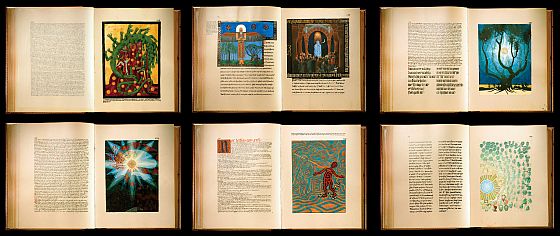
Pages from The Red Book
Damien Walter writes: Between the years of 1914 and 1930 the psychiatrist and founder of analytical psychology Carl Gustav Jung undertook what he later termed a ‘voluntary confrontation with his unconscious’. Employing certain techniques of active imagination that became part of his theory of human development, Jung incited visions, dreams and other manifestations of his imagination, which he recorded in writing and pictures. For some years, he kept the results of this process secret, though he described them to close friends and family as the most important work of his life. Late in his career, he set about collecting and transcribing these dreams and visions.
The product was the ‘Liber Novus’ or ‘New Book’, now known simply as The Red Book. Despite requests for access from some of the leading thinkers and intellectuals of the 20th century, very few people outside of Jung’s close family were allowed to see it before its eventual publication in 2009. It has since been recognised as one of the great creative acts of the century, a magnificent and visionary illuminated manuscript equal to the works of William Blake.
It is from his work on The Red Book that all of Jung’s theories on archetypes, individuation and the collective unconscious stem. Of course, Jung is far from alone in esteeming human creativity. The creative capacity is central to the developmental psychology of Jean Piaget and the constructivist theory of learning, and creativity is increasingly at the heart of our models of economic growth and development. But Jung provides the most satisfying explanation I know for why the people I worked with got so much out of discovering their own creativity, and why happiness and the freedom to create are so closely linked.
Jung dedicated his life to understanding human growth, and the importance of creativity to that process. It seems fitting that the intense process that led to the The Red Book should also have been integral to Jung’s own personal development. Already well into his adult life, he had yet to make the conceptual breakthroughs that would become the core of his model of human psychology. In quite a literal sense, the process of creating The Red Book was also the process of creating Carl Jung. This simple idea, that creativity is central to our ongoing growth as human beings, opens up a very distinctive understanding of what it means to make something. [Continue reading…]
Music: Zagreb Guitar Quartet — Bach’s ‘Little’ Fugue in G Minor
The scope and the scale of animal intelligence

Ayumu
As everyone knows (or should know), you don’t have to be smart to get rich. The aggregation of power is not coterminous with the concentration of talent — that is, other than the talent for accumulating power.
In spite of this, there is a human prejudice which, observing our species’ dominion across the world, assumes that given that human beings exert so much power — enough to have set in train the Anthropocene, a new epoch in the planet’s history — it goes without saying that our intelligence exceeds that of every other creature.
Even so, given that we seem to be intent on setting our own home on fire, that’s reason enough to question our intelligence. It also turns out that based on our own metrics, we can be outwitted by animals that we otherwise regard as having lesser intelligence.
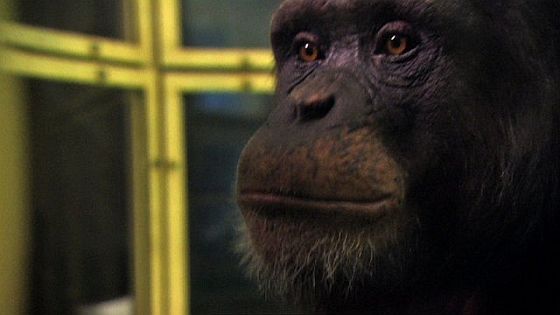
Frans de Waal writes: Who is smarter: a person or an ape? Well, it depends on the task. Consider Ayumu, a young male chimpanzee at Kyoto University who, in a 2007 study, put human memory to shame. Trained on a touch screen, Ayumu could recall a random series of nine numbers, from 1 to 9, and tap them in the right order, even though the numbers had been displayed for just a fraction of a second and then replaced with white squares. [See video below.]
I tried the task myself and could not keep track of more than five numbers—and I was given much more time than the brainy ape. In the study, Ayumu outperformed a group of university students by a wide margin. The next year, he took on the British memory champion Ben Pridmore and emerged the “chimpion.”
How do you give a chimp — or an elephant or an octopus or a horse — an IQ test? It may sound like the setup to a joke, but it is actually one of the thorniest questions facing science today. Over the past decade, researchers on animal cognition have come up with some ingenious solutions to the testing problem. Their findings have started to upend a view of humankind’s unique place in the universe that dates back at least to ancient Greece.
Aristotle’s idea of the scala naturae, the ladder of nature, put all life-forms in rank order, from low to high, with humans closest to the angels. During the Enlightenment, the French philosopher René Descartes, a founder of modern science, declared that animals were soulless automatons. In the 20th century, the American psychologist B.F. Skinner and his followers took up the same theme, painting animals as little more than stimulus-response machines. Animals might be capable of learning, they argued, but surely not of thinking and feeling. The term “animal cognition” remained an oxymoron.
A growing body of evidence shows, however, that we have grossly underestimated both the scope and the scale of animal intelligence. Can an octopus use tools? Do chimpanzees have a sense of fairness? Can birds guess what others know? Do rats feel empathy for their friends? Just a few decades ago we would have answered “no” to all such questions. Now we’re not so sure. [Continue reading…]
Music: Arve Henriksen — ‘Recording Angel’
A new view of the universe

Slate: The Universe is a wee bit older than we thought. Not only that, but turns out the ingredients are a little bit different, too. And not only that, but the way they’re mixed isn’t quite what we expected, either. And not only that, but there are hints and whispers of something much grander going on as well.
So what’s going on?
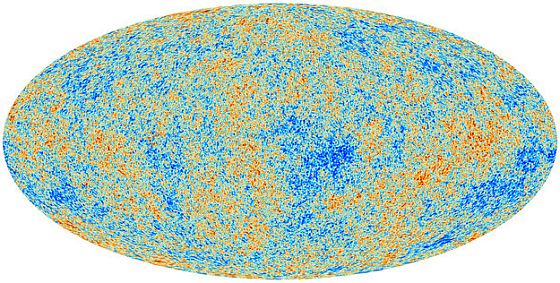
The European Space Agency’s Planck mission is what’s going on. Planck has been scanning the entire sky, over and over, peering at the radio and microwaves pouring out of the Universe. Some of this light comes from stars, some from cold clumps of dust, some from exploding stars and galaxies. But a portion of it comes from farther away… much farther away. Billions of light years, in fact, all the way from the edge of the observable Universe.
This light was first emitted when the Universe was very young, about 380,000 years old. It was blindingly bright, but in its eons-long travel to us has dimmed and reddened. Fighting the expansion of the Universe itself, the light has had its wavelength stretched out until it gets to us in the form of microwaves. Planck gathered that light for over 15 months, using instruments far more sensitive than ever before.
The light from the early Universe shows it’s not smooth. If you crank the contrast way up you see slightly brighter and slightly dimmer spots. These correspond to changes in temperature of the Universe on a scale of 1 part in 100,000. That’s incredibly small, but has profound implications. We think those fluctuations were imprinted on the Universe when it was only a trillionth of a trillionth of a second old, and they grew with the Universe as it expanded. They were also the seeds of the galaxies and the clusters and galaxies we see today.
What started out as quantum fluctuations when the Universe was smaller than a proton have now grown to be the largest structures in the cosmos, hundreds of millions of light years across. Let that settle in your brain a moment. [Continue reading…]
The neuroscience of finding your lost keys

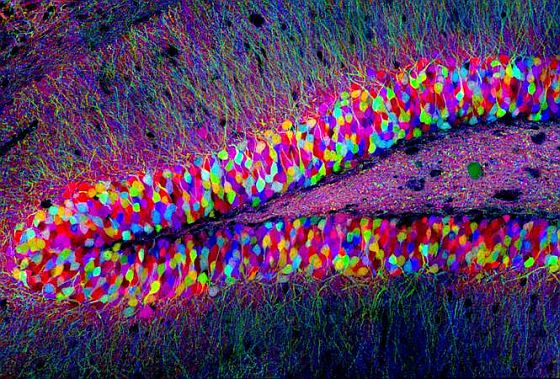
Individual neurons of the dentate gyrus in a 'Brainbow' mouse.
Salk Institute: Ever find yourself racking your brain on a Monday morning to remember where you put your car keys?
When you do find those keys, you can thank the hippocampus, a brain region responsible for storing and retrieving memories of different environments-such as that room where your keys were hiding in an unusual spot.
Now, scientists have helped explain how the brain keeps track of the incredibly rich and complex environments people navigate on a daily basis. They discovered how the dentate gyrus, a subregion of the hippocampus, helps keep memories of similar events and environments separate, a finding they reported March 20 in eLife. The findings, which clarify how the brain stores and distinguishes between memories, may also help identify how neurodegenerative diseases, such as Alzheimer’s disease, rob people of these abilities.
“Everyday, we have to remember subtle differences between how things are today, versus how they were yesterday – from where we parked our car to where we left our cellphone,” says Fred H. Gage, senior author on the paper and the Vi and John Adler Chair for Research on Age-Related Neurodegenerative Disease at Salk. “We found how the brain makes these distinctions, by storing separate ‘recordings’ of each environment in the dentate gyrus.”
The process of taking complex memories and converting them into representations that are less easily confused is known as pattern separation. Computational models of brain function suggest that the dentate gyrus helps us perform pattern separation of memories by activating different groups of neurons when an animal is in different environments.
However, previous laboratory studies found that in fact the same populations of neurons in the dentate gyrus are active in different environments, and that the way the cells distinguished new surroundings was by changing the rate at which they sent electrical impulses. This discrepancy between theoretical predictions and laboratory findings has perplexed neuroscientists and obscured our understanding of memory formation and retrieval. [Continue reading…]
Music: J.S. Bach — ‘The Art of Fugue, Contrapunctus I’
Scientists prove you really can tell what your dog is feeling by looking at its face
The Telegraph reports: A study has shown that people are able to precisely identify a range of emotions in dogs from changes in their facial expressions.
The research showed that volunteers could correctly spot when a dog was happy, sad, angry, surprised or scared, when shown only a picture of the animal’s face, suggesting that humans are naturally attuned to detecting how animals are feeling.
Dr Tina Bloom, a psychologist who led the research, said: “There is no doubt that humans have the ability to recognise emotional states in other humans and accurately read other humans’ facial expressions. We have shown that humans are also able to accurately – if not perfectly – identify at least one dog’s facial expressions.
“Although humans often think of themselves as disconnected or even isolated from nature, our study suggests that there are patterns that connect, and one of these is in the form of emotional communication.”
The study, published in the journal Behavioural Processes, used photographs of a police dog named Mal, a five-year-old Belgian shepherd dog, as it experienced different emotions. [Continue reading…]