9/11 has become the emblem of all our fears not because it represents a national security failure or because it exposed poorly crafted foreign policy.
From our perspective the most terrifying dimension of the threat posed by al Qaeda is not its destructive capacity but its operatives’ casual disregard for life. Like moths drawn towards a flame, death offers for them some irresistible allure.
In contrast, we see our own fear of death as a healthy expression of our love of life. Indeed we see death as signifying more than anything else the termination of life.
There’s a contradiction here which reveals the fundamentally secular nature of contemporary American society — a secularism masked by the ostentatious religious identifications to which so many Americans cling.
Strip away their diverse forms of worship and their often conflicting systems of belief, and each religion has at its core the same function: it provides the individual and society a means to face mortality and render it meaningful.
If you want to determine the degree from which any society has moved away from its historical religious orientation, there is no easier way than to look at how it handles death.
A death-denying society is one that finds little comfort in the promise of an afterlife. It invests most of its faith in this world in the absence of any real confidence about what might follow.
Consider the example of America’s religious fanatic-of-the-week, Pastor Terry Jones. In the face of death threats he professed his willingness to die in defense of his beliefs, yet he did so with a 40-caliber pistol strapped to his waist.
We say “One Nation Under God” as though we are guided by a transcendent perspective, yet more often we seem to worship the nation itself.
The holy book in which so many Americans profess their faith says quite clearly:
Lay not up for yourselves treasures upon earth, where moth and rust doth corrupt, and where thieves break through and steal;
But lay up for yourselves treasures in heaven, where neither moth nor rust doth corrupt, and where thieves do not break through nor steal.
This, like so many others, is a throughly un-American Biblical teaching and where American values and Biblical values conflict, the outcome is predictable.
Our fears reign in this land — the place we have stored all our treasures — which is why, however much we spend on defense, we still struggle to feel safe.
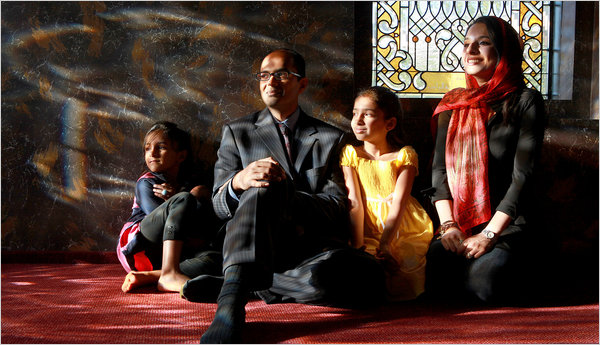
In the midst of the heated debate about the construction of an Islamic center two blocks away from the site of the World Trade Center, Samuel Freedman tells a story that should be heard by everyone who has declared their concern about the sensitivity of this issue.
Sometime in 1999, a construction electrician received a new work assignment from his union. The man, Sinclair Hejazi Abdus-Salaam, was told to report to 2 World Trade Center, the southern of the twin towers.
In the union locker room on the 51st floor, Mr. Abdus-Salaam went through a construction worker’s version of due diligence. In the case of an emergency in the building, he asked his foreman and crew, where was he supposed to reassemble? The answer was the corner of Broadway and Vesey.
Over the next few days, noticing some fellow Muslims on the job, Mr. Abdus-Salaam voiced an equally essential question: “So where do you pray at?” And so he learned about the Muslim prayer room on the 17th floor of the south tower.
He went there regularly in the months to come, first doing the ablution known as wudu in a washroom fitted for cleansing hands, face and feet, and then facing toward Mecca to intone the salat prayer.
On any given day, Mr. Abdus-Salaam’s companions in the prayer room might include financial analysts, carpenters, receptionists, secretaries and ironworkers. There were American natives, immigrants who had earned citizenship, visitors conducting international business — the whole Muslim spectrum of nationality and race.
Leaping down the stairs on Sept. 11, 2001, when he had been installing ceiling speakers for a reinsurance company on the 49th floor, Mr. Abdus-Salaam had a brief, panicked thought. He didn’t see any of the Muslims he recognized from the prayer room. Where were they? Had they managed to evacuate?
He staggered out to the gathering place at Broadway and Vesey. From that corner, he watched the south tower collapse, to be followed soon by the north one. Somewhere in the smoking, burning mountain of rubble lay whatever remained of the prayer room, and also of some of the Muslims who had used it.
Given the vitriolic opposition now to the proposal to build a Muslim community center two blocks from ground zero, one might say something else has been destroyed: the realization that Muslim people and the Muslim religion were part of the life of the World Trade Center.
Opponents of the Park51 project say the presence of a Muslim center dishonors the victims of the Islamic extremists who flew two jets into the towers. Yet not only were Muslims peacefully worshiping in the twin towers long before the attacks, but even after the 1993 bombing of one tower by a Muslim radical, Ramzi Yousef, their religious observance generated no opposition
“We weren’t aliens,” Mr. Abdus-Salaam, 60, said in a telephone interview from Florida, where he moved in retirement. “We had a foothold there. You’d walk into the elevator in the morning and say, ‘Salaam aleikum,’ to one construction worker and five more guys in suits would answer, ‘Aleikum salaam.’ ”
One of those men in suits could have been Zafar Sareshwala, a financial executive for the Parsoli Corporation, who went to the prayer room while on business trips from his London office. He was introduced to it, he recently recalled, by a Manhattan investment banker who happened to be Jewish.
“It was so freeing and so calm,” Mr. Sareshwala, 47, said in a phone conversation from Mumbai, where he is now based. “It had the feel of a real mosque. And the best part is that you are in the epicenter of capitalism — New York City, the World Trade Center — and you had this island of spiritualism. I don’t think you could have that combination anywhere in the world.”
Firebrand Pastor Jones now says he won’t be burning Qurans on Saturday because he claims he extracted a deal to get the Cordoba House project moved to a different site.
“Americans don’t want the mosque there and of course Muslims don’t want us to burn Qurans,” Jones said.
The problem is, Jones appears to have cut his deal with someone who has no say in the location of the mosque: Florida Imam Muhammad al-Masri.
In an interview on CNN on Wednesday, Imam Feisal Abdul Rauf reiterated his commitment to open the Islamic center in Lower Manhattan.
“I am glad that Pastor Jones has decided not to burn any Qurans,” Rauf told ABC News on Thursday. “However, I have not spoken with Pastor Jones or Imam Musri. I am surprised by their announcement.”
The likely political effect of Jones’ Quran burning stunt is that it will strengthen mainstream opposition to Cordoba House. In response to Jones’ antics, many opponents of the Islamic center have taken the opportunity to paint themselves as moderates in tune with popular opinion.
Most Americans say the planned Muslim community center and place of worship should not be built in Lower Manhattan, with the sensitive locale being their overwhelming objection, according to a new Washington Post-ABC News poll.
Two-thirds of those polled object to the prospective Cordoba House complex near the site of the former twin towers, including a slim majority who express strongly negative views. Eighty-two percent of those who oppose the construction say it’s because of the location, although 14 percent (9 percent of all Americans) say they would oppose such building anywhere in the country.
The new results come alongside increasingly critical public views of Islam: 49 percent of all Americans say they have generally unfavorable opinions of Islam, compared with 37 percent who say they have favorable ones. That’s the most negative split on the question in Post-ABC polls dating to October 2001.
Furthermore, the poll makes it clear that while America remains at war, economic recovery is nowhere near in sight, and tackling climate change has yet to be treated as a national and global imperative, the focus of the upcoming midterm elections is likely to be a minor construction project in New York.
Regardless of their rationale, most voters who firmly oppose the center’s construction in Lower Manhattan say they feel strongly enough about the issue that it would influence their congressional vote in November. These voters side by a wide margin with Republican over Democratic candidates.
Overall, 83 percent of Republicans oppose the Muslim center, as do 65 percent of independents and 53 percent of Democrats. Among Republicans, generally negative views have spiked higher: 67 percent of those who identify as Republican say they have unfavorable views of Islam, up from 42 percent in the months after the Sept. 11, 2001, attacks.
Big majorities of Protestants and Catholics are against it, with opposition peaking among white evangelical Protestants. By contrast, most people with no professed religion support the construction.
As the issue reveals, rarely is there a discernible difference between piety and pettiness — at least in America.
“Republicans are usually eager to trumpet their support for the troops and the war against terror. So why aren’t they condemning the Florida pastor who plans to lead his congregation in a Quran-burning bonfire on Sept. 11?,” wrote Fred Kaplan on Tuesday.
His call has been answered — by Sarah Palin: “Book burning is antithetical to American ideals. People have a constitutional right to burn a Koran if they want to, but doing so is insensitive and an unnecessary provocation — much like building a mosque at Ground Zero.”
Is Pastor Jones ready to obey Palin’s call to “stand down”? Maybe a generous donation to his church will do the trick.
However Palin and other Cordoba House opponents manage to persuade Jones to back down, this is how they must be hoping they can play his Quran burning stunt: turn an eleventh hour display of “sensitivity” by the Florida pastor into leverage against Feisal Abdul Rauf — as though the imam and the pastor are somehow equivalents. Once “Dr” Jones finds it in his heart to act as the “sensitive” Christian, the chorus will rise even louder demanding a reciprocal display from “sensitive” Muslims.
Before the term got hijacked by Islamophobes, it was widely understood that to be insensitive was to show a lack of awareness about the feelings of others. To call Quran burning “insensitive” is to imply that Jones and his followers don’t grasp the offensiveness of their action. But as ignorant as the members of this church might be, no one can be in any doubt that this action is consciously designed as an act of provocation. Islam is the target of this attack and it is absurd to claim — as Jones does — that Muslims collectively are not also the intended victims.
In tying together Jones’ Quran burning with the proposed Islamic center we witness a false equivalence that has become all too familiar. Islamophobes poke Muslims in the eye and then accuse them of being culturally insensitive because of the manner in which they practice their faith — by building mosques, by women wearing head coverings and so forth.
Sarah Palin and others are riding on the sensitivity bandwagon because they think it’s a safe bet. Who can refute that sensitivity is a good thing. Most importantly though, it appears to let them off a constitutional hook. After all, it’s hard to wrap yourself in the flag and also oppose freedom of religion.
In truth though, the most reliable defenders of freedom of religion are not particularly religious — least of all are they evangelical.
When someone comes to my door and tells me I’d have a better life it I gave it to Christ, they are certainly exercising freedom of religion but they are not defending it. On the contrary, they are engaged in a religiously sanctioned act of arrogance that I regard as an insult to my intelligence. Even as I suggest that in a reversal of the current situation, they might not take kindly to my arrival on their doorstep for the purpose of educating them about Darwinism, they busily search for a line of scripture that might point me in the right direction. Lucky for them, I believe in religious tolerance and have yet to slam the door in anyone’s face.
Living religions (as distinct from their doctrinal underpinnings) are by their very nature intolerant and the purpose of religious freedom is to temper this intolerance by promoting a live-and-let-live spirit. (To his credit, President Obama has acknowledged that the freedom of religion also protects each American’s right to practice no religion at all.)
Tolerance does not mean that I bow to anyone’s prejudice; it means that I recognize and respect the autonomy of each individual in forming and articulating his or her own understanding of life.
The evangelical conceit — and it matters to me not a whit whether the evangelist happens to be a Christian, a Muslim or a Darwinist — is that there is no intrinsic value in the utterly unique vantage point from which we each of us engages the world. On that basis, the evangelist treats the spirit of the unconverted as open territory, ready for colonization.
America is a vessel inside which evangelical colonists roam freely, but however loudly they may insist on making themselves heard we must ensure that no ones freedom confers privilege in ownership.
This can only be the land of the free if it belongs to everyone.
Arguments about the construction of an Islamic center and the destruction of Qurans may have less to do with Islam than they have with who gets to define America and why this nation is grappling with its own identity.
Prominent Christian, Jewish and Muslim leaders held an extraordinary “emergency summit” meeting in the capital on Tuesday to denounce what they called “the derision, misinformation and outright bigotry” aimed at American Muslims during the controversy over the proposed Islamic community center near ground zero.
“This is not America,” said Cardinal Theodore E. McCarrick, the emeritus Roman Catholic archbishop of Washington, flanked by three dozen clergy members and religious leaders at a packed news conference at the National Press Club. “America was not built on hate.”
They said they were alarmed that the “anti-Muslim frenzy” and attacks at several mosques had the potential not only to tear apart the country, but also to undermine the reputation of America as a model of religious freedom and diversity.
The imam behind the plan to build an Islamic center near ground zero, Feisal Abdul Rauf, finally spoke out about the controversy, saying in an opinion piece in The New York Times published Tuesday night that he would proceed with plans to build the center. He wrote that by backing down, “we cede the discourse and, essentially, our future to radicals on both sides.”
The meeting in Washington occurred amid growing concern by the White House, the State Department and the top American military commander in Afghanistan over plans by Terry Jones, the pastor of a small church in Florida, to burn copies of the Koran on the anniversary of the Sept. 11 attacks.
Gen. David H. Petraeus warned on Tuesday that any video of Americans burning the Koran “would undoubtedly be used by extremists in Afghanistan — and around the world — to inflame public opinion and incite violence,” endangering the lives of American soldiers.
A State Department spokesman called Mr. Jones’s plan “un-American.” Robert Gibbs, the White House spokesman, said any activity “that puts our troops in harm’s way would be a concern to this administration.”
Several clergy members in Washington and Florida said that there were efforts to dissuade Mr. Jones from proceeding with the event, but that he appeared unlikely to relent.
The religious leaders in Washington said in their statement, “We are appalled by such disrespect for a sacred text that for centuries has shaped many of the great cultures of our world.”
Interfaith events are not unusual, but this one was extraordinary for the urgency and passion expressed by the participants. Some of the same religious leaders later met with Attorney General Eric H. Holder Jr. to urge him to prosecute religious hate crimes aggressively.
Rabbi David Saperstein, director of the Religious Action Center of Reform Judaism, said: “We know what it is like when people have attacked us physically, have attacked us verbally, and others have remained silent. It cannot happen here in America in 2010.”
The problem with any argument that revolves around contesting views about the true identity of this country is that neither side is attempting to differentiate between the America of their convictions and America as actuality.
Cardinal McCarrick can say, “This is not America,” but in fact it is — it just happens to be uglier than he would like it to be.
As an ideological debate, this is ostensibly an argument between on the one hand those who fully include Muslims in the idea of America, and on the other hand those who demand that Muslims must shed or at least modify their identities if they wish to be accepted in this society.
The problem is that a Muslim voice is barely audible on either side of the debate — evidence that the proponents of inclusion are describing an ideal that is far from having been realized.
Feisal Abdul Rauf, whose Cordoba House project has been at the center of the argument and who has just returned from a two-month overseas trip sponsored by the State Department, said in an op-ed in today’s New York Times: “I felt that it would not be right to comment from abroad.”
Not right? Maybe closer the truth was that he knew that if he spoke from the Middle East, his words would more likely be perceived not as those of an American but as a representative of that region and thus they would reinforce the image of Muslims in America as outsiders.
In the context of rising Islamophobia, American Muslims are in retreat, yet the lower the profile they assume, the more empowered the anti-Muslim voice becomes.
Muslims sit in their living rooms, aghast as pundits assert over and over that Islam is not a religion at all but a political cult, that Muslims cannot be good Americans and that mosques are fronts for extremist jihadis. To address what it calls a “growing tide of fear and intolerance,” the Islamic Society of North America plans to convene a summit of Christian, Muslim and Jewish leaders in Washington on Tuesday.
Young American Muslims who are trying to figure out their place and their goals in life are particularly troubled, said Imam Abdullah T. Antepli, the Muslim chaplain at Duke University.
“People are discussing what is the alternative if we don’t belong here,” he said. “There are jokes: When are we moving to Canada, when are we moving to Sydney? Nobody will go anywhere, but there is hopelessness, there is helplessness, there is real grief.”
Mr. Antepli just returned from a trip last month with a rabbi and other American Muslim leaders to Poland and Germany, where they studied the Holocaust and the events that led up to it (the group issued a denunciation of Holocaust denial on its return).
“Some of what people are saying in this mosque controversy is very similar to what German media was saying about Jews in the 1920s and 1930s,” he said. “It’s really scary.”
The Anti-Defamation League has formed an Interfaith Coalition on Mosques (ICOM) which aims to “provide support and stand with Muslims when their rights are being violated,” but the credibility of this initiative is undermined by the ADL’s own opposition to the construction of the Cordoba Islamic center. They might have quickly realized that that was a political blunder but it remains to be seen whether ICOM is more than a PR exercise designed to repair the ADL’s tattered image.
Aside from the question about whether the ADL can be true to its core mission and fight “to secure justice and fair treatment to all,” the proponents of a more libertarian and inclusive vision of American society face a deeper problem. We belong to a minority and there are inherent limits on the extent to which any minority can exert its will. We should thus perhaps more explicitly focus on what we want America to become than profess to represent its current condition.
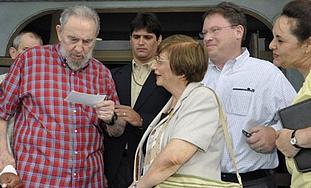
Jeffrey Goldberg just went to visit the father of the Cuban revolution, Fidel Castro, and was surprised and pleased to hear the 84-year-old castigate Iran’s President Ahmadinejad and denounce anti-Semitism:
Over the course of this first, five-hour discussion, Castro repeatedly returned to his excoriation of anti-Semitism. He criticized Ahmadinejad for denying the Holocaust and explained why the Iranian government would better serve the cause of peace by acknowledging the “unique” history of anti-Semitism and trying to understand why Israelis fear for their existence.
[…]
He said the Iranian government should understand the consequences of theological anti-Semitism. “This went on for maybe two thousand years,” he said. “I don’t think anyone has been slandered more than the Jews. I would say much more than the Muslims. They have been slandered much more than the Muslims because they are blamed and slandered for everything. No one blames the Muslims for anything.”
As an elder statesman and revolutionary leader, Castro retains some influence, but to say ‘no one blames the Muslims for anything,’ makes it sound like he’s a man living in a time warp.
Has the post-9/11 Islamophobia now sweeping Europe and rising in America, somehow escaped Castro’s attention? Does he not know that even in Germany, whose national consciousness should have been permanently seared by the memory of the horrific consequences of ethnic hatred, anti-Muslim rhetoric now finds a widening and receptive audience. “Germany is slowly becoming a state that is dominated by exaggerated fears and that exhibits the beginnings of an Islamophobic society,” writes Erich Follath in Der Spiegel.
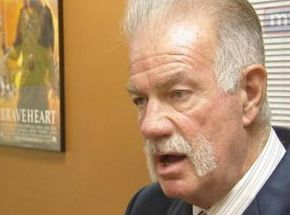
In an interview on CNN this morning, Dr Terry Jones, the Florida pastor who has organized “International Burn a Koran Day” for September 11, said:
We want to send a clear message to the peaceful Moslems. We have freedom of speech. We have freedom of religion. They are more than welcome to be here. More than welcome to worship. More than welcome to build mosque[s].
Say what? In July, Jones was asked whether he thought Muslims would turn to Christ as a result of his Quran-burning event:
This is our prayer and desire that they would seriously reexamine their religion. They will then come to the conclusion that Islam is of the devil and Christianity is the only true religion.
Jones now tells CNN that Muslims are welcome to worship in America but in a broadcast of his “Braveheart Show” in May he said:
We must demand that all Moslems that are here, they adapt to our values — they become Americans. If they want to stay Moslems, with their culture, with their Islamic law, then they can stay in Moslem dominated countries.
He now says Muslims are more than welcome to build mosques in America. In May he said:
We should stop immediately, stop right now, the building of all mosque[s] in America…
So, Jones says Muslims are welcome to build mosques in America and that no more mosques should be built. Muslims are welcome to worship here, but if they want to practice their religion they should live in a Muslim-dominated country.
The top U.S. commander in Afghanistan said the planned burning of Qurans on Sept. 11 by a Florida church could put the lives of American troops in danger and damage the war effort.
Gen. David Petraeus said the Taliban would exploit the demonstration for propaganda purposes, drumming up anger toward the U.S. and making it harder for allied troops to carry out their mission of protecting Afghan civilians.
“It could endanger troops and it could endanger the overall effort,” Gen. Petraeus said in an interview with The Wall Street Journal. “It is precisely the kind of action the Taliban uses and could cause significant problems. Not just here, but everywhere in the world we are engaged with the Islamic community.”
The nature of this event… will likely garner the same, if not a larger, scale of international attention as historically similar events. This attention will most likely have political and national security implications which could involve the boycott of American goods and services, violent demonstrations within the United States and abroad, threats and/or acts of violence from terrorist organizations and/or lone extremist actors, and further segregation between the Muslim and non-Muslim American communities.
Even if the Dove World Outreach Center yields in response to the US government’s security concerns, much of the damage has already been done.
Pastor Terry Jones’ planned Quran burning is like every other act of book burning throughout history — from the actions of the Inquisition to those of the Nazis: a perverse celebration of ignorance.
There are countless books not worth reading but virtually none worth burning. Indeed, the very fact that individuals or groups of people feel driven to burn particular books, generally says less about those books than it does about the impoverished minds of the book burners.
Pastor Jones is presumably reveling in his fifteen minutes of fame, but in his cheap suit he should be seen for what he is: a member of a tawdry class of American religious hucksters who ply their trade by capitalizing on the ignorance in which too many unfortunate souls here pride themselves.
Israel’s Central Bureau of Statistics released numbers today which show that almost a third of the population is under 15 years old.
What can we expect from the next generation?
A new poll reveals how deeply entrenched bigotry is in Israel.
A survey of Israeli teens revealed that most believe that Palestinian Israelis do not currently enjoy equal rights and, according to most of those holding that view, should not be granted equal rights.
Among those 15-18 year old Jewish Israelis polled, 50% said they would object to being placed in a classroom with one or more Palestinian Israelis. 32% do not want to be educated alongside students with special needs and 23% said they would not want gays or lesbians in their class.
96% of the teens want Israel to be a Jewish and democratic state and although almost a quarter of Israelis are not Jewish, 41% of those polled said that Israelis who are opposed to their nation being defined as a Jewish state, should be stripped of their citizenship.
Any glimmers of hope? 24% said they would refuse to perform military service in the West Bank.
Does that reflect significant opposition to the occupation? I suspect not. More likely it is mostly simply another expression of an aversion for Palestinians.
As for reports that Israel’s demographic make-up might be changing due to a surge of new immigrants, it turns out that only 14,572 arrived in 2009, contributing to a modest 1.7% growth in Israel’s Jewish population. At the same time, Zionists who perceive a Palestinian population controlled through occupation as a “demographic threat,” will find no comfort in the fact that Israel’s own Muslim population is growing at 2.8%.
Nine years after 9/11, can anyone doubt that Al Qaeda is simply not that deadly a threat? Since that gruesome day in 2001, once governments everywhere began serious countermeasures, Osama bin Laden’s terror network has been unable to launch a single major attack on high-value targets in the United States and Europe. While it has inspired a few much smaller attacks by local jihadis, it has been unable to execute a single one itself. Today, Al Qaeda’s best hope is to find a troubled young man who has been radicalized over the Internet, and teach him to stuff his underwear with explosives.
I do not minimize Al Qaeda’s intentions, which are barbaric. I question its capabilities. In every recent conflict, the United States has been right about the evil intentions of its adversaries but massively exaggerated their strength. In the 1980s, we thought the Soviet Union was expanding its power and influence when it was on the verge of economic and political bankruptcy. In the 1990s, we were certain that Saddam Hussein had a nuclear arsenal. In fact, his factories could barely make soap.
The error this time is more damaging. September 11 was a shock to the American psyche and the American system. As a result, we overreacted.
An overreaction in response to national shock may reasonably describe what happened, but it doesn’t explain what made America so susceptible to the shock or so ripe for such an overreaction.
America suffers from a cultural deficit that is largely a product of geography. Cultural self-awareness depends significantly on the ability to understand ones own culture as it appears from the outside, yet most Americans swim inside the fishbowl of this culture with only the vaguest sense of what lies beyond. This profound insularity makes America perpetually vulnerable to global shocks of any kind.
The planners of the 9/11 attacks seemed to grasp a core dimension of this culture: that television is the primary medium that shapes a cohesive American identity. The attack of the World Trade Center thus became an attack on America by being televised.
As a culture that understands itself through television, America grasps images more readily than ideas.
The collapsing Twin Towers meant all sorts of things. It meant that the tallest buildings in New York City turned out to lack the structural integrity they might have been expected to have. It meant that security procedures in American airports were wholly inadequate. It meant that successive US governments had operated with a false sense of impunity as their policies bred hostility across the Middle East.
Yet few of these practical or abstract meanings registered as clearly in American consciousness as did the imagery of American power suddenly made impotent.
A crudely simplistic response — they made us look weak so now we’re going to show ’em we’re strong — thus won national support with barely more than a squeak of dissent.
“They” became a category into which all manner of “enemies” could be haphazardly squeezed: al Qaeda, Islamic extremists, the Taliban, Muslims, Arabs, enemies of Israel, anti-Americans, haters of freedom. Understanding who they were, mattered less than being convinced that they were out to get us.
Having signed on to the idea that war was unavoidable, few questioned a concomitant assumption: that a war of supposed necessity would — for the average American — necessitate no personal involvement.
We could watch, cheer, even march against it, or be utterly indifferent, because the function of this war was as much as anything else to perpetuate the anesthetized state of consciousness that sustains the American way of life.
“Go shopping” was not a throwaway remark from a stumbling president. It was a religious injunction to a population that had been trained to value material comfort more than life itself. The shock of 9/11 might have provoked an overreaction but it also proved to be a shock that could quite easily be absorbed; a shock that far from waking up America, barely interrupted its sleep.
Where else could the most massive expansion in government seen in recent decades have so been readily supported by people who profess an abhorrence for big government?
Israel should adapt to the 21st century. Is that really a utopian idea?
As Tony Judt succinctly distilled the issue a few years ago: “The very idea of a ‘Jewish state’ — a state in which Jews and the Jewish religion have exclusive privileges from which non-Jewish citizens are forever excluded — is rooted in another time and place. Israel, in short, is an anachronism.”
President Obama’s “bold” departure from the position of his predecessor is that he has repeatedly asserted — as he did again on Wednesday — that “the status quo is unsustainable — for Israelis, for Palestinians, for the region and for the world.”
An occupation that has continued for 43 years has certainly proved very durable — sufficient reason for half a million Israelis to defy the claim that the status quo is unsustainable as they carry on living in the West Bank.
The focus of skepticism should in fact be focused less on the sustainability of the status quo than on the realistic prospects for a two-state solution. Such a resolution appears no more imminent now than it did when it was first proposed 73 years ago. In that period whole empires have risen and fallen and yet we’re still supposed to imagine that a Palestinian state is lurking just over the horizon?
As the Zionists have understood all along, it is the facts on the ground that shape the future and none of these facts point towards a partition of land upon which two people’s lives are now so deeply intertwined.
One state already exists. The challenge ahead is not how it can be divided, but how all those already living within its borders can enjoy the civil rights that belong to the citizens of all Western states — the part of the world to which Israel’s leaders so often profess their deepest affiliation.
George Bisharat lays out the one-state solution as being far from a utopian vision but, on the contrary, what might turn out to be the path of least resistance.
A de facto one-state reality has emerged, with Israel effectively ruling virtually all of the former Palestine. Yet only Jews enjoy full rights in this functionally unitary political system. In contrast, Palestinian citizens of Israel endure more than 35 laws that explicitly privilege Jews as well as policies that deliberately marginalize them. West Bank Palestinians cannot drive on roads built for Israeli settlers, while Palestinians in Gaza watch as their children’s intellectual and physical growth are stunted by an Israeli siege that has limited educational opportunities and deepened poverty to acute levels.
Palestinian refugees have lived in exile for 62 years, their right to return to their homes denied, while Jews from anywhere can freely immigrate to Israel.
Israeli leaders Ehud Olmert and Ehud Barak have admitted that permanent Israeli rule over disenfranchised Palestinians would be tantamount to apartheid. Other observers, including former U.S. president Jimmy Carter and South African Archbishop Desmond Tutu, have said that apartheid has already taken root in the region.
Clearly, Palestinians and Israeli Jews will continue to live together. The question is: under what terms? Palestinians will no more accept permanent subordination than would any other people.
The answer is for Israelis and Palestinians to formalize their de facto one-state reality but on principles of equal rights rather than ethnic privilege. A carefully crafted multiyear transition including mechanisms for reconciliation would be mandatory. Israel/Palestine should have a secular, bilingual government elected on the basis of one person, one vote as well as strong constitutional guarantees of equality and protection of minorities, bolstered by international guarantees. Immigration should follow nondiscriminatory criteria. Civil marriage between members of different ethnic or religious groups should be permitted. Citizens should be free to reside in any part of the country, and public symbols, education and holidays should reflect the population’s diversity.
Although the one-state option is sometimes dismissed as utopian, it overcomes major obstacles bedeviling the two-state solution. Borders need not be drawn, Jerusalem would remain undivided and Jewish settlers could stay in the West Bank. Moreover, a single state could better accommodate the return of Palestinian refugees. A state based on principles of equality and inclusion would be more morally compelling than two states based on narrow ethnic nationalism. Furthermore, it would be more consistent with antidiscrimination provisions of international law. Israelis would enjoy the international acceptance that has long eluded them and the associated benefits of friendship, commerce and travel in the Arab world.
The main obstacle to a single-state solution is the belief that Israel must be a Jewish state. Jim Crow laws and South African apartheid were similarly entrenched virtually until the eves of their demise. History suggests that no version of ethnic privilege can ultimately persist in a multiethnic society.
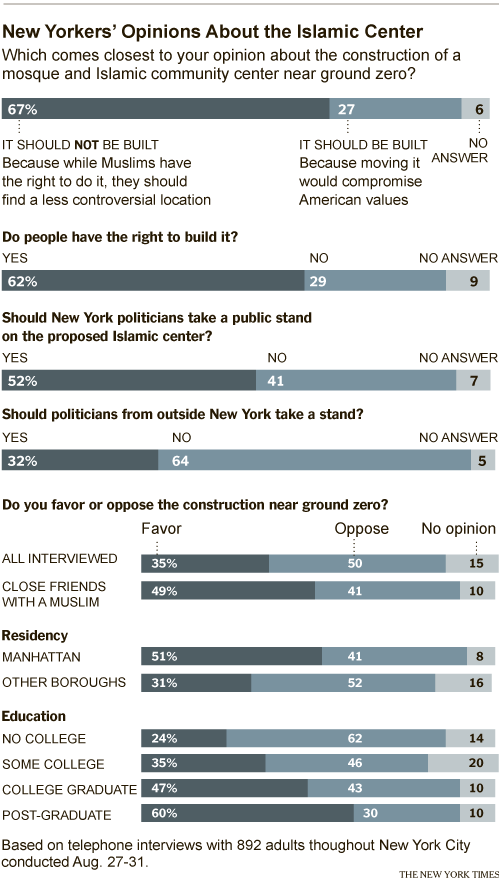
“New Yorkers Divided Over Islamic Center, Poll Finds,” says the New York Times in one of its headlines. Another says “New York Poll Finds Wariness About Muslim Center.”
Neither headline suggests a careful reading of the poll results — a poll conducted by the New York Times itself.
Two-thirds of New York City residents want a planned Muslim community center and mosque to be relocated to a less controversial site farther away from ground zero in Lower Manhattan, including many who describe themselves as supporters of the project, according to a New York Times poll.
The poll indicates that support for the 13-story complex, which organizers said would promote moderate Islam and interfaith dialogue, is tepid in its hometown.
Nearly nine years after the Sept. 11 attacks ignited a wave of anxiety about Muslims, many in the country’s biggest and arguably most cosmopolitan city still have an uneasy relationship with Islam. One-fifth of New Yorkers acknowledged animosity toward Muslims. Thirty-three percent said that compared with other American citizens, Muslims were more sympathetic to terrorists. And nearly 60 percent said people they know had negative feelings toward Muslims because of 9/11.
Over all, 50 percent of those surveyed oppose building the project two blocks north of the World Trade Center site, even though a majority believe that the developers have the right to do so. Thirty-five percent favor it.
Opposition is more intense in the boroughs outside Manhattan — for example, 54 percent in the Bronx — but it is even strong in Manhattan, considered a bastion of religious tolerance, where 41 percent are against it.
OK. Let’s back up. Opposition is “even strong in Manhattan,” or if we take away that particular slant in reading the numbers, we discover that by a 10% margin the majority of Manhattan residents polled favor the construction of the center. This almost exactly mirrors the size of the opposition in the boroughs.
Just as interesting is the fact that whether someone favors or opposes the construction closely correlates with whether they count Muslims among their close friends.
So what’s the conclusion?
Move to Manhattan, make friends with a Muslim and you’ll probably decide Park51 has a place in the neighborhood.
The problem turns out not to be the impending Islamization of America — it’s that not enough Americans have Muslim friends.
If the political purpose behind this week’s attacks on Israeli settlers in the West Bank is still hard to decipher, it seems the message they sent out was directed more to Palestinians in the West Bank than to the parties currently gathered in Washington.
Nicolas Pelham considers Hamas’ resilience as a political force and notes that the recent attacks “earned plaudits not only from Hamas’ core constituency, but also from a broad swathe of Fatah and secular activists, including some senior actors, disillusioned by 19 years of negotiations based on an ever flimsier framework.”
In its attacks on settlers on two consecutive nights in different parts of the West Bank, Hamas demonstrated its reach despite a three-year, US-backed PA military campaign and exposed the fallacy of the PA’s claims to have established security control in the West Bank. “It’s not muqawama (resistance) against Israel,” says ‘Adnan Dumayri, a Fatah Revolutionary Council member and PA security force general. “It’s muqawama against Abbas.” It also enabled the Islamists to catch seeping popular disaffection across the political spectrum toward a process of negotiations that appeared to Palestinians to be leading into a blind alley of continued Israeli control. Should Abbas fail to negotiate a halt to settlement growth, Hamas in its armed attacks against settlers would emerge from its three-year political wasteland to offer Palestinians an alternative.
In contrast to the international media, where the attack was roundly condemned, in Palestine the attack earned plaudits not only from Hamas’ core constituency, but also from a broad swathe of Fatah and secular activists, including some senior actors, disillusioned by 19 years of negotiations based on an ever flimsier framework. Unlike the Annapolis process or the “road map,” the twin Bush administration initiatives that the Obama administration chose to ditch, the current negotiations lack any terms of reference or agreed-upon script. Palestinians ask why Abbas agreed to meet Netanyahu given that none of the Arab targets required to turn proximity talks into direct ones were reached prior to the Obama administration’s announcement of the meeting. When American elder statesman George Mitchell presented the parties with 16 identical questions on the core issues requiring yes or no answers, Israel responded to each with a question of its own. In his August 31 press briefing before the White House meeting, Mitchell again declined to specify if Israel had agreed even to extend its (partially honored) settlement freeze past the September 26 expiration date.
Even the architects of the new process admit their concern that time is against them. Unveiling his plans for statehood within a year at a Ramallah press conference in late August, Fayyad warned that “every day that this conflict is not resolved there are more facts on the ground that make a two-state solution less likely.” Yet public incredulity is eroding confidence not only in a future peace deal, but also in the Palestinian leadership itself. The less Fayyad and Abbas deliver, the more tenuous their legitimacy, and the more Israel’s doubts about their reliability as neighbors become self-fulfilling. (Typifying the extent to which the leadership is removed from grassroots sentiment, the PA sponsored a groveling televised address from PLO chief negotiator Saeb Erekat to Israelis on the eve of the talks, in which he assumed Palestinian responsibility for the previous peace process failures. “Shalom to you in Israel. I know we have disappointed you,” he said. “I know that we have been unable to deliver peace for the last 19 years.”) Outside Abbas’ headquarters, Fatah activists derisively draw a distinction between the Fatah of the sulta, or regime, and that of Yasser Arafat. And away from Ramallah’s cafés, in the back streets of Jenin, which Fayyad’s proclaimed economic boom has yet to reach, talk of revolution and intifada is again in the air. Without something tangible to show for his continued pursuit of negotiations, due to resume in the rosy after-dinner glow in Washington, even the president’s advisers predict that Abbas and his political institution are finished.
The London-based Saudi-owned Asharq al-Awsat newspaper interviewed the Gaza-based senior Hamas leader Mahmoud al-Zahar who struck a conciliatory tone in his remarks about Mahmoud Abbas.
Al-Zahar, speaking by telephone to Asharq al-Awsat said: “our policy has always been to let the negotiations continue, and we have not devoted one day of our work to stopping them”. Al-Zahar added: “There is a portion of the Palestinian people [Fatah and its supporters], who are in favor of negotiations in order to impose their political program, and we are convinced that this political program will not bring what is needed. The question then is: why take responsibility for undermining something that has already failed? In relation to our program of resistance, as you can see the West Bank has buckled under overwhelming pressure. Therefore, our program’s activities relate to the level of pressure imposed on the Palestinian people in the West Bank”.
In response to a question about whether he meant what he said, that the synchronization of the terrorist attack with the launch of the negotiations was just a coincidence, he said: “Coincidence or no coincidence, it was the decision made by people in the field [Izz ad-Din al-Qassam Brigades, the military wing of Hamas]. Some say [the timing of the attacks] was intentional, that is not true. When people are presented with opportunities, as well as the means and targets, they act”. He went on to say that: “any attempt to try and belittle these actions, and link them to the negotiations, is not true at all”.
Al-Zahar believes that the vision of Palestinian President Mahmoud Abbas regarding the negotiations is: “like our vision. The issues [that will be raised] and their results are already known. Jerusalem: Israelis are united on the issue of Jerusalem and the Palestinian negotiator will not get anything from them. Secondly: refugees, can convince the discarded refugees in Jordan, Syria or Lebanon [to accept what is being proposed]? As for the [issue of] water, there is no indication that Israel will give up the groundwater located in the West Bank”.
In response to a question regarding the reasons which prompted Mahmoud Abbas to go to Washington to negotiate, if his vision was the same as that of Hamas, al-Zahar claims that “if there is a call from Washington, he must go”. He added that “Abu Mazen [Mahmoud Abbas] will not do what Abu Ammar [Yasser Arafat at Camp David] did, in that he will not give up on the principles and the issue will be over”.
If the Obama administration had been as visionary as Obamamania promised it might be, Chas Freeman might not have merely been briefly offered the post of chair of the National Intelligence Council; he could have become a fine Secretary of State. Instead, the Israel lobby made sure he gained no position at all, but by doing so ensured that he would retain the freedom to speak with more candor than any government official ever dares.
In a speech he delivered yesterday in Norway, Freeman laid out the US role in seeking and obstructing Middle East peace, with a clarity and style rarely found in foreign policy discourse.
Islam charges rulers with the duty to defend the faithful and to uphold justice. It demands that they embody righteousness. The resentment of mostly Muslim Arabs at their governing elites’ failure to meet these standards generates sympathy for terrorism directed not just at Israel but at both the United States and Arab governments associated with it.
The perpetrators of the September 11, 2001, terrorist attack on the United States saw it in part as reprisal for American complicity in Israeli cruelties to Palestinians and other Arabs. They justified it as a strike against Washington’s protection of Arab governments willing to overlook American contributions to Muslim suffering. Washington’s response to the attack included suspending its efforts to make peace in the Holy Land as well as invading and occupying Afghanistan and Iraq. All three actions inadvertently strengthened the terrorist case for further attacks on America and its allies. The armed struggle between Americans and Muslim radicals has already spilled over to Pakistan, Yemen, Somalia, and other countries. Authoritative voices in Israel now call for adding Iran to the list of countries at war with America. They are echoed by Zionist and neo-conservative spokesmen in the United States,
The widening involvement of Americans in combat in Muslim lands has inflamed anti-American passions and catalyzed a metastasis of terrorism. It has caused a growing majority of the world’s 1.6 billion Muslims to see the United States as a menace to their faith, their way of life, their homelands, and their personal security. American populists and European xenophobes have meanwhile undercut liberal and centrist Muslim arguments against the intolerance that empowers terrorism by equating terrorism and its extremist advocates with Islam and its followers. The current outburst of bigoted demagoguery over the construction of an Islamic cultural center and mosque in New York is merely the most recent illustration of this. It suggests that the blatant racism and Islamophobia of contemporary Israeli politics is contagious. It rules out the global alliances against religious extremists that are essential to encompass their political defeat.
Freeman went on to say:
Vague promises of a Palestinian state within a year now waft through the air. But the “peace process” has always sneered at deadlines, even much, much firmer ones. A more definitive promise of an independent Palestine within a year was made at Annapolis three years ago. Analogous promises of Palestinian self-determination have preceded or resulted from previous meetings over the decades, beginning with the Camp David accords of 1979. Many in this audience will recall the five-year deadline fixed at Oslo. The talks about talks that begin tomorrow can yield concrete results only if the international community is prepared this time to insist on the one-year deadline put forward for recognizing a Palestinian state. Even then there will be no peace unless long-neglected issues are addressed.
Peace is a pattern of stability acceptable to those with the capacity to disturb it by violence. It is almost impossible to impose. It cannot become a reality, still less be sustained, if those who must accept it are excluded from it. This reality directs our attention to who is not at this gathering in Washington and what must be done to remedy the problems these absences create.
Obviously, the party that won the democratically expressed mandate of the Palestinian people to represent them — Hamas — is not there. Yet there can be no peace without its buy-in.
Peacemaking must engage those who are willing to use violence. Yet this assertion — whose truth is so obvious — is still being treated as a bold idea.
The narrative of peace promoted through the Bush era and still being propagated by Obama, suggests that peace is somehow produced by rallying together everyone who is willing to denounce violence — as though those who are willing to use violence will lose that capacity if they can be sufficiently marginalized. But on the contrary, political marginalization invariably has the opposite effect as those whose grievances are ignored, look for increasingly extreme means to make themselves heard.
If there’s just one lesson we can draw from the last decade it is this: utter the word “terrorism” and thought grinds to a halt, perceptions become blinkered and the power of human intelligence is suddenly put on hold.
Consider the attack near Hebron in the West Bank yesterday in which four Israelis were gunned down by Palestinian gunmen.
A report in the Jerusalem Post conveys a particularly harrowing moment in the attack’s aftermath as volunteers from Zaka, the Israeli community emergency response network, arrived at the scene of the shooting.
Zaka volunteer Momy Even-Haim was dispatched to the scene of the attack with his colleagues, when to his horror he discovered that his wife was among the dead.
“We saw a crying volunteer, and at first we did not understand what was happening — he has seen many disasters before,” Zaka volunteer Isaac Bernstein told The Jerusalem Post.
“Then he started shouting, ‘That’s my wife! That’s my wife!’ We took him away from the scene immediately,” Bernstein added. Even-Haim was taken to his home in Beit Hagai by his colleagues.
Tragedy takes infinite forms. Those in closest proximity can never be expected to respond rationally but from a distance, rationality is not only possible — it is essential.
Instead though, this attack — like so many before — has produced a series of highly predictable knee-jerk responses.
The White House issued a statement saying:
The United States condemns in the strongest possible terms the terrorist attack today perpetrated by Hamas in which four Israelis were killed in the southern West Bank. We express our condolences to the victims’ families and call for the terrorists behind this horrific act to be brought to justice. We note that the Palestinian Authority has condemned this attack. On the eve of the re-launch of direct negotiations between Israelis and Palestinians, this brutal attack underscores how far the enemies of peace will go to try to block progress. It is crucial that the parties persevere, keep moving forward even through difficult times, and continue working to achieve a just and lasting peace in the region that provides security for all peoples.
Is Washington already ahead of Israel in identifying the culprits?
That seems unlikely. Much more likely is that the White House is content to parrot press reports in which representatives of Hamas are quoted claiming responsibility for the attack. If Hamas claims responsibility, its claim will be accepted at face value; if it were to deny responsibility, it’s denial would be treated with skepticism. That’s the way the “analytical” process works.
Israeli press reports are less clear on the matter.
In Haaretz, Avi Issacharoff and Amos Harel report:
Even though no official claim of responsibility was made, the investigation by the security services of Israel and the Palestinian Authority suggest that the culprits were a cell which identifies itself, more or less, with Hamas. Fauzi Barhum, one of the spokesmen for the group in the Gaza Strip, did not openly claim responsibility for the attack, but hinted that his group was behind the shooting.
“The resistance continues everywhere,” he said.
In recent months the Hamas leadership in the Gaza Strip and Damascus has pressed West Bank-based teams of gunmen to resume the attacks in an effort to make it more difficult on the Palestinian Authority and stir up tension with Israel.
Two months ago a large Hamas network was uncovered in the southern Hebron Hills, a “sleeper cell” that was revived, whose members are suspected of murdering an Israeli policeman in a similar shooting incident, along the same route, several kilometers from the spot of last night’s terror attack.
A cell which identifies itself “more or less” with Hamas — that’s pretty vague. Moreover, a previously unknown group calling itself the Al-Haq (“Rights”) Brigades has claimed responsibility for Tuesday’s shooting, according to the Ma’an news agency.
As for Issacharoff and Harel’s claim that a Hamas cell was responsible for the June Hebron Hills shooting, that also is far from clear. When suspects were arrested by Israel’s internal security services, Shin Bet, Haaretz reported:
It is unclear… who is responsible for the establishment of this group, which is reportedly affiliated to Palestinian President Mahmoud Abbas’ Fatah movement. Israeli security sources have been examining the possibility that the gunmen behind the June 14 attack were from various Palestinian militant groups.
Whether or not Hamas had a role in yesterday’s attack it is too soon to tell. And even if some or all of the gunmen turn out to belong to the movement does not necessarily reveal a great deal about the level of command and control or political motives for the attack.
Whatever the motives, the outcome itself has opened political opportunities to each constituency that now portrays itself as a victim.
Given that the attack took place in an area controlled by the IDF, President Abbas could have taken the opportunity to point out that the attack underlines the fact that there can ultimately be no security solution to the political conflict. Instead, Palestinian security services have been quick to launch what is being described as one of the largest arrest waves of all time in the West Bank.
Hamas lawmaker Omar Abdel-Raziq said more than 150 members had been detained, and others had been summoned to police stations for questioning.
He accused Abbas of trying to please the Israelis.
“These are political arrests,” he said. “They are trying to tell the Israelis that they are capable of doing the job after the attack.”
At the funerals of the four Israelis killed, settler leaders took the opportunity to push for settlement expansion, call for vengeance (a call which has already been acted upon), deny the existence of the Palestinian people and make a thinly-veiled appeal for ethnic cleansing:
Rabbi Dov Lior of Kiryat Arba eulogized the victims saying that “this is a grave tragedy for the families, for the people of Israel and for the state. God, avenge the spilled blood of your servants.”
“There is an army, which must be used,” Rabbi Lior continued. “The mistake is to think that an agreement can be reached with these terrorists. Every Jew wants peace, but these evildoers want to destroy us. We need to give them the right of return and return them to the countries from which they came.”
When President Obama tries to press Benjamin Netanyahu to extend the so-called settlement freeze, the Israeli prime minister will no doubt tell him solemnly that in light of recent events, his hands are well and truly tied.
They shoot and we build has become the settlers’ slogan — one that is almost certainly to Netanyahu’s liking.
Update: In a conversation I just had with Hamas expert, Mark Perry, he made the point that when it comes to identifying armed militants in the West Bank, the Al Qassam Brigade (affiliated with Hamas) and the Al Aqsa Brigade (affiliated with Fatah) are virtually indistinguishable in most of the area, but particularly in Hebron. The clearest differentiation in armed groups is between those who are on the Palestinian Authority’s payroll and those who aren’t.
Mark also pointed out that if the Obama administration was not trapped inside its own terrorism rhetoric, they could point out that the attack underlines the unnecessary vulnerability that Israeli’s expose themselves to by grabbing Palestinian land and building settlements.
Israelis might argue about whether the settlements are going to destroy Zionism or help it survive; they differ much less when it comes to their views about Palestinians.
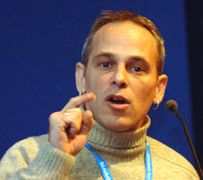
Gadi Taub is ringing the now familiar alarm bell that without a swift end to the occupation, Zionism itself will be in jeopardy. Salvation depends on partition.
The most pressing problem with the settlements is not that they are obstacles to a final peace accord, which is how settlement critics have often framed the issue. The danger is that they will doom Zionism itself.
If the road to partition is blocked, Israel will be forced to choose between two terrible options: Jewish-dominated apartheid or non-Jewish democracy. If Israel opts for apartheid, as the settlers wish, Israel will betray the beliefs it was founded on, become a pariah state and provoke the Arab population to an understandable rebellion. If a non-Jewish democracy is formally established, it is sure to be dysfunctional. Fatah and Hamas haven’t been able to reconcile their differences peacefully and rule the territories — throwing a large Jewish population into the mix is surely not going to produce a healthy liberal democracy. Think Lebanon, not Switzerland.
In truth, both options — and indeed all “one-state solutions” — lead to the same end: civil war. That is why the settlement problem should be at the top of everyone’s agenda, beginning with Israel’s. The religious settlement movement is not just secular Zionism’s ideological adversary, it is a danger to its very existence. Terrorism is a hazard, but it cannot destroy Herzl’s Zionist vision. More settlements and continued occupation can.
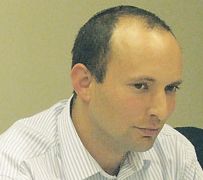
On the other side of the debate are Israelis such as Naftali Bennett, Benjamin Netanyahu’s former chief of staff and the recently named director-general of the settler advocacy group the Yesha Council.
When it comes to assessing the prospects for anything to be accomplished in the latest round of Israeli-Palestinian talks, Bennett succinctly describes the power equation and thus the reason the talks will go nowhere: “It’s in their interest more than ours. We’re doing just fine.”
Bennett challenges much of the conventional wisdom about settlements and settlers — not surprising perhaps because he lives inside Israel and was a high-tech millionaire before entering politics.
He says: “My vision is 1 million Jews living in Judea and Samaria [the West Bank], putting an end to the notion that we can have a Palestinian state in the heart of Israel.”
With over half a million Jews already planted inside the occupied territories, that vision is more than half way towards being realized. “Anyone considering the notion of expelling 80,000 or 150,000 Jews (from the West Bank) today should know that it’s simply impossible,” Bennett declares.
“We view Judea and Samaria as the bulwark of Israel, and Israel as the bulwark for the West against Islamic terrorism. We are the security shield of Israel. That’s fundamentally how people in Judea and Samaria see it. People see it as a mission to maintain and protect this area for the Jewish people.”
Since he rejects the idea of a Palestinian state, the Los Angeles Times asks Bennett what alternative he envisions:
The alternative is peaceful coexistence on the ground and simply strengthening the current, very positive trends with the economy and security. Removing the roadblocks. Giving Palestinians political rights to vote for themselves. If they want to reach an agreement with Jordan to give them citizenship, so be it. If we need to make adjustments to make life better, we can.
Many Palestinians say the status quo is unfair and not acceptable.
There wouldn’t be apartheid. They’d rule themselves and we’d rule ourselves. We’d drive on the same roads. Arabs have fairly good lives. The overwhelming majority of the Palestinian people want peaceful coexistence. It’s just their leaders who are not OK with it.
It’s not perfect. They want a full-blown state. But it’s a zero-sum game. If they have a state, we’ll cease to exist. That’s the best we can do.
What’s interesting in looking at these contrasting Israeli views of the settlements is that beneath the divergence in analysis, there is an Israeli consensus: they see no real basis for Palestinian self determination. Palestinians would undermine the effective functioning of any democracy other than a Jewish-controlled “democracy,” but they can rule themselves so long as they don’t imagine they can have their own fully sovereign state.
Whether viewed from the left or the right, the one thing most Jewish Israelis seem to agree on (even if they differ in how bluntly they will state this) is that they regard Palestinians as their inferiors.
Update: Following a shooting attack in which Palestinian gunmen killed four Israelis outside the Kiryat Arba settlement near Hebron on Tuesday, settlement leaders were quick to call for talks due to start in Washington on Wednesday, to be cancelled.
The head of the Mount Hebron Regional Council, Tzvika Bar-Hai, called on Netanyahu to cancel the Washington talks.
“There is no place for negotiations with those who respond with deadly fire to our hand outstretched for peace,” he said.
“It is time for the leaders of Israel to wake up from the illusion of false peace,” Bar-Hai added.
“We’re talking about one of the worst terrorist attacks in the past few years,” said Naftali Bennet, director-general of the Council of Jewish Communities of Judea, Samaria and Gaza.
“We’re asking that the prime minister immediately turn the plane around and come back to Israel. It’s not possible, while we’re holding funerals, that he can stay there. And we’re calling on him, tomorrow morning, to renew the building in Judea and Samaria,” he said.
The council announced Tuesday night that it would respond to the attack by unilaterally ending the construction freeze and starting to build on Wednesday.
A Yesha Council statement said: “The Zionist answer is to build and support. They shoot and we build. Each does as he believes.”
Although a spokesman for Izz al-Din al-Qassam, the military wing of Hamas, claimed responsibility for the attack, Ynet reported:
Earlier on Tuesday, Hamas Spokesman Fawzi Barhum addressed the attack but did not claim responsibility for it.
“The attack was not meant to impede direct negotiations which failed prior to even starting. This is a natural response by the Palestinian resistance to the enemy’s crimes, and is proof that despite the resistance’s persecution by the security services and despite Israel’s crimes, the Palestinians are capable of responding to these crimes,” he said.
Barhum stressed that the attack was the type of response “which the enemy and occupation should expect. The Palestinian resistance is alive, well and kicking.”
The opponents of Park51, the so-called “Ground Zero mosque,” have decided that the litmus test for identifying “good Muslims” is to ask them whether they regard Hamas as a terrorist organization.
Andy McCarthy, one of the lead knights in the crusade to stop “the Islamization of America,” strikes the latest blow — this time against a rather guileless Imam Dawoud Kringle. This is how McCarthy recounts the crucial part of his “debate” on the fair-and-balanced Fox News:
Then came the moment of truth: the very simple question, “Is Hamas a terrorist organization?” Have a look at the YouTube clip below. Like his friend Imam Feisal Rauf, Imam Kringle won’t answer the question. I pressed him, pointing out that it is a very simple question. And it is: Quite apart from the fact that Hamas is formally designated as a terrorist organization under U.S. law, Hamas’s own charter makes abundantly clear — indeed, wears like a badge of honor — that Hamas exists solely for the purpose of driving Israel out of Palestine by violent jihad. Yet the imam cannot bring himself to say Hamas is a terrorist organization.
Perhaps Kringle would have held surer footing if he had first addressed the reliability of the US government in identifying terrorists.
It was only two years ago that Nelson Mandela and the African National Congress were removed from the US terrorism watch list — that was 15 years after Mandela had been awarded the Nobel Peace Prize.
The terrorism watch list — like the Nobel Peace Prize — is not in and of itself a reliable indicator of someone’s current willingness to use violence in pursuit of a political cause.
Likewise, the fact that in the 1980s the Reagan administration regarded Afghanistan’s mujahideen as “freedom fighters” — not terrorists — had everything to do with who they were fighting (the Soviets) and nothing to do with the methods they employed or the causes those particular jihadists might subsequently espouse.
Terrorism and terrorist — as everyone knew until they suddenly forgot on 9/11 — are mutable designations that more clearly specify the relationship between the designator and the designee than they say much else.
Is Hamas a terrorist organization? As far as the US government is concerned, the answer it yes. It’s on the list. Yet not all organizations listed terrorist are the same — and like most objective foreign policy analysts, the US government like every other government knows this: these organizations are as diverse in their political aims as they are in their geographical distribution.
Hamas has been presented with a set of conditions which, if fulfilled, would allow it to participate in the peace process. In other words, even from the perspective of those governments who currently describe it as a terrorist organization there is an exit ramp for Hamas to shed its “terrorist” label. In contrast, there are no conditions under which any government will enter talks with al Qaeda.
Contrary to what McCarthy and others insinuate, Hamas and al Qaeda are not two peas in the same pod. They are in fact sworn enemies.
But given that so far no one has pointed to any direct connection between Park51 and Hamas, one has to wonder why those affiliated with the proposed Islamic center are being asked their views on the Palestinian movement?
The answer has much less to do with Park51 than it does with the myth that America’s interests are indistinguishable from those of Israel.
Whether McCarthy describes himself as a Zionist, he is certainly pushing a Zionist agenda when he claims: “Hamas exists solely for the purpose of driving Israel out of Palestine by violent jihad.”
In fact, Hamas’ leadership has explicitly supported the creation of a Palestinian state based on the 1967 borders if Israel ends the occupation. But this politically pragmatic position is one that McCarthy and his ilk refuse to acknowledge because it conflicts with a narrative that pits Israel and its allies against an ideologically unyielding and anti-Semitic foe. Characterize the conflict that way and there is no compromise a peace-loving Israel could make which would satisfy its enemies.
Indeed, elsewhere McCarthy has made it clear that he subscribes to the right-wing Zionist school of thought which sees a resolution to the Israeli-Palestinian conflict as contingent solely on the ability of Israel to crush its opponent.
As he wrote during the war on Gaza: “What Israel needs is to be allowed to win: to finish the grisly work of ‘breaking the will of the Palestinians, of Hamas, to continue to fire at Israel,’ as Israeli Interior Minister Meir Sheetrit so aptly put it.”
As for Palestinian national aspirations in general, McCarthy says: “On the political front, it is high time to acknowledge the failure of the fantasy that the Palestinians are legitimate actors worthy of statehood and its privileges.” He says: “we must halt the mindless ‘two state solution’ rhetoric.” Scorning those who he calls “democracy devotees,” McCarthy says: “Let’s be blunt: we are looking at a generation or more before the Palestinians might be prepared to assume the obligations of sovereignty. So we should stop talking about it.”
Daniel Luban in an article in which he describes Islamophobia as the “new anti-Semitism,” notes the central role that McCarthy has assumed as an ideologue now marshaling opposition to Islam in America.
The mosque furor is only the most recent and revealing demonstration of the anti-jihadists’ political influence; from the beginning of the controversy, McCarthy and his allies have dictated the terms of debate on the right. In his July 28 statement attacking the Islamic center, Newt Gingrich cited [McCarthy’s book] The Grand Jihad and framed the controversy in McCarthy’s terms of Western civilization under siege from creeping sharia. More recently, the American Family Association — a leading fundamentalist Christian group — cited the book to argue that no more mosques should be built anywhere in the United States because “each Islamic mosque is dedicated to the overthrow of the American government.” A campaign spearheaded by Pamela Geller, the right-wing blogger who was previously most notorious for publishing a lengthy piece alleging that Obama is the illegitimate child of Malcolm X, will place ads on New York City buses opposing the Islamic center. On September 11, she and Gingrich will lead a major rally against the center that will also feature [Geert] Wilders, the Islamophobic Dutch politician. What was once a lunatic fringe now appears to be running the show, aided and abetted by mainstream figures like Gingrich.
It is quite possible that the next Republican president will also be a party to what can justly be called the new McCarthyism; for that reason alone, McCarthy and his allies deserve our attention. But even more important is the impact of this steady stream of anti-Muslim vitriol on the popular consciousness. Cynical politicians like Gingrich may know that all the talk of the Islamic center as a “9/11 victory monument” and of ordinary Muslims as stealth sharia operatives is mere agitprop designed to win votes in an election year, but ordinary citizens may take them at their word and act accordingly.
Given that McCarthy and his cohorts want to associate Park51 with Hamas, it’s worth considering what Hamas has to say about the plans for the Islamic center.
In an interview on New York’s WABC radio (audio can be heard here), Mahmoud al-Zahar, a co-founder of Hamas who is in the Gaza political leadership, was asked by Aaron Klein to comment on the construction of the center.
Without addressing the question directly, Zahar chose to respond by pointing out that Muslims in America are like Muslims elsewhere, living in accordance with Islam, fasting (during Ramadan), praying and so forth. He then went on to say that Hamas is being misrepresented by those who would liken it to the Taliban and that it is recognized across the Islamic world as a moderate organization.
Klein, however, wanted to focus on the mosque controversy and returned to that question:
Klein: What do you think about the new initiative to build a mosque near the World Trade Center in New York, which is a major point of controversy on all sides?
Zahar: We have to build the mosque as you are allowed to build the church and the Israeli are building their holy places. We have to build everywhere — in every area we have muslims, we have to pray, and this mosque is the only site of prayer especially for the people when they are looking to be in the group — not individual.
Muslims should be allowed to worship in mosques, just like Christians going to church and Jews going to the synagogue.
Not much controversy there, right?
Well, the New York Post seemed eager to pour fuel on the fire by inserting a few words implying that Hamas (and Muslims in general) are engaged in territorial expansion.
A leader of the Hamas terror group yesterday jumped into the emotional debate on the plan to construct a mosque near Ground Zero — insisting Muslims “have to build” it there.
“We have to build everywhere,” said Mahmoud al-Zahar, a co-founder of Hamas and the organization’s chief on the Gaza Strip.
“In every area we have, [as] Muslim[s], we have to pray, and this mosque is the only site of prayer,” he said on “Aaron Klein Investigative Radio” on WABC.
Zahar actually said, “In every area we have Muslims, we have to pray,” which is to say, wherever Muslims live they have a religious obligation to gather for prayer and they do this in mosques.
The New York Post twisted this into: “In every area we have, [as] Muslims[s], we have to pray,” which conjures up a completely different picture. Lower Manhattan is now an area that Muslims claim as their own — at least the New York Post appears to want to promote this lie.
Those who now man the barricades in response to what they call the Islamization of America, reveal in the shadow of their fears the scope of their ambitions.
On 9/11, four groups of hijackers took control of four aircraft resulting in the horrific deaths of 3,000 people. The same day, another group of hijackers took control of the aftermath of the attacks and began a war in which hundreds of thousands have died and millions been displaced. The campaign of those hijackers continues and Park51 is merely its latest target.
This website or its third-party tools use cookies, which are necessary to its functioning. By closing this banner, you agree to the use of cookies.






 Even if the Dove World Outreach Center yields in response to the US government’s security concerns, much of the damage has already been done.

 The most pressing problem with the settlements is not that they are obstacles to a final peace accord, which is how settlement critics have often framed the issue. The danger is that they will doom Zionism itself.
 On the other side of the debate are Israelis such as Naftali Bennett, Benjamin Netanyahu’s former chief of staff and the recently named director-general of the settler advocacy group the Yesha Council.