
A must-read speech on the militarization of American diplomacy, by Chas Freeman, former US ambassador to Saudi Arabia, and the first casualty in the Israel lobby’s efforts to rein in what in its early days might have looked like a dangerously independent Obama administration.
Americans are accustomed to foreigners following us. After all, for forty years, we led the industrial democracies against the former USSR and its captive entourage. After the Soviet collapse, we bestrode the world as its sole colossus. For a while, we imagined we could do pretty much anything we wanted to do on our own. This, in the opinion of some, made followers irrelevant and leadership unnecessary.
Still, on reflection, we thought things might go better with a garland of allies and a garnish of friends. So we accepted some help from NATO members and some other foreign auxiliaries in Afghanistan. And, when we marched into the ambush of Iraq, we recruited a few other nations eager to ingratiate themselves with us to tag along in what became known as “the coalition of the billing.” In the end, however, in Iraq, it came down to us and our faithful British collaborators. Then, without even a “yo! Bush,” the Brits too were gone. And when we looked for other allies to follow us back into Afghanistan, they weren’t there.All this should remind us that power, no matter how immense, is not by itself enough to ordain leadership. Power must be informed by vision, guided by wisdom, and embodied in strategy if it is to inspire companions and followers. We’re a bit short of believers in our leadership these days, not just on the battlefields of West Asia but at global financial gatherings, the United Nations, meetings of the G-20, among human rights and environmental activists, in the world’s regions, including our own hemisphere, and so forth. There are few places where we Americans still enjoy the credibility and command the deference we once did. A year or so ago, we decided that military means were not always the best way to solve problems and that having diplomatic allies could really help do so. But it isn’t happening.
The excesses that brought about the wide-ranging devaluation of our global standing originate, I think, in our politically self-serving reinterpretation of the Cold War soon after it ended. As George Kennan predicted, the Soviet Union was eventually brought down by the infirmities of its system. The USSR thus lost its Cold War with America and our allies. We were still standing when it fell. They lost. We won, if only by default. Yet Americans rapidly developed the conviction that military prowess and Ronald Reagan’s ideological bravado — not the patient application of diplomatic and military “containment” to a gangrenous Soviet system — had brought us victory. Ours was a triumph of grand strategy in which a strong American military backed political and economic measures short of war to enable us to prevail without fighting. Ironically, however, our politicians came to portray this as a military victory. The diplomacy and alliance management that went into it were forgotten. It was publicly transmuted into a triumph based on the formidable capabilities of our military-industrial complex, supplemented by our righteous denunciation of evil.
Many things followed from this neo-conservative-influenced myth. One conclusion was the notion that diplomacy is for losers. If military superiority was the key to “victory” in the Cold War, it followed for many that we should bear any burden and pay any price to sustain that superiority in every region of the world, no matter what people in these regions felt about this. This was a conclusion that our military-industrial complex heard with approval. It had fattened on the Cold War but was beginning to suffer from enemy deprivation syndrome — that is, the disorientation and queasy apprehension about future revenue one gets when one’s enemy has irresponsibly dropped dead. With no credible enemy clearly in view, how was the defense industrial base to be kept in business? The answer was to make the preservation of global military hegemony our objective. With no real discussion and little fanfare, we did so. This led to increases in defense spending despite the demise of the multifaceted threat posed by the USSR. In other words, it worked.
Only a bit over sixty percent of our military spending is in the Department of Defense budget, with the rest hidden like Easter eggs in the nooks and crannies of other federal departments and agencies’ budgets. If you put it all together, however, defense-related spending comes to about $1.2 trillion, or about eight percent of our GDP. That is quite a bit more than the figure usually cited, which is the mere $685 billion (or 4.6 percent of GDP) of our official defense budget. Altogether, we spend more on military power than the rest of the world — friend or foe — combined. (This way we can be sure we can defeat everyone in the world if they all gang up on us. Don’t laugh! If we are sufficiently obnoxious, we might just drive them to it.) No one questions this level of spending or asks what it is for. Politicians just tell us it is short of what we require. We have embraced the cult of the warrior. The defense budget is its totem.
The rest of this speech can be read here. Thanks to War in Context reader Delia Ruhe for bringing this to my attention.



 Time was when Nazis used to slather swastikas on synagogues and Jewish businesses to prepare the local population for expulsion or much worse. It’s sad that this sort of behavior persists around the world, as a new study by Tel Aviv University shows. But it’s even sadder to see Israelis regularly defacing Palestinian property with Stars of David with equal glee and with what appears to be the same brain-dead mindset.





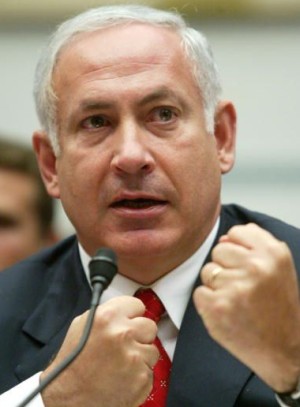 Which way will Bibi go? This seems to be the big question – whether Prime Minister Binyamin Netanyahu will bow to American pressure, exchange his right-wing/religious government for a “peace coalition” and start taking down the occupation, or whether he will dig in.




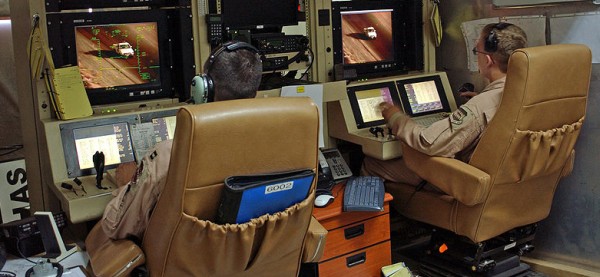
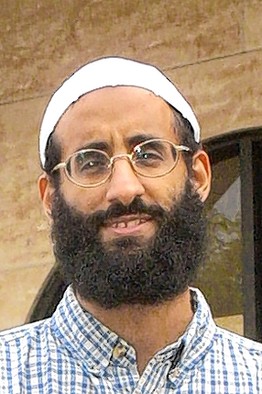 When Anwar al-Awlaki, an American born in New Mexico is shredded and incinerated — his likely fate at the receiving end of a Hellfire missile — there will be no account of the last moments of his life. No record of who happened to be in the vicinity. Most likely nothing more than a cursory wire report quoting unnamed American officials announcing that the United States no longer faces a threat from a so-called high value target.
 In weighing the fate of Anwar al-Awlaki, this administration would do well to remember the case of