
Author Archives: Paul Woodward

Al Qaeda’s strategic advantage

The bomber’s wife

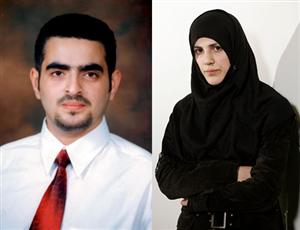
Soft-spoken and composed, but unmistakably angry, the wife of the suicide bomber who killed himself and seven employees of the CIA in Afghanistan on Dec. 30 says flatly, “My husband was anti-American; so am I.” About that, there are no regrets. In an exclusive interview Thursday, Defne Bayrak, 31, spent more than an hour at the offices of Newsweek Türkiye in Istanbul talking about her husband, Dr. Humam Khalil Abu-Mulal al-Balawi; his beliefs; what he may have been offered by the CIA to work as a double agent on the trail of Al Qaeda’s top leadership; and what she heard from those apostles of jihad who ultimately inspired him to kill and die.

Al-Balawi’s case is a study in the radicalization of someone who is well-educated, economically well-off, devout, and disciplined. Such people may not fit into the public’s stereotypical idea of a terrorist, but the profile is increasingly familiar to police and intelligence officers involved with counterterrorism. Many of Al Qaeda’s most successful attacks, from 9/11 to the London transit-system bombings in 2005, were directed and executed by such intelligent, articulate, religious, and suicidally violent men. [continued…]

Editor’s Comment — Reuel Marc Gerecht, a former CIA officer and prominent neoconservative, writes in the Wall Street Journal:

Professionally, one has to admire the skill of suicide bomber Humam Khalil Abu-Mulal al-Balawi’s handlers. This operation could well have been months — if not longer — in the making, and neither the Jordanian intelligence service (GID), which supplied the double agent to the CIA, nor Langley apparently had any serious suspicion that al-Balawi still had the soul and will of a jihadist.

That is an impressive feat. The Hashemite monarchy imprisons lots of Islamic militants, and the GID has the responsibility to interrogate them. The dead Jordanian official, Sharif Ali bin Zeid, reportedly a member of the royal family, may not have been a down-and-dirty case officer with considerable hands-on contact with militants, but al-Balawi surely passed through some kind of intensive screening process with the GID. Yet the GID and the CIA got played, and al Qaeda has revealed that it is capable of running sophisticated clandestine operations with sustained deception.

When asked if she could confirm what other sources had told Newsweek — that Balawi was offered as much as $500,000 by the CIA and $100,000 by the Jordanians to track down al Qaeda’s leadership — Balawi’s wife said only, “It might be true.”

In both these instances — Gerecht’s admiration of al Qaeda’s tradecraft and the likelihood that the CIA believed Balawi could be turned for the right price — the crucial asymmetry between the CIA and its adversary is left unstated: the disparity in the strength of each side’s convictions. On one side are individuals who have transcended their own fear of death, and on the other side individuals whose concerns are unfocused and defuse – a swirl of patriotism, egotism, and ambition.

A former senior CIA officer while explaining what might have drawn so many operatives into Balawi’s trap, told the New York Times: “Everyone would have wanted to be on the team that caught Zawahri. That’s the kind of thing that makes careers.”

Setting aside questions about whose outlook might be more delusional and whether either has a moral footing, the jihadist’s fearlessness and conviction is a force that neither soldier nor spy can truly match.

US drone attacks ‘undermine support for war’: Zardari

Pakistan warned US senators Thursday that American drone attacks against militants on its territory undermined “the national consensus” that supported the war against militancy.

President Asif Ali Zardari made the warning to a US delegation led by former US presidential candidate and Republican Senator John McCain one day after US missile attacks killed at least 13 militants on the Afghan border.

McCain said Thursday in Kabul, the capital of neighbouring Afghanistan, that the use of such drone strikes against suspected Islamist militants in Pakistan was an effective part of US strategy and should continue. [continued…]


Facebooktwittermail

What’s the difference between Obama’s anti-terrorism policies and Bush’s?

What’s the difference between Obama’s anti-terrorism policies and Bush’s?

If Obama is pretending we are not at war, he is not doing a very good job of it. “Our nation is at war against a far-reaching network of violence and hatred,” he declared in his inaugural address. “I don’t think there’s any question but that we are at war” with terrorists, his attorney general, Eric Holder, said at his confirmation hearing that same month. “We are indeed at war with Al Qaeda and its affiliates,” Obama said in May. “As the president has made clear,” his chief counterterrorism adviser, John Brennan, said in August, “we are at war with Al Qaeda.”

It’s true that Obama prefers to say we are at war with terrorists rather than terrorism, because, as Brennan put it, “you can never fully defeat a tactic like terrorism any more than you can defeat the tactic of war itself.” But since Al Qaeda and its allies won’t be signing an instrument of surrender anytime in the foreseeable future, the implications are similar.

Nor does there seem to be much difference between Bush and Obama in terms of the policies said to be justified by this permanent war. The closing of Guantanamo, which was supposed to happen this month but has been delayed until next year at the earliest, is by the Obama administration’s own account a symbolic move, aimed at removing a conspicuous “recruiting tool” for Al Qaeda. But the policy that Guantanamo represents will continue. [continued…]

America has an impressive record of starting wars but a dismal one of ending them well

Since 1945, the United States military has devoted itself to the proposition that, Hiroshima notwithstanding, war still works—that, despite the advent of nuclear weapons, organized violence directed by a professional military elite remains politically purposeful. From the time U.S. forces entered Korea in 1950 to the time they entered Iraq in 2003, the officer corps attempted repeatedly to demonstrate the validity of this hypothesis.

The results have been disappointing. [continued…]

Facebooktwittermail

Egypt ‘deports aid convoy leader’

Egypt ‘deports aid convoy leader’

George Galloway, the British MP leading the Viva Palestina international aid convoy to the Gaza Strip has been forced to leave Egypt, the group has said on its website.

Galloway was apparently picked up by Egyptian officials at the Rafah border crossing on Friday and driven to Cairo where he was placed on a flight back to London.

Galloway told Al Jazeera by telephone from the airport that he had been harassed by about 25 Egyptian police officer as he attempted to re-enter Gaza to join the rest of the Viva Palestina activists.

He said Egyptian officials told him he was being sent out of the country and was now “persona non grata”. [continued…]

Eunice Wong on ‘Footnotes in Gaza’

Joe Sacco’s latest volume of comic book journalism, “Footnotes in Gaza,” is a detective story drawn from the Greek tragedy of Palestinian-Israeli history. It is a search for the truth about a bloody 50-year-old incident almost obliterated from historical memory. Rigorous journalism and moral and philosophical musings are wrangled into an explosive feast of a comic book.

On Nov. 3 and Nov. 12, 1956, in the Gaza towns of Khan Yunis and Rafah, large-scale killings of Palestinian men—275 dead in Khan Yunis and 111 in Rafah, according to the United Nations—were carried out by invading Israeli troops. There is almost nothing written in English about these massacres.

“This is the story of footnotes to a sideshow of a forgotten war,” writes Sacco. Over a drawing of a crowd of Palestinian men, their hands up and their faces contorted, the text continues: “Well, like most footnotes, they dropped to the bottom of history’s pages, where they barely hang on.” [continued…]

Facebooktwittermail

Two defense contractors indicted in shooting of Afghans

Two defense contractors indicted in shooting of Afghans

Two defense contractors working for a subsidiary of the former Blackwater Worldwide were charged with shooting and killing two Afghan citizens in Kabul and wounding a third, prosecutors said Thursday, the first slayings linked to the firm in that country and its latest legal blow.

Justin Cannon, 27, and Christopher Drotleff, 29, were indicted by a federal grand jury in Norfolk on murder and other charges in the May 5 shootings, in which the men opened fire with AK-47 assault rifles on a car that they said they thought was trying to run them down. The indictment was unsealed Thursday.

At the time of the shootings, the men were Pentagon contractors employed by Paravant LLC, a Blackwater subsidiary that specializes in firearms training. They were in Afghanistan to train that country’s army in using and maintaining weapons systems and were transporting two Afghan translators at the time of the incident, their attorney said. [continued…]

U.S. military investigates allegations of detainee abuse in Afghanistan

The U.S. military has begun investigating allegations that two Afghan teenagers were beaten and humiliated by guards while in American custody last year at a secret detention center at Bagram air base, according to U.S. and Afghan officials.

U.S. military officials took statements from the teenagers last month and are contacting others who say they were held at what Afghans call Bagram’s “black prison,” a detention center run by U.S. Special Operations forces. This classified facility is separate from the main prison at Bagram, which holds about 700 detainees.

The two teenagers — Issa Mohammad, then 17, and Abdul Rashid, who said he was younger than 16 — described austere living conditions and rough treatment while undergoing extensive daily interrogations about their alleged links to the Taliban. [continued…]

Facebooktwittermail

Iraq bars 15 political parties with Baathist ties from upcoming elections

Iraq bars 15 political parties with Baathist ties from upcoming elections

At least 15 parties will be banned from upcoming parliamentary elections because they have been linked to Saddam Hussein’s Baath Party or have promoted Baathist ideals, Iraqi officials said Thursday.

The decision by the Justice and Accountability Commission, in charge of cleansing high-level Baathists from the ranks of the government and security forces, seemed to be an attempt to purge candidates with links to the old political order, many of whom are popular among secular nationalist voters. The move is a blow to hopes of bringing opposition figures — who turned to violent resistance over the past seven years — into the political fold, part of the U.S. strategy to bolster the government.

Saleh al-Mutlak, a popular Sunni lawmaker who joined forces with Ayad Allawi, a secular Shiite and former Baathist with links to the CIA, called the move “foolish” and warned that it may lead to a popular uprising in the streets. Mutlak, an agriculturist, has long been a defender of former Baathists and grew popular among Sunnis, most notably in the western Sunni province of Anbar, during provincial elections last year. [continued…]

Facebooktwittermail

For the West, ‘Game over’ in Central Asia

For the West, ‘Game over’ in Central Asia

Last month, the West officially lost the new “Great Game.” The 20-year competition for natural resources and influence in Central Asia between the United States (supported by the European Union), Russia and China has, for now, come to an end, with the outcome in favor of the latter two. Western defeat was already becoming clear with the slow progress of the Nabucco pipeline and the strategic reorientation of some Central Asian republics toward Russia and China. Two recent events, however, confirmed it.

On Dec. 14, Chinese President Hu Jintao and the heads of state of Turkmenistan, Uzbekistan and Kazakhstan personally opened the valve of a new gas pipeline transporting Turkmen natural gas from the state-of-the-art processing facility of Samandepe to the city of Khorgoz, in China’s western province of Xinjiang. The pipeline, developed by the Chinese state-owned energy giant, CNPC, has a capacity of 40 billion cubic meters and traverses almost 1,250 miles through four countries.

Earlier in the month, on Dec. 3, the venture had received the blessings of Russian Prime Minister Vladimir Putin, who declared that Moscow was comfortable with the idea of Turkmen gas flowing eastwards to China. Putin’s words further underscored ongoing Sino-Russian energy cooperation, which has made significant advances and is shaping the new political economy of energy in Central Asia and elsewhere. In an accord signed on Oct. 13, the two countries set the basis for a long-term partnership based on joint explorations in Russia and third countries, as well as cheap loans from Chinese banks to the Russian energy sector, even if complex pricing issues remain unresolved. [continued…]

Facebooktwittermail

President Obama orders a ban on fly-swatting in the Ministry of Information

President Obama orders a ban on fly-swatting in the Ministry of Information

The buck stops here; the president’s responsible; everyone’s accountable; no one gets the blame; the system’s not broken – just needs a tune up.

The problem with a war on terrorism – at least where it takes place on the communication’s front – is that the terrorists often end up coming out with the more credible statements.

In 1984, after the Brighton bombing which targeted the leadership of the British government then led by Margaret Thatcher, the IRA said:

Mrs. Thatcher will now realise that Britain cannot occupy our country and torture our prisoners and shoot our people in their own streets and get away with it. Today we were unlucky, but remember we only have to be lucky once. You will have to be lucky always. Give Ireland peace and there will be no more war.

Yesterday, Agence France-Presse reported:

Al-Qaeda hailed the suicide bombing that killed seven CIA agents in Afghanistan as “revenge” for the deaths of top militants in US drone strikes in Pakistan, Islamist websites said on Thursday.

Treat terrorism as bereft of political content then the issue will perpetually be framed as one of national security and we’ll get reports like this:

In a briefing after the President’s remarks, counterterrorism advisor John Brennan said he had personally let the president down.

Brennan said that the intelligence and law enforcement community had done a “stellar” job over the past year. “It was in this one instance that we did not rise to that same level of competence and success.”

Brennan said the president had told him he must do better. Said Brennan, “I told him that I will do better and we will do better as a team.”

Must do better… Indeed.

No more fly-swatting at the Ministry of Information — that should fix the problem.

(Anyone who’s seen Brazil will know what I mean. Anyone who hasn’t seen the movie, should — it’s as relevant now as it was when it came out in 1985.)

Facebooktwittermail

National security adviser: Airline bomber report to ‘shock’

National security adviser: Airline bomber report to ‘shock’

White House national security adviser James Jones says Americans will feel “a certain shock” when they read an account being released Thursday of the missed clues that could have prevented the alleged Christmas Day bomber from ever boarding the plane.

President Obama “is legitimately and correctly alarmed that things that were available, bits of information that were available, patterns of behavior that were available, were not acted on,” Jones said in an interview Wednesday with USA Today. [continued…]

Editor’s Comment — When historians have the leisure to assess the first year of Barack Obama’s presidency, it will be interesting to see to what extent they see it having been shaped more by his Chief of Staff, Rahm Emanuel, than by the president himself.

Emanuel is a little man driven to take on big fights — though he backs away from if it becomes apparent that he overestimated his strength. I have a feeling that we’re in for another round, but this time the administration’s target is one that may turn out to have the most vicious bite: the US intelligence community.

Intelligence is a field that seems to have a particular appeal to people possessed by a unique form of idealistic criminality: a conviction that the state’s most indispensable guardians are an elite of patriots who patrol the boundaries of law by exercising the freedom to step outside the law.

In the aftermath of the Christmas bomber, Emanuel (and of course I’m simply guessing in attributing this to him), recognizes that the president is acutely vulnerable to the right’s favorite charge — weak on terrorism — and so has pressed his boss to show no mercy in pointing out the extent of the intelligence failure. Objectively, this should be a perfectly reasonable response, but right now the community (and especially the CIA) must be in crisis.

With an airline almost brought down and a team of operatives getting blown up by an al Qaeda infiltrator, once again, the phrase “American intelligence” sounds like an oxymoron. I would expect that the CIA is currently a cauldron of anger, humiliation and confusion where self-protection is the dominant force.

When the community that feels threatened is also home to the masters of dirty tricks, the people who are nominally in charge of running this country may need to brace themselves for a few lessons on the limits of their own power.

Thomas H. Kean and John Farmer Jr., respectively, the co-chairman and senior counsel of the 9/11 commission, write in a New York Times op-ed:

Despite the best efforts of the 9/11 commission and other intelligence reformers, budgetary authority over intelligence remains unaligned with substantive responsibility. Turf battles persist among intelligence agencies. Power is sought while responsibility is deflected. The drift toward inertia continues.

Government agencies are most likely to succeed when structure matches mission. With its many jurisdictional boundaries and its persistent bureaucratic fault lines, our current system, although greatly improved since 9/11, affords too many opportunities to let information slip, too many occasions for human frailty to assert itself.

The attempted Christmas bombing carries an eerie echo of the failures that led to 9/11 because those fundamental flaws persist. The challenge for President Obama and Congress is to resist superficial sound-bite solutions and undertake the harder task of reinventing our national security system. As the president stated, “The margin for error is slim, and the consequences of failure can be catastrophic.”

If Obama was ready to take on the challenge of reinventing the US national security system — I doubt very much that he is — then he would need to go much further than the Bush administration did.

A good place to start would be with an acknowledgment that secrecy is the enemy of accountability and efficiency.

That the United States has 16 intelligence agencies is not a testament to the sophistication of its security structure but to the institutional greed out of which so many fiefdoms have been created.

Facebooktwittermail

Blackwater and the Khost bombing: Is the CIA deceiving Congress (yet again)?

Blackwater and the Khost bombing: Is the CIA deceiving Congress (yet again)?

A leading member of the House Permanent Select Committee on Intelligence has told The Nation that she will launch an investigation into why two Blackwater contractors were among the dead in the December 30 suicide bombing at the CIA station at Forward Operating Base Chapman in Khost, Afghanistan. “The Intelligence Committees and the public were led to believe that the CIA was phasing out its contracts with Blackwater and now we find out that there is this ongoing presence,” said Illinois Democrat Jan Schakowsky, chair of the Subcommittee on Oversight and Investigations, in an interview. “Is the CIA once again deceiving us about the relationship with Blackwater?”

In December, the CIA announced that the agency had canceled its contract with Blackwater to work on the agency’s drone bombing campaign in Afghanistan and Pakistan and said Director Leon Panetta ordered a review of all existing CIA contracts with Blackwater. “At this time, Blackwater is not involved in any CIA operations other than in a security or support role,” CIA spokesman George Little said December 11.

But Schakowsky said the fact that two Blackwater personnel were in such close proximity to the December 30 suicide bomber–an alleged double agent, who was reportedly meeting with CIA agents including the agency’s second-ranking officer in Afghanistan when he blew himself up–shows how “deeply enmeshed” Blackwater remains in sensitive CIA operations, including those CIA officials claim it no longer participates in, such as intelligence gathering and briefings with valuable agency assets. [continued…]

Sources: Suspected drone strikes kill militants in Pakistan

At least 13 suspected militants were killed in a tribal region of Pakistan near the Afghan border Wednesday, apparently by missiles fired from unmanned U.S. aircraft, two Pakistani intelligence sources told CNN.

The strikes are the fourth and fifth suspected drone strikes in less than a week, and come after a suicide bomber killed seven Central Intelligence Agency officers and contractors on December 30. [continued…]

Editor’s Comment — Soon after the Khost bombing, unnamed CIA officials promised there would be revenge attacks, yet one has to wonder whether the CIA is now conducting attacks so indiscriminate that they have unequivocally become acts of terrorism. The New York Times reported:

Officials in Afghanistan and Washington said the C.I.A. group in Khost had been particularly aggressive in recent months against the Haqqani network, a militant group that has claimed responsibility for dozens of American deaths in Afghanistan. One NATO official in Afghanistan spoke in stark terms about the attack, saying it had “effectively shut down a key station.”

“These were not people who wrote things down in the computer or in notebooks. It was all in their heads,” he said. The C.I.A. is “pulling in new people from all over the world, but how long will it take to rebuild the networks, to get up to speed? Lots of it is irrecoverable. Lots of it.”

So the CIA is now struggling to get up to speed, the intelligence knowledge possessed by a key group involved in targeting Predator attacks has irrecoverably been lost and Hellfire missiles are raining down.

Facebooktwittermail

Deadly explosion arouses new Afghan Anger at U.S.

Deadly explosion arouses new Afghan Anger at U.S.

The events provided another example of how fragile relations between Afghans and Americans have become, and how ready Afghans angered over civilian casualties are to blame American forces in virtually any circumstance.

While the first reaction to the explosion was shock, within a few hours an angry crowd gathered, chanting anti-American slogans. The crowd blocked the road to the border for several hours to protest the episode.

The protests quickly spiraled into accusations that the Americans had set off the explosion, though nine American service members were among the wounded, which also included several schoolboys and at least three Afghan police officers.

The events occurred in Mazzina, a small village on the road between Jalalabad, the provincial capital of Nangarhar Province, and Torkham, the border crossing to Pakistan.

“These people are here to help and protect us, or they are here to kill us — we don’t want them anymore,” said Salim, 33, who goes by one name and was an uncle of one of the boys who died.

Some in the crowd, who said they had witnessed the explosion, were quick to accuse the Americans outright. “I saw them throwing chocolate to the students and then suddenly they threw a grenade, followed by shooting,” said Naimtullah, 38, who like many Afghans goes by one name. [continued…]

U.N. envoy Eide warns U.S., allies not to ignore civilian goals in Afghanistan

The top U.N. envoy to Afghanistan on Wednesday delivered a gloomy assessment of the U.S.-led effort to restore stability in the country and warned “we will fail” if the strategy there relies too heavily on military force.

In a presentation to the U.N. Security Council, envoy Kai Eide called on the United States and its Western allies to invest heavily in Afghanistan’s economy and its civilian institutions. He said the Obama administration’s “military surge must not be allowed to undermine” those goals. [continued…]

Facebooktwittermail

The $30bn pair of underpants

The $30bn pair of underpants

Almost immediately after it was learned that Umar Farouk Abdulmutallab, the Nigerian accused of trying to blow up a US airliner using explosives concealed in his underpants, received training in Yemen, US politicians called for Barack Obama, the US president, to expand the ‘war on terror’ – which remains very much a war despite the administration’s official ban of such vocabulary – to that country.

The president obliged, declaring that the US would strike anywhere to prevent another attack.

Such calls were in fact unnecessary, as the US is already involved in Yemen, supervising attacks on militants that have been credited by analysts with helping to further inflame anti-Americanism and support for al-Qaeda in the country.

Indeed, far from heralding a more successful US effort to stamp out Islamist terrorism, the soon to be deepening footprint in Yemen is a sure sign of America’s defeat in the war against violent extremism in the Muslim world. [continued…]

Foreigners in Yemen see terrorism worries as overblown

Elena Rezneac’s lavender eye shadow shimmered in the sun outside a crowded Internet cafe in Yemen’s capital city. The 21-year-old Moldovan student giggled as she pushed her sunglasses up above her blond ponytail.

“If you read about Yemen in the news lately, you think there are terrorists running around and bombs in all the streets,” she said. “But when you are here, it’s calm. I have to go online to remember there’s a war going on.”

Others among the thousands of foreign aid workers and students of Arabic who live in this impoverished nation expressed a similar view. [continued…]

Facebooktwittermail

An opposition manifesto in Iran

An opposition manifesto in Iran

Iran’s so-called green movement is not yet a counterrevolution, but recent developments make clear it is heading in that direction. Seven months after the uprising began, an opposition manifesto is finally taking shape, and its sweeping demands would change the face of Iran.

Three bold statements calling for reform have been issued since Friday, one by opposition presidential candidate Mir-Hossein Mousavi, one by a group of exiled religious intellectuals and the third by university professors. Taken together, they suggest that the movement will not settle for anything short of radical change.

The statements set tough preconditions for a political truce: resignation of the current leadership, introduction of broad democratic freedoms, prosecution of security forces engaged in violence against the opposition and an end to politics in the military, universities and the clergy. [continued…]

Iran’s Green Movement

One thing Western observers should have learned from 30 years of second-guessing Iran and Iranians is that second-guessing Iran and Iranians is often a mistake, and predicting the imminent demise of the Islamic theocracy is unrealistic.

What is evident is that if we consider Iran’s pro-democracy “green movement” not as a revolution but as a civil rights movement — as the leaders of the movement do — then a “win” must be measured over time. The movement’s aim is not for a sudden and complete overthrow of Iran’s political system. That may disappoint both extremes of the American and Iranian political spectrums, left and right, and especially U.S. neoconservatives hoping for regime change.

Seen in this light, it’s evident that the green movement has already “won” in many respects, if a win means that many Iranians are no longer resigned to the undemocratic aspects of a political system that has in the last three decades regressed, rather than progressed, in affording its citizens the rights promised to them under Iran’s own Constitution.

The Islamic Republic’s fractured leadership recognizes this, as is evident in its schizophrenic reaction to events since the disputed June election. Although the hard-liners in power may be able to suppress general unrest by sheer force, the leadership is also aware that elections in the Islamic state can never be held as they were in 2009 (even conservatives have called for a more transparent electoral system), nor can the authorities completely silence opposition politicians and their supporters or ignore their demands over the long term. [continued…]

Facebooktwittermail

Liberal Jews and Israel – a case of split personality disorder

Liberal Jews and Israel – a case of split personality disorder

Last Saturday I met an Israeli-American friend who came for a short visit from his studies in Europe. We talked some politics, and finally came to an issue which always puzzles me: the fact that American Jews are unwilling – almost unable – to criticize Israel, both in public and in private, and even when Israeli policies contradict their own believes. My friend noted that if some of the articles on the Israeli media – and not even the most radical ones – were to be printed in the US and signed by none-Jews, they would be considered by most Jewish readers like an example of dangerous Israel-bashing, sometimes even anti-Semitism.

I’ve became more aware of this issue myself since I started writing this blog. Things I say or write which are well within the public debate in Israel are sometimes viewed as outrageous by American Jewish readers; at the same time, events which would make the same readers furious if they happened in the US – for example, the Israeli municipality which tried to prevent Arabs from dating Jewish girls – are met with indifference.

Naturally, I’m generalizing here. Between millions of Jews you can obviously find all kinds of voices – and this is part of the reason I hesitated before writing this post – but I think one can recognize some sort of mainstream opinion within the Jewish community, which both echoes the official Israeli policies, regardless of the identity of the government in Jerusalem, and at the same time, turns a blind eye on events which might distort the image of Israel which this community holds. And this is something which is hard to understand. [continued…]

Stealing Gaza

It’s a tragedy that the Israelis – a people who must understand better than almost anybody the horrors of oppression – are now acting as oppressors. As the great Jewish writer Primo Levi once remarked “Everybody has their Jews, and for the Israelis it’s the Palestinians”. By creating a middle Eastern version of the Warsaw ghetto they are recapitulating their own history as though they’ve forgotten it. And by trying to paint an equivalence between the Palestinians – with their homemade rockets and stone-throwing teenagers – and themselves – with one of the most sophisticated military machines in the world – they sacrifice all credibility.

The Israelis are a gifted and resourceful people who fully deserve the right to live in peace, but who seem intent on squandering every chance to allow that to happen. It’s difficult to avoid the conclusion that this conflict serves the political and economic purposes of Israel so well that they have every interest in maintaining it. While there is fighting they can continue to build illegal settlements. While there is fighting they continue to receive huge quantities of military aid from the United States. And while there is fighting they can avoid looking candidly at themselves and the ruthlessness into which they are descending. [continued…]

Israeli army officers fear arrest in UK

A group of Israeli army officers has cancelled a visit to Britain because London was unable to guarantee they would not be arrested for alleged war crimes under universal jurisdiction provisions, Israeli officials said yesterday.

Four officers, including a major, a lieutenant colonel and a colonel had been due to visit last week at the invitation of the British Army.

An Israeli official declined to specify the purpose of the visit but said that Israeli officers are invited to Britain “to assist in defensive technology in the military arena”.

The incident has fuelled Israeli anger at the British Government for not yet following through on promised changes to the law so that Israeli officers and officials do not run the risk of arrest on UK soil. There have been several incidents in which visiting Israelis have been vulnerable to arrest. [continued…]

Facebooktwittermail

What doesn’t work in America

What doesn’t work in America

Lately, I’ve been studying the climate-change induced melting of glaciers in the Greater Himalaya. Understanding the cascading effects of the slow-motion downsizing of one of the planet’s most magnificent landforms has, to put it politely, left me dispirited. Spending time considering the deleterious downstream effects on the two billion people (from the North China Plain to Afghanistan) who depend on the river systems — the Yellow, Yangtze, Mekong, Salween, Irrawaddy, Brahmaputra, Ganges, Indus, Amu Darya and Tarim — that arise in these mountains isn’t much of an antidote to malaise either.

If you focus on those Himalayan highlands, a deep sense of loss creeps over you — the kind that comes from contemplating the possible end of something once imagined as immovable, immutable, eternal, something that has unexpectedly become vulnerable and perishable as it has slipped into irreversible decline. Those magnificent glaciers, known as the Third Pole because they contain the most ice in the world short of the two polar regions, are now wasting away on an overheated planet and no one knows what to do about it.

To stand next to one of those leviathans of ice, those Moby Dicks of the mountains, is to feel in the most poignant form the magnificence of the creator’s work. It’s also to regain an ancient sense, largely lost to us, of our relative smallness on this planet and to be forcibly reminded that we have passed a tipping point. The days when the natural world was demonstrably ascendant over even the quite modest collective strength of humankind are over. The power — largely to set an agenda of destruction — has irrevocably shifted from nature to us.

Another tipping point has also been on my mind lately and it’s left me no less melancholy. In this case, the Moby Dick in question is my own country, the United States of America. We Americans, too, seem to have passed a tipping point. Like the glaciers of the high Himalaya, long familiar aspects of our nation are beginning to feel as if they were, in a sense, melting away. [continued…]

Facebooktwittermail

The happiest people

The happiest people

Hmmm. You think it’s a coincidence? Costa Rica is one of the very few countries to have abolished its army, and it’s also arguably the happiest nation on earth.

There are several ways of measuring happiness in countries, all inexact, but this pearl of Central America does stunningly well by whatever system is used. For example, the World Database of Happiness, compiled by a Dutch sociologist on the basis of answers to surveys by Gallup and others, lists Costa Rica in the top spot out of 148 nations.

That’s because Costa Ricans, asked to rate their own happiness on a 10-point scale, average 8.5. Denmark is next at 8.3, the United States ranks 20th at 7.4 and Togo and Tanzania bring up the caboose at 2.6. [continued…]

Facebooktwittermail

Keeping Turkey out of Europe

Keeping Turkey out of Europe

[Nicolas Sarkozy and Angela Merkel’s] opposition to Turkey’s bid for EU membership is explained by what a columnist in the Turkish newspaper Hürriyet accurately described as “basic facts not pronounced openly” on Monday. “Turkey is a Muslim country,” Mehmet Ali Birand wrote. “And Europe is not ready yet to accept a Muslim country in the EU.”

This anti-Turkish bias is tantamount to racism. Even though the EU institutions officially claim to cherish diversity, there is a tacit agreement among some of their most powerful leaders that the union must remain predominantly Christian. Herman Van Rompuy, the EU’s new president, is one of the few to have voiced this desire in a public forum (and that was long before his recent elevation in status). “The universal values which are in force in Europe, and which are also fundamental values of Christianity, will lose vigour with the entry of a large Islamic country such as Turkey,” he told a meeting at the Belgian parliament in 2004. [continued…]

Facebooktwittermail

Viva Palestina convoy entering Gaza

Viva Palestina convoy entering Gaza

Although it’s very slow moving, vehicles in the Viva Palestina aid convoy have finally started entering Gaza:

The Viva Palestina aid convoy entered Gaza Wednesday, after it received the approval of Egyptian authorities to bring into the besieged, impoverished coastal sliver several tons of humanitarian supplies.

The activists entered Gaza through Rafah border crossing. More than 500 international activists accompany the convoy organized by the British-based group Viva Palestina, a Press TV correspondent reported. — Press TV

V slowly we r moving out 2 Rafah. Many still at port, but first vehicles 2 leave r already in #Gaza. It’s finally happening! #vivapalestina — joti2gaza

An Egyptian soldier has been killed and at least eight Palestinians hurt in clashes at the Egypt-Gaza border. — BBC News

Facebooktwittermail