Author Archives: Paul Woodward

Israeli ‘white flag’ shootings of Gaza civilians

Israeli ‘white flag’ shootings of Gaza civilians

During Israel’s recent Gaza offensive, Israeli soldiers unlawfully shot and killed 11 Palestinian civilians, including five women and four children, who were in groups waving white flags to convey their civilian status, Human Rights Watch said in a report released today. The Israeli military should conduct thorough, credible investigations into these deaths to tackle the prevailing culture of impunity, Human Rights Watch said.
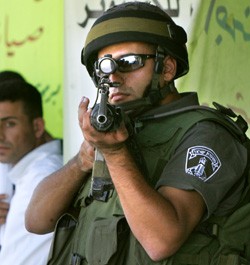
The 63-page report, “White Flag Deaths: Killings of Palestinian Civilians during Operation Cast Lead,” is based on field investigations of seven incident sites in Gaza, including ballistic evidence found at the scene, medical records of victims, and lengthy interviews with multiple witnesses – at least three people separately for each incident.

The Israel Defense Forces (IDF) declined repeated Human Rights Watch requests for a meeting to discuss the cases and did not respond to questions submitted in writing. [continued…]

Account of life in the West Bank

My wife, Lamia, once asked me: “Why can’t we live like other people?” It was a very difficult question for me to answer. All the Palestinians of my generation were born under military occupation, so this is the only life we know.

As I write these words, it’s almost midnight and we are sitting on the roof of my house, on the look-out for the Israeli army. It’s been two months since the most recent wave of night raids began, with the army now employing a new strategy of arresting every villager who attends the demonstrations, in an attempt to crush our campaign of nonviolent resistance. Up until now eleven people have been arrested, but the list of those wanted is much, much longer. So in Bi’lin, no one goes to sleep before four or five in the morning. We stay awake all night, observing the movements of the Israeli military, fearing that we may be the next person to be kidnapped and thrown in jail. Our nights have become our days, and our days have become our nights. For some it is more difficult than others because of work commitments, but we have no choice.

But it’s not only the adults who stay awake. Our children can’t sleep either, afraid that the army will burst into his or her room in the middle of the night. They don’t knock on the door during the night raids. So imagine the horror for a child to wake up to find a stranger with a painted face pointing his gun in their face. We don’t stay up so much to avoid arrest, but to avoid facing this terrible moment. [continued…]

Hamas got wood!

Spending a few weeks in Gaza and seeing the full extent of the Hamas media control in Gaza, you can’t help but notice the success of Hamas and its propaganda efforts in the Palestinian territories and beyond. As someone who does not hold much affection toward Hamas and its ideology (their militia killed my first cousin and mutilated his body in front of cameras) I have to give credit where credit is due:

1) For starters, there’s the Al-Aqsa TV station, a Hamas run satellite TV that has upbeat programming and a wonderful lineup of shows that keep audiences interested and tuned in. The station broadcasts educational, religious, social and political programming, the last of which really shows the extent to which Hamas makes things clear that they’re serious about propaganda. Compare that with the official, Ramallah-run Palestine channel where audiences would have to be paid in Euros to be kept in their seats. Boring and old-fashioned messages with too much political rhetoric just turns off those who tune in. [continued…]


Facebooktwittermail

US income inequality is at an all-time high

Income inequality is at an all-time high

Income inequality in the United States is at an all-time high, surpassing even levels seen during the Great Depression, according to a recently updated paper by University of California, Berkeley Professor Emmanuel Saez. The paper, which covers data through 2007, points to a staggering, unprecedented disparity in American incomes. On his blog, Nobel prize-winning economist and New York Times columnist Paul Krugman called the numbers “truly amazing.”

Though income inequality has been growing for some time, the paper paints a stark, disturbing portrait of wealth distribution in America. Saez calculates that in 2007 the top .01 percent of American earners took home 6 percent of total U.S. wages, a figure that has nearly doubled since 2000.

As of 2007, the top decile of American earners, Saez writes, pulled in 49.7 percent of total wages, a level that’s “higher than any other year since 1917 and even surpasses 1928, the peak of stock market bubble in the ‘roaring” 1920s.'” [continued…]

The Spirit Level: Why More Equal Societies Almost Always Do Better

The Spirit Level: Why More Equal Societies Almost Always Do Better by Kate Pickett and Richard Wilkinson – Amazon US (released December 22, 2009) Amazon UK (available now).

The costs of income inequality are clear. The most equal countries are Japan, Sweden, Norway and Finland, and the most unequal are the US, Portugal, the UK and New Zealand. Similarly, the most equal US states include Alaska, Utah, New Hampshire and Wisconsin, and New York, Louisiana, Massachusetts and Connecticut are among the most unequal.

In those countries and states where income differentials are larger, social relations deteriorate and levels of trust are lower. In the US during the 1980s and 1990s, for example, increasingly popular sports utility vehicles began to bear macho names including Outlander, Cherokee, Defender, Shogun and Crossfire.

In the most unequal countries and states, there is more gender inequality, too, and these places are less generous. A higher proportion of people suffer from mental illness, and more use drugs.

Less egalitarian countries have six times as much obesity. Educational attainment is poorer, with higher dropout rates, shorter periods of paid maternity leave and less early childhood education. Teenage birth rates are higher, and it is young men from disadvantaged neighbourhoods who are most likely to be the victims and perpetrators of violence.

In more unequal countries, children experience more bullying, fights and conflict, and rates of imprisonment are five times higher. Although it is possible that heath and social problems cause bigger income differentials, inequalities are the common denominator.

Wilkinson and Pickett argue that social structures that create relationships based on inequality, inferiority and social exclusion must inflict social pain, and that we need to allow a more “sociable” human nature to emerge. Inequalities ratchet up the competitive pressure to consume; indeed, our compulsive need to shop is itself a reflection of how social we are. Reducing inequality, they suggest, is “about shifting the balance from the divisive, self-interested consumerism driven by status competition towards a more socially integrated and affiliative society”. [continued…]

Facebooktwittermail

Iranian activist issues preemptive retraction of future confession

Iranian activist issues preemptive retraction of future confession

What do you do when your imprisoned friends and political allies admit to plotting against the Islamic Republic of Iran in an elaborate and suspiciously scripted series of televised confessions?

What if you’re worried you’re next?

You could skip town or keep quiet. Or, if you are prominent opposition activist Mohsen Armin, you can try and beat the authorities at their own game by issuing a retraction of any future televised confession in anticipation of your own arrest and possible torture.

Armin, a member of Islamic Revolution Combatants Organization, or the IRCO, posted the renunciation on his website under the glib headline “I look forward to being detained.” [continued…]

Iran inmates ‘tortured to death’

One of Iran’s defeated opposition presidential candidates has said some protesters held after July’s disputed poll were tortured to death in prison.

The claim by Mehdi Karroubi comes days after he said a number of prisoners, both male and female, had been raped.

Officials deny the rape claims, but admit that abuses have taken place. [continued…]

Ahmadinejad aide says president only got ‘4 million’ votes from his supporters

Iranian opposition figures living abroad have long insisted that the majority of those living in the country were opposed to the Islamic Republic. They’ve found an unlikely ally in a top aide to President Mahmoud Ahmadinejad, Esfandiar Rahim Mashaei, who made some curious statements to supporters.

According to the hard-line Panjereh weekly, published by the former head of the hard-line Basiji Students Organization, Mashaei said Ahmadinejad received only 4 million votes from his supporters in the June 12 presidential election. In total, Ahmadinejad received about 24 million of the 40 million votes cast in the heavily disputed election.

“The remaining 20 million [who voted for Ahmadinejad] were in fact critical of the regime and they are more serious than the 13 million” who voted for Mousavi, the weekly quoted Mashaei as saying in its Sunday edition, according to an account on the news website Ayanadenews.com.

“These 13 million voters only questioned the four-year performance of Ahmadinejad,” he continued. “But the 20 million were critical of all the years before Ahmadinejad took office.”
His comment suggests that Mashaei believes the vast majority of those who voted for Ahmadinejad rejected the performance of the government from 1981 to 1989, when Iran’s supreme leader, Ayatollah Ali Khamenei, was president, as well as the subsequent 16 years, when Khamenei gave his blessing to the presidencies of Ayatollah Ali Akbar Hashemi Rafsanjani and Mohammad Khatami. [continued…]

Facebooktwittermail

With Iran — slower, please!

Under pressure from hawks, Obama tacks to the right

In the face of mounting pressure from hawks in Washington and the continued threat of military action from Israel, the Barack Obama Administration has been taking a harder line in its latest pronouncements about Iran.

Recent media reports have suggested that the administration is leaning toward an end-of-September deadline for Tehran to respond to U.S. diplomatic outreach concerning its nuclear programme, at which point it will consider stepping up sanctions against the Iranian energy sector.

This course would cut against the advice of a growing number of Iran analysts, who have cautioned both that the Tehran regime is in no position to negotiate at the moment and that sanctions are likely only to solidify the power of Supreme Leader Ali Khamenei and President Mahmoud Ahmadinejad. [continued…]

Editor’s Comment — Barack Obama has crossed a politically dangerous threshold: from actor to reactor. It’s going to be hard reversing the trend.

In the next few weeks, suppose “the Iranians” — a collective noun that should at this point only appear in quotes since no one actually knows exactly who this refers to — suppose “the Iranians” come back with this as their response to Obama’s offer of talks:

We’re ready, but clearly you aren’t. Push your healthcare plan through Congress by the end of September and then we can talk. We can’t talk to you now — you’re administration is too weighed down by domestic political issues.

How dare “the Iranians” try and dictate American affairs, everyone in Washington would scream. Indeed, the idea that a complex piece of legislation could be advanced under arbitrary external pressure would be seen as absurd.

Meanwhile, Washington appears to have picked up Michael Ledeen’s favorite mantra: “faster, please!”

Wag the dog, again

Israeli media reports that visiting National Security Adviser General Jim Jones and Secretary of Defense Robert Gates have told the government of Prime Minister Benjamin Netanyahu to stop complaining about Iran because the US is preparing to take action “in eight weeks” demonstrate that even when everything changes in Washington, nothing changes. President Barack Obama has claimed that a peaceful settlement of the Palestinian-Israeli conflict is a high priority but the Israelis and their allies in congress and the media have been able to stonewall the issue. Israel has made no concessions on its settlement policy, which is rightly seen as the single biggest obstacle to eventual creation of a Palestinian state, and has instead pushed ahead with new building and confiscations of Arab homes. Obama has protested both Israeli actions but done nothing else, meaning that Israel has determined that the new US president’s policies are toothless, giving it a free hand to deal with the Arabs. Vice President Joe Biden’s comments that Israel is free to attack Iran if it sees fit was a warning that worse might be coming. If the Israeli reports are true, it would appear that the Obama Administration has now bought completely into the Israeli view of Iran and is indicating to Tel Aviv that it will fall into line to bring the Mullahs to their knees. In short, Israel gets what it wants and Washington yet again surrenders. [continued…]

Facebooktwittermail

The Palestinians aren’t suckers, either

The Palestinians aren’t suckers, either

Look at that Mahmoud Abbas – another Palestinian who never misses an opportunity to miss an opportunity. Here Binyamin Netanyahu has accepted the two-state solution, he’s offering to negotiate peace without preconditions, and all Abbas can say is nyet. He’s waiting for Barack Obama to do all the work for him, to force concessions out of Israel while he sits there fanning himself. This is no partner for peace. This is no “moderate.”

So goes the Israeli consensus on the leader of the Palestinian Authority. I agree with one part – that he’s missing an opportunity. But I think the one he’s missing is the opportunity to call Bibi’s bluff.

If I were Abbas, I would take Netanyahu up on his offer for peace talks without preconditions. I would negotiate from a simple, reasonable principle: equal rights for Palestinians and Israelis. Fair is fair. [continued…]

Abandoning reason to demonise Obama

Does Barack Obama represent the best hope for a just and final settlement of the Israel-Palestine conflict or will his Middle East policy lead directly to the destruction of Israel?

I would guess that most Palestinians faced with this question would regard it as ridiculous. Notwithstanding the president’s Cairo speech and his insistence on a total freeze on the expansion of Israeli settlements in the West Bank and East Jerusalem, they would be deeply sceptical about the US president’s ability to make any fundamental changes in US Middle East policy. Even were he to make such an adjustment, they would have grave doubts about whether it would seriously take on board Palestinian concerns. And they would be incredulous that anyone could argue that he is doing anything that could be interpreted as against Israel’s interests. Once again, they would say, the Palestinians are being written out of the script.

But to many American Jews, as well as to many Israeli Jews and to some Jews in the UK, the question would seem to reflect a very real and stark choice. While some who are taking sides on the issue are presenting their arguments in a reasonable manner, for others the issue is positively Manichean in its consequences, giving licence to quite staggering levels of rhetorical bitterness, vilification and hyperbole in an area where debate is already dangerously polarised. [continued…]

Facebooktwittermail

A window into CIA’s embrace of secret jails

A window into CIA’s embrace of secret jails

In March 2003, two C.I.A. officials surprised Kyle D. Foggo, then the chief of the agency’s main European supply base, with an unusual request. They wanted his help building secret prisons to hold some of the world’s most threatening terrorists.

Mr. Foggo, nicknamed Dusty, was known inside the agency as a cigar-waving, bourbon-drinking operator, someone who could get a cargo plane flying anywhere in the world or quickly obtain weapons, food, money — whatever the C.I.A. needed. His unit in Frankfurt, Germany, was strained by the spy agency’s operations in Afghanistan and Iraq, but Mr. Foggo agreed to the assignment.

“It was too sensitive to be handled by headquarters,” he said in an interview. “I was proud to help my nation.”

With that, Mr. Foggo went on to oversee construction of three detention centers, each built to house about a half-dozen detainees, according to former intelligence officials and others briefed on the matter. One jail was a renovated building on a busy street in Bucharest, Romania, the officials disclosed. Another was a steel-beam structure at a remote site in Morocco that was apparently never used. The third, another remodeling project, was outside another former Eastern bloc city. They were designed to appear identical, so prisoners would be disoriented and not know where they were if they were shuttled back and forth. They were kept in isolated cells. [continued…]

Interrogator: ‘intolerance’ led to torture

Former Air Force Maj. Matthew Alexander, whose questioning of a captured terrorist led to the elimination al Qaeda’s top man in Iraq, said a pervasive “intolerance” of Arabs and Muslims among American interrogators led to abuses at Abu Ghraib and other prisons.

“Soldiers referred to them as rag heads and so on,” Alexander said during a Monday talk at the International Spy Museum, in Washington, D.C. to promote his book, “How To Break a Terrorist: The U.S. Interrogators Who Used Brains, Not Brutality, to Take Down the Deadliest Man in Iraq.”

“They had read things like ‘The Politically Incorrect Guide to Islam,’ which characterizes its practitioners as potential terrorists, he added.

An Air Force criminal investigator for over a decade before being assigned to Iraq in March 2006, Alexander was careful not to characterize all, or even most, interrogators as bigots, although he said, “it was not just a few bad apples” who tortured prisoners.

“It was not a majority of interrogators. If I had to guess, maybe 20 per cent,” he told a packed room at the International Spy Museum, which opened its doors in July 2002.

“A small minority with a lot of power” at the top of the chain of command was responsible for fostering at atmosphere in which abuses could flourish, he said. [continued…]

Facebooktwittermail

Israeli diplomat just doing his job

Israeli diplomat just doing his job

In the practice of diplomacy it is not enough simply to represent your country abroad or to put its policies in the best light possible. It is not enough to give speeches and throw a party on your country’s national day. It is also necessary to faithfully and accurately report back to your political masters on the attitudes and atmospherics of the country in which you serve. The best are keen observers whose cables home can affect history. One thinks of George Kennan, whose cable from Moscow in 1946 – later published in Foreign Affairs under the pen name X – set the parameters of containment which set the course of US policy in the Cold War.

Thus I was disheartened to read that Israel’s consul general in Boston, Nadav Tamir, had been caught in the growing quarrel between the government of Benjamin Netanyahu and the Obama administration over Jewish settlements in the occupied territories. Whereas the Bush administration gave Israel a green light to do what it willed vis-a-vis the occupied territories, President Obama wants to bring about the peace that Bill Clinton came so close to obtaining but failed. Obama wants a complete settlement freeze; Netanyahu does not, and a full-blown rift between Israel and its all-important ally is opening.

Tamir is being recalled to Jerusalem, reportedly to be scolded, because he wrote an internal memo that said the settlement dispute was doing “strategic damage to Israel’’ because it was alienating the American administration. The memo was subsequently leaked.

Given the Northeast’s universities and intellectual centers, the Boston consulate is a good listening post for diplomats – especially during Democratic administrations when it often seems that Harvard and MIT empty out into government jobs in Washington. Barack Obama may have been born in Hawaii, and came to politics via Chicago, but Harvard Law School also had an influence on him. If Nadav Tamir had not sent a cable to his government warning that his country risked alienating its all-important ally, he would have been remiss in his duties as Israel’s man in New England. [continued…]

Jewish leaders in city defend Israeli consul amid uproar

Leaders of Boston’s Jewish community yesterday rallied strongly behind Israel’s consul general for New England, Nadav Tamir, who was summoned to Jerusalem this week to explain his controversial memo saying Israel’s handling of its relations with the United States was “causing strategic damage’’ to American public support for Israel.

That confidential memo to Tamir’s superiors was leaked to an Israeli television station last week, prompting angry criticism from Prime Minister Benjamin Netanyahu and others. Yesterday, Deputy Foreign Minister Daniel Ayalon, a former Israeli ambassador to the United States, criticized the memo as “not the work of a professional,’’ and said it contained more opinion than data.

But in Boston, several influential Jewish leaders defended Tamir. They said that in his three years in Boston as consul general, he has won widespread respect for his integrity and his intelligent approach to building relations within the community and with non-Jews – and they look forward to having him finish out his final year here. [continued…]

Boston Russian Jewish community: recall Nadav Tamir!

The Russian Jewish community of Boston is over 50 thousand people strong. We are roughly one fifth of Massachusetts’ Jewish population. We are an active, organized, and charitable community. Our community raises hundreds of thousands of dollars, every year, that we spend on programs in Israel. Nadav Tamir knows us, he regularly attends our annual events where he can see hundreds of Russian Jews, our American friends, and our deep love for the Land of Israel and our brethren there. Somehow before writing his letter, he never solicited our opinion. Somehow, when it came to his ideological preferences, the Russian Jews of Boston became invisible to him.

This leads to the following sad, but necessary request. By issuing his incompetent, unprofessional, and partisan letter, Nadav Tamir proved that he is not a diplomat, but an ideologue. We are respectfully asking the Israeli Ministry of Foreign Affairs to recall Nadav Tamir from Boston. Please send us a diplomat who could learn, listen, and represent Israel without being ashamed of his country, and without sacrificing her interest to personal ideological preferences and future career aspirations. [continued…]

Facebooktwittermail

Is Karzai in trouble?

Is Karzai in trouble?

Afghanistan should, perhaps, be called the “graveyard of expectations.” Every time the shrewd analyst thinks he knows what is going to happen, the picture shifts. The country’s presidential election, scheduled for August 20, is no exception.

Just a few weeks ago, pundits were nodding sagely at the political astuteness of the incumbent, Hamid Karzai. He has spent the past year assiduously courting and bullying the tribal leaders and strongmen who control the country, promising them jobs, perquisites, forgiveness of past sins, even the odd province or two. The process might have been a bit unsavory, but international election experts were saying they expected a “fair enough” referendum on Karzai’s tenure — in which, both inside Afghanistan and abroad, the president’s re-election was thought to be a sure thing.

Now, with just two weeks to go before the ballot, what had been a yawn of a race is suddenly a pulse-pumping sprint for the finish, with no clear winner in sight. What rocked Karzai’s formerly sturdy campaign boat? To understand the exciting and confusing contest, the careful observer should pay attention to a trio of contenders and at least two governments — and be prepared for the unexpected. [continued…]

Deadly contractor incident sours Afghans

Mirza Mohammed Dost stood at the foot of his son’s grave, near a headstone that read, “Raheb Dost, martyred by Americans.”

His son was no insurgent, Dost said. He was walking home from prayers on the night of May 5 when he was shot and killed on a busy Kabul street by U.S. security contractors.

“The Americans must answer for my son’s death,” Dost said as a large crowd of young men murmured in approval.

The shooting deaths of Raheb Dost, 24, and another Afghan civilian by four gunmen with the company once known as Blackwater have turned an entire neighborhood against the U.S. presence here. [continued…]

Taliban, foes clash in Pakistan

Taliban fighters attacked rival militants backed by the government in Pakistan’s tribal areas, sparking clashes that intelligence officials and tribal elders said left dozens dead.

There were few details of Wednesday’s fighting, on the edge of the isolated South Waziristan tribal area, a key Taliban and al Qaeda stronghold.

Two intelligence officials in the area said it began when the region’s dominant Taliban faction — whose leader, Baitullah Mehsud, was believed to have been killed last week in a U.S. missile strike — attacked a tribal faction backed by the government. The two sides battled in and around the village of Sura Ghar with assault weapons, rocket-propelled grenades and mortars, the officials said. One official said Pakistani forces tried to help the government-backed militants repel the Taliban, but gave no details. [continued…]

Facebooktwittermail

Iran opposition leader decries ‘show trials,’ prisoner treatment

Iran opposition leader decries ‘show trials,’ prisoner treatment

Iran’s legal system came under fresh criticism Wednesday amid allegations of prisoner abuse and controversy over televised courtroom confessions, decried as “show trials” by domestic and international critics.

The country’s leading opposition figurehead and a prominent conservative, both losing candidates in June’s disputed presidential election, denounced the trials and alleged violence against detained protesters. A statement purportedly signed by a group of Tehran judges condemned the treatment of prisoners and the televised confessions of suspects allegedly mistreated and held in solitary confinement for weeks without lawyers.

Authorities hinted that they might release 24-year-old French national Clotilde Reiss on bail into the custody of the French Embassy in Tehran. The researcher was arrested and held for weeks for taking pictures of postelection demonstrations and e-mailing messages about the unrest to her friends. Her confession was aired Saturday, drawing condemnation from the European Union and France. [continued…]

Facebooktwittermail

How America is funding corruption in Pakistan

How America is funding corruption in Pakistan

“When [Musharraf] looks me in the eye and says, … ‘there won’t be a Taliban and won’t be al Qaeda,’ I believe him, you know?” So said George W. Bush of then Pakistani President Pervez Musharraf in September 2006. The U.S. president’s trust had been forged in a deal made five years earlier: Pakistan would train, equip, and deploy its Army and intelligence service in counterterrorism operations, and Washington promised to reimburse its partner with billions of dollars in weapons, supplies, and cold hard cash. The plan was simple enough, and since 2001, the United States has lived up to its pledge, pouring as much as $12 billion in overt aid and another $10 billion in covert aid to Pakistan.

But today, as the Obama administration re-examines the deal, there is devastating evidence that the billions spent in Pakistan have yielded little in return. For the last eight years, U.S. taxpayers’ money has funded hardly any bona fide counterterrorism successes, but quite a bit of corruption in the Pakistani Army and intelligence services. The money has enriched individuals at the expense of the proper functioning of the country’s institutions. It has provided habitual kleptocrats with further incentives to skim off the top. Despite the U.S. goal of encouraging democratization, assistance to Pakistan has actually weakened the country’s civilian government. And perhaps worst of all, it has hindered Pakistan’s ability to fight terrorists. [continued…]

Facebooktwittermail

Obama officials to tour Michigan prison

Obama officials to tour Michigan prison

Obama administration officials plan on Thursday to tour a soon-to-be-shuttered Michigan state prison considered an option to hold terrorism suspects now detained at Guantanamo Bay in Cuba.

Two government officials said representatives of the Defense, Justice and Homeland Security departments would visit a state prison in Standish. The officials spoke on condition of anonymity because they were not authorized to speak publicly about the visit.

An Obama administration official said the visit was intended to gather information about the facility and no decisions had been made about where to move the detainees. Multiple options are being considered, said the official, who spoke on condition of anonymity because of the sensitivity of the discussions. [continued…]

Facebooktwittermail

Cheney uncloaks his frustration with Bush

Cheney uncloaks his frustration with Bush

In his first few months after leaving office, former vice president Richard B. Cheney threw himself into public combat against the “far left” agenda of the new commander in chief. More private reflections, as his memoir takes shape in slashing longhand on legal pads, have opened a second front against Cheney’s White House partner of eight years, George W. Bush.

Cheney’s disappointment with the former president surfaced recently in one of the informal conversations he is holding to discuss the book with authors, diplomats, policy experts and past colleagues. By habit, he listens more than he talks, but Cheney broke form when asked about his regrets.

“In the second term, he felt Bush was moving away from him,” said a participant in the recent gathering, describing Cheney’s reply. “He said Bush was shackled by the public reaction and the criticism he took. Bush was more malleable to that. The implication was that Bush had gone soft on him, or rather Bush had hardened against Cheney’s advice. He’d showed an independence that Cheney didn’t see coming. It was clear that Cheney’s doctrine was cast-iron strength at all times — never apologize, never explain — and Bush moved toward the conciliatory.”

The two men maintain respectful ties, speaking on the telephone now and then, though aides to both said they were never quite friends. But there is a sting in Cheney’s critique, because he views concessions to public sentiment as moral weakness. After years of praising Bush as a man of resolve, Cheney now intimates that the former president turned out to be more like an ordinary politician in the end. [continued…]

Facebooktwittermail

Target of Obama-era rendition alleges torture

Target of Obama-era rendition alleges torture

During the 2008 presidential campaign, Barack Obama sharply criticized the Bush Administration’s extraordinary renditions program. “To build a better, freer world, we must first behave in ways that reflect the decency and aspirations of the American people,” he wrote in Foreign Affairs. “This means ending the practice of shipping away prisoners in the dead of night to be tortured in far-off countries, of detaining thousands without charge or trial, of maintaining a network of secret prisons to jail people beyond the reach of law.” But Obama was consistently careful never to commit to ending the practice of rendition entirely. When the issue flared shortly after his inauguration, senior administration officials were quick to say that abuses including torture would end, but that “ordinary” renditions – the spiriting away of suspects from other countries without going through the formal process of extradition — would be continued in a cleaned-up form. Now in a federal court in suburban Washington, a case is unfolding that gives us a practical sense of what an Obama-era rendition looks like.

Raymond Azar, a 45-year-old Lebanese construction manager with a grade school education, is employed by Sima International, a Lebanon-based contractor that does work for the U.S. military in Iraq and Afghanistan. He also has the unlikely distinction of being the first target of a rendition carried out on the Obama watch.

According to court papers, on April 7, 2009, Azar and a Lebanese-American colleague, Dinorah Cobos, were seized by “at least eight” heavily armed FBI agents in Kabul, Afghanistan, where they had traveled for a meeting to discuss the status of one of his company’s U.S. government contracts. The trip ended with Azar alighting in manacles from a Gulfstream V executive jet in Manassas, Virginia, where he was formally arrested and charged in a federal antitrust probe.

This rendition involved no black sites and was clearly driven by a desire to get the target quickly before a court. Also unlike renditions of the Bush-era, the target wasn’t even a terror suspect; rather, he was suspected of fraud. But in a troubling intimation of the last administration, accusations of torture hover menacingly over the case. According to papers filed by his lawyers, Azar was threatened, subjected to coercive interrogation techniques and induced to sign a confession. Azar claims he was hooded, stripped naked (while being photographed) and subjected to a “body cavity search.”

On a ride to the infamous Bagram air base in Afghanistan — site of the torture-homicides involving U.S. interrogators exposed in the Oscar-winning documentary Taxi to the Dark Side — Azar contends that a federal agent pulled a photograph of Azar’s wife and four children from his wallet. Confess that you were bribing the contract officer, the agent allegedly said, or you may “never see them again.” Azar told his lawyers he interpreted that as a threat to do physical harm to his family. [continued…]

2 U.S. architects of harsh tactics in 9/11’s wake

Col. Steven M. Kleinman, an Air Force interrogator and intelligence officer who knows Dr. Mitchell and Dr. Jessen, said he thought loyalty to their country in the panicky wake of the Sept. 11 attacks prompted their excursion into interrogation. He said the result was a tragedy for the country, and for them.
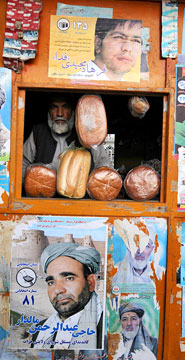
“I feel their primary motivation was they thought they had skills and insights that would make the nation safer,” Colonel Kleinman said. “But good persons in extreme circumstances can do horrific things.”

For the C.I.A., as well as for the gray-goateed Dr. Mitchell, 58, and the trim, dark-haired Dr. Jessen, 60, the change in administrations has been neck-snapping. For years, President George W. Bush declared the interrogation program lawful and praised it for stopping attacks. Mr. Obama, by contrast, asserted that its brutality rallied recruits for Al Qaeda; called one of the methods, waterboarding, torture; and, in his first visit to the C.I.A., suggested that the interrogation program was among the agency’s “mistakes.”

The psychologists’ subsequent fall from official grace has been as swift as their rise in 2002. Today the offices of Mitchell Jessen and Associates, the lucrative business they operated from a handsome century-old building in downtown Spokane, Wash., sit empty, its C.I.A. contracts abruptly terminated last spring. [continued…]

Facebooktwittermail

Has Kandahar already fallen?

Has Kandahar already fallen?

In a week where security in Afghanistan seems headed anywhere but up (rocket strikes on Kabul, a Taliban frontal assault in Logar province today), the question on many a commentator’s lips has been: where is this all going?

Some of the strongest analysis on stabilizing Afghanistan recently has come from Andrew Exum who just took a break from his position at the Center for New American Security to act as some-time advisor to General McChrystal. I was struck by a comment he made in an interview on the World Politics Review:

“The fall of Kandahar is not going to look like the Taliban rolling down the streets in tanks. The fall of Kandahar is going to look like the Taliban steadily making ground with a campaign of fear and intimidation, and creating an environment in which the Afghan government can’t operate in Kandahar, and Kandahar eventually becomes ideologically inhospitable to the government of Afghanistan, never mind Coalition forces.”

I think Ex is dead on. But by that standard, I have to question: Has Kandahar already fallen? [continued…]

President Karzai’s supporters ‘buy’ votes for Afghanistan election

Supporters of President Karzai are preparing to rig voting in next week’s presidential elections in unstable parts of Afghanistan’s south as Taleban violence threatens to intimidate voters and hit turnout in his traditional support base.

The Times has talked to several witnesses whose reports will bolster suspicions within the international community that there will be electoral fraud across the south, some of it allegedly orchestrated by Mr Karzai’s half-brother, Ahmed Wali Karzai.

Such irregularities could threaten the credibility of the election process and have led to threats of violent demonstrations in the north if Mr Karzai is thought to have stolen the vote.

One tribal elder in the Marja district of Helmand alleged that the vote rigging was being organised by members of Mr Karzai’s family and local tribal allies, particularly Sher Mohammad Akhundzada, the former governor of the province. [continued…]

U.S. ambassador seeks more money for Afghanistan

The United States will not meet its goals in Afghanistan without a major increase in planned spending on development and civilian reconstruction next year, the U.S. ambassador in Kabul has told the State Department.

In a cable sent to Secretary of State Hillary Rodham Clinton, Ambassador Karl W. Eikenberry said an additional $2.5 billion in nonmilitary spending will be needed for 2010, about 60 percent more than the amount President Obama has requested from Congress. The increase is needed “if we are to show progress in the next 14 months,” Eikenberry wrote in the cable, according to sources who have seen it.

Obama has asked for $68 billion in Defense Department spending in Afghanistan next year, an amount that for the first time would exceed U.S. military expenditures in Iraq. Spending on civilian governance and development programs has doubled under the Obama administration, to $200 million a month — equal to the monthly rate in Iraq during the zenith of spending on nonmilitary projects there. [continued…]

Life, death and the Taliban: War of ideas

Almost daily, girls’ schools are burned and bombed and teachers, principals, students and their families receive what are known as “night letters,” Islamic decrees of death issued by the Taliban and pasted on homes and the walls of villages in the dead of night.

In just two years, more than 640 schools in Afghanistan and more than 350 in Pakistan have been bombed, burned or shut down, according to the education ministries in both countries. Eighty percent of those targeted were girls’ schools.

In the Helmand Province in the south of Afghanistan, where the Taliban is effectively in control of most of the province, 75 of the 228 schools have been shut down by Taliban militias that disapprove of the secular teaching and the idea of girls receiving an education. [continued…]

Afghan drug lords: targeted until proven innocent

So first we expanded our forces in Afghanistan. Then we took on the challenge of prison reform there (ignoring the fact that America’s own prison system is a national disgrace). And yesterday we learned that U.S. armed forces are putting suspected Afghan drug dealers on a “kill or capture” list. In other words, we are now extending the “war on drugs” to Afghanistan, ignoring the fact that this “war” (first announced by Richard Nixon four decades ago) hasn’t led to victory. The new strategy also ignores some of the obvious lessons of that “war,” and places the United States on some pretty dubious moral ground. [continued…]

Facebooktwittermail

Pakistan denies militants attacked nuclear sites

Pakistan denies militants attacked nuclear sites

A military spokesman denied a recent report that militants have attacked Pakistan’s nuclear facilities three times in two years, saying Wednesday there is “absolutely no chance” the country’s atomic weapons could fall into terrorist hands.

Maj. Gen. Athar Abbas said an article written by a U.K.-based security expert was false because none of the bases named actually had any nuclear facilities.

“It is factually incorrect,” he said.

Taliban militants’ brief takeover of areas some 60 miles (100 kilometers) from the capital, Islamabad, raised new fears about the security of Pakistan’s atomic weapons being seized by extremists linked to al-Qaeda, although the country insists its arsenal is secure.

Shaun Gregory, a professor at Bradford University’s Pakistan Security Research Unit, wrote that several militant attacks have already hit military bases where nuclear components are secretly stored. The article appeared in the July newsletter [PDF] of the Combating Terrorism Center of the U.S. Military Academy at West Point. [continued…]

Facebooktwittermail

Climate disobedience

Climate disobedience

In the early morning of October 8, 2007, a small group of British Greenpeace activists slipped inside a hulking smokestack that towers more than 600 feet above a coal-fired power plant in Kent, England. While other activists cut electricity on the plant’s grounds, they prepared to climb the interior of the structure to its top, rappel down its outside, and paint in block letters a demand that Prime Minister Gordon Brown put an end to plants like the Kingsnorth facility, which releases nearly 20,000 tons of carbon dioxide into the atmosphere each day.
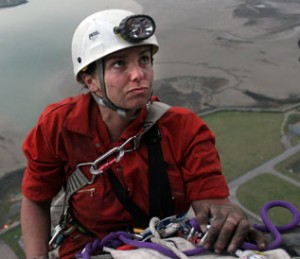
The activists, most of them in their thirties and forties, expected the climb to the top of the smokestack would take less than three hours. Instead, scaling a narrow metal ladder inside took nine. “It was the most physically exhausting thing I have ever done,” 35-year-old Ben Stewart said later. “It was like climbing through a huge radiator — the hottest, dirtiest place you could imagine.”

In the end, the fatigued, soot-covered climbers were only able to paint the word “Gordon” on the chimney before, facing dizzying heights, police helicopters, and a high court injunction, they were compelled to abandon the attempt and submit to arrest. They could hardly have known then that their botched attempt at signage would help transform British debate about fossil-fuel power plants — and that it would send tremors through an emerging global movement determined to use direct action to combat the depredations of climate change.

The case took on historic weight only after the Kingsnorth Six went to court, where they presented to a jury what is known in the United States as a “necessity” defense. This defense applies to situations in which a person violates a law to prevent a greater, imminent harm from occurring: for example, when someone breaks down a door to put out a fire in a burning building.

In the Kingsnorth case, world-renowned climate scientist James Hansen, director of the NASA Goddard Institute for Space Studies, flew to England to testify. According to the Guardian, he presented evidence that the Kingsnorth plant alone could be expected to cause sufficient global warming to prompt “the extinction of 400 species over its lifetime.” Citing a British government study showing that each ton of released carbon dioxide incurs $85 in future climate-change costs, the activists contended that shutting the plant down for the day had prevented $1.6 million in damages — a far greater harm to society than any rendered by their paint — and that their transgressions should therefore be excused.

What surprised both Greenpeace and the prosecution was that 12 ordinary Britons agreed. The jury returned with an acquittal, and the freed defendants made the front pages of newspapers throughout the country. The tumult also produced political results. In April, British energy and climate change minister Ed Miliband announced a reversal in governmental policy on power stations, declaring, “The era of new unabated coal has come to an end.” Discussing Kingsnorth, Daniel Mittler, a long-time environmental activist in Germany, told me recently, “it was probably one of the most impactful civil disobedience cases the world has ever seen, because it was the right action at the right time.” [continued…]

Facebooktwittermail

Iran roiled by prison abuse claims

Iran roiled by prison abuse claims

Nearly a month later, she can’t erase images of the dying young man from her mind.

All but two of his upper teeth had been knocked out. His nails had been pulled out. His head had been bashed in. His kidneys had stopped working. But what most disturbed her, she said, were the stitches around his anus — a sign, the nurses told her, that he had been raped.

Iranian reformist websites and activists in recent days had identified 19-year-old Mohammad K. as one of the protesters arrested during Iran’s postelection unrest, locked up in the Kahrizak detention facility and severely beaten.

He died in the late hours of July 16 or the early hours of July 17 at a hospital in Tehran, according to the websites. [continued…]

Well-informed Larijani congratulated Mousavi on election day, report says

Observers have for weeks heard various theories that purport to prove that Iran’s June 12 presidential elections were rigged. They have come from Western think tanks, mathematicians and, of course, supporters of opposition figurehead Mir-Hossein Mousavi, who ran and lost against Mahmoud Ahmadinejad.
But the latest tantalizing tidbit, from the camp of Ahmadinejad, comes from the website Rajanews.com, which is run by a strident backer of the president, lawmaker Fatemeh Rajabi.

In paragraphs tucked into the end of an article posted Monday, the website may have inadvertently published information damning to its own president while trying to smear the speaker of parliament, a conservative rival of Ahmadinejad. [continued…]

Facebooktwittermail

Israel’s threats to Lebanon only boost Hezbollah

Israel’s threats to Lebanon only boost Hezbollah

Which Lebanon exactly does Prime Minister Benjamin Netanyahu hold responsible for every Hezbollah action? Two months following the elections, Lebanon still has no government. The prime minister-designate, Sa’ad Hariri, just returned on Monday from a vacation in the south of France, the distribution of portfolios has yet to be completed and is likely to be delayed further due Walid Jumblatt’s decision to quit the majority bloc, and there does not appear to be anyone in Lebanon that is moved by the Israeli threats.

At the same time, it is clear to all parties in Lebanon that the Israeli threats to harm civilian infrastructure as retaliation for a Hezbollah attack have no basis since such reprisals will bear no influence on anyone within or without the Beirut government. The Lebanese public has already weighed in on its preference during the last elections in which Hezbollah was dealt a crushing blow (yet still wields considerable political leverage in the country). Continue reading

Facebooktwittermail