Author Archives: Paul Woodward

The Pentagon’s nuclear posture landmine

The Pentagon’s nuclear posture landmine

Defense officials are writing a new U.S. nuclear policy that could blow up President Obama’s declared agenda. The White House must reassert its control.

The Nuclear Posture Review, or NPR, will be issued at the end of the year, but Obama’s defense officials are briefing others in the administration this week, hoping to lock in their policies before the end of the month.

Why should you care? Joan Rohlfing, vice-president of the Nuclear Threat Initiative headed by Sam Nunn and Ted Turner, explained in a speech before the Arms Control Association May 20: [continued…]

Facebooktwittermail

The Iranian revolution is eating its children

In Iran, a hostage-taker is now hostage

Last week Iran’s theocracy widened its crackdown from suppressing an opposition movement to putting on trial the very revolutionaries who launched the Islamic republic. This new purge may be more profound politically than the campaign against the followers of Mir Hossein Mousavi: The Iranian revolution is eating its children.

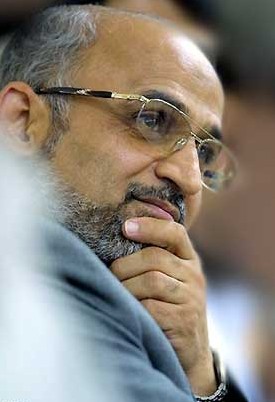
Mohsen Mirdamadi saw it all coming. He warned me about it five years ago. The only thing he didn’t foresee was his own role. Last week, he sat in a revolutionary court, dressed in gray prison pajamas, as one of its victims.

I’ve followed Mirdamadi since the 1979 U.S. Embassy takeover. In 1981, I stood below the plane that brought 52 American diplomats to freedom in Algeria and wondered about the type of people who seized, interrogated and brutalized hostages for 444 days. Mirdamadi was one of three ringleaders. Former hostage John Limbert remembers him as “particularly nasty.” I met him a decade ago.

Like many early revolutionaries, Mirdamadi had evolved over the intervening two decades from a scruffy student radical into a balding, pinstripe-suited realist. In 2000, he ran for parliament as a reformer. [continued…]

Trial of protesters seems only to hurt Iran, analysts say

he alleged French spy stood at the lectern Saturday in Tehran and described her dastardly act of collusion.

Clotilde Reiss, a pale, soft-spoken 24-year-old who had been teaching French in the central Iranian city of Esfahan when she was arrested, confessed to sending a single e-mail to a colleague in the capital.

In it, she described the unrest unfolding in Esfahan after taking part in a couple of peaceful protests against the disputed reelection of President Mahmoud Ahmadinejad. [continued…]

Iranian official acknowledges torture of some protesters

A top judiciary official acknowledged Saturday that some detainees arrested after post-election protests had been tortured in Iranian prisons, the first such acknowledgment by a senior Iranian official.[…]

Speaking to reporters at a news conference, Qorbanali Dori-Najafabadi, the prosecutor general, said “mistakes” had led to a few “painful accidents which cannot be defended, and those who were involved should be punished.”

Such mistakes, he said, included “the Kahrizak incident,” a reference to the deaths of several detainees at Kahrizak detention center in southwestern Tehran. [continued…]

With Iran blaming West, dual citizens are targets

Among the more than 100 people on trial after Iran’s disputed presidential election are two dual citizens: Kian Tajbakhsh, 47, an American Iranian urban planner, and Maziar Bahari, 42, a Canadian Iranian filmmaker and Newsweek reporter.[…]

Their arrests follow a pattern during Ahmadinejad’s tenure of high-profile detentions of dual citizens. Since he took office in 2005, at least seven have been detained, including Woodrow Wilson Center scholar Haleh Esfandiari in 2007 and freelance journalist Roxana Saberi, who was convicted of espionage this year and later pardoned.

Tajbakhsh, who has lived in Iran since 1999 and has done some projects for its government, was held for four months in 2007, during which authorities accused him of trying to foment a “color” revolution. He stayed in Iran afterward and had plans to teach at Columbia University this fall.

Friends said he had purposely avoided the election-related turmoil, even abstaining from voting. “He felt confident there was no rationale for him to be imprisoned,” Sadjadpour said. Two days after the vote, Tajbakhsh wrote to him in an e-mail: “I’m keeping my head down. I have nothing journalistic to add to all the reports that are here.”

Bahari had been filing reports for Newsweek and for television stations in Britain; the Iranian government has accused him of sending reports to foreign news media in exchange for payment, said Nisid Hajari, Newsweek’s foreign editor.

“That’s exactly what he’s been doing for more than 10 years,” Hajari said, adding that the Iranian government had renewed Bahari’s press accreditation each year and had not complained about his work. “What they’ve accused him of doing is a job that they themselves had licensed and approved him to do.” [continued…]

Facebooktwittermail

So time is ticking away on Iran? Let’s stop the clock

So time is ticking away on Iran? Let’s stop the clock

The clock is ticking on Iran, or so we’re told. But whose clock, and what exactly is it timing? Obama administration officials say Iran has until September to respond to the US offer to negotiate over its nuclear programme or face what the secretary of state, Hillary Clinton, calls “crippling sanctions”. But what exactly is being demanded of Iran, and what is being offered? And what if those sanctions don’t change its stance?

Iran insists that its programme is entirely for peaceful energy production, and that it is not pursuing nuclear weapons. But – and this is perhaps the crucial point in the conversation – it very much insists that as a signatory of the Non Proliferation Treaty, it does, in fact, have the right to enrich uranium, and has no intention of surrendering that right. That, moreover, is not only the position of the hardline Ahmadinejad government, but also of its pragmatic and reformist rivals who continue to challenge the legitimacy of the president’s reelection.

The US and its allies believe Iran is using the cover of a civilian nuclear energy programme to put in place many of the key elements of a bomb, particularly the ability to enrich uranium. The Non Proliferation Treaty allows its signatories (including Iran) to enrich uranium as reactor fuel, under monitoring by the International Atomic Energy to ensure that it is not enriched to weapons grade. According to the US Director of National Intelligence, Dennis Blair, the US intelligence community believes Iran won’t have the technical capacity to produce weapons-grade material until 2013; that its leaders have not taken a political decision to create a bomb; and that they won’t do so as long as their programme remains under international scrutiny. [continued…]

Facebooktwittermail

Jewish Fatah delegate nominated to Revolutionary Council

Jewish Fatah delegate nominated to Revolutionary Council

A Jewish member of Fatah was nominated for a spot on the movement’s Revolutionary Council on Saturday.

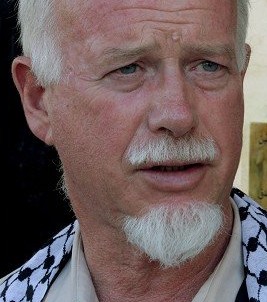
Vowing to step up lobbying efforts worldwide if elected, Dr Uri Davis told Ma’an one of Fatah’s weakest attributes has been its failure to establish ties with international parties, movements and human rights organizations.

In an interview, Davis played down the significance of his nomination to the Revolutionary Council, Fatah’s 120-member governing body. Each member of the movement has the right to run for office despite one’s religion, race or color, the Fatah delegate noted. [continued…]

Dahlan, Qureia vie to succeed Abbas as Fatah chief

Elections for Fatah’s main governing bodies, the Central Committee and the Revolutionary Council, were expected to take place on Sunday, with two party strongmen, Mohammed Dahlan and Ahmed Qureia leading the nominee list for leadership posts.

On Saturday, Palestinian President Mahmoud Abbas was re-elected to chair the Central Committee at the party’s first convention in two decades, held in the West Bank city of Bethlehem since last Tuesday.

Sunday’s election was to name the 18 members of the Central Committee, who will be joined by four members to be named by the committee itself. In addition, elections for the 120-member Fatah Revolutionary Council were also scheduled for Sunday.

Qureia was the first Palestinian Prime Minister, and is currently heading the peace negotiations team for the Palestinian Authority. Dahlan, the former head of the Palestinian Authority Preventative Security Forces in Gaza, left the Strip in 2007 shortly before rival party Hamas violently seized control over Gaza.

The two have waged a tough political battle, as both are considered candidates to succeed Abbas. The two haven’t expressly announced any plans to succeed the Palestinian president, but they are considered to be the two strongest Fatah members after Abbas. Assuming that Marwan Barghouti, also considered a strong candidate to head the Palestinian Authority, remains in Israeli jail, one of the two will likely be named president once Abbas steps down for whatever reason.

On Saturday, Fatah adopted a position paper stating that the Palestinian national enterprise will not reach fruition until all of Jerusalem, including the outlying villages, come under Palestinian sovereignty.

Also Saturday, the Palestinian news agency Ma’an reported that for the first time, a Jewish candidate had been nominated for a post on the Revolutionary Council. According to Ma’an, Jerusalem-born Dr. Uri Davis explained that every Fatah member can run for a post on the party’s 120-member Revolutionary Council regardless of religion, race or color.

“Breaking the Silence” or silencing the critics?

“Breaking the Silence” is a member of the Israeli human rights, peace and social justice community. The group’s only crime, so it seems, lies in its effort to offer an alternative ethical voice in a society that is arguably losing its way. Breaking the Silence provides a platform for soldiers to testify to acts of violence and other violations of Palestinian rights that they may have witnessed or taken part in during their service in the Occupied Palestinian Territory. The group’s most recent report details soldier testimonies that raised serious concerns about Israeli military behavior during the war on Gaza, “Operation Cast Lead.” The publication is unique but it is only one example of many public statements, reports and legal advocacy in response to the prosecution of the war, which Israel consistently maintains was both moral and legal. Why then is the Israeli government waging a battle against this organization, trying to thwart its funding and, essentially, to shut it down?

The answer, perhaps, lies in the genealogy of the occupation. For 42 years Israel has argued its one acceptable and official truth: “Israel is not an occupier and it is not violating international law.” The problem is that this narrative has been accepted only by Israel, tolerated by the United States, and perpetuated by a broad spectrum of Israel’s “supporters,” largely in North America and Western Europe. In the aftermath of the war the Netanyahu government feels threatened by US President Barack Obama’s demands to halt one of Israel’s most visible violations of international law, settlement building. Part of the Israeli reaction is to try to manipulate discourse and impugn those who have exposed Israeli infractions over the years, choosing to begin with an organization that provides the public with direct insight into the behavior of soldiers. Ironically in its actions the government actually corroborates the group’s work and that of other organizations who report and represent the voices of the Palestinian abject Other, the torture victims, those evicted from their homes, denied access to their fields and those beaten by settlers with impunity. [continued…]

Freezing for failure

It should be said from the onset: Do not freeze settlement construction, do not stop it in part or periodically, not for six months, not for a single day. As long as the U.S. administration does not present a comprehensive plan that explains its endgame – what the end will look like and what the shape and character of the Palestinian state will look like – the demand for a cessation of construction is pointless. It is a pathetic return to the doctrine of “confidence-building measures,” which led nowhere. The demand to freeze settlement construction is like the demand to remove roadblocks or cease razing homes; all these demands and similar ones mean only one thing: making the continuation of the occupation a little more pleasant.

The demand for a cessation of settlement construction will have no impact on the political process as long as they are not telling the Israeli and Palestinian public what will happen with the half-million Israelis who already live in the West Bank and East Jerusalem. How many of them will have to be evacuated? How much money will this cost and who will pay for it? Evacuating 7,000 Jews from the Gaza Strip cost more than NIS 10 billion.

Even if only 100,000 Jews are evacuated from the West Bank the move will cost, on the basis of this estimate, some NIS 150 billion – about 50 percent of the national budget for an entire year. It is true that it amounts to “only” about 8 percent of the cost of the American war in Iraq to date, and maybe for the sake of peace in the Middle East the U.S. administration would be willing to invest another 8 percent in the area, but someone in Washington must articulate this clearly. That would be much more convincing than halting the work of a crane.

American pressure yielded an impressive achievement when they twisted Prime Minister Benjamin Netanyahu’s arm and got him to say that he wants “two states for two peoples.” But what comes next? Are Netanyahu’s two states the same two as Palestinian President Mahmoud Abbas’ and the same two as Washington’s? Where will the border be demarcated? After all, if it is agreed that the end of the process will leave the settlement blocs in Israel’s hands, and if indeed the Palestinians accept this in return for an exchange of territory, why is it necessary to cease construction in those blocs?

Logic dictates that construction should continue in the blocs and if possible at a faster pace, so that it will be possible to absorb those evacuated from other settlements. But when there is no plan or agreement on the border, not to mention that negotiations are not even taking place, the demand for ceasing construction appears to be some sort of independent aim – isolated from its political context and whose sole intention is to display America’s ability to impose “something” on Israel. Meanwhile, the removal of illegal outposts is not something Washington has proved it is able to impose on Israel, despite Israel’s promises to the Americans and despite all the brouhaha caused by Defense Minister Ehud Barak on the matter last month.

The attempt to understand the American move as an action from the periphery inward – a tactical move meant to lead to further moves, one slice at a time – is leading toward a dead end and might even be dangerous as well. Assuming Israel freezes construction and negotiations resume, and that (although there is no evidence to support it) some Arab states agree to grant Israel grace in the form of normalization, the desired result is that such confidence-building measures will encourage the government to convince the Israeli public to support the process and agree to a withdrawal. But it is not the public that needs to be encouraged; it is the right-wing government for whom the remnants of the Labor Party are serving as apologists. What is worse is that this government may agree to a gradual and temporary cessation of settlement construction, and at the same time will make every effort to prove that there is no worthwhile partner for this “sacrifice” on the other side. At the end of the settlement construction freeze, the government will be able to celebrate the failure of the negotiations and prove to the Americans that the pressure had been put on the wrong side. The chance of restarting the process from there will then be nil.

An honest government would not have to rely on the Arab safety belt in order to shake off the process. It would have taken advantage of the long period of calm in the West Bank and Gaza Strip, the efficiency the Palestinian security forces have exhibited in the West Bank in combating terrorism, and the willingness of Abbas to negotiate seriously in order to tell the public that the quota of confidence-building measures has been fulfilled and the time has come for withdrawing and reaching an agreement. But this is not the sort of government that is running Israel. Washington knows this, as every Israeli citizen does. Hence the need for a comprehensive plan that will be managed with precision and determination. Freezing the settlements is not a plan and is not a prescription.

Lieberman summons envoy in U.S. over leaked rebuke of government

The Foreign Ministry on Saturday summoned for consultation a senior Israeli diplomat who in a confidential memo criticized the government for harming ties with the U.S. last week.

A ministry statement said that Israel’s consul-general in Boston, Nadav Tamir, would arrive in Jerusalem next week to give a clarification to the ministry’s director-general.

The memo, which was addressed to the Foreign Ministry in Jerusalem, stressed that the public spat with the U.S. over the issue of a settlements freeze has alienated a significant number of American Jewish supporters.

Tamir, a veteran well respected diplomat, wrote the memo under the heading “melancholy thoughts on Israel-U.S. relations.”

Tamir’s missive is considered unusual given the blunt, pointed nature of the criticism against the premier’s policies.

“The manner in which we are conducting relations with the American administration is causing strategic damage to Israel,” Tamir wrote. “The distance between us and the U.S. administration has clear consequences for Israeli deterrence.”

“There are American and Israeli political elements who oppose [U.S. President Barack] Obama on an ideological basis and who are ready to sacrifice the special relationship between the two countries for the sake of their own political agendas,” the consul general in Boston wrote.

“There has always been a discrepancy in the approaches of both states [on the issue of settlements], but there was always a level of coordination between the governments,” Tamir wrote. “Nowadays, there is a sense in the United States that Obama is forced to deal with the obduracy of the governments in Iran, North Korea, and Israel.”

“The administration is making an effort to lower the profile of the disagreements, and yet it is [Israel] that is the source which is highlighting the differences,” Tamir wrote.

Tamir accused Netanyahu of endangering American Jewish backing for Israel by publicly sparring with the Obama administration over construction of Jewish housing in the West Bank and East Jerusalem.

A spokesperson for Netanyahu issued a statement to Channel 10 which accused Tamir of violating protocol by expressing “political views” against the premier.

Tamir refused a Haaretz request for comment. The Israeli consulate in Boston said the memorandum is an internal Foreign Ministry document that was not for the media’s consumption.

Foreign Ministry spokesman Yigal Palmor told the Associated Press late Thursday, “We don’t comment on leaked reports.”

In a bid to jumpstart the moribund Middle East peace process, the Obama administration has repeated its demand that Israel cease construction in West Bank settlements. The policy is a sharp departure from the tone and substance of Israel-U.S. relations during the presidency of George W. Bush.

Facebooktwittermail

Criminal investigation into CIA treatment of detainees expected

Criminal investigation into CIA treatment of detainees expected

US Atty. Gen. Eric H. Holder Jr. is poised to appoint a criminal prosecutor to investigate alleged CIA abuses committed during the interrogation of terrorism suspects, current and former U.S. government officials said.

A senior Justice Department official said that Holder envisioned an inquiry that would be narrow in scope, focusing on “whether people went beyond the techniques that were authorized” in Bush administration memos that liberally interpreted anti-torture laws.

Current and former CIA and Justice Department officials who have firsthand knowledge of the interrogation files contend that criminal convictions will be difficult to obtain because the quality of evidence is poor and the legal underpinnings have never been tested.

Some cases have not previously been disclosed, including an instance in which a CIA operative brought a gun into an interrogation booth to force a detainee to talk, officials said.[continued…]

Facebooktwittermail

The case for leaving Iraq – now

The case for leaving Iraq – now

Although every day in Iraq repeats the endless spiral of bombs in crowded bazaars and mosques — each fueling demands for retribution — things are slowly getting better. Last month, the number of violent deaths in Iraq fell to 275, down from 437 in June. And that’s a good sign for the security prospects following the redeployment of U.S. forces out of Iraq’s urban areas. In Baghdad, the violence has ebbed to the point that the Iraqi government, whose forces are now responsible for security, this week announced that over the next 40 days, it will tear down the razor-wire-topped blast walls that had for years divided the capital into a collection of fortified, warring Sunni and Shi’ite fiefdoms.

With the level of violence having been tamped down to a degree manageable by Iraqi forces, and with Iraq’s sectarian and ethnic political divisions having become an apparently intractable feature of post-Saddam political life that no amount of U.S. cajoling appears likely to resolve, this may be as good as it gets in Iraq. And if so, why should American soldiers hang around until 2011 in a war costing America in the region of $12 billion a month, and whose U.S. casualty count is nearing 4,500 dead and 30,000 wounded? [continued…]

Ex-employees claim Blackwater pimped out young Iraqi girls

Since the revelation earlier this week of allegations by two former employees of security firm Blackwater that its owner was complicit in murder in order to cover up the deliberate killing of Iraqi civilians, explosive charges have continued to emerge.

Perhaps the most shocking of those charges — quoted by MSNBC’s Keith Olbermann on Thursday from the employees’ sworn declarations — is that Blackwater was guilty of using child prostitutes at its compound in Baghdad’s fortified Green Zone and that owner Erik Prince knew of this activity and did nothing to stop it. [continued…]

Facebooktwittermail

Pakistan says feud kills a top militant

Pakistan says feud kills a top militant

Pakistani officials said they had received information on Saturday that a ranking militant commander had been killed in a power struggle over who would take control of the Pakistani Taliban.

A Pakistani government official and an intelligence official said Hakimullah Mehsud, a young and aggressive aide to the former Taliban leader, had been shot dead in a fight with Waliur Rehman, another commander who was seeking to become the leader, during a meeting in a remote mountain region near the Afghan border.

Reports of Hakimullah Mehsud’s death could not be independently verified Saturday. If they are true, it would be the second major loss for the Pakistani Taliban in just a week, after reports that its supreme leader, Baitullah Mehsud, had been killed in an American airstrike on Wednesday. The killing would also solidify the belief among American and Pakistani intelligence officials that a power struggle has been brewing within the Pakistani Taliban, which is made up of many different tribes and factions that had been brought together under Baitullah Mehsud’s leadership. [continued…]

Facebooktwittermail

Fatah: We’ll sacrifice victims until Jerusalem is ours

Fatah: We’ll sacrifice victims until Jerusalem is ours

The status of Jerusalem as the future capital of a Palestinian state is a red line that no Palestinian leader is permitted to cross, President Mahmoud Abbas’ ruling Fatah faction declared in the West Bank on Saturday.

According to Israel Radio, the Fatah general conference, which convened in Bethlehem for a three-day gathering, adopted a position paper which also states that the Palestinian national enterprise will not reach fruition until all of Jerusalem, including the outlying villages, come under Palestinian sovereignty.

Fatah, which rules the West Bank but was ousted from power in Gaza by the Islamist Hamas movement, also ruled out any interim agreements with Israel.

“Fatah will continue to sacrifice victims until Jerusalem will be returned [to the Palestinians], clean of settlements and settlers,” the paper states.

According to Israel Radio, the paper does not make a distinction between the eastern and western halves of the capital, nor does it distinguish between the territories within the Israeli side of the Green Line and the areas captured by Israel in the 1967 Six-Day War.

Abbas relected to lead Fatah
Mahmoud Abbas was re-elected on Saturday to lead Fatah by consensus at the party conference.

There was no vote taken because no other Fatah member challenged Abbas’ five-year rule of the party. Hundreds of delegates cheered and clapped as Fatah leader Tayib Abdul Rahim announced that Abbas was chosen to lead the party.

Technically Abbas can only lead the party for five years, until a new conference is announced, but this is the first time Fatah members have met in 20 years, so it isn’t clear how long his mandate will last.

Also Saturday, Ahmed Qureia, also known as Abu Alla, told reporters that delegates meeting in Bethlehem would elect a new Central Committee and a Revolutionary Council on Sunday or Monday.

Qureia said the convention would hold the elections for both the Gaza Strip and the West Bank at the same time, adding that “some Gaza members will contest the elections.”

He said the modalities of the election were still under discussion. Changes to Fatah’s platform were being discussed during Saturday’s sessions, he said.

Abbas Zaki, a Fatah representative from Lebanon said “100 candidates are running for membership of the Central Committee and 646 for the Revolutionary Council.

Voting by the some 2,500 delegates for the 18-member Central Committee, and 120-member Revolutionary Council had originally been expected to start on Saturday morning.

The convention is meeting for the first time in 20 years to elect a new leadership for the organization founded by Yasser Arafat.

However, Fatah rival Hamas, which has ruled the Gaza Strip since June 2007, banned scores of Fatah members there from traveling to the West Bank to attend the gathering.

On Friday, Central Committee member Nabil Shaath announced an agreement reached with the convention’s leadership that would allow Gaza delegates to vote by telephone.

Fatah said in a statement that Hamas security forces had placed several Gaza convention delegates under house arrest and prevented them from leaving their homes.

It said that on Friday and Saturday, Hamas security personnel detained several Fatah leaders for questioning before releasing them. Hamas Interior Ministry spokesman Ihab al-Ghussein denied there were any detentions.

U.S. to demand Israel, Palestinian deal with borders
The U.S. administration will demand that Israel and the Palestinians address the issue of borders as the first step in the Middle East peace plan, senior Palestinian officials said Thursday.

Defense Minister Ehud Barak said Wednesday that Washington will present its new plan for a comprehensive Middle East peace soon.

The Americans will also outline proposals for an Israeli peace with Syria and Lebanon, the Palestinian officials said Thursday.

The American plan will not specify step-by-step actions for an Israeli-Palestinian solution, but will address final status issues – borders, Jerusalem and refugees.

The Americans will set a timetable of about a year and a half for the negotiations and demand the sides first solve the border issue, under the belief that this will lead to solutions for other issues, such as the settlements and water. After that the sides will discuss the other fundamental issues – Jerusalem and the refugees.

The negotiations between the Israelis and the Palestinians probably will be conducted in the presence of American officials, the sources said. The American administration is likely to present its plan before or during the UN General Assembly set for September.

Facebooktwittermail

Afghanistan will take 40 years

General Sir David Richards: Afghanistan will take 40 years

Britain’s mission in Afghanistan could last for up to 40 years, the next head of the Army warns today in an exclusive interview with The Times.

General Sir David Richards, who becomes Chief of the General Staff on August 28, said: “The Army’s role will evolve, but the whole process might take as long as 30 to 40 years.”

He emphasised that British troop involvement, currently 9,000-strong, should only be needed for the medium term, but insisted that there was “absolutely no chance” of Nato pulling out. “I believe that the UK will be committed to Afghanistan in some manner — development, governance, security sector reform — for the next 30 to 40 years,” he said. [continued…]

The Taliban will survive Baitullah Mehsud

Behind the rise of Baitullah Mehsud in Pakistan lie factors that are not going to be resolved by a missile fired from a drone.

Firstly, there is the fusion of Pashtun tribal identity with a radical Islamic identity. The latter has only ever really thrived when grafted onto a sense of local belonging. Hamas in the Gaza Strip represent radical Islam and Palestinians. Al-Qaida in the Maghreb, about the only off-shoot of the terror group that is thriving at the moment, are, as their name suggests, firmly fixed on a real location. Al-Qaida in Iraq failed through being insufficiently Iraqi, reduced at the end to pretending leaders were from Baghdad when they were Egyptian. But the Tehrik-e-Taliban Pakistan (TTP) knew who they were and where they were from. They were Pashtuns from the Pakistani side of the frontier that has split their tribal lands for over a century.

In 1998 and 1999, I travelled widely in FATA (the Federally Administered Tribal Agencies or Areas) where the TTP and Mehsud were strongest. At the time, I met no hostility. In 2001, as bombs rained on Afghanistan, I travelled up into the Khyber Agency and was warned by Pashtun contacts that the Taliban’s war was their war. So, they added, was that waged by al-Qaida. This remains the case today. This intertwining of ethnic identity, religion and politics will take decades to undo. [continued…]

Reports: Deputy says Pakistan’s Mehsud is alive

A deputy to Baitullah Mehsud claimed Saturday that the Pakistani Taliban chief was not killed by a CIA missile strike, contradicting another aide who confirmed Mehsud’s death a day earlier.

His claim, reported widely by Pakistani media, flies in the face of growing confidence among U.S. and Pakistani officials that Mehsud died, and it could be a tactical maneuver aimed at delaying a decision on who will succeed Mehsud.

Local intelligence officials acknowledged Saturday that the missile strike said to have killed the Taliban chief was carried out with Islamabad’s help, indicating growing coordination between the two countries despite Pakistan’s official disapproval of the strikes. [continued…]

Facebooktwittermail

UN Special Rapporteur calls on APA, US to remove psychologists from torture sites

UN Special Rapporteur calls on APA, US to remove psychologists from torture sites

In a major development on the issue of maltreatment at Guantanamo, the UN Special Rapporteur on Torture, Manfred Nowak has written today to James Bray, President of the American Psychological Association, indicating that he has determined that Guantanamo prison is “outside, or in violation of, international law.” Nowak cites ongoing arbitrary detention, forced feeding of hunger strikers, use of isolation, rough physical treatment, and past practice of torture as reasons for his decision. He concludes:

Given the now public record of psychologists’ involvement in the design, supervision, implementation, and legitimization of a regime of physical and psychological torture at US military and intelligence facilities, including Guantánamo, it is incumbent upon the APA to ensure that its standards comport with international law as well as the UN Principles of Medical Ethics Relevant to the Role of Health Personnel. These instruments require an absolute ethical prohibition of psychologists’ presence or involvement in these operations. [continued…].

Obama administration asks Supreme Court to block detainee photos

The Obama Administration is asking the Supreme Court to block the public release of detainee abuse photos that were the subject of a high-profile reversal by President Barack Obama earlier this year.

On Friday afternoon, the Justice Department filed a petition with the Supreme Court asking it to overturn an appeals court decision requiring the Pentagon to disclose the photos, which depict alleged abuse of prisoners in U.S. military custody in Iraq and Afghanistan.

“The President of the United States and the Nation’s highest-ranking military officers responsible for ongoing combat operations in Iraq and Afghanistan have determined that disclosure by the government of the photographs at issue in this case would pose a significant risk to the lives and physical safety of American military and civilian personnel by inciting violence targeting those personnel,” Solicitor General Elena Kagan wrote. [continued…]

Facebooktwittermail

Iran portrays election protesters as pawns of the West

Iran portrays election protesters as pawns of the West

Twitter, Facebook and Google’s newly introduced Persian-to-English translation software were part of a vast foreign conspiracy against Iran sketched out by a prosecutor at the second session of an extraordinary trial against alleged ringleaders of weeks of unrest unfolding in Iran.

Government critics and international observers have slammed the proceedings as grotesque “show trials” meant to silence the opposition to President Mahmoud Ahmadinejad, whose disputed reelection triggered weeks of popular protests partially quelled in a violent official crackdown. [continued…]

Iran conservatives demand role in Cabinet’s vetting

A hard-line group demanded Friday that Iran’s President Mahmoud Ahmadinejad obey the country’s supreme leader or risk losing the confidence of lawmakers from his own conservative political camp.

The Front Loyal to Imam and Leadership, a group of 14 conservative political parties and organizations led by prominent hard-liner Habibollah Asgaroladi, demanded that Ahmadinejad consult with his supporters before making appointments to his Cabinet, which he must submit for approval within 12 days.

“If, God forbid, you pursue an approach different from the one elucidated by the supreme leader [Ayatollah Ali Khamenei] because of your refusal to consult the honest friends of the revolution, or you lose public faith out of obstinacy, we fear that the regime would suffer irreparable damage,” said the statement, according to the semiofficial Iranian Students News Agency. [continued…]

Iran trial hears ‘apology’ from UK embassy worker

A British embassy worker put on trial by the Iranian authorities was today reported to have admitted that information collected by the embassy on the unrest after the disputed presidential election was sent to Washington.

The Foreign Office expressed its “outrage” as Hossein Rassam, the embassy’s chief political analyst, appeared in court alongside Iranian moderates and a French citizen.

The official Iranian news agency IRNA quoted Rassam, who is charged with espionage, as saying that information was handed over to the Americans. “Because the American government lacks facilities to survey Iran events and because of the close relations between Washington and London, the British embassy in Tehran sent its collected vote unrest details to Washington,” the Reuters news agency reported Rassam as telling the court. [continued…]

Facebooktwittermail

Iran years from fuel for bomb, report says

Iran years from fuel for bomb, report says

Despite Iran’s progress since 2007 toward producing enriched uranium, the State Department’s intelligence analysts continue to think that Tehran will not be able to produce weapons-grade material before 2013, according to a newly disclosed congressional document.

The updated assessment, by the State Department’s Bureau of Intelligence and Research, emphasizes that the analysis is based on Iran’s technical capability and is not a judgment about “when Iran might make any political decision” to produce highly enriched uranium.

The intelligence community agrees that a political decision has not yet been made. According to the assessment, State Department analysts think such a decision is unlikely to be made “for at least as long as international scrutiny and pressure persist.” [continued…]

When all you have is a hammer, every Iran problem looks like a nail

For most of the month of August, Congress will be on recess. Consider this the calm before the storm.

Most in Washington are aware that September will bring with it the biggest push for Iran sanctions in years. AIPAC has been lobbying for months on the Iran Refined Petroleum Sanctions Act (IRPSA), and on September 10 the Conference of Presidents of Major American Jewish Organizations will kick off a massive nationwide lobbying effort, which they compare to the “Save Darfur” movement. All of this will culminate at the end of the month when, conveniently enough, Mahmoud Ahmadinejad arrives in New York for the UN General Assembly.

Yes, right around the time Ahmadinejad is at the podium in the UN, Congress is expected to impose what it calls “crippling sanctions” on Iran’s economy. The plan is to blockade Iran’s foreign supplies of gasoline, hoping that an increase in the price per gallon at the pump will cause the Iranian people to rise up and demand a halt to Iran’s nuclear program.

But this plan has number of obvious flaws.

First, the Iranian people have already risen up against the government’s hardline leadership. What we have witnessed in Iran for the last two months is unprecedented. To think that marginally higher gas prices will mean anything to a population willing to risk their lives for freedom and democracy is at once naïve and hubristic. According to Juan Cole, imposing broad sanctions on Iran will likely only destroy Iranian civil society and bolster the state’s repressive apparatus–as it did in Iraq. [continued…]

Facebooktwittermail

Death of Pakistan Taliban chief Baitullah Mahsud is confirmed

Death of Pakistan Taliban chief Baitullah Mahsud is confirmed

Pakistani Taliban chief Baitullah Mahsud, Pakistan’s most wanted terrorist and a staunch Al Qaeda ally, was killed in an American missile strike, a Pakistani government minister confirmed today, dealing a severe blow to militants who have been the architects of some of Pakistan’s worst terrorist attacks in recent years.

Mahsud’s death represents a significant victory in the bid by Pakistan and the U.S. to eliminate the Taliban and Al Qaeda. Mahsud, believed to be 35, is aligned with Al Qaeda and is thought to be responsible for dozens of suicide bombing attacks, beheadings and killings throughout Pakistan. [continued…]

Taliban leader in Pakistan was killed, his aides say

Mr. Mehsud, a diabetic in his late 30s, had been sick for some time and had come to the house of his father-in-law, Mulvi Ikramuddin, in the village of Zanghara. Mr. Ikramuddin’s brother, a medical practitioner, was treating him, the Taliban fighters said.

He had been appointed in 2004 by the Afghan Taliban leader, Mullah Omar, as the top commander for his tribe, but had a reputation for fairness and modesty, and had risen through the ranks assuming leadership over other factions of the Taliban in Pakistan, including the Wazir tribe.

The apparent death also raises questions for the future of ordinary Pashtuns, the ethnic group that predominates in the tribal areas, the overwhelming majority of whom do not support militancy or Mr. Mehsud directly.

A prominent member of the Mehsud tribe in Karachi, who spoke on the condition of anonymity because he was afraid of trouble from the military and the Taliban alike, said taking a public position on Mr. Mehsud’s death was a delicate balancing act and that Pashtuns were watching nervously to see who will come out on top: Pakistan’s military or a successor of Mr. Mehsud. [continued…]

Most Americans oppose Afghanistan war: poll

Most Americans now oppose the war in Afghanistan, which President Barack Obama has made a priority, dispatching tens of thousands of troops to fight a growing insurgency, a poll has found.

In a new low in public support for the war effort, 54 per cent of respondents said they opposed the US-led fight against the Taliban and their al-Qaeda allies, with only 41 per cent in favour in the CNN/Opinion Research Corporation poll.

The survey came as violence hit an all-time high in the nearly eight-year-old war, with 76 foreign troops killed in July, including 45 US troops ahead of elections on August 20. [continued…]

Facebooktwittermail

PA officials: U.S. wants borders to top peace talks

PA officials: U.S. wants borders to top peace talks

The U.S. administration will demand that Israel and the Palestinians address the issue of borders as the first step in the Middle East peace plan, senior Palestinian officials said Thursday.

Defense Minister Ehud Barak said Wednesday that Washington will present its new plan for a comprehensive Middle East peace soon.

The Americans will also outline proposals for an Israeli peace with Syria and Lebanon, the Palestinian officials said Thursday. The American plan will not specify step-by-step actions for an Israeli-Palestinian solution, but will address final status issues – borders, Jerusalem and refugees.

The Americans will set a timetable of about a year and a half for the negotiations and demand the sides first solve the border issue, under the belief that this will lead to solutions for other issues, such as the settlements and water. After that the sides will discuss the other fundamental issues – Jerusalem and the refugees.

The negotiations between the Israelis and the Palestinians probably will be conducted in the presence of American officials, the sources said. The American administration is likely to present its plan before or during the UN General Assembly set for September.

Saeb Erekat, head of the PLO’s negotiating team, denied knowledge of the plan.

Erekat said that George Mitchell, the special White House envoy to the Middle East, said in recent meetings that the administration needs several more rounds of talks to draft a peace plan.

Mitchell is supposed to meet Prime Minister Benjamin Netanyahu again within the next two weeks.

During this period the Americans hope to reach understandings about the settlements, which would enable talks to resume.

PA chairman Mahmoud Abbas is refusing to resume talks before Israel halts construction in the settlements. However, once Washington reaches understandings with Israel to suspend construction, Abbas would not be able to maintain his refusal, the Palestinian officials said.

The debating continued Thursday at Fatah’s sixth convention, which is due to end today after delegates elect leaders for the movement’s institutions. It is not clear whether Fatah’s delegates from Gaza will take part in the vote remotely, since Hamas has refused to let them attend.

Tension between Mohammed Dahlan and Fatah’s old leadership flared up again after Dahlan’s associates accused the old guard of appointing cronies as delegates to prevent the middle generation from being elected.

Dahlan threatened to have his supporters boycott the vote unless a solution is found for the Gaza delegates.

Commentators said yesterday that Fatah is unlikely to undergo dramatic leadership changes. Marwan Barghouti and Jibril Rajoub, of the middle generation, are considered to have relatively high chances of being elected to the central committee.

Israeli envoy: Obama row causes strategic damage

Prime Minister Benjamin Netanyahu’s attitude toward the Obama administration is causing Israel strategic damage, in the view of a senior Israeli diplomat in Boston, Channel 10 television reported yesterday.

Consul General Nadav Tamir’s reported comment is a rare internal rebuke, highlighting the growing tension between Washington and Jerusalem.

Tamir is a highly regarded veteran diplomat whose opinions on foreign policy matters carry considerable weight.

Such blunt, pointed criticism of a prime minister’s policies by a professional diplomat is considered unusual.

In an internal memo addressed to the Foreign Ministry in Jerusalem, Tamir wrote that the public spat with the United States over the issue of a settlement freeze has alienated a significant number of American Jewish supporters, Channel 10 reported.

“There are political elements in America and Israel who oppose Obama on ideological grounds and are ready to sacrifice the special relationship between the two countries for the sake of their own political agendas,” he wrote.

While Israel and America have long disagreed over the settlements, “there was always a measure of coordination between the governments,” Tamir continued.

“Nowadays, there is a sense in the United States that Obama is being forced to deal with obduracy from the governments of Iran, North Korea, and Israel.”

“The administration is making an effort to play down the disagreements, and we are the ones who are actually making the differences public,” Tamir added.

Tamir also accused Netanyahu of endangering American Jewish backing for Israel by publicly sparring with Obama administration’s over the construction of Jewish housing in the West Bank and East Jerusalem.

A spokesperson for Netanyahu said Tamir’s comments were not worthy of comment. A senior associate of the prime minister said that “this is an unprofessional document … reflecting the writer’s personal political views. It’s a pity that an Israeli diplomat should launch an attack like this on Israel’s policy and try to cause deliberate damage.”

The consulate in Boston said the memorandum was an internal Foreign Ministry document that was not for the media’s consumption.

Several Foreign Ministry sources described Tamir as “highly intelligent,” but others said he was too “ivory tower.”

Facebooktwittermail

Iraqis speak of random killings committed by private Blackwater guards

Iraqis speak of random killings committed by private Blackwater guards

Guards employed by Blackwater, the US security company, shot Iraqis and killed victims in allegedly unprovoked and random attacks, it was claimed yesterday.

A Virginia court also received sworn statements from former Blackwater employees yesterday alleging that Erik Prince, the company’s founder, “views himself as a Christian crusader tasked with eliminating Muslims and the Islamic faith from the globe”.

They also accused the company of following a policy of deliberate killings and arms dealing and of employing people unfit or improperly trained to handle lethal weaponry. [continued…]

Police: 37 die in Iraq as bombs target Shiites

A suicide car bomb devastated a Shiite mosque in northern Iraq, one of a series of attacks Friday that killed at least 37 Shiite pilgrims and worshippers, police and medical officials said.

The incidents are the latest in a series that have targeted Shiites, raising concerns that insurgents are stepping up attacks, hoping to re-ignite sectarian violence that nearly tore the country apart in 2006 and 2007.

Though violence has dramatically declined in Iraq in the past two years, U.S. officials have repeatedly called the security gains fragile and cautioned that a waning insurgency still has the ability to pull off sporadic, high profile attacks. [continued…]

Facebooktwittermail

Obama’s counter-terrorism advisor denounces Bush-era policies

Obama’s counter-terrorism advisor denounces Bush-era policies

President Obama’s counter-terrorism chief on Thursday repeatedly rebuked the Bush administration in a speech designed to make the case for a broader approach to fighting Islamic extremism.

In his first public appearance as the White House counter-terrorism advisor, John O. Brennan said that President George W. Bush’s policies had been an affront to American values, undermined the nation’s security and fostered a “global war” mind-set that served only to “validate Al Qaeda’s twisted worldview.” [continued…]

Facebooktwittermail

Turkey is part of Europe. Fear keeps it out of the EU

Turkey is part of Europe. Fear keeps it out of the EU

When on his recent visit to Turkey President Obama called for Turkish entry into the European Union, he put his finger on a strategic and cultural sore spot. The French president, Nicolas Sarkozy, speaking for the majority position in Europe, was quick to respond: Turkey may one day enjoy a privileged relationship with the EU, but full membership is out of the question. Turkey is not European – geographically or culturally.

Interpretations of the US stance are numerous and contradictory, but they highlight deep tensions within Europe on the issue. Some believe the US is concerned primarily with securing access to the energy reserves of the Caspian basin; others suspect Washington of using Turkish alignment with American policy (by way of Nato) to exert pressure on its European allies; still others see an attempt to weaken Europe by placing a Turkish economic, demographic and cultural millstone around its neck.

None of these hypotheses is wholly accurate or inaccurate. Nevertheless, they do reveal Europe’s continuing contortions over its identity and its future. The Turkish question rarely figures in the foreground of European debate today, yet its spectre hovers over discussions of “European identity”, “immigration” and the “Muslim question”. [continued…]

Facebooktwittermail

US asks Israel for settlement lull

U.S. asks Israel for one-year settlement freeze

American Middle East envoy George Mitchell has asked Prime Minster Benjamin Netanyahu and Defense Minister Ehud Barak for a “deposit,” an advance commitment of a one-year freeze on construction in West Bank settlements.

Mitchell raised the idea in his talks with Netanyahu and Barak in Israel last week. He argued that the Arab states will not make gestures toward normalization with Israel without a guarantee of an end to building in the settlements. Mitchell said an Israeli agreement to temporarily freeze construction would facilitate concessions from the Arab states.

A senior source in Jerusalem noted that while Netanyahu and Barak did not reject the request, they disagree with the Americans over some of the details. Mitchell asked for a construction freeze of at least a year, but Israel has agreed to suspend building on the settlements for six months, at most.

The Americans have not yet said clearly what will happen at the end of the freeze period. Israel wants a U.S. commitment to reach new understandings with Jerusalem over future developments that would be similar to those between former president George W. Bush and former prime minister Ehud Olmert.

Israel and the U.S. also disagree over the future of 2,500 housing units already under construction in the settlements. Israel wants to complete all of these homes, while Mitchell seeks to reduce the number to be completed as much as possible.

Negotiations over the issue will continue over the coming weeks. Netanyahu and Mitchell are to meet in London on August 26 for another round of talks. A highly-placed source in Jerusalem said he expected agreement on the issue at the meeting.

The Americans presented the deposit concept at a meeting in Jerusalem on Friday of representatives of the Middle East Quartet. Mitchell’s deputy, David Hale, said the administration of President Barack Obama is seeking similar promises from the Arab states. Representatives of the European Union, the United Nations and Russia spoke of the need to consider the next stage – the renewal of peace negotiations – in addition to determining a party to mediate between the Palestinian Authority and Israel. Hale said public disclosure in the near future of a formula for the next stage would harm negotiations.

On Monday Israel’s ambassador to the U.S., Michael Oren, was summoned to the State Department for a reprimand, for the second time in two weeks. This time it was over the eviction of two Palestinian families from their homes in the Sheikh Jarrah neighborhood of East Jerusalem. The State Department called the eviction a provocation that was contrary to the spirit of the road map. At the previous meeting, two weeks ago, State Department officials conveyed to Oren their displeasure over plans to build housing for Jews on the site of the Shepherd Hotel in Sheikh Jarrah.

Israel’s ambassador in Stockholm, Benny Dagan, was also summoned to the Swedish foreign ministry in protest at the evictions of Palestinians. Sweden currently holds the rotating presidency of the European Union.

From Sheikh Jarrah to Sheikh Munis

At the top of the hill, a few dozen meters from where a house now stands, there used to be an irrigation pool for the village citrus groves. I swim every morning at the municipal swimming pool built on the ruins of the village irrigation pool. Palestinian Jaffa oranges grew in the now-vanished groves. My house stands there now. The land was “redeemed,” as land acquisition was called in Zionist propaganda. In the case of Sheikh Munis, it was redeemed by force, and Tel Aviv’s Ramat Aviv neighborhood was built there, including Tel Aviv University, a magnificent academic institution built on the ruins of a village whose 2,230 inhabitants were surrounded and threatened. They fled, never to return.

All that remains of the large village is Habayit Hayarok (now a conference and party center) another house on Levanon Street and the cemetery, which sits neglected on the outskirts of the parking lot of an intimidating government facility – no outsiders allowed. Of course, there is neither a memorial nor a monument to the village that was wiped off the face of the earth – one of 418.

Somewhere, perhaps in a refugee camp in terrible poverty, lives the family of the farmer who plowed the land where my house now stands. According to the Israeli judicial system, they have the right to get their land back immediately, destroy my house, return and grow Jaffa oranges for export on its ruins, and remove me by force if necessary. The Jerusalem District Court, which recently ruled that representatives of the Sephardi community committee had the right to take back the Hanun and Gawi families’ apartments in East Jerusalem’s Sheikh Jarrah neighborhood, has opened the 1948 file.
That is, if Israel had an egalitarian system of law and justice, if the legal system were fair, because then millions of Palestinians would be able to applaud the court and demonstrate their joy in the streets at the ruling. The road to justice denied in 1948 has been opened to everyone. From now on, Jews and Arabs will be able to demand the restitution of their property. The return is in the offing, with the backing of the Israeli justice system.

But of course, it’s not like that. The court that sealed the fate of the two Palestinian families and allowed extremist settlers to live in their place has once again laid bare the rule of law’s true state in Israel: racist and applying a double-standard, with separate legal systems for Jews and Arabs.

We should perhaps thank the court for its scandalous ruling, which not only sparked a justifiable international wave of protest against Israel, but also revealed its true face. “There are judges in Jerusalem,” as Menachem Begin said, and they have made it official: apartheid. Ownership rights are for Jews alone.

The distance between Sheikh Jarrah and Sheikh Munis has been shortened in one fell swoop. Those who contend that Jews must be given back their property cannot in the same breath deny the Palestinians’ property rights because of their national origin. It’s true that a system of strict laws and regulations denies the Palestinians what it allows the Jews, but all reasonable Israelis must now ask themselves if this is the system of justice and the law of the “Jewish” state they want to live in.

It is impossible to ignore the injustices of 1948 while hundreds of thousands of refugees rot in the camps. No agreement will hold water without a solution to their plight, which is more feasible than Israel’s strident scaremongers suggest. But rulings like the current one make it harder to distinguish clearly between Sheikh Jarrah and Sheikh Munis, between the conquest of 1948 and the conquests of 1967. My house stands on land stolen by force, and it is the obligation of Israel and the world to redress the injustice without creating injustice and new dislocation. My house stands on land that was stolen, but the whole world has recognized the Jews’ right to establish their state there. At the same time, no country in the world has recognized Israel’s right to conquer Sheikh Jarrah as well.

In my morning musings on the way to the pool, I sometimes think about the land’s original owners. I long for the day when Israel takes moral and material responsibility for the injustice done to them. Now, because of the court ruling, my right to continue to swim here may also be in doubt.

Israel waging war of nerves against Iran and Hezbollah

This week’s reports by The Times of London give the impression that Israel is raising the bar in the war of nerves against Iran and Hezbollah. On Monday the newspaper reported that Iran had completed its nuclear research program, and that its progress toward building a nuclear bomb depends only on the decision of Supreme Leader Ali Khamenei. The following day, it warned of the danger of escalation between Israel and Hezbollah on the Lebanese border.

Both articles were written by the paper’s foreign news editor, Richard Beeston, who was in Israel last week.

The report on Iran’s nuclear program is based on anonymous “Western” intelligence sources. But at a Knesset Foreign Affairs and Defense Committee briefing on Tuesday, the head of the Military Intelligence research brigade, Brig. Gen. Yossi Baidatz, used almost identical terms to those of The Times.

Iran, Baidatz told the MKs, will soon reach the point where it can “charge forward toward a nuclear weapon.” Beginning in 2011, he said, use of the Iranian nuclear bomb will depend only the decision to deploy it, not on technological factors.

Sources for the newspaper’s report on Israel-Hezbollah tensions are not known. The Times quotes Israel Defense Forces Deputy GOC Northern Command Alon Friedman as saying the northern border could “explode at any minute.”

The timing of the articles implies that someone in Israel’s defense establishment wanted to deliver an explicit, public declaration on both the Iranian and Lebanese fronts. The fact that this source allowed a senior British journalist, to meet with and quote the Northern Command’s number-two officer appears not to have been accidental. Chief of Staff Gabi Ashkenazi, and other top officers, seldom grant interviews, much less to the foreign press.

Last week, in the wake of the mysterious explosion at a Hezbollah Katyusha rocket storehouse in southern Lebanon, Haaretz reported on rising tensions on the northern border, though both Ashkenazi and Defense Minister Ehud Barak and Ashkenazi rushed to make reassuring statements.

But Friedman’s remarks to The Times are in stark contrast to those of the other top brass. Perhaps Israel has changed tack, or Friedman simply did not receive the army’s talking points before his interview. Or maybe Friedman gave the customary response to his foreign guests – (“Don’t misjudge this quiet, on the other side the enemy is making preparations”), and the visitor interpreted this as an immediate threat.

The possibility of a confrontation with Hezbollah as a direct result of an Israeli strike appears in every Western assessment of potential developments in the region. But The Times also reported on another, aspect of the conflict, one which had already been hinted at in an Israeli newspaper.

Israel has issued several warnings recently to both Syria and Hezbollah against introducing “destabilizing weapons” to Lebanon. The entry of antiaircraft missiles into the country would seem to be a “red line” from Israel’s perspective, one that could lead it into deterrent action against Hezbollah.

But there are two caveats: It will be exceedingly difficult to rally international support for a Third Lebanon War, particularly if it were to erupt over surface-to-air missiles, which are already today deployed in Syria. And if a confrontation erupts between Israel and Iran, Israel is unlikely to ignite a secondary front that would divert resources from the main theater.

Everything related to Iran seems to be related to the wider picture. In recent months Israel has tried to flex its muscles over Iran’s nuclear program. In press briefings IDF officers no longer hesitate to refer explicitly to the possibility of an Israeli strike on Iran – a taboo subject for officers until a year ago. Top Air Force officers take pains to stress their pilots’ elevated state of readiness for battle, should the need arise.

And there are still more transparent processes underway. Missile-equipped Navy ships and submarines passed through the Suez Canal several times recently with Egyptian assent in what appears to be an implied threat to Tehran. Every few months, foreign journalists receive leaks on comprehensive long-range aerial exercises.

The backdrop to all of this is the nuclear timetable – Iran’s progress, the deadline for U.S.-Iranian talks and the possibility of heightened international sanctions.

In this light Israel must stress the concreteness of the military option. Washington, which to Jerusalem seems helpess regarding Iran, finds it convenient to cultivate talk of an Israeli strike to pressure Tehran.

But it could be that Israel is indeed accelerating its preparations for a strike, out of a circumspect reading of the situation and a growing belief that Washington will not come to its aid.

A Jeremiad

Dear Dov Yermiya,

I have received the distressing letter that you recently sent to a limited number of friends. You paint the Israeli reality in dark – but true – colors, and end by cutting your ties with it.

“Therefore I, a 95 year old Sabra (native born Israeli Jew), who has plowed its fields, planted trees, built a house and fathered sons, grandsons and great-grandsons, and also shed his blood in the battle for the founding of the State of Israel,

“Declare herewith that I renounce my belief in the Zionism which has failed, that I shall not be loyal to the Jewish fascist state and its mad visions, that I shall not sing anymore its nationalist anthem, that I shall stand at attention only on the days of mourning for those fallen on both sides in the wars, and that I look with a broken heart at an Israel that is committing suicide and at the three generations of offspring that I have bred and raised in it.” [continued…]

Bingo! U.S. donors fund illegal Jewish settlements

In a pre-dawn raid on Sunday (August 2) Israeli police clad in black riot gear evicted two Palestinian families—53 people in total—from two buildings in the Sheikh Jarrah neighborhood of East Jerusalem. The evictions followed a ruling by the Israeli Supreme Court that claimed Jewish families had owned the land before 1948. Two Jewish families moved in immediately after the evictions, on the same site that Israel plans to build a 200-unit settlement.

The evictions were protested by the U.K., U.S. and the United Nations, and came after the US recently also demanded a halt to Israeli construction at the site of the nearby Shepherd Hotel.

According to Haaretz, “U.S. Assistant Secretary of State for Near Eastern Affairs Jeffrey Feltman summoned Michael Oren, Israel’s ambassador to Washington, to tell him that the United States views Sunday’s eviction of two Palestinian families from homes in East Jerusalem’s Sheikh Jarrah neighborhood as a ‘provocative’ and ‘unacceptable’ act that violates Israel’s obligations under the road map peace plan.”

Compared to the Bush Administration’s policy towards settlement construction—which was apparently encouraged behind closed doors at the highest levels—President Obama’s approach is seen as “harsh” by the Israeli government and heralded by commentators who wish to see the U.S. broker a two-state solution.

The Obama administration, however, like its predecessors for the past three decades, has turned a blind eye to what makes the building and maintenance of these illegal settlements possible: donations from American charities. [continued…]

Legitimising Lieberman

Avigdor Lieberman is no aberration in Israel’s polity. His aggressive rightwing Zionist rhetoric, racist demonisation of Palestinians and Arab-Israelis, shameless political populism and the tide of corruption allegations now close to engulfing him are all depressingly and dangerously familiar features of a broken system. The immigrant from Moldova has brilliantly exploited and contributed to the fracturing of politics in the state – but anyone who thinks his removal from the governmental scene will signal some sea change is sadly mistaken. The trends Lieberman represents and epitomises are deeply ingrained. Netanyahu is midwife and child of them, too.

There is speculation that were Lieberman to resign as foreign minister if indicted – as he has said he would – this would give the prime minister the opportunity of replacing the Yisrael Beiteinu party in the coalition with Tzipi Livni’s Kadima. But it is not as if Israeli democracy will suddenly return to normal if Lieberman and his party are forced out of government. Nor will Netanyahu miraculously reveal himself as having wanted to accede to President Obama’s demand that Israel halt all new construction of and in Jewish settlements all along. [continued…]

Facebooktwittermail