Author Archives: Paul Woodward

OPINION: Pakistan’s nuclear weapons are vulnerable

What about the nukes?

The assassination of former Pakistani prime minister Benazir Bhutto reminds us starkly of an unanswered question most of us would prefer to forget: how secure are Pakistan’s nuclear weapons? Could Al Qaeda or another terrorist group acquire a warhead or enough radioactive material to create a dirty bomb?

Over the years I have had the opportunity to discuss the loose nukes issue with Pakistan’s President Pervez Musharraf on three separate occasions. On each he insisted that there is no possibility that corrupt custodians or terrorists could steal the country’s nuclear weapons and materials. But in the third of these conversations, which occurred in December 2003, just a week after terrorists came within a second and a half of blowing him up, I managed to penetrate his standard defense. How plausible is it, I asked, that Pakistan’s nuclear arsenal is more secure than the president of the country himself? His answer: well, there you may have a point. [complete article]

Facebooktwittermail

NEWS: The CIA’s tireless effort to protect itself — and others

Tapes by CIA lived and died to save image

If Abu Zubaydah, a senior operative of Al Qaeda, died in American hands, Central Intelligence Agency officers pursuing the terrorist group knew that much of the world would believe they had killed him.

So in the spring of 2002, even as the intelligence officers flew in a surgeon from Johns Hopkins Hospital to treat Abu Zubaydah, who had been shot three times during his capture in Pakistan, they set up video cameras to record his every moment: asleep in his cell, having his bandages changed, being interrogated.

In fact, current and former intelligence officials say, the agency’s every action in the prolonged drama of the interrogation videotapes was prompted in part by worry about how its conduct might be perceived — by Congress, by prosecutors, by the American public and by Muslims worldwide.

That worry drove the decision to begin taping interrogations — and to stop taping just months later, after the treatment of prisoners began to include waterboarding. And it fueled the nearly three-year campaign by the agency’s clandestine service for permission to destroy the tapes, culminating in a November 2005 destruction order from the service’s director, Jose A. Rodriguez Jr. [complete article]

Facebooktwittermail

NEWS: U.S. blocked talks with the Taliban

Diplomats expelled ‘at behest of the U.S.’

Two European diplomats accused of holding secret talks with the Taliban in Afghanistan were thrown out of the country following a complaint by the US, intelligence officials in Kabul have told The Sunday Telegraph.

Mervyn Patterson, who is British, and Irish-born Michael Semple were flown out of Kabul on Thursday after the Afghan government accused them of “threatening national security”.

The pair had been working for the United Nations and the European Union respectively.

But according to a senior Afghan intelligence source, American officials had been unhappy about meetings between the men and high-level Taliban commanders in the volatile Helmand province.

The source claimed that the US alerted Afghan authorities after learning that the diplomats were providing direct financial and other support – including mobile phone cards – to the Taliban commanders, in the hope of persuading them to swap sides.

“This warning came from the Americans,” he said. “They were not happy with the support being provided to the Taliban. They gave the information to our intelligence services, who ordered the arrests.” [complete article]

Facebooktwittermail

NEWS: Iraq safer, Petraeus says, but “there will be bombs”

Iraq safer but still perilous at year-end, Petraeus says

The top U.S. commander in Iraq, Gen. David H. Petraeus, delivered a positive but cautious assessment Saturday of progress in the country in 2007, citing the drop-off in violence over the latter half of the year but warning that the insurgent group al-Qaeda in Iraq remains the country’s preeminent threat.

Petraeus said the number of weekly attacks in Iraq — such as roadside bombings, mortar attacks and sniper fire — has fallen by about 60 percent since June, to about 500 a week by late this month. The number of Iraqi civilians killed in December through the 22nd appeared to be about 600, according to a graph of the past two years provided by Petraeus that uses combined Iraqi and U.S. figures. The highest death toll during this period came last December, when about 3,000 civilians were killed.

“The positive security trends and the factors that produced them are changing the context in many parts of Iraq. While progress in many areas remains fragile, security has improved,” Petraeus said during a briefing for reporters at the U.S. Embassy in Baghdad. He added that success “will emerge slowly and fitfully, with reverses as well as advances, accumulating fewer bad days and gradually more good days. There will inevitably be more tough fighting.”

The downturn in violence is generally attributed to three factors that emerged over the year: the arrival of 30,000 additional U.S. troops, the emergence of tens of thousands of Sunni fighters who aligned with American troops against al-Qaeda in Iraq, and the decision by Shiite cleric Moqtada al-Sadr to call for a six-month cease-fire by his militia. Petraeus also cited a drop-off in fighters coming to Iraq from Syria and Saudi Arabia, and a decline in recent months in the use of weapons believed to have been made in Iran. [complete article]

Facebooktwittermail

EDITORIAL: The cover-up

The cover-up

If the Pakistani government is not engaged in a cover-up, they’re certainly doing a good job of making it look like a cover-up. First the crime scene was immediately hosed down removing any evidence. Then, after Benazir Bhutto had been pronounced dead, there was no autopsy. Then, after it had been widely reported that she had died from gun shot wounds, the Pakistan Interior Ministry claimed that she had not been shot — that she had died from a fractured skull resulting from her head hitting a lever.

But now Sherry Rehman, a close aide to Bhutto who bathed her body after her assassination, says, “There was a bullet wound I saw that went in from the back of her head and came out the other side.” And following the verbal testimony now we have the visible evidence: the image of a young man aiming a pistol at Bhutto moments before she died.

assassin.jpgInterior Ministry spokesman Javed Iqbal Cheema, says, “This is not an ordinary criminal matter in which we require assistance of the international community. I think we are capable of handling it.” And the White House demurely says, “If Pakistani authorities ask for assistance we would review the request.” In Washington and Islamabad there seems to be much more interest in chanting the al Qaeda mantra than in finding out who was really behind the assassination.

Facebooktwittermail

NEWS: Bhutto’s party: Qaeda story being used as a diversion

Bhutto aides question militant link to killing

An Islamic militant group said Saturday it had no link to Benazir Bhutto’s killing and the opposition leader’s aides accused the government of a cover-up, disputing the official account of her death.

The government stood firmly by its account of Thursday’s assassination and insisted it needed no foreign help in any investigation.

“This is not an ordinary criminal matter in which we require assistance of the international community. I think we are capable of handling it,” said Interior Ministry spokesman Javed Iqbal Cheema.

Bhutto’s aides said they doubted militant commander Baitullah Mehsud was behind the attack on the opposition leader and said the government’s claim that she died when she hit her head on the sunroof of her vehicle was ”dangerous nonsense.”
[…]
Bhutto’s Pakistan Peoples Party accused the government of trying to frame Mehsud, saying the militant — through emissaries — had previously told Bhutto he was not involved in the Karachi bombing.

“The story that al-Qaida or Baitullah Mehsud did it appears to us to be a planted story, an incorrect story, because they want to divert the attention,” said Farhatullah Babar, a spokesman for Bhutto’s party.

After the Karachi attack, Bhutto accused elements in the ruling pro-Musharraf party of plotting to kill her. The government denied the claims. Babar said Bhutto’s allegations were never investigated. [complete article]

Facebooktwittermail

EDITORIAL: Who killed Benazir Bhutto?

Who killed Bhutto?

The fact that al Qaeda has claimed responsibility for assassinating Benazir Bhutto really means nothing. After all, Mustafa Abu al-Yazid, al Qaeda’s liason to the Taliban, can be confident that the Pakistani government is not going to deny his claim. Indeed, Interior Ministry spokesman Javed Iqbal Cheema told a news conference today, “We have intelligence intercepts indicating that al Qaeda leader Baitullah Mehsud is behind her assassination.” (The Interior Ministry also claims Bhutto was not shot!) Bhutto herself believed that Mehsud might have been behind the October bombing from which she escaped unscathed soon after her return to Pakistan. Mehsud had been quoted in the Pakistani press as having promised to “welcome” Bhutto with a suicide bombing. What received less attention was that the Waziristan tribal leader denied making any such threats to Bhutto. As Rahimullah Yusufzai reported in The News on October 18:

Though it is clear that Baitullah Mehsud hasn’t threatened Benazir Bhutto with suicide bombing, one should keep in mind that anyone intending to launch such an attack would not brag about it publicly. Benazir Bhutto has provoked the militants and Jihadis with some of her recent pro-US and anti-al-Qaeda and anti-Taliban statements and one should, therefore, not rule out the possibility of suicide bombings targeting her. But that could happen once she is in power and has the authority to order military operations against the militants. At present, she doesn’t possess the authority to cause harm to the militants and it appears that the latter would prefer to wait and see as to how she acts once she is in power.

Political pragmatism might not be what one would expect from an Islamic extremist, but tribal leaders such as Mehsud, even though they impose a harsh form of Islamic rule should be seen as territorial commanders. As such, they are not averse to deal-making. Whatever promises Bhutto might have made to her American friends, Mehsud and his allies would have had good reason to adopt a wait-and-see approach rather than follow the script that says that Bhutto, the Western-friendly, democratic Muslim woman, would, once in office, remain an implacable foe. After all, as prime minister of Pakistan she once led one of only three governments in the world that recognized the Taliban government of Afghanistan.

What is interesting about the Interior Ministry’s claim about Meshud’s involvement in Bhutto’s assassination is that although Bhutto herself lent credence to the claim by connecting Meshud with the October bombing, she also named others — names that we can be sure no Interior Ministry spokesman will ever link to her assassination: former Chief Minister Chaudhry Parvez Elahi, former ISI chief Hamid Gul, Hassan Afzal, former Deputy Chairman of the National Accountability Bureau (NAB), and Intelligence Bureau chief Brig (Retd) Ijaz Shah. Given that only a matter of weeks ago, Bhutto saw these men as a threat to her life, it appears a bit premature for so many analysts to have confidently concluded that al Qaeda is the culprit.

See also, Bhutto said she’d blame Musharraf if killed (CNN) and Who killed Benazir? (Noah Shachtman).

Facebooktwittermail

OPINION: The politics of chaos

Benazir Bhutto and the politics of chaos

The question has been raised by many, and all the more ruefully after her assassination: Given how unstable her country was and how dangerous it would be for her, why did Benazir Bhutto return to public opposition politics in Pakistan?

Steven R. Weisman, who covers international economics for The New York Times, was the paper’s New Delhi bureau chief in the mid-1980s, and covered Ms. Bhutto’s return to the country and to prominence in the tumult and violence of 1986. He put some thoughts about what she was thinking then, and now, into a memo shared with The Lede:

“Benazir not only understood that Pakistan was a chaotic country, she often seemed almost to court chaos as an ally,” Mr. Weisman writes. “I believe that, in effect, was her strategy in her current return.” [complete article]

Facebooktwittermail

NEWS: U.S. backs talks with Taliban

U.S. backs talks with Taliban as envoys expelled

The United States ambassador to Kabul has lent his support to attempts to talk to elements of the Taliban as two Western diplomats left the country after being declared persona non grata by the Afghan government.

Michael Semple, the Irish-born acting head of the EU mission, and Mervyn Patterson, a UN political adviser, left for Pakistan following a row over secret talks involving the Taliban.

The ambassador, Bill Woods, tried to defuse the row, describing such talks with the Taliban as “a particularly difficult field which requires particularly close communication, particularly close dialogue (with the government) and apparently that did not take place. [complete article]

Facebooktwittermail

ANALYSIS: The realist resurgence

Gates led realist resurgence in 2007

2007 will likely go down in US history as the year in which the balance of power in the long-running struggle between hawks and realists in the administration of President George W. Bush shifted decisively in favor of the latter.

That shift, which could still be reversed by events or actors not subject to Washington’s direct control, can be credited in part to the manifest failures of policies – particularly in Iraq, elsewhere in the Middle East, and in North Korea – promoted by the coalition of aggressive nationalists, neoconservatives, and Christian Zionists who were empowered by the Sep. 11, 2001 terrorist attacks on New York and the Pentagon.

The realist resurgence can also be traced to the rise of specific individuals, who took the place of their discredited predecessors in posts between the beginning of Bush’s second term and the end of 2006 when the most important realist of all – Defense Secretary Robert Gates – replaced Donald Rumsfeld at the Pentagon. [complete article]

Facebooktwittermail

NEWS: Refusing to condone torture

Navy JAG resigns over torture issue

“It was with sadness that I signed my name this grey morning to a letter resigning my commission in the U.S. Navy,” wrote Gig Harbor, Wash., resident and attorney-at-law Andrew Williams in a letter to The Peninsula Gateway last week. “There was a time when I served with pride … Sadly, no more.”

Williams’ sadness stems from the recent CIA videotape scandal in which tapes showing secret interrogations of two Al Qaeda operatives were destroyed.

The tapes may have contained evidence that the U.S. government used a type of torture known as waterboarding to obtain information from suspected terrorists.

Torture, including water-boarding, is prohibited under the treaties of the Geneva Convention.

It was in the much-publicized interview two weeks ago between Sen. Lindsey Graham (R-South Carolina) and Brig. Gen. Thomas Hartmann, who is the chief legal adviser at the Pentagon’s Office of Military Commissions, that led Williams to resign. [complete article]

Facebooktwittermail

OPINION: Replacing Bhutto

The dangerous void left behind

[Benazir Bhutto’s] longest-running battle was not with the extremists but with the army, whose leaders never trusted her. She was too secular, too worldly and perhaps too wise. Bhutto was killed leaving a political rally in Rawalpindi, just two miles from where her father, prime minister Zulfiqar Ali Bhutto, was hanged by another military dictator 30 years ago. The tragedy of the Bhutto family — her brothers also died violently, one poisoned, one shot, and her husband spent seven years in prison — has become part of the saga and struggle by Pakistanis to create a viable democratic, modern state.

Yesterday, her party’s stalwarts were on the streets, accusing Musharraf and the military of perpetrating the latest murder of a Bhutto. That is extremely unlikely, not least because last night the government itself was in despair.

The classic use of a sniper to cut her down as at least one suicide bomber blew up her vehicle bore the hallmarks of a Pakistani suicide squad expertly trained by the al-Qaeda terrorists who are ensconced in northwest Pakistan.

Her death only exacerbates the problems Pakistan has been grappling with for the past few months: how to find a modicum of political stability through a representative government that the army can accept and will not work to undermine, and how to tackle the extremism spreading in the country.

If the elections are canceled, it is imperative that Musharraf drop his single-minded desire for power and establish a national government made up of all the country’s leading politicians and parties. Together, they may agree on how to conduct an orderly election while trying to beat back the specter of extremism that is haunting this benighted land. But Musharraf may not survive the fallout of Bhutto’s death. His actions have not been honorable, and none of the political opposition is willing to sit down with him. It is unlikely that they will accept Musharraf’s continued presidency.

If rioting and political mayhem worsen, if the opposition refuses to cooperate with Musharraf and the United States finally begins to distance itself from him, then the army may be forced to tell Musharraf to call it a day. If that happens, it will be even more imperative that the world supports a national government, elections and a speedy return to civilian rule — and not another military dictatorship. [complete article]

Editor’s note: The following two articles were published a week before Benazir Bhutto’s assassination.

Aitzaz Ahsan replacing Benazir Bhutto in Washington?

The United States is silently patronizing another candidate for the post of Prime Minister or Senate or opposition leader in the next Pakistani parliament.
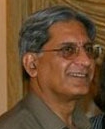
aitzaz-ahsan.jpgHe is Washington’s ‘back up man’ in Pakistan. He can replace Benazir Bhutto in case she tumbles on the way due to any reason. Aitzaz Ahsan is the next horse Washington and the CIA are betting their future on in Pakistan.

He has so far shown the required defiance to President Musharraf and is well projected within the U.S. administration as well as in the media and liberal society in the country.

Why a ‘back up man’ for Mrs. Bhutto is becoming a necessity for Washington?

The answer is simple.

Mr. Musharraf has scuttled the “conspiracy” to throw him out of power, in which at least the U.S. media played a crucial role. Washington also exerted unbelievable pressures to ease Mr. Musharraf’s supposed replacement, Benazir Bhutto, in power in Islamabad. But that entire plan has been scuttled. And Mr. Musharraf is in fact consolidating his power. He might even end up having enough majority in the next parliament to change the constitution and transform Pakistan into a presidential democracy. From the American standpoint, Musharraf needs to be restrained, since his ouster does not seem possible for the time being.

Mr. Ahsan’s ambitions have extremely offended Mrs. Bhutto and her frustration is so obvious that it is even being noted on the streets. Mr. Ahsan remains part of PPP but the party leader continues to feel seriously threatened by him as he is now the next U.S. candidate to replace her in case she fails to deliver. [complete article]

Can a democrat like Mr. Aitzaz Ahsan answer these questions?

Mr. Aitzaz Ahsan, a Pakistani politician turned rights activist, is successfully pandering to an American audience that knows zilch about Pakistan, or about Mr. Ahsan’s own history. He can wow the Americans all he wants, but only we, the ordinary Pakistanis, know Mr. Ahsan’s undemocratic history within his own political party. Welcome again to Pakistan, where the hero-of-the-month is just another feudal politician fighting for his pie. [complete article]

See also, Anti-Bhutto army factions behind murder? (B. Raman), Sharif’s party to boycott elections (AP), and Nawaz Sharif holds Musharraf responsible for Bhutto killing (Indo-Asian News Service).

Facebooktwittermail

OPINION & EDITOR’S COMMENT: What can’t be forgotten

Did Bush watch the torture tapes?

… the sequence of statements out of the White House is extremely revealing. It started with firm denials, then went silent and then pulled back rather sharply to a “President Bush has no present recollection of having seen the tapes.” This is a formulation frequently used to avoid perjury charges, a sort of way of saying “no” without really saying “no.” In between these statements, two more things unfolded that have a bearing on the question.

The New York Times squarely placed four White House lawyers in the middle of the decision about whether to destroy the tapes—Alberto Gonzales, David Addington, John Bellinger and Harriet Miers. It also reported that at least one of them was strongly advocating destruction. Suspicion immediately fell on the principle mover in support of torture, David Addington.

Second, John Kiriakou clarified his statements about the purpose for which the tapes were made. It was to brief higher ups about the process of the interrogation. Reports persist that one “higher-up” in particular had a special strong interest in knowing the details of the Abu Zubaydah case. His name is George W. Bush.

Are Bush’s denials that he has seen the torture tapes really credible? I don’t think so. [complete article]

See also, Operation stop talking (Laura Rozen).

Editor’s Comment — “I have no recollection” — a non-denial denial — is most likely a lie that could be pried open with just a few questions.

President of the United States is a unique job that includes all sorts of unusual tasks that nevertheless are quite forgettable. “In your daily intelligence briefings, do you remember being warned about imminent attacks by al Qaeda?” How could a president be expected to remember every little detail from every single briefing?

But interrogation videos — images of a man struggling against the sensation of drowning? How much time could George Bush spend watching videos of what amount to mock executions before the routine became something less than memorable? The question isn’t whether Bush remembers seeing videos of suspects being waterboarded; it is whether he believes this is something he could forget.

If the president is less than certain that such a sight is something he would never forget, then he’s apparently a sociopath. If on the other hand he can attest to the fact that, like most normal people, he would find such images unforgettable, then this is one instance where there is no reason for the president to be telling us about the power or frailty of his memory. If the president really has no recollection of seeing videos of waterboarding, he should be able to go one step further and say emphatically that he did not watch the videos. If he can’t deny watching the videos, it’s not because there are limits to his powers of recollection but because he refuses to shine any light on an indelible memory.

“I have no recollection” is not really a non-denial denial. It’s a simple lie.

Facebooktwittermail

NEWS & FEATURE: A struggle rooted in land

A West Bank struggle rooted in land

From his hilltop farm, Daoud Nassar can see the sun rise over the Jordan Valley and set in the Mediterranean, an arc that spans the territorial breadth of his people’s conflict with Israel.

He also can see the neighbors whose rival claim has drawn the idyllic 100-acre plot deeply into that fight.

The only large Palestinian property to occupy high ground in this part of the West Bank, it is ringed by expanding Jewish settlements and coveted by the one perched on the nearest hill, 800 yards away.

For nearly a generation, Nassar and his family have stood their ground, unarmed, against pistol-toting settlers who have barricaded the farm’s dirt lanes, uprooted its olive groves, tried to bulldoze their own roads and disabled a tractor and a rooftop water tank.

The family has rebuffed anonymous Jewish callers offering blank checks for the property, and spent $145,000 in a marathon legal battle to keep the land that Nassar’s grandfather, a Christian from Lebanon, bought in 1916 when it was part of the Ottoman Empire. For more than 90 years, Nassars have worked the land, growing almonds, figs, grapes, olives, pears and pomegranates.

The feuding over these stark hills, ridges and valleys south and east of Bethlehem, a 27-square-mile region that includes the Nassar farm, is emblematic of the decades-old Israeli-Palestinian conflict — a struggle rooted in land. [complete article]

Mideast talks already tangled a month after Annapolis summit

US and Egyptian officials have criticized Israel’s move to renew building in Har Homa so soon after Annapolis, indicating that it undermines trust between the parties.

Mr. Olmert’s government has gone on the defensive about the decision. On the one hand, it says that the decision to build was made by a lower-ranking official in the Housing Ministry, which issued the tender without Olmert’s knowledge. On the other, it says that it has no intention of forfeiting the land of Har Homa to the Palestinians.

“In our view, this is not part of the problem with the Palestinians, we are building in the neighborhoods inside Jerusalem, we are not building new settlements,” Defense Minister Ehud Barak said at a meeting with Egyptian President Hosni Mubarek. “The Palestinians are far from implementing phase one of the road map, which calls for rooting out the terror infrastructure.”

Palestinian officials say that the building in Har Homa is going to be at the top of the agenda for Thursday’s meeting between Olmert and Abbas. Palestinians have demanded a cessation to all settlement building as a requisite step toward rebuilding expectations for peace. [complete article]

Facebooktwittermail

NEWS & EDITOR’S COMMENT: Bhutto assassination

Bhutto: “She has been martyred”

benazir_bhutto.jpgJust days before parliamentary polls in Pakistan, leading Prime Ministerial contender and anti terrorism crusader Benazir Bhutto was shot dead during an election rally in the garrison city of Rawalpindi, near Islamabad. “She has been martyred,” said party official Rehman Malik. The Associated Press, citing Malik, reported that Bhutto was shot in the neck and the chest before the gunman blew himself up. At least 20 bystanders were killed in the blast. Bhutto was rushed to a hospital But, at 6:16 p.m. Pakistan time, she was declared dead.

“How can somebody who can shoot her get so close to her with all the so-called security?” said a distraught Husain Haqqani, a former top aide to Bhutto, shortly after news of her death flashed around the world. Haqqani, who served as a spokesman and top aide to Bhutto for more than a decade, blamed Pakistani security, either through neglect or complicity, in her assassination. “This is the security establishment, which has always wanted her out,” he said through tears. [complete article]

Editor’s Comment — The evidence here certainly places the security establishment — and thus Musharraf — under suspicion. The use of explosives looks like an effort to obscure who might be responsible — both by means of killing witnesses and by providing the media and government officials with a label they have no hesitation in using: suicide bombing. To call it a suicide bombing is to instantly place this event within the narrative of Islamic extremism.

Back in November, after her return to Pakistan, Bhutto wrote:

It has now been more than two weeks since the horrific assassination attempt against me and the police have still not filed my complaint. They filed their own report without taking statements from eyewitnesses on the truck targeted for the terrorist attack which resulted in the death of more than 158 of my supporters and security guards.

Soon thereafter, I was asked by authorities not to travel in cars with tinted windows — which protected me from identification by terrorists — or travel with privately armed guards.

I began to feel the net was being tightened around me when police security outside my home in Karachi was reduced, even as I was told that other assassination plots were in the offing.

If Musharraf now postpones the upcoming election or bans political rallies, what will be the Bush administration’s response? Another lame statement about looking forward to Pakistan’s return to the democratic path? One thing we can reasonably assume is that neither from Washington nor any other Western capital are we now likely to hear any demands for an independent inquiry into Bhutto’s death. In November Islamabad adamantly rejected any assistance from forensic teams of the FBI and Scotland Yard. Will similar offers now even be made?

Facebooktwittermail

NEWS: The existential threat to Iran

U.S. institute: Israel could survive nuclear war

If a nuclear war between Israel and Iran were to break out 16-20 million Iranians would lose their lives – as opposed to 200,000-800,000 Israelis, according to a report recently published by the Washington-based Center for Strategic and International Studies (CSIS), which is headed by Anthony H. Cordesman, formerly an analyst for the US Department of Defense. The document, which is largely theoretical due to the lack of verified knowledge in some areas – specifically in terms of Israel’s nuclear capability – paints various scenarios and attempts to predict the strategies of regional powers, as well as the US.

The report assesses that a nuclear war would last approximately three weeks and ultimately end with the annihilation of Iran, due to Israel’s alleged possession of weapons with a far larger yield. Israel, according to the assessment, would have a larger chance of survival. The report does not attempt to predict how many deaths would eventually be caused by possible nuclear fallout. [complete article]

See also, Iran needs no uranium enrichment: Russia’s Lavrov (Reuters) and Iran plans 19 more nuclear plants (AP).

Facebooktwittermail

OPINION: Obama’s American revolution

Obama’s American revolution

Why is Obama so different from the other presidential candidates, and why could he make such a large difference internationally? After all, in foreign policy matters, the next president’s room for manoeuvre will be very small. He (or she) will have to stay in Iraq, engage in the Israel-Palestine conflict on the side of Israel, confront a tougher Russia, deal with an ever more ambitious China, and face the challenge of global warming.

If Obama can make a difference, it is not because of his policy choices, but because of what he is. The very moment he appears on the world’s television screens, victorious and smiling, America’s image and soft power would experience something like a Copernican revolution.

Think of the impression his election would make, not only in Africa but in Asia, the Middle East, and even Europe. With its rise to global supremacy, America had become the incarnation of the west, and the west was seen as white. Power in America shifted first from the east coast to the west coast, and then to the south. But if a shift across America’s racial divide is not truly revolutionary, then what is? [complete article]

Facebooktwittermail

NEWS: Talking to the Taliban

Britain in secret talks with the Taliban

Agents from MI6 entered secret talks with Taliban leaders despite Gordon Brown’s pledge that Britain would not negotiate with terrorists, The Daily Telegraph can disclose.

Officers from the Secret Intelligence Service staged discussions, known as “jirgas”, with senior insurgents on several occasions over the summer.

An intelligence source said: “The SIS officers were understood to have sought peace directly with the Taliban with them coming across as some sort of armed militia. The British would also provide ‘mentoring’ for the Taliban.”

The disclosure comes only a fortnight after the Prime Minister told the House of Commons: “We will not enter into any negotiations with these people.” [complete article]

Diplomats face expulsion from Afghanistan for ‘talking to the Taleban’

The United Nations is trying to reverse a decision by the Afghan government to expel two British and Irish diplomats who have been accused of negotiating with the Taleban.

Michael Semple, acting European Union mission head, and Mervyn Patterson, a senior UN official, are due to be deported tomorrow after the President’s office deemed that “their presence was detrimental to the national security of the country”. [complete article]

Murky world of Afghan negotiations

It now seems unlikely that frantic diplomatic efforts will prevent two European representatives from being expelled from Afghanistan.

Michael Semple, the acting head of the European Union mission, and Mervyn Patterson, who is British and is the UN’s political affairs officer, were in Helmand province talking to tribal elders.

But despite one arm of the Afghan government knowing about their trip, another arm appeared not to, and they were accused by a provincial official to talking to the Taleban. [complete article]

Facebooktwittermail