Category Archives: Analysis

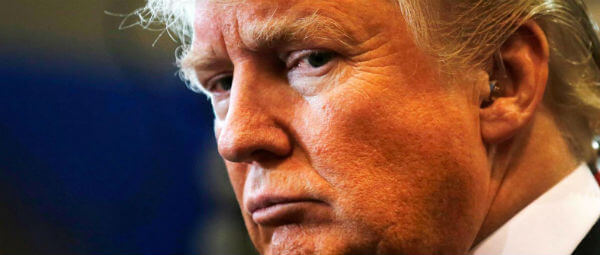
As America sleeps, Donald Trump seethes on Twitter

The New York Times reports: The tweets started around 3:20 a.m. on Friday. Inside Trump Tower, a restless figure stirred in the predawn darkness, nursing his grievances and grabbing a device that often lands him in hot water.

On his Android phone, Donald J. Trump began to tap out bursts of digital fury: He mocked Alicia Machado, a former Miss Universe and a popular Latin American actress, as a “con,” the “worst” and “disgusting.”

In a final flourish, before the sun came up, the Republican presidential nominee claimed — without offering any evidence — that she had appeared in a “sex tape.”

The tirade fit a pattern. It is when Mr. Trump is alone with his thoughts, and untethered from his campaign staff, that he has seemed to commit his most self-destructive acts.

“There has always been this dangerous part of him that will go too far and do something that backfires,” said Michael D’Antonio, the author of “The Truth About Trump,” a new biography of the real estate mogul.

“His worst impulses,” he added, “are self-defeating.” [Continue reading…]

Facebooktwittermail

The new star of Germany’s far right

Thomas Meaney writes: For decades, the German far right has been a limited force, with easily recognizable supporters—nicotine-stained ex-Nazis in the sixties and seventies, leather-clad skinheads in the eighties and nineties. [Alternative für Deutschland leader, Frauke] Petry is something different, a disarmingly wholesome figure — a former businesswoman with a Ph.D. in chemistry and four children from her marriage to a Lutheran pastor. During a month I spent with her this summer as she drove around Germany giving speeches, she drew connections between politics and laboratory science, sprinkled her speech with Latin phrases, and steered discussions about German culture toward the cantatas of Bach.

Petry is not a gifted orator. Her speeches tend to be dull, with ornate sentences and technocratic talking points, and she is more comfortable citing economic studies than discussing the lives of ordinary people. Her manner belies the extremism of the AfD’s views. At the start of this year, Petry said that, in the face of the recent influx of refugees (many of them fleeing the war in Syria), the police might have to shoot people crossing the border illegally. In April, the Party said that head scarves should be banned in schools and universities, and minarets prohibited. Party members called for a referendum on whether to leave the euro; for the expulsion of Allied troops, who have been stationed in Germany since 1945; and for school curriculums that focus more on “positive, identity-uplifting” episodes in German history and less on Nazi crimes. Most contentious of all was the declaration “Islam does not belong in Germany.”

By American standards, especially in the age of Donald Trump, contemporary German politics is decorous and understated. But although Petry’s crisp style is in many ways the opposite of Trump’s, her rise has similarities to his. She, too, has come late to politics and relishes her outsider status. Like him, she often works by insinuation, fanning right-wing conspiracy theories not merely to stir up grievances but to bind members together with a sense of shared beliefs. Like him, she has been accused of financial improprieties. Like him, she castigates the media for liberal bias but also thrives on media attention. Petry and her colleagues have mastered the art of dominating the news cycle, to the point where a visitor to Germany listening to the radio or reading the newspapers could be forgiven for thinking that the AfD is the party in power. [Continue reading…]

Facebooktwittermail

U.S. military is building a $100 million drone base in Africa

Nick Turse reports: From high above, Agadez almost blends into the cocoa-colored wasteland that surrounds it. Only when you descend farther can you make out a city that curves around an airfield before fading into the desert. Once a nexus for camel caravans hauling tea and salt across the Sahara, Agadez is now a West African paradise for people smugglers and a way station for refugees and migrants intent on reaching Europe’s shores by any means necessary.

Africans fleeing unrest and poverty are not, however, the only foreigners making their way to this town in the center of Niger. U.S. military documents reveal new information about an American drone base under construction on the outskirts of the city. The long-planned project — considered the most important U.S. military construction effort in Africa, according to formerly secret files obtained by The Intercept through the Freedom of Information Act — is slated to cost $100 million, and is just one of a number of recent American military initiatives in the impoverished nation.

The base is the latest sign, experts say, of an ever-increasing emphasis on counterterror operations in the north and west of the continent. As the only country in the region willing to allow a U.S. base for MQ-9 Reapers — a newer, larger, and potentially more lethal model than the venerable Predator drone — Niger has positioned itself to be the key regional hub for U.S. military operations, with Agadez serving as the premier outpost for launching intelligence, surveillance, and reconnaissance missions against a plethora of terror groups. [Continue reading…]

Facebooktwittermail

Administration officials wonder: Why won’t Obama stand up to Putin?

The Daily Beast reports: Russia and Syria appeared to attack two more hospitals and a bakery in the already besieged eastern city of Aleppo on Wednesday, in an aggressive push to seize and starve the city — home to as many as 100,000 children — back into regime control.

So how will the Obama administration respond to an increasingly provocative Russia? For now, it won’t.

There is an unspoken understanding within the administration that despite the many provocations Russia has carried out in Syria, there will be no major American response, a position that increasingly is drawing the ire of top national security officials, three U.S. officials told The Daily Beast.

Adding to these officials’ frustration is that Russia’s aggression isn’t just contained to Syria. There is mounting evidence that Russia has been behind a series of computer hacks that intelligence officials believe are designed to meddle with U.S. elections in November.

Officials said they feared that the White House’s inaction could devolve into acquiescence in Syria, in Ukraine, and in cyberspace. On Wednesday, Syria’s ambassador to the United Nations reportedly laughed when asked about the hospital attack.

“Of course we are concerned about how far Russia will go,” one U.S. official explained to The Daily Beast. “And just as worrisome is what this is doing to U.S. credibility.”

Even members of the president’s party are speaking out on Capitol Hill about Russia’s seemingly unchecked aggression. [Continue reading…]

Facebooktwittermail

Russia’s brutal bombing of Aleppo may be calculated, and it may be working

Max Fisher writes: The effects of Russia’s bombing campaign in the Syrian city of Aleppo — destroying hospitals and schools, choking off basic supplies, and killing aid workers and hundreds of civilians over just days — raise a question: What could possibly motivate such brutality?

Observers attribute Russia’s bombing to recklessness, cruelty or Moscow’s desperate thrashing in what the White House has called a “quagmire.”

But many analysts take a different view: Russia and its Syrian government allies, they say, could be massacring Aleppo’s civilians as part of a calculated strategy, aimed beyond this one city.

The strategy, more about politics than advancing the battle lines, appears to be designed to pressure rebels to ally themselves with extremists, eroding the rebels’ legitimacy; give Russia veto power over any high-level diplomacy; and exhaust Syrian civilians who might otherwise support the opposition.

This approach could succeed even if pro-government forces never retake Aleppo. A yearlong siege of the city has not brought President Bashar al-Assad’s forces closer to victory. Too weak to win outright, they appear instead to be hedging, trying to weaken the rebels so that they cannot win either, and to ensure any final settlement would be more favorable for Moscow and its allies.

Though killing civilians often backfires in war, in this case it may be all too effective. [Continue reading…]

Facebooktwittermail

Russian hackers harassed journalists who were investigating Malaysia Airlines plane crash

The Washington Post reports: Russian government hackers began targeting a British citizen journalist in February 2015, eight months after he began posting evidence documenting alleged Russian government involvement in the shoot-down of a Malaysian jetliner over Ukraine.

And then in February 2016, a group that researchers suspect is a propaganda mouthpiece of the Russian government — CyberBerkut — defaced the home page of Eliot Higgins’s citizen journalism website, Bellingcat.com.

That same month, CyberBerkut hacked the email, iCloud and social media account of a Bellingcat researcher in Moscow, then posted online personal pictures, a passport scan, his girlfriend’s name and other private details.

Russia’s information operations against Bellingcat are a taste of what may be in store for other media organizations whose reports anger the Kremlin, said a cyber-research firm that has extensively documented the effort. [Continue reading…]

Facebooktwittermail

Trump’s debating problems

trump-frown

Charles M Blow writes: No one with an open mind and sound reason who witnessed the sniffing, sipping, scowling, raging, interrupting display of petulance and agitation that was Donald Trump’s debate performance on Monday could possibly argue that he won that debate or that he is the kind of person to whom we should entrust the presidency.

It appears that Trump thought it wise to wing it.

Katie Pavlich wrote Monday on the conservative site Townhall, “Trump didn’t take the conventional road of preparing for the debate and skipped mock debate practice altogether.”

Pavlich quoted the senior Trump campaign adviser Sarah Huckabee Sanders as saying:

“Donald Trump does what works best for him, and I think that is discussing the issues, studying the issues and frankly being himself. He’s not a poll-tested, scripted robot like Hillary Clinton. That’s a great contrast to have and one I think we are certainly excited to see tonight.”

Well, the robot won. And she did so because she had the discipline and forethought to properly prepare.

At one point during the debate, Trump said of Clinton:

“And I will tell you, you look at the inner cities — and I just left Detroit, and I just left Philadelphia, and I just — you know, you’ve seen me, I’ve been all over the place. You decided to stay home, and that’s O.K.”

But Clinton shot back:

“I think Donald just criticized me for preparing for this debate. And, yes, I did. And you know what else I prepared for? I prepared to be president. And I think that’s a good thing.”

The crowd applauded.

It takes a tremendous ego and a healthy dose of hubris to believe that you can simply bluster your way through a presidential debate, but if anyone thinks that way, it’s no surprise it’s the uniquely underqualified and overblown king of bragging and whining: Donald J. Trump. [Continue reading…]

The fact that Trump chose to wing it might be interpreted as meaning that competent guidance was on offer — he simply didn’t make use of it. The picture painted by the New York Times, however, is one in which the candidate was being lots of conflicting guidance.

Mr. Trump’s debate preparation was unconventional. Aides have introduced a lectern and encouraged him to participate in mock debates, but he has not embraced them, focusing mostly on conversations and discussions with advisers.

During the primaries, the group briefing him for debates was small and closely held. By the weekend before the debate on Monday at Hofstra University, there were nearly a dozen people preparing Mr. Trump, including the retired Army generals Michael Flynn and Keith Kellogg, neither of whom has experience in presidential debates.

There were early efforts to run a more standard form of general election debate-prep camp, led by Roger Ailes, the ousted Fox News chief, at Mr. Trump’s golf course in Bedminster, N.J. But Mr. Trump found it hard to focus during those meetings, according to multiple people briefed on the process who requested anonymity to discuss internal deliberations. That left Mr. Ailes, who at the time was deeply distracted by his removal from Fox and the news media reports surrounding it, discussing his own problems as well as recounting political war stories, according to two people present for the sessions.

Rudolph W. Giuliani, a former New York City mayor and a friend of Mr. Trump’s who has been traveling with him extensively, took over much of the preparation efforts by the end. But with Mr. Trump receiving so much conflicting advice in those sessions, he absorbed little of it.

Facebooktwittermail

Police brutality leads to thousands fewer calls to 911

The Atlantic reports: Black Americans are less likely to dial 911 immediately following, and for more than a year after the highly publicized assault or death of a black person at the hands of police. That’s the conclusion in “Police Violence and Citizen Crime Reporting in the Black Community,” a study to be published in October’s American Sociological Review, the official publication of the American Sociological Association.

Three sociologists — Matthew Desmond at Harvard, Andrew Papachristos at Yale, and David Kirk at Oxford — screened and analyzed over 1.1 million 911 calls made to Milwaukee’s emergency dispatch between March 1, 2004 and December 31, 2010. They isolated and further analyzed some 883,000 calls in which a crime was reported within city limits in black, Latino, and white neighborhoods where at least 65 percent of residents fit the race category, per 2000 Census data. They chose those dates in order to study what, if any, impact the brutal beating of Frank Jude by several police officers might have had on residents dialing 911 for help. The effect they found was significant.

“Police misconduct can powerfully suppress one of the most basic forms of civic engagement: calling 911 for matters of personal and public safety,” the authors wrote in the study. The author’s conclusions may also shed some light on the controversial “Ferguson effect,” that is, the idea that a rise in crime follows a high-profile incident of police brutality. [Continue reading…]

Facebooktwittermail

How Clausnitz in Saxony became shorthand for the ugly, xenophobic side of Germany

Takis Würger writes: I spent a month living in Clausnitz. I rented a guest room on a farm for eight euros a night.

One of the first village residents to speak with me was a refugee. Sitting on a bench in front of his home, he told me his story. He comes from a place full of forests and lakes, he said. Before the war, his father had worked at a paper factory, but he then went to the front and died there.

His mother fled with her son – making parts of the journey on foot and others in a horsecart. His mother carefully preserved a paper cornet as they fled that she had filled with a mixture of oatmeal and chocolate. She gave her son three spoonfuls of it each day.

His mother had no money to give to smugglers to ensure they would be taken to safety, so she gave them her wedding ring.

When the boy grew weak, she said to him: “We have to make it to Clausnitz.”

Today, that boy is 76 years old. He hasn’t set eyes on his home village of Hammermühle in Pomerania (in today’s Poland) since he fled 70 years ago. Hans-Peter Neitzke is a tall, upright man with a fisherman’s cap and blue overalls. He rented me my room.

When people learned one year ago that Syrian refugees would be coming to a village next to Clausnitz, his phone rang and a man told him he was collecting signatures against the refugees, Nietzke explains. “But I’m a refugee myself,” he told the man. [Continue reading…]

Facebooktwittermail

7 signs that China is serious about combatting climate change

Grist reports: Two years after President Obama and Chinese President Xi Jinping announced that their countries would work together to combat climate change, Republicans and conservatives in the U.S. continue to cite China’s rising carbon emissions as a reason not to bother cutting our own.

Earlier this month, Donald Trump’s economic advisor Stephen Moore claimed that limiting our carbon pollution is pointless because of China’s supposedly growing coal dependency. “Every time we shut down a coal plant in the U.S., China builds 10,” Moore told E&E News. “So how does that reduce global warming?”

Not only is Moore’s statement simply untrue, but the broader conservative theory behind it is badly outdated. China’s coal use and carbon emissions have dropped for the last two years. In 2015, China cut its coal use 3.7 percent and its emissions declined an estimated 1–2 percent, following similar decreases in 2014. [Continue reading…]

Facebooktwittermail

Russia aims to turn Aleppo into another Grozny

David Gardner writes: It looks as though Russia, having concluded that its Syrian and Iranian allies on the ground are unable to recapture rebel Aleppo, plans to raze it to the ground.

Moscow, whose nearly half century-long relationship with the Assad clan’s dictatorship has mainly been army-to-army, has had a year to conclude that the Syrian Arab Army has all but collapsed, and given way to a network of militias and private armies. A devastating assessment of the Assad army by a Russian military expert that appeared recently on a Kremlin-friendly outlet said “the Syrian armed forces have not conducted a single successful military offensive during the past year”, and echoed opposition claims they were basically running an extortion racket through a chain of sieges and network of thousands of checkpoints.

Unable to defeat an array of Sunni rebels, Russia has decided to destroy their civilian milieu on behalf of its Syrian ward, and drive them from the urban wasteland of what will constitute the perimeter of a rump Assad state in the coastal west of the country. All this amid the sort of double talk that enables Vitaly Churkin, the Russian envoy to the UN, to praise the Assad regime for its “admirable restraint”. Or, as Tacitus had it, “they make a desert and call it peace”. Will the world stand idly by in the face of this new Grozny, an extermination that will live in the annals of infamy? [Continue reading…]

The Washington Post reports: The two largest hospitals in the Syrian city of Aleppo were bombed Wednesday, knocking them out of service and worsening an already dire medical crisis in the besieged city, medical workers said.

Two patients were killed and three hospital staffers injured in the pre-dawn attacks, including a nurse and an ambulance driver, according to the Syrian American Medical Society, which runs hospitals in opposition-controlled areas of Syria.

Since a cease-fire collapsed last week, the rebel-held eastern portion of Aleppo has been subjected to what residents describe as the most intense bombardments yet of the five-year-old war, with waves of Syrian and Russian airstrikes sending sometimes hundreds of injured people streaming to the city’s few remaining hospitals in a day. [Continue reading…]

Facebooktwittermail

Don’t defeat ISIS, yet

Ramzy Mardini writes: A military push to recapture Mosul, Iraq’s second largest city, and the rest of Nineveh Province from the Islamic State is expected soon. Unfortunately, even if the campaign is successful, the liberation of Mosul will not stabilize the country. Nor will conquest resolve the underlying conditions that originally fueled the extremist insurgency.

Instead, the legacy of the Islamic State, or ISIS, will endure. Its rise and fall have altered the country’s society and politics in irreversible ways that threaten future cycles of conflict. Throughout history, victorious wars have often forged national identities, expanded state power and helped centralize political authority. But the war against the Islamic State is having the opposite effect: fragmentation.

In parts of Iraq recaptured from the militants where I’ve traveled, signs of any central authority are nonexistent. Instead, what has emerged from the conflict is a complex patchwork of ethnic, tribal and religious militias that claim fief over particular territories. [Continue reading…]

Facebooktwittermail

The once and future Mosul

Rasha al-Aqeedi writes: On August 30, General Joe Votel of the U.S. Central Command told Middle Eastern reporters via a video call from CENTCOM Tampa that coalition-backed Iraqi forces could take Mosul back from the Islamic State before the end of the year. “[A]s the Prime Minister has said, it’s his intention to try to get through Mosul by the end of the year. My assessment over the course of my visits is that they are on track to achieve that objective…. We are at the point here where we are now really into the heart of the caliphate,” Votel said. Coalition forces have already begun “shaping operations” in the outskirts of Mosul.

The liberation of the town where I was born and raised seems to be at hand. So why do I have such mixed feelings, looking on from Dubai these days, about what is likely to happen by year’s end? Because I fear that the effort to retake the town will destroy much of it, and because I am skeptical that a post-combat governance arrangement will be easy to put together. Most of all, I fear that other Iraqis and some select group of non-Iraqis who may have a hand in trying to control Mosul in 2017 may not understand what makes the place tick. Mosul is not just any city. It has its own character, wonders, and distempers. To govern it requires first that one really know it. The details matter, but, alas, details are often ignored.

The aftershocks of the U.S.-led invasion of Iraq included not least an overthrowing of the balance — or rather imbalance — of sectarian power that had characterized the country since the onset of its modern history. A minority of Sunnis governed a plurality if not an outright majority of Shi‘a. The invasion shifted that status quo almost immediately. In late April 2003, barely a month after the statue of Saddam Hussein was famously pulled from its pedestal in Baghdad, Iraqi Shi‘a marked the pilgrimage to Karbala. More than one million devotees marched toward their spiritual sanctuary in a ritual that had been suppressed by the Ba‘ath regime for decades. They carried colorful banners that bore names sacred to all Muslims: Fatima, Ali, and Hussein. My hometown of Mosul, like most Sunni-majority cities, observed the event with a mix of confusion and apprehension: Was the new Iraq a place that celebrated and implicitly acknowledged the ascent of a set of customs and beliefs foreign to Sunnis? [Continue reading…]

Facebooktwittermail

The ebbing of democracy in the Western Balkans

Judy Dempsey writes: A meeting of international donors, foundations, and multilateral funders opened in the Serbian capital Belgrade on September 21 amid growing concern from young grassroots and philanthropic organizations that the Western Balkans are drifting backward. And in a dangerous way.

It is a backwardness characterized by growing corruption, increasing intimidation of the media, and political elites across the region who pay lip service to reform.

With the EU now focused on ensuring security, controlling its external borders, and stemming the flow of migrants reaching Europe, the union is paying little attention to the negative trends taking place in its immediate backyard. The emerging message from the Balkan Donors Forum, spearheaded by the European Fund for the Balkans and the Open Society Foundations, was that donors and NGOs need to rethink their role in this part of Europe.

The decision by Britain in June 2016 to quit the EU has dealt a blow to reformers in the Western Balkan countries of Albania, Bosnia and Herzegovina, Kosovo, Macedonia, Montenegro, and Serbia. For reformers and those who support the region joining the EU, Brexit will mean a weaker Europe. Brexit also robs the EU of a strong advocate of further enlargement. [Continue reading…]

Facebooktwittermail

Shimon Peres obituary: Peacemaker or war criminal?

Jonathan Cook writes: Famously in the late 1990s, [Shimon] Peres [the last major figure in Israel’s founding generation, who died today, age 93] made the mistake of asking a Labour party convention whether he was a “loser”. The delegates roared back: “Yes”.

Over two decades, Peres lost five elections in which he stood for prime minister.

Although he served in the top job on two occasions, he never won a popular mandate.

He briefly took over from Rabin after the latter was felled in 1995 by an assassin’s bullet. He was also prime minister in an unusual rotation agreement with his Likud rival Yitzhak Shamir after neither secured a parliamentary majority in the 1984 election.

Unlike Rabin and Ariel Sharon, two figures of his generation who enjoyed greater political acclaim, Peres suffered in part because he had not first made a name for himself in the Israeli army, Ezrahi observed.

He was seen as more uninspiring technocrat than earthy warrior.

Even on Israel’s left, said Roni Ben Efrat, an Israeli political analyst and editor of the website Challenge, he was viewed as an opportunist.

“His real obsession was with his own celebrity and prestige,” she said. “What he lacked was political principle. There was an air about him of plotting behind everyone’s backs. He was certainly no Nelson Mandela.”

Rabin, who tussled regularly with Peres for leadership of the Labour party, called him an “inveterate schemer”.

With Rabin’s victory in 1992, Peres was appointed number two and returned to what he did best: backroom deals, in this case a peace track in Norway that led to the signing of the Oslo Accords in 1993.

When Rabin was assassinated two years later, it was assumed that Peres would romp home in the general election a short time later, riding a wave of sympathy over Rabin’s death.

Instead he lost to Likud’s Benjamin Netanyahu, who profited from the right’s campaign to discredit the peace process and its architects as “Oslo criminals”.

Peres would see out much of his remaining time in frontline politics providing a veneer of international respectability to right-wing Sharon governments through the second Intifada as they crushed the Palestinian leadership and built a steel and concrete barrier through the West Bank. [Continue reading…]

Anshel Pfeffer writes: Perhaps the final irony of Shimon Peres’ life was that his last act in the service of peace, remains secret and undocumented. As an octogenarian president, he observed the conventions of the ceremonial office and refrained from openly intervening in politics. That didn’t stop the commanders of the army and chiefs of the intelligence services turning to him for advice when they felt their political masters were dangerously wrong. Towards the end of his seven-year term, he was the secret leader of the faction within the defence establishment that successfully worked to block the plans of Netanyahu, the prime minister and the defence minister Ehud Barak to launch a military strike against Iran’s nuclear installations, before it could build an atomic bomb.

Ultimately he had to rely on the generals and spy chiefs to avert war. He never convinced ordinary Israelis to make the same leap of faith he had. [Continue reading…]

Facebooktwittermail

The extraordinary decoupling between economic growth and carbon pollution is happening

Quartz reports: Producing more stuff takes more energy. Using more energy means more pollution. That statement would once have seemed like common sense.

Because most of our energy has historically come from fossil fuels, rising economic growth has gone hand in hand with higher carbon emissions. But in 2014, something extraordinary happened. Globally, carbon emissions decoupled from GDP growth.

According to the International Energy Agency, energy-related CO2 emissions were flat that year, despite an increase of around 3% in global GDP. “This is the first time in at least 40 years that a halt or reduction in emissions has not been tied to an economic crisis,” the IEA said at the time. [Continue reading…]

Facebooktwittermail

Watching evolution happen in two lifetimes

Emily Singer writes: When Rosemary and Peter Grant first set foot on Daphne Major, a tiny island in the Galápagos archipelago, in 1973, they had no idea it would become a second home. The husband and wife team, now emeritus biology professors at Princeton University, were looking for a pristine environment in which to study evolution. They hoped that the various species of finches on the island would provide the perfect means for uncovering the factors that drive the formation of new species.

The diminutive island wasn’t a particularly hospitable place for the Grants to spend their winters. At less than one-hundredth the size of Manhattan, Daphne resembles the tip of a volcano rising from the sea. Visitors must leap off the boat onto the edge of a steep ring of land that surrounds a central crater. The island’s vegetation is sparse. Herbs, cactus bushes and low trees provide food for finches — small, medium and large ground finches, as well as cactus finches — and other birds. The Grants brought with them all the food and water they would need and cooked meals in a shallow cave sheltered by a tarp from the baking sun. They camped on Daphne’s one tiny flat spot, barely larger than a picnic table.

Though lacking in creature comforts, Daphne proved to be a fruitful choice. The Galápagos’ extreme climate — swinging between periods of severe drought and bountiful rain — furnished ample natural selection. Rainfall varied from a meter of rain in 1983 to none in 1985. A severe drought in 1977 killed off many of Daphne’s finches, setting the stage for the Grants’ first major discovery. During the dry spell, large seeds became more plentiful than small ones. Birds with bigger beaks were more successful at cracking the large seeds. As a result, large finches and their offspring triumphed during the drought, triggering a lasting increase in the birds’ average size. The Grants had observed evolution in action.

That striking finding launched a prolific career for the pair. They visited Daphne for several months each year from 1973 to 2012, sometimes bringing their daughters. Over the course of their four-decade tenure, the couple tagged roughly 20,000 birds spanning at least eight generations. (The longest-lived bird on the Grants’ watch survived a whopping 17 years.) They tracked almost every mating and its offspring, creating large, multigenerational pedigrees for different finch species. They took blood samples and recorded the finches’ songs, which allowed them to track genetics and other factors long after the birds themselves died. They have confirmed some of Darwin’s most basic predictions and have earned a variety of prestigious science awards, including the Kyoto Prize in 2009.

Now nearly 80, the couple have slowed their visits to the Galápagos. These days, they are most excited about applying genomic tools to the data they collected. They are collaborating with other scientists to find the genetic variants that drove the changes in beak size and shape that they tracked over the past 40 years. Quanta Magazine spoke with the Grants about their time on Daphne; an edited and condensed version of the conversation follows. [Continue reading…]

Facebooktwittermail

