Category Archives: Analysis

Will Fallujah put an end to ISIS in Iraq?

Al Jazeera reports: As the Iraqi army, backed by a coalition of militias and forces, makes slow advances toward Fallujah, one of the most circulating theories suggests that if the Islamic State group (Daesh) (ISIL, also known as ISIS) loses Fallujah to the army, then it is finished off in Iraq.

Al Jazeera talks to Iraqi scholar, Zaid al-Ali, author of the book The Struggle for Iraq’s Future, on why the battle for Fallujah matters in the larger context of the war on Daesh in Iraq, the human rights abuses committed by the militias accompanying the Iraq army and best approach to end Daesh’s rule of terror in the country. [Continue reading…]

Facebooktwittermail

The dangerous new age of global autarky

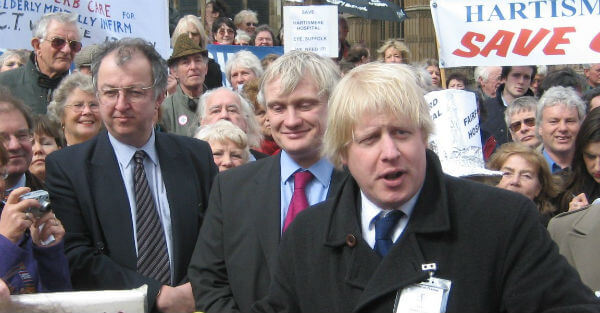
British Conservative MP and Brexit supporter, Boris Johnson

British Conservative MP and Brexit supporter, Boris Johnson

Catherine Rampell writes: The age of autarky is again upon us.

Britain, in two weeks, will vote on whether to leave the European Union, that great postwar project to promote both peace and prosperity.

No matter that economists have almost uniformly warned that a possible “Brexit” would devastate the British economy, with an estimated cost of approximately $6,000 per British household. Disregard news that markets are already freaking out about the consequences for the pound and the overall financial sector; that high-skilled talent has become skittish about moving to the British isles, whose relationship to the E.U. in a post-Brexit world is as yet unknown; and that foreign clients have begun suspending or delaying contracts with British companies.

Who cares that these small islands, so dependent on the continent for both what they consume and where they send their exports, are putting so much economic activity at risk?

Many Brits want to withdraw, to show they’re separate and politically self-determined and not really into all this expensive pan-ethnic, pan-European unity rubbish. So withdraw they might. Recent polls show the “leave” and “stay” contingents about evenly split.

Financially self-defeating as it may seem, the British are hardly alone in their flirtation with economic, political and cultural separatism. [Continue reading…]

Facebooktwittermail

The next Balkan wars

Timothy Less writes: After some years of peace, the western Balkans are again descending into instability. Across the region, people are taking to the streets, demanding the resignation of governments. Thousands are fleeing abroad in search of jobs and opportunities. A violent strand of Wahhabism is taking hold among the region’s Muslim population. Perhaps most worryingly of all, the threat of disintegration is returning, as malcontent minorities try to divide their states.

Bosnia has long been the most dysfunctional state in the region, wasted by civil war in the 1990s and afflicted by ethnic divisions ever since. The Serbs and Croats have never abandoned their goal of separation. Milorad Dodik, the president of Republika Srpska (Bosnia’s Serbian “entity”), is being squeezed by political rivals at home and investigated by police in Sarajevo for alleged money laundering. To shore up his position, he has threatened a referendum on independence for Republika Srpska, scheduled for 2018.

Not far behind is Kosovo, an impoverished plateau in the Šar Mountains. It is unrecognised by half of the world, run by a corrupt elite and saddled with an embittered Serb minority. After years of resistance, Kosovo’s Serbs have recently extracted the right to territorial autonomy from the country’s notional EU supervisors. This has provoked a ferocious backlash from Albanian nationalists, who have attacked the parliament and held a series of violent street demonstrations. [Continue reading…]

Facebooktwittermail

Empty stomachs, empty words: Syria’s children starve as America looks on

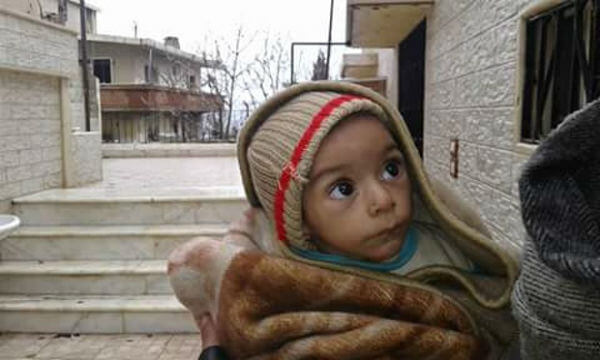
starving-child-madaya

In an editorial, the Washington Post says: It’s been nearly six months since the U.N. Security Council passed a resolution demanding an end to the bombing and shelling of civilian areas in Syria and calling for immediate humanitarian access to besieged areas. It’s been four months since Secretary of State John F. Kerry described the sieges as a “castastrophe” of a dimension unseen since World War II and said that “all parties to the conflict have a duty to facilitate humanitarian access to Syrians in desperate need.”

Three weeks ago, a diplomatic conference on Syria joined by Mr. Kerry issued a statement saying it “insisted on concrete steps to enable the provision of urgent humanitarian deliveries,” and warning that if none were taken, it would support airdrops to besieged towns beginning on June 1.

By Monday, there still had been no food deliveries to Darayya in the Damascus suburbs, the al-Waer district of Homs or several other of the 19 besieged areas, with a population of more than 500,000, identified by the United Nations. Nor had there been airdrops. None have been organized, and U.N. officials say none are likely in the coming days. Another deadline has been blown, another red line crossed — and children in the besieged towns are still starving. [Continue reading…]

Facebooktwittermail

UN includes — then removes — Saudi coalition from list of child violators in Yemen

At Human Rights Watch, Kristine Beckerle writes: Every year, the United Nations secretary-general releases a “list of shame” of government forces and armed groups that have committed grave violations against children during armed conflict. This year, the Saudi-led coalition fighting in Yemen was listed for the first time, identified as being responsible for killing and maiming children in Yemen and for attacks on schools and hospitals.

There was a six-fold increase in the killing and maiming of children in Yemen during 2015, with at least 785 children killed and 1,168 injured, according to the secretary-general’s report. The Saudi-led coalition was responsible for 60 percent of these child deaths and injuries.

The UN recorded 101 attacks on schools and hospitals in Yemen, double the number of attacks recorded in 2014. The Saudi-led coalition was responsible for nearly half of these attacks. Almost all caused the partial or complete destruction of facilities. [Continue reading…]

The Associated Press reports: Following a vehement protest from Saudi Arabia, Secretary-General Ban Ki-moon on Monday removed the Saudi-led coalition fighting Shiite rebels in Yemen from a list of government forces that committed grave violations against children last year, pending a joint review of cases.

Saudi Arabia’s U.N. Ambassador Abdallah Al-Mouallimi insisted “the removal is unconditional and irreversible,” explaining that the government has no problem with a review and is confident it will conclude that the coalition was “wrongly placed on the list.”

Earlier, he asked for an immediate correction saying Saudi Arabia’s inclusion on the list was based on “inaccurate and incomplete” information. [Continue reading…]

Facebooktwittermail

Rebecca Gordon: Justice for torturers?

If you happen to be a potential American war criminal, you’ve had a few banner weeks.  On May 9th, Defense Secretary Ashton Carter presented former Secretary of State and National Security Adviser Henry Kissinger with the Department of Defense Distinguished Public Service Award, that institution’s highest honorary award for private citizens.”  In bestowing it on the 92-year-old who is evidently still consulting for the Pentagon, he offered this praise: “While his contributions are far from complete, we are now beginning to appreciate what his service has provided our country, how it has changed the way we think about strategy, and how he has helped provide greater security for our citizens and people around the world.”

Certainly people “around the world” will remember the “greater security” offered by the man who, relaying an order from President Richard Nixon for a “massive” secret bombing campaign in Cambodia, used a line that may almost be the definition of a war crime: “Anything that flies on anything that moves.”  The result: half a million tons of bombs dropped on that country between 1969 and 1973 and at least 100,000 dead civilians.  And that’s just to start down the well-cratered road to the millions of dead he undoubtedly has some responsibility for.  Public service indeed.

Meanwhile, speaking of American crimes in the Vietnam era, former Nebraska Senator Bob Kerrey, who ran for president of the U.S. and then became the president of the New School in New York City, was just appointed to “lead” Fulbright University Vietnam, the first private American-backed school there.  Its opening was announced by President Obama on his recent visit to that country.  Only one small problem: we already know of some children who won’t be able to apply for admission.  I’m thinking of the progeny-who-never-were of the 13 children killed by a team of U.S. SEALs under Kerrey’s command and on his orders in South Vietnam in 1969 (along with a pregnant woman, and an elderly couple whose three grandchildren were stabbed to death by the raiders) — all of whom were reported at the time as dead Vietcong guerillas.

It seems that if you are a distinguished citizen of the most exceptional country on the planet, even war crimes have their rewards.  Consider, for instance, the millions of dollars that were paid for memoirs by top Bush administration officials responsible for creating an American offshore torture regime at CIA “black sites” around the world.  Must-reads all!  With that in mind, turn to TomDispatch regular Rebecca Gordon, author most recently of American Nuremberg: The U.S. Officials Who Should Stand Trial for Post-9/11 War Crimes, to consider what “justice” for such figures might look like in a different and better world. Tom Engelhardt 

Crimes of the War on Terror
Should George Bush, Dick Cheney, and others be jailed?
By Rebecca Gordon

“The cold was terrible but the screams were worse,” Sara Mendez told the BBC. “The screams of those who were being tortured were the first thing you heard and they made you shiver. That’s why there was a radio blasting day and night.”

In the 1970s, Mendez was a young Uruguayan teacher with leftist leanings. In 1973, when the military seized power in her country (a few months before General Augusto Pinochet’s more famous coup in Chile), Mendez fled to Argentina. She lived there in safety until that country suffered its own coup in 1976. That July, a joint Uruguayan-Argentine military commando group kidnapped her in Buenos Aires and deposited her at Automotores Orletti, a former auto repair shop that would become infamous as a torture site and paramilitary command center. There she was indeed tortured, and there, too, her torturers stole her 20-day-old baby, Simón, giving him to a policeman’s family to raise.

Continue reading

Facebooktwittermail

How Republicans swallowed Donald Trump’s political poison

Rick Wilson, a national Republican political strategist, in an open letter to fellow Republicans, writes: Imagine it’s the Fall of this year and you’re a U.S. House or Senate candidate in a swing district or state. Your Democratic opponent is running a low-risk campaign, having pivoted to the slightly-center-left with aplomb. Regardless of their actual beliefs, they’ve got their masks bolted on tight, staying relentlessly on message as technocratic middle-of-the-lane moderates. Barack Obama’s approval numbers keep creeping higher and higher as a kind of “at least he’s not crazy or obviously corrupt” vibe sets in with the public. It makes your “Obamacare, Benghazi, tranny bathrooms” message cluster feel less promising than it did last year when you were planning this run, doesn’t it?

Your pollsters and strategists are hunting for a message and a tone where you can capture the anger and unrest of the Trump voters without becoming Trump-like, because no matter who you are, you’re not Donald Trump. You don’t have the built-in pad of celebrity and reality-television brand image. You don’t have the weird media dynamic where the spectacle of Trump’s shitshow du jour seems to erase yesterday’s insanity with a new hot mess. To your credit, you’re also not utterly insane and suffering from political Tourtte’s syndrome. I hate to tell you this, but it’s not working.

When you endorsed him, you bought all the problems Trump has with the voters and none of the assets. That’s why you’re awake at night, staring at the ceiling wondering what the madman will tweet next. You’ve had a tough summer, with endless questions from the press in your not-too-conservative state. Every time he opens his mouth, you’re flooded with questions. You wake up every day trying to stay on your message, but each morning your guts get watery when the Google alert with “your name + Donald Trump” pops on your iPhone. It’s why you can’t go on your Twitter or Facebook or do town hall meetings; because the whole election is about Trump, not you.

The resources you need from the donor community are a bright spot, because they’re certainly not giving the money to Mr. Self Funder Billionaire, but you’re having to spend it basically as it comes in to defend yourself. Your opponent and their allied SuperPACs are pounding you with media linking you at the hip with Trump. The themes are easy to predict; “Donald Trump says Mexicans are rapists…and Candidate X still backs him…100%” is the core script. Some of the connections are tenuous, but it doesn’t matter. All because you said the fateful words, “I support Donald Trump.”

I get it. You were terrified of his online horde of low-information whackjobs, neo-Nazi trolls, red-hat jackasses and their endless, febrile demands that you worship at the foot of Agent Orange. Hell, you’re a politician. You want to be loved. He was beating all the people you liked and respected, one after another. The media kept making him the spotlight, the hot focus of attention and you wanted some of that mojo, didn’t you? Bad call.

You see it in your polling, every day. Trump’s poison brand has splashed over on you, like the reek of some political sewage you can’t wash off. [Continue reading…]

Facebooktwittermail

Chomsky’s outdated view of American power

In a review of Noam Chomsky latest book, Who Rules the World?, Kenneth Roth writes: Chomsky’s book is not an objective account of the past. It is a polemic designed to awaken Americans from complacency. America, in his view, must be reined in, and he makes the case with verve and self-confident assertion, even if factual details are sometimes selective or scarce.

Yet Who Rules the World? is also an infuriating book because it is so partisan that it leaves the reader convinced not of his insights but of the need to hear the other side. It doesn’t help that the book is a collection of previously published essays with no effort to trim the repetitive points that pop up in chapter after chapter. Nor was much attempt made to update earlier chapters in light of later events. The Iranian nuclear accord and the Paris climate deal are mentioned only toward the end of the book, even though the issues of Iran’s nuclear program and climate change appear in earlier chapters.

At times Chomsky’s book suffers from simple sloppiness. For example, he reports that “the Obama administration considered reviving military commissions” on Guantánamo when in fact these commissions have been operating there for most of President Barack Obama’s eight years in office. And in certain places it is simply confused, as when Chomsky quotes from a review by Jessica Mathews in these pages and implies that she subscribes to the view that America advances “universal principles” rather than “national interests,” when in fact she was criticizing that perspective as part of her negative review of a book by Bret Stephens.

In some respects, Chomsky’s preoccupation with American power seems out of date because the limits of American power have become so apparent. When we ask “Who rules the world?” and take account of Syrian atrocities, the emergence of the Islamic State, or the mass displacement of refugees, the answer is less likely to be the American superpower than no one. Obama’s foreign policy has been far more about recognizing the limits of US military power than the exercise of that power, but this merits barely a mention by Chomsky. His America is the one of military adventure — the Vietnam War, the Bay of Pigs, the Central American conflicts of the 1980s, the 2003 invasion of Iraq, the potentially suicidal recklessness of the nuclear arms race.

Chomsky’s selective use of history limits his persuasiveness. He blames Middle East turmoil, for example, largely on the World War I-era Sykes-Picot agreement that divided the former Ottoman Empire among British and French colonial powers. He’s right that the borders were drawn arbitrarily, and that the multiethnic and multiconfessional states they produced are difficult to govern, but is that really an adequate explanation of the region’s current turmoil? President George W. Bush’s invasion of Iraq fits his thesis of American malevolence, and the terrible human costs of the war get mentioned, but Syrian President Bashar al-Assad’s decision to fight his country’s civil war by targeting civilians in opposition-held areas, killing hundreds of thousands and setting off the flight of several million refugees, does not. Nor does Russia’s decision to back Assad’s murderous shredding of the Geneva Conventions, since Chomsky’s focus is America’s contribution to global suffering, not Vladimir Putin’s.

Still, it is useful to read Chomsky because he does undermine the facile if comforting myths that are often used to justify US action abroad — the distinction between, as Chomsky puts it, “what we stand for” and “what we do.” His views are held not only by American critics on the left but also by many people around the world who are more likely to think of themselves as targeted rather than protected by US military power. [Continue reading…]

Facebooktwittermail

In a traumatised Netherlands, faith in the EU is plummeting

Joris Luyendijk writes: Once a beacon of progressive politics, the Netherlands today is a traumatised, angry and deeply confused nation. Support for immigration and the European project are at all-time lows. Synagogues and Jewish schools need police protection from homegrown jihadists, and freedom of expression is under serious pressure. Leading pundits and comedians incite hatred against Muslims in much the same way that antisemites rage against “the Jews”.

It seems a long time since “Dutch” was synonymous with tolerance. A founding member of the European Union, the Netherlands developed from the 1970s onwards into a laboratory for social and cultural change, boldly pioneering the legalisation of prostitution, soft drugs, euthanasia and gay marriage.

Those were the days when Dutch politicians and opinion-makers would refer to the Netherlands, without any apparent irony, as a “gidsland”, or “guide country”: a small nation leading by example. Its proudest moment probably came in June 1988 when an ethnically mixed team of Dutch footballers won the European Championships, beating the all-white teams of arch-rival Germany and then Russia. It felt like the ultimate vindication of multiculturalism.

Fast-forward 28 years, and heading the polls today is Geert Wilders’ PVV or Freedom party. Elected “politician of the year 2015”, Wilders is the sole member of the party he founded, ruling over it as undemocratically as the Arab dictators he so despises. He wants the Netherlands to drop the euro and leave the EU. Like Donald Trump he demands an end to all immigration from Islamic countries. A typical Wilders tweet: “As long as we have ‘leaders’ such as [Dutch prime minister] Rutte, Merkel, Obama and Cameron denying Islam and terror are one and the same, there will be more terrorist attacks.”

Of course there was racism and intolerance in the Netherlands during the 70s, 80s and 90s, too, and the country of old has not entirely disappeared. A slim majority continues to vote for pro-EU parties that abhor discrimination against Muslims. The popular mayor of Rotterdam, Ahmed Aboutaleb, is openly and proudly Muslim. The speaker of parliament, Khadija Arib, is of Moroccan descent; and in 2007 Dutch readers voted the book The House of the Mosque by Iranian-born Kader Abdolah to be the second “best Dutch book ever”.

Yet the influence of the PVV is widely felt, particularly because the steadily growing far-left Socialist party shares many of its views on the EU. And with every new terrorist attack, wave of refugees or expensive euro bailout, the forces of regression grow stronger, both on the far right and the far left. [Continue reading…]

Facebooktwittermail

How China fell off the miracle path

Ruchir Sharma writes: For years now, Donald J. Trump has been sounding the alarm on China, calling it an economic bully that has been “eating our lunch.” The crux of Mr. Trump’s attack is that Beijing manipulates its currency to keep it cheap and give Chinese exports an unfair advantage. But that narrative is so last decade. China is now a threat to the United States not because it is strong but because it is fragile.

Four key forces have been shaping the rise and fall of nations since the 2008 financial crisis, and none of them bode well for China. Debts have risen dangerously fast in the emerging world, especially in China. Trade growth has collapsed everywhere, a sharp blow to leading exporters, again led by China. Many countries are reverting to autocratic rule in an effort to fight the global slowdown, none more self-destructively than China. And, for reasons unrelated to the 2008 collapse, growth in the world’s working-age population is slowing, and turned negative last year in China, depleting the work force.

It will be difficult for any country to grow as rapidly as 6 percent, and all but impossible for China. Nevertheless, in an effort to exceed that target, Beijing is pumping debt into wasteful projects, and digging itself into a hole. The economy is now slowing and will decelerate further when the country is forced to reduce its debt burden, as inevitably it will be. The next step could be a deeper slowdown or even a financial crisis, which will have global repercussions because seven years of heavy stimulus have turned the world’s second largest economy into a bloated giant.

In Beijing, confidence has given way to a case of nerves. Local residents often sense trouble coming before foreign investors and are the first to flee before a crisis. Chinese moved a record $675 billion out of the country in 2015, some of it for purchases of foreign real estate. If China were eating America’s lunch, its people would not be rushing to buy safe-haven apartments in New York or San Francisco. Far from conspiring to cheapen its currency, as Mr. Trump charges, Beijing is struggling to keep the weakening renminbi from falling more, which would further erode local confidence and make a crisis more likely. [Continue reading…]

Facebooktwittermail

Marwan Barghouti’s plan for Palestinian independence

After outlining the contenders’ claims to become a replacement for Palestinian President Mahmoud Abbas, Menachem Klein writes: [Mohammed] Dahlan and [Majd] Farj’s weak spots are precisely where jailed popular Palestinian leader Marwan Barghouti has an advantage. He enjoys widespread support among both Fatah members and the Palestinian public, and his status as a prisoner only adds to his image. As opposed to his opponents, who mostly market their personalities and ties with foreign groups, Barghouti turns inward to the Palestinian public, and offers a fundamentally different strategy.

As the Palestinian public reels from a feeling of crisis, despair, and dead end, as well as a deep suspicion vis-à-vis the interests driving those fighting over Abbas’ succession, Barghouti has the ability to win support, as he is paving a new path and believes in the populace’s power to take control. A document published by one of the heads of the Barghouti camp, which I recently obtained, reveals more than what I have published on these issues in the past.

Barghouti’s goal is no different from that of Abbas or even the Arab Peace Initiative: a Palestinian state based on 1967 borders and implementing UN Resolution 194 regarding Palestinian refugees and their right of return. The difference is in the way Barghouti proposes to achieve these goals.

As opposed to Abbas and his competitors, Barghouti’s supporters believe that the key to liberation is not on the international stage but in the Palestinian arena. Abbas’ insistence on using exclusively international channels is, to their mind, the problem and not the solution. It allows Israel to continue with its colonial project. The alternative is recruiting the masses to a determined, lasting, popular nonviolent struggle. The change must first come from below, only later can it be translated into political maneuvering. The struggle will end only after independence is achieved. There is no agreeing to stop the struggle as a condition to hold negotiations with Israel, according to the document.

As opposed to Abbas’s other opponents, as well as Abbas himself, Barghouti is close to high-ranking Hamas members, and in the past met with Hamas members in prison to discuss national reconciliation efforts. It is likely that his plans are accepted by Hamas officials both inside and outside prison. The first step Barghouti proposes is national reconciliation and holding elections within PLO and PA institutions, which will include Hamas. [Continue reading…]

Facebooktwittermail

Iraq on the path to disintegration

Michael Weiss writes: A fortnight before the battle got underway in Iraq to retake the city of Fallujah from the so-called Islamic State, I sat down with a native son of that restive town, Sheikh Khamis al-Khanjar. He was once a central power broker in Iraq’s political system and is now an exile with, it would seem, many millions of dollars at his disposal to try and buy his way back in.

As we talked in the lounge of the Radisson Blu Hotel in Tallinn, Estonia, where we were both attending the annual Lennart Meri Conference, Khanjar touched on the core problem bedeviling Iraq, of which ISIS is only one manifestation. The United States, he believes, is almost autistically focused on the issue of Sunni jihadism at the expense of broader social cohesion and geopolitics, particularly Tehran’s meddling in the affairs of its next-door neighbor. The very integrity of the modern nation-state a Western superpower tried hubristically to reinvent in Mesopotamia 13 long years ago is now in mortal jeopardy.

“Instead of saying, ‘We need to keep Iraq united,” Khanjar said, echoing a favored American talking point, “we must admit that Iraq is no longer united and ask what can we do to bring it back together. Iraq is on the path to disintegration.”

“Again today, we are repeating the mistake of betting completely on one person: Abadi,” Khanjar said. He was referring to Iraq’s prime minister, a Haider al-Abadi, a U.S. ally who has faced popular revolt against his dysfunctional government and seems ever less in control over Iraq’s security apparatus. [Continue reading…]

Facebooktwittermail

Jihadist legacy still shapes Ahrar al-Sham

Hassan Hassan writes: Over the past five years in Syria, Ahrar al-Sham has emerged as an important political and religious experiment. As one of the most powerful groups in Syria, Ahrar al-Sham has struggled to reconcile the legacy of many of its founders as jihadi veterans with the need for an acceptable political discourse in the war-ravaged country. As the group engages cautiously in the political process for a transition, it is also important to understand whether it has really broken away from Salafi-jihadism.

The ideology of the group is further muddled by the fact that it works closely with al-Qaeda affiliate Jabhat al-Nusra, though Ahrar al-Sham participates in political conferences and pacts that appear to deviate from the canons of jihadist organizations. After the death of its top leaders in an explosion that took place during a high-level meeting in September 2014, Ahrar al-Sham has also sought to present itself to the outside world as a moderate group and an indispensable fighting force on the ground.

Countries involved in the conflict in Syria are split about the organization. Some, primarily Russia and Iran, are pushing for its designation as a terrorist organization. Others, such as Qatar and Turkey, tried to present the organization as a moderate group and include it in the international funding scheme for nationalist rebel forces. The latter effort entailed the involvement of sponsors and clerics close to the group to steer it in that direction, combined with a public relations offensive to present the group as such.

But is Ahrar al-Sham merely a conservative Syrian faction immersed in an armed struggle against the regime of Bashar al-Assad? Or is it still a bastion of Salafi-jihadism, the movement to which its top echelon once subscribed? Ali al-Omar, the group’s deputy leader, answered some of these questions during an hour-long talk he gave on Friday, “The Place of Ahrar al-Sham Among Islamist Currents.” [Continue reading…]

Facebooktwittermail

Panama Papers show how rich American clients hid millions abroad

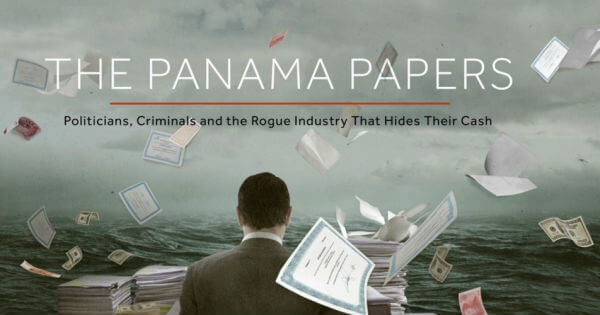
panama-papers

The New York Times reports: Over the years, William R. Ponsoldt had earned tens of millions of dollars building a string of successful companies. He had renovated apartment buildings in the New York City area. Bred Arabian horses. Run a yacht club in the Bahamas, a rock quarry in Michigan, an auto-parts company in Canada, even a multibillion-dollar hedge fund.

Now, as he neared retirement, Mr. Ponsoldt, of Jensen Beach, Fla., had a special request for Mossack Fonseca, a Panama-based law firm well placed in the world of offshore finance: How could he confidentially shift his money into overseas bank accounts and use them to buy real estate and move funds to his children?

“He is the manager of one of the richest hedge funds in the world,” a lawyer at Mossack Fonseca wrote when the firm was introduced to Mr. Ponsoldt in 2004. “Primary objective is to maintain the utmost confidentiality and ideally to open bank accounts without disclosing his name as a private person.”

In summary, the firm explained: “He needs asset protection schemes, which we are trying to sell him.”

Thus began a relationship that would last at least through 2015 as Mossack Fonseca managed eight shell companies and a foundation on the family’s behalf, moving at least $134 million through seven banks in six countries — little of which could be traced directly to Mr. Ponsoldt or his children.

These transactions and others like them for a stable of wealthy clients from the United States are outlined in extraordinary detail in the trove of internal Mossack Fonseca documents known as the Panama Papers. The materials were obtained by the German newspaper Süddeutsche Zeitung and the International Consortium of Investigative Journalists, and have now been shared with The New York Times. [Continue reading…]

Facebooktwittermail

Voting rights at the crossroads

Elaine Godfrey writes: The November election will be the first presidential contest to take place since the U.S. Supreme Court ruled to strip some of the major protections of the Voting Rights Act of 1965, which required states with a history of voter discrimination to get federal clearance before changing their voting laws. Seventeen states will have new voting restrictions in place for the first time. Among them, Wisconsin, Texas, and North Carolina have tightened their photo ID requirements; Kansas now requires proof of citizenship to cast a ballot; and Arizona has made it a felony for people to collect ballots from others and take them to the polls.

Some people — mostly Democrats — say these laws disenfranchise poor and minority voters. But others — mostly Republicans — defend the stringent requirements as part of an effort to prevent voter fraud (an occurrence scholars largely consider to be a myth, and in some states, is more rare than a lightning strike).

But just as some states are making it more difficult to vote, others are passing legislation to make it easier.

The Illinois House and Senate approved a measure on Tuesday to register people to vote automatically when they renew their driver’s licenses at the DMV (with an option to opt out). If Illinois Governor Bruce Rauner signs the legislation—something he has shown support for in the past—the Prairie State will be the fifth state to enact automatic voter registration, after Oregon, California, Vermont, and West Virginia. Dozens of other states are considering similar legislation. [Continue reading…]

Facebooktwittermail

‘I just wanted to be free’: The radical reverberations of Muhammad Ali

Dave Zirin writes:  The reverberations. Not the rumbles, the reverberations. The death of Muhammad Ali will undoubtedly move people’s minds to his epic boxing matches against Joe Frazier and George Foreman, or there will be retrospectives about his epic “rumbles” against racism and war. But it’s the reverberations that we have to understand in order to see Muhammad Ali as what he remains: the most important athlete to ever live. It’s the reverberations that are our best defense against real-time efforts to pull out his political teeth and turn him into a harmless icon suitable for mass consumption.
When Dr. Martin Luther King came out against the war in Vietnam in 1967, he was criticized by the mainstream press and his own advisors who told him to not focus on “foreign” policy. But Dr. King forged ahead and to justify his new stand, said publicly, “Like Muhammad Ali puts it, we are all—black and brown and poor—victims of the same system of oppression.”

When Nelson Mandela was imprisoned on Robben Island, he said that Muhammad Ali gave him hope that the walls would some day come tumbling down.

When John Carlos and Tommie Smith raised their fists on the medal stand in Mexico City, one of their demands was to “Restore Muhammad Ali’s title.” They called Ali “the warrior-saint of the Black Athlete’s Revolt.”

When Student Non-Violent Coordinating Committee (SNCC) volunteers in Lowndes County, Alabama launched an independent political party in 1965, their new group was the first to use the symbol of a black panther. Beneath the jungle cat’s black silhouette was a slogan straight from the champ: “WE Are the Greatest.”

When Billie Jean King was aiming to win equal rights for women in sports, Muhammad Ali would say to her, “Billie Jean King! YOU ARE THE QUEEN!” She said that this made her feel brave in her own skin.

The question is why? Why was he able to create this kind of radical ripple? The short answer is that he stood up to the United States government… and emerged victorious. But it’s also more complicated that that. [Continue reading…]

Facebooktwittermail

Muhammad Ali, Thomas Hobbes, and the politics of fear

Corey Robin writes: When Muhammad Ali famously said, “Man, I ain’t got no quarrel with them Vietcong…they never called me nigger,” he wasn’t just refusing to serve in Vietnam. Nor was he peddling an anodyne “We’re all human beings, let’s be friends” piece of feel-good agitprop. He was challenging the ability of the state to define for its citizens whom they should fear and who were their enemies. He was usurping that power and claiming it for himself. As Ali said to a group of white college students, who had challenged his position on serving in Vietnam, “You my enemy. My enemy is the white people, not Viet Congs or Chinese or Japanese.”

From the time of Hobbes, one of the leading attributes of sovereignty has been the right of the state to define and determine what threatens a people and how that threat will be responded to. In the state of nature, Hobbes wrote in Elements of the Law, “every man…is judge himself of the necessity of the means, and of the greatness of the danger” he faces. But once we submit to the state, we are forbidden “to be our own judges” of the threats we are facing and how to respond to them. Except in cases of immediate physical threat to ourselves, we must now accede to the sovereign’s assessment of and decision about these threats. The sovereign, as Hobbes says in Leviathan of the state’s control over matters theological, is he “to whom in all doubtfull cases, wee have submitted our private judgments.”

This is why Ali’s challenge to the Vietnam War was so formidable. He wasn’t merely claiming conscientious objector status, though he was. He wasn’t simply claiming the authority of a higher being, though he was. He was asserting the right of the citizen to be the final judge of what threatens or endangers him. In asserting that right, Ali was posing the deepest, most fundamental challenge to the power and authority of the state. [Continue reading…]

Facebooktwittermail