Category Archives: Analysis

The Panama Papers

The Panama Papers is an unprecedented investigation that reveals the offshore links of some of the globe’s most prominent figures.

The International Consortium of Investigative Journalists, together with the German newspaper Suddeutsche Zeitung and more than 100 other media partners, spent a year sifting through 11.5 million leaked files to expose the offshore holdings of world political leaders, links to global scandals, and details of the hidden financial dealings of fraudsters, drug traffickers, billionaires, celebrities, sports stars and more. [Continue reading…]

The Guardian reports: The Panama Papers reveal:

  • Twelve national leaders are among 143 politicians, their families and close associates from around the world known to have been using offshore tax havens.
  • A $2bn trail leads all the way to Vladimir Putin. The Russian president’s best friend – a cellist called Sergei Roldugin – is at the centre of a scheme in which money from Russian state banks is hidden offshore. Some of it ends up in a ski resort where in 2013 Putin’s daughter Katerina got married.
  • Among national leaders with offshore wealth are Nawaz Sharif, Pakistan’s prime minister; Ayad Allawi, ex-interim prime minister and former vice-president of Iraq; Petro Poroshenko, president of Ukraine; Alaa Mubarak, son of Egypt’s former president; and the prime minister of Iceland, Sigmundur Davíð Gunnlaugsson.
  • Six members of the House of Lords, three former Conservative MPs and dozens of donors to UK political parties have had offshore assets.
  • The families of at least eight current and former members of China’s supreme ruling body, the politburo, have been found to have hidden wealth offshore.
  • Twenty-three individuals who have had sanctions imposed on them for supporting the regimes in North Korea, Zimbabwe, Russia, Iran and Syria have been clients of Mossack Fonseca. Their companies were harboured by the Seychelles, the British Virgin Islands, Panama and other jurisdictions.
  • A key member of Fifa’s powerful ethics committee, which is supposed to be spearheading reform at world football’s scandal-hit governing body, acted as a lawyer for individuals and companies recently charged with bribery and corruption.
  • One leaked memorandum from a partner of Mossack Fonseca said: “Ninety-five per cent of our work coincidentally consists in selling vehicles to avoid taxes.”

[Continue reading…]

Learn more at the International Consortium of Investigative Journalists, Suddeutsche Zeitung, the BBC, and the Guardian.


Facebooktwittermail

China’s rulers possessed by Maoist nostalgia and Leninist-style leadership

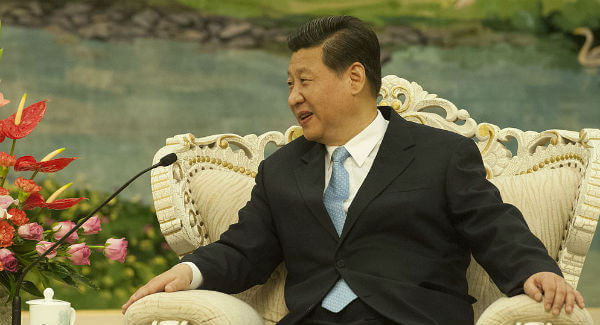
Xi-Jinping

Orville Schell writes: “As a liberal, I no longer feel I have a future in China,” a prominent Chinese think tank head in the process of moving abroad recently lamented in private. Such refrains are all too familiar these days as educated Chinese professionals express growing alarm over their country’s future. Indeed, not since the 1970s when Mao still reigned and the Cultural Revolution still raged has the Chinese leadership been so possessed by Maoist nostalgia and Leninist-style leadership.

As different leaders have come and gone, China specialists overseas have become accustomed to reading Chinese Communist Party (CCP) tea leaves as oscillating cycles of political “relaxation” and “tightening.” China has long been a one-party Leninist state with extensive censorship and perhaps the largest secret police establishment in the world. But what has been happening lately in Beijing under the leadership of Chinese Communist Party General Secretary Xi Jinping is no such simple fluctuation. It is a fundamental shift in ideological and organizational direction that is beginning to influence both China’s reform agenda and its foreign relations.

At the center of this retrograde trend is Xi’s enormously ambitious initiative to purge the Chinese Communist Party of what he calls “tigers and flies,” namely corrupt officials and businessmen both high and low. Since it began in 2012, the campaign has already netted more than 160 “tigers” whose rank is above or equivalent to that of the deputy provincial or deputy ministerial level, and more than 1,400 “flies,” all lower-level officials.1 But it has also morphed from an anticorruption drive into a broader neo-Maoist-style mass purge aimed at political rivals and others with differing ideological or political views.

To carry out this mass movement, the Party has mobilized its unique and extensive network of surveillance, security, and secret police in ways that have affected many areas of Chinese life. Media organizations dealing with news and information have been hit particularly hard. Pressured to conform to old Maoist models requiring them to serve as megaphones for the Party, editors and reporters have found themselves increasingly constrained by Central Propaganda Department diktats. Told what they can and cannot cover, they find that the limited freedom they had to report on events has been drastically curtailed. [Continue reading…]

Facebooktwittermail

Olivier Roy: ‘Radicalisation is not the result of failed integration’

An interview with French extremism researcher Olivier Roy: Mr. Roy, do you see a connection between terrorism and failed integration in European immigration societies?

I don’t think that Islamic radicalisation is the result of a failure to integrate. That’s only a pseudo-problem. Many of the young people who take up the banner of jihad are well integrated. They speak French, English and German. Islamic State (IS) has established a French-speaking battalion precisely because the young French and Belgians hardly speak any Arabic. The problem is not a lack of cultural integration. Even as they break with their society, the European jihadists remain dedicated to a very Western model. It is nihilistic, which is not at all in accordance with Islamic tradition. They have in many cases developed a fascination with the aesthetics of violence they know from movies and videos. In this sense, they are more like the students who ran amok in Columbine High School or the mass murderer Anders Behring Breivik.

So immigration and jihadism have nothing to do with each other?

For me, the high percentage of converts is a very interesting indicator. Nowhere else in Muslim culture is there another organisation like the IS with its 25 percent converts. So cultural explanations alone are not enough to establish what makes IS so attractive. What′s more, young people without an immigrant heritage are also drawn to the idea of jihad.

How then do you explain the terrorists′ invocation of Islam?

I am not denying that there is a religious dimension. It is important, because it means the jihadists can reinterpret their nihilism as a promise of paradise. Their suicide becomes a guarantee for eternal life. I only want to emphasise that these young people do not come from the Muslim community. Most of them have no religious education and have rarely visited a mosque. Nearly all were previously petty criminals. They would drink alcohol and take drugs. [Continue reading…]

Facebooktwittermail

Report: The foreign fighters phenomenon in the EU – profiles, threats & policies

International Centre for Counter-Terrorism – The Hague reports: Despite the widespread media attention for foreign fighters in Europe, very little is known about the phenomenon itself, something also evidenced by the lack of a single foreign fighter definition across the EU.

In a study commissioned by the Netherlands National Coordinator for Security and Counterterrorism (NCTV), ICCT addresses this gap by analysing not only the numbers and characteristics of foreign fighters across the EU, but also how the Union and Member States assess the threat of foreign fighters as well as their policy responses regarding security, preventive and legislative measures. The Report also outlines a series of policy options aimed both at the EU and its Member States.

Findings include:

  • Of a total estimated 3,922 – 4,294 foreign fighters from EU Member States, around 30% have returned to their home countries.
  • A majority of around 2,838 foreign fighters come from just four countries: Belgium, France, Germany, and the United Kingdom, with Belgium having the highest per-capita FF contingent.
  • There is no clear-cut profile of a European foreign fighter. Data indicates that a majority originate from metropolitan areas, with many coming from the same neighbourhoods, that an average of 17% are female, and that the percentage of converts among foreign fighters ranges from 6% to 23%.
  • The radicalisation process of foreign fighters is reported to be short and often involves circles of friends radicalizing as a group and deciding to leave jointly for Syria and Iraq.

[Continue reading…]

Facebooktwittermail

Why Trump can’t break the GOP

trump

Jacob S. Hacker and Paul Pierson write: Everywhere you look, in the year of Donald J. Trump, observers are talking about a national party realignment or a Republican death spiral. Our two-party system has not undergone a major realignment since the South became solidly Republican. There has not been a major-party demise since the Whigs collapsed on the eve of the Civil War.

Mr. Trump (or Ted Cruz) could very well lead the party to a decisive and divisive defeat. If it was catastrophic enough, it could lead to changes in party strategy. Yet predictions of a Republican crackup should be greeted with skepticism. While rumors of the death of the Republican Party have been common in recent presidential elections, they have proved again and again to be vastly exaggerated.

The gap between expectations and political realities reflects two mistakes: The first is to overestimate the centrality of presidential contests to our system of checks and balances.

The second is to misunderstand the recent Republican electoral successes — which rest less on effective governance than on attacking government, and especially the occupant of the Oval Office. [Continue reading…]

Facebooktwittermail

Trump’s nomination would be ‘a historic election defeat just waiting to happen’

The New York Times reports: Mr. Trump has become unacceptable, perhaps irreversibly so, to broad swaths of Americans, including large majorities of women, nonwhites, Hispanics, voters under 30 and those with college degrees — the voters who powered President Obama’s two victories and represent the country’s demographic future. All view him unfavorably by a 2-to-1 margin, according to a recent New York Times/CBS News poll.

In some states, Mr. Trump has surprised establishment-aligned Republicans with his breadth of support beyond the less-educated men who form his base. Even so, his support in the nominating process, in which some 30 million people may ultimately vote, would be swamped in a general election, when turnout is likely to be four times that.

“We’re talking about somebody who has the passionate devotion of a minority and alternately scares, appalls, angers — or all of the above — a majority of the country,” said Henry Olsen, a conservative analyst. “This isn’t anything but a historic election defeat just waiting to happen.” [Continue reading…]

Facebooktwittermail

America’s asylum policy is broken

Elizabeth Rubin writes: I recently received a phone call from Alabama. It was Samey Honaryar, an Afghan who had worked as an interpreter with the United States military and had fled Taliban persecution hoping to find asylum here. Samey is not accused of committing any crime. Yet for nearly a year, he’s been locked up in Etowah County Detention Center, among the worst and most remote of immigration detention centers, with little access to lawyers or medical attention.

“I cannot take it anymore,” said Samey, who was planning a hunger strike. “I served this country. I risked my life for this country, and this is how I’m repaid.”

I have reported from Afghanistan frequently since 2001, and I know that interpreters are an essential conduit into a culture easily misread by foreigners. Nearly every translator I’ve worked with has saved my life. But once they choose to work for the military, their job becomes a political act, making them marked men and women for the Taliban.

At a time when Europeans and Canadians are sheltering over a million asylum seekers, many from conflicts created by United States policies, Samey’s treatment demands attention. Documents and witnesses show that Samey risked his life for American soldiers. But he has been cast into immigration purgatory nonetheless, his troubles caused by a toxic mix of bureaucracy, fear, prejudice and, most poignantly, his naïve faith in American honor. [Continue reading…]

Facebooktwittermail

American inquisition: Training teachers to extract confessions from their students

decay14bw

Douglas Starr writes: About a year and a half ago, Jessica Schneider was handed a flyer by one of her colleagues in the child-advocacy community. It advertised a training session, offered under the auspices of the Illinois Principals Association (I.P.A.), in how to interrogate students. Specifically, teachers and school administrators would be taught an abbreviated version of the Reid Technique, which is used across the country by police officers, private-security personnel, insurance-fraud investigators, and other people for whom getting at the truth is part of the job. Schneider, who is a staff attorney at the Chicago Lawyers’ Committee for Civil Rights Under Law, was alarmed. She knew that some psychologists and jurists have characterized the technique as coercive and liable to produce false confessions — especially when used with juveniles, who are highly suggestible. When she expressed her concerns to Brian Schwartz, the I.P.A.’s general counsel, he said that the association had been offering Reid training for many years and found it both popular and benign. To prove it, he invited Schneider to attend a session in January of 2015.

The training was led by Joseph Buckley, the president of John E. Reid and Associates, which is based in Chicago. Like the adult version of the Reid Technique, the school version involves three basic parts: an investigative component, in which you gather evidence; a behavioral analysis, in which you interview a suspect to determine whether he or she is lying; and a nine-step interrogation, a nonviolent but psychologically rigorous process that is designed, according to Reid’s workbook, “to obtain an admission of guilt.” Most of the I.P.A. session, Schneider told me, focussed on behavioral analysis. Buckley described to trainees how patterns of body language — including slumping, failing to look directly at the interviewer, offering “evasive” responses, and showing generally “guarded” behaviors — could supposedly reveal whether a suspect was lying. (Some of the cues were downright mythological — like, for instance, the idea that individuals look left when recalling the truth and right when trying to fabricate.) Several times during the session, Buckley showed videos of interrogations involving serious crimes, such as murder, theft, and rape. None of the videos portrayed young people being questioned for typical school misbehavior, nor did any of the Reid teaching materials refer to “students” or “kids.” They were always “suspects” or “subjects.”

Laura Nirider, a professor of law at Northwestern University and the project director of the Center on Wrongful Convictions of Youth, attended the same session as Schneider. She told me that about sixty people were there. “Everybody was on the edge of their seat: ‘So this is how we can learn to get the drop on little Billy for writing graffiti on the underside of the lunchroom table,’” she said. One vice-principal told Nirider that the first thing he does when he interrogates students is take away their cell phones, “so they can’t call their mothers.” [Continue reading…]

Facebooktwittermail

Syrian Alawites distance themselves from Assad

BBC News reports: In a deeply unusual move, leaders of President Bashar al-Assad’s Alawite sect in Syria have released a document, obtained by the BBC, that distances themselves from his regime and outlines what kind of future they wish for the country after five years of civil war.

The community and religious leaders say they hope to “shine a light” on the Alawites after a long period of secrecy, at what they call “an important moment” in their history.

In the eight-page document, termed a “declaration of identity reform”, the Alawites say they represent a third model “of and within Islam”.

Those behind the text say Alawites are not members of a branch of Shia Islam – as they have been described in the past by Shia clerics – and that they are committed to “the fight against sectarian strife”.

They also make clear that they adhere to “the values of equality, liberty and citizenship”, and call for secularism to be the future of Syria, and a system of governance in which Islam, Christianity and all other religions are equal. [Continue reading…]

Facebooktwittermail

Mixed reactions from Iraqis as American troops enter the ground war against ISIS

Mustafa Habib writes: Iraqis found out that just about a week ago at dawn, the US military had entered the “war” against the extremist group known as the Islamic State, for real. In the northern province of Ninawa, near the extremist-held city of Mosul, US ground troops – a group of 200 soldiers from the 26th Marine Expeditionary Unit, according to the US Secretary of Defence, Ashton Carter – used their artillery against the Islamic State, or IS, group’s fighters in the area.

Speaking at a press briefing last Friday, Carter told reporters that the US troops had set up base at an outpost to be named Firebase Bell – as the LA Times newspaper reported, “this would be the first American combat base since the US returned to Iraq in 2014”.

So how did Iraqis feel about the apparent return of US boots to their ground?

“The US troops have finally decided to join in properly,” says Qais al-Saadi, a colonel in the Iraqi army. “Previously they were limited to air raids. I think now they have discovered that these air raids did not affect the Islamic State as much as they hoped and they have become convinced that ground troops are also important.”

Al-Saadi was happy about this, noting that the US was paving the way for the Iraqi army, especially with their recent success in eliminating two senior members of the IS group in quick succession.

Social media lit up with debate on the subject. Some welcomed the US troops, believing they were necessary in order to defeat the IS group. Often Iraqi commentators said that this move by the US was too late and that they should have helped from the beginning. Others were not so happy, saying it was a new occupation. [Continue reading…]

Facebooktwittermail

Libya’s deep state is back and wants you to know it

Borzou Daragahi reports: A pudgy, graying middle-aged man in a brown sweater vest sat quietly sipping tea in the hotel lobby. If you noticed him at all, you might have thought he was a businessman, or an engineer, maybe a mid-ranking civil servant. He frowned occasionally as he contemplated the messages on his smartphone.

He allowed a smile as two men approached. They greeted each other as old friends, exchanging embraces, asking after relatives. One of the men complained a little about the state of business in the region, and warned he might have to head off at some point: “My daughter has a ballet recital.”

The entourage moved to a darkly lit corner of the hotel, their voices dropping, sometimes to a whisper. They looked up with paranoid glares each time a waiter or hotel guest walked by. The three men knew they could never be too careful.

The newcomers were retired colleagues; the first, a balding man in his sixties, works for a charity that helps African migrants in Libya; the second, in his late forties, is a real estate developer, dividing his time between the Libyan capital, Tripoli, and Europe.

But this was no workaday meeting of middle-aged businessmen. The three men are operatives from one of the most feared institutions in the Middle East: Libya’s mukhabarat, or intelligence agency. Formed shortly after the Second World War, the mukhabarat has worked behind the scenes to monitor and manipulate Libya for decades. And they have now joined the war against ISIS, as well as al-Qaeda and loyalists to the former regime of Muammar al-Qaddafi. They have made many, many enemies over the years.

“Extremists are extremists,” said the man in the sweater vest, a senior ranking official of the agency’s counter-terrorism division. “It doesn’t matter if they’re government militias, ISIS, or Qaddafi loyalists. In my focus, I target them all. Political extremists are all the same. And I want stability.” [Continue reading…]

Facebooktwittermail

Is Donald Trump actually a fascist?

The Toronto Star reports: Google Donald Trump, and it won’t be long before the “f” word comes up.

The word is “fascist.” And it’s back in a way that hasn’t been seen for years, as opponents grope for a term that matches the repulsion that a majority of Americans feel for The Donald.

Former Mexican president Vicente Fox has all but called Trump a fascist — and used another “f-word” for his proposed border wall.

Historian Fedja Buric compared him with founding fascist Benito Mussolini. And New Republic editor Jamil Smith said it straight out: “yes, Donald Trump is a fascist.”

Trump even went too far for tub-thumping far right radio host Glenn Beck, who lumped him with “Adolph Hitler in 1929,” on ABC-TV.

But those who have made an academic study of fascism say although Trump and his Coalition of the Chilling may share some of the characteristics of past fascists, the jaw-jutting reality star doesn’t quite squeeze into the classic 20th-century mould. [Continue reading…]

Facebooktwittermail

No, America isn’t 100 percent safe from terrorism. And that’s a good thing

Juliette Kayyem writes: Admit it. After the terrorist attacks in Brussels this past week, after the brief reflection for those lost or wounded and the sense of “oh, no, not again” passed, other thoughts quickly followed. My own selfish but natural worry, as a mother of three: Should we cancel that trip to Europe this summer?

In the nearly 15 years since 9/11, the questions I’ve fielded from family and friends have varied but never ceased: Should I buy a gun? (Only with training and safety measures at home, and certainly not to combat Islamic terrorists.) Is Times Square safe on New Year’s Eve? (Like every crowd scene, you have to stay alert, but security is high at events like that.) Or my personal favorite, because it combines parental insecurities with disaster management: Is Tulane a good school so many years after Hurricane Katrina? (Yes; it had a few rough months, but your kid should still apply.)

All these queries about a world in mayhem boil down to: Is my family safe? The answer is both simple and liberating: No, not entirely. America was built vulnerable, and thank goodness for that. [Continue reading…]

Facebooktwittermail

A CIA grunt’s tale of the fog of secret war

The New York Times reports: In Douglas Laux’s final days as a C.I.A. officer, the futility of his mission prompted him to quote George Orwell to his boss.

Mr. Laux had spent months in 2012 working with various Middle Eastern nations that were trying to ship arms to Syria to help disparate rebel groups there. But it had become clear to him that the C.I.A had little ability to control the squabbling and backstabbing among the Saudis, Qataris and other Arabs.

He told a senior C.I.A. officer he felt like Winston Smith, the character in “1984” known for his fatalism, because he was carrying out his work without comprehending the politics and competing agendas thwarting progress in aiding the rebellion. “I understand the how,” Mr. Laux said, paraphrasing one of Smith’s famous lines. “I do not understand the why.”

It is a sentiment that might sum up much of Mr. Laux’s career at the C.I.A., an organization he served for eight years as an undercover case officer and soldier in the agency’s shadowy conflicts overseas. His career at the agency began with a tour at a remote firebase in southern Afghanistan and ended with a spot on the agency’s Syria Task Force — a life in war zones that is emblematic of the lives of a large cadre of American spies who joined the C.I.A. after the Sept. 11 terrorist attacks. He left the agency three years ago, but is speaking publicly about his experiences there for the first time in conjunction with the release of a memoir. [Continue reading…]

Facebooktwittermail

Turkey is no ‘safe haven’ for refugees – it shoots them at the border

Patrick Kingsley writes: It was beyond sad to read in the Times this week that Turkish border guards have allegedly shot dead Syrians trying to reach safety in Turkey. Sixteen refugees, including three children, have been killed trying to escape the battlegrounds of northern Syria in the past four months, according to the Syrian Observatory for Human Rights, a frequently cited watchdog.

It is shocking to think of people fleeing the combined atrocities of Islamic State and Bashar al-Assad being gunned down just as they make their bid for safety. But what is perhaps most shocking of all is that we observers are still shocked by this.

The shooting of Syrians on the border is not a new phenomenon. Refugees and rights groups have reported shootings of migrants on the Turkish-Syrian border since at least 2013. These abuses are well-documented, and the reports widely circulated. So why, in the months following a shady European deal that forces Turkey to shoulder the biggest burden of the refugee crisis, are we still so appalled when Turkey continues to use deadly violence to stop that burden getting any bigger? [Continue reading…]

Facebooktwittermail

After Palmyra, where next for Assad?

Aron Lund writes: Forces loyal to Syrian President Bashar al-Assad on March 27 retook the desert city of Palmyra, which had been lost to the self-proclaimed Islamic State in May 2015. Its loss came at a difficult time for Assad, whose exhausted and overstretched army was losing territory on several fronts while the decaying economy in government-controlled areas was threatening to undo his regime from within. Given Palmyra’s location at the center of valuable gas fields and position as a nexus of major transportation routes in Syria’s eastern deserts, its loss compounded Assad’s problems. The government found itself with an expanded eastern frontline, with the Islamic State burrowing into the Qalamoun mountains, north of Damascus, and the Badiya region, where central Syria’s fertile plains around Homs and Hama fade into the desert.

A reversal of fortunes began on September 30, 2015, when Russian President Vladimir Putin ordered his country’s air force into action in Syria. Since the end of 2015, Assad has significantly improved his position in western Syria — where he is fighting other rebel and jihadi forces — and made limited advances against the Islamic State near Aleppo. The current push — which came after a truce with mainstream rebel factions — began on February 27 and marked the first major push east. Shortly after that Putin announced a somewhat disingenuous withdrawal from Syria on March 14.

Not only has Assad’s advance into Palmyra redrawn Syria’s military battlefield, but it also looks likely to accelerate the shift of its politics. [Continue reading…]

Facebooktwittermail