Category Archives: Analysis

El Niño upsets seasons and upends lives worldwide

The New York Times reports: In rural villages in Africa and Asia, and in urban neighborhoods in South America, millions of lives have been disrupted by weather linked to the strongest El Niño in a generation.

In some parts of the world, the problem has been not enough rain; in others, too much. Downpours were so bad in Paraguay’s capital, Asunción, that shantytowns sprouted along city streets, filled with families displaced by floods. But farmers in India had the opposite problem: Reduced monsoon rains forced them off the land and into day-labor jobs.

In South Africa, a drought hit farmers so hard that the country, which a few years ago was exporting corn to Asian markets, now will have to buy millions of tons of it from Brazil and other South American countries.

“They will actually have to import it, which is rare,” said Rogerio Bonifacio, a climate analyst with the World Food Program, a United Nations agency. “This is a major drought.”

The World Health Organization has estimated that worldwide, El Niño-related weather is putting 60 million people at increased risk of malnutrition, water- and mosquito-borne diseases, and other illnesses. [Continue reading…]


Facebooktwittermail

Killing from the conference room

David Cole writes: On March 4, the United States used drones and other aircraft to drop precision bombs on Somalia, a country with which we are not at war, reportedly killing about 150 al-Shabab militants who were said to be preparing for an imminent attack on American and African Union forces. The US government asserted that no civilians were killed, although neither that claim nor the allegation of an imminent attack could be verified. What do we really know about how American officials decide to launch such strikes?

In the last two weeks, the Obama administration has announced that it will for the first time make public a redacted version of the Presidential Policy Guidance outlining the standards for targeted killing and will also provide its own estimates of combatant and civilian deaths in drone attacks dating back to 2009. Yet much about these decisions remains opaque. In Eye in the Sky, a remarkably timely and important new film about a fictional drone strike against al-Shabab, South African director Gavin Hood offers a hypothetical window into such decision-making. The picture it paints is deeply disturbing, and raises fundamental questions about when, if ever, such attacks are justified. It may be the closest those of us on the outside ever get to the internal process behind the drone war.

In the film, Helen Mirren plays Katherine Powell, a steely British colonel charged with tracking terrorists in North Africa. The only travel Powell needs to do, however, is between her home in Surrey and her office in London, where she operates a top-secret drone program, in conjunction with American drone operators in Nevada and African agents in Kenya. As the film opens, Powell wakes to learn that a British woman, who has become a leader of al-Shabab, has been located in Nairobi along with her husband, an American citizen who is also an al-Shabab leader. What follows is a tense minute-by-minute depiction of one of the most daunting ethical and legal decisions a nation’s military and civilian leaders ever have to make—whether to kill a suspected enemy, even if innocent civilians may also die. Without taking sides, the film dramatically illustrates why technology, far from answering such questions, has only made them more difficult. [Continue reading…]

Facebooktwittermail

Torturing for Trump

decay16bw

Eric Fair writes: In March 2004, at Forward Operating Base St. Mere outside Falluja, Iraq, I was walking home from work. Ferdinand Ibabao, my close friend and fellow contractor, was walking with me. It had been a long day of interrogations, so we were looking forward to checking emails, and hearing about what our families were up to back home.

As we walked through a large open field on the base, the distinct sound of incoming mortar rounds interrupted our conversation. We’d been talking about finding new contracting jobs in Iraq. Conducting interrogations at places like Abu Ghraib and Falluja was beginning to take a toll. We both agreed it was time to move on to something less complicated, something that didn’t force us to set aside our humanity in order to go to work.

As the mortars detonated nearby, Ferdinand, always one to joke, ran around like a baseball player trying to catch a pop fly shouting “I got it, I got it!” He said it would be a mercy killing.

I found myself thinking about Ferdinand and his dark humor after Ted Cruz and Donald J. Trump unapologetically endorsed the use of waterboarding at a Republican debate early last month. “I’d bring back waterboarding,” Mr. Trump said, “and I’d bring back a hell of a lot worse than waterboarding.”

I don’t know what drives a man to say such things. I just know that when they do, men like Ferdinand and me will be forced to shoulder the consequences.

In my role as a civilian contractor for the Department of Defense, I spent the first three months of 2004 torturing Iraqi prisoners. At the time, we were calling it enhanced interrogation, but that’s a phrase I don’t use anymore. Stress positions, slaps to the face and sleep deprivation were an outrage to the personal dignity of Iraqi prisoners. We humiliated and degraded them, and ourselves. [Continue reading…]

Facebooktwittermail

For many Americans, Trump personifies the ideal life

Virginia Postrel writes: Why would anyone vote for Donald Trump? One popular theory holds that his supporters are bigots angered by America’s changing racial mix. Another is that they’re salt-of-the-earth working folks left behind by the loss of manufacturing jobs, alienated from the moneyed ruling class and irritated by the tyranny of political correctness. Or some combination thereof.

These theories, which contain elements of truth, emphasize Trump’s dire assessment of present-day America and his followers’ discontent. They focus on negative sentiment. But an important part of the story is Trump’s positive allure — the way the candidate taps into, and projects, the most fundamental outlines of the American Dream.

Conventional explanations miss the glamour of Trump’s message.

The word “glamour” originally meant a literal magic spell that makes people see things differently than they are. Understood correctly, glamour is not a particular style — different styles seem glamorous to different people — but, like humor, a form of communication that creates a specific emotional response. Glamour generates a feeling of projection and longing: “if only.” If only I could walk that red carpet, drive that car, wear that dress, belong to that group, have that job, be (or be with) that person . If only I could have that life.

The feeling is universal, but the manifestation is particular: One person’s glamorous vacation may be a busy trip to Paris, while another dreams of the solitude of a mountain cabin. What you find glamorous depends on who you are — and who you yearn to be. [Continue reading…]

Facebooktwittermail

A view of ISIS’s evolution emerges from new details about Paris attacks

The New York Times reports: Investigators found crates’ worth of disposable cellphones, meticulously scoured of email data. All around Paris, they found traces of improved bomb-making materials. And they began piecing together a multilayered terrorist attack that evaded detection until much too late.

In the immediate aftermath of the Paris terror attacks on Nov. 13, French investigators came face to face with the reality that they had missed earlier signs that the Islamic State was building the machinery to mount sustained terrorist strikes in Europe.

Now, the arrest in Belgium on Friday of Salah Abdeslam, who officials say was the logistics chief for the Paris attacks, offers a crucial opportunity to address the many unanswered questions surrounding how they were planned. Mr. Abdeslam, who was transferred to the penitentiary complex in Bruges on Saturday, is believed to be the only direct participant in the attacks who is still alive.

Much of what the authorities already know is in a 55-page report compiled in the weeks after the attack by the French antiterrorism police, presented privately to France’s Interior Ministry; a copy was recently obtained by The New York Times. While much about the Paris attacks has been learned from witnesses and others, the report has offered new perspectives about the plot that had not yet been publicized. [Continue reading…]

Facebooktwittermail

What is it about Molenbeek? The bit of Belgium that was a base for Paris terror attacks

By Martin Conway, University of Oxford

Just as during the German invasions of 1914 and 1940, war, it seems, is coming to France through Belgium. If one follows the logic of the statements of various French political leaders since the bloody attacks in Paris on November 13, Belgium has become the base from which Islamic State has brought the conflicts of the Middle East to the streets of Paris.

There is much about that logic that would not withstand serious analysis. France has grown many of its problems within its own suburbs. And groups committed to armed action, from the Resistance movements of World War II to the Basque nationalist groups of the 1980s and 1990s, have often found it expedient to use neighbouring territories as a base from which to launch their operations.

That said, the French authorities have a case. Molenbeek – an urban commune on the north-western edges of Brussels – is unlikely to feature any time soon on tourist-bus tours of historic Brussels.

Though it lies only a couple of kilometres from the Grand Place and the Manneken Pis, and a mere taxi ride from European Commission president Jean-Claude Juncker’s office, Molenbeek is another world. This inner-city area, now on the front pages of newspapers across Europe, is deprived of funds, social cohesion and effective government.

Continue reading

Facebooktwittermail

How did the far right gain so much ground in Germany?

By Sergi Pardos-Prado, University of Oxford

Some of the oldest and most established party systems in the world seem to be imploding. Unprecedented levels of electoral volatility, the collapse of the historical mainstream, and the emergence of new populist alternatives are part of a vertiginous process that is not always easy to comprehend.

A new wave of radical right parties is now proving capable of reshaping democracies that once seemed immune to them. The recent success of Alternative for Germany (AfD) in the regional elections is just the latest example of the establishment being shaken at the ballot box.

In the March 13 elections, AfD, a party that was only founded in 2013, won seats in eight German state parliaments. It came second, winning up to 24% of the popular vote, in states such as Saxony-Anhalt in East Germany.

What explains the success?

Research on radical right politics has focused on the socio-demographic profile of anti-immigrant voters, and on national characteristics such as the state of the economy. While illuminating, both approaches have proved insufficient.

There is a high degree of certainty about the sociological profile of the anti-immigrant voter. They tend to be working class, low educated, unemployed, male, nationalistic, and somewhat authoritarian.

But all established European democracies have significant portions of the electorate sharing these characteristics. So this approach can’t explain why radical parties have emerged in France and the Netherlands, for instance, but not in Spain or Portugal.

Continue reading

Facebooktwittermail

Refugees lament as deal with Turkey closes door to Europe

The New York Times reports: Smoking cigarettes and huddling against the midnight chill, a group of Syrian men sat outside a mosque waiting for a smuggler’s call. It was their last chance, they said, to reach Europe.

It was late Friday, hours after they watched news reports from cafes and hotel lobbies that the Europe Union and Turkey had struck a deal that would send refugees from war-torn countries back to Turkey, from the shores of Greece. Time was running short: Officials said the deal would take effect Sunday.

“One hour ago,” said Milad Ameen, 19, when asked when he decided to set off for Europe. He had a life jacket, an inner tube and small bag containing his passport and school certificates he hoped would help him land a job in Europe.

As the men waited, they lamented a deal that they believe shuts the door on the last way out of their misery. “It’s for Turkey’s good, but not for the good of the Syrian people,” Mr. Ameen said.

A man standing next to him, who gave only his first name, Raafat, said he was from Aleppo, Syria. Raafat said he was demoralized that Europe no longer seemed to welcome Syrians. When he heard news of the pending deal, he rushed from Istanbul, where he had worked in a textile factory, to this coastal city. “We aren’t going to Europe to destroy Europe,” he said, explaining that he wished to assimilate and learn the language in whichever country would take him. “We are going in peace. [Continue reading…]

Facebooktwittermail

Syria: An unviable regime facing a divided opposition

Aron Lund writes: While Syria’s Sunni Arab rebels share many goals and allies, and infighting among them remains relatively rare, these factions have never managed to find a center of gravity around which to unify. Forceful international support is often portrayed as the means to change this, but in fact, it has had the opposite effect. The West and its allies have intervened to empower rivals to the jihadi bloc that would otherwise dominate, thus cementing the insurgency’s fragmentation instead of ending it. This dynamic is unlikely to go away. The large Islamist rebel factions that could tip the scales in a non-jihadi direction, such as Ahrar al-Sham, seem unwilling and unable to disentangle themselves from the Nusra Front. This leaves the Sunni Arab insurgency stuck in a position from which it cannot win.

That leaves Bashar al-Assad. While he has so far succeeded in preventing the emergence of a credible competitor and blocking all proposals for a political transition, the president has not yet offered a positive plan for how to reunify and stabilize Syria. At this point, his regime seems at once inevitable and unviable.

Even with strong Russian and Iranian support, Assad’s government seems too weak to reconquer the country by force. The president could theoretically compensate for this weakness by engaging in effective diplomacy or striking deals with his opponents, but he has so far shown neither the inclination nor the ability to do so. Indeed, the resistance to a full-blown Assad restoration would be massive; hatred of Assad and his family is a main motivating cause of the insurgency as well as its international support networks.

Assad might, however, be able to engineer international acquiescence to his continued dominance of a fractured country. If things continue to go the government’s way militarily, as they have since Russia intervened on September 30, and if international resistance to him subsides, Assad could potentially lock down the core regions of what has become known as “useful Syria.” This could include Damascus, Homs, Hama, Tartous, Latakia, and Aleppo, plus parts or all of Deir Ezzor, Daraa, and Raqqa. International economic and military support channeled through the central government could then sustain, and to some extent revive, the state apparatus. In so doing, it would help to reconnect some, though not all, of the peripheral areas to Damascus.

But even in this scenario, the bloodshed would not be over. There would certainly be flare-ups between Assad and other actors. In some areas, notably those now controlled by jihadists, the war would be likely to last for a long, long time. Human rights abuses in government-held territory would of course continue unabated and Syrians would be doomed to kiss the boot of the Assad family for another generation. Even beyond that, political stability would be of only a relative nature. Over time, the government would struggle to re-create a functioning economy, survive internal challenges, and retain basic cohesion. Still, this is probably the direction in which Russian President Vladimir Putin is trying to nudge the Geneva peace process, arguing that it is the only way of avoiding a permanent state collapse. And no other major actor has offered a credible way forward. It is entirely possible that such a victory for Assad, if it can be called that, would only postpone rather than prevent complete state failure. [Continue reading…]

Facebooktwittermail

‘This is a new Syria, not a new Kurdistan’

Wladimir van Wilgenburg writes: They have been locked out of Syrian peace talks, and by extension a future Syrian government, despite controlling much of northern Syria, being the only force to successfully oppose the Islamic State and having the favour of both the United States and Russia.

On Thursday the Syrian Kurds decided on their answer to this outsider status: the formation of a new Federation of Northern Syria that would take in Kurdish-majority areas of Jazeera, Kobane and Afrin, knowns as Rojava, plus Arab towns currently under Kurdish control.

Syria’s government, opposition and regional powers have rejected the new system, saying the Kurds have no right to carve up Syria for their own purposes.

But Salih Muslim Mohammed, the co-leader of the Democratic Union Party (PYD), the largest Kurdish party in Syria, said the federation should not be seen as an autonomous Kurdistan region, but rather a blueprint for a future decentralised and democratic country, where everyone is represented in government.

“There is no autonomous Kurdish region, so there is no question of recognising it or not,” he said. “It is part of a democratic Syria, and it might expand all over Syria. We want to decentralise Syria, in which everyone has their rights.

“The name is not important, we call it a democratic Syrian federalism,” he told Middle East Eye. [Continue reading…]

Facebooktwittermail

Turkey: Where press freedoms are on the decline and authoritarianism is on the rise

Hasnain Kazim, who has reported for Der Spiegel from Istanbul for the last three years and has now been forced to leave, writes: On our last day in Turkey, my family and I are not in the mood to go, but we have to leave the country. After several torturous months of uncertainty and concern, we have no other option. We fear for our safety.

The bags are packed. The furniture, books, clothing, everything is gone. My son has been taken out of kindergarten; it was a painful farewell for him too. Before we drive to the airport, I write down a list of telephone numbers for my wife: colleagues, diplomats, friends in Istanbul. These are in case I am detained at the airport and my family has to continue their journey without me.

Since the beginning of the year, the Turkish government has declined to grant me accreditation as a foreign correspondent, thereby denying me the ability to work. As a German journalist living in Turkey, I need a residency permit — and this permit is linked to my press accreditation.

Accreditations are normally approved at the turn of the year, but this year all German journalists have had to wait unusually long. Prime Minister Ahmet Davutolu repeatedly assured Chancellor Merkel at the beginning of the year that all German correspondents would receive their papers. The German side relayed this message to us on multiple occasions.

I never received any notification at all. Officially, my request hasn’t been declined, it is being “examined.” But neither the Turkish nor the German authorities believed that my accreditation would still be granted.

Even worse, I received warnings. Turkish state prosecutors, who are critical of the government and its interference in the judiciary, told me that, if I were to stay in the country, I could conceivably be charged under some pretense. Perhaps for “supporting a terrorist organization” or for “insulting the president.” These are common accusations in Turkey against journalists who are too critical of those in power. Thus far, only domestic journalists have faced them. [Continue reading…]

Facebooktwittermail

Nostalgia for the Saddam era is thwarting a truly united Iraq

Rasha Al Aqeedi writes: Yearning for Saddam’s Iraq, in many cases, has little to do with Saddam or his style of ruling.

As Nada, a Twitter personality with a significant following among frustrated Sunnis, put it: “Many love Iraq and are heart-broken to witness its deterioration, which they feel happened after the invasion and the emergence of failing leaders.”

Dina Al Azawi, a writer now living in the United States but who has a large Facebook following in Iraq, lost her brother and cousin in the violence that engulfed the country in 2004.

“Under Saddam, our foreign policy was balanced, and the world respected us,” she wrote. “Iraq was not a proxy for a foreign agenda. Yes, we were independent and sovereign. It was a tyranny, but it was a state. Iraq does not even resemble a state today. It is not about who rules, it is about how we were ruled.”

She is one of many Iraqi Sunnis who compare life before and after the 2003 fall of Saddam, often concluding that tyrannical rule is better than the chaos of today’s Iraq.

More than two million Sunnis in Iraq are displaced. The government has accomplished little in the way of reconciliation and thousands of Sunnis remain in prisons without trial. Meanwhile, no charges have been laid over the horrific massacre of Hawija in 2013 when government security forces fired at peaceful unarmed protesters, killing 54 and injuring hundreds. More recently, news of Shia militias’ continuing torture of Sunnis has been confirmed. Nostalgia for better days is predictable.

Ihsan Nouri, a political writer, said he understood what was driving this: “They had the best posts in the governments and military. They lived in the posh areas of Baghdad and they were respected wherever they went; just their last name is enough to get them out of any fix. Most of those people were Sunnis.” [Continue reading…]

Facebooktwittermail

If Merrick Garland serves on the Supreme Court it could be good for the environment

coal-power

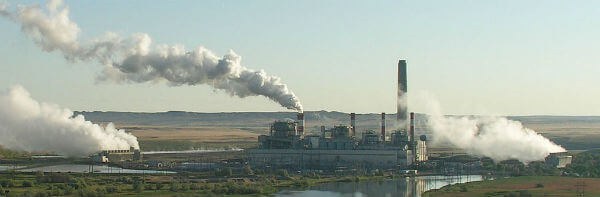
Mother Jones reports: Merrick Garland has spent the last decade in the weeds of some of the most contentious clean air cases in history — and he’s consistently come out on the side of the environment and against big polluters.

Garland, the DC Circuit Court chief judge who is President Barack Obama’s pick to replace Antonin Scalia on the Supreme Court, faces a steep climb to confirmation in the face of fierce opposition from Senate Republicans.

But if Garland makes it to the Supreme Court, the battle over Obama’s flagship climate regulations will likely be one of his first big cases. That policy, known as the Clean Power Plan, aims to slash the nation’s carbon footprint by restricting greenhouse gas emissions from power plants. The Environmental Protection Agency built the plan on a provision of the Clean Air Act that allows it to set emissions standards for existing “stationary” sources (i.e., power plants, rather than, say, cars) and then leave it up to each state to choose how to reach that standard. The rule was immediately challenged by two dozen coal-reliant states, which have argued that it oversteps EPA’s legal authority because it applies to the whole electricity system rather than to individual power plants. Shortly before Scalia’s death, the Supreme Court voted 5-4 to put the plan on hold while Garland’s current colleagues in the DC circuit court weigh its legality.

The climate regulations will likely wind up in front of SCOTUS sometime next year. So, Garland’s record on cases involving the Clean Air Act—which many legal experts see as the world’s single most powerful piece of environmental law—is a helpful guide for how he might rule. Garland once described the Clean Air Act as “this nation’s primary means of protecting the safety of the air breathed by hundreds of millions of people.” [Continue reading…]

Facebooktwittermail

Israel: State terror has seeped inside the Green Line

David Shulman writes: Israeli human rights activists and what is left of the Israeli peace groups, including joint Israeli-Palestinian peace organizations, are under attack. In a sense, this is nothing very new; organizations such as B’Tselem, the most prominent and effective in the area of human rights, and Breaking the Silence, which specializes in soldiers’ firsthand testimony about what they have seen and done in the occupied territories and in Gaza, have always been anathema to the Israeli right, which regards them as treasonous. But open attacks on the Israeli left have now assumed a far more sinister and ruthless character; some of them are being played out in the interrogation rooms of Israeli prisons. Clearly, there is an ongoing coordinated campaign involving the government, members of the Knesset, the police, various semiautonomous right-wing groups, and the public media. Politically driven harassment, including violent and illegal arrest, interrogation, denial of legal support, virulent incitement, smear campaigns, even death threats issued by proxy — all this has become part of the repertoire of the far right, which dominates the present government and sets the tone for its policies.

There is now a palpable sense of danger, and also an accelerating decline into a situation of incipient everyday state terror. Palestinians have lived with the reality of state terror for decades — it is the very stuff of the occupation — but it has now seeped into the texture of life inside the Green Line, as many on the left have warned that it would. Israelis with a memory going back to the 1960s sometimes liken the current campaign to the violent actions of the extreme right in Greece before the colonels took power, as famously depicted in the still-canonical film Z.

The witch-hunt began this time with a targeting of the ex-soldiers’ organization Breaking the Silence by a strident chorus on the right, including Prime Minister Benjamin Netanyahu, Defense Minister Moshe Ya’alon, and other members of the cabinet, but also including prominent politicians and journalists from the wishy-washy center, including the highly popular Haaretz correspondent Ari Shavit. There have been calls to outlaw the organization entirely. [Continue reading…]

Facebooktwittermail

Six ways Twitter has changed the world

By Sharon Coen, University of Salford; Aleksej Heinze, University of Salford; Deborah Chambers, Newcastle University; Kirsty Fairclough-Isaacs, University of Salford; Philip James, Newcastle University, and Richard Jones, University of Huddersfield

After 10 years of documenting the world in 140 characters, Twitter now has more than 300m active users. This might be far fewer than Facebook’s 1.5 billion, but Twitter arguably has a disproportionate influence on the world, partly because it attracts a significant number of politicians, journalists, and celebrities. Our expert panel explain how their field has been changed by the little blue bird.


Politics

Sharon Coen, senior lecturer in media psychology, University of Salford

Twitter has obviously been used to raise awareness of political topics, spread political messages and coordinate collective action. This has often come through specific campaigns such as #blacklivesmatter (protesting violence against black people) and #JezWeCan (promoting the candidacy of British Labour Party leader Jeremy Corbyn).

But Twitter is also used to gauge public opinion, often producing a false sense of consensus or of how many people feel strongly about a topic (so-called Twitter storms). This is because users tend to connect with people who hold similar views to their own and are less likely to come across different issues and opinions. On top of this, by giving politicians personalised profiles similar to those of other famous people, Twitter has helped turn them into celebrities rather than public servants.

Continue reading

Facebooktwittermail

Haunted by the smell of apples: 28 years on, Kurds weep over Halabja massacre

By Bahar Baser, Coventry University

Kurdish history is full of oppression, suffering and tragedies. But the gas attack at Halabja, 28 years ago this week, must surely be the most egregious.

In 1988, during the closing days of the Iran-Iraq war, Saddam Hussein’s army attacked the Kurdish province near the Iranian border with chemical gas, including mustard gas, sarin, cyanide and tabun. Survivors from Halabja say the gas smelled sweet like apples and instantly killed people who were exposed.

These attacks were part of a larger genocidal campaign mainly against the Kurdish people. Called al-Anfal, it cost 50,000 to 100,000 lives and destroyed 4,000 villages between February and September 1988. Al-Anfal referenced the eighth “sura” of the Koran, “The Spoils of War”, which described the campaign of extermination of non-believers by Muslim troops in 624CE under Ali Hassan al-Majid.

In Halabja, nearly 5,000 civilians were killed on the spot. A further 10,000 were left with serious injuries that affect their lives to this day. It was reported that more than 75% of the victims were women, the elderly and children. The attacks completely destroyed residential areas. Many of those who fled were never to return.

Continue reading

Facebooktwittermail

The next disaster: ISIS expands as Libya descends into chaos

Christoph Reuter reports: The brass band starts playing. The musicians march along the Corniche, their blue uniforms starched and instruments polished and shining. The foreign minister has arranged for the celebration of several grand openings. Shops and cafés have opened their doors and red-black-green flags have been strung up all over, marking the fifth anniversary of the revolution.

Nothing in the capital city of Tripoli hints that Libya is in the throes of a civil war.

Still, an advance car equipped with a signal jammer that is supposed to block the detonation of any remote controlled explosives drives ahead of the foreign minister’s motorcade. And there are only a few consuls from neighboring countries walking along with the parade. After a brief address, the foreign minister plants an olive tree and then inaugurates a new low-rise government building. As he does so, secret service operatives dressed in civilian clothing go after a cameraman from the US TV station HBO. His offense is having filmed one of their white automobiles parked on the side of the road, though around three-quarters of all cars in Libya are white. They jerk the camera away from him amid the loud protestations of his crew. The band continues playing and then cake is served.

The scene is reminiscent of an operetta. Ali Abu Zakouk is the foreign minister of a government that is not recognized internationally. Politicians in Tripoli act as though they are running a state — but it is one that has in fact already broken into three pieces and is now on the verge of coming undone completely. The militaries of two Libyan governments are threatening each other, an array of militias and clans are involved as well, and the population is divided. Meanwhile, amidst this chaos, Islamic State (IS) is expanding. [Continue reading…]

Facebooktwittermail

Syria shows that Russia built an effective military. Now how will Putin use it?

The Washington Post reports: As Russia turned the Syrian conflict into an exhibition ground for its newly robust military over the past six months, its neighbors were watching with rapt interest.

This, after all, was a sterling opportunity to assess Russia’s new battlefield capabilities, in the form of ship-based cruise missiles, improved logistics and elite units. And on display, too, were Russia’s weaknesses.

“It is like a game of football,” said Janis Berzins, the managing director at the Center for Security and Strategic Research of the National Defense Academy of Latvia, a NATO member nation that borders Russia. “If you’re playing against Germany, then you go watch Germany play, right? It’s the natural thing to do.”

No one expects Russia and NATO to engage in a conventional war anytime soon. But with limited, consequential interventions in two conflicts, Ukraine and Syria, in the past two years, President Vladimir Putin had shown the Russian military’s growing proficiency as well as his appetite to use force to achieve his greater geopolitical goals. [Continue reading…]

Facebooktwittermail