Category Archives: Analysis

Saudi dissident cleric also said Iran’s ally, Bashar al-Assad, deserved to be overthrown

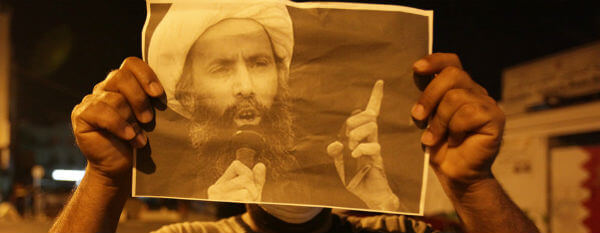
nimr-poster

The Washington Post reports: Had Saudi Arabia not sentenced Sheik Nimr Baqr al-Nimr to death, it is unlikely his name would have resonated much beyond the Shiite communities of Saudi Arabia and Bahrain, where he helped inspire anti-government protests by disgruntled Shiites in 2011.

As it was, he became synonymous among Shiites across the region with the oppression of Shiite minorities in the Sunni Arab Gulf, and his execution on Saturday put him at the heart of the most dangerous rupture between Saudi Arabia and Iran in decades.

Forgotten in the furor over the trashing of the Saudi Embassy in Tehran and the subsequent rupture of diplomatic relations by Riyadh is Nimr himself, an enigmatic figure onto whom both sides in the regional conflict have projected their dueling visions.

“He would not have reached this level of prominence if the Saudis hadn’t turned him into a martyr by executing him,” said Mohamad Bazzi, a professor at New York University who is writing a book about the Saudi-Iranian rivalry.

Exactly who Nimr was and what he stood for remain something of a mystery, Bazzi said.

To the Saudis, he was as much of a terrorist as any of the al-Qaeda operatives executed the same day, a traitor who had incited violence and called repeatedly for the overthrow of the Saudi royal family.

His execution was every bit as justified as the killing by U.S. Navy SEALs of Osama bin Laden, a Saudi citizen, said Abdullah al-Shammari, a Saudi political analyst. “Osama bin Laden didn’t kill Americans with his own hand, but his role was to incite people to commit terrorism,” he said.

Iran has cast Nimr as a martyr who died for his faith at the hands of a tyrannical and illegitimate Sunni regime, an heir to the legacy of a long line of martyrs to the Shiite cause.

To his followers, he was an inspiration, a man who articulated their demands for a fairer society and in some instances marched alongside them in their protests. He insulted the royal family in language few Saudis would dare to use, saying in one sermon that he hoped that a Saudi prince who had recently died “will be eaten by worms and suffer the torment of hell in his grave.”

In his own words, according to the available records of his sermons and the few interviews he gave, he was an ardent and uncompromising advocate of the rights of the downtrodden, wherever they might be. Defying the sectarian straitjacket into which he has been cast by the uproar that followed his death, he identified Iran’s ally, Syrian President Bashar al-Assad, as being among the tyrants worthy of being overthrown. He favored peaceful protests — “the roar of the word against authorities rather than weapons,” according to an interview he gave to the BBC in 2011 — but did not explicitly rule out violence as a means of defeating tyranny.

He also defined Shiites as intrinsically more peaceful than Sunnis, telling U.S. diplomats in Riyadh that Shiites, “even more than Sunnis, are natural allies for America,” according to a 2008 diplomatic cable from the WikiLeaks website. [Continue reading…]


Facebooktwittermail

Even while claiming it was uncertain, the oil industry designed its infrastructure to withstand the effects of climate change

The Los Angeles Times reports: A few weeks before seminal climate change talks in Kyoto back in 1997, Mobil Oil took out a bluntly worded advertisement in the New York Times and Washington Post.

“Let’s face it: The science of climate change is too uncertain to mandate a plan of action that could plunge economies into turmoil,” the ad said. “Scientists cannot predict with certainty if temperatures will increase, by how much and where changes will occur.”

One year earlier, though, engineers at Mobil Oil were concerned enough about climate change to design and build a collection of exploration and production facilities along the Nova Scotia coast that made structural allowances for rising temperatures and sea levels.

“An estimated rise in water level, due to global warming, of 0.5 meters may be assumed” for the 25-year life of the Sable gas field project, Mobil engineers wrote in their design specifications. The project, owned jointly by Mobil, Shell and Imperial Oil (a Canadian subsidiary of Exxon), went online in 1999; it is expected to close in 2017.

The United States has never ratified the 1997 Kyoto Protocol to reduce greenhouse emissions.

A joint investigation by the Columbia University Graduate School of Journalism’s Energy and Environmental Reporting Project and the Los Angeles Times earlier detailed how one company, Exxon, made a strategic decision in the late 1980s to publicly emphasize doubt and uncertainty regarding climate change science even as its internal research embraced the growing scientific consensus.

An examination of oil industry records and interviews with current and former executives shows that Exxon’s two-pronged strategy was widespread within the industry during the 1990s and early 2000s.

As many of the world’s major oil companies — including Exxon, Mobil and Shell — joined a multimillion-dollar industry effort to stave off new regulations to address climate change, they were quietly safeguarding billion-dollar infrastructure projects from rising sea levels, warming temperatures and increasing storm severity. [Continue reading…]

Facebooktwittermail

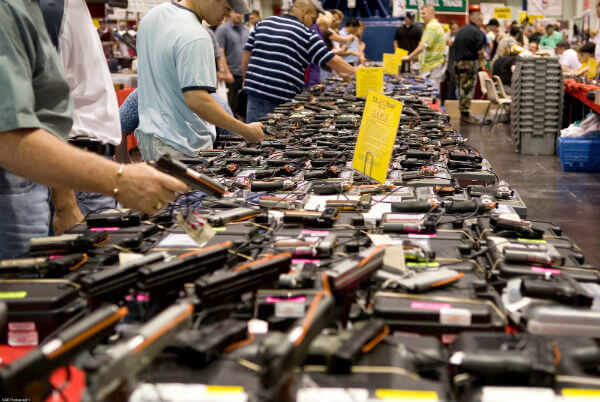
Gun stocks are soaring as Obama proposes new gun control measures

gun-shopping

Quartz reports: Another gun control measure, another rally for gun stocks.
As US president Barack Obama spoke about his proposal to further regulate firearms, shares of Smith & Wesson climbed more than 10% in midday trading today (Jan. 5), while Sturm, Ruger & Co. moved up 7%.

Although most Americans don’t own guns and want more gun control, a minority who do own guns end up buying more of them when they feel that stricter regulation — or even just the threat of it — is coming down the pike. And that’s what is set to happen now that Obama, after being repeatedly frustrated by Congress, has chosen to pursue the issue unilaterally with executive action that would: [Continue reading…]

Facebooktwittermail

Mapping the Earth from the surface to the core

Steve LeVine writes: This was the defining tension underlying the half-century-long study of the supercontinents: That, unlike in other fields that deal in the very old, the scientists had no time machine. Astronomers, by looking through telescopes at galaxies billions of light years away, are transported back to the early universe. Paleontologists, by stumbling on ancient fossils, can look directly at remnants of prehistoric life. But no instrument or evidence had ever similarly teleported their paleogeologist comrades back to the age of supercontinents.

Instead, paleogeologists painstakingly pieced together their theories using disparate fragments of clues, mainly from the magnetic signatures in old rocks. At first, to give their field a face, they translated these clues into cut-out shapes on paper or in Adobe Illustrator, and strung them together into mosaic-like animations still found today on Google.

But while pretty good as far as they went, most such depictions were faulty in important ways. Among the unavoidable imperfections was their typical reliance on a “flat Earth,” two-dimensional illustrations that distorted the appearance and movement of the continents. In addition, they provided plate movements, but ignored the inextricable system that penetrates thousands of miles into the bowels of the Earth, linked all the way to the core. [Continue reading…]

Facebooktwittermail

The politics animating Sunni-Shia sectarian conflict

Nader Hashemi writes: The response by most Arab regimes, principally those of the GCC, to the Arab Spring is revealing. It serves to highlight the salience of authoritarianism over theology in understanding the dynamics of Sunni-Shi‘i relations today. Fearing that the demand for political change would sweep across the Arab world and destabilize their own societies, several of these regimes relied on a strategy of exploiting sectarianism to deflect demands for democratization. The response from these governments can be situated within the framework of Joel Migdal’s thesis [discussed earlier in this article] on the nature of “weak states” and the “strategies of survival” that shape their politics.

In writing about the House of Saud’s reaction to the Arab Spring, Madawi al-Rasheed observes that:

Sectarianism became a Saudi pre-emptive counter-revolutionary strategy that exaggerates religious difference and hatred and prevents the development of national non-sectarian politics. Through religious discourse and practices, sectarianism in the Saudi context involves not only politicizing religious differences, but also creating a rift between the majority Sunnis and the Shia minority.

This was made easier when only Shi‘as in the Eastern province came out to demonstrate during the Arab Spring, while similar protests in the rest of Saudi Arabia failed to materialize. The specter of an Iranian Shi‘i/Savafid threat was invoked, and the usual Wahhabi court (Ulema) were given air time to issue fatwas against public demonstrations and to warn people of the wrath of God that would fall upon those who defied their rulers. The security forces were then brought in as backup to restore order via the usual tactics of repression that are common in non-democratic regimes.

Al-Rasheed, however, notes that it is wrong to characterize relations between the Saudi regime and its Shi‘i population as a one-way street that relies exclusively on repression. The House of Saud “deploys multiple strategies when it comes to its religious minorities and their leadership,” she observes. “Wholesale systematic discrimination against the Shia may be a characteristic of one particular historical moment, but this can be reversed. A political situation may require alternatives to repression. Sometimes repression is combined with co-optation and even promotion of minority interests and rights.”

For example, when ISIS bombed Shi‘i worshippers on two occasions in May 2015, the Saudi regime strongly condemned the attacks and vowed to hunt down the perpetrators. Expressions of solidarity with the Shi‘a soon followed and were widely disseminated on official state media. Summarizing this strategy, al-Rasheed concludes that:

It is important to note that there is no regular and predictable strategy deployed by Saudi authoritarianism against the Shia. Each historical moment requires a particular response towards this community, ranging from straightforward repression to co-optation and concession. The Arab Spring and its potential impact on the country pushed the regime to reinvigorate sectarian discourse against the Shia in order to renew the loyalty of the Sunni majority.

[Continue reading…]

Facebooktwittermail

The Saudi execution will reverberate across the Muslim world

Brian Whitaker writes: Saudi Arabia’s execution of Sheikh Nimr al-Nimr, a prominent Shia cleric, on Saturday was an act motivated more by politics than judicial considerations. Although in a BBC interview William Patey – a former British ambassador in Riyadh – charitably described Nimr’s killing as a Saudi “miscalculation”, the consequences so far have been totally predictable.

In Iran, the headquarters of Shia Islam, the authorities turned a blind eye while demonstrators set fire to the Saudi embassy, and the Saudis have now responded by severing diplomatic relations. Bahrain quickly followed suit and the UAE downgraded its relations too. The execution has also triggered demonstrations among Shia communities elsewhere – including Bahrain, where the Shia majority is ruled by a Sunni minority.

More seriously, but no less predictably, the inflaming of sectarianism will have knock-on effects in Syria and Iraq. In Syria, where Saudi Arabia backs Sunni Islamists and Iran is supporting the President Assad regime, we can expect a hardening of positions at a time when international peace efforts are aimed at softening them and starting a dialogue. [Continue reading…]

Facebooktwittermail

Yemen: The country caught in the middle of the Iranian-Saudi power struggle

yemen-bombing

Bobby Ghosh writes: Of the two things Saudi Arabia did on Jan. 2 to make the world a more dangerous place, one has caught all the attention: the execution of the dissident Shia cleric Nimr al-Nimr. That led to the fire-bombing of the Saudi embassy in Tehran, and Riyadh’s retaliatory decision to break off diplomatic ties.

The other, however, has gone almost unnoticed: the formal ending of a poorly-observed truce in Yemen, and new airstrikes by a Saudi-led coalition of Arab states against Shia rebels known as the Houthis.

Much of the analysis following the events of the weekend has focused on fears that the Saudi-Iranian conflict will derail peace talks on Syria (paywall), where Iran backs president Bashar al-Assad and Saudi Arabia backs opposition rebels. Indeed, the talks planned for later this month may not now happen at all. But the consequences for Yemen are no less dire.

Yemen’s civil war, raging for nearly a year, seems fated to constantly be drowned out by tumult elsewhere in the region. (When it does get some press, headline writers inevitably label it the “forgotten war.”) Nearly 3,000 civilians have been killed in the fighting, the country’s already fragile economy has been shattered, and attempts at negotiated settlement have gone nowhere. The resumption of airstrikes by the Saudi-led coalition — which enjoys US support — means the impoverished nation at the foot of the Arabian Peninsula is not likely to find peace anytime soon.[Continue reading…]

Facebooktwittermail

The ten most important developments in Syria in 2015

Assad

Aron Lund writes at length on each of these developments:

10. The Death of Zahran Alloush.
9. The Failure of the Southern Storm Offensive.
8. Operation Decisive Quagmire.
7. Europe’s Syria Fatigue vs. Assad’s Viability
6. The Vienna Meeting, the ISSG, and Geneva III.
5. The Donald.
4. The Iran Deal.
3. The Continuing Structural Decay of the Syrian Government.
2. The American-Kurdish Alliance.
1. The Russian Intervention. [Continue reading…]

Facebooktwittermail

ISIS signals business as usual, with menacing new ‘frontman’

Martin Chulov writes: His tone was flatter, his physique less muscled, but his intent as menacing as his predecessor. The debut of what appears to be a new British-accented jihadi in an Islamic State propaganda film seemed tailored to signal business as usual for the terror group, two months after its foreboding former face, Mohammed Emwazi, was killed.

A lot has happened since then; the coordinated attacks in Paris, three mass bombings in southern Turkey, apparent near-misses in Munich and Brussels, a downed Russian passenger jet in the Sinai and heightened anxiety from Madrid to Istanbul.

But this latest video was aimed directly at the UK. The message was simple: David Cameron’s decision to bomb Isis targets in Syria had made Britain more of a target. And that whenever one British Isis frontman was killed, another was ready to take his place. [Continue reading…]

Facebooktwittermail

Jihadists deepen collaboration in North Africa

The New York Times reports: A group of light armored vehicles skated over the moonscape of the Sahara, part of one of the largest detachments the French military has deployed here since colonial times. Its mission is growing ever more urgent: to cut smuggling routes used by jihadists who have turned this inhospitable terrain into a sprawling security challenge for African and international forces alike.

Many of the extremist groups are affiliates of Al Qaeda, which has had roots in North Africa since the 1990s. With the recent introduction of Islamic State franchises, the jihadist push has been marked by increasing, sometimes heated, competition.

But, analysts and military officials say, there is also deepening collaboration among groups using modern communications and a sophisticated system of roving trainers to share military tactics, media strategies and ways of transferring money.

Their threat has grown as Libya — with its ungoverned spaces, oil, ports, and proximity to Europe and the Middle East — becomes a budding hub of operations for both Al Qaeda and the Islamic State to reach deeper into Africa.

And as Africa’s jihadists come under the wing of distant and more powerful patrons, officials fear that they are extending their reach and stitching together their ambitions, turning once-local actors into pan-national threats. [Continue reading…]

Facebooktwittermail

Egypt now looks a lot like it did in 2010, just before 2011 unrest

Michele Dunne and Nik Nevin write: Egypt of December 2015 is looking a lot like Egypt of late 2010 and the final months of Hosni Mubarak‘s three-decade rule. The country’s longtime military president had little political sophistication; then as now, there were struggles between the military and businessmen for economic and political power, human rights abuses, economic woes, and jihadi groups in the Sinai. But today, these things appear more pronounced.

The membership and mission of the recently elected 598-seat House of Representatives bear similarities to the parliament chosen a few months before the January 2011 uprising, but each is more exaggerated. Other developments in Egypt echo the dysfunction of 2010, raising questions about whether another upheaval might be brewing. [Continue reading…]

Facebooktwittermail

Why Paris worked: A different approach to climate diplomacy

pattern4

David Victor writes: Why did Paris work when almost everything before it failed? The central answer lies in a new style of international cooperation, one that has enabled 195 countries to formally adopt an agreement that is likely to have a real impact on the emissions that cause climate change, as well as on how societies adapt to the big shifts in climate that are coming.

The contrast of Paris with the past could not be starker. The 1992 Rio framework to get serious climate diplomacy going was the right approach, but diplomats and climate activists steered that framework off the rails, and for 23 years — until now — they achieved very little. The 1997 Kyoto Protocol was so riddled with flaws that it had essentially no impact on emissions. The 2009 climate negotiations in Copenhagen ended in acrimony and recriminations.

Now, instead of setting commitments through centralized bargaining, the Paris approach sets countries free to make their own commitments. These “nationally determined contributions” are a starting point for deeper cooperation that will unfold over time. Once the Paris agreement enters into force and is fully in motion, around the year 2020, each nation will be expected to adopt a new pledge every five years in tandem with periodic overall efforts to take stock of how the group of nations is doing. [Continue reading…]

Facebooktwittermail

How plants fight to stay alive

lichen8

Mike Newland writes: Compared to the hectic rush of our bipedal world, a plant’s life may appear an oasis of tranquility. But look a little closer. The voracious appetites of pests put plants under constant stress: They have to fight just to stay alive.

And fight they do. Far from being passive victims, plants have evolved potent defenses: chemical compounds that serve as toxins, signal an escalating attack, and solicit help from unlikely allies.

However, all of this security comes at a cost: energy and other resources that plants could otherwise use for growth and repair. So to balance the budget, plants have to be selective about how and when to deploy their chemical arsenal. Here are five tactics they’ve developed to ward off their insect foes without sacrificing their own wellbeing. [Continue reading…]

Facebooktwittermail

America divided

John Brockman asked contributors to The Edge: what do you consider the most interesting recent scientific news? Jonathan Haidt responded: If you were on a selection committee tasked with choosing someone to hire (or to admit to your university, or to receive a prize in your field), and it came down to two candidates who were equally qualified on objective measures, which candidate would you be most likely to choose?

__A) The one who shared your race
__B) The one who shared your gender
__C) The one who shared your religion
__D) The one who shared your political party or ideology

The correct answer, for most Americans, is now D. It is surely good news that prejudice based on race, gender, and religion are way down in recent decades. But it is very bad news—for America, for the world, and for science—that cross-partisan hostility is way up.

My nomination for “news that will stay news” is a paper by political scientists Shanto Iyengar and Sean Westwood, titled “Fear and Loathing Across Party Lines: New Evidence on Group Polarization.” Iyengar and Westwood report four studies (all using nationally representative samples) in which they gave Americans various ways to reveal both cross-partisan and cross-racial prejudice, and in all cases cross-partisan prejudice was larger.

First they used a measure of implicit attitudes (the Implicit Association Test), which measures how quickly and easily people can pair words that are emotionally good versus bad with words and images associated with Blacks vs. Whites. They also ran a new version of the test that swapped in words and images related to Republicans vs. Democrats, instead of Blacks vs. Whites. The effect sizes for cross-partisan implicit attitudes were much larger than cross-race. If we focus just on White participants who identified with a party, the cross-partisan effect was about 50 percent larger than the cross-race effect. When Americans look at each other or try to listen to each other, their automatic associations are more negative for people from the “other side” than they are for people of a different race. [Continue reading…]

Facebooktwittermail

Donald Trump and the politics of disgust

decaycol

Alexander Hurst writes: In 2012, a team of academics from Europe and the U.S. — Yoel Inbar, David Pizarro, Ravi Iyer, and Jonathan Haidt — published a paper titled “Disgust Sensitivity, Political Conservatism, and Voting,” looking at the role disgust plays in political orientation. The researchers posited three different types of disgust: interpersonal disgust (i.e., the feeling produced by drinking from the same cup as someone else); core disgust (the response to maggots, vomit, dirty toilets, etc.); and animal-reminder disgust (how we react to corpses, blood, anything that evokes our animal nature).

Disgust, they write, “serves to discourage us from ingesting noxious or dangerous substances,” but also plays a role in moral and social judgments. Those who feel more disgusted by unpleasant images, smells, or tastes judge more harshly that which violates their subjective moral code.

The team had respondents position themselves on a political scale from conservative to liberal. The respondents then stated how strongly they agreed or disagreed with statements like “I never let any part of my body touch the toilet seat in a public washroom,” and rated other hypotheticals according to the level of disgust they generated. Even when controlling for age, education, geography, and religious belief, individuals with higher “disgust sensitivity” were found to be more likely to tolerate wealth inequality, view homosexuality negatively, and place more belief in authoritarian leaders and systems.

Most strikingly, interpersonal disgust was an important predictor of anti-immigrant attitudes.

Trump, of course, is a well-known, admitted germaphobe. “One of the curses of American society is the simple act of shaking hands,” he wrote in The Art of the Deal. “I happen to be a clean hands freak. I feel much better after I thoroughly wash my hands, which I do as much as possible.”

Trump even described shaking hands as “barbaric” in an interview with Dateline in 1999, saying, “They have medical reports all the time. Shaking hands, you catch colds, you catch the flu, you catch it, you catch all sorts of things. Who knows what you don’t catch?”

Beyond the aversion to hand-shaking, Trump used to pre-test his dates for AIDS, and reportedly avoids pushing elevator buttons.

The connection between modern xenophobia, disgust sensitivity, and the strength of Trump’s campaign is fairly easy to make. As Inbar, Pizarro, Iyer, and Haidt point out, “Disgust evolved not just to protect individuals form oral contamination by potential foods, but also from the possibility of contamination by contact with unfamiliar individuals or groups.” And after all, Trump’s success has come not from presenting voters with detailed policy proposals, but from connecting with them on a gut level. [Continue reading…]

Facebooktwittermail

A generation of failed politicians has trapped the West in a tawdry nightmare

decay

Pankaj Mishra writes: Racism, a beast cornered if not tamed after much struggle, has lumbered back to civil society in the solemn guise of “reforming” Islam. Tony Blair summons us to worldwide battle on behalf of western values while embodying, with his central Asian clients, their comprehensive negation. The handful of media institutions and individuals that are not obliged to flesh out Rupert Murdoch’s tweets on Muslims seem to be struggling to remain viable in an increasingly retrogressive political culture. Even the BBC seems determined not to stray far from the Daily Mail’s editorial line.

Unsurprisingly, we witness, as Judt pointed out, “no external inputs, no new kinds of people, only the political class breeding itself”. “The old ways of mass movements, communities organised around an ideology, even religious or political ideas, trade unions and political parties to leverage public opinion into political influence” have disappeared. Indeed, the slightest reminder of this democratic past incites the technocrats of politics, business and the media into paroxysms of scorn.

Having acted recklessly to create their own reality, they have managed to trap all of us in a tawdry nightmare – a male buddy film of singular fatuousness. At the same time, reality-making has ceased to be the prerogative of the American imperium or of the French and British chumocrats, who lost their empires long ago and are still trying to find a role for themselves.

Some random fanatic, it turns out, can make their reality far more quickly, coercing the world’s oldest democracies into endless war, racial-religious hatred and paranoia. Such is the great power surrendered by the crappy generation and its epigones. The generations to come will scarcely believe it. [Continue reading…]

Facebooktwittermail

Sheldon Adelson’s purchase of Las Vegas paper seen as a power play

The New York Times reports: Two days after Sheldon Adelson’s lawyers lost in their attempts to have a judge removed from a contentious lawsuit that threatens his gambling empire, a call went out to the publisher of this city’s most prominent newspaper.

Almost immediately, journalists were summoned to a meeting with the publisher and the general counsel and told they must monitor the courtroom actions of the judge and two others in the city. When the journalists protested, they were told that it was an instruction from above and that there was no choice in the matter.

It is unclear whether Mr. Adelson, who was then in talks to buy the newspaper, The Las Vegas Review-Journal, or his associates were behind the directive or even knew about it. But it was an ominous coincidence for many in the city who worry what will become of the paper now that it is owned by Mr. Adelson, a billionaire casino magnate and prominent Republican donor with a history of aggressively pursuing his interests.

Suspicions about his motives for paying a lavish $140 million for the newspaper last month are based on his reputation in Las Vegas as a figure comfortable with using his money in support of his numerous business and political concerns, said more than a dozen of the current and former Review-Journal staffers and local civic figures who have worked closely with him. [Continue reading…]

Facebooktwittermail