A new peace process demands new language
If almost 1,000 Israelis had just been killed and another 3,000 wounded, Israel as a nation would take justifiable offense at anyone who suggested to them that now was the time to return to the negotiating table. To approach ones enemy in such a moment is the ultimate expression of defeat.
For Palestinians in this moment, with no state, with no practical support from their vocal allies, a refusal to accept defeat is the thread upon which hangs their dignity and their hopes for a self-determined national identity.
If the Obama administration wants to grasp the political opportunity created by the current crisis, a clear and meaningful starting point can come through adopting new language for framing the issues.
“Choosing talks over terror” (see Richard Haass’ commentary below) is a repudiation of the Bush paradigm that has consistently devalued negotiation yet it reaffirms the language of the war on terrorism.
For over two weeks, a 1.5 million Palestinians have been terrorized. It would be absurd to claim otherwise. At any other time in any other location, if a state was raining down missiles and bombs on a population that was being encouraged to flee even while it was simultaneously being caged in, such a state would be accused of mercilessly terrorizing that population.
The choice that Palestinians — and Israelis — need to be persuaded to make is between negotiation and armed confrontation.
Only when our language refrains from taking sides can we begin to be seen as even-handed.
Secondly, if the US wants to grade the region’s actors in a meaningful way, it’s time to toss out another key element in the Bush paradigm: the idea that the Middle East is divided between “moderates” and “extremists.”
Instead of flattering US allies by calling them moderates, we should be paying attention to which countries and populations have a greater appetite for democracy and which regimes are nurturing or supressing that appetite. While none of America’s friends count well on that score, as the global Democracy Index indicates the most fertile ground for democratic development in the Middle East is among Palestinians.
When the seeds of Palestinian democracy started to take root in 2006, it was the US, Israel and Europe who were intent on aborting the birth of democracy (see the Christian Science Monitor commentary below for an excellent account of the US-sponsored sabotage of Palestinian democracy). The mistrust this democratic betrayal has engendered has created a huge obstacle that can only be removed by a new and tangible demonstration by the so-called facilitators of peace that they are now pursuing this goal in good faith. So far, the only clear message that has gone out across the region is that Israel enjoys unequivocal Western support however it chooses to act. That message provides no basis for a peace process.
An inside story of how the US magnified Palestinian suffering
Hamas never called for the elections that put them in power. That was the brainstorm of Secretary Rice and her staff, who had apparently decided they could steer Palestinians into supporting the more-compliant Mahmoud Abbas (the current president of the Palestinian authority) and his Fatah Party through a marketing campaign that was to counter Hamas’s growing popularity – all while ignoring continued Israeli settlement construction, land confiscation, and cantonization of the West Bank.
State Department staffers helped finance and supervise the Fatah campaign, down to the choice of backdrop color for the podium where Mr. Abbas was to proclaim victory. An adviser working for the United States Agency for International Development (USAID) explained to incredulous staffers at the Embassy in Tel Aviv how he would finance and direct elements of the campaign, leaving no US fingerprints. USAID teams, meanwhile, struggled to implement projects for which Abbas could claim credit. Once the covert political program cemented Fatah in place, the militia Washington was building for Fatah warlord-wannabee Mohammed Dahlan would destroy Hamas militarily.
Their collective confidence was unbounded. But the Palestinians didn’t get the memo. Rice was reportedly blindsided when she heard the news of Hamas’s victory during her 5 a.m. treadmill workout. But that did not prevent a swift response.
She immediately insisted that the Quartet (the US, European Union, United Nations, and Russia) ban all contact with Hamas and support Israel’s economic blockade of Gaza. The results of her request were mixed, but Palestinian suffering manifestly intensified. The isolation was supposed to turn angry Palestinians against an ineffective Hamas. As if such blockades had not been tried before.
Simultaneously, the US military team expanded its efforts to build the Mohammed Dahlan-led militia. President Bush considered Dahlan “our guy.” But Dahlan’s thugs moved too soon. They roamed Gaza, demanding protection money from businesses and individuals, erecting checkpoints to extort bribes, terrorizing Dahlan’s opponents within Fatah, and attacking Hamas members.
Finally, in mid-2007, faced with increasing chaos and the widely known implementation of a US-backed militia, Hamas – the lawfully elected government – struck first. They routed the Fatah gangs, securing control of the entire Gaza Strip, and established civil order. [continued…]
Every crisis holds within it the seeds of opportunity, and this one is no exception. But to take advantage of it, Washington must give Palestinians a reason for choosing talks over terror. The only way to do this is to demonstrate that talking—negotiating—will deliver more than fighting.
Sooner rather than later the new president should publicly articulate the contours of what the United States believes would constitute a just settlement of the Middle East conflict. This means calling for the establishment of a viable Palestinian state based on 1967 lines, with territorial compensation for those borders altered to take into account Israel’s large settlement blocs and legitimate security requirements. Palestinian refugees would receive financial compensation and the right to settle in the new country of Palestine but, with few exceptions, not in Israel. Palestinians would enjoy some foothold in Greater Jerusalem (so that they could claim it as their capital) and authority over Muslim holy places.
Aid and investment can also strengthen the hands of moderates, although it needs to be complemented by easing the movement of goods and people in and out of the West Bank and Gaza. It is essential to rein in Israeli settlement activity lest Palestinians conclude their state will never be viable. And it’s worth trying to drive a wedge between Hamas and Syria. The United States should join with Turkey in mediating between Syria and Israel. A deal ought to be possible in which Israel returns all of the Golan Heights (which are then demilitarized for a set period of time) in exchange for peace and a halt to Syrian support for Hizbullah and Hamas. The United States would then ease economic sanctions against Damascus.
We have learned in Iraq and elsewhere that political and economic progress cannot take place without security. This means we should continue to build up Palestinian police and military forces. It could also mean creating an international force, possibly one drawn from Arab and Islamic countries, to maintain calm in Gaza. The alternative is to depend on Israeli deterrence and Hamas’s restraint, which as recent events demonstrate are prone to breaking down.
It is too soon to know whether the moderates would win out over the radicals or, as happened in Northern Ireland, many of the radicals would evolve and become more moderate. This should be encouraged; over time, elements of Hamas might conclude that their only hope of realizing a Palestinian state is by trading in their guns. Those willing to embrace this approach could become part of a Palestinian coalition government. [continued…]



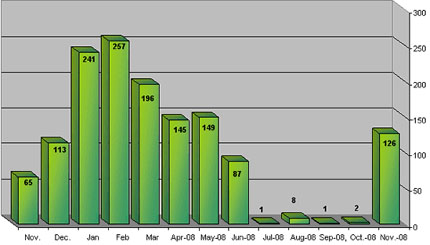
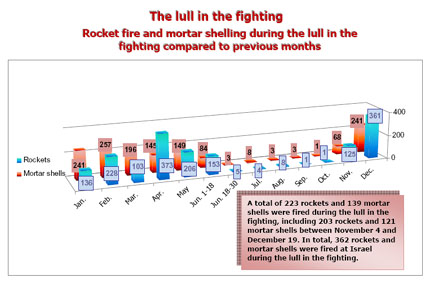
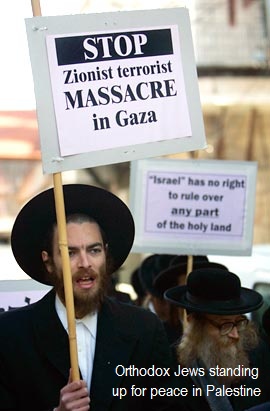 e had no choice,” has become Israel’s national mantra.


 s the incoming president, world-renowned for his eloquence, about to become better known for his silence?

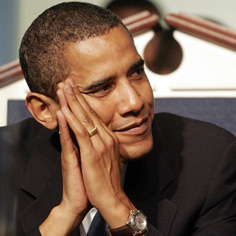 Pssst! Did you hear? Obama’s not a secret Muslim — he’s a Buddhist.
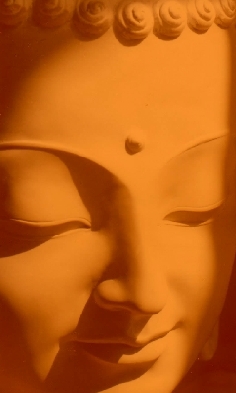 How is it that at the end of one of the longest of political campaigns, after a relentless struggle during which attacks rained down like showers of arrows and then finally at a moment that marks a turning point not only in the history of this nation but for the whole world — how is it that such a moment could be met with the equanimity that Barack Obama displayed on the night of November 4, 2008?
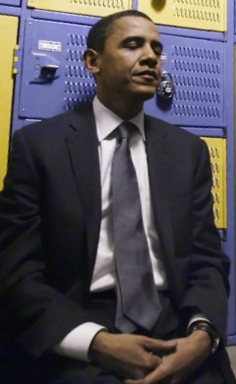 The fact that Obamamania has produced supporters who seem more like devotees is a phenomenon which understandably raised concerns among many observers during the campaign. At the same time it provided another window into Obama’s character.