President Obama in an historic address reaches out to Iran. It has to be a good thing. Right? I’m far from sure.
This is what Obama said in his Nowruz (new year) address:
Obama said: “The United States wants the Islamic Republic of Iran to take its rightful place in the community of nations.”
Oh, and here comes Israeli President Shimon Peres with a similar message: “On the eve of the new year, I appeal to the noble Iranian people on behalf of the ancient Jewish people and urge them to reclaim their worthy place among the nations of the enlightened world.”
So, it turns out that the Iranian people and their leaders are being targeted by a joint US-Israeli appeal. How’s that going to go down?
Does the US really want to be perceived as making its diplomatic moves towards Iran as a coordinated US-Israeli effort? That might please the Israelis but it doesn’t seem like a smart way of advancing America’s diplomatic interests.
The fundamental problem with turning diplomacy into this kind of public spectacle is that it can promote more confusion than clarity. Before the message can be articulated, every target audience has to be taken into consideration. In this case it means that the White House needed tailor the words, the tone, and the medium of delivery so that something approximating the desired response could be registered in the following audiences (and I won’t even attempt to guess the order):
Iran’s leaders
the Iranian people
Israel’s leaders
the Israeli people
the Israel lobby
the EU
Russia
China
US Gulf allies
Congress
commentators who are promoting engagement
commentators who warn about “appeasement”
Democrats
Republicans
the Iraqi government
Muslims
Iranian expatriates
Syria
Iranian non-state allies
OK. If anyone in the White House is reading this, they’re probably thinking “if only we could be that thorough. We actually only ran it by Hillary, Dennis and Rahm and they seemed to like it.”
Still, I’m really just trying to make a point. That is, when you’re crafting a message and trying to find a way of making it play with a multitude of audiences who have conflicting agendas, it’s really difficult to say anything with substance. It ends up coming out like… a presidential statement.
What will the outcome be? Maybe we can expect an Ahadinejad YouTube in the next few weeks.
Is this what we really need — more YouTube diplomacy? Or is it time for serious, substantive talks behind closed doors where the focus is on results — not public diplomatic flourishes.
And let’s not forget that it was only two weeks ago that Obama’s secretary of state was reported as saying that she was “very doubtful” that a US diplomatic overture would be successful in persuading Iran to give up its nuclear ambitions.
Who are the Iranians supposed to be paying attention to? The US president or his chief diplomat?
(And another reminder: Iranians are quite used to serenades from American presidents: “We respect your country. We admire your rich history, your vibrant culture and your many contributions to civilization.” That was George Bush in 2006.)
When Hillary Clinton met Benjamin Netanyahu in Jerusalem during her recent visit to Israel, her party was dismayed to see Uzi Arad at the next Israeli prime minister’s side. Arad’s involvement in the “AIPAC case” has resulted in him being barred from entry into the US. Joseph Fitsanakis continues the story:
As soon as Secretary Clinton and her advisers realized Arad was standing next to Netanyahu in the meeting room, they tried to discreetly avoid diplomatic complications by requesting that “only three participants from each side stay in the meeting”. It was an indirect way of requesting that Mr Arad leave the room. But the US delegation was stunned when Israel’s Prime Minister-Designate kept the former Mosad agent present, choosing instead to kick out Israel’s Ambassador to the United States, Sallai Meridor. Clinton’s delegation did not say a word about the Netanyahu’s diplomatic slap-in-the-face, hoping the incident would not make headlines. Ambassador Meridor was not so sensitive about the affair. He was so put off that he announced his resignation soon afterwards.
Netanyahu’s office later explained that Arad’s presence was required in the meeting “because of the Iranian issue.”
Arad is an advocate of “maximum deterrence” towards Iran and has said Israel should threaten to strike ‘everything and anything of value.’ He has said Israel should threaten to hit the Iranian leadership and their holiest sites and that they should hit everything together. This comes from the man tipped to become Netanyahu’s national security adviser.
Arad also recently made the following remarks about the Palestinians. During an interview on Israel National News TV (Arutz Sheva is a media network based in the West Bank and is seen as the voice of the Jewish settler movement), Arad was asked whether the time has come to abandon the two-state solution. This is how he responded:
I don’t think that one has to go that far because at the end of the day, I don’t think the majority of Israelis want to see themselves responsible for the Palestinians. We do not want to control the Palestinian population. It’s unnecessary. What we do want is to care for our borders, for the Jewish settlements and for areas which are unpopulated and to have our security interests served well. But also to take under our responsibility these populations which, believe me, are not the most productive on earth, would become a burden. We want to relieve ourselves of the burden of the Palestinian populations – not territories. It is territory we want to preserve, but populations we want to rid ourselves of.
Benjamin Netanyahu is set to select Avigdor Lieberman as his foreign minister. Lieberman might not be barred from entering the United States but I doubt that he’ll be honored with photo-ops getting a warm greeting from President Obama. As for Netanyahu’s national security adviser, Uzi Arad, he’s unlikely to enjoy much face-to-face contact with his American counterparts since at this time the former director of research for Mossad can’t visit the US. He’s currently barred from entering the country through the use of a statute that prevents entry to people who may seek “to violate any law of the United States relating to espionage or sabotage.”
If the IDF follows Arad’s advice, given two years ago, this is what UPI reported we can expect:
Israel should threaten to strike “everything and anything of value,” he said.
Should Israel threaten to hit their leadership? Yes. Their holiest sites? Yes. Everything together? Yes, Arad recommended.
Obama and Secretary Clinton (and her sidekick Dennis Ross) can reiterate the obligatory “all diplomatic avenues must be pursued,” but there’s one diplomatic weapon they need to wield soon — before it’s too late: they need to make explicit the position of the United States in the event that Israel decides to act unilaterally.
Would Israeli officials make reckless threats if they didn’t feel assured that in the event of a military engagement between Israel and Iran the US would resolutely stand next to its ally — even if the Jewish state had chosen to act unilaterally?
Their bluster surely rests on their confidence that no administration in Washington has the guts to ever tell them their on their own.
Unless Obama changes that perception, there is a real danger that the US will be dragged into another war, against the will of the American people and its government.
The Israelis need to be shown a red line. If that doesn’t happen, the gravest national security decision to impact the United States will be one in which the US government chose to have no voice.
Denying the existence of the Israel lobby is like saying there’s no such thing as global warming.
But just as global warming deniers later decided to reposition themselves by acknowledging its reality while suggesting it was harmless, those who now reluctantly concede that the lobby exists want to insist that it is benign and not particularly powerful. They charge that far more dangerous than the lobby are its critics: a fanatic bunch of slanderers who stand at the vanguard of a global wave of anti-Semiticism.
Even so, the lobby that preferred to hide in the shadows has now broken cover and while intoxicated with victory wants to bring down another quarry.
In a victory message (revealed by Mondoweiss), Daniel Pipes, director of the Middle East Forum, heralded Steven Rosen’s “achievement” after having got “the word out” — mobilized the lobby. Pipes applauded Rosen because, “Only someone with Steve’s stature and credibility could have made this happen.” There was a campaign and in three weeks it accomplished its goal: Chas Freeman bowed out.
But even now, the editors of the Washington Post want to try and sustain the charade that there is no lobby and denounce those of us who think otherwise:
Mr. Freeman issued a two-page screed on Tuesday in which he described himself as the victim of a shadowy and sinister “Lobby” whose “tactics plumb the depths of dishonor and indecency” and which is “intent on enforcing adherence to the policies of a foreign government.” Yes, Mr. Freeman was referring to Americans who support Israel — and his statement was a grotesque libel.
For the record, the American Israel Public Affairs Committee says that it took no formal position on Mr. Freeman’s appointment and undertook no lobbying against him. If there was a campaign, its leaders didn’t bother to contact the Post editorial board.
If the Post’s editorial board was truly outside the loop here it probably says less about the vigor of the campaign and more about the diminishing influence of their editorial page. It’s role is now that of being granted the final word — one that can then be applauded by its bloodthirsty allies like Marty Peretz: “With cool and stiletto words, the Post has put this man in the bin.”
(That’s an interesting choice of imagery and reinforces what I suggested yesterday: that it would in many ways be more fitting if we talked about the Israel mob instead of the lobby. Be that as it may, the language has now solidified in popular usage and Israel lobby it is. All that remains to be contested is whether it should be lobby or Lobby. I’m sticking with the small “l” since I think this is an entity held together with much stronger ideological than organizational glue.)
As for the Post’s assertion that AIPAC played no part, that might be its official position though Dan Fleshler says the organization didn’t just sit back and watch:
Very reliable sources inform me that Josh Block, an AIPAC spokesperson, contacted bloggers and journalists expressing concern about Freeman. That is probably what Freeman referred to when he mentioned “easily traceable e-mails” in the announcement that he was giving up the fight. Trust me on this one. I had to think twice about writing it because I want Block, who is generally very nice to critical journalists at the AIPAC Policy Conferences, to be nice to me. There is no way I would have written it unless it were manifestly true, and important.
Even it were not true, it is simply inconceivable that Mark Kirk, Charles Schumer and other Congressfolk who publicly objected to Freeman would have done so without the encouragement – or winks and nods – of AIPAC. The Hill is where it lives and breathes, and nothing this important could have been orchestrated without its blessing.
Only a few Jewish organizations came out publicly against Freeman’s appointment, but a handful of pro-Israeli bloggers and employees of other organizations worked behind the scenes to raise concerns with members of Congress, their staffs and the media.
For example, the American Israel Public Affairs Committee (AIPAC), often described as the most influential pro-Israel lobbying group in Washington, “took no position on this matter and did not lobby the Hill on it,” spokesman Josh Block said.
But Block responded to reporters’ questions and provided critical material about Freeman, albeit always on background, meaning his comments could not be attributed to him, according to three journalists who spoke to him. Asked about this yesterday, Block replied: “As is the case with many, many issues every day, when there is general media interest in a subject, I often provide publicly available information to journalists on background.”
Yesterday, the Jewish Institute for National Security Affairs, which tried to derail Freeman’s appointment, applauded his withdrawal. But it added: “We think Israel and any presumed ‘lobby’ had far less effect on the outcome than the common-sensical belief that the person who is the gatekeeper of intelligence information for the President of the United States should be unencumbered by payments from foreign governments.”
The suggestion that neither Freeman’s views on Israel nor the efforts of the Israel lobby were central is however quite easy to refute by engaging in a simple line of conjecture.
Consider the blog post through which Steven Rosen “got the word out”:
Readers of this blog know that I have been generally quite positive about the appointments the new Adminsitration is making for Middle East policy positions. Today’s news is quite different. According to Laura Rozen at the Foreign Policy blog, Chas W. Freeman, Jr., the former U.S. ambassador to Saudi Arabia, will become chairman of the National Intelligence Council, and may at times participate in daily intelligence briefings to President Obama. This is a profoundly disturbing appointment, if the report is correct. Freeman is a strident critic of Israel, and a textbook case of the old-line Arabism that afflicted American diplomacy at the time the state of Israel was born. His views of the region are what you would expect in the Saudi foreign ministry, with which he maintains an extremely close relationship, not the top CIA position for analytic products going to the President of the United States.
Here is a sample of his views on Israel, from his Remarks to the National Council on US-Arab Relations on September 12, 2005: “As long as the United States continues unconditionally to provide the subsidies and political protection that make the Israeli occupation and the high-handed and self-defeating policies it engenders possible, there is little, if any, reason to hope that anything resembling the former peace process can be resurrected. Israeli occupation and settlement of Arab lands is inherently violent. …And as long as such Israeli violence against Palestinians continues, it is utterly unrealistic to expect that Palestinians will stand down from violent resistance and retaliation against Israelis. Mr. Sharon is far from a stupid man; he understands this. So, when he sets the complete absence of Palestinian violence as a precondition for implementing the road map or any other negotiating process, he is deliberately setting a precondition he knows can never be met.”
Here is another example from 2008: “We have reflexively supported the efforts of a series of right-wing Israeli governments to undo the Oslo accords and to pacify the Palestinians rather than make peace with them. … The so-called “two-state solution” – is widely seen in the region as too late and too little. Too late, because so much land has been colonized by Israel that there is not enough left for a viable Palestinian state alongside Israel; too little, because what is on offer looks to Palestinians more like an Indian reservation than a country.”
According to Foreign policy blog, Freeman has told associates that in the job, he will occasionally accompany Director of National Intelligence Adm. Dennis Blair to give the president his daily intelligence briefing. His predecessor, Thomas Fingar, wore a second hat as deputy director of national intelligence for analysis.
Now subtract the parts relating to Israel. You’re left with this:
Readers of this blog know that I have been generally quite positive about the appointments the new Adminsitration is making for Middle East policy positions. Today’s news is quite different. According to Laura Rozen at the Foreign Policy blog, Chas W. Freeman, Jr., the former U.S. ambassador to Saudi Arabia, will become chairman of the National Intelligence Council, and may at times participate in daily intelligence briefings to President Obama. This is a profoundly disturbing appointment, if the report is correct. His views of the region are what you would expect in the Saudi foreign ministry, with which he maintains an extremely close relationship, not the top CIA position for analytic products going to the President of the United States.
According to Foreign policy blog, Freeman has told associates that in the job, he will occasionally accompany Director of National Intelligence Adm. Dennis Blair to give the president his daily intelligence briefing. His predecessor, Thomas Fingar, wore a second hat as deputy director of national intelligence for analysis.
Is this the basis of a campaign? I don’t think so.
Chas Freeman is a high-profile figure. He became one by his own design, through public speeches, some of them deliberately provocative. Making him NIC chairman would—unjustly but unavoidably—hurl all intelligence, and all policy based on intelligence, into the fray of fractious politics.
However, this is where Freeman’s foes misplayed their hand. Had they let Freeman step into the job, they could have used him as the whipping boy for all foreign-policy measures they don’t like—especially those involving the Middle East and China—and it might have been easier for them to rally opposition. But now it will be indisputably clear that the president is the one making policy. They’re left with Barack Obama as their target—and one thing that’s clear, so far, is that those who sling mud at Obama wind up hitting themselves.
This might turn out to be true but there are already indications that having successfully thrust a stiletto into Freeman, those who still have blood on their hands now have DNI Blair in their sights.
“It wasn’t until Mr. Freeman withdrew from consideration for the job, however, that it became clear just how bad a selection Director of National Intelligence Dennis C. Blair had made… The real question is why an administration that says it aims to depoliticize U.S. intelligence estimates would have chosen such a man to oversee them,” says the Washington Post.
“Blair revealed his true colors by hiring Freeman. From here on out, every intel product will be treated as suspect. The Obama administration’s attempt to politicize the intelligence process has badly muddied the waters,” wrote Michael Goldfarb in The Weekly Standard.
Did Freeman’s foes misplay their hand, as Fred Kaplan suggests, or are they now one step closer to achieving a much more significant goal: to be able cast doubt on any statement the DNI makes.
Freeman needed to be finished off and put “in the bin.” Blair just needs to be crippled.
Nothing disturbs Washington’s political culture more than uninvited honesty.
Chas Freeman’s eloquent yet blunt explanation of why he has decided not to take up the post of chairman of the National Intelligence Council was described as “intemperate” by the ever-temperate James Fallows and as “a bit too hot, for my taste” by Joe Klein. (Both Klein and Fallows, I should note, were not among Freeman’s critics.)
To those who regard Freeman’s statement as somehow an affront to the decorum that Washington expects I would ask this: Is it better to apply make-up over a festering boil, or is it better to lance it?
Joe Klein, even now unwilling to acknowledge the existence of an “Israel lobby,” insists that Freeman was the victim of an attack by a mob — a largely Jewish neoconservative mob — but not a lobby. That strikes me as merely a semantic quibble. If Israel “lobby” sounds too dignified, I have no problem with calling it the “Israel mob” — it is indeed a kind of political mafia.
But however anyone wants to characterize or label the Israel lobby, no one can dispute that it is tenacious. Freeman’s assessment that were he to take up the intelligence position he would remain “under constant attack” is most likely accurate. His choice to remain in private life is understandable. If anything constructive is to come out of this episode — and I think it can — it is that the workings of the Israel lobby are now more transparent than ever.
The campaign against Freeman was led by the indicted former director of AIPAC, Steven Rosen. While the victory champagne was no doubt still flowing, the editors of the Washington Post saw fit — with amazing timing — to add their own toast by calling on the Attorney General to drop the case against Rosen in which he has been charged under the Espionage Act. The Post argues:
The government has the right to demand strict confidentiality from government officials and others who swear to protect its secrets. The Justice Department errs egregiously and risks profound damage to the First Amendment, however, when it insists that private citizens — academics, journalists, think tank analysts, lobbyists and the like — also are legally bound to keep the nation’s secrets. The prosecution in effect criminalizes the exchange of information.
I’m no legal expert, but it would seem that the case hinges not on whether individuals outside government can legally be the recipients of classified information. Rather, the case would seem to rest on a determination of AIPAC’s actual nature.
Even if it is not registered as an agent of a foreign government, if AIPAC can be demonstrated to have been functioning as such, then as an AIPAC official, Rosen could presumably be shown to have been acting on behalf of the Israeli government.
As Douglas M. Bloomfield, a former legislative director and chief lobbyist for AIPAC, writes: “The American Israel Public Affairs Committee and its leaders could be the biggest losers in a case that threatens to expose the group’s inner secrets.”
He continues:
Although AIPAC claims it has nothing to do with the convoluted case, it is also on trial, in a way. The organization fired the pair [Steven Rosen and Keith Weissman] and said they were rogues acting beneath the group’s standards. That will be shot full of holes from all directions in court, whether in the criminal case or in a likely civil suit by the defendants claiming damage to their reputations and careers.
The mere threat of a multimillion-dollar civil suit could prompt a very generous settlement offer from AIPAC in exchange for a vow of silence from the former staffers. But don’t worry; AIPAC can easily afford it.
Soon after the FBI raided AIPAC offices, the organization launched a fund-raising campaign to defend against any charges, and the appeals for money didn’t stop when it fired the pair. Since the scandal broke in 2004, AIPAC’s fund-raising juggernaut has hauled in so much dough that one senior staffer told me that “it’s coming in faster than we know what to do with it.”
JTA quoted tax records showing AIPAC raised $86 million in 2007, doubling 2003’s $43 million. Not all of that money was a result of the espionage case, but many millions were.
In cutting loose the pair, AIPAC insisted it had no idea what they were doing. Not so, say insiders, former colleagues, sources close to the defense, and others familiar with the organization.
One of the topics AIPAC won’t want discussed, say these sources, is how closely it coordinated with Benjamin Netanyahu in the 1990s, when he led the Israeli Likud opposition and later when he was prime minister, to impede the Oslo peace process being pressed by President Bill Clinton and Israeli Prime Ministers Yitzhak Rabin and Shimon Peres.
That could not only validate AIPAC’s critics, who accuse it of being a branch of the Likud, but also lead to an investigation of violations of the Foreign Agents Registration Act.
Clearly, nothing worries AIPAC and its supporters more than the possibility that the organization — and by extension the Israel lobby as a political force — might face wider public scrutiny.
The campaign against Chas Freeman was not driven by an exaggerated estimation of his importance; it was a strategic battle in defense of the lobby’s deeply entrenched political authority. The importance of the fight was evident by the fact that it was fought in the open. But having come right out into the open, it is now that much more difficult for the lobby to retreat into the shadows.
And as Steven Rosen once wrote in an AIPAC internal memo: “A lobby is like a night flower. It thrives in the dark and dies in the sun.”
While governments have repeatedly demonstrated their indifference, incompetence, and apparent impotence when it comes to responding to the plight of the population in Gaza, a bunch of ordinary folk under the banner “Viva Palestina” have shown what amazing things can be accomplished, when goodwill, imagination, daring and tenacity come together.
Viva Palestina — a lifeline from Britain to Gaza — shows the power of the people.
In Sharm el-Sheikh a week ago, world leadersdelivered empty promises. Today, Viva Palestina delivered the goods!
Marwa Awad and Muhammed Eta from Al Arabiya tell the story:
Crossing continents, covering thousands of miles and opening borders long closed are just a few of the feats an emergency relief convoy trekking from London to Gaza made over the past three weeks before arriving at Egypt’s Rafah border Sunday to break a crippling siege and deliver much needed aid to Palestinians in Gaza.
Viva Palestina, a British relief convoy headed by British Parliamentarian George Galloway and planned by hundreds of British volunteers, rolled into Rafah to deliver aid to thousands of destitute Palestinians in Gaza after crossing a 8000-kilometre route from London through France, Spain, Morocco, Algeria, Tunisia, Libya, and finally entering Egypt through the Libyan Egyptian border on Thursday after which the convoy drove along the coast to reach the city of al-Arish, 40 km away from Rafah.
“A lifeline from Britain to Gaza,” is the motto of Viva Palestina, which started out with 110 trucks from London but was doubled in Libya after the Gaddafi Foundation for Charity and Development donated 100 trucks laden with aid.
The convoy, which was over 1.8 miles long when it rolled into Egypt through the Sallum border between Libya and Egypt Thursday, was camped at the city of al-Arish and will enter Gaza through the Rafah border Monday after several border negotiations between Galloway and the Egyptian authorities in Rafah on Sunday.
“It’s a caravan of 500 kind hearts,” Talat Ali Shah, convoy group leader told AlArabiya.net. “The convoy was received by a jubilant crowd, ready to help and encourage us on,” he added. The convoy set out on Feb. 14 from London.
The convoy included a British fire engine, 12 ambulances, and many trucks full of medicine, food, clothes and toys for children, given by the various communities in Britain and the Gaddafi Foundation.
“Gifts from all over the world”
George Galloway, who is a peace advocate and staunch supporter of the Palestinian cause, organized the convoy in response to the humanitarian crisis Israel unleashed on Gaza for 22-days that left the impoverished Strip in ruins while killing 1300 and wounding 5000.
Galloway a “friend of the Arabs”
The Egyptian government’s ruling National Democratic Party in charge of the convoy’s passage through the Egyptian borders expressed gratitude for Galloway’s efforts.
“We know the value of Galloway as a peace advocate and we welcome him as a known friend of the Arabs,” Ali al-Din al-Hilal from the NDP told AlArabiya.net.
Likewise, Galloway thanked the Egyptian government for facilitating the convoy’s safe passage, acknowledging Egypt’s commitment to the Palestinian cause.
“The warm welcome of the people here and their concern for Palestine is overwhelming. Egypt has given so much for Palestine over the last 60 years. Many soldiers have died for Palestine and we acknowledge this commitment,” Galloway said at the press conference.
He added that Viva Palestina is a message to the world that Britain is “not the enemy of the Muslims,” and that while Tony Blair does not represent the people of Britain, Viva Palestina does.
“From Ireland to Gaza”
“In the past 35 years I have entered Palestine many times but I was never as happy as I am this time,” Galloway said in a press conference upon arrival.
Politics of the convoy’s passage
After negotiations with the Egyptian border authorities, aid brought by the Viva Palestina convoy will be split into medical and non-medical category.
While trucks carrying medical aid are to enter through the Rafah border, the rest of the non-medical goods is to enter from Awja, a border crossing controlled by Israel and lies 43 miles away from Rafah.
“The convoy goods will split in order to allow medical aid through Rafah border and the rest will pass through Awja,” General Muhammed Shusha, governor of north Sinai, told AlArabiya.net.
However, all Viva Palestina convoy members including leaders Galloway and Sabbah al-Mokhtar will enter Gaza through the Egyptian border with Gaza.
“Under no circumstance will members of Viva Palestina convoy coordinate with Israel,” Mokhtar told AlArabiya.net. “We shall all gain safe passage into Gaza from the Egyptian/Gaza border tomorrow as agreed upon with the Egyptian border authorities,” he said.
The Egyptian Red Crescent and other U.N. relief organizations such as the World Health Organization and Oxfam will be responsible for transferring non-medical goods through Awja border.
Egyptian border designate the Rafah border for medical aid supplies while all other types of aid enter Gaza through the Awja broder which Israel overlooks.
Yvonne Ridley, award winning journalist who accompanied the convoy, reported that Israel pressured Egypt to divert the convoy to go through Israeli borders.
“Israel is putting huge pressure on Egypt to force the convoy which is now doubled in size, a British-Libyan venture, through Israeli territory,” she said at the conference.
Expectations that the massive Viva Palestina aid convoy will roll in full through the Rafah border continue despite Israel’s diplomatic pressure to force the non-medical part of the convoy to drive through the Israeli controlled Egyptian border of Awja, a route George Galloway and the convoy say is not an option.
Despite these challenges, the convoy has kept its spirits high in anticipation of relieving the hardships of thousands of Palestinians.
“Gaza has broken into many British homes and has touched many British hearts,” Hussein said. “Our experience in this journey of hope makes us feel that we are the luckiest people. Bur our happiness will be complete, when we cross into Gaza and console the children, men and women who have suffered for so long.”
A message of hope from the “streets of Britain”
Bringing together volunteers from different ethnicities and religions, Viva Palestina hopes to bring aid to 1.5 million residents in Gaza who still subsist under a 19-month crippling siege Israel refuses to ease almost one month after its all-out assault.
“The material we are carrying is only a drop in the ocean but the goodwill of volunteers and the people from the countries we have passed through is tremendous,” Mokhtar, one of the leading members of Viva Palestina involved in negotiations with border officials, told AlArabiya.net.
“This convoy is extremely diverse consisting of men, women, Muslims and non Muslims from across England,” he added.
“We truly care and we’ve driven across continents to prove it,” is the message 500 ordinary volunteers plan to deliver to Gazans, according to the Viva Palestina website.
“This is a movement of the streets,” Galloway told AlArabiya.net.
Such a movement wrought unexpected results as Algeria and Morocco opened the border between them for the first time in 15 years since 1994— something which Condoleezza Rice failed to do—to allow the convoy through in clear testament to people power outdoing politics.
“It surely signifies the goodness of human nature and the strength of the will of the people that can overtake any odds,” Iftikhar Hussein, 25-year-old high school teacher from Birmingham told AlArabiya.net.
Galloway added that the volunteers are self-funded. “Each person travelling on the convoy is a self-financed British volunteer. The vehicles will be left with the people of Gaza; volunteers will fly home to the U.K. Thousands of pounds cash has been fundraised [for the people of Gaza]”
“They come from different walks of life. With us are doctors, accountants, house wives, and students,” Mokhtar said.
Viva Palestina is supported by the Stop the War Coalition, the Respect the Anglo-Arab Organisation, several British trade unions and a large number of Muslim organisations.
The American media has completely ignored this story and the British press hasn’t done much better. The story only became “newsworthy” when some of the vehicles were pelted with stones and defaced in El-Arish which lies about 40km away from Rafah. Vehicles had also been daubed with anti-Hamas slogans. That’s a shame, but it’s really just a side note in an amazing story that shows the power of the human spirit.
After Director of National Intelligence Dennis Blair announced the appointment of Chas Freeman as chairman of the National Intelligence Council on February 26, one might have thought that the Israel lobby would be ready to concede defeat. They put up a fight and they lost. They surely have many more battles up ahead. But maybe not. Maybe this is actually the battle royal that will determine whether the lobby can retain its vice grip on Washington’s approach to the Middle East. Freeman may have been appointed, but the fight to unlodge him is far from over.
On Tuesday, Jake Tapper provided a roundup of the ongoing efforts to have Freeman’s appointment reversed:
Today a group of Congressmen, including Rep. Shelley Berkley, D-Nev., and House Minority Leader John Boehner, R-Ohio, wrote to President Obama expressing concern about Freeman. (Read the letter here [PDF].)
“Given his close ties to the Kingdom of Saudi Arabia we request a comprehensive review of Amb. Freeman’s past and current commercial, financial and contractual ties to the Kingdom to ensure no conflict of interest exists in his new position,” the members of Congress wrote. “As you may know, Amb. Freeman most recently served as president of the Middle East Policy Council, a think-tank funded by the Kingdom of Saudi Arabia. The board of directors includes Dr. Fuad Rihani, a consultant to the Saudi Binladin Group — a multinational construction conglomerate and holding company for the assets owned by the bind Laden family.”
“For the past half decade, Israel has enjoyed carte blanche from the United States to experiment with any policy it favored to stabilize its relations with the Palestinians and its other Arab neighbors, including most recently its efforts to bomb Lebanon into peaceful coexistence with it and to smother Palestinian democracy in its cradle. The suspension of the independent exercise of American judgment about what best serves our interests as well as those of Israelis and Arabs has caused the Arabs to lose confidence in the United States as a peace partner. … left to its own devices, the Israeli establishment will make decisions that harm Israelis, threaten all associated with them, and enrage those who are not … Tragically, despite all the advantages and opportunities Israel has had over the fifty-nine years of its existence, it has failed to achieve concord and reconciliation with anyone in its region, still less to gain their admiration or affection.”
House Minority Whip Eric Cantor, R-Va., has said that “Freeman’s past associations and positions on foreign policy are deeply alarming. His statements about the U.S.-Israel relationship raise serious concerns about his ability to support the Administration’s attempts to bring security, stability and peace to the Middle East. As director of the NIC, Freeman would be in charge of drafting the National Intelligence Estimate and evaluating the strategic outlook of our nation. This selection threatens to politicize the intelligence community. I urge President Obama to reconsider this decision.”…
Perhaps most controversially, under Freeman’s direction, the Middle East Policy Council was the first outlet in the U.S. to publish the working paper of the controversial paper “The Israel Lobby and U.S. Foreign Policy” by University of Chicago Professor John Mearsheimer and Kennedy School of Government at Harvard University Professor Stephen Walt. Many critics suggested the paper was shoddy academically and anti-Semitic, but Freeman was proud MEPC published it.
“No one else in the United States has dared to publish this article, given the political penalties that the Lobby imposes on those who criticize it,” he said.
Every lobby in Washington is engaged in an effort to exert influence — that’s what lobbying means. But the Israel lobby goes much further. It has become used to enjoying the power of an indomitable force and as such it may well regard defeat on the Freeman appointment as being of such symbolic importance that it cannot be accepted. This is now a loyalty test.
An independent inspector general will look into the foreign financial ties of Chas W. Freeman Jr., the Obama administration’s pick to serve as chairman of the group that prepares the U.S. intelligence community’s most sensitive assessments, according to three congressional aides.
The director of national intelligence, Dennis C. Blair, last Thursday named Mr. Freeman, a veteran former diplomat, to the chairmanship of the National Intelligence Council, known inside the government as the NIC. In that job, Mr. Freeman will have access to some of America’s most closely guarded secrets and be charged with overseeing the drafting of the consensus view of all 16 intelligence agencies.
His selection was praised by some who noted his articulateness and experience as U.S. ambassador to Saudi Arabia and a senior envoy to China and other nations. But it sparked concerns among some members of Congress from both parties, who asked the Office of the Director of National Intelligence’s inspector general, Edward McGuire, to investigate Mr. Freeman’s potential conflicts of interest.
Mr. Freeman has not submitted the financial disclosure forms required of all candidates for senior public positions, according to the general counsel’s office of the Office of the Director of National Intelligence.
Nor did Mr. Blair seek the White House’s approval before he announced the appointment of Mr. Freeman, said Mr. Blair’s spokeswoman, Wendy Morigi.
“The director did not seek the White House’s approval,” Ms. Morigi said. “In addition to his formal background security investigation, we expect that the White House will undertake the typical vetting associated with senior administration assignments.”
Among the areas likely to be scrutinized in the vetting process are Mr. Freeman’s position on the international advisory board of the China National Offshore Oil Corp. (CNOOC). The Chinese government and other state-owned companies own a majority stake in the concern, which has invested in Sudan and other countries sometimes at odds with the United States, including Iran.
Mr. Freeman is also president of the nonprofit educational organization Middle East Policy Council (MEPC), which paid him $87,000 in 2006, and received at least $1 million from a Saudi prince. He also has chaired Projects International, a consulting firm that has worked with foreign companies and governments.
Lindsay Hamilton, a spokeswoman for Rep. Steve Israel, a Democrat from New York who sits on the House Appropriations Committee’s select intelligence oversight panel that funds the classified budgets for the intelligence community, said her boss had been in touch with Mr. McGuire, who was appointed by the first director of national intelligence, John D. Negroponte.
“Congressman Israel spoke with DNI inspector McGuire. The inspector said he would look into the matter. And the congressman is pleased with his response.” Two other congressional aides also said the inspector general would start his inquiries soon.
Ms. Morigi said only that Mr. McGuire was “reviewing the letter.”
Clearly there is at least one test that Chas Freeman should be expected to be able to pass: is he at the very least no more susceptible to the appearance of conflicts of interest as, let’s say, Hillary Clinton or Dennis Ross. Am I setting the bar too low?
Freeman’s defenders, most of them veterans of the national-security bureaucracy, have strongly rejected charges that he would be beholden to Saudi Arabia or to the Chinese Communist Party and counter that his attackers are practicing a form of McCarthyism against anyone who might question the wisdom of unconditional support for Israel.
“They seek to eliminate from public life all those whom they think are not completely in the control of ‘the lobby,’ write Pat Lang, the former senior Mideast analyst at the Defense Intelligence agency, on his blog. “Charles Freeman is a man awesomely educated, of striking intellect, of vast experience and demonstrated integrity… Who could possibly be better for this job?”
Similarly, David Rothkopf, a former managing director of Kissinger Associates who has written an authoritative work on the history of the National Security Council, charged in his blog on the “Foreign Policy” website that “there is something ugly to these attacks on Freeman… The notion… that there is no room in the U.S. government for people who are skeptical of Israeli policies or for people who are not in lockstep with one view of, say, Saudi Arabia, is both absurd and dangerous.”
His defenders have also noted that his critics have not raised similar objections to other officials whose organizations have accepted Saudi donations.
In December, for example, shortly before Hillary Clinton was confirmed as secretary of state, her husband Bill Clinton disclosed that his foundation had received between 10 and 25 million dollars from the Saudi kingdom, among other foreign donations. Although some isolated critics in the media raised concerns about potential conflicts of interest, she was overwhelmingly confirmed by the Senate.
As Stephen Walt correctly points out, the fight against Freeman is designed to send a message to the whole foreign policy community in Washington:
…attacking Freeman is intended to deter other people in the foreign policy community from speaking out on these matters. Freeman might be too smart, too senior, and too well-qualified to stop, but there are plenty of younger people eager to rise in the foreign policy establishment and they need to be reminded that their careers could be jeopardized be if they followed in Freeman’s footsteps and said what they thought. Raising a stink about Freeman reminds others that it pays to back Israel to the hilt, or at least remain silent, even when it is pursuing policies — like building settlements on the West Bank — that are not in America’s national interest.
If the issue didn’t have such harmful consequences for the United States, the ironies of this situation would be funny. A group of amateur strategists who loudly supported the invasion of Iraq are now questioning the strategic judgment of a man who knew that war would be a catastrophic blunder. A long-time lobbyist for Israel who is now under indictment for espionage is trying to convince us that Freeman — a true patriot — is a bad appointment for an intelligence position. A journalist (Jeffrey Goldberg) whose idea of “public service” was to enlist in the Israeli army is challenging the credentials of a man who devoted decades of his life to service in the U.S. government. Now that’s chutzpah.
Evidence that the lobby’s message is resonating in the desired way can be seen in the fact that there are only a handful of bloggers who are giving this serious coverage and even worse they include some who are already willing to raise the white flag.
Matthew Yglesias writes: “I’m not thrilled to see things take this turn, but at the same time I don’t think this is the hill I want to die on.”
What is surprising is not the degree of influence that Israel assumes it has over US foreign policy but that the Israelis choose to parade their power so publicly. Israel’s leaders are embarrassing the Israel lobby!
“I have no problem with what Olmert did,” Abraham Foxman, national director of the Anti-Defamation League, told The Forward in January. “I think the mistake was to talk about it in public.
“This is what friendships are about. He was not interfering in political issues. You have a relationship, and if you don’t like what is being done, then you go to the boss and tell him.”
And this is exactly how the lobby wants to frame US-Israeli relations: that they are based on a level of intimacy that allows Israel to discreetly petition its powerful friend.
Start telling “the boss” what to do and you risk becoming a cause of embarrassment. Keep doing it repeatedly and more and more Americans will understand why President Clinton once said in reference to then-Prime Minister Netanyahu: “Who the fuck does he think he is? Who’s the fucking superpower here?”
If anyone should be laying down red lines at this particular time — a time when it’s not clear whether the two-state solution is being rushed to the emergency room or the morgue — it is the US that should unequivocally be telling the Israelis: no more settlements.
When Hillary Clinton should be threatening to withdraw the diplomatic cover that the US provides Israel by perpetuating a phony peace process, instead, the Israelis are attempting to set ground rules on how the US should approach Iran.
Ironically, there is so far little indication that Israel need harbor much fear of rapprochement between the US and Iran. Clinton has already made it known that she sees little chance of talks being productive and the Obama administration in spite of having successfully used diplomatic engagement as an effective campaign gambit, has yet to demonstrate that it has a radically different perspective from the Bush administration. How so?
Whereas Bush treated talks with Iran as a reward that must be withheld, Obama is treating them as a reward that can be offered. The presupposition that in and of itself an opportunity to talk directly to Washington has inherent value, has not been questioned.
If talks are used as a bait, when Iran refuses to swallow the bait, the US and its allies will turn around and declare that Iran is unwilling to negotiate. While that might serve Israel and the US in persisting to cast Iran as a rogue state, it will merely confirm to the Iranians that there has never been a genuine interest in diplomatic engagement.
Real engagement hinges on the US credibly offering Iran positive rewards — not merely the offer that it can avoid being punished.
Effective diplomacy is driven by the belief that talking has the power to yield positive results; not the idea that failed talks can provide useful leverage.
In Israel’s efforts to circumscribe the reach of US diplomacy, items three and four of its “red lines” are particularly interesting:
3. A time limit must be set for the talks, to prevent Iran from merely buying time to complete its nuclear development. The talks should also be defined as a “one-time opportunity” for Tehran.
4. Timing is critical, and the U.S. should consider whether it makes sense to begin the talks before Iran’s presidential election in June.
Israel is terrified that the clock is running out — but it’s not the clock leading to a nuclear Iran; it’s the horrific prospect that Mahmoud Ahmadinejad could lose his position as a president who is easy to demonize and be replaced by Mohammad Khatami — the face of moderation.
“The election on Tuesday will be about one issue — whether this place will remain in our hands or will be handed over to Hamas and Iran,” Benyamin Netanyahu roared to adoring supporters in Beit Aryeh, a small settlement in the West Bank last Friday.
A few days earlier the Likud leader had warned the world’s economic and political leaders gathered at Davos that the risk of a nuclear armed Iran was a greater danger than the economic crisis that currently threatens the livelihood of hundreds of millions of people around the globe.
So, as politicians such as Netanyahu believe that they are blessed with the moral clarity to discern the gravest threats that should captivate Israel’s and the world’s attention, two obstacles have emerged.
First comes President Obama’s willingness to reach out to those who unclench their fists and now from the very direction in which he was looking comes a realistic possibility that the Iranian fist might indeed start to unclench.
The announcement by former Iranian president Mohammad Khatami that he will run against President Mahmoud Ahmadinejad in June’s presidential election should be welcome news to all those who have perceive Iran’s regional dominance as a threat. Right?
Maybe not.
A victory by Muhammad Khatami in the upcoming Iranian presidential elections would likely derail international efforts to stop Iran’s race toward nuclear power, a top Israeli defense official involved in those efforts has told The Jerusalem Post…
“People tend to forget that Khatami as president also promoted the nuclear program,” the official said. “If he wins, he would succeed in laundering the program in the eyes of the international community. In comparison to Ahmadinejad, he appears more moderate.”
So what’s this supposed to mean? Every Iranian leader is an extremist but some appear more moderate than others?
If this accords with Netanyahu’s view — and all his pronouncements about the threat Iran, no qualifications required, indicates that it does — then as Iran’s presidential election approaches, Israel under Netanyahu’s leadership, will have a vested interest in the outcome. Better the enemy who is easy to vilify than the eloquent, philosophical, moderate-sounding cleric who has long been a champion of a dialogue among civilizations.
After Turkey’s Prime Minister Recep Tayyip Erdogan made his much-publicized exit from Davos, Alon Liel, the former Chargé d’Affaires of Israel in Ankara, wrote in Yediot Aharonot, “If you want to become a European, start behaving like one, then maybe we’ll see you in Davos again next year.”
Liel went on to remind his Israeli readers that in November 2007 Shimon Peres made history when he addressed Turkey’s parliament. “And it was the same Peres who was dealt, along with all of us, a stinging slap on the face by the Turkish prime minister who briefly turned Davos into the sewer of Istanbul.”
Erdogan’s offense was that he had risen above his station which dictates that a non-Western leader must at all times show deference to his Western counterparts — even deference to Washington Post columnists!
That Erdogan should be receiving rebukes for stepping out of line is ironic since in so many respects he is such a thoroughly westernized Muslim. (For instance, he doesn’t engage in that unconscionable act of defiance against Western values that Iran’s leaders indulge in: declining to wear a necktie.)
But Haaretz quotes a senior European official as saying: “Erdogan wants to be part of the European Union, but now he can forget about it.”
A number of analysts are now suggesting that because Turkey won’t march in lockstep with the Israeli-Western alliance, it has blown its chances of becoming a major strategic player in Middle East politics.
The problem with this interpretation of recent events is that Turkey doesn’t need Western approval to enter this role; this is a role it already enjoys — we simply haven’t been paying attention.
Stratfor‘s George Friedman points out:
…the challenge of the Islamic world now is to recover from the chaos imposed upon it by the United States — in wrecking al Qaeda.
Whether the country is Iran, whether the country is Iraq or Afghanistan, whether it’s Kuwait and Saudi Arabia, the desire now is for stability, within an Islamic framework. And simply put, Turkey is so far the most powerful Islamic country, and so much the most economically effective, and historically the leader of the region that it is very difficult to find any way in which it will not reemerge into that role. [Listen to the whole of Friedman’s excellent eight-minute podcast.]
Meanwhile, in the Washington Post, Soner Cagaptay is clearly concerned that Turkey is drifting out of the Western orbit:
Turkey is a special Muslim country. Of the more than 50 majority-Muslim nations, it is the only one that is a NATO ally, is in accession talks with the European Union, is a liberal democracy and has normal relations with Israel. Under its current government by the Justice and Development Party (AKP), however, Turkey is losing these special qualities. Liberal political trends are disappearing, E.U. accession talks have stalled, ties with anti-Western states such as Iran are improving and relations with Israel are deteriorating. On Thursday, for example, Prime Minister Recep Tayyip Erdogan walked out of a panel at Davos, Switzerland, after chiding Israeli President Shimon Peres for “killing people.” If Turkey fails in these areas or wavers in its commitment to transatlantic structures such as NATO, it cannot expect to be President Obama’s favorite Muslim country.
Consider the domestic situation in Turkey and its effect on relations with the European Union. Although Turkey started accession talks, that train has come to a halt. French objections to Turkish membership slowed the process, but the impact of the AKP’s slide from liberal values cannot be ignored. After six years of AKP rule, the people of Turkey are less free and less equal, as various news and other reports on media freedom and gender equality show. In April 2007, for instance, the AKP passed an Internet law that has led to a ban on YouTube, making Turkey the only European country to shut down access to the popular site. On the U.N. Development Program’s gender-empowerment index, Turkey has slipped to 90th from 63rd in 2002, the year the AKP came to power, putting it behind even Saudi Arabia. It is difficult to take seriously the AKP’s claim to be a liberal party when Saudi women are considered more politically, economically and socially empowered than Turkish women.
Readers of the Post will no doubt be shocked to learn that the plight of women in Turkey is worse than it is in Saudi Arabia, but does Cagaptay actually believe this or is he purposely misrepresenting the facts?
What he appears to have done is conflate two separate measures. On the Human Development Index, Saudi Arabia currently ranks 61 and Turkey 84. The Saudis rank much higher because they are much wealthier. But in terms of the gender empowerment measure, Turkey is 0.298, above Saudi Arabia at 0.254. By this measure, women are more empowered in Turkey than they are in Saudi Arabia or Egypt (0.263), but less empowered than in Iran (0.347).
If the White House still hasn’t decided which Muslim capital from which President Obama will make his major address to the Muslim world, maybe they should consider the rich symbolism that would derive from choosing Istanbul.
It might not be the capital of modern Turkey (that being Ankara) but both as the former Ottoman capital and as the geographic bridging point between Europe and Asia, this would provide the perfect place from which to acknowledge the global realignment that is taking place. By going to Istanbul, Obama would visibly be refuting the ideology of a clash of civilizations and showing that he welcomes the changes that cultural isolationists are currently struggling to resist.
The conceit of every autocratic leader is that power fits comfortably upon his shoulders. Even if he has not been chosen directly by his people, his right to rule reflects a natural order.
The World Economic Forum at Davos, with all its trappings of civility and reflective sophistication, embodies the same conceit. This is the forum of world governance that repeatedly unwittingly exposes the chasm dividing the world from its leaders.
Yesterday’s session, “Gaza: the case for Middle East peace,” was a pivotal moment in political discourse between the West and the rest of the world. The self-righteous hubris of an enraged Israeli president collided with the outrage of those who refused to ignore his bloodied hands.
To fully understand what happened, watch the one-hour eight-minute discussion. (For readers who want to fast forward to the part where Shimon Peres starts venting his rage, drag the play marker across to 45 minutes 50 seconds.)
Right now, the press has much less interest in exposing Peres’ lies than it has in the headline-grabbing moment — the point at which Turkish prime minister Recep Tayyip Erdogan left the stage in reaction to the insulting behavior of the Washington Post‘s David Ignatius.
The real story — the story that an obsequious press corps has chosen to under-report — was a tirade from Shimon Peres that should rank on a par with Nikita Kruschev’s outburst at the United Nations in 1960 when he pounded his shoe in protest.
Never has the word “peace” been spewed out with such venom as when Peres thundered, “Our aim is peace, not war.”
Yet in response, the bias of opinion inside the hall was quickly exposed. Even though fellow panels members were visibly shocked by the Israeli’s unfettered anger, once Peres had finished his verbal assault on anyone who might dispute Israel’s version of reality, he instantly received a warm round of applause.
Up to that moment, it seems possible that Erdogan might have been willing to allow a potentially impartial audience to form its own judgment, but since Peres’s outburst had not only repeatedly been directed with utter contempt at Turkey’s prime minister but apparently received broad approval among the Davos elite, he felt compelled to respond.
David Igantius reluctantly acquiesced, giving him one minute — but Erdogan exceeded his time. The moderator with taps on the prime minister’s shoulder insisted that, “with apologies, we really do need to get people to dinner.”
Turkey is currently in a position to play a vital, perhaps indispensable role in Middle East peace mediation but a columnist for the Washington Post takes it upon himself to cut short the prime minister’s remarks because the illustrious Davos crowd will be late for dinner!
Had Peres not been given the central seat and had he been sitting right next to Ignatius and had he exceeded his time, would the hack from Washington have had the audacity to try and shut up Israel’s president? It’s hardly likely. Ignatius would have shown due respect to a man whose authority he would never dream of questioning.
Beyond the passion of the moment, the incident exposes the hypocrisy that is embedded in the West’s view of the rest of the world.
If Hugo Chavez, or Muammar al-Gaddafi, or Mahmoud Ahmadinejad or any other non-Western leader had spoken with the vulgarity, deceitfulness and rage that Shimon Peres displayed, the universal response would have been that this was unbecoming and unacceptable behavior for a political leader on a world stage.
The conceit of Western civilization (within which Israel sees itself embedded and by which Israel is treated as a full participant) is that it has nothing to learn from the dignity of others.
As the self-appointed custodians of civilization we fail to see the degree to which dignity is something we often lack, while so many of those we look down upon regard respectful, dignified behavior as a fundamental mark of humanity. Commensurate with the loss of our dignity has been the rise of our arrogance.
If Israel wants to understand why it is currently viewed with contempt by so much of the world, it should not only consider the misery it has inflicted on millions of Palestinians; it should also consider why it takes pride in having as its preeminent emissary a man who acts like a thug.
Remember back on the campaign trail when Hillary Clinton said she helped bring peace to Northern Ireland? A bit of fact checking soon revealed that her rather minor role amounted to no more than assisting with “the general atmospherics.” That’s worth keeping in mind while Washington’s foreign policy elite smothers Obama with praise after his appearance on Al-Arabiya.
“It’s impossible to exaggerate the symbolic importance of Barack Obama choosing an Arabic satellite television station for his first formal interview as President,” gushed Marc Lynch in response to the implementation of his own recommendations.
“By most accounts, Obama’s decision — shocking to some, refreshing to others — to talk to the Muslim world in his first formal, sit down press interview hit the ball out of the park,” Steve Clemons said in an equally enthusiastic review.
“We support Israel’s right to self-defence. The (Palestinian) rocket barrages which are getting closer and closer to populated areas (in Israel) cannot go unanswered,” Hillary Clinton said in her first news conference at the State Department.
And there’s the rub. How does the US marry it’s “we can feel your pain” message, with “but it’s OK if Israel inflicts some more”?
For Obama to give his first interview to Al-Arabiya was a positive step in changing the tone of US relations with the Muslim world, but let’s not get carried away. Soothing words provide no relief to the victims of Israeli atrocities committed in Gaza.
Talking to a Saudi-owned television station no doubt went down well with Saudi Arabia’s rulers, but if Obama wants to engage with the largest audience he’ll need to have the courage to go on Al Jazeera. The response of the most widely watched network to Obama’s first step was quite telling. They barely mentioned it.
But if Washington wants to remain close to its old friends in Riyadh, it should also head their advice. Just a few days ago, Prince Turki al-Faisal directed a passionate plea at the new president:
Let us all pray that Mr Obama possesses the foresight, fairness and resolve to rein in the murderous Israeli regime and open a new chapter in this most intractable of conflicts.
It’s nice that Obama has had the experience of living in a Muslim country, that he has Muslim relatives, and that he wants to pursue relations with the Muslim world based on mutual respect. But beyond the atmospherics, the people of the Middle East are looking for substance from America’s new celebrity president. He has a receptive audience, but they’ll only remain open if he can deliver.
Prince Turki laid out what is expected:
President Barack Obama must address the disaster in Gaza and its causes. Inevitably, he will condemn Hamas’s firing of rockets at Israel. When he does that, he should also condemn Israel’s atrocities against the Palestinians and support a UN resolution to that effect; condemn the Israeli actions that led to this conflict, from settlement building in the West Bank to the blockade of Gaza and the targeted killings and arbitrary arrests of Palestinians; declare America’s intention to work for a Middle East free of weapons of mass destruction, with a security umbrella for countries that sign up and sanctions for those that do not; call for an immediate withdrawal of Israeli forces from Shab’ah Farms in Lebanon; encourage Israeli-Syrian negotiations for peace; and support a UN resolution guaranteeing Iraq’s territorial integrity.
Mr Obama should strongly promote the Abdullah peace initiative, which calls on Israel to pursue the course laid out in various international resolutions and laws: to withdraw completely from the lands occupied in 1967, including East Jerusalem, returning to the lines of June 4 1967; to accept a mutually agreed just solution to the refugee problem according to UN resolution 194; and to recognise the independent state of Palestine with East Jerusalem as its capital. In return, there would be an end to hostilities between Israel and all Arab countries, and Israel would get full diplomatic and normal relations.
What the Saudis know is that they — and the US — are running out of time. George Mitchell’s patience may be an indispensable negotiating skill, but what the Middle East is looking for is Obama’s “fierce urgency of now” — not just the borrowed slogan but words embodied in actions.
The British Broadcasting Corporation is a publicly-funded media network. Under Director General Mark Thompson it has now assumed a governmental role in attempting to stem the flow of humanitarian aid to Gaza.
The Disasters Emergency Committee (DEC), a group of major British charities, wants the BBC to broadcast the following appeal for donations to provide relief for victims of the war:
Thompson says that if the BBC ran the appeal, “this could be interpreted as taking a political stance on an ongoing story,” but Thompson’s own impartiality can be questioned.
Just over two years ago, this short item appeared in The Independent:
The BBC is often accused of an anti-Israeli bias in its coverage of the Middle East, and recently censured reporter Barbara Plett for saying she “started to cry” when Yasser Arafat left Palestine shortly before his death.
Fascinating, then, to learn that its director general, Mark Thompson, has recently returned from Jerusalem, where he held a face-to-face meeting with the hardine Prime Minister Ariel Sharon.
Although the diplomatic visit was not publicised on these shores, it has been seized upon in Israel as evidence that Thompson, who took office in 2004, intends to build bridges with the country’s political class.
Sources at the Beeb also suspect that it heralds a “softening” to the corporation’s unofficial editorial line on the Middle East.
“This was the first visit of its kind by any serving director general, so it’s clearly a significant development,” I’m told.
“Not many people know this, but Mark is actually a deeply religious man. He’s a Catholic, but his wife is Jewish, and he has a far greater regard for the Israeli cause than some of his predecessors.”
Understandably, an official BBC spokesman was anxious to downplay talk of an exclusively pro-Israeli charm offensive.
Apopros this month’s previously undocumented trip, he stressed that Thompson had also held talks with the Palestinian leader, Mahmoud Abbas.
The position that the BBC has taken on the DEC Gaza appeal has drawn a huge amount of criticism in the UK. Critics include Archbishop of Canterbury, Rowan Williams, the Archbishop of York, John Sentamu, Scottish first minister Alex Salmond and justice minister Shahid Malik and several other ministers in the British government, 120 members of parliament from all parties.
Former Labour minister, Tony Benn, launched his own protest by making the appeal directly to BBC viewers:
In an editorial, the Financial Times, referring to Thompson’s decision, said:
Ordinary people, informed not least by the BBC’s own coverage of the destruction of the lives and livelihoods of Gazans, can distinguish for themselves the difference between acute humanitarian need and propaganda – on behalf of either side. For a man who is, ultimately, a public servant financed by a public levy to suggest otherwise is patronising.
The BBC should instead re-examine its oversensitivity to allegations of bias. Such allegations come with the territory for anyone who attempts detailed reporting and reasoned, contextual analysis of the Middle East. The BBC at times gives the impression it has lost its collective nerve in covering this region.
An independent panel on BBC coverage of the conflict, published in 2006 reported shortcomings that objectively favoured Israel: more coverage of Israeli fatalities; more Israeli spokesmen; and, above all, “the failure to convey adequately the disparity in the Israeli and Palestinian experience, reflecting the fact that one side is in control and the other lives under occupation”.
The British public is perfectly able to grasp this disparity without Auntie [the BBC] getting overwrought. It may even conclude that the BBC’s mechanical application of “balance” in the present controversy appears so to outweigh the normal considerations of accuracy, fairness and impartiality as to be detached from fundamental principles.
If you did not see it already, watch Bob Simon’s report (below), “Is Peace Out Of Reach?” from last night’s edition of 60 Minutes. In the history of American reporting on the Palestinian-Israeli conflict, this is an exceptional piece of journalism. But don’t just watch it — share it by email, embed it on your web site and do whatever else you can to enlighten other Americans who at this time understand so little about the core issues behind the conflict. (The following video is preceded by a 30-second commercial.)
As President Obama’s Middle East Envoy for Peace, George Mitchell, makes his way to the region this week, he should keep in mind a statement that Osama Hamdan, Hamas’s representative in Lebanon, made in a speech in Beirut yesterday. Hamdan said, “the peace process is irreversibly over.”
This bears repeating:
…the peace process is irreversibly over.
There are commentators who will say that this statement is an expression of intransigence and belligerence coming from a resistance movement dedicated to the destruction of Israel.
Far from it — it is merely a statement of fact. Indeed, it is an assessment of an objective reality that is remarkably lacking in venom.
Just suppose that we were at a juncture where 1,300 Israelis had just been brutally killed, 5,000 were wounded, many in a grave condition, 20,000 houses had been destroyed and tens of thousands were now homeless.
Suppose in such a situation Israel’s leaders were to declare that the peace process was irreversibly over, we would now be commenting on their remarkable composure. We would marvel that they would bother making a political statement and not simply a blood-curdling cry of vengeance.
Hamas on the other hand, in spite of the devastation of Gaza, is still committed to politics.
The political imperative of the moment is one of clarification. Hamas sees that Palestinian unity and a Palestinian national movement cannot be built on an illusory foundation.
Meanwhile, Tzipi Livni claims that the carnage in Gaza has advanced the peace process. This is an Orwellian, obscene, and outrageous insult to common sense. It displays a sociopathic view of human suffering.
But it also serves as a reminder and confirmation that Osama Hamdan is right: the peace process is irreversibly over.
If this is a conclusion which can commonly be agreed upon, where do we go from here? Is this not a conclusion that will feed utter despair or a justification for endless conflict?
I believe not.
Political change can only gain traction when it is rooted in objective reality. We can only advance from the conditions we actually inhabit.
For several years now the peace process has floundered because of a glaring contradiction between Israel’s stated aim — a two-state solution — and its actions, which consistently advanced in the opposite direction.
By its own choice, Israel has abandoned the goal of a two-state solution. The so-called peace process has provided the water and the sustenance that has allowed the occupation to flourish.
America has been the enabler. It has provided a stage upon which a pantomime of peace could be performed. It has quite effectively silenced those who would disrupt the performance and insisted that we all silently enjoy a show whose tedious enactment perpetually held out the promise of a happy ending.
“When Israel supports a solution of two states for two people, the pressure won’t be on Israel,” Tzipi Livni correctly observed over the weekend.
George Mitchell’s duty, the duty of the international community and of all Palestinian leaders, is to say: the game is up, the show is over. The charade has gone on for long enough. Israel has stated its position on the ground. It’s words have proved to be of no consequence.
Given the realities and ignoring the empty declarations, where does Israel want to go from here?
Democracy: a one-state solution in which Jews and Palestinians have equal rights;
Ethnic cleansing: a state that solidifies its Jewish identity by purging itself of every non-Jewish element; or
Apartheid: the explicit formalization of what is already a practical reality.
These, as Bob Simons correctly observers, are Israel’s choices. America can no longer serve as Israel’s shield in its efforts to conceal a painful reality.
On December 18, 2008, Tel Aviv’s Institute for National Security Studies welcomed an honored American guest who participated in the 2nd Annual International Conference: Security Challenges of the 21st Century.
Former US Senator George Mitchell presented, “The American Perspective.” Note the definite article — Mitchell was not simply presenting an American perspective. Indeed, Haaretz reported yesterday that the institute’s director, Oded Eran, “found out on the eve of the conference that Mitchell had been chosen as the next Mideast envoy, though the envoy-designate did not discuss his new position.”
Did Mitchell’s anticipated imminent return to the region as President Obama’s Middle East envoy provide an added incentive for Israel to launch its assault of Gaza? After January 20 the strain on US-Israeli relations would have been severe.
But what could be so threatening about such a renowned American elder statesman? How could someone with Mitchell’s track record — a pivotal role in bringing peace to Northern Ireland — not provide an invaluable contribution to a moribund peace process?
Among Israel’s leaders and some of its most influential supporters it is Mitchell’s virtues that present the most ominous threat.
In The Jerusalem Post, under the headline, “Mitchell: Every conflict can be solved,” Herb Keinon candidly exposes Israel’s fear of an honest broker. Citing the findings of Mitchell’s 2001 report on the causes of the Second Intifada, Keinon writes:
The Mitchell Report called for an immediate cessation of violence and a resumption of Israeli-Palestinian Authority security cooperation, and a series of “confidence-building measures” to follow the cease-fire. The two key measures were that the PA had to “make clear through concrete action to Palestinians and Israelis alike that terrorism is reprehensible and unacceptable and that the PA will make a 100-percent effort to prevent terrorist operations and to punish perpetrators”; and that Israel had to “freeze all settlement activity, including the ‘natural growth’ of existing settlements.”
One government official said Mitchell’s position on zero settlement construction, together with new National Security Adviser James Jones’s previous articulation of frustration at Israel’s inability to dismantle outposts, would likely put Israel and the new administration on a collision course.
The official said that while Mitchell had been considered “a friend of Israel” when he was Senate majority leader from 1989-1995, his tenure as head of the Mitchell Committee left some in Jerusalem with the feeling that he was trying to be “too balanced.”
The official said the apparent selection of Mitchell as special envoy, over more high-profile Jewish Middle East experts surrounding Obama – such as Dennis Ross, Daniel Kurtzer, Martin Indyk and Richard Holbrooke – might indicate that for the sake of balance, Obama did not want a Jew in that position.
Echoing the same fear that Mitchell’s appointment puts Israel at risk because he will be “too” fair, one of Israel’s most prominent American defenders was equally frank in revealing his doubts:
“Sen. Mitchell is fair. He’s been meticulously even-handed,” said Abraham Foxman, national director of the Anti-Defamation League. “But the fact is, American policy in the Middle East hasn’t been ‘even handed’ — it has been supportive of Israel when it felt Israel needed critical U.S. support.
“So I’m concerned,” Foxman continued. “I’m not sure the situation requires that kind of approach in the Middle East.”
In as much as George Mitchell provokes fear among Israelis, he also crystallizes what should now be under debate.
The peace process has become a facade. Behind this facade, inside Israel, there has arisen a hardening conviction that peace is not possible. Mitchell poses a direct challenge to that conviction because he comes in with the opposite view:
…from my experience in Northern Ireland I formed the conviction that there is no such thing as a conflict that can’t be ended. Conflicts are created and conducted by human beings. They can be ended by human beings. I saw it happen in Northern Ireland although admittedly it took a very long time. I believe deeply that with committed, persevering and active diplomacy it can happen in the Middle East.
The real question that confronts Israel is not, what can advance the peace process? The question is much starker: does Israel still believe in the possibility of peace or has it become resigned to existing in a perpetual state of war?
Yet to pose this question is to expose the fragility of the security bubble inside which Israel currently chooses to reside. For as much as Israel likes to assume the posture of an indomitable military power, the simple truth is that Israel’s military might is utterly dependent on America’s patronage — hence the threat posed by America as honest broker, as opposed to loyal defender. As honest broker, America cannot perpetually provide Israel with the option of choosing war instead of peace.
“We won,” Ehud Olmert declared to the Israel public on Saturday night. His declaration of victory coincided with the implementation of a unilateral ceasefire — it might better simply be called a fleeting Inauguration lull. A tourniquet will be applied to Gaza for just along enough that Israel can claim it did its best not shower blood on Washington’s parade.
It is important for Israel that this be a unilateral ceasefire because for its current leadership there is greater political jeopardy in being perceived as having made a deal with Hamas than there is in the likelihood that the fighting will drag on without any clear resolution.
Israel’s ideological investment in the claim that Hamas cannot be negotiated with provides the conceptual bedrock for the argument that the organization must be crushed. For that reason, Israel has been concerned that Hamas’ solid record in being able to enforce last year’s truce must now be obscured (as I previously documented) and negotiations at establishing a real truce take place without Israel demonstrating good faith.
Obama’s challenge, once in three days he is forced to engage in a crisis that he has thus far merely “monitored,” is quite simple: Can he approach this issue in the same spirit with which he has already demonstrated he intends to confront every other issue — by being practical, pragmatic and empirical?
The roadblock to political progress right now is ideological intransigence — on the Israeli-US side. This has led to the current implausible situation: the idea that a ceasefire can be set in place without Hamas’ agreement. It’s like watching a driver who is stuck in the mud and who insists the best way of getting out is by spinning his wheels even faster. This is not a practical, pragmatic or empirical way of dealing with the problem.
Obama’s inclination at this point may well be that he does not want to rush into a situation where the risks seem high and the rewards elusive. Yet he is surely realistic enough to be able to see that Israel’s myopic leaders are incapable of digging themselves out of the crisis they have created.
On one point Obama needs to be absolutely clear right from the outset: the charade in which the US and its allies persist in talking about making “progress” in the “peace process” needs to be abandoned. The process has broken down; it has failed. Those who still claim that they are inching the process forward have as much credibility as the auto executives in Detroit who claim they are the visionaries who can save America’s car industry.
By Amjad Atallah and Daniel Levy, The Guardian, January 18, 2009
The unilateral nature of the Israeli declaration is no coincidence. In Saturday’s declaration of a ceasefire, Israel is hoping to send the message that Hamas is not a legitimate actor.
So who is the ceasefire actually with? It is, not coincidentally, consistent to some extent with the Egyptian-Turkish-Hamas negotiations which called for a ceasefire for 10 days during which the parties would agree to border crossing mechanisms, followed by an Israeli withdrawal, and an opening of the borders to humanitarian and economic aid.
However, by making the ceasefire a unilateral affair, accompanied only by an arrangement with the US (with whom Israel signed a memorandum of understanding (MoU) on Friday regarding the prevention of weapons smuggling), Israel can continue its attempts to politically isolate and ostracise the Hamas government in Gaza.
That obviously serves the election campaign narrative of the Israeli governing coalition – yet if Hamas has no political stake in maintaining the ceasefire, it obviously will have little incentive to keep the peace. No one watching the news in the last weeks will have missed Hamas officials shuttling back and forth to Cairo and Doha for both the private and public relations component of preparing a ceasefire. There was a practical reason for the diplomatic activity that included them – they were the ones ruling Gaza. [continued…]
The election war By Paul Woodward, War in Context, January 14, 2009
How many Palestinians do you need to kill in order to become prime minister of Israel? It seems like a legitimate question right now. It’s also a Goldilocks kind of question: What’s just right — enough but not and too many?
As Israel’s February election comes closer, the contours of the campaign argument are starting to emerge. The deadline for wrapping up the war — the US Presidential Inauguration — is just days away and after that comes the task that for Livni, Barak and Olmert may prove far more difficult to accomplish than was their success in selling the war.
Right now, even if outside Israel in places such as the British parliament where they have been branded as “war criminals” and “mass murderers,” inside Israel the war triumvirate is riding high. Serious trouble though is looming ahead.
Once the fighting stops the global media is eventually going to be let inside Gaza and the scale of devastation and carnage is not only going to be broadcast around the world but will also filter into Israel. Rocket fire into Israel, even if only sporadic, is likely to continue.
For Israelis, the question: Is this a just war? (to which they have almost universally answered yes), will shift to the much more difficult question: What have we accomplished?
Already it is becoming clear that the IDF and the war triumvirate are going to have a hard time giving a positive answer to this question. From the get-go everyone was disciplined about managing expectations by claiming that the destruction of Hamas was not the goal of the war. It wasn’t for lack of such a desire but because no rational analysis foresaw such a possibility.
The rational goal — the one adopted because it was felt that this is what could make this a “winnable” war — was deterrence.
The dictionary definition of deterrence is simple and familiar: Measures taken by a state or an alliance of states to prevent hostile action by another state.
That clearly requires some modification when applied to a non-state actor but the outcome should nevertheless be the same. If deterrence is working, then the enemy is deterred from acts of hostility — but this isn’t the idea that the authors of the war on Gaza want to sell. This is why the post-war effort is going to be much more difficult than the war itself.
Under the Livni-Barak-Olmert command the definition of deterrence is all about changing the enemy’s perceptions of Israel without necessarily fundamentally changing the enemy’s behavior. This is a way — it bears a certain legalistic brilliance — through which it is supposed to be possible to say “we won”, even though Hamas is still firing rockets at Sderot, or at the very least still retains the capacity to do so.
Senior defense establishment officials believe that Israel should strive to reach an immediate cease-fire with Hamas, and not expand its offensive against the Palestinian Islamist group in Gaza.
During meetings of the Israel Defense Forces General Staff and of the heads of the state’s other security branches, officials have said that Israel achieved several days ago all that it possibly could in Gaza.
The officials expressed reservations about launching the third phase of Operation Cast Lead, preferring for it to remain a threat at this stage.
They added that it is better to cease the offensive now, just several days before the inauguration of new U.S. President Barack Obama.
Israel has proven, the officials said, that it is no longer deterred from either launching such an operation, from a confrontation with Hamas, from deploying ground forces or from using reservists.
What does that mean in plain English? If Hamas thought that Israel was hamstrung by a policy of restraint, the government of Gaza now knows that Israel is willing to let loose without fear of causing huge civilian casualties or receiving international condemnation. Israel is no longer deterred from liberating the full force of its violent capabilities.
This is about deterrence and how to become free from it. It’s not that Hamas has been deterred; it’s that Israel is now undeterred.
For a government and a population that, irrespective of what might objectively seem to be the case, felt shackled in challenging its enemies, there might be something persuasive about this non-deterrence argument.
Benjamin Netanyahu however — the man still likely to become Israel’s next prime minister — has a rather simple counter argument. Unless Israel has a “clear victory” meaning that Hamas’ capability to attack Israel has been “crippled”, then the war has not been won.
Once again, Israel will go to the polls and Hamas will have the casting vote. Can Tzipi Livni provide any convincing argument as to why Hamas should not vote for Netanyahu?
Olmert’s bitch By Paul Woodward, War in Context, January 13, 2009
Many Americans cherish a vicarious pride in the power of the US presidency.
The idea that the President of the United States holds the most powerful office in the world, translates into a sense of immense collective power. Were these same Americans to discover that the president takes his marching orders from a petty crook who governs a country of seven million, they would be shocked, outraged and humiliated as American power was exposed as being hollow at its core. Yet how else can we interpret the play of power between Israel and the United States, if Ehud Olmert can be taken at this word?
Last week, as global leaders felt compelled to respond to a popular outcry of rage provoked by Israel’s barbaric assault of Gaza, the UN Security Council became the focal point of unavoidable pressure to act — even if its action was utterly symbolic and totally ineffectual. But what was unprecedented was that for once, the United States was prepared to stand in solidarity with other nations calling for an immediate ceasefire.
Israel’s prime minister saw the danger of an awkward precedent being set and thus made it clear that Israel would not tolerate what it seemed to regard as a diplomatic act of insubordination.
“In the night between Thursday and Friday, when the secretary of state wanted to lead the vote on a ceasefire at the Security Council, we did not want her to vote in favor,” Olmert said.
“I said ‘get me President Bush on the phone’. They said he was in the middle of giving a speech in Philadelphia. I said I didn’t care. ‘I need to talk to him now’. He got off the podium and spoke to me.
“I told him the United States could not vote in favor. It cannot vote in favor of such a resolution. He immediately called the secretary of state and told her not to vote in favor.”
As Olmert recounted this course of events while giving a speech in the southern Israeli city of Ashkelon, it seemed apparent that he took a certain pride in the fact that Condoleezza Rice had been “shamed” by the about-face that the US, under her leadership at the UN, was forced by Israel to take.
A State Department official felt compelled to assert that, “The government of Israel does not make US policy.”
The evidence seems to suggest otherwise.
This website or its third-party tools use cookies, which are necessary to its functioning. By closing this banner, you agree to the use of cookies.




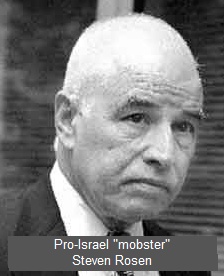 But however anyone wants to characterize or label the Israel lobby, no one can dispute that it is tenacious. Freeman’s assessment that were he to take up the intelligence position he would remain “under constant attack” is most likely accurate. His choice to remain in private life is understandable. If anything constructive is to come out of this episode — and I think it can — it is that the workings of the Israel lobby are now more transparent than ever.


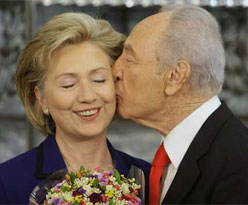 few weeks ago
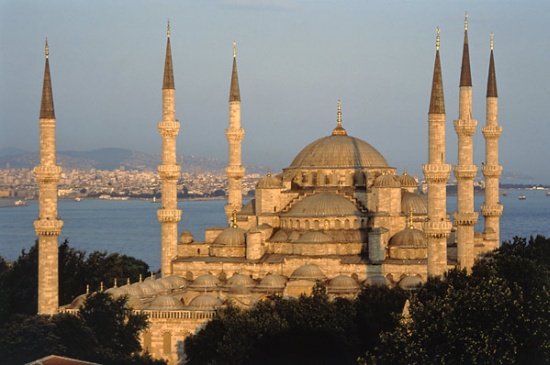

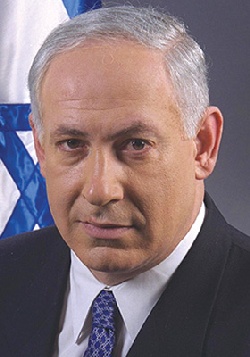 ow many Palestinians do you need to kill in order to become prime minister of Israel? It seems like a legitimate question right now. It’s also a Goldilocks kind of question: What’s just right — enough but not and too many?
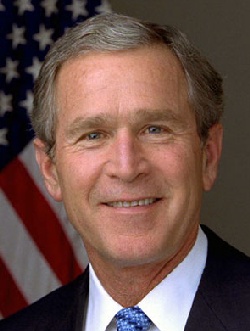 any Americans cherish a vicarious pride in the power of the US presidency.