Category Archives: ISIS

Islamic State of Iraq and Syria

ISIS killed hundreds as it took Iraq’s Ramadi

The Associated Press reports: Islamic State militants likely killed up to 500 Iraqi civilians and soldiers and forced 8,000 people to flee from their homes as they captured the Iraqi city of Ramadi, a provincial official said Monday, while the extremists went door-to-door looking for policemen and pro-government tribesmen.

Iraq’s government and Iranian-backed Shiite militias vowed to mount a counter-offensive and reclaim Ramadi, the capital of the overwhelmingly Sunni Anbar province. Iran’s Defense Minister Gen. Hossein Dehghan flew to Baghdad on a surprise visit for urgent talks with Iraqi leaders.

The fall of Ramadi was a stunning defeat for Iraq’s security forces and military, which fled as the Islamic State extremists overwhelmed the last hold-out positions of pro-government forces, despite the support of U.S.-led airstrikes targeting the extremists. Online video showed Humvees, trucks and other equipment speeding out of Ramadi, with soldiers desperate to reach safety gripping onto their sides.

Since Friday, when the battle for the city entered its final stages, “we estimate that 500 people have been killed, both civilians and military,” said a spokesman for the Anbar provincial government, Muhannad Haimour.

The figures could not be independently confirmed, but Islamic State militants have in the past killed hundreds of civilians and soldiers in the aftermath of their major victories.

Some 8,000 people fled the city, Haimour said. It was not immediately clear how many people remain in Ramadi — once a city of 850,000 that has been draining population for months amid fighting with the extremists besieging it. An enormous exodus took place in April, when the U.N. estimates some 114,000 residents streamed out of Ramadi and surrounding villages. [Continue reading…]


Facebooktwittermail

The ‘ISIS cyberwar’ hype machine is doing more harm than good

Lorenzo Franceschi-Bicchierai writes: Last week, hackers claiming to be affiliated with the extremist group known as the Islamic State released an Anonymous-style video making vague threats of “electronic war” against Europe and the US.

There is no proof or evidence that the video actually comes from the group, nor there is any evidence the group, also known as ISIS, has any ability to do anything damaging online other than taking over Twitter feeds or random media sites with their “cyberattacks.”

Yet, that didn’t stop a new round of breathless hype. On Sunday, The Hill wrote that ISIS was preparing for “cyberwar” and an “all-out cyber crusade.”

Looks like ISIS wannabes successfully hacked the media once again. [Continue reading…]

Facebooktwittermail

ISIS threatens to capture massive Iraqi oil refinery

The Washington Post reports: Six months after the government triumphantly announced that Islamic State militants had retreated from Iraq’s largest refinery, the extremist group is again threatening to overrun the facility.

For weeks, soldiers, police officers and Shiite militiamen have struggled to hold their ground inside the Baiji oil complex during a brutal siege by the Islamic State. The militant group’s suicide bombers have relentlessly struck the perimeters of the refinery, about 150 miles north of the capital, and pushed deep inside the massive facility.

The Baiji operation shows how the Islamic State has remained resilient even after suffering setbacks at the hands of pro-government forces and losing fighters and equipment to U.S. airstrikes, according to analysts, Iraqi officials and militiamen. On Friday, the group also pushed into the heart of Ramadi, a city further to the south that has been fending off attacks by the Islamic State for more than a year. [Continue reading…]

Facebooktwittermail

U.S. ground forces in Syria — the first in a series of such missions?

The New York Times reports: American Special Operations forces mounted a rare raid into eastern Syria early Saturday, killing a leader of the Islamic State and about a dozen militant fighters, as well as capturing his wife and freeing an 18-year-old Yazidi woman whom Pentagon officials said had been held as a slave.

In the first successful raid by American ground troops since the military campaign against the Islamic State began last year, two dozen Delta Force commandos entered Syria aboard Black Hawk helicopters and V-22 Ospreys and killed the leader, a man known as Abu Sayyaf. One American military official described him as the Islamic State’s “emir of oil and gas.”

Even so, Abu Sayyaf is a midlevel leader in the organization — one terrorism analyst compared him to Al Capone’s accountant — and likely is replaceable in fairly short order. And the operation, while successful, comes as the Islamic State has been advancing in the Iraqi city of Ramadi, demonstrating that the fight against the Sunni militant group in both Iraq and Syria remains very fluid.

Yet the Pentagon’s description of a nighttime raid that found its intended target deep inside Syria without any American troops being wounded or killed illustrates not only the effectiveness of the Delta Force, but of improving American intelligence on shadowy Islamic State leaders. [Continue reading…]

Foreign Policy adds: the fact that the White House gave the green light for an operation into Syria, combined with reports that the Delta operators removed a substantial trove of intelligence material from the site, might indicate that the raid could be the first in a series of such missions.

Delta has had a task force in Iraqi Kurdistan since at least last year with a mission of trying to find Islamic State leaders to kill or capture. During the war against the Islamic State’s predecessor organization, al Qaeda in Iraq, Delta and the other components of the military’s Joint Special Operations Command developed a system called “F3EAD” — for Find, Fix, Finish, Exploit, Analyze, Disseminate — in which strike forces would raid objectives such as militant safe houses not only to kill or capture the militants but to gain as much material of intelligence value as possible. By sucking information out of hard drives and cell phones, as well as quickly interrogating anyone taken prisoner, Delta and other JSOC forces were able to launch several missions a night, each based on intelligence gained in the previous raid. That dynamic could repeat itself here. [Continue reading…]

Facebooktwittermail

U.S. rushing new weapons to Iraq as ISIS takes control of Ramadi

McClatchy reports: The Islamic State on Friday took control of the provincial government center of Ramadi, the capital of Iraq’s largest province, and appeared to be in control of most of the city in a major defeat for the Iraqi government.

Islamic State forces also appeared to be closing in on government positions in two other key locations in Anbar province, the towns of Baghdadi and Karmah, in a broad offensive that if successful would end the government presence in all of the province’s major population centers. The capture of Baghdadi also would cut the supply lines to the Iraqi garrison protecting the strategic Haditha Dam.

U.S. officials offered conflicting views of the events, with the State Department and the Pentagon at first downplaying the significance of what had taken place. But a later statement from the White House made clear that the situation was urgent and that the United States was rushing shipments of heavy weapons, ammunition and supplies to Iraq to deal with the Islamic State advance.

The new weapons shipments will include an unspecified number of shoulder-fired rockets especially useful in blasting car bombs, which the Islamic State used particularly effectively in its Ramadi offensive.

The new weapons shipments came after Vice President Joe Biden spoke with Iraqi Prime Minister Haider al Abadi, according to the statement, which said Biden thanked Abadi for “his steadfast leadership . . . at a time of significant security challenges, including today’s ISIL attack on Ramadi.”

“The vice president assured the prime minister of continued and expedited U.S. security assistance to confront ISIL,” the statement said, using the government’s preferred acronym for the Islamic State.

At Ramadi, government troops reportedly were still fighting in some isolated areas. But the city was essentially under the control of the Islamic State after a fierce assault that began with a series of car bombs on Iraqi government security facilities overnight. By late afternoon, security forces appeared to be in full flight as militants consolidated control over the area and prevented anyone from leaving. [Continue reading…]

Facebooktwittermail

ISIS leader, Abu Sayyaf, killed in Syria by U.S. special forces

Reuters reports: American special operations forces killed a senior Islamic State leader who helped direct the group’s oil, gas and financial operations during a raid in eastern Syria, U.S. officials said on Saturday.

The White House said President Barack Obama ordered the overnight raid that killed the man identified as Abu Sayyaf. U.S. officials said his wife, Umm Sayyaf, was captured in the raid and was being held in Iraq.

This was the first known U.S. special forces operation inside Syria apart from a failed secret effort to rescue a number of U.S. and other foreign hostages held by Islamic State in northeastern Syria last year.

White House National Security Council spokeswoman Bernadette Meehan said in a statement that U.S. personnel based out of Iraq conducted the operation in al-Amr in eastern Syria.

“During the course of the operation, Abu Sayyaf was killed when he engaged U.S. forces,” Meehan said.

“The president authorized this operation upon the unanimous recommendation of his national security team and as soon as we had developed sufficient intelligence and were confident the mission could be carried out successfully and consistent with the requirements for undertaking such operations,” Meehan said.

Meehan said the operation was conducted “with the full consent of Iraqi authorities” and “consistent with domestic and international law.”

The White House said the U.S. did not inform Syrian President Bashar al-Assad’s government in advance of the raid, or coordinate with Damascus. Shortly before the U.S. announcement, Syrian state television said the Syrian army killed an Islamic State leader responsible for oil-related affairs, identifying him as Abu al-Taym al-Saudi. [Continue reading…]

Facebooktwittermail

ISIS tightens grip on Ramadi

The Washington Post reports: Islamic State militants are tightening their grip on Ramadi, executing civilians and blowing up homes a day after seizing most of the Iraqi city, government officials and police said Saturday.

On Thursday, the extremist group launched an offensive to take Ramadi, about 80 miles west of Baghdad. They seized government buildings and drove pro-government forces out of most of the city on Friday, police and residents said.

The assault appears to have dealt a significant setback to Iraq’s U.S.-backed government, which is struggling to retake territory that the radical Sunni group seized in sweeping advances last summer. The United States is leading an international coalition that is conducting airstrikes against the extremist group in Iraq as well as Syria. [Continue reading…]

Facebooktwittermail

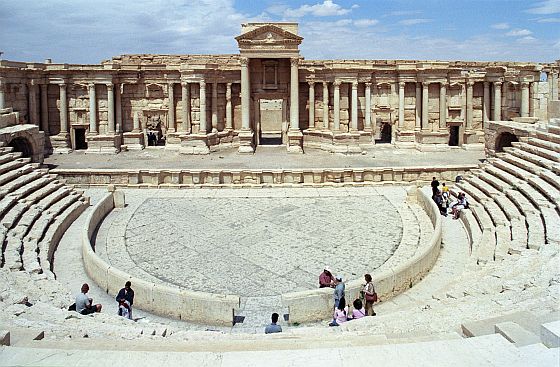
ISIS pulls back from Palmyra but fear of ‘cultural atrocity’ remains

The Guardian reports: The ruins of Palmyra have long enchanted visitors, its famous queen Zeinobia occupying the same iconic status for Syrians as Cleopatra does for Egypt.

But the once-bustling Silk Road hub known in antiquity for its community of artisans and merchants of varied ethnicity and religion is now in the crosshairs of the terror group Islamic State, whose fighters have looted and destroyed historical and cultural artefacts in Iraq.

“Palmyra constitutes one of the most beautiful and impressive panoramas to have survived from classical antiquity,” said historian Tom Holland. “Its ruins are as beautiful as they are well-preserved.

“More than that, though, it is a monument to the great melting pot of cultures that bordered the eastern flank of the Roman empire: the same melting pot that would ultimately serve to incubate Islam. Its destruction is too awful to contemplate.” [Continue reading…]

Facebooktwittermail

ISIS advance in Syria endangers ancient ruins at Palmyra

Palmyra

The New York Times reports: Islamic State militants advanced to the outskirts of the Syrian town of Palmyra on Thursday, putting the extremist group within striking distance of some of the world’s most magnificent antiquities.

That raised fears that the ancient city of Palmyra, with its complex of columns, tombs and ancient temples dating to the first century A.D., could be looted or destroyed. Militants from the Islamic State, also known as ISIS or ISIL, have already destroyed large parts of ancient sites at Nimrud, Hatra and Nineveh in Iraq. Islamic State leaders denounce pre-Islamic art and architecture as idolatrous even as they sell smaller, more portable artifacts to finance their violent rampage through the region.

The fighting on Thursday took place little more than a mile from the city’s grand 2,000-year-old ruins, which stand as the crossroad of Greek, Roman, Persian and Islamic cultures.

People in Palmyra described a state of anxiety and chaos, with residents trying to flee the northern neighborhoods. [Continue reading…]

Facebooktwittermail

ISIS fighters seize government headquarters in Ramadi, Iraq

The New York Times: Islamic State militants on Friday afternoon seized the main government headquarters in Ramadi, the capital of Iraq’s western Anbar Province, and raised their black flag before setting fire to the compound.

The capture of the building, even as it was too early to declare that the entire city had fallen to the Islamic State, appeared to represent a significant shift in the back-and-forth battle for Ramadi that has unfolded for nearly a year and a half in Iraq.

Over that time, many areas had been contested between government forces and the militants — but until Friday the Islamic State had never controlled the provincial capital’s headquarters building. Officials also said the Islamic State, also known as ISIS or ISIL, also had seized the main police building in Ramadi.

Facebooktwittermail

Hamas says ISIS has no foothold in Gaza Strip

Reuters: Islamic State sympathizers in the Gaza Strip are making their presence felt on social media, but the enclave’s Hamas rulers said on Thursday the group has no real foothold in the Palestinian territory.

Statements signed “Supporters of the Islamic State” have appeared recently on Twitter and several websites, accusing the Islamist group Hamas of arresting dozens of jihadists and threatening attacks in Gaza unless they are released.

Hamas said it had detained what it described as “lawbreakers” after an explosion earlier this month near a Hamas security headquarters and another blast outside the headquarters of the United Nations Relief and Works Agency.

Facebooktwittermail

How ISIS uses water as weapon of war

Walaa Hussein writes: The Middle East is facing a water crisis. As the region experiences conflicts over water and faces the continuous risk of war breaking out, experts on water predict that the Islamic State (IS) aims to exacerbate this water crisis, as evidenced by its efforts to seize rivers and dams in Syria and Iraq, starting in 2013.

The Arab League has worked since 2008 to establish a new Arab convention on water usage, which would establish parameters on how to deal with the water crisis. However, the final draft is still under review because of the reservations of some member states.

PricewaterhouseCoopers, an international consulting organization, has identified numerous regions where the water crisis threatens to transform into a global conflict. Turkey, Syria and Iraq are included on that list, due to the Turkish dams controlling the Tigris and Euphrates rivers. Iran and Iraq are also witnessing a competition over the confluence of the Tigris and Euphrates rivers, known as Shatt al-Arab. Also included is Egypt, Sudan and Ethiopia, which are witnessing a conflict over the Nile. Egypt, Sudan, Libya, Chad and Niger are also experiencing a crisis in relation to an 800-meter (0.5-mile) deep underground water field and the Nubian sandstone aquifer. Libya wants to invest in this aquifer to extend an artificial river and supply its coastline with freshwater. [Continue reading…]

Facebooktwittermail

Iraq counts on magic wands to stop ISIS

The Daily Beast: Last summer, in the days after the group now known as ISIS began its assault across Iraq, many feared that Baghdad could soon fall. Car bombs regularly killed dozens inside the capital. Police and soldiers manned checkpoints across the city. They were Baghdad’s defense and symbols of the state’s power in the face of onslaught. To protect the capital, these cops and soldiers were armed with magic wands. They still are now, nearly a year later.

Across Iraq, members of the security forces carry these magic wands—Rube Goldberg gadgets supposedly designed to detect explosives. The walkie talkie-sized instruments, as ubiquitous in Baghdad as radios are on cops in the United States, are useless pieces of plastic and a required piece of equipment. They were purchased by the Iraqi government for millions of dollars and are still in use to this day, waved around cars like divining rods, two years after a British con man was sentenced to prison for selling them.

Iraqi police officer Salim Abdul Zahra, 33, wielded one of the wands while manning a checkpoint in Baghdad last December. “Want the truth?” Zahra asked after some preliminary explanation about how the detector was supposed to be used. “It is worthless and fake,” he said. “The proof is all the explosions that still happen here.”

But though the wand didn’t work, he said he had to wave it around. Ultimately, if he didn’t use the wand, which he and his fellow officers knew was worthless, he would stick out. “What I can do?” he asked. “I follow the orders and use it.”

Facebooktwittermail

Has ISIS lost its head?

The Daily Beast reports: Abu Bakr al-Baghdadi, the Islamic State’s leader, has been moved from Iraq to the Syrian city of Raqqa, the terror army’s de facto capital, amid tight security two months after sustaining serious shrapnel wounds leaving his spine damaged and his left leg immobile, say jihadist defectors.

He is said to be mentally alert and able to issue orders, but his physical injuries are now prompting the so-called Islamic State’s governing Shura Council to make a final decision on a temporary stand-in leader who can move back and forth between front-lines in Syria and Iraq and is able to handle day-to-day leadership in the self-declared caliphate.

That leader will be, in effect, under al-Baghdadi, a super deputy to the caliph — in Arabic, na’ib al-malik, or viceroy. According to Islamic State defectors debriefed by opposition activists in neighboring Turkey, the election will pit two Iraqis and a Syrian against each other — all well-known figures within the terror army’s top leadership.

These sources say nine doctors to treat the infirm al-Baghdadi were also taken to Raqqa, including a senior physician from Mosul’s general hospital, but the entire al-Baghdadi caravan of attending medics, aides and body guards was split into separate convoys to avoid attracting attention from U.S. satellite surveillance and inviting a coalition airstrike or drone attack. At least one doctor didn’t know who his patient was when he arrived in Raqqa and was ordered brusquely to stop asking questions about the man’s identity. [Continue reading…]

Facebooktwittermail

Hamas cracks down on Salafists in Gaza Strip

Asmaa al-Ghoul writes: The confrontation between the Salafist jihadist movement and Hamas-led security services in the Gaza Strip has returned to the surface following a two-year truce between the two sides.

Strong tensions returned after security services arrested Salafist Sheikh Adnan Mayt, a prominent Salafist jihadist activist, April 6. This was followed by the arrest of other Salafists and raids of their homes, an April 29 statement by Ansar al-Dawla al-Islamiya (Arabic for “supporters of the Islamic State”) said.

The arrests increased following the two roadside bomb blasts that detonated in the Gaza Strip on April 18, which the Interior Ministry described as “primitive.” One of the blasts exploded near the outer wall of the UNRWA headquarters, and the other went off near the UNRWA general prosecutor’s office. A third explosion took place a day earlier near the Abu Mazen roundabout in western Gaza. [Continue reading…]

Facebooktwittermail

2.2 million Iraqis displaced by ISIS

The Associated Press: Conflicts and violence worldwide displaced a record 38 million people in 2014, with 2.2 million Iraqis alone forced to flee the Islamic State group, a Norwegian humanitarian group report released Wednesday revealed.

The findings of the study carried out by the Norwegian Refugee Council’s Internal Displacement Monitoring Center are endorsed by the United Nations refugee agency.

In a joint statement, they said 11 million were newly displaced last year — mostly because of conflicts in Syria, Iraq, South Sudan, Nigeria and the Democratic Republic of Congo. That’s the equivalent of 30,000 people each day.

Facebooktwittermail

In a propaganda war against ISIS, the U.S. tried to play by the enemy’s rules

The Washington Post reports: As fighters surged into Syria last summer, a video surfaced online with the grisly imagery and sneering tone of a propaganda release from the Islamic State.

“Run, do not walk, to ISIS Land,” read the opening line of a script that promised new arrivals would learn “useful new skills” such as “crucifying and executing Muslims.” The words were juxtaposed with images of the terrorist group’s atrocities: kneeling prisoners shot point-blank; severed heads positioned next to a propped-up corpse; limp bodies left hanging from crosses in public squares.

The source of the video was revealed only in its closing frame: the U.S. Department of State.

“Welcome to ISIS Land” was in some ways a breakthrough for the U.S. government after years of futility in attempting to compete with the propaganda of al-Qaeda and its off-shoots. The video became a viral phenomenon — viewed more than 844,000 times on YouTube — and a cause of significant irritation to its target.

But the minute-long recording also became a flash point in a much broader debate over how far the United States should go in engaging with a barbaric adversary online.

The clip was assembled by a special unit at the State Department charged with finding ways to contain the spread of militant Islamist ideology. The Center for Strategic Counterterrorism Communications, or CSCC, had direct backing from President Obama, help from the CIA, and teams of Arabic, Urdu and Somali speakers who were thrust into the fray on Twitter and other social-media platforms.

The center was to function “like a war room in a political campaign — shake things up, attack ads, opposition research,” said Alberto Fernandez, a veteran U.S. diplomat who was put in charge of the group. The video targeting the Islamic State, which is also known by the abbreviations ISIS and ISIL, was emblematic of that edgy approach, using the enemy’s own horrific footage to subvert the idea that recruits were “going off to Syria for a worthy cause,” Fernandez said, “and to send a message that this is actually a squalid, worthless, dirty thing.”

In seeking to change minds overseas, however, the CSCC also turned heads in Washington. Experts denounced the group’s efforts as “embarrassing” and even helpful to the enemy. Critics at the State Department and White House saw the use of graphic images as a disturbing embrace of the adversary’s playbook. And for all the viral success of “ISIS Land,” even the center’s defenders could never determine whether it had accomplished its main objective: discouraging would-be militants from traveling to Syria. [Continue reading…]

Facebooktwittermail