Category Archives: Obama administration

Impostor claiming to be Taliban leader was key to meetings coalition touted as mark of progress

The Wall Street Journal reports:

The revelation that an impostor passed himself off as a Taliban leader in Afghan peace talks called into question coalition reports of progress in the war, and illustrated how little the allies know of the insurgency’s top leaders and the difficulty that lack of knowledge presents for U.S. strategy.

The man, who claimed to be one of the highest-ranking members of the Taliban, held at least two meetings with Afghan President Hamid Karzai and other officials in recent months, officials said.

Senior coalition officers—U.S. Gen. David Petraeus, chief of coalition forces, foremost among them—had sought to portray the nascent peace talks as a sign that the one-two punch of American forces clearing territory and Special Operations forces targeting insurgent field commanders was wearing down the Taliban and pushing them to the negotiating table.

Those claims are now in question. Many Western officials have concluded that the peace process is making little progress and the Taliban are ready to fight on.

Facebooktwittermail

House Democrats call for release of one of the most notorious spies in Israel’s history

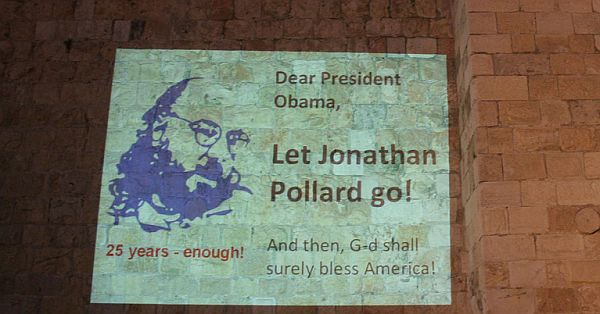
A “relentless” campaign by David Nyer, a Jewish Orthodox activist from Monsey, New York, has succeeded in winning significant support from House Democrats who are now calling on President Obama to release Jonathan Pollard.

Pollard is a former civilian intelligence analyst who was convicted of spying for Israel and through a plea bargain received a life sentence in 1987. He is believed to have caused incalculable damage to US national security.

Nyer’s campaign “struck gold” when he succeeded in winning the support of Rep. Barney Frank. The JTA reported:

Getting Frank was a coup, one congressional insider said, not only because he has a leadership position, but because his pronounced liberalism in other arenas adds credibility to an effort that has been identified in recent years with the Israeli and pro-Israel right.

Frank took up the cause because he long has believed that Pollard’s life sentence was disproportionate to the crime, his spokesman said.

“It is something he feels strongly about,” Harry Gural told JTA.

Launching the initiative at a Capitol Hill news conference Nov. 18, Frank listed two factors that made the matter timely: Pollard’s 25 years in prison as of Sundayand the parlous state of the Israeli-Palestinian peace process.

“The justification of this is the humanitarian one and the notion that the American justice system should be a fair one,” Frank said. “We believe that clemency after 25 years for the offenses of Jonathan Pollard would do that.

“My own hope is that if the president would do this, it would contribute to the political climate within the democracy of Israel and would enhance the peace process.”

Frank alluded to Obama’s low popularity in Israel where, fairly or not, the president has been saddled with a reputation as cool to Israeli interests.

The Jerusalem Post reports that Benjamin Netanyahu has asked the US to add Pollard’s release to the many other generous incentives the Obama administration have offered Israel in the hope of a 90 day, once only, extension to the settlement slowdown.

In “Why Pollard Should Never Be Released (The Traitor),” published in the New Yorker in January 1999, Seymour Hersh wrote:

A full accounting of the materials provided by Pollard to the Israelis has been impossible to obtain: Pollard himself has estimated that the documents would create a stack six feet wide, six feet long, and ten feet high. Rafi Eitan, the Israeli who controlled the operation, and two colleagues of his attached to the Israeli diplomatic delegation — Irit Erb and Joseph Yagur — were named as unindicted co-conspirators by the Justice Department. In the summer of 1984, Eitan brought in Colonel Aviem Sella, an Air Force hero, who led Israel’s dramatic and successful 1981 bombing raid on the Iraqi nuclear reactor at Osirak. (Sella was eventually indicted, in absentia, on three counts of espionage.) Eitan’s decision to order Sella into the case is considered by many Americans to have been a brilliant stroke: the Israeli war hero was met with starry eyes by Pollard, a chronic wannabe.

Yagur, Erb, and Sella were in Washington when Pollard was first seized by the F.B.I., in November, 1985, but they quickly left the country, never to return. During one period, Pollard had been handing over documents to them almost weekly, and they had been forced to rent an apartment in northwest Washington, where they installed a high-speed photocopying machine. “Safe houses and special Xeroxes?” an American career intelligence officer said, despairingly, concerning the Pollard operation. “This was not the first guy they’d recruited.” In the years following Pollard’s arrest and confession, the Israeli government chose not to cooperate fully with the F.B.I. and Justice Department investigation, and only a token number of the Pollard documents have been returned. It was not until last May [1998] that the Israeli government even acknowledged that Pollard had been its operative.

In fact, it is widely believed that Pollard was not the only one in the American government spying for Israel. During his year and a half of spying, his Israeli handlers requested specific documents, which were identified only by top-secret control numbers. After much internal assessment, the government’s intelligence experts concluded that it was “highly unlikely,” in the words of a Justice Department official, that any of the other American spies of the era would have had access to the specific control numbers. “There is only one conclusion,” the expert told me. The Israelis “got the numbers from somebody else in the U.S. government.”

Richard Perle? He was Assistant Secretary of Defense in the Reagan administration at that time and early in his career had been caught by the FBI passing classified information to the Israeli embassy in Washington.

Pollard’s American interrogators eventually concluded that in his year and a half of spying he had provided the Israelis with more than a year’s worth of the daily FOSIF reports from Rota [in Spain, the location of the Navy’s Sixth Fleet Ocean Surveillance Information Facility (FOSIF)]. Pollard himself told the Americans that at one point in 1985 the Israelis had nagged him when he missed several days of work because of illness and had failed to deliver the FOSIF reports for those days. One of his handlers, Joseph Yagur, had complained twice about the missed messages and had asked him to find a way to retrieve them. Pollard told his American interrogators that he had never missed again.

The career intelligence officer who helped to assess the Pollard damage has come to view Pollard as a serial spy, the Ted Bundy of the intelligence world. “Pollard gave them every message for a whole year,” the officer told me recently, referring to the Israelis. “They could analyze it” — the intelligence — “message by message, and correlate it. They could not only piece together our sources and methods but also learn how we think, and how we approach a problem. All of a sudden, there is no mystery. These are the things we can’t change. You got this, and you got us by the balls.” In other words, the Rota reports, when carefully studied, gave the Israelis “a road map on how to circumvent” the various American collection methods and shield an ongoing military operation. The reports provide guidance on “how to keep us asleep, thinking all is working well,” he added. “They tell the Israelis how to raid Tunisia without tipping off American intelligence in advance. That is damage that is persistent and severe.”

Facebooktwittermail

Power and tiny acts of rebellion

Chris Hedges writes:

We have reached a point where stunted and deformed individuals, whose rapacious greed fuels the plunge of tens of millions of Americans into abject poverty and misery, determine the moral fiber of the nation. It is no more morally justifiable to kill someone for profit than it is to kill that person for religious fanaticism. And yet, from health companies to the oil and natural gas industry to private weapons contractors, individual death and the wholesale death of the ecosystem have become acceptable corporate business. The mounting human misery in the United States, which could lead to the sporadic bursts of anger we have seen on the streets of France, will be met with severe repression from the security and surveillance state, which always accompanies the rise of the corporate state. The one method left open by which we can respond—massive street protests, the destruction of corporate property and violence—will become the excuse to impose total tyranny. The intrusive pat-downs at airports may soon become a fond memory of what it was like when we still had a little freedom left.

All reform movements, from the battle for universal health care to the struggle for alternative energy and sane environmental controls to financial regulation to an end to our permanent war economy, have run into this new, terrifying configuration of power. They have confronted an awful truth. We do not count. And they have been helpless to respond as those who are most skilled in the manipulation of hate lead a confused populace to call for their own enslavement.

Facebooktwittermail

Who has the courage to end the war in Afghanistan?

British ex-soldier, Joe Glenton, was jailed for refusing to return to Afghanistan in a war he believed to be unjustified. On November 19 he handed back his medal to Britain’s Prime Minister David Cameron in Downing Street, as a protest against the war in Afghanistan.

Glenton’s story was told in a Press TV documentary earlier this year. Watch parts one, two and three. (Thanks to a reader for passing along the report about Glenton’s protest and yesterday’s rally in London.)

Meanwhile, Politico reports:

President Barack Obama and nearly 50 world leaders attending the NATO Summit that concluded here Saturday adopted a call to give the Afghan government control over its own security by 2014.

Not so much talked about, in public anyway, were some of the toughest decisions that may be required to get there.

With the public in the U.S and particularly in Europe losing patience with the Afghan mission, the NATO announcement seemed intended to generate headlines or at least a public perception of a plan for withdrawal.

In fact, the transition plan is more of a hope than a detailed roadmap. The provinces to be handed over next year by NATO and U.S. forces have yet to be selected, officials said, and the prospects for transition in parts of the country facing the fiercest fighting are murky at best. Decisions about whether to negotiate with the Taliban have yet to be made and disagreements remain about what concessions could be made.

Christian Science Monitor adds:

[T]he Pentagon on Thursday said the goal of handing over security duties to the Afghans in 2014 was “aspirational.”

“Although the hope is, the goal is, to have Afghan security forces in the lead over the preponderance of the country by then, it does not necessarily mean that … everywhere in the country they will necessarily be in the lead,” said Pentagon spokesman Geoff Morrell.

Crunching the numbers

So how much extra would it cost if the bulk of the withdrawal starts rather than finishes around 2014? About $125 billion, says Mr. Harrison at the Center for Strategic and Budgetary Assessments, at that’s just through 2014. He uses two different troop level scenarios – one high, and one low. He calculates costs based $1.1 million per soldier per year, which reflects the five-year average in Afghanistan.

The lower cost – $288 billion – assumes that the troops involved in Obama’s surge would be withdrawn by 2012, and that by the end of 2014 only 30,000 US troops would remain. The higher cost – $413 billion – assumes no drawdown will happen until 2013, and 70,000 US troops would remain by the end of 2014. The difference: $125 billion.

Facebooktwittermail

U.S. and Israel: still no consensus on pressuring Iran

Tony Karon writes:

An open disagreement between Israel and the Pentagon in recent weeks has highlighted the dilemma President Barack Obama faces in making progress on Iran. Defense Secretary Robert Gates on Tuesday poured cold water on last week’s suggestion by Israeli Prime Minister that the only way Iran can be stopped from acquiring nuclear weapons is for the U.S. to threaten military action. Military action, Gates warned, would solve nothing; in fact it would be more likely to drive Iran to acquire nuclear weapons.

Netanyahu had warned, during a visit to the U.S., that “economic sanctions are making it difficult for Iran, but there is no sign that the Ayatullah regime plans to stop its nuclear program because of them.” The Israeli media reported that Netanyahu had told Vice-President Joe Biden, “The only way to ensure that Iran will not go nuclear is to create a credible threat of military action against it if it doesn’t cease its race for a nuclear weapon.”

Gates, however, turned Netanyahu’s argument on its head, warning that bombing Iran’s nuclear facilities would provide only a “short term solution,” setting the Iranians back two or three years. But any military strike would “bring together a divided nation [and] make them absolutely committed to obtaining nuclear weapons” via programs that would simply “go deeper and more covert.” Instead, Gates argued, “The only long-term solution to avoiding an Iranian nuclear weapons capability is for the Iranians to decide it’s not in their interest.”

Facebooktwittermail

An American bribe that stinks of appeasement

Robert Fisk writes:

In any other country, the current American bribe to Israel, and the latter’s reluctance to accept it, in return for even a temporary end to the theft of somebody else’s property would be regarded as preposterous. Three billion dollars’ worth of fighter bombers in return for a temporary freeze in West Bank colonisation for a mere 90 days? Not including East Jerusalem – so goodbye to the last chance of the east of the holy city for a Palestinian capital – and, if Benjamin Netanyahu so wishes, a rip-roaring continuation of settlement on Arab land. In the ordinary sane world in which we think we live, there is only one word for Barack Obama’s offer: appeasement. Usually, our lords and masters use that word with disdain and disgust.

Anyone who panders to injustice by one people against another people is called an appeaser. Anyone who prefers peace at any price, let alone a $3bn bribe to the guilty party – is an appeaser. Anyone who will not risk the consequences of standing up for international morality against territorial greed is an appeaser. Those of us who did not want to invade Afghanistan were condemned as appeasers. Those of us who did not want to invade Iraq were vilified as appeasers. Yet that is precisely what Obama has done in his pathetic, unbelievable effort to plead with Netanyahu for just 90 days of submission to international law. Obama is an appeaser.

The fact that the West and its political and journalistic elites – I include the ever more disreputable New York Times – take this tomfoolery at face value, as if it can seriously be regarded as another “step” in the “peace process”, to put this mystical nonsense “back on track”, is a measure of the degree to which we have taken leave of our senses in the Middle East.

Facebooktwittermail

The fog of containment

Flynt Leverett and Hillary Mann Leverett write:

In the coming weeks, the United States may well be joining a new round of nuclear negotiations with Iran. But, rather than working to promote their success, most commentators seem to be consumed with explaining their anticipated failure. And their follow-up policy prescriptions seem designed to do more harm than good. Take Karim Sadjadpour’s article, “The Sources of Soviet Iranian Conduct,” in the November issue of Foreign Policy. Sadjadpour seeks to adapt George Kennan’s famous 1947 “Mr. X” article — which proposed the outlines of the Cold War “containment” strategy used against the Soviet Union — for America’s current Iran debate.

“Like the Soviet Union, the Islamic Republic is a corrupt, inefficient, authoritarian regime whose bankrupt ideology resonates far more abroad than it does at home,” Sadjadpour writes. “Also like the men who once ruled Moscow, Iran’s current leaders have a victimization complex and, as they themselves admit, derive their internal legitimacy from thumbing their noses at Uncle Sam.” It’s a clever conceit, but it would be a disaster for U.S. interests if Sadjadpour’s piece attains anything close to the level of influence achieved by Kennan’s.

That’s so for three main reasons. First, Sadjadpour’s reading of the drivers of Iranian foreign policy is profoundly at odds with the historical record of the Islamic Republic’s actual conduct. Second, his policy prescriptions would keep the United States from acting in its own best interests to pursue a comprehensive realignment of U.S.-Iranian relations. Third, his policy prescriptions would lead ultimately to a U.S.-initiated military confrontation with Iran.

Sadjadpour uses a highly selective exegesis of Ayatollah Ali Khamenei’s rhetoric about the United States as a basis for arguing that the Islamic Republic’s very survival requires antagonism with America. This is a politically convenient argument, absolving Washington of any responsibility to engage seriously with Tehran, until the deus ex machina of “regime change” solves the Iran problem.

Facebooktwittermail

Obama’s dubious Mideast bet

Tony Karon writes:

In the grand poker game of Middle East peacemaking, everyone around the table is wondering just what cards President Barack Obama is holding. That’s because the President has placed a potentially ruinous bet on what can be achieved over the 90 days of the partial settlement freeze he appears to have persuaded Israeli Prime Minister Benjamin Netanyahu to accept — in exchange for an extra $3 billion worth of advanced F-35 fighter aircraft. That is over and above the annual $2.75 billion military subsidy Israel receives from Washington. In addition, the Obama Administration has promised to run interference for Israel against any attempt to bring international law into play to settle the Israeli-Palestinian conflict via the U.N. But Obama is gambling with a lot more than $3 billion that the two sides can agree on borders between Israel and a Palestinian state within three months.

Netanyahu still has to convince his entire Cabinet to embrace the deal, and he’ll get some pushback from within his own party and among settlers furious about a new building slowdown (although the Israeli group Peace Now, which strongly opposes settlements, noted last week that over the six weeks since the last moratorium expired, settlers have started to work on pretty much the same number of housing units as they would have built over the 10 months it covered). The Palestinians, for their part, insist that they won’t return to negotiations until Israel completely halts building on occupied land, including in East Jerusalem. Netanyahu, however, is adamant that his construction freeze won’t apply to settlements in East Jerusalem, which he doesn’t deem to be settlements — although the international community does, having never recognized Israel’s annexation of those parts of the Holy City captured in the 1967 war.

But even if the deal manages to get talks restarted, the real gamble Obama has taken is giving the two sides just 90 days to agree on where to draw the final borders between Israel and a Palestinian state.

Facebooktwittermail

The myth of American pressure

Osamah Khalil writes:

Recent reports that the administration of US President Barack Obama offered Israel a series of incentives to continue its limited ten-month moratorium on settlement building have sparked an outcry among Palestinians and their supporters. Although the concessions for halting the construction of new settlements for only ninety days are unprecedented, Washington’s inability to maintain consistent pressure on Israel fits into a much broader historical pattern. The conventional wisdom is that when Washington has exerted pressure on Israeli governments they have eventually succumbed to American demands. However, a closer reading of the historical record and declassified American archival documents reveals a more complex dynamic between the two allies.

In this essay I examine four major crises in the “special relationship” between the US and Israel: the 1949 Lausanne Conference; the 1956 Suez Crisis; the October 1973 War; and the 1991 Madrid Peace Conference. I demonstrate that while Israel has on occasion publicly acceded to American demands, privately it has received concessions and agreements that rewarded its intransigence and improved its negotiating position at the expense of Palestinian rights. I argue that American pressure was negligible when compared to the policy options available to the different presidential administrations. Finally, I offer recommendations for Palestinians and their supporters.

Facebooktwittermail

The new rules: globalization’s massive demographic bet

Thomas PM Barnett writes:

By calling the Chinese out explicitly on their currency manipulation in his concluding address to the G-20 summit last week, President Barack Obama may have torpedoed his relationship with Beijing for the remainder of what China’s bosses most certainly now hope is his first and only term. Burdened by a Republican-controlled, Tea Party-infused House, and bathed in hypocrisy thanks to the Fed’s own, just-announced currency manipulation (aka, QE2), Obama seems not to recognize either the gravity of his nation’s long-term economic situation or the degree to which his own political fate now hinges on his administration’s increasingly stormy ties with China.

Here’s the larger picture: Asia, anchored by China, is now the global economy’s center of gravity when it comes to deployable savings. As Europe heads into retirement and the U.S. refuses to come to grips with its unsustainable trajectory, China stands tall thanks to its capacity to spend and invest — even as that capacity seems woefully insufficient for the bevy of historical tasks at hand. Beijing must already see to the care and feeding of 22 percent of humanity, the bulk of whom remain impoverished by anybody’s reasonable standards. But in addition, China is now expected to cover the spendthrift West’s need to boost exports, while also serving as income-elevating engine for the rest of the world’s developing economies — largely through the Middle Kingdom’s ravenous resource demands.

And if all that wasn’t intimidating enough, China’s demographic clock is ticking like no other nation’s in human history. Already losing its cheap-labor advantage right now, China is set to stockpile elders from here on out at a pace never before witnessed. By 2050, it will have more non-working old people (400 million plus) than America’s total projected population (400 million). At that point, the U.S. median age will still be just below 40, while China’s will be closer to 50. It took Europe a century for its elder population to gradually rise from 10 percent of total population to the 20-percent level. America’s still-unfolding journey along the same path will run about six decades. But China will have 20 years, if it’s lucky.

Facebooktwittermail

From the top there’s only one way forward: down

Mature cosmological systems recognize the cyclical nature of change: that growth is followed by decay and that power gathered is later dispersed. These are not ideas readily embraced by an imperial power and thus America has driven itself into a trap which it cannot back out of without undermining its own image of preeminence.

The trap that a great power falls into as soon as it makes the mistake of using blunt force against an asymmetrical threat is that its opponent has the exclusive ability to make tactical retreats with its pride in tact.

For a decade now, America has been fighting adversaries who operate unwaveringly according to the Maoist principles of guerrilla warfare: “The enemy advances, we retreat; the enemy camps, we harass; the enemy tires, we attack; the enemy retreats, we pursue.”

The war on terrorism, whose sole purpose was to put on display the preeminence of American power, has instead in every possible way demonstrated the limits of American power and yet even now the prospect of defeat cannot be entertained.

The Obama administration, desperate to find a way out of Afghanistan, refuses to admit that it is developing an exit strategy. The plan to end combat missions by 2014 is not an exit strategy; it is a “transition strategy” US envoy Richard Holbrooke claims.

And as if to guard against the risk that Obama might end a second term (if he gets one) with the United States no longer at war, he seems intent on starting a war of his very own — a war whose beginning echoes America’s entry into Vietnam.

The Wall Street Journal reports:

The U.S. is preparing for an expanded campaign against al Qaeda in Yemen, mobilizing military and intelligence resources to enable Yemeni and American strikes and drawing up a longer-term proposal to establish Yemeni bases in remote areas where militants operate.

The developments are part of a U.S. scramble to step up the hunt for members of al Qaeda in the Arabian Peninsula, the terrorist organization behind a recent failed attempt to blow up two planes over the U.S. using bombs hidden in cargo.

Limited U.S. intelligence experience in Yemen has created “a window of vulnerability” that the U.S. government is “working fast to address,” a senior Obama administration official said.

For now, the U.S. gets much of its on-the-ground intelligence from a growing partnership with Saudi Arabia, which shares a border with Yemen and has a fruitful informant network in Yemen’s tribal areas.

In the rush to build up capabilities, the Central Intelligence Agency and other agencies are moving in equipment and personnel from other areas, and over the past year have expanded the size of teams in the U.S. analyzing intelligence on AQAP. The emphasis now is on expanding the number of intelligence operatives and analysts in the field.

There is a debate within the Obama administration and Pentagon about how best to ramp up the fight against AQAP, the Yemen-based terrorist group. Supporters of establishing forward operating bases for Yemeni forces say they would help the weak Yemeni government expand its control and create an opportunity to get a small number of American Special Operations trainers and advisers out of the capital region and into the field.

Facebooktwittermail

Washington’s shameless and slavish devotion to Israel

Mark Perry writes:

A legendary story from our early history has it that Thomas Jefferson so hated John Jay that he ordered Pierre L’Enfant — the civil engineer who designed our capital city — to excise any reference to Jay (including “J Street”) from his plans. The story is apocryphal, but the history behind it isn’t. For Jefferson, Jay was an arch appeaser: his 1795 treaty with Britain provided concessions to a nation we had defeated in our revolution. Jefferson wasn’t the only one who hated the treaty. While Jay’s agreement was ratified by the Congress, he was burned in effigy by New York and Philadelphia mobs and the treaty so stained his reputation that he was never considered for the presidency. Jefferson didn’t make the same mistake. When the Pasha of Barbary demanded ransom for U.S. ships he had seized, Jefferson sent a U.S. naval squadron to punish him. The resulting victory is now celebrated with a half-verse in the Marine Corps hymn (which celebrates the triumph on “the shores of Tripoli”) and a knock-out political slogan that energized a nation: “Millions for defense, but not one cent for tribute.”

If only Jefferson could see us now. This weekend, the Obama administration promised to turn over $3 billion in stealth fighters to Israel (supplementing the 20 F-35s it will buy with the $2.75 billion in “grants” it gets from Washington) and veto any U.N. resolution that questions Israel’s legitimacy — all in exchange for Israel’s pledge to extend a ten-month partial settlement moratorium for another 90 days. This is a bad idea. And it’s dangerous. There are differences, of course, between the events of the last 24 hours and the crisis that Jefferson faced in 1804. Then, we protested that we were “paying tribute,” now we are “providing incentives.” Then too, Israel is not making any “demands,” they are simply (in Israeli Prime Minister Netanyahu’s words) “insisting.” Oh — and let’s not forget — the pirates of Barbary were America’s “enemy.” That’s a lot different than now; Israel is our “friend.”

This administration’s decision would be shocking were it not so predictable. Back on October 20, State Department spokesman Andrew Shapiro reassured the press that a $60 billion U.S. arms transfer to Saudi Arabia would go forward because “Israel does not object…” Shapiro’s statement passed with nary an eye blink in L’Enfant’s city, where Israel’s approval is apparently required for America to do anything in the Middle East. But Shapiro’s tone-deafness is hardly limited to dime-a-dozen spokespersons. In the wake of General Petreaus’ controversial March testimony that the Israeli-Palestinian conflict “foments anti-American sentiment” (stop the presses), Hillary Clinton went out of her way to reassure Israelis that “we are committed to Israel’s security,” a soothing word-for-word mantra repeated by Barack Obama (July 6), Joe Biden (November 7) and any old American official behind a microphone (P.J. Crowley, August 4). The administration doesn’t get it: the question is not whether we are committed to Israel’s security, but whether they’re committed to ours.

The tone-deafness evidenced by Andrew Shapiro is now an all-consuming part of public policy, extending to every part of the American government — and beyond. When Elena Kagan testified during her confirmation hearings for the Supreme Court, she cited Israel jurist Aharon Barak as her model, because he was the “John Marshall of the State of Israel.” Kagan might well be a brilliant justice, but I would have thought she would cite Marshall as her model. Reminded that Barak was a judicial activist (and therefore not necessarily acceptable for some committee members), Kagan gave a ready explanation: “Israel means a lot to me,” she explained. Enough said. When David Petreaus was criticized by Israel advocates for his March testimony, he backtracked, asking neo-conservative Max Boot (in an email he carelessly sent to a blogger) whether it would help “if folks know that I hosted Elie Wiesel and his wife at our quarters last Sun night?” Petreaus is our nation’s most influential military officer since Eisenhower. Guess what? He’s afraid of Israel’s lobby. And when Angela Merkel addressed the U.S. Congress in November of 2009, she didn’t talk about American security, but Israeli security. “Security for the state of Israel is, for me, non-negotiable,” she said. “Whoever threatens Israel also threatens us.” Even senior aides to the otherwise pro-Israel Congress were puzzled. “Maybe she thought she was talking to the Knesset,” one of them said. Finally, Republican Eric Cantor recently told Israeli Prime Minister Benjamin Netanyahu that the new Republican majority would serve as “a check on the administration” in any dispute with Israel — a statement so astonishing that one pro-Israel journalist viewed it as not only unprecedented, but “extraordinary.”

Facebooktwittermail

Why America will come to regret the craven deal Obama is offering Netanyahu

Christopher Hitchens writes:

Those of us who keep an eye on the parties of God are avid students of the weekly Sabbath sermons of Rabbi Ovadia Yosef. In these and other venues, usually broadcast, this elderly Sephardic ayatollah provides an action-packed diet that seldom disappoints. A few months ago, he favored his devout audience with a classic rant in which he called down curses on the Palestinian Arabs and their leaders, wishing that a plague would come and sweep them all away. Last month, he announced that the sole reason for the existence of gentiles was to perform menial services for Jews: After that, he opined, their usefulness was at an end. A huge hubbub led to his withdrawal of the first of these diatribes. (I would be interested to know if this was on partly theological grounds. After all, the local Palestinians may still have some labor to perform before the divine plan is through with them.) The second sermon, so far as I know, still stands without apology. Why on earth should anybody care about the ravings of this scrofulous medieval figure, who peppers his talk of non-Jews in Palestine with comparisons to snakes, monkeys, and other lesser creations, rather as Hamas and Hezbollah refer to the Jews? Well, one reason is that he is the spiritual leader of the Shas Party, an important member of Prime Minister Benjamin Netanyahu’s coalition. Indeed, two key portfolios, of the Interior and of Construction and Housing, are held by Shas members named Eli Yishai and Ariel Atias.

Yishai recently delighted the Diaspora by saying that only those Jews who converted via the Orthodox route could carry “the Jewish gene.” Atias has expressed alarm about the tendency of Israeli Arab citizens to try to live where they please—or “spread,” as he phrases it—and has advocated a policy of segregation in housing within Israel proper. He also advocates the segregation by neighborhood of secular from Orthodox Jews, adding that he does not wish his own children to mix with their nonreligious peers. It is Yishai’s ministry that is famous for making announcements about new “housing” developments outside Israel itself and in legally disputed territory. Very often, Netanyahu himself has claimed to be taken by surprise at these announcements, which usually involve tense areas of Jerusalem. Thus the huge embarrassment inflicted on Vice President Joe Biden earlier this year, when fresh settlement construction was proclaimed in the middle of his high-level visit. And thus the undisguised irritation of President Obama and Secretary of State Hillary Clinton last week, when yet another round of such housing was scheduled while Obama was in Asia and Netanyahu was in the United States. Apparently, the latest high-level round of the peace process has included the modest and tentative suggestion to Israel that such disclosures be timed with greater tact and coordination in the future.

Facebooktwittermail

Is America bribing Bibi or blackmailing him?

The Economist‘s Lexington blog says:

Until this weekend, most people assumed that Israel enjoyed an unconditional American promise to maintain its military edge, and a nearly unconditional promise to support it in the United Nations. Now it seems that President Obama is making the continuation of some of these things conditional on Israel’s acceptance of a three-month settlement freeze, during which Israel will be pressed to agree final borders with a putative Palestinian state in the West Bank. That could be construed as a less confrontational, and more subtle, but no less effective version of the way George Bush senior forced a reluctant Yitzhak Shamir to the 1991 Madrid peace conference by withholding loan guarantees. Maybe, just maybe, the Obama peace push in Palestine has stronger legs than jaded onlookers have realised.

Facebooktwittermail

How much is a three-month settlement freeze really worth?

The offer of a free squadron of F-35 joint strike fighters is “an offer hard to refuse” a senior Israeli defense official tells the Jerusalem Post, but Aluf Benn suggests the Obama administration wants more than a brief extension of the settlement freeze in return. The goal is a coalition shake-up.

To date, Netanyahu was able to obtain cabinet approval for all U.S. dictates The right wing ministers in his coalition were not enthusiastic and did not go out of their way to sell the decisions to the public, but neither did they oppose the prime minister publicly. Now the situation is different. Shas announced that it will abstain and Foreign Minister Avigdor Lieberman declared that “we will not agree to even a single day of freeze.” If Lieberman votes in favor or abstains, and it does not matter what his excuse will be, he will be called a pushover. So it appears that for the first time, Netanyahu will face a divided vote on an important political issue.

But this is precisely what the Americans want: They want Netanyahu to change the composition of his coalition, bring in Kadima in place of the right wing factions and replace Lieberman with Tzipi Livni. That way the world will see that he’s serious about negotiations with the Palestinians. Netanyahu has opted to date to maintain his alliance with the right, fearing that Lieberman would steal voters away from him and that Livni would try to undermine him and push him out of office. But as the 91st day approaches, it may be that he has no choice.

Facebooktwittermail

India’s sound advice on Iran

Stephen Kinzer writes:

This week in New Delhi, President Obama went further than any of his predecessors toward embracing India as an ally, and most Indians are thrilled by this warm treatment. This does not mean, however, that the two countries will align all of their foreign policies. In some areas, India would like the United States to change its approach.

One key difference is over Iran. India has the wiser policy, and Obama should consider emulating it.

Despite some changes in atmospherics, Obama’s approach to Iran has been remarkably similar to the one President George W. Bush took in his second term: don’t bomb Iran, but continue to threaten that “all options are on the table’’; steadily intensify economic sanctions, despite ample evidence that they weaken civil society and lavishly enrich the repressive Revolutionary Guard; insist on negotiations on the nuclear issue, but refuse to broaden the agenda to include issues that concern Iran.

India, like many other regional powers, takes the Iranian threat far less seriously than the United States does. It does not see Iran as an existential threat to anyone, but rather as just another thuggish country with resources, and wants to see it enticed back into the world’s mainstream. India would like the United States to adopt a more accommodating policy toward Iran — and could even serve as the bridge that makes it possible.

Facebooktwittermail

Netanyahu assumes command in Washington

After winning the US midterm elections, Israel’s prime minister Benjamin Netanyahu hardly needs to worry about holding his own coalition government together. The fact that he so transparently now has Washington in his pocket should duly impress anyone who might have doubted America’s willingness to tolerate its increasingly servile relationship with Israel.

Even so, after the announcement that 1,345 new housing units will be built for Jewish occupants in Israeli-occupied East Jerusalem, President Obama’s reaction — to suggest that this move is “unhelpful” during peace negotiations — set off alarm bells. The White House was swift to assure those concerned, that the administration is not stepping out of line.

On a conference call with American Jewish leaders today, a White House official said the administration hadn’t sought a confrontation with the Israelis over a new construction announcement.

President Barack Obama answered a question at a press conference on the subject straightforwardly but hadn’t specifically planned to make a statement criticizing new Israeli building, National Security Council official Dan Shapiro said on the call, according to a participant.

Perhaps the press can avoid causing Obama any further embarrassment by henceforth not asking questions on such sensitive topics.

Still, this administration remains an object of mistrust and so when Netanyahu met his leading representative in Washington a few days ago, Eric Cantor, the congressman and likely GOP majority leader assured his prime minister that the Republican party will now be able impose the required discipline.

Eric stressed that the new Republican majority will serve as a check on the Administration and what has been, up until this point, one party rule in Washington. He made clear that the Republican majority understands the special relationship between Israel and the United States, and that the security of each nation is reliant upon the other.

Unfortunately, a few Americans might be perplexed by this claim that the security of the United States is dependent on the security of Israel. Cantor believes “most Americans understand that Israel’s security is synonymous with America’s security.”

Mutual dependence and the security of these two nations being synonymous are not quite the same thing.

It’s easy to see that Israel is capable of having such a disruptive impact on the Middle East that this will damage US interests and in that sense that the US depends on Israel not to undermine its national security even more than it already does.

But to say that Israel’s security is synonymous with America’s security suggests another possibility. If our interests do indeed so perfectly overlap, then we really don’t need to think about Israel’s security. If America focuses on its own interests, Israel’s — in as much as their interests are identical — will be taken care of. In as much as our interests differ — well that’s Israel’s problem, not ours.

Facebooktwittermail

Did Bibi win the midterms?

James Traub writes:

It is widely believed in Israel that Netanyahu’s close aides have been demeaning Obama to the Israeli public through an orchestrated whispering campaign and that this accounts in part for Obama’s dismal poll ratings there. And he and his Likud party have longstanding ties to the Republican Party, which shares Likud’s faith in free markets, its deep suspicion toward most Arab regimes, and its low regard for the Palestinian sense of grievance. Conservative evangelicals, an important GOP constituency, also tend to be passionately pro-Israel. Thus after the new settlement flare-up, Daniel C. Kurtzer, a former U.S. ambassador to Israel, told the New York Times that with the Republicans now in the ascendant, Netanyahu “feels that he’s got a freer hand here.”

I called the office of Rep. Eric Cantor, the Republican whip and the leading GOP voice on Israel, to ask whether he felt this was so. Cantor has, among other things, suggested that aid to Israel be removed from the foreign-assistance budget so that his party could zero out funding to unfriendly countries while sparing Israel. Cantor was unavailable to talk, but I was sent remarks he had just made on talk radio-host Don Imus’s Imus in the Morning: “I don’t understand how the president wants to push our best ally in the Middle East into a posture of thinking that we’re not going to back their security.” Cantor said that “it is very controversial” to “slam our ally, Israel,” adding that “most Americans understand that Israel’s security is synonymous with America’s security.”

Actually, it’s extraordinary to think that any country’s security can be “synonymous” with that of the United States, though of course even this assumes that Netanyahu’s definition of Israel’s security is right, while that of, say, former prime ministers Ehud Olmert and Ariel Sharon, or aspiring prime minister Tzipi Livni, is wrong. Or is Cantor saying that Americans should automatically accept Israel’s own definition of its security? The United States doesn’t automatically accept even Britain’s definition of its own security. Whichever it is, the Israel-is-always-right wing of the Republican Party is in a much more powerful position today than it was two weeks ago, and Netanyahu would have every reason to believe that the GOP has his back. So much for those who say that the election had no effect on the conduct of foreign affairs.

Facebooktwittermail