Category Archives: Obama administration

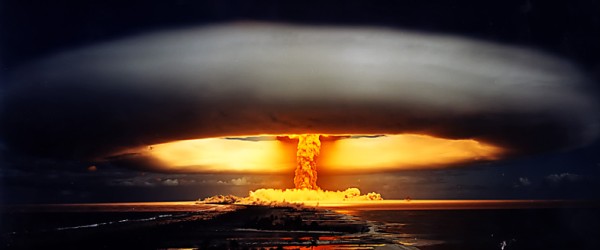
Nuclear terrorism and climate change

Graham Allison, who has for years been issuing graves warnings about the danger of nuclear terrorism, writes about last week’s nuclear security summit in Washington:

With all the immediate challenges demanding President Obama’s attention today, his choice to invest so much of his own mind-share and political capital in an issue seemingly so remote is remarkable.

We are accustomed to the triumph of the urgent over the important. In assembling the largest number of heads of foreign governments by an American president since FDR invited leaders to San Francisco to create the United Nations, this president demonstrated his ability to distinguish between the vivid and the vital.

The question remains: So what? How is the world different today? How will it be different a year from now?

To score this undertaking, it is necessary to assess performance on four dimensions. First, what is the single largest national security threat to the lives of American citizens? Far-fetched as it still appears to many, President Obama’s answer is unambiguous. As he said Monday: Nuclear terrorism is “the single biggest threat to U.S. security, short term, medium term and long term.”

Nuclear terrorism — a bigger threat to American security than climate change? Hardly.

The critical difference is that unlike the threat of nuclear terrorism, with climate change there will probably be no singlular event that will result in any particular political leader being called to task to explain how they could have allowed this unfolding calamity to happen.

So when it comes to the exercises in self-protection that consume a significant amount of time and energy for the world’s political leaders, the issue of nuclear terrorism is indeed more vexing than climate change. Obama’s attention to this issue does not — at least as far as I’m concerned — indicate his willingness to distinguish between the vivid and the vital.

Facebooktwittermail

Who’s behind the Gates memo leak?

The New York Times reports on a “secret three-page memorandum” that Defense Secretary Robert Gates sent to National Security Adviser Gen James Jones in January, warning that “the United States does not have an effective long-range policy for dealing with Iran’s steady progress toward nuclear capability,” according to unnamed officials who leaked the information.

The narrative line here which is presumably the line which was being fed to the New York Times‘ ever-obliging reporters, was that the there are gaps in the US strategy for dealing with Iran’s nuclear ambitions. It’s far from clear that this was actually the thrust of Gates’ memo.

[I]n his memo, Mr. Gates wrote of a variety of concerns, including the absence of an effective strategy should Iran choose the course that many government and outside analysts consider likely: Iran could assemble all the major parts it needs for a nuclear weapon — fuel, designs and detonators — but stop just short of assembling a fully operational weapon.

In that case, Iran could remain a signatory of the Nuclear Nonproliferation Treaty while becoming what strategists call a “virtual” nuclear weapons state.

To say that the US lacks a strategy here, is itself a statement so vague as to be meaningless. It lacks a strategy to prevent Iran becoming a virtual nuclear state? Or it lacks a strategy for dealing with Iran in such an eventuality? Or it lacks a strategy for dealing with the fact that it may not actually know whether Iran has acquired this form of nuclear capability?

There is no indication in this account that the New York Times reporters saw the memo (and it seems reasonable to infer that they did not), so as is so often the case, it’s likely that the most significant detail in this story is the one that will not be revealed: the identity of the senior official who is the primary source of the narrative.

Was it Dennis Ross? He’d certainly fit the profile of someone in the administration who probably feels like it’s time to change the subject and shift attention away from Israel and back to Iran. As another US official recently told Laura Rozen, “He [Ross] seems to be far more sensitive to Netanyahu’s coalition politics than to U.S. interests.”

Facebooktwittermail

Kucinich: White House assassination policy is extrajudicial

Jeremy Scahill writes in The Nation:

There has been almost universal silence among Congressional Democrats on the Obama administration’s recently revealed decision to authorize the assassination of a US citizen, Anwar al-Awlaki. Al-Awlaki, who now lives in Yemen, has been accused of providing inspiration for Umar Farouk Abdulmutallab, the alleged “underwear bomber,” and Major Nidal Malik Hasan, the alleged Fort Hood shooter. In recent weeks, there has been a dramatic surge in US government chatter about the alleged threat posed by al-Awlaki, with anonymous US officials accusing him of directly participating in terror “plots” (his family passionately disputes this).

Several Democrats refused, through spokespeople, to comment on the assassination plan when contacted by The Nation, including Senator Russ Feingold and Representative Jan Schakowsky, both of whom serve on the Intelligence Committees. Representative Jane Harman, who serves on the Homeland Security Committee, said recently that Awlaki is “probably the person, the terrorist, who would be terrorist No. 1 in terms of threat against us.”

An issue related to this assassination plan that has thus far received no attention is its implications for the court martial of Nidal Malik Hasan. If Anwar al-Awlaki was arrested and brought back to the United States, he would undoubtedly be a key witness in Hasan’s trial, given the widely reported email correspondence between the Texas shooter and Awlaki. Won’t killing a potential witness prejudice the outcome of the trial?

Facebooktwittermail

An empire decomposed: American foreign relations in the early 21st century

A must-read speech on the militarization of American diplomacy, by Chas Freeman, former US ambassador to Saudi Arabia, and the first casualty in the Israel lobby’s efforts to rein in what in its early days might have looked like a dangerously independent Obama administration.

Americans are accustomed to foreigners following us. After all, for forty years, we led the industrial democracies against the former USSR and its captive entourage. After the Soviet collapse, we bestrode the world as its sole colossus. For a while, we imagined we could do pretty much anything we wanted to do on our own. This, in the opinion of some, made followers irrelevant and leadership unnecessary.
Still, on reflection, we thought things might go better with a garland of allies and a garnish of friends. So we accepted some help from NATO members and some other foreign auxiliaries in Afghanistan. And, when we marched into the ambush of Iraq, we recruited a few other nations eager to ingratiate themselves with us to tag along in what became known as “the coalition of the billing.” In the end, however, in Iraq, it came down to us and our faithful British collaborators. Then, without even a “yo! Bush,” the Brits too were gone. And when we looked for other allies to follow us back into Afghanistan, they weren’t there.

All this should remind us that power, no matter how immense, is not by itself enough to ordain leadership. Power must be informed by vision, guided by wisdom, and embodied in strategy if it is to inspire companions and followers. We’re a bit short of believers in our leadership these days, not just on the battlefields of West Asia but at global financial gatherings, the United Nations, meetings of the G-20, among human rights and environmental activists, in the world’s regions, including our own hemisphere, and so forth. There are few places where we Americans still enjoy the credibility and command the deference we once did. A year or so ago, we decided that military means were not always the best way to solve problems and that having diplomatic allies could really help do so. But it isn’t happening.

The excesses that brought about the wide-ranging devaluation of our global standing originate, I think, in our politically self-serving reinterpretation of the Cold War soon after it ended. As George Kennan predicted, the Soviet Union was eventually brought down by the infirmities of its system. The USSR thus lost its Cold War with America and our allies. We were still standing when it fell. They lost. We won, if only by default. Yet Americans rapidly developed the conviction that military prowess and Ronald Reagan’s ideological bravado — not the patient application of diplomatic and military “containment” to a gangrenous Soviet system — had brought us victory. Ours was a triumph of grand strategy in which a strong American military backed political and economic measures short of war to enable us to prevail without fighting. Ironically, however, our politicians came to portray this as a military victory. The diplomacy and alliance management that went into it were forgotten. It was publicly transmuted into a triumph based on the formidable capabilities of our military-industrial complex, supplemented by our righteous denunciation of evil.

Many things followed from this neo-conservative-influenced myth. One conclusion was the notion that diplomacy is for losers. If military superiority was the key to “victory” in the Cold War, it followed for many that we should bear any burden and pay any price to sustain that superiority in every region of the world, no matter what people in these regions felt about this. This was a conclusion that our military-industrial complex heard with approval. It had fattened on the Cold War but was beginning to suffer from enemy deprivation syndrome — that is, the disorientation and queasy apprehension about future revenue one gets when one’s enemy has irresponsibly dropped dead. With no credible enemy clearly in view, how was the defense industrial base to be kept in business? The answer was to make the preservation of global military hegemony our objective. With no real discussion and little fanfare, we did so. This led to increases in defense spending despite the demise of the multifaceted threat posed by the USSR. In other words, it worked.

Only a bit over sixty percent of our military spending is in the Department of Defense budget, with the rest hidden like Easter eggs in the nooks and crannies of other federal departments and agencies’ budgets. If you put it all together, however, defense-related spending comes to about $1.2 trillion, or about eight percent of our GDP. That is quite a bit more than the figure usually cited, which is the mere $685 billion (or 4.6 percent of GDP) of our official defense budget. Altogether, we spend more on military power than the rest of the world — friend or foe — combined. (This way we can be sure we can defeat everyone in the world if they all gang up on us. Don’t laugh! If we are sufficiently obnoxious, we might just drive them to it.) No one questions this level of spending or asks what it is for. Politicians just tell us it is short of what we require. We have embraced the cult of the warrior. The defense budget is its totem.

The rest of this speech can be read here. Thanks to War in Context reader Delia Ruhe for bringing this to my attention.

Facebooktwittermail

Obama’s indiscriminate killing program

In The Price of Assassination, Robert Wright reflects on the pitfalls of President Obama’s policy of so-called targeted killing.

Wright comes closest to hitting the right target when he says:

Terrorists are nourished ultimately by a grass-roots sense of injustice.

And one good way to stoke a sense of injustice is to fire missiles into cars, homes and offices in hopes of killing terrorists, while in fact killing no few innocent civilians. Estimates of the ratio of civilians to militants killed are all over the map — 50 to 1 or 10 to 1 or 1 to 2 or 1 to 10 — but the estimate of the Pakistani people, which is all that matters, tends toward the higher end.

The higher end is actually off the scale that Wright cites since he only looks at American sources. And since it seems reasonable to assume that the Pakistanis count their own dead more carefully than Americans do, the high end, as reported by Dawn newspaper, may also be a more accurate count and measure of the accuracy of Obama’s targeted killing program: 140 innocents civilians killed each time an al Qaeda or Taliban “target” was hit in 2009.

Any policy of targeted killing — whether conducted by the US or Israel — faces an obvious problem that must surely have given rise to the name, targeted killing. These actions result in a significant amount of indiscriminate killing, yet indiscriminate killing is, we are constantly reminded, the province of terrorism.

So how does a state counter the charge that its methods mirror those of terrorists? By claiming — without much foundation — that the carnage it causes is precise. We are highly discriminating killers who hit our targets with pinpoint accuracy — pinpoints that often turn out to be occupied by an unfortunate number of untargeted people.

But to turn to another of Wright’s points — that terrorists are nourished by a grass-roots sense of injustice — here he glides over the issue that the very term terrorism is designed to conceal: that just causes very often spawn acts of violence and that those engaged in this violence are genuinely dedicated to those causes, not merely being nourished by them.

In other words, by invoking the word terrorism we refuse to look at its political roots. And even in those cases where a just political cause is widely acknowledged — such as with the Palestinian national movement — we imagine that its violent manifestations can be legitimately marginalized rather than seen as a compelling gauge of the depth of the grievance.

Facebooktwittermail

Obama ain’t no Spock

A US resolution to the Middle East conflict has become a national imperative and a logical necessity. Therefore it will happen.

At least it would if we lived in a world governed by logic…

I confess I don’t pay unswerving attention to everything that’s happening in Washington, so when I saw a headline in today’s New York Times, Obama Speech Signals a U.S. Shift on Middle East, my first reaction was: Huh. Obama gave a speech on the Middle East and I never even heard it was scheduled. How about that?

Then I read the article to find out when and where he gave this speech but it wasn’t mentioned. Then I read the headline again. Aha! Caught again by those cunning New York Times headline writers – Obama speech, not Obama’s speech.

Why does the so-called newspaper of record have to be parsed as carefully as the Soviet Izvestia?

OK. So the speech in question turns out to be a phrase: “vital national security interest.” That being, the vital national security interest that will be served to the United States by a resolution to the Middle East conflict.

This does indeed mark an important shift in perspective. But here’s the real question: Will that shift in perspective lead to a significant shift in policy?

Generally speaking, to call something out as a “vital national security interest” should demand a bold course of action. You can’t point to a vital national security interest and then do little to address it, can you?

In the minds of many observers, the shift Obama has signaled, will almost inevitably lead to a US peace plan. “It increases the likelihood that Mr. Obama, frustrated by the inability of the Israelis and the Palestinians to come to terms, will offer his own proposed parameters for an eventual Palestinian state,” the Times reported.

But did anything else Obama said at the same juncture indicate that he’s ready to act decisively? No.

Progress will be halting, Obama said. Indeed.

Moreover, and this might have been the most telling remark he made: “we can’t want it more than they do.”

So, if resolving the Middle East conflict is a vital national security interest of the United States, the US will nevertheless be held hostage by the willingness of the Israelis and Palestinians to resolve the conflict.

We must, but we can’t…

I guess it won’t become a campaign slogan.

Facebooktwittermail

Obama: Middle East peace “is a very hard thing to do”

Amid swirling rumors and grand propositions, President Obama spoke yesterday on the so-called peace process and among peace-process professionals his words will be duly noted as an effort to “manage expectations”.

But for those of us who do not have an investment in the idea that the show must go on, what he said can be boiled down to this: Obama doesn’t see the necessary desire among the antagonists for the conflict to be resolved any time soon or under any amount of American pressure. No imposed US peace plan. No big speech in Jerusalem.

I think that the need for peace between Israelis and Palestinians and the Arab states remains as critical as ever.

It is a very hard thing to do. And I know that even if we are applying all of our political capital to that issue, the Israeli people through their government, and the Palestinian people through the Palestinian Authority, as well as other Arab states, may say to themselves, we are not prepared to resolve this — these issues — no matter how much pressure the United States brings to bear.

And the truth is, in some of these conflicts the United States can’t impose solutions unless the participants in these conflicts are willing to break out of old patterns of antagonism. I think it was former Secretary of State Jim Baker who said, in the context of Middle East peace, we can’t want it more than they do.

But what we can make sure of is, is that we are constantly present, constantly engaged, and setting out very clearly to both sides our belief that not only is it in the interests of each party to resolve these conflicts but it’s also in the interest of the United States. It is a vital national security interest of the United States to reduce these conflicts because whether we like it or not, we remain a dominant military superpower, and when conflicts break out, one way or another we get pulled into them. And that ends up costing us significantly in terms of both blood and treasure.

So I’m going to keep on at it. But I think on all these issues — nuclear disarmament, nuclear proliferation, Middle East peace — progress is going to be measured not in days, not in weeks. It’s going to take time. And progress will be halting. And sometimes we’ll take one step forward and two steps back, and there will be frustrations. And so it’s not going to run on the typical cable news 24/7 news cycle. But if we’re persistent, and we’ve got the right approach, then over time, I think that we can make progress.

And who will be most reassured by this message of persistent hope on the long and winding road to Middle East peace? Why, the Israelis of course. Surprise, surprise.

Facebooktwittermail

Why Netanyahu stayed away from Washington

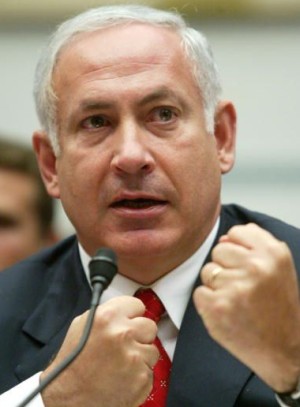
There’s been plenty of speculation about Benjamin Netanyahu’s last-minute cancellation of his plan to attend the Nuclear Security Summit in Washington. The official explanation was that it was to avoid facing criticism from Turkey, Egypt and other Middle East states over Israel’s nuclear program. Such criticism was long anticipated so that was never a credible explanation, but maybe the real reason became apparent this afternoon when President Obama said Israel should sign the Nuclear Non-Proliferation Treaty.

This is what he said in a news conference:

Scott Wilson, Washington Post: You have spoken often about the need to bring U.S. policy in line with its treaty obligations internationally to eliminate the perception of hypocrisy that some of the world sees toward the United States and its allies. In that spirit and in that venue, will you call on Israel to declare its nuclear program and sign the Non-Proliferation Treaty? And if not, why wouldn’t other countries see that as an incentive not to sign on to the treaty that you say is important to strengthen?

President Obama: Well, Scott, initially you were talking about U.S. behavior and then suddenly we’re talking about Israel. Let me talk about the United States. I do think that as part of the NPT our obligation as the largest nuclear power in the world is to take steps to reducing our nuclear stockpile. And that’s what the START treaty was about — sending a message that we are going to meet our obligations.

And as far as Israel goes, I’m not going to comment on their program. What I’m going to point to is the fact that consistently we have urged all countries to become members of the NPT.

So there’s no contradiction there. We think it is important that we have a international approach that is universal and that rests on three pillars: that those of us who have nuclear weapons are making serious efforts to reduce those stockpiles; that we all are working against the proliferation of nuclear weapons and those countries that don’t currently have nuclear weapons make the decision not to pursue nuclear weapons; and that all countries have access to peaceful nuclear energy.

And so whether we’re talking about Israel or any other country, we think that becoming part of the NPT is important.

US Under Secretary of State for Arms Control and International Security Affairs Ellen Tauscher spoke with Deputy Foreign Minister Daniel Ayalon last week and said that the US was going to adopt a policy of “calculated ambiguity” towards friendly nuclear nations that are outside the NPT.

That calculated ambiguity may be exactly what spooked Netanyahu. In a play on Israel’s own policy (which is that it will not be the first country to introduce nuclear weapons to the Middle East), did the Obama administration merely promise the Israelis that at the summit the US would not “introduce” the topic of Israel’s need to sign the NPT?

Facebooktwittermail

The nuclear paradox

Here’s how President Obama states the nuclear paradox:

The risk of a nuclear confrontation between nations has gone down, but the risk of a nuclear attack has gone up.

Here’s how I define it:

Hypothetical nuclear threats provoke more fear than real nuclear threats.

Nowhere is this paradox more evident than in Tel Aviv and Tehran.

Which city is currently in greater jeopardy of nuclear annihilation? Tehran.

Which city’s residents are repeatedly being told by their political leaders they should be afraid of nuclear annihilation? Tel Aviv’s.

So, to return to Obama’s assessment, when he says the risk of nuclear confrontation between nations has gone down, he’s saying something that’s both obvious and deceptive. What’s obvious is that the Cold War risk of a nuclear war between nuclear-armed states has diminished, but what he purposefully did not say is that the risk of any nuclear-armed state actually using its nuclear weapons has gone down.

The risk that Israel could use tactical nuclear weapons to destroy Iran’s nuclear facilities is real. I don’t believe that Israel is likely to do so because its current leadership — despite its willingness to engage in hyperbolic rhetoric — probably recognizes that the regional and global impact of the first use of nuclear weapons in warfare since 1945 would seal Israel’s fate as a pariah state.

Still, the risk that Israel might use nuclear weapons is indisputably greater than the risk of nuclear weapons being used by any organization or state that is not currently armed with such weapons.

The risk of nuclear terrorism should not be dismissed, but as Brian Michael Jenkins notes, it’s important to distinguish between nuclear terrorism and nuclear terror. In 2008 he wrote:

Will terrorists go nuclear? It is a question that worried public officials and frightened citizens have been asking for decades. It is no less of a worry today, as we ponder the seventh anniversary of 9/11.

Might Iran’s nuclear weapons ambitions lead eventually to arming Hizbollah or Hamas with nuclear weapons? Might a financially desperate North Korea sell the wherewithal for nuclear weapons to terrorist buyers? Might a political upheaval in always turbulent Pakistan put a nuclear weapon in the hands of extremists? Could there, ultimately, be a nuclear 9/11?

We have to take the long-shot possibility of nuclear terrorism seriously, but we must not allow ourselves to be terrorized by it.

Nuclear terrorism and nuclear terror reside in different domains. Nuclear terrorism is about a serious threat — the possibility that terrorists might somehow obtain and detonate a nuclear weapon — while nuclear terror is about the anticipation of that event. Nuclear terrorism is about terrorists’ capabilities, while nuclear terror is about imagination.

Fear is not free. Fear can pave the way for circumventing established procedures for the collection of intelligence, for attempts to operate outside the courts, and perhaps for torture. Distinguished scholars discuss the durability of the U.S. Constitution in the face of nuclear terrorism.

Frightened populations are intolerant. Frightened people worry incessantly about subversion from within. They worry about substandard zeal. Frightened people look for visible displays to confirm unity of belief–lapel pin patriotism.

Fear creates its own orthodoxy. It demands unquestioning obeisance to a determined order of apprehension.

During the Cold War an all-out nuclear exchange would have meant planetary suicide. Today, we face one tyrant in North Korea with a handful of nuclear weapons, an aspirant in Iran enthralled by first-use fantasies, and a terrorist organization with an effective propaganda machine-dangerous, vexing, but not the end of the world, not the end of the nation, not the end of a single city.

Undoubtedly, a terrorist nuclear explosion of any size would have a huge psychological impact on America. But whether it would lead to social anarchy would depend heavily on the attitudes of the nation’s citizens and the behavior and communications of its leadership.

We may not be able to prevent an act of nuclear terrorism. But we can avoid destroying our democracy as a consequence of nuclear terrorism.

Whether or not we as citizens yield to nuclear terror is our decision.

John Mueller from Ohio State University’s department of political science wrote last year:

The evidence of al-Qaeda’s desire to go atomic, and about its progress in accomplishing this exceedingly difficult task, is remarkably skimpy, if not completely negligible. The scariest stuff — a decade’s worth of loose nuke rumor — seems to have no substance whatever. For the most part, terrorists seem to be heeding the advice found in an al-Qaeda laptop seized in Pakistan: “Make use of that which is available … rather than waste valuable time becoming despondent over that which is not within your reach.”

As Mueller and Mark G. Stewart note in an article in the current edition of Foreign Affairs, if America’s counterterrorism policy was actually based on objective risk assessment, we’d understand that the risk al Qaeda poses to each American is about the same as the risk posed by kitchen appliances.

As a hazard to human life in the United States, or in virtually any country outside of a war zone, terrorism under present conditions presents a threat that is hardly existential. Applying widely accepted criteria established after much research by regulators and decision-makers, the risks from terrorism are low enough to be deemed acceptable. Overall, vastly more lives could have been saved if counterterrorism funds had instead been spent on combating hazards that present unacceptable risks.

This elemental observation is unlikely to change anything, however. The cumulative increased cost of counterterrorism for the United States alone since 9/11 — the federal, state, local, and private expenditures as well as the opportunity costs (but not the expenditures on the wars in Iraq or Afghanistan) — is approaching $1 trillion. However dubious and wasteful, this enterprise has been internalized, becoming, in Washington parlance, a “self-licking ice cream cone,” and it will likely last as long as terrorism does. Since terrorism, like crime, can never be fully expunged, the United States seems to be in for a long and expensive siege.

Facebooktwittermail

Can Obama erase ‘Bush nostalgia’ in the Middle East?

Shadi Hamid writes:

While President Obama’s domestic position has been strengthened considerably by the passage of health-care reform, there is nothing – yet – to suggest global support for American foreign policy will follow suit. Outside the US, there is a sense of “Bush nostalgia,” including in a rather unlikely place – the Middle East.

This is particularly the case for Arab reformers who, while disliking the Bush administration in almost every way, were fully aware that Bush’s “freedom agenda” helped usher in a promising moment for Arab reform.

On the Obama administration’s relative lack of pressure, Esam al-Erian, a prominent Muslim Brotherhood leader, sounded almost wistful of political openings that came about under Bush: “[Now President Mubarak] can do whatever he wants internally…. It feels like we’ve gone backward a little bit,” he said.

Indeed, the excitement Arabs felt after Mr. Obama’s historic Cairo speech became the backdrop for the mounting disappointment of the last nine months. Instead of making a clean break with past US policies, the current administration has reverted to the neorealism of President Clinton and the first President Bush, with its emphasis on competence and pragmatism.

Now as then, US policy continues to be anchored by a cynical bargain with Arab autocrats: If they faithfully support US regional objectives, the US turns a blind eye to their suppression of domestic dissent. It’s business as usual.

Facebooktwittermail

Yes we can… No you can’t

Zbigniew Brzezinski and Stephen Solarz write in the Washington Post:

More than three decades ago, Israeli statesman Moshe Dayan, speaking about an Egyptian town that controlled Israel’s only outlet to the Red Sea, declared that he would rather have Sharm el-Sheikh without peace than peace without Sharm el-Sheikh. Had his views prevailed, Israel and Egypt would still be in a state of war. Today, Prime Minister Binyamin Netanyahu, with his pronouncements about the eternal and undivided capital of Israel, is conveying an updated version of Dayan’s credo — that he would rather have all of Jerusalem without peace than peace without all of Jerusalem.

This is unfortunate, because a comprehensive peace agreement is in the interest of all parties. It is in the U.S. national interest because the occupation of the West Bank and the enforced isolation of the Gaza Strip increases Muslim resentment toward the United States, making it harder for the Obama administration to pursue its diplomatic and military objectives in the region. Peace is in the interest of Israel; its own defense minister, Ehud Barak, recently said that the absence of a two-state solution is the greatest threat to Israel’s future, greater even than an Iranian bomb. And an agreement is in the interest of the Palestinians, who deserve to live in peace and with the dignity of statehood.

However, a routine unveiling of a U.S. peace proposal, as is reportedly under consideration, will not suffice. Only a bold and dramatic gesture in a historically significant setting can generate the political and psychological momentum needed for a major breakthrough. Anwar Sadat’s courageous journey to Jerusalem three decades ago accomplished just that, paving the way for the Camp David accords between Israel and Egypt.

Similarly, President Obama should travel to the Knesset in Jerusalem and the Palestinian Legislative Council in Ramallah to call upon both sides to negotiate a final status agreement based on a specific framework for peace. He should do so in the company of Arab leaders and members of the Quartet, the diplomatic grouping of the United States, Russia, the European Union and the United Nations that is involved in the peace process. A subsequent speech by Obama in Jerusalem’s Old City, addressed to all the people in the region and evocative of his Cairo speech to the Muslim world in June 2009, could be the culminating event in this journey for peace.

Meanwhile, Aaron David Miller thinks the Obama administration seems intent on pushing Netanyahu out of the way.

There’s a widespread view — almost a conviction in Washington these days — that Netanyahu just isn’t capable of reaching a deal, and that the Palestinians and Arabs will never trust him. So why expend months of effort starting a process with Netanyahu that you can’t possibly conclude with him?

The remedy, if regime change is the goal, is to hang tough on settlements, create conditions for starting negotiations that are reasonable but that Netanyahu’s coalition can’t accept, and not-so-subtly suggest that Netanyahu can’t be a real partner in a peace process. The administration’s recent leak that it’s considering putting out its own peace plan will only further undermine any chance of partnership.

Sooner or later, the thinking goes, it would become clear in Israel that the prime minister can’t manage the nation’s most important relationship, and that he is putting settlements above Israeli security at a time when the Iranian threat looms large and close ties with the U.S. are more important than ever. The American hope would be that public and political pressure would mount, forcing Netanyahu to broaden his government or even impelling a change at the top.

The only problem with this line of thinking is that the odds of success are slim to none.

Facebooktwittermail

Respect — the currency of infinite value

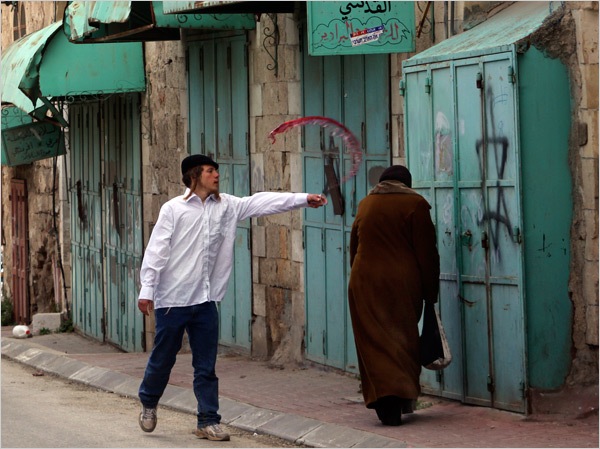
A Jewish settler tosses wine at a Palestinian woman on Shuhada Street in Hebron, the West Bank.

Four years ago, Rory Stewart wrote:

A great many of the failures in Afghanistan and Iraq arise from a single problem: the American-led coalitions’ lack of trust in local politicians. Repeatedly the Western powers, irritated by a lack of progress, have overruled local leaders, rejected compromises and tried to force through their own strategies. But the Westerners’ capacity is limited: they have little understanding of Afghan or Iraqi politics and rely too heavily on troops and money to solve what are fundamentally political and religious problems.

The coalitions cannot achieve political change in the absence of strong local support. And when they try to do so, they undermine their local allies. Iraqi and Afghan national and regional leaders have a far better understanding of the limits and possibilities of the local political scenes; they are more flexible and creative in finding compromises; and unlike the coalition officials, they are elected. They must be given real power and authority. This may seem an obvious prescription — but in fact the coalitions are not allowing it to happen.

Underneath the lack of trust that Stewart correctly identified, is a more fundamental issue: the hubris of power.

We have the guns, the cash, and represent the most powerful nation on Earth. You need to respect us but we really don’t need to respect you. Respect is something we expect but will also on occasions dish out if or when it seems expedient.

Americans, shaped by a culture that tends to place a higher value on power than anything else, are inclined to view respect as simply an element in a power equation. In one situation respect might seem essential, in another merely useful, and in yet another it can be dispensed with. Rarely is it held up as the most vital component in all human relationships.

After President Obama showed up in Kabul just over a week ago, President Karzai showed his uninvited guest and paymaster the courtesy of inviting him to dinner. Obama, the New York Times tells us, returned the courtesy with a thank-you note. “It was a respectful letter,” General James Jones, Obama’s national security adviser told reporters.

The significance of this incident, supposedly, is that it signals an overdue change in tone as the administration registers that its repeated admonitions of the Afghan president have proved counterproductive.

Ironically, an American president whose arrival in office was supposed to herald an historic shift in America’s approach to the world — one which would reinstate the value of soft power — has been a surprisingly clumsy diplomat.

So, if the White House now understands that it must not underestimate the value of respectfulness, that’s a good thing — but let’s not pretend a thank-you note is all it takes.

* * *

Respect is one of those words we use so often we rarely pause to consider its meaning. It describes an attitude, yet its latin root, specere, to look, indicates that this is really a form of attention.

To be respectful is to attentively incline oneself towards the other in recognition of their autonomy and integrity.

There is no one we can respect and simultaneously try to change. When we coerce or manipulate someone, we cannot respect them because our attention is focused not on them but on what we want.

If one views respect as a resource, nowhere is it generally more scarce than among the powerful.

The conceit of power is that power elicits respect, when in truth the tokens of respect bestowed on the powerful are rarely more than expressions of fear, envy or duty. (Hence an underlying paranoia haunts the powerful: they know they are the beneficiaries of a social investment that could, if things turn sour, be swiftly withdrawn.)

Respect is not the fruit of power, but on the contrary, it is a self-propagating virtue that becomes mirrored through its own expression.

Meanwhile, behind what might sound like an overly abstract reflection on respect, another topic floating in the background is Israel, since if one drills to the core of the Middle East conflict, it cannot be reduced to land or religion. It’s about respect.

Can Jews who claimed their “birthright” by dispossessing hundreds of thousands of Palestinians, somehow make peace with those people and their descendants without also acknowledging the Palestinians’ rights to dignity and respect? Yet can such respect be conferred without also calling into question the legitimacy of the Jewish state?

Where is the actual ground for mutual respect when the affirmation of one people’s rights has for six decades depended on the denial of another’s?

Facebooktwittermail

Why Bibi won’t budge

Ever since David Ignatius revealed that President Obama is “seriously considering” proposing an American peace plan to resolve the Israeli-Palestinian conflict, Washington’s Middle East hands have been ruminating on the significance of this report. Obama dropped in on a meeting of former national security advisers in the White House a couple of weeks ago, but if the people whose job it is to keep the dream of a peace process alive are to be believed, who was there was more significant than the president’s casual entry.

Brent Scowcroft, Zbigniew Brzezinski, Sandy Berger, Colin Powell, Frank Carlucci and Robert C. McFarlane — these are the heavyweights who can push Obama in the right direction. Right? Not unless Benjamin Netanyahu also gets pushed out of the way.

Larry Derfner lays out the reasons Bibi presents an immovable obstacle.

Which way will Bibi go? This seems to be the big question – whether Prime Minister Binyamin Netanyahu will bow to American pressure, exchange his right-wing/religious government for a “peace coalition” and start taking down the occupation, or whether he will dig in.

I don’t think there’s any doubt about it – he’s going to dig in. This is not the prime minister who’s going to divide the land with the Palestinians.

To begin with, of the 69 MKs in an imagined Likud-Kadima-Labor-Meretz coalition, the great majority are totally opposed to paying the well-known price for peace – removing 100,000 settlers from the West Bank’s interior and relinquishing Arab Jerusalem to the Palestinians for their capital. No Likudnik sees this as anything less than treason, and all but a few Kadima members would agree. The peace coalition actually numbers no more than about 20 MKs, and even with the outside support of the Arab parties, they’re a hopeless minority, for now anyway.

Still, could a prime minister who has the president of the United States and the rest of the world bearing down on him convince the majority to do the deal? Could a prime minister with unusual powers of persuasion persuade the country to do what the democratic world has been asking it to do since 1967, on pain of losing its place in that world?

Maybe. If such a prime minister really believed Israel’s future depended on its ending the occupation. And Netanyahu doesn’t believe that for a minute. He’s spent his whole career preaching the opposite – that giving up the land conquered in the Six Day War would be the death of this country. This isn’t a talking point for him, it’s the worldview he was raised on, one he’s never abandoned regardless of the empty phrases he utters now and then to stroke the Obama administration. Netanyahu has opposed every peace process he’s ever been around. His view of the Palestinians is simple, clear and consistent – either we keep them down or they wipe us out.

And just in case anyone imagines that there is any other Israeli leader who could do what Netanyahu finds impossible, Derfner is clear: “No there isn’t. Not now, anyway.” Instead, it’s up to Israel’s friends “to make the status quo here intolerable.”

That’s a big leap from simply observing that the status quo is unsustainable.

Facebooktwittermail

Is the US getting ready to push Israel to declare its nuclear status?

[Updated below] Whatever else can be said about the strained relationship between Barack Obama and Benjamin Netanyahu, one thing is clear: Obama seems intent on keeping Netanyahu off balance.

On Tuesday, Netanyahu announced he would be returning to Washington next week to attend Obama’s Nuclear Security Summit. Just days later, he had changed his mind, ostensibly because of “fears that a group of Muslim states, led by Egypt and Turkey, would demand that Israel sign up to the international Nuclear Non-Proliferation Treaty, or NPT,” Haaretz reported.

An earlier report in the Jerusalem Post, however, had raised that specific issue and said this would not deter the Israeli prime minister from attending the summit:

[O]ne main argument against participation was that Netanyahu’s presence at an international forum dealing with nuclear issues would inevitably draw attention to Israel’s own reported nuclear arsenal, as well as its policy of ambiguity on whether it has nuclear weapons.

Countries such as Egypt, Turkey and Saudi Arabia will certainly – as they do regularly at international nuclear forums – shine the spotlight on Israel and a perceived imbalance: Why is the world so keen on stopping Iran’s nuclear development program, but silent in the face of Israel’s reported nuclear arsenal?

One government official said Netanyahu’s decision to attend, despite this likely scenario, had been made because key issues affecting Israel would be discussed there, and it was important for the Jewish state’s voice to be heard – as well as the realization that Israel’s reported nuclear capacity would be an issue whether Netanyahu participated in the meeting or not.

Earlier, Ynet reported:

US Under Secretary of State for Arms Control and International Security Affairs Ellen Tauscher spoke with Deputy Foreign Minister Daniel Ayalon Tuesday and updated him on US President Barack Obama’s new nuclear proliferation policy.

Tauscher said that the US will strive to protect its allies and work against countries which violate the Non-Proliferation Treaty (NPT) such as North Korea, or countries that fail to meet their commitments to the international community such as Iran.

The under secretary of state stressed that Washington will adopt a “calculated ambiguity” policy towards countries which do not pose a threat to the US. Despite not explicitly pointing to Israel, it appears her statements were meant to reassure the Jewish state.

It’s unclear however, whether the administration’s “calculated ambiguity” was really meant to reassure Israel or do the opposite.

The United States is not on the brink of pushing Israel to sign the Nuclear Non-Proliferation Treaty but it could be signalling its willingness to see pressure applied by others as it provides a platform in Washington for such an effort. Moreover, in a little noted move, the Obama administration appears to be using a new diplomatic tool to signal that Israel’s days of “nuclear ambiguity” may be numbered: Israel’s nuclear scientists are now being shut out of the United States.

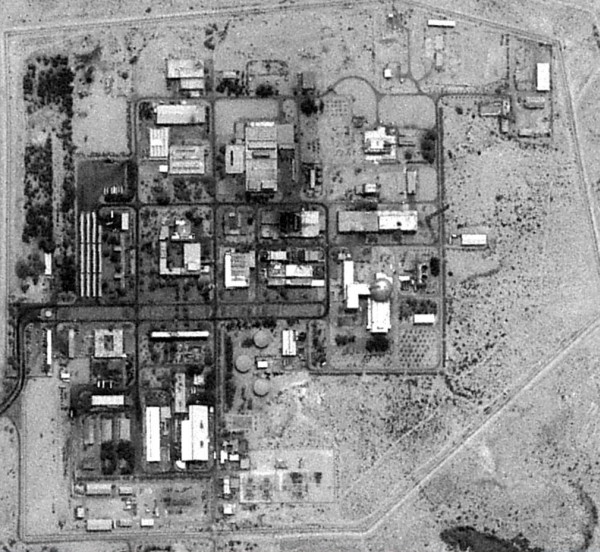
A report on the Hebrew NRG/Maariv website, under a headline, Dimona reactor workers not welcome in the US, says that workers at Israel’s Dimona nuclear research reactor who submitted visa requests to visit the United States for ongoing university education in physics, chemistry and nuclear engineering, have all been rejected, specifically because of their association with the Dimona reactor. According to the report, this is a new policy decision by the Obama administration, since reactor workers were until recently being issued visas to study in the US.

Update: Shortly after I posted this, Politico reported that the White House today denied that there has been any change in its visa policy.

Facebooktwittermail

A presidential death warrant

American soldiers have to be trained how to kill, but for American presidents killing comes naturally.

Anyone who aspires to become president must surely ask themselves: am I willing to end someone else’s life, be that an individual or perhaps tens or hundreds of thousands or even millions of people? After all, even though it’s not spelled out in the Constitution, it’s clear that a pacifist could never hold this office. Killing comes with the territory.

Even so, I can’t help wondering when it was the Barack Obama posed this question and decided, “yes I can.”

With candidate George W Bush we didn’t need to ask the question. He had a track record — as the Governor of Texas he presided over 152 executions. But with Obama, we may never know when he came to regard killing as a tolerable part of his job.

It’s hard to imagine that as a community organizer he ever entertained the idea that wiping people out could become a dimension of working towards the greater good, yet at some point he must have seen this coming and — from all the evidence we now see — not flinched.

But to contrast Obama and Bush as killers, here’s what’s scary and yet passes without comment: Obama’s approach is dispassionate, with no explicit moral calculation. Whereas Bush felt driven to assume an air of righteousness and moral superiority, casting his actions within a drama of good and evil, Obama presents the image of an administrative process through which, after careful analysis and legal and political deliberation, lives are terminated.

Under the morally insidious rubric of “procedures” — a notion that peels away personal responsibility by replacing it with impersonal rules-based behavior — the president, the CIA, the military, the administration, the media, and the American public are all being offered an excuse to look the other way. An unnamed official assured a Washington Post reporter: “[there are] careful procedures our government follows in these kinds of cases.”
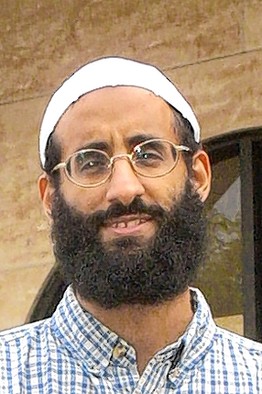
When Anwar al-Awlaki, an American born in New Mexico is shredded and incinerated — his likely fate at the receiving end of a Hellfire missile — there will be no account of the last moments of his life. No record of who happened to be in the vicinity. Most likely nothing more than a cursory wire report quoting unnamed American officials announcing that the United States no longer faces a threat from a so-called high value target.

Representative Jane Harman, Democrat of California and chairwoman of a House subcommittee on homeland security, was out prepping the media and the public on Tuesday when she called Awlaki “probably the person, the terrorist, who would be terrorist No 1 in terms of threat against us.”

Although it was only this week that a US official announced that Awlaki is now on the CIA’s assassination list, US special forces were already authorized and had made at least one attempt to kill the Muslim cleric who now resides in Yemen.

While both the military and the CIA make use of drones for the purpose of remotely controlled assassination, the fact that Awlaki is now considered a legitimate target for “lethal CIA operations” raises questions about the methods the agency might use.

Last summer CIA Director Leon Panetta shut down a secret CIA program which would have operated assassination teams for hunting down al Qaeda leaders. The news was presented as though the new administration was again distancing itself from the questionable practices of the Bush administration, yet at the time, Director of National Intelligence Dennis C Blair told Congress that the termination of that particular program did not rule out the future use of insertion teams that could kill or capture terrorist leaders.

One of the many ironies here is that the Obama administration appears to have abandoned one of the Bush era rationales for torture in favor of its own rationale for murder.

The most frequently used justification for torturing terrorist suspects has been the claim that in the scenario of a so-called ticking time bomb, vital information might be forced out of a suspect enabling an imminent act of terrorism to be thwarted.

Anwar al-Awlaki is supposedly just such a suspect. “He’s working actively to kill Americans,” an American official told the Washington Post. But whatever vital intelligence he might be able to provide, we’ll probably never know. Once dead he won’t hatch any new plots, but as for the ones already set in motion, well, we’ll just have to wait and see what sort of surprises may yet appear.

Needless to say, I am not suggesting that torturing terrorist suspects is any more acceptable than murdering them.

Ken Gude, a human rights expert from the Center for American Progress, argues that Awlaki is a legitimate target for assassination because of his claimed role in assisting the 9/11 attackers. On that basis, his killing would appear to be an act of extra-judicial punishment rather than the removal of a potential threat. But even if the administration sticks assiduously to its focus on future threats, it should not claim a God-like power to predict the future. Nor should it assume that the threat someone poses is necessarily diminished once they are dead.

In weighing the fate of Anwar al-Awlaki, this administration would do well to remember the case of Mohammed El Fazazi, a Moroccan cleric who from a Hamburg mosque preached to Mohammed Atta, Ramzi Binalshibh and Marwan al-Shehhi, three of the men who participated in the 9/11 attacks, that it was the duty of a devout Muslim to “slit the throats of non-believers.”

Eight years later, Fazazi had a new message as he appealed to Muslims to air their grievances through peaceful demonstrations. He is helping turn young men away from violent jihad. But what would stir the hearts of such men now if rather than hearing Fazazi’s moderated message, instead they held the memory of a day he became a martyr when struck by an American Hellfire missile?

Facebooktwittermail

The over-rated middle way

“Obama to take middle course in new nuclear policy,” a headline in the Washington Post declares.

There are a few instances where “middle” signals danger — he was driving drunk down the middle of the road — but generally speaking, middle is supposed to be good. But when the Post tells us Obama is going to take a “middle course” on nuclear weapons, this is one of those perverse instances where the newspaper editors seem to want to direct readers away from the story.

Obama’s going down the middle — not too much, not too little. Yawn, let’s move on to the next story. Oh yeah, but just in case you make it to paragraph three, it’s worth mentioning that the US wants Iran to understand that even as a non-nuclear state, it could be targeted by America’s nuclear arsenal.

That‘s a middle course?! Unless you happen to be in the Iranian government in which case it might sound more like an urgent call to develop a nuclear deterrence capability.

A year after his groundbreaking pledge to move toward a “world without nuclear weapons,” President Obama on Tuesday will unveil a policy that constrains the weapons’ role but appears more cautious than what many supporters had hoped, with the president opting for a middle course in many key areas.

Under the new policy, the administration will foreswear the use of the deadly weapons against nonnuclear countries, officials said, in contrast to previous administrations, which indicated they might use nuclear arms against nonnuclear states in retaliation for a biological or chemical attack.

But Obama included a major caveat: The countries must be in compliance with their nonproliferation obligations under international treaties. That loophole would mean Iran would remain on the potential target list.

At Foreign Policy, Josh Rogin notes that Obama has made yet another reversal on a campaign position. No doubt under the sway of Pentagon and defense industry pressure, he now wholeheartedly embraces the biggest defense boondoggle of them all: missile defense.

For an Obama team that has been skeptical of the past U.S. administrations’ efforts to rapidly deploy ballistic missile-defense systems around the world, missile defense sure does get star billing in the United States’ newly released report on overall nuclear strategy.

The document claims that missile defense is critical to allowing the United States to shift away from nuclear weapons, especially now that the U.S. will no longer threaten to use nukes to retaliate against non-nuclear attacks, such as from chemical or biological weapons.
[…]
The NPR itself was careful to mention missile defense as only one of several capabilities needed to counter non-nuclear attacks.

But Secretary Clinton was less careful.

“It’s no secret that countries around the world remained concerned about our missile-defense program,” Clinton said, explaining that the NPR weighs in on “the role [missile defense] can and should play in deterring proliferation and nuclear terrorism.”

Ok, so now missile defense can deter chemical attacks, biological attacks, proliferation of nuclear technology, and suitcase bombs?

Regardless, the document makes clear that with fewer nukes to be deployed once the new START agreement goes into effect, and with the role of nuclear weapons now limited to responding to nuclear threats, the administration is now looking to missile defense, among other technologies, to fill in the gap.

“As the role of nuclear weapons is reduced in U.S. national security strategy, these non-nuclear elements will take on a greater share of the deterrence burden,” the review reads.

Outside experts doubted that the NPR’s suggested shift toward a reliance on missile defense would provide any deterrence for most types of chemical and biological attacks or the use of a nuclear device by a terrorist.

“If they deliver them by missile, fine, but that’s not likely to be the case,” said Peter Huessy, president of Geostrategic Analysis, a defense consulting firm. “If our biggest threat is terrorists using nukes, then of course deterrence doesn’t apply and missile defense doesn’t apply either.”

Huessy also commented on Obama’s embrace of missile defense in the NPR, which seems out of line with the criticism he leveled when running for president in 2008.

“I certainly see a pivot in the sense of what people expected,” he said. “Missile defense is now front and center in America’s security policy. That’s’ certainly a shift from Obama’s campaign rhetoric.”

If there’s one lesson that 9/11 could have taught us in — oh, let’s say a few seconds — it should have been that in an age of asymmetric warfare, missile defense is a giant waste of money. Yet the only lesson we can draw almost a decade later is that when it comes to the flagrant misuse of tax dollars, so long as it’s done in the name of that holiest of holies, defense, American taxpayers will remain blithely indifferent.

Facebooktwittermail

Karzai’s troublesome independence

After Benjamin Netanyahu was recently insulted by President Obama during his March visit to Washington (Obama declined to offer him dinner), Israeli commentators struggled to make an appropriate comparison and for some reason thought this was treatment that the head of a small African state might expect — the rather transparent implication being that Netanyahu should get the kind of deferential treatment that Israelis apparently believe is reserved for white Western leaders.

Israelis could but won’t console themselves with the observation that Netanyahu has yet to be treated like Hamid Karzai.

Last month, Karzai got uninvited by the White House and then, adding insult to injury, an uninvited visit and reprimand from Obama. Karzai is now pissed off. I wonder why?

President Hamid Karzai lashed out at his Western backers for the second time in three days, accusing the U.S. of interfering in Afghan affairs and saying the Taliban insurgency would become a legitimate resistance movement if the meddling doesn’t stop.

Mr. Karzai, whose government is propped up by billions of dollars in Western aid and nearly 100,000 American troops fighting a deadly war against the Taliban, made the comments during a private meeting with about 60 or 70 Afghan lawmakers Saturday.

At one point, Mr. Karzai suggested that he himself would be compelled to join the other side —that is, the Taliban—if the parliament didn’t back his controversial attempt to take control of the country’s electoral watchdog from the United Nations, according to three people who attended the meeting, including an ally of the president.

The prospects of Karzai joining the Taliban are minimal but his threat highlights Washington’s dilemma: they want an Afghan leader who is compliant but doesn’t look like a puppet. They want someone who looks independent but does what he’s told.

The hypocrisy inherent in the American approach is no more evident than in the run-up to the highly-publicized offensive against the Taliban stronghold, Kandahar. Will President Karzai publicly approve the offensive, or merely accede to it, Doyle McManus asks. “He’s got to be seen as the guy who’s leading this fight,” a military officer says.

Much to the frustration of American planners, it turns out that Afghans, including Karzai, have minds of their own. How inconvenient.

Facebooktwittermail

The president’s conscience, on hold

Dan Froomkin writes:

The White House counsel ideally serves as the president’s conscience.

But late last year, Barack Obama’s conscience was surgically removed.

Greg Craig, as Obama’s top lawyer, was the point man on a number of hot-button issues, the fieriest being how to close the prison at Guantanamo Bay. Craig argued for holding fast to the principles that Obama outlined before he became president, regardless of the immediate political consequences — an idealistic approach that, in a White House filled with increasingly pusillanimous pragmatists, earned him some powerful enemies.

After a steady drip of leaks over a period of months to the Washington Post, the New York Times, the Wall Street Journal and other news outlets to the effect that his days were numbered, Craig finally resigned in November.

He was replaced by Robert Bauer, a politically adept consummate Washington insider whose expertise is in campaign finance law — in short, a man whose job is to win elections, not defend principles.

At the same time, Attorney General Eric Holder has been increasingly marginalized and cut out of the White House decision-making loop. So now the coast is clear for the White House to make important legal and national security calls on purely political grounds.

The only question that remains is whether Obama himself will have any last-minute qualms about turning his back on his own principles.

Facebooktwittermail