Category Archives: Obama administration

Belafonte on King and Obama

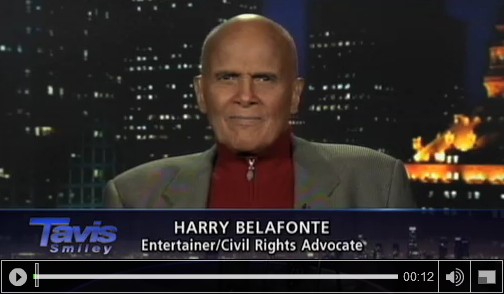
Harry Belafonte interviewed on PBS:

Barack Obama is first and foremost a man. He is flawed. He has his contradictions. He has revealed those contradictions.

There is a question that we have: do we get behind him and push him to become what we know he should be? Or do we lay back, watch him drift, watch him capitulate to the enemy and then say, “Ah ha! We knew it all along.”

Is not his conclusion to be ours? Is not his fate also to be ours? What role do we as a people play in forcing the mission to go where we know it must go?

Facebooktwittermail

Obama advisers set to recommend military tribunals for alleged 9/11 plotters

The Washington Post reports:

President Obama’s advisers are nearing a recommendation that Khalid Sheik Mohammed, the self-proclaimed mastermind of the Sept. 11, 2001, attacks, be prosecuted in a military tribunal, administration officials said, a step that would reverse Attorney General Eric H. Holder Jr.’s plan to try him in civilian court in New York City.

The president’s advisers feel increasingly hemmed in by bipartisan opposition to a federal trial in New York and demands, mainly from Republicans, that Mohammed and his accused co-conspirators remain under military jurisdiction, officials said. While Obama has favored trying some terrorism suspects in civilian courts as a symbol of U.S. commitment to the rule of law, critics have said military tribunals are the appropriate venue for those accused of attacking the United States.

Scott Horton comments:

In sharp violation of rules of prosecutorial conduct and ethics, political figures in the White House are engaged in the micromanagement of decisions concerning the prosecution of individual criminal defendants. Rahm Emanuel is a political figure, without any serious legal expertise or abilities. He openly presented the question as a matter of political opportunity—thereby infecting the criminal justice system with political horse-trading. This is more than just unseemly. It presents a direct affront to the integrity of the criminal justice system. After eight years in which Karl Rove manipulated essential prosecutorial decisions at Justice, now his successor is engaged in the same type of misconduct. But unlike Rove, Emanuel does it openly.

Facebooktwittermail

The Guantánamo “Suicides”: A Camp Delta sergeant blows the whistle

In Harper’s, Scott Horton writes:

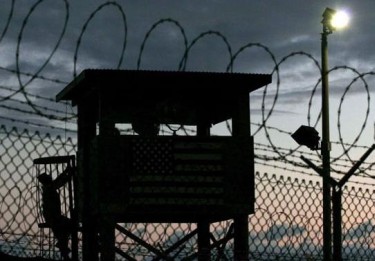
When President Barack Obama took office last year, he promised to “restore the standards of due process and the core constitutional values that have made this country great.” Toward that end, the president issued an executive order declaring that the extra-constitutional prison camp at Guantánamo Naval Base “shall be closed as soon as practicable, and no later than one year from the date of this order.” Obama has failed to fulfill his promise. Some prisoners there are being charged with crimes, others released, but the date for closing the camp seems to recede steadily into the future. Furthermore, new evidence now emerging may entangle Obama’s young administration with crimes that occurred during the George W. Bush presidency, evidence that suggests the current administration failed to investigate seriously—and may even have continued—a cover-up of the possible homicides of three prisoners at Guantánamo in 2006.

Facebooktwittermail

Brazil rebuff for Iran sanctions drive

The Financial Times reports:

Brazil delivered a wounding blow to Washington’s hopes of international consensus for sanctions on Iran on Wednesday when its president declared his opposition to such measures hours before meeting Hillary Clinton, US secretary of state.

In an indication of Brazil’s growing self-confidence on the international stage – and its effort to chart a path independent of Washington – Luiz Inácio Lula da Silva stated his backing for Iran’s nuclear programme, as long as it remained purely peaceful.

The US and its partners say that Iran is seeking nuclear weapons capacity, while the United Nations nuclear watchdog recently suggested Tehran could be working on a warhead.

But in spite of strong condemnation of the nuclear programme by the European Union and Russia in recent days and Mrs Clinton’s visit to Brazil, in which she will focus on the Iran file, Mr Lula da Silva remained unmoved.

Facebooktwittermail

The new McCarthyism

In The American Prospect, Adam Serwer writes:

The “Gitmo Nine” aren’t terrorists. They weren’t captured fighting for the Taliban. They’ve made no attempts to kill Americans. They haven’t declared war on the United States, nor have they joined any group that has. The “Gitmo Nine” are lawyers working in the Department of Justice who fought the Bush administration’s treatment of suspected terrorists as unconstitutional. Now, conservatives are portraying them as agents of the enemy.

In the aftermath of September 11, the Bush administration tried to set up a military-commissions system to try suspected terrorists. The commissions offered few due process rights, denied the accused access to the evidence against them, and allowed the admission of hearsay — and even evidence gained through coercion or abuse. The Bush administration also sought to prevent detainees from challenging their detention in court. Conservatives argued that the nature of the war on terrorism justified the assertion of greater executive power. In case after case, the U.S. Supreme Court sided with the administration’s critics.

“These lawyers were advocating on behalf of our Constitution and our laws. The detention policies of the Bush administration were unconstitutional and illegal, and no higher a legal authority than the Supreme Court of the United States agreed,” says Ken Gude, a human-rights expert with the Center for American Progress, of the recent assault on the Justice Department. “The disgusting logic of these attacks is that the Supreme Court is in league with al-Qaeda.”

The New York Times reports:

A former Justice Department official who led the Bush administration’s courtroom defense against lawsuits filed by Guantanamo detainees is denouncing attacks on Obama administration appointees who previously helped such prisoners challenge their indefinite detention without trial.

Peter D. Keisler, who was assistant attorney general for the civil division in the Bush administration, said in an interview that it was “wrong” to attack lawyers who volunteered to help such lawsuits before joining the Justice Department.

“There is a longstanding and very honorable tradition of lawyers representing unpopular or controversial clients,” Mr. Keisler said. “The fact that someone has acted within that tradition, as many lawyers, civilian and military, have done with respect to people who are accused of terrorism – that should never be a basis for suggesting that they are unfit in any way to serve in the Department of Justice.”

Facebooktwittermail

Genuine American exceptionalism on due process

Glenn Greenwald on America’s disregard for due process:

If there’s any country which can legitimately claim that Islamic radicalism poses an existential threat to its system of government, it’s Pakistan. Yet what happens when they want to imprison foreign Terrorism suspects? They indict them and charge them with crimes, put them in their real court system, guarantee them access to lawyers, and can punish them only upon a finding of guilt. Pakistan is hardly the Beacon of Western Justice — its intelligence service has a long, clear and brutal record of torturing detainees (and these particular suspects claim they were jointly tortured by Pakistani agents and American FBI agents, which both governments deny). But just as is true for virtually every Western nation other than the U.S., Pakistan charges and tries Terrorism suspects in its real court system.

The U.S. — first under the Bush administration and now, increasingly, under Obama — is more and more alone in its cowardly insistence that special, new tribunals must be invented, or denied entirely, for those whom it wishes to imprison as Terrorists (along those same lines, my favorite story of the last year continues to be that the U.S. compiled a “hit list” of Afghan citizens it suspected of drug smuggling and thus wanted to assassinate [just as we do for our own citizens suspected of Terrorism], only for Afghan officials — whom we’re there to generously teach about Democracy — to object on the grounds that the policy would violate their conceptions of due process and the rule of law). Most remarkably, none of this will even slightly deter our self-loving political and media elites from continuing to demand that the Obama administration act as self-anointed International Arbiter of Justice and lecture the rest of the world about their violations of human rights.

Facebooktwittermail

Obama wants to expand America’s military reach

As President Obama prepares to present his first Nuclear Posture Review, the news is that he’s about to announce plans to eliminate thousands of nuclear weapons from the United States arsenal. So good so far — but it gets worse from here on in.

If a smaller arsenal might look like a step towards the elimination of nuclear weapons, the fact that this president wants to retain a first strike option is not a step in the right direction. Worst of all are the designs for a non-nuclear future in the shape of what is called “Prompt Global Strike” — the ultimate form of remote warfare through which the US could strike any target on the planet in less than an hour.

This is how the New York Times describes the new class of non-nuclear weapons:

The idea, officials say, would be to give the president a non-nuclear option for, say, a large strike on the leadership of Al Qaeda in the mountains of Pakistan, or a pre-emptive attack on an impending missile launch from North Korea. But under Mr. Obama’s strategy, the missiles would be based at new sites around the United States that might even be open to inspection, so that Russia and China would know that a missile launched from those sites was not nuclear — to avoid having them place their own nuclear forces on high alert.

Better than firing nuclear weapons, isn’t it? Of course. But the one virtue of strategic nuclear weapons is that their use has seemed unthinkable to a point where we’ve gone 65 years without their use — apart from in testing.

To call Prompt Global Strike a “non-nuclear option” is to imply that it is some kind of relatively benign alternative to nuclear force. On the contrary, what we’re looking at here are two classes of weapons of mass destruction: one whose primary function is that they be held in reserve as a diabolical threat; the other system is very much designed for use. Indeed, one can imagine that at some point in his or her term of office, every American president will make a point of showcasing American power with a prompt global strike.

Noah Shachtman describes how this would work:

A tip sets the plan in motion — a whispered warning of a North Korean nuclear launch, or of a shipment of biotoxins bound for a Hezbollah stronghold in Lebanon. Word races through the American intelligence network until it reaches U.S. Strategic Command headquarters, the Pentagon and, eventually, the White House. In the Pacific, a nuclear-powered Ohio class submarine surfaces, ready for the president’s command to launch.

When the order comes, the sub shoots a 65-ton Trident II ballistic missile into the sky. Within 2 minutes, the missile is traveling at more than 20,000 ft. per second. Up and over the oceans and out of the atmosphere it soars for thousands of miles. At the top of its parabola, hanging in space, the Trident’s four warheads separate and begin their screaming descent down toward the planet. Traveling as fast as 13,000 mph, the warheads are filled with scored tungsten rods with twice the strength of steel. Just above the target, the warheads detonate, showering the area with thousands of rods-each one up to 12 times as destructive as a .50-caliber bullet. Anything within 3000 sq. ft. of this whirling, metallic storm is obliterated.

If Pentagon strategists get their way, there will be no place on the planet to hide from such an assault.

What Prompt Global Strike is really about is turning inter-continental ballistic missiles (minus nuclear warheads) into usable weapons.

Facebooktwittermail

Is Israel really prepared to go it alone?

Reuters reports:

Israel’s perspective on Iran’s nuclear program differs from that of the United States, and the two may part ways on what action to take, Israeli Defense Minister Ehud Barak said on Friday.

Washington’s clout over its Middle East ally is under scrutiny after Israel’s veiled threats to attack Iran preemptively if international diplomacy fails to rein in Tehran’s uranium enrichment, a process with bomb-making potential.

The United States this week said it did not want to hurt the Iranian people with “crippling” sanctions against Iran’s energy sector, measures Israeli Prime Minister Benjamin Netanyahu has described as the only viable diplomatic solution.

“There is of course a certain difference in perspective and a difference in judgment and a difference in the internal clock, a difference in capabilities,” Barak told the Washington Institute for Near East Policy think-tank, when asked about Israeli-U.S. discussions about Iran.

“I don’t think that there is a need to coordinate in this regard. There should be understanding on the exchange of views, but we do not need to coordinate everything,” said Barak, who was in Washington for strategic talks.

Yet again, we are supposed to believe that Israel is prepared to go it alone and take on Iran.

Israel can destroy a nuclear reactor in Iraq; it can destroy one under construction in Syria; it wipe out a weapons convoy in Sudan; it can kill a Hezbollah commander with a bomb in Damascus; it can smother a Hamas commander with a pillow in Dubai; and it can flatten Southern Lebanon and Gaza.

Therefore, Israel’s ready to go to war with Iran… or, it loves to show off its power when it perceives the risk of doing so is minimal. If that was the case with Iran, we wouldn’t be weighing the chances of an Israeli attack — we’d be looking at the results of such an action.

Facebooktwittermail

Can the US afford not to help in the Dubai murder investigation?

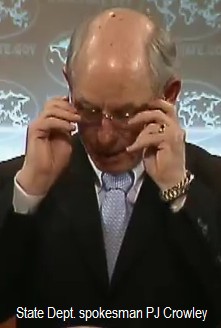
On Thursday, the US State Department spokesmen P J Crowley was called on to break the US silence regarding the murder of Mahmoud al-Mabhouh:

QUESTION: …has there been any comment on the apparent assassination in Dubai? Is that something the U.S. has weighed in on?

MR. CROWLEY: I don’t think we’ve weighed in on it. It is being investigated by Dubai authorities.

QUESTION: Are you concerned about what appears to have been the use of foreign passports, forged passports by foreign operatives?

MR. CROWLEY: Well, I think, as a – you probably – the best place to – well – I mean, we have taken steps in recent years to strengthen the security surrounding U.S. passports. Obviously, this has been an area where the United States has talked to other countries. We are very alert to attempts to use forged or stolen passports, and as a major effort to limit the travel of terrorists around the world. So it is something that we have spent a lot of time focused on.

As to – I mean, that obviously is an area that will be investigated and is being investigated by Dubai authorities.

QUESTION: Would you be – would you condemn the use by an intelligence agency of forging passports?

MR. CROWLEY: Well, there’s an assumption behind your question that I can’t address.

QUESTION: Have the Dubai authorities, or the European partners, allies, asked the United States for help in the investigation into —

MR. CROWLEY: Not to my knowledge.

QUESTION: And would you cooperate with Interpol on any of this?

MR. CROWLEY: Well, we – I mean, we have specific responsibilities to – law enforcement would be cooperative if there’s anything that we can do or if we come across any information that we think is useful to the investigation.

Maybe Dubai can set up an 800 number — a number US officials can call if they happen to stumble across any useful information. Crowley’s response did not suggest the US intends to stonewall the Dubai investigation, but the tone was one of calculated disinterest.

But wait. The Wall Street Journal now reports:

American and United Arab Emirates authorities are exchanging information on a handful of credit-card accounts, issued through two U.S. firms, that Dubai police say were used by suspects in the killing of a top Hamas official in Dubai, according to a person familiar with the situation.

For years, U.S. government officials have flown into the U.A.E. and other Persian Gulf states, asking for assistance in terror-financing probes. The investigation of Mahmoud al-Mabhouh’s death appears to be the highest-profile case in which the roles are reversed: The U.A.E. is turning to Washington in its efforts to track down suspected criminal financing through the U.S. banking system.

What the WSJ neglects to mention is that Dubai’s call for US assistance comes at particularly awkward moment.

As the US pushes for sanctions against Iran, the emirate of Dubai is in a pivotal position to tighten or ease the economic pressure — it functions as Iran’s most important commercial and financial connection with the rest of the world.

If Washington drags its feet in assisting Dubai now, why should the US expect help from Dubai on the larger issue of pressuring Iran — an issue that concerns Israel more than any other country?

At the same time, if the Associated Press is to be believed, Dubai is not getting much help from European governments in the investigation:

The spotlight is falling on those countries where police say the alleged assassins’ trails begin and end: Switzerland, Italy, France, Germany and the Netherlands.

Authorities there have either declined to say whether they are investigating, or told The Associated Press they have no reason to hunt down the 26 suspects implicated in the Jan. 19 killing of Mahmoud al-Mabhouh.

European countries’ reluctance to investigate may have something to do with the widely held belief that the killing of al-Mabhouh was carried out by a friendly country’s intelligence agency – Israel’s Mossad. The Jewish state has previously identified him as the point man for smuggling weapons to the Gaza Strip’s Hamas rulers.

Experts say arresting Israeli agents – or even digging up further evidence that Israel was involved – could be politically costly.

And what exactly would that political cost be? Israel might refuse to participate in the Eurovision Song Contest? Israel leaders might decline to visit European countries where they already face the risk of being arrested for war crimes?

Certainly, the arrest of Mossad agents by a European country might sour relations with the US, but what’s the US going to do? Kick NATO troops out of Afghanistan?

As far as I can see, we’re looking at a political balance sheet where all the loses are on Israel’s side.

But we scored a major victory against Hamas, Israelis say.

Let’s be honest. The future of the Palestinian national movement, of which Hamas is a part, did not depend on Mahmoud al-Mabhouh. The Islamist organization and his family no doubt mourn his loss, but he is replaceable.

Meanwhile, the Dubai police chief Dahi Khalfan Tamim made a move that will not sit well with dual national Israelis and non-Israeli Jews who conduct business in the region. He urged Arab countries to thoroughly check any Jew who carries a non-Israeli passport in order to “prevent Mossad’s infiltrations”.

You might call it profiling payback.

Facebooktwittermail

Can speech constitute terrorism?

Shayana Kadidal, a senior managing attorney at the Center for Constitutional Rights, lays out the issues in fron of the Supreme Court today in a case that asks whether political speech – writing an op-ed for, or teaching nonviolent conflict resolution to a group on the government’s blacklists – can constitute a crime of terrorism carrying a fifteen year prison sentence.

The law at issue is the “material support” statute. Created in 1996 and modified several times by Congress (including in the Patriot Act) after parts of it were struck down by earlier rounds of this lawsuit, the statute allows the State Department to create a blacklist of “foreign terrorist organizations” – defined very broadly to include groups that engage in violence against property that hurts U.S. economic interests. Once a group is on the blacklist, virtually any form of association with the group becomes a crime.

Once obscure, the law is becoming more familiar as it is invoked in almost every terrorism prosecution brought since 9/11. People hear the term “material support” and, because the word “material” connotes “tangible,” assume it must mean things akin to weapons or money. But in fact the statute specifically says that various intangibles – “training,” “expert advice or assistance,” “personnel” or “services” – all are included within the ban.

Our plaintiffs are a variety of U.S.-based humanitarian activists. Humanitarian Law Project and its founder Ralph Fertig seek to work with members of one of the blacklisted groups, the Kurdistan Workers Party (PKK), teaching them how to monitor human rights abuses against the Kurds, bring human rights complaints to the UN, and encourage the PKK – which like many separatist groups has engaged in both peaceful advocacy and violence – to solve their disputes through nonviolent conflict resolution. The other plaintiffs are Tamil-American groups that sought to send humanitarian aid – money, relief supplies, and their own members (doctors, lawyers and engineers) – to do medical relief and help rebuild the parts of Sri Lanka devastated by the civil war between the government and a rebel group on the list, the Tamil Tigers (LTTE). Because the LTTE served as the functioning government in the area prior to 2009, any aid workers there would have to have dealt with the group in the course of carrying out their humanitarian missions. After the December 26, 2004 Indian Ocean Tsunami, those same LTTE controlled-parts of Sri Lanka already devastated by the civil war were further ravaged. Yet the prohibitions prevented Tamil-Americans from traveling there to help deal with one of the ten greatest natural disasters in recorded history.

Facebooktwittermail

Fixing what’s wrong in Washington… in Afghanistan

Tom Engelhardt, noting that the US government is broke and that there is a bipartisan consensus that Washington is paralyzed, asks:

Why does the military of a country convinced it’s becoming ungovernable think itself so capable of making another ungovernable country governable? What’s the military’s skill set here? What lore, what body of political knowledge, are they drawing on? Who do they think they represent, the Philadelphia of 1776 or the Washington of 2010, and if the latter, why should Americans be considered the globe’s leading experts in good government anymore? And while we’re at it, fill me in on one other thing: Just what has convinced American officials in Afghanistan and the nation’s capital that they have the special ability to teach, prod, wheedle, bribe, or force Afghans to embark on good governance in their country if we can’t do it in Washington or Sacramento?

Meanwhile, The Times reports:

Nato forces in southern Afghanistan bombed a civilian convoy, killing 27 people including women and children and injuring many more, Afghan officials said.

The airstrike in a remote part of Oruzgan province yesterday capped a bloody week for Afghan civilians that has seen some 60 innocent people killed by Nato weapons.

Afghanistan’s cabinet called the attack “unjustifiable” and condemned the raid “in the strongest terms possible”.

The New York Times reports on the latest fracture in the NATO coalition:

A day after his government collapsed, Prime Minister Jan Peter Balkenende said Sunday that he expected Dutch troops to come home from Afghanistan before the end of the year.

A last-ditch effort by Mr. Balkenende to keep Dutch soldiers in the dangerous southern Afghan province of Oruzgan instead saw the Labor Party quit the government in the Netherlands early Saturday, immediately raising fears that the Western military coalition fighting the war was increasingly at risk.

Even as the allied offensive in the Taliban stronghold of Marja continued, it appeared almost certain that most of the 2,000 Dutch troops would be gone from Afghanistan by the end of the year. The question plaguing military planners was whether a Dutch departure would embolden the war’s critics in other allied countries, where debate over deployment is continuing, and hasten the withdrawal of their troops as well.

The Times says:

… Afghans involved in western-backed attempts to start talks with the Taliban to end the war were furious, warning that the arrest [of Mullah Abdul Ghani Baradar] might have ruined chances of negotiations.

“It’s a spectacular own goal [for the US],” said one official. “They want to wreck talks,” said a close aide to Afghanistan’s president, Hamid Karzai.

“Mullah Baradar was independently in contact with the Afghan government to find a way for reconciliation and the Pakistanis knew that from their secret agents.”

Finally, the Associated Press reports:

Pakistan will not turn over the Afghan Taliban’s No. 2 leader and two other high-value militants captured this month to the United States, but may deport them to Afghanistan, a senior minister said Friday.

Interior Minister Rahman Malik said Pakistani authorities were still questioning Mullah Abdul Ghani Baradar, the most senior Taliban figure arrested since the start of the Afghan war in 2001, and two other senior militants arrested with U.S. assistance in separate operations this month.

If it is determined that the militants have not committed any crimes in Pakistan, they will not remain in the country, he said.

“First we will see whether they have violated any law,” Malik told reporters in Islamabad. “If they have done it, then the law will take its own course against them.

“But at the most if they have not done anything, then they will go back to the country of origin, not to USA,” Malik said.

Facebooktwittermail

Are we living in the post-moral age?

Rafi Eitan, an Israeli elder statesman and former intelligence officer is perhaps best known for having led the Mossad operation that captured Adolf Eichmann, architect of the Holocaust, and brought him back to face trial and execution in Israel in 1962.

In an interview with Haaretz this week, Eitan summed up the Zeitgeist in which we live — the Israelification of the Western world which unfolded after 9/11:

when there is a war on terror you conduct it without principles. You simply fight it.

President Bush, with his Manichaean view of the world, wanted to paint his war on terror in quasi-moral terms. President Obama has distilled it to its unprincipled essence.

The arc that has led from twisted morality to a rarefied amorality reached its completion point this week when the Obama administration made its determination that the authors of the former administration’s torture policies had done no more than make an error of judgment.

Newsweek reports:

The chief author of the Bush administration’s “torture memo” told Justice Department investigators that the president’s war-making authority was so broad that he had the constitutional power to order a village to be “massacred,” according to a report by released Friday night by the Office of Professional Responsibility.

The views of former Justice lawyer John Yoo were deemed to be so extreme and out of step with legal precedents that they prompted the Justice Department’s internal watchdog office to conclude last year that he committed “intentional professional misconduct” when he advised the CIA it could proceed with waterboarding and other aggressive interrogation techniques against Al Qaeda suspects.

The report by OPR concludes that Yoo, now a Berkeley law professor, and his boss at the time, Jay Bybee, now a federal judge, should be referred to their state bar associations for possible disciplinary proceedings. But, as first reported by NEWSWEEK, another senior department lawyer, David Margolis, reviewed the report and last month overruled its findings on the grounds that there was no clear and “unambiguous” standard by which OPR was judging the lawyers. Instead, Margolis, who was the final decision-maker in the inquiry, found that they were guilty of only “poor judgment.”

The report, more than four years in the making, is filled with new details into how a small group of lawyers at the Justice Department, the CIA, and the White House crafted the legal arguments that gave the green light to some of the most controversial tactics in the Bush administration’s war on terror. They also describe how Bush administration officials were so worried about the prospect that CIA officers might be criminally prosecuted for torture that one senior official—Attorney General John Ashcroft—even suggested that President Bush issue “advance pardons” for those engaging in waterboarding, a proposal that he was quickly told was not possible.

At the core of the legal arguments were the views of Yoo, strongly backed by David Addington, Vice President Dick Cheney’s legal counsel, that the president’s wartime powers were essentially unlimited and included the authority to override laws passed by Congress, such as a statute banning the use of torture. Pressed on his views in an interview with OPR investigators, Yoo was asked:

“What about ordering a village of resistants to be massacred? … Is that a power that the president could legally—”

“Yeah,” Yoo replied, according to a partial transcript included in the report. “Although, let me say this: So, certainly, that would fall within the commander-in-chief’s power over tactical decisions.”

“To order a village of civilians to be [exterminated]?” the OPR investigator asked again.

“Sure,” said Yoo.

Yoo is depicted as the driving force behind an Aug. 1, 2002, Justice Department memo that narrowly defined torture and then added sections concluding that, in the end, it essentially didn’t matter what the fine print of the congressionally passed law said: The president’s authority superseded the law and CIA officers who might later be accused of torture could also argue that were acting in “self defense” in order to save American lives.

Where does Obama stand?

“I’m a strong believer that it’s important to look forward and not backwards, and to remind ourselves that we do have very real security threats out there.”

Terrorism — even if this administration thinks the term is passé — remains the only reality. Obama’s cynical mastery rests in his ability to sustain the terror zeitgeist without using the word.

Principles? They’re a distraction — a preoccupation and an indulgence for those of us little folks who do not daily wrestle with the moral ambiguity of governance.

Facebooktwittermail

Was the arrest of the Taliban’s second-in-command a strategic blunder?

Updated below
The capture of the Taliban’s second in command, Mullah Abdul Ghani Baradar, has been hailed as a huge blow to the Taliban but it may turn out to deliver an even bigger blow to President Obama’s hopes for an early withdrawal of US troops from Afghanistan.

Hajji Agha Lalai, former head of the Afghan government-led reconciliation process in Kandahar, who has dealt with members of the Taliban leadership council for several years, said Mullah Baradar was “the only person intent on or willing for peace negotiations.”

Last month Baradar facilitated an inconclusive meeting in Dubai between midlevel Taliban commanders and Kai Eide, the departing top UN official in Kabul, according to McClatchy newspapers.

Saeed Shah reported:

According to Vahid Mojdeh, a former Afghan official who worked under the Taliban, Baradar was instrumental in reining in insurgent violence, by banning sectarian killings and indiscriminate bombings.

“Baradar was an obstacle against al-Qaida, who wanted to make an operation in Afghanistan like they did in Iraq,” Mojdeh said. “But Baradar would not allow them to kill Shias” – the minority Muslim sect – “or set off explosions in crowded places.”

Pakistani analysts said Baradar’s capture suggested either that Islamabad had abandoned its attempt to promote peace talks or the Taliban number two had fallen afoul of the Pakistani authorities. Analysts said Baradar was the most likely point of contact for any future talks.

“This is inexplicable. Pakistan has destroyed its own credentials as a mediator between Taliban and Americans. And the trust that might have existed between Taliban and Pakistan is shattered completely,” said Rustam Shah Mohmand, a former Pakistani ambassador to Kabul after the overthrow of the Taliban.

The capture of Mullah Baradar has been widely reported as the result of a coordinated operation between the US and Pakistan, but so far the story seems very murky.

On Tuesday, February 9, the New York Times reported:

Pakistan has told the United States it wants a central role in resolving the Afghan war and has offered to mediate with Taliban factions who use its territory and have long served as its allies, American and Pakistani officials said.

The offer, aimed at preserving Pakistan’s influence in Afghanistan once the Americans leave, could both help and hurt American interests as Washington debates reconciling with the Taliban.

Pakistan’s army chief, Gen. Ashfaq Parvez Kayani, made clear Pakistan’s willingness to mediate at a meeting late last month at NATO headquarters with top American military officials, a senior American military official familiar with the meeting said.

The report said that General Kayani rebuffed US pressure to expand operations against the Taliban in North Waziristan because “the Pakistani Army still regarded India as its primary enemy and was stretched too thin to open a new front.”

Within days we learn of Mullah Baradar’s arrest in Karachi, Pakistan. His capture could cripple the Taliban’s military operations, at least in the short term, says Bruce Riedel, an adviser to the Obama administration. Others in Washington describe this as a huge blow to the Taliban.

But the New York Times now reports:

The arrest followed weeks of signals by Pakistan’s military chief, Gen. Ashfaq Parvez Kayani — to NATO officials, Western journalists and military analysts — that Pakistan wanted to be included in any attempts to mediate with the Taliban.

Even before the arrest of the Taliban commander, Mullah Abdul Ghani Baradar, a senior Pakistani intelligence official expressed irritation that Pakistan had been excluded from what he described as American and Afghan approaches to the Taliban.

“On the one hand, the Americans don’t want us to negotiate directly with the Taliban, but then we hear that they are doing it themselves without telling us,” the official said in an interview. “You don’t treat your partners like this.”

Mullah Baradar had been a important contact for the Afghans for years, Afghan officials said. But Obama administration officials denied that they had made any contact with him.

Whatever the case, with the arrest of Mullah Baradar, Pakistan has effectively isolated a key link to the Taliban leadership, making itself the main channel instead.

While Washington denied prior negotiations with Baradar, a US intelligence official in Europe claimed otherwise:

“I know that our people had been in touch with people around him and were negotiating with him,” the official said, speaking on the condition of anonymity because he was not authorized to discuss the issue.

“So it doesn’t make sense why we bite the hand that is feeding us,” the official added. “And now the Taliban will have no reason to negotiate with us; they will not believe anything we will offer or say.”

Update: In an interview on NPR Ahmed Rashid speculated that now that Baradar is in custody he could be in a better position to negotiate. Why? Because he’s not going anywhere?

Much more plausible is that the Pakistanis pulled him in — Rashid acknowledges that Baradar’s whereabouts have never been unknown to the ISI — because they didn’t want to be cut out of the negotiating loop by Americans negotiating directly with the Taliban. In other words, Pakistan is not willing to see a deal agreed to end this war without being able to dictate some of the terms.

If that is the case, no wonder The White House asked its news outlet (the New York Times) to sit on the story for a few days while they decided how it should be told.

Facebooktwittermail

Is Obama’s national security adviser out of the loop?

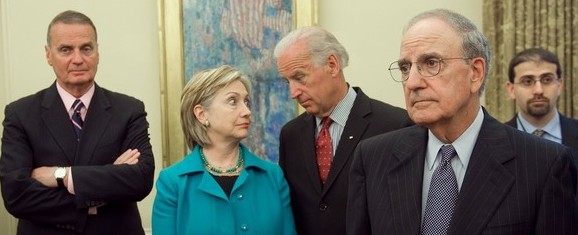
It could simply be Gen James Jones’ unassuming manner, but President Obama’s national security adviser certainly sounds and looks disengaged. He’s like a retired executive who got called up to fill-in during a protracted search for a permanent replacement.

A week ago, Peter Feaver noted that a Financial Times article on Obama’s core team of advisers made no mention of Jones. To have been included would have been no honor, yet to be left out of the picture reinforces the impression that Jones has a voice that simply doesn’t get heard and when you hear what he has to say it often seems like he’s not worth listening to.

Bloomberg reported:

Tighter international sanctions on Iran will increase pressure on the government there and could end up causing regime change, U.S. National Security Adviser James Jones said.

“We are about to add to that regime’s difficulties, by engineering, participating in very tough sanctions,” Jones said in an interview on “Fox News Sunday.” Combined with internal dissent, the sanctions “could trigger regime change,” he said.

At Foreign Policy, Blake Hounshell dismisses Jones’ prediction:

First, let’s get one thing straight: There will be no tough sanctions. As FP’s Colum Lynch has reported, China doesn’t even have a go-to Iran hand right now, and has shown little interest in damaging relations with a country that supplies 11 percent of its oil imports. Beijing will see to it that whatever sanctions do pass the U.N. Security Council are toothless, as the Chinese have done on all previous occasions. They’ll give just enough to allow the Obama administration to say it passed something, while wringing concessions out of Washington that we may never know about.

As for the likelihood of regime change, Hillary Clinton certainly didn’t give a hint that she sees that prospect. On the contrary, she sees the regime’s power concentrating in the hands of the military.

The New York Times reported:

Secretary of State Hillary Rodham Clinton said on Monday that the United States feared Iran was drifting toward a military dictatorship, with the Islamic Revolutionary Guards Corps seizing control of large swaths of Iran’s political, military, and economic establishment.

“That is how we see it,” Mrs. Clinton said in a televised town hall meeting of students at the Doha campus of Carnegie Mellon University. “We see that the government in Iran, the supreme leader, the president, the Parliament, is being supplanted and that Iran is moving towards a military dictatorship.”

The United States, she said, was tailoring a new set of tougher United Nations sanctions to target the Revolutionary Guards Corps, which controls Iran’s nuclear program and which she said had increasingly marginalized the country’s clerical and political leadership.

Mrs. Clinton’s remarks were remarkably blunt, given her audience in Qatar, a Persian Gulf emirate with close ties to Iran. But they build on the administration’s recent strategy of branding the corps as an “entitled class” that is the principal menace in Iran.

Even if Clinton doesn’t belong to Obama’s inner power circle, there’s much more reason to think that she reflects the views of the administration than does Jones.

That view has hardened to one which sees neither the possibility of productively engaging with Iran’s current leadership nor the prospect for sweeping political change inside the Islamic republic.

The language of engagement is now being replaced by the language of containment.

As the Times reported:

The United States, Mrs. Clinton said, would protect its allies in the gulf from Iranian aggression — a pledge that echoed the idea of a “security umbrella” that she advanced last summer in Asia. She noted that the United States already supplied defensive weapons to several of these countries, and was prepared to bolster its military assistance if necessary.

“We will always defend ourselves, and we will always defend our friends and allies, and we will certainly defend countries who are in the Gulf who face the greatest immediate nearby threat from Iran,” she said. “We also are talking at length with a lot of our friends in the Gulf about what they need defensively in the event that Iran pursues its nuclear ambitions.”

Pressed repeatedly by an audience of mainly Muslim students, Mrs. Clinton said the United States had no plans to carry out a military strike against Iran.

The Pentagon likewise echoes Clinton’s lack of appetite for military action, as Ynet reported:

Admiral Mike Mullen, chairman of the US Joint Chiefs of Staff, told reporters in Israel on Sunday that the US administration is very serious regarding its plans to impose harsh sanctions on Iran and expressed hope that such a step would ‘not end in violence.”

During a press briefing held at the US embassy in Tel Aviv, Mullen hinted that the US could attack Iran if negotiations failed and that such action could have “unintended consequences” throughout the volatile Middle East.

And if the US is unwilling to use force, that should not be taken to imply that Israel will take on the task.

As Reuters reported on Saturday:

Israel may lack the military means for successful pre-emptive strikes against Iranian nuclear facilities, its former top general said on Saturday.

While endorsing international efforts to pressure Tehran into curbing sensitive nuclear technologies, Israel has hinted it could resort to force. But some analysts say Israeli jets would be stymied by the distance to Iran and by its defences. Asked in a television interview about Israeli leaders’ vows to “take care” of the perceived threat, ex-general Dan Halutz, who stepped down as armed forces chief in 2007, said: “We are taking upon ourselves a task that is bigger than us.”

“I think that the State of Israel should not take it upon itself to be the flag-bearer of the entire Western world in the face of the Iranian threat,” Halutz, whose previous military post was as air force commander, told Channel Two.

If the Obama administration’s approach to Iran is uninspired, maybe we can at least be thankful that Washington now wants to invoke images of umbrellas rather than mushroom clouds.

As for talk of regime change, that just comes from a retired general content to merely dream that one day he might advise the president.

Facebooktwittermail

Obama’s take-no-prisoners approach

A year ago, when President Obama signed his executive order to close Guantanamo he said: “the message we are sending around the world is that the United States intends to prosecute the ongoing struggle against violence and terrorism, and we are going to do so vigilantly; we are going to do so effectively; and we are going to do so in a manner that is consistent with our values and our ideals.”

It is now plain that Obama’s solution to the dilemma of how to interrogate and incarcerate suspected terrorists is chillingly simple: kill them.

The Obama administration’s kill-first policy relies first and foremost on this fact: the United States can act with impunity. Indeed, a president who was welcomed by the world largely because he was seen as the antithesis of his predecessor, appears in fact to believe that under the protection of a cool and sophisticated persona he has latitude to go further than Bush — as though the former president’s greatest failing was his style.

The Washington Post reports:

When a window of opportunity opened to strike the leader of al-Qaeda in East Africa last September, U.S. Special Operations forces prepared several options. They could obliterate his vehicle with an airstrike as he drove through southern Somalia. Or they could fire from helicopters that could land at the scene to confirm the kill. Or they could try to take him alive.

The White House authorized the second option. On the morning of Sept. 14, helicopters flying from a U.S. ship off the Somali coast blew up a car carrying Saleh Ali Nabhan. While several hovered overhead, one set down long enough for troops to scoop up enough of the remains for DNA verification. Moments later, the helicopters were headed back to the ship.

The strike was considered a major success, according to senior administration and military officials who spoke on the condition of anonymity to discuss the classified operation and other sensitive matters. But the opportunity to interrogate one of the most wanted U.S. terrorism targets was gone forever.

The Nabhan decision was one of a number of similar choices the administration has faced over the past year as President Obama has escalated U.S. attacks on the leadership of al-Qaeda and its allies around the globe. The result has been dozens of targeted killings and no reports of high-value detentions.

Facebooktwittermail

Obama’s secret prisons in Afghanistan endanger us all

Johann Hari writes:

Osama Bin Laden’s favourite son, Omar, recently abandoned his father’s cave in favor of spending his time dancing and drooling in the nightclubs of Damascus. The tang of freedom almost always trumps Islamist fanaticism in the end: three million people abandoned the Puritan hell of Taliban Afghanistan for freer countries, while only a few thousand faith-addled fanatics ever traveled the other way. Osama’s vision can’t even inspire his own kids. But Omar Bin Laden says his father is banking on one thing to shore up his flailing, failing cause — and we are giving it to him.

The day George W. Bush was elected, Omar says, “my father was so happy. This is the kind of president he needs — one who will attack and spend money and break [his own] country.” Osama wanted the US and Europe to make his story about the world ring true in every mosque and every mountain-top and every souq. He said our countries were bent on looting Muslim countries of their resources, and any talk of civil liberties or democracy was a hypocritical facade. The jihadis I have interviewed — from London to Gaza to Syria — said their ranks swelled with each new whiff of Bushism as more and more were persuaded. It was like trying to extinguish fire with a blowtorch.

The revelations this week about how the CIA and British authorities handed over a suspected jihadi to torturers in Pakistan may sound at first glance like a hangover from the Bush years. Barack Obama was elected, in part, to drag us out of this trap — but in practice he is dragging us further in. He is escalating the war in Afghanistan, and has taken the war to another Muslim country. The CIA and hired mercenaries are now operating on Obama’s orders inside Pakistan, where they are sending unmanned drones to drop bombs and sending secret agents to snatch suspects. The casualties are overwhelmingly civilians. We may not have noticed, but the Muslim world has: check out al-Jazeera any night.

Facebooktwittermail

How the Obama administration ended up where Franklin Roosevelt began

At TomDispatch, Steve Fraser writes:

On March 4, 1933, the day he took office, Franklin Roosevelt excoriated the “money changers” who “have fled from their high seats in the temples of our civilization [because…] they know only the rules of a generation of self-seekers. They have no vision and where there is no vision, the people perish.”

Rhetoric, however, is only rhetoric. According to one skeptical congressional observer of FDR’s first inaugural address, “The President drove the money-changers out of the Capitol on March 4th — and they were all back on the 9th.”

That was essentially true. It was what happened after that, in the midst of the Great Depression, which set the New Deal on a course that is the mirror image of the direction in which the Obama administration seems headed.

Buoyed by great expectations when he assumed office, Barack Obama has so far revealed himself to be an unfolding disappointment. On arrival, expectations were far lower for FDR, who was not considered extraordinary at all — until he actually did something extraordinary.

Facebooktwittermail

Gaza: BBC takes Obama to the streets

Mariam Hamed writes:

“[After] one year of Obama… What has changed?”

The BBC has raised this question 430 times in banners featuring U.S. President Barack Obama in key locations across Gaza. The banners confront Gazans on morning and evening commutes, and as a result Obama has become the talk of the town.

Gaza’s BBC correspondent Shohdy Al-Kashef explains the banners are part of an ad campaign for a recent a BBC Arabic-language program, and the Obama banners have gone up in cities across the Palestinian territories. The BBC called on Palestinians to interact with the program, especially asking for comments about the Obama presidency one year later, via text and interactive internet forum. Said Al-Kashef, “The main goal is for… the people to ask questions [about Obama] without restrictions.”

I wandered up to a number of people looking at the Obama banners and asked them to answer the question the signs raise.

Abu Mohammed, a falafel vendor, sees the BBC sign everyday, as it is suspended on the side of the street opposite his. About the question, he answers, “There is nothing new under the sun. Obama’s sleeping in honey – [he has gotten comfortable where he is], and he does not mind ruin of the Palestinian people.”

Facebooktwittermail