Category Archives: CIA

Time to shut down the CIA

Former CIA operative Robert Baer writes:

On January 10, 2010, CIA director Leon Panetta wrote a Washington Post op-ed in which he disputed that poor tradecraft was a factor in the Khost tragedy [after a Jordanian doctor named Humam Khalil Abu-Malal al-Balawi blew himself up, in one of the deadliest attacks in the CIA’s history]. Panetta is wrong.

An old operative I used to work with in Beirut said he would have picked up Balawi himself and debriefed him in his car, arguing that any agent worth his salt would never expose the identity of a valued asset to a foreigner like the Afghan driver. I pointed out that if he’d been there and done it that way, he’d probably be dead now. “It’s better than what happened,” he said.

One thing that should have raised doubts about Balawi was that he had yet to deliver any truly damaging intelligence on Al Qaeda, such as the location of Zawahiri or the plans for the Northwest bomb plot. Balawi provided just enough information to keep us on the hook, but never enough to really hurt his true comrades. And how was it that Balawi got Al Qaeda members to pose for pictures? This should have been another sign. These guys don’t like their pictures taken. So there were a few clear reasons not to trust Balawi, or at least to deal with him with extreme caution.

But the most inexplicable error was to have met Balawi by committee. Informants should always be met one-on-one. Always.

The fact is that Kathy [the Khost CIA base chief], no matter how courageous and determined, was in over her head. This does not mean she was responsible for what happened. She was set up to fail. The battlefield was tilted in Al Qaeda’s favor long ago—by John Deutch and his reforms, by the directors who followed him, by the decision to drop the paramilitary course from the mandatory curriculum (which would have made Kathy a lot more wary of explosives), and by two endless wars in Iraq and Afghanistan that have worn the CIA down to a nub. Had Kathy spent more time in the field, more time running informants, maybe even been stung by one or two bad doubles, the meeting in Khost probably would have been handled differently—and at the very least there would have been one dead rather than eight.

If we take Khost as a metaphor for what has happened to the CIA, the deprofessionalization of spying, it’s tempting to consider that the agency’s time has passed. “Khost was an indictment of an utterly failed system,” a former senior CIA officer told me. “It’s time to close Langley.”

Baer isn’t prepared to go that far — he still hankers for the “professionalism” of a bigone era. What he fails to note is that at the core of that lost world of espionage was a contest between spies and that on neither side did those past masters of their tradecraft have any desire to die for their cause.

Facebooktwittermail

CIA drone attacks produce America’s own unlawful combatants

Gary Solis, an adjunct professor at Georgetown University Law Center, writes:

In our current armed conflicts, there are two U.S. drone offensives. One is conducted by our armed forces, the other by the CIA. Every day, CIA agents and CIA contractors arm and pilot armed unmanned drones over combat zones in Afghanistan and Pakistan, including Pakistani tribal areas, to search out and kill Taliban and al-Qaeda fighters. In terms of international armed conflict, those CIA agents are, unlike their military counterparts but like the fighters they target, unlawful combatants. No less than their insurgent targets, they are fighters without uniforms or insignia, directly participating in hostilities, employing armed force contrary to the laws and customs of war. Even if they are sitting in Langley, the CIA pilots are civilians violating the requirement of distinction, a core concept of armed conflict, as they directly participate in hostilities.

Facebooktwittermail

Has Israel been helping supply weapons to Hamas?

The idea that Israel could be involved in supplying weapons to Hamas might sound like a preposterous conspiracy theory, but let’s look at some connections — the theory might not be as wild as it sounds.

In undisputed reports, Mahmoud al-Mabhouh has been described as the top Hamas commander responsible for coordinating the flow of arms into Gaza. He is said to have established a smuggling route through Sudan — a route upon which a convoy of weapons was intercepted and destroyed in an Israeli drone attack just over a year ago.

From accounts of Mabhouh’s killing we know that he bought his ticket to Dubai just two days before traveling there and within just a few hours of his departure from Syria, an assassination team was en route to the same destination. Nineteen hours before the assassination, fifteen operatives left on flights for Dubai, departing from France, Germany, Switzerland and Italy. The Times reported that Mabhouh was “tracked from the moment he boarded Emirates flight EK 912 at Damascus at 10.05 on January 19.”

I said “an assassination team” but from hereon I’ll refer to them as the Mossad operatives. Until one of them is arrested and the Israeli government starts negotiating for his or her release, we won’t know with absolute certainty that this was a Mossad operation, but I’ll go with the Dubai police chief and say that we can be 99% sure.

The British and Irish governments would not haul in the Israeli ambassadors in London and Dublin to demand an explanation for the theft of their citizens’ passports simply on the basis of a rumor. Indeed, if Israel had been set up by one of its enemies, as some Israeli leaders have suggested, then Israel too would be launching an investigation into the breach of its own passport records. As well as being concerned about a serious security breach, Israeli would have every reason to want to pacify the concerns of those citizens who now fear that they are being placed at risk by their own government — Israelis such as Anshel Pfeffer, who writes:

Enough cases in the past have come to light in which the identities of Jews, most of whom were born outside of Israel, were used by Israeli secret agents. It is hard not to feel that there has been and still is a blatant disregard for the safety and privacy of those whose identities were used… [H]ow can Israel claim to be a democracy fighting terror and dictatorships, and continue to promote aliyah from Western countries, when this is the way it supposedly treats its citizens?

Far from allaying such anxieties, Israeli officials have thus far seemed much more interested in gloating over an operational success. “Mossad knows how to get the job done,” said one minister, while the Israeli embassy in London, though claiming ignorance about the assassination, saw fit to brag on Twitter about the “hit on #Dubai target”.

So let’s return to the sequence of events. There is compelling evidence that the Mossad operatives who killed Mabhouh had plenty of lead time. Indeed, there’s reason to suppose that rather than this being a strike provided by an opportunity, it was a carefully laid trap that the Hamas commander walked straight into.

We know that he left Damascus confident enough for his security detail to face an acceptable delay. This was no blind date. Yet the information released by Dubai suggests that the only people he met once he got there were his killers. Did he miss his contact or did his contact turn out to have deceived him?

It is now reported that Israel provided British intelligence with advance notice of an “overseas operation” that would involve the use of fake British passports. A Mossad officer said Britain’s Foreign Office was also informed hours before Mabhouh’s murder.

If word was out among intelligence agencies, it would come as no surprise if Dubai was also conducting its own surveillance operation. A review of the CCTV images they released, along with the speed with which they identified the members of the Mossad team, does indeed suggest that to some degree they were able to track events as they unfolded and not merely piece together the evidence after the fact.

In some of the videos, the camera appears to be tracking its subject — a mere coincidence that the individuals walked in the same direction the camera was moving? Perhaps.

In the montage of clips put together by Gulf News‘ GNTV, there is another intriguing element. At 13 minutes 40 seconds we see one of the suspects exiting his hotel. The caption reads: “16.14 [local time, January 19] Kevin leaves the hotel and heads towards Al-Bustan Rotana.”

As “Kevin” is stepping into a taxi, a large man — he looks like an American — in jeans, pale blue t-shirt and dark blue jacket, strolls up as the next in line for a taxi. In the video his face has been digitally obscured. Why? Did he have Kevin under surveillance or might he be one of the thus far unnamed suspects?

In all of the video sequences there is only one other individual whose identity is obscured. This comes at 20 minutes 37 seconds in the montage. Kevin is speaking on a cell phone, strolling back and forth in front of the elevator doors in the lobby adjacent to Mabhouh’s room. A large individual exits the right side elevator and engages with Kevin, then exits the lobby walking in the direction of the crime scene. Throughout the sequence the individual’s image has been digitally obscured. In general appearance he looks like an over-weight middle-aged American.

We know that five credit cards issued by American banks were used in the operation. There is an American element to this story that so far remains veiled.

So, keeping in mind all of the above, how do I come to my audacious claim that Israel has been helping supply Hamas with weapons? This doesn’t have to be quite as conspiratorial a theory as it sounds.

The bombing of the Sudan convoy suggests that Mabhouh’s supply network was infiltrated some time ago and though Israel’s much-repeated goal is to stop the flow of weapons into Gaza, the weapons themselves are perhaps less of a concern than is finding the means to weaken or disable Hamas.

What better way of infiltrating the Islamist movement than through its weapons supply chain?

If the Iranian arms dealers in Dubai have been conspicuous by their absence from this story, perhaps it’s because the trap Mabhouh fell into involved Israelis posing as Iranians.

After all, the involvement of governments in illicit arms dealing for political purposes is not unheard of — one of Israel’s closest friends, Elliot Abrams, knows the routine.

Further comment: As presented by Israeli leaders the issue of Gaza is without deviation always treated as a security threat. Gaza, under Hamas’ control presents a threat to southern Israel as in recent years cities such as Sderot have come under persistent rocket attack.

How then is it conceivable that Israel would allow a single weapon to find its way into the Palestinian enclave even if there might be an intelligence payoff from being able to infiltrate and monitor a weapons supply chain?

Wrong question. If Israel really wanted to effectively control the flow of weapons into Gaza it would never have imposed a blockade that resulted in the construction of thousands of smuggling tunnels under the Rafah border.

The surest way of rigorously controlling what gets into Gaza is through a stringently monitored open border. If goods could be brought in overland, there would be little economic incentive for constructing tunnels.

Rather than preventing the flow of weapons, Israel’s greater interest has been in punishing the Palestinian population in the naive hope that people living in great deprivation would turn against their political leaders.

Israel, confident in its ability to use overwhelming force to crush its opponents, has less interest in disarming the Palestinians than it does in breaking their will to fight.

Facebooktwittermail

White House ‘deeply disappointed’ after British court upholds the law. Judge says MI5 operates ‘culture of suppression’

The story of Binyam Mohamed is probably one of the most under-reported stories of the war on terrorism — it has still only partially been told. If, as the former Guantanamo prisoner alleges, he had his genitals sliced with a scalpel after being captured by the US, then the defenders of so-called “harsh interrogation techniques” should finally be rendered mute and duly shamed.
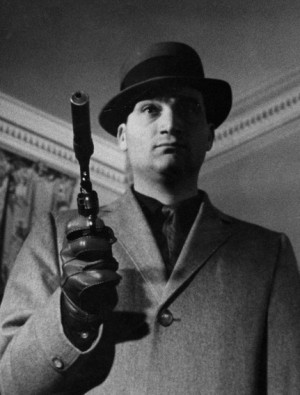
The Daily Mail said:

By any measure, the treatment meted out to Binyam Mohamed was medieval in its barbarity.

Shackled in total blackness in the CIA’s ‘dark prison’ in Kabul, he was forced to listen to ear-splitting music 24 hours a day for a month.

In Morocco he was hung from walls and ceilings and repeatedly beaten, his penis and chest were sliced with a scalpel and hot, stinging liquid poured into the open wounds.

‘They cut all over my private parts,’ he wrote in his diary. ‘One of them said it would be better just to cut it off, as I would only breed terrorists.’

The Obama administration, which has consistently acted like putty in the hands of the intelligence services, regards the exposure of criminal actions by those services as a national security threat. In truth it is the US-sanctioned use of torture that poses a much more serious threat to this nation.

As The Guardian noted, the ruling by three of Britain’s most senior judges, “shattered the age-old ­convention that the courts cannot ­question claims by the government relating to national security, whatever is done in its name, in an unprecedented ruling that is likely to cause deep anxiety among the security and intelligence agencies.”

This is how democracy is supposed to work. Both in Britain and the US, all too often the phrase “national security” really means protection of the power-holders. A judiciary that is truly independent cannot allow any government to protect its own interests at the expense of the nation it serves.

Afua Hirsch describes in greater legal detail how the British government disregarded 400 years of legal precedence in its effort to suppress revelations about the use of torture.

The Guardian reported:

MI5 faced an unprecedented and damaging crisis tonight after one of the country’s most senior judges found that the Security Service had failed to respect human rights, deliberately misled parliament, and had a “culture of suppression” that undermined government assurances about its conduct.

The condemnation, by Lord Neuberger, the master of the rolls, was drafted shortly before the foreign secretary, David Miliband, lost his long legal battle to suppress a seven-paragraph court document showing that MI5 officers were involved in the ill-treatment of a British resident, Binyam Mohamed.

Amid mounting calls for an independent inquiry into the affair, three of the country’s most senior judges – Lord Judge, the lord chief justice, Sir Anthony May, president of the Queen’s Bench Division, and Lord Neuberger – disclosed evidence of MI5’s complicity in Mohamed’s torture and unlawful interrogation by the US.

So severe were Neuberger’s criticisms of MI5 that the government’s leading lawyer in the case, Jonathan Sumption QC, privately wrote to the court asking him to reconsider his draft judgment before it was handed down.

The judges agreed but Sumption’s letter, which refers to Neuberger’s original comments, was made public after lawyers for Mohamed and media organisations, including the Guardian, intervened.

They argued that Neuberger had privately agreed with Sumption to remove his fierce criticisms without giving then the chance to contest the move.

At The Atlantic, Marc Ambinder said:

The White House hinted today that it may have to alter long-standing intelligence sharing arrangements with the United Kingdom after the release of information provided to the Brits about the confinement and interrogation of one of its citizens, Binyam Mohamed.

“The United States government made its strongly held views known throughout this process. We appreciate that the UK Government stood by the principle of protecting foreign government intelligence in its court filings,” said Ben LaBolt, a White House spokesperson. “We’re deeply disappointed with the court’s judgment today, because we shared this information in confidence and with certain expectations.”

LaBolt’s statement hinted that the US might reevaluate the type of information it shares with British counterterrorism and intelligence agencies.

“As we warned, the court’s judgment will complicate the confidentiality of our intelligence-sharing relationship with the UK, and it will have to factor into our decision-making going forward. This just means that we need to redouble our efforts to work through this challenge, because the UK remains a key partner in our collective efforts to suppress terrorism and other threats to our national security.”

With respect to LaBolt, I think this is a bluff. The US shares more raw data and polished intel product with Britain on a daily basis than any other country in the world, and that’s not going to change. Perhaps the US will be more careful in certain documents that might find their way into the UK court system — but it’s hard to imagine that intelligence cooperation between the two countries will really be damaged by today’s revelation.

Facebooktwittermail

How the CIA became dumb and dangerous

Melvin A Goodman and Philip Giraldi — former CIA officers with decades of experience — both agree that the agency’s focus on paramilitary operations has undermined its core intelligence mission.

Giraldi writes:

It has been observed that no countries on the earth but the United States and Israel claim extraterritoriality, i.e. the right to seize or attack anyone anywhere and at any time based on evidence that is secret. The foul-up at Base Chapman [in which seven CIA officers were killed in a suicide attack] is reflective of the transformation of CIA into a Washington-sanctioned retribution machine, something not unlike the terrorist groups that it claims to oppose rather than an intelligence agency. It is telling that after the slaughter at Base Chapman senior Agency officers immediately announced that they would get revenge and the pace of drone attacks has dramatically increased, killing few or no actual terrorists but many civilians and further destabilizing an already tottering Pakistan. The broader problems that the Agency is experiencing are revealed in CIA’s eight years of largely unrewarding effort against “international terrorism,” a symptom of a systemic failure to understand much less identify and penetrate groups that are, ironically, constantly looking for volunteers to fill their ranks. CIA’s traditional strength in recruiting agents and collecting intelligence has all but disappeared, subsumed into a paramilitary mission to launch hellfire missile firing drones, which is also almost certainly a reflection of the White House’s perception of what needs to be done. If that is so, the tactic is ultimately self defeating in that it produces more enemies that it is able to eliminate, making failure in Afghanistan an absolute certainty.

Likewise, Goodman says:

In a democracy, where laws are derived from broad principles of right and wrong and where those principles are protected by agreed procedures, it is not in the interest of the state to flout those procedures at home, or to permit extra-legal activities abroad, which have complicated the task of maintaining credible relations with our allies in the battle against terrorism.

The CIA’s most important mission remains the preparation of independent analysis of international issues for senior decision makers; therefore, it is essential to protect the integrity of objective and balanced intelligence. The CIA gives far too much attention to support for the Pentagon and to current intelligence. In the past, CIA analysis served to contradict or at least temper the worst-case analysis of the Pentagon, but this is no longer the case.

President Harry Truman created the CIA to produce strategic intelligence that was not beholden to policy and political interests; President Obama must restore this mission.

Facebooktwittermail

Off with his head!

Matthew Yglesias writes:

If the President wants to do something like implement a domestic policy proposal he campaigned on—charge polluters for global warming emissions, for example—he faces a lot of hurdles. He needs majority support on a House committee or three. He also needs majority support on a Senate committee or three. Then he needs to get a majority in the full House of Representatives. And then he needs to de facto needs a 60 percent supermajority in the Senate. And then it’s all subject to judicial review.

But if Scooter Libby obstructs justice, the president has an un-reviewable, un-checkable power to offer him a pardon or clemency. If Bill Clinton wants to bomb Serbia, then Serbia gets bombed. If George W Bush wants to hold people in secret prisons and torture them, then tortured they shall be. And if Barack Obama wants to issue a kill order on someone or other, then the order goes out. And if Congress actually wants to remove a president from office, it faces extremely high barriers to doing so.

Whether or not you approve of this sort of executive power in the security domain, it’s a bit of a weird mismatch. You would think that it’s in the field of inflicting violence that we would want the most institutional restraint. Instead, the president faces almost no de facto constraints on his deployment of surveillance, military, and intelligence authority but extremely tight constraint on his ability to implement the main elements of the his domestic policy agenda.

This kind of presidential power looks “weird” if viewed from a constitutional vantage point but maybe not as weird as an expression of American culture.

Having moved to this country twenty years ago from the country that America successfully wrestled its independence from, it’s often struck me that Americans did not fully reject the concept of monarchical rule; they simply wanted a kind of modified monarchy.

First off, the monarch would need to be a native — a vehement “no” to foreign rule.

Next, the monarch would need to be one of the people, be elected and not restricted to a line of inheritance. It wasn’t that Americans did want a king; they simply wanted everyone to be able to nurture the fantasy that some day they too might become the king.

But dynasties are OK. In fact, the occasional dynasty helps burnish the executive’s regal image.

And what’s more befitting of the powers of an American king than that he should be able to occasionally proclaim: “Off with his head!”

Who knows, maybe in a few years the old regal custom of hosting public executions will be re-instituted. No doubt they’d get excellent ratings on cable news.

Facebooktwittermail

Murder with impunity

Glenn Greenwald writes:

… even if you’re someone who does want the President to have the power to order American citizens killed without a trial by decreeing that they are Terrorists (and it’s worth remembering that if you advocate that power, it’s going to be vested in all Presidents, not just the ones who are as Nice, Good, Kind-Hearted and Trustworthy as Barack Obama), shouldn’t there at least be some judicial approval required? Do we really want the President to be able to make this decision unilaterally and without outside checks? Remember when many Democrats were horrified (or at least when they purported to be) at the idea that Bush was merely eavesdropping on American citizens without judicial approval? Shouldn’t we be at least as concerned about the President’s being able to assassinate Americans without judicial oversight? That seems much more Draconian to me.

It would be perverse in the extreme, but wouldn’t it be preferable to at least require the President to demonstrate to a court that probable cause exists to warrant the assassination of an American citizen before the President should be allowed to order it? That would basically mean that courts would issue “assassination warrants” or “murder warrants” — a repugnant idea given that they’re tantamount to imposing the death sentence without a trial — but isn’t that minimal safeguard preferable to allowing the President unchecked authority to do it on his own, the very power he has now claimed for himself? And if the Fifth Amendment’s explicit guarantee — that one shall not be deprived of life without due process — does not prohibit the U.S. Government from assassinating you without any process, what exactly does it prohibit?

Greenwald makes a series of excellent points but I would add one major point that really should come in front of the whole discussion: the idea that a legal distinction should be made between American citizens and non-Americans is a thoroughly un-American idea.

The Declaration of Independence does not say:

We hold these truths to be self-evident, that all Americans are created equal, that they are endowed by their Creator with certain unalienable Rights, that among these are Life, Liberty and the pursuit of Happiness.

It didn’t say “Americans”, it said “all men” — a declaration of what were taken to be universal human values.

To be concerned about whether the president has claimed to right to murder Americans is really missing the point. What in practice this and the former president are doing is not exercising any kind of specially fabricated legal right; they are committing murder exclusively where they believe they can get away with it.

Assassinations taking place in the tribal areas of Pakistan, in Yemen and Somalia, are all occurring in environments whose lawlessness means that US government officials can be reliably confident that they can act with relative legal impunity.

Facebooktwittermail

The CIA: a continuing threat to U.S. persons or interests?

The Director of National Intelligence Dennis Blair reassured the House Intelligence Committee yesterday that he understands that killing Americans is a “very sensitive issue” and that the agency must always “get specific permission” to do so.

I wonder how much comfort that provides to the family of Jim and Veronica “Roni” Bowers and their two children, six-year-old son Cory and infant daughter Charity, who under the CIA’s watch were shot down by the Peruvian Air Force while flying over Peru in 2001. Veronica Bowers and her daughter Charity were killed. The video below shows what happened:

ABC News reports:

…for almost nine years, the CIA misled Congress, the White House and the dead woman’s parents about how and why the agency defied the rules established to make sure innocent people were not killed.

“I want to know the truth,” Garnett Luttig, father of Roni Bowers, told ABC News. “I want to know why. I wonder why my baby’s gone. Don’t they understand that?”

Said Gloria Luttig, Roni’s mother, “I want somebody to have to stand up and say I was responsible. I want him to know what a mother’s heart is like.”

On Wednesday, the CIA said its nine-year long investigation had determined that 16 CIA employees should be disciplined, including the woman then in charge of counter-narcotics.

Many of them are no longer with the CIA, and one of those involved said his discipline was no more than a letter of reprimand placed in his file, which he was told would be removed in one year.

So what are we to understand from DNI Blair? That while the CIA engages in extrajudicial killings, it does so with great caution but if mistakes are made, those responsible certainly face the risk of receiving a letter of reprimand?

Either we live in a land governed by law or we don’t. A determination by an intelligence operative is by no stretch of the imagination a substitute for due process.

Facebooktwittermail

Covering up homicide

In his State of the Union speech, President Obama said: “… in the last year, hundreds of al Qaeda’s fighters and affiliates, including many senior leaders, have been captured or killed — far more than in 2008.”

He could have said “we have killed…” just to make it clear that he includes himself as an actor, not an observer, in the killing process. And he could also have said “and we killed a bunch of innocent bystanders as well.” But maybe when it comes to al Qaeda, there is in Obama’s mind no such person as an innocent bystander. Maybe the children, wives and grandparents are “affiliates”.

In Pakistan the concept of an innocent bystander has not been abandoned and what Obama touts as great success is perceived as an ongoing unrelenting massacre.

Here are some of the latest damning numbers – numbers that no doubt many an American journalist will hesitate to report because they haven’t been confirmed by the holiest of sources, the Pentagon:

Afghanistan-based US predators carried out a record number of 12 deadly missile strikes in the tribal areas of Pakistan in January 2010, of which 10 went wrong and failed to hit their targets, killing 123 innocent Pakistanis. The remaining two successful drone strikes killed three al-Qaeda leaders, wanted by the Americans.

The rapid increase in the US drone attacks in the Pakistani tribal areas bordering Afghanistan can be gauged from the fact that only two such strikes were carried out in January 2009, which killed 36 people. The highest number of drone attacks carried out in a single month in 2009 was six, which were conducted in December last year. But the dawn of the New Year has already seen a dozen such attacks.

Note that all of these Predator attacks came after the CIA team widely reported as having been responsible for Predator targeting had been killed in the Khost bombing.

Now if it became known that the US government was responsible for sending gunmen into restaurants where mafia-style they left their targets riddled with bullets in front of horrified onlookers, even if there were no innocent bystanders killed, there would be public outrage. The government would be accused of having stooped to using the methods of gangsters.

Instead, we fire missiles, destroy the restaurant and kill everyone in it and even if it turns out the target had already left, somehow it’s OK. It was an innocent mistake. It happened in a distant country. We’ll never hear the names of the dead.

Facebooktwittermail

The immutable connection between greed and talent

From Politico:

In the midst of two wars and the fight against Al Qaeda, the CIA is offering operatives a chance to peddle their expertise to private companies on the side — a policy that gives financial firms and hedge funds access to the nation’s top-level intelligence talent, POLITICO has learned.

In one case, these active-duty officers moonlighted at a hedge-fund consulting firm that wanted to tap their expertise in “deception detection,” the highly specialized art of telling when executives may be lying based on clues in a conversation.

The never-before-revealed policy comes to light as the CIA and other intelligence agencies are once again under fire for failing to “connect the dots,” this time in the Christmas Day bombing plot on Northwest Flight 253.

But sources familiar with the CIA’s moonlighting policy defend it as a vital tool to prevent brain-drain at Langley, which has seen an exodus of highly trained, badly needed intelligence officers to the private sector, where they can easily double or even triple their government salaries. The policy gives agents a chance to earn more while still staying on the government payroll.

OK, I know it’s supposed to be a fundamental law in free-market economics that the only way of finding and holding on to talent is through high “compensation” but whatever else we might have learned from the Wall Street debacle, isn’t it that the bright minds there turned out not to have wisdom commensurate with their pay checks.

Isn’t this the only sure thing that can be said: that those who seek the highest paying jobs are the people who want to make the most money and their talent, such as it is, consists most reliably in this: their ability to enrich themselves.

For the last eight years we’ve been told that the CIA is staffed by heroic patriots who’ve dedicated their careers to protecting America. Mistakes, they’ve made a few, but they did it their way.

Are we now supposed to add the caveat – so long as they can make as money as possible in the process.

Facebooktwittermail

America’s contract killers

Twelve years ago, after Benjamin Netanyahu personally directed Mossad assassins to try and murder Khalid Meshaal in Amman, Jordan, President Clinton expressed his frustration with the Israeli leader, saying: “I cannot deal with this man. He is impossible.”

In accordance of the diplomatic norms of the era, it was seen as preposterous that Israel would send its agents onto the streets of a neighboring friendly capital to murder one of its enemies and for them to do so while posing as Canadians. Moreover, Israeli agents had been caught in the act and were in custody. The Jordanians had been embarrassed and an antidote to the deadly poison injected into Meshaal would have to be promptly administered if Israel wanted its operatives released. Only under US pressure did Netanyahu yield.

If the murder of Mahmoud al Mabhouh in a hotel in Dubai eleven days ago happens to have been performed by another team of Netanyahu’s hit men, what might President Obama’s response have been?

“Are there any useful lessons for the United States here Mr Prime Minister?”

It turns out that contract killing — something that President George W Bush opened the door to but didn’t pursue with vigor — has been embraced with surprising passion by his successor.

Is it for that proverbial reason that dead men don’t talk or equally that dead al Qaeda operatives don’t present the many legal conundrums as do those caught alive? Is it that detention below rather than above ground has simply become a matter of political expedience?

There are now officers in the CIA who supposedly have the legal authority to sign a death warrant on the basis that an individual is “deemed to be a continuing threat to U.S. persons or interests.”

There is a level of accountability. We’re not told who signs these death warrants but we can rest assured that those who sit on Obama’s death panels must sign their names in ink. These are not a death sentences delivered by email or text message.

As the LA Times reports:

Former officials involved in the program said it was handled with sober awareness of the stakes. All memos are circulated on paper, so those granting approval would “have to write their names in ink,” said one former official. “It was a jarring thing, to sign off on people getting killed.”

Jarring perhaps, yet the greatest human frailty is that moral judgment so easily yields to the legitimizing power that flows from normality. And nothing shapes normality more effectively than bureaucracy.

Set up a bureaucratic process and — as the Nazis proved — anything becomes possible. Through faithfulness to a government-endorsed procedure almost anyone will sooner or later become willing to suspend the timid dictates of their own conscience.

The LA Times describes in clinical terms the process that runs from signature to incineration:

The CIA sequence for a Predator strike ends with a missile but begins with a memo. Usually no more than two or three pages long, it bears the name of a suspected terrorist, the latest intelligence on his activities, and a case for why he should be added to a list of people the agency is trying to kill.

The list typically contains about two dozen names, a number that expands each time a new memo is signed by CIA executives on the seventh floor at agency headquarters, and contracts as targets thousands of miles away, in places including Pakistan and Yemen, seem to spontaneously explode.

No U.S. citizen has ever been on the CIA’s target list, which mainly names Al Qaeda leaders, including Osama bin Laden, according to current and former U.S. officials. But that is expected to change as CIA analysts compile a case against a Muslim cleric who was born in New Mexico but now resides in Yemen.

When America’s contract killers target their first US citizen, will his fellow citizens pay much attention? Probably not. He has an Arabic name and dark skin — he’s suitably other. If Anwar al Awlaki is eliminated, the CIA’s hit list will briefly get shorter.

Facebooktwittermail

U.S. mulls legality of killing American al Qaeda “turncoat”

U.S. mulls legality of killing American al Qaeda “turncoat”

White House lawyers are mulling the legality of proposed attempts to kill an American citizen, Anwar al Awlaki, who is believed to be part of the leadership of the al Qaeda group in Yemen behind a series of terror strikes, according to two people briefed by U.S. intelligence officials.

One of the people briefed said opportunities to “take out” Awlaki “may have been missed” because of the legal questions surrounding a lethal attack which would specifically target an American citizen. [continued…]

Editor’s Comment — I’m not a lawyer, but isn’t this the way it works? If someone has an Arabic name, then citizenship is secondary. So long as they are “taken out” overseas, preferably in a state or area with a reputation for lawlessness, then legal process fits comfortably into the tip of a Hellfire missile. Extra latitude is of course provided when the “target” is not white.

But maybe the Justice Department could provide a little extra clarity — some new designations in citizenship status just so everyone understands which American citizens can be executed on the basis of a presidential order and which can’t. As for non-Americans, well, America has always reserved the right to kill them as and when it sees fit.

The drone surge

One moment there was the hum of a motor in the sky above. The next, on a recent morning in Afghanistan’s Helmand province, a missile blasted a home, killing 13 people. Days later, the same increasingly familiar mechanical whine preceded a two-missile salvo that slammed into a compound in Degan village in the tribal North Waziristan district of Pakistan, killing three.

What were once unacknowledged, relatively infrequent targeted killings of suspected militants or terrorists in the Bush years have become commonplace under the Obama administration. And since a devastating December 30th suicide attack by a Jordanian double agent on a CIA forward operating base in Afghanistan, unmanned aerial drones have been hunting humans in the Af-Pak war zone at a record pace. In Pakistan, an “unprecedented number” of strikes — which have killed armed guerrillas and civilians alike — have led to more fear, anger, and outrage in the tribal areas, as the CIA, with help from the U.S. Air Force, wages the most public “secret” war of modern times.

In neighboring Afghanistan, unmanned aircraft, for years in short supply and tasked primarily with surveillance missions, have increasingly been used to assassinate suspected militants as part of an aerial surge that has significantly outpaced the highly publicized “surge” of ground forces now underway. And yet, unprecedented as it may be in size and scope, the present ramping up of the drone war is only the opening salvo in a planned 40-year Pentagon surge to create fleets of ultra-advanced, heavily-armed, increasingly autonomous, all-seeing, hypersonic unmanned aerial systems (UAS). [continued…]

Facebooktwittermail

The return of the neocons

The return of the neocons

Technically, there is nothing “neo” about conservatives like Robert Kagan, the historian and another Washington Post columnist, or John Podhoretz, the editor of Commentary; each is a son of one of neoconservatism’s founding fathers. Indeed, no strain in American politics is so dynastic. It is akin to the right-wing Likud Party in Israel, whose religion and politics, world view, and succession rituals the neocons often share. The definitions, and analogy, are inexact, but both groups have recent ties to Europe and are haunted by the Holocaust, which has left them feeling wounded, suspicious, and sometimes bellicose, determined never again to be naive or to trust the world’s good intentions. Both spent decades in the po-litical wilderness before miraculously acquiring power; both begat “princes” who defied the normal generational tensions and allied themselves with their kingly fathers. When Bill Kristol rose to praise Irving that morning, he was really picking up his scepter.

Had you Googled “neoconservative” and “death” that day, four days after the 89-year-old Kristol expired, you’d have found lots on their long-rumored—and for some, much-anticipated and -savored—demise. On both the left and right, neoconservatism was deemed a spent force. Its ideas, Foreign Policy magazine had pronounced, “lie buried in the sands of Iraq.”

But obituaries can be premature. At the moment, in fact, the neocons seem resurrected. One of their own, Frederick Kagan of AEI (Robert’s younger brother), helped turn around the war in Iraq by devising and pushing for the surge there. More recent-ly, President Obama—whose foreign–policy pronouncements (nuanced, multi-lateral, interdependent) and style (low-key, self-critical, conciliatory, collegial) were a repudiation of neoconservative assertiveness—has swung their way, or so they believe. First, he’s sending an additional 30,000 troops to Afghanistan, nearly as many as leading neocons had sought. Then came his Nobel Prize acceptance speech, which, with its acknowledgment of the need for force, its nod to dissidents in Iran and elsewhere, and its talk about good and evil, was surprisingly congenial.

As if on cue, a Nigerian man with explosives in his crotch nearly brought down an American airliner over Detroit on Christmas Day, leaving the neocons feeling further vindicated and energized. Obama, who’d ratcheted up his rhetoric after an initial response that Bill Kristol and other neocons considered too tepid, had been “mugged by reality,” Kristol declared. It was an obvious homage to his father, who’d long ago defined “neocon” as a liberal to whom just that had happened. “Whether they praise or denounce Obama, the neocons are winning,” says Jacob Heilbrunn, a senior editor at The National Interest and author of They Knew They Were Right: The Rise of the Neocons (2008). “They’ve got him embracing the surge in Afghanistan and on the run for being ‘soft on terrorists.’ Either way, he ends up catering to them.” With Obama further weakened by an electoral repudiation in Massachusetts, that process might only intensify. [continued…]

Obama quietly continues to defend Bush’s terror policies

Although the FBI has acknowledged it improperly obtained thousands of Americans’ phone records for years, the Obama administration continues to assert that the bureau can obtain them without any formal legal process or court oversight.

The FBI revealed this stance in a newly released report, troubling critics who’d hoped the bureau had been chastened enough by its own abuses to drop such a position.

In further support of the legal authority, however, the Justice Department’s Office of Legal Counsel backed the FBI in a written opinion issued this month.

The opinion by the OLC — the section that wrote the memos that justified enhanced interrogation techniques during the last administration — appears to be yet another sign that the Obama administration can be just as assertive as Bush’s in claiming sweeping and controversial anti-terrorism powers. [continued…]

CIA deaths prompt surge in U.S. drone strikes

… officials deny that vengeance is driving the increased attacks, though one called the drone strikes “the purest form of self-defense.”

Officials point to other factors. For one, Pakistan recently dropped restrictions on the drone program it had requested last fall to accompany a ground offensive against militants in South Waziristan. And tips on the whereabouts of extremists ebb and flow unpredictably.

A C.I.A. spokesman, Paul Gimigliano, declined to comment on the drone strikes. But he said, “The agency’s counterterrorism operations — lawful, aggressive, precise and effective — continue without pause.”

The strikes, carried out from a secret base in Pakistan and controlled by satellite link from C.I.A. headquarters in Virginia, have been expanded by President Obama and praised by both parties in Congress as a potent weapon against terrorism that puts no American lives at risk. That calculation must be revised in light of the Khost bombing, which revealed the critical presence of C.I.A. officers in dangerous territory to direct the strikes. [continued…]

Editor’s Comment — The question that the New York Times‘ Washington-based reporters (true to form) fail to address is this: If the Khost bombing killed CIA officers who were critical in choosing the targets for drone attacks, how have subsequent targets been chosen? Are we supposed to believe that right in the aftermath of this huge blow to the CIA’s drone operation, a flood of valuable intelligence swept in?

How convenient… and improbable.

Facebooktwittermail

The official response begins

The official response begins

When a cover-up is exposed, nothing is more telling than the first reactions from those who are involved. Do they maintain their stories and face potentially aggravated consequences? Or do they simply remain silent? In making this choice, they often telegraph the depth of their anxiety and concern.

Last night on MSNBC’s Countdown with Keith Olbermann, I focused on the first responses to “The Guantánamo ‘Suicides.’” Colonel Michael Bumgarner, the former commander at Camp America, had sent an email to the Associated Press, the text of which AP confirmed to me, in which he said he would have to get clearance from the Defense Department to speak, but then stated:

This blatant misrepresentation of the truth infuriates me. I don’t know who Sgt. Hickman is, but he is only trying to be a spotlight ranger. He knows nothing about what transpired in Camp 1, or our medical facility. I do, I was there.

This statement merits closer inspection. The first sentence is a classic nondenial denial. It appears on the surface to deny part of the account, but in fact denies nothing. Bumgarner needs to state specifically what allegations he considers inaccurate. His failure to do so is telling. [continued…]

Facebooktwittermail

The crime of not “looking backward”

The crime of not “looking backward”

The single biggest lie in War on Terror revisionist history is that our torture was confined only to a handful of “high-value” prisoners. New credible reports of torture continuously emerge. That’s because America implemented and maintained a systematic torture regime spread throughout our worldwide, due-process-free detention system. There have been at least 100 deaths of detainees in American custody who died during or as the result of interrogation. Gen. Barry McCaffrey said: “We tortured people unmercifully. We probably murdered dozens of them during the course of that, both the armed forces and the C.I.A.” Gen. Antonio Taguba said after investigating the Abu Ghraib abuses and finding they were part and parcel of official policy sanctioned at the highest levels of the U.S. Government, and not the acts of a few “rogue” agents: “there is no longer any doubt as to whether the current administration has committed war crimes. The only question that remains to be answered is whether those who ordered the use of torture will be held to account.”

Despite all of this, our media persists in sustaining the lie that the torture controversy is about three cases of waterboarding and a few “high-value” detainees who were treated a bit harshly. That’s why Horton’s story received so little attention and was almost completely ignored by right-wing commentators: because it shatters the central myth that torture was used only in the most extreme cases — virtual Ticking Time Bomb scenarios — when there was simply no other choice. Leading American media outlets, as a matter of policy, won’t even use the word “torture.” This, despite the fact that the abuse was so brutal and inhumane that it led to the deaths of helpless captives — including run-of-the-mill detainees, almost certainly ones guilty of absolutely nothing — in numerous cases. These three detainee deaths — like so many other similar cases — illustrate how extreme is the myth that has taken root in order to obscure what was really done. [continued…]

Facebooktwittermail

How I fought the intelligence turf wars — and lost

How I fought the intelligence turf wars — and lost

In recent weeks, following the shocks of the Christmas Day bomber and the Dec. 30 attack on a U.S. base in Afghanistan, observers have tried to understand why U.S. intelligence failed so badly. President Barack Obama argued that the intelligence-gatherers have been doing a bang-up job, while the analysts back at home have not. The Christmas attack, he said, was “a failure to integrate and understand the intelligence that we already had.” Then a New York Times article asserted that the problem is really communication between different sectors. Finally, the senior U.S. military intelligence officer in Afghanistan, Maj. Gen. Michael Flynn, blasted intelligence-gathering in Afghanistan, calling data “only marginally relevant” because it was disconnected from local politics and conditions on the ground.

But any evaluation that merely blames the analysts, the intelligence-gatherers, or even both of their abilities to communicate misses the point: Major parts of the system itself are broken, and no surface-level changes will fix that.

The trouble starts with bias. I spent a few years working in the field as an intelligence collector, a few more directing operations, and a few back in Washington as an analyst and manager. Like everyone else in the business, I have preferences for certain ways of collecting information. But part of the reason that U.S. intelligence has so much difficulty catching terrorists and quashing insurgencies is that these biases aren’t just individual — they are corporate. [continued…]

Bomber urged more attacks before striking CIA

A double agent who killed seven CIA officers in Afghanistan sent a plea to Islamist writers a few weeks earlier urging them to launch suicide attacks, the SITE Intelligence monitoring group said, citing a militant forum.

The agent, Humam Khalil Abu Mulal al-Balawi, himself a former prolific writer on pro-al Qaeda Internet forums, urged fellow propagandists “nearly 50 days ago” to come to the “battlefield,” SITE reported an associate of Balawi’s as saying.

“Beware, beware that you are satisfied with writing on the forums without going to the battlefield in the Cause of Allah,” a January 10 posting on the al-Fallujah forum by the associate, Abu Kandahar, quoted Balawi as saying. [continued…]

Jordanians question alliance with US after Humam al-Balawi’s CIA suicide bombing

The father received the bearded mourners with dry eyes, his grief tempered by the conviction that his son, a martyr to the cause of al-Qaeda’s jihad, was already in Heaven.

It is a common enough spectacle in the Islamist badlands of the Middle East or Central Asia — but yesterday’s funeral was not in Afghanistan, nor even Pakistan. The farewell to Mahmoud Zaydan, 35, a teacher of Arabic and the Koran who was killed at the weekend by a US drone in Waziristan, Pakistan, took place in the peaceful Jordanian town of Irbid.

Jordan has long been one of America’s closest allies in the region but only recently have Jordanians discovered how close to home the War on Terror is being waged. A suicide bombing last month at a CIA base in Afghanistan, perpetrated by a Jordanian double agent — and targeting, along with seven CIA officers, a fellow Jordanian — has put the country on the international terror map. [continued…]

Facebooktwittermail

Making sense of the new CIA battlefield in Afghanistan

Making sense of the new CIA battlefield in Afghanistan

It was a Christmas and New Year’s from hell for American intelligence, that $75 billion labyrinth of at least 16 major agencies and a handful of minor ones. As the old year was preparing to be rung out, so were our intelligence agencies, which managed not to connect every obvious clue to a (literally) seat-of-the-pants al-Qaeda operation. It hardly mattered that the underwear bomber’s case — except for the placement of the bomb material — almost exactly, even outrageously, replicated the infamous, and equally inept, “shoe bomber” plot of eight years ago.

That would have been bad enough, but the New Year brought worse. Army Major General Michael Flynn, U.S. and NATO forces deputy chief of staff for intelligence in Afghanistan, released a report in which he labeled military intelligence in the war zone — but by implication U.S. intelligence operatives generally — “clueless.” They were, he wrote, “ignorant of local economics and landowners, hazy about who the powerbrokers are and how they might be influenced… and disengaged from people in the best position to find answers… Eight years into the war in Afghanistan, the U.S. intelligence community is only marginally relevant to the overall strategy.”

As if to prove the general’s point, Humam Khalil Abu-Mulal al-Balawi, a Jordanian doctor with a penchant for writing inspirational essays on jihadi websites and an “unproven asset” for the CIA, somehow entered a key Agency forward operating base in Afghanistan unsearched, supposedly with information on al-Qaeda’s leadership so crucial that a high-level CIA team was assembled to hear it and Washington was alerted. He proved to be either a double or a triple agent and killed seven CIA operatives, one of whom was the base chief, by detonating a suicide vest bomb, while wounding yet more, including the Agency’s number-two operative in the country. The first suicide bomber to penetrate a U.S. base in Afghanistan, he blew a hole in the CIA’s relatively small cadre of agents knowledgeable on al-Qaeda and the Taliban. [continued…]

Facebooktwittermail

How this suicide bomber opened a new front in Al-Qaeda’s war

How this suicide bomber opened a new front in Al-Qaeda’s war

According to the guard, Balawi had been to the base before. He claimed that before the doctor reached the first gate, the Afghan security guards in charge of the perimeter security were instructed by US soldiers to go into their rooms.

“They did not want any Afghans to see Balawi,” he said. A US army vehicle then led the car through the next two gates, reaching the inside of the base before stopping outside a block of buildings used by the CIA and military intelligence to debrief their sources.

As Balawi stepped out of the car, seven CIA officers and a handful of soldiers gathered around. According to the guard, it was then that Balawi detonated his bomb, killing eight and injuring six.

Arghawan, still sitting in the driver’s seat, survived the initial blast but a US soldier shot him in the head with his pistol, assuming that he was part of the bomb plot.

“There were lots of body parts,” said the guard. “The suicide bomber’s legs were all that was left of him. He had hidden the bomb beneath his pattu.”

According to one US intelligence official, the explosive was so powerful that it killed agency operatives who were as far as 50ft away. [continued…]

Editor’s Comment — Arghawan, the Afghan army commander who drove Balawi into the base, “clearly knew” Balawi, Arghawan’s driver told The Sunday Times. So, given that as the Washington Post says, “Virtually everyone within sight of the suicide blast died,” Arghawan would have been the crucial witness who could describe what happened — were it not for the fact that he got executed by an American soldier.

Pakistan’s volatile tribal areas draw foreign militants

As Pakistan’s army pushes ever deeper into the country’s mountainous tribal regions in a bid to flush out extremists, they are making a startling discovery – the majority of fighters are foreigners, and not just from Afghanistan.

Uzbeks, Europeans, Afghans, Russians and even a few Caucasian Americans all have been arrested along the rugged border with Afghanistan as the military presses its operation in North and South Waziristan.

Col Nadeem Mirza, the military commander, told The National on an exclusive trip to the region: “Our intelligence had informed us that al Qa’eda followers were hiding in the tribal agencies but no one was expecting to find so many foreigners and al Qa’eda members here. It seemed like these areas had become a fortress for al Qa’eda.” [continued…]

The terrorist mind: an update

Despite the lack of a single terrorist profile, researchers have largely agreed on the risk factors for involvement. They include what Jerrold M. Post, a professor of psychiatry, political psychology and international affairs at George Washington University, calls “generational transmission” of extremist beliefs, which begins early in life; a strong sense of victimization and alienation; the belief that moral violations by the enemy justify violence in pursuit of a “higher moral condition;” the belief that the terrorists’ ethnic, religious or nationalist group is special and in danger of extinction, and that they lack the political power to effect change without violence. [continued…]

Facebooktwittermail