Category Archives: CIA

Is Yossi Melman linking WikiLeaks to Mossad?

In The Independent yesterday, Yossi Melman made an intriguing statement. Melman is the intelligence and military affairs correspondent for Haaretz and generally regarded as well informed on the operations of Mossad. He wrote:

Three events – not seemingly related – took place yesterday. The leaking of State Department documents, many of which deal with the world’s concerns about Iran’s nuclear programme; the mysterious assassination in Tehran of a top Iranian nuclear scientist and the wounding of another, and the appointment of Tamir Pardo as the new head of Mossad, Israel’s foreign espionage agency.

But there’s a link between them. They are part of the endless efforts by the Israeli intelligence community, together with its Western counterparts including Britain’s MI6 and America’s CIA, to sabotage, delay and if possible, to stop Iran from reaching its goal of having its first nuclear bomb.

In the rest of his article he focused on the assassins in Tehran and says that it is “obvious” that “Israel was behind it.” He does not amplify on this part of his opening assertion, namely, that the leaking of State Department cables is part of the effort to stop Iran developing nuclear weapons. However you read it, he seems to be suggesting that WikiLeaks is in some way part of the effort.

Interestingly, a request for a debate on WikiLeaks in the Israeli parliament has been rejected.

The Knesset will not hold a debate on WikiLeaks, despite a request by a number of parliamentarians for a session on leaked U.S. cables that has rocked the diplomatic world.

The Knesset Presidium, the body which regulates plenary debates in Israel’s parliament, turned down a request from a number of members for a session on the consequences of the leaks for national security.

Among the WikiLeaks disclosures were an Israeli plan to coordinate its 2008 invasion of Gaza with Palestinian President Mahmoud Abbas and details of Israel’s covert ties with governments in the United Arab Emirates.

Facebooktwittermail

WikiLeaks: good for Israel

I didn’t come up with the headline — it’s from Israel’s pro-settler Arutz Sheva news network. And as their report makes clear, this favorable review of what has been described as a diplomatic 9/11, reflects the views of the Israeli government.

Just as Benjamin Netanyahu on September 11, 2001, said the attacks were a “good thing” for US-Israeli relations and then again in 2008 told an Israeli audience, “We are benefiting from one thing, and that is the attack on the Twin Towers and Pentagon,” it’s likewise reasonable to assume that he is similarly pleased with the repercussions of “Cablegate.” If for the past few days the diplomatic world has been thrown into disarray, the one country that so far remains unscathed is Israel.

WikiLeaks, on the other hand, having placed itself at the vanguard of a movement demanding transparency in global affairs, has so far failed to live up to the standard it is setting for others. They don’t need to jeopardize the security of their own operations, but they do need to explain the inner workings of the editorial process through which by releasing some cables and withholding others they are now feeding a narrative to the global media.

I’ll leave it others to construct elaborate theories on how WikiLeaks could be seen as a Mossad or CIA operation, but whether or not either or both intelligence organizations have played a role in shaping this story, one of its central features echoes the history of Israel and its use of a strategy of “divide-and-survive” across the Middle East.

In The American Interest earlier this year, Benjamin E Schwartz described this policy:

When American diplomats talk about the road to peace, few Israelis dare articulate one awkward truth. The truth is that Israelis have managed their conflict with the Arabs and the Palestinians for half a century not by working to unite them all, but either by deliberately and effectively dividing them, or by playing off existing divisions. By approaching matters in this way, Israelis have achieved de facto peace during various periods of their country’s history—and even two examples of de jure peace. It is because of divisions among Palestinians that Israelis survived and thrived strategically in 1947–48, and because of divisions among the Arab states that Israel won its 1948–49 war for independence. Divisions among the Arabs and divided competition for influence over the Palestinians allowed Israelis to build a strong state between 1949 and 1967 without having to contend with a serious threat of pan-Arab attack. It was because of divisions and the strength of Egypt amid those divisions that Anwar Sadat decided to make a separate peace in 1979. It was because of another set of divisions that King Hussein was able to do the same in 1994.

The results of Israeli statecraft did not produce an American-style comprehensive peace, and it did not produce peace with the Palestinians. It may not even have produced a lasting peace with Egypt and Jordan—time will tell. But it did produce peace in its most basic and tangible form: an absence of violence and the establishment of relative security. This is what peace means for the vast majority of Israelis, most of whom do not believe that their Arab neighbors will ever accept, let alone respect as legitimate, a Jewish state in geographical Palestine. And the way Israelis have achieved this peace is, in essence, through a policy of divide and survive.

Now, thanks to WikiLeaks, we see the Saudi king insulting the president of Pakistan, Egypt insulting Iran, America’s fear of Turkey — suspicions, fear and hostility pushed from the background into the foreground with no consequence more predictable than that these expressions of candor will be divisive and further erode the political authority of every player, except for one: Israel.

Meanwhile, if Israeli officials are discreet enough not to openly celebrate the divisions exposed by WikiLeaks, they have no hesitation in trumpeting their sense of vindication arising from the public display of hostility towards Iran expressed by so many of the region’s autocratic leaders.

Facebooktwittermail

Pentagon’s Cyber Command seeks authority to expand its battlefield

A defense official quote in this report from the Washington Post says: “Al Qaeda is everywhere.”

That’s the same as saying that anyone who has a blog is “everywhere” — presence on the web is by its nature global. Still, it’s a dubious claim when coming out of the mouth of a US government official because it will inevitably be used to justify the extension of government powers in ways that vastly exceed the size or scope of the threat that they are designed to counter.

The Pentagon’s new Cyber Command is seeking authority to carry out computer network attacks around the globe to protect U.S. interests, drawing objections from administration lawyers uncertain about the legality of offensive operations.

Cyber Command’s chief, Gen. Keith B. Alexander, who also heads the National Security Agency, wants sufficient maneuvering room for his new command to mount what he has called “the full spectrum” of operations in cyberspace.

Offensive actions could include shutting down part of an opponent’s computer network to preempt a cyber-attack against a U.S. target or changing a line of code in an adversary’s computer to render malicious software harmless. They are operations that destroy, disrupt or degrade targeted computers or networks.

But current and former officials say that senior policymakers and administration lawyers want to limit the military’s offensive computer operations to war zones such as Afghanistan, in part because the CIA argues that covert operations outside the battle zone are its responsibility and the State Department is concerned about diplomatic backlash.

The administration debate is part of a larger effort to craft a coherent strategy to guide the government in defending the United States against attacks on computer and information systems that officials say could damage power grids, corrupt financial transactions or disable an Internet provider.

The effort is fraught because of the unpredictability of some cyber-operations. An action against a target in one country could unintentionally disrupt servers in another, as happened when a cyber-warfare unit under Alexander’s command disabled a jihadist Web site in 2008. Policymakers are also struggling to delineate Cyber Command’s role in defending critical domestic networks in a way that does not violate Americans’ privacy.

Facebooktwittermail

“Who did we get today?”

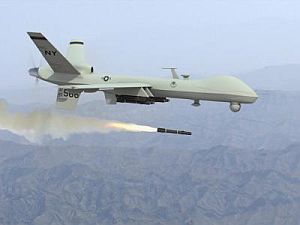
Bob Woodward’s new book, Obama’s Wars, reveals that the White House was so enamored with the CIA’s drone missile campaign in Pakistan, that chief of staff Rahm Emanuel would regularly call the CIA director, Leon Panetta, asking, “Who did we get today?”

Emanuel may have been posing the question because, like President Obama, he shares a perverse thrill in remote killing. Or, he might have asked because Predator warfare turns out to be far less accurate than it proponents would like us to believe.

A legal dispute that was being hammered out in a Boston court this summer, revealed that in its haste to deploy drones, the CIA was willing to use location analysis software that could result in strikes that would be as much as 42 feet off target!

That’s the difference between aiming at one house and destroying the house next door.

Leaving aside the question about how accurate ones intelligence might be about who is inhabiting either house, or the legal issues of what constitutes the battlefield and what can justify extrajudicial killing, or the moral issue of defining innocent bystanders as “collateral damage” — this looks like a case of not being able to shoot straight.

The Register reports:

The CIA is implicated in a court case in which it’s claimed it used an illegal, inaccurate software “hack” to direct secret assassination drones in central Asia.

The target of the court action is Netezza, the data warehousing firm that IBM bid $1.7bn for on Monday [Sept 20]. The case raises serious questions about the conduct of Netezza executives, and the conduct of CIA’s clandestine war against senior jihadis in Afganistan and Pakistan.

The dispute surrounds a location analysis software package – “Geospatial” – developed by a small company called Intelligent Integration Systems (IISi), which like Netezza is based in Massachusetts. IISi alleges that Netezza misled the CIA by saying that it could deliver the software on its new hardware, to a tight deadline.

When the software firm then refused to rush the job, it’s claimed, Netezza illegally and hastily reverse-engineered IISi’s code to deliver a version that produced locations inaccurate by up to 13 metres [42 feet]. Despite knowing about the miscalculations, the CIA accepted the software, court submissions indicate.

This report comes on the heals of an earlier report which revealed that the military’s use of unencrypted communications channels in Iraq allowed militants to view live video images being transmitted by drones. As the Wall Street Journal reported in December:

Militants in Iraq have used $26 off-the-shelf software to intercept live video feeds from U.S. Predator drones, potentially providing them with information they need to evade or monitor U.S. military operations.

Senior defense and intelligence officials said Iranian-backed insurgents intercepted the video feeds by taking advantage of an unprotected communications link in some of the remotely flown planes’ systems. Shiite fighters in Iraq used software programs such as SkyGrabber — available for as little as $25.95 on the Internet — to regularly capture drone video feeds, according to a person familiar with reports on the matter.

Given that President Obama has authorized as many drone attacks since the end of March as his predecessor did in the previous four years, and given that in Pakistan there is a widespread belief that these attacks indiscriminately kill innocent people, and given that this perception is fueling a deepening hatred of America, one might imagine that revelations about the weaknesses of the drone program would result in a serious reexamination of its value.

On the contrary, the CIA is now intensifying its campaign of missile attacks and launched more drone strikes this month than at any time in the previous six years.

(For more background on the Geospatial story, see this report.)

Facebooktwittermail

Expanding secrecy and diminishing privacy in Obama’s America

The US government might not have enough evidence to issue an arrest warrant for a US citizen but it claims the right to kill such a person and to keep secret its reasons for doing so.

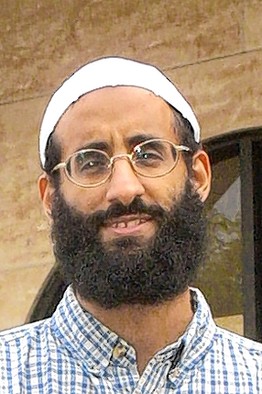
The U.S.-born cleric Anwar al-Aulaqi is now on the CIA and Joint Special Operations Command capture-or-kill list of suspected terrorists. He is not however on the FBI’s most-wanted terrorist list and has not been indicted. It is believed that he is being hunted down and that he will be killed, if his exact whereabouts become known, but even if that is the case, this “does not foreclose Anwar al-Aulaqi’s access to the courts,” claim Barack H Obama, Robert M Gates and Leon E Panetta, the defendants in a federal case brought by Aulaqi’s father.

Nasser al-Aulaqi has an old-fashioned conception of justice and believes his son has a right to due process and not be subject to a summary execution.

As Glenn Greenwald points out:

[W]hat’s most notable here is that one of the arguments the Obama DOJ raises to demand dismissal of this lawsuit is “state secrets”: in other words, not only does the President have the right to sentence Americans to death with no due process or charges of any kind, but his decisions as to who will be killed and why he wants them dead are “state secrets,” and thus no court may adjudicate their legality.

At the very same time that this administration is pushing to expand the boundaries of state secrecy and extra-judicial power it also wants to restrict citizens’ rights to privacy as it seeks sweeping new regulations for the internet that would provide the government with the means to access all electronic communications.

The New York Times reports:

Essentially, officials want Congress to require all services that enable communications — including encrypted e-mail transmitters like BlackBerry, social networking Web sites like Facebook and software that allows direct “peer to peer” messaging like Skype — to be technically capable of complying if served with a wiretap order. The mandate would include being able to intercept and unscramble encrypted messages.

In the post 9/11 national security culture, arguments in favor of the expansion of government power are invariably framed in terms of enhancing the security services’ ability to track down “bad guys.” But as the article notes, enhanced surveillance capabilities will also create opportunities of others.

Several privacy and technology advocates argued that requiring interception capabilities would create holes that would inevitably be exploited by hackers.

Steven M. Bellovin, a Columbia University computer science professor, pointed to an episode in Greece: In 2005, it was discovered that hackers had taken advantage of a legally mandated wiretap function to spy on top officials’ phones, including the prime minister’s.

“I think it’s a disaster waiting to happen,” he said. “If they start building in all these back doors, they will be exploited.”

The Greek case — sometimes referred to as the Greek Watergate — is interesting for several reasons. As the Times in another report today on the Stuxnet attack notes, “The level of skill needed to pull off the [Greek] operation and the targets strongly indicated that the culprit was a government.”

Indeed, the list of targets alone makes it hard to imagine that this was anything other than an intelligence agency-run operation. The phones bugged included not only those of the Greek prime minister and his wife but also, IEEE Spectrum reported, those of:

…the ministers of national defense, foreign affairs, and justice, the mayor of Athens, and the Greek European Union commissioner… Others belonged to members of civil rights organizations, peace activists, and antiglobalization groups; senior staff at the ministries of National Defense, Public Order, Merchant Marine, and Foreign Affairs; the New Democracy ruling party; the Hellenic Navy general staff; and a Greek-American employee at the United States Embassy in Athens.

Given the context of the then-upcoming 2004 Athens Olympics which were widely regarded as a potential target for a major act of terrorism, it seems quite likely that this was a CIA-run operation.

Since we live in what is still widely regarded as the “freest” nation on earth, as the Obama administration quietly moves to expand its powers, we should have no doubt that the national security culture that is being established here as a new normal, will also serve as a model for other nations that will justify even more extreme restrictions on civil liberties by virtue of the similarities these measures bear to the American way.

The architecture of world government is not being crafted at the United Nations but behind closed doors at the NSA and the CIA. The people we should be most afraid of are the people who promise to make us feel safe.

Facebooktwittermail

CIA views Israeli intelligence service as worst US ally

In the Washington Post, Jeff Stein reports:

The CIA took an internal poll not long ago about friendly foreign intelligence agencies.

The question, mostly directed to employees of the clandestine service branch, was: Which are the best allies among friendly spy services, in terms of liaison with the CIA, and which are the worst? In other words, who acts like, well, friends?

“Israel came in dead last,” a recently retired CIA official told me the other day.

Not only that, he added, throwing up his hands and rising from his chair, “the Israelis are number three, with China number one and Russia number two,” in terms of how aggressive they are in their operations on U.S. soil.

Israel’s undercover operations here, including missions to steal U.S. secrets, are hardly a secret at the FBI, CIA and other U.S. intelligence agencies. From time to time, in fact, the FBI has called Israeli officials on the carpet to complain about a particularly brazen effort to collect classified or other sensitive information, in particular U.S. technical and industrial secrets.

Former CIA officer, Philip Giraldi, adds:

FBI sources indicate that the increase in Mossad activity is a major problem, particularly when Israelis are posing as U.S. government officials, but they also note that there is little they can do to stop it as the Justice Department refuses to initiate any punitive action or prosecutions of the Mossad officers who have been identified as involved in the illegal activity.

Giraldi also recounts a recent incident in which a man who identified himself as an Israeli government official, threatened a survivor of the USS Liberty attack, “saying that the people who had been killed on board had gotten what they deserved.”

Israel’s official line has always been that the incident in which 34 US servicemen were killed and 170 wounded during the Israeli attack on the clearly-flagged American naval vessel in 1967, was an accident.

Facebooktwittermail

CIA making secret payments to members of Karzai administration

The Washington Post reports:

The CIA is making secret payments to multiple members of President Hamid Karzai’s administration, in part to maintain sources of information in a government in which the Afghan leader is often seen as having a limited grasp of developments, according to current and former U.S. officials.

The payments are long-standing in many cases and designed to help the agency maintain a deep roster of allies within the presidential palace. Some aides function as CIA informants, but others collect stipends under more informal arrangements meant to ensure their accessibility, a U.S. official said.

The CIA has continued the payments despite concerns that it is backing corrupt officials and undermining efforts to wean Afghans’ dependence on secret sources of income and graft.

The U.S. official, speaking on condition of anonymity, said a significant number of officials in Karzai’s administration are on the payroll. Paul Gimigliano, a CIA spokesman, disputed that characterization, saying, “This anonymous source appears driven by ignorance, malice or both.”

A former agency official said the payments were necessary because “the head of state is not going to tell you everything” and because Karzai often seems unaware of moves that members of his own government make.

The disclosure comes as a corruption investigation into one of Karzai’s senior national security advisers – and an alleged agency informant – puts new strain on the already fraying relationship between Washington and Kabul.

Facebooktwittermail

Wikileaks — short on intelligence

Maybe Wikileaks has come to the cynical conclusion that in the contemporary media environment the headline is more important than the story.

CIA Red Cell Memorandum on United States “exporting terrorism”

That sounds like damning material. Plans to insert US-trained terrorists into Iran or Venezuela perhaps? Is Wikileaks exposing yet more dirty secrets from the CIA’s ugly history?

No.

Indeed, if we are to define a leak as the revelation of confidential information in which the public has a compelling interest — information that must be published as a matter of conscience — then the latest offering from Wikileaks hardly qualifies being described as a leak. Indeed, the US intelligence community may actually regard the release of such a report as something that overall enhances their public image.

This Red Cell report has a couple of interesting details — confirmation that there are those in the US government who understand that Jewish terrorism has played a significant role in triggering Palestinian terrorism, and (reading between the lines) that CIA officers engaged in kidnapping can be perceived as American terrorists — but the overarching topic here is not a secret acknowledgment that the US government has been involved in promoting and exporting terrorism.

If Wikileaks wants to provide the best public service it is capable of, it needs to focus attention on improving its image. It has made the medium more important than the message as though we should be more interested in Wikileaks than the leaks. Instead of the brand “Wikileaks” signalling the release of important information, it now signals a theatrical drama in which Julian Assange demands a spotlight while he is supposedly jousting with the dark forces of government. Is that what he and his cohorts want to be known as? A band of attention seekers?

Whistleblowing is a noble exercise in which individuals follow the dictates of their conscience and place public interest above personal interest. I assume that Wikileaks was created as a way of honoring such a spirit.

Facebooktwittermail

CIA wants to cover up US war crimes in Yemen

A missile strike on December 17 in Yemen last year that killed 41 people including 21 children and 14 women was most likely the result of a US cruise missile strike — an opening shot in a US military campaign that began without notice and has never been officially confirmed.

Amnesty International says it has obtained photographs apparently showing the remnants of missiles known to be held only by U.S. forces at the site of the air strike against al Qaeda suspects.

“The Yemeni authorities have a duty to ensure public safety and to bring to justice those engaged in attacks that deliberately target members of the public, but when doing so they must abide by international law,” said Malcolm Smart, Amnesty International’s Director for the Middle East and North Africa Programme. “Enforced disappearances, torture and other ill-treatment, and extrajudicial executions are never permissible, and the Yemeni authorities must immediately cease these violations.”

“It is particularly worrying that states such as Saudi Arabia and the USA are directly or indirectly aiding the Yemeni government in a downward spiral away from previously improving human rights record.”

The Washington Post now reports that the CIA is likely to have a larger role in President Obama’s expanding war in Yemen.

Proponents of expanding the CIA’s role argue that years of flying armed drones over Pakistan have given the agency expertise in identifying targets and delivering pinpoint strikes. The agency’s attacks also leave fewer telltale signs.

“You’re not going to find bomb parts with USA markings on them,” the senior U.S. official said.

Facebooktwittermail

The Post covers spy town

At the Atlantic, the independent investigative reporter, Tim Shorrock, slams the Washington Post‘s Top Secret America series:

Priest and Arkin offer an incredibly simplistic explanation for how the contracting bandwagon took off under President Bush, who they say manipulated “the federal budget process” to make it easier for agencies to hire contractors. Is that why Blackwater suddenly appeared on the scene in Afghanistan days after 9/11, signed up by counterterrorism official named Cofer Black who later joined the company? Is that how CACI International, a favorite of Donald Rumsfeld’s Pentagon, got the interrogation work at Abu Ghraib prison through an “IT” contract outsourced to the Interior Department? The Post also completely ignored the huge growth of contracting during the Clinton administration, which “reinvented” government by downsizing and outsourcing the federal workforce — including spies and surveillance teams in places like Bosnia. Many of the companies that are big wheels today got some of their first contracts during the late 1990s.

Worse, there is virtually nothing in the series about the deeper political questions raised by privatization, including the obvious issue of the revolving door. Unbelievably, Priest and Arkin don’t even mention that President Bush’s DNI, Mike McConnell, and President Obama’s counter-terrorism adviser, John Brennan, were both prominent contractors before taking their jobs. Why is that relevant? Well, McConnell came directly from Booz Allen Hamilton, one of the IC’s top contractors and an adviser to the NSA (and he’s back at Booz now). Brennan was an executive at The Analysis Corporation, which built a key terrorist database for the National Counterterrorism Center (which Brennan used to run).

There was not even a hint that Lt. Gen. James Clapper (ret.), who appeared before the Senate for his DNI confirmation hearing on the second day of the series, once had close ties to major contractors. Clapper once directed the National Geospatial-Intelligence Agency, which has extensive contracts with a satellite firm contracted by the government. Nor was there mention of the Intelligence and National Security Alliance, the largest association for NSA and CIA contractors, for which McConnell, Brennan, and Clapper have all served as chairman. That’s not part of the story? Could Clapper’s experience have influenced his strong defense of contractors during his testimony? Or would mentioning such ties hurt the Post’s access to the ODNI and the White House?

Despite Arkin’s much-vaunted reputation in collecting data, not even the charts are very good. The Post’s enormous database of contractors will be a useful tool for researchers and journalists, and certainly reveals the incredible scope of the industry (nothing new there though). But it does little to inform the public about what private corporations such as Lockheed Martin, SAIC, and Northrop Grumman actually do for the CIA and the dozens of intelligence units within the Pentagon. That’s partly because — as the authors admit in a note to readers — they removed certain “data points” at the suggestion of intelligence officials.

Therefore, you can look up a company like Booz Allen and see which agencies it holds contracts with and what kind of counter-terrorism, intelligence, or homeland security work it does; but you can’t learn what special tasks it carries out for specific agencies. Now some may applaud the Post for the omission, but I just see a failure to disclose.

Facebooktwittermail

Does the CIA know how to invest wisely?

“You don’t give something for nothing,” a CIA official told the Washington Post while trying to justify the $5 million payment made to Shahram Amiri, an Iranian nuclear scientist whose American dream turned out to be so short-lived it raised questions about whether his original defection was genuine. He arrived back in Tehran on Thursday, receiving a hero’s welcome.

Whether the agency received an adequate return on its investment in Amiri is difficult to assess. The size of the payment might offer some measure of the value of the information he shared. But it could also reflect a level of eagerness within the U.S. intelligence community for meaningful information on Iran.

Eagerness for success is what led seven Americans to their deaths at the end of last year as they were lured into a trap by a Jordanian doctor named Humam Khalil Abu-Malal al-Balawi when he blew himself up in the CIA base in Khost.

The case of Amiri might not have done as much damage to the Agency, but the assumption that everyone has their price — what amounts to an article of faith in a land where wealth has been deified — is a naive American perspective that repeatedly results in a distorted view of the world.

As for whether Amiri really was, as ABC News reported, one of the CIA’s “most valued former spies,” I have a hard time believing that a prize nuclear scientist would not already have a PhD. (The desire to acquire a doctorate was supposedly one of his reasons for coming to the US.) More likely, Amiri was a “prize catch” simply because he was willing to accept the prize.

Facebooktwittermail

An Iranian nuclear espionage mystery

ABC News reports:

The CIA has lost one of its most valued former spies.

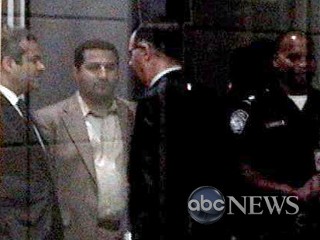
Iranian nuclear scientist Shahram Amiri, who defected to the US, is now on his way back home to Tehran after a very messy and public re-defection. ABC News obtained exclusive photos of Amiri leaving Washington’s Dulles International Airport late Tuesday night on a commercial flight to Doha, Qatar, en route to Iran.

Amiri was escorted directly to the jetway entrance by a security officer. He was flanked by what appeared to be a U.S. official and a representative from the Pakistani Embassy in Washington. He boarded the Qatar Airways flight ahead of the other passengers, and spoke only to his companions. After more than a year in the US, Amiri claimed he had never really defected. In a series of videos released on the internet, he insisted that he had been kidnapped, drugged and tortured by the CIA. The US flatly denies that it ever held Amiri against his will.

The Washington Post columnist and unofficial spokesman for the CIA, David Ignatius, attributes Amiri’s departure to a change of heart.

The CIA has struggled for decades with how to handle defectors better so that they are happy in a strange new land. The agency periodically tries to improve its tradecraft in working with these skittish guests. But defectors are trouble. They are like small boats in a heavy sea, not sure which way is home.

But Ignatius concedes that it is hard to understand why the Iranian scientist would have defected while leaving his wife and child behind. That detail, along with the deaths of Ardeshire Hassanpour and Masoud Alimohammadi, might seem to reinforce the claim that Amiri was in fact abducted and that all three cases be seen in the context of a US-backed, Israeli-led covert war targeting Iran’s nuclear programme.

What seems more likely however, is that the Iranians took the CIA for a ride — that Amiri’s “defection” took place so the Iran could glean more about the extent of American knowledge about its nuclear program and that the information he gathered was worth more valuable than the information he gave away.

Facebooktwittermail

Is Obama moving to escalate the war in Pakistan?

The United States is at war in Pakistan. It will be up to historians to decide when this war began.

“Drone Strikes Pound West Pakistan” says the headline above a brief report in the New York Times. After the CIA fired 18 missiles resulting in at least 14 deaths on Tuesday, the operation was described merely as “a continuation of the air campaign to degrade the capabilities of Al Qaeda, the Pakistani Taliban and the Afghan Taliban fighters now working together in North Waziristan” (my emphasis).

“Continuation” is another name for escalation when developments that should prompt alarm have already been inoculated with the name “necessity.”

A course of action that if it initiated by George Bush might have been seen as an expression of his intemperate nature, when pursued by no-drama Obama is instead billed as a judicious expansion in the use of force.

But the danger of escalation — now as always — is that the seemingly carefully calibrated expansion of a war has unintended and far-reaching consequences. Only after it’s too late do we learn that the calibration rested on nothing more than wishful thinking.

The logic behind the apparent necessity of expanding the war into Pakistan has been evident ever since the war in Afghanistan began. For Bush, the dangers implicit in crossing the Durand Line seemed to provoke fear, but his successor seems intent on showing he lacks such trepidation. North Waziristan is where Obama gets to prove that he has the steel that Bush lacked — or so the script says.

In this context the Times Square attempted bombing has acquired particular significance. If the lack of a credible endgame in Afghanistan would make it even more difficult to justify expanding the war, then a scare in New York could be useful in prompting a renewed sense of urgency.

In Pakistan’s Dawn newspaper today, Rafia Zakaria writes:

Security experts in Washington have since begun to call Shahzad’s bombing attempt a “game changer” in the war against terror and have been signalling the possibility of an incursion of US forces into Pakistani territory. Several factors point to the fact that such an option is indeed being considered by the Obama administration and Pentagon officials. First, conservative lawmakers on Capitol Hill have long been sounding alarm bells asking for a wider presence in Pakistan to accomplish the goals of the war on terror. Recent hearings held on Capitol Hill have focused on groups such as Jaish-i-Muhammad and Lashkar-i-Taiba that do not operate in the areas currently being targeted by aerial drone attacks.

In a hearing held in March, several US congressmen noted that the Lashkar “had put the world on notice that they intend to escalate the carnage and take it worldwide”. Other analysts have repeatedly pointed to the necessity of expanding drone strikes into Quetta to target the Quetta shura which supposedly runs the Taliban operations. While Shahzad’s connections are not currently traced to groups other than the Taliban, the fact that he spent time in Pakistan bolsters the position of those who insist that a wider military presence in Pakistan is crucial to eliminating the threat to the American homeland.

Second, the problems faced by the highly publicised US/Nato initiatives in Marja and Kandahar in Afghanistan have created a political demand for a more decisive endgame in the region. In the footsteps of the Marja offensive in early April, The New York Times reported that many of the gains made in the area by the US Marines’ costly offensive had largely been reversed and many Taliban had moved back into the area. The Kandahar offensive due to start soon has also been the subject of lowered expectations, with experts saying that the easy absorption of Taliban fighters into the local population and the lack of visible centres of Taliban control make it difficult to win a decisive victory in the area.

The reason why the failure of both offensives — one yet to begin — is relevant to the Pakistan equation is simple: with the beginning of a US withdrawal already announced for 2011, there is immense political pressure on the Obama administration to produce some semblance of victory. The expansion of the Afghanistan war into Pakistani territory would not only be a culmination of the Obama campaign’s slogans of Pakistan being the real problem, it would also provide a visible endgame to the vexing and increasingly intractable issue of whether the war in Afghanistan has really eliminated global terrorism.

If Obama is now a victim of his own campaign logic — the repetition of half-baked slogans must surely be as harmful to those who utter them as it is to those who hear them — this logic is nevertheless looking less persuasive outside the administration.

Noah Shachtman notes that the skepticism once only voiced by counter-insurgency wonks like David Kilcullen and Andrew Exum has now percolated right into the mainstream media.

“If you go into Pakistan and talk to college kids, which is what we did, these drone attacks are feeding this narrative: this is what we [Americans] are aiming to do. We’re aiming to kill Muslims,” Leslie Stahl said today on MSNBC’s Morning Joe.

“Let’s say China was launching drone attacks on Idaho, we would be pretty angry too. We are launching attacking against a people were not at war with, officially,” Joe Scarborough responded. “I would rather us go after the terrorists — individual terrorists — drag ‘em out, interrogate ‘em, get information — instead of dropping bombs that kill four year-old little girls. That dismember grandmoms that happen to be in the family compound. That seems immoral.”

The decision to dramatically escalate the drone war was done behind closed doors, with no public debate about whether the strikes were the best way to smash the jihadist networks based in Pakistan’s tribal wildlands. Perhaps now, we’ll have that discussion.

Visit msnbc.com for breaking news, world news, and news about the economy

Facebooktwittermail

The terrorism recruiting myth

After almost a decade of a US-led global war on terrorism, America’s approach to the issue has barely advanced from being a deadly game of Whack-a-Mole.

On CBS, Scott Pelley asked Secretary of State, Hillary Clinton: “I wonder if there’s anything about U.S. foreign policy that needs to change in your estimation to put more pressure on these terrorist groups where they live, like in Pakistan?”

“Well, we are doing that. And we’re increasing it. We’re expecting more from it. This is a global threat. We have probably the best police work in the world. But we are also the biggest target. And therefore, we just have to be better than everybody else,” Clinton replied.

Earlier in the interview she said: “We’ve made it very clear [to the Pakistani government] that, if, heaven forbid, that an attack like this [in Times Square], if we can trace back to Pakistan, were to have been successful, there would be very severe consequences.”

The US will start bombing Pakistan? Special Forces will start conducting operations in North Waziristan? Clinton would not specify what form these severe consequences might take.

In response to the Times Square incident, Richard Clarke, former counter-terrorism coordinator for the Bush administration writes:

The reason such attacks are hard to stop is rooted in the identity of the attackers. They often seem to be successful or well-educated members of society, uninvolved in any form of radicalism. But then, the drip-drip of terrorist propaganda — either on the Internet or circulated through friends — has its effect. They quietly make contact with radical groups overseas, perhaps even traveling abroad for training and indoctrination. They throw away the life they have made in the West and agree to stage an attack. Faisal Shahzad, the alleged Times Square terrorist, fits that profile, as have others in the United States and Europe.

For U.S. intelligence and law enforcement authorities, these newly minted terrorists are the hardest to stop. They may not be part of any known cell; there is no reason for their phones or e-mail accounts to come under surveillance. When they buy rifles, handguns, tanks of propane gas or fertilizer, they are doing nothing out of the ordinary in American society.

If they succeed in inflicting harm on us with terrorist acts designed to rivet media and public attention, our political debate may once again be as wrongheaded as it will be predictable. Some elected officials will claim that their party would have done a much better job protecting the country. Critics of America’s Middle East policy — or our energy policy, or our foreign policy writ large — will also fault whatever administration is in power.

Likewise, in a 60 Minutes report that aired last night, the prism through which the issue is filtered is one in which individuals are turned into the tools of a deadly ideology. Vulnerable young men are in jeopardy of being recruited by merciless ideologues and terrorist planners.

But as Scott Atran points out, the idea that Shahzad and those like him have to be recruited, does not fit the evidence.

Shahzad was also apparently inspired by the online rhetoric of Anwar al-Awlaki, a former preacher at a Northern Virginia mosque who gained international notoriety for blessing the suicide mission of the failed Christmas airplane bomber, Umar Farouk Abdulmutallib, and for Facebook communications with Major Nadal Hasan, an American-born Muslim psychiatrist who killed thirteen fellow soldiers at Fort Hood in November 2009. Although many are ready to leap to the conclusion that Awlaki helped to “brainwash” and “indoctrinate” these jihadi wannabes, it is much more likely that they sought out the popular Internet preacher because they already self-radicalized to the point of wanting reassurance and further guidance. “The movement is from the bottom up,” notes forensic psychiatrist and former CIA case officer Marc Sageman, “just like you saw Major Hasan send twenty-one e-mails to al-Awlaki, who sends him back two, you have people seeking these guys and asking them for advice.”

The CBS report, stuck on the track that recruitment is a central issue, homes in on the role of the internet. The would-be terrorist is someone whose deadly intent is sure to be triggered by something he sees online.

Phillip Mudd, who until a few months ago was the senior intelligence advisor to the FBI and its director says:

They’re seeing images, for example, of children and women in places like Palestine and Iraq, they’re seeing sermons of people who explain in simple, compelling, and some cases magnetic terms why it’s important that they join the jihad. They’re seeing images, and messages that confirm a path that they’re already thinking of taking.

CBS helpfully provides such an image, but predictably neglects to add any commentary.

What are we seeing? An Israeli soldier terrorizing a Palestinian mother and her two girls.

And there we have it: exactly the kind of image the foments terrorism.

Viewed through the American counter-terrorism lens, the problem lies with the propagation of the image and the violent reaction such an image can provoke. Why? Because any serious consideration of the foreign policy issues that the image signals is still off-limits.

But here’s what everyone in the Middle East sees: An Israeli Jew brandishing an American-made weapon, serving America’s closest ally in the Middle East, is threatening a Muslim family. This is the narrative that no amount of spin or cleverly fought battles in a war of ideas, can undo.

Yet here is the foreign policy dilemma for Washington: How can the United States adopt a posture in the Middle East that acknowledges the role America has played in fueling terrorism, without appearing to capitulate to terrorist demands?

The answer is to trust in the universally recognized truth: actions speak louder than words.

What Obama does in Pakistan matters more than what he said in Cairo.

In April 2003, the Bush administration made a step in the right direction when it withdrew American troops from Saudi Arabia. The moved turned out to be of little consequence since it was triggered by utterly false expectations about the war in Iraq. Yet there was an implicit recognition: the presence of American soldiers in close proximity to Islam’s holiest sites sends an ugly message to the Muslim world.

Seven years later, as the Obama administration puts increased pressure on the Pakistani government to launch a major offensive in North Waziristan — an operation that would yet again result in the displacement of tens of thousands of civilians — and as the CIA continues to expand a drone war that has resulted in hundreds of civilian deaths, what kind of signal is this sending to those who might now contemplate following in the footsteps of Faisal Shahzad?

Facebooktwittermail

An arrest warrant needs a name on it; a death warrant needs none.

In the narrative that sketches the legality of the war on terrorism, the tribal nature of the “battlefield” is the pretext used to justify killing people instead of attempting to arrest them. Counterterrorism experts scoff at the notion that FBI agents (or Pakistani law enforcement officials for that matter) could possibly waltz into a village in South Waziristan and handcuff a Taliban or al Qaeda suspect. The logistics of such an operation would indeed be daunting.

But here’s the thing: The United States is now killing people when it doesn’t even have a legal basis for even initiating their capture.

In the US — and most other legal jurisdictions — an arrest warrant needs to show probable cause connecting a crime that has been committed to the person named on the warrant.

In Pakistan, the CIA can target someone for assassination without knowing their name, without witnessing them commit a crime — simply on the Orwellian pretext that their “pattern of life” can be deemed a threat to the United States.

The Los Angeles Times reports:

The CIA received secret permission to attack a wider range of targets, including suspected militants whose names are not known, as part of a dramatic expansion of its campaign of drone strikes in Pakistan’s border region, according to current and former counter-terrorism officials.

The expanded authority, approved two years ago by the Bush administration and continued by President Obama, permits the agency to rely on what officials describe as “pattern of life” analysis, using evidence collected by surveillance cameras on the unmanned aircraft and from other sources about individuals and locations.

The information then is used to target suspected militants, even when their full identities are not known, the officials said. Previously, the CIA was restricted in most cases to killing only individuals whose names were on an approved list.

The new rules have transformed the program from a narrow effort aimed at killing top Al Qaeda and Taliban leaders into a large-scale campaign of airstrikes in which few militants are off-limits, as long as they are deemed to pose a threat to the U.S., the officials said.

At a time when Faisal Shahzad — a name that might not evoke much terror — is a name uppermost in many people’s minds, it’s worth remembering Mir Aimal Kasi.

In 1993 he too had conducted a pattern of life analysis, having noted the turn lane that directed traffic into the CIA’s Langley headquarters. In his targeted killing operation, he too had found the high-value targets of his choice — James Woollsey and Robert Gates — were too illusive and so he opted to shoot CIA employees whose names he didn’t know.

Soon before receiving a death sentence in 1998, Kasi told Salon:

“I am not against the USA or the American people. I am against the policies of the U.S. government toward Islamic countries or toward Muslims.”

“A lot of young people in Pakistan,” he said, “think mostly the same.”

Whoever follows in the footsteps of Faisal Shahzad may have less interest in constructing a Rube Goldberg type contraption than in causing mayhem the America way — as did Mir Aimal Kasi, John Allen Muhammad, and Nidal Malik Hasan.

“This is a blow back. This is a reaction. This is retaliation. And you could expect that,” Pakistani Foreign Minister Mahkdoom Qureshi told CBS News after the Times Square bombing attempt. “Let’s not be naive. They’re not going to sort of sit and welcome you eliminate them. They’re going to fight back.”

Facebooktwittermail

Drone strikes like “canon fire”

CNN reports:

Drone-launched missiles are now hitting lower-level al Qaeda and Taliban personnel, camps, training areas, bomb makers, buildings and other targets in the remote region.

“You’ve had an expanded target set for time now, and given the danger these groups pose and their relative inaccessibility, these kinds of strikes — precise and effective — have become almost like the cannon fire of this war. They’re no longer extraordinary or even unusual,” the official said.

The US counterterrorism official who likened Hellfire missile attacks to cannon fire, reached for a comparison which though perhaps ill-conceived is also revealing. If drone warfare is meant to epitomize precision, nothing represents blunt force more than a cannon.

As for the claim that big-name targets have now given way to an expanded range of lower level targets, US officials who still insist that there have been no more than a handful of civilians killed in drone attacks might be posed a basic challenge: How often can they even name the dead?

Facebooktwittermail

Drone attacks provoke calls for revenge

In a report on the CIA’s campaign of drone warfare in Pakistan, the Los Angeles Times recounts the stories of some of the civilian victims of the attacks.

Many of the boys that Zaman Khan grew up with in the South Waziristan town of Shakai eventually joined the Taliban. He knew they had become militants, but he never thought it odd to have them over for tea.

Whether it was because of Taliban visits or the proximity of a regular Taliban meeting place 30 yards away, Khan’s house became a target March 15, 2008.

The missile struck while everyone slept, killing Khan’s brother, Wazir Khan, 40; Wazir’s wife, Zara Bibi, 30; and their 4-year-old son, Irshad. The left half of Wazir’s body had been sheared off. Zara’s and Irshad’s bodies were charred from head to toe.

Wazir’s two other children, Noor Rehman, 10 at the time, and Ishaq Khan, 3, survived. Physically, they recovered but suffer from psychological problems, Zaman Khan said.

“Ishaq doesn’t talk at all,” Khan said. “He can’t recognize his family, and he drinks only if someone helps him.”

Three weeks after that strike, a house full of civilians in the same neighborhood was struck, instantly killing cousins Sher Maan, 20, and Azeem Ullah, 30, and Azeem’s wife, Gul Anama, 25.

“It was a huge blast that shook the ground,” said Amin Ullah, 20, a Shakai farmer.

“I believe that most of the victims of these drone attacks are innocent people,” Ullah said. “Pakistan should be carrying out these attacks. Pakistan knows the terrain, knows its people and knows the militants.”

Andrew Exum, a former Army officer in Afghanistan and Iraq, has declared the drone program counterproductive and called for an end to it. In an analysis published last year, Exum and David Kilcullen, a former counterinsurgency advisor to the head of U.S. Central Command, Army Gen. David H. Petraeus, dismissed drones as technology substituting for strategy.

“Every one of these dead noncombatants represents an alienated family, a new desire for revenge, and more recruits for a militant movement,” they wrote.

Drones have proved invaluable in Afghanistan, where they focus on surveillance, intelligence-gathering and watching over coalition troops, Exum said in an interview. But in Pakistan, the U.S. and the government in Islamabad need to make the case that the attacks are part of a joint strategy supporting Pakistani policy, he said.

“I’m not saying drones can’t be part of the solution, but right now I think they’re part of the problem,” Exum said.

Drone attacks have enraged men such as Momin Khan. On a September morning last year, Khan heard the thunderclap of a drone strike in Machis, his village in North Waziristan, and ran to see what had happened.

As he joined other villagers running down a dirt road, the 50-year-old unemployed teacher saw black smoke and flames curling out of a house about 60 yards away. The missile had killed two people there. As he ran closer, a second missile strike shook the ground.

Shrapnel from the blast cut into his shoulder and legs. He woke up in a hospital.

Four people were killed in the second strike, he said. Although Taliban militants have often used Machis as a haven, Khan said he was sure the house initially targeted had only civilians in it.

“These drones fly day and night, and we don’t know where to hide because we don’t know who they will target,” he said. “If I could, I would take revenge on America.”

Philip Alston, the United Nations special representative on extrajudicial, summary or arbitrary killings, said that without full disclosure of the CIA drone program, “the opportunities for abuse are immense.”

“The CIA is running a program that is killing a significant number of people, and there is absolutely no accountability in terms of the relevant international law,” he said.

Scott Horton, while considering some of the legal issues surrounding the program notes:

No weapons system remains indefinitely the province of a single power. Drone technology is particularly striking in this regard, because it is not really all that sophisticated. It seems clear that other powers have this technology–Israel and Iran have each been reported to be working with it, Russia and China could obviously do so easily if they desired, and the same is probably true for Britain, France, and Germany, not to mention Japan and Taiwan, where many of the cutting-edge breakthroughs in robotics actually occur. The way America uses this technology is therefore effectively setting the rules for others. Put another way, if it’s lawful for America to employ a drone to take out an enemy in the desert of Yemen, on the coast of Somalia, in a village in Sudan or Mauretania, then it would be just as lawful for Russia, or China–or, for that matter, for Israel or Iran. What kind of world is this choice then creating? Doesn’t it invariably lead us closer to the situation in which a targeted killing will be carried out in a major metropolis of Europe or East Asia, or even the United States? And doesn’t that move us in the direction of a dark and increasingly lawless world?

This is not idle speculation. The choices the United States has made are being studied very closely in capitals around the world. In Russia, for instance, national-security analysts have noted the American drone strikes with a measure of approbation, because they see such strikes as justifying lethal countermeasures of their own against perceived terrorist enemies. A number of enemies of the Russian government who were critical of policies or actions connected with the Second Chechen War have recently met violent death, often after Russian authorities linked them to Chechen terrorist groups. The Polonium poisoning of Aleksandr Litvinenko in London, for instance, or the assassination of Umar Israilov in Vienna, which Austrian prosecutors linked earlier this week to a Putin-protégé, the president of Chechnya, are two examples that suggest that Europe may have been cleared as a theater for targeted killings by a great power. The 2004 killing of former Chechen President Zelimkhan in Qatar is an example of another Russian targeted killing in the Gulf. The recent likely Israeli assassination of Mahmoud al-Mabhouh in Dubai is another instance. Targeted killings of this sort have always been with us, of course, but with the Bush-era “War on Terror” they are making a strong comeback and are gaining in claims of legitimacy and legality. The drone technology promises to take targeted killings to a whole new level.

My point here is a simple one. The United States cannot assume exclusivity in this technology, and how it uses the technology will guide others. The United States has to decide now whether it wants to legitimize a broader right of sovereign states to assassinate their enemies using drones. The consequence of such a step to the world as a whole will be severe. This also points to the danger of the United States using drones for targeted killings and keeping silent about the process, which invites the view that the practice involves an arbitrary and capricious use of power. If the United States elects to continue on its current path, it also owes the world a clear accounting for its use of drones as a vehicle for targeted killings.

Facebooktwittermail

A presidential death warrant

American soldiers have to be trained how to kill, but for American presidents killing comes naturally.

Anyone who aspires to become president must surely ask themselves: am I willing to end someone else’s life, be that an individual or perhaps tens or hundreds of thousands or even millions of people? After all, even though it’s not spelled out in the Constitution, it’s clear that a pacifist could never hold this office. Killing comes with the territory.

Even so, I can’t help wondering when it was the Barack Obama posed this question and decided, “yes I can.”

With candidate George W Bush we didn’t need to ask the question. He had a track record — as the Governor of Texas he presided over 152 executions. But with Obama, we may never know when he came to regard killing as a tolerable part of his job.

It’s hard to imagine that as a community organizer he ever entertained the idea that wiping people out could become a dimension of working towards the greater good, yet at some point he must have seen this coming and — from all the evidence we now see — not flinched.

But to contrast Obama and Bush as killers, here’s what’s scary and yet passes without comment: Obama’s approach is dispassionate, with no explicit moral calculation. Whereas Bush felt driven to assume an air of righteousness and moral superiority, casting his actions within a drama of good and evil, Obama presents the image of an administrative process through which, after careful analysis and legal and political deliberation, lives are terminated.

Under the morally insidious rubric of “procedures” — a notion that peels away personal responsibility by replacing it with impersonal rules-based behavior — the president, the CIA, the military, the administration, the media, and the American public are all being offered an excuse to look the other way. An unnamed official assured a Washington Post reporter: “[there are] careful procedures our government follows in these kinds of cases.”

When Anwar al-Awlaki, an American born in New Mexico is shredded and incinerated — his likely fate at the receiving end of a Hellfire missile — there will be no account of the last moments of his life. No record of who happened to be in the vicinity. Most likely nothing more than a cursory wire report quoting unnamed American officials announcing that the United States no longer faces a threat from a so-called high value target.

Representative Jane Harman, Democrat of California and chairwoman of a House subcommittee on homeland security, was out prepping the media and the public on Tuesday when she called Awlaki “probably the person, the terrorist, who would be terrorist No 1 in terms of threat against us.”

Although it was only this week that a US official announced that Awlaki is now on the CIA’s assassination list, US special forces were already authorized and had made at least one attempt to kill the Muslim cleric who now resides in Yemen.

While both the military and the CIA make use of drones for the purpose of remotely controlled assassination, the fact that Awlaki is now considered a legitimate target for “lethal CIA operations” raises questions about the methods the agency might use.

Last summer CIA Director Leon Panetta shut down a secret CIA program which would have operated assassination teams for hunting down al Qaeda leaders. The news was presented as though the new administration was again distancing itself from the questionable practices of the Bush administration, yet at the time, Director of National Intelligence Dennis C Blair told Congress that the termination of that particular program did not rule out the future use of insertion teams that could kill or capture terrorist leaders.

One of the many ironies here is that the Obama administration appears to have abandoned one of the Bush era rationales for torture in favor of its own rationale for murder.

The most frequently used justification for torturing terrorist suspects has been the claim that in the scenario of a so-called ticking time bomb, vital information might be forced out of a suspect enabling an imminent act of terrorism to be thwarted.

Anwar al-Awlaki is supposedly just such a suspect. “He’s working actively to kill Americans,” an American official told the Washington Post. But whatever vital intelligence he might be able to provide, we’ll probably never know. Once dead he won’t hatch any new plots, but as for the ones already set in motion, well, we’ll just have to wait and see what sort of surprises may yet appear.

Needless to say, I am not suggesting that torturing terrorist suspects is any more acceptable than murdering them.

Ken Gude, a human rights expert from the Center for American Progress, argues that Awlaki is a legitimate target for assassination because of his claimed role in assisting the 9/11 attackers. On that basis, his killing would appear to be an act of extra-judicial punishment rather than the removal of a potential threat. But even if the administration sticks assiduously to its focus on future threats, it should not claim a God-like power to predict the future. Nor should it assume that the threat someone poses is necessarily diminished once they are dead.

In weighing the fate of Anwar al-Awlaki, this administration would do well to remember the case of Mohammed El Fazazi, a Moroccan cleric who from a Hamburg mosque preached to Mohammed Atta, Ramzi Binalshibh and Marwan al-Shehhi, three of the men who participated in the 9/11 attacks, that it was the duty of a devout Muslim to “slit the throats of non-believers.”

Eight years later, Fazazi had a new message as he appealed to Muslims to air their grievances through peaceful demonstrations. He is helping turn young men away from violent jihad. But what would stir the hearts of such men now if rather than hearing Fazazi’s moderated message, instead they held the memory of a day he became a martyr when struck by an American Hellfire missile?

Facebooktwittermail