The Jordanian doctor who killed seven CIA employees in a suicide attack in Afghanistan said in a video broadcast posthumously today that all jihadists must attack U.S. targets to avenge the death of Pakistani Taliban chief Baitullah Mehsud.
The video showed Humam Khalil Abu-Mulal Balawi — whom the CIA had cultivated as an asset against Al Qaeda — sitting with Mehsud’s successor in an undisclosed location. It essentially confirmed the Pakistani Taliban’s claim of responsibility for one of the worst attacks in CIA history, though analysts said Al Qaeda and Afghan militants likely played roles, too.
Speaking in Arabic in the video shown on Al Jazeera, the Arabic network, and Aaj, a Pakistani channel, Balawi noted that the Pakistani Taliban had given shelter to “emigrants” — Muslim fighters from abroad.
Mehsud, the group’s longtime leader, was killed in August by a CIA missile strike. [continued…]
Editor’s Comment — As the CIA’s director, Leon Panetta no doubt sees it as his duty to try and lift morale in the agency, yet in an op-ed for tomorrow’s Washington Post he says this:
This was not a question of trusting a potential intelligence asset, even one who had provided information that we could verify independently. It is never that simple, and no one ignored the hazards. The individual was about to be searched by our security officers — a distance away from other intelligence personnel — when he set off his explosives.
Say what? What’s “a distance away from other intelligence personnel” supposed to mean? Outside the doorway of a conference room? What’s the point of trying to search someone after they’ve already reached a location where they can cause carnage? Panetta’s goal appears to be to snuff out the notion that the CIA is getting sloppy with its security procedures. He accomplishes the opposite.
The bomber’s wife By Adem Demir and Christopher Dickey, Newsweek, January 7, 2010
Soft-spoken and composed, but unmistakably angry, the wife of the suicide bomber who killed himself and seven employees of the CIA in Afghanistan on Dec. 30 says flatly, “My husband was anti-American; so am I.” About that, there are no regrets. In an exclusive interview Thursday, Defne Bayrak, 31, spent more than an hour at the offices of Newsweek Türkiye in Istanbul talking about her husband, Dr. Humam Khalil Abu-Mulal al-Balawi; his beliefs; what he may have been offered by the CIA to work as a double agent on the trail of Al Qaeda’s top leadership; and what she heard from those apostles of jihad who ultimately inspired him to kill and die.
Al-Balawi’s case is a study in the radicalization of someone who is well-educated, economically well-off, devout, and disciplined. Such people may not fit into the public’s stereotypical idea of a terrorist, but the profile is increasingly familiar to police and intelligence officers involved with counterterrorism. Many of Al Qaeda’s most successful attacks, from 9/11 to the London transit-system bombings in 2005, were directed and executed by such intelligent, articulate, religious, and suicidally violent men. [continued…]
Editor’s Comment — Reuel Marc Gerecht, a former CIA officer and prominent neoconservative, writes in the Wall Street Journal:
Professionally, one has to admire the skill of suicide bomber Humam Khalil Abu-Mulal al-Balawi’s handlers. This operation could well have been months — if not longer — in the making, and neither the Jordanian intelligence service (GID), which supplied the double agent to the CIA, nor Langley apparently had any serious suspicion that al-Balawi still had the soul and will of a jihadist.
That is an impressive feat. The Hashemite monarchy imprisons lots of Islamic militants, and the GID has the responsibility to interrogate them. The dead Jordanian official, Sharif Ali bin Zeid, reportedly a member of the royal family, may not have been a down-and-dirty case officer with considerable hands-on contact with militants, but al-Balawi surely passed through some kind of intensive screening process with the GID. Yet the GID and the CIA got played, and al Qaeda has revealed that it is capable of running sophisticated clandestine operations with sustained deception.
When asked if she could confirm what other sources had told Newsweek — that Balawi was offered as much as $500,000 by the CIA and $100,000 by the Jordanians to track down al Qaeda’s leadership — Balawi’s wife said only, “It might be true.”
In both these instances — Gerecht’s admiration of al Qaeda’s tradecraft and the likelihood that the CIA believed Balawi could be turned for the right price — the crucial asymmetry between the CIA and its adversary is left unstated: the disparity in the strength of each side’s convictions. On one side are individuals who have transcended their own fear of death, and on the other side individuals whose concerns are unfocused and defuse – a swirl of patriotism, egotism, and ambition.
A former senior CIA officer while explaining what might have drawn so many operatives into Balawi’s trap, told the New York Times: “Everyone would have wanted to be on the team that caught Zawahri. That’s the kind of thing that makes careers.”
Setting aside questions about whose outlook might be more delusional and whether either has a moral footing, the jihadist’s fearlessness and conviction is a force that neither soldier nor spy can truly match.
Pakistan warned US senators Thursday that American drone attacks against militants on its territory undermined “the national consensus” that supported the war against militancy.
President Asif Ali Zardari made the warning to a US delegation led by former US presidential candidate and Republican Senator John McCain one day after US missile attacks killed at least 13 militants on the Afghan border.
McCain said Thursday in Kabul, the capital of neighbouring Afghanistan, that the use of such drone strikes against suspected Islamist militants in Pakistan was an effective part of US strategy and should continue. [continued…]
White House national security adviser James Jones says Americans will feel “a certain shock” when they read an account being released Thursday of the missed clues that could have prevented the alleged Christmas Day bomber from ever boarding the plane.
President Obama “is legitimately and correctly alarmed that things that were available, bits of information that were available, patterns of behavior that were available, were not acted on,” Jones said in an interview Wednesday with USA Today. [continued…]
Editor’s Comment — When historians have the leisure to assess the first year of Barack Obama’s presidency, it will be interesting to see to what extent they see it having been shaped more by his Chief of Staff, Rahm Emanuel, than by the president himself.
Emanuel is a little man driven to take on big fights — though he backs away from if it becomes apparent that he overestimated his strength. I have a feeling that we’re in for another round, but this time the administration’s target is one that may turn out to have the most vicious bite: the US intelligence community.
Intelligence is a field that seems to have a particular appeal to people possessed by a unique form of idealistic criminality: a conviction that the state’s most indispensable guardians are an elite of patriots who patrol the boundaries of law by exercising the freedom to step outside the law.
In the aftermath of the Christmas bomber, Emanuel (and of course I’m simply guessing in attributing this to him), recognizes that the president is acutely vulnerable to the right’s favorite charge — weak on terrorism — and so has pressed his boss to show no mercy in pointing out the extent of the intelligence failure. Objectively, this should be a perfectly reasonable response, but right now the community (and especially the CIA) must be in crisis.
With an airline almost brought down and a team of operatives getting blown up by an al Qaeda infiltrator, once again, the phrase “American intelligence” sounds like an oxymoron. I would expect that the CIA is currently a cauldron of anger, humiliation and confusion where self-protection is the dominant force.
When the community that feels threatened is also home to the masters of dirty tricks, the people who are nominally in charge of running this country may need to brace themselves for a few lessons on the limits of their own power.
Thomas H. Kean and John Farmer Jr., respectively, the co-chairman and senior counsel of the 9/11 commission, write in a New York Times op-ed:
Despite the best efforts of the 9/11 commission and other intelligence reformers, budgetary authority over intelligence remains unaligned with substantive responsibility. Turf battles persist among intelligence agencies. Power is sought while responsibility is deflected. The drift toward inertia continues.
Government agencies are most likely to succeed when structure matches mission. With its many jurisdictional boundaries and its persistent bureaucratic fault lines, our current system, although greatly improved since 9/11, affords too many opportunities to let information slip, too many occasions for human frailty to assert itself.
The attempted Christmas bombing carries an eerie echo of the failures that led to 9/11 because those fundamental flaws persist. The challenge for President Obama and Congress is to resist superficial sound-bite solutions and undertake the harder task of reinventing our national security system. As the president stated, “The margin for error is slim, and the consequences of failure can be catastrophic.”
If Obama was ready to take on the challenge of reinventing the US national security system — I doubt very much that he is — then he would need to go much further than the Bush administration did.
A good place to start would be with an acknowledgment that secrecy is the enemy of accountability and efficiency.
That the United States has 16 intelligence agencies is not a testament to the sophistication of its security structure but to the institutional greed out of which so many fiefdoms have been created.
A leading member of the House Permanent Select Committee on Intelligence has told The Nation that she will launch an investigation into why two Blackwater contractors were among the dead in the December 30 suicide bombing at the CIA station at Forward Operating Base Chapman in Khost, Afghanistan. “The Intelligence Committees and the public were led to believe that the CIA was phasing out its contracts with Blackwater and now we find out that there is this ongoing presence,” said Illinois Democrat Jan Schakowsky, chair of the Subcommittee on Oversight and Investigations, in an interview. “Is the CIA once again deceiving us about the relationship with Blackwater?”
In December, the CIA announced that the agency had canceled its contract with Blackwater to work on the agency’s drone bombing campaign in Afghanistan and Pakistan and said Director Leon Panetta ordered a review of all existing CIA contracts with Blackwater. “At this time, Blackwater is not involved in any CIA operations other than in a security or support role,” CIA spokesman George Little said December 11.
But Schakowsky said the fact that two Blackwater personnel were in such close proximity to the December 30 suicide bomber–an alleged double agent, who was reportedly meeting with CIA agents including the agency’s second-ranking officer in Afghanistan when he blew himself up–shows how “deeply enmeshed” Blackwater remains in sensitive CIA operations, including those CIA officials claim it no longer participates in, such as intelligence gathering and briefings with valuable agency assets. [continued…]
At least 13 suspected militants were killed in a tribal region of Pakistan near the Afghan border Wednesday, apparently by missiles fired from unmanned U.S. aircraft, two Pakistani intelligence sources told CNN.
The strikes are the fourth and fifth suspected drone strikes in less than a week, and come after a suicide bomber killed seven Central Intelligence Agency officers and contractors on December 30. [continued…]
Editor’s Comment — Soon after the Khost bombing, unnamed CIA officials promised there would be revenge attacks, yet one has to wonder whether the CIA is now conducting attacks so indiscriminate that they have unequivocally become acts of terrorism. The New York Times reported:
Officials in Afghanistan and Washington said the C.I.A. group in Khost had been particularly aggressive in recent months against the Haqqani network, a militant group that has claimed responsibility for dozens of American deaths in Afghanistan. One NATO official in Afghanistan spoke in stark terms about the attack, saying it had “effectively shut down a key station.”
“These were not people who wrote things down in the computer or in notebooks. It was all in their heads,” he said. The C.I.A. is “pulling in new people from all over the world, but how long will it take to rebuild the networks, to get up to speed? Lots of it is irrecoverable. Lots of it.”
So the CIA is now struggling to get up to speed, the intelligence knowledge possessed by a key group involved in targeting Predator attacks has irrecoverably been lost and Hellfire missiles are raining down.
So, apparently the CIA suffered a fatal strike by an al Qaeda blogger last week. And if you’re wondering how bad it’s got for American soldiers in Afghanistan: they say they can get more useful information from USA Today than they get from reading intelligence reports.
Is this David Letterman’s assessment? No. It comes from Major General Michael Flynn, deputy chief of staff for intelligence in Afghanistan for the US military and its NATO allies.
OK, he didn’t refer specifically to USA Today, but in a newly-published report he did say: “Some battalion S-2 officers say they acquire more information that is helpful by reading US newspapers than through reviewing regional command intelligence summaries.”
This is not a testimony to the quality of American journalism.
“I don’t want to say we’re clueless, but we are. We’re no more than fingernail deep in our understanding of the environment,” the operations officer of one US task force told Flynn.
The United States has now been conducting military operations in Afghanistan for over eight years.
The former official said that the fact that militants could carry out a successful attack using a double agent showed their strength even after a steady barrage of missile strikes fired by C.I.A. drone aircraft.
“Double agent operations are really complex,” he said. “The fact that they can pull this off shows that they are not really on the run. They have the ability to kick back and think about these things.”
The death of the Jordanian intelligence officer, Capt. Sharif Ali bin Zeid, was reported in recent days by Jordanian officials, but they did not confirm exactly where he was killed or what he was doing in Afghanistan.
Jordanian intelligence officials were deeply embarrassed by the attacks because they had taken the informant to the Americans, said one American government official briefed on the events.
The official said that the Jordanians had such a good reputation with American intelligence officials that the informant was not screened before entering the compound.
Jarret Brachman, author of “Global Jihadism: Theory and Practice” and a consultant to the United States government about terrorism, said in a telephone interview that Mr. Mohammed had used the online persona Abu Dujana al-Khorasani and was an influential jihadi voice on the Web.
“He’s one of the most revered authors on the jihadists’ forums,” Mr. Brachman said.
“He’s in the top five jihadists. He’s one of the biggest guns out there.” [continued…]
He ran a blog, http://abudujanakharasani.maktoobblog.com/, on which he posted calls for jihad — holy war — and martyrdom, that the Jordanian authorities presumably regarded as cover for the role of double agent.
The blog was still available on Monday but was inaccessible on Tuesday.
“He spent months travelling between Afghanistan and Pakistan and fed the Americans the information that the Mujahedeen (jihadists) wanted them to receive,” the Ana Muslim (“I am a Muslim” in Arabic) website boasted.
“Every time that the reports which he gave proved accurate, their confidence in Abu Dujana rose.”
Balawi was taken to the CIA base in Khost because he claimed to have urgent information about Zawahiri, the website said.
He was not searched as he went in because a CIA agent boasted: “He is our man, so there is no need,” the website claimed.
The bomber then pretended to detail plans for a mooted operation on a piece of paper and asked the intelligence agents to gather round to look before blowing himself up, the website said. [continued…]
In 2004, the CIA sent a team from the private security firm Blackwater, now Xe, to Hamburg to kill an alleged al Qaeda financier who was investigated for years by German authorities on suspicion of links to al Qaeda, according to a little-highlighted element in a Vanity Fair article to be published this month.
The report cited a source familiar with the program as saying the mission had been kept secret from the German government.
“Among the team’s targets, according to a source familiar with the program, was Mamoun Darkazanli, an al Qaeda financier living in Hamburg who had been on the agency’s radar for years because of his ties to three of the 9/11 hijackers and to operatives convicted of the 1998 bombings of U.S. embassies in East Africa,” writes Vanity Fair’s Adam Ciralsky. [continued…]
The German government said on Monday it knew nothing about a magazine report that the CIA had planned a secret operation to kill a German-Syrian in Hamburg linked to the September 11 attacks on U.S. targets.
The U.S. magazine Vanity Fair had reported that the CIA had in 2004 sent a team from the private security firm Blackwater, now Xe, to Hamburg to kill Mamoun Darkazanli, who was investigated for years by German authorities on suspicion of links to al Qaeda. [continued…]
Hours after last week’s deadly attack on a CIA base in Afghanistan, a revision was made in official accounts of the number of intelligence operatives killed in the suicide bombing. Instead of eight deaths, as initially reported, the CIA acknowledged only seven.
The eighth victim resurfaced over the weekend when his flag-draped coffin arrived in his native country, Jordan. The man, a captain in the Jordanian intelligence service, was given full military honors at a ceremony that referred only to his “humanitarian work” in war-torn Afghanistan.
In fact, the man’s death offered a rare window into a partnership that U.S. officials describe as crucial to their counterterrorism strategy. Although its participation is rarely acknowledged publicly, Jordan is playing an increasingly vital role in the fight against al-Qaeda and other terrorist groups, sometimes in countries far beyond the Middle East, according to current and former government officials from both countries.
Traditionally close ties between the CIA and the Jordanian spy agency — known as the General Intelligence Department — strengthened after the Sept. 11, 2001, attacks, occasionally prompting allegations by human rights groups that Jordan was serving as a surrogate jailer and interrogator for the U.S. intelligence agency. In the past two years, in the face of new threats in Afghanistan and Yemen, the United States has again called on its ally for help, current and former officials from both countries said. [continued…]
Editor’s Comment — When the war on terrorism began, George Bush spoke in a language that ten-year olds would understand: America had been attacked by some bad guys and we would now hunt them down.
Those ten-year olds are now entering adulthood yet government officials and journalists still insist in talking like children.
In describing the reason a Jordanian intelligence officer was working alongside CIA officers in Afghanistan as all fell victim to a suicide attack last week, Jamie Smith, a former CIA officer who worked in the border region in the years immediately after the US-led invasion, told The Washington Post: “They know the bad guy’s . . . culture, his associates, and more [than anyone] about the network to which he belongs.”
In this narrative, there’s reason to be unsure about the status of the Jordanians. Are they “good guys” like us? They’ve shown themselves as being indispensable to the United States — as sources of intelligence (who sometimes were not listened to when they should have been, such as when they forewarned the US about 9/11) and as interrogators, which is to say, torturers.
Of course, good guys don’t torture — they have someone else do it for them. And good guys don’t suppress democracy, but the Jordanians are loyal friends to America so I guess in this instance we shouldn’t be too particular about how we assign moral status.
Meanwhile, in the real world, the most striking thing about the attack on Forward Operating Base Chapman was not that it was a devastating event for the CIA — it was the inescapable degree of equivalence in the conflict.
Two groups of combatants, neither of whom wear uniforms are slugging it out on the Afghan-Pakistan border. Each group has identified what it regards as high-value targets and each are using their own available means to hit these targets. The Taliban/Qaeda are using suicide bombers while the CIA is using Hellfire missiles.
When the Taliban struck last week, as far as the reports indicate, there doesn’t appear to have been a single civilian casualty. According to Pakistani reports, on the other hand, Predator strikes have so far resulted in 140 innocent civilians killed for each al Qaeda or Taliban target hit.
So, on the basis of considering who’s killing who, there seems to be sufficient reason to set aside the term “bad guys” and the implied “good guys”. The crucial difference between the two sides does not hinge on who can make the more credible claim of virtue. It comes from the contest between the indigenous and the foreign — a contest in which the advantage of the indigenous is inherent and insurmountable.
However long Americans reside in Afghanistan, it will never become home; their departure is inevitable. All that remains unknown is when we will leave.
A teacher and his 9-year-old son were killed Sunday night by a suspected U.S. drone, a Pakistani administration official and an intelligence official told CNN.
The incident occurred in the village of Musaki in the North Waziristan district. The suspected U.S. drone fired two guided missiles at the compound of local resident Sadiq Noor, the officials said. There were reports Noor’s home was used by local and foreign militants. [continued…]
U.S. missiles flattened an extremist hideout in Pakistan’s lawless tribal belt Sunday, killing five militants in the latest strike in a recent spike in drone attacks, Pakistani officials said.
The attack targeted a house in Mosakki village, about 25 kilometres (16 miles) east of Miranshah, the main town in North Waziristan, and was the third suspected US missile attack in the tribal district in less than a week. [continued…]
Of the 44 predator strikes carried out by US drones in the tribal areas of Pakistan over the past 12 months, only five were able to hit their actual targets, killing five key Al-Qaeda and Taliban leaders, but at the cost of over 700 innocent civilians.
According to the statistics compiled by Pakistani authorities, the Afghanistan-based US drones killed 708 people in 44 predator attacks targeting the tribal areas between January 1 and December 31, 2009.
For each Al Qaeda and Taliban terrorist killed by US drones, 140 innocent Pakistanis also had to die. Over 90 per cent of those killed in the deadly missile strikes were civilians, claim authorities. [continued…]
A senior commander connected to the Afghan Taliban and involved with the attack against the CIA that left eight people dead said Saturday that the bombing was retaliation for U.S. drone strikes in the Afghan-Pakistan border region.
“We attacked this base because the team there was organizing drone strikes in Loya Paktia and surrounding area,” the commander said, referring to the area around Khost, the city where the U.S. facility was attacked. The commander, a prominent member of the Afghan insurgency, spoke on the condition of anonymity.
The suicide attack, which dealt the biggest loss to the agency in more than 25 years, killed a woman who was the station chief along with six other CIA officers and one private security contractor. [continued…]
The suicide bomber who killed at least six Central Intelligence Agency officers in a base along the Afghan-Pakistan border on Wednesday was a regular CIA informant who had visited the same base multiple times in the past, according to someone close to the base’s security director.
The informant was a Pakistani and a member of the Wazir tribe from the Pakistani tribal area North Waziristan, according to the same source. The base security director, an Afghan named Arghawan, would pick up the informant at the Ghulam Khan border crossing and drive him about two hours into Forward Operating Base Chapman, from where the CIA operates. [continued…]
Both Afghan and Pakistani Taliban groups claimed responsibility for the suicide bombing this week that killed eight Americans — seven of them C.I.A. officers — suggesting that the attack was viewed as a success and could be used to gain recruits and financial support.
The competing claims, made Thursday and Friday, did little to clarify the circumstances of the attack, as each group offered a different account of how the C.I.A. base in Khost Province, in southeastern Afghanistan, had been infiltrated on Wednesday.
The Afghan Taliban said the suicide bomber was a disillusioned Afghan National Army soldier, supporting accounts from NATO officials that the attacker was wearing a uniform over his suicide vest.
The Pakistani Taliban said the attacker was someone the C.I.A. had recruited to work with them, who then offered the militants his services as a double agent. [continued…]
An American intelligence official vowed Thursday that the United States would avenge a suspected terrorist attack on a U.S. base in Afghanistan that resulted in the deaths of seven CIA officers.
Two of those killed were contractors with private security firm Xe, formerly known as Blackwater, a former intelligence official told CNN. The CIA considers contractors to be officers. [continued…]
It was an operation by what are euphemistically called “other government agencies” that was alleged to have killed a number of students in Kunar province on Saturday, causing widespread anger in Afghanistan.
CIA-led night raids such as this have proved controversial before. A UN-commissioned report last year from Philip Alston, director of the New York Centre for Human Rights, claimed that such raids raised issues under humanitarian and international law.
The report criticised the “opaque” use of ultra-secretive CIA units operating alongside irregular Afghan militias such as the Pashai.
Professor Alston complained that many raids were “composed of Afghans but with a handful, at most, of international people directing it” and were “not accountable to any international military authority”.
Such units answer directly to the Pentagon rather than to the Nato command structure, and their operations are often so secretive that even other US forces operating nearby are sometimesmay be unaware of them. [continued…]
A bomber slipped into a U.S. base in eastern Afghanistan on Wednesday and detonated a suicide vest, killing eight CIA officers in one of the deadliest days in the agency’s history, current and former U.S. officials said.
The attack took place at Forward Operating Base Chapman in Khowst province, an area near the border with Pakistan that is a hotbed of insurgent activity. An undisclosed number of civilians were wounded, the officials said. No military personnel with the U.S. or North Atlantic Treaty Organization forces were killed or injured, they said.
A U.S. official who spoke on condition of anonymity said the CIA had a major presence at the base, in part because of its strategic location. [continued…]
In a written statement, the Taliban calls 2009 “a successful year for mujahedeen” and says it is determined to drive coalition forces out of Afghanistan in 2010.
“Last year the guerrilla warfare, frontline war, attacks and road mines against the invaders increased as the enemy began to cry out for reconciliation,” said the statement, obtained by CNN on Wednesday.
“The enemy does not have a constant policy,” the unsigned statement said. “Sometimes they talk about sending more soldiers and other times they speak of an early withdrawal. Their thinking is irrational.” [continued…]
American special forces have conducted multiple clandestine raids into Pakistan’s tribal areas as part of a secret war in the border region where Washington is pressing to expand its drone assassination programme.
A former Nato officer said the incursions, only one of which has been previously reported, occurred between 2003 and 2008, involved helicopter-borne elite soldiers stealing across the border at night, and were never declared to the Pakistani government.
“The Pakistanis were kept entirely in the dark about it. It was one of those things we wouldn’t confirm officially with them,” said the source, who had detailed knowledge of the operations. [continued…]
Few people by now can be unaware of Blackwater, later known as Blackwater Worldwide and now as Xe. The private security agency formed in 1997 and based in North Carolina is owned by Erik Prince, a former member of the US Navy Seal special forces, and has long-standing links with both the CIA and the FBI.
Its presence in Pakistan has been an open secret for some years. The investigative journalist and writer Jeremy Scahill, an authority on Blackwater and author of the bestselling Blackwater: the Rise of the World’s Most Powerful Mercenary Army, revealed last month that it has been there since 2006. He says Blackwater is being employed for covert ops, essentially intended to target high-value al Qa’eda leaders, including Osama bin Laden, but it has also assisted in providing information for drone attacks and has kidnapped suspects and transported them covertly to the US for interrogation.
In other words, it is an American agency with a licence to kill or kidnap, thus exonerating official American agencies that might one day be held accountable. (Although personally I doubt if the CIA will ever be held accountable. I continue to aver that it is the only real rogue intelligence agency in the world. Mossad might enjoy liberty of action for any operation, but it cannot undertake one without the approval of the Israeli prime minister: no such restriction applies to the CIA.) [continued…]
Leaders in Washington and Jerusalem have publicly locked horns over the issue of West Bank settlements. And Israeli public opinion has largely viewed America’s new administration as unfriendly. But behind the scenes, strategic security relations between the two countries are flourishing.
Israeli officials have been singing the praises of President Obama for his willingness to address their defense concerns and for actions taken by his administration to bolster Israel’s qualitative military edge — an edge eroded, according to Israel, during the final year of the George W. Bush presidency.
Among the new initiatives taken by the administration, the Forward has learned, are adjustments in a massive arms deal the Bush administration made with Arab Gulf states in response to Israeli concerns. There have also been upgrades in U.S.-Israeli military cooperation on missile defense. And a deal is expected next year that will see one of the United States’ most advanced fighter jets go to Israel with some of America’s most sensitive new technology.
Amid the cacophony of U.S.-Israel clashes on the diplomatic front, public attention given to this intensified strategic cooperation has been scant. But in a rare public comment in October, Israeli Ambassador Michael Oren praised the Obama administration’s response to complaints about lost ground during the close of the Bush years as “warm and immediate.” [continued…]
Palestinian security agents who have been detaining and allegedly torturing supporters of the Islamist organisation Hamas in the West Bank have been working closely with the CIA, the Guardian has learned.
Less than a year after Barack Obama signed an executive order that prohibited torture and provided for the lawful interrogation of detainees in US custody, evidence is emerging the CIA is co-operating with security agents whose continuing use of torture has been widely documented by human rights groups.
The relationship between the CIA and the two Palestinian agencies involved – Preventive Security Organisation (PSO) and General Intelligence Service (GI) – is said by some western diplomats and other officials in the region to be so close that the American agency appears to be supervising the Palestinians’ work.
One senior western official said: “The [Central Intelligence] Agency consider them as their property, those two Palestinian services.” A diplomatic source added that US influence over the agencies was so great they could be considered “an advanced arm of the war on terror”. [continued…]
President Barack Obama has warned his Chinese counterpart that the United States would not be able to keep Israel from attacking Iranian nuclear installations for much longer, senior officials in Jerusalem told Haaretz.
They said Obama warned President Hu Jintao during the American’s visit to Beijing a month ago as part of the U.S. attempt to convince the Chinese to support strict sanctions on Tehran if it does not accept Western proposals for its nuclear program.
The Israeli officials, who asked to remain anonymous due to the sensitivity of the matter, said the United States had informed Israel on Obama’s meetings in Beijing on Iran. They said Obama made it clear to Hu that at some point the United States would no longer be able to prevent Israel from acting as it saw fit in response to the perceived Iranian threat. Continue reading →
Senior U.S. officials are pushing to expand CIA drone strikes beyond Pakistan’s tribal region and into a major city in an attempt to pressure the Pakistani government to pursue Taliban leaders based in Quetta.
The proposal has opened a contentious new front in the clandestine war. The prospect of Predator aircraft strikes in Quetta, a sprawling city, signals a new U.S. resolve to decapitate the Taliban. But it also risks rupturing Washington’s relationship with Islamabad.
The concern has created tension among Obama administration officials over whether unmanned aircraft strikes in a city of 850,000 are a realistic option. Proponents, including some military leaders, argue that attacking the Taliban in Quetta — or at least threatening to do so — is crucial to the success of the revised war strategy President Obama unveiled last week.
“If we don’t do this — at least have a real discussion of it — Pakistan might not think we are serious,” said a senior U.S. official involved in war planning. “What the Pakistanis have to do is tell the Taliban that there is too much pressure from the U.S.; we can’t allow you to have sanctuary inside Pakistan anymore.”
But others, including high-ranking U.S. intelligence officials, have been more skeptical of employing drone attacks in a place that Pakistanis see as part of their country’s core. Pakistani officials have warned that the fallout would be severe.
“We are not a banana republic,” said a senior Pakistani official involved in discussions of security issues with the Obama administration. If the United States follows through, the official said, “this might be the end of the road.” [continued…]
Demands by the United States for Pakistan to crack down on the strongest Taliban warrior in Afghanistan, Siraj Haqqani, whose fighters pose the biggest threat to American forces, have been rebuffed by the Pakistani military, according to Pakistani military officials and diplomats.
The Obama administration wants Pakistan to turn on Mr. Haqqani, a longtime asset of Pakistan’s spy agency who uses the tribal area of North Waziristan as his sanctuary. But, the officials said, Pakistan views the entreaties as contrary to its interests in Afghanistan beyond the timetable of President Obama’s surge, which envisions drawing down American forces beginning in mid-2011.
The demands, first made by senior American officials before President Obama’s Afghanistan speech and repeated many times since, were renewed in a written demarche delivered in recent days by the United States Embassy to the head of the Pakistani military, Gen. Ashfaq Parvez Kayani, according to American officials. Gen. David Petraeus followed up on Monday during a visit to Islamabad.
The demands have been accompanied by strong suggestions that if the Pakistanis cannot take care of the problem, including dismantling the Taliban leadership based in Quetta, Pakistan, then the Americans will by resorting to broader and more frequent drone strikes in Pakistan.
But the Pakistanis have greeted the refrain with official public silence and private anger, illustrating the widening gulf between the allies over the Afghan war.
Former Pakistani military officers voice irritation with the American insistence daily on television, part of a mounting grievance in Pakistan that the alliance with the United States is too costly to bear.
“It is really beginning to irk and anger us,” said a security official familiar with the deliberations at the senior levels of the Pakistani leadership.
The core reason for Pakistan’s imperviousness is its scant faith in the Obama surge, and what Pakistan sees as the need to position itself for a major regional realignment in Afghanistan once American forces begin to leave. [continued…]
Private security guards from Blackwater Worldwide participated in some of the C.I.A.’s most sensitive activities — clandestine raids with agency officers against people suspected of being insurgents in Iraq and Afghanistan and the transporting of detainees, according to former company employees and intelligence officials.
The raids against suspects occurred on an almost nightly basis during the height of the Iraqi insurgency from 2004 to 2006, with Blackwater personnel playing central roles in what company insiders called “snatch and grab” operations, the former employees and current and former intelligence officers said.
Several former Blackwater guards said that their involvement in the operations became so routine that the lines supposedly dividing the Central Intelligence Agency, the military and Blackwater became blurred. Instead of simply providing security for C.I.A. officers, they say, Blackwater personnel at times became partners in missions to capture or kill militants in Iraq and Afghanistan, a practice that raises questions about the use of guns for hire on the battlefield.
Separately, former Blackwater employees said they helped provide security on some C.I.A. flights transporting detainees in the years after the 2001 terror attacks in the United States.
The secret missions illuminate a far deeper relationship between the spy agency and the private security company than government officials had acknowledged. Blackwater’s partnership with the C.I.A. has been enormously profitable for the North Carolina-based company, and became even closer after several top agency officials joined Blackwater. [continued…]
Today’s Times disclosures can be seen as an extension of the claims made by Erik Prince in his curious Vanity Fair interview that he was a proud but informal operative of the CIA, notwithstanding his unsuccessful attempts to sign up through the front door. In a discussion with Jeremy Scahill at The Nation, I noted that the interview appeared to be carefully laying the foundations for a “graymail” defense for Prince, should federal prosecutors move against him. One common form of “graymail” for a figure who has a relationship with the U.S. intelligence community is to warn that, if prosecuted, he will have to spill the beans on his covert activities in order to defend himself. The tactic has proven widely effective. [continued…]
The narrative reads like a script for NBC’s “West Wing” as it dramatises Obama’s deliberative process and that seems to have been the object of the exercise for this stellar team of reporters: paint a picture of presidential solemnity that will inspire confidence in how Obama makes decisions and thereby drum up a bit of good old-fashioned blind-faith in the presidency.
If there is no inescapable logic to the idea that a faster surge will enable a swifter withdrawal, then — the Times would have its readers believe — we shouldn’t worry our little heads about that because our fabulously diligent president has performed an operation of executive intelligence that renders all further consideration superfluous.
In a similar vein I’ll spare readers here the tedium of wading through a 4,660-word article and pick out some of the highlights. Actually, to my eye there is really only one point of substance:
Mr. Obama and his advisers … considered options for stepping up the pursuit of extremists in Pakistan’s border areas. He eventually approved a C.I.A. request to expand the areas where remotely piloted aircraft could strike, and other covert action. The trick would be getting Pakistani consent, which still has not been granted.
If getting Pakistani consent to open a new front in the war simply comes down to diplomatic finesse, then yes, you could call it a “trick” managing to get those instransigent Pakistanis to do the right thing.
In reality, it is merely the imperatives of fluent story-telling that compels the Times to glide over this important detail in the much larger and grimmer story of the war. Understanding why Baluchistan represents a red line that Pakistan refuses to abandon is something that Washington might grasp only when it’s too late.
The matter of most importance both for this administration and for the New York Times has less to do with people, places, history and geography, than it does with high-value words. Words like “surge”.
Obama wants to push in hard so he can pull out fast.
A three-month strategic review thus produced a choreographic solution:
The plan, called Option 2A, was presented to the president on Nov. 11. Mr. Obama complained that the bell curve would take 18 months to get all the troops in place.
He turned to General Petraeus and asked him how long it took to get the so-called surge troops he commanded in Iraq in 2007. That was six months.
“What I’m looking for is a surge,” Mr. Obama said. “This has to be a surge.”
That represented a contrast from when Mr. Obama, as a presidential candidate, staunchly opposed President Bush’s buildup in Iraq. But unlike Mr. Bush, Mr. Obama wanted from the start to speed up a withdrawal as well. The military was told to come up with a plan to send troops quickly and then begin bringing them home quickly.
On November 29, after winning the approval of all his immediate advisers, the president moved into action:
Mr. Obama then went to the Situation Room to call General McChrystal and Ambassador Eikenberry. The president made it clear that in the next assessment in December 2010 he would not contemplate more troops. “It will only be about the flexibility in how we draw down, not if we draw down,” he said.
Two days later, Mr. Obama flew to West Point to give his speech. After three months of agonizing review, he seemed surprisingly serene. “He was,” said one adviser, “totally at peace.”
Obama wanted a surge, he’s getting a surge, and it feels good — at least for now.
To say that the U.S.-led invasion and occupation of Afghanistan in October 2001 shook Pakistan to its core would be an understatement. Since then, the war in Afghanistan has spilled over into Pakistan on multiple levels. The escalating cycle of violence between Pakistani security forces and a patchwork of tribal militants, particularly the Tehrik-e-Taliban Pakistan (TTP) and foreign fighters aligned with the Taliban and al-Qaeda in the Federally Administered Tribal Areas (FATA) and the North-West Frontier Province (NWFP) is a case in point. Many observers of Pakistani affairs have used the deteriorating situation in the tribal agencies along the Afghanistan-Pakistan frontier as a bellwether of future trends in Pakistan. In this context, it is no surprise that events in Pakistan’s tribal areas seem to draw the most attention. Yet Pakistan’s Balochistan province is also beginning to draw interest as a center of Taliban and al-Qaeda activity.
Reports that the U.S. is seeking Pakistan’s approval for expanding its controversial drone campaign against targets in Balochistan – a clear red line for Pakistan – have raised serious concerns in Islamabad about Washington’s ultimate intentions (The News, [Islamabad], September 29). As the Obama administration escalates its military campaign in Afghanistan, Pakistani leaders have expressed deep concerns about the potential destabilization of Balochistan resulting from the intensified fighting expected in Afghanistan in the coming months (The Nation [Lahore], November 27). As if these concerns were not enough, Balochistan remains a hotbed of ethno-nationalist militancy, drug smuggling, and organized crime. Balochistan is also in the throes of a refugee crisis that has been largely ignored. The confluence of these trends – which indirectly or directly reinforce each other – is making an already dangerous situation worse with severe implications for Pakistan and the wider region. [continued…]
“I put myself and my company at the C.I.A.’s disposal for some very risky missions,” says Erik Prince as he surveys his heavily fortified, 7,000-acre compound in rural Moyock, North Carolina. “But when it became politically expedient to do so, someone threw me under the bus.” Prince—the founder of Blackwater, the world’s most notorious private military contractor—is royally steamed. He wants to vent. And he wants you to hear him vent.
Erik Prince has an image problem—the kind that’s impervious to a Madison Avenue makeover. The 40-year-old heir to a Michigan auto-parts fortune, and a former navy seal, he has had the distinction of being vilified recently both in life and in art. In Washington, Prince has become a scapegoat for some of the Bush administration’s misadventures in Iraq—though Blackwater’s own deeds have also come in for withering criticism. Congressmen and lawyers, human-rights groups and pundits, have described Prince as a war profiteer, one who has assembled a rogue fighting force capable of toppling governments. His employees have been repeatedly accused of using excessive, even deadly force in Iraq; many Iraqis, in fact, have died during encounters with Blackwater. And in November, as a North Carolina grand jury was considering a raft of charges against the company, as a half-dozen civil suits were brewing in Virginia, and as five former Blackwater staffers were preparing for trial for their roles in the deaths of 17 Iraqis, The New York Times reported in a page-one story that Prince’s firm, in the aftermath of the tragedy, had sought to bribe Iraqi officials for their compliance, charges which Prince calls “lies … undocumented, unsubstantiated [and] anonymous.” (So infamous is the Blackwater brand that even the Taliban have floated far-fetched conspiracy theories, accusing the company of engaging in suicide bombings in Pakistan.) [continued…]
This website or its third-party tools use cookies, which are necessary to its functioning. By closing this banner, you agree to the use of cookies.




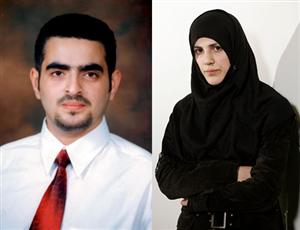 oft-spoken and composed, but unmistakably angry, the wife of the suicide bomber who killed himself and seven employees of the CIA in Afghanistan on Dec. 30 says flatly, “My husband was anti-American; so am I.” About that, there are no regrets. In an exclusive interview Thursday, Defne Bayrak, 31, spent more than an hour at the offices of Newsweek Türkiye in Istanbul talking about her husband, Dr. Humam Khalil Abu-Mulal al-Balawi; his beliefs; what he may have been offered by the CIA to work as a double agent on the trail of Al Qaeda’s top leadership; and what she heard from those apostles of jihad who ultimately inspired him to kill and die.

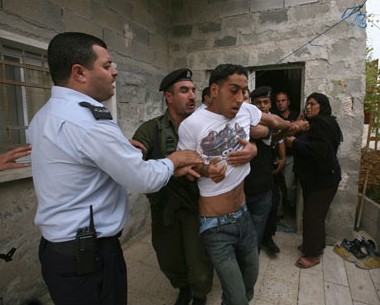 alestinian security agents who have been detaining and allegedly torturing supporters of the Islamist organisation Hamas in the West Bank have been working closely with the CIA, the Guardian has learned.