Category Archives: US government

A look at the US military’s Joint Special Operations Command

Dana Priest and William M. Arkin write:

Two presidents and three secretaries of defense routinely have asked JSOC to mount intelligence-gathering missions and lethal raids, mostly in Iraq and Afghanistan, but also in countries with which the United States was not at war, including Yemen, Pakistan, Somalia, the Philippines, Nigeria and Syria.

“The CIA doesn’t have the size or the authority to do some of the things we can do,” said one JSOC operator.

The president has also given JSOC the rare authority to select individuals for its kill list — and then to kill, rather than capture, them. Critics charge that this individual man-hunting mission amounts to assassination, a practice prohibited by U.S. law. JSOC’s list is not usually coordinated with the CIA, which maintains a similar, but shorter roster of names.

Created in 1980 but reinvented in recent years, JSOC has grown from 1,800 troops prior to 9/11 to as many as 25,000, a number that fluctuates according to its mission. It has its own intelligence division, its own drones and reconnaissance planes, even its own dedicated satellites. It also has its own cyberwarriors, who, on Sept. 11, 2008, shut down every jihadist Web site they knew.

Obscurity has been one of the unit’s hallmarks. When JSOC officers are working in civilian government agencies or U.S. embassies abroad, which they do often, they dispense with uniforms, unlike their other military comrades. In combat, they wear no name or rank identifiers. They have hidden behind various nicknames: the Secret Army of Northern Virginia, Task Force Green, Task Force 11, Task Force 121. JSOC leaders almost never speak in public. They have no unclassified Web site.

Despite the secrecy, JSOC is not permitted to carry out covert action like the CIA. Covert action, in which the U.S. role is to be kept hidden, requires a presidential finding and congressional notification. Many national security officials, however, say JSOC’s operations are so similar to the CIA’s that they amount to covert action. The unit takes its orders directly from the president or the secretary of defense and is managed and overseen by a military-only chain of command.

Facebooktwittermail

In records of court case lie details of secret airlifts of terror suspects to CIA-run prisons

The Associated Press reports:

The secret airlift of terrorism suspects and American intelligence officials to CIA-operated overseas prisons via luxury jets was mounted by a hidden network of U.S. companies and coordinated by a prominent defense contractor, newly disclosed documents show.

More than 1,700 pages of court files in a business dispute between two aviation companies reveal how integral private contractors were in the government’s covert “extraordinary rendition” flights. They shuttled between Washington, foreign capitals, the U.S. military base at Guantanamo Bay, Cuba, and, at times, landing points near once-secret, CIA-run overseas prisons.

The companies ranged from DynCorp, a leading government contractor that secretly oversaw the flights, to caterers that unwittingly stocked the planes with fruit platters and bottles of wine, the court files and testimony show.

A New York-based charter company, Richmor Aviation Inc., which supplied corporate jets and crews to the government, and a private aviation broker, SportsFlight Air, which organized flights for DynCorp, have been engaged in a four-year legal dispute. Both sides have cited the government’s program of forced transport of detainees in testimony, evidence and legal arguments. The companies are fighting over $874,000 awarded to Richmor by a New York state appeals court to cover unpaid costs for the secret flights.

The court files, which include contracts, flight invoices, cell phone logs and correspondence, paint a sweeping portrait of collusion between the government and the private contractors that did its bidding — some eagerly, some hesitantly. Other companies turned a blind eye to what was going on.

Trial testimony studiously avoided references to the CIA. When lawyers pressed a witness about flying terrorists from Washington or Europe to Guantanamo Bay, Supreme Court Judge Paul Czajka of Columbia County, N.Y., put on the brakes: “Does this have anything to do with the contract? I mean, it’s all very interesting, and I would love to hear about it, but does it have anything to do with how much money is owed?”

At another point, the name of a high-level CIA official was mentioned, but the official’s intelligence ties were not divulged.

Among the new disclosures:

—DynCorp, which was reorganized and split up between another major contractor and a separate firm now known as DynCorp International, functioned as the primary contractor over the airlift. The company had not been previously linked to the secret flights.

—Airport invoices and other commercial records provide a new paper trail for the movements of some high-value terrorism suspects who vanished into the CIA “black site” prisons, along with government operatives who rushed to the scenes of their capture. The records include flight itineraries closely coordinated with the arrest of accused 9/11 mastermind Khalid Sheik Mohammed and the suspected transport of other captives.

—The private jets were furnished with State Department transit letters providing diplomatic cover for their flights. Former top State Department officials said similar arrangements aided other government-leased flights, but the documents in the court files may not be authentic since there are indications that the official who purportedly signed them was fictitious.

—The private business jets shuttled among as many as 10 landings over a single mission, costing the government as much as $300,000 per flight.

According to invoices between 2002 and 2005, many of the flights carried U.S. officials between Washington Dulles International Airport and the Guantanamo detention compound, where the U.S. was housing a growing population of terror detainees. Other flights landed at a dizzying array of international airports.

Jets were dispatched to Islamabad; Rome; Djibouti; Frankfurt, Germany; Dubai, United Arab Emirates; Shannon, Ireland; Glasgow, Scotland; Tenerife, Spain; Sharm el Sheik, Egypt; and even Tripoli.

Some flights landed at airports near where CIA black sites operated: Kabul, Bangkok and Bucharest. Others touched down at foreign outposts where obliging security services reportedly took in U.S. terror detainees for their own severe brand of persuasion: Cairo; Damascus, Syria; Amman, Jordan; and Rabat, Morocco.

Facebooktwittermail

The CIA’s ties to the Gaddafi regime

The Wall Street Journal reports:

The Central Intelligence Agency and Libyan intelligence services developed such a tight relationship during the George W. Bush administration that the U.S. shipped terror suspects to Libya for interrogation and suggested the questions they should be asked, according to documents found in Libya’s External Security agency headquarters.
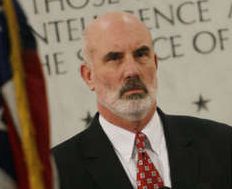
The relationship was close enough that the CIA moved to establish “a permanent presence” in Libya in 2004, according to a note from Stephen Kappes, at the time the No. 2 in the CIA’s clandestine service, to Libya’s then-intelligence chief, Moussa Koussa.

The memo began “Dear Musa,” and was signed by hand, “Steve.” Mr. Kappes was a critical player in the secret negotiations that led to Libyan leader Col. Moammar Gadhafi’s 2003 decision to give up his nuclear program. Through a spokeswoman, Mr. Kappes, who has retired from the agency, declined to comment.

A U.S. official said Libya had showed progress at the time. “Let’s keep in mind the context here: By 2004, the U.S. had successfully convinced the Libyan government to renounce its nuclear-weapons program and to help stop terrorists who were actively targeting Americans in the U.S. and abroad,” the official said.

The files documenting the renewal of ties between the CIA and Libyan intelligence were reviewed and copied by researchers from Human Rights Watch during a tour of Libya’s External Security agency headquarters in downtown Tripoli. Emergencies Director Peter Bouckaert said he was touring the building on Friday as part of the group’s effort to help the Libyan transitional authority secure sensitive documents left by the Gadhafi regime, which collapsed in August after a five-month rebellion.

Mr. Bouckaert said he discovered the files inside the complex in a room that guards described as the former office of Mr. Koussa, who became foreign minister in 2009. Mr. Bouckaert photographed the documents, leaving the originals in their place, and gave copies to The Wall Street Journal.

Human Rights Watch has been critical of the U.S. policy of sending terror suspects to third countries for interrogation, a practice known as rendition. The practice dates at least to 1995, when Egypt began aiding the U.S. with rendition.

U.S. officials say they obtained assurances from the recipient countries that the rendered detainees would be treated humanely. “There are lots of countries willing to take terrorists off the street who want to kill Americans,” the U.S. official said. “That doesn’t mean U.S. concerns about human rights are ignored in the process.”

In an April 15, 2004 letter to Libyan intelligence, the CIA proposed the rendition of another man, saying, “We respectfully request an expression of interest from your service regarding taking custody.”

Citing “recently developed agreements,” the CIA asked the Libyans to “agree to take our requirements for debriefings of [the suspect], as well as a guarantee that [his] human rights will be protected.”

The files also show the close relationship that some British intelligence officials had with Mr. Koussa.

Mr. Koussa, who defected from Col. Gadhafi’s government in March, was credited with helping negotiate Libya’s rapprochement with the international community and bartering an end to sanctions in return for Libya renouncing its weapons-of-mass-destruction program.

Yet he was also one of the stalwarts of the Gadhafi regime and headed the foreign intelligence service during a time when many Western officials believed Col. Gadhafi was funding and supporting international terrorist groups. In 1980, he was expelled from his diplomatic post in the U.K. after calling in a newspaper interview for the killing of Libyan dissidents in Great Britain. Libya later claimed he had been misquoted.

By the early years of the George W. Bush administration, however, as seen in the 2004 memo, Mr. Kappes was writing to Mr. Koussa: “Libya’s cooperation on WMD and other issues, as well as our nascent intelligence cooperation mean that now is the right moment to move ahead.”

The intelligence services had discussed the move for “quite some time” Mr. Kappes wrote.

The files provide an extraordinary window into the highly secretive and controversial practice of rendition, whereby the agency would send detainees to other countries for interrogation, including ones known for harsh treatment of detainees. The program was ramped up for terror detainees after the Sept. 11 attacks.

When taking over the CIA at the outset of the Obama administration, then-director Leon Panetta said the agency would continue to use rendition, but would seek assurances that the detainee wouldn’t be tortured—which has been the standing U.S. policy. Mr. Panetta left the CIA two months ago to lead the Pentagon.

“We are eager to work with you in the questioning of the terrorist we recently rendered to your country,” Mr. Kappes wrote in the memo, adding that he would like to send two more officers to Libya to question a suspect directly.

A lengthy profile of Kappes appeared in Washingtonian Magazine last year written by Jeff Stein, the SpyTalk columnist for the Washington Post. Stein’s account describes Kappes as resolutely loyal, dedicated, well-liked, politically skilled, and incompetent. Under his watch, the CIA was implicated in fraud, rape, and homicide.

Jeffrey Castelli, a friend of Kappes, had a pivotal role in propagating myths about Saddam Hussein’s WMD program. Castelli passed along the bogus intelligence that allowed President Bush, in his 2003 State of the Union speech to claim that Saddam had attempted to buy yellow cake uranium from Niger.

Castelli then oversaw the kidnapping of Abu Omar off a Milan street, which led to him and 24 other CIA agents being indicted by Italian magistrates.

In spite of this track record, “in 2008, Kappes picked Castelli to run the CIA’s New York station, one of the agency’s most prestigious appointments. Shock turned into protest, according to CIA insiders, forcing Kappes to drop the idea. Castelli soon retired.”

Kappes’s rise to behind-the-scenes stardom in the intelligence community is a lesson in how to maneuver in Washington: It’s one thing to be successful in the field; it’s more valuable to convince Congress you’re effective. “Kappes runs better ops on the Hill and with the White House than he ran human sources in the field,” a CIA veteran says in what turns out to be a consistent refrain.

“He’s the Teflon Don,” says a veteran of the CIA’s Operations Directorate, renamed the National Clandestine Service in 2005. “Nothing bad ever sticks to him.”

Over more than 20 years with the CIA, Kappes’s career has taken him through most of the world’s cold- and hot-war battlefields from India and Pakistan to Germany and Russia. But the journey of Kappes from secret agent to CIA superstar began in Libya.

In March 2003, leader Muammar Qaddafi signaled that he was ready to jump-start his on-again, off-again campaign to end his long diplomatic and commercial isolation, get off Washington’s list of terrorist states, and get back into the oil business with the West. Two years earlier, he’d dispatched one of his top operatives, Michigan State–educated Mousa Kousa, to a clandestine meeting in London with top CIA and British intelligence officials. Kousa carried with him the names of some of Osama bin Laden’s closest associates, including Ibn al-Sheikh al-Libi, a Libyan who would soon be the first major catch in the CIA’s pursuit of al-Qaeda. But with Qaddafi dragging his feet on final payouts over Libya’s 1988 downing of PanAm Flight 103 over Lockerbie, Scotland, negotiations stalled.

Then, with American and British troops massing to invade Iraq, Qaddafi decided it was time to talk again—in secret.

President George W. Bush and CIA chief George Tenet, desperate for intelligence on al-Qaeda, decided the time was ripe, too. But they wanted something big in return, a “deliverable,” as Bush put it: Qaddafi’s public renunciation of his nuclear, chemical, and biological weapons programs.

For the secret mission to Tripoli to work out the deal, they chose Steve Kappes.

By 2003, Kappes was deeply schooled in the dark arts. He had been station chief in Kuwait and Moscow. At a CIA station in Frankfurt, he had run highly sensitive operations targeting Iran’s nuclear-weapons program, and he had served in Pakistan, which sheltered its own nuclear-bomb effort. For the past year, as associate deputy director for operations, he had supervised some of the CIA’s most secret programs, from “extraordinary renditions”—kidnapping terrorist suspects abroad—to the agency’s secret foreign prisons to waterboarding and other “enhanced interrogation techniques.”

Then came Libya.

“Clearly, Kappes was a man who could keep a secret, and Bush gave him one: No one at State or Defense, not even Rumsfeld or Powell, should know about this major initiative,” Ron Suskind wrote in the Washington Monthly. Suskind’s account of the clandestine affair was one of a flurry of flattering articles about Kappes that began surfacing in the spring of 2006 as pressure was building to bring Kappes back to Langley.

The Libyan mission was a “lengthy dialogue, a delicate and subtle dance,” wrote Newsweek’s Mark Hosenball, quoting an anonymous former agency official. “And Steve handled it very well.”

Qaddafi did renounce his weapons-of-mass-destruction programs, allowing the Bush administration to claim that regime change in Iraq was already paying dividends elsewhere. After the Lockerbie claims were finally settled, diplomatic recognition came. The oil companies moved into Libya.

Washington, the story went, had eliminated a potential threat and gained an ally in the “war on terror.”

But on closer examination, some thought Qaddafi got the better end of it: His nuclear effort had never really gotten off the ground, intelligence sources say, despite the acquisition of millions of dollars of black-market equipment and supplies from Pakistani rogue nuclear scientist A.Q. Khan.

Qaddafi liked to buy stuff that was way beyond his scientists’ ken to assemble, a former top CIA official says.

Nor were Qaddafi’s other WMD programs much to write home about, according to the Monterey Institute’s Jonathan Tucker, one of the foremost WMD experts.

Libya’s chemical-warfare capability was “quite limited,” Tucker says. “Although Libya wanted to expand its chemical arsenal to include nerve agents, it did not have the materials, equipment, or know-how needed to do so. The nuclear program, however embryonic, was perceived as being of greater potential value, but after the interdiction of [A.Q. Khan’s] centrifuges en route to Libya, Qaddafi began to view his WMD programs as a security risk rather than an asset.”

Kappes has a reputation for micromanagement, right down to his recent insistence on selecting applicants for a two-person station. Therefore, says a former high-level official, Kappes had to know—and approve of—virtually everything that went on in the counterterrorism program after 9/11.

“All decision making in the Directorate of Operations flowed through the ADDO,” or assistant deputy director of operations, the position Kappes held when the war on terror ramped up in 2002–04, says a former top official during that era. “And he was specifically in a position of decision making and influence and persuasion. . . . So any decision or voice he gave to a particular point of view would have been, and was, given great consideration.”

“So if he was opposed to [waterboarding] and made his position known,” the former official adds, “that would have carried great weight. After all, not only was he ADDO, but don’t forget that at the same time he was carrying water for the White House on the Libya stuff and had a personal relationship, he claimed, with the President. So if he was able to do what he did on Libya, he should have been able to persuade the same decision makers with respect to enhanced interrogation techniques if he actually was opposed to them.”

It’s not likely Kappes was opposed to such programs, says a retired station chief who knows Kappes well: “He’s very jingoistic, very much a believer in American exceptionalism and the leading place the United States has in the world.”

Says John Sifton, a private investigator and attorney in New York who has carried out extensive research on the CIA’s secret programs for law firms and human-rights groups: “It strains credulity for him to say, ‘I didn’t know, I wasn’t involved.’ His denials would be like the Yankees pitching coach saying he didn’t know the playoffs rotation.”

“He became ADDO in the fall of 2002,” Sifton said, “just as the CIA was expanding its program for secret prisons and harsh interrogations and as it continued its renditions program with zeal.”

In at least one case, Kappes didn’t stay far away, sources say. According to an internal investigation, he helped tailor the agency’s paper trail regarding the death of a detainee at a secret CIA interrogation facility in Afghanistan, known internally as the Salt Pit.

The detainee froze to death after being doused with water, stripped naked, and left alone overnight, according to reports in the Washington Post and Los Angeles Times. He was secretly buried and his death kept “off-the-books,” the Post said.

According to two former officials who read a CIA inspector general’s report on the incident, Kappes coached the base chief—whose identity is being withheld at the request of the CIA—on how to respond to the agency’s investigators. They would report it as an accident.

“The ADDO’s direction to the field officer anticipated that something worse had occurred and so gave him directions on how to report the situation in his cable,” one of the former officials says.

“The ADDO basically told the officer, ‘Don’t put something in the report that can’t be proved or that you are going to have trouble explaining.’ In essence, the officer was told: Be careful what you put in your cable because the investigators are coming out there and they will pick your cable apart, and any discrepancies will be difficult to explain.”

As a result, the former official says, the Salt Pit officer’s cable was “minimalist in its reporting” on what happened to the prisoner. “It seems to me the ADDO should have been telling him, ‘Report the truth, don’t hold anything back, there’s an investigative team coming out, be honest and forthright. But that was not the message that was given to the chief of base by the ADDO.”

Facebooktwittermail

Libyan rebel military chief says he was tortured by CIA

Patrick Cockburn writes:

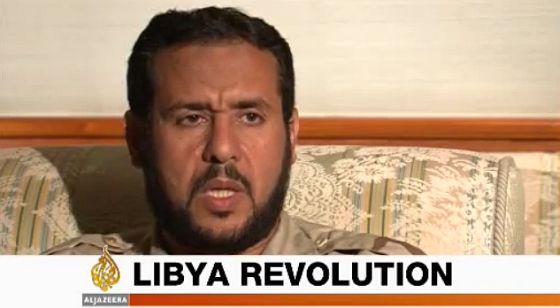
The overthrow of Gaddafi has brought together strange allies, but few stranger than Abdulhakim Belhaj, the military commander of all rebel military forces in Tripoli, and Nato. An Islamist whom Gaddafi tried to have the US list as a terrorist, Mr Belhaj says he was tortured by CIA agents after being arrested in the Far East in 2004 and later handed over by them to Colonel Gaddafi for further torture and imprisonment in Libya.

Mr Belhaj, the head of the military council for Tripoli, who led an Islamist guerrilla organisation fighting the Gaddafi regime in the 1990s, told The Independent in an interview that he had been directly “tortured by CIA agents” in Thailand after being first arrested in Malaysia.

If true, his story is evidence of the close co-operation between the CIA and Colonel Gaddafi’s security services after the Libyan leader denounced the 9/11 attacks. After his stint in the hands of the CIA, Mr Belhaj was kept in Abu Salim prison in Tripoli. He says: “I was in prison for seven years during which I was subjected to torture as well as solitary confinement. I was even denied a shower for three years.” Other Libyan Islamist prisoners have related how they were sometimes taken from Abu Salim to be questioned by US officials in Tripoli.

Released from prison in 2010, Mr Belhaj, who had military experience from fighting in Afghanistan against the Russians in the 1980s, became one of the most effective rebel military commanders. He is said by diplomats to have played a crucial role in the capture of Tripoli at the end of last month, and is highly regarded by the chairman of the Transitional National Council (TNC), Mustafa Abdul Jalil.

Ironically, given his claims of previous mistreatment at US hands, Mr Belhaj has emerged as one of Nato’s most important allies during their air campaign in support of the rebels over the last six months. Speaking in his headquarters in the Mitiga military airbase on the eastern outskirts of Tripoli, he forcefully denied that he and the Libyan Islamic Fighting Group (LIFG), which he helped found in 1995, had ever been allied to al-Qa’ida.

“We never had any link to al-Qa’ida,” said Mr Belhaj, a short, soft-spoken, bearded man, who does not use a military title. “We never took part in global jihad. The fact that we were in the same country, Afghanistan, [as al-Qa’ida] does not mean we had the same goal.” He stresses that the sole aim of the LIFG was always to overthrow Gaddafi.

Despite his current close co-operation with Nato, Mr Belhaj says he finds it difficult to forgive his treatment by the CIA in the past.

When first detained at an airport in Malaysia in 2004 he says he was with his wife: “She was six months pregnant and she suffered a lot.”

After a few days, CIA agents took him to Thailand as part of the notorious rendition process by which the agency transferred prisoners to countries where security forces were known to use torture. He says that in Thailand CIA agents took a direct part in his torture, though he did not give details. He says that “if I ever have the chance I will take legal action” against those responsible.

The disclosure of Libya’s intelligence files may reveal embarrassing details of co-operation between the CIA and other Western intelligence agencies with Gaddafi’s brutal and ruthless security services in pursuit of Islamist opponents. Mr Belhaj says that in the wake of 9/11, the US administration reacted by pursuing “any organisation with an Islamic agenda”.

Mr Belhaj spent seven years in Abu Salim prison which was the site of the Gaddafi regime’s most infamous atrocity, the massacre of some 1,200 prisoners in 1999, almost all of them Islamists, who had protested against conditions. The first protests which ushered in the uprising in Benghazi this February was by lawyers representing the families of the dead Abu Salim prisoners.

The Libyan prison was run with great savagery even against those whose offences were minor. Students accused of being excessively religious were stripped naked and attacked by dogs. Prisoners who survived might spend decades without seeing their families. In Abu Salim, Mr Belhaj helped write a 419-page document, published in 2009, which repudiated the Jihadi doctrine of holy war and the use of violence to change regimes. The name of the LIFG was changed to the Libyan Islamic Movement for Change. The ideological change, spurred by the failure of radical Islamic groups fighting on their own to overthrow governments, led to Islamists seeking the co-operation of more secular and liberal groups also opposed to Arab police states. It is these popular front coalitions that have won victories in Tunisia, Egypt and now Libya.

The New York Times reports on evidence gathered from the bombed ruins of Gaddafi’s intelligence headquarters in Tripoli that corroborates Belhaj’s account.

When Libyans asked to be sent Abu Abdullah al-Sadiq, another member of the [Libyan Islamic Fighting G]roup, a [CIA] case officer wrote back on March 4, 2004, that “we are committed to developing this relationship for the benefit of both our services,” and promised to do their best to locate him.

Two days later, an officer faxed the Libyans to say that Mr. Sadiq and his pregnant wife were planning to fly into Malaysia, and the authorities there agreed to put them on a British Airways flight to London that would stop in Bangkok. “We are planning to take control of the pair in Bangkok and place them on our aircraft for a flight to your country,” the case officer wrote.

Mr. Bouckaert of Human Rights Watch said he had learned from the documents that Sadiq was a nom de guerre for Abdel Hakim Belhaj, who is now a military leader for the rebels.

In an interview [with The Independent — see above] on Wednesday, Mr. Belhaj gave a detailed description of his incarceration that matched many of those in the documents. He also said that when he was held in Bangkok he was tortured by two people from the C.I.A.

Facebooktwittermail

Evidence that former Bush official David Welch and US Rep. Dennis Kucinich tried to help Gaddafi retain power — updated

(Update below)
Jamal Elshayyal visited Libya’s intelligence headquarters in Tripoli, much of which were destroyed in NATO airstrikes.

I managed to smuggle away some documents, among them some that indicate the Gaddafi regime, despite its constant anti-American rhetoric – maintained direct communications with influential figures in the US.

I found what appeared to be the minutes of a meeting between senior Libyan officials – Abubakr Alzleitny and Mohammed Ahmed Ismail – and David Welch, the former assistant secretary of state who served under George W Bush and the man who brokered the deal which restored diplomatic relations between the US and Libya in 2008.

Welch now works for Bechtel, a multinational American company with billion dollar construction deals across the Middle East. The documents record that, on August 2, 2011, David Welch met with Gaddafi’s officials at the Four Seasons Hotel in Cairo, just a few blocks from the US embassy there.

During that meeting Welch advised Gaddafi’s team on how to win the propaganda war – suggesting several “confidence building measures”, the documents said. The documents appear to indicate that an influential US political personality was advising Gaddafi on how to beat the US and NATO.

Minutes of this meeting note his advice on how to undermine Libya’s rebel movement, with the potential assistance of foreign intelligence agencies, including Israel. “Any information related to al-Qaeda or other terrorist extremist organisations should be found and given to the American administration but only via the intelligence agencies of either Israel, Egypt, Morroco, or Jordan… America will listen to them… It’s better to receive this information as if it originated from those countries…”

The papers also document that Welch advised Gaddafi’s regime to take advantage of the current unrest in Syria, pointing out: “The importance of taking advantage of the Syrian situation particularly regarding the double-standard policy adopted by Washington… the Syrians were never your friends and you would loose nothing from exploiting the situation there in order to embarrass the West.”

Despite this apparent encouragement to Gaddafi of going on a propaganda campaign at the expense of Syria, the documents claim Welch attacked Qatar, describing Doha’s actions as “cynical” and an attempt to divert attention from the unrest in Bahrain.

The documents claims that Welch went on to propose the following solution to the crisis which he said many would support in the US administration; Gaddafi “should step aside” but “not necessarily relinquish all his powers”. This advice is a clear contradiction to public demands from the White House that Gaddafi must be removed.

According to the document, as the meeting closed, Welch promised: “To convey everything to the American administration, the congress and other influential figures.” But it appears that David Welch was not the only prominent American giving help to Gaddafi as NATO and the rebel army were locked in battle with his regime.

On the floor of the intelligence chief’s office lay an envelope addressed to Gaddafi’s son Saif Al-Islam. Inside, I found what appears to be a summary of a conversation between US congressman Denis Kucinich, who publicly opposed US policy on Libya, and an intermediary for the Libyan leader’s son.

It details a request by the congressman for information he needed to lobby American lawmakers to suspend their support for the Libyan National Transitional Council (NTC) and to put an end to NATO airstrikes. According to the document, Kucinich wanted evidence of corruption within the NTC and, like his fellow countryman Welch, any possible links within rebel ranks to al-Qaeda.

The document also lists specific information needed to defend Saif Al-Islam, who is currently on the International Criminal Court’s most wanted list.

Update: Al Jazeera:

A spokesperson for the US state department said that David Welch is “a private citizen” who was on a “private trip” and that he did not carry “any messages from the US government”. Welch has not responded to Al Jazeera‘s requests for comment.

Dennis Kucinich issued a statement to the Atlantic Wire stating: “Al Jazeera found a document written by a Libyan bureaucrat to other Libyan bureaucrats. All it proves is that the Libyans were reading the Washington Post… I can’t help what the Libyans put in their files… Any implication I was doing anything other than trying to bring an end to an unauthorised war is fiction.”

The document connected to Welch can be read here.

The document connected to Kucinich can be read here.

Facebooktwittermail

White House guidelines on 9/11 messaging — don’t mention Baghdad

The New York Times in its Izvestia-like role as mouthpiece for the White House, shares some of the guidelines that have been sent to government officials with directions on how they should talk about 9/11, as its tenth anniversary approaches. Goodness knows what any of them might say if they were not provided with clear instructions on how to speak and think.

The documents being reported on have been distributed to hundreds, perhaps thousands of officials. They are referred to as “internal documents” which leads me to doubt that they are even classified as confidential, yet the Times, prissy as ever, didn’t publish the documents — merely quoted from them liberally.

There are two sets of guidelines — one on how American officials should communicate with other Americans and the other on how to talk to everyone else.

[T]he guidelines aimed at foreign audiences … call on American officials to praise overseas partners and their citizens, who have joined the worldwide effort to combat violent extremism.

“As we commemorate the citizens of over 90 countries who perished in the 9/11 attacks, we honor all victims of terrorism, in every nation around the world,” the overseas guidelines state. “We honor and celebrate the resilience of individuals, families, and communities on every continent, whether in New York or Nairobi, Bali or Belfast, Mumbai or Manila, or Lahore or London.”

Bali or Belfast?

There was a much more obvious city beginning with “B” to couple with Bali.

Baghdad.

After all, more innocent civilians have died in terrorist attacks in that city alone in the last decade than in every other location on the planet where attacks have occurred.

Of course the subject of terrorism in Iraq is awkward for Americans since the lines between terrorism and warfare so often became blurred on an American-made battlefield that quickly became a terrorist training ground.

The report notes:

Some senior administration officials involved in the discussions noted that the tone set on this Sept. 11 should be shaped by a recognition that the outpouring of worldwide support for the United States in the weeks after the attacks turned to anger at some American policies adopted in the name of fighting terror — on detention, on interrogation, and the decision to invade Iraq.

So what tangible form does that recognition take?

Everyone should maintain a polite silence about Iraq. Oh… and don’t mention al Qaeda either. With bin Laden dead, al Qaeda is totally passé.

Let’s focus on the future (“present a positive, forward-looking narrative”) while we remember the past.

Facebooktwittermail

Counter-terrorism Inc. — How the US government funds America’s booming security industry

The Los Angeles Times reports:

On the edge of the Nebraska sand hills is Lake McConaughy, a 22-mile-long reservoir that in summer becomes a magnet for Winnebagos, fishermen and kite sailors. But officials here in Keith County, population 8,370, imagined this scene: an Al Qaeda sleeper cell hitching explosives onto a ski boat and plowing into the dam at the head of the lake.

The federal Department of Homeland Security gave the county $42,000 to buy state-of-the-art dive gear, including full-face masks, underwater lights and radios, and a Zodiac boat with side-scan sonar capable of mapping wide areas of the lake floor.

Up on the lonely prairie, Cherry County, population 6,148, got thousands of federal dollars for cattle nose leads, halters and electric prods — in case terrorists decided to mount biological warfare against cows.

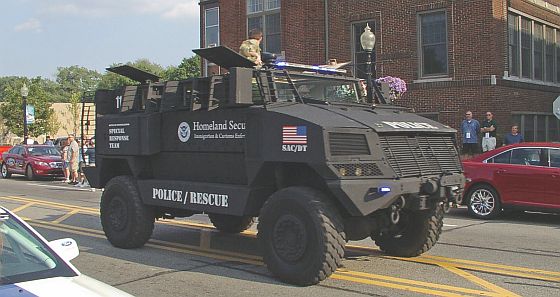
In the Los Angeles suburb of Glendale, where police fear militants might be eyeing DreamWorks Animation or the Disney creative campus, a $205,000 Homeland Security grant bought a 9-ton BearCat armored vehicle, complete with turret. More than 300 BearCats — many acquired with federal money — are now deployed by police across the country; the arrests of methamphetamine dealers and bank robbers these days often look much like a tactical assault on insurgents in Baghdad.

A decade after the Sept. 11, 2001, attacks on the World Trade Center and the Pentagon, federal and state governments are spending about $75 billion a year on domestic security, setting up sophisticated radio networks, upgrading emergency medical response equipment, installing surveillance cameras and bombproof walls, and outfitting airport screeners to detect an ever-evolving list of mobile explosives.

But how effective has that 10-year spending spree been?

“The number of people worldwide who are killed by Muslim-type terrorists, Al Qaeda wannabes, is maybe a few hundred outside of war zones. It’s basically the same number of people who die drowning in the bathtub each year,” said John Mueller, an Ohio State University professor who has written extensively about the balance between threat and expenditures in fighting terrorism.

“So if your chance of being killed by a terrorist in the United States is 1 in 3.5 million, the question is, how much do you want to spend to get that down to 1 in 4.5 million?” he said.

One effect is certain: Homeland Security spending has been a pump-primer for local governments starved by the recession, and has dramatically improved emergency response networks across the country.

An entire industry has sprung up to sell an array of products, including high-tech motion sensors and fully outfitted emergency operations trailers. The market is expected to grow to $31 billion by 2014.

Like the military-industrial complex that became a permanent and powerful part of the American landscape during the Cold War, the vast network of Homeland Security spyware, concrete barricades and high-tech identity screening is here to stay. The Department of Homeland Security, a collection of agencies ranging from border control to airport security sewn quickly together after Sept. 11, is the third-largest Cabinet department and — with almost no lawmaker willing to render the U.S. less prepared for a terrorist attack — one of those least to fall victim to budget cuts.

The expensive and time-consuming screening now routine for passengers at airport boarding gates has detected plenty of knives, loaded guns and other contraband, but it has never identified a terrorist who was about to board a plane. Only 14 Americans have died in about three dozen instances of Islamic extremist terrorist plots targeted at the U.S. outside war zones since 2001 — most of them involving one or two home-grown plotters.

Homeland Security officials say there is no way to compute how many lives might have been lost had the nation’s massive security apparatus not been put into place — had the would-be bombers not been arrested before they struck, or deterred from getting on a plane because it was too hard.

“We know that they study our security measures, we know they’re continuously looking for ways to get around them, and that’s a disincentive for someone to carry out an attack,” said John Cohen, the department’s deputy counter-terrorism coordinator.

“Another way of asking the question is: Has there been a U.S. airplane that has exploded?”

State and local emergency responders have undergone a dramatic transformation with the aid of $32 billion that has been dispensed in Homeland Security grants since 2002, much of it in the early years spent on Hollywood-style tactical gear, often with little connection between risk and outlay.

“After 9/11, it was literally like my mother running out the door with the charge card,” said Al Berndt, assistant director of the Emergency Management Agency in Nebraska, which has received $163.7 million in federal anti-terrorism and emergency aid grants. “What we really needed to be doing is saying, ‘Let’s identify the threat, identify the capability and capacity you already have, and say, OK, what’s the shortfall now, and how do we meet it?’ ”

The spending has been rife with dubious expenditures, including the $557,400 in rescue and communications gear that went to the 1,500 residents of North Pole, Alaska, and a $750,000 anti-terrorism fence — fashioned with 8-foot-high ram-proof wrought iron reinforced with concrete footers — built around a Veterans Affairs hospital in the pastoral hills outside Asheville, N.C.

West Virginia got $3,000 worth of lapel pins and billed the federal government for thousands of dollars in cellphone charges, according to the Center for Investigative Reporting, which compiled a state-by-state accounting of Homeland Security spending. In New York, $3 million was spent on automated public health records to help identify bioterrorism threats, but investigators for the department’s inspector general in 2008 found that employees who used the program weren’t even aware of its potential bioterrorism applications.

Facebooktwittermail

How the NYPD, with the CIA’s help, became one of the country’s most aggressive domestic intelligence agencies

Mark LeVine writes:

Only two weeks before the 10th anniversary of the September 11, 2001 attacks, the Associated Press has broken a story that reminds us of just how much America has changed during the last decade, and how the government – and as important, some of the country’s most powerful corporations – routinely intrude into the lives of communities and individuals in a manner that would few would have thought imaginable the day before the planes struck the World Trade Center.

After a lengthy investigation, the Associated Press has published a story detailing a highly secretive decade-long relationship between the CIA and the New York Police Department (NYPD), in which the two agencies have worked together in “a massive covert programme to monitor the Muslim communities” living in the New York metropolitan area and surrounding regions.

The program is troubling for a host of reasons. It involves potentially serious violations of federal law, including First Amendment protections. Morever, it bears a strong resemblance to programs launched during the Civil Rights and Vietnam era, which saw techniques, technologies and even personnel from the US military and intelligence communities deployed against citizens within the United States.

When military tactics and strategies drawn from the front lines of war are applied to radically different contexts, the results are rarely beneficial to the health of a democracy.

According to the AP report, “The [NYPD] has dispatched teams of undercover officers, known as ‘rakers,’ into minority neighborhoods as part of a human mapping program, according to officials directly involved in the program. They’ve monitored daily life in bookstores, bars, cafes and nightclubs. Police have also used informants, known as ‘mosque crawlers,’ to monitor sermons, even when there’s no evidence of wrongdoing. NYPD officials have scrutinized imams and gathered intelligence on cab drivers and food cart vendors, jobs often done by Muslims. Many of these operations were built with help from the CIA, which is prohibited from spying on Americans but was instrumental in transforming the NYPD’s intelligence unit.”

Despite such prohibitions on spying on Americans, the NYPD and CIA have built a “partnership that has blurred the bright line between foreign and domestic spying.” The relationship has included a senior, active-duty CIA officer being hired by the NYPD to set up its intelligence programmes and another senior officer working as a “clandestine operative” inside police headquarters, and the CIA training of at least one police detective at the agency’s spy school.

Having watched the World Trade Center fall with my own eyes and then had to cope with a newborn son breathing in the soot and toxin-tainted air for weeks after, it’s hard not to sympathize with the NYPD’s willingness to “push the envelope” of police procedures in order to protect New Yorkers from a similar attack. It’s also hard not to agree with the assessment by NY cops that they can never again rely on the federal government to protect New York and therefore must become an active player in gathering and acting on intelligence that might affect the city’s eight million citizens.

Indeed, the NYPD’s “success” in these operations points out the weakness that still hampers effective intelligence work by the American intelligence community: Most CIA officers are white men who could never blend into a Muslim community; but the NYPD’s 34,000 officers reflect the ethnic and religious mosaic of New York, providing it with a host of Arab and South Asian officers who speak the languages and intimately know the cultures, making it much easier for them, effectively, to spy on their communities.

And it’s clear that this is what the NYPD is doing, having become, in the AP‘s words, “one of the country’s most aggressive domestic intelligence agencies.” Intelligence-read, spy-agencies spy; they aren’t set up primarily to look for evidence of crimes, but to gather intelligence, knowledge that might later be useful do shape policies or influence the behaviour of the groups or communities being surveilled.

Police are supposed to monitor citizens only to the extent there is evidence or sufficient suspicion of criminal activity or its planning. But the AP reports that in many cases members of the unit go out of their way not to have their information, or even their existence, brought to a court of law.

Simply put, if the intelligence that the NYPD intelligence unit is gathering is not useful to the judicial process, then it’s not police work, it’s spying. If Americans think being spied on by their government isn’t such a big deal, they can talk to the millions of Arabs who’ve rebelled in good measures because of decades of such practices, or the citizens of former Communist countries in Eastern Europe. All of these governments also justified spying with the need to “protect” the state and citizens from potentially dangerous people. But it always ends the same way.

Facebooktwittermail

Army vet with PTSD sought the treatment he needed by taking hostages — but got jail instead

Stars and Stripes reports:

“I’m Robert Anthony Quinones, but my friends call me Q,” the former Army sergeant told the ER medic as he pointed a 9 mm handgun at the medic’s head.

“Can I call you Q?” asked the nervous medic, Sgt. Hubert Henson.

“Yeah.”

“OK,” Henson replied. “Well, Q, if you put the gun away, I can take you upstairs to behavioral health to get help.”

Quinones scoffed, instead ordering Henson to carry his three bags: a shaving kit, a duffel stuffed with clothes and books, and a backpack bulging with two assault rifles, a .38-caliber handgun, knives and ammunition.

Fifteen months of carnage in Iraq had left the 29-year-old debilitated by post-traumatic stress disorder. But despite his doctor’s urgent recommendation, the Army failed to send him to a Warrior Transition Unit for help. The best the Department of Veterans Affairs could offer was 10-minute therapy sessions — via videoconference.

So, early on Labor Day morning last year, after topping off a night of drinking with a handful of sleeping pills, Quinones barged into Fort Stewart’s hospital, forced his way to the third-floor psychiatric ward and held three soldiers hostage, demanding better mental health treatment.

“I’ve done it the Army’s way,” Quinones told Henson. “We’re going to do it my way now.”

The standoff ended after two hours without any injuries, but Quinones’ problems were only beginning.

While in custody, Quinones threatened the lives of President Barack Obama and former President Bill Clinton, making his already bleak situation worse. Now he’s sitting in a jail cell awaiting his fate on a litany of federal charges while a court sorts out whether he should be prosecuted or committed.

Quinones’ story is one of an ordinary soldier who went off to war, came home broken, and then went over the edge after the government didn’t do enough to fix him. Even the three soldiers held at the point of Quinones’ guns today express more empathy than animosity for their captor.

To them, what Quinones did that day was the ultimate cry for help.

Facebooktwittermail

Hold Israel accountable with Leahy law

Josh Ruebner writes:

Apologists for Israeli occupation and apartheid claim that advocates for holding Israel accountable for its human rights abuses of Palestinians are “singling Israel out for extra scrutiny” or “holding Israel to a higher standard than other countries.”

Yet, ironically, Israel’s supporters also claim that U.S. military aid to Israel is sacrosanct and, unlike every other governmental program on the chopping block these days, cannot be questioned due to the “special U.S.-Israeli relationship.” Dan Carle, a spokesperson for Sen. Patrick Leahy (D-Vt.), has noted correctly that you cannot have your cake and eat it too.

In response to an article in the Israeli newspaper Ha’aretz suggesting that the Vermont Senator will attempt to apply sanctions to certain units of the Israeli military for human rights violations, Carle explained that “the [Leahy] law applies to U.S. aid to foreign security forces around the globe and is intended to be applied consistently across the spectrum of U.S. military aid abroad. Under the law the State Department is responsible for evaluations and enforcement decisions and over the years Senator Leahy has pressed for faithful and consistent application of the law.”

The possibility of Senator Leahy consistently applying this eponymous legislation and holding Israel to the exact same standard as every other country has Israeli Defense Minister Ehud Barak, whose office may have leaked the story in an effort to kill the initiative, in a tizzy.

The “Leahy Law,” as it is commonly known, prohibits the United States from providing any weapons or training to “any unit of the security forces of a foreign country if the Secretary of State has credible evidence that such unit has committed gross violations of human rights.” In the past, this law has been invoked to curtail military aid to countries as diverse as Indonesia, Colombia, Pakistan, and the Philippines. Along with other provisions in the Foreign Assistance Act, of which it is a part, and the Arms Export Control Act, it forms the basis of an across-the-board policy that is supposed to ensure that U.S. assistance does not contribute to human rights abuses.

Ha’aretz reports that the Senator is looking to invoke this prohibition regarding “Israel Navy’s Shayetet 13 unit, the undercover Duvdevan unit and the Israel Air Force’s Shaldag unit.” The inclusion of specific units in the story may indicate that Leahy already has findings from the Secretary of State that these Israeli military units have committed human rights abuses.

If so, then this could be a much-overdue watershed in holding accountable Israel, the largest recipient of U.S. military aid, for its gross misuse of U.S. weapons to commit systematic human rights abuses of Palestinians living under Israel’s illegal 44-year military occupation of the West Bank, East Jerusalem, and Gaza Strip.

Facebooktwittermail

U.S. senator seeks to cut aid to Israeli special forces operating in West Bank and Gaza

Haaretz reports:

U.S. Senator Patrick Leahy is promoting a bill to suspend U.S. assistance to three elite Israel Defense Forces units, alleging they are involved in human rights violations in the West Bank and Gaza Strip.

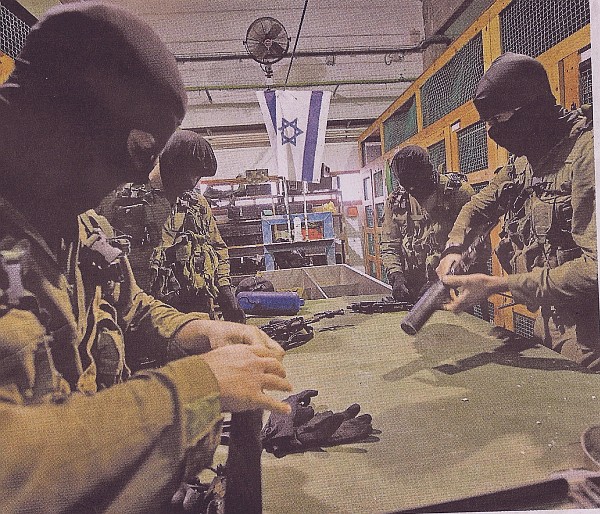
Leahy, a Democrat and senior member of the U.S. Senate, wants assistance withheld from the Israel Navy’s Shayetet 13 unit, the undercover Duvdevan unit and the Israel Air Force’s Shaldag unit.

Defense Minister Ehud Barak, a long-time friend of Leahy’s, met with him in Washington two weeks ago to try to persuade him to withdraw the initiative.

According to a senior Israeli official in Jerusalem, Leahy began promoting the legislation in recent months after he was approached by voters in his home state of Vermont.

A few months ago, a group of pro-Palestinian protesters staged a rally across from Leahy’s office, demanding that he denounce the killing by Shayetet 13 commandos of nine Turkish activists who were part of the flotilla to Gaza last May.

Leahy, who heads the Senate Appropriations Committee’s sub-committee on foreign operations, was the principle sponsor of a 1997 bill prohibiting the United States from providing military assistance or funding to foreign military units suspected of human rights abuses or war crimes. The law also stipulates that the U.S. Defense Department screen foreign officers and soldiers who come to the United States for training for this purpose.

Leahy wants the new clause to become a part of the U.S. foreign assistance legislation for 2012, placing restrictions on military assistance to Israel, particularly to those three units.

Facebooktwittermail

We’ve been warned: the system is ready to blow

From Britain, Larry Elliott writes:

For the past two centuries and more, life in Britain has been governed by a simple concept: tomorrow will be better than today. Black August has given us a glimpse of a dystopia, one in which the financial markets buckle and the cities burn. Like Scrooge, we have been shown what might be to come unless we change our ways.

There were glimmers of hope amid last week’s despair. Neighbourhoods rallied round in the face of the looting. The Muslim community in Birmingham showed incredible dignity after three young men were mown down by a car and killed during the riots. It was chastening to see consumerism laid bare. We have seen the future and we know it sucks. All of which is cause for cautious optimism – provided the right lessons are drawn.

Lesson number one is that the financial and social causes are linked. Lesson number two is that what links the City banker and the looter is the lack of restraint, the absence of boundaries to bad behaviour. Lesson number three is that we ignore this at our peril.

From Washington, Steven Pearlstein writes:

Another great week for Corporate America!

The economy is flatlining. Global financial markets are in turmoil. Your stock price is down about 15 percent in three weeks. Your customers have lost all confidence in the economy. Your employees, at least the American ones, are cynical and demoralized. Your government is paralyzed.

Want to know who is to blame, Mr. Big Shot Chief Executive? Just look in the mirror because the culprit is staring you in the face.

J’accuse, dude. J’accuse.

You helped create the monsters that are rampaging through the political and economic countryside, wreaking havoc and sucking the lifeblood out of the global economy.

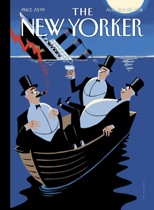
Did you see this week’s cartoon cover of the New Yorker? That’s you in top hat and tails sipping champagne in the lifeboat as the Titanic is sinking. Problem is, nobody thinks it’s a joke anymore.
Did you presume we wouldn’t notice that you’ve been missing in action? I can’t say I was surprised. If you’d insisted on trotting out those old canards again, blaming everything on high taxes, unions, regulatory uncertainty and the lack of free-trade treaties, you would have lost whatever shred of credibility you have left.

My own bill of particulars begins right here in Washington, where over the past decade you financed and supported the growth of a radical right-wing cabal that has now taken over the Republican Party and repeatedly made a hostage of the U.S. government.

When it started out all you really wanted was to push back against a few meddlesome regulators or shave a point or two off your tax rate, but you were concerned it would look like special-interest rent-seeking. So when the Washington lobbyists came up with the clever idea of launching a campaign against over-regulation and over-taxation, you threw in some money, backed some candidates and financed a few lawsuits.

The more successful it was, however, the more you put in — hundreds of millions of the shareholders’ dollars, laundered through once-respected organizations such as the Chamber of Commerce and the National Association of Manufacturers, phoney front organizations with innocent-sounding names such as Americans for a Sound Economy, and a burgeoning network of Republican PACs and financing vehicles. And thanks to your clever lawyers and a Supreme Court majority that is intent on removing all checks to corporate power, it’s perfectly legal.

And from Omaha, Nebraska, Warren Buffett writes:

Our leaders have asked for “shared sacrifice.” But when they did the asking, they spared me. I checked with my mega-rich friends to learn what pain they were expecting. They, too, were left untouched.

While the poor and middle class fight for us in Afghanistan, and while most Americans struggle to make ends meet, we mega-rich continue to get our extraordinary tax breaks. Some of us are investment managers who earn billions from our daily labors but are allowed to classify our income as “carried interest,” thereby getting a bargain 15 percent tax rate. Others own stock index futures for 10 minutes and have 60 percent of their gain taxed at 15 percent, as if they’d been long-term investors.

These and other blessings are showered upon us by legislators in Washington who feel compelled to protect us, much as if we were spotted owls or some other endangered species. It’s nice to have friends in high places.

Last year my federal tax bill — the income tax I paid, as well as payroll taxes paid by me and on my behalf — was $6,938,744. That sounds like a lot of money. But what I paid was only 17.4 percent of my taxable income — and that’s actually a lower percentage than was paid by any of the other 20 people in our office. Their tax burdens ranged from 33 percent to 41 percent and averaged 36 percent.

If you make money with money, as some of my super-rich friends do, your percentage may be a bit lower than mine. But if you earn money from a job, your percentage will surely exceed mine — most likely by a lot.

To understand why, you need to examine the sources of government revenue. Last year about 80 percent of these revenues came from personal income taxes and payroll taxes. The mega-rich pay income taxes at a rate of 15 percent on most of their earnings but pay practically nothing in payroll taxes. It’s a different story for the middle class: typically, they fall into the 15 percent and 25 percent income tax brackets, and then are hit with heavy payroll taxes to boot.

Back in the 1980s and 1990s, tax rates for the rich were far higher, and my percentage rate was in the middle of the pack. According to a theory I sometimes hear, I should have thrown a fit and refused to invest because of the elevated tax rates on capital gains and dividends.

I didn’t refuse, nor did others. I have worked with investors for 60 years and I have yet to see anyone — not even when capital gains rates were 39.9 percent in 1976-77 — shy away from a sensible investment because of the tax rate on the potential gain. People invest to make money, and potential taxes have never scared them off. And to those who argue that higher rates hurt job creation, I would note that a net of nearly 40 million jobs were added between 1980 and 2000. You know what’s happened since then: lower tax rates and far lower job creation.

Facebooktwittermail

State Dept funding neocon-Zionist propaganda outfit

Ali Gharib reports:

On Thursday, the U.S. State Department announced a $200,000 grant to the Middle East Media Research Institute (MEMRI), a Middle East media watchdog closely aligned with U.S. neoconservatives and Israel’s hawkish security establishment and rightist Likud Party. The grant was awarded “to conduct a project that documents anti-Semitism, Holocaust denial and Holocaust glorification in the Middle East.” The announcement continues:

This grant will enable MEMRI to expand its efforts to monitor the media, translate materials into ten languages, analyze trends in anti-Semitism and Holocaust denial and glorification, and increase distribution of materials through its website and other outlets.

Finding examples of anti-Semitism is already a robust MEMRI project and one wonders why exactly they needed the cash: According to publicly available tax filings, MEMRI had nearly $5 million in revenue in 2007 and more than $4.5 million in revenue in 2008.

What’s more troubling, MEMRI has faced accusations of mistranslating items and cherry-picking incendiary sources to portray regional media and attitudes in an overly-negative fashion. One of the most common issues has been with MEMRI’s mistranslations which appear to show anti-Semitism on thin evidence. In 2007, CNN correspondent Atika Shubert checked MEMRI’s translations of a Palestinian children’s program against those provided by the cable news channel’s own interpreters:

Media watchdog MEMRI translates one caller as saying – quote – ‘We will annihilate the Jews.’ But, according to several Arabic speakers used by CNN, the caller actually says ‘The Jews are killing us.’ MEMRI told us it stood by its translation.

In other instances, MEMRI has been accused of twisting translations to portray criticisms of Israel and its driving ideology, Zionism, as anti-Semitic..

Facebooktwittermail

Capitol Hill’s representatives for Israel

Josh Ruebner writes:

Nearly 20 percent of the constituents of Rep. Jesse Jackson, Jr. (D-IL) live under the poverty line, and nearly 15 percent are unemployed. Jackson’s congressional district, covering parts of the south side of Chicago and its southern suburbs, has been hit harder than many others by the crises plaguing the economy. Many of his constituents are looking at even more cutbacks in social services, higher prices for food and fuel, and ever scarcer jobs.

During this August congressional recess, Rep. Jackson, Jr. should be at home, meeting with constituents and proposing to them how he will help them cope with their difficult circumstances. Instead, the politician is proudly gallivanting around Israel, in one of three separate congressional delegations heading there this month on all-expense-paid junkets organized by the American Israel Education Foundation (AIEF), a so-called charitable affiliate of the American Israel Public Affairs Committee (AIPAC), the most influential of the myriad pro-Israel lobbying outfits.

In total, 81 representatives, nearly one-fifth of the entire House, will participate in these jaunts, which, according to The Washington Post, include “a round-trip flight in business class for lawmakers and their spouses (that alone is worth about $8,000), fine hotels and meals, side trips, and transportation and guides.

Of course, these congressional delegations are not all fun and games. Members of Congress will be expected to sing for their lavish dinners by honoring President Bush’s 2007 pledge to provide the Israeli military with $30 billion of tax-payer-funded weapons between 2009 and 2018. So far, proposed increases in military aid to Israel have been spared from the budgetary chopping block by President Obama and a compliant Congress that treats Israeli militarism as more sacrosanct than medical care for seniors. This despite the fact that Israel misuses the funds, in violation of the Arms Export Control Act, to commit human rights abuses against Palestinians living under its illegal 44-year military occupation of the West Bank, East Jerusalem, and Gaza Strip.

Facebooktwittermail

The CIA, lies and intelligence

After a recent speech, John Brennan, a longtime former CIA officer and currently President Obama’s counter-terrorism advisor, took a question from John Hopkins professor of strategic studies, Elliot Cohen, on the US policy of so-called targeted killing. Brennan responded by highlighting the “surgical” precision that Obama has insisted upon when the US chooses its targets.

If there are terrorists who are in an area where there are women and children or others, we do not take such action that might put those innocent men, women and children in danger. In fact I can say that the types of operations that the US has been involved in — in the counter-terrorism realm — that nearly for the past year there hasn’t been a single collateral death because of the exceptional proficiency, precision, of the capabilities that we have been able to develop.

Brennan might have been repeating what he had been told by the CIA and their reports may have stated that in each drone attack over the said period no civilians were knowingly killed. But ignorance is no defense.

Indeed, the CIA’s lack of interest in the truth is evident in the fact that they have been eager to refute the findings on the latest research on civilian casualties from drone attacks on the tribal areas of Pakistan before such findings had even been published.

  • One in seven of all US strikes appear to have resulted in child fatalities.
  • Between 2,292 and 2,863 people have died in the attacks.
  • Since Obama took office, those attacks have occurred on average once every four days.
  • Among those killed only 126 militants have been named.
  • Credible news reports indicate that between 385-775 civilians have been killed, including 164 children.

The New York Times reports:

On May 6, a Central Intelligence Agency drone fired a volley of missiles at a pickup truck carrying nine militants and bomb materials through a desolate stretch of Pakistan near the Afghan border. It killed all the militants — a clean strike with no civilian casualties, extending what is now a yearlong perfect record of avoiding collateral deaths.

Or so goes the United States government’s version of the attack, from an American official briefed on the classified C.I.A. program. Here is another version, from a new report compiled by British and Pakistani journalists: The missiles hit a religious school, an adjoining restaurant and a house, killing 18 people — 12 militants, but also 6 civilians, known locally as Samad, Jamshed, Daraz, Iqbal, Noor Nawaz and Yousaf.

The report, “Drone War Exposed – the complete picture of CIA strikes in Pakistan,” comes from The Bureau of Investigative Journalism.

CIA drone strikes have led to far more deaths in Pakistan than previously understood, according to extensive new research published by the Bureau. More than 160 children are among at least 2,292 people reported killed in US attacks since 2004. There are credible reports of at least 385 civilians among the dead.

In a surprise move, a counter-terrorism official has also released US government estimates of the numbers killed. These state that an estimated 2,050 people have been killed in drone strikes – of whom all but an estimated 50 are combatants.

The Bureau’s fundamental reassessment of the covert US campaign involved a complete re-examination of all that is known about each US drone strike.

The study is based on close analysis of credible materials: some 2,000 media reports; witness testimonies; field reports of NGOs and lawyers; secret US government cables; leaked intelligence documents, and relevant accounts by journalists, politicians and former intelligence officers.

The Bureau’s findings are published in a 22,000-word database which covers each individual strike in Pakistan in detail. A powerful search engine, an extensive timeline and searchable maps accompany the data.

The result is the clearest public understanding so far of the CIA’s covert drone war against the militants. Yet US intelligence officials are understood to be briefing against the Bureau’s work, claiming ‘significant problems with its numbers and methodologies.’

Iain Overton, the Bureau’s editor said: ‘It comes as no surprise that the US intelligence services would attack our findings in this way. But to claim our methodology is problematic before we had even published reveals how they really operate. A revelation that is reinforced by the fact that they cannot bring themselves to refer to non-combatants as what they really are: civilians and, all too often, children’.

The Bureau’s data reveals many more CIA attacks on alleged militant targets than previously reported. At least 291 US drone strikes are now known to have taken place since 2004.

The intended targets – militants in the tribal areas – appear to make up the majority of those killed. There are 126 named militants among the dead since 2004, though hundreds are unknown, low-ranking fighters. But as many as 168 children have also been reported killed among at least 385 civilians.

More than 1,100 people are also revealed to have been injured in the US drone attacks – the first time this number has been collated.

In the wake of the Bureau’s findings Amnesty International has called for more CIA transparency.

But transparency is not what intelligence agencies trade in — “transparency” is for them nothing more than another name for public relations.

Facebooktwittermail

In valley where SEALs died, U.S. raids boost Taliban support

McClatchy reports:

The 30 U.S. soldiers, many of them Navy SEALs, who died Saturday in the U.S. military’s single biggest loss of the Afghan war, were operating in a Taliban-controlled valley where frequent U.S.-led night raids have won the insurgents popular support, area residents said Sunday.

The raids occur “every night. We are very much miserable,” said Roshanak Wardak, a doctor and a former member of the national Parliament. “They are coming to our houses at night.”

Wardak runs a clinic about 3 miles from the rugged Tangi Valley where insurgents early Saturday shot down a helicopter carrying the U.S. troops, an Afghan translator and seven Afghan commandoes.

Night raids have become a significant part of the U.S. strategy aimed at weakening the insurgents and compelling their leaders to accept U.S. and Afghan government offers to hold talks on a political settlement of the decade-old war.

The Taliban have suffered heavy losses in the operations, which have soared since last year to an average of 340 per month, according to a Western intelligence official, who requested anonymity in order to discuss the issue.

There has been no apparent progress toward convening peace talks, but U.S. commanders defend the raids as effective in eliminating and capturing insurgents, and gaining intelligence that leads to other militants and arms caches.

“Eight-five percent are shots not fired, when you’re talking about night raids and disruption,” said the Western intelligence official. “Over 50 percent of the time they hit the target that they’re after, which shows the intelligence has been accurate.”

Afghan commandoes participate in all such operations, he added.

The tactic, however, has proven highly controversial with ordinary Afghans amid charges that they claim civilian lives. President Hamid Karzai has demanded that they stop.

Residents of the Tangi Valley area, in eastern Wardak Province, about 60 miles southwest of Kabul, issued similar complaints about the night raids in their vicinity, charging that they have killed civilians, disrupted their lives and fueled popular support for the Taliban.

“There are night raids every day or every other day,” said a second doctor who asked not to be identified because he feared for his safety. He said he lives about 100 yards from the parched riverbed where the U.S. Chinook helicopter crashed.

“The Americans are committing barbaric acts in the area and this is the reason that the Taliban have influence,” he said.

Facebooktwittermail

When Truman opened the nuclear era — with a lie

Greg Mitchell writes:

On August 6, 1945, President Harry S. Truman faced the task of telling the press, and the world, that America’s crusade against fascism had culminated in exploding a revolutionary new weapon of extraordinary destructive power over a Japanese city.

It was vital that this event be understood as a reflection of dominant military power and at the same time consistent with American decency and concern for human life. Everyone involved in preparing the presidential statement sensed that the stakes were high, for this marked the unveiling of both the atomic bomb and the official narrative of Hiroshima.

When the astonishing news emerged that morning, exactly sixty-six years ago, it took the form of a routine press release, a little more than a thousand words long. President Truman was at sea a thousand miles away, returning from the Potsdam conference. Shortly before eleven o’clock, an information officer from the War Department arrived at the White House bearing bundles of press releases. A few minutes later, assistant press secretary Eben Ayers began reading the president’s announcement to about a dozen members of the Washington press corps.

The atmosphere was so casual, and the statement so momentous, that the reporters had difficulty grasping it. “The thing didn’t penetrate with most of them,” Ayers later remarked. Finally, they rushed to call their editors, and at least one reporter found a disbeliever at the other end of the line. The first few sentences of the statement set the tone:

“Sixteen hours ago an American airplane dropped one bomb on Hiroshima, an important Japanese Army base. That bomb had more power than 20,000 tons of TNT.… The Japanese began the war from the air at Pearl Harbor. They have been repaid many fold.… It is an atomic bomb. It is a harnessing of the basic power of the universe.”

Although details were modified at the last moment, Truman’s four-page statement had been crafted with considerable care over many months. If use of the atomic bomb was inherent in its invention, an announcement of this sort was inevitable. Only the timing was in doubt.

From its very first words, however, the official narrative was built on a lie. Hiroshima was not an “army base” but a city of 350,000. It did contain one important military base, but the bomb had been aimed at the very center of a city (and far from its industrial area). This was a continuation of the American policy of bombing civilian populations in Japan to undermine the morale of the enemy. It was also to take advantage of what those who picked the targed called the special “focusing effect” provided by the hills which surrounded the city on three sides. This would allow the blast to bounce back on the city, destroying more of it, and its citizens.

The vast majority of the dead in Hiroshima would not be military personnel and defense workers but women and children.

There was something else missing in Truman’s announcement: because the president in his statement failed to mention radiation effects, which officials knew were horrendous, the imagery of just a bigger bomb would prevail in the press. Truman described the new weapon as “revolutionary” but only in regard to the destruction it could cause, failing to mention its most lethal new feature: radiation.

Many Americans first heard the news from the radio, which broadcast the text of Truman’s statement shortly after its release. The afternoon papers quickly arrived with banner headlines: “Atom Bomb, World’s Greatest, Hits Japs!” and “Japan City Blasted by Atomic Bomb.” The Pentagon had released no pictures, so most of the newspapers relied on maps of Japan with Hiroshima circled.

By that evening, radio commentators were weighing in with observations that often transcended Truman’s announcement, suggesting that the public imagination was outrunning the official story. Contrasting emotions of gratification and anxiety had already emerged. H.V. Kaltenhorn warned, “We must assume that with the passage of only a little time, an improved form of the new weapon we use today can be turned against us.”

It wasn’t until the following morning, August 7, that the government’s press offensive appeared, with the first detailed account of the making of the atomic bomb, and the Hiroshima mission. Nearly every US newspaper carried all or parts of fourteen separate press releases distributed by the Pentagon several hours after the president’s announcement. They carried headlines such as: “Atom Bombs Made in 3 Hidden Cities” and “New Age Ushered.”

Many of them written by one man: W.L. Laurence, a Pulitzer Prize–winning reporter for the New York Times, “embedded” with the atomic project. General Leslie Groves, military director of the Manhattan Project, would later reflect, with satisfaction, that “most newspapers published our releases in their entirety. This is one of the few times since government releases have become so common that this has been done.”

Facebooktwittermail

After historic downgrade, U.S. must address its chronic debt problems

A commentary in China’s official Xinhua News Agency says:

The days when the debt-ridden Uncle Sam could leisurely squander unlimited overseas borrowing appeared to be numbered as its triple A-credit rating was slashed by Standard & Poor’s (S&P) for the first time on Friday.

Though the U.S. Treasury promptly challenged the unprecedented downgrade, many outside the United States believe the credit rating cut is an overdue bill that America has to pay for its own debt addition and the short-sighted political wrangling in Washington.

Dagong Global, a fledgling Chinese rating agency, degraded the U.S. treasury bonds late last year, yet its move was met then with a sense of arrogance and cynicism from some Western commentators. Now S&P has proved what its Chinese counterpart has done is nothing but telling the global investors the ugly truth.

China, the largest creditor of the world’s sole superpower, has every right now to demand the United States to address its structural debt problems and ensure the safety of China’s dollar assets.

To cure its addiction to debts, the United States has to reestablish the common sense principle that one should live within its means.

Facebooktwittermail