The Federal Bureau of Investigation is permitted to include people on the government’s terrorist watch list even if they have been acquitted of terrorism-related offenses or the charges are dropped, according to newly released documents.
The files, released by the F.B.I. under the Freedom of Information Act, disclose how the police are instructed to react if they encounter a person on the list. They lay out, for the first time in public view, the legal standard that national security officials must meet in order to add a name to the list. And they shed new light on how names are vetted for possible removal from the list.
Inclusion on the watch list can keep terrorism suspects off planes, block noncitizens from entering the country and subject people to delays and greater scrutiny at airports, border crossings and traffic stops.
The database now has about 420,000 names, including about 8,000 Americans, according to the statistics released in connection with the 10th anniversary of the Sept. 11 attacks. About 16,000 people, including about 500 Americans, are barred from flying.
Timothy J. Healy, the director of the F.B.I.’s Terrorist Screening Center, which vets requests to add or remove names from the list, said the documents showed that the government was balancing civil liberties with a careful, multilayered process for vetting who goes on it — and for making sure that names that no longer need to be on it came off.
“There has been a lot of criticism about the watch list,” claiming that it is “haphazard,” he said. “But what this illustrates is that there is a very detailed process that the F.B.I. follows in terms of nominations of watch-listed people.”
Still, some of the procedures drew fire from civil liberties advocates, including the Electronic Privacy Information Center, which made the original request and provided the documents to The New York Times.
A group of American military officers and Afghan officials had just finished a five-hour meeting with their Pakistani hosts in a village schoolhouse settling a border dispute when they were ambushed — by the Pakistanis.
An American major was killed and three American officers were wounded, along with their Afghan interpreter, in what fresh accounts from the Afghan and American officers who were there reveal was a complex, calculated assault by a nominal ally. The Pakistanis opened fire on the Americans, who returned fire before escaping in a blood-soaked Black Hawk helicopter.
The attack, in Teri Mangal on May 14, 2007, was kept quiet by Washington, which for much of a decade has seemed to play down or ignore signals that Pakistan would pursue its own interests, or even sometimes behave as an enemy.
The reconstruction of the attack, which several officials suggested was revenge for Afghan or Pakistani deaths at American hands, takes on new relevance given the worsening rupture in relations between Washington and Islamabad, which has often been restrained by Pakistan’s strategic importance.
But untangling the Islamophobic thread woven into the FBI’s counterterrorism training culture won’t be easy. In addition to inflammatory seminars which likened Islam to the Death Star and Mohammed to a “cult leader,” Danger Room has obtained more material showing just how wide the anti-Islam meme has spread throughout the Bureau.
The FBI library at Quantico currently stacks books from authors who claim that “Islam and democracy are totally incompatible.” The Bureau’s private intranet recently featured presentations that claimed to demonstrate the “inherently violent nature of Islam,” according to multiple sources. Earlier this year, the Bureau’s Washington Field Office welcomed a speaker who claimed Islamic law prevents Muslims from being truly loyal Americans. And as recently as last week, the online orientation material for the FBI’s Joint Terrorism Task Forces included claims that Sunni Islam seeks “domination of the world,” according to a law enforcement source.
“I don’t think anyone with half a brain would paint 1.2 billion people of any ethnic or religious persuasion with a single brushstroke,” Mike Rolince, an FBI counterterrorism veteran who started Boston’s JTTF, tells Danger Room. “Who did they run that curriculum by — either an internal or outside expert — to get some balance?”
We are living in the State of Exception. We don’t know when it will end, as we don’t know when the War on Terror will end. But we all know when it began. We can no longer quite “remember” that moment, for the images have long since been refitted into a present-day fable of innocence and apocalypse: the perfect blue of that late summer sky stained by acrid black smoke. The jetliner appearing, tilting, then disappearing into the skin of the second tower, to emerge on the other side as a great eruption of red and yellow flame. The showers of debris, the falling bodies, and then that great blossoming flower of white dust, roiling and churning upward, enveloping and consuming the mighty skyscraper as it collapses into the whirlwind.
To Americans, those terrible moments stand as a brightly lit portal through which we were all compelled to step, together, into a different world. Since that day ten years ago we have lived in a subtly different country, and though we have grown accustomed to these changes and think little of them now, certain words still appear often enough in the news—Guantánamo, indefinite detention, torture—to remind us that ours remains a strange America. The contours of this strangeness are not unknown in our history—the country has lived through broadly similar periods, at least half a dozen or so, depending on how you count; but we have no proper name for them. State of siege? Martial law? State of emergency? None of these expressions, familiar as they may be to other peoples, falls naturally from American lips.
What are we to call this subtly altered America? Clinton Rossiter, the great American scholar of “crisis government,” writing in the shadow of World War II, called such times “constitutional dictatorship.” Others, more recently, have spoken of a “9/11 Constitution” or an “Emergency Constitution.” Vivid terms all; and yet perhaps too narrowly drawn, placing as they do the definitional weight entirely on law when this state of ours seems to have as much, or more, to do with politics—with how we live now and who we are as a polity. This is in part why I prefer “the state of exception,” an umbrella term that gathers beneath it those emergency categories while emphasizing that this state has as its defining characteristic that it transcends the borders of the strictly legal—that it occupies, in the words of the philosopher Giorgio Agamben, “a position at the limit between politics and law…an ambiguous, uncertain, borderline fringe, at the intersection of the legal and the political.”
Call it, then, the state of exception: these years during which, in the name of security, some of our accustomed rights and freedoms are circumscribed or set aside, the years during which we live in a different time. This different time of ours has now extended ten years—the longest by far in American history—with little sense of an ending. Indeed, the very endlessness of this state of exception—a quality emphasized even as it was imposed—and the broad acceptance of that endlessness, the state of exception’s increasing normalization, are among its distinguishing marks.
An Afghan gunman late Sunday killed one American citizen and wounded another at what is reported to be the Central Intelligence Agency’s offices in Kabul.
The two American citizens came under fire by a “lone Afghan employee” in an “annex of the U.S. Embassy” in Kabul, said Embassy spokesman Gavin Sundwall. Mr. Sundwall wouldn’t comment on whether the shootout involved CIA employees or occurred at the CIA’s Kabul offices.
A western security official in Kabul said the Afghan attacker “had the trust” of the CIA employees in the compound, and was possibly an informant, which is why he was allowed into the annex and had access to a gun. It wasn’t clear if he was searched before entering the building.
The western security official said the gunman late Sunday may have gotten on the roof of the CIA building, where he fired on the nearby U.S. Embassy.
Sunday night’s attack comes less than two weeks after Afghan insurgents occupied a building under construction and fired rocket-propelled grenades at the U.S. Embassy. About a half-dozen rockets penetrated the Embassy’s fortified walls and several more hit within the U.S.-led military coalition’s headquarters in Kabul. The attack lasted for about 20 hours.
The Palestinian Authority’s bid to the United Nations for Palestinian statehood is, at least in theory, supposed to circumvent the failed peace process. But in two crucial respects, the ill-conceived gambit actually makes things worse, amplifying the flaws of the process it seeks to replace. First, it excludes the Palestinian people from the decision-making process. And second, it entirely disconnects the discourse about statehood from reality.
Most discussions of the UN bid pit Israel and the United States on one side, fiercely opposing it, and Palestinian officials and allied governments on the other. But this simplistic portrayal ignores the fact that among the Palestinian people themselves there is precious little support for the effort. The opposition, and there is a great deal of it, stems from three main sources: the vague bid could lead to unintended consequences; pursuing statehood above all else endangers equality and refugee rights; and there is no democratic mandate for the Palestinian Authority to act on behalf of Palestinians or to gamble with their rights and future.
Underscoring the lack of public support, numerous Palestinian civil society organizations and grassroots leaders, academics, and activists have been loudly criticizing the strategy. The Boycott National Committee (BNC) — the steering group of the global Palestinian-led campaign for boycott, divestment, and sanctions against Israel that has been endorsed by almost 200 Palestinian organizations — warned in August that the UN bid could end up sidelining the PLO as the official representative of all Palestinians and in turn disenfranchise Palestinians inside Israel and the refugees in the diaspora. A widely disseminated legal opinion by the Oxford scholar Guy Goodwin-Gill underscored the point, arguing that the PLO could be displaced from the UN by a toothless and illusory “State of Palestine” that would, at most, nominally represent only Palestinians in the West Bank and Gaza Strip.
The FBI has publicly declared that its counterterrorism training seminars linking “mainstream” Muslims to terrorists was a “one time only” affair that began and ended in April 2011. But two months later, the Bureau employee who delivered those controversial briefings gave a similar lecture to a gathering of dozens of law enforcement officials at an FBI-sponsored public-private partnership in New York City.
And during that June presentation, the FBI’s William Gawthrop told his audience that the fight against al-Qaida is a “waste,” compared to the threat presented by the ideology of Islam itself.
“At the operational level, you have groups such as Hamas, Hezbollah, al-Qaida. Like teeth in a shark, it is irrelevant if you take one group out,” Gawthrop said during his lecture to the New York Metro Infragard at the World Financial Center in downtown Manhattan.
This June 8 lecture is controversial in a different way. In Gawthrop’s worldview, the struggle against al-Qaida is really just an afterthought in a broader war. The group that knocked down the World Trade Center and rammed a jet into the Pentagon is a mere distraction. These are the professional assessments of a representative from the nation’s top domestic counterterrorism agency — a man considered so expert in understanding militant strategy that the FBI had him training agents on the subject.
“We waste a lot of analytic effort talking about the type of weapon, the timing, the tactics. All of that is irrelevant … if you have an Islamic motivation for actions,” Gawthrop said. Even taking down hostile states like Iran is futile, since “there are still internal forces that will seek to exert Islamic rule again.”
The best strategy for undermining militants, Gawthrop suggested, is to go after Islam itself. To undermine the validity of key Islamic scriptures and key Muslim leaders.
“If you remember Star Wars, that ventilation shaft that goes down to into the depths of the Death Star, they shot a torpedo down there. That’s a critical vulnerability,” Gawthrop told his audience. Then he waved a laser pointer at his projected PowerPoint slide, calling attention to the words “Holy Texts” and “Clerics.”
“We should be looking at, should be aiming at, these,” Gawthrop said.
Outside counterterrorists disagree — strongly — with Gawthrop’s take. “This is mind-numbingly stupid and dangerous,” says Aki Peritz, a former intelligence analyst at the National Counterterrorism Center, now with the Third Way think-tank in Washington. “If we were to follow his idea to a logical extension, that means we have individuals in every single government agency, at top levels, from CIA to the Defense Department to members of Congress, that are part of this cabal to destroy Western civilization. If you truly believe that, then this is McCarthyism on steroids.”
Gawthrop’s views are fully in line with other members of the Islamophobia network for whom one of the central tenets of their thesis is the idea that Islam is not a religion; it is an ideology.
This idea that the West is engaged in a deadly ideological struggle with Islam appears in many ways to not simply be a recreation of Cold War thinking in which communism has been substituted by Islam. It actually looks like the product of Cold War brains incapable of seeing the world in any other way than one in which the United States/The West is locked in combat with an enemy it must destroy.
To those who became entrenched in this mindset through the 1970s and 80s (and earlier), the end of the Cold War, with the Soviet Union quietly breaking apart rather than being incinerated, must have come as something of a disappointment.
How then will these Cold Warriors-turned Islamophobic ideologues conceive of “victory” in their war against Islam?
The ease with which the communist world fell apart had a great deal to do with the fact that communism’s ideological guardians had already passed away and the remaining ranks of its true believers were pretty thin. Islam, on the other hand, is clearly much more vibrant, so what for those who present Islam as the threat, do they think its “defeat” might look like?
A few years ago, the security analyst Michael Vlahos provided some clues:
I have had many “Defense World” conversations that have ended with: “the time may come when we will have to kill millions of Muslims,” or, “history shows that to win over a people you have to kill at least 10 percent of them, like the Romans” (for comparison, we killed or contributed to the death of about five percent of Japan from 1944-46, while Russia has killed at least eight percent of the Chechen people). Or consider the implications of “Freeper” talk-backs to an article of mine in The American Conservative: “History shows that wars only end with a totally defeated enemy otherwise they go on … Either Islam or us will quit in total destruction.”
Total destruction?
Let’s be clear: they’re talking about another Holocaust.
The FBI is teaching its counterterrorism agents that “main stream” [sic] American Muslims are likely to be terrorist sympathizers; that the Prophet Mohammed was a “cult leader”; and that the Islamic practice of giving charity is no more than a “funding mechanism for combat.”
At the Bureau’s training ground in Quantico, Virginia, agents are shown a chart contending that the more “devout” a Muslim, the more likely he is to be “violent.” Those destructive tendencies cannot be reversed, an FBI instructional presentation adds: “Any war against non-believers is justified” under Muslim law; a “moderating process cannot happen if the Koran continues to be regarded as the unalterable word of Allah.”
These are excerpts from dozens of pages of recent FBI training material on Islam that Danger Room has acquired. In them, the Constitutionally protected religious faith of millions of Americans is portrayed as an indicator of terrorist activity.
“There may not be a ‘radical’ threat as much as it is simply a normal assertion of the orthodox ideology,” one FBI presentation notes. “The strategic themes animating these Islamic values are not fringe; they are main stream.”
The FBI isn’t just treading on thin legal ice by portraying ordinary, observant Americans as terrorists-in-waiting, former counterterrorism agents say. It’s also playing into al-Qaida’s hands.
Focusing on the religious behavior of American citizens instead of proven indicators of criminal activity like stockpiling guns or using shady financing makes it more likely that the FBI will miss the real warning signs of terrorism. And depicting Islam as inseparable from political violence is exactly the narrative al-Qaida spins — as is the related idea that America and Islam are necessarily in conflict. That’s why FBI whistleblowers provided Danger Room with these materials.
Over the past few years, American Muslim civil rights groups have raised alarm about increased FBI and police presence in Islamic community centers and mosques, fearing that their lawful behavior is being targeted under the broad brush of counterterrorism. The documents may help explain the heavy scrutiny.
They certainly aren’t the first time the FBI has portrayed Muslims in a negative light during Bureau training sessions. As Danger Room reported in July, the FBI’s Training Division has included anti-Islam books, and materials that claim Islam “transforms [a] country’s culture into 7th-century Arabian ways.”
Bob Turner, the Republican candidate campaigning to replace disgraced Democratic Rep. Anthony Weiner, picked up a crucial endorsement last week when Democratic Assemblyman Dov Hikind threw his support to him. Hikind is the former leader of the the Jewish Defense League (JDL), which the FBI lists as a terror organization. He was also a confidant of the fanatical Israeli settler leader Meir Kahane, who called for the “slaughter” of Palestinians. Under Kahane’s direction, Hikind operated a front group with the JDL cadre Victor Vancier (aka Chaim Ben Pesach), who served 10 years in prison for carrying out numerous firebomb attacks on innocent people, and openly contemplated killing the renowned Palestinian professor Edward Said. According to journalists Michael Karpin and Ina Friedman, “Hikind had been suspected [by the FBI] of similar activities” including a string of six bombings against Arab-American targets across the United States.
Hikind once told the journalist Robert I. Friedman that he supported a Jewish terrorist underground that assassinates Nazis. “If it is a group that is made up of people who are intelligent professionals and their goal is to execute those clearly responsible for killing tens of thousands, then I would have no trouble with that,” Hikind said. Hikind added that he also favored the assassination of Arab-American supporters of the PLO. The JDL was widely suspected of killing Arab-American Anti-Discrimination committee western regional director Alex Odeh in 1985, though the FBI was never able to apprehend the likely perpetrators. In 2001, JDL leaders Irv Rubin and Earl Krugel were arrested for conspiring to blow up a Los Angeles-area mosque and assassinate Republican Rep. Darrell Issa, who is of Lebanese descent.
Hikind’s terrorist links were never raised by Bob Turner’s Democratic opponent, David Weprin. Instead, Weprin joined Turner in the pro-Israel competition that has become a hallmark of American political campaigns, attacking President Barack Obama’s policy towards Israel as “outrageous.”
The anniversary of the 9/11 attacks has, predictably, loosed a torrent of sentimental accounts of that terrible day ten years ago.
They recall the shock and horror at these unprecedented events, the courage of the firefighters, the sadness of the victims’ families, and the traumatic impact to the nation. All of this is understandable. What is missing in this retelling, however, are the consequences for America—the enormous cost of “homeland security”—and for the populations of Iraq and Afghanistan who have borne the brunt of America’s vengeance.
For those populations, the penalty is severe. Both countries are still buffeted by chronic warfare that was spurred by U.S. interventions. However one reckons the justifications for the invasions and occupations, the wreckage is undeniable. In Iraq, the number of people killed since the 2003 invasion is well into in the hundreds of thousands, and some four million or more Iraqis have been displaced from their homes. In Afghanistan, the violence has taken a lower toll, but is still in the tens of thousands with no end in sight. For both countries, the living conditions remain difficult—health, clean water, education, livelihoods, and social peace far from adequate.
Those grisly outcomes are occasionally acknowledged in American political discourse, although the costs of war are almost always calibrated in American lives lost and money squandered. The “blood and treasure” calculus rarely mentions the local populations, of course, but even the cost to Americans is sobering: 6,000 lives, tens of thousands maimed, and $4 trillion expended. That $4 trillion does not include vastly expanded Pentagon spending in addition to the wars, spending that has gotten a free pass in the last decade. But another cost is scarcely discussed: the enormous and expanding homeland security juggernaut.
The post-9/11 atmosphere spawned a government and societal response that uses fear and suspicion as a guiding belief system. The government has spent colossal amounts of money and has spurred the private sector to do likewise to check every person entering a skyscraper, scrutinize trillions of emails and phone messages, and expand the “security envelope” of the United States around the world. In dollars, that translates into something like $1 trillion spent by the federal government and probably a similar amount by businesses, educational institutions, and local governments. (Tellingly, there is no estimate of these non-federal costs.) Homeland security, in fact, feeds on the anxieties spawned by 9/11 and nurtured by politicians, in part because it supports pork-barrel politics in the same way that anti-communist fervor fueled excessive military spending and domestic surveillance during the long rivalry with the Soviet Union.
Israel’s fallout with long-time ally Turkey is no isolated spat that will be repaired any time soon; it’s a dramatic illustration that no amount of U.S. backing can prevent the growing international isolation resulting from Israel’s handling of the Palestinian issue. Indeed, the unconditional nature of Washington’s backing may, in fact, have become dysfunctional to Israel’s diplomatic standing: A U.S. domestic political climate in which challenging Israel on anything is about as wise as threatening to cut medicare payments leaves Washington unable to restrain the most right-wing government in Israeli history from its most self-destructive urges, while economic changes and the radical policies adopted by the United States in the decade since 9/11 have left Washington’s influence in the Middle East at its weakest since World War II.
The trigger for Turkey expelling Israel’s ambassador, cutting defense ties and vowing to wage a diplomatic campaign against the blockade of Gaza and in support of the Palestinian move for recognition of statehood at the United Nations was the Netanyahu government’s refusal to apologize for the killing of nine Turkish citizens and a Turkish American in last year’s raid on the Gaza flotilla. The Obama Administration had tried to broker a rapprochement involving some form of Israeli apology, which Prime Minister Benjamin Netanyahu had reportedly been inclined to accept but his ultranationalist foreign minister and key coalition partner (as well as rival) Avidgor Lieberman refused to countenance it.
The breakdown, however, is about a lot more than an apology: The flotilla itself, after all, had sailed in direct challenge to the Gaza blockade, with the support of the Turkish government — an expression of the fact that Ankara was no longer willing to follow its NATO allies, under U.S. leadership, in turning a blind eye to the plight of the beleaguered Palestinians. Israeli leaders and their most enthusiastic boosters in Washington like to paint this as a sign that Turkey had “gone over” to the region’s Iranian-led “resistance” camp, but despite the ruling AK Party’s roots in moderate political Islam and its insistence on a political solution to the nuclear standoff with Iran, Turkey is in fact a regional rival for influence with Tehran. Ankara’s stance on the Palestinians, like its refusal to support or enable the Bush Administration’s invasion of Iraq and its stance on the Iran nuclear issue or its break with the Syrian regime of President Bashar al-Assad, is based on its own reading of what’s good for the region — which is quite different from Washington’s — and on Turkish public opinion. And, as if to underscore the fact that its break with Israel doesn’t threaten its commitment to NATO, Turkey announced last week that it had agreed to host radar installations for a NATO missile defense system targeting Iran.
Turkey’s actions also reflect a growing international impatience with and loss of faith in Washington’s handling of the Israeli-Palestinian conflict. Israel is worried, with good reason, that Egypt — whose foreign policy has been made more responsive to public opinion by the overthrow of the Israel-friendly U.S.-backed President Hosni Mubarak last February — may follow the Turkish example.
Rising tensions with some of its closest and most important allies have left Israel increasingly isolated ahead of a momentous vote on Palestinian independence at the United Nations.
Troubles with Turkey, Egypt and even the U.S. are adding to Israel’s headaches ahead of the vote, which is shaping up to be a global expression of discontent against the government of Prime Minister Benjamin Netanyahu.
The Palestinians plan to ask the United Nations this month to recognize their independence in the West Bank, Gaza Strip and east Jerusalem – areas captured by Israel in the 1967 Mideast war – probably by embracing them as a “nonmember observer state.” The measure is expected to pass overwhelmingly in the U.N. General Assembly.
The assembly’s decisions are not legally binding, so the vote will be largely symbolic. But the Palestinians hope the measure will increase the already considerable pressure on Israel to withdraw from occupied territories, and add leverage should peace talks resume. The Palestinians refuse to negotiate while Israel continues to expand Jewish settlements in the West Bank and east Jerusalem.
Ghassan Khatib, a spokesman for the Palestinian government in the West Bank, said Israeli isolation is playing right into Palestinian hands. “We are seeing that result in increased support for us in the United Nations,” he said.
On Wednesday, China announced it would support the Palestinian bid. And a French Mideast envoy, Valerie Hoffenberg, said she had been fired after publicly arguing against the Palestinian initiative. France has not publicly said how it will vote, but her comments signaled that the government favors the Palestinians.
When Shamai K. Leibowitz, an F.B.I. translator, was sentenced to 20 months in prison last year for leaking classified information to a blogger, prosecutors revealed little about the case. They identified the blogger in court papers only as “Recipient A.” After Mr. Leibowitz pleaded guilty, even the judge said he did not know exactly what Mr. Leibowitz had disclosed.
“All I know is that it’s a serious case,” Judge Alexander Williams Jr., of United States District Court in Maryland, said at the sentencing in May 2010. “I don’t know what was divulged other than some documents, and how it compromised things, I have no idea.”
Now the reason for the extraordinary secrecy surrounding the Obama administration’s first prosecution for leaking information to the news media seems clear: Mr. Leibowitz, a contract Hebrew translator, passed on secret transcripts of conversations caught on F.B.I. wiretaps of the Israeli Embassy in Washington. Those overheard by the eavesdroppers included American supporters of Israel and at least one member of Congress, according to the blogger, Richard Silverstein.
In his first interview about the case, Mr. Silverstein offered a rare glimpse of American spying on a close ally.
He said he had burned the secret documents in his Seattle backyard after Mr. Leibowitz came under investigation in mid-2009, but he recalled that there were about 200 pages of verbatim records of telephone calls and what seemed to be embassy conversations. He said that in one transcript, Israeli officials discussed their worry that their exchanges might be monitored.
Those same officials are probably now chuckling as they read this story.
A story that could have shed much needed on light on the extent of the Israeli government’s influence in Congress is instead now a story about the FBI tied up with a blogging melodrama. Moreover, the ability for the FBI to continue conducting this kind of surveillance may well have been impaired.
Predictably, there are commentators who see this as an opportunity to attack the FBI and defend Israel.
Should the FBI, then, be spying on embassy conversations? Much of it is probably a waste of time and resources, which includes having to punish Leibowitz for transgressing the law. Israeli prime minister Benjamin Netanyahu himself has made no secret of his desire to take out Iran’s facilities. What Israeli leader wouldn’t want to do so—if the costs didn’t exceed the benefits? It doesn’t require monitoring the phones of the Israeli embassy to figure that out.
Oh. And we can take it as a given that such a cost-benefit analysis conducted by Israel would reach a conclusion that also served US interests?
The reason the US government sees the need to closely monitor the clandestine activities of Israel inside the United States is precisely because the interests of the two governments do not perfectly overlap.
As for Shamai K. Leibowitz — who Heilbrunn refers to as a “self-appointed whistle-blower” (is there any other kind?) — I have my doubts whether he really was a whistle-blower of any kind.
Anyone who has sensitive information that they believe as a matter of conscience needs to get into the public domain should choose their outlet carefully. A leak that goes up in smoke creates more mystery than revelation.
Did Leibowitz like the idea of becoming a whistle-blower but then had second thoughts when he realized he could end up in jail? Or was he one blogger sharing some hot information with another blogger without thinking carefully about where this might lead?
Here’s what the United Nations report on Israel’s raid last year on the Turkish-flagged Mavi Marmara had to say about the killing of a 19-year-old U.S. citizen on board:
“At least one of those killed, Furkan Dogan, was shot at extremely close range. Mr. Dogan sustained wounds to the face, back of the skull, back and left leg. That suggests he may already have been lying wounded when the fatal shot was delivered, as suggested by witness accounts to that effect.”
The four-member panel, led by Sir Geoffrey Palmer, a former prime minister of New Zealand, appears with these words to raise the possibility of an execution or something close.
Dogan, born in upstate New York, was an aspiring doctor. Little interested in politics, he’d won a lottery to travel on the Gaza-bound vessel. The report says of him and the other eight people killed that, “No evidence has been provided to establish that any of the deceased were armed with lethal weapons.”
I met Dogan’s father, Ahmet, a professor at Erciyes University in Kayseri, last year in Ankara: His grief was as deep as his dismay at U.S. evasiveness. It’s hard to imagine any other circumstances in which the slaying in international waters, at point-blank range, of a U.S. citizen by forces of a foreign power would prompt such a singular American silence.
Unless, that is, one considers the case of the USS Liberty, the American ship that was attacked by Israeli forces in international waters in 1967 during the Six-Day War, resulting in the deaths of 34 crew members and the injury of 170.
Two squadrons of US Navy fighter-bombers were sent to repel the unprovoked Israeli attack and could have reached the Liberty in time to prevent a torpedo attack that killed 26 Americans, but the operation was aborted. As far as the White House was concerned, it was more important to avoid embarrassing Israel than it was to protect American lives.
After newly declassified government documents were released in 2007, the Chicago Tribune reported:
J.Q. “Tony” Hart, then a chief petty officer assigned to a U.S. Navy relay station in Morocco that handled communications between Washington and the 6th Fleet, remembered listening as Defense Secretary Robert McNamara, in Washington, ordered Rear Adm. Lawrence Geis, commander of the America’s carrier battle group, to bring the jets home.
When Geis protested that the Liberty was under attack and needed help, Hart said, McNamara retorted that “President [Lyndon] Johnson is not going to go to war or embarrass an American ally over a few sailors.”
McNamara, who is now 91, told the Tribune he has “absolutely no recollection of what I did that day,” except that “I have a memory that I didn’t know at the time what was going on.”
The Johnson administration did not publicly dispute Israel’s claim that the attack had been nothing more than a disastrous mistake. But internal White House documents obtained from the Lyndon B. Johnson Presidential Library show that the Israelis’ explanation of how the mistake had occurred was not believed.
Except for McNamara, most senior administration officials from Secretary of State Dean Rusk on down privately agreed with Johnson’s intelligence adviser, Clark Clifford, who was quoted in minutes of a National Security Council staff meeting as saying it was “inconceivable” that the attack had been a case of mistaken identity.
The attack “couldn’t be anything else but deliberate,” the NSA’s director, Lt. Gen. Marshall Carter, later told Congress.
[…]
For all its apparent complexity, the attack on the Liberty can be reduced to a single question: Was the ship flying the American flag at the time of the attack, and was that flag visible from the air?
The survivors interviewed by the Tribune uniformly agree that the Liberty was flying the Stars and Stripes before, during and after the attack, except for a brief period in which one flag that had been shot down was replaced with another, larger flag — the ship’s “holiday colors” — that measured 13 feet long.
Concludes one of the declassified NSA documents: “Every official interview of numerous Liberty crewmen gave consistent evidence that indeed the Liberty was flying an American flag — and, further, the weather conditions were ideal to ensure its easy observance and identification.”
“They knew I was being tortured, I have no doubt of that,” Abdelhakim Belhaj, a former prisoner who is now the rebel security chief of the Libyan capital, said about the British intelligence agents who came to interrogate him while he was in the hands of Muammar Gaddafi’s secret police.
“I hoped they would do something about it. I was too terrified during the meeting to say out loud what was being done to me because I thought the Libyans [secret police] were taping what was going on. When the Libyan guards left I made sign movements with my hands.
“The British people nodded, showed they understood. They showed this understanding several times. But nothing changed, the torture continued for a long time afterwards.”
The appalling treatment inflicted on Mr Belhaj, a former head of the Libyan Islamist Fighting Group (LIFG), is now in the centre of an international diplomatic storm. The Independent revealed, after discovering secret files in Tripoli, how Britain played a key role in the rendition of Mr Belhaj, which delivered him into hands of the Gaddafi regime for seven years of incarceration, six of them in solitary confinement.
Mr Belhaj’s vehement claims that British officials were fully aware of the maltreatment he was undergoing and lays the UK intelligence services open to charges of direct complicity. There is nothing to suggest in a tranche of MI6 papers that the UK raised concerns about his ordeal with the regime.
Instead there are repeated requests to the Libyan secret police for information about Mr Belhaj, including one believed to be from Sir Mark Allen, who was then MI6’s head of counter-terrorism and now works for BP, when arranging Tony Blair’s visit to meet Colonel Gaddafi. “I was grateful to you for helping the officer we sent out last week. Abu Abd Allah’s [a nom-de-guerre for Mr Belhaj] information on the situation in this country is of urgent importance to us.”
Speaking to The Independent in a Tripoli hotel now being used by the Transitional National Council (TNC), Mr Belhaj described being interviewed by three British agents, one woman and two men, at the security headquarters of Moussa Koussa, who was then Libya’s spymaster. The two questioning sessions each lasted about two hours. The name of the female officer is known to The Independent but it is not being published for security reasons. Documents show that she was one of the most frequent visitors to Tripoli under the Gaddafi regime.
“The British people they sent were real experts, they knew the names of LIFG members in England, even their codenames. I have been told [by regime officials] that if I named them as being involved with al-Qa’ida they would be returned to Libya and my own conditions would improve. I was given names of other opposition people who were not even members of LIFG, who I did not even know,” Mr Belhaj, 45, said.
“I told the British, as I told everyone else, that LIFG had no link with al-Qa’ida. I knew making a link would stop what was happening to me, but I was not going to do it. I showed the British about what was happening to me.”
Mr Belhaj’s sense of being betrayed extends beyond the unheeded plea for help to the UK agents during his interrogation. After being arrested in Malaysia as a suspect during the US-led “war on terror”, he had applied for asylum to the UK, which was supposedly granted. Instead, British intelligence used the system to start a chain of events that led to his rendition to Libya. As Mr Belhaj and his wife, who was four months pregnant, travelled from Kuala Lumpur to the Thai capital, Bangkok, on the way to London in March 2004 they were arrested by CIA officers and the Thai police.
Mr Belhaj said he was subjected to physical abuse in Thailand before being moved to Abu Salim prison, a place of fear for Libyans where torture became a daily occurrence and often involved being suspended from the ceiling by his wrists.
Mr Belhaj, who was released from prison under an amnesty by the regime earlier this year, said yesterday: “My wife is still badly affected by what happened, even after all these years. It was very frightening for her. I am angry that the asylum application was used in this way. I thought Britain was a place where human rights were respected. I thought it was a place I could go to be safe. Instead, they used this to trap me.
Here is an account by a Libyan, who did not want to disclose his name, of what it was like to be tortured by Libyan security. He says: “I was blindfolded and taken upstairs. I was shocked with electricity and made to sit on broken glass. They were kicking and punching me until I confessed. I said ‘No’.” This went on for over a week.
One day the interrogators tied his hands behind his back and took him upstairs. He continues: “They opened the door and I saw my son and wife. There were five or six members of security with masks. They tied me to a chair and one of them said: ‘Do you want to sign or should we torture them?'”
According to the prisoner one of the interrogators took his 10-month-old son and put a wire on his hand and “he screamed and his face turned red”. The little boy appeared to stop breathing. Soon afterwards the prisoner signed the confession demanded by Libyan security.
The testimony about the baby’s torture in front of his father was recorded by Human Rights Watch in Tripoli in 2005. The same year the UK signed a Memorandum of Understanding accepting Libyan diplomatic assurances that torture would not be used against Libyan exiles repatriated from the UK to Libya. Few documents agreed to by a British government exude so much hypocrisy and cynicism.
This website or its third-party tools use cookies, which are necessary to its functioning. By closing this banner, you agree to the use of cookies.




 The FBI has publicly declared that its counterterrorism training seminars linking “mainstream” Muslims to terrorists was a “one time only” affair that began and ended in April 2011. But two months later, the Bureau employee who delivered those controversial briefings gave a similar lecture to a gathering of dozens of law enforcement officials at an FBI-sponsored public-private partnership in New York City.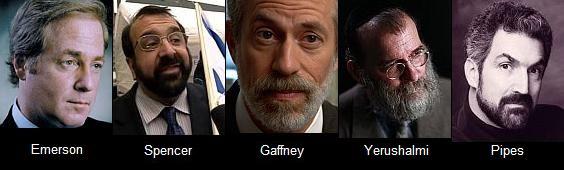

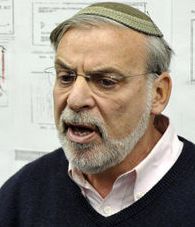 Bob Turner, the Republican candidate campaigning to replace disgraced Democratic Rep. Anthony Weiner, picked up a crucial endorsement last week when Democratic Assemblyman Dov Hikind
