Category Archives: human rights

REVIEW & OPINION: The torture presidency

The man behind the torture

Perhaps the most powerful lawyer in the Bush administration is also the most reclusive. David Addington, who was Vice President Dick Cheney’s counsel from 2001 to 2005, and since then his chief of staff, does not talk to the press. His voice, however, has been enormously influential behind closed doors, where, with Cheney’s backing, he has helped shape the administration’s strategy in the war on terror, and in particular its aggressively expansive conception of executive power. Sometimes called “Cheney’s Cheney,” Addington has twenty years of experience in national security matters—he has been a lawyer for the CIA, the secretary of defense, and two congressional committees concerned with intelligence and foreign affairs. He is a prodigious worker, and by all accounts a brilliant inside political player. Richard Shiffrin, deputy general counsel for intelligence at the Defense Department until 2003, called him “an unopposable force.” Yet most of the American public has never heard him speak.

Addington’s combination of public silence and private power makes him an apt symbol for the Bush administration’s general approach to national security. Many of the administration’s most controversial policies have been adopted in secret, under Addington’s direction, often without much input from other parts of the executive branch, much less other branches of government, and without public accountability. Among the measures we know about are disappearances of detainees into secret CIA prisons, the use of torture to gather evidence, rendition of suspects to countries known for torture, and warrantless wiretapping of Americans. [complete article]

The missing IG report on Maher Arar

Of all the Bush Administration’s many perversions of the justice system, there is something particularly distressing about the case of Maher Arar. A Canadian software engineer, he was changing planes in JFK on his way home to Canada after a Mediterranean vacation when American law enforcement snatched him up. Arar had been fingered as a terrorism suspect by Canadian authorities. Within a brief period of time, he was interrogated, locked-up and then bundled off to Jordan with directions for transshipment to Syria, a nation known to use torture. Indeed, it was plain from the outset that he was shipped to Syria for purposes of being tortured, with a list of questions to be put to him passed along. Never mind that Syria is constantly reviled as a brutal dictatorship by some Bush Administration figures who openly dream of bombing or invading it… the Syrians, it seems, have a redeeming feature—their willingness to torture the occasional Canadian engineer as a gesture of friendship to the Americans. [complete article]

Facebooktwittermail

NEWS: CIA taped interrogations

CIA admits to recording interrogations of top al Qaida captives

The CIA has three video and audio recordings of interrogations of senior al Qaida captives but misled federal judges about the evidence during the case against terrorist Zacarias Moussaoui, federal prosecutors revealed in a Nov. 9 court filing that was made public Tuesday.

The disclosure is unlikely to undo Moussaoui’s conviction because the agency said the material on the tapes doesn’t pertain to his case.

However, the disclosure that the government taped some interrogations of high-value detainees could invite fresh scrutiny of the CIA’s treatment of so-called “enemy combatants” who were held at secret prisons or U.S. bases overseas.

John Radsan, a former CIA assistant general counsel who teaches at the William Mitchell College of Law in St. Paul, Minn., called the revelation of the tapes “huge” news.

“So far, there has been great mystery about what was actually done to the high-value detainees,” he said. “A videotape is worth a thousand words.” [complete article]

Facebooktwittermail

OPINION: The crime of waterboarding

Waterboarding used to be a crime

As a JAG in the Nevada National Guard, I used to lecture the soldiers of the 72nd Military Police Company every year about their legal obligations when they guarded prisoners. I’d always conclude by saying, “I know you won’t remember everything I told you today, but just remember what your mom told you: Do unto others as you would have others do unto you.” That’s a pretty good standard for life and for the law, and even though I left the unit in 1995, I like to think that some of my teaching had carried over when the 72nd refused to participate in misconduct at Iraq’s Abu Ghraib prison.

Sometimes, though, the questions we face about detainees and interrogation get more specific. One such set of questions relates to “waterboarding.”

That term is used to describe several interrogation techniques. The victim may be immersed in water, have water forced into the nose and mouth, or have water poured onto material placed over the face so that the liquid is inhaled or swallowed. The media usually characterize the practice as “simulated drowning.” That’s incorrect. To be effective, waterboarding is usually real drowning that simulates death. That is, the victim experiences the sensations of drowning: struggle, panic, breath-holding, swallowing, vomiting, taking water into the lungs and, eventually, the same feeling of not being able to breathe that one experiences after being punched in the gut. The main difference is that the drowning process is halted. According to those who have studied waterboarding’s effects, it can cause severe psychological trauma, such as panic attacks, for years. [complete article]

See also, Retired JAGs send letter to Leahy: “Waterboarding is inhumane, it is torture, and it is illegal.” (Crooks and Liars).

Facebooktwittermail

ANALYSIS: The torture trail

CIA rendition: The smoking gun cable

A Feb. 5 cable records that al Libi was told by a “foreign government service” (Egypt) that: “the next topic was al-Qa’ida’s connections with Iraq…This was a subject about which he said he knew nothing and had difficulty even coming up with a story.”

Al Libi indicated that his interrogators did not like his responses and then “placed him in a small box approximately 50cm X 50cm [20 inches x 20 inches].” He claimed he was held in the box for approximately 17 hours. When he was let out of the box, al Libi claims that he was given a last opportunity to “tell the truth.” When al Libi did not satisfy the interrogator, al Libi claimed that “he was knocked over with an arm thrust across his chest and he fell on his back.” Al Libi told CIA debriefers that he then “was punched for 15 minutes.”

Here was a cable then that informed Washington that one of the key pieces of evidence for the Iraq war — the al Qaeda/Iraq link — was not only false but extracted by effectively burying a prisoner alive.

Although there have been claims about torture inflicted on those rendered by the CIA to countries like Egypt, Syria, Morocco and Uzbekistan, this is the first clear example of such torture detailed in an official government document.

The information came almost one year before the president and other administration members first began to confirm the existence of the CIA rendition program, assuring the nation that “torture is never acceptable, nor do we hand over people to countries that do torture.”

Last September, these red-hot CIA cables were declassified and published by the Senate Intelligence Committee, but in, a welter of other news, one of the most important documents in the history of rendition had passed almost without notice by the media. As far as I can tell, not a single newspaper reported details of the cable. [complete article]

See also, The agonizing truth about CIA renditions (Stephen Grey).

Facebooktwittermail

EDITORIAL: The real world of torture

Jack Bauer vs. Abdallah Higazy — Fiction vs. Reality

jackbauer.jpgabdallah-higazy.jpg

According to a new CNN poll, 69 percent of Americans believe that waterboarding is a form of torture. Even so, a staggering 40 percent of Americans polled believe that the US government should be allowed to use this form of torture to get information from suspected terrorists.

Commentators on this issue have expressed moral outrage — “waterboarding is killing America’s soul,” proclaims the Philadelphia Daily News‘ “Attytood.” Some see this as an afront to American pride — Keith Olbermann challenges President Bush by saying, “[We don’t condone torture] because we’re Americans, sir, and we’re better than that. We’re better than you.” While there are those who express indifference — the Wall Street Journal regards this as “mostly a political sideshow.”

Yet for those 40 percent of Americans who favor the use of torture, their view has in all likelihood been clearly expressed by Democratic Senator, Charles Schumer, who in a 2004 Senate hearing said:

I think there are probably very few people in this room or in America who would say that torture should never ever be used, particularly if thousands of lives are at stake. . . . It is easy to sit back in the armchair and say that torture can never be used, but when you are in the foxhole it is a very different deal. And I respect, I think we all respect the fact that the President is in the foxhole every day.

This then is how the issue is being framed: on one side are those who see themselves adopting the moral high ground — though their critics perceive them as being holier-than-thou, starry-eyed idealists; and on the other side are those who believe in the necessity of making tough choices in extreme circumstances — though their opponents see them as having lost their moral bearings.

At the center of this debate is an argument of perceived necessity. And the narrative that animates this argument, borrowed from Israel and used there in an earlier debate on the legitimacy of torture, is the “ticking bomb” scenario.

The scenario itself is fanciful. We are all familiar with the suspense movie in which the reality of what is feared is confirmed by making the audience privilege to the whereabouts of a bomb and the time left before it will explode. In post-9/11 America the impact of such dramas has been heightened by the likes of Fox TV’s fictional counter-terrorism agent, Jack Bauer. Let’s face it, for a population that forms most of its understanding of the world through television, such imagery has a visceral impact. But in Israel itself, where the danger of terrorism is more tangible and ubiquitous, the ticking bomb scenario is itself no less a product of fiction and has served no less as a political tool. As Stephen Langfur wrote in 1996:

Israel wants to present itself as an enlightened democracy on the Western model, but it has locked itself into the role of Occupier, with the result that toward part of the population under its control it must behave like a police-state. The “ticking bomb scenario” offers an exceptional, border-line situation, in which everyone can understand that even an enlightened democracy might have to use torture. What Israel does, therefore, is to extend the fantasy of the bomb in the crowded building to include analogous situations—even remotely analogous. Israel can then allow its security apparatus to approach interrogations as if they were all “ticking bombs.” Thus it can keep wearing the mask of an enlightened democracy, while functioning like a police-state. The “ticking bomb scenario,” for which torture is useless, “koshers” other situations where torture can be useful.

Indeed, Langfur points out that Israeli General Security Service officials used the ticking bomb argument to intimidate judges. After all, who would be willing to curtail an interrogation and thereafter be accused of having failed to prevent carnage? Yet in practice, so-called ticking bombs turned out to be prisoners who had been held in detention for weeks — plenty of time for plots to be revised and for the seeming inevitability of any attack to evaporate.

If an interrogation method’s “necessity” was to be based on the magnitude of a risk averted, then any technique applied to bring about the desired result would surely be justifiable. On what basis could one say that it was acceptable to use waterboarding to make the prisoner fear that he was about to drown, yet bleach could not be poured in his eyes, if in both cases the justification for the brutality was the necessity of saving innocent Israeli or American lives? If brutality can be graded on a scale, then on what basis can we say that in one instance the end justify the means while in another it does not, when necessity is determined by the end and not the means?

The issue here cannot be addressed or resolved by considering fictional scenarios. Instead we need to focus on reality and fortunately there is already one case that provides the perfect litmus test: the case of Abdallah Higazy.

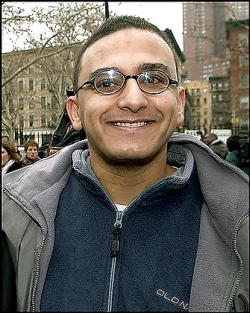
On December 17, 2001, Higazy was detained and questioned by the FBI and then held as a material witness, suspected of being an accomplice in the 9/11 attacks on the World Trade Center in New York. He had been staying in a nearby hotel and was thought to have been in possession of an air-band transceiver capable of air-to-air and air-to-ground communication that could have been used as a beacon to direct the hijacked aircraft into their targets, the Twin Towers. As a terrorist suspect Higazy was as hot as they get.

Under interrogation he kept on changing his story. He had to be lying. FBI agents said they gave Higazy a “polygraph” yet the United States Court of Appeals opinion [PDF] quotes the suspect as saying that the test produced “intense pain.” The court opinion states that “Higazy asked whether anybody else had ever suffered physical pain during the polygraph, to which [FBI Special Agent Michael] Templeton replied: “[i]t never happened to anyone who told the truth.” Was Higazy being given a polygraph or was he being electrocuted?

The court opinion continues:

Higazy alleges that during the polygraph, Templeton told him that he should cooperate, and explained that if Higazy did not cooperate, the FBI would make his brother “live in scrutiny” and would “make sure that Egyptian security gives [his] family hell.” Templeton later admitted that he knew how the Egyptian security forces operated: “that they had a security service, that their laws are different than ours, that they are probably allowed to do things in that country where they don’t advise people of their rights, they don’t – yeah, probably about torture, sure.”

If so-called harsh interrogation methods can be justified, Abdallah Higazy was surely the perfect candidate to be given the third degree. He was suspected of having played an instrumental role in the worst terrorist attack the world has ever seen. This must have been — as Vice President Cheney would say — a no-brainer. Or not?

Anyone familiar with the name, Abdallah Higazy, will of course know that he was completely innocent. The FBI quickly realized as much when a few weeks after Higazy’s detention an airline pilot showed up looking for the radio transceiver he had left behind when he had been evacuated from his hotel on September 11.

When FBI Special Agent Templeton was interrogating his suspect, were Cheney’s words from September 16, 2001, still fresh in his mind?

We also have to work, though, sort of the dark side, if you will. We’ve got to spend time in the shadows in the intelligence world. A lot of what needs to be done here will have to be done quietly, without any discussion, using sources and methods that are available to our intelligence agencies, if we’re going to be successful. That’s the world these folks operate in, and so it’s going to be vital for us to use any means at our disposal, basically, to achieve our objective.

Templeton certainly went to the dark side, but the terrorist he was after wasn’t there. The question that needs to be addressed now and that needs to be the concern of the next attorney general is not what methods of interrogation can be applied in a ticking bomb scenario; it is this: how should the law have protected Abdallah Higazy?

Interrogation is a means of inquiry, not a method of punishment. In the war on terrorism, the presumption of innocence should not be treated as a legal luxury — it is a recognition that suspects are not always (contrary to what the administration would have us believe) the worst of the worst, but on the contrary that with unfortunate frequency they have included the innocent.

Forget about ticking time bombs and remember Abdallah Higazy. After all, those who now want to justify torture do so in the name of protecting the innocent.

Facebooktwittermail

NEWS: The torture test

Bush administration blocked waterboarding critic

A senior Justice Department official, charged with reworking the administration’s legal position on torture in 2004 became so concerned about the controversial interrogation technique of waterboarding that he decided to experience it firsthand, sources told ABC News.

Daniel Levin, then acting assistant attorney general, went to a military base near Washington and underwent the procedure to inform his analysis of different interrogation techniques.

After the experience, Levin told White House officials that even though he knew he wouldn’t die, he found the experience terrifying and thought that it clearly simulated drowning. [complete article]

Editor’s Comment — Does Cheney have as much guts as an acting assistant attorney general? Or does he think waterboarding guidelines should include a clause that exempts anyone with a pacemaker?

Mukasey all but a shoo-in for approval

Michael B. Mukasey appeared on Friday to be all but assured of becoming the nation’s 81st attorney general when two Senate Democrats broke ranks and said they would support the retired federal judge to head the Justice Department.

While acknowledging serious concerns about his views on interrogation techniques, Sens. Dianne Feinstein of California and Charles E. Schumer of New York said they would vote to confirm Mukasey when the Senate Judiciary Committee takes up his nomination to succeed Alberto R. Gonzales on Tuesday. [complete article]

See also, John Dean on Mukasey (TPM) and The torture litmus test (Scott Horton).

Facebooktwittermail

OPINION: The rise of racist liberalism

How liberals lost their anti-racism

A new sentiment has gripped the mainstream of liberal thinking in Britain over the last few years. It is an attitude that regards Muslims as uniquely problematic and in need of forceful integration into what it views as the inherently superior values of the West. For this new breed of liberal, previously cherished norms of multiculturalism should be discarded and the fight for racial and religious equality is irrelevant. The publication this year of Nick Cohen’s What’s Left? how liberals lost their way and Andrew Anthony’s more sharply argued The Fall-Out: how a guilty liberal lost his innocence provide the clearest statements yet of what this new liberalism stands for. Their core argument can be stated straightforwardly: the major problem facing the West is a failure to stand up for its Enlightenment values. Liberalism has been infected by guilt – which prevents it from defending itself against external threats, chief among them ‘Islamism’, which is held responsible not only for terrorist violence but also for Muslim separatism in our cities. What precisely an Islamist is is left unclear; after all, a realistic definition of Islamism – as a wide range of political movements, some violent and some constitutional, generally with social conservatism at their core – would require the reader to pause for a moment before the ritual denunciation of all Islamists as irrational, nihilist and totalitarian.

But Cohen’s and Anthony’s main target is not so much Islamism as the appeasing attitudes they detect among liberals. Anthony writes that, since the 1970s, liberalism has been corrupted by White guilt which leads liberals to think that everything will be OK as long as they don’t interfere in other people’s lives, especially the lives of other ethnic groups. But this is fantasy: in practice, White liberals have not usually shied away from using the power of the state to intervene in the lives of non-Whites, either in Britain or in the neocolonialism of the ‘war on terror’. Moreover, at the conceptual level, liberalism has always lacked the means to generate the kind of social solidarity which Anthony wants to see. Individualist indifference has been a feature of liberal democracy since its inception. The slave-owning liberal democracy of early nineteenth-century America could not be said to be a society suffering from what Anthony calls a ‘guilt-warped vision of the world’, yet Tocqueville wrote of its citizens that ‘each of them, living apart, is as a stranger to the fate of the rest’. [complete article]

Facebooktwittermail

OPINION: Report treats torture-based confessions as news

NPR gives torture credibility

Good journalists don’t base their stories on highly dubious “facts.” And they try to avoid reports that will encourage violence. Unfortunately, a recent segment on NPR’s Morning Edition (10/26/07) violated both rules.

NPR Iraq correspondent Anne Garrels’ report was based around the accounts of three men who were being held prisoner by Shiite cleric Moqtada al-Sadr’s militia. The captives were supposedly “renegade” members of Sadr’s militia who said “they were trained in roadside bombs and car bombings in Iran…to attack Americans and sow suspicion and violence between Shiites and Sunnis.” The details of the prisoners’ accounts made up much of Garrels’ report, despite her noting that “the three detainees had clearly been tortured.”

“There was blood all over their clothes,” Garrels reported. “They were in such bad shape they couldn’t walk. They had to be dragged onto the chairs, and one of them was just sobbing.”

Given the brutal treatment of the three men, there is no reason to put any stock whatsoever in the claims they made in the presence of their captors. [complete article]

Facebooktwittermail

NEWS: Mukasey: Bush and Cheney’s defense attorney

Nominee’s stand may avoid tangle of torture cases

In adamantly refusing to declare waterboarding illegal, Michael B. Mukasey, the nominee for attorney general, is steering clear of a potential legal quagmire for the Bush administration: criminal prosecution or lawsuits against Central Intelligence Agency officers who used the harsh interrogation practice and those who authorized it, legal experts said Wednesday.

On Wednesday, Senator Patrick J. Leahy, Democrat of Vermont, the chairman of the Senate Judiciary Committee, scheduled a confirmation vote for Tuesday amid deep uncertainty about the outcome at the committee level. If Mr. Mukasey’s nomination reaches the Senate floor, moderate Democrats appear likely to join Republicans to produce a majority for confirmation. But a party-line vote in the Judiciary Committee, which seemed a possibility, could block the nomination from reaching the floor.

The biggest problem for Mr. Mukasey remains his refusal to take a clear legal position on the interrogation technique. Fear of opening the door to criminal or civil liability for torture or abuse, whether in an American court or in courts overseas, appeared to loom large in Mr. Mukasey’s calculations as he parried questions from the committee this week. Some legal experts suggested that liability could go all the way to President Bush if he explicitly authorized waterboarding. [complete article]

Facebooktwittermail

OPINION: American courts are fully capable of trying suspected terrorists

How to try a terrorist

In 2001, I presided over the trial of Ahmed Ressam, the confessed Algerian terrorist, for his role in a plot to bomb Los Angeles International Airport. That experience only strengthened my conviction that American courts, guided by the principles of our Constitution, are fully capable of trying suspected terrorists.

As evidence of “the inadequacy of the current approach to terrorism prosecutions,” Judge Mukasey noted that there have been only about three dozen convictions in spite of Al Qaeda’s growing threat. Open prosecutions, he argued, potentially disclose to our enemies methods and sources of intelligence-gathering. Our Constitution does not adequately protect society from “people who have cosmic goals that they are intent on achieving by cataclysmic means,” he wrote.

It is regrettable that so often when our courts are evaluated for their ability to handle terrorism cases, the Constitution is conceived as mere solicitude for criminals. Implicit in this misguided notion is that society’s somehow charitable view toward “ordinary” crimes of murder or rape ought not to extend to terrorists. In fact, the criminal procedure required under our Constitution reflects the reality that law enforcement is not perfect, and that questions of guilt necessarily precede questions of mercy.

Consider the fact that of the 598 people initially detained at Guantánamo Bay in 2002, 267 have been released. It is likely that for a number of the former detainees, there was simply no basis for detention. The American ideal of a just legal system is inconsistent with holding “suspects” for years without trial. [complete article]

Facebooktwittermail

NEWS, ANALYSIS & EDITOR’S COMMENT: Why America uses torture

U.S. accused of torture

The United States’s willingness to resort to harsh interrogation techniques in its so-called war on terror undermined human rights and the international ban on torture, a United Nations spokesman says.

Manfred Nowak, UN Special Rapporteur on torture, said the US’s standing and importance meant it was a model to other countries which queried why they were subject to scrutiny when the US resorted to measures witnessed at Guantanamo Bay and Abu Ghraib prison.

Mr Nowak was speaking after releasing his finding that the use of torture was routine and widespread in Sri Lanka ,despite laws against it.

“I am very concerned about the undermining of the absolute prohibition of torture by interrogation methods themselves in Abu Grahib, in Guantanamo Bay and others, but also by rendition and the whole CIA secret places of detention. All that is really undermining the international rule of law in general and human rights but also the prohibition of torture,” said Mr Nowak. [complete article]

Editor’s Comment — The renewed debate on torture that has been provoked by statements made by AG-nominee Judge Mukasey on the legitimacy of waterboarding, has resulted in numerous assertions that torture is un-American. As Senate Judiciary Committee Chairman Patrick Leahy said today, “I remain very concerned that Judge Mukasey finds himself unable to state unequivocally that waterboarding is illegal and below the standards and values of the United States.”

To my mind, this is a rather weak moral argument. To say that we don’t torture because we’re American, is to imply that the majority of humanity, not being endowed with American virtue, might find the use of torture more acceptable than their high-minded stateside counterparts. But on the contrary, it is this notion that there is some intrinsic moral foundation to Americanness that is itself the great enabling force beneath a national trait that most of us would rather ignore: American hypocracy. The self-agrandizing virtue that this nation so often wants to celebrate is a mask that conceals a plethora of contradictions: that a nation that identifies itself as religious is so profoundly materialistic; that a nation that predominently identifies itself as Christian has such a strong preference for pre-Christian values; that a nation that sees itself as a moral beacon to the world has with such frequency chosen military engagement as its point of contact with the rest of the world. Americans can and do engage in torture not in spite of this being un-American, but because as Americans they find it all too easy to sustain an image of themselves that is a glaring contradiction with their actions.

If the Senate wants to assert that America will no longer condone torture, then first we need to acknowledge that the climate of fear engendered by the war on terrorism has in fact led many Americans to regard torture as an acceptable tool of national defense. And secondly, that if America wants to now change course and unequivocally renounce the use of torture, it will not be reclaiming moral high ground; it will be returning to an internationally recognized set of moral standards that for most of this decade it has chosen to ignore.

Waterboarding is torture… period

1. Waterboarding is a torture technique. Period. There is no way to gloss over it or sugarcoat it. It has no justification outside of its limited role as a training demonstrator. Our service members have to learn that the will to survive requires them accept and understand that they may be subjected to torture, but that America is better than its enemies and it is one’s duty to trust in your nation and God, endure the hardships and return home with honor.

2. Waterboarding is not a simulation. Unless you have been strapped down to the board, have endured the agonizing feeling of the water overpowering your gag reflex, and then feel your throat open and allow pint after pint of water to involuntarily fill your lungs, you will not know the meaning of the word.

Waterboarding is a controlled drowning that, in the American model, occurs under the watch of a doctor, a psychologist, an interrogator and a trained strap-in/strap-out team. It does not simulate drowning, as the lungs are actually filling with water. There is no way to simulate that. The victim is drowning. How much the victim is to drown depends on the desired result (in the form of answers to questions shouted into the victim’s face) and the obstinacy of the subject. A team doctor watches the quantity of water that is ingested and for the physiological signs which show when the drowning effect goes from painful psychological experience, to horrific suffocating punishment to the final death spiral.

Waterboarding is slow motion suffocation with enough time to contemplate the inevitability of black out and expiration –usually the person goes into hysterics on the board. For the uninitiated, it is horrifying to watch and if it goes wrong, it can lead straight to terminal hypoxia. When done right it is controlled death. Its lack of physical scarring allows the victim to recover and be threaten with its use again and again. [complete article]

On torture, 2 messages and a high political cost

Six years after the Bush administration embraced harsh physical tactics for interrogating terrorism suspects, and two years after it reportedly dropped the most extreme of those techniques, the taint of torture clings to American counterterrorism efforts.

The administration has a standard answer to queries about its interrogation practices: 1) We do not torture, and 2) we will not say what we do, for fear of tipping off future prisoners. In effect, officials want Al Qaeda to believe that the United States does torture, while convincing the rest of the world that it does not.

But that contradictory catechism is not holding up well under the battering that American interrogation policies have received from human rights organizations, European allies and increasingly skeptical members of Congress. [complete article]

Squeezing Mukasey on torture

George W. Bush has always wielded moral clarity as a weapon, beating Democrats by declaring his high purpose and principled resolve. But in recent months, as critics have shined new light on domestic spying and harsh interrogation techniques in the morally ambiguous world of counter-terrorism, Bush has had to retreat to gray-area defenses, using tailored definitions and legalisms to dodge questioners. And now, as Democrats raise the pressure on embattled Attorney General nominee Michael Mukasey to state his opinion on whether or not waterboarding constitutes torture, it is the President’s opponents who are using moral clarity against him.

Mukasey’s (and the White House’s) problems began during his Oct. 18 Judiciary Committee confirmation hearing to replace Alberto Gonzales as Attorney General. At the hearing veteran Illinois Senator Dick Durbin asked Mukasey a deceptively simple question: Is waterboarding torture? Waterboarding simulates drowning, and involves constraining a person, restricting their breathing and pouring water on all or part of their face. Some version of it is widely reported to have been used by U.S. interrogators in an attempt to extract information from high-level terrorism suspects in the wake of 9/11. [complete article]

See also, Dozens of ‘ghost prisoners’ not publicly accounted for (WP) and Judgment day for the CIA? (Christopher Dickey).

Facebooktwittermail

NEWS: Torture and forced confessions

Second court ruling redacts information about interrogation

The FBI interviewer allegedly gave Abdallah Higazy a choice: Admit to having a special pilot’s radio in a hotel room near the World Trade Center on Sept. 11, 2001, or the security service in his native Egypt would give his family “hell.” Higazy responded by confessing to a crime he didn’t commit.

“I knew I couldn’t prove my innocence, and I knew my family was in danger,” Higazy said later. “. . . If I say this device is mine, I’m screwed and my family is going to be safe. If I say this device is not mine, I’m screwed and my family’s in danger. And Agent [Michael] Templeton made it quite clear that ‘cooperate’ had to mean saying something else other than this device is not mine.”

The new details about the FBI’s allegedly aggressive tactics in the Higazy case were included in a ruling briefly issued last week by the U.S. Court of Appeals for the 2nd Circuit [PDF], which reinstated a civil lawsuit brought by Higazy against the FBI and Templeton. In an unusual move, however, the appeals court withdrew the first opinion within minutes on Thursday and issued a second opinion Friday, with the details of Higazy’s allegations removed.

“This opinion has been redacted because portions of the record are under seal,” the new ruling reads. “For the purposes of the summary judgment motion, Templeton did not contest that Higazy’s statements were coerced.” Such redactions are imperfect in the Web age, and the original document remains accessible through links on sites and blogs devoted to appellate-court and legal issues.

Higazy was jailed for a month as a suspected accomplice to the World Trade Center attack, until a pilot showed up and asked for his radio back. The fresh details about his interrogation in December 2001 illustrate how an innocent man can be persuaded to confess to a crime that he did not commit, and the lengths to which the FBI was willing to go in its terrorism-related investigations after the Sept. 11 attacks. [complete article]

Editor’s Comment — As this report says, the ruling was briefly issued, but much as the US government might wish otherwise, once something goes out onto the Web, it’s too late to redact the embarrasing details. They can all be read here: Higazy v. Millenium Hotel [PDF]

Facebooktwittermail

NEWS: Israel expands collective punishment of Gaza

Israel moves to further isolate Gazans

Ratcheting up pressure on Palestinians in the Hamas-controlled Gaza Strip, Israel prepared to cut electricity supplies to Gazans in retaliation for an escalation in cross-border rocket and mortar attacks by Palestinian militants.

After declaring Gaza an “enemy entity” in September, Israel has kept Gaza’s borders sealed save for humanitarian foodstuffs and medicines. The policy has triggered dramatic inflation, shuttered businesses, and spurred demand for black-market goods smuggled through tunnels that were once used by gun runners and drug dealers.

“The market now takes all food that you smuggle, also spare parts and medication,” says Hashem, a tunnel-owner from the border town of Rafah who spoke on the condition that his last name not be used.

Analysts say the goal of Israel’s policy of isolating Gaza seems to be to pressure Gazans to turn against Hamas, which has led the area since it wrested control from the Palestinian Authority in June. Other observers warn that the pressure is likely to backfire, creating more volunteers for militant groups and stirring sympathy for Hamas. [complete article]

An economic tailspin in Gaza

Life in Gaza has entered a state of suspended animation.

The usually busy streets are free of traffic. Stores and factories are closed. Unemployment is on the rise as tens of thousands of people have lost their jobs in the last four months.

Israel stages regular air strikes on suspected militants and keeps warning that it might launch a military invasion if the daily rocket and mortar attacks continue.

And residents say they are waiting for the other shoe to drop. [complete article]

Facebooktwittermail

NEWS: Adminstration of torture

General claims Bush gave ‘marching orders’ on aggressive interrogation at Guantanamo

More than 100,000 pages of newly released government documents demonstrate how US military interrogators “abused, tortured or killed” scores of prisoners rounded up since Sept. 11, 2001, including some who were not even suspected of having terrorist ties, according to a just-published book.

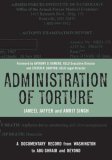
amazon-administrationoftorture.jpgIn Administration of Torture, two American Civil Liberties Union attorneys detail the findings of a years-long investigation and court battle with the administration that resulted in the release of massive amounts of data on prisoner treatment and the deaths of US-held prisoners.

“[T]he documents show unambiguously that the administration has adopted some of the methods of the most tyrannical regimes,” write Jameel Jaffer and Amrit Singh. “Documents from Guantanamo describe prisoners shackled in excruciating ‘stress positions,’ held in freezing-cold cells, forcibly stripped, hooded, terrorized with military dogs, and deprived of human contact for months.” [complete article]

Facebooktwittermail

NEWS: Mukasey faces tough questions on torture

Mukasey faces tough questions on torture

President Bush’s nominee for attorney general, Michael B. Mukasey, declined today to say if he considered harsh interrogation techniques like waterboarding, which simulates drowning, to constitute torture or to be illegal if used on terrorism suspects.

On the second day of confirmation hearings before the Senate Judiciary Committee, Mr. Mukasey went further than he had the day before in arguing that the White House had constitutional authority to act beyond the limits of laws passed by Congress, especially when it came to questions of national defense.

He suggested that both the Bush administration’s eavesdropping program and its use of “enhanced” interrogation techniques for terrorism suspects, including waterboarding, may be acceptable under the Constitution even if they go beyond what the law technically allows. Mr. Mukasey said the president’s authority as commander in chief may allow him to supersede laws written by Congress. [complete article]

Facebooktwittermail

NEWS: Secret CIA jail for terror suspects on British island

Claims of secret CIA jail for terror suspects on British island to be investigated

Allegations that the CIA held al-Qaida suspects for interrogation at a secret prison on sovereign British territory are to be investigated by MPs, the Guardian has learned. The all-party foreign affairs committee is to examine long-standing suspicions that the agency has operated one of its so-called “black site” prisons on Diego Garcia, the British overseas territory in the Indian Ocean that is home to a large US military base.

Lawyers from Reprieve, a legal charity that represents a number of detainees at Guantánamo Bay, including several former British residents, are calling on the committee to question US and British officials about the allegations. According to the organisation’s submission to the committee, the UK government is “potentially systematically complicit in the most serious crimes against humanity of disappearance, torture and prolonged incommunicado detention”.

Clive Stafford Smith, the charity’s legal director, said he was “absolutely and categorically certain” that prisoners have been held on the island. “If the foreign affairs committee approaches this thoroughly, they will get to the bottom of it,” he said. [complete article]

Facebooktwittermail

OPINION: Bush’s Pentagon Papers

Do we already have our Pentagon Papers?

They can’t help themselves. They want to confess.

How else to explain the torture memorandums that continue to flow out of the inner sancta of this administration, the most recent of which were evidently leaked to the New York Times. Those two, from the Alberto Gonzales Justice Department, were written in 2005 and recommitted the administration to the torture techniques it had been pushing for years. As the Times noted, the first of those memorandums, from February of that year, was “an expansive endorsement of the harshest interrogation techniques ever used by the Central Intelligence Agency.” The second “secret opinion” was issued as Congress moved to outlaw “cruel, inhuman, and degrading” treatment (not that such acts weren’t already against U.S. and international law). It brazenly “declared that none of the C.I.A. interrogation methods violated that standard”; and, the Times assured us, “the 2005 Justice Department opinions remain in effect, and their legal conclusions have been confirmed by several more recent memorandums.” [complete article]

Facebooktwittermail

PREVIEW: The Cheney coup

Cheney’s law

For three decades Vice President Dick Cheney conducted a secretive, behind-closed-doors campaign to give the president virtually unlimited wartime power. Finally, in the aftermath of 9/11, the Justice Department and the White House made a number of controversial legal decisions. Orchestrated by Cheney and his lawyer David Addington, the department interpreted executive power in an expansive and extraordinary way, granting President George W. Bush the power to detain, interrogate, torture, wiretap and spy — without congressional approval or judicial review.

Now, as the White House appears ready to ignore subpoenas in the wiretapping and U.S. attorneys’ cases, FRONTLINE’s season premiere, Cheney’s Law, airing Oct. 16, 2007, at 9 P.M. ET on PBS (check local listings), examines the battle over the power of the presidency and Cheney’s way of looking at the Constitution. [complete article]

Facebooktwittermail