
Category Archives: Issues

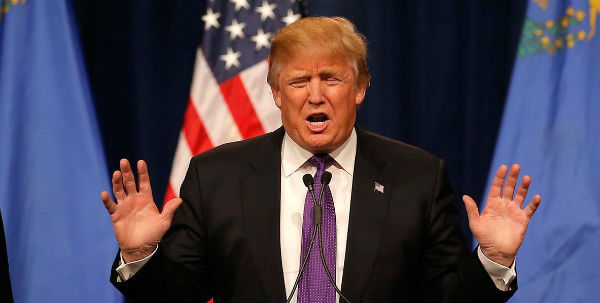
Trump hands his campaign to the ‘alt-right’ movement

trump

Christian Science Monitor reports: The appointment of Breitbart news chief Stephen Bannon to head Donald Trump’s presidential campaign this week marks the official entree of the so-called “alt-right” into the Republicans’ top campaign.

For the Trump campaign, Mr. Bannon is an experienced political street fighter who is well-versed in the sharp-edged, populist message that served the candidate well in the Republican primaries.

Mr. Trump’s tapping of the alt-right could help solidify his base by letting Trump be Trump, and potentially propel him to hit Hillary Clinton’s weak points harder.

But critics say that Bannon’s hiring resonates far beyond the Trump campaign in troubling ways. It marks a worrisome marriage of the Republican Party with an Internet culture that, they say, peddles in white identity, misogyny, anti-Semitism, and Clinton conspiracies.

In short, it doubles down on a largely white voting bloc that, in the words of Brendan O’Neill, a commentator for the conservative Spectator magazine in Britain, is “convinced the world is one big lefty, feminist plot to ruin your average white dude’s life.” [Continue reading…]


Facebooktwittermail

How immigrant athletes at the Olympics keep on beating Trumpism

Ben Geman writes: On Saturday night, the British distance runner Mo Farah will try and become the first athlete to sweep the 5,000- and 10,000-meter races at consecutive Olympics since Finland’s Lasse Viren won both in 1972 and 1976. Farah has already found a heart-stopping way to pay homage to the Finn, albeit accidentally. Viren famously fell mid-race during the 10,000-meter in 1972 but managed to get up and still win. Forty-four years later, in the middle of last Saturday’s 10,000 in Rio, Farah got tangled up with the American runner Galen Rupp, his friend and sometime training partner, and went crashing onto the track. It briefly looked as though Farah’s race was over. But he sprang up, rejoined the pack, and won in the same way he’s dominated the biggest international races for a half-decade: by separating himself from runners still in the mix and entering the final lap with a blistering closing kick.

Farah is tangled up with forces off the track too. He’s an immigrant who came to England from Somalia in order to escape conflict there at the age of eight. Time and again in recent years, the 33-year-old Farah, a devout Muslim, has prayed on the track and draped himself in the British flag after crossing the line for wins on the biggest stage, including at London’s 2012 games and then biennial World Championships in Russia and China in 2013 and 2015.

Still, Farah has faced claims that he’s not truly a British athlete throughout his career. In an ugly incident last year after Farah set the European record in the half-marathon, the man he took it from, Spain’s Fabian Roncero, dismissed the feat, reportedly claiming that an athlete “born in Somalia is Somali forever.” And this year’s Olympics are unfolding at a very different and even more fraught political moment than Farah’s earlier wins, arriving just weeks after anti-immigrant sentiment helped elicit Britain’s exit from the European Union. Across the Atlantic, Donald Trump has made condemning immigrants a pillar of his campaign to capture the GOP nomination and the White House. [Continue reading…]

Facebooktwittermail

Feds investigate Manafort firm as part of Ukraine probe

CNN reports: FBI and Justice Department prosecutors are conducting an investigation into possible US ties to alleged corruption of the former pro-Russian president of Ukraine, including the work of Paul Manafort’s firm, according to multiple US law enforcement officials.

The investigation is broad and is looking into whether US companies and the financial system were used to aid alleged corruption by the party of former president Viktor Yanukovych.

Manafort, who resigned as chairman of Donald Trump’s campaign Friday, has not been the focus of the probe, according to the law enforcement officials. The investigation is ongoing and prosecutors haven’t ruled anything out, the officials said.

The probe is also examining the work of other firms linked to the former Ukrainian government, including that of the Podesta Group, the lobbying and public relations company run by Tony Podesta, brother of Clinton campaign chairman John Podesta. [Continue reading…]

Facebooktwittermail

Regrets? Trump’s had a few, but too few to mention

The New York Times reports: Donald J. Trump on Thursday expressed regret for making statements that have “caused personal pain,” a rare display of contrition that followed the shake-up of his campaign’s leadership this week.

“Sometimes, in the heat of debate and speaking on a multitude of issues, you don’t choose the right words or you say the wrong thing,” Mr. Trump said. “I have done that. And believe it or not, I regret it.”

The crowd gathered at a convention center here responded by chanting Mr. Trump’s name, and he gave them a thumbs-up.

“And I do regret it, particularly where it may have caused personal pain,” Mr. Trump added. “Too much is at stake for us to be consumed with these issues.”

Mr. Trump’s statement of regret, in a prepared speech in which he spoke of a “New American Future,” seemed to be a step toward trying to recover from a number of public quarrels and other episodes that have damaged his campaign, including a dispute with the family of an American Muslim soldier who was killed in Iraq.

But in his speech, which he read off a teleprompter, he did not specify what he regretted, offer specific apologies or linger on the subject. In his campaign, Mr. Trump has at times sounded restrained and on-message, only to quickly revert to his more pugilistic nature. [Continue reading…]

Facebooktwittermail

Twitter suspends 235,000 more accounts over extremism

The New York Times reports: Twitter suspended 235,000 accounts that promoted terrorism over the last six months, as part of a continuing effort to keep people from using the social network for extremist causes, the company said Thursday.

“The world has witnessed a further wave of deadly, abhorrent terror attacks across the globe,” Twitter said in a statement. “We strongly condemn these acts and remain committed to eliminating the promotion of violence or terrorism on our platform.”

Twitter’s latest action brings the total number of accounts that the company has suspended to 360,000 since it began cracking down on terrorism and violent extremism in mid-2015. While Twitter has long championed free speech on the web and said that it was a “global town square,” its positioning has drawn bullies, racists and extremist groups to the service to spread their messages. That has drawn criticism from government agencies and the Democratic presidential nominee Hillary Clinton, among others. [Continue reading…]

Facebooktwittermail

Liberal democracy is in the midst of an epic struggle for survival

Yascha Mounk writes: There are years, decades even, in which history slows to a crawl. Then there are weeks that are so eventful that they seem to mark the dissolution of a world order that had once seemed solid and to foretell the rise of one as yet unknowable.

The week of July 11, 2016, has every chance of being remembered as one of those rare flurries of jumbled, inchoate, concentrated significance. The centrifugal forces that are threatening to break political systems across the world may have started to register a decade ago; they may have picked up speed over the last 12 months; but never since the fall of the Berlin Wall have they wreaked havoc in so many places in so short a span of time—showcasing the failures of technocratic rule, the terrifying rise of populist strongmen, and the existential threat posed by Islamist terrorism, all in the span of seven short days.

At first glance, a political crisis in London; a terrorist attack in Nice, France; a failed putsch in Ankara, Turkey; and a bloviating orator on his way to becoming the Republican nominee for the presidency of the United States look like the dramatic apex of very different, barely connected screenplays. To my eye, they are garish panes of glass that add up to one unified, striking mosaic. Looked at from the right distance, they tell the story of a political system, liberal democracy, that has long dominated the world — and is now in the midst of an epic struggle for its own survival. [Continue reading…]

Facebooktwittermail

France’s ‘burkini’ bans are about more than religion or clothing

The New York Times reports: There is something inherently head-spinning about the so-called burkini bans that are popping up in coastal France. The obviousness of the contradiction — imposing rules on what women can wear on the grounds that it’s wrong for women to have to obey rules about what women can wear — makes it clear that there must be something deeper going on.

“Burkinis” are, essentially, full-body swimsuits that comply with Islamic modesty standards, and on Wednesday, Prime Minister Manuel Valls of France waded into the raging debate over the bans in some of the country’s beach towns, denouncing the rarely seen garb as part of the “enslavement of women.”

This, of course, is not really about swimwear. Social scientists say it is also not primarily about protecting Muslim women from patriarchy, but about protecting France’s non-Muslim majority from having to confront a changing world: one that requires them to widen their sense of identity when many would prefer to keep it as it was.

“These sorts of statements are a way to police what is French and what is not French,” said Terrence G. Peterson, a professor at Florida International University who studies France’s relationship with Muslim immigrants and the Muslim world.

While this battle over identity is rising now in the wake of terrorist attacks, it has been raging in one form or another in French society for decades, Professor Peterson said. What seems to be a struggle over the narrow issue of Islamic dress is really about what it means to be French. [Continue reading…]

Facebooktwittermail

This is what’s missing from journalism right now

Mother Jones reports: This June, we published a big story — Shane Bauer’s account of his four-month stint as a guard in a private prison. That’s “big,” as in XXL: 35,000 words long, or 5 to 10 times the length of a typical feature, plus charts, graphs, and companion pieces, not to mention six videos and a radio documentary.

It was also big in impact. More than a million people read it, defying everything we’re told about the attention span of online audiences; tens of thousands shared it on social media. The Washington Post, CNN, and NPR’s Weekend Edition picked it up. Montel Williams went on a Twitter tear that ended with him nominating Shane for a Pulitzer Prize (though that’s not quite how it works). People got in touch to tell us about their loved ones’ time in prison or their own experience working as guards. Lawmakers and regulators reached out. (UPDATE: And on August 18, the Justice Department announced that it will no longer contract with private prisons, which currently hold thousands of federal inmates — a massive policy shift.)

In the wake of our investigation, lots of people offered thoughts similar to this, from New Yorker TV critic Emily Nussbaum:


That’s a great sentiment, and we agree! But it also takes us to a deeper story about journalism and today’s media landscape. It starts with this: The most important ingredient in investigative reporting is not brilliance, writing flair, or deep familiarity with the subject (though those all help). It’s something much simpler — time. [Continue reading…]

Facebooktwittermail

Outcome of U.S. election seen as ‘question of national security for Russia’ says Kremlin watcher

NPR reports: Investigative journalist Andrei Soldatov says the [Democratic National Committee] hack wasn’t necessarily the work of Russian intelligence services.

“It’s much more complicated than that,” says Soldatov, co-author of The Red Web: The Struggle Between Russia’s Digital Dictators and the New Online Revolutionaries. “We have non-government actors, and they’re really adventurous, really fast and they’re really, really good.”

He says mercenary hackers give the government a way to deny involvement.

Once the material had been stolen, though, [Mark] Galeotti thinks the Kremlin took over.

“The actual leak — the point where they did something with the information they gathered — now there’s no question that that would be regarded as a strategic move, and would need to have had Kremlin sanction,” he says.

Russia’s foreign minister, Sergei Lavrov, repeated this week that Russia doesn’t interfere in the affairs of other countries. Recently he said, “We have witnessed a volley of Russophobic hysteria.”

He called the accusations “ploys to support one candidate and smear another.”

DNC staffers charged that the publication of the emails was a Russian ploy to support the candidacy of Donald Trump. But “I think it’s not about Trump,” says Soldatov. “It’s all about Hillary Clinton.”

What might Russia hope to gain from influencing the American vote?

Soldatov says President Vladimir Putin believes Clinton is a Russia-hater who was behind anti-government demonstrations that took place in Russia in 2011 and 2012.

And Soldatov says this U.S. election is important for Moscow because America’s next leader could determine whether economic sanctions against Russia will be lifted. “And everybody in the Kremlin believes that if Hillary Clinton in the White House, it will be absolutely impossible to get the sanctions against Russia lifted. So in a way, it’s a question of national security for Russia.”

Galeotti thinks the key purpose with the DNC leaks is to divide Clinton’s political base by showing that top party officials worked to freeze out her primary opponent, Bernie Sanders.

The Kremlin’s idea, he says, is to create the impression that politics in the U.S. is manipulated just as much as in Russia. [Continue reading…]

Facebooktwittermail

17,723 people have died in custody inside Syria’s prisons

Amnesty International reports: The horrifying experiences of detainees subjected to rampant torture and other abuse in Syrian government prisons are detailed in a damning new report published by Amnesty International today (18 August), which estimates that more than 17,723 people have died in custody in Syria over the past five years – an average of more than 300 people each month, about 10 a day.

The 69-page report, ‘It breaks the human’: Torture, disease and death in Syria’s prisons, documents the cases of 65 torture survivors who’ve described appalling abuse and inhuman conditions in detention centres operated by various Syrian intelligence agencies and in one of Syria’s most notorious jails, Saydnaya Military Prison, on the outskirts of Damascus. Most said they had witnessed prisoners dying in custody – some beaten to death – and several former detainees described being held in cells alongside dead bodies.

The majority of survivors told Amnesty that abuse would begin instantly upon their arrest and during transfers, even before they set foot in a detention centre. Upon arrival detainees described a “welcome party” ritual involving severe beatings, often using silicone or metal bars or electric cables. These were often followed by “security checks”, during which women in particular reported being subjected to rape and sexual assault by male guards. [Continue reading…]

Facebooktwittermail

Alt Right rejoices at Donald Trump’s Steve Bannon hire

The Daily Beast reports: Donald Trump’s campaign is under new management — and his white nationalist fanboys love it.

The campaign’s new chief executive, Stephen Bannon, joins from Breitbart News — where he helped mainstream the ideas of white nationalists and resuscitate the reputations of anti-immigrant fear-mongers.

White nationalists today invest a lot of energy worrying about growing Hispanic and Muslim populations in the U.S. Turns out, Breitbart News spends a lot of time worrying about those things, too. And in Bannon, they see a media-friendly, ethno-nationalist fellow traveler.

“Latterly, Breitbart emerged as a nationalist site and done great stuff on immigration in particular,” VDARE.com editor Peter Brimelow told The Daily Beast.

VDare is a white supremacist site. It’s named after Virginia Dare, the first white child born to British colonists in North America. Brimelow said he and Bannon met briefly last month and exchanged pleasantries about each other’s work.

“It’s irritating because VDARE.com is not used to competition,” Brimelow added. “I presume that is due to Bannon, so his appointment is great news.”

Brimelow isn’t the only prominent white nationalist to praise the Bannon hire. Richard Spencer, who heads the white supremacist think tank National Policy Institute, said he was also pleased. Under Bannon’s leadership, Breitbart has given favorable coverage to the white supremacist Alt Right movement. And Spencer loves it. [Continue reading…]

Facebooktwittermail

Was it hate? Tulsa murder case shines light on lack of bias crime data


McClatchy reports: Stanley Vernon Majors was a neighbor from hell.

For five years, according to witness accounts and court papers, Majors terrorized the Jabara family living next door to him in suburban Tulsa, Oklahoma.

He disrupted their family gatherings. He hassled visitors if they parked in front of his house. He hurled racial slurs at a black friend of the family. He even made false claims to health inspectors, the Jabaras said, sabotaging their lucrative catering contract providing hummus to Whole Foods stores.

Majors often mentioned the family’s Arab roots in his tirades; one police report quoted him as calling them “filthy Lebanese.” He also used “Ay-rabs” and “Mooslems,” recalled the Jabaras, who are Christians.

The harassment took a violent turn last September, when Majors was charged with ramming his car into the Jabara family’s 65-year-old matriarch, Haifa, who suffered a collapsed lung, head trauma and broken bones from her nose to her ankle. Majors was awaiting trial on charges from that incident when, last Friday, according to the authorities, he walked next door and fired four shots at 37-year-old Khalid Jabara, killing him on his front porch.

Among Arab and Muslim Americans, the case immediately was viewed as a hate crime, with Jabara portrayed as the latest victim in a bloody wave of attacks against people perceived as foreigners or Muslims. “Hate was definitely part of it. This guy did hate our family,” said Jabara’s brother, Rami, speaking by phone to McClatchy this week.

Yet despite the well-documented history of Majors’ targeting the family, there’s no guarantee that prosecutors will seek hate crime charges in addition to the murder charge against him. Legal specialists who track hate-crime prosecutions nationwide say the Jabara case is likely to run into the same hurdles that civil rights advocates have warned about in numerous studies: Hate crime laws can be prohibitively difficult to use, narrow as to what offenses are covered, and dependent on police who often have no obligation to report – or lack training in how to respond to – crimes involving bias.

That disconnect – having laws on the books but problems using them – is a source of growing frustration for Arab-American, Muslim and other civil rights activists who have seen numerous attacks that appear to have been motivated by racial or religious hatred, but weren’t considered that way under the law. The result, activists say, is the loss of confidence in the justice system just as a nasty political climate deepens fears of bias-motivated attacks. [Continue reading…]

Facebooktwittermail

Why blacks loathe Trump

Charles Blow writes: So now Donald Trump is campaigning for the black vote. (Long, awkward pause.)

Like so much of what Trump has said and done, this new outreach forces writers like me to conduct scatological studies, framing Trump’s actions in their historical and intellectual absurdity.

But, here we go.

Trump, who got a shocking 1 percent of support among black voters in a recent NBC News/Wall Street Journal poll, has been urged to reach out to black voters.

A day after The New York Times published an article pointing out that “the Republican nominee has not held a single event aimed at black voters in their communities, shunning the traditional stops at African-American churches, historically black colleges and barber shops and salons that have long been staples of the presidential campaign trail,” Trump ventured to a suburban town outside Milwaukee that is 95 percent white and 1 percent black to tell the black population of America — a population that has been consumed in recent years by a discussion of police misconduct and extrajudicial killings — that “the problem in our poorest communities is not that there are too many police, the problem is that there are not enough police.”

The speech was tone deaf, facile and nonsensical, much like the man who delivered it. [Continue reading…]

Facebooktwittermail

‘Islam for Dummies’: ISIS recruits have poor grasp of faith

The Associated Press reports: An AP analysis of thousands of leaked Islamic State documents reveals most of its recruits from its earliest days came with only the most basic knowledge of Islam. A little more than 3,000 of these documents included the recruits’ knowledge of Shariah, the system that interprets into law verses from the Quran and “hadith” — the sayings and actions of the Prophet Muhammad.

According to the documents, which were acquired by the Syrian opposition site Zaman al-Wasl and shared with the AP, 70 percent of recruits were listed as having just “basic” knowledge of Shariah — the lowest possible choice. Around 24 percent were categorized as having an “intermediate” knowledge, with just 5 percent considered advanced students of Islam. Five recruits were listed as having memorized the Quran.

The findings address one of the most troubling questions about IS recruitment in the United States and Europe: Are disaffected people who understand Shariah more prone to radicalization? Or are those with little knowledge of Islam more susceptible to the group’s radical ideas that promote violence?

The documents suggest the latter. The group preys on this religious ignorance, allowing extremists to impose a brand of Islam constructed to suit its goal of maximum territorial expansion and carnage as soon as recruits come under its sway. [Continue reading…]

Facebooktwittermail

The drone presidency

David Cole writes: On March 5, the United States used unmanned drones and manned aircraft to drop bombs on a group of what it described as al-Shabab militants at a camp about 120 miles north of Mogadishu, Somalia, killing approximately 150 of them. The administration claimed that the militants presented an imminent threat to African Union troops in the region with whom US advisers have been working, although it produced no evidence to support the claim. The news that the United States had killed 150 unnamed individuals in a country halfway around the world with which it is not at war generated barely a ripple of attention, much less any protest, here at home. Remote killing outside of war zones, it seems, has become business as usual.

This is a remarkable development, all the more noteworthy in that it has emerged under Barack Obama, who came to office as an antiwar president, so much so that he may be the only person to win the Nobel Peace Prize based on wishful thinking. Our Peace Prize president has now been at war longer than any other American president, and has overseen the use of military force in seven countries — Afghanistan, Iraq, Syria, Pakistan, Libya, Yemen, and Somalia. In the latter four countries, virtually all the force has come in the form of unmanned drones executing suspected terrorists said to be linked to al-Qaeda or its “associated forces.”

That an antiwar president has found the drone so tempting ought to be a warning sign. [Continue reading…]

Facebooktwittermail

Paul Manafort tied to undisclosed foreign lobbying

The Associated Press reports: Donald Trump’s campaign chairman helped a pro-Russian governing party in Ukraine secretly route at least $2.2 million in payments to two prominent Washington lobbying firms in 2012, and did so in a way that effectively obscured the foreign political party’s efforts to influence U.S. policy.

The revelation, provided to The Associated Press by people directly knowledgeable about the effort, comes at a time when Trump has faced criticism for his friendly overtures to Russian President Vladimir Putin. It also casts new light on the business practices of campaign chairman Paul Manafort.

Under federal law, U.S. lobbyists must declare publicly if they represent foreign leaders or their political parties and provide detailed reports about their actions to the Justice Department. A violation is a felony and can result in up to five years in prison and a fine of up to $250,000. [Continue reading…]

Facebooktwittermail

Vacuum bombs in Syria: The latest chapter in a long history of atrocity from the skies

By Peter Lee, University of Portsmouth

Imagine taking a deep breath then submerging yourself in water. Then imagine having all of the oxygen forced instantaneously from your body. Try to inhale again. But instead of cold water filling your lungs, toxic, flammable particles start killing you from the inside out.

Such suffering and death is distressing and inhumane. That is what is inflicted by a thermobaric bomb, sometimes called a “vacuum bomb”. They first appeared in modern form in the 1960s and have been refined ever since. Russia, the US, China, India and many others have them.

Thermobaric bombs use different combinations of heat and pressure to produce different high explosive effects. An initial explosion produces a pressure wave powerful enough to flatten buildings or penetrate into cave or other structures. At the same time, the explosion will disperse highly flammable fuel particles around its vicinity.

These, often aluminium-based, particles ignite a fraction of a second later and burn at very high temperatures. The two blasts combine for maximum effect. They use up all the oxygen in the surrounding air, creating a vacuum – hence “vacuum bomb”. The resulting vacuum can be powerful enough to rupture the lungs and eardrums of anyone nearby.

The Syrian and Russian governments have both been accused of using thermobaric bombs against rebel forces. Compelling evidence supports the claims of devastating consequences for nearby civilians.

It is brutally clear why Vladimir Putin and his ally Bashar al Assad might use these weapons. Thermobaric bombs are highly destructive with fearsome, direct physical effects. In opposition-held areas, civilians are just as likely to be affected as combatants. The indirect effects are also desirable from Syrian and Russian government perspectives. Local communities are terrorised into submission or displaced, joining the millions of refugees seeking sanctuary elsewhere.

Continue reading

Facebooktwittermail