Category Archives: Issues

Sarah Palin knows more than Trump

James Fallows quotes a reader of his “who for professional reasons has carefully studied a very large number of [Donald Trump’s] “newsmaker” interviews in recent years”: I have now been through dozens of interviews with Trump with a variety of interviewers, and I have never once—not once—heard him discuss anything, any subject of any kind, with any evidence of knowledge, never mind thought. None. Zero. He’s like a skipping stone over a pond. He doesn’t even come close to the level of dilettante.

You’d think at some point, something, anything would have engaged his interest enough to read up on it and think about it, but as far as I can tell, nothing has. Much more so even than George W., he appears to lack anything resembling intellectual curiosity. Maybe he’s faking it, but while understanding can sometimes be faked, you can’t fake ignorance convincingly. [Continue reading…]

Facebooktwittermail

Germany’s Trump-like problem: Right-wing, anti-foreigner movement poised for big election win

The Los Angeles Times reports: A populist far-right German party that has fiercely attacked the government for letting in more than a million refugees in the last year is expected to be the big winner in three important state elections Sunday that will serve as a referendum on Chancellor Angela Merkel’s controversial open-door policies.

The party has aimed its appeal to German voters with a shrill anti-foreigner bent that has some similarities to Donald Trump’s bid to win the Republican nomination for U.S. president.

The Alternative for Germany party, or AfD, has campaigned hard against refugees streaming into the country, mostly from Syria and Iraq, and it has surged in public opinion polls from about 3% last summer to as high as 20% ahead of elections in three of Germany’s 16 states. That is far above the 4.7% the AfD won in the 2013 federal election just half a year after it was formed mainly to oppose Europe’s single currency, the euro, and the expensive European Union financial bailouts to Greece. [Continue reading…]

Facebooktwittermail

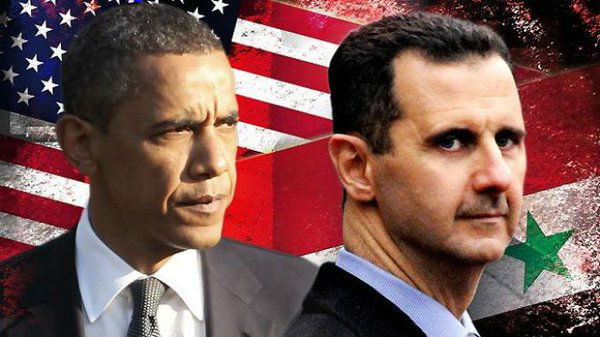
Obama’s disastrous handling of the Syrian conflict

Hisham Melhem writes: For more than three decades, I have tried to interpret America to the Arabs and to explain the Arabs to Americans. I have never seen such disillusionment with an American president and his policies expressed by people in the region, ordinary citizens as well as public figures. In private, I have heard Arab officials express critical views of Obama and his style of leadership bordering on utter contempt; some Israeli officials did that publicly. For his Arab allies, Obama was too deferential to Iran and too quick to dump President Hosni Mubarak of Egypt — views also held by Israeli officials. Arabs feel Obama also mishandled Syria, a view strongly held also by Turkey. It is rarely the case for an American president to find that his relationships with Arabs, Israelis, and Turks are simultaneously troubled and in some cases very bitter.

Nor is Obama popular with the region’s ordinary citizens. A Pew Research Center poll in June 2015 shows that Obama’s image in the Middle East is mostly negative, with more than eight in ten Palestinians and Jordanians saying that they have no confidence in Obama to do the right thing in world affairs. In Lebanon 64 percent have no confidence in Obama’s leadership, with only 50 percent of Israelis saying they have confidence in the American president. In Turkey Obama’s fortune is better, but not by much where 46 percent of Turks have a negative assessment of his leadership. There is much anecdotal evidence showing that Arab youth in general have soured on Obama, accusing him of reneging on his early pledges to oppose Arab despotism and to stand by those who sought peaceful change in Egypt and Bahrain, and of abandoning Libya after the fall of the Gadhafi regime. However, what angers many Arabs is Obama’s disastrous handling of the Syrian conflict; they blame his indecisiveness on challenging the Bashar Al-Assad regime’s predations, and halfhearted measures toward helping the Syrian opposition, for the worst human tragedy in the twenty-first century. [Continue reading…]

Facebooktwittermail

How Iraq warped Obama’s worldview

obama-assad

Shadi Hamid writes: On October 2, 2002, Barack Obama gave a speech opposing war in Iraq—perhaps, in retrospect, the most important speech he ever gave. He was right, of course, and the foreign-policy establishment was largely wrong. The problem is that politicians who were right about Iraq tend to overestimate what that says about their foreign-policy judgment. For Obama, the effects of being right are magnified. He became president, in part, because of Iraq and the considerable damage the conflict had done to the country. Obama offered the promise of a decisive correction and, for true believers, a kind of spiritual atonement.

It is unclear what being right on Iraq would mean for your likelihood of being right on Syria, since the contexts in question are, in a way, opposites: Civil war in Iraq began after the United States intervened. Civil war in Syria happened in the absence of intervention. History will have to judge, but it may actually be the case that being right on Iraq made you more likely to be wrong about subsequent interventions. The tragedy of Iraq, if you weren’t careful, was likely to distort your perception of everything that followed, for wholly understandable reasons.

Iraq’s dark shadow seems to be everywhere in Jeffrey Goldberg’s fascinating yet unsettling exchanges with Obama. “Multilateralism regulates hubris,” Obama says. And he is right: It does. What is left unsaid is why, exactly, regulating hubris should, seven years after the conclusion of the Bush era, remain a primary preoccupation. It is hard to imagine any world leader citing the hubris of overextension as the problem that the United States, today, must take extra care to correct for or guard against. Obama has already corrected for it, many times over. [Continue reading…]

Facebooktwittermail

How Obama has increased the risk of nuclear war

In January, the New York Times reported: As North Korea dug tunnels at its nuclear test site last fall, watched by American spy satellites, the Obama administration was preparing a test of its own in the Nevada desert.

A fighter jet took off with a mock version of the nation’s first precision-guided atom bomb. Adapted from an older weapon, it was designed with problems like North Korea in mind: Its computer brain and four maneuverable fins let it zero in on deeply buried targets like testing tunnels and weapon sites. And its yield, the bomb’s explosive force, can be dialed up or down depending on the target, to minimize collateral damage.

In short, while the North Koreans have been thinking big — claiming to have built a hydrogen bomb, a boast that experts dismiss as wildly exaggerated — the Energy Department and the Pentagon have been readying a line of weapons that head in the opposite direction.

The build-it-smaller approach has set off a philosophical clash among those in Washington who think about the unthinkable.

Mr. Obama has long advocated a “nuclear-free world.” His lieutenants argue that modernizing existing weapons can produce a smaller and more reliable arsenal while making their use less likely because of the threat they can pose. The changes, they say, are improvements rather than wholesale redesigns, fulfilling the president’s pledge to make no new nuclear arms.

But critics, including a number of former Obama administration officials, look at the same set of facts and see a very different future. The explosive innards of the revitalized weapons may not be entirely new, they argue, but the smaller yields and better targeting can make the arms more tempting to use — even to use first, rather than in retaliation. [Continue reading…]

Facebooktwittermail

ISIS chemical attack in Iraq wounds 600, kills child

The Associated Press reports: The Islamic State launched two chemical attacks this week near the northern Iraqi city of Kirkuk, killing a toddler, wounding some 600 people and causing hundreds more to flee, Iraqi officials said Saturday.

Security and hospital officials say the latest attack took place early Saturday in the small town of Taza, which was also struck by a barrage of rockets carrying chemicals three days earlier.

Sameer Wais, whose 3-year-old daughter Fatima was killed in the attack, is a member of a Shiite militia fighting ISIS in the province of Kirkuk. He said he was on duty at the frontline when the attack occurred early in the morning, quickly ran home and said he could still smell the chemicals in the rocket.

“We took her to the clinic and they said that she needed to go to a hospital in Kirkuk. And that’s what we did, we brought her here to the hospital in Kirkuk,” he said.

Wais said his daughter appeared to be doing better the next day so they took her home. “But by midnight she started to get worse. Her face puffed up and her eyes bulged. Then she turned black and pieces of her skin started to come off,” he said.

By the next morning, Fatima had died, Wais said. [Continue reading…]

Facebooktwittermail

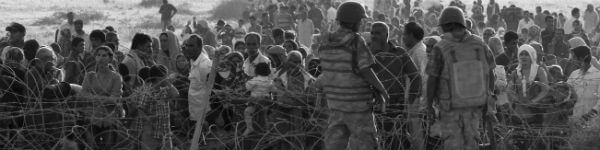
No way out: How Syrians are struggling to find an exit

refugee5

Eleonora Vio reports: Over the last five years, close to 4.8 million Syrians have fled the conflict in their country by crossing into Jordan, Lebanon and Turkey. But as the war drags on, neighbours are sealing their borders. Forced from their homes by airstrikes and fighting on multiple fronts, the vast majority of Syrian asylum seekers now have no legal escape route.

Earlier this week, EU leaders reached a hard-won deal with Turkey aimed at ending a migration crisis that has been building since last year, and that in recent weeks has seen tens of thousands of migrants and refugees stranded in Greece. But the agreement turns a blind eye to the fact that even larger numbers of asylum seekers are stranded back in Syria, unable to reach safety.

Syrians hoping to apply for asylum in Europe first have to physically get there. EU member states closed their embassies in Syria at the start of the conflict, and even embassies and consulates in neighbouring countries have been reluctant to process visa and asylum applications.

When Syria’s war erupted in March 2011, it was initially relatively easy for most refugees to leave the country. Those without the means to fly poured out in waves of tens of thousands across land borders into Jordan, Lebanon, and Turkey. But one by one, these exits have been restricted or closed off entirely. [Continue reading…]

Facebooktwittermail

Iran’s need for national reconciliation

Akbar Ganji writes: Hassan Rouhani was elected Iran’s president in June 2013 based on his promise of reaching a nuclear agreement and improving the relations with the West. He delivered on his promise, and in the process a close working relationship developed between Iranian Foreign Minister Mohammad Javad Zarif and Secretary of State John Kerry. The two diplomats have been discussing various issues, including the cease-fire in Syria. On March 6, President Rouhani said, “We can authorize our negotiation team to discuss other issues [with the West] in the world [that are of mutual interest]. We are sure that we will reach agreement similar to the nuclear negotiations.”

The Iranian people support these efforts and wish for improved relations with the United States. Under the leadership of former presidents Mohammad Khatami and Akbar Hashemi Rafsanjani, as well as Rouhani, Iran’s reformists and moderates want to pursue such goals. Leaders of the Green Movement who are under house arrest, namely former Prime Minister Mir Hossein Mousavi, his wife Zahra Rahnavard and former parliament speaker Mehdi Karroubi also support the policy of détente with the West.

Since the nuclear agreement between Iran and the P5+1 was signed in July 2015, the main problem in Iran has been national reconciliation. In other words, just as Iran and the P5+1 resolved their long-held and difficult differences diplomatically, Iranians from all walks of life also want to resolve the issues that are dividing their nation. Iranians call the nuclear agreement Barjam, the Farsi acronym for Joint Comprehensive Plan of Action. The reformists and moderates are now talking about the second Barjam, or Barjam 2, which they hope will lead to the release of all political prisoners, an end to the house arrest of the Green Movement’s leaders, freedom for political parties, independence for the universities and colleges and the resolution of other important issues.

These were also Rouhani’s promises during his campaign for the presidency, which have been opposed by Supreme Leader Ayatollah Ali Khamenei, who favors controlling cultural affairs as well as the universities. [Continue reading…]

Facebooktwittermail

Iran executions hit 20-year high in 2015, UN investigator says

Reuters reports: Iran executed nearly 1,000 prisoners last year, the highest number in two decades, and hundreds of journalists, activists and opposition figures languish in custody, a United Nations investigator said on Thursday.

Ahmed Shaheed, U.N. special rapporteur on human rights in Iran, voiced particular concern about executions for crimes committed by children under 18. This was “strictly and unequivocally prohibited under international law”.

There had been a “staggering surge in the execution of at least 966 prisoners last year – the highest rate in over two decades”, Shaheed told a news briefing. [Continue reading…]

Facebooktwittermail

Carbon dioxide levels ‘exploded’ last year to reach record highs not seen since end of Ice Age, scientists warn

The Independent reports: Levels of carbon dioxide in the atmosphere “exploded” last year to reach a new record high not seen for thousands of years, scientists have announced.

The last time there was such a sustained increase in carbon dioxide concentrations was at the end of the last Ice Age, between 17,000 and 11,000 years ago. But the current increase is now about 200 times faster than then, they said.

A combination of man-made emissions of carbon dioxide and the effects of the El Nino phenomenon in the Pacific Ocean have both contributed to the rapid rise at a time when the world is trying to curb emissions of the greenhouse gas, the researchers said.

Instruments monitoring CO2 levels at the Mauna Loa Observatory in Hawaii recorded a jump of 3.05 parts per million (ppm) during 2015, which is the largest year-on-year increase in 56 years of research at the site, according to the US National Oceanic and Atmospheric Administration (NOAA). [Continue reading…]

Facebooktwittermail

The people whose lives are controlled by machines

structure10

Kao Kalia Yang writes: My life in America has been a series of days spent within the confines of factories. For the last twenty-two years, I have worked with machines. Since we came to this country I have worked for three different companies. I was an assembler in a company that made coolant systems for cars. I was a general machinist for a second company that made wooden plaques and metal awards. With the most recent company, I was a second-shift polisher for different components that are used in industries such as canning and oil drilling. There have been moments in each of these jobs when my supervisors said in different ways, ‘Bee, you are not here to talk to me. You are here to talk to machines.’

In America, my voice is only powerful within our home. The moment I exit our front door and enter the paved roads, my deep voice loses its volume and its strength. When I speak English, I become like a leaf in the wind. I cannot control the direction my words will fly in the ear of the other person. I try to soften my landing in the language by leaving pauses between each word. I wrestle with my accent until it is a line of breath in the tightness of my throat. I greet people. I ask for directions. I say thank you. I say goodbye. I only speak English at work when it is necessary. I don’t like the weakness of my voice in English, but what I struggle with most is the weakness of my words.

In Hmong, my children hear so much of my words that sometimes I know they become heavy with the meaning I want to impart. I tell my children that my work in America is not important, but I work hard so that one day their work will be. I tell them that my big dream is for one of them to become an international human rights lawyer and bring justice to stories and lives like ours. I want one son or daughter to cross over the petty barriers erected by nations and states and stand firm for those who do not belong to these definitions. [Continue reading…]

Facebooktwittermail

China blasts U.S. ‘rape and murder’ at UN Human Rights Council

Reuters reports: China strongly rejected U.S.-led criticism of its human rights record at the U.N. Human Rights Council on Thursday, saying the United States was hypocritical and guilty of crimes including the rape and murder of civilians.

“The U.S. is notorious for prison abuse at Guantanamo prison, its gun violence is rampant, racism is its deep-rooted malaise,” Chinese diplomat Fu Cong told the Council, using unusually blunt language.

“The United States conducts large-scale extra-territorial eavesdropping, uses drones to attack other countries’ innocent civilians, its troops on foreign soil commit rape and murder of local people. It conducts kidnapping overseas and uses black prisons.”

Fu was responding to a joint statement by the United States and 11 other countries, who criticised China’s crackdown on human rights and its detentions of lawyers and activists. [Continue reading…]

Facebooktwittermail

It took a freedom of information lawsuit to uncover how the Obama administration killed FOIA reform

Jason Leopold reports: The Obama administration has long called itself the most transparent administration in history. But newly released Department of Justice (DOJ) documents show that the White House has actually worked aggressively behind the scenes to scuttle congressional reforms designed to give the public better access to information possessed by the federal government.

The documents were obtained by the Freedom of the Press Foundation, a nonprofit organization that supports journalism in the public interest, which in turn shared them exclusively with VICE News. They were obtained using the Freedom of Information Act (FOIA) — the same law Congress was attempting to reform. The group sued the DOJ last December after its FOIA requests went unanswered for more than a year.

The documents confirm longstanding suspicions about the administration’s meddling, and lay bare for the first time how it worked to undermine FOIA reform bills that received overwhelming bipartisan support and were unanimously passed by both the House and Senate in 2014 — yet were never put up for a final vote. [Continue reading…]

Facebooktwittermail

It’s not just Trump. Authoritarian populism is rising across the West. Here’s why.

Pippa Norris writes: Many American commentators have had trouble understanding the rise of Donald Trump. How could such a figure surge to become the most likely standard-bearer for the GOP – much less have any chance of entering the White House?

But Trump is far from unique. As many commentators have noted, he fits the wave of authoritarian populists whose support has swelled in many Western democracies.

The graph below from ParlGov data illustrates the surge in the share of the vote for populist authoritarian parliamentary parties (defined as rated 8.0 or above by experts on left-right scales) across 34 OECD countries. [Continue reading…]

Facebooktwittermail

Will Trump’s campaign manager face criminal charges?

David A Graham reports: Since his campaign manager was accused of assaulting a Breitbart reporter, Donald Trump has taken his case to the court of public opinion. Now, Corey Lewandowski, the accused staffer, may have to take his case to criminal court as well. Michelle Fields has filed a police report about the incident in Jupiter, Florida, the town’s police department confirmed in a statement. The news was first reported by the Independent Journal Review.

Fields says she was grabbed and yanked out of Trump’s way Tuesday night as she tried to ask him a question at a post-election press conference. Washington Post reporter Ben Terris witnessed the incident. But the Trump campaign suggested Fields was lying and had fabricated in the incident. The Brietbart reporter, upset by the denials, then tweeted a picture of her bruises.

Trump again escalated his game of brinksmanship Thursday night after the Republican debate. “Perhaps she made the story up. I think that’s what happened,” he said. Lewandowski, meanwhile, tweeted, “You are totally delusional. I never touched you. As a matter of fact, I have never even met you.”

Lewandowski’s alleged rough handling of Fields is one of two disturbing incidents of violence at Trump events in the last week. On Wednesday in Fayetteville, N.C., an attendee sucker-punched a protestor who was being removed by police and later told Inside Edition, “Next time, we might have to kill him.” There was near-violence outside that rally as well, as I reported. [Continue reading…]

Facebooktwittermail

The Obama doctrine: The Middle East doesn’t matter but even if it did, there’s nothing the U.S. can do to fix it

Jeffrey Goldberg writes: Inside the West Wing, officials say that Obama, as a president who inherited a financial crisis and two active wars from his predecessor, is keen to leave “a clean barn” to whoever succeeds him. This is why the fight against isis, a group he considers to be a direct, though not existential, threat to the U.S., is his most urgent priority for the remainder of his presidency; killing the so-called caliph of the Islamic State, Abu Bakr al-Baghdadi, is one of the top goals of the American national-security apparatus in Obama’s last year.

Of course, isis was midwifed into existence, in part, by the Assad regime. Yet by Obama’s stringent standards, Assad’s continued rule for the moment still doesn’t rise to the level of direct challenge to America’s national security.

This is what is so controversial about the president’s approach, and what will be controversial for years to come—the standard he has used to define what, exactly, constitutes a direct threat.

Obama has come to a number of dovetailing conclusions about the world, and about America’s role in it. The first is that the Middle East is no longer terribly important to American interests. The second is that even if the Middle East were surpassingly important, there would still be little an American president could do to make it a better place. The third is that the innate American desire to fix the sorts of problems that manifest themselves most drastically in the Middle East inevitably leads to warfare, to the deaths of U.S. soldiers, and to the eventual hemorrhaging of U.S. credibility and power. The fourth is that the world cannot afford to see the diminishment of U.S. power. Just as the leaders of several American allies have found Obama’s leadership inadequate to the tasks before him, he himself has found world leadership wanting: global partners who often lack the vision and the will to spend political capital in pursuit of broad, progressive goals, and adversaries who are not, in his mind, as rational as he is. Obama believes that history has sides, and that America’s adversaries — and some of its putative allies — have situated themselves on the wrong one, a place where tribalism, fundamentalism, sectarianism, and militarism still flourish. What they don’t understand is that history is bending in his direction.

“The central argument is that by keeping America from immersing itself in the crises of the Middle East, the foreign-policy establishment believes that the president is precipitating our decline,” Ben Rhodes told me. “But the president himself takes the opposite view, which is that overextension in the Middle East will ultimately harm our economy, harm our ability to look for other opportunities and to deal with other challenges, and, most important, endanger the lives of American service members for reasons that are not in the direct American national-security interest.”

If you are a supporter of the president, his strategy makes eminent sense: Double down in those parts of the world where success is plausible, and limit America’s exposure to the rest. His critics believe, however, that problems like those presented by the Middle East don’t solve themselves — that, without American intervention, they metastasize.

At the moment, Syria, where history appears to be bending toward greater chaos, poses the most direct challenge to the president’s worldview. [Continue reading…]

Facebooktwittermail

Lost in the world: The young people shunted around a global asylum system

By Elaine Chase, UCL and Nando Sigona, University of Birmingham

Immigration control is a global phenomenon. Young people seeking safety and security are subjected to the vagaries of all kinds of “solutions” at various national borders. Sometimes they are taken in and sometimes they are turned away. Sometimes, as we have found in our research, they are offered help but then deported as soon as they become legal adults. These people end up drifting between states and detained in immigration centres without understanding the system that put them there.

Each year many young people arrive in a Western country as unaccompanied children. They may be granted time-limited leave to remain and spend their teenage years there. Then they are told to leave. This can happen when a young person becomes a legal “adult” (institutionally and politically at the age of 18) and is no longer eligible for the same protections and rights that they enjoyed as children.

Once appeal rights have been exhausted, they can be forcibly returned to their countries of origin. From here, finding life unsustainable and unsafe, many re-migrate. Rejected in one region of the globe, they seek security in another, searching for the ever elusive better life.

Continue reading

Facebooktwittermail

Trump’s is the ugly face of a political insurgency that spans the Atlantic

trump

Philip Stephens writes: The terms of politics in many of the world’s advanced democracies had changed well before [Donald Trump] joined the Republican primary contest. If the party of Lincoln now risks being devoured by its own terrible creation, the European model of consensual centrism has been under threat for some time. Mr Trump’s flair, if you can call it that, has been in riding the wave.

Populists in Europe fume against the same supposed conspiracy of the elites that Mr Trump claims is doing down America’s middle classes. The binding threads of the shared populism are angry nationalism and state intervention. Europeans used to call it national socialism. Mr Trump wants to expel Mexicans and bar Muslims. In France, the National Front’s Marine Le Pen is bidding for the presidency on a platform of Islamophobia and state capitalism. Both are unabashed admirers of Russian president Vladimir Putin.

The other day a proudly neo-Nazi party — complete with sinister black uniforms and lightning flashes — won seats in the Slovakian parliament. In neighbouring Hungary, prime minister Viktor Orban presides over an authoritarian regime that is hostile to Muslims, permissive of anti-Semitism and blames foreign capital for the country’s economic ills. Poland’s politics have swung towards the xenophobic right. Nationalists are on the march in Scandinavia and Italy. And while populists on the far right rail against migrants, their cousins on the extreme left join them in blaming globalisation for economic ills.

Germany, hitherto a linchpin of the continent’s political stability, faces the beginnings of its own insurgency in the rise of the Eurosceptic and anti-migrant Alternative für Deutschland party. In Britain, the movement to take Britain out of the EU has its own populist hue. Mr Trump promises to make America great again by throwing up the barricades. Boris Johnson, the ambitious mayor of London, pledges that Brexit would see Britons “take back control” of the nation’s borders. [Continue reading…]

Facebooktwittermail