Category Archives: Issues

Third Republic: Germany enters a dangerous new political era

Dirk Kurbjuweit writes: Seven or eight months ago, Germany was a different country than it is today. There were no controversial political issues demanding immediate action and Chancellor Angela Merkel’s leadership was uncontested. It was quiet and comfortable. But then the refugees began streaming into Europe and the country’s sleepy tranquility came to a sudden end. Since then, disgusting eruptions of xenophobia have come in quick succession, a right-wing populist party is on its way to holding seats in several state parliaments, Merkel has gained approval from the center-left Social Democrats and from the Greens, some conservatives want to throw her out and the state is overwhelmed. Does anyone know what is happening? What is wrong with this country?

For Germany, this is the second democratic republic, if one leaves out East Germany, since it was only a faux democracy. First came the Weimar Republic, from 1918 to 1933, and then, since 1949, the Federal Republic, which simply continued following the momentous events of 1989. But now, it looks as though the refugee crisis has brought a significant rupture. To be sure, the German constitution and the country’s institutions won’t be called into question any time soon. But the conventions governing Germany’s political interactions are changing with incredible speed.

A crisis of representation is necessarily accompanied by jolts to the political party system. Some of those jolts have been a long time in the making, but they are now becoming apparent as the refugee crisis takes hold. It could be that our country is currently experiencing lasting change. The contours of a Third Republic are becoming apparent. [Continue reading…]

Facebooktwittermail

Russian hostility ‘partly caused by West’, claims former U.S. defence head

The Guardian reports: The current level of hostility in US-Russian relations was caused in part by Washington’s contemptuous treatment of Moscow’s security concerns in the aftermath of the cold war, a former US defence secretary has said.

William Perry, who was defence secretary in Bill Clinton’s administration from 1994 to 1997, emphasised that in the past five years it has been Vladimir Putin’s military interventions in Ukraine, Syria and elsewhere that have driven the downward spiral in east-west relations.

But Perry added that during his term in office, cooperation between the two countries’ militaries had improved rapidly just a few years after the fall of the Soviet Union and that these gains were initially squandered more as a result of US than Russian actions. [Continue reading…]

Facebooktwittermail

EU demands investigation into Italian student ‘assassination’ in Egypt

Middle East Eye reports: The European Parliament on Thursday passed a resolution condemning “the torture and assassination” of Italian student Giulio Regeni in Egypt, describing the killing as not being isolated but taking place in a “context of torture, death in custody and enforced disappearances”.

The resolution called for a joint and transparent investigation into Regeni’s death by both Egyptian and Italian authorities and passed with a huge majority – 588 MEPs voted for it, just 10 voted against, and 59 abstained.

Dutch MEP Marietje Schaake, who supported the resolution, told Middle East Eye that Regeni’s killing has served as a “wake-up call” to European politicians about the seriousness of the human rights situation in Egypt.

“It is sad that it took the torturing to death of a European student to act as a wake-up call for some that still needed one,” she said. “This case, along with the structural repression of Egyptians, including through torture, imprisonment and disappearances, should much more strongly guide EU policies towards Egypt.”

Regeni, 28, was a doctoral candidate at the UK’s Cambridge University, and was in Egypt researching the development of Egyptian trade unions when he disappeared on 25 January – the same day as the fifth anniversary of Egypt’s uprising that overthrew long-time leader Hosni Mubarak.

On 3 February Regeni’s body was found on a road on the outskirts of Cairo bearing the hallmarks of severe beating and torture. There has been widespread speculation that Egyptian security services – known for their torture of detainees – were involved in the killing but the government of President Abdel-Fattah al-Sisi has denied this. [Continue reading…]

Facebooktwittermail

UK setting bad example on surveillance, says UN privacy chief

decay14bw

The Guardian reports: The UK is setting a bad example to the rest of the world with proposed changes to the law on surveillance, the United Nations special rapporteur on privacy has said.

The criticism by rapporteur Joseph Cannataci is made in a report presented to the UN Human Rights Council. The report deals with privacy concerns worldwide but Cannataci, concerned about developments in the UK, has devoted a section to the British bill.

He says the British government has failed to recognise the consequences of legitimising bulk data collection or mass surveillance. Instead of legitimising it, the government should be outlawing it, he says. [Continue reading…]

Facebooktwittermail

No government is more responsible for ISIS’s growth than Assad’s

Raqqa1

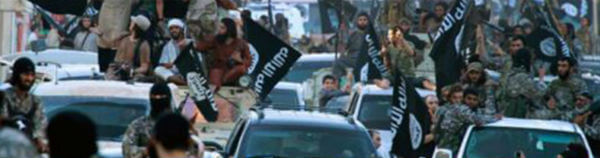
Kyle Orton writes: Last week, a judgment in United States District Court in Washington, D.C., awarded nearly $350 million to the families of two Americans killed in Jordan in 2005 by the predecessor organization to the Islamic State (ISIS). The important point of the case was who the court found liable: the regime of Bashar al-Assad, currently presenting itself to the world as the last line of defense to a terrorist takeover of Syria. This case highlights a neglected history, which began in 2002, where the Assad regime underwrote ISIS and fostered its growth, first to destabilize post-Saddam Iraq and later Lebanon, and since 2011 to discredit and destroy the uprising against Assad in Syria.

The group now known as ISIS was founded in early 2000 with Al-Qaeda seed money at a camp in Taliban-controlled Afghanistan. ISIS’ founder, Abu Musab al-Zarqawi, did not formally swear allegiance to Osama bin Laden until 2004, but the two pooled resources, notably on the Millennium Plot, which was meant to target Zarqawi’s Jordanian homeland and Los Angeles International Airport.

After the U.S. overthrew the Taliban in the wake of 9/11, Bin Laden went to Pakistan and Zarqawi went to Iran. Zarqawi then moved into Iraqi Kurdistan in April 2002, joining Ansar al-Islam, a group he and Al-Qaeda had co-sponsored, which was waging war against the elected Kurdish government that was protected by the Anglo-American no-fly zone. Ansar was penetrated at senior levels by agents of the Saddam Hussein regime, according to Kurdish intelligence, which also caught Saddam providing “logistical support, money, weapons, transportation [and] safe houses” to Ansar. Any enemy of the Kurds was a friend of Saddam’s — even before the reorientation of Saddam’s foreign policy in the mid-1980s toward instrumentalizing Islamist groups for the Baathist government’s own ends (which was later extended to internal policy).

By May 2002, Zarqawi was in Baghdad with a group of more than a dozen Al-Qaeda-affiliated jihadists, including: Zarqawi’s successor, Abu Hamza al-Muhajir, a long-time Qaeda-affiliated Egyptian who was arrested in 2014 while training jihadists in Libya, Thirwat Shehata, and Abu Humam al-Suri, who went on to become the military chief of Jabhat al-Nusra (Al-Qaeda in Syria). Zarqawi, who had “relatively free” movement within Iraq, departed Iraq in the early summer of 2002 to go on a recruitment-drive in the Levant.

First, Zarqawi went to Ain al-Hilweh, a Palestinian camp in southern Lebanon known for its Islamist militancy, and then to Syria. Zarqawi recruited numerous Syrians, notably ISIS’ current spokesman, Taha Falaha, better known as Abu Mohammed al-Adnani. From Syria, Zarqawi organized — with the complicity of Assad — the assassination of a U.S. diplomat, Laurence Foley, in Jordan. More importantly, Zarqawi set up, in collaboration with the Syrian secret police, the networks that would bring the foreign jihadists into Iraq after the fall of Saddam.

During the invasion of Iraq, Mahmoud al-Aghasi (pseudonym: Abu al-Qaqa), a Salafi agitator in Aleppo, had gone door-to-door rounding up young men to go and wage jihad in Iraq, who were then allowed to pass into Iraq unhindered by Syrian border guards. Al-Aghasi was an asset of Assad’s intelligence. Throughout the entire U.S.-led occupation of Iraq, Syria was the main conduit for ISIS’ foreign volunteers who formed the overwhelming majority of the suicide bombers. [Continue reading…]

Facebooktwittermail

Former DIA director, now Trump adviser, sees Muslims as dangerous and Putin as great ally

The Daily Beast reports: As Donald Trump inches closer to the Republican nomination for president, he has faced repeated calls from rival candidates and the press to name the national security and foreign policy experts who advise him and who are helping to shape his views on critical questions that he would confront as commander-in-chief.

Last week, Trump — who has called for banning foreign Muslims from entering the U.S., killing the families of terrorists, and using torture — said in an interview with MSNBC’s Morning Joe that he would identify the members of “the team” he consults “very shortly,” and that, “I don’t think there’s any rush… I just don’t want to do it now.”

But in interviews with current and former U.S. defense and intelligence officials, one name continues to surface as a trusted Trump adviser and go-to man on intelligence and national security: Retired Army Lt. Gen. Michael Flynn, a well-known and outspoken critic of the Obama administration’s campaign against ISIS and its foreign policy.

In Trump, Flynn may have found a kindred spirit—a brash, candid provocateur who seems more interested in upending whole systems than in fine-tuning them. He is also the most prominent name to emerge of those who could help shape the nascent Trump doctrine. And that has made some current and former officials who know Flynn nervous.

They question why the retired general, who has earned criticism for his leadership style but has generally been regarded as a well-intentioned professional, would assist a candidate who has called for military actions that would constitute war crimes.

“I think Flynn and Trump are two peas in a pod,” one former senior U.S. intelligence official who knows Flynn told The Daily Beast. “They have this naive notion that yelling at people will just solve problems.”

Flynn, who was forced out of his post as director of the Defense Intelligence Agency in August 2014 after clashing with other senior officials, has said that “political correctness” has prevented the U.S. from confronting violent extremism, which he sees as a “cancerous idea that exists inside of the Islamic religion.” Flynn has authored a forthcoming book that argues the U.S. government “has concealed the actions of terrorists like [Osama] bin Laden and groups like ISIS, and the role of Iran in the rise of radical Islam…” His co-author, Michael Ledeen, is a neoconservative author and policy analyst who was involved in the Iran-Contra Affair. [Continue reading…]

Facebooktwittermail

Is access to our phones a step toward the police wanting access to our minds?

By Nathan Emmerich, Queen’s University Belfast

We use our smartphones so much these days, it almost feels like they have become extensions of ourselves, boosting our capacity to calculate and remember. What might come of this closer union of human and technological device? If police can serve a warrant to search your phone, and we see these devices as extensions of ourselves, how long until investigators one day serve a warrant to search your mind?

This line of thinking was roused by the FBI’s legal efforts to force Apple to help them access an iPhone that belonged to a suspected terrorist – something Apple says would undermine the security of its products. This is one of several similar cases, and part of a larger effort by the FBI and intelligence agencies, to ensure they can access a variety of now common devices.

Continue reading

Facebooktwittermail

Outsourcing a humanitarian crisis to Turkey – is that the European thing to do?

By Marianna Fotaki, University of Warwick

European countries plan to send thousands of refugees back to Turkey in a deal aimed at preventing people from trying to reach the EU by sea.

In what is being described as a “one in, one out” deal, anyone washing up on the shores of Greece will be sent back to Turkey, with one person being transferred from a Turkish refugee camp in their place.

But the deal, which is yet to be finalised, is flawed from the outset. Denying refugees the right to apply for asylum as they reach the EU is against international humanitarian law. And refusing protection to unarmed people fleeing war and persecution by sending them back to Turkey, a country under threat of a civil war, is unconscionable.

European Union leaders must be both desperate and clueless to pursue this. If the goal is to save the European Union from implosion, the question is on what terms will its unity be maintained?

Continue reading

Facebooktwittermail

EU woos Turkey for refugee help, ignoring rights crackdown

The New York Times reports: The contrast was jarring: Just days after the police broke into the offices of an opposition newspaper using tear gas and water cannons, Turkey’s prime minister was greeted in Brussels with offers of billions in aid, visa-free travel for Turks in Europe and renewed prospects for joining the European Union.

The juxtaposition highlighted the conundrum Europe faces as it seeks solutions to its worst refugee crisis since World War II. To win Turkey’s desperately needed assistance in stemming the flow of migrants to the Continent, European officials seem prepared to ignore what critics say is President Recep Tayyip Erdogan’s steady march toward authoritarianism.

It is a moment of European weakness that the Turkish leadership seems keen to capitalize on. As Prime Minister Ahmet Davutoglu arrived in Brussels this week, he upped the ante, asking for more financial aid than was previously negotiated and demanding visa-free travel by June, while offering to take back some migrants who had crossed into Europe. [Continue reading…]

Facebooktwittermail

An ‘empire of women’ in Lebanon’s Bekaa Valley

Dylan Collins writes: As young Syrian refugee students celebrated International Women’s Day in the Bekaa Valley this week, education advocate Nora Jumblatt highlighted the increasingly important role of women throughout the refugee community. The war in Syria, despite its chaos and sadness, she said, has given rise to a “little miracle”

The war in Syria has brought about an “empire of women” in Lebanon’s Bekaa Valley, said civil society leader and education advocate Nora Jumblatt during a celebration of International Women’s Day.

Hundreds of young Syrian refugee girls participated in the festivities held at the Kayany Foundation’s Malala School in Bar Elias, a town equidistant from Beirut and Damascus that sits along the Syrian-Lebanese border. With the help of international organizations, local universities and volunteers, the foundation is empowering a new generation of Syrian women, equipping them with the tools and knowledge they’ll need to rebuild their country. [Continue reading…]

Facebooktwittermail

Russia warns North Korea over threats of nuclear strike

The Guardian reports: Russia has warned North Korea that threats to deliver “preventive nuclear strikes” could create a legal basis for the use of military force against the country, suggesting that even Pyongyang’s few remaining friends are growing concerned about its increasingly confrontational stance.

The Russian foreign ministry statement, which follows a North Korean threat to “annihilate” the US and South Korea, also criticises Washington and Seoul for launching the largest joint military drills yet to be held on the peninsula.

“We consider it to be absolutely impermissible to make public statements containing threats to deliver some ‘preventive nuclear strikes’ against opponents,” the Russian foreign ministry said in response to North Korea’s threats.

“Pyongyang should be aware of the fact that in this way the DPRK will become fully opposed to the international community and will create international legal grounds for using military force against itself in accordance with the right of a state to self-defense enshrined in the United Nations Charter,” continued the statement, translated by Itar Tass news agency. [Continue reading…]

Facebooktwittermail

China offers Afghanistan army expanded military aid

The Wall Street Journal reports: China has offered the Afghanistan army expanded military aid to combat the Taliban, according to the Afghan Defense Ministry, a move that reflects Beijing’s readiness to deepen its engagement with the war-torn country.

The offer was made during a rare, high-level visit at the end of February by a Chinese military delegation headed by General Fang Fenghui, chief of the Joint Staff Department of the People’s Liberation Army, Afghan officials said.

China has been wary of publicly supporting the Afghan military against the Taliban, as it nurtures relations with the militant group in an effort to be seen as a neutral party in the conflict and help the peace process. However, deteriorating security and the emergence of Islamic State has prompted China to take a more active role in Afghanistan.

The timing of General Fang’s recent trip was seen as a strong show of support for the Afghan government at a time when it is losing control over parts of the country following the withdrawal of most foreign troops in 2014. The Taliban now control nearly a third of the country, according to U.S. and allied officials. [Continue reading…]

Facebooktwittermail

Most Israeli Jews think they deserve preferential treatment — almost half favor ethnic cleansing

Universally, the targets of discrimination are more conscious of being treated unfairly than are the perpetrators of discrimination. Israel is no exception.

A new Pew Research report includes the following findings:

Roughly one-third of Muslims report having experienced at least one incident of discrimination in the past 12 months

Whereas only 21% of Israeli Jews see “a lot” of discrimination against Muslims, 79% of Israeli Arabs (Muslim and non-Muslim) do.

Vast majority of Arabs see 'a lot' of discrimination against Muslims

Perhaps the reason so few Israeli Jews see discrimination is because so many believe that as Jews, they deserve preferential treatment.

Most Jews say Israel should give preferential treatment to Jews

For half of Israeli Jews, a privileged status is apparently not enough — they would like to see Arab Israelis kicked out.

Majorities of Haredim, Datim agree Arabs should be expelled

Facebooktwittermail

American graduate student killed in stabbing rampage near Tel Aviv

The New York Times reports: A Palestinian on a stabbing rampage on Tuesday along a coastal promenade near Tel Aviv killed an American combat veteran who was a graduate student at Vanderbilt University.

The attacks occurred along a popular seaside boulevard in Jaffa, about a mile away from where Vice President Joseph R. Biden Jr. was meeting with a former president of Israel, Shimon Peres.

The stabbing attacks, carried out over 20 minutes, came just after Mr. Biden arrived for a two-day visit to Israel and the Palestinian territories. He is expected to meet with Prime Minister Benjamin Netanyahu and President Mahmoud Abbas of the Palestinian Authority on Wednesday.

The American was identified as Taylor Force, 28, a first-year M.B.A. student at the Owen Graduate School of Management at Vanderbilt, the university said in a statement. He was one of 29 students from the graduate school on a trip to Israel to learn about global entrepreneurship, according to a news release from Vanderbilt. The rest of the students, as well as the four faculty and staff members that accompanied them, were safe, it said. [Continue reading…]

Last October, following a knife attack on an Israeli policeman by a 19-year-old Palestinian, Mohammed Ali, Peter Beaumont wrote: How violence plays out in conflict –the weapons used, how attacks are executed and organised and who takes part and against what targets – are indicative of more than simply the act of killing or attempted killing. While the first Palestinian intifada was defined in the popular imagination as the “stone-throwing intifada” and the second as a conflict of suicide bombings and gun attacks, the new surge in violence has been so closely associated with knife attacks that on social media some have dubbed it the “knife intifada”.

At the entrance to the Shuafat refugee camp in East Jerusalem where Ali lived, three burned-out, overturned cars – part of a recent barricade – lie facing the Israeli police at the checkpoint in the wall that seals off the camp. The house where Ali’s male relatives are sitting in mourning is deep within the camp’s narrow lanes. They have not yet received his body for burial. His uncles, Assad Mohammed Ali and Mahmoud, tell a story familiar to those who have done these rounds of questioning before. Their nephew, they say, was a popular and happy youth. He had no problems – except he was angry at the Israeli occupation, and in particular at Israeli actions around the flashpoint religious site of the al-Aqsa mosque. So far, so familiar.

“We have a new generation,” another relative standing on a stairs above the uncles interjects, unwilling to be identified. “They are smart and clever. They can’t sustain the humiliation. They think: if you are going to kill us in the end, we should attack first. You have to understand that this generation is well educated. It is well informed and globalised. They can’t be fooled, like we were fooled in the old days. They have their own way of finding out what is going on. Social media and the internet are educating them.”

Asked about why this episode is different from the first and second intifadas, in the weapons of choice and the organisation or lack of it, Assad Mohammed Ali says: “This is a pure intifada. It is pure because it is about individuals’ personal motivation. They are the ones who sparked it.” The other uncle adds: “The last ones were political. This is not political; it is spontaneous.”

Assad Mohammed Ali adds that, confronted with what has been happening at al-Aqsa – with the fatal shootings of Palestinian teenagers – “kids started carrying knives” and his nephew was among them. He suggests a widespread and fatalistic anticipation of death. “When a person thinks death may be imposed, then he wants to die in a heroic way.” He mentions two men from the camp who were killed last year. “The new generation wants to try and imitate them.” [Continue reading…]

Facebooktwittermail

Michael Klare: A take-no-prisoners world of oil

It’s evident that we’re still on a planet where oil rules. The question increasingly is: What exactly does it rule over? After all, every barrel of oil that’s burned contributes to a fast-approaching future in which the weather grows hotter and more extreme, droughts and wildfires spread, sea levels rise precipitously, ice continues to melt away in the globe’s coldest reaches, and… well, you know that story well enough by now. In the meantime, Planet Earth has a glut of oil on hand and that, it turns out, doesn’t mean — not for the major oil companies nor even for the major oil states — that the good times are getting ready to roll.

Of all the powers struggling with that oil glut and the plunging energy prices that have gone with it, none may be more worth watching than Saudi Arabia. While exporting its own extremists and its extreme brand of Islam from Afghanistan to Syria, and lending a decades-long hand to the destabilization of the Greater Middle East, that kingdom has itself been a paragon of stability. Nothing, however, lasts forever, and so keeping an eye on the Saudis is a must. That’s especially so since the latest version of the royal family has also made what might be called the American mistake (with the backing of the Obama administration, no less) and for the first time plunged the Saudi military directly into a typically unwinnable if brutal war in neighboring Yemen. Combine the destabilizing and blowback effects of wars that won’t end, including the Syrian one, and of oil prices that refuse to rise significantly and, despite the kingdom’s copious money reserves, you have a formula for potential domestic unrest. Already the royals are cutting their domestic subsidies to their own population, pulling billions of dollars in aid out of Lebanon, and exploring a possible $10 billion bank loan.

As TomDispatch’s invaluable energy expert Michael Klare suggests today, when oil prices began plummeting in 2015, the Saudis launched an “oil war of attrition,” imagining that others would be devastated by it (as OPEC partners Nigeria and Venezuela already have been) but that the royals themselves would emerge triumphant.  Should the unimaginable happen, however, and should the kingdom itself begin to come unglued in a Greater Middle East that is increasingly the definition of chaos — watch out. Tom Engelhardt

Energy wars of attrition
The irony of oil abundance
By Michael T. Klare

Three and a half years ago, the International Energy Agency (IEA) triggered headlines around the world by predicting that the United States would overtake Saudi Arabia to become the world’s leading oil producer by 2020 and, together with Canada, would become a net exporter of oil around 2030. Overnight, a new strain of American energy triumphalism appeared and experts began speaking of “Saudi America,” a reinvigorated U.S.A. animated by copious streams of oil and natural gas, much of it obtained through the then-pioneering technique of hydro-fracking. “This is a real energy revolution,” the Wall Street Journal crowed in an editorial heralding the IEA pronouncement.

The most immediate effect of this “revolution,” its boosters proclaimed, would be to banish any likelihood of a “peak” in world oil production and subsequent petroleum scarcity.  The peak oil theorists, who flourished in the early years of the twenty-first century, warned that global output was likely to reach its maximum attainable level in the near future, possibly as early as 2012, and then commence an irreversible decline as the major reserves of energy were tapped dry. The proponents of this outlook did not, however, foresee the coming of hydro-fracking and the exploitation of previously inaccessible reserves of oil and natural gas in underground shale formations.

Continue reading

Facebooktwittermail

Why the world needs a UN treaty to combat violence against women

By Ronagh McQuigg, Queen’s University Belfast

Violence against women is one of the most prevalent human rights abuses in the world. It is estimated that 35% of women have experienced physical or sexual violence in their lives either by their partner or a stranger.

Yet there are no provisions under existing UN treaties which refer directly to this issue. This is unacceptable. It is time for the world to develop a new UN treaty on violence against women.

The absence of international, legally binding provisions set down in a UN treaty creates difficulties in holding countries accountable for their responses to domestic violence, forced marriage and a host of other abuses.

The UN’s primary instrument on the rights of women is the Convention on the Elimination of All Forms of Discrimination against Women (CEDAW), adopted in 1979. This convention contains no express mention of violence against women, although the CEDAW Committee (the convention’s monitoring body) interprets the issue as part of its remit.

Continue reading

Facebooktwittermail

Women of the Amazon defend their homeland against new oil contract

Emily Arasim and Osprey Orielle Lake report: In late January 2016, the government of Ecuador signed a controversial contract with Chinese oil company Andes Petroleum, handing over rights to explore and drill for oil deep in the country’s pristine southeastern Amazon Rainforest, known and revered by many as “the lungs of the Earth.”

For decades, Indigenous communities of the southern Ecuadorian Amazon have successfully fought to protect their land from encroachment by oil companies, engaging in local action and international policymaking and campaigns with a powerful message of respect for the Earth’s natural laws and the rights of Indigenous peoples.

At the forefront of this ongoing struggle are courageous Indigenous Amazonian women leaders who have declared, “We are ready to protect, defend and die for our forest, families, territory and nation.”

In marches, protests, conferences and international forums, the women of the Ecuadorian Amazon are standing with fierce love and conviction for the forests and their communities, and navigating a brutal intersection of environmental devastation, cultural dislocation and violence and persecution as women human rights and land defenders.

The women have repeatedly put their bodies on the frontline in an attempt to halt oil extraction across the Amazon, often facing harsh repression by the state security. [Continue reading…]

Facebooktwittermail

Millions of ordinary Americans support Donald Trump. Here’s why

Thomas Frank writes: Trade is an issue that polarizes Americans by socio-economic status. To the professional class, which encompasses the vast majority of our media figures, economists, Washington officials and Democratic power brokers, what they call “free trade” is something so obviously good and noble it doesn’t require explanation or inquiry or even thought. Republican and Democratic leaders alike agree on this, and no amount of facts can move them from their Econ 101 dream.

To the remaining 80 or 90% of America, trade means something very different. There’s a video going around on the internet these days that shows a room full of workers at a Carrier air conditioning plant in Indiana being told by an officer of the company that the factory is being moved to Monterrey, Mexico and that they’re all going to lose their jobs.

As I watched it, I thought of all the arguments over trade that we’ve had in this country since the early 1990s, all the sweet words from our economists about the scientifically proven benevolence of free trade, all the ways in which our newspapers mock people who say that treaties like the North Atlantic Free Trade Agreement allow companies to move jobs to Mexico.

Well, here is a video of a company moving its jobs to Mexico, courtesy of Nafta. This is what it looks like. The Carrier executive talks in that familiar and highly professional HR language about the need to “stay competitive” and “the extremely price-sensitive marketplace.” A worker shouts “Fuck you!” at the executive. The executive asks people to please be quiet so he can “share” his “information”. His information about all of them losing their jobs.

Now, I have no special reason to doubt the suspicion that Donald Trump is a racist. Either he is one, or (as the comedian John Oliver puts it) he is pretending to be one, which amounts to the same thing.

But there is another way to interpret the Trump phenomenon. A map of his support may coordinate with racist Google searches, but it coordinates even better with deindustrialization and despair, with the zones of economic misery that 30 years of Washington’s free-market consensus have brought the rest of America. [Continue reading…]

Facebooktwittermail