The Guardian reports: The leader of Germany’s anti-Islamic Pegida movement has caused indignation by linking a planned terrorist attack on Munich’s railway station with the tens of thousands of refugees who were applauded when they arrived there earlier this year.
In a tweet sent soon after police shut the station, Lutz Bachmann said that Germans who welcomed the refugees as they disembarked from trains should go back there and risk being blown up.
“All welcome-clappers should arrive immediately at Munich’s main train station,” Bachmann posted. He added the hashtag #RefugISISnotWelcome, a swipe at leftwing groups who have held counter-demonstrations at Pegida rallies using the slogan: “Refugees are welcome here.” [Continue reading…]
Category Archives: Issues
When my Japanese-American family was treated as less than human
Mike Honda writes: In the aftermath of the Paris and San Bernardino, California, terrorist attacks, the dangerous and destructive discourse about Muslims and Muslim Americans has reached a tipping point. Some Republican presidential candidates are calling for a ban of Muslims entering the country, and a Democratic mayor in Virginia is demanding the internment of Syrian refugees.
I can’t help but fear that history could be on the verge of repeating itself.
I am a third-generation American of Japanese ancestry, born in Walnut Grove, California. Yet my family and I were classified as enemy aliens simply because we looked like the enemy. In the days before we were taken from our communities, the life we knew was ripped from us.
In the aftermath of the attack on Pearl Harbor, on Dec. 7, 1941, the United States blamed us for the Japanese attack. Because of what the 1988 Civil Liberties Act labeled “war hysteria, racism and a failure of political leadership,” President Franklin D. Roosevelt signed Executive Order 9066, which confined the Japanese-American community in internment camps — and forever changing our lives and our community. [Continue reading…]
Gun-friendly Texas is getting even friendlier
The New York Times reports: Texas is so gun-friendly that it is easier to get into the Capitol in Austin with a firearm than without one — licensed, gun-carrying lawmakers and members of the public have their own no-wait security lane, and the unarmed masses have to stand in line and slog through the metal detectors.
But on Friday, gun rights throughout the state expanded still more, as a new law took effect that allows certain Texans to wear their handguns in holsters on their hips — or in shoulder holsters, Dirty Harry-style — openly displaying the fact that they are armed as they work, shop, dine and go about their day.
The so-called open-carry law has set off a long-simmering debate over the limits of the Texas gun culture and has given gun rights advocates a hard-fought victory after they pushed for the expansion for years. Members of the pro-gun group Open Carry Texas were to gather at noon Friday on the south steps of the Capitol for a gun-on-their-hips celebration before walking down Congress Avenue. Other groups plan to display their weaponry at events in Houston, Dallas and other cities. [Continue reading…]
Stranger than Strangelove: How the U.S. planned for nuclear war in the 1950s
By Paul Lashmar, University of Sussex
Those who have written about the nuclear Cold War remain grateful to Stanley Kubrick for giving us the satirical 1964 film Dr Strangelove which captures the madness that swept the world for 40 years. The name Strangelove may be overused but the United States has now released a secret file that really does justify the sobriquet: “Stranger than Strangelove”. Almost anodyne in title, Atomic Weapons Requirements Study for 1959 is a truly shocking document, revealing the scale of the holocaust that would have been unleashed in a nuclear war.
But a little context first. Back in 2006, the journalist Michael Dobbs filed requests for the declassification of many Pentagon Cold War documents. Dobbs optimistically hoped these documents would illuminate his book on the Cuban Missile Crisis. After years in the review system, in October 2014, some 2,200 documents were released – and with Dobbs’ help, the not-for-profit National Security Archive in Washington DC (not to be confused with the National Security Agency) has been working on the bundle ever since.
The archive has recently released its assessment and the highlights are that major cities in the Soviet Bloc, including East Berlin, were high priorities in “systematic destruction” for nuclear attack and that H-bombs were to be used against priority “air power” targets in the Soviet Union, China, and Eastern Europe. The report also found that plans to target people (“population”) were in violation of international legal norms.

National Security Archive, George Washington University
Meanwhile, Strategic Air Command (SAC) wanted a 60-megaton bomb – a weapon with the equivalent destructive power of over 4,000 Hiroshima devices.
Poachers using science papers to target newly discovered species
The Guardian reports: Academic journals have begun withholding the geographical locations of newly discovered species after poachers used the information in peer-reviewed papers to collect previously unknown lizards, frogs and snakes from the wild, the Guardian has learned.
In an age of extinctions, scientists usually love to trumpet the discovery of new species, revealing biological and geographical data that sheds new light on the mysteries of evolution.
But earlier this year, an announcement in the Zootaxa academic journal that two new species of large gecko had been found in southern China contained a strange omission: the species’ whereabouts.
“Due to the popularity of this genus as novelty pets, and recurring cases of scientific descriptions driving herpetofauna to near-extinction by commercial collectors, we do not disclose the collecting localities of these restricted-range species in this publication,” the paper said. [Continue reading…]
Is U.S. Congress empowering Iranian hard-liners?

Mahmoud Pargoo writes: [In 2013] Hassan Rouhani, who sternly criticized Ahmadinejad’s nuclear policies, won the election and appointed Mohammad Javad Zarif as foreign minister. Consequently, and as a result of the softening of the rhetoric and engagement in talks with the United States, the Joint Comprehensive Plan of Action (JCPOA) was signed between Iran and six world powers in July. The agreement was seen as evidence that if Iran engages in serious talks with the United States, issues can be gradually solved. Even Supreme Leader Ayatollah Ali Khamenei pointed to the likelihood of extending negotiations to other non-nuclear issues if the United States proves to be trustworthy.
This line of thinking, however, is changing with the recent series of US measures — including the recent congressional vote to restrict visa-free travel to the United States for those who have visited Iran in the past five years. Indeed, many in Iran are coming to the conclusion that no matter what rhetoric or action the Islamic Republic may assume, the United States will continue its enmity with Iran. Thus, a new consensus is being formed — but this time, against the United States. People from almost all political orientations have interpreted the new Visa Waiver Program (VWP) changes as running counter to the JCPOA. Ali Larijani, the parliament speaker and a powerful conservative supporter of the nuclear negotiations, has criticized the law, while many Reformist politicians have also condemned it as being against Iranian goodwill in engaging with the United States. Zarif, the foreign minister and chief nuclear negotiator, has additionally said that the new law breaches the JCPOA.
When seen in the light of historical parallels, the recent developments could be an alarming sign that certain elements in the US foreign policy establishment are seeking to paralyze any effort to normalize relations with Iran. [Continue reading…]
Iran vows to respond to any new U.S. sanctions
The Wall Street Journal reports: Iranian President Hassan Rouhani ordered his defense minister to expedite Iran’s ballistic-missile program following newly planned U.S. sanctions, he said Thursday, casting fresh doubt on the implementation of a landmark nuclear accord reached in July.
Mr. Rouhani made the announcement on his official Twitter account, without elaborating on what steps he had ordered Defense Minister Hossein Dehghan to take.
“If [the] U.S. continues its illegitimate interference [with] Iran’s right to defend itself a new program will be devised to enhance missile capabilities,” Mr. Rouhani tweeted.
“We have never negotiated regarding our defense capabilities, including our missile program & will not accept any restrictions in this regard,” he said.
An Iranian Foreign Ministry spokesman said earlier Thursday that Iran considered any new U.S. sanctions on its ballistic-missile program illegal and would respond accordingly.
“Such actions are unilateral, arbitrary and illegal and the Islamic Republic of Iran has warned the U.S. in this respect,” said spokesman Hossein Jaber Ansari, according to the official Islamic Republic News Agency.
The Obama administration is planning new sanctions on Iran, targeting almost a dozen companies and individuals in Iran, Hong Kong and the United Arab Emirates, U.S. officials told The Wall Street Journal on Wednesday. The planned action by the Treasury Department is targeted at businesses and individuals for their alleged role in developing Iran’s ballistic-missile program and would represent the first new sanctions on Iran since six world powers, including the U.S., reached the nuclear deal with Tehran. [Continue reading…]
A Russian sentiment familiar to Americans: ‘It doesn’t concern me’
Zhanna Nemtsova writes: A public opinion survey recently asked Russians: “What was the main political event of the year?”
Events in Crimea, Ukraine and Syria featured prominently, but the most brutal political murder in modern Russia – the assassination of my father, Boris Nemtsov, a prominent opposition figure – didn’t even figure in the responses.
Another survey conducted by the independent Levada Centre in March, soon after he was shot dead on a bridge close to the Kremlin, found that one-third of the Russians polled had “no particular feelings” about his murder.
Taken together, these responses illustrate a broader problem with the current condition of Russian society, characterised by moral numbness and best illustrated by the popular Russian sentiment – “it doesn’t concern me”.
This climate has also compromised the quality of the opposition itself and made it a heroic feat to even take part in the opposition movement in Russia.
The political system that President Vladimir Putin has built relies on a lack of public thought, and on people’s reluctance to ask questions, formulate positions or remember the past. Putin’s Russia has no need of people who think for themselves. [Continue reading…]
Israel bans novel on Palestinian-Jewish romance, seen as threat to ‘national-ethnic identity’
Haaretz reports: Israel’s Education Ministry has disqualified a novel that describes a love story between an Israeli woman and a Palestinian man from use by high schools around the country. The move comes even though the official responsible for literature instruction in secular state schools recommended the book for use in advanced literature classes, as did a professional committee of academics and educators, at the request of a number of teachers.
Among the reasons stated for the disqualification of Dorit Rabinyan’s “Gader Haya” (literally “Hedgerow,” but known in English as “Borderlife”) is the need to maintain what was referred to as “the identity and the heritage of students in every sector,” and the belief that “intimate relations between Jews and non-Jews threatens the separate identity.” The Education Ministry also expressed concern that “young people of adolescent age don’t have the systemic view that includes considerations involving maintaining the national-ethnic identity of the people and the significance of miscegenation.”
The book, published in Hebrew by Am Oved about a year and a half ago, tells the story of Liat, an Israeli translator, and Hilmi, a Palestinian artist, who meet and fall in love in New York, until they part ways for her to return to Tel Aviv and he to the West Bank city of Ramallah. The book was among this year’s winners of the Bernstein Prize for young writers.
A source familiar with the ministry’s approach to the book said that in recent months a large number of literature teachers asked that “Borderlife” be included in advanced literature classes. After consideration of the request, a professional committee headed by Prof. Rafi Weichert from the University of Haifa approved the request. The committee included academics, Education Ministry representatives and veteran teachers. The panel’s role is to advise the ministry on various educational issues, including approval of curriculum.
According to the source, members of the professional committee, as well as the person in charge of literature studies, “thought that the book is appropriate for students in the upper grades of high schools – both from an artistic and literary standpoint and regarding the topic it raises. Another thing to remember is that the number of students who study advanced literature classes is anyhow low, and the choice of books is very wide.”
Another source in the Education Ministry said that the process took a number of weeks, and that “it’s hard to believe that we reached a stage where there’s a need to apologize for wanting to include a new and excellent book into the curriculum.” [Continue reading…]
Are most Jewish terrorists ‘crazy Americans’?
Haaretz reports: Laura Wharton, an American-born political scientist who represents the left-wing Meretz party on the Jerusalem city council, is not surprised by the large number of children of English-speaking families among the terror suspects, noting that immigrants from these countries tend to be highly ideologically motivated, and are more likely to have radical extremists among their ranks. “I think in general people who immigrate to Israel from English-speaking countries, in fact from all wealthy countries, need a stronger incentive to make the move,” she says. “They also want to make their mark when they come here, for better or for worse.”
Sara Yael Hirschhorn, who has spent many years studying American immigrants living in the West Bank, believes the radicalism could reflect a failure to integrate smoothly into Israeli society. “I think it has to do with the fact that these people are not assimilated in the way that their native Israeli or perhaps other immigrant peers have managed to be,” she observes.
In some cases, she says, these teens may be acting out against their parents for not doing enough to make their mark on Israeli society. “It could be a rebellion against parents they thought had come to do some great ideological pioneering, but instead, turned out to be average suburbanites in places like Ma’aleh Adumim,” notes Hirschhorn, who serves as the University Research Lecturer and Sidney Brichto Fellow in Israel Studies at the University of Oxford.
The author of the upcoming book “City on a Hilltop: Jewish-American Settlers in the Occupied Territories Since 1967,” Hirschhorn has concluded that roughly 60,000 American Jews live in West Bank settlements, where they account for 15 percent of the settler population.
The number of American immigrants living in Israel, including their children, has been estimated at about 170,000.
This is not the first time that U.S. citizens have been associated with or convicted of terror activities in Israel. In 1994, Brooklyn-born Baruch Goldstein, a physician from Kiryat Arba, massacred 29 Palestinians while they were worshipping in the Cave of the Patriarchs in Hebron. Yaakov Teitel, originally from Florida, has been convicted of various acts of terrorism and hate crimes against Palestinians, homosexuals, Messianic Jews and left-wingers. Boston-born Baruch Marzel, a Kahane disciple, has a criminal record that includes assaults on Palestinians, policemen and left-wingers. Former New Yorker Ira Rappaport, a member of the Jewish Underground that emerged in the 1980s, was found guilty of involvement in a car bombing that left the former mayor of Nablus maimed.
Already back then, American immigrants had acquired a reputation as potential extremists.
Chaim Waxman, a retired professor of sociology and Jewish studies at Rutgers University, who has published extensively on immigration to Israel from the United State, recalls teaching a course at Tel Aviv University in the 1980s when reports about the Jewish Underground first started surfacing. “I remember the students talking about those ‘crazy Americans,’ even though only one member of the Underground was an American,” he recounts. “But that is an impression that many Israelis have.” [Continue reading…]

The paranoid style of American policing
Ta-Nehisi Coates writes: When I was around 10 years old, my father confronted a young man who was said to be “crazy.” The young man was always too quick to want to fight. A foul in a game of 21 was an insult to his honor. A cross word was cause for a duel, and you never knew what that cross word might be. One day, the young man got into it with one of my older brother’s friends. The young man pulled a metal stake out of the ground (there was some work being done nearby) and began swinging it wildly in a threatening manner. My father, my mother, or my older brother — I don’t recall which — told the other boy to go inside of our house. My dad then came outside. I don’t really remember what my father said to the young man. Perhaps he said something like “Go home,” or maybe something like, “Son, it’s over.” I don’t really recall. But what I do recall is that my dad did not shoot and kill the young man.
That wasn’t the first time I’d seen my father confront the violence of young people without resorting to killing them. This was not remarkable. When you live in communities like ours — or perhaps any community — mediating violence between young people is part of being an adult. Sometimes the young people are involved in scary behavior — like threatening people with metal objects. And yet the notion that it is permissible, wise, moral, or advisable to kill such a person as a method of de-escalation, to kill because one was afraid, did not really exist among parents in my community.
The same could not be said for those who came from outside of the community. [Continue reading…]
2015: A year of record heat shown in charts
Record heat is the biggest story for the planet in 2015 https://t.co/iaI9hwtbpn pic.twitter.com/K0QceQhZv7
— ClimateCentral (@ClimateCentral) December 31, 2015
Record heat is your climate chart of the year https://t.co/tDTHIiJtgi #2015inReview pic.twitter.com/9Afx6OChxD
— ClimateCentral (@ClimateCentral) December 31, 2015
The globe just keeps getting hotter and climate change is the main driver https://t.co/EaKb4EHz8L pic.twitter.com/DNQlD49lN2
— ClimateCentral (@ClimateCentral) December 31, 2015
The invasion of Antarctica

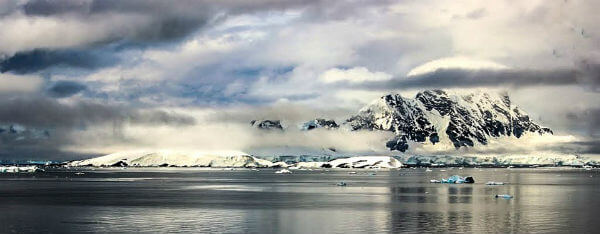
Simon Romero writes: On a glacier-filled island with fjords and elephant seals, Russia has built Antarctica’s first Orthodox church on a hill overlooking its research base, transporting the logs all the way from Siberia.
Less than an hour away by snowmobile, Chinese laborers have updated the Great Wall Station, a linchpin in China’s plan to operate five bases on Antarctica, complete with an indoor badminton court, domes to protect satellite stations and sleeping quarters for 150 people.
Not to be outdone, India’s futuristic new Bharathi base, built on stilts using 134 interlocking shipping containers, resembles a spaceship. Turkey and Iran have announced plans to build bases, too.
More than a century has passed since explorers raced to plant their flags at the bottom of the world, and for decades to come this continent is supposed to be protected as a scientific preserve, shielded from intrusions like military activities and mining.
But an array of countries are rushing to assert greater influence here, with an eye not just toward the day those protective treaties expire, but also for the strategic and commercial opportunities that exist right now.
“The newer players are stepping into what they view as a treasure house of resources,” said Anne-Marie Brady, a scholar at New Zealand’s University of Canterbury who specializes in Antarctic politics. [Continue reading…]
Middle East still rocking from First World War pacts made 100 years ago

Ian Black writes: In an idle moment between cocktail parties in the Arab capital where they served, a British and French diplomat were chatting recently about their respective countries’ legacies in the Middle East: why not commemorate them with a new rock band? And they could call it Sykes-Picot and the Balfour Declaration.
It was just a joke. These first world war agreements cooked up in London and Paris in the dying days of the Ottoman empire paved the way for new Arab nation states, the creation of Israel and the continuing plight of the Palestinians. And if their memory has faded in the west as their centenaries approach, they are still widely blamed for the problems of the region at an unusually violent and troubled time.
“This is history that the Arab peoples will never forget because they see it as directly relevant to problems they face today,” argues Oxford University’s Eugene Rogan, author of several influential works on modern Middle Eastern history.
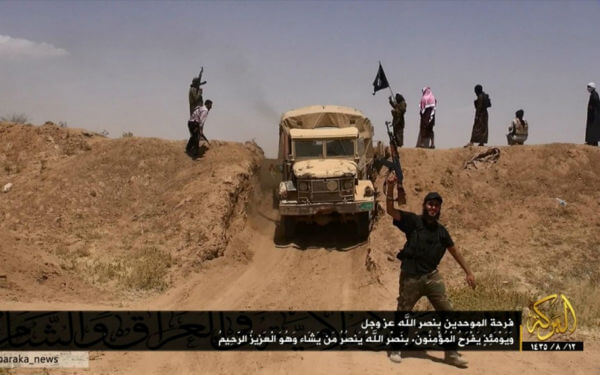
In 2014, when Islamic State fighters broke through the desert border between Iraq and Syria – flying black flags on their captured US-made Humvees – and announced the creation of a transnational caliphate, they triumphantly pronounced the death of Sykes-Picot. That gave a half-forgotten and much-misrepresented colonial-era deal a starring role in their propaganda war – and a new lease of life on Twitter. [Continue reading…]
As U.S. focuses on ISIS and the Taliban, Al Qaeda re-emerges
The New York Times reports: Even as the Obama administration scrambles to confront the Islamic State and a resurgent Taliban, an old enemy seems to be reappearing in Afghanistan: Qaeda training camps are sprouting up there, forcing the Pentagon and American intelligence agencies to assess whether they could again become a breeding ground for attacks on the United States.
Most of the handful of camps are not as big as those that Osama bin Laden built before the Sept. 11, 2001, attacks. But had they re-emerged several years ago, they would have rocketed to the top of potential threats presented to President Obama in his daily intelligence briefing. Now, they are just one of many — and perhaps, American officials say, not even the most urgent on the Pentagon’s list in Afghanistan.
The scope of Al Qaeda’s deadly resilience in Afghanistan appears to have caught American and Afghan officials by surprise. Until this fall, American officials had largely focused on targeting the last remaining senior Qaeda leaders hiding along Afghanistan’s rugged, mountainous border with Pakistan.
At least in public, the administration has said little about the new challenge or its strategy for confronting the threat from Al Qaeda, even as it rushes to help the Afghan government confront what has been viewed as the more imminent threat, the surge in violent attacks from the Taliban, the Haqqani network and a new offshoot of the Islamic State. Former administration officials have been more outspoken — especially those who were on the front lines of the original battle to destroy Al Qaeda’s central leadership. [Continue reading…]
A year of Taliban gains shows that ‘we haven’t delivered,’ top Afghan official says
The Washington Post reports: As the Afghan convoy entered the battered village, Taliban fighters opened fire. U.S.-trained Afghan policemen poured out of their Humvees and began wildly shooting their AK-47 rifles in every direction.
“The enemy is firing one bullet, and you are responding with dozens!” their commander, Col. Khalil Jawad, screamed into his radio in frustration. “Aim, then fire!”
A minute later, the militants melted away. On this day in early December in the southern province of Helmand, they had delivered their message: The Taliban is back, its fighters showing a battle discipline and initiative far superior to the Afghan security forces trained and equipped by the United States.
In private, top Afghan and American officials have begun to voice increasingly grim assessments of the resurgent Taliban threat, most notably in a previously undisclosed transcript of a late-October meeting of the Afghan National Security Council. [Continue reading…]
NSA’s targeting of Israeli leaders also caught private conversations between U.S. lawmakers and Israel lobby
The Wall Street Journal reports: President Barack Obama announced two years ago he would curtail eavesdropping on friendly heads of state after the world learned the reach of long-secret U.S. surveillance programs.
But behind the scenes, the White House decided to keep certain allies under close watch, current and former U.S. officials said. Topping the list was Israeli Prime Minister Benjamin Netanyahu.
The U.S., pursuing a nuclear arms agreement with Iran at the time, captured communications between Mr. Netanyahu and his aides that inflamed mistrust between the two countries and planted a political minefield at home when Mr. Netanyahu later took his campaign against the deal to Capitol Hill.
The National Security Agency’s targeting of Israeli leaders and officials also swept up the contents of some of their private conversations with U.S. lawmakers and American-Jewish groups. That raised fears — an “Oh-shit moment,” one senior U.S. official said — that the executive branch would be accused of spying on Congress.
White House officials believed the intercepted information could be valuable to counter Mr. Netanyahu’s campaign. They also recognized that asking for it was politically risky. So, wary of a paper trail stemming from a request, the White House let the NSA decide what to share and what to withhold, officials said. “We didn’t say, ‘Do it,’ ” a senior U.S. official said. “We didn’t say, ‘Don’t do it.’ ”
Stepped-up NSA eavesdropping revealed to the White House how Mr. Netanyahu and his advisers had leaked details of the U.S.-Iran negotiations — learned through Israeli spying operations — to undermine the talks; coordinated talking points with Jewish-American groups against the deal; and asked undecided lawmakers what it would take to win their votes, according to current and former officials familiar with the intercepts. [Continue reading…]
What Twitter really means for ISIS supporters

Amarnath Amarasingam writes: Abu Ahmad, one of Islamic State’s most active supporters online says he has had over 90 Twitter accounts suspended, but is not planning to slow down. He is a trusted member of what has come to be called the Baqiya family, a loose network of Islamic State supporters from around the world who share news, develop close friendships, and help each other when members get arrested or come under law enforcement surveillance. Abu Ahmad, as with all Baqiya members, agreed to talk to me on the condition that his real name and location not be published.
While Islamic State social media accounts used to flourish, Twitter has now been suspending the accounts of fighters and supporters alike. Scholars and analysts continue to debate whether this is effective and worthwhile.
For over two years now, I have co-directed a study of Western foreign fighters based at the University of Waterloo and have been interviewing — on Skype and various text messaging platforms — several dozen fighters and members of this Baqiya family. A few things are clear: First, while Twitter suspensions certainly disrupt their ability to seamlessly spread information, they have developed innovative and effective ways of coming back online. Second, these youth receive an enormous amount of emotional and social benefits from participating in their online “family.”
This online network is important for spreading the new Twitter accounts of individuals coming back from suspension. Watching Abu Ahmad’s accounts, for instance, I have been amazed at how quickly he is able to re-acquire his followers. At times, his new accounts are only active for a day or two before getting suspended again, but he manages to get most of his 1,000-plus followers back every time. “I follow people, and they follow me back. We do shout outs,” he told me during an interview last month; “we also have secret groups online which don’t get suspended, and we share our new accounts on there.” [Continue reading…]