Category Archives: Issues

One in three #Gaza children already showed signs of PTSD before the latest war

The New York Times reports: Hassan al-Zeyada has spent decades counseling fellow residents of the Gaza Strip who suffer from psychological trauma. Now, as he prepares to aid his neighbors after a new round of combat and carnage, he has a challenging new patient: himself.

An Israeli airstrike demolished Dr. Zeyada’s family home on July 20, killing six close relatives, including his mother and three of his brothers.

“You try to help the people with their suffering,” the doctor said recently in his Gaza City living room lined with psychology textbooks. “It’s totally different when you have the same experience. You lose six from your family — three brothers, your mom, one of your nephews, your sister in-law. It’s really” — he paused, red-eyed — “unexpected.”

He took a mental step back, to diagnose the hallmarks of trauma in himself: He was exhibiting dissociation, speaking in the second person to distance himself from pain, as well as denial. When he heard about new shelling near where his family lived in the Bureij refugee camp, he picked up the phone to call his oldest brother there. He had forgotten that the house was already gone, his brother already dead.

Dr. Zeyada, 50, works to destigmatize mental health care for a Palestinian population exposed repeatedly to war and displacement, practicing at the Gaza Community Mental Health Program, which was led by the pioneering Palestinian psychiatrist and human-rights advocate Dr. Eyad El-Sarraj until his death from leukemia in December.

Dr. Zeyada is not the only Palestinian caregiver to become a trauma victim. In the three weeks of attacks that Israel has said are meant to root out militant rocket fire and destroy clandestine tunnels into Israel, one of Dr. Zeyada’s colleagues at the program lost a brother, and their boss, Dr. Yasser Abu Jamei, lost 26 members of his extended family, including 19 children, in a single bombing.

It is difficult — even absurd, the clinicians say at their darkest moments — to try to mend psyches in the Gaza Strip, where even in calmer times the conditions are hardly conducive to psychological health, and safety is never more than provisional under the many cease-fires that have come and gone.

People cannot flee from Gaza; Israel and Egypt keep their borders virtually sealed. Residents can flee their neighborhoods, but even United Nations schools being used as shelters in Gaza have come under deadly fire. And in downtown Gaza City, where Israel has urged people to go for safety, Israeli airstrikes have repeatedly hit apartment buildings packed with residents and refugees. One strike collapsed most of a building and killed the family of a bank employee who had fled there on Israeli instructions.

The border restrictions, stemming from an eight-year standoff between Israel and Hamas, the militant group that dominates Gaza, have steadily eroded livelihoods in Gaza, adding to a sense of powerlessness. Even during relative lulls in violence, Israeli strikes periodically kill militants — and bystanders. People who do not want Hamas and other militants to use their farm fields to fire rockets, for fear of return fire from Israel, say they cannot always stop the combatants.

The healthy processing of grief and fear works best when sufferers feel they are out of danger, Dr. Zeyada said. But that is impossible in Gaza as long as the larger conflict persists.

Sometimes, he said, he was troubled by the ethics of treating people who were likely to be traumatized again. [Continue reading…]


Facebooktwittermail

What do #Gazans think of #Hamas, Abbas and #Israel’s strikes?

During a lull in the Israeli assault, Middle East Eye spoke to several residents of the Gaza Strip to find out their views on the war. Othman Swaliem, a 38 years old taxi driver, gave this response:

I never liked Hamas, because I disagree with their approach to ending conflict, but I am afraid we could not achieve our rights through other methods. Israel failed Abbas in negotiations and empowered Hamas by making people like me see them as the only option for changing a grim reality. The siege is killing people like me who need to feed 8 children. Now, Hamas sacrifices their lives and are owed our respect for trying the new approach – which is armed struggle – to end Israel’s siege and open the borders to freedom.

Islamic Jihad has always been a good fighter in the field. I’ve never had problems with them. They are softer than Hamas, but their relationship with Egypt will open doors for Hamas in Egypt, after being shut by Sisi after Morsi was pushed out.

As for Abbas, I wish he’d pay more attention to people like us who are lost in 7 years of siege and Palestinian factional divides. I understand he did his best with Israel, offering so many compromises. But, my advice to him is that he dismantles the PA and tells the world, ‘We are finished and occupying Israel must assume responsibility for providing services. If you keep an animal in a zoo, you are obliged to take care of it. You can’t just leave it to starve and die.’

When Egypt is mentioned I can’t help but see the image of Sisi. He’s done so much damage to us, bringing us to a strangulation point, because some of us stood and cheered for Morsi. I am personally being punished, because before Sisi ordered closure of the Rafah crossing, I did two or three trips from Gaza City to Rafah to meet international visitors arriving with money to spend here and new faces that brought a few smiles here among the depression. None of that exists today. Egypt carries the responsibility. I can’t say I am outwardly angry with them, but I remain silently unhappy, because although revolution ended an era of tyranny in Egypt, that tyranny has expanded to us through Israel and Egyptian regimes working together. I wish we could have back the old Egypt which we loved.

Facebooktwittermail

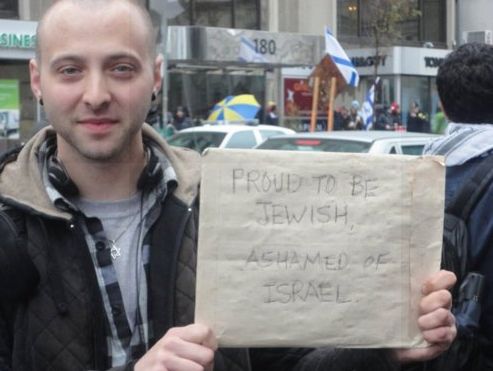
#Israel has broken my heart: I’m a rabbi in mourning for a Judaism being murdered by Israel

Rabbi Michael Lerner writes: My heart is broken as I witness the suffering of the Palestinian people and the seeming indifference of Israelis. All my life I’ve been a champion of Israel, proud of its many accomplishments in science and technology that have benefited the world, insistent on the continuing need for the Jewish people to have a state that offers protections from anti-Semitism that has reared its head continuously throughout Christian and Islamic societies, willing to send my only child to serve in the Israeli Army (the paratroopers unit-tzanchanim), and enjoying the pleasures of long swaths of time in which I could study in Jerusalem and celebrate Shabbat in a city that weekly closed down the hustle and bustle of the capitalist marketplace for a full 25 hours. And though as editor of Tikkun I printed articles challenging the official story of how Israel came to be, showing its role in forcibly ejecting tens of thousands of Palestinians in 1948 and allowing Jewish terrorist groups under the leadership of (future Israeli Prime Ministers Menachem Begin and Yitzhak Shamir) to create justified fears that led hundreds of thousands of other Palestinians to flee for their lives, I always told myself that the dominant humanity of the Jewish people and the compassionate strain within Torah would reassert itself once Israel felt secure.

That belief began to wane in the past eight years when Israel, faced with a Palestinian Authority that promoted nonviolence and sought reconciliation and peace, ignored the Saudi Arabian-led peace initiative that would have granted Israel the recognition that it had long sought, an end to hostilities, and a recognized place in the Middle East, refused to stop its expansion of settlements in the West Bank and imposed an economically crushing blockade on Gaza. Even Hamas, whose hateful charter called for Israel’s destruction, had decided to accept the reality of Israel’s existence, and while unable to embrace its “right” to exist, nevertheless agreed to reconcile with the Palestinian Authority and in that context live within the terms that the PA would negotiate with Israel.

Yet far from embracing this new possibility for peace, the Israeli government used that as its reason to break off the peace negotiations, and then, in an unbelievably cynical move, let the brutal and disgusting kidnapping and murder of three Israeli teens (by a rogue element in Hamas that itself was trying to undermine the reconciliation-with-Israel factions of Hamas by creating new fears in Israel) become the pretext for a wild assault on West Bank civilians, arresting hundreds of Hamas sympathizers, and escalating drone attacks on Hamas operatives inside Gaza. When Hamas responded by starting to send its (guaranteed to be ineffective and hence merely symbolic in light of Israel’s Iron Shield) missiles toward civilian targets in Israel, the Netanyahu government used that as its excuse to launch a brutal assault on Gaza.

But it is the brutality of that assault that finally has broken me into tears and heartbreak. While claiming that it is only interested in uprooting tunnels that could be used to attack Israel, the IDF has engaged in the same criminal behavior that the world condemns in other struggles: the intentional targeting of civilians (the same crime that Hamas has been engaged in over the years, which correctly has earned it the label as a terrorist organization). Using the excuse that Hamas is using civilians as “human shields” and placing its war material in civilian apartments, Israel has managed to kill more than 1,000 civilians and wounded thousands. The stories that have emerged from eyewitness accounts of hundreds of children being killed by Israel’s indiscriminate destructiveness, the shelling of United Nations schools and public hospitals, and finally the destruction of Gaza’s water and electricity, guaranteeing deaths from typhoid and other diseases as well as widespread hunger among the million and a half Gazans most of whom have had nothing to do with Hamas, highlights to the world an Israel that is rivaling some of the most oppressive and brutal regimes in the contemporary world. [Continue reading…]

Facebooktwittermail

A short history of #Israeli impunity

Evan Jones writes: Let’s not mince words. Israel is an abomination. One is hard pressed to find words in English powerful enough to describe the grotesqueries. There are numerous bread-and-butter tyrannies – some of which (foremost, Saudi Arabia), curiously, we have as friends. But Israel is unique. Israel was conceived as necessitating ethnic cleansing, and was created and is sustained by ethnic cleansing. Israel was created and is sustained by terrorism. Israel is, sui generis, a force for terrorism and ethnic cleansing.

There is the view, fashionable amongst middle-of-the-road optimists harbouring a two-state solution pie-in-the-sky, that the problem is that the state has been appropriated by the political Right and the Far Right. The good Israel has been hijacked by the nasties. On the contrary. The current Israel is the natural heir of its origins and subsequent entrenchment of ethnically-based legal and cultural structures. Israel now produces racists as a majority voice, with citizens imbued with universalist values reduced to near powerlessness.

As a consequence, Palestinians, having been designated as without humanity, can be deprived of their residual dogged hold on their existence, deprived of their property and murdered at will. The current mass murder of Gazans is merely par for the course. It has become a spectator sport. Sadism against the non-people is a rite of passage.

Moshe Menuhin, famous by association as father of Yehudi and Hephzibah, appears to be now neglected as a resolute anti-Zionist. His 1965/1969 The Decadence of Judaism in Our Time explains why. His ‘almost preferred’ original title, “Jewish” Nationalism: A Monstrous Historical Crime and Curse, better conveys the book’s contents. It retains its pertinence. In Decadence we read:

‘As to Zionist Israel of the present day, I prefer the truth as fearlessly told by one honest repentant Israeli, Nathan Chofshi, in reply to all the sordid and revolting propaganda, brazenly and inhumanly and hypocritically told by such tribalistic barbarians as Ben Gurion, Moshe Dayan, Shimeon Peres, Levi Eshkol, Abba Eban and the entire lot of the military gang that runs poor misguided Israel. Said Nathan Chofshi [in 1959]: “We came and turned the native Arabs into tragic refugees. And still we dare slander and malign them, to besmirch their name; instead of being deeply ashamed of what we did, and trying to undo some of the evil we committed, we justify our terrible acts and even attempt to glorify them …”.’

The ‘entire lot of the military gang’, now fronted by the sociopath Benjamin Netanyahu, is still in charge. [Continue reading…]

Facebooktwittermail

#Israel, trapped by 19th century nationalism

Pankaj Mishra writes: Successive Israeli governments may appear to have succeeded in creating indestructible boundaries on the ground, as well as in the air. The Israeli Defense Forces’ barrier, which separates Israeli territory from the West Bank, has successfully blocked the flow of suicide bombers. The so-called Iron Dome prevents most Hamas rockets from reaching their targets.

In the past, too, freedom and democracy depended upon the exclusion of others; the walls of the Greek polis drew clear lines between citizens and enemies. But the impulse to shut oneself off in an interconnected world can only clash with other aspirations that modernity creates: whether to grow and expand or to live a quiet and dignified life.

The IDF’s barrier and the settler enclaves not only make a Palestinian state unachievable and, if it was ever attained, ungovernable. It also, ironically, contradicts the expansionist vision of “Eretz Yisrael.”

In any case, the most primitive rockets can clear all fences and walls; better-designed ones will no doubt beat even the Iron Dome; and deeper tunnels will be dug. Not surprisingly, punitive Israeli measures — the blockade of Gaza from 2007 and military incursions in 2008-2009, 2012 and 2014 — eventually reveal themselves as futile exercises in self-assertion. Each time, the increased sophistication and ferocity of the attacks is matched by greater resilience on the other side.

The consistent Palestinian refusal to be shocked and awed by superior firepower will puzzle only those who have failed to grasp the central idea and event of the 20th century: the urge of self-determination and decolonization. [Continue reading…]

Facebooktwittermail

Top 5 ways the U.S. is #Israel’s accomplice in war crimes in #Gaza

Juan Cole writes: Here are the ways that the US is actively helping Israel in its war on Gaza:

1. The US shares its raw signals intelligence directly with Israeli intelligence, enhancing Israeli eavesdropping and surveillance capabilities, as Glenn Greenwald shows in a new article for Firstlook. Israel somewhat ungratefully repaid the favor by collaborating with Russia to spy on John Kerry during his failed peace negotiations.

2. The US continually replenishes Israel’s ammunition. If Washington were actually so distressed about the UNRWA school shelling, it could just stop sending the shells for a while. It did this to Egypt after the massacre at Rabi`a al-Adawiya last summer.

3. The US State Department actively helps Israel to economically blockade the civilians of Gaza. It even pressures Egypt to uphold the blockade (which is why it is silly to say that Egypt is also responsible for the siege of Gaza; Egypt doesn’t have a choice in this policy that is made from Tel Aviv and promulgated from Washington). [Continue reading…]

Facebooktwittermail

#Syrian defector: #Assad poised to #torture and murder 150,000 more

The Daily Beast reports: The regime of Syrian President Bashar al Assad is holding 150,000 civilians in custody, all of whom are at risk of being tortured or killed by the state, the Syrian defector known as “Caesar” told Congress on Thursday.

According to a senior State Department official, his department initially asked to keep this hearing—in which Caesar displayed new photos from his trove of 55,000 images showing the torture, starvation, and death of over 11,000 civilians—closed to the public, out of concerns for the safety of the defector and his family. Caesar smuggled the pictures out of Syria when he fled last year in fear for his life. Caesar’s trip had been in the works for months.

There was no audio or video recording allowed at the hearing; the House Foreign Affairs Committee said that decision was made in consideration of Caesar’s safety. He sat at the witness table disguised in a baseball cap and sunglasses, with a blue hoodie over his head. “We recommended to Congress a format for today’s briefing that would have allowed press access while addressing any security concerns,” said Edgar Vasquez, a State Department spokesman. A committee staffer alleged State had tried to prevent the hearing from happening at all.

The packed committee room sat in silent horror as new examples of Assad’s atrocities were splashed on the large television screens on the wall and displayed on large posterboards littered throughout the hearing room. Caesar spoke softly to his translator, Mouaz Moustafa, the executive director of the Syrian American Task Force, a Washington-based organization that works with both the Syrian opposition and the U.S. State Department.

“I am not a politician and I don’t like politics,” Caesar said through his translator. “I have come to you honorable Congress to give you a message from the people of Syria… What is going on in Syria is a genocidal massacre that is being led by the worst of all the terrorists, Bashar al Assad.” [Continue reading…]

Facebooktwittermail

#ISIS ‘seize #Iraq’s biggest dam’ in defeat for #Kurdish forces

Reuters reports: Sunni insurgents have reportedly seized control of Iraq’s biggest dam, an oilfield and three more towns after inflicting their first major defeat on Kurdish forces since sweeping across much of northern Iraq in June.

Capture of the electricity-generating Mosul Dam, which was reported by Iraqi state television, could give the forces of the Islamic State (ISIS) the ability to flood Iraqi cities or withhold water from farms, raising the stakes in their bid to topple prime minister Nuri al-Maliki’s Shia-led government.

“The terrorist gangs of the Islamic State have taken control of Mosul dam after the withdrawal of Kurdish forces without a fight,” said Iraqi state television of the claimed 24 hour offensive.

Kurdish officials conceded losses to Isis but denied the dam had been surrendered. A Kurdish official in Washington told Reuters the dam was still under the control of Kurdish “peshmerga” troops, although he said towns around the dam had fallen to Isis. [Continue reading…]

Reuters also reports: A major Kurdish militant group called Monday for all Kurds to rise up against Islamic State of Iraq and Greater Syria (ISIS) fighters in northern Iraq, after the Sunni militants seized Kurdish territory in a dramatic advance.

“All Kurds in the north, east, south and west must rise up against the attack on Kurds in Sinjar (in northern Iraq),” the Kurdistan Workers Party (PKK), which has fought a 30-year insurgency against Turkey, said in a statement on it website.

Facebooktwittermail

The smoke screen of a two-state solution has disappeared — #Netanyahu’s plan for #apartheid

Stephen Robert writes: So much tragedy and insufferable grief now engulfs the Israel-Palestine debate that the past year’s transformation of Israeli politics is easily overlooked. Yet, it is the nutrient for the present catastrophe, and perhaps for even worse in the future.

In 2009, Israel’s Prime Minister Netanyahu gave a major speech at Bar Ilan University, which, though highly nuanced, purportedly supported a two state solution. His father, a darling of the right-wing, then gave an interview to Israeli TV in which he stated that his son would never approve a state the Palestinians could possibly accept. The past year has demonstrably proved the father’s prophecy.

Netanyahu’s pretense to the contrary has been demolished, both by others and himself. Since there is no other sustainable solution, Palestinians have now lost all hope of their God-given right to govern themselves with the dignity humanity demands. History informs us that when that hope is lost, radicalism will ensue. Occupiers lose in the end.

Public and private statements from officials deeply immersed in these talks suggest this Israeli government was never serious about peace. Comments by U.S. Special Envoy Martin Indyk and President Obama’s chief Middle East advisor, Philip Gordon, place considerable blame on Israel; perhaps with bluntness unprecedented for American diplomats. They cite Israel’s refusal to discuss borders, produce maps, end settlement expansion and negotiate many of the big gap issues. Indyk believes Palestinian President Abbas was humiliated and embarrassed by Israel’s coupling of settlement expansions with each release of Palestinian prisoners, implying that Abbas had agreed to pay for the prisoners. During the nine months of negotiations, Israel announced the planning of 8000 settlement units, largely outside the area likely to be part of Israel in any peace agreement. Both men also place considerable responsibility on the Palestinians, but the proportionality is notably different from previous failed attempts to broker peace.

Most important, Prime Minister Netanyahu has now removed his mask. At a recent press conference, after implying Secretary Kerry and General John Allen were naïve about Israel’s security, he proclaimed that any Palestinian state contiguous to Israel constituted an unacceptable danger. Therefore, he said, such a state must have indefinite Israeli military occupation, not only in the Jordan Valley but throughout all of its territory. It appears that the alleged supporter of two states envisions a sovereign Palestinian state – but under Israeli occupation.

Certainly Netanyahu’s position doesn’t pass the laugh test. Still, it represents a less nuanced and unrestrained hawkishness by the Israeli right wing. Perhaps because the press conference was in Hebrew, these transformational comments have been vastly under reported.

Foreign Minister Lieberman fought for the invasion of Gaza, and driving Hamas out. His goal is an occupied Gaza, as compliant as the West Bank, creating a “stable condition similar to the West Bank.”

The smoke screen of a two state solution has disappeared. Continue reading

Facebooktwittermail

Explosion of infectious disease in #Gaza threatens public health

Gaza Ministry of Health: The people of Gaza face enormous barriers to accessing primary health care, with only 10 of the government’s 56 Primary Health Care clinics operational, eight of UNRWA’s 22 clinics open, and most NGO clinics closed.

The majority of displaced persons have no access whatsoever to primary health care services. This is at a time when there are urgent public health problems arising from the Israeli offensive threatening the health of the entire population.

The destruction of the sole Gaza power plant leaves sewage pumps incapacitated. The lack of electricity combined with the destruction of at least 16 water wells has left 1.8 million people without access to water, according to the latest OCHA report.

It also reports that some 10,000 homes have been completely annihilated, and 450,000 people forcibly displaced, with 250,000 of them seeking shelter in UN facilities only able to cope with a fifth of that number, and another 30,000 in government schools and institutions.

The over-crowding and lack of adequate water and sanitation facilities has seen the incidence of viral meningitis skyrocket from five per day, to 53 cases today.

Diarrhoea and scabies are rampant in the overcrowded shelters, with clean drinking water all but impossible to obtain. [Continue reading…]

Facebooktwittermail

The future of #Israel and the decline of the American empire

In an article published soon after Operation Cast Lead in 2009 which is just as relevant now as it was then, the emeritus professor of history at Princeton, Arno J. Mayer, wrote: [B]ecause of their history of exile and want of political self-rule, Jews and their sages may well be insufficiently mindful of the theory and practice of sovereign statecraft. Admittedly, after 1945 the leaders of many of the new states of the post-colonial worlds were equally benighted. Unlike most of them, however, Israel’s political class and thinkers prize their deep connection with the West, including its philosophic and intellectual heritage, to the point of putting admission to the European Union ahead of rapprochement with the Arab/Muslim world. Yet they seem not to be conversant with the fundamental ideas of the likes of Machiavelli and Clausewitz. Respectively theorists of politics and war, both emphatically propound moderation over unrestraint. Machiavelli puts virtù at the center of his formula for the use of power and force. He does not, however, construe it as a moral principle—as virtue—but as a prescript for prudence, flexibility, and a sense of sober limits in power politics.

Clausewitz theorizes limited war for well-defined and negotiable objectives, the disposition for compromise varying in inverse ratio to the victor’s aims and demands. He cautions above all against “absolute” war in which intellect, reason, and judgment are cast aside. Although he and Machiavelli take account of the interpenetration of domestic and international politics, both conceive them as two distinct spheres. In Israel, domestic politics prevails, with little concern for the reason of international politics.

These insights are particularly relevant for small states. But blinded by their successful defiance of limits and laws, the leaders of Israel take their country of seven million people (over 20 percent of them non-Jewish, mostly Arabs) to be a great power by dint of its outsized armed forces and arms industry. They deceive themselves by assuming the Western world’s support for its military hypertrophy is irreversible. Perverting virtù they launch nearly absolute military expeditions against the radical Palestinian resistance. They also envisage striking resurgent Iran with the most modern American-made and -financed aircraft operated by American-certified Israeli pilots. Nor does Tel Aviv hesitate to send military, technical, and covert “intelligence” missions, as well as weapons, to scores of nations in the Middle East, ex-Soviet sphere, Africa, Asia, and Latin America, not infrequently in concert with Washington.

State terror is all but integral to the latest weapons and tactics with which Israel’s forces engage the Palestinian resistance fighters. Of course the latter also resort to terror, the hallmark of asymmetrical warfare. But it is Israel that sows the wind and reaps the whirlwind. A vicious, endless cycle of vengeance, driven by the clashes of Israel’s overconfident, sophisticated, and regular military forces with crude and irregular paramilitary forces, further intensifies the distrust between Israelis and Palestinians, including Israeli Arabs, most of them Muslim. Though intended to break the will of the armed militias by inflicting unbearable pain on the host society, as in Lebanon and Gaza, the collateral damage of Israel’s campaigns of “shock and awe” only serve to fire the avenging fury of the powerless. [Continue reading…]

Facebooktwittermail

#Israel eavesdropped on John Kerry in Mideast talks

SPIEGEL has learned from reliable sources that Israeli intelligence eavesdropped on US Secretary of State John Kerry during Middle East peace negotiations. In addition to the Israelis, at least one other intelligence service also listened in as Kerry mediated last year between Israel, the Palestinians and the Arab states, several intelligence service sources told SPIEGEL. Revelations of the eavesdropping could further damage already tense relations between the US government and Israel.

During the peak stage of peace talks last year, Kerry spoke regularly with high-ranking negotiating partners in the Middle East. At the time, some of these calls were not made on encrypted equipment, but instead on normal telephones, with the conversations transmitted by satellite. Intelligence agencies intercepted some of those calls. The government in Jerusalem then used the information obtained in international negotiations aiming to reach a diplomatic solution in the Middle East.

Facebooktwittermail

A plan to conquer #Gaza

It might seem reasonable to call Moshe Feiglin an Israeli right-wing extremist, but he’s also the Deputy Speaker of the Knesset and a member of the ruling Likud party. He exemplifies the fact that the mainstream in Israel has moved so far to the right, the extremity is not so far from the center.

Feiglin has a “solution” for Gaza and if it contains any measure of restraint it is that he says that it should only be hit by conventional weapons. His willingness to hold back on the use of nuclear weapons says less about wanting to spare Palestinian lives than the fact that in his plan he sees the Gaza Strip being fully occupied by Jews and becoming part of Israel.

In his plan, “the IDF will conquer the entire Gaza, using all the means necessary to minimize any harm to our soldiers, with no other considerations.”

The only consideration he offers to the population of Gaza is this: “One warning from the Prime Minister of Israel to the enemy population, in which he announces that Israel is about to attack military targets in their area and urges those who are not involved and do not wish to be harmed to leave immediately. Sinai is not far from Gaza and they can leave. This will be the limit of Israel’s humanitarian efforts.”

Sinai is part of Egypt. In his plan to ethnically cleanse Gaza, Feiglin does not make clear whether he envisages that Israel would claim unilateral control over the Egyptian border, providing Palestinians with an escape route.

Feiglin is notorious for his racism. He once said: “You can’t teach a monkey to speak and you can’t teach an Arab to be democratic. You’re dealing with a culture of thieves and robbers. The Arab destroys everything he touches.”

Feiglin’s ambition — apart from wanting to destroy Gaza — is to replace Netanyahu as leader of Likud. He has twice received 23% of the vote in contests for the party leadership.

Facebooktwittermail

#UN warns of ‘humanitarian tragedy’ as #ISIS seizes #Iraq’s Sinjar

France24 reports: The capture of the Iraqi town of Sinjar by militants from the Islamic State of Iraq and Greater Syria (ISIS or ISIL) has displaced up to 200,000 people and created a “humanitarian tragedy”, the UN said on Sunday.

“A humanitarian tragedy is unfolding in Sinjar,” the top UN envoy in Iraq, Nickolay Mladenov, said in a statement after ISIS militants had captured the northern town, which lies near the Syrian border. Thousands of previously displaced families had fled to Sinjar to seek safety.

“The United Nations has grave concerns for the physical safety of these civilians,” the statement said.

It said it was particularly concerned by the fate of civilians who fled into the Jabal Sinjar mountains and could be trapped inside an area completely surrounded by the militants.

“The humanitarian situation of these civilians is reported as dire, and they are in urgent need of basic items including food, water and medicine,” the statement said.

Sinjar had been controlled by Kurdish troops but they withdrew on Sunday, the second consecutive day of losses for the peshmerga fighters, who also lost the town of Zumar and two nearby oilfields to ISIS jihadists on Saturday. [Continue reading…]

Facebooktwittermail

#Hamas has a modest demand: That #Israel honor its past agreements

Nathan Thrall writes: The current war in Gaza was not one Israel or Hamas sought. But both had no doubt that a new confrontation would come. The 21 November 2012 ceasefire that ended an eight-day-long exchange of Gazan rocket fire and Israeli aerial bombardment was never implemented. It stipulated that all Palestinian factions in Gaza would stop hostilities against Israel, that Israel would end attacks against Gaza by land, sea and air – including the ‘targeting of individuals’ (assassinations, typically by drone-fired missile) – and that the closure of Gaza would essentially end as a result of Israel’s ‘opening the crossings and facilitating the movements of people and transfer of goods, and refraining from restricting residents’ free movements and targeting residents in border areas’. An additional clause noted that ‘other matters as may be requested shall be addressed,’ a reference to private commitments by Egypt and the US to help thwart weapons smuggling into Gaza, though Hamas has denied this interpretation of the clause.

During the three months that followed the ceasefire, Shin Bet recorded only a single attack: two mortar shells fired from Gaza in December 2012. Israeli officials were impressed. But they convinced themselves that the quiet on Gaza’s border was primarily the result of Israeli deterrence and Palestinian self-interest. Israel therefore saw little incentive in upholding its end of the deal. In the three months following the ceasefire, its forces made regular incursions into Gaza, strafed Palestinian farmers and those collecting scrap and rubble across the border, and fired at boats, preventing fishermen from accessing the majority of Gaza’s waters.

The end of the closure never came. Crossings were repeatedly shut. So-called buffer zones – agricultural lands that Gazan farmers couldn’t enter without being fired on – were reinstated. Imports declined, exports were blocked, and fewer Gazans were given exit permits to Israel and the West Bank.

Israel had committed to holding indirect negotiations with Hamas over the implementation of the ceasefire but repeatedly delayed them, at first because it wanted to see whether Hamas would stick to its side of the deal, then because Netanyahu couldn’t afford to make further concessions to Hamas in the weeks leading up to the January 2013 elections, and then because a new Israeli coalition was being formed and needed time to settle in. The talks never took place. The lesson for Hamas was clear. Even if an agreement was brokered by the US and Egypt, Israel could still fail to honour it.

Yet Hamas largely continued to maintain the ceasefire to Israel’s satisfaction. [Continue reading…]

Facebooktwittermail