Category Archives: Issues

Bloomberg stands up for academic freedom — but ‘violently’ opposes (non-violent) BDS

New York City mayor Michael Bloomberg says he’s ‘violently’ opposed to Boycott, Divestment and Sanctions (BDS) against Israel, while suggesting that people like Alan Dershowitz have as much respect for freedom as do the North Koreans. On balance, I’d say that’s a net plus.

That Bloomberg is opposed to BDS is hardly surprising, and that he claims to be ‘violently’ opposed is both hyperbolic and perhaps tinged with a conscious hint of irony. That he would liken Dershowitz and co. to the worst kind of authoritarians sounds to me like admirable fighting words.

Dana Rubinstein reports: “If you want to go to a university where the government decides what kind of subjects are fit for discussion, I suggest you apply to a school in North Korea,” said Mayor Michael Bloomberg this morning, siding with Brooklyn College in a debate over its decision to host an event featuring speakers from a pro-Palestinian group called Boycott, Divestment and Sanctions.

Brooklyn College’s descision to host a forum tomorrow featuring B.D.S. speakers has sparked protests from some members of the City Council and state legislature. Some, including Councilman Lew Fidler, have even threatened to withhold financial support from the college if it moves forward with the event.

Another, Assemblyman Alan Maisel, said, “We’re talking about the potential for a second Holocaust here.”

Today, Bloomberg called those arguments a threat to academic freedom, and from the standpoint of a supporter of Israel, counterproductive, too.

“I couldn’t disagree more violently with B.D.S., as they call it, Boycott, Divestment and Sanctions,” he said. “As you know I’m big supporter of Israel, as big a one as I think you can find in this city. But I also could not agree more strongly with an academic department’s right to sponsor a forum on any topic that they choose.”

Facebooktwittermail

Obama continues to cloak his killing program in secrecy

The New York Times reports: Early in his first term, President Obama rejected the vehement protests of the Central Intelligence Agency and ordered the public disclosure of secret Justice Department legal opinions on interrogation and torture that had been written in the administration of George W. Bush.

In the case of his own Justice Department’s legal opinions on assassination and the “targeted killing” of terrorism suspects, however, Mr. Obama has taken a different approach. Though he entered office promising the most transparent administration in history, he has adamantly refused to make those opinions public — notably one that justified the 2011 drone strike in Yemen that killed an American, Anwar al-Awlaki. His administration has withheld them even from the Senate and House intelligence committees and has fought in court to keep them secret, making any public debate on the issue difficult.

But with the disclosure on Monday of a Justice Department document offering a detailed legal analysis of the targeted killing of Americans, the barricades of secrecy have been breached. Just as leaks of interrogation memos in 2004 under President Bush ignited a fierce public debate over torture, the report on the so-called white paper by NBC News instantly touched off a renewed, and better informed, public discussion about whether and when a president can order the execution of a citizen based on secret intelligence and without any trial.

The Justice Department prepared the white paper, an unclassified, 16-page document, to brief Congressional oversight committees in lieu of providing lawmakers with the far longer, classified memorandum that justified the killing of Mr. Awlaki, a New Mexico-born Sunni Muslim cleric who joined Al Qaeda’s branch in Yemen and died in an American drone strike there in September 2011. But the paper dovetails with the legal arguments in that still-secret document, as described to The New York Times in October 2011 by people who have read it.

In short, the Justice Department argued that it was lawful for the government to kill an American citizen if “an informed, high-level official” decided that the target was a ranking figure in Al Qaeda who posed “an imminent threat of violent attack against the United States” and if his capture was not feasible. While the administration’s basic legal conclusions had already been aired — including in speeches by Attorney General Eric H. Holder Jr. and other officials — the white paper provided a far more detailed legal justification.

Some human rights groups dismissed it in language reminiscent of their critiques of the Bush administration’s legal opinions on torture, taking particular aim at its flexible definition of what might constitute an “imminent” threat and the lack of any outside check on its claimed authority.

The American Civil Liberties Union called the paper “chilling.” A spokeswoman for Amnesty International said there was increasing evidence that American practices were “unlawful, violating the fundamental human right not to be arbitrarily deprived of one’s life.” [Continue reading…]

Facebooktwittermail

Senator Hagel, Senator Graham, and the Israel lobby

Henry Siegman writes: Of the many controversial statements made by Senator Chuck Hagel over the years, none seemed to enrage Senator Lindsey Graham more than his remark that the Israel lobby intimidates U.S. Congressmen into advocating “stupid” policies. He challenged Hagel to name one such senator and to identify one such stupid policy.

The challenge created an unusual opportunity for Hagel, for there could be no better and conclusive evidence of the Israel Lobby’s power of intimidation of U.S. senators on the subject of Israel than these hearings themselves, and most particularly Senator Graham’s own behavior.

Unfortunately, Hagel could not take advantage of that opportunity. Had he done so, his nomination by President Obama to head the Department of Defense would undoubtedly have been dead in the water, for his former Democratic colleagues are no less guilty of yielding to that intimidation than Hagel’s former Republican colleagues.

But the truth of Hagel’s charge must be affirmed, particularly by those who are more concerned about Israel’s ability to survive as a Jewish and democratic state than about jeopardizing contributions to their own electoral campaigns. The truth that needs to be affirmed speaks not only to the existential dangers created by the current Israeli government’s illegal and often immoral behavior in the Occupied Territories but to the violation of the shared values that supposedly form the foundation of the unprecedentedly close ties between Israel and the United States.

It is not enemies of Israel but some of its most loyal and patriotic citizens, six former heads of Israel’s Shin Bet, the internal national security agency on which Israel’s security and existence depend, who blasted the policies of the government headed by Prime Minister Netanyahu as threatening Israel’s very survival because of its colonial ambitions in the West Bank and its lack of interest in reaching a peace accord with the Palestinians. Senator Kirsten Gillibrand lectured Senator Hagel that America’s ties with Israel are “fundamental” and not to be questioned, even if according to Israel’s president, Shimon Peres, its right wing government’s policies have put the country on a path to apartheid, a judgment with which two former Israeli prime ministers, Ehud Olmert and Ehud Barak, concur.

The heads of the IDF reportedly refused to implement a demand by Prime Minister Netanyahu to prepare for an assault on Iran’s nuclear facilities, believing it would have catastrophic consequences for Israel. Whether they are right or wrong–given their unanimity, the high likelihood is that they were right–no one can question the patriotism of these generals and security chiefs or their motives. Successive Israeli governments trusted them and relied on their judgments in safeguarding Israel’s existence. But such words of caution, when expressed by an American Congressman, are considered heretical, because the Israel lobby says so. [Continue reading…]

Facebooktwittermail

U.S. climate push requires intense grassroots support around ‘cap-and-dividend’ bill

Mike Tidwell writes: In the past three weeks there’s been much debate in U.S. environmental circles over a provocative new paper [PDF] from Harvard University political scientist Theda Skocpol. In it, Skocpol gives the most compelling analysis yet of why the 2009 cap-and-trade bill to fight global warming went down in flames. In sum, Skocpol argues that intense and radical opposition from Tea Party Republicans proved much stronger than the environmentalists’ insider-game, partner-with-business, harness-polls-instead-of-the-grassroots approach.

My added value in commenting here is that I experienced the run-up to — and aftermath of — the failed Waxman-Markey bill from the field. I’ve been a grassroots climate organizer for 10 years, having founded the organization I still direct: the Chesapeake Climate Action Network. CCAN straddles much of the political landscape of America, organizing in the conservative “South” (Virginia) and the liberal “Northeast” (Maryland), while staying very involved in national climate initiatives in Washington, D.C., the geographic center of our region.

I saw from the church-basement view the rise of Tea Party opposition to Waxman-Markey and the insufficient grassroots organizing response from the major green groups. What efforts were made (Sierra Club stands out as well as the short-lived but respectable field effort of the group 1Sky) fell mostly on deaf ears since average people couldn’t comprehend the complexity of the cap-and-trade bill and could see no immediate and direct benefit in their lives.

Climate Progress blogger Joe Romm has joined many environmental heads in assigning cap-and-trade’s failure in large part to Obama’s lack of leadership for the bill. Plus the economy had tanked. These two factors are important, I agree, but they don’t get to the real heart of the problem.

Skocpol, on the other hand, from my field-based perspective, nails both the key problems and the solutions we need for moving forward. She is absolutely correct to call for a completely different legislative approach for the next big push on climate in Washington. She is correct in arguing that round two should be based on the policy of “cap-and-dividend” instead of cap-and-trade. David Roberts at Grist and others have applauded Skocpol’s criticism of the cap-and-trade campaign. But they are skeptical of her view that the best alternative is a policy that caps carbon emissions through permit auctions and then rebates the money directly to all U.S. citizens with a monthly check — cap-and-dividend. [Continue reading…]

Facebooktwittermail

Idolizing the Internet

Evgeny Morozove writes: There are two ways to be wrong about the Internet. One is to embrace cyber-utopianism and treat the Internet as inherently democratizing. Just leave it alone, the argument goes, and the Internet will destroy dictatorships, undermine religious fundamentalism, and make up for failures of institutions.

Another, more insidious way is to succumb to Internet-centrism. Internet-centrists happily concede that digital tools do not always work as intended and are often used by enemies of democracy. What the Internet doesis only of secondary importance to them; they are most interested in what the Internet means. Its hidden meanings have already been deciphered: decentralization beats centralization, networks are superior to hierarchies, crowds outperform experts. To fully absorb the lessons of the Internet, urge the Internet-centrists, we need to reshape our political and social institutions in its image.

They arrive at this reform agenda in a rather circuitous way. First, they assume that the Internet has a logic that is currently at work re-shaping a bevy of digital platforms and industries. Here is how Clay Shirky — the thinker who has done the most to popularize the McLuhanesque idea that the Internet has a coherent logic — explains why we are so worried about privacy and Facebook: “Facebook is . . . our current target for our worries about privacy in exactly the same way that the music industry obsessed about Napster [and] the newspaper industry obsessed about Craigslist, which is to say: the logic of Facebook, the logic that Facebook is exposing, is, in many ways, the logic that is implicit in the Internet itself; Facebook just happens to be its current corporate avatar.”

Once the elusive logic of the Internet has been located, it is not uncommon to see Internet-centrists move to deflate its actual novelty. Thus, Yochai Benkler, a Harvard legal scholar and an exquisite purveyor of Internet-centrism, can marvel at the worlds of Wikipedia, open-source software, and file-sharing — which he, too, takes to represent the logic of the Internet — and then proceed to weave them into a larger narrative about human nature. For Benkler, the Internet proves that humans are collaborative, well-meaning creatures, and that our political institutions, shaped in accordance with a much darker Hobbesian view of human nature, have never been adequate for facilitating meaningful social interaction.

Benkler does not view the Internet as a tool so much as an idea that proves (and disproves) philosophical theories about how the world works. The Internet, for him, reveals only what has been true — that humans love to collaborate — all along. Not surprisingly, the Internet occupies just a few chapters of Benkler’s most recent book; the rest is him deploying the latest research in evolutionary biology, neuroscience, and experimental economics to find the spirit of the Internet in the worlds of Toyota and lobster fishermen, of Spanish farmers and Obama’s 2008 campaign.

This attempt to rediscover reality in terms and categories of a supposedly coherent Internet culture is the crucial idea behind Internet-centrism. In defining what is knowable, on what terms, and to what purposes, Internet-centrism produces a novel epistemology of its own. Analytically, it is similar to anthropocentrism — only it worships a different deity. Most adherents of Internet-centrism have traditionally kept quiet about their quasi-religion. But with the publication of Steven Johnson’s  Future Perfect, they finally have a briskly written manifesto that distills all the major tenets of their worldview — and adds quite a few blinkers of its own. [Continue reading…]

Facebooktwittermail

Those who stifle freedom in the name of Israel’s security also threaten democracy

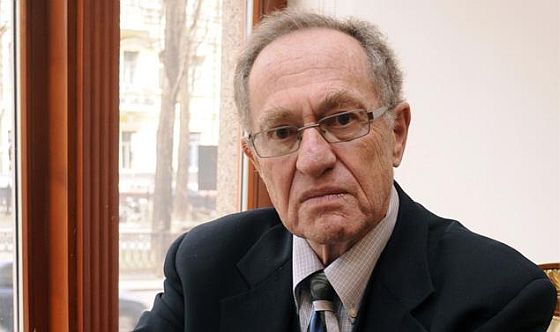
Harvard law professor and opponent of academic freedom, Alan Dershowitz.

An editorial in the New York Times says: One dispiriting lesson from Chuck Hagel’s nomination for defense secretary is the extent to which the political space for discussing Israel forthrightly is shrinking. Republicans focused on Israel more than anything during his confirmation hearing, but they weren’t seeking to understand his views. All they cared about was bullying him into a rigid position on Israel policy. Enforcing that kind of orthodoxy is not in either America’s or Israel’s interest.

Brooklyn College is facing a similar trial for scheduling an event on Thursday night with two speakers who support an international boycott to force Israel to end its occupation of the Palestinian territories. While this page has criticized Israeli settlements, we do not advocate a boycott. We do, however, strongly defend the decision by the college’s president, Karen Gould, to proceed with the event, despite withering criticism by opponents and threats by at least 10 City Council members to cut financing for the college. Such intimidation chills debate and makes a mockery of the ideals of academic freedom.

Mr. Hagel, a former Republican senator, has repeatedly declared support for Israel and cited 12 years of pro-Israel votes in the Senate. But that didn’t matter to his opponents, who attacked him as insufficiently pro-Israel and refused to accept any deviation on any vote. Mr. Hagel was even forced to defend past expressions of concern for Palestinian victims of the Israeli-Palestinian conflict.

In the Brooklyn College case, critics have used heated language to denigrate the speakers, Omar Barghouti and Judith Butler, a philosopher at the University of California, Berkeley, leaders of a movement called B.D.S., for Boycott, Divestment and Sanctions, that espouses “nonviolent punitive measures” to pressure Israel. Alan Dershowitz, a Brooklyn College graduate and Harvard law professor, has complained that the event is unbalanced and should not be co-sponsored by the college’s political science department. On Monday, Ms. Gould said other events offering alternative views are planned.

The sad truth is that there is more honest discussion about American-Israeli policy in Israel than in this country. Too often in the United States, supporting Israel has come to mean meeting narrow ideological litmus tests. J Street, a liberal pro-Israel group that was formed as a counterpoint to conservative groups like the American Israel Public Affairs Committee, has argued for vibrant debate and said “criticism of Israeli policy does not threaten the health of the state of Israel.” In fact, it is essential.

Belen Fernandez writes: It comes as little surprise that Harvard Law School professor Alan Dershowitz, Brooklyn College alumnus and raving apologist for Israeli crimes, has appointed himself commanding general in the assault on the college’s Political Science department for co-sponsoring a February 7 panel discussion on the Boycott, Divestment and Sanctions (BDS) movement.

As the BDS website notes, the non-violent movement was launched by sectors of Palestinian civil society as a means of pressuring Israel “until it complies with international law and Palestinian rights”. BDS co-founder Omar Barghouti and philosopher Judith Butler are scheduled presenters.

Among the opening salvoes of Dershowitz’s war was a January 30 Huffington Post article entitled “Brooklyn College Political Science Department’s Israel Problem“, in which his familiarity with the subject matter was underscored by his use of an incorrect acronym for the BDS movement – DBS – no less than 12 times. The error has since been rectified; the article’s more profound defects have not.

In the introductory paragraph, Dershowitz rails against “[t]he international campaign to delegitimate Israel by subjecting the Jewish state – and the Jewish State alone – to divestment, boycotts and sanctions”. No attention is paid to the possibility that Israel’s singling out in this case is perhaps a result of the fact that most other states in this world are not presently engaged in anachronistic colonial exploits, ethnic cleansing and apartheid. [Continue reading…]

Facebooktwittermail

British PM invites Taliban to talks over Afghanistan’s future

The Guardian reports: David Cameron issued a direct appeal to the Taliban to enter peaceful talks on the future of Afghanistan after hosting talks at Chequers with the Afghan president, Hamid Karzai, and Pakistan’s president, Asif Ali Zardari.

The prime minister said the two leaders had agreed “an unprecedented level of co-operation”.

He said they had agreed to sign up to a strategic partnership between their two countries in the autumn.

At the same time, they also agreed to the opening of an office in the Qatari capital, Doha, for negotiations between the Taliban and the Afghan high peace council.

Cameron said the agreement should send a clear message to the Taliban. “Now is the time for everyone to participate in a peaceful, political process in Afghanistan,” he said.

He added: “This should lead to a future where all Afghans can participate peacefully in that country’s political process.”

Karzai said that they had had a “very frank and open discussion” and echoed Cameron’s appeal to the Taliban to join peace talks. [Continue reading…]

Facebooktwittermail

Israel, Palestine and the mapping of power

Tristram Hunt writes: ‘It’s almost comical. The idea of maps is to represent reality; here it represents fantasy.” So Professor Bruce Wexler of Yale University comments on how the vast majority of maps in Palestinian and Israeli schoolbooks omit the existence of the other entity. As a result, children on either side of the Green Line are growing up with “an internal representation of their homeland, in which one does not include the other”.

But since when have maps been about objective representation of space? They are about the expression and fulfilment of power. From the age of Ptolemy, all those lofty claims to comprehensiveness have usually succumbed to the promotion of political agendas. As the cartography scholar Jerry Brotton rightly remarks: “A map always manages the reality it tries to show.”

Nowhere more so than with the British empire. For in Israel/Palestine, just as in Kashmir and Sudan, postcolonial nations are still wrestling with imperialism’s mixed legacy and its arbitrary lines in the sand. As the colonial unravelling continues, and as rising powers seek to exert their own dominion, the historic confusions of British map-making are fostering all manner of geopolitical tensions.

From the outset, cartography and colonialism went hand in hand. The assertion of political control over supposed terra incognita was most effectively realised by drawing up plans and plots. Maps allowed for the expropriation of existing land rights (since indigenous communities often lacked accurate measuring instruments) and an explanation of a colony’s significance.

Take Bryan Edwards’s mid-18th century Map of the Island of Barbadoes, with its delineation of the Caribbean landscape into Anglican parishes and sugar plantations. What mattered was Barbados’s role in the imperial project, rather than any realistic representation of its geography or population.

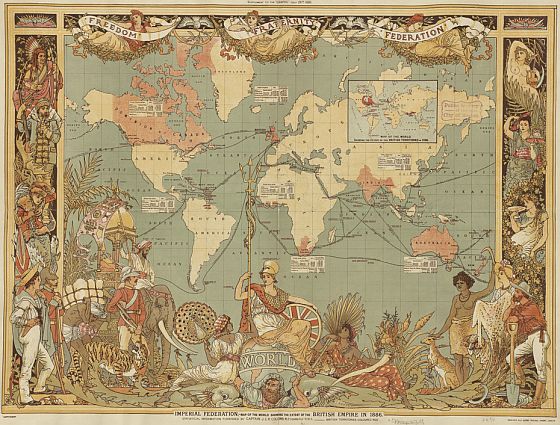
Or perhaps the most famous propagation of British colonial power, John Colomb’s 1886 map, Imperial Federation. It placed Britain centre stage, coloured our colonies a distinctive red, inflated the land mass of Canada, left swaths of unconquered terrain simply blank, and at its base posited a serene Britannia surrounded by icons of her Indian, Australian, and African colonies. [Continue reading…]

Facebooktwittermail

CIA rendition: more than a quarter of countries ‘offered covert support’

The Guardian reports: The full extent of the CIA’s extraordinary rendition programme has been laid bare with the publication of a report showing there is evidence that more than a quarter of the world’s governments covertly offered support.

A 213-page report compiled by the Open Society Justice Initiative (OSJI), a New York-based human rights organisation, says that at least 54 countries co-operated with the global kidnap, detention and torture operation that was mounted after 9/11, many of them in Europe.

So widespread and extensive was the participation of governments across the world that it is now clear the CIA could not have operated its programme without their support, according to the OSJI.

“There is no doubt that high-ranking Bush administration officials bear responsibility for authorising human rights violations associated with secret detention and extraordinary rendition, and the impunity that they have enjoyed to date remains a matter of significant concern,” the report says.

“But responsibility for these violations does not end with the United States. Secret detention and extraordinary rendition operations, designed to be conducted outside the United States under cover of secrecy, could not have been implemented without the active participation of foreign governments. These governments too must be held accountable.” [Continue reading…]

Facebooktwittermail

The Obama doctrine of unlimited power

Lawyers have much more interest in constructing lines of reasoning than they do in clear communication. For that reason, the Justice Department’s white paper on the targeted killing of Americans was written not so much to articulate the policies of the U.S. government but rather as part of a legal process designed to ensure that President Obama and other U.S. officials can avoid being prosecuted for murder.

Stripped to its bare bones, the argument runs like this:

I can kill you if I think that you want to kill me. And I can kill you now or whenever I choose if I have no way of knowing when you might try to kill me.

This isn’t a basis for self-defense; it’s a justification for premeditated murder.

Spencer Ackerman writes: “Imminence” used to mean something in military terms: namely, that an adversary had begun preparations for an assault. In order to justify his drone strikes on American citizens, President Obama redefined that concept to exclude any actual adversary attack.

That’s the heart of the Justice Department’s newly-leaked white paper, first reported by NBC News, explaining why a “broader concept of imminence” (.PDF) trumps traditional Constitutional protections American citizens enjoy from being killed by their government without due process. It’s an especially striking claim when considering that the actual number of American citizens who are “senior operational leader[s] of al-Qaida or its associated forces” is vanishingly small. As much as Obama talks about rejecting the concept of “perpetual war” he’s providing, and institutionalizing, a blueprint for it. [Continue reading…]

Facebooktwittermail

Did Obama order killing of Americans then seek legal cover?

A white paper written by the Justice Department and leaked to NBC News, lays out the reasoning that supposedly provides grounds for the U.S. government to legally kill U.S. citizens — legal grounds that would explain how President Obama had the authority to order the assassination of Anwar al-Awlaki in Yemen on September 30, 2011.

Obama placed Awlaki on a CIA kill list in April 2010. The white paper was written, however, some time after September 16, 2011.

Although the memo is undated, it cites a speech given by John O Brennan at Harvard Law School on that date, so must have been written later, quite likely after Awlaki had been killed. This legal argument was being laid out long after Obama had ordered Awlaki’s killing, strongly suggesting that he first ordered the killing but only later asked the Justice Department to construct a legal justification for an action he had already set in motion.

NBC News reports: A confidential Justice Department memo concludes that the U.S. government can order the killing of American citizens if they are believed to be “senior operational leaders” of al-Qaida or “an associated force” — even if there is no intelligence indicating they are engaged in an active plot to attack the U.S.

The 16-page memo, a copy of which was obtained by NBC News, provides new details about the legal reasoning behind one of the Obama administration’s most secretive and controversial polices: its dramatically increased use of drone strikes against al-Qaida suspects abroad, including those aimed at American citizens, such as the September 2011 strike in Yemen that killed alleged al-Qaida operatives Anwar al-Awlaki and Samir Khan. Both were U.S. citizens who had never been indicted by the U.S. government nor charged with any crimes.

The secrecy surrounding such strikes is fast emerging as a central issue in this week’s hearing of White House counterterrorism adviser John Brennan, a key architect of the drone campaign, to be CIA director. Brennan was the first administration official to publicly acknowledge drone strikes in a speech last year, calling them “consistent with the inherent right of self-defense.” In a separate talk at the Northwestern University Law School in March, Attorney General Eric Holder specifically endorsed the constitutionality of targeted killings of Americans, saying they could be justified if government officials determine the target poses “an imminent threat of violent attack.”

But the confidential Justice Department “white paper” introduces a more expansive definition of self-defense or imminent attack than described by Brennan or Holder in their public speeches. It refers, for example, to what it calls a “broader concept of imminence” than actual intelligence about any ongoing plot against the U.S. homeland.

Michael Isikoff, national investigative correspondent for NBC News, talks with Rachel Maddow about a newly obtained, confidential Department of Justice white paper that hints at the details of a secret White House memo that explains the legal justifications for targeted drone strikes that kill Americans without trial in the name of national security.

“The condition that an operational leader present an ‘imminent’ threat of violent attack against the United States does not require the United States to have clear evidence that a specific attack on U.S. persons and interests will take place in the immediate future,” the memo states.

Instead, it says, an “informed, high-level” official of the U.S. government may determine that the targeted American has been “recently” involved in “activities” posing a threat of a violent attack and “there is no evidence suggesting that he has renounced or abandoned such activities.” The memo does not define “recently” or “activities.”

As in Holder’s speech, the confidential memo lays out a three-part test that would make targeted killings of American lawful: In addition to the suspect being an imminent threat, capture of the target must be “infeasible, and the strike must be conducted according to “law of war principles.” But the memo elaborates on some of these factors in ways that go beyond what the attorney general said publicly. For example, it states that U.S. officials may consider whether an attempted capture of a suspect would pose an “undue risk” to U.S. personnel involved in such an operation. If so, U.S. officials could determine that the capture operation of the targeted American would not be feasible, making it lawful for the U.S. government to order a killing instead, the memo concludes.

The undated memo is entitled “Lawfulness of a Lethal Operation Directed Against a U.S. Citizen who is a Senior Operational Leader of Al Qa’ida or An Associated Force.” It was provided to members of the Senate Intelligence and Judiciary committees in June by administration officials on the condition that it be kept confidential and not discussed publicly.

Although not an official legal memo, the white paper was represented by administration officials as a policy document that closely mirrors the arguments of classified memos on targeted killings by the Justice Department’s Office of Legal Counsel, which provides authoritative legal advice to the president and all executive branch agencies. The administration has refused to turn over to Congress or release those memos publicly — or even publicly confirm their existence. A source with access to the white paper, which is not classified, provided a copy to NBC News.

“This is a chilling document,” said Jameel Jaffer, deputy legal director of the ACLU, which is suing to obtain administration memos about the targeted killing of Americans. “Basically, it argues that the government has the right to carry out the extrajudicial killing of an American citizen. … It recognizes some limits on the authority it sets out, but the limits are elastic and vaguely defined, and it’s easy to see how they could be manipulated.”

In particular, Jaffer said, the memo “redefines the word imminence in a way that deprives the word of its ordinary meaning.”

A Justice Department spokeswoman declined to comment on the white paper. The spokeswoman, Tracy Schmaler, instead pointed to public speeches by what she called a “parade” of administration officials, including Brennan, Holder, former State Department Legal Adviser Harold Koh and former Defense Department General Counsel Jeh Johnson that she said outlined the “legal framework” for such operations.

Pressure for turning over the Justice Department memos on targeted killings of Americans appears to be building on Capitol Hill amid signs that Brennan will be grilled on the subject at his confirmation hearing before the Senate Intelligence Committee on Thursday.

On Monday, a bipartisan group of 11 senators — led by Democrat Ron Wyden of Oregon — wrote a letter to President Barack Obama asking him to release all Justice Department memos on the subject. While accepting that “there will clearly be circumstances in which the president has the authority to use lethal force” against Americans who take up arms against the country, it said, “It is vitally important … for Congress and the American public to have a full understanding of how the executive branch interprets the limits and boundaries of this authority.” [Continue reading…]

Facebooktwittermail

Obama: “I want to do something on climate, but I don’t know what.”

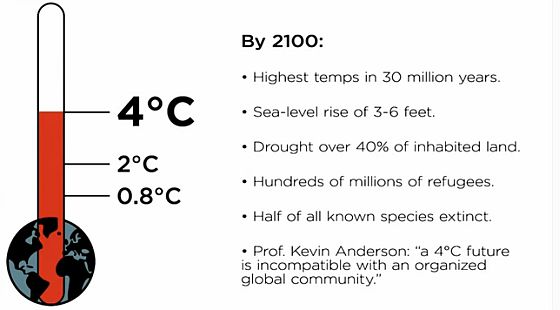
Our present course leads towards certain catastrophe.

Jeff Goodell writes: Among all the tests President Obama faced in his first term, his biggest failure was climate change. After promising in 2008 that his presidency would be “the moment when the rise of the oceans began to slow and our planet began to heal,” President Obama went silent on the most crucial issue of our time. He failed to talk openly with Americans about the risks of continuing to pump greenhouse gases into the atmosphere, failed to put political muscle behind legislation to cap carbon pollution, failed to meaningfully engage in international climate negotiations, failed to use the power of his office to end the fake “debate” about the reality of global warming and failed to prepare Americans – and the world – for life on a rapidly­ warming planet. It was as if the biggest challenge humanity has ever faced became a political inconvenience for the president once he was elected.

Now Obama gets another shot at it. “The politics of global warming are changing fast,” says Kevin Knobloch, the president of the Union of Concerned Scientists. Thanks to a year of extreme weather and Hurricane Sandy, a large majority of Americans – nearly 90 percent – favor action on global warming, even if there are economic costs. The U.S. economy is on the road to recovery and no longer offers an excuse for inaction. Big Coal, traditionally the loudest voice against climate action, has been weakened by a glut of cheap natural gas and the economic viability of solar and wind power. China has new political leadership that appears open to discussing a global agreement to cut carbon. And Obama himself has nothing left to lose. “The president has a big opportunity here,” says former Vice President Al Gore. “This is a moment when he can expand the ideas of what’s possible.”

Obama’s record on climate issues is not all bad. In his first term, Gore points out, the president made significant strides in promoting clean energy. “He accomplished more than any president before him,” says Gore. Obama’s biggest move was to dramatically boost fuel standards for cars and trucks, which will cut climate-warming pollution by 6 billion metric tons in the course of the program. Thanks in part to billions of dollars in federal stimulus, wind energy doubled in the last four years, while solar installations increased sixfold. By the end of the decade, in fact, America is on track to cut its carbon pollution by as much as 17 percent, meeting the long-term goal Obama pledged at the Copenhagen climate talks in 2009.

The trouble is, Obama’s accomplishments are small-bore when weighed against the immense scale of the climate crisis. 2012 was the hottest year on record in the continental U.S. The polar ice caps are melting faster than scientists predicted; wildfires torched the American West; extreme drought parched 60 percent of the country’s farms, jacking up food prices. Then came Hurricane Sandy, which devastated New York and New Jersey. “Climate change has gone from something that happens in a computer model to something that people can see in their own backyards,” says Frances Beinecke, president of the Natural Resources Defense Council. “It is a global crisis playing out before our very eyes. And it’s not happening in slow motion.”

Obama isn’t blind to the threat. “He understands this is the central problem his administration has to deal with in the second term,” says John Po­desta, who headed up Obama’s transition team in 2008. “He knows the judgment of history is riding on this.” At a press conference shortly after his re­election, Obama admitted that “we hadn’t done as much as we need to” to address climate change, and promised a “wide-ranging conversation with scientists, engineers and elected officials” to make sure that global warming is “not a problem we’re passing on to future generations that’s going to be very expensive and very painful to deal with.”

But if the president is planning any bold action during his second term to combat global warming, there’s little evidence of it. “I want to do something on climate,” he told a friend and former White House staffer after the election, “but I don’t know what.” Before his 2008 inauguration, Obama solicited ideas for combating climate change from top environmentalists and energy executives. This time around, there have been no such meetings, and the president has not telegraphed any ideas on climate change to Congress. “If he has a larger strategy on this, I haven’t seen it,” says the chief of staff to a leading Democratic senator. One Democratic donor and climate activist who visited the White House in December was told point-blank by Heather Zichal, the White House adviser on energy and climate, that the president has no plans to propose any climate legislation to Congress, knowing that House Republicans would shoot it down.

“I think the president understands the climate crisis intellectually, but he has not had the ‘holy shit’ moment you arrive at when you think about this deeply enough,” says a leading climate advocate who has had private conversations with Obama about global warming. Instead of talking about the risks of climate change during the campaign, Obama touted an “all of the above” energy plan that was a soft-porn version of “drill, baby, drill.” Under Obama, in fact, oil and gas production have soared: Last year, U.S. oil production grew by 766,000 barrels a day, the largest jump ever, and domestic oil production is at its highest level in 15 years. [Continue reading…]

Facebooktwittermail

What happens when drones return to America?

Mockup of a mosquito drone that could be used for gathering DNA samples from unwitting targets.

Lev Grossman writes: Drones don’t care who they work for. They’ll spy for anyone, and as they get cheaper and more powerful and easier to use, access to military-grade surveillance technology will get easier too. Voracious as they are for information, drones could take a serious chunk out of Americans’ already dwindling stock of personal privacy. It’s certainly not legal to fly a drone up 10 stories to peer through the curtains into somebody’s bedroom, but it’s just as certain that somebody’s going to do it, if they haven’t already. Last February an animal-rights group in South Carolina launched a drone to watch a group of hunters on a pigeon shoot on private property. The hunters promptly shot it down. It might be America’s first case of human-on-drone violence, but it won’t be the last.

Whatever happens on the civilian front, the ongoing dronification of the U.S. military is barreling ahead. The Predator has already been superseded by the larger, faster, more powerful Reaper, which is in turn looking nervously over its shoulder at the even larger, jet-powered Avenger, currently in the testing phase.

The U.S.’s skunkworks are disgorging drones in a bizarre profusion — like Darwin’s finches, they’re evolving furiously to fill more and more operational niches and creating new ones as they go. Already soldiers carry hand-launchable Raven surveillance drones and kamikaze Switchblade drones for targeting snipers. The K-MAX unmanned helicopter ferries cargo around Afghanistan for the Marines. The Navy’s SeaFox, a single-use underwater drone, is hunting for Iranian mines in the Persian Gulf. The Army is testing a Long Endurance Multi-Intelligence Vehicle, essentially a 300-ft.-long unmanned blimp designed to squat over a battlefield at high altitude for weeks at a time. (Its manufacturer, Northrop Grumman, promises “more than 21 days of unblinking stare.”) DARPA has fielded a tiny drone that mimics the flight of a hummingbird, and it’s mulling a network of deepwater drones that would dwell on the seafloor but — like Godzilla — rise to the surface in times of need.

Drones are learning to think for themselves. Those University of Pennsylvania drones are already semiautonomous: you can toss a hoop in the air and they’ll plot a trajectory and fly right through it. (Whether or not you count Google’s self-driving cars as people-carrying, highway-borne drones seems like a question of semantics.) They’re also gaining endurance. In June, Boeing tested a liquid-hydrogen-powered drone called the Phantom Eye that’s designed to cruise at 65,000 ft. for four days at a time. Boeing’s Solar Eagle, which has a 400-ft. wingspan, is scheduled for testing in 2014. Its flights will last for five years.

This technology will inevitably flow from the military sphere into the civilian, and it’s very hard to say what the consequences will be, except that they’ll be unexpected. Drones will carry pizzas across towns and drugs across borders. They’ll spot criminals on the run and naked celebrities in their homes. They’ll get cheaper to buy and easier to use. What will the country look like when anybody with $50 and an iPhone can run a surveillance drone? Last fall the law schools at Stanford and NYU issued a report, “Life Under Drones,” which was based on 130 interviews with Pakistanis. It makes for unsettling reading. “Drones are always on my mind,” said a man from Islamabad. “It makes it difficult to sleep. They are like a mosquito. Even when you don’t see them, you can hear them. You know they are there.”

Facebooktwittermail

JSoc: Obama’s secret assassins

Naomi Wolf writes: The film Secret Wars [sic — the actual title is Dirty Wars], which premiered at Sundance, can be viewed, as Amy Goodman sees it, as an important narrative of excesses in the global “war on terror”. It is also a record of something scary for those of us at home – and uncovers the biggest story, I would say, in our nation’s contemporary history.

Though they wisely refrain from drawing inferences, Scahill and Rowley have uncovered the facts of a new unaccountable power in America and the world that has the potential to shape domestic and international events in an unprecedented way. The film tracks the Joint Special Operations Command (JSoc), a network of highly-trained, completely unaccountable US assassins, armed with ever-expanding “kill lists”. It was JSoc that ran the operation behind the Navy Seal team six that killed bin Laden.

Scahill and Rowley track this new model of US warfare that strikes at civilians and insurgents alike – in 70 countries. They interview former JSoc assassins, who are shell-shocked at how the “kill lists” they are given keep expanding, even as they eliminate more and more people.

Our conventional forces are subject to international laws of war: they are accountable for crimes in courts martial; and they run according to a clear chain of command. As much as the US military may fall short of these standards at times, it is a model of lawfulness compared with JSoc, which has far greater scope to undertake the commission of extra-legal operations – and unimaginable crimes. [Continue reading…]

Facebooktwittermail

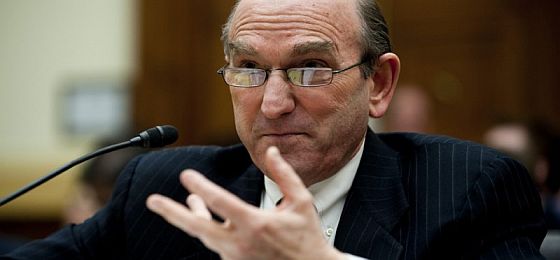
Can Elliott Abrams be stopped?

Jordan Michael Smith reports: Though secretary of defense nominee Chuck Hagel’s confirmation hearings were bruising, thanks to aggressive questioning from Sens. John McCain and Lindsey Graham, it could have been worse. His staunchest critic was absent.

More than anyone else, it is Elliott Abrams who has questioned the former Nebraska senator’s qualifications and character. Abrams twice called Hagel an outright anti-Semite, a smear other neoconservatives hinted at but couldn’t bring themselves to utter. So outrageous was Abrams’ slur that the head of the Council on Foreign Relations, where Abrams is a senior fellow, publicly criticized it.

Neoconservatives deploy baseless accusations of anti-Semitism as frequently as they indulge in nepotism, of course. But that Abrams has, once more, pushed himself to the center of a foreign policy debate is remarkable: The man is, after all, a convicted criminal. And yet, not only was Abrams exempt from serving prison time for his misconduct — he was later pardoned by President George H.W. Bush, in the days after his loss to Bill Clinton — but he has since been fully accepted back into the highest echelons of the Republican foreign-policy community. Abrams’ bizarre reincarnation as a pseudo-statesman shows that even committing crimes counts as insufficient to merit excommunication from government service.

Abrams seems cooked from a neoconservative recipe. Born to a Jewish New York home, he was once a reliable Democrat. He opposed the Vietnam War and criticized police handling of student protesters in the 1960s. But he rejected the counterculture and began writing for Commentary and the Public Interest, magazines themselves alienated from the New Left and on a trajectory from left to right. He joined the staff of hawkish Washington Sen. Henry “Scoop” Jackson, a key influence on so many neocons, from Abrams to Paul Wolfowitz to Richard Perle, and later went to work in New York Sen. Daniel Patrick Moynihan’s office.

1980 was a big year for Abrams. He married the daughter of Norman Podhoretz, the longtime Commentary editor before his son succeeded him. And he joined Democrats for Reagan, having been disgusted by Jimmy Carter’s foreign policy and personally offended by being shut out of Carter’s government. “Carter never had a human rights philosophy except that the U.S. was generally a bad place going around the world doing bad things,” he complained to a reporter. Abrams was tapped for the innocuous-sounding post of assistant secretary of state for international organization — but there was nothing innocuous about Abrams. [Continue reading…]

Facebooktwittermail

Israel: Iran slowing nuclear program, won’t have bomb before 2015 or 2016

McClatchy reports: Israeli intelligence officials now estimate that Iran won’t be able to build a nuclear weapon before 2015 or 2016, pushing back by several years previous assessments of Iran’s nuclear ambitions.

Intelligence briefings given to McClatchy over the last two months have confirmed that various officials across Israel’s military and political echelons now think it’s unrealistic that Iran could develop a nuclear weapons arsenal before 2015. Others pushed the date back even further, to the winter of 2016.

“Previous assessments were built on a set of data that has since shifted,” said one Israeli intelligence officer, who spoke to McClatchy only on the condition that he not be identified. He said that in addition to a series of “mishaps” that interrupted work at Iran’s nuclear facilities, Iranian officials appeared to have slowed the program on their own.

“We can’t attribute the delays in Iran’s nuclear program to accidents and sabotage alone,” he said. “There has not been the run towards a nuclear bomb that some people feared. There is a deliberate slowing on their end.” [Continue reading…]

Facebooktwittermail