Category Archives: Issues

America’s alliances with Central Asia’s despots

The Guardian reports:

The post-Soviet state of Uzbekistan is a nightmarish world of “rampant corruption”, organised crime, forced labour in the cotton fields, and torture, according to the leaked cables.

But the secret dispatches released by WikiLeaks reveal that the US tries to keep President Islam Karimov sweet because he allows a crucial US military supply line to run into Afghanistan, known as the northern distribution network (NDN).

Many dispatches focus on the behaviour of Karimov’s glamorous and highly controversial daughter Gulnara, who is bluntly described by them as “the single most hated person in the country”.

She allegedly bullied her way into gaining a slice of virtually every lucrative business in the central Asian state and is viewed, they say, as a “robber baron”. Granted diplomatic status by her father, Gulnara allegedly lives much of the time in Geneva, where her holding company, Zeromax, was registered at the time, or in Spain.

She also sings pop songs, designs jewellery and is listed as a professor at Tashkent’s University of World Economy and Diplomacy.

The British ambassador in Tashkent, Rupert Joy, was criticised by human rights groups in October when he helped boost Gulnara’s image by appearing with her on a fashion show platform.

Der Spiegel reports:

The US is anxious to broaden its influence in Central Asia — and limit that of Russia. The result, however, are questionable alliances with some of the strangest despots in the world.

The secret country assessment from the US Embassy in the Tajikistan capital of Dushanbe, prepared for General David Petraeus on Aug. 7, 2009 ahead of his visit later that month, described a country on the brink of ruin. Tajikistan, a country of 7.3 million people on the northern border of Afghanistan, is a dictatorship ruled by Emomali Rakhmon, a former collective farm boss and notorious drunkard. “Parliament acts as a rubber stamp, barely discussing important legislation such as the national budget,” the dispatch noted.

Some of the state’s revenues were from criminal sources: “Tajikistan is a major transit corridor for Southwest Asian heroin to Russia and Europe.” The country had “chronic problems with Uzbekistan,” its neighbor, and the impoverished former Soviet republic faced the prospect of civil war fomented by Islamists in the east of the country.
Nevertheless, Petraeus, at the time head of US Army Central Command, was urged to court Rakhmon. The US needed his help in Afghanistan. The US had other ambitious goals in the region as well. The US, in recent years, has serenaded several former Soviet republics in Central Asia — oil interests, counter-terrorism assistance and American influence in the region inform the approach. As a result, US diplomats have had to cozy up to a collection of decidedly shady characters.

In the case of Tajikistan, Petraeus’ task was clear: “Secure Rakhmon’s agreement to accept transit of lethal materials to Afghanistan through Tajikistan” — arms and ammunition for US troops. In return, the US could offer assistance in quelling the Islamists: “Assure Tajikistan of our support as it works to contain militants in the east of the country.”

Facebooktwittermail

PEN International statement on WikiLeaks

International PEN, the worldwide association of writers, has released a statement in support of WikiLeaks:

PEN International champions the essential role played by freedom of expression in healthy societies and the rights of citizens to transparency, information and knowledge.

The Wikileaks issue marks a significant turning point in the evolution of the media and the sometimes conflicting principles of freedom of expression and privacy and security concerns. The culture of increasing secrecy in governments and the rise of new technology will inevitably lead to an increasing number of transparency issues of this sort. PEN International believes it is important to acknowledge that while the leaking of government documents is a crime under U.S laws, the publication of documents by Wikileaks is not a crime. Wikileaks is doing what the media has historically done, the only difference being that the documents have not been edited.

PEN International urges those voicing opinions regarding the Wikileaks debate to adopt a responsible tone, and not to play to the more extreme sections of society. In a world where journalists are regularly physically attacked, imprisoned and killed with impunity, calling for the death of a journalist is irresponsible and deplorable.

PEN International is also concerned by reports that some web sites, fearing repercussions, have stopped carrying Wikileaks, and that individuals, under threat of legal action, have been warned against reading information provided by the organization. PEN International condemns such acts and calls upon corporations and states to avoid breaches of the right to free expression. Governments cannot call for unlimited internet freedom in other parts of the world if they do not respect this freedom themselves.

The Wikileaks matter is a dynamic issue which we shall continue to monitor closely and on which we will refine our position as the situation requires. We welcome this debate and look forward to further discussion with the worldwide PEN membership.

WL Central adds this note:

The statement that “the documents have not been edited” is incorrect. All Cablegate documents published by WikiLeaks on its website have been redacted by the media partners. Please see this report by the Associated Press on the redaction process. Please also see our report on the redaction of the Afghanistan and Iraq war logs.

Facebooktwittermail

The end of hypocrisy

Carne Ross has provided one of the most concise and cogent analyses of the impact of the WikiLeaks cables release and concludes that the challenge this event has thrown up can only be met with one solution: “that governments must close the divide between what they say, and what they do.”

A knee-jerk response to the prospect that diplomacy might not enjoy the confidentiality that it supposedly requires has been the assertion that this confidentiality is the basis of trust. Confidentiality, we are told, fosters candor. Behind closed doors, everyone becomes honest. Right.

On the contrary, what the cables actually reveal is what one might expect: that absent the political accountability that comes from publicly declaring ones objectives, confidentiality provides space for adventurism and for the promotion of policies that might be disowned if ever made public.

The cables reveal leaders across the Middle East — leaders all of whom have been blessed by the United States as “moderates” — whose overriding interest is the protection of their own autocratic power in the name of American-backed “regional stability.”

Even when it comes to candid assessments delivered by diplomats to their own government, such honesty often comes loaded with bias. Consider, for instance, this cable from Ambassador James Jeffrey while he served in Ankara. Referring to the foreign policy objectives outlined by Turkey’s foreign minister Ahmet Davutoglu representing the ruling AKP, Jeffrey writes sourly:

[T]he AKP’s constant harping on its unique understanding of the region, and outreach to populations over the heads of conservative, pro-US governments, have led to accusations of “neo-Ottomanism.” Rather than deny, Davutoglu has embraced this accusation. Himself the grandson of an Ottoman soldier who fought in Gaza, Davutoglu summed up the Davutoglu/AKP philosophy in an extraordinary speech in Sarajevo in late 2009 (REF A). His thesis: the Balkans, Caucasus, and Middle East were all better off when under Ottoman control or influence; peace and progress prevailed. Alas the region has been ravaged by division and war ever since. (He was too clever to explicitly blame all that on the imperialist western powers, but came close). However, now Turkey is back, ready to lead — or even unite. (Davutoglu: “We will re-establish this (Ottoman) Balkan”).

If Hillary Clinton did not rely on her ambassador’s confidential opinion but actually read Davutoglu’s speech, she might have come to a different conclusion.

The Turkish foreign minister said: “We want to have a new Balkan region, based on political dialogue, economic interdependency and cooperation, integration and cultural harmony and tolerance.”

The thrust of his argument was that the Balkans had thrived not by virtue of Ottoman rule per se, but because of the dynamism fostered by “multicultural coexistence.” Likewise, he portrayed contemporary Turkey’s strength as being multicultural: “Turkey is a small Balkan, a small Middle East, a small Caucasus. We have more Bosnians living in Turkey than in Bosnia, more Albanians living in Turkey than in Albania, more Chechens living in Turkey than in Chechnya, more Abkhazians living in Turkey than in Abkhazia, and we have Kurds, Arabs, Turks together.”

Is this the perspective of a man enthralled by a romanticized Ottoman golden age, or is Davutoglu offering a glimpse at the kind of multicultural future on which the region and the world surely depends?

But enough of my preamble — here’s what Ross writes:

It will take a long time, perhaps many years, for the full impact of the WikiLeaks disclosure of thousands of US diplomatic cables to become known. Make no mistake: this is an event of historic importance — for all governments, and not only the US.

As politicians of all sides bellow their condemnation of WikiLeaks, governments are with some desperation trying to pretend that it’s business as usual. But the truth is that something very dramatic in the world of diplomacy has just taken place, and thus indeed in the way that the world runs its business. History may now be dated pre- or post-WikiLeaks.

The mainstream press has as usual missed the story, with their obsession with Iran or Qaddafi’s voluptuous nurse or Karzai’s corruption — which, incidentally, is reported by US diplomats in excruciating detail. But this event carries a much deeper significance than merely the highly-embarrassing and in some cases dangerous revelations in the enormous trove of documents. No one, and neither the US State Department nor WikiLeaks, can say with any confidence whether the effects of this massive disclosure will be good or bad, for in truth no one can know. There will be many and long-lasting consequences. That is all that can be known with any certainty at this point.

The presumption that governments can conduct their business in secret with one another, out of sight of the populations they represent, died this week. Diplomats and officials around the world are slowly realizing that anything they say may now be one day published on the Internet. Governments are now frantically rushing to secure their data and hold it more tightly than ever, but the horse has bolted. If a government as technically sophisticated and well protected as the US can suffer a breach of this magnitude, no government is safe. Politicians can demand the prosecution of Julian Assange or — absurdly — that WikiLeaks be designated as a terrorist organization, but the bellows of anger are tacit admission that government’s monopoly on its own information is now a thing of the past.

Hillary Clinton has described the WikiLeaks disclosures as an attack on the “international community.” But in truth this is something else: an attack on the governments that make up the current international system of diplomacy. The deep-seated assumption, both among the public and political classes, that governments have business that they should conduct in secret with one another has been shattered. Pause, incidentally, to observe the politicians and commentators declaring the need for governments to operate in secrecy, when they don’t even know what government is keeping secret. From this day forward, it will be ever more difficult for governments to claim one thing, and do another. For in making such claims, they are making themselves vulnerable to WikiLeaks of their own.

Why? Because the most damaging thing about the WikiLeaks disclosures is not the fact that they happened (though this is bad enough for the US government) but the revelation, long suspected but now proven, of the yawning discrepancy between US words and actions in that most contested area, the Middle East. Cable after cable details the extraordinarily intimate and co-dependent relations between the US and various despotic and unpleasant Arab regimes. One Arab intelligence chief plots with American officials to target Iranian groups, or confront Hezbollah. Another undemocratic Arab leader invites US bombers to attack targets in his own territory. It is this discrepancy — between word and deed — that will keep the wind in WikiLeaks’ sails, and others like them, for long to come.

Governments around the world are this week telling each other that nothing has really changed and that if they restrict the circulation of those really sensitive telegrams and glue up all the USB slots in their computers, that this won’t happen to them. But it will. There will be more such revelations, not about the US (which so far has been the main target of WikiLeaks’ somewhat arbitrary attentions), but others — British, Chinese? — for the reality is that electronic data is formidably difficult to protect.

The reason is simple. In order to be effective as organizations, governments and foreign offices are required to circulate sensitive data, so that their officials and diplomats actually know what’s going on. One reason why the UN is ineffective as an organization is because nothing is secret there, and as a result no one circulates anything sensitive. Don’t buy the argument that the really important stuff is kept Top Secret and hasn’t been compromised. Even a cursory perusal of the WikiLeaks archive reveals cables that are the very meat and drink of diplomacy — what foreign leaders and governments really think, and what they really want in their relations with the US.

Governments are therefore confronted with an insoluble conundrum. If they restrict and protect the data, and perhaps even stop recording the most delicate information (as no doubt some diplomats are now considering), they will inevitably reduce their operational effectiveness. If they circulate the data widely, as the US did before WikiLeaks, they will risk compromise on this devastating scale.

There is in fact only one enduring solution to the WikiLeaks problem and this is perhaps the goal of WikiLeaks, though this is sometimes hard to discern. That is that governments must close the divide between what they say, and what they do. It is this divide that provokes WikiLeaks; it is this divide that will provide ample embarrassment for future leakers to exploit. The only way for governments to save their credibility is to end that divide and at last to do what they say, and vice versa, with the assumption that nothing they may do will remain secret for long. The implications of this shift are profound, and indeed historic.

Facebooktwittermail

Talk to terrorists

Thanassis Cambanis writes:

Ronald Reagan framed the debate over whether to talk to terrorists in terms that still dominate the debate today. “America will never make concessions to terrorists. To do so would only invite more terrorism,” Reagan said in 1985. “Once we head down that path there would be no end to it, no end to the suffering of innocent people, no end to the bloody ransom all civilized nations must pay.”

America, officially at least, doesn’t negotiate with terrorists: a blanket ban driven by moral outrage and enshrined in United States policy. Most government officials are prohibited from meeting with members of groups on the State Department’s foreign terrorist organization list. Intelligence operatives are discouraged from direct contact with terrorists, even for the purpose of gathering information.

President Clinton was roundly attacked when diplomats met with the Taliban in the 1990s. President George W. Bush was accused of appeasement when his administration approached Sunni insurgents in Iraq. Enraged detractors invoked Munich and ridiculed presidential candidate Barack Obama when he said he would meet Iran and other American adversaries “without preconditions.” The only proper time to talk to terrorists is after they’ve been destroyed, this thinking goes; any retreat from the maximalist position will cost America dearly.

Now, however, an increasingly assertive group of “engagement hawks” — a group of professional diplomats, military officers, and academics — is arguing that a mindless, macho refusal to engage might be causing as much harm as terrorism itself. Brushing off dialogue with killers might look tough, they say, but it is dangerously naive, and betrays an alarming ignorance of how, historically, intractable conflicts have actually been resolved. And today, after a decade of war against stateless terrorists that has claimed thousands of American lives and hundreds of thousands of foreign lives, and cost trillions of dollars, it’s all the more important that we choose the most effective methods over the ones that play on easy emotions.

Facebooktwittermail

‘Our lives became something we’d never dreamt’: The former Israeli soldiers who have testified against army abuses

Donald Macintyre reports:

For anyone who has covered Israel, the West Bank and Gaza over the past few years, reading Occupation of the Territories, the new book from the Israeli ex-soldiers organisation Breaking the Silence, can be an eerily evocative experience.

A conscript from the Givati Brigade, for example, describes how troops in the company operating next to his inside Gaza during 2008 had talked about an event earlier in the day. After knocking on the door of a Palestinian house and receiving no immediate answer, they had placed a “fox” – military slang for explosives used to break through doors and walls – outside the front door. At that very moment, the woman of the house had reached the door to open it. “Her limbs were smeared on the wall and it wasn’t on purpose,” the soldier recalls. “And then her kids came and saw her. I heard it during dinner after the operation, someone said it was funny, and they cracked up from the situation that the kids saw their mother smeared on the wall…”

A second-hand story, of course; one without names, dates or supporting detail. Except that it stirred a memory I had of reporting the death of a Palestinian UN schoolteacher east of Khan Younis. Wafer Shaker al-Daghma was killed when the Israel Defence Forces (IDF) commandeered her house during an incursion in May 2008. Her husband had been out at the time. When we came to the house five days later, another incursion was under way and we could hear, uncomfortably close, the gunfire from Israeli armoured military vehicles while Majdi al-Daghma described his wife’s death at the age of 34. When she realised troops were nearby, she’d ordered ‘ the children, Samira, 13, Roba, four, and Qusay, two, into the bedroom, put on a headscarf and prepared to open the door. “Samira heard a loud explosion and there was a lot of smoke,” he explained. “She looked for her mother but couldn’t see her.”

It was surely the same incident. You have to assume that the laughter alluded to by the conscript was a nervous reaction, a manifestation of delayed shock from the soldiers. They had, after all, had the presence of mind to cover Mrs al-Daghma’s mutilated body with a carpet, and to keep the children confined to the bedroom for the five hours they had remained in the house. Samira said she had asked one of them, “Where is my mother?” but had not understood his reply in Hebrew. She explained how, when the soldiers finally left after nightfall, “There were still tanks outside our house… I tried to call my father on my mother’s Jawwal [mobile phone] but there was no line. I lifted the carpet and saw a bit of my mother’s clothes. She was not moving. I did not see her head.”

The point of this is not just that the soldier’s story is shocking, but that it is so apparently corroborated. Especially given that the conscript’s short account – unlike many others in the book, some every bit as disquieting – is based on hearsay, it is powerfully suggestive of the testimonies’ authenticity as a portrait of a 43-year-old occupation. These testimonies, checked and cross-checked, of young Israeli men and women struggling to come to terms, sometimes years after the event, with their military service in the West Bank and Gaza, add up to an unprecedented inside account, as the book’s introduction puts it, of “the principles and consequences of Israeli policy in the [Palestinian] territories”.

Facebooktwittermail

Republicans who excused extremism in the name of victory have unleashed a monster

Christopher Hitchens writes:

It is often in the excuses and in the apologies that one finds the real offense. Looking back on the domestic political “surge” which the populist right has been celebrating since last month, I found myself most dispirited by the manner in which the more sophisticated conservatives attempted to conjure the nasty bits away.

Here, for example, was Ross Douthat, the voice of moderate conservatism on the New York Times op-ed page. He was replying to a number of critics who had pointed out that Glenn Beck, in his rallies and broadcasts, had been channeling the forgotten voice of the John Birch Society, megaphone of Strangelovian paranoia from the 1950s and 1960s. His soothing message:

These parallels are real. But there’s a crucial difference. The Birchers only had a crackpot message; they never had a mainstream one. The Tea Party marries fringe concerns (repeal the 17th Amendment!) to a timely, responsible-seeming message about spending and deficits.

The more one looks at this, the more wrong it becomes (as does that giveaway phrase “responsible-seeming”). The John Birch Society possessed such a mainstream message — the existence of a Communist world system with tentacles in the United States — that it had a potent influence over whole sections of the Republican Party. It managed this even after its leader and founder, Robert Welch, had denounced President Dwight D. Eisenhower as a “dedicated, conscious agent” of that same Communist apparatus. Right up to the defeat of Barry Goldwater in 1964, and despite the efforts of such conservatives as William F. Buckley Jr. to dislodge them, the Birchers were a feature of conservative politics well beyond the crackpot fringe.

Now, here is the difference. Glenn Beck has not even been encouraging his audiences to reread Robert Welch. No, he has been inciting them to read the work of W. Cleon Skousen, a man more insane and nasty than Welch and a figure so extreme that ultimately even the Birch-supporting leadership of the Mormon Church had to distance itself from him. It’s from Skousen’s demented screed The Five Thousand Year Leap (to a new edition of which Beck wrote a foreword, and which he shoved to the position of No. 1 on Amazon) that he takes all his fantasies about a divinely written Constitution, a conspiratorial secret government, and a future apocalypse. To give you a further idea of the man: Skousen’s posthumously published book on the “end times” and the coming day of rapture was charmingly called The Cleansing of America. A book of his with a less repulsive title, The Making of America, turned out to justify slavery and to refer to slave children as “pickaninnies.” And, writing at a time when the Mormon Church was under attack for denying full membership to black people, Skousen defended it from what he described as this “Communist” assault.

So, Beck’s “9/12 Project” is canalizing old racist and clerical toxic-waste material that a healthy society had mostly flushed out of its system more than a generation ago, and injecting it right back in again. Things that had hidden under stones are being dug up and re-released. And why? So as to teach us anew about the dangers of “spending and deficits”? It’s enough to make a cat laugh. No, a whole new audience has been created, including many impressionable young people, for ideas that are viciously anti-democratic and ahistorical. The full effect of this will be felt farther down the road, where we will need it even less.

Facebooktwittermail

Embedded with the Taliban

For an American cable news organization to embed reporters with the Taliban would be a bold move. CNN isn’t bold. But on Saturday evening it took the moderately risky move of airing a Norwegian journalist’s film of life with Taliban fighters.

“Some people might see this and think that you are trying to humanize this force which is attacking American troops,” Anderson Cooper says to Paul Refsdal. The problem being that if we see a Taliban commander embracing his children we might make a dreadful connection: such a scene must have preceded many a drone attack in which militants and their families have been eliminated. Refsdal simply says: “I show what I saw. I show the everyday life of the Taliban.”

Supporters of the war, however, better shield their eyes from such images — at least if they want to cling to the fiction that American forces are pitted against fanatical inhuman monsters.

As for the attack that is shown in the clip below, the Pentagon claims no such attack occurred. Cooper seems to infer from this that the Taliban has an inflated view of its own capacities. That’s one way of reading it. Another is to recognize that attacks against coalition forces are so frequent that the only ones worth recording are those that do damage — as though the only bullets a soldier need worry about are the ones that hit their target.

However CNN might have attempted to insulate themselves from criticism for airing this documentary, it’s likely impact will be this: that many Americans come away seeing the Taliban for what they are — an indigenous fighting force defending their homeland. In America’s war of independence, the militiamen who drove out the British, no doubt saw themselves in exactly the same way.

Facebooktwittermail

Radical jihadism is not a mental disorder

Stephen N. Xenakis warns that the US government is sliding in the direction of the Soviet Union when it uses psychiatrists, willing to spout pseudoscience for the purpose of identifying “enemies of the state.”

The case of Omar Khadr was the first war crimes prosecution of the Obama administration, and it could set a dangerous precedent for how mental health professionals are used in terrorism trials.

I attended the proceedings in October – the first American tribunal for a child soldier since World War II – because I had been working with Khadr’s defense team for two years. I am a child and adolescent psychiatrist and a retired Army brigadier general; the defense had asked me to evaluate Khadr’s physical and mental health, as well as advise on military procedure.

As I listened to the prosecution’s expert testimony depicting Khadr’s state of mind, I was reminded of psychiatry and the politicization of mental health under the Soviet regime. Those were the years when political dissidents were accused of insanity simply because they had the audacity to challenge the Soviet system. The medical profession, especially psychiatry, was a political instrument of control and repression.

Facebooktwittermail

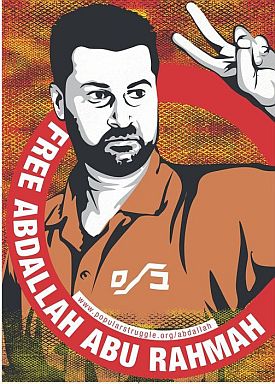
A message from Israeli military prison on International Human Rights Day

Majida Abu Rahmah writes:

A year ago tonight, on International Human Rights Day, our apartment in Ramallah was broken into by the Israeli military in the middle of the night and I was torn away from my wife Majida, my daughters Luma and Layan, and my son Laith, who at the time was only nine months old.

As the coordinator of the Bil’in Popular Committee against the Wall and Settlements I was convicted of “organizing illegal demonstrations” and “incitement.” The “illegal demonstrations” refer to the nonviolent resistance campaign that my village has been waging for the last six years against Israel’s Apartheid Wall that is being built on our land.

I find it strange that the military judges could call our demonstrations illegal and charge me for participating in and organizing them after the world’s highest legal body, the International Court of Justice in The Hague, has ruled that Israel’s wall within the occupied territories is illegal and must be dismantled. Even the Israeli supreme court ruled that the Wall’s route in Bil’in is illegal.

I have been accused of inciting violence: this charge is also puzzling. If the check points, closures, ongoing land theft, wall and settlements, night raids into our homes and violent oppression of our protests does not incite violence, what does?

Despite the occupations constant and intense incitement to violence in Bil’in, we have chosen another way. We have chosen to protest nonviolently together with Israeli and International supporters. We have chosen to carry a message of hope and real partnership between Palestinians and Israelis in the face of oppression and injustice. It is this message that the Occupation is attempting to crush through its various institutions including the military courts. An official from the Israeli Military Prosecution shamelessly told my Attorney, Gaby Lasky, that the objective of the military in my prosecution is to “put an end” to these demonstrations.

Facebooktwittermail

Israel faces tougher line from EU after former heads call for Palestinian state

The Guardian reports:

Twenty-six European grandees have urged the EU to adopt a tougher stance towards Israel including taking “concrete measures” and exacting “consequences” over continued settlement building on occupied land, which they say is illegal under international law.

The former EU leaders said that in the face of “the ongoing deterioration of the situation on the ground”, the EU, in co-operation with other international bodies, should put forward a “concrete and comprehensive proposal for the resolution of this conflict”. A deadline of April 2011 for progress in peace talks between Israel and the Palestinians should be set, after which the international community should intervene.

“Time to secure a sustainable peace is fast running out,” said the group, which includes former EU commissioner Chris Patten, former EU foreign policy chief Javier Solana, former Irish president Mary Robinson and another nine former heads of state. It sent a letter to EU president Herman van Rompuy, foreign affairs chief Catherine Ashton and all EU heads of government before a meeting of foreign ministers on Monday, saying: “It is clear that without a rapid and dramatic move … a two-state solution, which forms the one and only available option for a peaceful resolution of this conflict, will be increasingly difficult to attain.”

Facebooktwittermail

The age of political apathy is ending

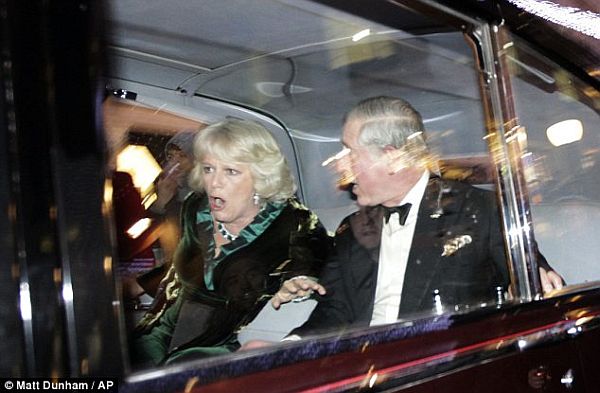
“Off with their heads,” shouted demonstrators crowding round the Rolls Royce carrying Prince Charles and his wife Camilla to a West End theater last night. Even if he didn’t fear for his life, Britain’s heir to the throne was reminded of the fate of his namesake, Charles I, last time Britons violently upturned the established order. And even if to Americans the British monarchy has the appearance of a quaint anachronism, the incident serves as a reminder that there are never any institutional seats of power that can perfectly protect themselves from the wrath of a population that forcefully demands to be heard.

For much of the last two decades, the West’s cynical democratic leaders have comforted themselves with the knowledge that governmental power rarely requires popular support. With election strategies that hinge on securing a 51% majority — a minority from a largely apathetic electorate — the only constituencies that have demanded and been rewarded with loyal service are those who pay handsomely to have their interests represented.

No more. The new British government recently volunteered to test the theory that austerity measures are not only a panacea for the economic travails of these times, but that a docile population will buckle under when forced to swallow bitter medicine. Unless the government is forced to change course, this will make higher education unfordable for most of a generation.

On the streets of London, Britain’s young people are now demonstrating that their character has been misjudged. None has done so more articulately than Barnably, a 15 year-old speaking at the Coalition of Resistance national conference in London on November 27.

Aaron Porter writes:

The last 30 days have shaken the coalition. Together with UCU, the lecturers’ union, we brought 50,000 to the streets of London on 10 November for the biggest student demonstration in a generation. It has sparked a new wave of activism that has involved tens of thousands of students, parents, pupils and teachers in creative, nonviolent protests and direct action.

By piling pressure on MPs with dozens of spontaneous demonstrations, scores of occupations and hundreds of thousands taking action around the country, we have come together to defend education and fight for our future. A generation has found its voice.

In its founding statement, the Coalition of Resistance declared:

It is time to organise a broad movement of active resistance to the Con-Dem government’s budget intentions. They plan the most savage spending cuts since the 1930s, which will wreck the lives of millions by devastating our jobs, pay, pensions, NHS, education, transport, postal and other services.

The government claims the cuts are unavoidable because the welfare state has been too generous. This is nonsense. Ordinary people are being forced to pay for the bankers’ profligacy.

The £11bn welfare cuts, rise in VAT to 20%, and 25% reductions across government departments target the most vulnerable – disabled people, single parents, those on housing benefit, black and other ethnic minority communities, students, migrant workers, LGBT people and pensioners.

Women are expected to bear 75% of the burden. The poorest will be hit six times harder than the richest. Internal Treasury documents estimate 1.3 million job losses in public and private sectors.

We reject this malicious vandalism and resolve to campaign for a radical alternative, with the level of determination shown by trade unionists and social movements in Greece and other European countries.

This government of millionaires says “we’re all in it together” and “there is no alternative”. But, for the wealthy, corporation tax is being cut, the bank levy is a pittance, and top salaries and bonuses have already been restored to pre-crash levels.

An alternative budget would place the banks under democratic control, and raise revenue by increasing tax for the rich, plugging tax loopholes, withdrawing troops from Afghanistan, abolishing the nuclear “deterrent” by cancelling the Trident replacement.

An alternative strategy could use these resources to: support welfare; develop homes, schools, and hospitals; and foster a green approach to public spending – investing in renewable energy and public transport, thereby creating a million jobs.

In another address to the national conference, the rapper, Lowkey, pointed out that the Liberal Democrats have not only reversed themselves on the issue of university tuition fees but also abandoned their proposal of an arms embargo on Israel. He also noted the irony that even during the rule of a Tory government, the Conservative Party headquarters in London has less protection than the Israeli embassy.

Facebooktwittermail

From Judith Miller to Julian Assange

Jay Rozen says: “Our press has never come to terms with the ways in which it got itself on the wrong side of secrecy as the national security state swelled in size after September 11th.”

Noting that the New York Times did eventually look back at its own role in the build-up to the war in Iraq, Rozen says:

[T]he Times did not look at the problem of journalists giving powerful officials a free pass by stripping names from fear-mongering words and just reporting the words, or of newspapers sworn to inform the public keeping secrets from that same (misinformed) public, of reporters getting played and yet refusing to ID the people who played them because they needed to signal some future player that the confidential source game would go on.

In its look back the Times declared itself insufficiently skeptical, especially about Iraqi defectors. True enough. But the look back was itself insufficiently skeptical. Radical doubt, which is basic to understanding what drives Julian Assange, was impermissible then. One of the consequences of that is the appeal of radical transparency today.

Simon Jenkins got at some of this in a Guardian column on Wikileaks: “Accountability can only default to disclosure. As Jefferson remarked, the press is the last best hope when democratic oversight fails.” But at the nadir the last best hope failed, too. When that happens accountability defaults to extreme disclosure, which is where we are today. The institutional press isn’t driving it; the wilds of the Internet are. To understand Julian Assange and the weird reactions to him in the American press we need to tell a story that starts with Judy Miller and ends with Wikileaks.

Facebooktwittermail

Iranians want nuclear arms, US survey finds

Agence France Presse reports:

Many Iranians are worried about international nuclear sanctions but also want the country to have atomic weapons, according to a survey by a US institute revealed Wednesday.

The poll, carried out by Charney Research for the International Peace Institute, a New York-based think tank, also indicated that most Iranians voted for President Mahmoud Ahmadinejad in a controversial June 2009 election that many countries said was fixed.

Forty-seven percent of Iranians said sanctions ordered by the United Nations, and by individual countries, were having a big impact, said the poll of 700 people carried out in early September. Fifty three percent believed it is Iran’s major foreign policy problem.

But 71 percent of Iranians want the country to have nuclear weapons and only 21 percent opposed such a move. Lead researcher Craig Charney said this compared to 52 percent support for nuclear weapons and 42 percent opposition in a similar poll in 2007.

The fourth round of sanctions was passed by the UN Security Council in June this year. Iran refuses to halt uranium enrichment but has denied the West’s accusations that it is seeking a nuclear bomb.

Charney said the study shows “you can’t just propose the grand bargain and expect Iranians to accept it straight away.”

With international tensions rising, the poll indicated that the number of people who were pro-United States had fallen from 34 percent in 2008 to eight percent now. Sixty-eight percent believed that if there was an attack on Iran, it would come from the United States.

Facebooktwittermail

Israel progresses down the path to isolation

Peter Beinart facetiously congratulates Benjamin Netanyahu now that he’s thwarted President Obama’s Middle East peace efforts.

Now all you have to worry about is…Argentina. You see, Argentina just recognized a Palestinian state on 1967 borders. Brazil did so days earlier. Uruguay and Paraguay are expected to follow suit, and then Bolivia and Ecuador. Oh, and you have a small problem with rock stars: last year Elvis Costello and Carlos Santana cancelled Israel gigs because of the occupation, and more seem poised to follow. Dock workers are another worry: from Sweden to South Africa, they keep protesting the occupation and the Gaza blockade by refusing to offload Israeli goods. And then there’s Hanna King, the 17-year-old Swarthmore freshmen who along with four other young American Jews disrupted your speech last month in New Orleans because, as she told Haaretz, “settlements…are contrary to the Jewish values that we learnt in Jewish day school.” You should probably expect young Jews like her to protest all your big American speeches from now on.

I know, I know. You consider all this unfair, and in some ways it is. But when you’ve been occupying another people for 43 years, confiscating more and more of their land and denying them citizenship while providing it to your own settlers, it doesn’t do much good to insist that things are worse in Burma. Your only effective argument against the Elvis Costellos and Hanna Kings was that you were trying to end the occupation. That’s where Obama came in. As long as the U.S. president seemed to have a chance of brokering a deal, his efforts held the boycotters and protesters and Palestinian state-recognizers at bay. When Brazil and Argentina recognized Palestinian independence, the American Jewish Committee’s David Harris declared it “fundamentally unhelpful to the Arab-Israeli peace process.” But what if there is no peace process? What’s your argument then? Maybe you can tell the Ecuadorians that Israel deserves Hebron because Abraham bought land there from Ephron the Hittite.

Rest assured, the Obama administration won’t go along with these efforts to punish and isolate you. It may even denounce them. But as you may have noticed, the world doesn’t listen to America like it used to. Non-Americans have grown tired of hearing that only the U.S. can broker a deal, especially because you’ve now shown that to be false. And so the dam preventing countries and institutions from legitimizing Palestine and delegitimizing Israel may soon break. You didn’t like the American way? Get ready for the Brazilian way.

Facebooktwittermail

WikiLeaks reveals Shell’s grip on Nigerian state

The Guardian reports:

The oil giant Shell claimed it had inserted staff into all the main ministries of the Nigerian government, giving it access to politicians’ every move in the oil-rich Niger Delta, according to a leaked US diplomatic cable.

The company’s top executive in Nigeria told US diplomats that Shell had seconded employees to every relevant department and so knew “everything that was being done in those ministries”. She boasted that the Nigerian government had “forgotten” about the extent of Shell’s infiltration and was unaware of how much the company knew about its deliberations.

The cache of secret dispatches from Washington’s embassies in Africa also revealed that the Anglo-Dutch oil firm swapped intelligence with the US, in one case providing US diplomats with the names of Nigerian politicians it suspected of supporting militant activity, and requesting information from the US on whether the militants had acquired anti-aircraft missiles.

Facebooktwittermail

Latest graduate in FBI’s terrorist training program

Since it’s difficult to identify and capture terrorists, the FBI seems to have concluded that an effective counterterrorism program can only work if they first find potential terrorists, coach them and then catch them. It’s a bit like sports hunting for those whose pride in displaying a trophy is undiminished by the fact that the animal was raised to be shot.

Associated Press reports:

A 21-year-old man charged with trying to blow up a military recruiting center briefly hesitated when he heard about a federal sting operation that nabbed an alleged terrorist in Oregon last month but decided to keep going with his plan, authorities said.

Antonio Martinez, a naturalized U.S. citizen who goes by the name Muhammad Hussain after recently converting to Islam, faces charges of attempted murder of federal officers and attempted use of a weapon of mass destruction.

He told an informant working with the FBI he thought about nothing but jihad and wasn’t deterred even after a Somali-born teenager was arrested in Portland, Ore., the day after Thanksgiving in a sting, court documents released Wednesday showed.

The Oregon suspect intended to bomb a crowded downtown Christmas tree-lighting ceremony. But – like Martinez – the people he’d been communicating with about the plot were with the FBI. Martinez wondered if he was headed down a similar path, documents say.

After hearing about the Oregon case, Martinez was uneasy and called the informant demanding to know who he was, according to court documents.

“I’m not falling for no b.s.,” he told the informant. He said he still wanted to go ahead, but the informant told him to think about it overnight and call the next day, which Martinez did.

In the following days, Martinez reiterated his support for the plan several times, documents show, at one point reassuring the informant that he didn’t feel pressured to carry it out: “I came to you about this, brother.”

The bomb he’s accused of trying to detonate was fake and had been provided by an undercover FBI agent. It was loaded into an SUV that Martinez parked in front of the recruiting center, authorities said, and an FBI informant picked him up and drove him to a nearby vantage point where he tried to set it off.

“There was never any actual danger to the public during this operation this morning,” U.S. Attorney Rod J. Rosenstein said Wednesday. “That’s because the FBI was controlling the situation.”

The FBI’s dubious approach to counterterrorism was highlighted earlier this week in a Washington Post report on a convicted forger named Craig Monteilh who became an FBI informant and is now suing the agency.

The Islamic Center of Irvine in Southern California was a target of Monteilh’s operations.

In the Irvine case, Monteilh’s mission as an informant backfired. Muslims were so alarmed by his talk of violent jihad that they obtained a restraining order against him.

He had helped build a terrorism-related case against a mosque member, but that also collapsed. The Justice Department recently took the extraordinary step of dropping charges against the worshiper, who Monteilh had caught on tape agreeing to blow up buildings, law enforcement officials said. Prosecutors had portrayed the man as a dire threat.

Compounding the damage, Monteilh has gone public, revealing secret FBI methods and charging that his “handlers” trained him to entrap Muslims as he infiltrated their mosques, homes and businesses. He is now suing the FBI.

Officials declined to comment on specific details of Monteilh’s tale but confirm that he was a paid FBI informant. Court records and interviews corroborate not only that Monteilh worked for the FBI – he says he made $177,000, tax-free, in 15 months – but that he provided vital information on a number of cases.

Some Muslims in Southern California and nationally say the cascading revelations have seriously damaged their relationship with the FBI, a partnership that both sides agree is critical to preventing attacks and homegrown terrorism.

Facebooktwittermail

How the US and China colluded to undermine Copenhagen climate summit

Der Spiegel reports:

Last year’s climate summit in Copenhagen was a political disaster. Leaked US diplomatic cables now show why the summit failed so spectacularly. The dispatches reveal that the US and China, the world’s top two polluters, joined forces to stymie every attempt by European nations to reach agreement.

In May 2009 the Chinese leaders received a very welcome guest. John Kerry, the powerful chairman of the Senate Foreign Affairs Committee, met with Deputy Prime Minister Li Keqiang in Beijing. Kerry told his hosts that Washington could understand “China’s resistance to accepting mandatory targets at the United Nations Climate Conference, which will take place in Copenhagen.”

According to a cable from the US embassy in the Chinese capital, Kerry outlined “a new basis for ‘major cooperation’ between the United States and China on climate change.”
At that time, many Europeans were hoping the delegates at the Copenhagen summit would agree climate-change measures that could save the planet from the cumulative effects of global warming. But that dream died pitifully in mid-December 2009, and the world leaders went their separate ways again without any concrete achievements. Confidential US diplomatic cables published by WikiLeaks now show just how closely the world’s biggest polluters — the United States and China — colluded in the months leading up to the conference. And they give weight to those who have long suspected that the two countries secretly formed an alliance.

Facebooktwittermail