Category Archives: Issues

Michel Warschawski – On the border

Michel Warschawski is a writer and journalist and founder of The Alternative Information Center, an internationally oriented, progressive, joint Palestinian-Israeli activist organization.

Parts one and two of this fascinating interview by Real News Network senior editor Paul Jay, can be viewed here.

Part Three: Racist rhetoric, measures now Israeli mainstream

Part Four: The Israeli separation wall a symbol of ethnic purity

Part Five: Jerusalem without Palestinians?

Facebooktwittermail

Why Bibi won’t budge

Ever since David Ignatius revealed that President Obama is “seriously considering” proposing an American peace plan to resolve the Israeli-Palestinian conflict, Washington’s Middle East hands have been ruminating on the significance of this report. Obama dropped in on a meeting of former national security advisers in the White House a couple of weeks ago, but if the people whose job it is to keep the dream of a peace process alive are to be believed, who was there was more significant than the president’s casual entry.

Brent Scowcroft, Zbigniew Brzezinski, Sandy Berger, Colin Powell, Frank Carlucci and Robert C. McFarlane — these are the heavyweights who can push Obama in the right direction. Right? Not unless Benjamin Netanyahu also gets pushed out of the way.

Larry Derfner lays out the reasons Bibi presents an immovable obstacle.

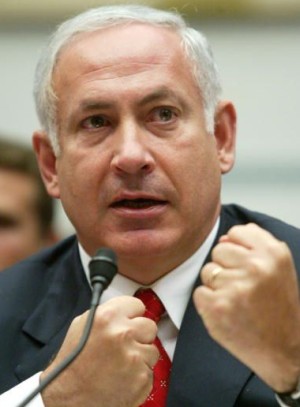
Which way will Bibi go? This seems to be the big question – whether Prime Minister Binyamin Netanyahu will bow to American pressure, exchange his right-wing/religious government for a “peace coalition” and start taking down the occupation, or whether he will dig in.

I don’t think there’s any doubt about it – he’s going to dig in. This is not the prime minister who’s going to divide the land with the Palestinians.

To begin with, of the 69 MKs in an imagined Likud-Kadima-Labor-Meretz coalition, the great majority are totally opposed to paying the well-known price for peace – removing 100,000 settlers from the West Bank’s interior and relinquishing Arab Jerusalem to the Palestinians for their capital. No Likudnik sees this as anything less than treason, and all but a few Kadima members would agree. The peace coalition actually numbers no more than about 20 MKs, and even with the outside support of the Arab parties, they’re a hopeless minority, for now anyway.

Still, could a prime minister who has the president of the United States and the rest of the world bearing down on him convince the majority to do the deal? Could a prime minister with unusual powers of persuasion persuade the country to do what the democratic world has been asking it to do since 1967, on pain of losing its place in that world?

Maybe. If such a prime minister really believed Israel’s future depended on its ending the occupation. And Netanyahu doesn’t believe that for a minute. He’s spent his whole career preaching the opposite – that giving up the land conquered in the Six Day War would be the death of this country. This isn’t a talking point for him, it’s the worldview he was raised on, one he’s never abandoned regardless of the empty phrases he utters now and then to stroke the Obama administration. Netanyahu has opposed every peace process he’s ever been around. His view of the Palestinians is simple, clear and consistent – either we keep them down or they wipe us out.

And just in case anyone imagines that there is any other Israeli leader who could do what Netanyahu finds impossible, Derfner is clear: “No there isn’t. Not now, anyway.” Instead, it’s up to Israel’s friends “to make the status quo here intolerable.”

That’s a big leap from simply observing that the status quo is unsustainable.

Facebooktwittermail

The tyranny of law

When the question, is it right?, is made subordinate to the question, is it legal?, we succumb to the tyranny of law.

Once in a while a rare individual when confronting a contradiction between these two will refuse to be tyrannized. Anat Kam might be just such an individual, though as Richard Silverstein (who has covered this story in greater detail than anyone else) speculates, she may have simply been “an aspiring journalist who found herself in a position to advance her career.”

The story of her house arrest and impending trial have been the focus of huge attention inside and outside Israel but within the current media frenzy the real story is getting much less attention. That is the story which Kam revealed and which was reported in Haaretz two years ago.

But in case anyone is naive enough to imagine that a Haaretz report might inhibit the sense of impunity that guides Israel’s security forces, another report from less than four months ago makes it clear that those acting in the name of the state see few limitations on how they exercise their power. On December 26 Haaretz reported:

An investigation into an overnight Israel Defense Forces operation in the West Bank city of Nablus early Saturday suggests that Israeli soldiers may have executed two of the three Palestinian militants who were killed, the left wing rights group B’Tselem said Saturday.

In the operation, the IDF killed three Al Aqsa Martyrs Brigades operatives, whom officials said were responsible for a shooting attack on Thursday which killed 40-year-old father of seven Meir Hai of the settlement of Shavei Shomron. The troops surrounded the homes of the three and called for them to exit, and killed them when they refused to surrender.

According to B’Tselem, in two of the three cases the troops behaved as if they were preparing for an execution, not an arrest. Relatives and eyewitnesses told B’Tselem that the two were unarmed and did not attempt to flee, and that the soldiers weren’t trying to stop them, but rather shot them from close range once their identity was revealed.

Little has changed since the story that triggered the Anat Kam affair was first reported.

License to kill

Uri Blau, Haaretz, December 4, 2008

The Israeli Defense Forces highest commanders approved the killing of innocent people while targeted assassinations were being carried out, in spite of an Israeli High Court ruling that prohibited such operations. Moreover, the claim that the targets of such operations represented “ticking time bombs” was exposed as a fraud when an inconvenient scheduling conflict — the visit of a senior American official — required that a murder be postponed.

The announcement made by the Israel Defense Forces’ spokesman on June 20, 2007 was standard: “Two armed terrorists belonging to the Islamic Jihad terror organization were killed last night during the course of a joint activity of the IDF and a special force of the Border Police in Kafr Dan, northwest of Jenin. The two terrorists, Ziad Subahi Mahmad Malaisha and Ibrahim Ahmed Abd al-Latif Abed, opened fire at the force during its activity. In response the force fired at them, killing the terrorists. On their bodies two M-16 rifles, a pistol and ammunition were found. It was also discovered that the terrorists were involved in planning suicide attacks against the Israeli home front, including the attempt in Rishon Letzion last February.”

The laconic announcement ignores one important detail: Malaisha was a target for assassination. His fate had been decided several months earlier, in the office of then head of Central Command, Yair Naveh. As far as the public was concerned, on the other hand, the last declared assassination carried out by the IDF in the West Bank took place in August 2006; at the end of that year the High Court of Justice set strict criteria regarding the policy of assassinations in the territories.

A Haaretz Magazine investigation reveals for the first time operational discussions in which the fate of wanted men and innocent people was decided, in apparent disregard of the High Court decision. Thus it was revealed that the IDF approved assassination plans in the West Bank even when it would probably have been possible to arrest the wanted men – in contradiction to the State’s statement to the High Court – and that in cold military terminology the most senior IDF echelons approve, in advance and in writing, the harming of innocent Palestinians during the course of assassination operations. Moreover, it turns out that the assassination of a target the defense establishment called part of a “ticking infrastructure” was postponed, because it had been scheduled to take place during the visit of a senior U.S. official.

Leading legal experts who were asked to react to the documents say that the IDF is operating in contradiction to a High Court ruling. “Morality is a very difficult issue,” Prof. Mordechai Kremnitzer of Hebrew Univeristy said. “The thought that there are people who sit behind a desk and determine that someone is fated to die is a frightening thought.” Continue reading

Facebooktwittermail

Is the US getting ready to push Israel to declare its nuclear status?

[Updated below] Whatever else can be said about the strained relationship between Barack Obama and Benjamin Netanyahu, one thing is clear: Obama seems intent on keeping Netanyahu off balance.

On Tuesday, Netanyahu announced he would be returning to Washington next week to attend Obama’s Nuclear Security Summit. Just days later, he had changed his mind, ostensibly because of “fears that a group of Muslim states, led by Egypt and Turkey, would demand that Israel sign up to the international Nuclear Non-Proliferation Treaty, or NPT,” Haaretz reported.

An earlier report in the Jerusalem Post, however, had raised that specific issue and said this would not deter the Israeli prime minister from attending the summit:

[O]ne main argument against participation was that Netanyahu’s presence at an international forum dealing with nuclear issues would inevitably draw attention to Israel’s own reported nuclear arsenal, as well as its policy of ambiguity on whether it has nuclear weapons.

Countries such as Egypt, Turkey and Saudi Arabia will certainly – as they do regularly at international nuclear forums – shine the spotlight on Israel and a perceived imbalance: Why is the world so keen on stopping Iran’s nuclear development program, but silent in the face of Israel’s reported nuclear arsenal?

One government official said Netanyahu’s decision to attend, despite this likely scenario, had been made because key issues affecting Israel would be discussed there, and it was important for the Jewish state’s voice to be heard – as well as the realization that Israel’s reported nuclear capacity would be an issue whether Netanyahu participated in the meeting or not.

Earlier, Ynet reported:

US Under Secretary of State for Arms Control and International Security Affairs Ellen Tauscher spoke with Deputy Foreign Minister Daniel Ayalon Tuesday and updated him on US President Barack Obama’s new nuclear proliferation policy.

Tauscher said that the US will strive to protect its allies and work against countries which violate the Non-Proliferation Treaty (NPT) such as North Korea, or countries that fail to meet their commitments to the international community such as Iran.

The under secretary of state stressed that Washington will adopt a “calculated ambiguity” policy towards countries which do not pose a threat to the US. Despite not explicitly pointing to Israel, it appears her statements were meant to reassure the Jewish state.

It’s unclear however, whether the administration’s “calculated ambiguity” was really meant to reassure Israel or do the opposite.

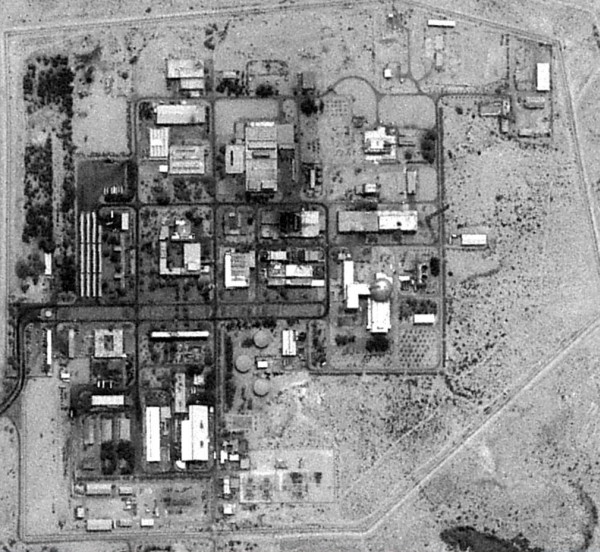
The United States is not on the brink of pushing Israel to sign the Nuclear Non-Proliferation Treaty but it could be signalling its willingness to see pressure applied by others as it provides a platform in Washington for such an effort. Moreover, in a little noted move, the Obama administration appears to be using a new diplomatic tool to signal that Israel’s days of “nuclear ambiguity” may be numbered: Israel’s nuclear scientists are now being shut out of the United States.

A report on the Hebrew NRG/Maariv website, under a headline, Dimona reactor workers not welcome in the US, says that workers at Israel’s Dimona nuclear research reactor who submitted visa requests to visit the United States for ongoing university education in physics, chemistry and nuclear engineering, have all been rejected, specifically because of their association with the Dimona reactor. According to the report, this is a new policy decision by the Obama administration, since reactor workers were until recently being issued visas to study in the US.

Update: Shortly after I posted this, Politico reported that the White House today denied that there has been any change in its visa policy.

Facebooktwittermail

A presidential death warrant

American soldiers have to be trained how to kill, but for American presidents killing comes naturally.

Anyone who aspires to become president must surely ask themselves: am I willing to end someone else’s life, be that an individual or perhaps tens or hundreds of thousands or even millions of people? After all, even though it’s not spelled out in the Constitution, it’s clear that a pacifist could never hold this office. Killing comes with the territory.

Even so, I can’t help wondering when it was the Barack Obama posed this question and decided, “yes I can.”

With candidate George W Bush we didn’t need to ask the question. He had a track record — as the Governor of Texas he presided over 152 executions. But with Obama, we may never know when he came to regard killing as a tolerable part of his job.

It’s hard to imagine that as a community organizer he ever entertained the idea that wiping people out could become a dimension of working towards the greater good, yet at some point he must have seen this coming and — from all the evidence we now see — not flinched.

But to contrast Obama and Bush as killers, here’s what’s scary and yet passes without comment: Obama’s approach is dispassionate, with no explicit moral calculation. Whereas Bush felt driven to assume an air of righteousness and moral superiority, casting his actions within a drama of good and evil, Obama presents the image of an administrative process through which, after careful analysis and legal and political deliberation, lives are terminated.

Under the morally insidious rubric of “procedures” — a notion that peels away personal responsibility by replacing it with impersonal rules-based behavior — the president, the CIA, the military, the administration, the media, and the American public are all being offered an excuse to look the other way. An unnamed official assured a Washington Post reporter: “[there are] careful procedures our government follows in these kinds of cases.”

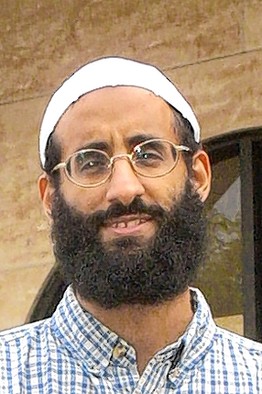
When Anwar al-Awlaki, an American born in New Mexico is shredded and incinerated — his likely fate at the receiving end of a Hellfire missile — there will be no account of the last moments of his life. No record of who happened to be in the vicinity. Most likely nothing more than a cursory wire report quoting unnamed American officials announcing that the United States no longer faces a threat from a so-called high value target.

Representative Jane Harman, Democrat of California and chairwoman of a House subcommittee on homeland security, was out prepping the media and the public on Tuesday when she called Awlaki “probably the person, the terrorist, who would be terrorist No 1 in terms of threat against us.”

Although it was only this week that a US official announced that Awlaki is now on the CIA’s assassination list, US special forces were already authorized and had made at least one attempt to kill the Muslim cleric who now resides in Yemen.

While both the military and the CIA make use of drones for the purpose of remotely controlled assassination, the fact that Awlaki is now considered a legitimate target for “lethal CIA operations” raises questions about the methods the agency might use.

Last summer CIA Director Leon Panetta shut down a secret CIA program which would have operated assassination teams for hunting down al Qaeda leaders. The news was presented as though the new administration was again distancing itself from the questionable practices of the Bush administration, yet at the time, Director of National Intelligence Dennis C Blair told Congress that the termination of that particular program did not rule out the future use of insertion teams that could kill or capture terrorist leaders.

One of the many ironies here is that the Obama administration appears to have abandoned one of the Bush era rationales for torture in favor of its own rationale for murder.

The most frequently used justification for torturing terrorist suspects has been the claim that in the scenario of a so-called ticking time bomb, vital information might be forced out of a suspect enabling an imminent act of terrorism to be thwarted.

Anwar al-Awlaki is supposedly just such a suspect. “He’s working actively to kill Americans,” an American official told the Washington Post. But whatever vital intelligence he might be able to provide, we’ll probably never know. Once dead he won’t hatch any new plots, but as for the ones already set in motion, well, we’ll just have to wait and see what sort of surprises may yet appear.

Needless to say, I am not suggesting that torturing terrorist suspects is any more acceptable than murdering them.

Ken Gude, a human rights expert from the Center for American Progress, argues that Awlaki is a legitimate target for assassination because of his claimed role in assisting the 9/11 attackers. On that basis, his killing would appear to be an act of extra-judicial punishment rather than the removal of a potential threat. But even if the administration sticks assiduously to its focus on future threats, it should not claim a God-like power to predict the future. Nor should it assume that the threat someone poses is necessarily diminished once they are dead.

In weighing the fate of Anwar al-Awlaki, this administration would do well to remember the case of Mohammed El Fazazi, a Moroccan cleric who from a Hamburg mosque preached to Mohammed Atta, Ramzi Binalshibh and Marwan al-Shehhi, three of the men who participated in the 9/11 attacks, that it was the duty of a devout Muslim to “slit the throats of non-believers.”

Eight years later, Fazazi had a new message as he appealed to Muslims to air their grievances through peaceful demonstrations. He is helping turn young men away from violent jihad. But what would stir the hearts of such men now if rather than hearing Fazazi’s moderated message, instead they held the memory of a day he became a martyr when struck by an American Hellfire missile?

Facebooktwittermail

Michel Warschawski interview

Michel Warschawski is a writer and journalist and founder of The Alternative Information Center, an internationally oriented, progressive, joint Palestinian-Israeli activist organization.

At the end of the war on Gaza, Warschawski wrote this:

Absolutely Not! Not in Their Name, Not in Ours

Ehud Barak, Tzipi Livni, Gabi Ashkenazi and Ehud Olmert–don’t you dare show your faces at any memorial ceremony for the heroes of the Warsaw Ghetto, Lublin, Vilna or Kishinev. And you too, leaders of Peace Now, for whom peace means a pacification of the Palestinian resistance by any means, including the destruction of a people. Whenever I will be there, I shall personally do my best to expel each of you from these events, for your very presence would be an immense sacrilege.

Not in Their Names

You have no right to speak in the name of the martyrs of our people. You are not Anne Frank of the Bergen Belsen concentration camp but Hans Frank, the German general who acted to starve and destroy the Jews of Poland.

You are not representing any continuity with the Warsaw Ghetto, because today the Warsaw Ghetto is right in front of you, targeted by your own tanks and artillery, and its name is Gaza. Gaza that you have decided to eliminate from the map, as General Frank intended to eliminate the Ghetto. But, unlike the Ghettos of Poland and Belorussia, in which the Jews were left almost alone, Gaza will not be eliminated because millions of men and women from the four corners of our world are building a powerful human shield carrying two words: Never Again!

Not in Our Name!

Together with tens of thousands of other Jews, from Canada to Great Britain, from Australia to Germany, we are warning you: don’t dare to speak in our names, because we will run after you, even, if needed, to the hell of war-criminals, and stuff your words down your throat until you ask for forgiveness for having mixed us up with your crimes. We, and not you, are the children of Mala Zimetbaum and Marek Edelman, of Mordechai Anilevicz and Stephane Hessel, and we are conveying their message to humankind for custody in the hands of the Gaza resistance fighters: “We are fighting for our freedom and yours, for our pride and yours, for our human, social and national dignity and yours.” (Appeal of the Ghetto to the world, Passover 1943)

But for you, the leaders of Israel, “freedom” is a dirty word. You have no pride and you do not understand the meaning of human dignity.

We are not “another Jewish voice,” but the sole Jewish voice able to speak in the names of the tortured saints of the Jewish people. Your voice is nothing other than the old bestial vociferations of the killers of our ancestors.

Facebooktwittermail

Wars of excess

Tom Engelhardt writes:

Whether it’s 3.1 million items of equipment, or 3 million, 2.8 million, or 1.5 million, whether 341 “facilities” (not including perhaps ten mega-bases which will still be operating in 2011 with tens of thousands of American soldiers, civilians, and private contractors working and living on them), or more than 350 forward operating facilities, or 290 bases are to be shut down, the numbers from Iraq are simply out of this world.

Those sorts of figures define the U.S. military in the Bush era — and now Obama’s — as the most materiel-profligate war-making machine ever. Where armies once had baggage trains and camp followers, our camp followers now help plant our military in foreign soil, build its housing and defenses, and then supply it with vast quantities of food, water, fuel, and god knows what else. In this way, our troops carry not just packs on their backs, but a total, transplantable society right down to the PXs, massage parlors, food courts, and miniature golf courses. At Kandahar Air Base in Afghanistan, there was until recently a “boardwalk” that typically included a “Burger King, a Subway sandwich shop, three cafes, several general stores, a Cold Mountain Creamery, [and an] Oakley sunglasses outlet.” Atypically enough, however, a TGI Friday’s, which had just joined the line-up, was recently ordered shut down along with some of the other stores by Afghan war commander General Stanley McChrystal as inimical to the war effort.

The extraordinary statistics stacked up in this article are of course a testament to the massive imperial footprint imposed by the United States when it goes to war. But they are also a reflection of something else: the extraordinary impunity with which America engages in war.

The fact that the US military can be so extravagant in situating itself in its theaters of engagement is only possible because the enemy it faces has, relatively speaking, such minuscule resources with which it can strike back. There are no enemy air forces that bombard these vast American bases. There is no artillery fire.

So-called asymmetric threats may pose the enduring challenge in this environment yet they also provide a license for every imaginable excess.

Facebooktwittermail

The over-rated middle way

“Obama to take middle course in new nuclear policy,” a headline in the Washington Post declares.

There are a few instances where “middle” signals danger — he was driving drunk down the middle of the road — but generally speaking, middle is supposed to be good. But when the Post tells us Obama is going to take a “middle course” on nuclear weapons, this is one of those perverse instances where the newspaper editors seem to want to direct readers away from the story.

Obama’s going down the middle — not too much, not too little. Yawn, let’s move on to the next story. Oh yeah, but just in case you make it to paragraph three, it’s worth mentioning that the US wants Iran to understand that even as a non-nuclear state, it could be targeted by America’s nuclear arsenal.

That‘s a middle course?! Unless you happen to be in the Iranian government in which case it might sound more like an urgent call to develop a nuclear deterrence capability.

A year after his groundbreaking pledge to move toward a “world without nuclear weapons,” President Obama on Tuesday will unveil a policy that constrains the weapons’ role but appears more cautious than what many supporters had hoped, with the president opting for a middle course in many key areas.

Under the new policy, the administration will foreswear the use of the deadly weapons against nonnuclear countries, officials said, in contrast to previous administrations, which indicated they might use nuclear arms against nonnuclear states in retaliation for a biological or chemical attack.

But Obama included a major caveat: The countries must be in compliance with their nonproliferation obligations under international treaties. That loophole would mean Iran would remain on the potential target list.

At Foreign Policy, Josh Rogin notes that Obama has made yet another reversal on a campaign position. No doubt under the sway of Pentagon and defense industry pressure, he now wholeheartedly embraces the biggest defense boondoggle of them all: missile defense.

For an Obama team that has been skeptical of the past U.S. administrations’ efforts to rapidly deploy ballistic missile-defense systems around the world, missile defense sure does get star billing in the United States’ newly released report on overall nuclear strategy.

The document claims that missile defense is critical to allowing the United States to shift away from nuclear weapons, especially now that the U.S. will no longer threaten to use nukes to retaliate against non-nuclear attacks, such as from chemical or biological weapons.
[…]
The NPR itself was careful to mention missile defense as only one of several capabilities needed to counter non-nuclear attacks.

But Secretary Clinton was less careful.

“It’s no secret that countries around the world remained concerned about our missile-defense program,” Clinton said, explaining that the NPR weighs in on “the role [missile defense] can and should play in deterring proliferation and nuclear terrorism.”

Ok, so now missile defense can deter chemical attacks, biological attacks, proliferation of nuclear technology, and suitcase bombs?

Regardless, the document makes clear that with fewer nukes to be deployed once the new START agreement goes into effect, and with the role of nuclear weapons now limited to responding to nuclear threats, the administration is now looking to missile defense, among other technologies, to fill in the gap.

“As the role of nuclear weapons is reduced in U.S. national security strategy, these non-nuclear elements will take on a greater share of the deterrence burden,” the review reads.

Outside experts doubted that the NPR’s suggested shift toward a reliance on missile defense would provide any deterrence for most types of chemical and biological attacks or the use of a nuclear device by a terrorist.

“If they deliver them by missile, fine, but that’s not likely to be the case,” said Peter Huessy, president of Geostrategic Analysis, a defense consulting firm. “If our biggest threat is terrorists using nukes, then of course deterrence doesn’t apply and missile defense doesn’t apply either.”

Huessy also commented on Obama’s embrace of missile defense in the NPR, which seems out of line with the criticism he leveled when running for president in 2008.

“I certainly see a pivot in the sense of what people expected,” he said. “Missile defense is now front and center in America’s security policy. That’s’ certainly a shift from Obama’s campaign rhetoric.”

If there’s one lesson that 9/11 could have taught us in — oh, let’s say a few seconds — it should have been that in an age of asymmetric warfare, missile defense is a giant waste of money. Yet the only lesson we can draw almost a decade later is that when it comes to the flagrant misuse of tax dollars, so long as it’s done in the name of that holiest of holies, defense, American taxpayers will remain blithely indifferent.

Facebooktwittermail

Lies and cover-ups in the name of force protection

When a leaked US Army report recently revealed that the military regards Wikileaks as a potential force protection threat, the leak not only exposed the army’s fears but it also shed light on the breadth of this concept: force protection. From the Pentagon’s perspective, protecting American troops and making sure they stay out of harm’s way includes shielding them from unwelcome media attention and perhaps even concealing evidence of crimes.

Dan Froomkin reports on the latest example of a story the Pentagon has worked hard to supress:

Calling it a case of “collateral murder,” the WikiLeaks Web site today released harrowing until-now secret video of a U.S. Army Apache helicopter in Baghdad in 2007 repeatedly opening fire on a group of men that included a Reuters photographer and his driver — and then on a van that stopped to rescue one of the wounded men.

None of the members of the group were taking hostile action, contrary to the Pentagon’s initial cover story; they were milling about on a street corner. One man was evidently carrying a gun, though that was and is hardly an uncommon occurrence in Baghdad.

Reporters working for WikiLeaks determined that the driver of the van was a good Samaritan on his way to take his small children to a tutoring session. He was killed and his two children were badly injured.

In the video, which Reuters has been asking to see since 2007, crew members can be heard celebrating their kills.

“Oh yeah, look at those dead bastards,” says one crewman after multiple rounds of 30mm cannon fire left nearly a dozen bodies littering the street.

A crewman begs for permission to open fire on the van and its occupants, even though it has done nothing but stop to help the wounded: “Come on, let us shoot!”

Facebooktwittermail

Karzai’s troublesome independence

After Benjamin Netanyahu was recently insulted by President Obama during his March visit to Washington (Obama declined to offer him dinner), Israeli commentators struggled to make an appropriate comparison and for some reason thought this was treatment that the head of a small African state might expect — the rather transparent implication being that Netanyahu should get the kind of deferential treatment that Israelis apparently believe is reserved for white Western leaders.

Israelis could but won’t console themselves with the observation that Netanyahu has yet to be treated like Hamid Karzai.

Last month, Karzai got uninvited by the White House and then, adding insult to injury, an uninvited visit and reprimand from Obama. Karzai is now pissed off. I wonder why?

President Hamid Karzai lashed out at his Western backers for the second time in three days, accusing the U.S. of interfering in Afghan affairs and saying the Taliban insurgency would become a legitimate resistance movement if the meddling doesn’t stop.

Mr. Karzai, whose government is propped up by billions of dollars in Western aid and nearly 100,000 American troops fighting a deadly war against the Taliban, made the comments during a private meeting with about 60 or 70 Afghan lawmakers Saturday.

At one point, Mr. Karzai suggested that he himself would be compelled to join the other side —that is, the Taliban—if the parliament didn’t back his controversial attempt to take control of the country’s electoral watchdog from the United Nations, according to three people who attended the meeting, including an ally of the president.

The prospects of Karzai joining the Taliban are minimal but his threat highlights Washington’s dilemma: they want an Afghan leader who is compliant but doesn’t look like a puppet. They want someone who looks independent but does what he’s told.

The hypocrisy inherent in the American approach is no more evident than in the run-up to the highly-publicized offensive against the Taliban stronghold, Kandahar. Will President Karzai publicly approve the offensive, or merely accede to it, Doyle McManus asks. “He’s got to be seen as the guy who’s leading this fight,” a military officer says.

Much to the frustration of American planners, it turns out that Afghans, including Karzai, have minds of their own. How inconvenient.

Facebooktwittermail

Keeping up the war effort

What’s the key to making sure the US “prevails” in Afghanistan? Making sure that American taxpayers remain sufficiently ignorant and indifferent about what’s happening over there.

The news that US soldiers apparently gouged bullets out of the bodies of pregnant women will likely be yet another story that does little to interrupt the torpor of America’s war consciousness.

The Times reports:

US special forces soldiers dug bullets out of their victims’ bodies in the bloody aftermath of a botched night raid, then washed the wounds with alcohol before lying to their superiors about what happened, Afghan investigators have told The Times.

Two pregnant women, a teenage girl, a police officer and his brother were shot on February 12 when US and Afghan special forces stormed their home in Khataba village, outside Gardez in eastern Afghanistan. The precise composition of the force has never been made public.

The claims were made as Nato admitted responsibility for all the deaths for the first time last night. It had initially claimed that the women had been dead for several hours when the assault force discovered their bodies.

In an excellent analysis of US media coverage of the February killings, Glenn Greenwald notes:

What is clear — yet again — is how completely misinformed and propagandized Americans continue to be by the American media, which constantly “reports” on crucial events in Afghanistan by doing nothing more than mindlessly and unquestioningly passing along U.S. government claims as though they are fact.

Jerome Starkey — who managed to penetrate the propaganda veil by doing what reporters of a bygone era understood to be their job: independently gathering information as opposed to transcribing official statements — writes at Nieman Watchdog:

The only way I found out NATO had lied — deliberately or otherwise — was because I went to the scene of the raid, in Paktia province, and spent three days interviewing the survivors. In Afghanistan that is quite unusual.

NATO is rarely called to account. Their version of events, usually originating from the soldiers involved, is rarely seriously challenged.

This particular raid, in the early hours of Feb 12, piqued my interest. I contacted some of the relatives by phone, established it was probably safe enough to visit, and I finally made it to the scene almost a month after unidentified gunmen stormed the remnants of an all-night family party.

It’s not the first time I’ve found NATO lying, but this is perhaps the most harrowing instance, and every time I go through the same gamut of emotions. I am shocked and appalled that brave men in uniform misrepresent events. Then I feel naïve.

There are a handful of truly fearless reporters in Afghanistan constantly trying to break the military’s monopoly on access to the front. But far too many of our colleagues accept the spin-laden press releases churned out of the Kabul headquarters. Suicide bombers are “cowards,” NATO attacks on civilians are “tragic accidents,” intelligence is foolproof and only militants get arrested.

Some journalists in Kabul are hamstrung by security rules set in Europe or America, which often reflect the least permissive times in Baghdad rather than any realistic threats in Afghanistan. These reporters can’t leave their compounds without convoys of armed guards. They couldn’t dream of driving around rural Paktia, dressed up in local clothes and squashed into the back of an old Toyota Corolla, to interview the survivors of a night raid.

Ultra risk-averse organizations go even further and rely almost entirely on video footage and still images gifted by the entirely partial combat-camera teams or the coalition’s dedicated NATO TV unit, staffed by civilian ex-journalists who churn out good news b-roll. Others lap up this material because it’s cheaper and easier than having their own correspondents in a war zone.

This self-censorship is compounded by the “embed culture,” which encourages journalists to visit the frontlines with NATO soldiers, who provide them food, shelter, security and ultimately with stories.

Facebooktwittermail

The Israel lobby’s curious defense of an alleged Somali war criminal

Yousuf v. Samantar is the first human rights suit arising from abuses committed in Somalia under the brutal regime of Siad Barre. It is currently pending before the Supreme Court, where an odd coalition of defenders has filed briefs on behalf of the defendant, Mohammed Samantar, a prime minister under Barre and an alleged war criminal.

Among his defenders are five pro-Israel organizations — the American Jewish Congress, the Zionist Organization of America, the American Association of Jewish Lawyers And Jurists, Agudath Israel of America, and the Union of Orthodox Jewish Congregations of America in Support of Petitioner — each with a professed interest in keeping Samantar out of court. Allowing the case to proceed, they warn, would set an inviting precedent for Israel’s detractors in the human rights community, exposing current and former Israeli officials to an avalanche of litigation.

This suit was brought by the Center for Justice and Accountability and pro bono co-counsel Cooley Godward Kronish LLP in 2004 on behalf of five torture survivors: Bashe Abdi Yousuf, a young business man detained, tortured, and kept in solitary confinement for over six years; Aziz Mohamed Deria, whose father and brother were abducted by officials and never seen again; John Doe I, whose two brothers were summarily executed by soldiers; Jane Doe, a university student detained by officials, raped 15 times, and put in solitary confinement for over three years; and John Doe II, who was imprisoned for his clan affiliation and was shot by a firing squad, but miraculously survived by hiding under other dead bodies.

A strange alliance at the Supreme Court

By Sam Singer, War in Context, April 4, 2010
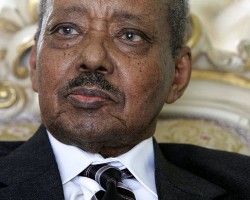
Mohammed Ali Samantar is the only living vestige of the Barre regime, the last government in two decades to exercise central control over Somalia and, not coincidentally, the last that was impudent enough to try. When Siad Barre was finally overthrown in 1991, Samantar, who had served as defense minister and prime minister, fled, in a storm of bullets, to Italy. He eventually made his way to Fairfax, Virginia, where he lived in suburban obscurity until a group of Somali nationals discovered him, hired a lawyer, and sued for damages. According to his accusers, the Barre regime committed unforgivable acts of violence against them and their families, offenses spanning a range of brutality from arbitrary detention, to torture, rape and extrajudicial killing. Samantar was allegedly aware of the crimes being perpetrated against civilians and yet failed to stop them. The suit was dismissed by a federal district court and then reinstated by the US Court of Appeals for the Fourth Circuit. It is now pending before the Supreme Court, where a peculiar coalition of defenders is urging reversal. Among them, to the confusion of some observers, are five prominent pro-Israel organizations, each with a professed interest in keeping Samantar out of court. In joint amicus briefs, the groups insist that as a former government official, Samantar should be immune from suit. To hold otherwise, they warn, would violate international law and set an inviting precedent for Israel’s enemies and their supporters in the human rights community.

The arrival of the Israel lobby adds geopolitical intrigue to a case that already read like a Ludlum thriller. And because it speaks to real and immediate consequences, it lends concreteness to a discussion that would have otherwise carried on in the abstract. It is one thing for a lawyer to appeal to legal authority for the proposition that the courts of one nation ought not sit in judgment of the acts of another; it is quite another for five groups purporting to represent the interests of the Israeli government to advise that doing so in this case would be to declare open season on Israeli officials in US courts.

It is not without some irony that organizations claiming to represent Israel, a state conceived in the wake of unprecedented state-sponsored violence, find their wagon hitched to the cause of an alleged war criminal. Nor does the position square, at least not at first glance, with less expansive interpretations of sovereign immunity advanced by the lobby’s constituents in the past. Just this year, Israeli victims of rocket fire on the Lebanese border sued the Iranian government, by way of its central banks, on the theory that it provided material support to Hezbollah, the source of the rockets. Last December, a pro-Israel group in Europe sued leaders of Hamas in a Belgium court, invoking what it described as the court’s “universal” jurisdiction over cases arising from war crimes. In both cases, sovereign immunity was an obstacle standing between Israeli interests and a favorable judgment; here, in Samantar’s case, supporters of Israel invoke it as a shield.

In fact, Israel is far more likely to find itself on the receiving end of a human rights suit. According to one report, nearly 1,000 suits have been filed globally against Israeli officials and military personnel alleging war crimes and other abuses. The defense ministry expects some 1,500 more will follow, many stemming from military operations in the coastal territories, but also some taking aim at the less violent aspects of Israeli anti-terror strategy, including one suit describing the security fence as a “crime against humanity.” An Israeli newspaper published a “wanted” list of current and former officials who are among the common named defendants. The list, which was republished in briefs to the Court, reads like a who’s who in Israeli political and military history. The forums for these suits vary, but they commonly feature developed Western countries that have lowered the drawbridge for human rights litigants. Steering many of the cases are nongovernmental organizations (NGOs), some based in the Middle East with ties to the Palestinian government, others based in the West and backed by the likes of the Center for Constitutional Rights and George Soros’s Open Society Institute.

In these suits supporters of Israel see pretext. They describe a more sinister objective, a coordinated effort to bring Israeli officials into federal courtrooms. The idea is to delegitimize Israel, but not before dragging officials through an invasive and costly discovery process. Do it enough and Israeli officials will start thinking twice before traveling to the United States, or, worse yet, before assuming roles that could expose them to suit. Defense experts believe the strategy fits the definition of “lawfare,” think-tank speak for the use of legal methods to achieve military goals.

In the immediate term, the briefs warn, relations between the US and Israel will suffer. Like any partnership, the US/Israeli alliance benefits from a rich and ongoing exchange of people and ideas. For the exchange to thrive, current and former Israeli officials must be able to travel to and within the United States without fear of being served with a lawsuit. By way of illustration, the American Jewish Congress recounts the story of Moshe Ya’alon, a retired Israeli general who was recently summoned to court upon arriving in Washington, D.C. for a think tank forum. The complaint, which sought damages for civilian deaths resulting from a battle on the Lebanese border between Israel and Hezbollah, was perfunctory. With respect to Ya’alon, it alleged only that he served in the army chain-of-command during the relevant period. The district court dismissed the case on jurisdictional grounds and the D.C. Circuit affirmed, concluding that the immunity of a foreign state extends to its former officials. Ya’alon never had to step foot in a courtroom. Now suppose that instead of Washington, he had been served with the suit 15 minutes away, in Arlington, Virginia. In that event the dismissal of his suit would have been appealed to the Fourth Circuit, which, as we learned in Samantar’s case, does not share the D.C. Circuit’s view on official immunity. In other words, had Ya’alon booked a hotel across the river, he might well still be there today.

A Statutory Nightmare

Naturally, US-Israeli relations didn’t figure into the Supreme Court’s questioning at oral arguments. The justices had assembled to resolve a disagreement among the federal circuit courts over whether sovereign immunity extends to officials. Accordingly, they trained their focus on Samantar and his theory of the case, which rests on the off-stated maxim that one equal has no dominion over another equal. That this saying, which encapsulates the principle of sovereign immunity, is most commonly recited in Latin suggests something about its vintage. It is as close to a truism as a proposition can come in a foggy discipline like international law, and it is an animating principle of the Foreign Sovereign Immunity Act (FSIA). That law changed the way US courts process suits against foreign governments. Before 1976, a court needed the go-ahead from the State Department before docketing such cases. When this approach proved unwieldy, Congress vested gate-keeping authority in the federal courts and then cabined it by stripping them of jurisdiction over suits against foreign states that don’t fit within a narrow set of exceptions.

Until recently it was generally accepted that these same protections applied to foreign officials. After all, a suit against a foreign official acting on behalf of a state is effectively a suit against the state. True, the caption may list the Minister of Defense rather than the Ministry of Defense, and the plaintiff may have his sights set on a personal bank account rather than the national treasury, but in either case the court is sitting in judgment of the state’s actions. It has intuitive appeal, this idea. It also has the support of the majority of the federal circuits.

But as the Fourth Circuit pointed out below, the argument is without support in the one place it needs it most–the text of the FSIA. FSIA extends sovereign immunity to “foreign states” as well as their “agencies and instrumentalities”, but it remains conspicuously silent on the matter of foreign officials. For supporters of broad immunity, this omission is proof that the identity of interests between a foreign sovereign and its officials is self-evident. Congress, they argue, had no reason to split hairs, to try to distinguish the indistinguishable. Opponents, who harbor a less attenuated view, insist that if Congress wanted to extend immunity to foreign officials, it would have said so.

The theory that foreign officials are immune from suit encounters an more mystifying problem in the Torture Victim Protection Act (TVPA), a federal law that permits victims of state-sponsored torture to bring suit in the United States against culpable foreign officials. The TVPA is one of the statutes supplying the cause of action in the suit against Samantar, but that’s not why it’s important. Rather, as Justice Kennedy pointed out during oral arguments, the text of the TVPA appears to make a mockery of the proposition that foreign officials are never amenable to suit in U.S courts. To read the law any other way would be to watch it evaporate, an entire congressional enactment rendered useless, leaving torture victims a right without a remedy. The Court, Justice Kennedy reminds, is not in the business of reading entire statutes out of existence.

Supporters of immunity for foreign officials counter that allowing the case to proceed against Samantar would be just as devastating for FSIA. As a preoccupation of Justice Breyer’s, this argument soaked up a fair amount of the Court’s time. The consensus is that opening officials to suit would allow litigants to undermine the intent of the FSIA without actually violating it. In Ya’alon’s case, instead of suing the Ministry of Defense, a lawyer with his wits about him would simply name Ya’alon, the former head of army intelligence, and the suit would survive. “What you are saying,” Breyer concluded, “is that FSIA is only good against a bad lawyer.”

Hedging, counsel for the plaintiffs reminded the Court that jurisdiction is not the only hurdle between a foreign official and liability. Once a plaintiff establishes jurisdiction, there are other age-old immunity doctrines that shield foreign officials from suit. There is the head of state doctrine, for instance, which protects current and former leaders from prosecution and civil liability, or the doctrine of diplomatic immunity, a similar, if more controversial, safeguard for diplomats and their staff. But there is no small difference between immunity from suit and immunity from liability. To have the former without the latter is to have comfort without convenience; it is, so to speak, the difference between putting up and showing up.

The Supreme Court is thus left to choose between two seemingly impossible outcomes. Extend sovereign immunity to foreign officials and the Torture Victim Protection Act is gutted, along with U.S. credibility in the human rights community. Expose them to suit and make hash of one of the core objectives of the Foreign Sovereign Immunity Act—saving key allies the expense and embarrassment of defending national security decisions in US courts. To the extent possible, courts generally try to read conflicting statutes in a way that gives effect to both. But even with so much hanging in the balance, coexistence between the TVPA and the FSIA appears impossible. Unimpressed and evidently undecided, the justices took the case under advisement.

Sam Singer is a 2009 graduate of Emory Law School and a Staff Law Clerk for the US Court of Appeals for the Seventh Circuit. His commentaries on law and politics have appeared in various publications, including The Beachwood Reporter and Culturekiosque.com. He has also reported and written articles for The Chicago Tribune and Market News International.

Facebooktwittermail

Israel’s censorship scandal

Judith Miller reports:

You’ve probably never heard of Anat Kamm. Few people have. But for nearly four months, the 23-year-old Israeli journalist has been under house arrest in Tel Aviv for allegedly stealing and leaking secret Israeli defense ministry documents to a journalist from Ha’aretz, one of Israel’s leading dailies.

Kamm would love to tell her side of the story, her friends and associates tell me. So would her lawyers. So, too, would Dov Alfon, the chief editor of Ha’aretz, a liberal paper, and Uri Blau, the reporter to whom Kamm allegedly leaked the documents she was said to have copied while she was completing her military service.

But they cannot talk or write about the espionage case. In an extremely rare action, an Israeli court has ordered the Israeli media not to publish or broadcast a word about Kamm, the allegations against her, or the investigation that has led Blau, the Ha’aretz reporter involved, to flee to London. For almost four months, Blau has been in self-imposed exile there to avoid answering questions about how and from whom he obtained the confidential defense department documents that are said to have resulted in a spate of stories alleging personal and institutional misconduct on the part of the Israeli Defense Forces, the hallowed IDF, and some of its senior officials.

Facebooktwittermail

US funds help arm the Taliban

The New York Times reports:

Since their offensive here in February, the Marines have flooded Marja with hundreds of thousands of dollars a week. The tactic aims to win over wary residents by paying them compensation for property damage or putting to work men who would otherwise look to the Taliban for support.

The approach helped turn the tide of insurgency in Iraq. But in Marja, where the Taliban seem to know everything — and most of the time it is impossible to even tell who they are — they have already found ways to thwart the strategy in many places, including killing or beating some who take the Marines’ money, or pocketing it themselves.

Just a few weeks since the start of the operation here, the Taliban have “reseized control and the momentum in a lot of ways” in northern Marja, Maj. James Coffman, civil affairs leader for the Third Battalion, Sixth Marines, said in an interview in late March. “We have to change tactics to get the locals back on our side.”

Col. Ghulam Sakhi, an Afghan National Police commander here, says his informants have told him that at least 30 Taliban have come to one Marine outpost here to take money from the Marines as compensation for property damage or family members killed during the operation in February.

“You shake hands with them, but you don’t know they are Taliban,” Colonel Sakhi said. “They have the same clothes, and the same style. And they are using the money against the Marines. They are buying I.E.D.’s and buying ammunition, everything.”

The Los Angeles Times reports:

By any standard, it was a disastrous day for an important U.S. ally in Afghanistan. First, three German soldiers died in an unusually fierce battle with insurgents, then German troops accidentally killed six Afghan soldiers apparently coming to their aid.

The chaotic chain of events in the northern province of Kunduz, detailed by Afghan and NATO officials Saturday, a day after the fact, could further undermine German public backing for the conflict.

Slipping support by North Atlantic Treaty Organization allies could jeopardize the Obama administration’s plan to hit the Taliban hard this year, with the aim of weakening the insurgents to the point that they might be receptive to a negotiated settlement. That in turn is aimed at laying the groundwork for a gradual Western withdrawal beginning in mid-2011.

While the United States rushes troops to Afghanistan’s restive south, where a major offensive is planned this spring and summer in Kandahar province, Taliban fighters and their allies are making their presence felt in areas of the country that had been relatively peaceful.

Facebooktwittermail

Palestinian aspirations are clear, but what does Israel want?

Gideon Levy writes:

Does anybody know what Benjamin Netanyahu wants? Has anybody ever understood what his predecessors wanted? Where are they headed? And where are they leading us? One after another, Israeli politicians have been asked these questions, only to reply with the standard rejoinders: “You don’t expect me to answer this question” or “Let’s leave this for the negotiations.” Vague answers, obfuscations, evasive and noncommittal cliches – promises, promises. There was one clear, unequivocal answer – none. There is no other country whose citizens, friends and enemies have not the slightest clue about which direction it is facing. For our enemies not to know is understandable, but don’t we deserve to know more? Don’t we at least deserve to know the ultimate goal?

While the Arabs have always declared their aspirations – and did so with clarity, precision, sharpness and at times extremism, the Israelis have donned masks. While the goals of warring parties in international conflicts are known to all, and while everyone knows what the Palestinians are after in the Middle East – the ’67 lines, a state, a solution to the refugee problem, the right of return – nobody knows what the Israelis want. Do they wish to annex the territories? Come on. Do they want to evacuate them? Not now. If not now, when? It remains unclear. How much of the territories? Nobody knows.

A few days ago, journalists broached the question of a construction freeze in Jerusalem to a few ministers. Almost all of them refused to give a response. Why should they? This is nothing less than a scandal. A minister who is not ready to state his position on an issue is derelict in his duties. When a prime minister refrains from doing so, it is 10 times as grave. While Swedish law obligates the publication of every letter sent from the office of a minister, we cannot even extract a response from our top officials over critical issues.

The blame, as usual in these instances, is shared by us all. Through the years we have implicitly agreed that our leaders would guide us on the basis of fraud, or at the very least distortion. The mantra of there’s-no-need-to-say-it-aloud has become a matter of consensus, almost an axiom.

The conventional thinking whereby striving for peace is likened to market bartering and late-night horse-trading, as if it were verboten to clearly specify a final price, has become official policy. What might work for the illusory world of advertising and marketing, or the avarice of the consumer culture, has become a philosophical cornerstone in this country. Vagueness is the message. Perhaps this country has no goal, or a way to get to a goal, and the vagueness is meant to obfuscate this disgrace.

Is the prime minister of Israel ready to withdraw from the Golan Heights in exchange for peace with Syria? Yes or no? Don’t we deserve to know? Which parts of the West Bank, if any, is he ready to evacuate? And what, for heaven’s sake, does our defense minister want? What are his policy goals? Does anybody know? And why is it that if we were to know the answer, this would weaken our position and not strengthen it? Is vagueness tantamount to strength? Is trickery a modus operandi?

Our amateur merchants, as is their wont, will never reveal their opinions. No wonder their wholesale marketing strategy has proved to be a resounding failure. Israel’s global standing is at an all-time low due to, among other things, ambiguity and a loss of direction. Even the all-knowing president of the United States has no idea what his ally wants. Now at least he is trying to get an answer by saying, “Tell me what it is you people want.” It is doubtful whether he will get the answer he is looking for.

Forty-three years after the start of the occupation, no one, either here in Israel or anywhere in the world, knows what we really want and in which direction we are heading. Thus, we have not only become the only country in the world without clearly defined borders, we are also the only country without clearly defined national goals.

In William Shakespeare’s “The Merchant of Venice,” Shylock forces Antonio to agree to a loan on highly unfavorable terms. Yet the Jew provides us with one of the most memorable monologues ever written: “If you prick us, do we not bleed? If you tickle us, do we not laugh? If you poison us, do we not die? And if you wrong us, shall we not revenge?” The monologue given by the merchants of Jerusalem, on the other hand, is far more wretched. “If they give, then they’ll receive,” or something like that.

Facebooktwittermail

Belgium moves towards public ban on burka and niqab

The Guardian reports:

Belgium today moved to the forefront of a campaign to restrict the wearing of the Muslim veil by women when a key vote left it on track to become the first European country to ban the burka and niqab in public.

The home affairs committee of the Brussels federal parliament voted unanimously to ban the partial or total covering of faces in public places.

“I am proud that Belgium would be the first country in Europe which dares to legislate on this sensitive matter,” the centre-right MP Denis Ducarme said.

Daniel Bacquelaine, the liberal MP who proposed the bill, said: “We cannot allow someone to claim the right to look at others without being seen.”

On that basis, Belgium will presumably soon outlaw the use of all closed-circuit TV security monitoring systems in public places; government officials, business executives and others will no longer be able to drive around in vehicles with tinted windows… But there is of course no escaping the fact that this move really has nothing to do with curtailing a fictitious right. This is yet another move in Islamophobia being legally sanctioned by a European state — with the audacious claim that it is being done for the sake of maintaining “an open, liberal, tolerant society.”

Facebooktwittermail

Gen. McChrystal: We’ve shot ‘an amazing number of people’ who were not threats

Justin Elliot reports:

In a stark assessment of shootings of locals by US troops at checkpoints in Afghanistan, Gen. Stanley McChrystal said in little-noticed comments last month that during his time as commander there, “We’ve shot an amazing number of people and killed a number and, to my knowledge, none has proven to have been a real threat to the force.”

The comments came during a virtual town hall with troops in Afghanistan after one asked McChrystal to comment on the “escalation of force” problem. The general responded that, in the nine months he had been in charge, none of the cases in which “we have engaged in an escalation of force incident and hurt someone has it turned out that the vehicle had a suicide bomb or weapons in it.”

In many cases, he added, families were in the vehicles that were fired on.

Facebooktwittermail