Category Archives: Issues

Gideon Levy interview

In an interview for Electronic Intifada, David Cronin spoke to Gideon Levy — a columnist for Haaretz who can reasonably be described as the conscience of Israeli journalism:

David Cronin: Have you completely rejected Zionism?

Gideon Levy: Zionism has many meanings. For sure, the common concept of Zionism includes the occupation, includes the perception that Jews have more rights in Palestine than anyone else, that the Jewish people are the chosen people, that there can’t be equality between Jews and Arabs, Jews and Palestinians. All those beliefs which are very basic in current Zionism, I can’t share them. In this sense, I can define myself as an anti-Zionist.

On the other hand, the belief about the Jewish people having the right to live in Palestine side by side with the Palestinians, doing anything possible to compensate the Palestinians for the terrible tragedy that they went through in 1948, this can also be called the Zionist belief. In this case, I share those views.

DC: If somebody was to call you a moderate Zionist would you have any objections?

GL: The moderate Zionists are like the Zionist left in Israel, which I can’t stand. Meretz and Peace Now, who are not ready, for example, to open the “1948 file” and to understand that until we solve this, nothing will be solved. Those are the moderate Zionists. In this case, I prefer the right-wingers.

DC: The right-wingers are more honest?

GL: Exactly.

The intractability of the Israeli-Palestinian conflict is generally attributed to what seem to be irreconcilable desires from each side, yet a much more fundamental problem seems to me to be a lack of honesty not only on the part of successive Israeli governments and the defenders of those governments but among a large swath of Israel’s liberal American critics.

Criticism can only go so far until it reaches an unstated limit at which point the constraining factor appears to less to do with the issues than it does with the individual’s fear of alienation. If I question the idea of “Jewish democracy” (or any other untouchable presupposition), do I run the risk of being ostracized by my community? Might I be marginalized in foreign policy circles? Could I jeopardize my career opportunities? Will I ruin my chances of getting tenure?

When fears define the parameters of discourse, it has no grounding in truth. More power is yielded to what is left unstated than is invested in what is said.

Where there is honesty, there can be compromises, but without honesty there is no foundation for peace or even negotiation. Honesty must come first.


Facebooktwittermail

One-state realism

Dmitry Reider reviews sociologist Yehouda Shenhav’s book The Time of the Green Line.

That the notion of a one-state solution may be gaining some traction among diverse Israeli groups will be disturbing news for two-state solution dead-enders like J Street, though in this particular instance, Shenhav’s own vision may itself not garner wide appeal: a single state that looks like… Lebanon?

Still, as Reider notes, Shenhav’s book is “a conversation starter; it asks many more questions than it gives answers.” This is indeed a conversation worth engaging.

Rather than pinning his hopes for an equitable solution on the Israeli left, Shenhav actually looks to a coalition of Palestinians, non-Zionist leftists, and, most surprisingly, a few dissident settlers for a solution to the dispute. Unlike the Israeli left — bogged down in nostalgia for a mythically pure pre-1967 Israel — he argues that an increasing number of settlers are more in sync with the Palestinian timeline of 1948 and are opting to share sovereignty rather than give up their homes. Moreover, some appear to be more aware than “mainland” Israelis of the realities of occupation; Shenhav quotes a settler journal slamming the checkpoints and curfews, as well as a prominent settler educator saying that the military regime’s ongoing wrongs are “like Sabra and Shatila multiplied by a million,” in reference to the infamous 1982 massacre of Palestinians in the Lebanese refugee camps, perpetrated by a Christian militia allied with Israel. Shenhav also quotes poet Eliaz Cohen, resident of Gush Etzion, as saying: “Just as I have a right of return to Kfar Etzion, there’s no reason that Palestinians from Nablus shouldn’t have a right of return to Jaffa.”

Shenhav claims that the transition to one-state thinking will redraw the Israeli political map, currently defined by the right’s and the left’s positions toward Israel’s future role in the Palestinian territories. Although it’s far too early to speak of a movement, both left and right have begun realigning themselves: Leftists are beginning to use the racist jargon of demographics, while a new settler group calls for a one-state solution — with the right of return to boot. Quite apart from them, firebrand Likud Knesset member Tzipi Hotovely calls for the phased admission of West Bank Palestinians as Israeli citizens.

Curiously for a decidedly left-wing manifesto, Shenhav rejects out of hand the “one man, one vote,” “state of all its citizens” model as an alternative to a two-state solution.

This model, he says, “presumes the existence of a homogenous population motivated by individual interests and ignores the fact that most people in the contested space are religious nationalists with tremendous differences within both the Israeli and Palestinian communities.” He opts instead for a consociational democracy: a system in which religious, cultural, national, and economic considerations will be balanced by mutual agreement, within a power-sharing government.

Facebooktwittermail

Hillary Clinton channeling the neocons

In an interview on Canada’s CTV on Monday, US Secretary of State Hillary Clinton was asked about her reaction to a suicide bombing in the Moscow subway that day:

Question: We’ve had a terrorist attack in Moscow, dozens of people dead. Is this localized, in your view, or is there a wider implication?

Clinton: Well, it’s hard to tell, but I think there is a connection among most of the terrorist activities that we’re seeing around the world. They get encouragement from each other, they exchange training, explosives, information. I don’t know the details of this particular one other than, apparently, they were women who were the suicide bombers. And we know that Moscow has had problems for a number of years now with Chechnya and other places within the Russian Federation. So there are connections. I don’t think we want to go so far as to say they’re all part of the same operation, but certainly, there is a common theme to many of them.

Clinton’s language might not be charged with metaphor but this is a reprise of the neocons’ “unity of terror” meme, an idea that was best expressed in an editorial in the Jerusalem Post in 2003.

After a bombing in Gaza had claimed three American lives the Israeli newspaper declared:

Whether it was Hamas, Islamic Jihad, or perhaps even al-Qaida itself matters little and in fact tends to distract from what the West knows but often does not like to admit: The tentacles all belong to the same enemy.

By the time Clinton had reached the end of her second interview on Canadian television she was backing away from here earlier statement: “I’m not saying there’s a connection between all of these groups, but there certainly is a familiarity, a similarity in how they conduct themselves.”

I see. We’re talking about the conduct of terrorists. Terrorists being identifiable as terrorists because they engage in acts of terrorism. And there we have it: terrorism, a word that permeates everything and means nothing.

After a decade of a global war against terrorism, this is how far America’s understanding of terrorism has advanced: a desperate need to deconstruct meaningless and misleading language has barely been touched upon.

Yet, if the truth be told and extraordinary as the claim might sound, since 9/11 it is the word terrorism — not the phenomena that it attempts to homogenize — that has actually wreaked more havoc around the world than anything al Qaeda could ever have accomplished.

This it turns out was a secret weapon which shed no blood yet crippled thought as it exploded inside the brains of countless millions, rendering otherwise reasonably intelligent people incapable of recognizing that the actions and ambitions of a tiny number of individuals with extremely limited resources could never constitute a global threat unless globalized by the very people who felt threatened.

Facebooktwittermail

The president’s conscience, on hold

Dan Froomkin writes:

The White House counsel ideally serves as the president’s conscience.

But late last year, Barack Obama’s conscience was surgically removed.

Greg Craig, as Obama’s top lawyer, was the point man on a number of hot-button issues, the fieriest being how to close the prison at Guantanamo Bay. Craig argued for holding fast to the principles that Obama outlined before he became president, regardless of the immediate political consequences — an idealistic approach that, in a White House filled with increasingly pusillanimous pragmatists, earned him some powerful enemies.

After a steady drip of leaks over a period of months to the Washington Post, the New York Times, the Wall Street Journal and other news outlets to the effect that his days were numbered, Craig finally resigned in November.

He was replaced by Robert Bauer, a politically adept consummate Washington insider whose expertise is in campaign finance law — in short, a man whose job is to win elections, not defend principles.

At the same time, Attorney General Eric Holder has been increasingly marginalized and cut out of the White House decision-making loop. So now the coast is clear for the White House to make important legal and national security calls on purely political grounds.

The only question that remains is whether Obama himself will have any last-minute qualms about turning his back on his own principles.

Facebooktwittermail

Congress to Obama on Israel: Do what we say, not what we do

Following AIPAC’s lead, 327 members of Congress wrote a letter to President Obama last week whose core message resonates with the approach to politics favored by Pope Benedict: difficulties should be handled discreetly with the minimum of publicity. It’s a tried and tested practice that has throughout history been shown to be as rotten as it appears, yet it appeals to its proponents because those who follow this path have an immense tolerance for hypocrisy.

Thus, the letter to Obama read:

We recognize that, despite the extraordinary closeness between our country and Israel, there will be differences over issues both large and small. Our view is that such differences are best resolved quietly, in trust and confidence, as befits longstanding strategic allies.

As for differences between Congress and the administration, those are best handled through an open letter in which 327 publicity-conscious politicians can very visibly identify themselves as lackeys of the Israel lobby.

Had this letter to the president not been an open letter, I wonder how many signatures it would have got?

Facebooktwittermail

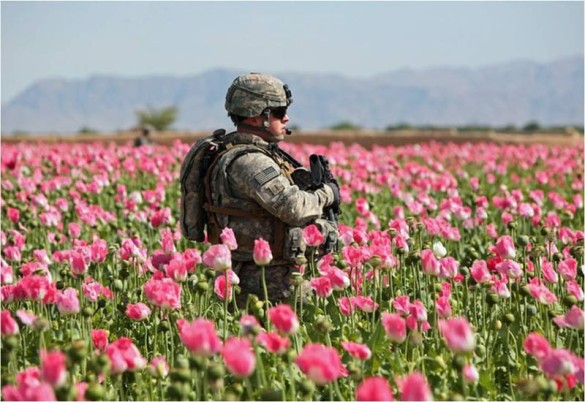
The opium wars in Afghanistan

At TomDispatch, Alfred W. McCoy writes:

To understand the Afghan War, one basic point must be grasped: in poor nations with weak state services, agriculture is the foundation for all politics, binding villagers to the government or warlords or rebels. The ultimate aim of counterinsurgency strategy is always to establish the state’s authority. When the economy is illicit and by definition beyond government control, this task becomes monumental. If the insurgents capture that illicit economy, as the Taliban have done, then the task becomes little short of insurmountable.

Opium is an illegal drug, but Afghanistan’s poppy crop is still grounded in networks of social trust that tie people together at each step in the chain of production. Crop loans are necessary for planting, labor exchange for harvesting, stability for marketing, and security for shipment. So dominant and problematic is the opium economy in Afghanistan today that a question Washington has avoided for the past nine years must be asked: Can anyone pacify a full-blown narco-state?

The answer to this critical question lies in the history of the three Afghan wars in which Washington has been involved over the past 30 years — the CIA covert warfare of the 1980s, the civil war of the 1990s (fueled at its start by $900 million in CIA funding), and since 2001, the U.S. invasion, occupation, and counterinsurgency campaigns. In each of these conflicts, Washington has tolerated drug trafficking by its Afghan allies as the price of military success — a policy of benign neglect that has helped make Afghanistan today the world’s number one narco-state.

Facebooktwittermail

Effortless, carefree war

What was the most significant thing about President Obama’s surprise trip to Afghanistan on Sunday? He wore a leather bomber jacket.

Or, to be more precise, the most significant thing about Obama’s six-hour visit was nothing that he said, nor the fact that he went, but that in the utterly trivialized view of war that American civilians are fed, the fact that Obama’s attire would merit comment.

A recently leaked CIA document said that the foundation of support for the war from America’s European allies might be weakening. “Why Counting on Apathy Might Not Be Enough” a CIA “Red Cell” special memorandum warned.

While the apathy of Europeans might be in jeopardy, American apathy appears to be as reliable as ever.

Contrary to Obama’s claim that the war in Afghanistan is a war of necessity, it is really a war of indifference — a war that continues because the people paying for it don’t care strongly enough to object to its continuation. Most importantly, Americans have by and large acquiesced to the notion that perpetual war is a condition of this era rather than a product of political policy. War has become an inobtrusive background noise in the American way of life.

Postscript: The “effortless” in the headline is an allusion to that forgotten expression: the war effort.

The fact that America’s wars of this last decade have required no war effort is one of the most telling ways in which these have not been wars of necessity. In a war of necessity, a civilian war effort is not merely required; it is unavoidable.

Whereas the civilian role in a war effort is an adjunct to the military effort, in a war that requires no war effort, there is no civilian role. There is instead a necessity that civilians be cocooned by an infantilism engendered by consumerism, which is to say, that they be easily pacified and rendered politically apathetic by having their trivial desires easily fulfilled.

Facebooktwittermail

Kandahar, a battlefield even before U.S. offensive

Carlotta Gall reports from Kandahar:

American forces have begun operations to push back Taliban insurgents in this most important southern province, the birthplace and spiritual home of the Taliban, and a full-scale offensive is expected in coming weeks.

But the Taliban have already turned this city into a battlefield as they prepare for the operation, which American officials hope will be decisive in breaking the insurgency’s grip on southern Afghanistan.

When American forces all arrive, they will encounter challenges larger than any other in Afghanistan. Taliban suicide bombings and assassinations have left this city virtually paralyzed by fear. The insurgents boldly walk the streets, visit shops and even press people into keeping guns and other supplies in their houses for them in preparation for urban warfare, residents say.

The government, corrupt and ineffective, lacks almost any popular support. Anyone connected to the government lives in fear of assassination. Its few officials sit barricaded behind high blast walls. Services are scant. Security, people say, is at its worst since the fall of the Taliban government in 2001.

Facebooktwittermail

Karzai refuses to be an American puppet

The New York Times reports:

This month, with President Hamid Karzai looking ahead to a visit to the White House, he received a terse note from aides to President Obama: Your invitation has been revoked.

The reason, according to American officials, was Mr. Karzai’s announcement that he was emasculating an independent panel that had discovered widespread fraud in Mr. Karzai’s re-election last year.

Incensed, Mr. Karzai extended an invitation of his own — to Mahmoud Ahmadinejad, the Iranian president, who flew to Kabul and delivered a fiery anti-American speech inside Afghanistan’s presidential palace.

“Karzai was enraged,” said an Afghan with knowledge of the events, who spoke on the condition of anonymity because of the delicacy of the issue. “He invited Ahmadinejad to spite the Americans.”

The dispute was smoothed over only this week, when Mr. Obama flew to Kabul for a surprise dinner with Mr. Karzai. White House officials emphasized that the most important purpose of Mr. Obama’s trip to Afghanistan was to visit American troops there.

But the red carpet treatment of Mr. Ahmadinejad is just one example of how Mr. Karzai is putting distance between himself and his American sponsors, prominent Afghans and American officials here said. Even as Mr. Obama pours tens of thousands of additional American troops into the country to help defend Mr. Karzai’s government, Mr. Karzai now often voices the view that his interests and the United States’ no longer coincide.

Facebooktwittermail

War tourists

The McClatchy blog, Nukes and Spooks reports:

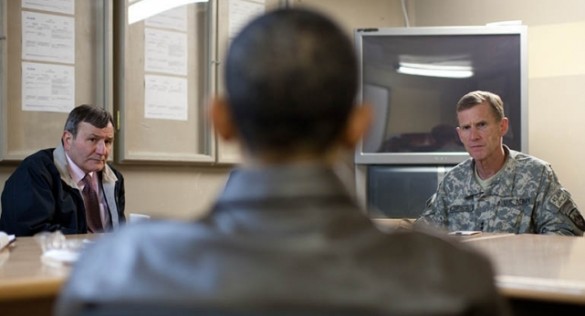
Amongst the swirl of soldiers, diplomats and contractors at America’s largest military bases in Afghanistan are congressional delegations, CODELs as they are often called. Members of Congress and their staffs come through, take a lot of photos with various commanders and ask questions that frankly could have been answered in Washington, all over a matter of no more than a couple days. Then they head back home. The trips are as much about theater as substance. The photos make their way onto campaign materials and the visits serve as the foundation for the questions they pose to commanders when they eventually testify on Capitol Hill. As in, “Gen. McChrystal, during my visit to Afghanistan, I learned….”

The latest VIP visitor was President Obama who spent six hours in Afghanistan over the weekend. The stated purpose was to meet with Afghanistan President Hamid Karzai. But somehow the photo op with the troops made the front page of today’s New York Times.

A couple weeks ago, the State Department Inspector General released a report that found that department personnel spend so much time greeting the scores of congress members who come to visit, they don’t have enough time to do their jobs.

Facebooktwittermail

The growing challenge to Israel

Scott McConnell writes:

[T]wo streams of anti-settlement, pro-peace-process discourse have begun to merge and reinforce one another. The realist argument about Israel—which can be traced from President Truman’s secretary of state George Marshall through Kennedy and Johnson aide George Ball to Stephen Walt and John Mearsheimer—now appears to have the patronage of American’s most respected military commander [Gen David Petraeus]. The pretense that America’s and Israel’s interests in the Middle East coincide completely is being challenged at the highest level and may never recover.

At the same time, the humanitarian argument, rooted in observation of Israeli oppression and Palestinian suffering, is disseminated more widely than ever. It reaches Americans through the Internet, through congressional visits, through the work of Israeli peace and human-rights monitoring groups, through the burgeoning communities of international solidarity workers, through church groups, through Richard Goldstone. Expressions of unconditional solidarity with Israel—such as Joseph Lieberman’s claim that we must not quarrel in public because Israel is “family”—are of course as common as ever. But they often give off the musty scent of Soviet bloc boilerplate in the 1970s and ’80s—words that many recite ritualistically but fewer and fewer say with conviction.

A gap in the line has been opened, but no one yet knows whether Obama will push through it. Chas Freeman, the veteran diplomat whose appointment to chair the National Intelligence Council was scuttled by objections from Israel lobbyists, says, “The president gets it”—that his appreciation of the centrality of these issues was manifest in his Ankara and Cairo speeches. Freeman views the showdown as an historic juncture: “the first time anything resembling an assault on an entrenched interest that many have recognized is contrary to American interests” has taken place. The moment has the potential to unite “Obama as the commander in chief with the visionary who spoke in Cairo.” But Obama’s track record is not reassuring, Freeman admits. He notes that the president has a “pattern of laying out a sensible strategic doctrine followed by delegating its implementation to people who may work to subvert it or who have their own agendas.”

Facebooktwittermail

The world is sick of Israel

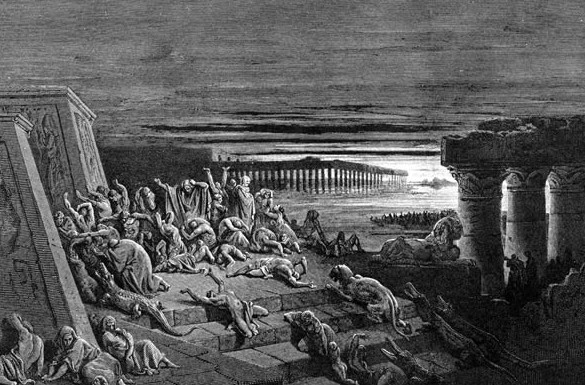
A commentary in Haaretz by Akiva Eldar opts for a Biblical theme with the headline: “The plague of darkness has struck modern Israelites.” But the observation in my headline comes directly from the text as Eldar bemoans the fact that Israeli prime minister Benjamin Netanyahu “simply refuses to see that the world is sick of us.”

A report from the BBC says US officials indicate the Obama administration would “seriously consider abstaining” if the issue of Israeli settlements was put to the vote in the UN Security Council.

This is one of the few threats Obama can make without needing Congressional support. And although this administration has not hesitated in making demands on the Israelis, it has thus far refrained from issuing threats. This could be a significant shift.

Eldar writes:

[T]he myopic Jewish state … has gone and collided head-on with the ally that offers existential support. Israel has become an environmental hazard and its own greatest threat. For 43 years, Israel has been ruled by people who have refused to see reality. They speak of “united Jerusalem,” knowing that no other country has recognized the annexation of the eastern part of the city. They sent 300,000 people to settle land they know does not belong to them. As early as September 1967, Theodor Meron, then the legal adviser to the Foreign Ministry, said there was a categorical prohibition against civilian settlement in occupied territories, under the Fourth Geneva Convention. Meron – who would become the president of the International Criminal Tribunal for the former Yugoslavia, and is now a member of the Appeals Chamber for both that court and a similar one for Rwanda – wrote to prime minister Levi Eshkol in a top-secret memorandum: “I fear there is great sensitivity in the world today about the whole question of Jewish settlement in the occupied territories, and any legal arguments that we try to find will not remove the heavy international pressure, from friendly states as well.”

It is true that for many years, we have managed to grope our way through the dark and keep the pressure at bay. We did so with the assistance of our neighbors, who were afflicted with the same shortsightedness.

On Sunday, however, the Arab League marked the eighth anniversary of its peace proposals, which offer Israel normalization in exchange for an end to the occupation and an agreed solution to the refugee problem, in accordance with UN Resolution 194. But Israel behaves as if it had never heard of this historic initiative. For the last year, it was too busy realizing its dubious right to establish an illegal settlement in Sheikh Jarrah in East Jerusalem. Prime Minister Benjamin Netanyahu, turning a blind eye to reality, has tried to persuade the world that what applies to Tel Aviv also applies to Sheikh Jarrah. He simply refuses to see that the world is sick of us. It’s easier for him to focus on his similarly nearsighted followers in AIPAC. Tonight they’ll all swear “Next year in rebuilt Jerusalem” – including the construction in Ramat Shlomo, of course.

Hillary Clinton is not Jewish, but it was she who had to remind the AIPAC Jews what demography will do to their favorite Jewish democracy in the Middle East. A few days earlier, she had come back from Moscow, where she took part in one of the Quartet’s most important meetings. Israeli politicians and media were too busy with the cold reception awaiting Netanyahu at the White House. They never gave any thought to the decision by the United States, the European Union, Russia and the United Nations to turn Palestinian Prime Minister Salam Fayyad’s state-building plan from a unilateral initiative into an international project.

The Quartet declared that it was backing the plan, proposed in August 2009, to establish a Palestinian state within 24 months. This was an expression of the Palestinians’ serious commitment that the state have a just and proper government and be a responsible neighbor. This means Israel has less than a year and a half to come to an agreement with the Palestinians on the permanent borders, Jerusalem and the refugees. If the Palestinians stick to Fayyad’s path, in August 2011, the international community, led by the United States, can be expected to recognize the West Bank and East Jerusalem as an independent country occupied by a foreign power. Will Netanyahu still be trying to explain that Jerusalem isn’t a settlement?

For 43 years, the Israeli public – schoolchildren, TV viewers, Knesset members and Supreme Court judges – have been living in the darkness of the occupation, which some call liberation. The school system and its textbooks, the army and its maps, the language and the “heritage” have all been mobilized to help keep Israelis blind to the truth. Luckily, the Gentiles clearly see the connection between the menace of Iranian control spreading across the Middle East and the curse of Israeli control over Islamic holy places.

Monday night, when we read the Passover Haggadah, we should note the plague that follows darkness. That may open our eyes.

Facebooktwittermail

Sadrists hold key to Iraq’s political future

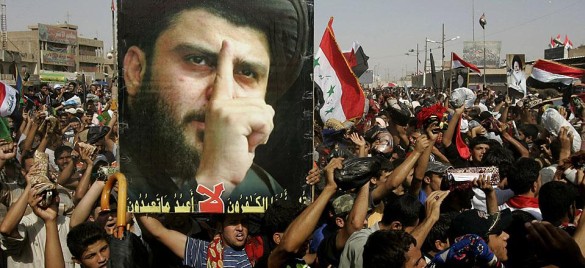
As if to mock America’s role in the future of Iraq, the single point of continuity since the fall of Saddam has been the rising power of Moqtada al Sadr. Even after his movement seemed to have been bludgeoned into submission and he took refuge in Iran, this period of dormancy during which the rough-mannered Shiite leader has focused on elevating his spiritual authority also appears to have served to help him consolidate his political power.

The Guardian reports:

The first in what could be the most crucial series of discussions to form Iraq’s new government took place early last week outside the country’s borders in the Iranian Shia shrine city of Qom.

Sitting cross-legged on the floor was a familiar firebrand in a black turban, Moqtada al-Sadr. Across from him was a delegation from the office of Iraq’s prime minister, Nouri al-Maliki. They had come to seek a detente – and more importantly to find a way, any way, that the exiled cleric, who maintains an overlord’s hold over more than two million Shia Iraqis, would support Maliki being returned to office.

It was a triumphant moment for Sadr, who had been hounded out of town in 2007 by Maliki and the US army and marginalised as a spent force by American officials and most of the prime minister’s inner sanctum. Now, here he was being courted by his persecutors. In the two weeks since the 7 March general election, with the ballots steadily falling Ayad Allawi’s way and power slipping from the grasp of the supremelyconfident incumbent leader, Sadr had been transformed from a pariah into a potential kingmaker.

Juan Cole adds:

Al-Hayat reports in Arabic on the emergence of the Sadr Movement as the largest Shiite party within the Shiite fundamentalist coalition, the Iraqi National Alliance. The Free Independent (al-Ahrar) party that represented the Sadrists won 38 seats out of the 70 that the INA garnered, making the Islamic Supreme Council of Iraq, the Islamic Virtue Party and other Shiite religious components of the list much smaller and less weighty in the coalition’s deliberations.

No sooner, the article says, than the election tallies began coming in did the government of Prime Minister Nuri al-Maliki begin gradually releasing Sadrist prisoners who had been in Iraqi penitentiaries for years. Al-Hayat’s sources say that in Babil Province, orders were received from the government to release members of the Sadr Movement, in an attempt to mollify that group.

Sadrist leader Liqa’ Al-Yasin said that the Sadrists have now become the spinal column of the Iraqi National Alliance. He said that the movement had demonstrated that it had a large public base, and asserted that that base is cultured, aware, and abiding by the principles both of Islamic Law and the Nation. Al-Yasin said that the Sadrists would work for the liberation of Iraq and the realization of national sovereignty. [Translation: they want US troops out of their country tout de suite.] He adds that other goals are to gain the release of prisoners and to take some of the burdens off the shoulders of ordinary citizens. Sadrist leaders said that “the next phase will concentrate on political action to end the Occupation altogether.

Facebooktwittermail

Children of Gaza: scarred, trapped, vengeful


(h/t to Ann El Khoury at Pulse.)

The Independent previewed “Children of Gaza” which aired on Channel 4 in the UK on March 14:

Omsyatte adjusts her green school uniform and climbs gingerly on to a desk at the front of the classroom. The shy 12-year-old holds up a brightly coloured picture and begins to explain to her classmates what she has drawn. It is a scene played out in schools all over the world, but for one striking difference: Omsyatte’s picture does not illustrate a recent family holiday, or jolly school outing, but the day an Israeli military offensive killed her nine-year-old brother and destroyed her home.

“Here is where they shot my brother Ibrahim, God bless his soul. And here is the F16 plane that threw rockets into the house and trees, and here is the tank that started to shoot,” she says, to a round of applause from the other children. The exercise is designed to help the pupils at the school come to terms with the warfare that has dominated their short lives; particularly the horrors of the 2008 Israeli military offensive Operation Cast Lead, which killed 1,400 Palestinians, and destroyed one in eight homes.

Like hundreds of displaced Gazans, Omsyatte’s family have spent more than a year living in a tent on a site near their home. Little rebuilding work has been done during this time – with supplies unable to pass into Gaza because of the ongoing blockade imposed by Israel in 2007 – and groups of children now pick their way through piles of rubble, kicking footballs around the bombsites which used to be local landmarks.

Homelessness is just one of the issues facing the 780,000 Gazan children in the aftermath of the conflict, problems that are explored in a revealing new documentary Dispatches: Children of Gaza, to be screened tomorrow at 8pm on Channel 4. Perhaps the most disturbing of these is the emotional scars borne by children who have survived the conflict; the Gaza Community Mental Health Programme reports that the majority of children show signs of anxiety, depression and behavioural problems.

Small boys build toy rockets out of drinks bottles, and talk about the fake guns they are going to buy with their pocket money. While boys the world over are preoccupied with fighting and weapons, this takes on a more sinister significance when the game isn’t Cowboys vs Indians, but Jews vs Arabs, and the children’s make-believe warfare is chillingly realistic.

To find out how to help the children of Gaza visit the Children of Gaza Fund website.

Facebooktwittermail

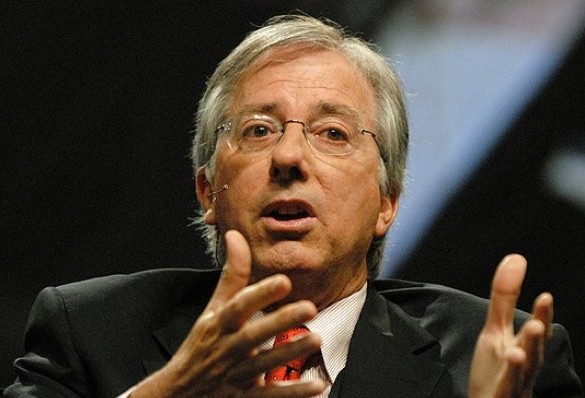
Dennis Ross ‘peddling the same snake oil’

If one man can be said to epitomize the failure of the peace process more than any other American official, it’s probably Dennis Ross. Why then, one might then ask, would he have such a central role in getting this “derailed” process “back on track”?

According to this report from Laura Rozen, Ross is provoking some blistering criticism from inside the administration, with one official quoted posing this exact question in the bluntest terms: “why, since [Ross’s] approach in the Oslo years was such an abysmal failure, is he back, peddling the same snake oil?”

Ross’s line is the Israel lobby’s line: American and Israeli interests are indistinguishable. The funny thing about that line is that if it was really true, then Washington would only need to take care of US interests – Israel’s would inevitably be served.

In truth, the only reason the drum of “indivisible interests” needs to be beat upon so loudly is because it’s so obvious that American and Israeli interests diverge.

Since Israeli Prime Minister Benjamin Netanyahu’s tense visit to the White House last week, an intense debate inside the Obama administration about how to proceed with Netanyahu to advance the Middle East peace process has grown more heated, even as Israeli officials are expected to announce they have reached some sort of agreement with Washington as soon as tonight.

Sources say within the inter-agency process, White House Middle East strategist Dennis Ross is staking out a position that Washington needs to be sensitive to Netanyahu’s domestic political constraints including over the issue of building in East Jerusalem in order to not raise new Arab demands, while other officials including some aligned with Middle East peace envoy George Mitchell are arguing Washington needs to hold firm in pressing Netanyahu for written commitments to avoid provocations that imperil Israeli-Palestinian peace talks and to preserve the Obama administration’s credibility.

POLITICO spoke with several officials who confirmed the debate and its intensity. Ross did not respond to a query, nor did a spokesman for George Mitchell.

“He [Ross] seems to be far more sensitive to Netanyahu’s coalition politics than to U.S. interests,” one U.S. official told POLITICO Saturday. “And he doesn’t seem to understand that this has become bigger than Jerusalem but is rather about the credibility of this Administration.”

What some saw as the suggestion of dual loyalties shows how heated the debate has become.

Last week, during U.S.-Israeli negotiations during Netanyahu’s visit and subsequent internal U.S. government meetings, the official said, Ross “was always saying about how far Bibi could go and not go. So by his logic, our objectives and interests were less important than pre-emptive capitulation to what he described as Bibi’s coalition’s red lines.”

When the U.S. and Israel are seen to publicly diverge on an issue such as East Jerusalem construction, the official characterized Ross’s argument as: “the Arabs increase their demands … therefore we must rush to close gaps … no matter what the cost to our broader credibility.”

A second official confirmed the broad outlines of the current debate within the administration. Obviously at every stage of the process, the Obama Middle East team faces tactical decisions about what to push for, who to push, how hard to push, he described.

As to which argument best reflects the wishes of the President, the first official said, “As for POTUS, what happens in practice is that POTUS, rightly, gives broad direction. He doesn’t, and shouldn’t, get bogged down in minutiae. But Dennis uses the minutiae to blur the big picture … And no one asks the question: why, since his approach in the Oslo years was such an abysmal failure, is he back, peddling the same snake oil?”

Facebooktwittermail

Apartheid inside Israel

Jonathan Cook reports:

The Zakai and Tarabin families should be a picture of happy coexistence across the ethnic divide, a model for others to emulate in Israel.

But Natalie and Weisman Zakai say the past three years – since the Jewish couple offered to rent their home to Bedouin friends, Ahmed and Khalas Tarabin – have been a living hell.

“I have always loved Israel,” said Mrs Zakai, 43. “But to see the depth of the racism of our neighbours has made me question why we live in this country.”

Three of the couple’s six dogs have been mysteriously poisoned; Mrs Zakai’s car has been sprayed with the words ”Arab lover” and the windows smashed; her three children in school are regularly taunted and bullied by other pupils; and a collection of vintage cars in the family’s yard has been set on fire in what police say was an arson attack.

To add to these indignities, the Zakais have spent three years and thousands of dollars battling through the courts against the elected officials of their community of Nevatim, in Israel’s southern Negev desert, who have said they are determined to keep the Tarabins from moving in.

Last week the Zakais’ legal struggle looked like it had run out of steam. The supreme court told the two families the Tarabins should submit to a vetting committee of local officials to assess their suitability – a requirement that has never been made before by the Negev community in the case of a family seeking to rent a home.

“The decision of the committee is a foregone conclusion,” Mr Tarabin said.

Chances for Jews and Arabs to live together – outside of a handful of cities – are all but impossible because Israel’s rural communities are strictly segregated, said Alaa Mahajneh, a lawyer representing the Zakais.

Facebooktwittermail

Medicating the military

Military Times reports:

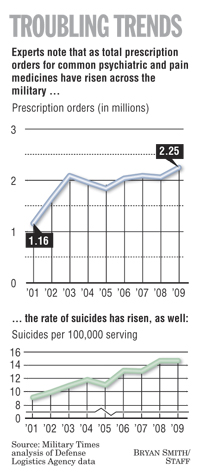
At least one in six service members is on some form of psychiatric drug.

And many troops are taking more than one kind, mixing several pills in daily “cocktails” — for example, an antidepressant with an antipsychotic to prevent nightmares, plus an anti-epileptic to reduce headaches — despite minimal clinical research testing such combinations.

The drugs come with serious side effects: They can impair motor skills, reduce reaction times and generally make a war fighter less effective. Some double the risk for suicide, prompting doctors — and Congress — to question whether these drugs are connected to the rising rate of military suicides.

“It’s really a large-scale experiment. We are experimenting with changing people’s cognition and behavior,” said Dr. Grace Jackson, a former Navy psychiatrist.

A Military Times investigation of electronic records obtained from the Defense Logistics Agency shows DLA spent $1.1 billion on common psychiatric and pain medications from 2001 to 2009. It also shows that use of psychiatric medications has increased dramatically — about 76 percent overall, with some drug types more than doubling — since the start of the current wars.

(h/t to Kelley Vlahos.)

Facebooktwittermail

No peace without equality

(h/t to Adam Horowitz at Mondoweiss.)

When Israel defines itself as a “Jewish State,” it not only sees itself as the state of Jews worldwide. It also sees Arab identity in this homeland as a threat to that definition. That’s why the state sees discrimination against Arabs as part of its “job description.” — Hassan Jabareen, Founder and General Director of Adalah, The Legal Center for Arab Minority Rights in Israel.

One of the most insidious deceptions embedded in the concept of a two-state solution is the implication that once a peaceful Palestinian state comes into existence alongside a secure Israel, then the Jewish state will finally have established its international legitimacy. Israel will no longer be a state that disregards the political rights and aspirations of the Palestinian population. It will be vindicated in its claim to be a Jewish democracy.

The deception in that picture is that it glosses over the fact that even if against all expectations a Palestinian state was established in two years, those Palestinians who are also Israeli citizens and who make up a quarter of Israel’s population would remain as they are today: second class citizens. Indeed, in the event that a Palestinian state is created, it seems quite likely that the Palestinian citizens of Israel would come under pressure to leave Israel for the Jews and to move to “their own state”. In such an event, the two-state solution far from being the panacea that it is portrayed to be could well be the forerunner of another catastrophe.

If Israeli Jews cannot embrace the idea that non-Jews deserve equal rights, then there is no formula — two-state or otherwise — that will lead to a just resolution of the Middle East conflict.

Facebooktwittermail