Category Archives: Palestinians

Palestine: A great moral and political cause of our time that unites people across the world

“Palestine has become a great moral and political cause of our time that unites people across the world,” said Seamus Milne, addressing marchers in London on Saturday.

Drowning in their narcissistic self-obsession, this is a reality that completely escapes the comprehension of most Jewish Israelis, most Jews, and most Americans: the issue of Palestine has become a global cause not as an expression of antipathy towards Israel but out of sympathy towards Palestinians. To the extent that this has been turned into a Jewish issue, it has become so because so many Jews refuse to allow it to be seen otherwise.

Israel’s condition of national hysteria within which the existence of the Jewish state is perceived as being in perpetual danger, has become a psychological trap that rules out the possibility of a negotiated settlement to the conflict.

Israel is literally frozen in fear. And compounding that fear is the fact that it is repeatedly confronted by the fearlessness of those who challenge its claims.

To break out of the trap of fear, it is time that Jewish Israelis (and those in the Diaspora who share the same affliction) to ask themselves this question: How can we live in this world with dignity and nobility if we do not rise above our fear?

Never forget, never forgive — what at one time was a visceral expression of self-preservation — has become a crippling self-limitation. As a non-Jew, I cannot pretend to fully know what the trauma of the Holocaust feels like, yet the need for the Jewish people to become healed and liberated from this trauma is surely a worthy and necessary task to be embraced. Without this, the separation between Israel and the rest of the world will only widen and in that widening gap our common sense of humanity will be lost.

Facebooktwittermail

It’s up to Obama whether the siege of Gaza continues

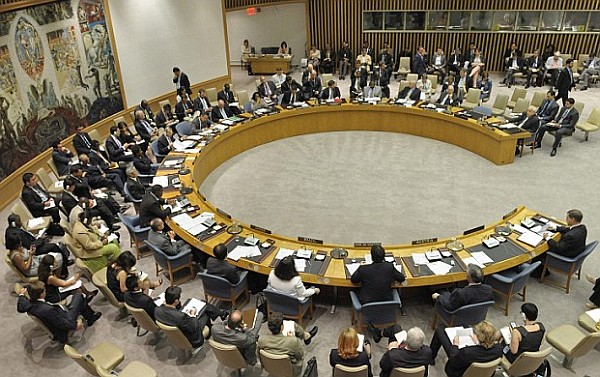
After the flotilla massacre committed by Israeli forces, Turkey’s call for an emergency meeting of the UN Security Council yesterday was to be expected. Turks are assumed to be among the dead — whose names and nationalities have still not been released. There are now hundreds of Turks being held in detention in Israel and Turkish ships were captured illegally in international waters in an action Turkey’s foreign minister described as “tantamount to banditry and piracy.”

What was equally predictable was that the Obama administration would only offer its support if action from the UN was so weak as to be worthless.

Had events of the last two days not disrupted their agendas, President Obama and Prime Minister Netanyahu would today have been servicing their individual political needs with smiles and handshakes on the steps of the White House. Absent that much-anticipated saccharine event, Obama was not about to turn around and support a stern rebuke to Israel.

The key Turkish demand presented to the Security Council was that the “blockade of Gaza must be ended immediately and all humanitarian assistance must be allowed in.”

Turkey was not alone. Britain’s new foreign secretary, William Hague, was equally unequivocal:

There can be no better response from the international community to this tragedy than to achieve urgently a durable resolution to the Gaza crisis.

I call on the Government of Israel to open the crossings to allow unfettered access for aid to Gaza, and address the serious concerns about the deterioration in the humanitarian and economic situation and about the effect on a generation of young Palestinians.

Universally there were calls for an inquiry. But the key to whether such an inquiry would be of any real value would be, minimally, its independence, and ideally that it would be international.

The statement finally issued by the Security Council is riddled with language surely crafted in the White House. It “calls for a prompt, impartial, credible and transparent investigation conforming to international standards.” Impartial, but not independent. International standards, but not international.

It does not call for an end to the siege but says “the situation in Gaza is not sustainable.” And there’s Obama’s lie.

Whether the siege of Gaza is lifted or sustained is up to Washington. If, when Netanyahu finally meets Obama, the US president was to say the embargo must end, Israel would have no choice. The siege of Gaza can only continue with US support and thus far, Obama refuses to withdraw that support. He says the situation is not sustainable, but through his actions Obama has a direct hand in perpetuating the suffering in Gaza.

“Unsustainable” is the signature of Obama’s self-declared impotence. It’s change over which he would like everyone else to believe he has no control. It’s the deceit through which he tells Americans and the world, I would if I could but I can’t.

Before the Security Council issued its statement and before it became clear that Obama was yet again going to throw away an opportunity to demonstrate his commitment to upholding international law, Stephen Walt wrote:

President Obama likes to talk a lot about our wonderful American values, and his shiny new National Security Strategy says “we must always seek to uphold these values not just when it is easy, but when it is hard.” The same document also talks about a “rule-based international order,” and says “America’s commitment to the rule of law is fundamental to our efforts to build an international order that is capable of confronting the emerging challenges of the 21st century.”

Well if that is true, here is an excellent opportunity for Obama to prove that he means what he says. Attacking a humanitarian aid mission certainly isn’t consistent with American values — even when that aid mission is engaged in the provocative act of challenging a blockade — and doing so in international waters is a direct violation of international law. Of course, it would be politically difficult for the administration to take a principled stand with midterm elections looming, but our values and commitment to the rule of law aren’t worth much if a president will sacrifice them just to win votes.

More importantly, this latest act of misguided belligerence poses a broader threat to U.S. national interests. Because the United States provides Israel with so much material aid and diplomatic protection, and because American politicians from the president on down repeatedly refer to the “unbreakable bonds” between the United States and Israel, people all over the world naturally associate us with most, if not all, of Israel’s actions. Thus, Israel doesn’t just tarnish its own image when it does something outlandish like this; it makes the United States look bad, too. This incident will harm our relations with other Middle Eastern countries, lend additional credence to jihadi narratives about the “Zionist-Crusader alliance,” and complicate efforts to deal with Iran. It will also cost us some moral standing with other friends around the world, especially if we downplay it. This is just more evidence, as if we needed any, that the special relationship with Israel has become a net liability.

In short, unless the Obama administration demonstrates just how angry and appalled it is by this foolish act, and unless the U.S. reaction has some real teeth in it, other states will rightly see Washington as irretrievably weak and hypocritical. And Obama’s Cairo speech — which was entitled “A New Beginning” — will be guaranteed a prominent place in the Hall of Fame of Empty Rhetoric.

Irretrievably weak and hypocritical — unfortunately the evidence was there even before Obama took office. His character, commitments, calculations and cynicism were all on open display as he watched in silence Israel’s war on Gaza.

Facebooktwittermail

Report of ten killed: “This was not a confrontation. It was a massacre.”

FreeGazaorg Tweets 7.20AM local time and following:

Our Israeli attorney in Haifa has said that ten people have been murdered

And that the boats are being hauled into Haifa and not Ashdod so that journalists are not there

Israeli radio says that the boats are going to be hauled into Haifa. This was not a confrontation. This was a massacre

Israeli radio says wounded have been taken to hospital, but it is forbidden to tell anyone which hospital

Facebooktwittermail

Israel attacks Freedom Flotilla, two civilians killed, 30 injured

Haaretz reports:

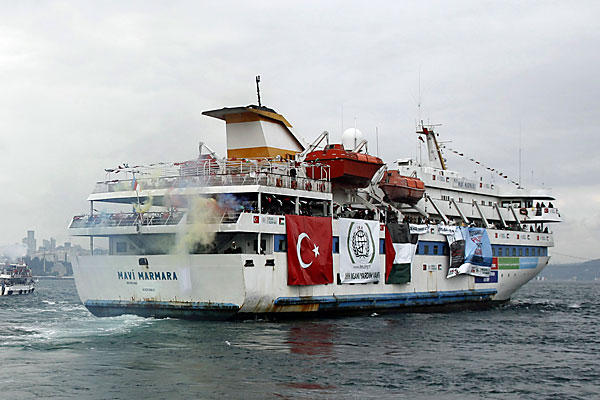
Israel Navy troops opened fire on pro-Palestinian activists aboard a six-ship aid flotilla sailing for the Gaza Strip, killing two of them and wounding several others, after the activists ignored Israeli orders to turn back, Turkey’s NTV reported early Monday.

The Israeli naval vessels reportedly made contact earlier with the six-ship flotilla, which is carrying 10,000 tons of humanitarian aid and supplies to Gaza.

The Israeli navy was operating under the assumption that the activists manning the boats would not heed their calls to turn around, and Israeli troops were prepared to board the ships and steer them away from the Gaza shores and toward the Israeli port city of Ashdod.
Huwaida Arraf, one of the flotilla organizers, said the six-ship flotilla began the journey from international waters off the coast of Cyprus Sunday afternoon after two days of delays. According to organizers, the flotilla was expected to reach Gaza, about 250 miles (400 kilometers) away, on Monday afternoon, and two more ships would follow in a second wave.

The flotilla was fully prepared for the different scenarios that might arise, and organizers were hopeful that Israeli authorities would do what’s right and not stop the convoy, one of the organizers said.

“We fully intend to go to Gaza regardless of any intimidation or threats of violence against us,” Arraf said. “They are going to have to forcefully stop us.”

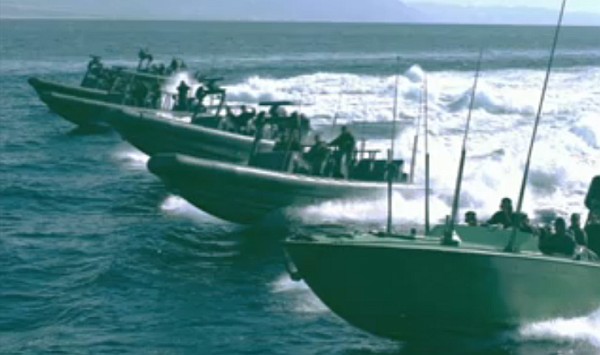
After nightfall, three Israeli navy missile boats left their base in Haifa, steaming out to sea to confront the activists’ ships.

Two hours later, Israel Radio broadcast a recording of one of the missile boats warning the flotilla not to approach Gaza.

“If you ignore this order and enter the blockaded area, the Israeli navy will be forced to take all the necessary measures in order to enforce this blockade,” the radio message continued.

The flotilla, which includes three cargo ships and three passenger ships, is trying to draw attention to Israel’s three-year blockade of the Gaza Strip. The boats are carrying items that Israel bars from reaching Gaza, like cement and other building materials.

The activists said they also were carrying hundreds of electric-powered wheelchairs, prefabricated homes and water purifiers.

Israeli Foreign Ministry spokesman Yigal Palmor said that after a security check, permitted humanitarian aid confiscated from the boats will be transferred to Gaza through authorized channels. However, Israel would not transfer items it has banned from Gaza under its blockade rules. Palmor said that for example, cement would be allowed only if it is tied to a specific project.

This is the ninth time that the Free Gaza movement has tried to ship in humanitarian aid to Gaza since August 2008.

Israel has let ships through five times, but has blocked them from entering Gaza waters since a three-week military offensive against Gaza’s Hamas rulers in January 2009. The flotilla bound for Gaza is the largest to date.

Some 700 pro-Palestinian activists are on the boats, including 1976 Nobel Peace Prize laureate Mairead Corrigan Maguire of Northern Ireland, European legislators and an elderly Holocaust survivor.

The mission has experienced repeated delays, both due to mechanical problems and a decision by Cyprus to bar any boat from sailing from its shore to Gaza. The ban forced a group of European lawmakers to depart from the breakaway Turkish Cypriot northern part of the island late Saturday.

Israel and Egypt imposed the blockade on Gaza after Hamas militants violently seized control of the seaside territory in June 2007.

Israel says the measures are needed to prevent Hamas, which has fired thousands of rockets at Israel, from building up its arsenal. But United Nations officials and international aid groups say the blockade has been counterproductive, failing to weaken the Islamic militant group while devastating the local economy.

Israel rejects claims of a humanitarian crisis in Gaza, saying it allows more than enough food and medicine into the territory. The Israelis also point to the bustling smuggling industry along Gaza’s southern border with Egypt, which has managed to bring consumer goods, gasoline and livestock into the seaside strip.

Israel has condemned the flotilla as a provocation and vowed to block it from reaching Gaza.

Israeli military officials said they hope to resolve the situation peacefully but are prepared for all scenarios. Naval commandos have been training for days in anticipation of the standoff. Military officials, speaking on condition of anonymity under official guidelines, said the forces would likely take over the boats under the cover of darkness.

Palmor said foreigners on the ships would be sent back to their countries. Activists who did not willingly agree to be deported would be detained. A special detention facility has been set up in Ashdod.

Facebooktwittermail

A message to America from Hamas

When Israeli officials are pressed to justify the fact that Israel has prevented the reconstruction of thousands of homes it destroyed during the war on Gaza, they say that if construction materials were allowed into Gaza, these would be commandeered by Hamas and used to fortify its bunkers.

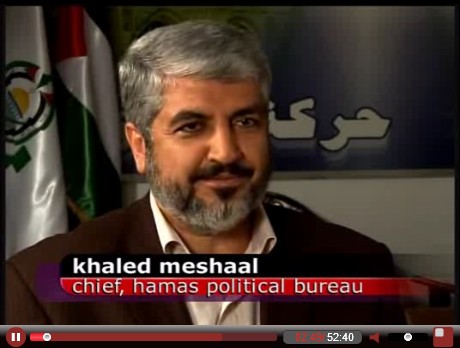
In an interview Khalid Meshaal, the Hamas political bureau chief in Damascus, gave with Charlie Rose this week, the Hamas leader directly addressed this issue.

Meshaal’s message to the Obama administration and to the American people was this:

It’s time to end this embargo on Gaza, because it’s immoral, unethical and it failed in achieving its political objectives. And it is the right of the Palestinian people in Gaza to live like all other people without any embargo, because Gaza today is the biggest prison in the world and in history.

You know that Israel in the last war destroyed tens of thousands of houses, hospitals and universities, and it is the responsibility of the international community and especially of the United States of America to reconstruct what [has] been destroyed by Israel in Gaza. And we do not have it as a condition that this construction operation to be done through Hamas. No. As I told [Russia’s] President Medvedev, the international community can develop an international mechanism that is independent to introduce the construction materials into Gaza and to supervise the rebuilding, reconstruction of the houses and schools destroyed by Israel. Because our mission is to service our people. We want the Palestinian people in Gaza to live simply in houses in winter and in summer. And this is the responsibility of the international community. Unfortunately, some Palestinian leaderships lie to the Americans and to the Europeans when saying that Hamas has it as a condition to supervise the reconstruction. We do not have this as a condition. We tell the whole world, come to Gaza. Reconstruct the destroyed houses.

Facebooktwittermail

Masked Israeli commandos ready to capture Gaza-bound human rights activists

Israeli foreign ministry spokesmen Yigal Palmor told the Wall Street Journal that in dealing with the Freedom Flotilla, Israel faces the choice of either looking stupid or like brutes — or like pirates!

Masked Israeli commandos — with daggers clenched between their teeth? — will soon likely take control of the ships.

AP reports:

Israel on Thursday unveiled a massive makeshift detention center in the country’s main southern port and announced the end of days of intense naval maneuvers, vowing to stop a flotilla of hundreds of pro-Palestinian activists trying to break a 3-year blockade of the Gaza Strip this weekend.

Military authorities said that masked naval commandos would greet the eight ships deep out at sea, escort the vessels to port and give each of the activists a stark choice: leave the country or go to jail.

But the tough response threatened to backfire by breathing new life into the activists’ mission and drawing new attention to the oft-criticized blockade of Gaza.

“We know that we are sailing for a good cause,” said Dror Feiler, 68, an Israeli-born Swedish activist who was on board a cargo ship headed from Greece to Gaza. “If the Israelis want us to pay a price, we will pay a price, but we will come again and again.”

Some 750 activists, including a Nobel peace laureate and former U.S. congresswoman, have set sail for the Gaza coast in recent days, carrying 10,000 tons of humanitarian supplies. They are expected to reach the Israeli coast on Saturday.

The Wall Street Journal adds:

Israeli Defense Minister Ehud Barak named a team of public-relations experts and military officers to come up with ideas for how to blunt the public-relations blow from the aid fleet, according to members of the Labour Party that Mr. Barak leads. The Israeli military has launched an aggressive public-outreach effort. At an unusual, last-minute news conference on Gaza’s border Wednesday morning, officers emphasized that Israel was already allowing generous quantities of aid into Gaza and dismissed claims by organizers of the aid flotilla that Gaza is facing a humanitarian crisis.

“This is nothing more than media provocation and has nothing to do with actually providing aid to residents of the Gaza Strip,” said military spokeswoman Lt. Col. Avital Leibovitch. “They have everything they need.”

As Larry Derfner writes, mocking such claims: “I only wish somebody would treat us Israelis like we treat people in Gaza.”

The IDF, which seems to have adopted a scattershot approach in its messaging, tells the Christian Science Monitor that it fears the flotilla may attempt to smuggle militants and weapons into Gaza — two of the few resources in which the Strip is, by most accounts, already amply supplied.

As if to demonstrate that Israel’s officials have a talent for making the Jewish state look brutish and stupid, the one thing that seems to have escaped their attention is this: Western news organizations have a meager amount of interest in activist endeavors such as the Freedom Flotilla. The only thing that really grabs the mainstream media’s attention is Israel’s heavy-handed way of responding to such activism.

Yigal Palmor says: “If we let them throw egg at us, we appear stupid with egg on our face.” But here’s a thought: Israel doesn’t have to look stupid or brutish. It could lift the siege — a siege which by Israel’s own account clearly isn’t working — and show the world that there still are a few signs of intelligent life inside Israel.

Facebooktwittermail

Remembering the Nakba


Shabbah TV: Palestine/Israel history since 1878 — 13 min 33 sec

Nabil Shaath writes:

Today Israel celebrated 62 years since its formation on 15 May 1948. For Palestinians, today marks the 62nd year since the Nakba – our national and personal catastrophe, involving the loss of our ancestral homeland and the dispersal of three-quarters of our people into exile.

To date, the Palestinian people await Israeli recognition of its responsibility in the catastrophe and agreement to resolve the conflict based on international law, including UN resolutions.

I experienced exile first-hand. On 13 May 1948 one day before Israel’s declaration of independence, my hometown of Jaffa was captured by Zionist forces. Seventy thousand Palestinian inhabitants of the city were forced to leave, most of them by sea to Gaza, Egypt, and Lebanon. We Jaffans were literally driven out to the sea. I was 10. We were never allowed to return.

The same reality befell more than 726,000 indigenous Christian and Muslim Palestinians who fled their homes or were expelled from Mandate Palestine in and around 1948; while hundreds of Palestinians were killed as they were driven out, or in their attempt to come back home. Several Israeli historians such as Benny Morris and Ilan Pappe described the catastrophe vividly and accurately.

In the wake of the expulsion, more than 418 Palestinian villages were razed to the ground. Nearly all Palestinian property, including that belonging to Palestinians who managed to stay within the areas that came under Israeli control, was confiscated by the nascent State of Israel for the exclusive benefit of Jews. In 1952, when Israel’s parliament passed its nationality law, Palestinian refugees were denied the option of citizenship in the new state. Additional measures were taken to bar our return to our country and our homes. The expulsion of Palestinians and the subsequent measures to render the displacement permanent were taken in contravention of international law.

These events, which left the majority of Palestinians stateless and dispossessed, were compounded by the Israeli military occupation of the West Bank and Gaza Strip in 1967. Hundreds of thousands of Palestinians once again fled their homes, and Israel expanded its control over the remaining 22% of our historic homeland. Today, the stranglehold over the Gaza Strip, the ongoing settlement and closure activities in the West Bank, including East Jerusalem, is leading to more Palestinian fragmentation and displacement. Indeed, the Nakba continues.

BADIL Resource Center for Palestinian Residency and Refugee Rights issued the following statement today:

At their core, the circumstances surrounding the Palestinian struggle today do not differ from those circumstances that led to the 1948 Nakba and the colonization of Palestine. Today, on the sixty-second anniversary of the Nakba, the nature of the western-backed Zionist-Israeli colonial enterprise appears all the clearer. The indigenous Palestinian people have been denied their most fundamental and inalienable rights of self-determination, including their rights to return to the land from which they were displaced, and continue to suffer from Israel’s grave violations of basic human rights and freedoms. As Israel cruelly blockades the Palestinians of the Gaza Strip and denies 7.1 million displaced Palestinians around the globe their rights to return, restitution and compensation, the international community provides a protective shield forged through diplomatic, economic, cultural and security cooperation which perpetuate Israel’s impunity.

In a time when Israel’s true face as a regime of colonization, apartheid and military occupation has been exposed for the world to see, governments and their organizations, have chosen to look the other way. The protective shield preventing effective redress and accountability for Israel’s crimes is no more provided by western states alone, as international organizations have joined the chorus that calls for a “balanced position” and have allowed Israel’s membership and integration into global and regional, civil and official organizations. Israel thus enjoys not only the unlimited support of the United States, but also enjoys preferential status with the European Union under the 1995 Barcelona Declaration and the E.U.-Israel Association Agreement, which have entrenched European relations with Israel in political, military, financial, economic, social and cultural terms, and even in the field of humanitarian aid.

Only recently, on 10 May, no OECD member state felt obliged by international law or found the moral strength to block Israel’s accession to that club of the world’s powerful economies. Israel’s protective shield is no longer composed merely of U.S. veto powers in the Security Council of the United Nations. It has spread to other UN fora, such as the General Assembly and the Human Rights Council where global powers exert coercive pressure on member states, and even to domestic judicial systems and international courts, in order to enable Israel to escape accountability for its grave violations of international law.

It has become painfully clear that Israel and the so-called Quartet view Palestinian demands for the implementation of international law as an obstacle to the peace process, at best, and as a form of unacceptable radical extremism, at worst. This explains why the U.S. has resumed pressure on the Palestinian and Arab representatives to return to the negotiating table despite Israel’s refusal to cease construction and expansion of its settlements in the occupied Palestinian West Bank, and irrespective of the personal commitment given in this regard by President Obama. Thus, so-called proximity talks and indirect negotiations are being relaunched while Israel’s prime minister reassures his coalition government that there will be no limitation on settlement construction and expansion, the forced displacement of Palestinians from Jerusalem and the expansion of the network of apartheid roads and the Wall in the occupied West Bank.

Meanwhile, Israel continues to draft and adopt more racist legislation, including law proposals to outlaw Nakba commemoration, the 2009 Israel Lands Authority Law and a 2010 amendment of the Land Acquisition Law, which allow privatization and confiscation of more land of Palestinian refugees and citizens, as well as new military orders, such as Order No. 1650 arbitrarily defining a large portion of the Palestinian population of the occupied West Bank and foreigners as “infiltrators” subject to arrest and deportation.

In light of the above and the division and weakness which has characterized the performance of the Palestinian leadership, BADIL re-iterates the call of the National Committee for the Commemoration of the Nakba issued this 15 May:

for the Palestinian leadership to:

• Adopt a coherent strategy towards a just and permanent solution for Palestinian refugees and IDPs, based on their right to return and in accordance with international law, universal principles of justice and UN resolutions 194 (1948) and 237 (1967);
• Halt all negotiations, whether direct or indirect, until Israel completely halts settlement expansion, population transfer (“Judaization”), and construction of the Wall and other infrastructure of colonization and apartheid, such as roads and the light train connecting Jewish settlements to West Jerusalem;
• Ensure national reconciliation and unity as a matter of urgency, and rebuild the PLO as a legitimate and credible platform representing the entire Palestinian people and its political organizations;
• Support and activate popular resistance in all forms permitted under international law.
• Establish a consultative mechanism with professional civil society organizations to support the efforts of the PLO in international fora.

To the public in Palestine and abroad to:

Build and expand the civil society-led movement for boycott, divestment and sanctions (BDS) against Israel until it complies with international law and exert stronger pressure on states to implement sanctions and adopt decisions and resolutions which support the global BDS Campaign;

Redouble efforts for investigation of Israeli war crimes and crimes against humanity and prosecution and punishment of those responsible, as well as efforts to prevent Israel’s accession and integration into international and regional organizations.

Facebooktwittermail

A view of life in Gaza

In a bloggingheads.tv interview, Robert Wright speaks to Bassam Nasser, who works for the Catholic Relief Services in Gaza. Though Wright’s questions tend to be somewhat uninformed and predictable, Nasser’s responses provide a much richer and more nuanced view of life under siege and Israeli occupation than can be gleaned for standard news reports.

Facebooktwittermail

Children of Gaza: scarred, trapped, vengeful


(h/t to Ann El Khoury at Pulse.)

The Independent previewed “Children of Gaza” which aired on Channel 4 in the UK on March 14:

Omsyatte adjusts her green school uniform and climbs gingerly on to a desk at the front of the classroom. The shy 12-year-old holds up a brightly coloured picture and begins to explain to her classmates what she has drawn. It is a scene played out in schools all over the world, but for one striking difference: Omsyatte’s picture does not illustrate a recent family holiday, or jolly school outing, but the day an Israeli military offensive killed her nine-year-old brother and destroyed her home.

“Here is where they shot my brother Ibrahim, God bless his soul. And here is the F16 plane that threw rockets into the house and trees, and here is the tank that started to shoot,” she says, to a round of applause from the other children. The exercise is designed to help the pupils at the school come to terms with the warfare that has dominated their short lives; particularly the horrors of the 2008 Israeli military offensive Operation Cast Lead, which killed 1,400 Palestinians, and destroyed one in eight homes.

Like hundreds of displaced Gazans, Omsyatte’s family have spent more than a year living in a tent on a site near their home. Little rebuilding work has been done during this time – with supplies unable to pass into Gaza because of the ongoing blockade imposed by Israel in 2007 – and groups of children now pick their way through piles of rubble, kicking footballs around the bombsites which used to be local landmarks.

Homelessness is just one of the issues facing the 780,000 Gazan children in the aftermath of the conflict, problems that are explored in a revealing new documentary Dispatches: Children of Gaza, to be screened tomorrow at 8pm on Channel 4. Perhaps the most disturbing of these is the emotional scars borne by children who have survived the conflict; the Gaza Community Mental Health Programme reports that the majority of children show signs of anxiety, depression and behavioural problems.

Small boys build toy rockets out of drinks bottles, and talk about the fake guns they are going to buy with their pocket money. While boys the world over are preoccupied with fighting and weapons, this takes on a more sinister significance when the game isn’t Cowboys vs Indians, but Jews vs Arabs, and the children’s make-believe warfare is chillingly realistic.

To find out how to help the children of Gaza visit the Children of Gaza Fund website.

Facebooktwittermail

Israeli report claims $2bn stolen from Palestinians

Jonathan Cook writes:

Over the past four decades Israel has defrauded Palestinians working inside Israel of more than US$2 billion (Dh7.4bn) by deducting from their salaries contributions for welfare benefits to which they were never entitled, Israeli economists revealed this week.

A new report, “State Robbery”, says the “theft” continued even after the Palestinian Authority was established in 1994 and part of the money was supposed to be transferred to a special fund on behalf of the workers.

According to information supplied by Israeli officials, most of the deductions from the workers’ pay were invested in infrastructure projects in the Palestinian territories – a presumed reference to the massive state subsidies accorded to the settlements.

After the recent easing of restrictions on entering Israel under the “economic peace” promised by Benjamin Netanyahu, the Israeli prime minister, nearly 50,000 Palestinians from the West Bank are working in Israel and continue to have such contributions docked from their pay.

Complicit in the deception, the report adds, is the Histadrut, the Israeli labour federation, which levies a monthly fee on Palestinian workers, even though they are not entitled to membership and are not represented in labour disputes.

Facebooktwittermail