Category Archives: Israel

Netanyahu’s secret Moscow visit was part of campaign against missile sales to Iran

Netanyahu’s secret Moscow visit was part of campaign against missile sales to Iran

Prime Minister Benjamin Netanyahu’s trip to Moscow on Monday was part of quiet diplomacy between Russia and Israel over Russia’s plan to supply S-300 anti-aircraft missiles to Iran, Haaretz has learned.

A senior government source in Jerusalem confirmed yesterday that Netanyahu was in Russia for talks on security issues, particularly the sale of Russian weapons to Iran.

The missiles could help Iran protect its nuclear facilities from attack.

The purpose of the prime minister’s trip, disclosed to only a few government officials, was to persuade senior officials in Russia’s government and security establishment not to move ahead on a deal to give Iran the missiles.

The discussion also dealt with Russia’s refusal to back more sanctions against Iran over its nuclear program. Continue reading

Facebooktwittermail

‘Israel link’ in Arctic Sea case

‘Israel link’ in Arctic Sea case

Israel was linked to the interception of the missing cargo ship Arctic Sea last month, a senior figure close to Israeli intelligence has told the BBC.

The source said Israel had told Moscow it knew the ship was secretly carrying a Russian air defence system for Iran.

Russian Foreign Minister Sergei Lavrov has dismissed speculation that S-300 missiles were on board the ship. [continued…]

Facebooktwittermail

US Jewish leaders push Obama to act on Iran

US Jewish leaders push Obama to act on Iran

Several hundred Jewish leaders and activists are planning to arrive here Thursday to urge top Obama administration officials and US congressmen to take action on Iran.

They are pushing for Congress to quickly pass an Iran sanctions bill sponsored by US House Foreign Affairs Committee Chairman Howard Berman and otherwise take serious economic and diplomatic steps to pressure Iran to abandon its pursuit of nuclear capabilities that threaten Israel.

“Congress is back, legislation is on the agenda, and this is September, when at some level decisions are being made in connection with Iran,” Anti-Defamation League Washington Director Jess Hordes said of the planning of the event.

His organization will be joining the United Jewish Communities, the Jewish Council for Public Affairs, the Conference of Presidents of Major American Jewish Organizations, the National Conference of Soviet Jewry and several other groups as part of the effort. [continued…]

U.S. says Iran could expedite nuclear bomb

American intelligence agencies have concluded in recent months that Iran has created enough nuclear fuel to make a rapid, if risky, sprint for a nuclear weapon. But new intelligence reports delivered to the White House say that the country has deliberately stopped short of the critical last steps to make a bomb.

In the first public acknowledgment of the intelligence findings, the American ambassador to the International Atomic Energy Agency declared on Wednesday that Iran now had what he called a “possible breakout capacity” if it decided to enrich its stockpile of uranium, converting it to bomb-grade material.

The statement by the ambassador, Glyn Davies, was intended to put pressure on American allies to move toward far more severe sanctions against Iran this month, perhaps including a cutoff of gasoline to the country, if it failed to take up President Obama’s invitation for serious negotiations. But it could also complicate the administration’s efforts to persuade an increasingly impatient Israeli government to give diplomacy more time to work, and hold off from a military strike against Iran’s facilities. [continued…]

Iran dims hopes for diplomacy

ran rejected any compromise with the West over its nuclear program Wednesday, as blunt comments from the Obama administration over Tehran’s bomb-making capability suggested that the two sides were headed toward a renewed diplomatic crisis.

Iran offered Western officials a long-awaited package of proposals to restart negotiations over its nuclear program. But diplomats who viewed the offer Wednesday said the document of fewer than 10 pages essentially ignored questions over Iran’s production of nuclear fuel and instead focused broadly on other international issues.

It made no mention of Tehran’s willingness to suspend its uranium-enrichment activities or to enter into substantive talks about the future of its nuclear program, they said. [continued…]

Russia ‘delivers SAMs to Syria’

Russia has begun deliveries of Pantsir S1 air-defense missiles to Syria, some of which are expected to be passed on to Iran, Syria’s strategic ally that has largely bankrolled the deal, according to the Interfax-AVN military news agency.

Interfax quoted Yuriy Savenkov, deputy director general of the Instrument Design Bureau, or KBP, as saying that deliveries started several weeks ago. KBP produces the Pantsir and other high-precision weapons.

Meantime, Kommersant quoted Alexei Fedorov, head of Russia’s United Aircraft Corp., as confirming the existence of a 2007 contract with Syria for eight twin-engined MiG-31E interceptors.

This aircraft, NATO codename Foxhound, can fly at three times the speed of sound and engage several targets at a range of up to 110 miles simultaneously. [continued…]

Taking Iran seriously

Given Iran’s shortening nuclear timetable and diplomatic challenges for forging an international consensus on sanctions, we urge Mr. Obama simultaneously to begin preparations for the use of military options. Now is the time for the president to reinforce his commitment to “use all elements of American power to prevent Iran from developing a nuclear weapon,” as he stated in February. We believe only a credible U.S. military threat can make possible a peaceful solution.

By showing that he has not taken the military option off the table, Mr. Obama may also be able to convince Israel to forgo a unilateral military strike while forcing Tehran to recognize the costs of its nuclear defiance. Furthermore, making preparations now will enable the president, should all other measures fail to bring Tehran to the negotiating table, to use military force to retard Iran’s nuclear program. We do not downplay the risks of this option and recognize its complications, but we do believe it to be a feasible option of last resort. [continued…]

Facebooktwittermail

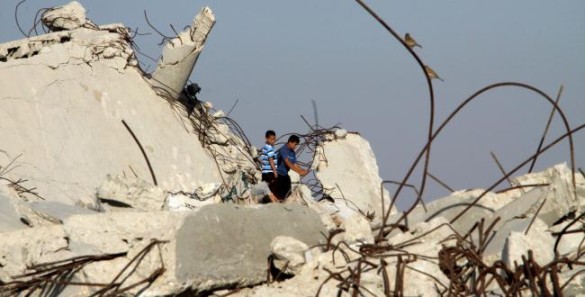
UN: Gaza in worst condition since 1967

UN: Gaza in worst condition since 1967

A UN report published Tuesday says poverty in the Gaza Strip has deteriorated to levels unseen since 1967.

The UN trade and development agency says 90% of Gaza’s residents are currently beneath the poverty line and rates the damages caused by the IDF’s Operation Cast Lead at $4 billion, a sum it claims is three times larger than the Strip’s annual market performance.

The agency claims the operation halted all trade in the Gaza Strip, creating a defecit of around $88 million. This, in addition to material damages and loss of finances due to the siege and trade limitations later imposed on the Strip, make up the final sum.

The agency’s report claims the Strip has not been in such dire straits since 1967, and that the government has become the residents’ main force of employment. [continued…]

Not one penny has reached Gaza

It has been six months since the international community pledged nearly US$5 billion (Dh18bn) in aid to the Palestinian people, chiefly for the reconstruction of the Gaza Strip after Israel’s devastating offensive there this year.

None of this aid has reached Gaza and no reconstruction has started.

Although Israel is slowly easing its restrictions on the flow of basic humanitarian goods to Gaza, including food and medicine, construction materials remain prohibited from entering, institutions and homes still lie in rubble, and critically needed projects to repair and upgrade Gaza’s power plant and tottering sewage network lie dormant. [continued…]

Facebooktwittermail

Israel gets tough on intermarriage

Israel gets tough on intermarriage

The Israeli government has launched a television and internet advertising campaign urging Israelis to inform on Jewish friends and relatives abroad who may be in danger of marrying non-Jews.

The advertisements, employing what the Israeli media described as “scare tactics”, are designed to stop assimilation through intermarriage among young diaspora Jews by encouraging them to move to Israel.

The campaign, which cost US$800,000 (Dh2.9 million), was created in response to reports that half of all Jews outside Israel marry non-Jews. It is just one of several initiatives by the Israeli state and private organisations to try to increase the size of Israel’s Jewish population. [continued…]

‘Missing Jews’ video shows Israeli chutzpah towards Diaspora Jewry

An Israel outreach program has pulled from its Web site a campaign video meant to scare the Israeli public about the inevitable ‘de-Judaization’ that occurs to good Jewish stock in the Diaspora.

The Masa organization last week released a video, which shows eery headshots of young, smiling youths with painfully Jewish names. Each of these faces gaze at the camera from atop flyers that read ‘Missing’ and ‘Lost’ in English, Russian, and Spanish.

Though the organization could not be reached for comment Tuesday, the video no longer appears on Masa’s Web site, YouTube or Facebook pages.

The unexpected viral reaction it has stirred among Diaspora Jews both still abroad and in Israel may have something to do with its sudden removal. Continue reading

Facebooktwittermail

The path to peace is hard to find on Obama’s ‘roadmapolis’

The path to peace is hard to find on Obama’s ‘roadmapolis’

President Bush’s “road map” first emerged as the US began preparing to invade Iraq. Key Arab regimes had long made clear to Washington that the price of even tacit support for the war was American willingness to address a conflict that generated immense hostility towards the US on the Arab street. The “road map” read like a crack of the whip, outlining a timetable that promised a provisional Palestinian state by the end of 2003 and a resolution of all final status issues by the beginning of 2005. But the Bush administration gave the Israelis and Palestinians no reason to take it seriously; its purely symbolic purpose was plain to see.

The Bush administration made a second high-profile stab at the peace process in the form of the Annapolis Conference held in November 2007, which drew in not only the Israelis and Palestinians, but also a range of Arab states – in what it portrayed as a symbolic affirmation of the administration’s policy of building an alliance of Arab moderates with the US and Israel against the region’s radicals, namely Hamas, Hizbollah, Syria and Iran. Again, there was little reason for the Israelis or Palestinians to take the process seriously. Annapolis simply invited them to talk among themselves about what a peace agreement could look like. The conversation went nowhere, of course, but the fact that it was happening at all was the point for the Bush administration, whose new priority had become rallying Arab support against Iran and its allies.

So what does any of this have to with the US president Barack Obama’s own efforts to jump start the peace process? After all, Mr Obama made it a priority from the get-go of his presidency and can hardly be accused of going through the motions in order to mollify the Arabs to win their support on other issues. Or can he? [continued…]

Facebooktwittermail

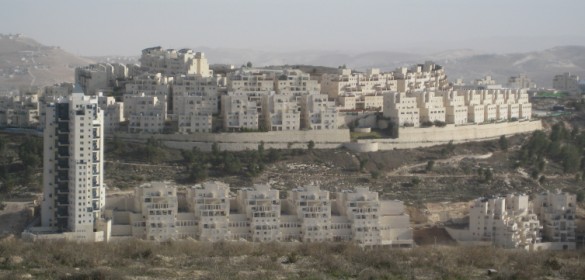
Israel to build new houses in settlements

Israel to build new houses in settlements

Prime Minister Benjamin Netanyahu will approve hundreds of new housing units in West Bank settlements before slowing settlement construction, two of his aides said Friday, in an apparent snub of Washington’s public demand for a total settlement freeze.

The aides also said Netanyahu would be willing to consider a temporary freeze in settlement construction, but their definition of a freeze would include building the new units and finishing some 2,500 others currently under construction.

The settlement suspension also would not include east Jerusalem, which the Palestinians hope to make their future capital.

The U.S. has a set a high public bar for a freeze, saying repeatedly that all settlement activity on lands the Palestinians claim for a future state must stop, without exception. However, Israel appeared to gain some wiggle room in recent weeks as the sides discussed the details of a would-be settlement freeze. [continued…]

Editor’s Comment — When did Netanyahu make his definitive assessment of Obama?

Was it when the presidential candidate was putting on his most obsequious performance in front of AIPAC, spouting drivel about an indivisible Jerusalem?

Or was it when as president-elect he became a mute witness to the Gaza massacre?

Whenever it happened, it is clear that Netanyahu took a clear measure of the strength of his adversary and concluded that whatever the power of his office, this particular president was pliable as willow.

The White House now says:

We regret the reports of Israel’s plans to approve additional settlement construction. Continued settlement activity is inconsistent with Israel’s commitment under the Roadmap.

As the President has said before, the United States does not accept the legitimacy of continued settlement expansion and we urge that it stop.

When this president urges this prime minister to stop, I’m reminded of Bush urging Sharon to pull his troops out of Jenin “without delay” in 2002 – a meek demand that was predictably ignored – and of Olmert telling Bush how Rice should vote at the UN – a presumptuous call that was not rebuffed.

Crude as this way of expressing it might be, again and again we witness a suposedly powerful American president acting like he’s the Israeli prime minister’s bitch.

Have I given up on Obama? Not yet, but I see little evidence that he has the capacity to be bold. The skeptic at this blog is teetering on the brink of becoming a cynic.

Netanyahu accepts part settlement freeze: report

The Central Bureau of Statistics said there were 672 new housing starts in Jewish settlements in the West Bank in the first half of 2009, down from 1,015 in the same period last year.

The data which does not include annexed east Jerusalem.

But while the 33 percent dip appears significant, it returns construction levels to about the same pace as 2007 when 713 new housing projects were begun. [continued…]

Abbas: Netanyahu’s new West Bank build ‘unacceptable’

Prime Minister Benjamin Netanyahu’s planned approval of the construction of hundreds of new housing units in West Bank settlements is “unacceptable,” Palestinian President Mahmoud Abbas said Friday in Paris.

“What the Israeli government said [about the planned construction] is not useful,” Abbas said after a meeting with French President Nicolas Sarkozy. “It is unacceptable for us. We want a freeze on all settlement construction.”

Abbas also told journalists that a possible summit meeting with Netanyahu and U.S. President Barack Obama in New York, on the margins of a UN General Assembly meeting, depended on “steps that are taken beforehand regarding a settlement construction freeze.” Continue reading

Facebooktwittermail

The best Congress AIPAC can buy

The best Congress AIPAC can buy

Many Americans who thought that the health care debate was important must have wondered where their congressmen were in early August during the first two weeks of the House of Representatives recess. It turns out they were not hosting town hall meetings or listening to constituents because many of them were in Israel together with their spouses on a trip paid for by the American Israel Public Affairs Committee (AIPAC). Fully 13% of the entire US House of Representatives, 56 members, traveled to Israel in the largest AIPAC-sponsored fact-finding visit by American politicians ever conducted. And the leaders of the two congressional groups, 25 Republicans for a week starting on August 2nd followed by 31 Democrats beginning on August 13th, were drawn from the top ranks of their respective parties. House Minority whip Eric Cantor headed the Republican group and House Majority leader Steny Hoyer led the Democrats.

Cantor and Hoyer are longtime enthusiasts for Israel and all its works. In January, when Israel was pounding Gaza to rubble and killing over a thousand civilians, Hoyer and Cantor wrote an op-ed entitled “A Defensive War,” which began with “During this difficult war in the Gaza Strip, we stand with Israel.” Why? Because “Instead of building roads, bridges, schools and industry, Hamas and other terrorists wasted millions turning Gaza into an armory.” Hoyer and Cantor, clearly noticing a militarization of the Gaza Strip that no else quite picked up on, also affirmed that Israel occupied the moral high ground in the conflict, “While Israel targets military combatants, Hamas aims to kill as many civilians as possible.” That Hoyer and Cantor were completely wrong on this vital point as well as others, in fact reversing the truth, has never resulted in an apology or a correction of the record from either lawmaker. [continued…]

Facebooktwittermail

Did Isreaelis intercept a ship loaded with missiles?

Did Isreaelis intercept a ship loaded with missiles?

“You can easily hide an alley of cruise missiles under a lumber stockpile,” Kouts told an Estonian newspaper two weeks ago, and the Russian maritime expert who broke the story on Aug. 8 of the ship’s disappearance agrees with him.

“I can’t think of any other reason,” Mikhail Voitenko told ABC News. “I just can’t explain it by any other way. Not by piracy, it’s foolish. What piracy?” he asks, pointing to the low value of the ship’s official cargo.

Voitenko has been a loud voice about the lack of detail surrounding the saga of the Arctic Sea and his reporting in his online maritime bulletin Sovfracht apparently touched a nerve. A few days ago he got a call telling him he had hours to “get the hell out of Russia” or he would be arrested.

“There is something on board they don’t want anyone to see,” says Voitenko by phone from a hotel in Istanbul. He says that by reporting the missing ship he “spoiled the whole business for somebody” and now “they just want revenge, to smash me.”

Voitenko says his primary concern is the ship’s crew. When the navy took over the ship they immediately flew 11 of the 15 crew back to Moscow along with the hijackers for questioning.

The crew members were confined to a hotel for two weeks, only allowed to call their families to tell them they were alive and well. They were released over the weekend and haven’t revealed anything about their ordeal or the questioning that followed. [continued…]

Facebooktwittermail

Norway fund expels Israel firm for barrier work

Norway fund expels Israel firm for barrier work

Norway’s $400 billion-plus wealth fund has excluded Israeli company Elbit Systems (ESLT.TA) for supplying surveillance equipment for the separation barrier in the West Bank, the government said on Thursday.

“We do not wish to fund companies that so directly contribute to violations of international humanitarian law,” Finance Minister Kristin Halvorsen said in a statement.

“The freedom of movement of the people living in the occupied territory has been unacceptably restricted,” she said.

Halvorsen said the International Court of Justice has said the barrier construction breaches the Fourth Geneva Convention and that “Norwegian authorities act in accordance with this.” [continued…]

Facebooktwittermail

Liberation, not a fictitious Palestinian “state”

Liberation, not a fictitious Palestinian “state”

Late last month, Salam Fayyad, the appointed Palestinian Authority (PA) prime minister in Ramallah, made a surprise announcement: he declared his intention to establish a Palestinian state in the West Bank and Gaza Strip before the end of 2011 regardless of the outcome of negotiations with Israel.

Fayyad told the London Times that he would work to build “facts on the ground, consistent with having our state emerge as a fact that cannot be denied.” His plan was further elaborated in a lengthy document grandly titled “Program of the Thirteenth Government of the Palestinian National Authority.”

The plan contains all sorts of ambitious ideas: an international airport in the Jordan Valley, new rail links to neighboring states, generous tax incentives to attract foreign investment, and of course strengthening the “security forces.” It also speaks boldly of liberating the Palestinian economy from its dependence on Israel, and reducing dependence on foreign aid.

This may sound attractive to some, but Fayyad has neither the political clout nor the financial means to propose such far-reaching plans without a green light from Washington or Tel Aviv. [continued…]

Jewish settlers plan massive construction

The accelerating pace of Jewish settlement expansion in East Jerusalem this year may spur violence between Israelis and Palestinians in the city and cripple new efforts by the Obama administration to kick-start peace talks, an Israeli anti-settlement group warned yesterday.

The “massive” construction being planned by Jewish settlers within Palestinian neighbourhoods in East Jerusalem is likely to prompt clashes, said Yudith Oppenheimer, the executive director of Ir Amim, a Jerusalem-based advocacy group.

“There is a combination of factors, including settlers invading Palestinian neighbourhoods, already annoying with their presence and control of houses and land and their mass construction plans when, next door, Palestinian neighbours cannot even build a balcony because they do not get a permit. This creates the conditions for violence,” she said. [continued…]

Facebooktwittermail

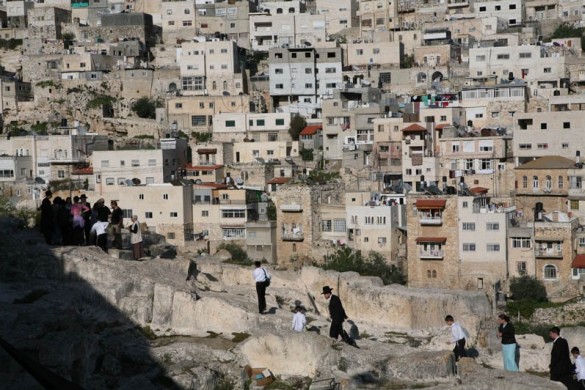
Fifteen minutes of hate in Silwan

Fifteen minutes of hate in Silwan

It’s searing hot, but there’s some pleasantness about the stone-flagged path rising from the centre of Silwan, Jerusalem. Maybe it’s the breeze, or the stone houses oozing coolness into the air, or maybe it’s the wide-open mountain landscape. There are three of us – Ilan, the director, Michael, the cameraman and me, the interviewee. We’re making a film on the blatant institutional discrimination against the residents of this Palestinian east-Jerusalem neighbourhood; authorities favour the Jewish settlers who are not hiding their desire to Judaise the neighbourhood, to void it of its Palestinian character.

Even before we position the camera, a group of orthodox Jewish girls, aged about eight to 10, come walking up the path in their ankle-long skirts, pretty, chattering, carefree. One of them slows down beside us, and pleasantly asks us if we want to film her. What would you like to tell us, we ask. I want to say that Jerusalem belongs to us Jews, she says as she walks on, only it’s a pity there are Arabs here. The messiah will only come when there isn’t a single Arab left here. She walks on, and her girlfriends giggle and rejoin her.

Two minutes later a young, well-built young man comes up, carrying a weapon and a radio, without any uniform or tag upon his clothes. Even before he opens his mouth I’m already guessing he’s a security guard, an employee of the private security contractor operated by settlers but sponsored by the housing ministry at an annual budget of NIS 40m (£4.6m). This security company has long since become a private militia policing the entire neighbourhood and intimidating the Palestinian residents without any legal basis whatsoever. A committee set up by a housing minister determined that this arrangement was to cease, and the security of both Palestinian and Jewish residents must be handed over to the Israeli national police. The government endorsed the committee’s conclusions in 2006, but recanted six months later, under settler pressure. The private security contractor went on operating. [continued…]

From Shiloah to Silwan

Jerusalem began as a small village in a place known as the City of David where the Palestinian village of Silwan sits today. Buried under the village lands, 5000 years of history bind the stories of ancient nations and rulers with the present life of the local residents. Dozens of excavated archaeological strata tell the complex multi-cultural saga of Jerusalem.

We, a group of archaeologists and residents of Silwan, invite you to hear the story of ancient Jerusalem and of life in the village today. Our tour sheds light on the role of archaeology in the Israeli-Palestinian conflict and in the discourse of the future of Jerusalem. We will offer a different perspective: archaeology without an ownership, one that bridges between periods, cultures and nations; archaeology which involves the local residents and examines the past as a shared asset regardless of religion or nationality.

We believe that archaeology in Silwan/”City of David” has the power to change the dynamics of the conflict and promote tolerance and respect for other cultures, past and present, for a better future for both the local residents and the whole region. [continued…]

Facebooktwittermail

Olmert indicted in three corruption affairs

Olmert indicted in three corruption affairs

Former Prime Minister Ehud Olmert was indicted Sunday in three corruption affairs, concluding months of investigations into cases allegedly conducted during his tenure as Jerusalem mayor and trade minister.

Attorney General Menachem Mazuz had announced earlier this month that Olmert would be charged in the Rishon Tours, cash envelopes and Investment Center affairs.

The State Prosecution on Sunday presented to the Jerusalem Magistrate’s Court the indictment papers against both Olmert and his former bureau chief, Shula Zaken. The charges surfaced when Olmert was still prime minister, eventually forcing him to step aside. Mazuz had rejected a request by Olmert’s attorneys for a pre-trial hearing, claiming their client had given up that right by refusing to attend another hearing.

The former prime minister had claimed then that the prosecution could not discuss the matters with an open mind, as they had already decided to press charges against his former travel coordinator, Rachel Risby-Raz, for her involvement in the Rishon Tours case.

The former prime minister has now been charged with accepting cash envelopes from American businessman Morris Talansky. Continue reading

Facebooktwittermail

Israel has Iran in its sights

Israel has Iran in its sights

If Israel attempts such a high-risk and destabilizing strike against Iran, President Obama will probably learn of the operation from CNN rather than the CIA. History shows that although Washington seeks influence over Israel’s military operations, Israel would rather explain later than ask for approval in advance of launching preventive or preemptive attacks. Those hoping that the Obama administration will be able to pressure Israel to stand down from attacking Iran as diplomatic efforts drag on are mistaken.

The current infighting among Iran’s leaders also has led some to incorrectly believe that Tehran’s nuclear efforts will stall. As Friday’s International Atomic Energy Agency report on Iran’s nuclear programs revealed, throughout the political crises of the last three months, Iran’s production rate for centrifuges has remained steady, as has its ability to produce uranium hexafluoride to feed into the centrifuges. [continued…]

Nuclear agency says Iran has bolstered ability to make fuel but slowed its output

International nuclear inspectors reported on Friday that Iran had significantly increased its ability to produce nuclear fuel over the summer, even while slowing the pace at which it was enriching the uranium that the West fears could one day fuel nuclear weapons.

The slowdown puzzled the inspectors, and Iran offered no clues about whether technical problems or political considerations accounted for its action.

Nonetheless, outside nuclear experts who dissected the agency’s latest report — a critical one because it comes just as the United States and its European allies are debating far more damaging sanctions against Iran — said that if Iran’s current stockpile of low-enriched uranium was further purified, it would have nearly two warheads’ worth of bomb fuel. [continued…]

Facebooktwittermail

Hariri says Hizbollah will be included in united front against Israel

Hariri says Hizbollah will be included in united front against Israel

Lebanon needs a unity government that includes a role for the Islamic resistance movement Hizbollah to effectively ward off Israeli aggression, according to the incoming prime minister-designate, Saad Hariri.

“I want to assure the Israeli enemy that Hizbollah will be in the government, whether the enemy likes it or not, because the interests of the country require that we all take part in this government,” he told supporters gathered for a Ramadan dinner at his Beirut home on Tuesday.

The new Israeli administration led by prime minister Benjamin Netanyahu has repeatedly said that should Hizbollah participate in the unity government Mr Hariri has been attempting to form since June, it would consider all Lebanese government infrastructure to be legitimate military targets. [continued…]

Facebooktwittermail

Israeli PM calls for ‘crippling sanctions’ against Iran

Israeli PM calls for ‘crippling sanctions’ against Iran

Israeli Prime Minister Benjamin Netanyahu called Thursday for “crippling sanctions” against Iran to stop its disputed nuclear work, on a solemn visit to Berlin marked by Holocaust remembrance.

After talks with German Chancellor Angela Merkel, Netanyahu expressed hopes for a quick resumption of Middle East peace talks as he warned of a mortal threat to Israel’s survival posed by Iran. [continued…]

Khamenei: post-election unrest pre-planned

The Leader of the Islamic Revolution Ayatollah Seyyed Ali Khamenei says the post-election unrest in Iran was pre-planned.

“I don’t accuse the leaders of the recent incidents of being affiliated with foreign countries, including the US and Britain, since the issue has not been proven for me,” Ayatollah Khamenei said in a meeting with a group of university students in Tehran on Wednesday. [continued…]

Senior Iranian cleric calls system a dictatorship

Iran’s most senior dissident cleric on Wednesday criticized the ruling system under Supreme Leader Ayatollah Ali Khamenei as a dictatorship in the name of Islam, the most serious attack on the country’s top official following the disputed presidential election.

Grand Ayatollah Hossein Ali Montazeri said the ruling system showed its true nature with the violent crackdown against the hundreds of thousands who protested President Mahmoud Ahmadinejad’s re-election and the torture of detainees that led to at least three deaths. [continued…]

Iran’s factional disputes grow increasingly bitter

On Wednesday, aides to Iran’s president lashed out publicly at two former presidents, the nation’s most influential dissident cleric said government officials had taken a “deviant path” and a government-aligned Web site reported that the Tehran prosecutor had been fired.

In another time, the day’s flurry of crises might be seen as extraordinary. But since President Mahmoud Ahmadinejad claimed a landslide victory in Iran’s disputed election in June, each day there have been flare-ups in the increasingly bitter fight between political and clerical factions.

“The game in Iran is no longer between the reformists and the conservatives,” said Mustafa El-Labbad, an expert in Iranian affairs and the director of the Middle East Center for Regional and Strategic Studies in Cairo. “It is now between the pragmatists and the radicals.” [continued…]

Facebooktwittermail

Israel doth protest too much

Israel doth protest too much

Organ trafficking accounts for around 10 per cent of the nearly 70,000 kidney transplants performed worldwide annually, although as many as 15,000 kidneys could be trafficked each year…

Trafficked organs are either sold domestically, or exported to be transplanted into patients from the US, Europe, the United Arab Emirates, Saudi Arabia, and especially Israel.Jane’s Intelligence Weekly, March, 2008

The publication of an article, “Our Sons Plundered Their Organs,” written by Donald Boström and published in the Swedish newspaper Aftonbladet on August 17, has provoked on outcry in Israel. Allegations in the article that Israel soldiers stole organs from the bodies of dead Palestinians have been described by Israeli government officials as a “blood libel” and the Swedish government has been called on to condemn the publication.

The Swedish Prime Minister Fredrik Reinfeldt rejected these demands on Monday:

Reinfeldt said it was not for the government to comment on the content of every newspaper, stressing that a free press is an integral part of Swedish democracy.

“It’s important for me to say that you cannot turn to the Swedish government and ask it to violate the Swedish constitution,” he was quoted as saying by the TT news agency.

Reinfeldt also rejected the suggestion that the row could undermine his country’s work in the Middle East peace process as the current holders of the EU presidency.

The allegations about organ theft are old but what prompted them being raised anew was the recent and widely reported New Jersey corruption scandal in which organ trafficking played a central role.

The Associated Press reported on July 25:

Levy Izhak Rosenbaum of Brooklyn called himself a “matchmaker,” but his business wasn’t romance.

Instead, authorities say, he brokered the sale of black-market kidneys, buying organs from vulnerable people from Israel for $10,000 and selling them to desperate patients in the U.S. for as much as $160,000.

The alleged decade-long scheme, exposed this week by an FBI sting, rocked the nation’s transplant industry. If true, it would be the first documented case of organ trafficking in the U.S., transplant experts said Friday.

“There’s certainly cross-national activity, but it hasn’t touched the United States or we haven’t known about it until now,” said University of Pennsylvania medical ethicist Arthur Caplan, who is co-directing a U.N. task force on international organ trafficking.

The claim that this is the first documented case of organ trafficking in the United States does not appear to be true. Moreover, the attention now being drawn to Israel’s role in the global organ trafficking market may explain why there has been such an outcry in Israel about the Boström article. Whether or not the Swedish journalist’s allegations have any basis, the Israeli effort to focus international attention on Sweden may well to some extent be driven by the desire to turn attention away from a wider issue: Israel’s role in the trade in human organs.

To learn about this issue, it isn’t necessary to scour the Internet for English translations of Swedish newspaper articles. One of the most authoritative sources is a renowned American professor whose work recently featured in JWeekly.com, a Jewish publication in the San Francisco Bay Area. An article published on July 30 began:

Nancy Scheper-Hughes insists she is “no Dick Tracy.” But she played an important whistle-blowing role in the caper involving corrupt rabbis, money laundering and human organ traffic in Israel.

The U.C. Berkeley anthropology professor is a leading expert in the study of human organ trafficking. She has spoken to countless international government and health officials decrying the practice. Her research has led her around the world, from the slums of Brazil and peasant villages in Romania to the streets of Tel Aviv.

She also started the Organ Watch Project as a kind of watchdog organization tracking the brokers, surgeons and thugs who profit from the trade.

One of her more startling realizations: Officials in many countries knew all about illegal transplants, yet didn’t care. “It was a public secret,” she said from her Berkeley home. “It was normalized in Israel.”

Professor Scheper-Hughes’ findings featured in testimony she gave at Congressional hearings on human organ trafficking held on June 27, 2001. There she described not only the global issue but also Israel’s role. She also repeated allegations that there have been cases of organ theft committed by Israelis on dead Palestinians.

Here are extracts from Professor Scheper-Hughes’ Congressional testimony:

In July of 2000, Avraham Ronan, a retired lawyer in Jerusalem, explained why he went through considerable expense and considerable risk to travel to Eastern Europe to purchase a kidney from a displaced rural worker, rather than wait in line for a cadaver organ in Israel:

Why should I have to wait years for a kidney from someone who was in a car accident, pinned under the car for many hours, then in miserable condition in the I.C.U. [intensive care unit] for days and only then, after all that trauma, have that same organ put inside me? That organ is not going to be any good! Or, even worse, I could get the organ of an elderly person, or an alcoholic, or a person who died of a stroke. That kidney is all used up! It’s far better to get a kidney from a healthy man who can also benefit from the money I can afford to pay. Where I went the people were so poor they did not even have bread to eat. Do you have any idea of what one thousand, let alone five thousand dollars, means to a peasant? The money I paid was a gift equal to the gift that I received.

The magical transformation of a person into a “life” that must be prolonged, saved, at any cost, has made life into the ultimate fetish as recognized many years ago by Ivan Illich. The idea of “life” itself as an object of manipulation, a relatively new idea in the history of modernity. The fetishization of life — a life preserved, prolonged, enhanced at almost any cost — erases any possibility of a social ethic.

… in Israel today there is an amazing tolerance at official levels toward outlawed “transplant tourism,” which is organized through a local business corporation in conjunction with a leading transplant surgeon, operating out of a major medical center not far from Tel Aviv. Mr. D., the head of “the company” (as transplant patients call it), has developed links with transplant surgeons in Turkey, Russia, Moldavia, Estonia, Georgia, Romania, and (most recently) New York City. The cost of the “package” increased from $120,000 in 1998 to $200,000 in 2001 and, with the pressure from transplant candidates to develop links in more developed countries, the cost is still rising. The transplant “package” covers: the rental of a private plane (to accommodate a group of six patients, each accompanied by a family member, the Israeli doctors, and the business coordinator; the “double operation” (kidney “extraction” and kidney transplant); the kidney and the “donor” fee (the donor is usually paid no more than $5,000); the “fees” paid to bribe airport and customs officials; the rental of private operating and recovery rooms and OR staff; and hotel accommodations for accompanying family members. The covert operation (in both senses of the term) is accomplished in five days. Day 1: on site pre-operative rests and dialysis; days 2 and 3: the operations (two or three patients per night, depending on the size of the group); days 4 and 5: on site recovery and the flight home.

The specific country, city, and hospital sites of the illicit surgeries are kept secret from transplant patients until the day of travel. Meanwhile, the sites are continually rotated to maintain a low profile. The surgeries are performed between midnight and the early morning hours. In the most common scenario, Israeli patients and doctors (a surgeon and a nephrologist) fly to a small town in Turkey on the Iraqi border, where the kidney sellers are often young Iraqi soldiers or guest workers. In another scenario, the Israeli and Turkish doctors travel to a third site in Eastern Europe, where the organ sellers are unemployed locals or guest workers from elsewhere.

The passivity of the Ministry of Health in refusing to intervene and crack down on this multi-million dollar business, which is making Israel something of a pariah in the international transplant world, requires some explanation. First, in the absence of a strong culture of organ donation and under the pressure of angry transplant candidates, each person transplanted abroad is one less client with which to contend. A more troubling phenomenon is the support and direct involvement of the Israeli Ministry of Defense in the illicit national “program” of transplant tourism. Some patients who traveled with the outlaw Israeli transplant surgeon to other countries noted that in each of the organized transplant groups were members of the Ministry of Defense or those closely related to them.

We in the United States cannot claim any high moral ground given the number of transplant centers that court and cater to paying foreigners, thereby subverting the idea of donated organs as a national and community resource. Dr. Michael Friedlander, chief nephrologist at Hadassah Hospital in Jerusalem, counts among his recovering international transplant patients, several Israelis who have recently returned this year and last (2000–2001) from Europe and the United States with kidneys that were purchased from living donors. The doctors in charge of the identified kidney units where these transplants have taken place claim ignorance, on their part, saying they believed that the donors and recipients were either biologically or emotionally related. Among a great many kidney experts the understanding is that commerce in kidneys between strangers is everywhere protected by a policy of “Ask — but please don’t tell me anything I don’t want to hear.”

In March 2001 I spent the day with Abraham Sibony, a recent immigrant to Israel from Morocco, who had embarked on a career as a petty thief. Sibony was in and out of jail for several years when he was contacted in a prison workshop by a warden attached to a local organs broker. “Do you want to find a quick way out of your troubles,” Sibony was asked. Surprised to learn that he could make $30,000 by selling one of his kidneys, and even more surprised to be told by an outlaw transplant doctor that “people were healthier and lived longer with only one kidney”, Sibony was in and out of surgery in a few days during a brief furlough from prison. Though Sibony has not, unlike many other unlucky kidney sellers, suffered from any significant medical complications, he was ill-prepared for a long period of recovery in prison, and angry that he was paid only $6,000 and had no legal recourse against the lawyer-transplant recipient and his broker who had deceived him, a story that is very common among the world’s kidney sellers.
[…]
That there are no fixed political, ideological, or religious boundaries with respect to illicit transplant practices is clear in the case of the Middle East. Residents of the Gulf States (Kuwait, Saudi Arabia, Oman) have for many years traveled to India and to countries in Eastern Europe to purchase kidneys made scarce locally due to local fundamentalist Islamic teachings that allow organ transplantation (to save a life), but prohibit organ harvesting from brain-dead bodies. Meanwhile, hundreds of kidney patients from Israel, which has its own well-developed, but under-used transplantation centers (due to lingering orthodox Jewish reservations about brain death) travel in privately brokered “transplant tourist” junkets to Turkey, Moldova, Romania where desperate kidney sellers can be found, to Russia where an excess of lucrative cadaveric organs result from lax standards for designating brain death, and to South Africa where the amenities in transplantation clinics in private hospitals can resemble four star hotels.

The infamous Zaki Shapira, head of kidney transplant services at Bellinson Medical Center, near Tel Aviv (and, ironically, former member of the Bellagio Task Force on global transplant ethics) has been operating as a transplant outlaw since the early 1990s when he used local Arab brokers to locate willing kidney sellers among strapped Palestinian workers in the Gaza and the West Bank. When Shapira’s hand was slapped by an ethics review board (the Cotev Commission) in the mid 1990s, Shapira simply moved his illicit practice overseas — to Turkey and to countries in Eastern Europe where the considerable economic chaos of the past decade has created parallel markets in bodies for sex and for kidneys.

But affluent Palestinians from the West Bank also travel in search of transplants with purchased kidneys to Baghdad, Iraq, where several medical centers cater to transplant tourists from elsewhere in the Arab world. The kidney sellers, I was told by one Palestinian transplant patient whom I interviewed in March 2001, are mostly young men, foreign workers from Jordan, and poor Iraqis who are housed in a special wing of each hospital in dorms that could be called “kidney motels”, while they wait for the blood and cross-matching tests that will turn them into the day’s “winner” of the kidney lottery. In Iraq the transplant package, complete with pre- and post-operative care and with fully equipped modern apartments provided in the hospital complex for accompanying relatives, is only $20,000, up, we were told, from only $10,000 several years ago. In fact, it was the appearance of these successful transplanted Palestinians in the after care clinic of Hadassah hospital (See Friedlander 2000) that prompted Jewish patients to pursue alternative transplant options for themselves.

While in Israel for Organs Watch in the summer of 2000 and, again in March 20001, when I accompanied Mike Finical, of The New York Times (see Finical 2001), I interviewed more than 50 transplants professionals, transplant patients, and organs buyers and sellers involved in commercialized transplants. Most surgeons, while worried about the risk to their patients and the potential for exploitation of both organs sellers and buyers on the part of unscrupulous doctors and their commercial brokers and intermediaries, none were willing to condemn a practice which they saw as “saving lives”.

Since the summer of 2000 an undisclosed number of Israeli kidney patients have traveled to major medical centers in the United States, sometimes accompanied by their Israeli surgeon or nephrologist, for illegal transplants with paid living donors. In some cases the kidney seller travel from abroad with the transplant candidates, in other cases the sellers are located in the United States by local intermediaries and brokers. I interviewed two men, one a young student, the other a retired Israeli civil servant, both of whom had recently returned from the U.S. with a brand new, purchased kidney. Itay, the student, preferred not to think about his donor, and was told by his doctor to think of his trip to the United States as an extended vacation holiday. The older transplant patient also tried to cast his payment to the stranger who gave him her kidney as a bonus — “vacation money” for her to recuperate while she had a good time far away from home.
[…]
… transplant doctors in Sao Paulo and Rio de Janeiro told me that during the military period (1964–1984) they had being given “quotas” of organs to be delivered to military hospitals, organs got by any means possible, including (I was told by one guilt-ridden practitioner) chemically inducing the signs of brain death. The execution of street children in Brazil (seen as enemies of decent people) that reached a peak in the 1990s (well after democratization) involved not only death squad killings but mutilations in the public morgues, a secret dimension of what was essentially a form of class warfare and ethnic cleansing.

And in South Africa toward the end of apartheid when a super-abundance of Black bodies produced in the violence and chaos of the anti-apartheid struggle piled up in police mortuaries, the harvesting (and sometimes the selling) of desired body parts both for muti (magical medicine) and for transplant was a hidden feature of that struggle. In these sad contexts, traditional sangomas and surgeons could both be described as witch doctors. Meanwhile, human rights groups in the West Bank complained to me of tissue and organs stealing of slain Palestinains by Israeli pathologists at the national Israeli legal medical institute in Tel Aviv.

A March 8, 2008 report for Jane’s Intelligence Weekly said:

As global demand for live transplants keeps growing, the shadowy organ trading business is rapidly expanding, dominated by unscrupulous brokers and facilitated by inadequate national legislations, widespread corrupt practices and a general lack of public awareness on the extent of the trade.

The illegal trade in body parts is largely dominated by kidneys because they are in greatest demand and they are the only major organs that can be wholly transplanted with relatively few risks for the living donor.

Organ trafficking accounts for around 10 per cent of the nearly 70,000 kidney transplants performed worldwide annually, although as many as 15,000 kidneys could be trafficked each year.

China, India, Pakistan, Egypt, Brazil, the Philippines, Moldova, and Romania are among the world’s leading providers of trafficked organs. If China is known for harvesting and selling organs from executed prisoners, the other countries have been dealing essentially with living donors, becoming stakeholders in the fast-growing human trafficking web.

Trafficked organs are either sold domestically, or exported to be transplanted into patients from the US, Europe, the United Arab Emirates, Saudi Arabia, and especially Israel.

On December 18, 2007, Haaretz reported on the first conviction brought after Israel made human organ trafficking illegal:

In a precedent-setting ruling yesterday the Haifa District Court yesterday sentenced two Haifa men to jail for trafficking in humans for the purpose of harvesting their organs.

John Allan (formerly Mohammad Gheit), 59, was sentenced to four years in jail with a three-year suspended sentence. Allan was also ordered to pay each of his six victims NIS 15,000. Hassan Zakhalka, 32, was sentenced to 20 months in prison and 12 months suspended sentence for aiding and abetting human trafficking for the harvest of organs.

This is the first time an Israeli court has issued a conviction for this offense, based on a law passed at the end of last year.

The pair confessed to the charges against them in a plea bargain with the prosecution.

Allan and Zakhalka admitted that at the end of 2006, they persuaded Arabs from the Galilee and central Israel who were developmentally challenged or mentally ill to agree to have a kidney removed for payment. They located their victims by placing ads in the newspaper offering money for organ donation. According to the indictment, the pair gave false information to the donors, and also pressured and threatened them to give up their kidney. After the surgery, Allan and Zakhalka did not pay the donors as promised.

One of the victims was an illiterate 32-year-old single mother from an Arab village in central Israel. The pair told her she would undergo a simple operation, and she would be back on her feet in two days. At one point, the woman changed her mind, and in response Allan and Zakhalka threatened to report her to the police, telling her it was a crime to agree to donate a kidney. Like the other victims, the woman was flown to Ukraine where she underwent the surgery. When she returned home, the victims refused to pay her the $7,000 they had promised her.

Allan and Zakhalka were part of a criminal ring that included an Israeli surgeon, Dr. Michael Zis, who also worked at Assaf Harofeh Medical Center. According to the indictment, Zis sold the kidneys he harvested for between $125,000 and $135,000, of which Allan received $10,000 dollars. The State Prosecutor’s Office is preparing an extradition order against Zis, who is being held in prison in Ukraine.

The conviction of Allan and Zakhalka was made possible by an amendment to the criminal code that was passed in October 2006, which added a number of clauses prohibiting trafficking in humans for the purpose of harvesting organs. Judges Josef Elron, Ron Sokol and Menahem Raniel decided to accept the plea bargain because they said clear legal interpretation had not yet been formulated with regard to the crime of human trafficking for the purpose of harvesting organs, Lacking such clear interpretation of the clause, they said, “the parties might be dragged into presenting much complex evidence.”

Facebooktwittermail

Did Mossad hijack Russian ship to stop Iran arms shipment?

Did Mossad hijack Russian ship to stop Iran arms shipment?

Was Israel’s secret service behind the mysterious hijacking of a Russian freighter to foil a secret attempt to ship cruise missiles to Iran?

The mystery surrounding the hijacking of a Russian freighter in July has taken a new twist with reports claiming the pirates were acting in league with the Israeli Mossad secret service in order to halt a shipment of modern weapon systems hidden on board and destined for Iran.

While Israeli and Russian officials dismissed the reports, accounts published in the Russian media sounded more like a spy thriller than a commercial hijacking.

“There is something fishy about this whole story, no doubt about it,” Israel’s former Deputy Defense Minister Ephraim Sneh told The Media Line. “But I can’t comment further on this.”

The Russian newspaper Novaya Gazeta reported over the weekend that the vessel Arctic Sea had been carrying x-55 cruise missiles and S300 anti-aircraft rockets hidden in secret compartments among its cargo of timber and sawdust. [continued…]

Editor’s Comment — Mossad has always been the darling of conspiracy theorists, but in this case the disappearance of the Arctic Sea presented a rather difficult question to answer: why would anyone attempt to hijack a cargo of lumber passing through European waters? An operation to intercept missiles being secretly exported to Iran? It actually sounds quite plausible.

Facebooktwittermail