Gideon Levy writes: This fall a culture war, no less, broke out in Israel, and it is being waged on many more, and deeper, fronts than are apparent. It is not only the government, as important as that is, that hangs in the balance, but also the very character of the state. Our way of life is about to change, from cradle to grave. For this reason, it could be the most pivotal battle in the country’s history since the War of Independence.
We always knew that a few years without an external threat could strain the delicate seams: When the guns go silent, the demons roar. But no one predicted such an outburst of demons of every kind, all at once. The assault on the existing order is an all-out war, on every front; a political tsunami, a cultural flood and a social and religious earthquake, all still in their infancy. Those who call this an exaggeration are trying to lull you to sleep. The defeats and the victories up to now will determine the course of events: In the end, we will have a different country. The pretension of being an enlightened Western democracy is giving way, with terrifying speed, to a different reality – that of a benighted, racist, religious, ultranationalist, fundamentalist Middle Eastern country. That is not the kind of integration into the region we had hoped for.
The ferocious combined assault is highly effective. It targets women, Arabs, leftists, foreigners, the press, the judicial system, human rights organizations and anyone standing in the way of the cultural revolution. From the music we listen to, to the television we watch, from the buses we ride to the funerals we attend , everything is about to change. The army is changing, the courts are in turmoil, the status of women is being pelted with rocks, the Arabs are being shoved behind a fence and the labor migrants are being forced into concentration camps. Israel is barricading itself behind more and more walls and barbed-wire fences as if to say, to hell with the world.
There is no single guiding hand mixing this boiling, poisonous potion; many hands stir the revolution, but they all have something in common: the aspiration to a different Israel, one that is not Western, not open, not free and not secular. The extreme nationalist hand passes the antidemocratic, neofascist laws; the Haredi hand undermines gender equality and personal freedoms; the racist hand acts against the non-Jews; the settler hand intensifies the hold not only on the occupied territories but also deep into Israel; and another hand interferes in education, culture and the arts.
Category Archives: Israel
Gingrich ready to help Israel attack Iran — calls Palestinians an ‘invented people’
In a CNN interview Newt Gingrich volunteers to capitulate to Israeli nuclear blackmail: “I would rather plan a joint operation [against Iran] conventionally, than push the Israelis to the point where they go nuclear.”
Gingrich told The Jewish Channel that Palestinians are not a genuine nation.
Jeffrey Goldberg sees Israel on the path to apartheid
Jeffrey Goldberg writes: A number of Goldblog readers have forwarded me this video of Peter Beinart speaking at recent General Assembly of Jewish Federations of North America. These readers are critical of Peter’s assertion that Israel is, in essence, forcing a one-state solution on itself by continuing the occupation and settlement of the West Bank. I watched the video, and, alas, I don’t find much to dispute with what Peter says. This isn’t the easiest thing for me to acknowledge; I disagree with much of Peter’s Middle East political analysis, and I disagree with many of his peacemaking suggestions. But he’s not wrong about the most crucial thing: Israel will soon enough be forced to face a choice: Grant citizenship to the Arabs of the West Bank, or cease to call itself a Jewish democracy.
The Matzorian Candidate
(H/t Marsha Cohen)
Unlike Iran, Israel won’t face sanctions
Zvi Bar’el writes: U.S. Secretary of State Hillary Clinton got it badly wrong: Israel isn’t Iran, and comparing it to Iran – as she did during her remarks at a closed session of the Saban Forum where she expressed shock over the treatment of women in Israel – demonstrates either ignorance or malice.
First, Iran isn’t considered a democracy: It openly and proudly adopted a system of government in which a religious scholar is the supreme leader. Israel, in contrast, wears a facade of democracy even as a select group of religious scholars who are only ostensibly committed to the law dictate the state’s way of life.
Israel isn’t Iran. Iran officially and openly separates unmarried men and women in public venues. In Israel, such segregation is against the law, but in practice, it is alive and well and sneering at the law. In the army, on buses that serve the ultra-Orthodox community and in state religious schools financed by the government, segregation flourishes.
Israel isn’t Iran. In Iran, human rights organizations can receive assistance from a defined list of international organizations and institutions, “with the approval of the relevant government ministers,” as Iranian law puts it. In Israel, proposed legislation would bar some organizations from receiving any money at all from foreign governments, while others would have to run the gauntlet of a Knesset hearing to get an exemption from, or at least a reduction on, the 45 percent tax.
Israel isn’t Iran. In Iran, the supreme leader appoints the head of the judicial system. In Israel, the supreme leader uses every trick in the book to try to shape the Supreme Court’s composition to his liking without soiling the facade of democracy.
This is a difference of vast proportions. Iran doesn’t put on sanctimonious airs, doesn’t cluck its tongue at others, doesn’t disguise what it is and doesn’t try to sell its system of government to the world as “an island of democracy.”
War on Iran has already begun. Act before it threatens all of us
Seumas Milne writes: They don’t give up. After a decade of blood-drenched failure in Afghanistan and Iraq, violent destabilisation of Pakistan and Yemen, the devastation of Lebanon and slaughter in Libya, you might hope the US and its friends had had their fill of invasion and intervention in the Muslim world.
It seems not. For months the evidence has been growing that a US-Israeli stealth war against Iran has already begun, backed by Britain and France. Covert support for armed opposition groups has spread into a campaign of assassinations of Iranian scientists, cyber warfare, attacks on military and missile installations, and the killing of an Iranian general, among others.
The attacks are not directly acknowledged, but accompanied by intelligence-steered nods and winks as the media are fed a stream of hostile tales – the most outlandish so far being an alleged Iranian plot to kill the Saudi ambassador to the US – and the western powers ratchet up pressure for yet more sanctions over Iran’s nuclear programme.
The British government’s decision to take the lead in imposing sanctions on all Iranian banks and pressing for an EU boycott of Iranian oil triggered the trashing of its embassy in Tehran by demonstrators last week and subsequent expulsion of Iranian diplomats from London.
It’s a taste of how the conflict can quickly escalate, as was the downing of a US spyplane over Iranian territory at the weekend. What one Israeli official has called a “new kind of war” has the potential to become a much more old-fashioned one that would threaten us all.
West Bank mosque set alight in suspected ‘price tag’ attack
Haaretz reports: Arsonists attempted to set fire to a Palestinian mosque, Israeli police and residents of a West Bank village near the settlement of Ariel said on Wednesday.
Residents of the Palestinian village of Burkina discovered that two vehicles were torched overnight, and that there had been attempt to burn the local mosque as well, succeeding only in burning its entrance.
The mosque itself was sprayed with graffiti denouncing the head of the Shin Bet’s Jewish division, responsible for tracking extremist activity.
Mayor of Burkina village Accra Samara says a flaming tire was thrown into the entrance of the mosque.
Israeli police spokeswoman Cuba Samurai says they are investigating the incident.
Hard-line Jewish youths are suspected to be behind a series of attacks against Palestinians and their property, including several mosques.
Two months ago, the mosque in the Bedouin village of Tuba-Zangariyya was set on fire in a suspected “price tag” attack by settlers angry at Israeli policy.
Haaretz also reported: Israel Defense Forces spokesman said on Tuesday that three soldier had been arrested Monday on suspicion of involvement in the recent ‘price tag’ attacks in the West Bank, with two other soldiers arrested as well.
The suspect is a known West Bank activist, who was also recently investigated for forging an official document, in an unrelated case. He is linked to sabotaging IDF vehicles in the West Bank base of the Benyamin brigade, where he served up until two months prior to a price tag attack of the facility.
The neocons have finally snapped
M.J. Rosenberg writes: Any doubt we might have that the Israeli right has lost its mind should be eliminated by the latest column from one of its most prominent media figures, Caroline Glick of the Jerusalem Post.
Glick, a dual citizen of the United States and Israel, has flipped out over some remarks (which we’ll get to later) made last week by Secretary of State Hillary Clinton, Secretary of Defense Leon Panetta, and Ambassador to Belgium Howard Gutman. And here is how she explains those remarks.
Her first explanation is that “the Obama administration is an ideological echo chamber in which only certain positions are permitted.”
Restrained by ideological thought police that outlaw critical thought about the dominant forces in the Islamic world today, US officials have little choice but to place all the blame for everything that goes wrong on the one society they are free to criticize — Israel.
That, in itself, borders on hilarious.
Anyone who pays even a modicum of attention to the Middle East knows that rather than “place all the blame for everything” on Israel, the Obama administration blames Israel for nothing while providing more foreign aid to Israel than to any other country, supporting it on every issue at the United Nations — often against America’s own interests — and never, ever attaching any conditions to our aid or support (as we do with every other country in the world).
The only thing President Obama has asked of Israel during his entire term is for a three-month settlement freeze, to which Israel said no. (Prime Minister Netanyahu himself says Obama has earned a “badge of honor” for his uncritical support for Israel.)
Netanyahu afraid of Obama getting re-elected
Reuters reports: Prime Minister Benjamin Netanyahu called on Monday for a snap leadership vote in his Likud party, a contest he is expected to win and which could pave the way for an early national election in Israel.
Some commentators said Netanyahu was quietly preparing for the possibility that President Barack Obama, with whom he has had a testy relationship, will win a second and final term in November, a year before Israel’s currently scheduled ballot.
Freed of campaigning interests if he wins, the Democratic president could redouble pressure on the rightist premier to accommodate the Palestinians in peacemaking, deepening political division in Israel to the Likud’s detriment, analysts predict.
“I wish to announce that I will request elections on January 31 for the leadership of the Likud and its candidate for prime minister,” Netanyahu told Likud legislators at the open part of their weekly meeting in parliament.
“I want to have it now, not only to save good money for the party, but also to avoid internal anguish, so that we, as the leading party, can grapple with the issues that stand before us,” he said.
Netanyahu loyalists said that by holding the leadership ballot on January 31, the party could cut costs by piggybacking on a vote set for its local lists on that date. The Likud charter requires party leadership votes to take place at least six months before national elections.
“Let’s be honest, no one really thinks that the prime minister, who is really, at the end of the day, running things well, and has wall-to-wall support in the Likud, will not be elected,” said Environment Minister Gilad Erdan of the Likud, whose central committee must be convened to authorize the date.
Hanan Krystal, Israel Radio’s political analyst, said Netanyahu might also opt to bring forward the next Israeli general election, due in November 2013, should Obama look likely to beat Republican rivals in the U.S. ballot.
Resented among Jewish and conservative Christian voters over his handling of the Netanyahu government, Obama last week promoted his administration’s efforts to secure Israel from foes like Iran.
“At the highest echelons, they have long been saying that if Obama is elected for a second term, the carrot will be replaced by a stick,” Krystal said.
Israel’s war drums over Iran drown out common sense
Tony Karon writes: It has become an article of faith among Israeli leaders and their neoconservative partners in Washington that the only way Iran can be persuaded to back down in the nuclear standoff is if Tehran believes it’s in real danger of being bombed. Hence the relentless war drums pounded by Prime Minister Benjamin Netanyahu and Defence Minister Ehud Barak, despite the obvious misgivings of the Obama administration.
Mr Barak last week told a TV interviewer that Israel didn’t want to start a war with Iran, but that Iran may leave it no choice (although he offered no benchmarks for this assessment). Mr Netanyahu, meanwhile, offered a somewhat clumsy parable about Israel’s founder, David Ben Gurion, making decisions that went against the best advice he was getting, and in so doing ensuring Israel’s creation. The subtext: just because everyone’s telling me bombing Iran is a really stupid idea doesn’t mean I won’t do it; history will absolve me.
But the dark warnings of Mr Netanyahu and Mr Barak notwithstanding, it’s obvious that Iran isn’t expecting to be bombed any time soon, much less planning to back down on its nuclear programme. On the contrary, Tehran remains as defiant as ever, even allowing itself such potentially reckless luxuries as playing out domestic political rivalries by sending militiamen to trash the British embassy. (That appears to have been the work of rivals to President Mahmoud Ahmadinejad). Iran also raised the ante with the United States, announcing it had brought down a surveillance drone that had crossed into Iranian territory from Afghanistan – signalling to its own public that Iran was under attack by the US and potentially raising a public clamour for retaliation. (By contrast, Iran had largely avoided acknowledging that recent explosions at a missile site and uranium conversion plant may have been the work of saboteurs, perhaps to avoid raising pressure to strike back).
On the whole, though, Iran’s regime doesn’t seem to be shrinking from confrontation with western powers and Israel. It may be strengthened politically by that confrontation, and it has reason to doubt any attack is imminent. Key figures in the security establishment in both the US and Israel are certainly pouring cold water on the “military option” bandied about by politicians and pundits.
American Jews shocked as essence of Zionism is exposed
Israeli journalist Yossi Gurvitz exposes a face of Zionism most American Jews would rather not see and puts into context the controversial Israeli government ad campaign appealing to Israelis to return home from the U.S.:
The main concept of Zionism is that Jewish life, outside of their national homeland, is the life of an invalid. They cannot be truly Jewish life since they lack the national element of Judaism. Jews can only be fully Jews when they live in Israel. An early Zionist writer, Yehuda Pinsker, compared the lives of diaspora Jews to that of the undead, and went further on to say anti-Semitism is a natural response to the unnatural existence of deracinated Diaspora Jews.
Accordingly, Zionism views Jewish life abroad with disdain. This is reflected in the language: A Jew who immigrates to Israel is called an “oleh,” literally someone who transcends; One who emigrates from Israel is called a “yored,” literally someone going down. Hence, the need for an a ministry who will cater to the needs of Jews who “make aliyah” – The Ministry of Aliyah Absorption. Incidentally, it is extremely difficult for a non-Jew to immigrate to Israel.
Israeli Jews, particularly the hardcore Zionists, view Diaspora Jews with thinly veiled contempt, which erupts to the surface from time to time – such as when former President Weizman called upon American Jews to leave the US and come to Israel, and so fulfill their destiny, or when the author A.B. Yohoshua told American Jews in 2006 that “Outside of Israel, Judaism cannot exist. You are dealing with a Judaism of plug and play… You switch identities as you change your jackets… If China becomes stronger than the US, you would all move to China.” This is not particularly new: The Palestine/Israel branch of the historic Zionist movement always considered Zionists living in Israel to be superior to Jews living in the Diaspora, and considered Diaspora Jews not as independent human beings but rather as Zionist building blocks. Nowhere was this more evident that in Ben Gurion’s famous saying, that if he had to choose between a million Jewish children being saved by being sent to Britain or just half of them saved, but sent to Palestine, he would choose the latter. For hardcore Zionists, Diaspora Jews are failures; They can only be redeemed by joining our armed ghetto.
Therefore, the very idea of an Israeli Jew leaving the country and joining the Diaspora is disgusting to Israeli Zionists, particularly the older ones. Former PM Rabin called them “a residue of cowards.” For most Zionists, the idea of an Israeli Jew losing himself and his hard-won identity in the Diaspora, basically spitting on all that Zionism fought for, is loathsome. Hence the ads: They are trying to save Israeli Jews from sinking to the level of “regular Jews,” or, God forbid, “assimilating” with the gentiles.
‘Israel could lose American Jewry’
The Israeli press is sloppy in all sorts of ways. The headline above comes a Ynet article by Yitzhak Benhorin in Washington. It could be a direct quote from The Atlantic‘s Jeffrey Goldberg and much of the content of the article could be drawn from recent conversation with Goldberg — the article doesn’t make this clear.
Benhorin bases much of his report on recent posts by Goldberg on the controversial Israeli government campaign appealing to Israelis to return home from the US, but some of the statements attributed to the influential columnist do not seem to be taken from his blog, specifically the following:
Goldberg believes that American Jews are trying to understand Israeli far more than Israelis try to understand them. He states that the average American Jew reads that women in Jerusalem sit on the back of the bus and thinks to himself that he has no connection whatsoever with this country.
He adds that young Israelis from Tel Aviv probably feel the same when they read that the right wing is making alliances with Evangelical Christians.
Goldberg notes that it is obvious that there is a rift, when 80% of American Jews are culturally politically and religion-wise like 25% of Israelis, Jews in Washington can identify with what’s happening in Tel Aviv but not Jerusalem or the settlements.
He adds that there is a large gap between most Jews in the US and most Jews in Israel; Jews in the US are becoming more universal in their outlook while Israeli Jews are becoming more and more tribal in theirs. If the trend continues, he says, American Jews will see Israel as a far off foreign country.
Goldberg also warned of the growing gulf between American Jews and their Israeli counterparts over issues related to democratic values. He said that the things happening in Israel today are like a mystery to the American Jews who scratch their heads and ask themselves what in the world is going on in Israel.
Goldberg also spoke of the recent right-wing legislation, the exclusion of women from the public domain and the harm to freedom of expression. He noted that as American Jews, they were taught that Israel is the only democracy in the Middle East and that sadly, the recent legislation causes concerns – should Israel lose its democratic values, it will lose American Jewry.
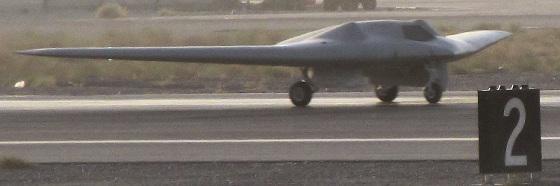
Iran captures ‘lost’ U.S. spy drone — the first remote hijacking?
The Los Angeles Times reports:
A drone that Iranian officials claimed to have shot down may be an unarmed U.S. reconnaissance aircraft that went missing over western Afghanistan late last week, according to U.S.-led forces in that country.
“The operators of the UAV [unmanned aerial vehicle] lost control of the aircraft and had been working to determine its status,” NATO’s International Security Assistance Force in Afghanistan said in a statement.
Iranian media reported Sunday that the country’s armed forces had shot down a U.S. drone that they said violated Iranian airspace along the eastern border. Iran borders Afghanistan and Pakistan in the east.
An Iranian military official quoted by the official Islamic Republic News Agency said the aircraft suffered minor damage and was in the possession of the armed forces. He identified the aircraft as an “RQ170” type drone and said Iranian forces were “fully ready to counter any aggression.”
When the existence of the RQ-170 first entered the public domain after it was photographed in Afghanistan, it quickly got dubbed the “Beast of Kandahar.”
As a highly classified stealth aircraft the question was: why would the US be flying a drone designed to evade radar when the Taliban have no radar? Speculation suggested that its areas of operation were more likely over Pakistan and perhaps spying on nuclear facilities in Iran.
In May this year the Washington Post reported that this aircraft had indeed been used to “fly dozens of secret missions deep into Pakistani airspace and monitor the compound where Osama bin Laden was killed.”
So how did the operators manage to lose such valuable piece of equipment last week? Someone fell asleep at the wheel? Very unlikely during such a critical intelligence operation. A technical malfunction? Maybe, but in such an event it would seem more likely that the aircraft would have crashed and been destroyed.
Another possibility is that “lost control” is another way of saying hijacked. In other words, U.S. remote pilots lost control as Iranians took control.
There maybe a connection with another drone story — this one about a drone that Israel lost.
Late last month, Richard Silverstein “revealed” that an Israeli drone brought down over Southern Lebanon by Hezbollah had been booby-trapped and later unwittingly taken to a weapons depot where it was remotely detonated. It was a story so implausible that it seemed like Israeli intelligence could only feed it to a scoop-hungry blogger since most journalists simply wouldn’t take it seriously.
If the story was indeed an Israeli fabrication then it was probably concocted in order to cover up a much more important story: that Hezbollah has managed to refine its tools of electronic warfare to a point that puts in jeopardy all of Israel’s drone missions over Lebanon.
If that was the case this would have serious consequences since it is widely assumed that in the event of an Israeli attack on Iran’s nuclear facilities, reprisal attacks on Israel from Lebanon would swiftly follow. In such a situation, Israel could not afford to have lost one of its most valuable intelligence gathering tools — the means on which it might depend to prevent missile strikes on Tel Aviv.
In other words, if Israel’s ability to defend itself from attacks from Lebanon has been significantly degraded, it might need to be a bit more cautious about threatening to attack Iran.
Israel is flying less sophisticated drones than the RQ-170, but even so, whatever skills Hezbollah has been acquiring in its counter-drone operations it has very likely been sharing with Iran’s Revolutionary Guard.
Might this provide part of the explanation about how the U.S. lost and Iran found a drone that supposedly went “missing”?
The Israelification of law enforcement in the United States
Max Blumenthal writes: In October, the Alameda County Sheriff’s Department turned parts of the campus of the University of California in Berkeley into an urban battlefield. The occasion was Urban Shield 2011, an annual SWAT team exposition organized to promote “mutual response,” collaboration and competition between heavily militarized police strike forces representing law enforcement departments across the United States and foreign nations.
At the time, the Alameda County Sheriff’s Department was preparing for an imminent confrontation with the nascent “Occupy” movement that had set up camp in downtown Oakland, and would demonstrate the brunt of its repressive capacity against the demonstrators a month later when it attacked the encampment with teargas and rubber bullet rounds, leaving an Iraq war veteran in critical condition and dozens injured. According to Police Magazine, a law enforcement trade publication, “Law enforcement agencies responding to…Occupy protesters in northern California credit Urban Shield for their effective teamwork.”
Training alongside the American police departments at Urban Shield was the Yamam, an Israeli Border Police unit that claims to specialize in “counter-terror” operations but is better known for its extra-judicial assassinations of Palestinian militant leaders and long record of repression and abuses in the occupied West Bank and Gaza Strip. Urban Shield also featured a unit from the military of Bahrain, which had just crushed a largely non-violent democratic uprising by opening fire on protest camps and arresting wounded demonstrators when they attempted to enter hospitals. While the involvement of Bahraini soldiers in the drills was a novel phenomenon, the presence of quasi-military Israeli police – whose participation in Urban Shield was not reported anywhere in US media – reflected a disturbing but all-too-common feature of the post-9/11 American security landscape.
The Israelification of America’s security apparatus, recently unleashed in full force against the Occupy Wall Street Movement, has taken place at every level of law enforcement, and in areas that have yet to be exposed. The phenomenon has been documented in bits and pieces, through occasional news reports that typically highlight Israel’s national security prowess without examining the problematic nature of working with a country accused of grave human rights abuses. But it has never been the subject of a national discussion. And collaboration between American and Israeli cops is just the tip of the iceberg.
Having been schooled in Israeli tactics perfected during a 63 year experience of controlling, dispossessing, and occupying an indigenous population, local police forces have adapted them to monitor Muslim and immigrant neighborhoods in US cities. Meanwhile, former Israeli military officers have been hired to spearhead security operations at American airports and suburban shopping malls, leading to a wave of disturbing incidents of racial profiling, intimidation, and FBI interrogations of innocent, unsuspecting people. The New York Police Department’s disclosure that it deployed “counter-terror” measures against Occupy protesters encamped in downtown Manhattan’s Zuccotti Park is just the latest example of the so-called War on Terror creeping into every day life. Revelations like these have raised serious questions about the extent to which Israeli-inspired tactics are being used to suppress the Occupy movement.
The process of Israelification began in the immediate wake of 9/11, when national panic led federal and municipal law enforcement officials to beseech Israeli security honchos for advice and training. America’s Israel lobby exploited the climate of hysteria, providing thousands of top cops with all-expenses paid trips to Israel and stateside training sessions with Israeli military and intelligence officials. By now, police chiefs of major American cities who have not been on junkets to Israel are the exception. [Continue reading…]
Neocons worst fear: a shift in the balance of power in the Middle East
M.J. Rosenberg writes: Suddenly the struggle to stop Iran is not about saving Israel from nuclear annihilation. After a decade of scare-mongering about the second coming of Nazi Germany, the Iran hawks are admitting that they have other reasons for wanting to take out Iran, and saving Israeli lives may not be one of them. Suddenly the neoconservatives have discovered the concept of truth-telling, although, no doubt, the shift will be ephemeral.
The shift in the rationale for war was kicked off this week when Danielle Pletka, head of the American Enterprise Institute’s (AEI) foreign policy shop and one of the most prominent neoconservatives in Washington, explained what the current obsession with Iran’s nuclear program is all about.
The biggest problem for the United States is not Iran getting a nuclear weapon and testing it, it’s Iran getting a nuclear weapon and not using it. Because the second that they have one and they don’t do anything bad, all of the naysayers are going to come back and say, “See, we told you Iran is a responsible power. We told you Iran wasn’t getting nuclear weapons in order to use them immediately.” … And they will eventually define Iran with nuclear weapons as not a problem.
Watch:
Hold on. The “biggest problem” with Iran getting a nuclear weapon is not that Iranians will use it but that they won’t use it and that they might behave like a “responsible power”? But what about the hysteria about a second Holocaust? What about Prime Minister Netanyahu’s assertion that this is 1938 and Hitler is on the march? What about all of these pronouncements that Iran must be prevented from developing a nuclear weapons because the apocalyptic mullahs would happily commit national suicide in order to destroy Israel? And what about AIPAC and its satellites, which produce one sanctions bill after another (all dutifully passed by Congress) because of the “existential threat” that Iran poses to Israel? Did Pletka lose her talking points?
Apparently not.
Pletka’s “never mind” about the imminent danger of an Iranian bomb seems to be the new line from the bastion of neoconservativism.
The undeclared war against Iran
Jeffrey Goldberg often sounds like he’s agitating for war on Iran, but even for impartial observers, there is as he notes, plenty of evidence that the war has already begun.
Following a (perhaps not-so-mysterious) explosion on a military base last month that took with it the life of Gen. Hassan Tehrani Moghaddam — one of the Iranian missile program’s most distinguished OGs — comes news of a second explosion in Isfahan this past Monday, which according to sources “struck the uranium enrichment facility there, despite denials by Tehran.”
Of course, accurate news out of Tehran is hard to come by, but if you want to take this a step further, one might consider Tuesday’s (perhaps not-so-spontaneous) storming of the British embassy by Iranian “students” to be quite an effective smokescreen in keeping news of this second explosion from making serious waves. If you’ve had a lot of coffee, it’s also worthy to note that on Monday evening, following the explosion in Iran, four missiles fired from southern Lebanon struck Israel–the first such incident in over two years.
I’m not entirely convinced, but it’s not unreasonable to group these recent explosions with the Stuxnet virus of last summer that haywired an uranium enrichment facility in Natanz; last October’s explosion at a Shahab missile factory; the killing of three Iranian nuclear scientists in the past two years, last November’s attempted assassination of Fereydoun Abbasi-Davan — a senior official in the nuclear program — and rumblings of a second supervirus deployed this month as proof that the West’s war on Iran’s nuclear program is getting less covert by the minute.
Greg Scoblete spells out why Washington has not and will not seek public support for this war.
If President Obama told the public that America was working with Israel to murder Iranian scientists and blow up Iranian buildings and sabotage Iranian infrastructure and that the Iranians might seek to retaliate in kind, it would implicitly cast Iranian motives as rational.
As we saw in the run up to the Iraq war, one of the key arguments advanced against Saddam Hussein is that he would do something irrational (hand over WMD to al-Qaeda) and hence couldn’t be trusted. Iranian irrationality and religious fanaticism is also a critical component in the case for taking military action against their nuclear program. A key to sustaining the aura of irrationality is to strip out any of the strategic context of Iranian actions.
This is how the Soviet Union handled political dissent: portray your political enemies as insane. Then you can refuse to listen to whatever they say and justify whatever sanction is deemed necessary for their restraint.
Will the U.S. get dragged into Israel’s next war?
Reuters reports: The top U.S. military officer told Reuters on Wednesday he did not know whether Israel would alert the United States ahead of time if it decided to take military action against Iran.
General Martin Dempsey, the chairman of the Joint Chiefs of Staff, also acknowledged differences in perspective between the United States and Israel over the best way to handle Iran and its nuclear program.
He said the United States was convinced that sanctions and diplomatic pressure was the right path to take on Iran, along with “the stated intent not to take any options off the table” – language that leaves open the possibility of future military action.
“I’m not sure the Israelis share our assessment of that. And because they don’t and because to them this is an existential threat, I think probably that it’s fair to say that our expectations are different right now,” Dempsey said in an interview as he flew to Washington from London.
Asked whether he was talking about the differences between Israeli and U.S. expectations over sanctions, or differences in perspective about the future course of events, Dempsey said: “All of the above.” He did not elaborate.
He also did not disclose whether he believed Israel was prepared to strike Iran.
Meanwhile, Israel’s Defense Minister Ehud Barak told Israel Radio on Thursday: “Israel is a sovereign state and it is the government of Israel, the Israeli army and security forces who are responsible for Israel’s security, future and survival.”
Ali Gharib notes:
Barak reportedly rebuffed U.S. Defense Secretary Leon Panetta last month when Panetta sought assurances that Israel would give the U.S. a heads up if it decided to attack Iran. Barak refused to “give any assurances that Israel would first seek Washington’s permission, or even inform the White House in advance” of an impending attack, according to an unnamed source in the U.K.’s Telegraph newspaper.
So here’s the question Panetta, Dempsey, President Obama, and all the GOP presidential candidates need to answer: In the event that without warning or contrary to U.S. advice, Israel preemptively attacks Iran, will the United States nevertheless be obliged to intervene on Israel’s behalf?
In other words, is the United States a pawn that Israel is free to move whenever it chooses?
In Israel, concerns about stifling of dissent
The Washington Post reports: The writing was on the walls.
Death threats, spray-painted in red letters, covered the stairwell leading to the apartment of Hagit Ofran, an activist who monitors Israeli building in the West Bank and East Jerusalem for the anti-settlement group Peace Now.
“Hagit Ofran, R.I.P.,” said one message. “Ofran, Rabin is waiting for you,” said another, referring to Yitzhak Rabin, the Israeli prime minister assassinated in 1995 by a right-wing extremist opposed to his peace efforts with the Palestinians. The graffiti were discovered on Nov. 8, a day before Israel commemorated the Jewish calendar anniversary of Rabin’s death.
Ofran, 36, who prefers to work quietly in Peace Now’s unmarked office, was thrust uneasily into the limelight. The graffiti threats, following a similar incident at her home in September, generated intense media attention and were seen as emblematic of the extremist challenge to Israeli democracy and the unlearned lessons of the Rabin assassination.
Responding to a question in parliament this week about the threats against Ofran, the Israeli minister of public security, Yitzhak Aharonovitch, acknowledged that the authorities were worried about the possibility of another political killing. “The concern exists,” said Aharonovitch, who is from the rightist Yisrael Beiteinu party. “The concern is about the whole political spectrum.”
Yet much of the political violence in recent months has come from the extreme right, in the form of what militant Jewish settlers call “price tag” attacks on Palestinian mosques, cars, olive groves and fields in the West Bank in response to moves by the Israeli authorities to raze or remove unauthorized settlement outposts in the area.
The attacks have also spread to Israeli targets. A dozen vehicles in an army base in the West Bank were damaged in September, a mosque in an Israeli Arab village was torched in October, and a day before the defacing of Ofran’s apartment building, a bomb threat was made against the Peace Now office in Jerusalem. In all three cases, the words “price tag” were spray-painted on the targets.
The threats have come as rightist members of parliament are working to advance legislation that would restrict or heavily tax donations by foreign governments to Israeli non-profit groups. Critics call the move an attempt to cripple human rights organizations and leftist groups such as Peace Now that challenge the policies of Israel’s right-leaning government, particularly in the West Bank and East Jerusalem.
Another proposed bill would impose restrictions on access to the Israeli Supreme Court by human rights groups seeking to challenge alleged violations by the authorities.