Category Archives: Lands

Trump’s Middle East fans get caught up in global blowback

Julian Pecquet writes: Israeli Prime Minister Benjamin Netanyahu was one of the first foreign leaders to get stung for too closely identifying with the new White House occupant. In a tweet published Saturday evening ahead of his Feb. 15 meeting with Trump, Netanyahu voiced support for the US president’s proposed wall with Mexico.

“President Trump is right. I built a wall along Israel’s southern border. It stopped all illegal immigration. Great success. Great idea,” said Netanyahu.


The tweet immediately caused a furor in Mexico, which is home to about 50,000 Jews and has good relations with Israel. Dozens of Mexican Jews canceled donations to the United Israel Appeal campaign, while Mexican Foreign Minister Luis Videgaray asked for an apology. [Continue reading…]

Facebooktwittermail

Canadian scientists were followed, threatened and censored. They warn that Trump could do the same

Avi Selk writes: The Environmental Protection Agency’s once-prolific Twitter account has not stirred since Inauguration Day. Neither has its blog, where staff used to write often about the agency’s research, regulations and “Why Science Matters” — as one of the last entries put it.

Both have been dark since President Trump took over the White House, not long after telling a reporter “nobody really knows” whether Earth’s climate is changing. His administration almost immediately moved to restrict scientific departments across the federal government from talking to the media and the public.

White House officials have denied trying to censor public research bodies. Their counterparts in Canada denied the same several years ago — as scientists in that country reported that government minders were following them around, listening in on them and threatening them for speaking out of turn in public.

Now, some who worked in government during former prime minister Stephen Harper’s years in power are warning Americans to expect their own regime of censored science.

“In Harper’s era, it was open warfare with the media,” Max Bothwell, an environmental scientist for the Canadian government, told Smithsonian Magazine. “I suspect something similar is about to happen in the U.S.”

Bothwell, who specializes in the seemingly apolitical study of rock algae, told the outlet about a local radio station’s request to interview him in 2013.

He said he had to ask permission through an array of “media control” bureaucrats that Harper had installed.

He got it, under one condition: “Unbeknownst to the Canadian radio listeners, the media control staffers would be listening in on the phone line, as well,” Smithsonian wrote. Bothwell refused. [Continue reading…]

Facebooktwittermail

The man who could make Marine Le Pen president of France

Angelique Chrisafis writes: On the night of the US election, Florian Philippot, the closest adviser to the French far-right leader Marine Le Pen, was watching the results from his apartment on the Left Bank in Paris. Before dawn, when Donald Trump’s victory was not yet official but the liberal establishment was beginning to panic, he tweeted: “Their world is crumbling. Ours is being built.”

Around 8am, Philippot phoned Le Pen to discuss the good news. She was in a jubilant mood at the headquarters of her party – the nationalist, anti-immigration Front National – preparing to deliver a speech congratulating Trump. His victory, on promises of trade protectionism and the closing of borders, looked like a major boost to her presidential campaign. Meanwhile, a car arrived to take Philippot, the party’s vice-president, to the village of Colombey-les-Deux-Eglises, 250km from Paris, to lay a wreath at the tomb of France’s great postwar leader, General Charles de Gaulle.

Trump’s victory happened to coincide with the anniversary of the death of de Gaulle, who led the French resistance against Nazi Germany. Philippot idolises de Gaulle: his office, which adjoins Le Pen’s, is plastered with de Gaulle memorabilia – one of many things that sets him apart as an oddity in a party that has long regarded de Gaulle as a traitor for allowing the former French colony of Algeria its independence.

Philippot’s elite credentials should have been another strike against him within a party that proclaims its loathing of the establishment. A graduate of the exclusive Ecole Nationale d’Administration, which produces presidents and prime ministers, Philippot didn’t start out in the Front National in the traditional way – driving around the countryside sticking election posters to fences. Philippot is also gay, in a party whose co-founder Jean-Marie Le Pen once called homosexuality “a biological and social anomaly”. And yet, at 35, he has become the voice of the party, its media star, and the first to claim Trump’s victory as a sign of a new world order. [Continue reading…]

Facebooktwittermail

Putin looks to Hungary and his friend in Washington to bring down the sanctions wall

Politico reports: As Russian President Vladimir Putin prepares to make a rare trip to the European Union Thursday, his choice of destination — Hungary — reveals a shift in the Kremlin’s strategy in Europe following the inauguration of U.S. President Donald Trump.

Putin has met with Hungarian Prime Minister Viktor Orbán several times since the Hungarian leader came to power in 2010. The Russian ruler last visited Budapest in early 2015 in what was his first visit to an EU country following the annexation of Crimea and the outbreak of fighting in eastern Ukraine.

But this year’s visit comes amidst a subtle change in the Kremlin’s perception of Hungary. Putin has come to see Orbán as a Euroskeptic leader who can play on the European stage and hopes that Hungary could formally push for the lifting of EU sanctions.

“Over the past two years, Orbán has increased in importance for the Russians,” said András Deák, senior research fellow at Institute of World Economics at the Hungarian Academy of Sciences. “During the migration crisis, he showed that he could raise his level in terms of EU politics, he became some sort of alternative to the EU liberal mainstream.”

For the Kremlin, a public visit to Budapest at this time has both symbolic and political value. Putin wants to show the Russian public at home that Russia is a world power. Moreover, at a time when the Kremlin is hoping to cooperate closely with the new U.S. administration and improve relations with European partners, Moscow could also usefully show that Putin isn’t a pariah. [Continue reading…]

Facebooktwittermail

Only a third of Americans think Trump’s travel ban will make them safer

Reuters reports: Imposing a temporary travel ban on citizens from seven Muslim countries, President Donald Trump said the move would help protect the United States from terrorism. But less than one-third of Americans believe the move makes them “more safe,” according to a Reuters/Ipsos opinion poll released on Tuesday.

The Jan. 30-31 poll found roughly one in two Americans backed the ban, which also suspends admission of all refugees for 120 days, although there were sharp divisions along party lines.

Trump has pushed back against critics who say the travel ban targets Muslims. He says the “extreme vetting” is necessary to protect the country and its borders.

“This is not about religion,” Trump said in a statement after announcing the travel ban on Friday. “This is about terror and keeping our country safe.”

In the Reuters/Ipsos poll some 31 percent of people said the ban made them feel “more safe,” while 26 percent said it made them feel “less safe.” Another 33 percent said it would not make any difference and the rest said they don’t know. [Continue reading…]

As usual, the unimaginative pollsters sliced the pie in a predictable way by identifying Democrats and Republicans. What would perhaps have been more enlightening would have been to differentiate between those who do or do not possess passports.

The implications of border regulations are significantly different for people who never venture overseas.


Facebooktwittermail

Moscow spy scandal snowballs: What we know

RFE/RL reports: The murky investigation of Russian intelligence officers reportedly facing treason charges has taken a fresh turn, with the Interfax news agency quoting unnamed sources as saying that two suspects are accused of collaborating with the U.S. Central Intelligence Agency (CIA).

The news, unverified and uncorroborated, is the latest in a growing number of remarkable leaks that hint at possible struggles and hidden agendas inside Russia’s formidable security apparatus.

To date, not a single Russian official or law enforcement agency has commented on the record about the reported case against the Federal Security Service (FSB) officers, identified as Sergei Mikhailov and Dmitry Dokuchayev, and other alleged accomplices.

Instead, numerous Russian media citing anonymous sources have reported the suspects may be tied to hackers targeting the Russian elite and may have disclosed information related to cyberattacks targeting the U.S. election system.

These reports come on the heels of an assessment by U.S. intelligence agencies in early January concluding that Russia orchestrated a hacking campaign aimed at helping President Donald Trump defeat his Democratic rival, Hillary Clinton, in the election.

The anonymous sources have not expressly linked the reported accusations against Mikhailov and Dokuchayev to the breaches of Democratic Party servers, though the Novaya Gazeta newspaper has reported there may be links to attacks on U.S. state-electoral systems. [Continue reading…]

Facebooktwittermail

Trump’s plan for refugee zones in and around Syria will not materialize

Yezid Sayigh writes: U.S. President Donald Trump appeared to fulfill one of his many campaign promises last week. A draft of his executive order on immigration appeared on January 25 and raised the possibility of U.S. action to set up safe zones for displaced Syrians. Trump confirmed this in a television interview the same day, saying “I’ll absolutely do safe zones in Syria for the people.”

Reactions varied. Members of the Syrian opposition cautiously welcomed anything that would reduce the bloodshed in their country, while in Moscow a Kremlin spokesperson warned the proposal might “further aggravate the situation with refugees.”

The flurry of excitement was cut short, however, as the final version of the executive order published on January 27 dropped all mention of safe zones. And yet Trump returned to the theme two days later during phone calls to Saudi Arabia’s King Salman and Abu Dhabi’s Crown Prince Mohammad bin Zayed, in which he requested their support for safe zones in Syria (and Yemen) according to an official White House statement.

What are Trump’s real intentions? More importantly, who will police a safe zone if one is established?

The initial draft of the executive order gave some clues. Most significant was the proposal “to provide safe areas in Syria and in the surrounding region.” This suggested a rebranding exercise, in which refugee concentrations in countries such as Jordan and Lebanon or their absorption in Gulf states would be labeled “safe zones.” Expediently for Trump, this would remove the burden of financial outlay from U.S. shoulders, while precluding any need for military action to protect refugees inside Syria.

Furthermore, even if the original draft of the executive order had been preserved, it only directed the secretaries of state and defense to “produce a plan.” But contingency planning does not commit the U.S. administration to any course of action, nor does it make action probable. [Continue reading…]

Middle East Eye reports: Lebanon’s president has insisted that President Bashar al-Assad of Syria will remain in office, saying he wants Syrian refugees currently in his country to go home.

“President Assad will stay, and those who are asking for his departure are ignoring Syria,” newly elected Lebanese President Michel Aoun told French TV channel LCI on Monday.

Aoun, a former army general during the country’s civil war, was elected president in October, ending a 29-month presidential vacuum as part of a political deal that made Sunni leader Saad al-Hariri prime minister.

“We were facing the prospect of a second Libya here, but for the Assad regime that represents the only power that through its capacities restored the regime, a restoration that has united everyone and the government,” Aoun said.

Aoun is an ally of Hezbollah, Lebanon’s Iran-backed party, which is fighting in Syria on Assad’s behalf.

The Lebanese militia and political party were critical to Aoun’s ascendancy to the presidency.

“Lebanon cannot take in Syrian refugees indefinitely on its territory,” the 81-year-old said. “We hosted them for humanitarian reasons, and they must return to their country.” [Continue reading…]

Facebooktwittermail

U.S. allies draw close to Trump at their peril

The New York Times reports: A close relationship with any American president is regarded as crucial by allies and foes alike, but especially by intimates like Britain, Canada, Japan and Mexico. Yet like moths to the flame, the leaders of those nations are finding that they draw close at their peril.

While [Britain’s Prime Minister Theresa] May is the latest prominent figure to suffer repercussions for her handling of Mr. Trump, the leaders of those other three close allies have also felt the sting of public anger soon after what seemed to be friendly telephone calls or encounters. They then find themselves facing a no-win situation, either openly criticizing the leader of their superpower ally or pulling their punches and risking severe criticism at home.

One Western leader to escape this fate so far is the German chancellor, Angela Merkel, who has kept a cool distance from Mr. Trump. In a telephone call on Saturday, she reminded him of Washington’s obligations under the Geneva Conventions to accept refugees fleeing war, a view underlined by her official spokesman.

The danger of playing nice with Mr. Trump should come as little surprise to his country’s allies. Besides campaigning on an “America First” platform, he has regularly argued that allies have been taking the United States for a ride, in trade, security and financial terms.

While he has been cordial in public settings with the leaders of those allied nations, Mr. Trump has turned on them soon afterward.

“The problem for May is that Trump doesn’t value relationships. He values strength and winning,” said Jeremy Shapiro, the director of research at the European Council on Foreign Relations and a former senior State Department official. “If you rush to the White House to offer a weak hand of friendship, you guarantee exploitation.” [Continue reading…]

Paul Mason writes: We have two choices: we can acquiesce and let this sociopathic sex pest grab our collective hand amid the scary world he has created. We can abase ourselves for special favours – such as exemption for British dual nationals. Or we can reject Trump in his entirety.

Just as Trump is meddling – via Ukip – in the racial politics of Britain, British liberalism and socialism has the duty now to intervene in the social politics of the US. We must bet on Trump’s defeat in 2020, help train and fund lawyers and journalists to hold him in check, and – once he is gone – attempt to rebuild the multilateral order. Yes, and ruin his state visit: through all forms of protest legally possible.

The shape of a Dump Trump foreign policy is clear: Britain must strengthen its alliance with countries whose governments and peoples share our values: France, the Netherlands, Germany, Canada and Greece. Although we are headed out of the EU, the case for the softest possible form of Brexit is only strengthened by the US’s descent into arbitrary government. [Continue reading…]

Facebooktwittermail

Even as Trump seeks warmer ties with Russia, U.S. deploys troops across Eastern Europe

The Washington Post reports: On a snowy field in southwest Poland, U.S. tanks and troops gathered on Monday to defend against a resurgent Russia that President Trump wants to befriend.

The major new deployments of tanks and other heavy equipment will fan out to nations on the Russian frontier this week, part of the largest infusion of U.S. troops to Europe since the 1991 breakup of the Soviet Union. But the long-planned effort comes at the most unsettled time for U.S.-European relations since World War II, with Trump questioning old alliances and seeking to build bridges to the Kremlin.

When President Barack Obama committed the troops, about 3,500 in all, to Europe last February, then followed up with additional commitments to NATO over the summer, they were a bipartisan expression of support for U.S. allies at a moment of heightened fear about Russia.

Now, however, they are coming despite the White House, not because of it. Eastern European ­nations say they fully trust Washington’s commitments — but the jubilation of the summer has been replaced by concern over Trump’s overtures to Russian President Vladimir Putin. NATO leaders acknowledge that the alliance will be rocked if Trump abandons the troop deployments.

The uncertainty has led to an unusual gap between Trump’s rhetoric and that of nearly the entire military establishment underneath him. [Continue reading…]

Facebooktwittermail

Donald Trump’s role in the Quebec City massacre

Donald Trump has consistently identified Muslims as perpetrators of terrorism rather than victims of terrorism — despite the fact that by vast numbers the victims of terrorism are indeed overwhelmingly Muslims.

Trump has relentlessly fueled Islamophobia and insisted that the key to combating terrorism is to label it Islamic.

Trump chose as his closest national security adviser, Michael Flynn, who has described Islam as a cancer.

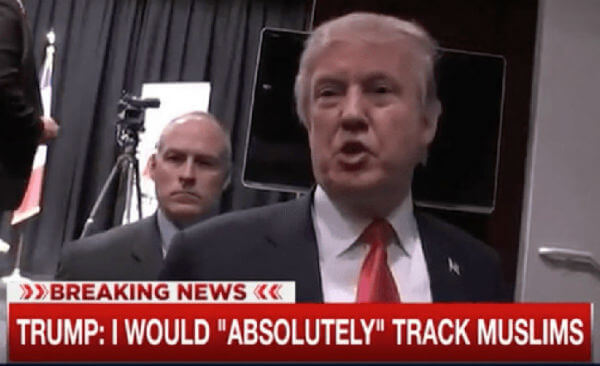
Trump just signed an executive order that singles out 200,000 Muslims as a potential threat to America.

Shortly after Trump signed this order, Alexandre Bissonnette, a vocal Trump supporter, known for his online attacks on refugees, went to a Quebec City mosque and carried out a mass shooting, killing six people and injuring 19 others.

As The Globe and Mail reports:

The suspect in the deadly attack on a Quebec City mosque was known in the city’s activist circles as an online troll who was inspired by extreme right-wing French nationalists, stood up for U.S. President Donald Trump and was against immigration to Quebec – especially by Muslims.

To fail to draw a connection between Trump’s campaign rhetoric, his choice of advisers, his executive order targeting Muslims and Bissonnette’s murderous rampage would be absurd.

In the hostile climate Trump has helped cultivate, there have been anti-mosque incidents in at least 41 states.

Within hours of Trump signing the executive order a mosque in Texas went up in flames.

The massacre in Canada could just as easily have happened in the United States. Indeed, the risk of a similar attack is so great that it seems less a case of if than when.

Donald Trump has promised to make America safe and yet through his words and actions has already done enough to suggest that the stable of Trump brands will sooner or later acquire one that he will vociferously disavow as a slur on his name: Trump terrorism.

That is not to suggest that Trump actually wants anyone to engage in acts of terrorism.

At the same time and for the same reasons as Alex Massie spelled out after Jo Cox’s murder in Britain last June, those who fuel anger cannot absolves themselves of responsibility for what follows:

When you encourage rage you cannot then feign surprise when people become enraged. You cannot turn around and say, ‘Mate, you weren’t supposed to take it so seriously. It’s just a game, just a ploy, a strategy for winning votes.’

When you shout BREAKING POINT over and over again, you don’t get to be surprised when someone breaks. When you present politics as a matter of life and death, as a question of national survival, don’t be surprised if someone takes you at your word. You didn’t make them do it, no, but you didn’t do much to stop it either.

Sometimes rhetoric has consequences. If you spend days, weeks, months, years telling people they are under threat, that their country has been stolen from them, that they have been betrayed and sold down the river, that their birthright has been pilfered, that their problem is they’re too slow to realise any of this is happening, that their problem is they’re not sufficiently mad as hell, then at some point, in some place, something or someone is going to snap. And then something terrible is going to happen.

Trump’s biggest lie is to promote the myth that the greatest threats to American lives reside outside this country’s borders.

Right now the very opposite is true as the most incendiary catalyst of violence sits in the Oval Office.

Facebooktwittermail

This Trump petition shows UK citizens will not bend a knee to hate

Suzanne Moore writes: If you had told me a few months back I would be encouraging people to sign a petition to prevent embarrassment being caused to the Queen, I would have laughed. Petitions are so overused these days that they can seem meaningless – and surely there are bigger issues at stake than the feelings of the monarch. But that was before Donald Trump and his decency-shredding goons were in power, before this shameful Muslim ban. These are not normal times – despite our government and much of our press pretending that they are. It is good to see that Trump is being fought on every level from huge marches, to spontaneous demonstrations to legal challenges. This petition is another small front. It is not an attempt to ban Trump, it simply asks that he does not make a state visit, that the red carpet is not rolled out for him. It says a state visit could cause the Queen “embarrassment”.

This is a smart move because Trump does care about pomp, ceremony and hierarchy. Symbolism matters more to him than reality. Never accepted socially in the upper echelons of American society, it matters hugely that he is now seen with those his supporters recognise as important. He kept the menu from his dinner with Theresa May remember, as a reminder that he’d “had lunch with the British prime minister”.

Embracing him with the royal flummery would signal to his base that this country held him in high regard, that he was head of a respected government. Both these things are untrue. May’s embarrassing renewal of the vows of the special relationship didn’t even amount to a one-night stand. As soon as she had got on the plane he was signing this vile executive order. The ban on people from seven Muslim-majority countries is a domestic policy to play to his racist base. It has nothing to do with terrorism, but some of those who would support it would also enjoy seeing him all puffed up hanging out with the Queen. [Continue reading…]

Facebooktwittermail

Trump’s ban could kneecap the war on ISIS

Kimberly Dozier writes: Team Trump’s travel ban, or pause, or whatever reverse politically correct term you want to call it, has sparked simmering fury among America’s Muslim allies. The media splash meant to show that President Donald Trump means business about keeping America safe, and keeping his campaign promises, is ironically damaging the very campaign against terrorism he wants to put into overdrive.

Key allies in the fight against the so-called Islamic State are dumbfounded, but few are making official statements, unwilling to pick a fight with the pugnacious new White House.

Iraqi parliamentarians have called for similar bans against U.S. citizens, and Iranian-backed militia groups have called for American troops to be ejected from their country.

But the Iraqi government, managing a fragile and fractious multi-ethnic coalition against ISIS, is treading carefully. Government spokesman Saad al-Hadithi told the AP that Iraqis are hoping the “measures will be temporary and for regulatory reasons and not permanent at least for Iraq.”

Other allies? Not so diplomatic.

“This is an insult to us all,” said one Afghan official reached Sunday. “To treat all as terrorists is not what inspires support and confidence among friends.” [Continue reading…]

Facebooktwittermail

Quebec City mosque attack suspect known for right-wing online posts and support of Trump

The Globe and Mail reports: The suspect in the deadly attack on a Quebec City mosque was known in the city’s activist circles as a right-wing troll who frequently took anti-foreigner and anti-feminist positions and stood up for U.S. President Donald Trump.

Alexandre Bissonnette, 27, a student at Laval University who lived on a quiet crescent in the Cap-Rouge suburb of Quebec City, faces six counts of first-degree murder for a shooting that killed six people and wounded 19 others. Police initially arrested a person they considered a second suspect but they later backtracked, saying he was a witness.

Mr. Bissonnette’s online profile and school friendships revealed little interest in extremist politics until last March when French nationalist leader Marine Le Pen visited Quebec City and inspired Mr. Bissonnette to vocal extreme online activism, according to people who clashed with him.

Vincent Boissoneault, a student in international relations at Laval University, grew up with Mr. Bissonnette and was friends with him on Facebook. He said they frequently clashed on politics when Mr. Bissonnette attacked refugees or expressed support for Ms. Le Pen or Mr. Trump. [Continue reading…]

Facebooktwittermail

Quebec City gunman ‘likes’ Donald Trump, Marine Le Pen, and the Israel Defense Forces

The gunman accused of killing six people and wounding eight others in what Canada’s Prime Minister Justin Trudeau described as a “terrorist attack on Muslims” at a Quebec City mosque on Sunday night, has been identified as Alexandre Bissonnette. He has been arrested and is being questioned by the Quebec Provincial Police.

Bissonnette’s motives for the attack remain unknown but there are clues about his political leanings from his Facebook page. This much appears indisputable: his hatred of Muslims.

Heavy reports: Bissonnette likes the Facebook pages of U.S. President Donald Trump and French far-right leader Marine Le Pen, but he does not express support for them elsewhere on his page. Other likes include the Israel Defense Forces, United With Israel and Parti Québécois of Université Laval.

He also likes U.S. Senator John McCain, a moderate Republican who has opposed Trump on some issues, President George W. Bush, the Canadian New Democratic Party and late Canadian politician Jack Layton, who was a leader of the left-wing NDP, so the likes do not shed much light on Bissonnette’s beliefs. [Continue reading…]

Facebooktwittermail

Merkel ‘explains’ refugee convention to Trump in phone call

The Guardian reports: Donald Trump’s executive order to halt travel from seven Muslim-majority countries – Iraq, Syria, Iran, Yemen, Sudan, Libya and Somalia – has provoked a wave of concern and condemnation from international leaders and politicians.

A spokesman for Angela Merkel said the German chancellor regretted Trump’s decision to ban citizens of certain countries from entering the US, adding that she had “explained” the obligations of the Geneva refugee convention to the new president in a phone call on Saturday.

“The chancellor regrets the US government’s entry ban against refugees and the citizens of certain countries,” Merkel’s spokesman Steffen Seibert said in a statement.

“She is convinced that the necessary, decisive battle against terrorism does not justify a general suspicion against people of a certain origin or a certain religion.

“The Geneva refugee convention requires the international community to take in war refugees on humanitarian grounds. All signatory states are obligated to do. The German government explained this policy in their call yesterday.” [Continue reading…]

Facebooktwittermail

Trump’s relations with Putin warm unlike those with European leaders

The New York Times reports: President Trump began a new era of diplomacy with Russia on Saturday as he and President Vladimir V. Putin conducted an hourlong telephone call, and vowed to repair relations between the countries after nearly three years of conflict that threatened a new Cold War between East and West.

The two leaders discussed fighting terrorism and expanding economic ties, but barely mentioned the wedge that has been driven between Washington and Moscow since Russia annexed Crimea and sponsored a separatist war in eastern Ukraine in 2014. Still, although Mr. Trump had previously expressed a willingness to lift sanctions against Russia, the issue did not come up, according to officials on both sides.

The tone of the conversation was reported to be warm, indicating a drastic shift after relations had broken down between Mr. Putin and former President Barack Obama. “The positive call was a significant start to improving the relationship between the United States and Russia that is in need of repair,” the Trump administration said in a statement. “Both President Trump and President Putin are hopeful that after today’s call, the two sides can move quickly to tackle terrorism and other important issues of mutual concern.”

In its statement, the Kremlin said: “Donald Trump asked to convey a desire for happiness and prosperity for the Russian people, noting that the people in America relate with sympathy to Russia and its citizens.” Mr. Putin answered that Russians feel the same way about Americans, the statement said. Neither side mentioned the Russian hacking of the American election in their statements.

Over the past two days, Mr. Trump has also had a series of conversations with the United States’ traditional European allies, but those calls were seemingly not as congenial. After a meeting on Friday with Prime Minister Theresa May of Britain, in which she warned against removing sanctions on Russia, Mr. Trump had on Saturday what appeared to be a businesslike call with Chancellor Angela Merkel of Germany, and a testier call with President François Hollande of France.

Mr. Hollande’s office said the French president pressed Mr. Trump not to lift sanctions against Russia and to respect the nuclear agreement with Iran. He asserted the importance of the Paris climate change pact, warned of the consequences of protectionism, and added that democratic values included welcoming refugees — all in reaction to Mr. Trump’s first week of policy moves. Mr. Hollande also emphasized the importance of NATO and the United Nations, both of which Mr. Trump has disparaged. [Continue reading…]

Facebooktwittermail

Ban could hurt U.S.-Iraqi ties, diplomats say

The Wall Street Journal reports: President Donald Trump’s inclusion of Iraq in the temporary ban on foreign nationals entering the U.S. has alarmed American diplomats who warn it risks upending delicate military, political and business ties at a time when Islamic State is on the cusp of defeat in the country.

The backlash over the executive order intensified on Sunday with Iraqi lawmakers calling on their own government to retaliate by banning U.S. citizens from entering Iraq. Influential Iran-backed Shiite militias, which are helping fight the Sunni extremists of Islamic State, went one step further by urging that Americans in the country now be expelled.

A memo sent by the U.S. Embassy in Baghdad to the State Department and reviewed by The Wall Street Journal showed that diplomats appeared blindsided by the order issued on Friday and its breadth. They said it would be felt disproportionately in Iraq and urgently warned that it could have do lasting harm to bilateral relations in the one nation on the list that the U.S. considers a close ally.

The memo, dated Saturday, detailed a list of potential repercussions that could arise from Mr. Trump’s order. For example, it said, a top Iraqi general leading the fight against Islamic State would be unable to visit family in the U.S.

American-led airstrikes have been supporting an array of allied Iraqi forces in a critical battle to drive Islamic State out of the major city of Mosul. U.S. troops are closely advising Iraqi forces on the ground.

Also, General Electric Co. won’t be able to host Iraqi delegates in the U.S. as part of a recently expanded $2 billion energy deal, the memo said. General Electric didn’t immediately comment.

The memo also flagged the fate of some 62,000 Iraqi applicants for a special relocation program for aiding the U.S.; the perception that the U.S. is abandoning vulnerable minorities; and the safety and mobility of thousands of American diplomatic staff and private contractors in the country. [Continue reading…]

Facebooktwittermail

Corbyn: May will be failing Britons if Trump visit goes ahead

The Guardian reports: Jeremy Corbyn has told Theresa May she will be “failing the British people” if she does not cancel Donald Trump’s state visit in the wake of the US president’s ban on people from seven Muslim-majority countries entering the US.

Corbyn told the Guardian the summer visit should be called off if Trump’s indefinite ban on Syrian refugees remains in place, even if time-limited restrictions put in place have lapsed by then.

“Donald Trump should not be welcomed to Britain while he abuses our shared values with his shameful Muslim ban and attacks on refugees’ and women’s rights,” he said.

“Theresa May would be failing the British people if she does not postpone the state visit and condemn Trump’s actions in the clearest terms. That’s what Britain expects and deserves.”

With Tim Farron, the Liberal Democrat leader, also calling for the visit to be cancelled, May was under pressure on Sunday to make a stronger condemnation of Trump’s ban, which has brought global condemnation and prompted travel and legal chaos within the US. [Continue reading…]

BBC political correspondent, Susana Mendonca, writes: Before all the hand holding and pally smiles, Theresa May promised the world she would not be afraid to tell Donald Trump what she thought when she disagreed with him. It didn’t take long for her to stumble at the first hurdle.

Downing Street later said the prime minister didn’t agree with Mr Trump’s approach. And her Chief Secretary to the Treasury also said she was not the kind of politician to “shoot from the hip”.

But this tougher stance only came after wide criticism of her failure to condemn the president in the first place.

Iraqi-born MP Nadhim Zahawi said he would also be banned from the US; fellow Conservative Heidi Allen said she didn’t care how “special” the relationship was, some lines shouldn’t be crossed.

And that’s the trouble for Theresa May. Donald Trump is bound to cross yet more lines, and if she doesn’t criticise him she’ll look like the weak partner obeying the powerful one.

The real question for her will be whether keeping Mr Trump sweet in the interests of getting a good trade deal for Britain is worth the backlash she’ll get for not being candid enough when she and Britain disagrees with him.

Labour Mayor of London Sadiq Khan said he was pleased the prime minister “has now said she and the government do not agree” with the policy – which Mr Khan described as “shameful”.

“As a nation that, like the USA, values tolerance, diversity and freedom, we cannot just shrug our shoulders and say: ‘It’s not our problem’.”

Labour’s former deputy leader Harriet Harman told the BBC: “I was horrified when he announced this ban on people from Muslim countries.

“And three times – once, twice, three times – [Mrs May] said: ‘Oh it’s nothing to do with me.’ Well, it is to do with us, as we all know. And she obviously has to be careful as prime minister – but she needs to be strong as well. So I was really disappointed – I hope she’s learnt some lessons.”

Meanwhile, an appeal to raise funds for a Glasgow vet caught up in the American flight ban has raised enough to pay for her tickets home just a few hours after being launched. [Continue reading…]

The Guardian reports: Hamaseh Tayari, a UK resident who holds an Iranian passport, has been on holiday in Costa Rica with her boyfriend for the last week. She was due to fly back to Glasgow, where she works as a vet, this morning but was denied entry onto the flight because her flight went via New York and she would need a transit visa, which was revoked.

Tayari, who grew up in Italy, has never experienced anything like this. She says: “This has really shocked me. We just discovered [what Trump did] at the airport when we went to check in. I want people to know that this is not just happening to refugees. I am a graduate and I have a PhD. It has happened to a person who is working and who pays tax.”

Tayari and her boyfriend are trying to find an alternative route home. A flight to Madrid on the 30 January will cost them £2,000 and they’ll still have to find a way from there to Glasgow. “We had been saving for months for this holiday and it will cost me a month’s salary just to get home,” she said.

“I am destroyed. I did not know that I could cry for so long. It feels like the beginning of the end. How this is possible? I am really afraid about what is going on.”

British Conservative MP Nadhim Zahawi, who was born in Iraq, interviewed on the BBC:


Sadly, it’s a bit late in the day for Zahawi to have recognized the importance of freedom of movement. Last March, sounding very much like Trump, the MP tweeted in support of Brexit:


Another Brexiter, now Britain’s foreign secretary, Boris Johnson, is now speaking out in defense of freedom of movement:

Facebooktwittermail
