Category Archives: Lands

The success of Tunisian secularists might not be advancing democracy

Monica Marks writes: A self-styled, secular, modernist party called Nidaa Tounes won against the Islamist Ennahda party in the Tunisian election this week. For many, the subsequent headline – “Secularist party wins Tunisia elections” – will seem more impressive than the fact Tunisia just completed its second genuinely competitive, peaceful elections since 2011.

Indeed, in a region wracked by extremism and civil war, the secularists’ victory will strike many as further proof that Tunisia is moving forward and is the sole bright spot in a gloomy region. Some may prematurely celebrate, yet again, the death of political Islam, arguing that Tunisians achieved through the ballot box what Egyptians achieved through a popular coup, rejecting the Brotherhood and its cousin-like movements once and for all. We should exercise caution, however, in labelling Nidaa Tounes’s victory part of a seamless sweep of democratic achievements, or seeing Sunday’s vote as a clear referendum against all varieties of political Islam.

Despite feeling kinship with the party because of its secular label, westerners understand surprisingly little about Nidaa Tounes, mainly because they’ve tended to hold the magnifying glass of critical inquiry up to Islamists but not secularists over the past three years. Counter-intuitively, Nidaa Tounes’s internal structure is noticeably more authoritarian than Ennahda, which boasts representative decision-making structures from its grassroots to national leadership. [Continue reading…]

Facebooktwittermail

The collapse of order in the Middle East

freemanIn a speech delivered in Washington DC today, Chas Freeman said: Da`ish [ISIS] and the 15,000 foreign jihadis it has attracted are an existential threat to Arab societies and a potential menace to Muslim societies everywhere. Da`ish poses no comparable threat to the United States. Some Americans argue therefore that Da`ish doesn’t matter. A few suggest that, because tight oil and shale gas production is making North America energy self-sufficient, what happens in the Middle East as a whole should also no longer matter much to Americans. But the Persian Gulf is where international oil prices are set. If you doubt this, ask an American tight oil producer what’s happening in today’s energy markets and why. Without stability in West Asia, the global economy is also unstable.

Da`ish aspires not only to destroy the states of the Mashriq – the Arab East – but to conquer their territories and use their resources to mount attacks on the United States, European countries, Russia, and China. It wants to get its hands on the world’s major energy reserves. Its depredations are a current threat only to stability in West Asia, but its recruitment efforts are as global as its aspirations. Quite aside from the responsibility the United States bears for creating the conditions in which this dangerous cult could be born and flourish, Da`ish threatens American interests abroad today. It promises to threaten American domestic tranquility tomorrow. It sees inflicting harm on the West as a central element of its mission.

For all these reasons, Da`ish cannot be ignored by the United States or other nations outside the Middle East. It requires a response from us. But Da`ish must be actively countered first and foremost by those it targets within the region, not by the United States and its Western allies. This means that our response must be measured, limited, and calculated to avoid relieving regional players of the primary responsibility for protecting themselves from the menace to them that Da`ish represents.

Muslims – whether Shiite or Sunni or Arab, Kurd, Persian, or Turk – now have an expanding piece of Hell in their part of the Earth, a growing foulness near the center of Islam. It is almost certainly a greater threat to all of them than they have ever posed to each other. Da`ish will not be contained and defeated unless the nations and sects on its regional target list – Shiite and Sunni alike – all do their part. We should not delude ourselves. The obstacles to this happening are formidable.

Virtually every group now fighting or being victimized in Iraq, Syria, and Lebanon has engaged in or been accused of terrorism by the others. Sectarian violence continues to stoke hatred in the region. The religious animosities between Shi`ites and Sunnis are more intense than ever. The geopolitical rivalry between Iran and the Gulf Arabs remains acute. The political resentments between Turks, Kurds, and Arabs and between Arabs and Persians are entrenched. Each describes the other as part of the problem, not part of the solution.

Unity of command, discipline, and morale are the keys to both military and political success. Da`ish has all three. Its opponents do not. Some are dedicated to the defense of Shiite privilege. Others assign priority to dislodging Shiite or secular authority. Some insist on regime change. Others seek to prevent it. A few support Islamist democratic movements. Others seek to suppress and eradicate them. Some fear terrorism from the victims and enemies of Da`ish more than they fear Da`ish itself. Most treat opposing Da`ish as a secondary strategic objective or a means of enlisting American and other foreign support in the achievement of other priorities, not as their primary aim.

With few exceptions, the states of the region have habitually looked to outside powers for leadership as well as firepower and manpower with which to respond to major security challenges. Despite vast imports of foreign weapons systems, confidence in outside backing has enabled the countries in the region to assume that they could avoid ultimate responsibility for their own defense, relying instead on their ability to summon their American and European security partners in times of crisis. But only a coalition with a strong Muslim identity can hope to contain and shrink Da`ish.

There is no such coalition at present. Every actor in the region has an agenda that is only partially congruent with the Da`ish-related agendas of others. And every actor focuses on the reasons it cannot abide or work with some or all of the others, not on exploring the points it has in common with them. [Continue reading…]

Facebooktwittermail

The crisis in U.S.-Israel relations is officially here

Jeffrey Goldberg writes: The other day I was talking to a senior Obama administration official about the foreign leader who seems to frustrate the White House and the State Department the most. “The thing about Bibi is, he’s a chickenshit,” this official said, referring to the Israeli prime minister, Benjamin Netanyahu, by his nickname.

This comment is representative of the gloves-off manner in which American and Israeli officials now talk about each other behind closed doors, and is yet another sign that relations between the Obama and Netanyahu governments have moved toward a full-blown crisis. The relationship between these two administrations— dual guarantors of the putatively “unbreakable” bond between the U.S. and Israel—is now the worst it’s ever been, and it stands to get significantly worse after the November midterm elections. By next year, the Obama administration may actually withdraw diplomatic cover for Israel at the United Nations, but even before that, both sides are expecting a showdown over Iran, should an agreement be reached about the future of its nuclear program.

The fault for this breakdown in relations can be assigned in good part to the junior partner in the relationship, Netanyahu, and in particular, to the behavior of his cabinet. Netanyahu has told several people I’ve spoken to in recent days that he has “written off” the Obama administration, and plans to speak directly to Congress and to the American people should an Iran nuclear deal be reached. For their part, Obama administration officials express, in the words of one official, a “red-hot anger” at Netanyahu for pursuing settlement policies on the West Bank, and building policies in Jerusalem, that they believe have fatally undermined Secretary of State John Kerry’s peace process.

Over the years, Obama administration officials have described Netanyahu to me as recalcitrant, myopic, reactionary, obtuse, blustering, pompous, and “Aspergery.” (These are verbatim descriptions; I keep a running list.) But I had not previously heard Netanyahu described as a “chickenshit.” [Continue reading…]

Facebooktwittermail

Kurdish women in Kobane are fighting for the rights of women everywhere

Meysa Abdo, the commander of the YPG Kurdish resistance in Kobane (she is also known by the nom de guerre Narin Afrin) writes: Since Sept. 15, we, the people of the Syrian town of Kobani, have been fighting, outnumbered and outgunned, against an all-out assault by the army of the Islamic State, also known as ISIS.

Yet despite a campaign that has intensified in the past month, including the deployment of United States-made tanks and armored vehicles, the Islamic State has not been able to break the resistance of Kobani’s fighters.

We are defending a democratic, secular society of Kurds, Arabs, Muslims and Christians who all face an imminent massacre.

Kobani’s resistance has mobilized our entire society, and many of its leaders, including myself, are women. Those of us on the front lines are well aware of the Islamic State’s treatment of women. We expect women around the world to help us, because we are fighting for the rights of women everywhere. We do not expect them to come to join our fight here (though we would be proud if any did). But we do ask women to promote our case and to raise awareness of our situation in their own countries, and to pressure their governments to help us.

We are thankful to the coalition for its intensified airstrikes against Islamic State positions, which have been instrumental in limiting the ability of our enemies to use tanks and heavy artillery. But we had been fighting without any logistical assistance from the outside world until the limited coalition airdrops of weapons and supplies on Oct. 20. Airdrops of supplies should continue, so that we do not run out of ammunition.

None of that changes the reality that our weapons still cannot match those of the Islamic State. [Continue reading…]

Facebooktwittermail

How the Left abandoned the Kurds by getting stuck up its anti-imperialist cul-de-sac

Yasin Sunca writes: One can simply put hundreds of reasons as to why the left has to oppose and react against the ISIS and what they have been doing to innocent people throughout last two years. However, those who are supposed to speak out against the ISIS, primarily the left wing parties and organisations, have simply failed to come up with a comprehensive approach, are even devoid of understanding what is going on exactly and, unfortunately for them, are stuck in the orthodox interpretation of socialism against imperialism. They have once again stuck to the marginal track to blame their respective governments as imperialist, which in fact, means almost nothing, either for the government or for the society.

In the specific case of the ongoing resistance of the Kurds in Rojava (Syrian Kurdistan) the Popular Protection Units (YPG) have been resisting against both the brutal attacks of the jihadists and the military aggressions of the Syrian regime. The Kurds have not opted for cooperation either with the regime or the mainstream opposition groups due to very convincing and understandable reasons. The regime has been oppressing the Kurds, among others, for a very long time and therefore, it was impossible for the Kurds to go along with the regime politically. However, facing political and military difficulties in the context of the ongoing war, the regime decided to focus on the strategic areas in their war with the opposition groups and intelligibly, have not carried out heavy military offensives against the Kurdish self-declared cantons, compared to other regions of the country. Furthermore, the declaration of the Kurdish cantons in Rojava would pose certain problems to Turkey which has been amongst the most vocally critical countries of the Syrian regime. Thus, we can talk about a political convergence between the regime and the Kurds rather than a strategically motivated agreement. Besides, the Kurds could not have cooperated with the mainline Syrian opposition because of two core issues. The first, the Arab opposition have not recognised any collective rights of the Kurds and postponed all Kurdish demands to a probable post-Assad period. The second, the Arab opposition did not have a clear agenda for the future of Syria. The question such as whether it would be a new dictatorship or a democracy has not a clear and convincing answer and the Kurds remained sceptical about the will of the opposition in relation to democratisation.

Taking all this background into account, the Kurds opted for a third line policy and started to build their cantons with a new democratic understanding, inclusive of all the different factions of the population. The Kurdish cantons have never carried out any offensives against any group unless a military attack was the case. The current resistance of the Kobane canton is due to the brutal attack of the jihadist ISIS and it is a war of self-defence. The Kurds are carrying out a socialist experiment in the Middle-East, one of the most challenging regions of the world, and the international left is equally responsible for the protection of this emerging socialist hope. This experiment needs the unconditional support of the socialists of the world and internationalist solidarity. (For those who are interested in the new model in Rojava here is an article, available online: http://roarmag.org/2014/07/rojava-autonomy-syrian-kurds/)

However, the left wing parties and groups in Europe are far from understanding what is going on exactly in Kurdistan and in Kobane, nor do they have any plans to understand the ideological background of the Rojava Cantons. They have to admit that they were unable to understand the third line policy and, just like the mainstream media have been doing, positioned the Kurds together with the Assad regime despite the fact that the Kurds clearly declaring and practically manifesting a billion times that they are an opposition group. They kept on blaming the Kurds to be the proxy of the regime. Besides, some other groups adopted a restrictive approach and claimed that if the Kurds are not with Bashar al-Assad then they have to be with the opposition. Yet one should remind people of the fact that being against the regime doesn’t automatically mean accepting all analyses and projections of the mainline opposition in Syria. Moreover, the mainline opposition in Syria is also supported by “imperialists” against the regime. So, the Kurds clearly understood the right place to stand was a third line. [Continue reading…]

Facebooktwittermail

‘Rehana is alive and well… ISIS fanatics have NOT beheaded her’

The Daily Mail reports: The female Kurdish fighter who became a poster girl for the Kobane resistance before allegedly being beheaded by Islamic State militants is actually alive and well, it was claimed today.

The woman, known by the pseudonym Rehana, was celebrated as a symbol of hope for the besieged Syrian border city after an image of her making a peace sign was retweeted over 5,000 times.

That picture was followed days later by a gruesome photograph of an ISIS terrorist holding the severed head of a young woman, sparking rumours that Rehana had been savagely murdered.

This is one of those moments when it remains to be seen whether the collective intelligence of the users of social media will be able to rise to the occasion.

That Rehana is alive — if this is true — is of course good news. But the photos of an ISIS fighter holding aloft the head of a Kurdish young woman fighter were most likely authentic — that young woman simply happened not to be one who had previously been turned into a “poster girl.”

Let’s not forget that the life as the unknown soldier is worth no less than that of the social-media celebrity.

Facebooktwittermail

Peshmerga on route to Kobane

Rudaw reports: Peshmerga from the Kurdistan Region of Iraq will arrive in Kobane in the early hours of Wednesday to help defenders of the Syrian border town fight off an Islamic State assault that has lasted more than 40 days, according to informed sources.

Part of the 150-strong Peshmerga artillery force were flying from Erbil to Turkey, from where they will cross to Kobane. Others will travel by road, accompanying trucks, guns, and other heavy weapons with which they hope to help defeat the ISIS siege.

The deployment of the Kurdish soldiers comes after being delayed for two days of negotiations with Turkey, through whose territory they must pass to reach Kobane, which lies just across the Turkish frontier.

Facebooktwittermail

How Israel is turning Gaza into a super-max prison

Jonathan Cook writes: It is astonishing that the reconstruction of Gaza, bombed into the Stone Age according to the explicit goals of an Israeli military doctrine known as “Dahiya”, has tentatively only just begun two months after the end of the fighting.

According to the United Nations, 100,000 homes have been destroyed or damaged, leaving 600,000 Palestinians – nearly one in three of Gaza’s population – homeless or in urgent need of humanitarian help.

Roads, schools and the electricity plant to power water and sewerage systems are in ruins. The cold and wet of winter are approaching. Aid agency Oxfam warns that at the current rate of progress it may take 50 years to rebuild Gaza.

Where else in the world apart from the Palestinian territories would the international community stand by idly as so many people suffer – and not from a random act of God but willed by fellow humans? [Continue reading…]

Where else?

How about Lebanon, buckling under the strain of supporting 1.5 million Syrian refugees and where 200,000 children are being forced to work in a situation “perilously close to slave labour.”

I point this out not to diminish concern about the plight of Palestinians in Gaza, but because among pro-Palestinian activists in the West, a myopic fixation on those who have suffered at the hands of Israelis has often come with an apparent indifference towards those whose misery was precipitated by the brutal rule of one of Israel’s next door neighbors.

How much concern there is about those who suffer sometimes appears to depend on who caused the suffering.

Facebooktwittermail

Studs Terkel on death and forgiveness in America

Studs Terkel, who put oral history on the American map with one spectacular book after another, was a small man who had a knack for making everyone around him feel larger than life. He taught me the first significant lesson I learned as a book editor — and he didn’t even know it. I stumbled into Pantheon Books in the summer of 1976, hired (on the basis of remarkably little) by André Schiffrin, who ran that pioneering publishing outfit. I had only the most minimal idea of what a book editor was or did, but on one thing I was clear: I was going to put new voices between covers. (I would later start calling them “voices from elsewhere, even when the elsewhere is here.”) I couldn’t have been less interested in well known or famous writers. I was, that is, something of a reverse snob.

Nonetheless, one day that first fall André came into my office with the manuscript of Stud Terkel’s memoir, Talking to Myself, which was to be published the following spring. He asked me to read it because Studs — he claimed — wanted my reaction. A longtime Chicago radio personality, who had even hosted an early, unscripted TV show, “Studs’ Place,” set in a fictional bar (the “Cheers” of its era), he was well known indeed. The first book he and André had done together, Division Street: America, had broken into bestsellerdom and neither of them had ever looked back.

Studs didn’t know me from a hole in the wall, so I didn’t take the request seriously until André returned a few days later to ask whether I had read the manuscript. I hadn’t. He said, “Please do. Studs is waiting anxiously.” Anxiously? That was hard to imagine, but when your boss insists… so I went home, read it, and two days later let him know what I thought. (What could you think, given that Studs was fantastic at what he did?) Soon after, he put me on the phone with Studs to tell him just how good it was and make a few modest, last-minute suggestions.

So many years later, I still remember that unforgettable voice (possibly the last on Earth out of which a cigar emerged) saying something like, “Do you really mean it, Tom?” What I’ll specifically never forget was the quaver in it, the shiver that seemed like a caricature of fear. After all, he was the best-known author I’d ever talked to and, as a young man with enough doubts of my own, it had never crossed my mind that a successful writer might feel vulnerable when it came to his latest work or give a damn about the opinion of a total nobody. In a way, that moment taught me everything I needed to know about the essential vulnerability of the writer and, thanks to Studs, I never looked back.

For years, André, who was his editor, would call me in to take a final look at his oral histories. (It was like sending in the second team.) Only after I left Pantheon did I became Studs’ primary editor. It was the experience of a lifetime. Just to give you a little taste of the man, I’m including excerpts from the only letter of his I still have, typed by hand, filled with X’d out words, and further hand-corrected in pen. It came with the first batch of rough interviews for the final book we worked on together, an oral history of political activism aptly titled Hope Dies Last. By that time, Studs was in his early nineties and still a human dynamo.  Maxwell Perkins, whom he mentions, was a famed editor who joined the venerable firm of Scribner’s wanting to publish vibrant young voices and ended up working with, among others, F. Scott Fitzgerald, Ernest Hemingway, and most famously the novelist Thomas Wolfe who simply couldn’t stop writing, which meant that his books involved marathon bouts of editing. Here, then, are the first two paragraphs of that letter in his telegraphese.

“Post-election day,” Studs began. “A hell of a time to write about hope… The ton of stuff — good and less than good. Since what you have is the raw stuff — I have already tossed aside about 20 [interviews] — I shall, of course, begin my cuts shortly after you receive this messy letter.

“You’ll be my Maxwell Perkins, though you don’t wear a hat, and I’m your Thomas Wolfe, though a foot and a half shorter than he was…”

And here’s how he ended: “I’m eagerly looking forward to your reactions when you get this bundle. Horrified [though] you may be by its bulk, remember you’re my Maxwell Perkins. If it works out, I’ll buy you a hat.”

What a guy (even if I never got that hat)! I always considered it appropriately Studsian that the book preceding Hope Dies Last was his oral history of death, Will the Circle Be Unbroken?: Reflections on Death, Rebirth, and Hunger for a Faith. Studs himself died in 2008. Circle has just been reissued in paperback with a new Jane Gross introduction by the New Press, the publishing house that André, who died last December, set up after he was forced out of Pantheon by Sy Newhouse, the right-wing owner of its parent company, Random House.

Given the grim panorama of death these days — from beheadings to pandemics — and the hysteria accompanying it all, I thought it might be both a relief and a change of pace at TomDispatch to turn back to Studs’ oral history of death, which as its editor I can testify is moving and uncannily uplifting. That, of course, is not as odd as it sounds from the man who was the troubadour for the extraordinary ordinary American. Thanks to the kindness of his publisher, the New Press, I’ve chosen two interviews from that book which stayed in my mind these last 13 years: the first focuses on an impulse that may be among the hardest to understand and yet most moving to encounter, forgiveness; and the second, from this country’s medical front lines, centers on a subject that, unfortunately, is still all too timely: the trauma deaths of young Americans from gunshot wounds. This is the only book I ever remember editing while, in some cases, crying. Tom Engelhardt

“You got into my heart violently, but you’re there”
Trauma, death, and forgiveness on the front lines of American life
By Studs Terkel

[The following is excerpted from the new paperback edition of Studs Terkel’s oral history of death, Will The Circle Be Unbroken?: Reflections on Death, Rebirth, and Hunger for a Faith, with special thanks to his publisher, the New Press.]

“The Other Son”
Maurine Young

In contrast to her husband’s introspective nature, she is outgoing, a large-boned woman, overflowing with gusto and ebullience. She frequently laughs out loud.

I’m a forty-six-year-old woman of Jewish-Gentile descent — my father’s a Jew, my mother’s a Gentile. My parents divorced when I was young, and I was raised by my stepfather — raised Catholic. He was a truck driver. My younger brother, Mark, became a truck driver. I went to public school. But I went to the Catholic catechism every Wednesday. I did the confirmation and all that kind of stuff. I got close to age twelve, thirteen, and I began to see what I was saved from. I was saved from Hell. But what Catholicism wasn’t teaching me was what I was saved to. They didn’t tell me how to live with God and experience a taste of Heaven on Earth, now. So I began to pull away from the Church. It just didn’t meet my needs.

Continue reading

Facebooktwittermail

An army of child soldiers being raised by ISIS

Kate Brannen writes: They stand in the front row at public beheadings and crucifixions held in Raqqa, the Islamic State’s stronghold in Syria. They’re used for blood transfusions when Islamic State fighters are injured. They are paid to inform on people who are disloyal or speak out against the Islamic State. They are trained to become suicide bombers. They are children as young as 6 years old, and they are being transformed into the Islamic State’s soldiers of the future.

The Islamic State has put in place a far-reaching and well-organized system for recruiting children, indoctrinating them with the group’s extremist beliefs, and then teaching them rudimentary fighting skills. The militants are preparing for a long war against the West, and hope the young warriors being trained today will still be fighting years from now.

While there are no hard figures for how many children are involved, refugee stories and evidence collected by the United Nations, human rights groups, and journalists suggest that the indoctrination and military training of children is widespread.

Child soldiers aren’t new to war. Dozens of African armies and militias use young boys as fighters, in part because research has shown that children lack fully formed moral compasses and can easily be persuaded to commit acts of cruelty and violence.

The young fighters of the Islamic State could pose a particularly dangerous long-term threat because they’re being kept away from their normal schools and instead inculcated with a steady diet of Islamist propaganda designed to dehumanize others and persuade them of the nobility of fighting and dying for their faith. [Continue reading…]

Facebooktwittermail

ISIS promotes hostage John Cantlie as its embedded reporter in Kobane

The Washington Post reports: In a remarkable new video released by the Islamic State militants, British hostage John Cantlie gives a tour of the Syrian city of Kobane and denounces Western coverage of the fighting in the city.

(Note: Our video team believes the first segment of may have been doctored.)

Cantlie, a photographer and journalist who was taken hostage in late 2012, has appeared in a number of propaganda videos for the Islamic State in recent months, usually in an orange jumpsuit in front of a plain black screen. However, the new video, released Monday via social media accounts linked to the Islamic State, appears markedly more professional than the previous ones. Notably, it appears to show Cantlie walking outside and animatedly discussing recent events.

The video also takes aim at a different target: Although previous videos appeared designed to criticize Western military action against the Islamic State, this time the main target appears to be Western media and their coverage of the situation in Kobane, where the Islamic State has battled for control against Kurdish militias. [Continue reading…]

Facebooktwittermail

The Kurdish vision of Democratic Confederalism

In the preface to Democratic Confederalism, published in English in 2011, the imprisoned PKK leader, Abdullah Ocalan, writes: For more than thirty years the Kurdistan Workers’ Party (PKK) has been struggling for the legitimate rights of the Kurdish people. Our struggle, our fight for liberation turned the Kurdish question into an international issue which affected the entire Middle East and brought a solution of the Kurdish question within reach.

When the PKK was formed in the 1970s the international ideological and political climate was characterized by the bipolar world of the Cold War and the conflict between the socialist and the capitalist camps. The PKK was inspired at that time by the rise of decolonialization movements all over the world. In this context we tried to find our own way in agreement with the particular situation in our homeland. The PKK never regarded the Kurdish question as a mere problem of ethnicity or nationhood.

Rather, we believed, it was the project of liberating the society and democratizing it. These aims increasingly determined our actions since the 1990s.

We also recognized a causal link between the Kurdish question and the global domination of the modern capitalist system. Without questioning and challenging this link a solution would not be possible. Otherwise we would only become involved in new dependencies.

So far, with a view to issues of ethnicity and nationhood like the Kurdish question, which have their roots deep in history and at the foundations of society, there seemed to be only one viable solution: the creation of a nation-state, which was the paradigm of the capitalist modernity at that time.

We did not believe, however, that any ready-made political blueprints would be able to sustainably improve the situation of the people in the Middle East. Had it not been nationalism and nation-states which had created so many problems in the Middle East?

Let us therefore take a closer look at the historical background of this paradigm and see whether we can map a solution that avoids the trap of nationalism and fits the situation of the Middle East better. [Continue reading…]

Facebooktwittermail

Inside Kobane

In this video, the squeaking in the background that sounds like birds chirping is actually coming from a rusty swing. The distant sounds of laughter and conversation from women — perhaps the same people on the swing, enjoying one of the recreations of childhood as daily life continues inside a war zone.


Facebooktwittermail

What ISIS hostages endured in Syria

The New York Times reports: The kidnappings, which were carried out by different groups of fighters jousting for influence and territory in Syria, became more frequent. In June 2013, four French journalists were abducted. In September, the militants grabbed three Spanish journalists.

Checkpoints became human nets, and last October, insurgents waited at one for Peter Kassig, 25, an emergency medical technician from Indianapolis who was delivering medical supplies. In December, Alan Henning, a British taxi driver, disappeared at another. Mr. Henning had cashed in his savings to buy a used ambulance, hoping to join an aid caravan to Syria. He was kidnapped 30 minutes after crossing into the country.

The last to vanish were five aid workers from Doctors Without Borders, who were plucked in January from the field hospital in rural Syria where they had been working.

At gunpoint, Mr. Sotloff and Mr. Abobaker were driven to a textile factory in a village outside Aleppo, Syria, where they were placed in separate cells. Mr. Abobaker, who was freed two weeks later, heard their captors take Mr. Sotloff into an adjoining room. Then he heard the Arabic-speaking interrogator say in English: “Password.”

It was a process to be repeated with several other hostages. The kidnappers seized their laptops, cellphones and cameras and demanded the passwords to their accounts. They scanned their Facebook timelines, their Skype chats, their image archives and their emails, looking for evidence of collusion with Western spy agencies and militaries.

“They took me to a building that was specifically for the interrogation,” said Marcin Suder, a 37-year-old Polish photojournalist kidnapped in July 2013 in Saraqib, Syria, where the jihadists were known to be operating. He was passed among several groups before managing to escape four months later.

“They checked my camera,” Mr. Suder said. “They checked my tablet. Then they undressed me completely. I was naked. They looked to see if there was a GPS chip under my skin or in my clothes. Then they started beating me. They Googled ‘Marcin Suder and C.I.A.,’ ‘Marcin Suder and K.G.B.’ They accused me of being a spy.”

Mr. Suder — who was never told the name of the group holding him, and who never met the other hostages because he escaped before they were transferred to the same location — remarked on the typically English vocabulary his interrogators had used.

During one session, they kept telling him he had been “naughty” — a word that hostages who were held with Mr. Foley also recalled their guards’ using during the most brutal torture.

It was in the course of these interrogations that the jihadists found images of American military personnel on Mr. Foley’s laptop, taken during his assignments in Afghanistan and Iraq.

“In the archive of photographs he had personally taken, there were images glorifying the American crusaders,” they wrote in an article published after Mr. Foley’s death. “Alas for James, this archive was with him at the time of his arrest.”

A British hostage, David Cawthorne Haines, was forced to acknowledge his military background: It was listed on his LinkedIn profile.

The militants also discovered that Mr. Kassig, the aid worker from Indiana, was a former Army Ranger and a veteran of the Iraq war. Both facts are easy to find online, because CNN featured Mr. Kassig’s humanitarian work prominently before his capture.

The punishment for any perceived offense was torture.

“You could see the scars on his ankles,” Jejoen Bontinck, 19, of Belgium, a teenage convert to Islam who spent three weeks in the summer of 2013 in the same cell as Mr. Foley, said of him. “He told me how they had chained his feet to a bar and then hung the bar so that he was upside down from the ceiling. Then they left him there.”

Mr. Bontinck, who was released late last year, spoke about his experiences for the first time for this article in his hometown, Antwerp, where he is one of 46 Belgian youths on trial on charges of belonging to a terrorist organization.

At first, the abuse did not appear to have a larger purpose. Nor did the jihadists seem to have a plan for their growing number of hostages.

Mr. Bontinck said Mr. Foley and Mr. Cantlie had first been held by the Nusra Front, a Qaeda affiliate. Their guards, an English-speaking trio whom they nicknamed “the Beatles,” seemed to take pleasure in brutalizing them.

Later, they were handed over to a group called the Mujahedeen Shura Council, led by French speakers. [Continue reading…]

Facebooktwittermail

Rory Fanning: Why do we keep thanking the troops?

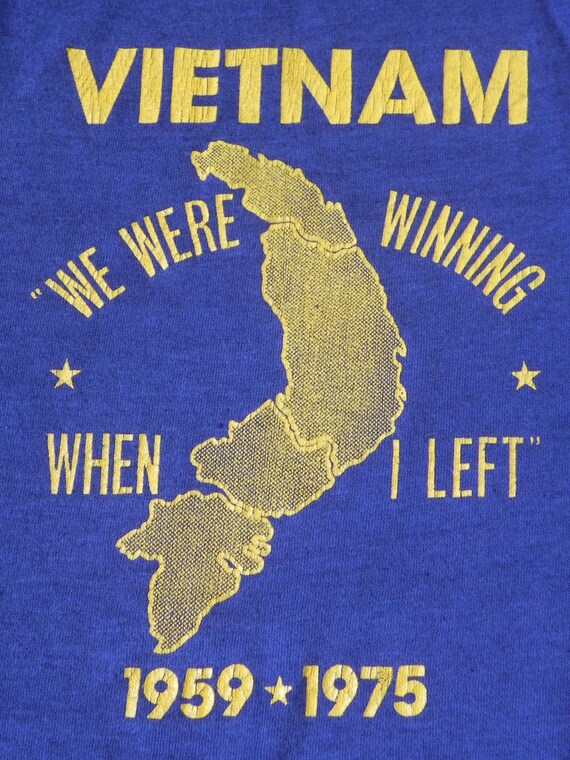
More than a few times I’ve found myself in a crowd of Vietnam veterans, and more than a few times at least one of them was wearing a curious blue or yellow t-shirt.  Once that shirt undoubtedly fit a lean physique of the late 1970s or early 1980s, but by the time I saw it modeled, in the 2000s, it was getting mighty snug.  Still, they refused to part with it.  On it was some variation of the outline of a map of Vietnam with bit of grim humor superimposed: “Participant, Southeast Asia War Games, 1961-1975: Second Place.”

I was always struck by it.  These men of the “Me Generation” had come home to the sneers and backhanded comments of the men of the “Greatest Generation,” their fathers’ era.  They had supposedly been the first Americans to lose a war.  However, instead of the defensive apparel donned by some vets (“We were winning when I left”), they wore their loss for all to see, pride mingling with a sardonic sense of humor.

Today’s military is made up of still another generation, the Millennials, representatives of the 80 million Americans born between 1980 and 2000.  In fact, with nearly 43% of the active duty force age 25 or younger and roughly 66% of it 30 or under, it’s one of the most Millennial-centric organizations around.

As a whole, the Millennials have been regularly pilloried in the press for being the “Participation Trophy Generation.”  Coddled, self-centered, with delusions of grandeur, they’re inveterate narcissists with outlandish expectations and a runaway sense of entitlement.  They demand everything, they’re addicted to social media, fast Wi-Fi, and phablets, they cry when criticized, they want praise on tap, and refuse to wear anything but their hoodies and “fuck you flip-flops” like the face of their generation, the Ur-millennial: Mark Zuckerberg!

At least that’s the knock on them. Then again, when didn’t prior generations knock the current one?

The National Institutes of Health did determine people in their 20s have Narcissistic Personality Disorder three times more often than those 65 or older and a recent survey by Reason and pollster Rupe did find that those 18-24 are indeed in favor of participation trophies unlike older Americans who overwhelmingly favor winnersonly prizes.  Still, it’s a little early to pass blanket judgment on an entire generation of whom the youngest members are only on the cusp of high school.  The Millennials may yet surprise even the most cantankerous coots. Time will tell.

The Millennial military, however, isn’t doing the generation any favors.  Despite its dismal record when it comes to winning wars and a recent magnification of its repeated failures in Iraq, today’s military seems to crave and demand that its soldiers, sailors, marines, and airmen be thanked and lauded at every turn.  As a result, the Pentagon is involved in stage-managing all manner of participation-trophy spectacles to make certain they are — from the ballpark to the NASCAR track to the Academy of Country Music’s “An All-Star Salute to the Troops” concert at the MGM Grand in Las Vegas earlier this year.

And like those great enablers of the Millennial trophy kids, so-called helicopter parents, the American public regularly provides cheap praise and empty valorization for veterans, writes Rory Fanning in TomDispatch debut.  A veteran of the war in Afghanistan — having served two tours with the 2nd Army Ranger Battalion before becoming a conscientious objector — Fanning explores America’s thank-you-for-your-service culture, what vets are actually being thanked for, and why Rihanna’s hollow patriotism left him depressed.  His moving new book, Worth Fighting For: An Army Ranger’s Journey Out of the Military and Across America, captures his 3,000-mile trek through and encounter with this country, an unforced march meant to honor Pat Tillman and question the nature of our recent wars.

I don’t get to hang out with Vietnam vets as much as I used to, but late one night a year or two ago I found myself with a few of them in an almost deserted bar.  Having ducked out of the annual meeting of a veterans’ group, we ordered some beers from a Millennial-age waiter.  He asked if my 60-something compatriots were attending the nearby conference and they mumbled that they indeed were.  The waiter seemed to momentarily straighten up.  “Thank you for your service,” he solemnly intoned before bounding off to get the beers.  One of veterans — a Marine who had seen his fair share of combat — commented on how much he hated that phrase.  “They do it reflexively.  That’s how they’ve been raised,” I replied.  “I hope they wise up,” said another of the vets.  Time — as with all things Millennial — will tell. Nick Turse

Thank you for your valor, thank you for your service, thank you, thank you, thank you…
Still on the thank-you tour-of-duty circuit, 13 years later
By Rory Fanning

Last week, in a quiet indie bookstore on the north side of Chicago, I saw the latest issue of Rolling Stone resting on a chrome-colored plastic table a few feet from a barista brewing a vanilla latte.  A cold October rain fell outside. A friend of mine grabbed the issue and began flipping through it. Knowing that I was a veteran, he said, “Hey, did you see this?” pointing to a news story that seemed more like an ad.  It read in part:

“This Veterans Day, Bruce Springsteen, Eminem, Rihanna, Dave Grohl, and Metallica will be among numerous artists who will head to the National Mall in Washington D.C. on November 11th for ‘The Concert For Valor,’ an all-star event that will pay tribute to armed services.”

“Concert For Valor? That sounds like something the North Korean government would organize,” I said as I typed Concertforvalor.com into my MacBook Pro looking for more information.

The sucking sound from the espresso maker was drowning out a 10-year-old Shins song. As I read, my heart sank, my shoulders slumped.

Continue reading

Facebooktwittermail

The revolutionary thinking behind the fight in Kobane

Adam Curtis writes: In the battle for Kobane on the Syrian border everyone talks about the enemy – IS – and the frightening ideas that drive them. No-one talks about the Kurdish defenders and what inspires them.

But the moment you look into what the Kurds are fighting for – what you discover is absolutely fascinating. They have a vision of creating a completely new kind of society that is based on the ideas of a forgotten American revolutionary thinker.

He wanted to create a future world in which there would be no hierarchies, no systems that exercise power and control individuals. And the Kurds in Kobane are trying to build a model of that world.

It means that the battle we are watching night after night is not just between good and evil. It is also a struggle of an optimistic vision of the future against a dark conservative idea drawn from the past.

It is a struggle that may also have great relevance to us in the west. Because the revolutionary ideas that have inspired the Kurds also shine a powerful light on the system of power in Britain today. They argue that we in the west are controlled by a new kind of hierarchical power that we don’t fully see or understand.

There are two men at the heart of this story.

One is the American revolutionary thinker. He is called Murray Bookchin. Here is a picture of Bookchin looking revolutionary.

The other man is called Abdullah Ocalan. He is the leader of the Kurdish revolutionary group in Turkey – the PKK

Here he is in 1999 after he had been captured by Turkish security forces and was on his way to a jail on a tiny island in the Sea of Marmara where he would be the only prisoner.

In his solitude he would start to read the theories of Murray Bookchin and decide they were the template for a future world.

Both men began as hardline marxists.

Murray Bookchin was born in New York in 1921. In the 1930s he joined the American Communist Party. But after the second world war he began to question the whole theory that underpinned revolutionary marxism.

What changed everything for him was the experience of working in a factory. Bookchin had gone to work for General Motors – and he realized as he watched his fellow workers that Marx, Lenin and all the other theorists were wrong about the working class.

The Marxist theory said that once working men and women came together in factories the scales would fall from their eyes – and they would see clearly how they were being oppressed. They would also see how they could bond together to become a powerful force that would overthrow the capitalists.

Bookchin saw that the very opposite was happening. This was because the factory was organised as a hierarchy – a system of organisation and control that the workers lived with and experienced every second of the day. As they did so, that hierarchical system became firmly embedded in their minds – and made them more passive and more accepting of their oppression.

But Bookchin didn’t do what most disillusioned American Marxists in the 1950s did – either run away to academia, or become a cynical neo-conservative. Instead he remained an optimist and decided to completely rework revolutionary theory. [Continue reading…]

Facebooktwittermail

How a Turkish leftist gave his life to save Kurdish Kobane

Al Jazeera: Suphi Nejat Agirnasli lived a scholar’s life on an island in the Sea of Marmara, a short ferry ride from the center of Istanbul. He was translating a multivolume encyclopedia of psychology from German into Turkish. He often worked in the living room, in sweatpants, looking out at the water.

“He told me that he didn’t want to grow up. He didn’t want to go to the adult world,” said his close friend Omer, a student who asked to be identified by only his first name.

But in August, Agirnasli cleaned out his room and vanished, leaving no indication of his destination. Two weeks ago, the news came that the 30-year-old died after joining Kurdish forces defending the besieged Syrian town of Kobane from Islamic State in Iraq and the Levant (ISIL).

Images from that brief final chapter of his life contrast with earlier photographs of the scholar hunched over his papers. In a portrait taken during his weeks with the Kurdish militia, Agirnasli stands straight, looking directly into the camera, a smile on his unshaven face. He is dressed in fatigues. In a video posted online, he states his name, birthdate and parents’ names. He holds a gun. Explosions can be heard in the background.

In the widening crisis emanating from Syria, Agirnasli’s profile stands out among the hundreds of men and women from Turkey — most of them ethnic Kurds — fighting in Kobane and the other parts of Syria.

Most of the estimated 15,000 volunteer foreign fighters who have been flooding into that theater of war are joining ISIL and other armed groups. But Agirnasli was fighting against them, making him one of the few non-Kurds, perhaps a few dozen men and women, who have taken up arms against ISIL.

“I think it will remain a small phenomenon in terms of fighters who are going across, but you’re seeing the fault lines played out inside Turkey coming from the Syrian conflict,” said Aaron Stein, a Geneva-based associate fellow with the defense think tank Royal United Services Institute. “It’s the militant left who are going to fight for the communist revolution and see the PYD as on the front lines against Islamism.” The PYD, or Democratic Union Party, is a Syrian Kurdish political party whose armed wing has been leading the battle against ISIL in Kobane. [Continue reading…]

Facebooktwittermail