At least 23 people have been killed by security forces in Syria, many of them when the army attacked a northernwestern town, activists say.
A Syrian opposition figure told the AP news agency by telephone that tanks shelled had Maarat al-Numan on Friday, after thousands of protesters overwhelmed security officers and torched the courthouse and police station.
Syria’s state-run television appeared to confirm at least part of the report, saying gunmen had opened fire on security headquarters in the town, in Idlib province, causing casualties among security officials.
Thousands of Syrians have fled to Turkey to escape violence and more are sheltering near the border, officials say.
A senior Turkish diplomat said 4,300 Syrians had crossed the border as of Saturday morning and that Turkey was prepared for a further influx.
“Turkey welcomed a great many number of guests in the past in their times of most dire need. We can do that again,” Foreign Ministry Deputy Undersecretary Halit Cevik was quoted as saying by state-run Anatolian news agency.
Most of those fleeing come from the town of Jisr al-Shughur and nearby villages, where Syrian troops backed by tanks, helicopters and heavy armour have been operating for several days, trying to crush a nearly three-month anti-government uprising.
Syria’s revolt against the rule of President Bashar al-Assad is turning into an armed insurrection, with previously peaceful demonstrators taking up arms to fight their own army and the “shabiha” – meaning “the ghosts”, in English – of Alawi militiamen who have been killing and torturing those resisting the regime’s rule.
Even more serious for Assad’s still-powerful supporters, there is growing evidence that individual Syrian soldiers are revolting against his forces. The whole edifice of Assad’s Alawi dictatorship is now in the gravest of danger.
In 1980, Assad’s father, Hafez, faced an armed uprising in the central city of Hama, which was put down by the Special Forces of Hafez’s brother Rifaat – who is currently living, for the benefit of war crimes investigators, in central London – at a cost of up to 20,000 lives. But the armed revolt today is now spreading across all of Syria, a far-mightier crisis and one infinitely more difficult to suppress. No wonder Syrian state television has been showing the funerals of up to 120 members of the security services from just one location, the northern town of Jisr al-Shughour.
[Robin] Yassin-Kassab says the Syrian regime is stoking fears of sectarian conflict to shore up support. He says the regime wants to portray the demonstrations as akin to the violent tactics of the Muslim Brotherhood in Syria in the 1980s.
The government’s crackdown back then culminated in a massacre of 20,000 people in the town of Hama. It still haunts people today. But, Yassin-Kassab says the two situations are not the same.
“Now we’ve had Alawis and Christians and Druze and so on have been involved in the protests,” said Yassin-Kassab. “There have also been people from all communities shot and tortured and the overwhelming majority of slogans are for national unity. People are calling things like “the Syrian people are One. It’s not a sectarian uprising and the regime is trying to pretend that it is.”
Yassin-Kassab shared an ominous anecdote to share about a friend from a prominent Alawite family unconnected to the regime.
“His parents are receiving threatening phone calls from anonymous numbers,” said Yassin-Kassab. “People saying things like ‘We know where you are, we’re coming after you, your time is up.’ His parents believe that these are Syrian Sunni Muslims, ordinary people, calling up and threatening what’s going to happen to the whole community once this regime has fallen. I believe and my friend believes that it’s actually more likely the Mukhabarat, the secret police, who are calling them up trying to scare them.”
Historian Anne Alexander, a fellow at Cambridge University, also thinks the regime is trying to use sectarianism as a counterrevolutionary tool. She says the real differences in Syria are not ones of religious identity but of social class and geography.
“One view point that I fundamentally disagree with is the perspective that sees the Middle East as some kind of fermenting mass of people who all hate each other on religious grounds,” said Alexander. “And that once you remove the strong state this will all fly apart into people trying to kill each other because their neighbor is from a different religion.”
In fact, says Alexander, the history of the region shows that the gut reaction of national protest movements is to fight for unity, while time and time again, the gut reaction of regimes is to use any mechanisms they can to break that unity apart. In Syria’s case that impulse could hasten the slide toward civil war.
Since violent clashes broke out in a northern Syrian town close to this border last weekend at least 140 Syrians have fled into Turkey, some bearing tales of black-clad gunmen opening fire on protesters without warning. Many other Syrians, camped out in scrubby fields within sight of the Turkish border, are ready to follow them at the first sign that security forces are pursuing them, those who have crossed say.
The influx of refugees has prompted Turkey’s leaders to toughen their criticism of the situation in Syria. Prime Minister Recep Tayyip Erdogan expressed increasing concern about the refugees and repeated his call for immediate reforms in Syria, including that authorities allow peaceful civilian protests.
“We hope that Syria will immediately become more tolerant in its attitude towards civilians and fully realize the steps it has started towards reforms in a way to persuade civilians,” the semi-official Anatolian News Agency quoted Mr. Erdogan as saying.
In all, hundreds of Syrians have crossed into Turkey since the protests against the rule of President Bashar al-Assad began in April. Many have taken advantage of a porous border and the relaxed border controls put in place last year. Some have gradually returned to Syria on their own; Turkish officials have also provided assistance to nearly 260 people sheltered in a tent city less than 40 miles from Hatay, in Turkey’s southeast.
The Lede at the New York Times reports on doubts about the authenticity of what has come to be viewed as one of Syria’s most prominent blogs:
On Wednesday, the mystery surrounding the identity of the Gay Girl in Damascus blogger further deepened when The Wall Street Journal reported that photographs said to show Ms. Arraf were in fact pictures of someone else entirely. As Isabella Steger explained in a post on The Journal’s Web site:
The photos are of Jelena Lecic, who lives in London, according to [a] publicist, Julius Just. A press release he distributed includes a photo of a woman who he says is Ms. Lecic, who appears to be the same woman in the photos accompanying stories about Ms. Araf. Mr. Just said Ms. Lecic’s ex-husband contacted him when he saw that the photos circulating of Ms. Araf were in fact of his ex-wife.
Later on Wednesday, Ms. Lecic herself appeared on a BBC television program and insisted that she did not know the author of the Gay Girl in Damascus blog. She said the photographs appear to be taken from her Facebook page.
Jillian York of Global Voices Online, who made contact with the blogger last year, posted a gallery of photographs Ms. Arraf added to her Facebook page last year under the title “Me!” — which are all of Ms. Lecic.
The Guardian, which conducted an interview with the author of the blog last month, reported on Wednesday that one of the photographs Ms. Lecic said was of her had been “supplied directly to the paper last month by the blog’s author.”
The newspaper also explained that a journalist in Damascus “was given an e-mail for the blogger by a trusted Syrian contact, and suggested in extensive e-mail correspondence that they meet in person or talk by Skype. The contact had never met Araf. Araf, who according to blog posts was living on the run, agreed to meet Marsh in person but did not turn up for the rendezvous. In later e-mails she said she had been followed, and so aborted the meeting.”
The Lede, NPR and The Associated Press searched unsuccessfully on Wednesday to find anyone who had ever met Ms. Arraf in person. The A.P. reported that it had also looked for family or friends in Virginia, where the author of the blog wrote that she was born. A.P. reporters “found no public records with her name or her parents’ names, or evidence they were there.”
To most observers witnessing events in Syria, the goal is clear-cut: end the killing, support democracy, and change the Assad regime — hoping it will be removed or reformed to an unrecognizable degree. State actors looking at the same reality will often bring a different set of considerations into play, especially if they happen to be neighboring Syria. Israel has had a complicated relationship with the popular upheaval in its northern neighbor — and, indeed, with the Baathist Damascus regime in general over the years.
As of Sunday, that complexity entered a new dimension. Of course the popular uprising in Syria is not about Israel, nor will it be particularly determined by Israel’s response. Nevertheless, Israel’s leaders, like those elsewhere in the region, will have to position themselves in relation to this changing environment, and this will, in part, impact Syria’s options.
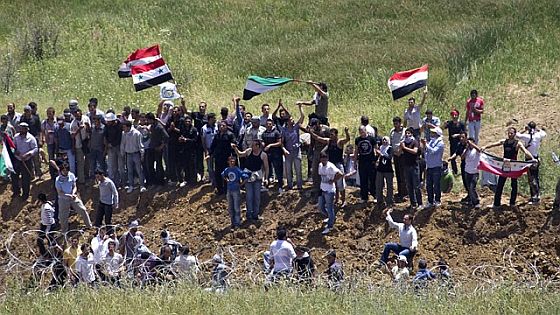
On Sunday, June 5, marking Naksa Day (the Arab “setback” in the 1967 war), protesters — mostly Palestinian refugees and their descendents — marched to the Israel/Syria disengagement line representing the border between Syria and the Israeli occupied Golan Heights. According to reports up to 22 unarmed Syrian-Palestinian protesters were killed when Israeli forces apparently resorted to live fire (Israeli laid mines may also have been detonated and may have caused causalities, the exact unraveling of events remains sketchy). In most respects, this Sunday’s events were a repeat performance of the outcome of May 15’s Nakba Day commemorations (which Palestinians mark as the anniversary of their catastrophe in 1948).
Israel’s initial response to the wave of regional anti-regime protests reaching Syria was, according to reliable reports, to privately root for the “devil we know” approach — encouraging allies, including the U.S., to go easy on the Assad regime. That may sound counterintuitive — Israel is not at peace with Syria, the Assad regime is close to Iran, hosts the Hamas leadership, and is considered to actively assist in the arming of Hezbollah. Yet an explanation for this Israeli disposition is also not too hard to fathom.
The Israel-Syria border has been quiet since the 1973 war. While a member of the “resistance axis,” Syria under Assad has not itself challenged Israel in any military way. It is also a regime with very few soft-power assets with which to challenge Israel in the regional or international diplomatic arena. Syria under the Assads engaged in frequent peace-partner flirtations with Israel and could be considered the most domesticated of the members of that resistance alliance.
At least until Sunday’s events, Israel’s position on revolution in Syria hued closely to the status-quo conservatism that has so characterized the shared Israeli-Saudi response to the Arab Spring. Both Israel and Saudi had been critical of the “premature” abandonment of the Mubarak regime, especially by the U.S. Unlike Mubarak, of course, Assad is not an ally (for either the Israelis or the Saudis), but he is part of an ancien régime for which Israel had effective management strategies in place.
European powers are increasing pressure on the UN Security Council to break its silence on events in Syria following a bloody government crackdown on pro-democracy protests in the country.
Britain, France, Germany and Portugal have circulated a draft resolution that would condemn the crackdown and demand an immediate end to the violence in Syria.
However, the proposal falls short of calling for military action or further UN sanctions against the Syrian government.
“Today in New York, Britain and France will be tabling a resolution at the Security Council condemning the repression and demanding accountability and humanitarian access,” David Cameron, the British prime minister, said on Wednesday.
“And if anyone votes against that resolution or tries to veto it, that should be on their conscience,” he told parliament members.
A blogger whose frank and witty thoughts on Syria’s uprising, politics and being a lesbian in the country shot her to prominence was last night seized by armed men in Damascus.
Amina Arraf, who blogged under the name Amina Abdallah, holds dual Syrian and American citizenship and is the author of the blog A Gay Girl in Damascus, which has drawn fans from Syria and across the world.
She was kidnapped last night as she and a friend were on their way to a meeting in Damascus. The kidnapping was reported on her blog by a cousin.
“Amina was seized by three men in their early 20s. According to the witness (who does not want her identity known), the men were armed,” wrote Rania Ismail.
“Amina hit one of them and told the friend to go find her father. One of the men then put his hand over Amina’s mouth and they hustled her into a red Dacia Logan with a window sticker of Basel Assad.”
Basel is the brother of president Bashar al-Assad, and was being groomed for the presidency until his death in a car crash in 1994.
Amina, who was midway through writing a book, had become increasingly popular after capturing the imagination of the Syrian opposition as the protest movement struggled in the face of the government crackdown.
The Syrian government has vowed to retaliate after claiming that dozens of its police and security forces were killed in attacks in and around the north-western town of Jisr al-Shughour.
In an indication they will intensify the crackdown on protesters that has already killed an estimated 1,200 civilians, authorities rapidly upgraded the toll in the town 20 miles from the Turkish border.
The state news agency, Sana, initially said 28 personnel had been killed, including in an armed ambush and at a state security post. It revised the figure up to 43, 80 and then 120 within the space of an hour without an explanation. The claims could not be independently verified.
“We will act firmly and decisively based on the law [and] will never be silent over any armed attack that targets the country’s security,” the interior minister, Ibrahim Shaar, said in a statement broadcast on state television.
A military operation took place in the town as part of a wider crackdown on 12 weeks of protests calling for the end of President Bashar al-Assad’s rule, although residents said the town was calm on Monday.
The regime and state media have little credibility, having waged an unprecedented war of disinformation while refusing to acknowledge a role in the crackdown, blaming the escalating violence on armed gangs and extremist insurgents.
Israeli troops opened fire as protesters from Syria stormed a ceasefire line in the Golan Heights, killing 14 of the demonstrators.
Hundreds of protesters rushed towards the ceasefire line, cutting through a line of barbed wire as they tried to head into the Golan Heights in a repeat of demonstrations last month that saw thousands mass along Israel’s north.
Similar protests were held in the West Bank, where hundreds demonstrated at Qalandia checkpoint near Ramallah, and in the Gaza Strip, where several hundred more gathered in the north of the coastal enclave.
In Majdal Shams, on the occupied Golan, Israeli troops opened fire as demonstrators sought to push through the mined ceasefire line, which had been reinforced with several rows of barbed wire blocking access to a fence.
“Despite numerous warnings, both verbal and later warning shots in the air, dozens of Syrians continue to approach the border and IDF (Israel Defence Forces) forces were left with no choice but to open fire towards the feet of protesters in efforts to deter further actions,” an army spokesman told AFP.
Updating an earlier toll, Syrian state media reported that 14 people were killed, including a woman and child, and more than 220 wounded. The Israeli military said it was aware of 12 casualties, but gave no more details.
Uri Avneri, former MK and activist with Gush Shalom left-wing organization, said Sunday that the IDF used excessive force against the protesters in the Golan Heights. “The trigger-happy behavior stands out in particular when compared to the softness with which violent settlers are treated,” he said.
Avneri conceded that a country has a right to defend its borders and prevent illegal entrance to its territory, yet added that “in order to effectively protect its borders, the state should first know where its borders are and have them recognized by the international community – and this is a decision which Israel has been avoiding for years.”
“A state that trespasses its neighbors’ borders, steals their land and erects settlements on them will have a hard time justifying actions taken to protect its own borders,” Avneri said. “Contrary to what Prime Minister Netanyahu says, only a recognized and agreed upon international border – that is, a border based on the 1967 lines – is a defensible border.”
Syrian forces killed at least 70 protesters on Friday, activists said, in one of the bloodiest days since the start of an 11-week revolt against the authoritarian rule of President Bashar al-Assad.
Tens of thousands of protesters took to the streets on Friday in defiance of security forces determined to crush the uprising, and some activists said the death toll could hit 100.
Rami Abdulrahman, head of the Syrian Observatory for Human Rights, said at least 60 people were killed in Hama, where Assad’s father Hafez crushed an armed revolt 29 years ago by killing up to 30,000 people and razing parts of the city.
A political activist in Hama said tens of thousands of people were attending the funerals of dead protesters on Saturday, and that more protests were planned later in the day.
“Anger is very high in the city, people will never be silent or scared. The whole city is shut today and people are calling for a three day strike,” the activist, who gave his name as Omar, told Reuters by phone from the city.
“From now on, no more fear!” (Ma fi khawf baad al-yawm!) chanted the people of Deraa, in southern Syria, on 18 May. State repression intensified, but the protestors rejected the culture of fear, and in many towns declared they were ready to die: “Martyrs are going to heaven in their millions”; “There is only one God, and God loves martyrs”; “Resist Banias, freedom is worth giving your life for” (Banias is the name of a port). Martyrdom was a theme in every region, expressed in a slogan currently popular in the Middle East: “With our souls, with our blood, we sacrifice ourselves for you, oh martyr.” To express solidarity with a town where many people have died, they chant another version: “With our souls, with our blood, we sacrifice ourselves for you, oh Deraa” (Bi-ruh bi-damm, nafdîk ya shahîd).
Every protest since March has called for freedom by twisting a slogan of the regime; so “God, Syria, Bashar – that’s all!” has become “God, Syria, freedom – that’s all!” Syria was under a state of emergency from 1963 until this April, so freedom is associated with democracy: “We demand freedom and democratic elections.” This transcends sectarian divisions: “Freedom, freedom, Muslims and Christians!”; “We are the partisans of freedom and peace”.
The latest style, which is high-flown, is meant to mark the dignity of the individual citizen. And you can hear the growing rumble of anger in: “Don’t insult the Syrian people” (Al-shaab al-suri ma byandhal).
Matyrdom cleanses humiliation and restores an individual as a person and a believer (virtues traditionally reserved for nationalist heroes and saints): “Better to die than be debased” (Al-mawt wa lâ-l-madhalleh). At the beginning of the intifada it was common to hear opposition supporters, at gatherings of friends or family, greet someone from Deraa or its region with: “You have raised our heads high” (Rafa’tu-l-na ra’sna).
Ordinary people have tried to respond to accusations of division, violence and conspiracy. They proclaim their support for pacifism and unity, and reject sectarianism: “One, one, the Syrian people are one!”; “In peace, Muslims and Christians, in peace. No to sectarianism!”; “No to violence, no to vandalism!”
At Syria Comment, Joshua Landis has posted an article written by a contributor from Damascus — “the best piece of writing on Syria since the uprising began,” says Landis. The author requested that his identity not be disclosed and that the piece simply be given the byline “From Damascus.” He writes:
About a week ago I sat with a good friend from the muhafiza (governorate or county) of Dera’a. The raw account of events in Dera’a that he presented to me bore striking contrast to the opinions of people outside that area, people of Damascus, confused people trying to weigh the injustices vs. necessity of the military action in Dera’a.
Details of our conversation that might have been news at the time I spoke with him are now known by most readers at this late date: electricity, water, mobile phone service, land line telephone service, all cut off; rooftop water tanks, common in this area, are shot by military personnel; anyone who moves in the streets is shot. Furthermore, people who have used their own generators to provide power to their homes are visited by the military and the generators are promptly confiscated.
This friend (let’s call him Adham) has a sister and brother who both live in the city of Dera’a with their families. For weeks, they have had no word from them. They don’t even know if they or their children are alive. Adham’s brother was working in Damascus when the occupation of Dera’a began. He was unable to return home to his family. He cannot communicate with or receive any news from his wife or children. He has traveled recently to the city, hoping that after these weeks he would finally be allowed to reunite with his family, but has been prevented from doing so by the military that is keeping the city sealed off.
News that does trickle out of Dera’a seems to be coming from people who have Jordanian cell phones that sometimes find coverage in the area. People are using their car batteries to charge their cell phones, among other devices.
Many Damascenes continue to look me in the eye and tell me that “There’s nothing happening in Syria! Everything is fine!” Consider that Adham’s village in the muhafiza of Dera’a is closer to Damascus than it is to the city of Dera’a, and yet his family is without cell phone service, or even land-line service. Phone service of all types has been cut off from the entire muhafiza. When he comes to work in Damascus, he and his family have no way of checking on each other. This treatment is having the effect of galvanizing oppositional sentiment in the muhafiza and the growing sense of Dera’an separateness.
Adham is an atheist whose family is of Shia background. Being an atheist and coming from a Shia family, he is in no way sympathetic to Sunni Islamism. Therefore, it’s telling when he affirms that “there are no Salafiin in Dera’a. I can say for sure that any group of such people that exists is very, very small.”
Rather, he explains that the government’s siege has been effective in unifying the muhafiza of Dera’a against it. By treating the entire muhafiza as criminal, the sentiments of most of its inhabitants (not just those inside the city of Dera’a) have turned against the regime. It’s interesting that identity runs not only along religious, ethnic, and tribal lines, but also along geographical lines, in that the people of Dera’a—not only the city, but the entire muhafiza—are viewing themselves as a unit, separate from those who comprise the leadership of Syria. “I can say that 90% of people in the entire muhafiza are against the government,” Adham says. Rather than viewing the uprising as one of sectarian character, he explains that “my brother’s family in the city of Dera’a has Christian neighbors. There are many Christians in the city of Dera’a and in other villages who have joined in the protests.”
Dera’a is becoming a unit—I hesitate to say almost separate from Syria—not only in how people there are beginning to view themselves as separate from the state (an understandable effect after feeling attacked by the state), but in the way many other Syrians are reacting to Dera’ans. Adham tells me that in the hospital where he works in Damascus, he is experiencing a new, unmistakable resentment and coldness from his coworkers. “They say nothing, but I can see in their faces that they blame us for the current situation in Syria.” He says that he doesn’t feel safe responding to the opinions voiced by people in his workplace. He believes that people’s opinions are misled and mistaken, but if he defends “his own” Dera’ans, he fears reprisal.
“One Alawi girl who works in the hospital was very happy about the army entering the city. She said, ‘They must destroy the entire city and should kill everyone demonstrating.’” Her comments reflect the result of the government’s successful campaign to demonize the protesters; many people simply believe that there is an insidious cancer of extremism growing inside Syria, that threatens all life, security, and humane values, and that drastic measures are needed to thoroughly wipe it out.
In stark contrast to Adham’s understanding of the situation, I witnessed unreserved approval for the government crack down on a Thursday a week after the siege on Dera’a began. I visited some close Christian friends in Damascus who we can call Samer and Najwah. It was impossible not to broach the subject of the situation in Dera’a, knowing that the next day, Friday, would likely produce significant casualties. This household however, grimly viewed the army’s cordoning off and occupation of the city as necessity. I couldn’t help but begin to argue with them that even if there was a poisonous “Salafi” threat in the town, the siege and suppression would mean the suffering, trauma, and even killing of many innocent people as well. If some people from that area had indeed called for the establishment of an Islamic emirate (and it’s no surprise that some there would be oriented this way), I was just not convinced that the entire city, the many thousands protesting there, were all seeking such a goal.
For Najwah, however, the city of Dera’a has become a single entity containing one kind of people: bad. For her, the terrorist persuasion of the people in that community now justifies virtually any action against them. From her attitude, I felt that if the city was to be wiped off the map, she wouldn’t mind. I began to mention reports of the more grisly examples of violent killings there. “Good!” was her angry response.
I tried to think back and remember if I’d ever been in a country where serious atrocities were taking place and had looked in the eye of someone who rejoiced in them. I couldn’t, and I realized that I was witnessing the kind of passive approval for massacre that one reads about in history books, when individuals or groups become convinced of the evil of another and of the necessity of wiping them out. Najwah is not an evil woman, but the people of Dera’a have become completely vilified in her mind, and she fears them. [Continue reading…]
The boy’s head was swollen, purple and disfigured. His body was a mess of welts, cigarette burns and wounds from bullets fired to injure, not kill. His kneecaps had been smashed, his neck broken, his jaw shattered and his penis cut off.
What finally killed him was not clear, but it appeared painfully, shockingly clear that he had suffered terribly during the month he spent in Syrian custody.
Hamza Ali al-Khateeb was 13 years old.
And since a video portraying the torture inflicted upon him was broadcast on the al-Jazeera television network Friday, he has rapidly emerged as the new symbol of the protest movement in Syria. His childish features have put a face to the largely faceless and leaderless opposition to President Bashar al-Assad’s regime that has roiled the country for nine weeks, reinvigorating a movement that had seemed in danger of drifting.
Reuters journalist Suleiman al-Khalidi, a Jordanian citizen, was arrested by Syrian security police when covering the uprising against Syrian President Bashar al-Assad. In the following story, he recounts his treatment at the hands of the Syrian intelligence services and the scenes of torture he witnessed around him during four days of confinement.
Like other foreign correspondents, he was subsequently expelled from Syria. He now reports on the continuing unrest from Amman.
The young man was dangling upside down, white, foaming saliva dripping from his mouth. His groans sounded more bestial than human.
It was one of many fleeting images of human degradation I witnessed during four days as an unwilling guest of Syrian intelligence, when I was detained in Damascus after reporting on protests in the southern Syrian city of Deraa.
Within minutes of my arrest I was inside a building of the intelligence services — known, as elsewhere in the Arab world, simply as the “Mukhabarat.” I was still in the heart of bustling Damascus, but had been transported into a macabre parallel world of darkness, beatings and intimidation.
I caught sight of the man hanging by his feet as one of the jailers escorted me to the interrogation room for questioning.
“Look down,” the jailer shouted as I took in the scene.
Inside an interrogation room, they made me kneel and pulled what I could just make out as a car tyre over my arms.
My reporting from Deraa, where protests against President Bashar al-Assad had broken out in March, had apparently not endeared me to my hosts, who accused me of being a spy.
The formal reason Syrian authorities gave Reuters for my detention was that I lacked the proper work permits.
That I was an established journalist working for Reuters, going about my professional business, was not an argument to men whose livelihood depends on breaking human dignity.
“So, you cheap American agent!,” the interrogator shouted.
“You have come to report destruction and mayhem. You animal, you are coming to insult Syria, you dog.”
From outside the room I could hear the rattling of chains and hysterical cries that echo in my mind to this day. My interrogators worked professionally and tirelessly to keep me on edge at every step of the questioning process over several days.
“Shut up, you bastard. You and your types are vultures who want to turn Syria into another Libya,” said another interrogator, who kept yelling: “Confess, liar!”
For weeks, Syrian democracy activists have used Facebook and Twitter to promote a wave of bold demonstrations. Now, the Syrian government and its supporters are striking back — not just with bullets, but with their own social-media offensive.
Mysterious intruders have scrawled pro-government messages on dissidents’ Facebook pages. Facebook pages have popped up offering cyber tools to attack the opposition. The Twitter #Syria hashtag — which had carried accounts of the protests — has been deluged with automated messages bearing scenes of nature and old sports scores.
“There is a war itself going on in cyberspace,” said Wissam Tarif, head of the Middle East human rights organization Insan, whose Web site has been attacked.
Syria offers just one example of the online backlash in countries ruled by authoritarian regimes. Although social media sites have been lionized for their role in the Arab Spring protests, governments are increasingly turning the technology against the activists.
“In the same way that, a few years ago, it became commonplace to talk about Web 2.0, we’re now seeing Repression 2.0,” said Daniel B. Baer, a deputy assistant secretary of state for democracy, human rights and labor.
ROBERT SIEGEL (NPR host): And I’d like to ask you to begin with what has been a major difference between Fatah and your group, Hamas. Ismail Haniyeh, the prime minister of the Hamas government in Gaza, spoke the other day of the Palestinians’, and I quote, “great hope of bringing to an end the Zionist project in Palestine.”
About a week earlier, Hamas leader Khaled Mashaal said in Cairo that the goal of your movement is a Palestinian state in the West Bank and Gaza with Jerusalem as its capital. Which is it that Hamas seeks, a two-state solution alongside Israel or an end to the state of Israel altogether?
GHAZI HAMAD (Deputy Foreign Minister, Hamas): I think there is all kind of contradictions because maybe people understand that the occupation is a reflection of the Zionist movement, and I think the declaration of Hamas is very clear. We accept the state and ’67 borders. This state should be independent. It was chosen as the capital for Palestine and the right of return for the refugees.
But I think that Israel will not accept this because Israel reject all the demands of the Palestinian people because they believe that they have to have a Jewish state and Jerusalem is the capital of Israel and no right of return. So I think we’ll still have a big struggle and big disputes.
SIEGEL: But just to clarify, if Israel were to accept a two-state solution in which Palestine would be in Gaza and the West Bank and have its capital in Jerusalem, is that an acceptable aim that Hamas is striving for, or is that in and of itself insufficient because there would still be a state of Israel?
Mr. HAMAD: Look, we said frankly we accept this state and ’67 borders, but the question now should be directed to Israel. We need clear answer from Israel because Netanyahu said that we will not go back to the ’67 borders. We will not (unintelligible) settlements. So we still the victims of the occupation. (NPR)
The United States slapped sanctions on Syrian President Bashar Assad and six senior Syrian officials for human rights abuses over their brutal crackdown on anti-government protests, for the first time personally penalizing the Syrian leader for actions of his security forces.
The White House announced the sanctions Wednesday, a day before President Barack Obama delivers a major speech on the uprisings throughout the Arab world. The speech is expected to include prominent mentions of Syria.
The Obama administration had pinned hopes on Assad, seen until recent months as a pragmatist and potential reformer who could buck Iranian influence and help broker an eventual Arab peace deal with Israel. (AP)
Tanks shelled a Syrian border town for the fourth day Wednesday in a military campaign to crush demonstrations against President Bashar al-Assad, under mounting Western pressure to stop his violent repression of protesters.
Troops went into Tel Kelakh Saturday, a day after a demonstration there demanded “the overthrow of the regime,” the slogan of revolutions that toppled Arab leaders in Egypt and Tunisia and challenged others across the Middle East.
Assad had been partly rehabilitated in the West over the last three years but the United States and European Union condemned his use of force to quell unrest and warned they plan further steps after imposing sanctions on top Syrian officials. (Reuters)
“While much attention has been focused on rebel efforts in eastern Libya and in the city of Misurata, rebels have held control of most of the Nafusah Mountain region since the unrest began in February,” my colleagues Sergio Peçanha and Joe Burgess explain in the introduction to a fascinating, richly informative graphic on the fighting there.
Last month, after the rebels in these remote mountains made an unexpected show of strength, seizing a border post along the Tunisian frontier, my colleague Scott Sayare reported that “the region’s isolated hamlets were among the first to join the uprising,” fueled by simmering resentment from a Berber community which was neglected by Col. Muammar el-Qaddafi’s Arab nationalist regime.
Despite the fact that even rebel fighters in the region estimate their ranks at just a few hundred ill-equipped and untrained young men, they have someone held off attempts by government forces to reimpose Tripoli’s rule. (New York Times)
NATO kept up its bombing campaign against Libyan leader Moammar Gadhafi over the weekend, hitting missile launchers and other targets around Tripoli. The rebels say they welcome military support, but they would like something more: formal diplomatic recognition for their transitional government.
Some special guests flew in recently for the rebels’ weekly pep rally in Benghazi — delegates from areas of western Libya that are still under Gadhafi’s control. The delegates came to take their seats in the 30-seat National Transitional Council — a kind of proto-parliament.
Eastern Libyans like Mansour Makhlouf are glad to see them.
“Gadhafi’s people are spreading rumors that we are divided. But we’re not divided — we are all brothers,” Makhlouf says. (NPR)
The International Criminal Court’s chief prosecutor has asked a three-judge panel to issue arrest warrants for Libyan leader Muammar Gaddafi, his second-eldest son, Saif al-Islam, and his intelligence chief, Abdullah Senussi.
Luis Moreno-Ocampo described the evidence against the three men as “very strong” in a press conference on Monday and said he believed Libyans eventually would turn them over to the court.
The filing against Gaddafi comes just three months into the uprising against his 41-year rule, which evolved from peaceful protests in major cities to an armed rebellion based out of the east. Gaddafi’s regime has brutally attempted to suppress the opposition movement by shelling rebellious cities, and imprisoning and torturing those who speak out. (Al Jazeera)
For hours and hours, I didn’t know what to make of it: Tribute FM is the first ever English language radio station in Libya. And it sounds just like Magic. Diana Ross . . . the Jackson Five . . . the Temptations . . . some German rap . . . Easy Like Sunday Morning . . . just as you’re nodding along, thinking “this is nice, I wonder if they have a phone-in,” you remember: this is probably the most radical statement of a successful revolution coming out of any radio, anywhere in the world. It is a huge moment for a country in which not just English but most European languages have been invisible for decades.
Before Muhammad, Aman and two others launched Tribute in Benghazi last week, “English wasn’t frowned on, it was completely illegal,” Muhammad tells me by phone. “It was taken out of schools, it got to the point where nothing in English was available in the city. You couldn’t advertise in English, you couldn’t read a newspaper in English.”
It is a measure of how isolating this was for young Libyans that setting up a radio station would be such a priority as the fighting continues, the stream of refugees is unabated and Gaddafi has not, as yet, surrendered. (The Guardian)
“Damascus has seen all that has ever occurred on earth, and still she lives,” wrote Mark Twain after visiting Syria’s capital in the 1860s. “She has looked upon the dry bones of a thousand empires, and will see the tombs of a thousand more before she dies.”
The turmoil in Syria, where hundreds of unarmed protesters have been mown down by the forces of President Bashar al-Assad, who comes from the country’s Alawi minority, is much more menacing than the generally peaceful revolutions in Tunisia and Egypt, from which the Syrian protesters drew their initial inspiration. The regime of Zine el-Abidine Ben Ali in Tunisia capitulated in the face of spontaneous demonstrations sparked by the self-immolation of a twenty-six-year-old man who had been reduced to scratching out a living as a humble street vendor. Ben Ali, along with his hated wife and family, chose to go into exile before a single shot had been fired.
In Egypt, if press reports are to be believed, the generals unseated President Hosni Mubarak after tank commanders refused his orders to fire on civilians. The Egyptian revolution, which has seen some resistance from the military and police, has now taken a constitutional turn, with the country approving a series of amendments that could lead to the emergence of a parliamentary democracy. Much will depend on the willingness of the military to allow an open political process to take place.
The Syrian government’s response to the Arab world’s turbulent spring, by contrast, has been both violent and vacillating. Its initial response was to characterize the protests across the country as the result of a global conspiracy fomented by a clutch of unlikely allies, including the US, Israel, and Arab enemies in Lebanon, Saudi Arabia, and Qatar, working with former regime officials and homegrown Salafists, or fundamentalists. Then President Assad tried to defuse the opposition by receiving protest delegations and announcing the lifting of long-standing emergency laws, apparently acknowledging the existence of legitimate grievances. But this proved no more than a gesture. In effect the government’s response has been contradictory to the point of incoherence: as the Brussels-based International Crisis Group points out in a report released on May 3:
The regime has lifted the emergency law but has since allowed the security services to conduct business as usual, thereby illustrating just how meaningless the concept of legality was in the first place. It authorises demonstrations even as it claims they no longer are justified and then labels them as treasonous. It speaks of reforming the media and, in the same breath, dismisses those who stray from the official line. It insists on ignoring the most outrageous symbols of corruption. Finally, and although it has engaged in numerous bilateral talks with local representatives, it resists convening a national dialogue, which might represent the last, slim chance for a peaceful way forward.
Over seven hundred people have been killed so far, more than a hundred of them in the southwestern city of Deraa, near the Jordanian border, where the Omari mosque—a center of resistance—has been closed to worshipers after being shelled by tanks and taken over by snipers. Some ten thousand people are now said to have been detained by elite security forces backed by the army. According to Amnesty International, detainees have been beaten with sticks and cables, and sometimes deprived of food. Unlike in Libya there are no NATO forces to protect Syria’s cities or parts of the country from the murderous attacks inflicted by a regime that is now losing the last threads of international legitimacy. Assad has a more effective army than Qaddafi and powerful friends in Iran, Lebanon, and Iraq.
In contrast to Libya, military action in defense of Syria’s beleaguered population would barely attract a shred of international support. While the Arab League voted unanimously for the no-fly zone to protect the people of Benghazi, in the case of Syria it has not even mentioned the country by name, merely declaring that pro-democracy protesters “deserve support, not bullets.”
The Bahraini government has destroyed a number of mosques in continuation of its aggressive crackdown on pro-democracy protesters, a special Al Jazeera investigation has revealed.
At least 28 mosques and Shia religious institutions have been destroyed in the Gulf state since the crackdown on Shia-led protests began in Mid-March, the opposition group, Al Wefaq, told Al Jazeera’s Charles Stratford.
The Justice Ministry, however, said it was tearing down the mosques because they were not licensed. (Al Jazeera)
Adopting what might be called the Qaddafi defense, the head of Bahrain’s military claimed that the country’s brutal crackdown on dissent was entirely justified because the kingdom’s security forces had been confronted by young protesters under the influence of mind-altering drugs.
According to Bahrain’s state news agency, Sheik Khalifa bin Ahmed Al Khalifa said on Wednesday that “young people were given pills which affected their minds and made them do unusual things.” He also claimed “that Bahrain had been the victim [of] a conspiracy involving foreign agents and financing.” (New York Times)
Christopher Stokes writes: In Bahrain, to be wounded by security forces has become a reason for arrest and providing healthcare has become grounds for a jail sentence. During the current civil unrest, Bahraini health facilities have consistently been used as a tool in the military crackdown against protesters.
The muted response from key allies outside of the region such as the United States – which has significant ties to Bahrain, including a vast naval base in the country – can only be interpreted as acceptance of the ongoing military assault, which is backed by the Gulf Co-operation Council.
While the government and its supporters in Bahrain continue to refer to the protesters as rioters, criminals, extremists, insurgents or terrorists, the label that remains conspicuously absent for those who are wounded is “patient”. (The Guardian)
The Obama administration’s special Mideast envoy, former Sen. George Mitchell, is resigning after more than two largely fruitless years of trying to press Israel and the Palestinians into peace talks, U.S. officials said Friday.
The White House is expected to announce that the veteran mediator and broker of the Northern Ireland peace accord is stepping down for personal reasons, the officials told The Associated Press. The officials spoke on condition of anonymity ahead of an afternoon announcement that will follow a White House meeting between Mitchell and President Barack Obama.
There are no imminent plans to announce a replacement for Mitchell, the officials said, although his staff is expected to remain in place at least temporarily.
Mitchell’s resignation comes at a critical time for the Middle East, which is embroiled in turmoil, and the Israeli-Palestinian peace process, which has been moribund since last September and is now further complicated by an agreement between Palestinian factions to share power.
Obama will deliver a speech next Thursday at the State Department about his administration’s views of developments in the region, ahead of a visit to Washington by Israeli Prime Minister Benjamin Netanyahu. Jordan’s King Abdullah II also will travel to Washington next week. (AP)
On Thursday, The Palestinian Central Bureau of Statistics (PCBS) issued a report stating that more than 7000 Palestinians were killed by Israeli soldiers and settlers in the occupied Palestinian territories over the past ten years.
The PCBS said that 7342 Palestinians were killed in the period between September 29, 2000 and December 31, 2010.
The report stated that by the end of 2009, the number of Palestinians killed by Israeli fire arrived to 7235, including 2183 killed by Israeli fire in the West Bank. (IMEC)
Israeli security forces have clashed with Palestinians in several East Jerusalem neighbourhoods ahead of “Nakba Day” or “day of catastrophe” on Sunday.
The anniversary marks Israel’s 1948 declaration of statehood after which more than 700,000 Palestinians fled or were expelled in the war that ensued.
A correspondent for the AFP news agency saw four people hurt as police opened fire with rubber bullets at stone-throwing youths in Silwan. (Al Jazeera)
A 17 year-old was critically injured from live fire in East Jerusalem, and an American protester suffered serious head injury after being hit by a tear-gas projectile shot directly at him from close range.
Israeli military and police forces responded heavy handedly to demonstrations commemorating 63 years to the Palestinian Nakba (catastrophe) of 1948 today all over the West Bank and East Jerusalem. Morad Ayyash, a 17 year old from the Ras el-Amud neighborhood was shot in the stomach with live ammunition. He has reached the Muqassed hospital with no pulse and the doctors are now fighting for his life.
Tension also rose in the East Jerusalem neighborhood of Silwan, where 19 protesters have been injured and 11 were arrested. During the evening hours, large police forces raided houses in Silwan and carried out additional arrests. (Mondoweiss)
Khaled Diab writes: With the world’s attention focused on the tumultuous changes gripping Tunisia, Egypt, Yemen, Bahrain, Libya and Syria, one may be excused for thinking that all is quiet on the Palestinian-Israeli front.
So why haven’t Palestinian youth risen up like their counterparts elsewhere in the region to demand their rights?
Well, it is not for want of trying. Inspired by events in Tunisia and Egypt, and following the date-based example of counterparts elsewhere in the Arab world, a new youth movement dubbed by some as the March 15 movement has emerged in Palestine.
The date refers to the day when organisers employing social media, text messaging and word of mouth managed to draw thousands of protesters on to the streets of Ramallah and other parts of the West Bank, as well as Gaza City.
However, in contrast to other popular uprisings in the region, their demands were not wholesale regime change, despite the undoubted failings of both Fatah in the West Bank and Hamas in Gaza, and the absence of a democratic mandate for both parties.
“Our top priority is to end the divisions within Palestinian society. This is the only way to deal with the occupation,” explained Z, one of the founders of the movement in Ramallah, who wished to conceal his identity for professional reasons.
Some of the others involved in March 15 are also reluctant to reveal their identities, partly as an expression of the decentralised and “leaderless” approach preferred by Middle Eastern protesters tired of authoritarianism, and partly to avoid popping up on the radars of security services run by the PA, Hamas or Israel.
Despite its relative success on 15 March, the movement has not managed to replicate the most successful ingredient of the protests in Tunisia, Egypt, Yemen and Bahrain: constant pressure from the streets. This is partly due to the two-tiered nature of the oppression facing Palestinians, and the restrictions on their movement imposed by the occupation. “Unfortunately, we have two levels of repression in Palestine: Israeli and domestic,” says Z, who is in his early 20s.
In addition, there is the psychological barrier of widespread despair and disillusionment afflicting wide swaths of the population, which the Arab spring is just beginning to chip away at. Most Palestinians I have met since I moved to Jerusalem a few weeks ago speak enthusiastically and excitedly about the Egyptian revolution.
“The problem among Palestinians is that revolutions are nothing new, yet nothing changes or things get worse,” Z observes. “Neither uprisings nor negotiations have worked, Palestinians believe – we’re still under occupation.” (The Guardian)
Khaled Meshaal, the head of the political bureau of the Islamic resistance movement Hamas, said that for the time being Egyptians are not required to march to the Gaza Strip in support of the Palestinian cause.
Egyptian activists had called on Egyptians to march to the Gaza Strip through the Rafah border crossing on 15 May. The event, which has been dubbed “March to Palestine Day”, is intended to mark the 63rd anniversary of the declaration of the State of Israel.
In statements published on the official website of the Muslim Brotherhood in Alexandria, Meshaal said that, “advocating the cause by taking a political stance, sending relief aid, boycotting and sending prayers is a must at the moment. We do not ask you to march.” (Al-Masry Al-Youm)
Libyan state television has aired what it says is a statement by Muammar Gaddafi, in which the Libyan leader denies reports that he has been wounded.
In the audio message, broadcast on Friday evening, Gaddafi said he is alive and well despite air strikes from the NATO military alliance on his Bab al-Aziziyah compound in the capital, Tripoli, on Thursday.
Gaddafi said he is in a place where NATO bombs can not reach him. (Al Jazeera)
Concern is growing over a British-based photographer who has been missing for 39 days after being captured in Libya by forces loyal to Muammar Gaddafi.
Anton Hammerl, an award-winning photographer, was captured on 4 April and his family have had no concrete news about him since then.
The regime has, however, allowed access to three other journalists who were captured with him. (The Guardian)
Thousands of protesters in Syria defied a ferocious crackdown and returned to the streets Friday, even in towns that the military had besieged only days before, in a relentless contest of wills that a leading dissident described as an emerging stalemate.
For successive weeks, Fridays have served as a weekly climax in the challenge to President Bashar al-Assad’s rule. Calls for demonstrations this Friday came after a withering wave of repression that has killed hundreds and detained thousands in towns and cities stretching from the Mediterranean coast to Damascus’s outskirts and the poverty-ridden south.
While some of the country’s most restive locales remained relatively quiet — namely Baniyas on the coast and Dara’a in the south — protesters took to the streets in at least five neighborhoods in Homs, Syria’s third largest-city and a center of the two-month uprising. Activists said protests ranged in numbers from hundreds to thousands, and at least two people were killed when security forces opened fire.
“We don’t like you!” crowds chanted in Homs, referring to the president. “You and your party, leave us!” (New York Times)
Syrian forces carried out raids in towns on the outskirts of Damascus and a besieged city on the coast on Thursday, as the number of detainees surged in a government campaign so sweeping that human rights groups said many neighborhoods were subjected to repeated raids and some people detained multiple times by competing security agencies.
The ferocious crackdown on the uprising, which began in March, has recently escalated, as the government braces for the possibility of another round of protests on Friday, a day that has emerged as the weekly climax in a broad challenge to the 11-year rule of President Bashar al-Assad.
Residents have reported that hundreds of detainees are being held in soccer stadiums, schools and government buildings in various towns and cities across the country, some of them arrested in door-to-door raids by black-clad forces carrying lists of activists. (New York Times)
The neighbors watched helplessly from behind locked gates as an exchange of gunfire rang out at the police station. Then about 80 prisoners burst through the station’s doors — some clad only in underwear, many brandishing guns, machetes, even a fire extinguisher — as the police fled.
“The police are afraid,” said Mohamed Ismail, 30, a witness. “I am afraid to leave my neighborhood.”
Three months after the ouster of Hosni Mubarak, a crime wave in Egypt has emerged as a threat to its promised transition to democracy. Businessmen, politicians and human rights activists say they fear that the mounting disorder — from sectarian strife to soccer riots — is hampering a desperately needed economic recovery or, worse, inviting a new authoritarian crackdown.
At least five attempted jailbreaks have been reported in Cairo in the past two weeks, at least three of them successful. Other attempts take place “every day,” a senior Interior Ministry official said, speaking on the condition of anonymity because he was not authorized to talk publicly.
Newspapers brim with other episodes: the Muslim-Christian riot that raged last weekend with the police on the scene, leaving 12 dead and two churches in flames; a kidnapping for ransom of a grandniece of President Anwar el-Sadat; soccer fans who crashed a field and mauled an opposing team as the police disappeared; a mob attack in an upscale suburb, Maadi, that hospitalized a traffic police officer; and the abduction of another officer by Bedouin tribes in the Sinai.
“Things are actually going from bad to worse,” said Mohamed ElBaradei, the former international atomic energy official, now a presidential candidate. “Where have the police and military gone?” (New York Times)
This website or its third-party tools use cookies, which are necessary to its functioning. By closing this banner, you agree to the use of cookies.





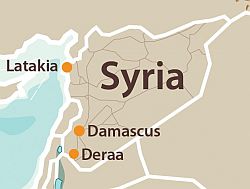 About a week ago I sat with a good friend from the muhafiza (governorate or county) of Dera’a. The raw account of events in Dera’a that he presented to me bore striking contrast to the opinions of people outside that area, people of Damascus, confused people trying to weigh the injustices vs. necessity of the military action in Dera’a.
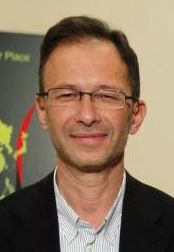 Reuters journalist Suleiman al-Khalidi, a Jordanian citizen, was arrested by Syrian security police when covering the uprising against Syrian President Bashar al-Assad. In the following story, he recounts his treatment at the hands of the Syrian intelligence services and the scenes of torture he witnessed around him during four days of confinement.