Category Archives: News

Iraq’s government appears powerless to defend against ISIS advance

McClatchy reports: The long-predicted dissolution of a centrally controlled Iraq ruled from Baghdad appeared closer to reality on Thursday as radical Islamist fighters advanced through the country with little interference from what remained of Iraq’s disintegrating security forces.

Only militias tied to Iraq’s feuding religious and ethnic groups mounted serious resistance to the southward push by fighters of the Islamic State of Iraq and Syria, who now appear to be supported by an ad hoc coalition of Sunni Muslim tribes and militant groups opposed to the Shiite-dominated central government. With the lone exception of a helicopter assault on an insurgent position north of the central city of Tikrit, Iraqi army and security forces continued to abandon their posts whenever confronted by ISIS.

The collapse of central authority also was evident in Baghdad, where the Iraqi Parliament failed to muster a quorum to consider a request from Prime Minister Nouri al Maliki for a declaration of a state of emergency. Maliki responded in a statement read on state television by accusing Sunni political parties of conspiring to destroy the state. In recent days, Maliki, who also serves as the defense minister, has blamed the same parties for the army’s massive desertion in the face of the ISIS offensive.

“Iraq’s future at this point is being shaped by conflict rather than by a viable political system. No one really knows where it’s going,” Salman Sheikh, the director of the Brookings Doha Center in Qatar, said in a telephone interview from Beirut. “The long-term impact could be quite cataclysmic, not just for Iraq, but for the entire region.”

The prediction that Iraq would one day descend into an ungovernable space of feuding ethnic and religious groups was first made when U.S. forces toppled Saddam Hussein in 2003. Now that it seemed to be happening, many found it difficult to grasp the unfolding reality.

In Washington, President Barack Obama told reporters that the United States was considering all options to aid the Maliki government, Defense Department officials said there was no speedup in the previously set schedule for the delivery of military equipment, and Congress seemed slow to grasp that the ship had likely sailed on hopes that Maliki could somehow save the situation. [Continue reading…]

Facebooktwittermail

Will Iran intervene in Iraq?

IranWire reports: “The border patrol has increased its vigilance on the Iran-Iraq border,” said Iran’s Police Chief, Esmail Ahmadi Moghaddam. “The country’s Supreme National Security Council would consider intervening to protect Shia shrines and cities.”

Ahmadi-Moghaddam has been the only high-ranking Iranian official to comment on the advances made by the Sunni extremist group Islamic State in Iraq and Syria (ISIS). According to IranWire sources, Iranian officials have been ordered to remain quiet about the events in neighboring Iraq and ISIS victories. “Iranian officials have been told not to comment, or else,” said a wary former high-ranking Iranian diplomat to IranWire.

According to the former diplomat Iranian plans in Iraq are summarized in the wisdom of one man, “We all know that Haj Ghassem is hard at work trying to control the situation,” referring to Ghassem Suleimani, the legendary commander of the Quds Force, Iran’s Revolutionary Guards Extraterritorial Force, and perhaps the closest person to Iran’s Supreme Leader Ayatollah Ali Khamenei. “Our forces will do whatever it takes to protect the border, and the holy shrines from this bunch of thugs. And ISIS are nothing, but a group of hooligans. They know what can happen if Iran gets involved in the situation, and that is why they are in such a hurry to carry out their dirty acts.”

Iran’s designs in Iraq, and the rest of the Middle East, have been looked at with a degree of cynicism and fear. Many Arab diplomats regard Persian Iranians as untrustworthy neighbors who secretly ally themselves with anyone to protect their interests.

Last week a member of Syrian opposition accused Iran of secretly helping ISIS. According to Abdul Halim Khaddam, the former vice president to Syria’s Bashar Assad, Iran is arming ISIS in order to undermine the Syrian opposition. By strengthening ISIS, Khaddam claimed, Iran was seeking to draw Syrian public sentiment back toward Assad, recasting the battle as Bashar’s battle against extremist onslaught.

Iranian Foreign Minister Mohammad Javad Zarif categorically denied this accusation. He said Iran has been battling Salafi extremists and Al-Qaeda itself for years, and would never stoop to such measures. [Continue reading…]

Facebooktwittermail

Kurdish troops in control of Kirkuk

The New York Times reports: Kurdish officials said on Thursday that their forces had taken full control of the strategic oil city of Kirkuk in northern Iraq, after government troops abandoned their posts there and disappeared, introducing a new dimension into the swirling conflict propelled by Sunni militants pressing south toward Baghdad.

“The army disappeared,” said Najmaldin Karim, the governor of Kirkuk.
[…]
Unlike the Iraqi national army, the Kurdish forces, known as pesh merga, are disciplined and very loyal to their leaders and their cause: autonomy and eventual independence for a Kurdish state. The Kurds’ allegiance to the Shiite Arab-led Iraqi central government is limited, but neither are they known to be allied with the Sunni Arab militants. Many of the tens of thousands of Mosul residents who fled the militant takeover of the city have sought safety in Kurdish-controlled areas. [Continue reading…]

Facebooktwittermail

Egyptian activist Alaa Abd El Fattah jailed for 15 years for organising peaceful protest

The Guardian reports: The extent of Egypt’s counter-revolution has been laid bare by the jailing of one of the key figureheads of the 2011 uprising – a conviction that means Alaa Abd El Fattah has been jailed or investigated under each of the country’s five heads of state since Hosni Mubarak.

Abd El Fattah, one of the activists most associated with the 2011 uprising that briefly ended 60 years of autocratic rule, was sentenced to 15 years in jail for allegedly organising a protest – an act banned under a law implemented last November, and used to jail several revolutionary leaders.

According to Abd El Fattah’s sister, Mona Seif, also a prominent campaigner, he and another activist were sentenced in absentia after being barred from entering the courtroom then arrested and taken to prison by some of the officials who had earlier blocked his entrance. [Continue reading…]

Facebooktwittermail

The rapid advance of ISIS across Iraq

At Blogs of War, John Little describes: the massive upsurge in ISIS’s strength and capabilities. The group now:

I could go on. Bad news is flooding in around the clock. This is a tremendously worrying destabilization that will create an environment in which only really terrible things happen. Jessica Lewis and Ahmed Ali of ISW have given some thought to where all of this is heading and paint a pretty dire picture:

Iraq’s security forces will not be able to retake all of the ground they have lost. They may not even be able to hold what they still have. The best-case scenario is a stalemate in which Iraqis manage to contain the ISIS state and army for now. The more likely case is the creation of another Syrian-style conflict pitting ISIS with increasing international support against desperate and increasingly brutal Iraqi Shi’a militias and ISF elements. The two civil wars, which have now completely merged, will continue to expand, destabilizing an already unstable Middle East and inviting further intervention by the Sunni Arab states and Iran. In the very worst case, the fall of Mosul could be a step down the path to outright regional war.

If there is any hope at all, and I am not sure that there is, it might be in that ISIS has overextended itself and the terrible performance by Iraqi forces has made them appear far more formidable than they actually are. [Continue reading…]

Bloomberg reports: As his army flees from an al-Qaeda splinter group, Iraqi Prime Minister Nouri al-Maliki is rallying Shiite militias to defend his government, raising the specter of civil war in OPEC’s second-biggest oil producer.

In a televised news conference yesterday Maliki urged citizens to take up arms after the Islamic State of Iraq and Levant group seized control of the northern city of Mosul, stealing weapons and helicopters from police and army bases as Iraqi government forces fled. He vowed to build an army of volunteers to “pull the thorns out by ourselves.”

By countering Sunni militants with elements of his own Shiite support, Maliki risks reigniting the sectarian conflict that flared after the 2003 U.S. invasion that led to the ouster of Saddam Hussein. At its worst, in 2006 and 2007, thousands of civilians were losing their lives every month.

“The unleashing of the Shia militias was a driver of the civil war,” said Julien Barnes-Dacey, a senior Middle East and North African analyst at the European Council on Foreign Relations, in a telephone interview. “The question is, will Maliki try to maintain order over these militias or will the level of conflict spiral into something deeper?” [Continue reading…]

Fred Kaplan writes: The collapse of Mosul, Iraq’s second-largest city, has little to do with the withdrawal of American troops and everything to do with the political failure of Prime Minister Nouri al-Maliki.

As the U.S. pullout began under the terms of a treaty signed in 2008 by then-President George W. Bush, Maliki, the leader of a Shiite political party, promised to run a more inclusive government — to bring more Sunnis into the ministries, to bring more Sunnis from the Sons of Iraq militia into the national army, to settle property disputes in Kirkuk, to negotiate a formula on sharing oil revenue with Sunni districts, and much more.

Maliki has since backpedaled on all of these commitments and has pursued policies designed to strengthen Shiites and marginalize Sunnis. That has led to the resurgence of sectarian violence in the past few years. The Sunnis, finding themselves excluded from the political process, have taken up arms as the route to power. In the process, they have formed alliances with Sunni jihadist groups — such as the Islamic State of Iraq and Syria, or ISIS, which has seized not just Mosul but much of northern Iraq — on the principle that the enemy of their enemy is their friend. [Continue reading…]

Much as many Americans inside and outside government may now be inclined to view the advance of ISIS as Iraq’s problem, it shouldn’t be forgotten that the jihadist group’s leader, Abu Bakr al-Baghdadi, was held in American custody until his release in 2009.
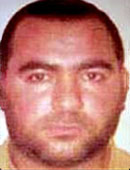
abu_duaThe FBI “most wanted” mugshot shows a tough, swarthy figure, his hair in a jailbird crew-cut. The $10 million price on his head, meanwhile, suggests that whoever released him from US custody four years ago may now be regretting it.

Taken during his years as a detainee at the US-run Camp Bucca in southern Iraq, this is the only known photograph of Abu Bakr al-Baghdadi, the new leader of al-Qaeda in Iraq and Syria. But while he may lack the photogenic qualities of his hero, Osama bin Laden, he is fast becoming the new poster-boy for the global jihadist movement.

For anyone who has any doubts about the brutality of ISIS, then if you can stomach it, watch some of “The Clanging of the Swords.” This recently released movie could be described as Tarantino-style jihad — repulsive to most people, but presumably appealing to young men who want to kill in the name of Islam.

Facebooktwittermail

Syrian Islamist factions and Kurds in new push against ISIS

The Associated Press reports: A rebel coalition in Syria dominated by Islamic factions announced a new push to dislodge fighters from a rival, al-Qaida-inspired group from the northern province of Aleppo, activists said Wednesday.

The announcement, reported by the Britain-based Syrian Observatory for Human Rights, came as the al-Qaida-inspired Islamic State in Iraq and the Levant overran much of neighboring Iraq’s second-largest city, Mosul.

Details of the extent of the new offensive were not immediately known. But one of the groups in the coalition, the Islamic Front, claimed that its fighters recently captured four villages from the Islamic State and killed 17 of its fighters.

The infighting is part of broader rebel-on-rebel clashes that have raged across opposition-held northern Syria since early January.

The new coalition, called the “Operations Room for the People of the Levant” also includes Kurdish groups in Syria, which traditionally have focused on defending their own ethnic areas from other rebel groups, said Rami Abdurrahman of the Observatory.

The new offensive appears to have begun late Monday, said an Aleppo-based activist who uses the name Abu al-Hassan, when two chief towns controlled by the Islamic State, Manbij and al-Bab, came under attack.

The al-Qaida-linked Nusra Front and the Islamic Front attacked the town of al-Bab from the northwest, while Kurdish fighters attacked from the east, he said. [Continue reading…]

Facebooktwittermail

Poll: Palestinians prefer suing Israel at the ICC rather than starting third intifada

The Jerusalem Post reports: Palestinians want to bring Israel before the International Criminal Court more than they want to fight them in the streets in an armed third intifada, according to a poll conducted by Khalil Shikaki of the Palestinian Center for Policy and Survey Research.

Palestinians continue to support a two-state solution and do not believe that the newly unified Fatah-Hamas government is an obstacle to renewed negotiations, according to Shikaki’s data, which he presented at the 2014 Herzliya Conference on Tuesday.

Israelis also believe it is possible to negotiate with the new Palestinian government, according to pollster Mina Tzemach, who spoke on the same panel as Shikaki. [Continue reading…]

Facebooktwittermail

Mass sexual assaults continue as Egyptians celebrate Sisi’s rise to the presidency

The New York Times reports: A video showing a mass sexual assault on a nearly naked woman in the midst of inaugural celebrations for Egypt’s new president is testing his pledge to curb an epidemic of such attacks, with captured scenes of a police officer with a gun in his hand struggling against a crowd of men to extricate the victim.

At first a black shirt covered just her shoulders, her backside purple and black with bruises. Moments later, she is seen stripped completely, as her limp and reddened body is carried into a waiting vehicle.

Captured in a blurry two-minute video taken in Tahrir Square on Sunday and circulated via YouTube on Monday, the attack is forcing the new president, Abdel Fattah el-Sisi, to confront a phenomenon many here said resulted from the collapse of the police force during the uprising against Hosni Mubarak in 2011: the recurring mass sexual assaults that have taken place amid the crowds that have gathered in Tahrir Square ever since. [Continue reading…]

Facebooktwittermail

How malnutrition affects the microbiome

The Scientist reports: The gut microbiomes of young children don’t fully recover from the trauma of early-life malnourishment, even after they are treated with more-complete diets, according to a study published in Nature. A team led by Jeffrey Gordon of the Washington University in St. Louis sampled the gut microbiomes of healthy and malnourished children in Bangladesh and found that the microbiomes of children who were underfed and whose diets lacked essential nutrients looked less like those of adults and more like those of younger, healthy children.

“This is actually a real step forward in terms of having a technique to look at development of the microbiome in children,” said Josef Neu, a pediatrician at the University of Florida who studies gastrointestinal health of neonates and was not involved in the work.

The findings present a possible explanation for the commonly observed complications that malnourished children suffer even after they are treated with a standardized food regimen, including stunted growth, cognitive delays, and immune system problems. The researchers suggested that the immature gut microbiomes of malnourished children may be partially responsible for some of these long-term impairments. [Continue reading…]

Facebooktwittermail

Mosul, Iraq’s second-largest city, falls to ISIS

Karl Vick reports: The fall of Iraq’s second largest city to Islamist extremists Tuesday sends an alarming message about the deterioration of a country where the United States spent eight years, 4,500 lives and $1.7 trillion. Mosul, a city of 1.8 million located in the far north of the country, long cultivated a reputation as a military town. But Iraqi soldiers threw down their guns and stripped off their uniforms as the insurgents approached on Tuesday, according to officials stunned by the collapse of its defenses.

“When the battle got tough in the city of Mosul, the troops dropped their weapons and abandoned their posts, making it an easy prey for the terrorists,” Osama Nuajaifi, the speaker of Iraq’s parliament who hails from Mosul, said during a news conference in Baghdad. “Everything is fallen. It’s a crisis. Having these terrorist groups control a city in the heart of Iraq threatens not only Iraq but the entire region.”

The fall of Mosul after only four days of fighting speaks volumes about both the state of Iraqi forces and the depth of the sectarian division at the bleeding heart of the nation’s ongoing crisis: The population of Mosul is mostly Sunni, and the central government led by prime minister Nouri al-Maliki is widely criticized as favoring the country’s Shiite majority. Al-Maliki is likely to remain in office after the April 30 elections left him with the largest share of votes and negotiating chiefly with other Shiite parties to form a new governing coalition.

The insurgents—who raised black flags over parts of the city Tuesday—are Sunni extremists known as the Islamic State of Iraq and Syria (ISIS), a group al-Qaeda disowned as too extreme. [Continue reading…]

Facebooktwittermail

Israeli spy general says Iran serious in negotiations on nuclear deal

Reuters reports: Iran is negotiating seriously on a deal to curb its disputed nuclear programme, a senior Israeli intelligence officer said on Monday in a shift of tone from Prime Minister Benjamin Netanyahu’s scepticism.

Brigadier-General Itai Brun, military intelligence’s chief analyst, told a strategic forum that Iran was honouring a November interim agreement that Netanyahu had condemned as an “historic mistake” for easing sanctions on Israel’s arch-enemy.

With the United States, Russia, China, France, Britain and Germany now stepping up contacts with Iran ahead of their self-declared July 20 deadline for a final accord, Brun voiced cautious optimism. [Continue reading…]

Facebooktwittermail

Spying gone wild: NSA claims it can’t control its own data collections systems

The Washington Post reports: The National Security Agency recently used a novel argument for not holding onto information it collects about users online activity: it’s too complex.

The agency is facing a slew of lawsuits over its surveillance programs, many launched after former NSA contractor Edward Snowden leaked information on the agency’s efforts last year. One suit that pre-dates the Snowden leaks, Jewel v. NSA, challenges the constitutionality of programs that the suit allege collect information about American’s telephone and Internet activities.

In a hearing Friday, U.S. District for the Northern District of California Judge Jeffrey S. White reversed an emergency order he had issued earlier the same week barring the government from destroying data that the Electronic Frontier Foundation had asked be preserved for that case. The data is collected under Section 702 of the Amendments Act to the Foreign Intelligence Surveillance Act.

But the NSA argued that holding onto the data would be too burdensome. “A requirement to preserve all data acquired under section 702 presents significant operational problems, only one of which is that the NSA may have to shut down all systems and databases that contain Section 702 information,” wrote NSA Deputy Director Richard Ledgett in a court filing submitted to the court.

The complexity of the NSA systems meant preservation efforts might not work, he argued, but would have “an immediate, specific, and harmful impact on the national security of the United States.” Part of this complexity, Ledgett said, stems from privacy restrictions placed on the programs by the Foreign Intelligence Surveillance Court.

“Communications acquired pursuant to Section 702 reside within multiple databases contained on multiple systems and the precise manner in which NSA stays consistent with its legal obligations under the [FISA Amendments Act] has resulted from years of detailed interaction” with the Foreign Intelligence Surveillance Court and the Department of Justice, Ledgett wrote. NSA regularly purges data “via a combination of technical and human-based processes,” he said.

The government’s explanation raises more concerns, said Cindy Cohn, EFF’s legal director. “To me, it demonstrates that once the government has custody of this information even they can’t keep track of it anymore even for purposes of what they don’t want to destroy,” she said in an interview. [Continue reading…]

Facebooktwittermail

Obama opens third prison camp for child refugees

Reuters reports: The Obama administration on Monday announced it is designating a third U.S. military base for emergency housing of children immigrating illegally into the United States without parents or relatives, as the cost of caring for these minors escalated.

Senior administration officials, who asked not to be identified, told reporters that an Army base at Fort Sill, Oklahoma, will initially hold 600 “unaccompanied minors” and eventually will be able to accommodate up to 1,200.

In recent weeks, the Obama administration has opened similar emergency shelters at Lackland Air Force Base in San Antonio, Texas, and Naval Base Ventura County in Southern California.

The moves come amid a tidal wave of children trying to slip into the United States, largely from Honduras, El Salvador and Guatemala, often to join a parent already here.

Reuters previously reported that the administration was seeking about $2 billion for the Department of Health and Human Services to handle the influx in fiscal 2015, which begins on Oct. 1, more than double the $868 million appropriated this year.

HHS takes custody of the children shortly after they are detained at the border by federal law enforcement agents.

On Monday, administration officials said they would be asking Congress for an additional $560 million to help the Department of Homeland Security cope with the illegal border crossings.

One week ago, the White House director of domestic policy, Cecilia Munoz, attributed the rapid run-up in illegal immigration by unaccompanied minors to growing violence — often drug related or due to domestic abuse — in the three Central American countries.

That violence, she said, was encouraging children, including an unusually high number of girls and children under the age of 13, to leave home unaccompanied by parents or relatives. [Continue reading…]

Facebooktwittermail

‘It’s hell down there’: Inside the battle for eastern Ukraine

CNN reports: In a forest of pines to the east of Slovyansk, Prapor and his seventy men were digging in Thursday. A man in his late-fifties with a magnificent beard and four different weapons, Prapor freely admitted he was not a local. But he was here — he said — to resist the “Ukrainian fascists” in Krasny Liman, a nearby town just recaptured by government forces.

He was dismissive of the group that had fled Krasny — “Cossacks,” he sneered. He had already lost seven men, but his fighters were the bravest. They would not run away.

Meeting Prapor was revealing in several ways. Pro-Russian separatists working in eastern Ukraine are better organized, better armed (Prapor’s group had a truck-mounted anti-aircraft gun that was clearly working), and more of them appear to come from beyond Ukraine. And they are building a maze of roadblocks and defensive positions across the region.

But a few kilometers beyond, in rolling countryside under a hot sun, a very different group was setting up camp: a substantial force of Ukrainian paratroopers, with armored personnel carriers and artillery. Above, a reconnaissance plane drifted in loops.

Both sides look — at least militarily — more competent than they did a few weeks ago. Checkpoints used to be few and far between. Now there is a maze of them — more separatist than Ukrainian — dotted across both the Donetsk and Luhansk regions. The insignia of the “Vostok Battalion” — a group that includes both Russian and local fighters — is common at the roadblocks that have sprung up on the main roads leading into Donetsk.

A few weeks ago, we watched the bedraggled remnants of the Ukrainian army’s 25th Division surrounded and harangued by locals near Kramatorsk. Now there is a sense of purpose among the units newly deployed, and a greater readiness to use heavy armor. Throughout an extensive tour of the Slovyansk area, the crump of artillery and boom of tankfire sounded periodically.

But the targeting is sometimes puzzling.

Krasny Liman is a town of some 20,000 people and a major railway junction. But one of its two hospitals is in ruins, struck repeatedly by what appeared to have been mortars or shells. There was also evidence of strafing from the air. A tearful nurse approached us, saying that whoever had done this was not human. She — and others — thought Ukrainian forces were responsible, but they could not be sure. Patients had been evacuated, but one middle-aged man sat listlessly on a bench outside. He had nowhere to go, he told us; a doctor came past once a day to give him an injection.

The new mayor, installed Thursday as Kiev’s local appointee, said he would investigate the bombing of the hospital. But for the government, recovering Krasny Liman is a rare victory — and judging by the number of troops installed around the town, one it intends to protect. Now Ukrainian armor seems intent on squeezing separatist positions closer to Slovyansk.

It seems like eastern Ukraine is half-way through a game of chess, pieces scattered across the board in threatening positions, with neither black nor white close to checkmate. Civilians, whatever their allegiance, are suffering the consequences. [Continue reading…]

Facebooktwittermail

Documents show how Russia’s troll army hit America

BuzzFeed reports: Russia’s campaign to shape international opinion around its invasion of Ukraine has extended to recruiting and training a new cadre of online trolls that have been deployed to spread the Kremlin’s message on the comments section of top American websites.

Plans attached to emails leaked by a mysterious Russian hacker collective show IT managers reporting on a new ideological front against the West in the comments sections of Fox News, Huffington Post, The Blaze, Politico, and WorldNetDaily.

The bizarre hive of social media activity appears to be part of a two-pronged Kremlin campaign to claim control over the internet, launching a million-dollar army of trolls to mold American public opinion as it cracks down on internet freedom at home.

“Foreign media are currently actively forming a negative image of the Russian Federation in the eyes of the global community,” one of the project’s team members, Svetlana Boiko, wrote in a strategy document. “Additionally, the discussions formed by comments to those articles are also negative in tone.

“Like any brand formed by popular opinion, Russia has its supporters (‘brand advocates’) and its opponents. The main problem is that in the foreign internet community, the ratio of supporters and opponents of Russia is about 20/80 respectively.”

The documents show instructions provided to the commenters that detail the workload expected of them. On an average working day, the Russians are to post on news articles 50 times. Each blogger is to maintain six Facebook accounts publishing at least three posts a day and discussing the news in groups at least twice a day. By the end of the first month, they are expected to have won 500 subscribers and get at least five posts on each item a day. On Twitter, the bloggers are expected to manage 10 accounts with up to 2,000 followers and tweet 50 times a day. [Continue reading…]

Facebooktwittermail

Major terrorism trial could be held in secret for first time in UK legal history

The Guardian reports: A major terrorism trial is set to be held entirely in secret for the first time in British legal history in an unprecedented departure from the principles of open justice, the court of appeal has heard.

The identities of the two defendants charged with serious terror offences are being withheld from the public, and the media are banned from being present in court to report the forthcoming trial against the two men, known only as AB and CD.

The unprecedented secrecy has been imposed on the proceedings after the Crown Prosecution Service obtained legal orders to withhold the names of the defendants and allow the trial to take place in private on the grounds, they said, of national security.

At the court of appeal in London, Anthony Hudson, representing the Guardian and several other media organisations, challenged the orders, which will allow a secret criminal trial to take place for the first time in legal history. [Continue reading…]

Facebooktwittermail

NSA reform bill finds few allies before Senate intelligence committee

The Guardian reports: Senators on the intelligence committee expressed deep doubts about curbing the National Security Agency’s broad data collection powers as the upper legislative chamber begins to consider a landmark surveillance bill that passed the House last month.

Lawmakers attacked the USA Freedom Act as insufficiently protective of both privacy and national security as intelligence and law enforcement officials, who now back the bill, conceded that under its provisions they would still have access to a large amount of US phone and other data.

Deputy attorney general James Cole told the Senate intelligence committee on Tuesday that the bill allows the NSA to collect information “two hops“, or degrees removed from a targeted phone account. “It gives us the prospective collection, it gives us a wider range of information that we wouldn’t have under normal authorities,” he said.

That account bothered three Democratic privacy advocates on the panel – Oregon’s Ron Wyden, Colorado’s Mark Udall and New Mexico’s Martin Heinrich – but most of the consternation shown by the panel came from the opposite direction, indicating that a surveillance bill whose privacy protections have been largely weakened will still face a difficult road in the Senate.

The panel’s leaders, Democrat Dianne Feinstein of California and Republican Saxby Chambliss of Georgia – both of whom remain staunch advocates of the bulk domestic phone metadata collection that the bill is aimed at ending – feared that restricting the volume of data to which the NSA has access will leave the US vulnerable to a terrorist attack.

In some cases, the panel, charged with overseeing the intelligence agencies and preventing abuse, advocated greater authorities for the surveillance agency than the NSA itself requested. [Continue reading…]

Facebooktwittermail

Taliban warned U.S. that drones nearly killed Bergdahl

The Wall Street Journal reports: The Taliban warned the U.S. during prisoner-exchange negotiations that led to the release of Sgt. Bowe Bergdahl that U.S. drone strikes had come close on several occasions to killing the soldier while he was in captivity, U.S. officials said.

U.S. intelligence agencies believe Sgt. Bergdahl was being held at the time in the tribal areas of Pakistan, where the Central Intelligence Agency carried out an estimated 27 drone strikes in 2013, according to the New America Foundation, a Washington think tank that tracks the drone program. The CIA hasn’t conducted any drone strikes in the tribal areas since Dec. 25, the foundation said. [Continue reading…]

Facebooktwittermail
