The race to solar power Africa

Bill McKibben writes: The cacao-farming community of Daban, in Ghana, is seven degrees north of the equator, and it’s always hot. In May, I met with several elders there to talk about the electricity that had come to the town a few months earlier, when an American startup installed a solar microgrid nearby. Daban could now safely store the vaccine for yellow fever; residents could charge their cell phones at home rather than walking to a bigger town to do it. As we talked, one of the old men handed me a small plastic bag of water, the kind street venders sell across West Africa—you just bite off a corner and drink. The water was ice-cold and refreshing, but it took me an embarrassingly long moment to understand the pleasure with which he offered it: cold water was now available in this hot place. There was enough power to run a couple of refrigerators, and so coldness was, for the first time, a possibility.

I’d come to Daban to learn about the boom in solar power in sub-Saharan Africa. The spread of cell phones in the region has made it possible for residents to pay daily or weekly bills using mobile money, and now the hope is that, just as cell phones bypassed the network of telephone lines, solar panels will enable many rural consumers to bypass the electric grid. From Ghana, I travelled to Ivory Coast, and then to Tanzania, and along the way I encountered a variety of new solar ventures, most of them American-led. Some, such as Ghana’s Black Star Energy, which had electrified Daban, install solar microgrids, small-scale versions of the giant grid Americans are familiar with. Others, such as Off-Grid Electric, in Tanzania and Ivory Coast, market home-based solar systems that run on a panel installed on each individual house. These home-based systems can’t produce enough current for a fridge, but they can supply each home with a few lights, a mobile-phone charger, and, if the household can afford it, a small, super-efficient flat-screen TV.

In another farming town, in Ivory Coast, I talked to a man named Abou Traoré, who put his television out in a courtyard most nights, so that neighbors could come by to watch. He said that they tuned in for soccer matches—the village tilts Liverpool, but has a large pocket of Manchester United supporters. What else did he watch? Traoré considered. “I like the National Geographic channel,” he replied—that is, the broadcast arm of the institution that became famous showing Westerners pictures of remote parts of Africa.

There are about as many people living without electricity today as there were when Thomas Edison lit his first light bulb. More than half are in sub-Saharan Africa. Europe and the Americas are almost fully electrified, and Asia is quickly catching up, but the absolute number of Africans without power remains steady. A World Bank report, released in May, predicted that, given current trends, there could still be half a billion people in sub-Saharan Africa without power by 2040. Even those with electricity can’t rely on it: the report noted that in Tanzania power outages were so common in 2013 that they cost businesses fifteen per cent of their annual sales. Ghanaians call their flickering power dum/sor, or “off/on.” Vivian Tsadzi, a businesswoman who lives not far from the Akosombo Dam, which provides about a third of the nation’s power, said that most of the time “it’s dum dum dum dum.” The dam’s head of hydropower generation, Kwesi Amoako, who retired last year, told me that he is proud of the structure, which created the world’s largest man-made lake. But there isn’t an easy way to increase the country’s hydropower capacity, and drought, caused by climate change, has made the system inconsistent, meaning that Ghana will have to look elsewhere for electricity. “I’ve always had the feeling that one of the main thrusts should be domestic solar,” Amoako said. “And I think we should put the off-grid stuff first, because the consumer wants it so badly.” [Continue reading…]


Facebooktwittermail

These are the civilian victims of the U.S.-led campaign against ISIS

Mike Giglio reports from Mosul: Residents of this quiet street in eastern Mosul sometimes see their former neighbor return to his rubbled home. He cuts a lonely figure as he climbs through the crushed concrete and twisted iron, stooping to dig for mementos — a photo, a scrap of clothes. Then he sits and cries.

Hassan Ali Hassan, 45, is a Jordanian who has lived for three decades in Mosul, where he married a local woman and raised a family. In June 2014, after ISIS captured the city, he tried to escape with his wife and three daughters to Amman, but the militants seized their passports and ordered them to stay.

Hassan and his family were still trapped in the city on Dec. 14, 2016, as Iraqi forces pressed their US-backed offensive to retake Mosul from ISIS. The fighting had not yet reached their neighborhood, and the family shared a late breakfast before Hassan stepped out to get gas for their generator. Barely a minute had passed when a massive explosion erupted behind him. He ran back to find his home demolished and engulfed in flames, pulverized by an airstrike carried out by the US-led coalition fighting ISIS. Body parts of his wife and daughters littered the street.

“We found some on the other houses here,” recalled a neighbor, Yasir Mohamed, on a recent afternoon, as some semblance of life returned to their neighborhood, called Hay al-Sukar, which was freed from ISIS in January. Reached later by phone, Hassan still seemed to be in shock. “Just everything was in pieces,” he said. “Everyone was dead.”

“Everything happened before my eyes,” he kept repeating.

Homes like Hassan’s riddle Mosul’s streets as Iraqi forces push into the last ISIS-held districts of the city. The US-led air campaign has taken a devastating toll on civilians — and there has yet to be an accounting of its extent. In any neighborhood, residents can quickly point the way to the wrecked houses nearby, detailing which ones held ISIS militants and which ones held only civilians. In late May, a reporter and photographer from BuzzFeed News visited seven sites where witnesses alleged that civilians were killed by airstrikes from the coalition. US warplanes lead the air campaign, but allies such as Britain, Australia, Canada, and France also participate.

The battle has seen some of the deadliest urban combat since World War II — and it has been defined by airstrikes. As of June 3, the coalition had launched some 24,464 munitions into Mosul since the offensive began in October 2016, according to US Department of Defense statistics, and the intensity of the strikes has increased under the Trump administration. In the two years prior to the offensive the US-led coalition launched roughly 13,000 strikes in Iraq. But it’s not just airstrikes that have been raining down on Mosul, endangering civilian lives. The US army has deployed advanced HIMARS rocket launchers, capable of firing six guided missiles from a range of more than 40 miles away. Both sides have used mortar bombs and other artillery. Iraqi jets have carried out airstrikes too. [Continue reading…]

Facebooktwittermail

Cyber-attack on UK parliament: Russia is suspected culprit

The Guardian reports: The Russian government is suspected of being behind a cyber-attack on parliament that breached dozens of email accounts belonging to MPs and peers.

Although the investigation is at an early stage and the identity of those responsible may prove impossible to establish with absolute certainty, Moscow is deemed the most likely culprit.

The disclosure follows the release of the first details of the “sustained” cyber-attack that began on Friday. Fewer than 90 email accounts belonging to parliamentarians are believed to have been hacked, a parliamentary spokesman said.

Amid fears that the breach could lead to blackmail attempts, officials were forced to lock MPs out of their own email accounts as they scrambled to minimise the damage from the incident. [Continue reading…]

Facebooktwittermail

Being bilingual makes you experience time differently

Quartz reports: A new study shows that the words we use to talk about time also shape our view of its passage. This, say researchers, indicates that abstract concepts like duration are relative rather than universal, and that they are also influenced rather than solely innate.

The work, published in the American Psychological Association’s Journal of Experimental Psychology: General on April 27, examined how Spanish- and Swedish-speaking bilinguals conceived of time. The researchers—from University of Stockholm in Sweden and the University of Lancaster in the UK—found that their subjects, 40 of whom were native Swedish speakers and 40 of whom were native Spanish speakers—tended to think about time in terms that correspond to each language’s descriptors when linguistically prompted in that particular language but moved fluidly from one concept of time to another generally. This was true regardless of their native language.

Different languages describe time differently. For example, Swedish and English generally refer to time according to physical distance (“a long time,” “a short break”). Meanwhile, languages like Spanish or Greek, say, refer to time in volume generally (“a big chunk of time,” “a small moment”). [Continue reading…]

Facebooktwittermail

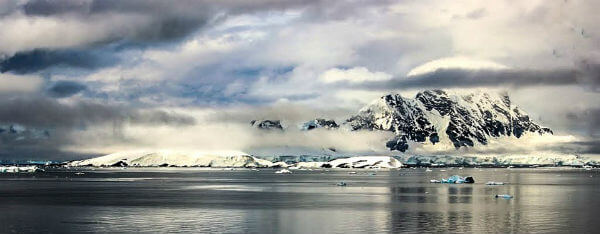
Antarctica is melting, and giant ice cracks are just the start

National Geographic reports: Seen from above, the Pine Island Ice Shelf is a slow-motion train wreck. Its buckled surface is scarred by thousands of large crevasses. Its edges are shredded by rifts a quarter mile across. In 2015 and 2016 a 225-square-mile chunk of it broke off the end and drifted away on the Amundsen Sea. The water there has warmed by more than a degree Fahrenheit over the past few decades, and the rate at which ice is melting and calving has quadrupled.

On the Antarctic Peninsula, the warming has been far greater—nearly five degrees on average. That’s why a Delaware-size iceberg is poised to break off the Larsen C Ice Shelf and why smaller ice shelves on the peninsula have long since disintegrated entirely into the waters of the Weddell Sea. But around the Amundsen Sea, a thousand miles to the southwest on the Pacific coast of Antarctica, the glaciers are far larger and the stakes far higher. They affect the entire planet.

The Pine Island Ice Shelf is the floating terminus of the Pine Island Glacier, one of several large glaciers that empty into the Amundsen Sea. Together they drain a much larger dome of ice called the West Antarctic Ice Sheet, which is up to two and a half miles thick and covers an area twice the size of Texas. The ice sheet is draped over a series of islands, but most of it rests on the floor of a basin that dips more than 5,000 feet below sea level. That makes it especially vulnerable to the warming ocean. If all that vulnerable ice were to become unmoored, break into pieces, and float away, as researchers increasingly believe it might, it would raise sea level by roughly 10 feet, drowning coasts around the world. [Continue reading…]

Facebooktwittermail

Trump allies push White House to consider regime change in Tehran

Politico reports: As the White House formulates its official policy on Iran, senior officials and key Trump allies are calling for the new administration to take steps to topple Tehran’s militant clerical government.

Supporters of dislodging Iran’s iron-fisted clerical leadership say it’s the only way to halt Tehran’s dangerous behavior, from its pursuit of nuclear weapons to its sponsorship of terrorism. Critics say that political meddling in Iran, where memories of a 1953 CIA-backed coup remain vivid, risks a popular backlash that would only empower hardliners.

That’s why President Barack Obama assured Iranians, in a 2013 speech at the United Nations, that “we are not seeking regime change.”

But influential Iran hawks want to change that under Trump.

“The policy of the United States should be regime change in Iran,” said Sen. Tom Cotton (R-Ark.), who speaks regularly with White House officials about foreign policy. “I don’t see how anyone can say America can be safe as long as you have in power a theocratic despotism,” he added. [Continue reading…]

Facebooktwittermail

Vladimir Putin is suddenly on the defensive against corruption

Stephen Sestanovich writes: For years now, Putin has claimed — with brazen but disarming candor — to be fighting hard against corruption and the abuse of state power. In his 2015 speech to parliament, he complained that the bullying of legitimate businesses by bribe-seeking officials was a blight on the Russian economy. In his April 2016 call-in, he took questions about shakedowns by government inspectors, about real estate scams enabled by the courts, about the enslavement of workers in a fish cannery (ignored by the police), about the illegal seizure of a Moscow research institute by officials who wanted its land, and more. Putin has said that without fundamental reforms, the country’s economic growth will “hover around zero.” Last summer he told parliamentary candidates of his own party, United Russia, that they had to work harder to win the people’s trust.

Most of this was, of course, meaningless rhetoric. Any serious follow-through would threaten the system Putin has created.

But that’s why we should pay attention when he changes course. On the program last week, Putin announced that corruption is simply “not among the top” issues bothering Russians. When an earnest high school student complained about light punishment meted out to corrupt officials, the president’s initial, prickly response was to suggest that someone else had written the question. His lame concluding plea: “Let us rely on the work of the judicial system.”

Dismissing corruption and the abuse of power didn’t keep Putin from playing his usual role as national problem solver. Was a young teacher paid too little? The president said he’d look into it. Was a single mother in Siberia homeless after forest fires? Putin said he’d talk to the governor of her region. And the woman who lost her home to floods in southern Russia? Again, he promised to talk to her governor.

Yet through all this Putin kept repeating that there was something “strange” about the problems being raised. After all, money had been budgeted to help victims of natural disasters. Maybe, he volunteered, one of the governors was just new on the job? He steered consistently clear of the need for systemic reform or stronger anti-corruption initiatives. Sure, officials at all levels sometimes made wrong decisions, Putin admitted, adding, “I will reprimand them for this” (a typical response). And when asked what he did when people cheated him, the president modeled acceptance: “I try not to make a fuss.”

It’s obvious why Putin has gotten nervous about the corruption issue. His most visible political opponent, Alexei Navalny, has made it the centerpiece of hugely popular online videos and of recent rallies against the “crooks and thieves” of the current regime. It was always a bit shocking that Putin thought he could claim to be a champion of clean government, but somehow he got away with it. Now, apparently, he worries that even talking about corruption will validate Navalny’s critique. [Continue reading…]

Facebooktwittermail

Why CIA vets say Putin hates America — and why Trump shouldn’t trust him

The Daily Beast reports: The Russian intelligence officers picked up the American spies from Moscow’s Metropole Hotel and drove them a few short blocks to an ornate, lushly appointed guest house. It used to be the home of a wealthy Jewish dentist before being turned into a meeting place for Russia’s intelligence services.

The 17th-century mansion served as backdrop of a 2007 summit of CIA officers, FBI agents, and their Russian counterparts, as the Bush administration tried to build a cooperative relationship with Moscow on counterterrorism.

Over glasses of cognac and the occasional shot of chilled vodka, the Russian and American agents sat across from each other at a long conference table, in what turned into an interrogation instead of the hoped-for bridge-building exercise. The Russians probed the Americans to find out where their sources were, how big their networks were and any potential weaknesses to exploit them later.

“It was worse than a polygraph,” one former senior intelligence officer told The Daily Beast. “They used different people to ask us the same questions over and over, each time phrased in slightly different ways, as if to see whether we were lying,” and to trick information out of them.

That interaction is emblematic of 20 years of U.S. attempts to reach out to Moscow, with the initially Pollyannish new American administration seeking cooperation, and the Russians using each opportunity to gather intelligence on their enemy to advance their own interests.

“We, the United States, are the ‘main enemy’ to them,” said former CIA officer John Sipher. “In their mind, they are at war with us. Anything that’s hurtful to the United States is positive for Russia.” That goes doubly for Russian President Vladimir Putin, who once led Russia’s FSB, the successor to the infamous Soviet-era KGB. [Continue reading…]

Facebooktwittermail

Evidence is mounting that Russia took four clear paths to meddle in the U.S. election

Business Insider reports: It was September 2015 when the FBI first noticed that Russian hackers had infiltrated a computer system belonging to the Democratic National Committee.

It was the first sign that Moscow was attempting to meddle in the presidential election.

Nearly a year later, further reporting and testimony from current and former intelligence officials have painted a portrait of Russia’s election interference as a multifaceted, well-planned, and coordinated campaign aimed at undermining the backbone of American democracy: free and fair elections.

Now, as FBI special counsel Robert Mueller and congressional intelligence committees continue to investigate Russia’s election interference, evidence is emerging that the hacking and disinformation campaign waged at the direction of Russian President Vladimir Putin took at least four separate but related paths.

The first involved establishing personal contact with Americans perceived as sympathetic to Moscow — such as former Defense Intelligence Agency chief Michael Flynn, former Trump campaign chairman Paul Manafort, and early Trump foreign-policy adviser Carter Page — and using them as a means to further Russia’s foreign-policy goals.

The second involved hacking the Democratic National Committee email servers and then giving the material to WikiLeaks, which leaked the emails in batches throughout the second half of 2016.

The third was to amplify the propaganda value of the leaked emails with a disinformation campaign waged predominantly on Facebook and Twitter, in an effort to use automated bots to spread fake news and pro-Trump agitprop.

And the fourth was to breach US voting systems in as many as 39 states leading up to the election, in an effort to steal registration data that officials say could be used to target and manipulate voters in future elections. [Continue reading…]

Facebooktwittermail

Trump White House has taken little action to stop next election hack

NBC News reports: The Trump administration has taken little meaningful action to prevent Russian hacking, leaking and disruption in the next national election in 2018, despite warnings from intelligence officials that it will happen again, officials and experts told NBC News.

“This attack is really the political equivalent of 9/11 — it is deadly, deadly serious,” said Michael Vickers, a career intelligence official who was the Pentagon’s top intelligence official in the Obama administration. “The Russians will definitely be back, given the success they had…I don’t see much evidence of a response.”

According to recent Congressional testimony, Trump has shown no interest in the question of how to prevent future election interference by Russia or another foreign power. Former FBI Director James Comey told senators that Trump never asked him about how to stop a future Russian election cyber attack, and Attorney General Jeff Sessions, who sits on the National Security Council, testified that he has not received a classified briefing on Russian election interference.

Dozens of state officials told NBC News they have received little direction from Washington about election security. [Continue reading…]

Facebooktwittermail

Trump’s Twitter feed is a gold mine for foreign spies

Nada Bakos writes: Every time President Trump tweets, journalists and Twitter followers attempt to analyze what he means. Intelligence agencies around the world do, too: They’re trying to determine what vulnerabilities the president of the United States may have. And he’s giving them a lot to work with.

Trump’s Twitter feed is a gold mine for every foreign intelligence agency. Usually, intelligence officers’ efforts to collect information on world leaders are methodical, painstaking and often covert. CIA operatives have risked their lives to learn about foreign leaders so the United States could devise strategies to counter our adversaries. With Trump, though, secret operations are not necessary to understand what’s on his mind: The president’s unfiltered thoughts are available night and day, broadcast to his 32.7 million Twitter followers immediately and without much obvious mediation by diplomats, strategists or handlers.

Intelligence agencies try to answer these main questions when looking at a rival head of state: Who is he as a person? What type of leader is he? How does that compare to what he strives to be or presents himself as? What can we expect from him? And how can we use this insight to our advantage?

At the CIA, I tracked and analyzed terrorists and other U.S. enemies, including North Korea. But we never had such a rich source of raw intelligence about a world leader, and we certainly never had the opportunity that our adversaries (and our allies) have now — to get a real-time glimpse of a major world leader’s preoccupations, personality quirks and habits of mind. If we had, it would have given us significant advantages in our dealings with them. [Continue reading…]

Facebooktwittermail

Trump just ended a long tradition of celebrating Ramadan at the White House

The Washington Post reports: In the early days of December 1805, a handful of prominent politicians received formal invitations to join President Thomas Jefferson for a White House dinner.

Such entreaties were not uncommon: Jefferson frequently hosted lawmakers for political working dinners at the White House, almost always commencing them about 3:30 in the afternoon, shortly after the House or Senate had adjourned for the day.

But this gathering, scheduled for Dec. 9, would be slightly different.

dinner will be on the table precisely at sun-set — ” the invitations read. “The favour of an answer is asked.”

The occasion was the presence of a Tunisian envoy to the United States, Sidi Soliman Mellimelli, who had arrived in the country just the week before, in the midst of America’s ongoing conflict with what were then known as the Barbary States.

And the reason for the dinner’s later-than-usual start was Mellimelli’s observance of Ramadan, a holy month for Muslims in which observers fast between dawn and dusk. Only after sunset do Muslims break their fast with a meal, referred to as an iftar.

Jefferson’s decision to change the time of the meal to accommodate Mellimelli’s observance of Ramadan has been seized on by both sides in the 21st-century debate over Islam more than 200 years later. Historians have cited the meal as the first time an iftar took place in the White House — and it has been referenced in recent White House celebrations of Ramadan as an embodiment of the Founding Father’s respect for religious freedom. Meanwhile, critics on the far right have taken issue with the characterization of Jefferson’s Dec. 9, 1805, dinner as an iftar.

Whatever Jefferson could have foreseen for the young country’s future, it appears the modern-day White House tradition of marking Ramadan with an iftar dinner or Eid celebration has come to an end. [Continue reading…]

Facebooktwittermail

Turkey drops evolution from curriculum, angering secularists

The New York Times reports: Turkey has removed the concept of evolution from its high school curriculum, in what critics fear is the latest attempt by President Recep Tayyip Erdogan’s government to erode the country’s secular character.

Starting in September, a chapter on evolution will no longer appear in ninth graders’ textbooks because it is considered too “controversial” an idea, an official announced this week.

“Our students don’t have the necessary scientific background and information-based context needed to comprehend” the debate about evolution, said the official, Alpaslan Durmus, the chairman of the Education Ministry’s Education and Discipline Board, which decides the curriculum, in a video posted on the ministry’s website.

The news has deepened concerns among Mr. Erdogan’s critics that the president, a conservative Muslim, wants to radically change the identity of a country that was founded in 1923 along staunchly secular lines. [Continue reading…]

Facebooktwittermail

Why your brain hates other people — and how to make it think differently

Robert Sapolsky writes: As a kid, I saw the 1968 version of Planet of the Apes. As a future primatologist, I was mesmerized. Years later I discovered an anecdote about its filming: At lunchtime, the people playing chimps and those playing gorillas ate in separate groups.

It’s been said, “There are two kinds of people in the world: those who divide the world into two kinds of people and those who don’t.” In reality, there’s lots more of the former. And it can be vastly consequential when people are divided into Us and Them, ingroup and outgroup, “the people” (i.e., our kind) and the Others.

Humans universally make Us/Them dichotomies along lines of race, ethnicity, gender, language group, religion, age, socioeconomic status, and so on. And it’s not a pretty picture. We do so with remarkable speed and neurobiological efficiency; have complex taxonomies and classifications of ways in which we denigrate Thems; do so with a versatility that ranges from the minutest of microaggression to bloodbaths of savagery; and regularly decide what is inferior about Them based on pure emotion, followed by primitive rationalizations that we mistake for rationality. Pretty depressing.

But crucially, there is room for optimism. Much of that is grounded in something definedly human, which is that we all carry multiple Us/Them divisions in our heads. A Them in one case can be an Us in another, and it can only take an instant for that identity to flip. Thus, there is hope that, with science’s help, clannishness and xenophobia can lessen, perhaps even so much so that Hollywood-extra chimps and gorillas can break bread together. [Continue reading…]

Facebooktwittermail

Trump slanders Comey in Fox & Friends interview

The New York Times reports: President Trump appeared to acknowledge on Friday in an interview that his tweet hinting of taped conversations with James B. Comey was intended to influence the fired F.B.I. director’s testimony before Congress, and he emphasized that he committed “no obstruction” of the inquiries into whether his campaign colluded with Russia.

The interview, with “Fox & Friends,” was shown one day after the president tweeted what most people in Washington had already come to believe: that he had not made recordings of his conversations with Mr. Comey.

Instead, the president explained in the television interview, his tweets were referring to the possibility that anyone could have taped those discussions.

“I’ve been reading about it for the last couple of months about the seriousness of the horribleness of the situation with surveillance all over the place,” the president said in the interview. “So you never know what’s out there, but I didn’t tape, and I don’t have any tape and I didn’t tape.”

When the Fox interviewer suggested that the possible existence of recordings might make sure Mr. Comey “stayed honest in those hearings,” Mr. Trump paused before responding, “Well, it wasn’t very stupid, I can tell you that.”

Referring to Mr. Comey, the president said that “when he found out that I, you know, that there may be tapes out there whether it’s governmental tapes or anything else and who knows, I think his story may have changed.” [Continue reading…]

“When he found out that I…” — at this point Trump’s brain catches up with his mouth. He can’t say that Comey “found out” that Trump recorded their conversations, having finally confirmed what everyone already assumed — that he didn’t record them.

Comey’s revelation, Trump would have us believe, was that thanks to a tweet, Comey firstly was alerted to the possibility that their conversations could have been recorded by parties unknown, and secondly on that basis he had second thoughts about lying about the content of those conversations.

Put simply, Trump is saying that had he not alerted Comey to the possibility of having been recorded, the former director of the FBI would have lied.

What Trump has yet to grasp is that each time he questions Comey’s integrity, he’s also implicitly questioning the integrity of the FBI officials and Mueller’s team who are currently investigating him.

Trump persistently acts as a man who sees himself as the target of an investigation he wants to thwart, undermine, and swiftly curtail. He has zero interest in assisting the investigation or supporting its conclusions.

He thereby provides compelling reason for the investigators to be tireless, tenacious and resolute in their pursuit of the truth.

Facebooktwittermail