The deal the President struck with Republican leaders is an abomination.
It will cost $900 billion over the next two years — larger than the bailout of Wall Street, GM, and Chrysler put together, larger than the stimulus package, larger than anything that’s come out of Washington in years.
It makes a mockery of deficit reduction. Worse, the lion’s share of that $900 billion will go to the very rich. Families with incomes of over $1 million will reap an average of about $70,000, while middle-class families earning $50,000 a year will get an average of around $1,500. In addition, the deal just about eviscerates the estate tax — yanking the exemption up to $5 million per person and a maximum rate of 35 percent.
And for what?
Wealthy families won’t spend nearly as large a share of what they get out of this deal as will middle-class and working-class families, so it doesn’t do much to stimulate the economy.
The deal further concentrates income and wealth in America — when it’s already more concentrated than at any time in the last 80 years.
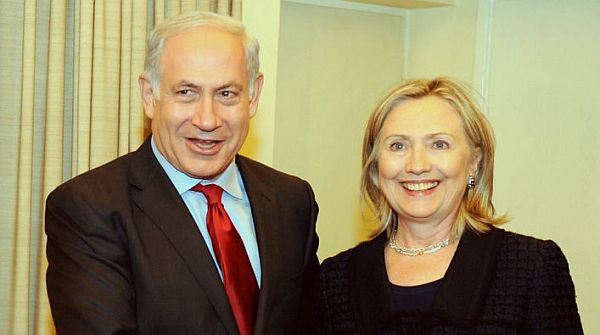
I guess Hillary Clinton already has her hands full overseeing the State Department’s UN credit card number theft operations along with coordinating cyber attacks on WikiLeaks — the Middle East peace process would just have to go on the back burner. There will be a statement tomorrow.
I wonder whether Israel still gets a free squadron of F-35 striker jets, for… well, just for being Israel. On the other hand, the US could consider offering firefighting equipment instead of fighter jets.
The decision to throw in the towel on getting a paltry three-month extension of the settlement slowdown is not “a retreat,” the Washington Institute for Near East Policy’s David Makovsky tells Politico. That’s true. You can only retreat if you first advance.
The United States has decided to abandon an effort to persuade Israel to issue a new temporary West Bank settlement moratorium in order for direct Israeli-Palestinian peace talks to resume, U.S. officials said Tuesday.
“After consulting with the parties, we have determined that a moratorium extension will not at this time provide the best basis for resuming negotiations,” a U.S. official said on the condition of anonymity Tuesday.
“We are still going to continue our engagement with both sides on the core issues and we continue to work towards the goal of a framework agreement,” the official said.
“We hope, obviously, to get the parties to direct talks, but in the meantime, we will continue our engagement with both sides,” the official said, declining to use the word “proximity” in reference to the talks. “We are not changing course. We are still very much committed” to getting a framework agreement.
Secretary of State Hillary Clinton is due to make a statement Wednesday on the Middle East peace process. On Friday, Clinton will speak to the Saban forum, which will also be addressed by Palestinian Nation Prime Minister Salam Fayyad and Israeli Defense Minister Ehud Barak.
There will be “no dramatic change” in policy that Clinton announces, a second U.S. official said Tuesday on condition of anonymity.
State Department spokesman PJ Crowley insists: “The process has not stopped. We obviously recognize that, we face a difficult obstacle, and we will continue to engage the parties on the way forward.”
Meanwhile, Brazil and Argentina are showing another way forward which does not depend on the ineffectual Obama administration: recognizing the state of Palestine.
Who has benefited most from the assassination of Rafik Hariri in Beirut in 2005? As the International Court of Justice arrives at its version of events, Dyab Abou Jahjah, writing in Open Democracy, finds confirmation in WikiLeaks for pointing us in a different direction.
Lebanon nowadays seems much bigger than it actually is. In a way this is no surprise for a country that always was a playground for regional and international agendas and a laboratory for testing any new formula in the area. However, this time, Lebanon is much more than that. Since 2006 it has become clear to all serious observers that this country is the focal point of a strategic divide, or more accurately the strategic divide in the Middle East. By virtue of the victory of Hezbollah against Israel in 2006, the Lebanese resistance has become a major factor in tipping the balance in favour of the Syrian/Iranian influence in the region as against that of the American/Israeli-led project. The latter project aims at further fragmenting political and social regional structures based upon sectarian and ethnic divisions, in order to create a new Middle East in which – to put it simply – Israel can play boss over everybody.
The Iranian and the Syrian regimes naturally oppose this scheme as it targets them in the first instance, but Iran at least also opposes this for ideological reasons. For the surge of the neo-conservative ‘creative chaos’ strategy in Iraq and beyond, the war against Lebanon in 2006 was supposed to be the final blow to any resistance, especially as this occurred at a time when Iraqi resistance was starting to be divided, weak and marginal, and the American grip over Iraq was growing stronger. Hezbollah’s defeat of the Israeli onslaught stopped the American surge in its tracks. The tide has started to turn since that moment: since then, both the Lebanese resistance and its Syrian and Iranian allies have been strengthened.
At this point, for the Americans and the Israelis a new priority was established: to destroy Hezbollah by any means necessary. This conclusion is confirmed by one of the documents lately published on wikileaks where the heads of the CIA and the Mossad are to be observed contemplating a possible augmentation of the pressure on Syria to make it take its distance from Iran, in order eventually to weaken Hezbollah. In that conversation between Meir Dagan and Frances Townsend, Dagan conveys to his American counterpart the “advantage of such an approach” – that, “the legal ground is already in place for action by the UNSC.” It is in this context that one must read the actions of the international tribunal investigating the death of Rafik Hariri and the indictment of Hezbollah that it will be releasing shortly.
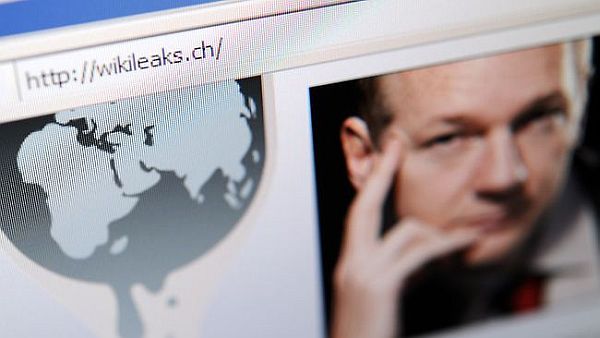
Well, they got him at last. WikiLeaks founder Julian Assange, the target of several of the world’s most powerful governments, turned himself into British authorities today and is now at the mercy of state authorities who have already shown their wolfish – and lawless – desire to destroy him and his organization.
It has been, by any standard, an extraordinary campaign of vilification and persecution, wholly comparable to the kind of treatment doled out to dissidents in China or Burma. Lest we forget, WikiLeaks is a journalistic outlet – just like The New York Times, the Guardian and Der Spiegel, all of whom are even now publishing the very same material – leaked classified documents — available on WikiLeaks. The website is also a journalistic outlet just like CNN, ABC, CBS, Fox and other mainstream media venues, where we have seen an endless parade of officials – and journalists! – calling for Assange to be prosecuted or killed outright. Every argument being made for shutting down WikiLeaks can – and doubtless will – be used against any journalistic enterprise that publishes material that powerful people do not like.
And the leading role in this persecution of truth-telling is being played by the administration of the great progressive agent of hope and change, the self-proclaimed heir of Martin Luther King and Mahatma Gandhi, the winner of the Nobel Peace Prize, Barack Obama. His attorney general, Eric Holder, is now making fierce noises about the “steps” he has already taken to bring down WikiLeaks and criminalize the leaking of embarrassing information. And listen to the ferocious reaction of that liberal lioness, Sen. Dianne Feinstein, who took to the pages of Rupert Murdoch’s Wall Street Journal to call for Assange to be put in prison – for 2,500,000 years:
When WikiLeaks founder Julian Assange released his latest document trove—more than 250,000 secret State Department cables—he intentionally harmed the U.S. government. The release of these documents damages our national interests and puts innocent lives at risk. He should be vigorously prosecuted for espionage.
“The law Mr. Assange continues to violate is the Espionage Act of 1917. That law makes it a felony for an unauthorized person to possess or transmit “information relating to the national defense which information the possessor has reason to believe could be used to the injury of the United States or to the advantage of any foreign nation.” … Importantly, the courts have held that “information relating to the national defense” applies to both classified and unclassified material. Each violation is punishable by up to 10 years in prison.
So there you have it. Ten years for each offense; 250,000 separate offenses; thus a prison term of 2.5 million years. Naturally, tomorrow the same newspaper will denounce Feinstein for being such a namby-pamby terrorist-coddling pinko: “Why didn’t she call for Assange to be torn from limb to limb by wild dogs, as any right-thinking red-blooded American would do!?”
Like a lot of people, I am conflicted about Wikileaks.
Citizens of a functioning democracy must be able to know what the state is saying and doing in our name, to engage in what Pierre Rosanvallon calls “counter-democracy”*, the democracy of citizens distrusting rather than legitimizing the actions of the state. Wikileaks plainly improves those abilities.
On the other hand, human systems can’t stand pure transparency. For negotiation to work, people’s stated positions have to change, but change is seen, almost universally, as weakness. People trying to come to consensus must be able to privately voice opinions they would publicly abjure, and may later abandon. Wikileaks plainly damages those abilities. (If Aaron Bady’s analysis is correct, it is the damage and not the oversight that Wikileaks is designed to create.*)
And so we have a tension between two requirements for democratic statecraft, one that can’t be resolved, but can be brought to an acceptable equilibrium. Indeed, like the virtues of equality vs. liberty, or popular will vs. fundamental rights, it has to be brought into such an equilibrium for democratic statecraft not to be wrecked either by too much secrecy or too much transparency.
As Tom Slee puts it, “Your answer to ‘what data should the government make public?’ depends not so much on what you think about data, but what you think about the government.”* My personal view is that there is too much secrecy in the current system, and that a corrective towards transparency is a good idea. I don’t, however, believe in total transparency, and even more importantly, I don’t think that independent actors who are subject to no checks or balances is a good idea in the long haul.
If the long haul were all there was, Wikileaks would be an obviously bad thing. The practical history of politics, however, suggests that the periodic appearance of such unconstrained actors in the short haul is essential to increased democratization, not just of politics but of thought.
We celebrate the printers of 16th century Amsterdam for making it impossible for the Catholic Church to constrain the output of the printing press to Church-approved books*, a challenge that helped usher in, among other things, the decentralization of scientific inquiry and the spread of politically seditious writings advocating democracy.
This intellectual and political victory didn’t, however, mean that the printing press was then free of all constraints. Over time, a set of legal limitations around printing rose up, including restrictions on libel, the publication of trade secrets, and sedition. I don’t agree with all of these laws, but they were at least produced by some legal process.
Unlike the United States’ current pursuit of Wikileaks.
Visa Europe has begun suspending payments to whistle-blowing website Wikileaks ahead of carrying out an investigation into the organisation.
It follows a similar move by rival payments processor Mastercard on Tuesday.
Charles Arthur, the Guardian’s technology editor, points out that while MasterCard and Visa have cut WikiLeaks off you can still use those cards to donate to overtly racist organisations such as the Knights Party, which is supported by the Ku Klux Klan.
The Ku Klux Klan website directs users to a site called Christian Concepts. It takes Visa and MasterCard donations for users willing to state that they are “white and not of racially mixed descent. I am not married to a non-white. I do not date non-whites nor do I have non-white dependents. I believe in the ideals of western Christian civilisation and profess my belief in Jesus Christ as the son of God.”
WikiLeaks will continue. WikiLeaks is many thousands of journalists around the world. A renewed bail application will be made.
We have heard the judge today say that he wishes to see the evidence himself. He was impressed by the fact that a number of people were prepared to stand up on behalf of Mr Assange. In those circumstances I think we will see another bail application.
They [those offering surety] were but the tip of the iceberg. This is going to go viral. Many people believe Mr Assange to be innocent, myself included. Many people believe that this prosecution is politically motivated.
I’m sure that the British judicial system is robust enough not to be interfered with by politicians and that are judges are impartial and fair. I hope I can say the same about Swedish prosecutors in the future.
In an op-ed appearing today in The Australian, Assange wrote:
The US diplomatic cables reveal some startling facts:
The US asked its diplomats to steal personal human material and information from UN officials and human rights groups, including DNA, fingerprints, iris scans, credit card numbers, internet passwords and ID photos, in violation of international treaties. Presumably Australian UN diplomats may be targeted, too.
King Abdullah of Saudi Arabia asked the US Officials in Jordan and Bahrain want Iran ‘s nuclear program stopped by any means available.
Britain’s Iraq inquiry was fixed to protect “US interests”.
Sweden is a covert member of NATO and US intelligence sharing is kept from parliament.
The US is playing hardball to get other countries to take freed detainees from Guantanamo Bay . Barack Obama agreed to meet the Slovenian President only if Slovenia took a prisoner. Our Pacific neighbour Kiribati was offered millions of dollars to accept detainees.
In its landmark ruling in the Pentagon Papers case, the US Supreme Court said “only a free and unrestrained press can effectively expose deception in government”. The swirling storm around WikiLeaks today reinforces the need to defend the right of all media to reveal the truth.
According to The New York Times’ Brian Stelter, Matt Lauer — when announcing Assange’s arrest in London this morning — proclaimed: “The international manhunt for Julian Assange is over” — as though Assange is Osama bin Laden or something. I don’t know if it’s sheer empty-headedness or excessive servile-to-power syndrome — probably both, as is usually the case — but that claim is both painfully dumb and misleading. There was no valid arrest warrant in England for Assange until yesterday; he then immediately turned himself into British law enforcement. There was no “international manhunt.” How long before Matt Lauer and his friends start featuring playing cards with all the WikiLeaks Villains on the them (“and here we have Julian Assange, the Terrorist Mastermind, who is the Ace of Spades!”)? Answer: as soon as the Government produces them and hands them to the media with instructions to use them.
The one thing WikiLeaks did not need to leak — it spills out freely of its own accord — is the venality of American journalism.
And for those in the press corps who find it difficult to contain themselves from expressing their personal disdain for Assange, Jack Shafer appropriately commented: “sure, he’s a pompous egomaniac sporting a series of bad haircuts and grandiose tendencies. And he often acts without completely thinking through every repercussion of his actions. But if you want to dismiss him just because he’s a seething jerk, there are about 2,000 journalists I’d like you to meet.”
“When I look out my window today and see a tree standing there, that tree gives me a greater sense of beauty and personal delight than all the vast forests I have seen in Switzerland or Scandinavia. Because every tree here was planted by us.”
– David Ben Gurion, Memoirs
“Why are there so many Arabs here? Why didn’t you chase them away?”
– David Ben Gurion during a visit to Nazareth, July 1948
Four days after Israeli Prime Minister Benjamin Netanyahu announced plans to place thousands of migrant workers in a prison camp deep in the Negev Desert because, as he claimed, they pose a “threat to the character of [the] country,” a burning tree trunk fell into a bus full of Israeli Prison Service cadets, killing forty passengers. The tree was among hundreds of thousands turned to ash by the forest fire pouring across northern Israel, and which now threatens to engulf outskirts of Haifa, Israel’s third-largest city. Over the last four days, more than 12,300 acres have burned in the Mount Carmel area, a devastating swath of destruction in a country the size of New Jersey. While the cause of the fire has not been established, it has laid bare the myths of Israel’s foundation.
Israelis are treating the fire as one of their greatest tragedies in recent years. A friend who grew up in the Haifa area told me over the weekend that he was devastated by the images of destruction he saw on TV. His friend’s brother was among those who perished in the bus accident. Though he is a dedicated Zionist who supported Netanyahu’s election bid in 2008, like so many Israelis, he was furious at the response — or lack of one — by the government. “Our leaders are complete idiots, but you already know that,” he told me. “They invested so much to prepare for all kinds of crazy war scenarios but didn’t do anything to protect civilians from the basic things you are supposed to take for granted.”
On 3 December, Netanyahu informed the country, “We do not have what it takes to put out the fire, but help is on the way.” To beat back the blaze, Bibi has had to beg for assistance from his counterpart in Turkey, Recep Tayyip Erdogan, the Western-backed Palestinian Authority and Israel’s American and British patrons. Israel is a wealthy country which boasts to the world about its innovative spirit — its US-based lobbyists market it as a “Start-Up Nation” — but its performance during the forest fire revealed the sad truth: its government has prioritized offensive military capacity and occupation maintenance so extensively that it has completely neglected the country’s infrastructure, emergency preparedness and most of all, the general welfare of its citizens.
‘Never waste a good crisis” used to be the catchphrase of the Obama team in the runup to the presidential election. In that spirit, let us see what we can learn from official reactions to the WikiLeaks revelations.
The most obvious lesson is that it represents the first really sustained confrontation between the established order and the culture of the internet. There have been skirmishes before, but this is the real thing.
And as the backlash unfolds – first with deniable attacks on internet service providers hosting WikiLeaks, later with companies like Amazon and eBay and PayPal suddenly “discovering” that their terms and conditions preclude them from offering services to WikiLeaks, and then with the US government attempting to intimidate Columbia students posting updates about WikiLeaks on Facebook – the intolerance of the old order is emerging from the rosy mist in which it has hitherto been obscured. The response has been vicious, co-ordinated and potentially comprehensive, and it contains hard lessons for everyone who cares about democracy and about the future of the net.
There is a delicious irony in the fact that it is now the so-called liberal democracies that are clamouring to shut WikiLeaks down.
Consider, for instance, how the views of the US administration have changed in just a year. On 21 January, secretary of state Hillary Clinton made a landmark speech about internet freedom, in Washington DC, which many people welcomed and most interpreted as a rebuke to China for its alleged cyberattack on Google. “Information has never been so free,” declared Clinton. “Even in authoritarian countries, information networks are helping people discover new facts and making governments more accountable.”
She went on to relate how, during his visit to China in November 2009, Barack Obama had “defended the right of people to freely access information, and said that the more freely information flows the stronger societies become. He spoke about how access to information helps citizens to hold their governments accountable, generates new ideas, and encourages creativity.” Given what we now know, that Clinton speech reads like a satirical masterpiece.
Saudi Arabia’s Prince Turki al-Faisal demanded on Sunday that WikiLeaks be “vigorously punished” and said that it was incumbent on the US “to not just be extra vigilant but to try to restore the credibility and the legitimacy of their engagement with the rest of us, and ensure that there are no more leaks to be faced in the future,” Reuters reported.
At Saudi Arabia’s urging, Morocco broke ties with Iran and began a domestic campaign against Moroccan Shiites in exchange for economic trade-offs, an Egyptian diplomat told sources at the U.S. Embassy in Rabat, according to a leaked U.S. diplomatic cable published by the Lebanese newspaper Al Akhbar.
“[The diplomat] said goading Iran, a country with which it had limited economic interests, and demonizing the Shi’a, a powerless minority group, was a small price for Morocco to pay for a strategy that could have major payoffs,” the April 2009 cable read.
In exchange for active Moroccan support, Saudi Arabia allegedly promised to ensure the flow of subsidized oil and compensate for the loss in direct foreign investment in Morocco resulting from the global financial crisis.
The diplomat, whose name had been redacted from the cable, also said that the domestic campaign against Shiites was intended to neutralize opposition groups in the municipal elections and reassert King Mohammed VI’s authority as a religious leader.
Morocco broke ties with Iran in March 2009, accusing Tehran of using its embassy in Rabat as a base for spreading Shiite Islam. The formal break in relations was followed by a crackdown on Morocco’s tiny Shiite minority, which resulted in the closure of religious schools and the arrest of hundreds of people.
“WikiLeaks cables portray Saudi Arabia as a cash machine for terrorists,” declares The Guardian, reporting on the US State Department’s concerns about the Kingdom’s role in funding al Qaeda and other militant organizations.
Reporters Eric Lichtblau and Eric Schmitt wait until paragraph nineteen of their report to declare: “Saudi Arabia, a critical military and diplomatic ally, emerges in the cables as the most vexing of problems.” Paragraph nineteen! Why wasn’t that in the first paragraph? Just because President Obama has demonstrated his willingness to bow to King Abdullah, does the Times feel obliged to assume the same posture?
Saudi Arabia is the world’s largest source of funds for Islamist militant groups such as the Afghan Taliban and Lashkar-e-Taiba – but the Saudi government is reluctant to stem the flow of money, according to Hillary Clinton.
“More needs to be done since Saudi Arabia remains a critical financial support base for al-Qaida, the Taliban, LeT and other terrorist groups,” says a secret December 2009 paper signed by the US secretary of state. Her memo urged US diplomats to redouble their efforts to stop Gulf money reaching extremists in Pakistan and Afghanistan.
“Donors in Saudi Arabia constitute the most significant source of funding to Sunni terrorist groups worldwide,” she said.
Three other Arab countries are listed as sources of militant money: Qatar, Kuwait and the United Arab Emirates.
The cables highlight an often ignored factor in the Pakistani and Afghan conflicts: that the violence is partly bankrolled by rich, conservative donors across the Arabian Sea whose governments do little to stop them.
The problem is particularly acute in Saudi Arabia, where militants soliciting funds slip into the country disguised as holy pilgrims, set up front companies to launder funds and receive money from government-sanctioned charities.
The counterpart of asymmetric warfare is asymmetric fear — a form of mass hysteria in which smaller and smaller threats provoke more and more extreme reactions.
The arc that connects Osama bin Laden to Julian Assange describes the pathology of these times: fear has become our only compass.
When the United States Secretary of State describes the release of reams of somewhat embarrassing but generally informative cables as “an attack on the international community,” and while opinion makers call for Assange’s arrest, assassination or execution, we shouldn’t be asking how much harm WikiLeaks can do, but whether the political establishment in America is becoming unhinged.
Julian Assange and Pfc Bradley Manning have done a huge public service by making hundreds of thousands of classified U.S. government documents available on Wikileaks — and, predictably, no one is grateful. Manning, a former army intelligence analyst in Iraq, faces up to 52 years in prison. He is currently being held in solitary confinement at a military base in Quantico, Virginia, where he is not allowed to see his parents or other outside visitors.
Assange, the organizing brain of Wikileaks, enjoys a higher degree of freedom living as a hunted man in England under the close surveillance of domestic and foreign intelligence agencies — but probably not for long. Not since President Richard Nixon directed his minions to go after Pentagon Papers leaker Daniel Ellsberg and New York Times reporter Neil Sheehan – “a vicious antiwar type,” an enraged Nixon called him on the Watergate tapes — has a working journalist and his source been subjected to the kind of official intimidation and threats that have been directed at Assange and Manning by high-ranking members of the Obama Administration.
Published reports suggest that a joint Justice Department-Pentagon team of investigators is exploring the possibility of charging Assange under the Espionage Act, which could lead to decades in jail. “This is not saber-rattling,” said Attorney General Eric Holder, commenting on the possibility that Assange will be prosecuted by the government. Secretary of State Hillary Clinton called the Wikileaks disclosures “an attack on the international community” that endangered innocent people. White House Press Secretary Robert Gibbs suggested in somewhat Orwellian fashion that “such disclosures put at risk our diplomats, intelligence professionals, and people around the world who come to the United States for assistance in promoting democracy and open government.”
For the past several months, Assange has widely believed to have been in hiding somewhere in the United Kingdom. The public perception has been one of a man hunt.
But according to his U.K.-based lawyer, Mark Stephens, Scotland Yard has actually had precise knowledge of Assange’s whereabouts since he arrived in this country in October. Indeed, Stephens maintains, they even have a phone number should they wish to reach him.
“I feel like I am sitting in the middle of a surreal Swedish fairytale,” Stephens said. “The trolls keep threatening to come on and keep making noises off stage. But at the moment, no appearance from them.”
Apparently, the delay in Assange’s apprehension stems from the fact that the original warrant listed the maximum penalty only for the most serious charge (in this case, rape), rather than for all of the charges (which include sexual molestation and unlawful coercion). Assuming the new warrant fulfills the letter of the law, Soca will then be legally obliged to authorize the police to arrest Julian Assange.
Baruch Weiss, a former federal prosecutor who served in the Treasury and Homeland Security departments, asks:
What law did Assange violate? It will surprise many that there is no statute making it illegal to reveal classified information. There are statutes that criminalize the disclosure of very specific types of classified information, such as the identity of a covert operative (think Valerie Plame) or “codes, ciphers or cryptographic systems.” But there is no catch-all law that simply says, “Thou shalt not disclose classified information.”
Indeed, when Congress tried to enact such a statute, President Bill Clinton sensibly vetoed it. His reason: The government suffers from such an overclassification problem – some intelligence agencies classify even newspaper articles – that a law of this sort would end up criminalizing the disclosure of innocuous information. And even that vetoed statute would have applied only to government officials, not to private individuals or journalists.
Instead, prosecutors in the Assange case, like the prosecutors in the AIPAC case I handled, would resort to the Espionage Act of 1917, an archaic, World War I-era statute that prohibits “willfully” disclosing “information relating to the national defense.” According to Judge T.S. Ellis in the AIPAC case, this means that the prosecution must prove, among other things, that a defendant knew that the information he was disclosing was potentially damaging to national security and that he was violating the law.
Here, Assange can make the department’s case especially difficult. Well before publishing the cables, he wrote a letter to the U.S. government, delivered to our ambassador in London, inviting suggestions for redactions. The State Department refused. Assange then wrote another letter to State, reiterating that “WikiLeaks has absolutely no desire to put individual persons at significant risk of harm, nor do we wish to harm the national security of the United States.”
In that second letter, Assange stated that the department’s refusal to discuss redactions “leads me to conclude that the supposed risks are entirely fanciful.” He then indicated that WikiLeaks was undertaking redactions on its own.
In an interview with the BBC, Bill Keller, executive editor of the New York Times, said that his paper presented to the Obama administration all the cables they planned on publishing and sought and received advice on making redactions and on national security issues. The fact that the administration was willing to enter into discussions with the Times but not Wikileaks, suggests that the administration has less concern about security risks than it does with sustaining the incestuous relationship it enjoys with its favorite newspaper.
A press release just issued by Wikileaks says the Julian Assange Defense Fund has been frozen.
The Swiss Bank Post Finance today issues a press release stating that it had frozen Julian Assange’s defense fund and personal assets (31K EUR) after reviewing him as a “high profile” individual.
The technicality used to seize the defense fund was that Mr. Assange, as a homeless refugee attempting to gain residency in Switzerland, had used his lawyers address in Geneva for the bank’s correspondence.
Late last week, the internet payment giant PayPal, froze 60Keur of donations to the German charity the Wau Holland Foundation, which were targeted to promote the sharing of knowledge via WikiLeaks.
WikiLeaks and Julian have lost 100Keur in assets this week.
One of the most fascinating aspects of the Cablegate exposure is how it is throwing into relief the power dynamics between supposedly independent states like Switzerland, Sweden and Australia.
WikiLeaks also has public bank accounts in Iceland (preferred) and Germany.
Please help cover our expenditures while we fight to get our assets back.
Justin Elliot looks back at Israel’s repeated predictions that Iran would soon acquire nuclear weapons.
Officials at the U.S. Department of State, we learned from the secret cables released by WikiLeaks last week, have serious questions about the accuracy — and sincerity — of Israeli predictions about when Iran will obtain a nuclear weapon. As one State official wrote in response to an Israeli general’s November 2009 claim that Iran would have a bomb in one year: “It is unclear if the Israelis firmly believe this or are using worst-case estimates to raise greater urgency from the United States.”
So we thought this was as good a time as any to look at the remarkable history of incorrect Israeli predictions about Iran — especially given that the WikiLeaks trove is being used to argue that an attack on Iran is becoming more likely.
According to various Israeli government predictions over the years, Iran was going to have a bomb by the mid-90s — or 1998, 1999, 2000, 2004, 2005, and finally 2010. More recent Israeli predictions have put that date at 2011 or 2014.
Iraqi government officials see Saudi Arabia, not Iran, as the biggest threat to the integrity and cohesion of their fledgling democratic state, leaked US state department cables reveal.
The Iraqi concerns, analysed in a dispatch sent from the US embassy in Baghdad by then ambassador Christopher Hill in September 2009, represent a fundamental divergence from the American and British view of Iran as arch-predator in Iraq.
“Iraq views relations with Saudi Arabia as among its most challenging given Riyadh’s money, deeply ingrained anti-Shia attitudes and [Saudi] suspicions that a Shia-led Iraq will inevitably further Iranian regional influence,” Hill writes.
“Iraqi contacts assess that the Saudi goal (and that of most other Sunni Arab states, to varying degrees) is to enhance Sunni influence, dilute Shia dominance and promote the formation of a weak and fractured Iraqi government.”
Hill’s unexpected assessment flies in the face of the conventional wisdom that Iranian activities, overt and covert, are the biggest obstacle to Iraq’s development.
It is hard to know where to start when looking at unhappy Yemen’s many problems – but one thing is certain: the threat of resurgent al-Qaida terrorism that so preoccupies the US and other western countries is not its biggest one.
The poorest country in the Arab world, Yemen is running out of oil and water and suffers from catastrophically high population growth. Its largely tribal society has more in common with underdeveloped African countries than its wealthy Gulf neighbours, who tend to view it as a source of dangerous instability.
Stunning scenery and architecture once made it a magnet for adventurous western tourists, but kidnapping and terrorism have damaged its image and shrunk its foreign currency earnings. President Ali Abdullah Saleh, in power since 1978, is a classic Arab strongman – although he presides over a republican system more democratic than most in a region of hereditary monarchies. He has described ruling Yemen’s 24 million people as “dancing on the heads of snakes”.
The president of Yemen secretly offered US forces unrestricted access to his territory to conduct unilateral strikes against al-Qaida terrorist targets, the leaked US embassy cables reveal.
In a move that risked outraging local and Arab opinion, Ali Abdullah Saleh told Barack Obama’s deputy national security adviser, John Brennan, in September 2009: “I have given you an open door on terrorism. so I am not responsible,” according to a secret dispatch back to Washington
In reality, despite the offer of an “open door”, Yemen has restricted access for US forces in order to avoid playing into the hands of Saleh’s domestic critics.
Yemen’s long-serving president, Ali Abdullah Saleh, emerges from the US embassy cables as a perplexing partner in the “war on terror” who flits from disdain for the Americans to congeniality while all the time wrestling to keep a lid on the simmering tensions in a country that he warns is on the brink of becoming “worse than Somalia”.
The 64-year-old, who has ruled Yemen for half his life, is variously labelled as “petulant” and “bizarre” in his negotiations with US security officials who met him in Yemen on several occasions in 2009 as concern grew about al-Qaida’s resurgence in the country.
In a series of three meetings Saleh painted a picture of himself as a leader on the brink of disaster whose policies are marked by unpredictable volatility, while maintaining a relaxed, almost debonair manner. At one stage he met the US ambassador and a senior CIA man at his country retreat “relaxed in an open collar white shirt and dark trousers” while “above his left eye were visible the traces of a cut he suffered in a fall on the deck of the swimming pool at the presidential palace in Sana’a”.
NGO Monitor was captured perfectly in The Forward by liberal jewish thinker Leonard Fine who said it was “an organization that believes that the best way to defend Israel is to condemn anyone who criticizes it.” But now, no longer satisfied with its McCarthyite efforts to not just condemn, but actually take down respected human rights organizations, it is seeking to stop critical funding of the Electronic Intifada, a key media source for information and analysis about the Israeli-Palestinian conflict.
Electronic Intifada (EI) is a pioneering online news outlet that has been an essential resource for activists, scholars and journalists since its inception in 2002. Its coverage is unapologetically sympathetic to the Palestinian struggle for human rights, grounded in an understanding of international law and universal human rights. Years before the current proliferation of blogs and alternate news sources, EI was there first, providing a much needed antidote to one-sided mainstream news coverage of Israel and Palestine. And they continue to provide original reporting and news and analysis you still can’t get anywhere else.
Which perhaps is why NGO Monitor has made the preposterous claim that EI is “an anti-Semitic website,” stunningly based on the fact that one staffer is a supporter of the BDS movement and executive director, Ali Abunimah, in his non EI-related speaking engagements, “calls for a one-state solution to the Israeli-Palestinian conflict and routinely uses false apartheid rhetoric.” Really? This is what they’ve got?
The enormous blaze that broke out on the Carmel will be remembered as the Yom Kippur War of the Fire and Rescue Service, who were not prepared to counter a disaster of such magnitude.
Yesterday it turned out that Israel is not prepared for war or a mass terrorist strike that would cause many casualties in the home front. The warning of the outgoing Military Intelligence Chief, Amos Yadlin, that the next war will be a lot more difficult than past experiences, and that Tel Aviv will be a front line, was not translated into the necessary preparation by the authorities assigned the protection of the civilians.
Under such circumstances, it is best for Israel not to embark on war against Iran, which will involve thousands of missiles being fired on the home front.
After the Second Lebanon War, which exposed how pathetic the civil defense system was, reports were written, exercises were held, but everything broke down under the stress of a real emergency on the Carmel range − an area that already experienced the trauma of Hezbollah missiles.
Yesterday Israel asked for help from Cyprus and Greece, and the air force traveled to France to bring fire retardants to make up for the material that had run out. In war time, it is doubtful whether Israel will be able to rely on the generosity and largess of its neighbors.
Despite Israel’s international call for aid to help fight the raging wildfires in the north of the country, the Israeli army had plenty of extra soldiers to suppress the weekly unarmed demonstrations in Nabi Saleh, Ni’ilin and Bil’in. Instead of diverting all available resources to suppressing the fire, the government continued to devote resources to suppressing Palestinian non-violence in the West Bank. Even American neoconservative pundits have taken note of Israel’s reckless policy of resource management as displayed with the wildfire crisis. How long will the international community support these reckless decisions by the Israeli government? Why would the Israeli government make the decision to provoke unarmed Palestinian demonstrations with the negligent use of rubber bullets and tear gas at a time of national crises?
Illan Pappe addressing the Palestine Solidarity conference in Stuttgart, Germany on November 27, talks about challenging the ideological foundation of the state of Israel.